




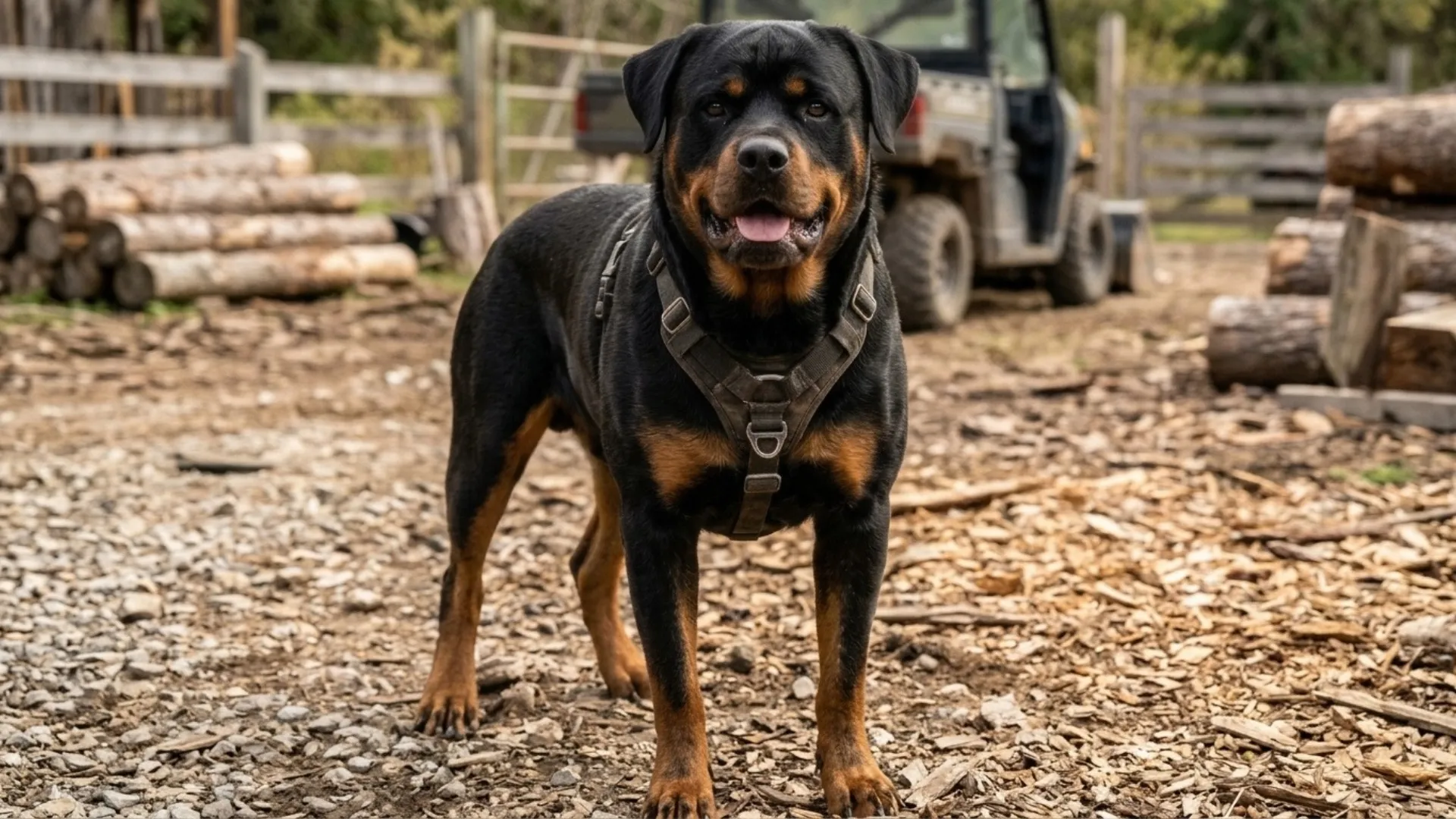
Several things make a breed stand out. Some are known for unique features like their fur, while others get noticed for their muscular build. That build usually has a purpose.
Many breeds were originally developed to guard homes and livestock, hunt, haul heavy loads, or work alongside humans. The traits that make them special also place responsibilities on their owners.
When considering a muscular breed, it’s easy to overlook the soft side of a powerful dog and its basic needs: food, love, exercise, and training. A dog’s natural instincts also need guidance. In this guide, I’ll cover seven muscular breeds that can be a wonderful addition to an active family.
Fun Fact
Being muscular doesn’t mean a dog needs high-intensity work. Many powerful breeds do well with everyday routines and simple activities like steady walks, while others need more variety to stay happy and healthy. Training is just as important as exercise.
Top Dog Breeds with Muscular Builds for Heavy-Duty Work
1. Rottweiler
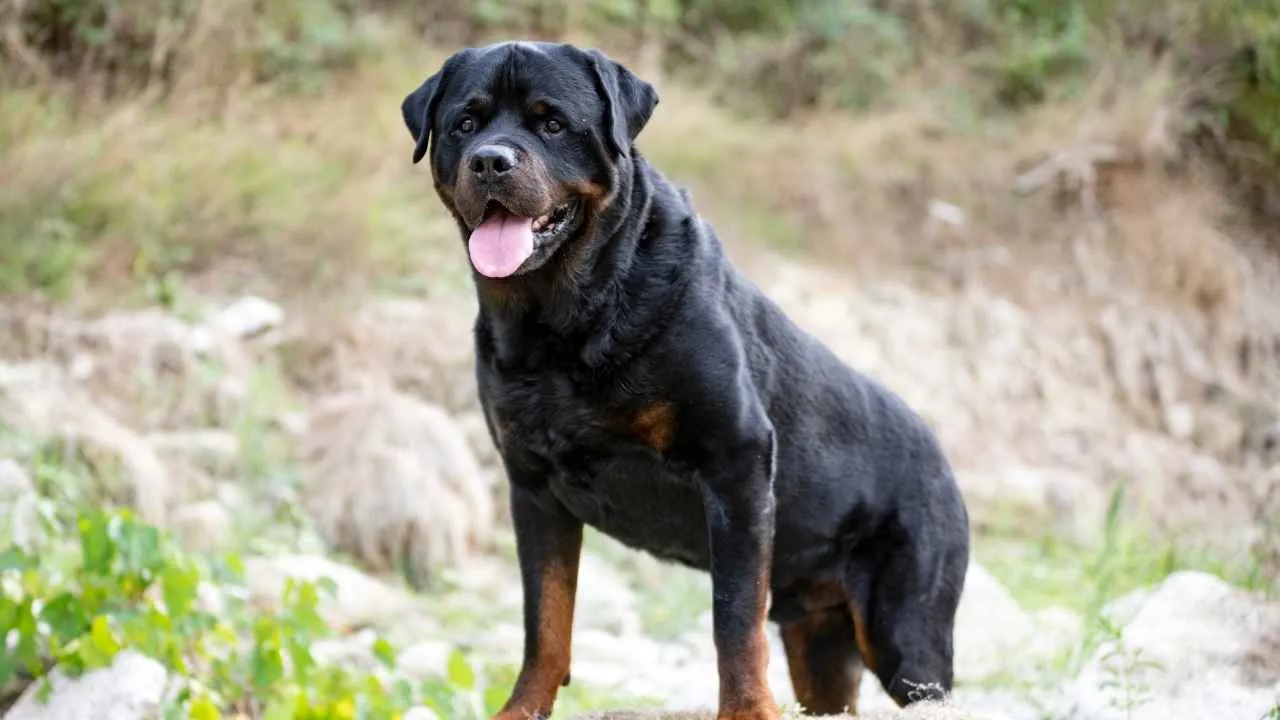
Rottweilers are one of the best-known muscular breeds, thanks to their broad chests, solid legs, and powerful build. They are working dogs that were bred for centuries to drive cattle and guard homes. Their structure and steady nature make them excellent at tasks that demand strength and focus.
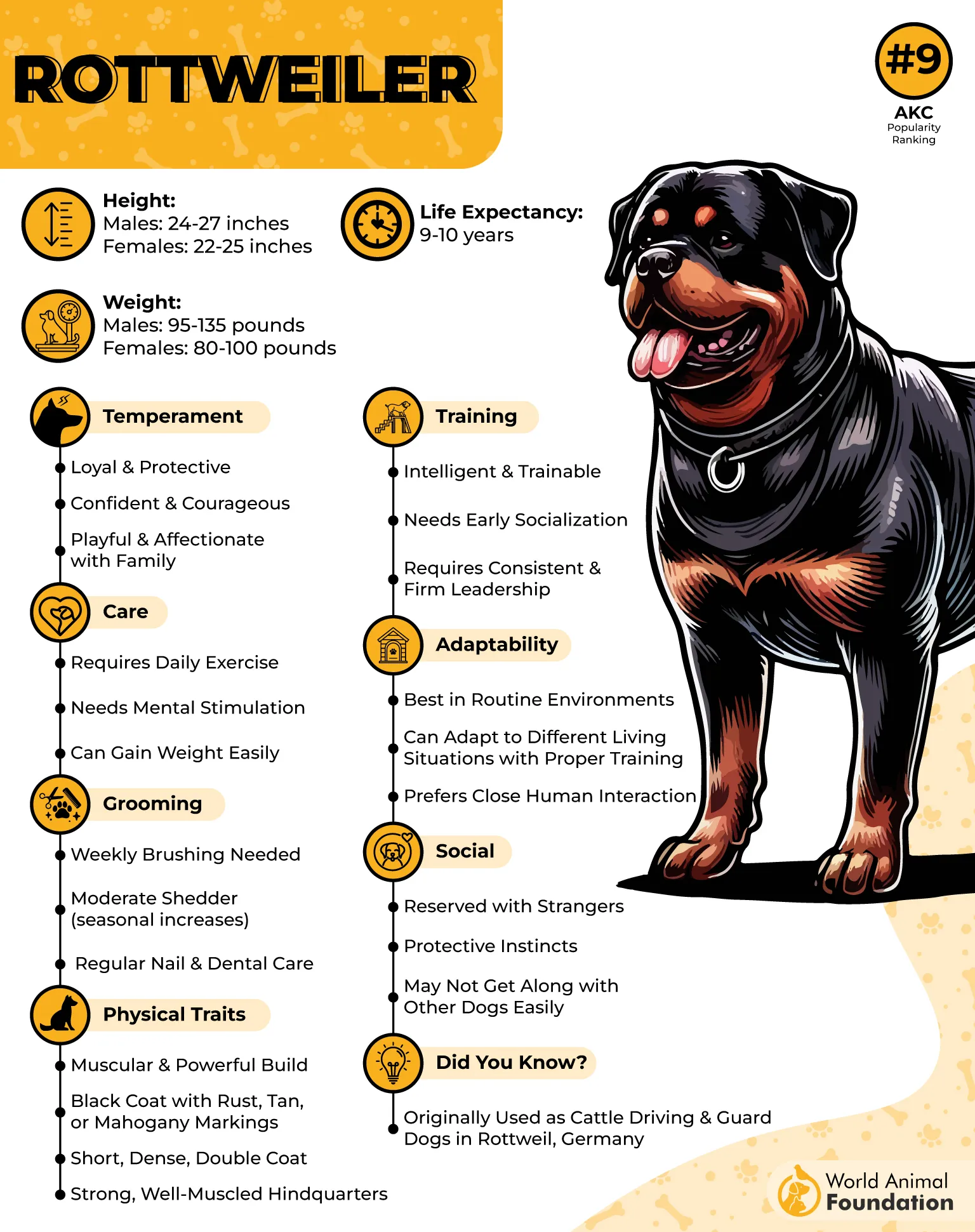
Rottweilers look impressive in their sleek black-and-tan coats, and a well-trained Rottweiler is loving, friendly, and gentle with the people it knows well. With strangers, they are naturally reserved, so positive early socialization helps them stay calm in a variety of situations.
Rottweilers need regular walks, obedience training, mental exercise, and plenty of playtime with their families. The American Kennel Club states that they can become a true part of the family, but because they are large, they should be closely supervised around children.
2. Cane Corso
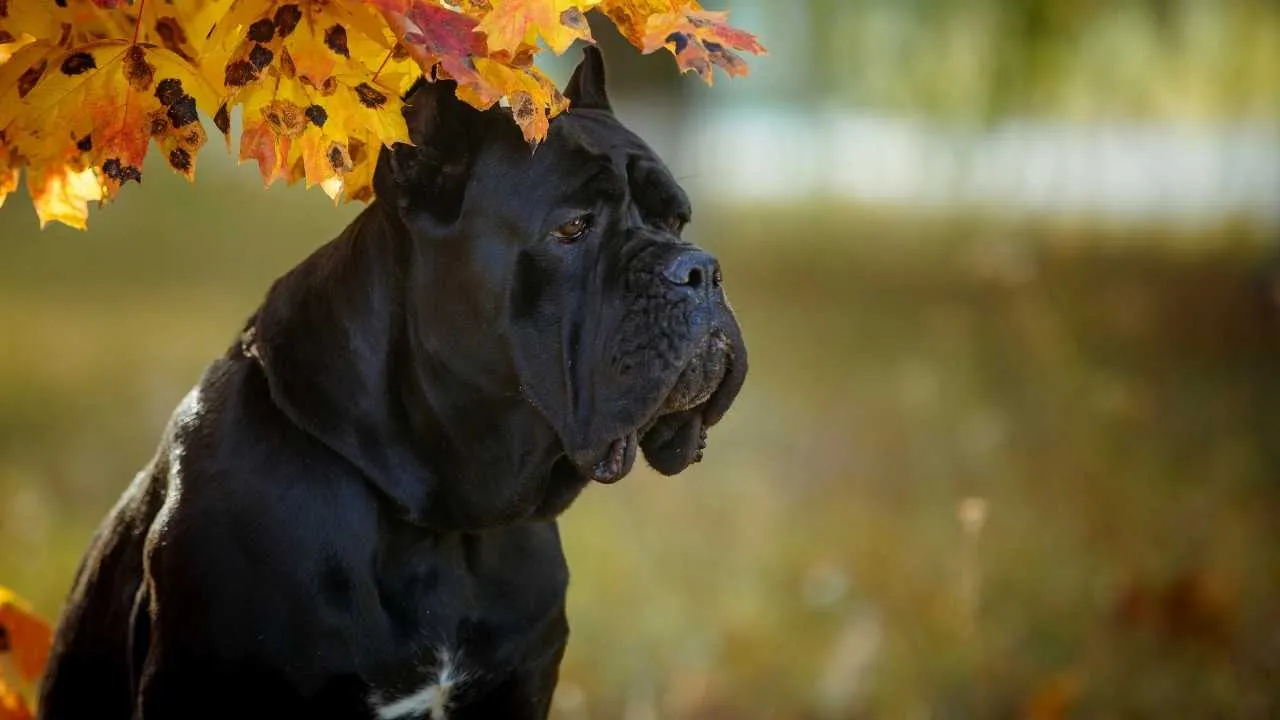
The Cane Corso is an imposing, Mastiff-type breed with a powerful build, a broad head, and alert eyes. Originally bred in Italy to guard property and handle hard work around the farm, Cane Corsos are naturally protective, but their behavior depends heavily on the quality of their owner.
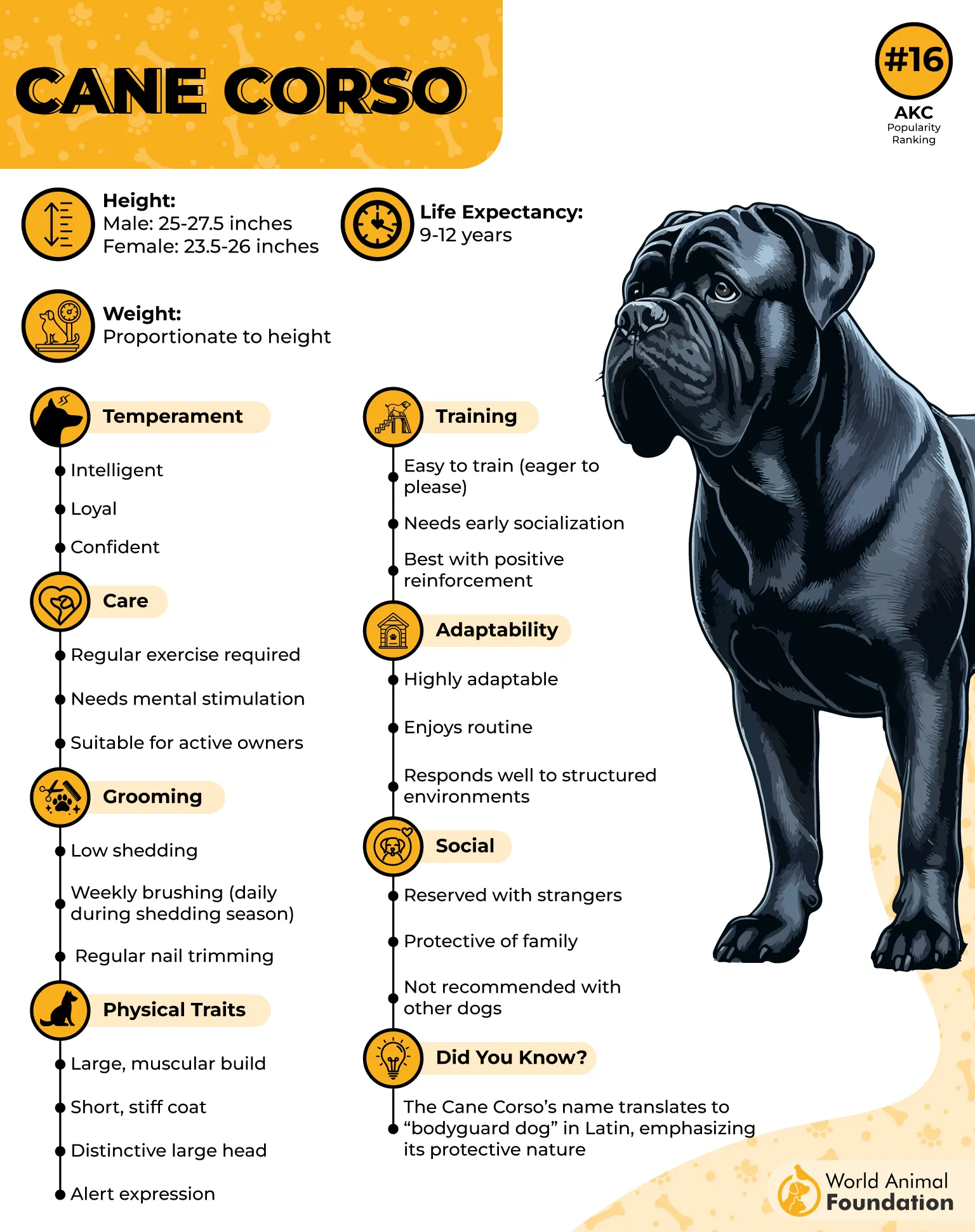
Despite their intimidating appearance, Cane Corsos form deep bonds with their families. They stay happiest when they’re included in family life and have a job to do. Without positive direction, though, they can be difficult to handle, so early socialization is essential.
Frequent mental exercise and a consistent training routine are also a must. Without proper guidance, their protective instinct can turn into a problem. Because the Cane Corso is a large, powerful dog, it needs structured daily walks, play sessions, and ongoing training.
3. Alaskan Malamute
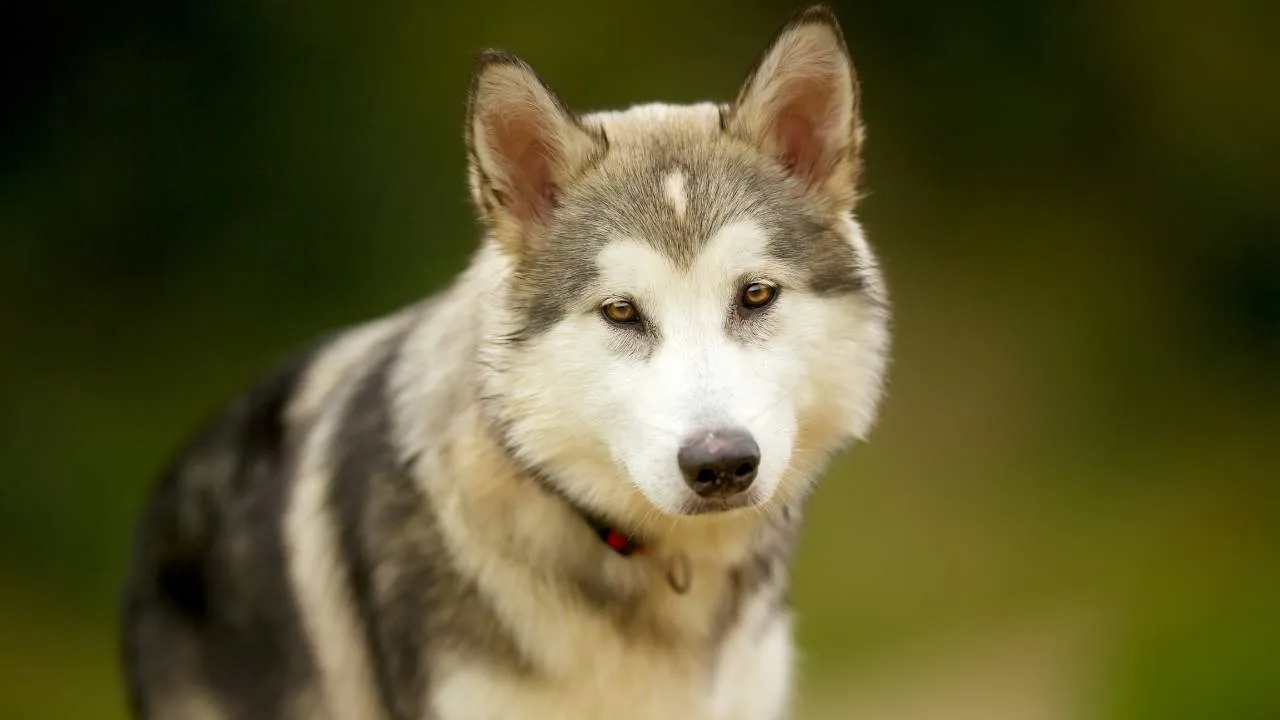
With powerful legs and a solid, heavily muscled body, the Alaskan Malamute is an all-around working dog with exceptional stamina. Sled pulling is the breed’s purpose, so Malamutes have the traits needed to haul heavy loads through extreme cold and over distances that would force other breeds to stop and recover.

Malamutes have a tough appearance, but most are affectionate, family-loving companions. They enjoy joining the family on outdoor trips, especially when they get the chance to do something useful.
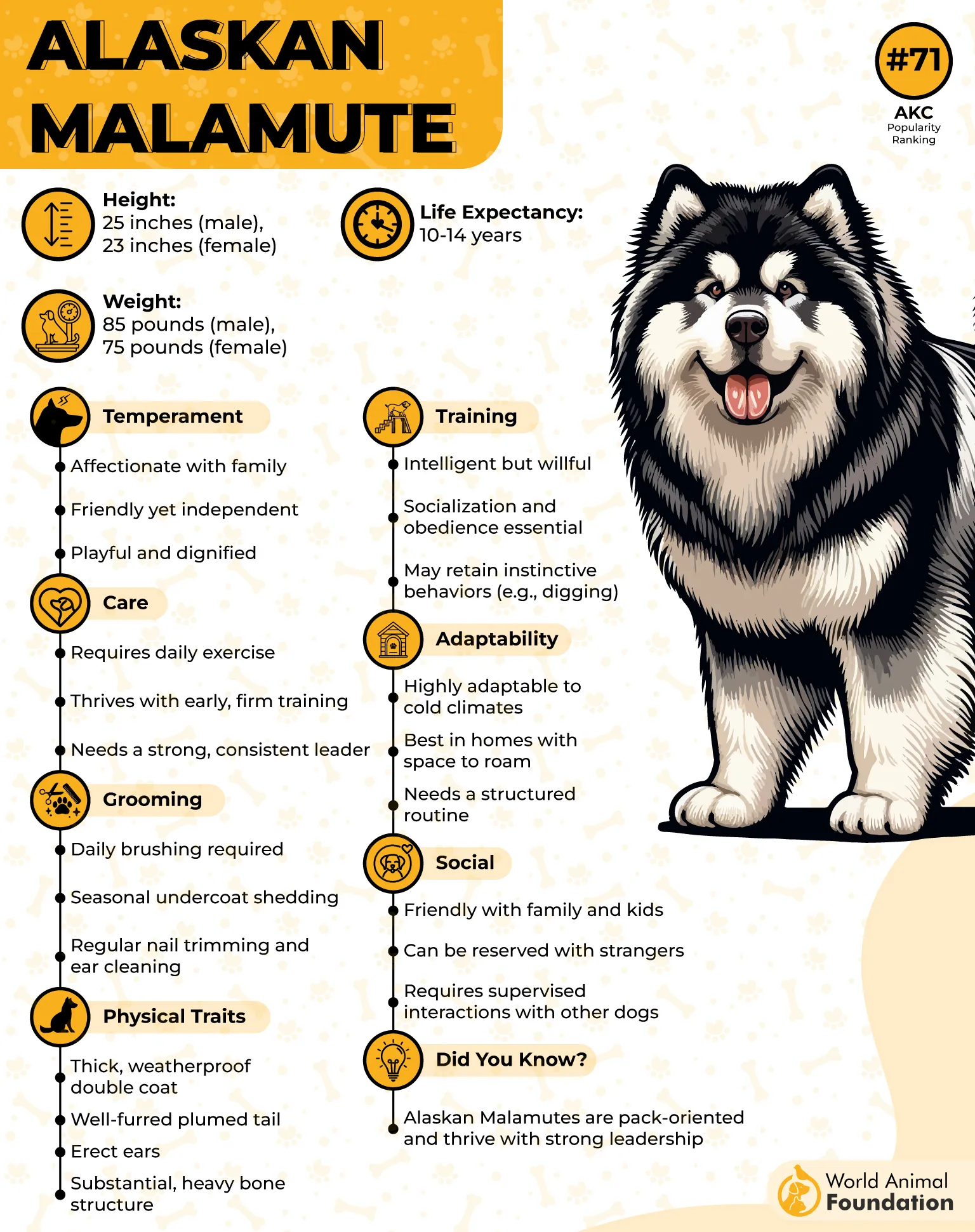
Malamutes need consistent activity and plenty of companionship, along with a secure area for time outdoors. Their coats need more frequent brushing as the seasons change, especially during shedding.
4. Dogo Argentino
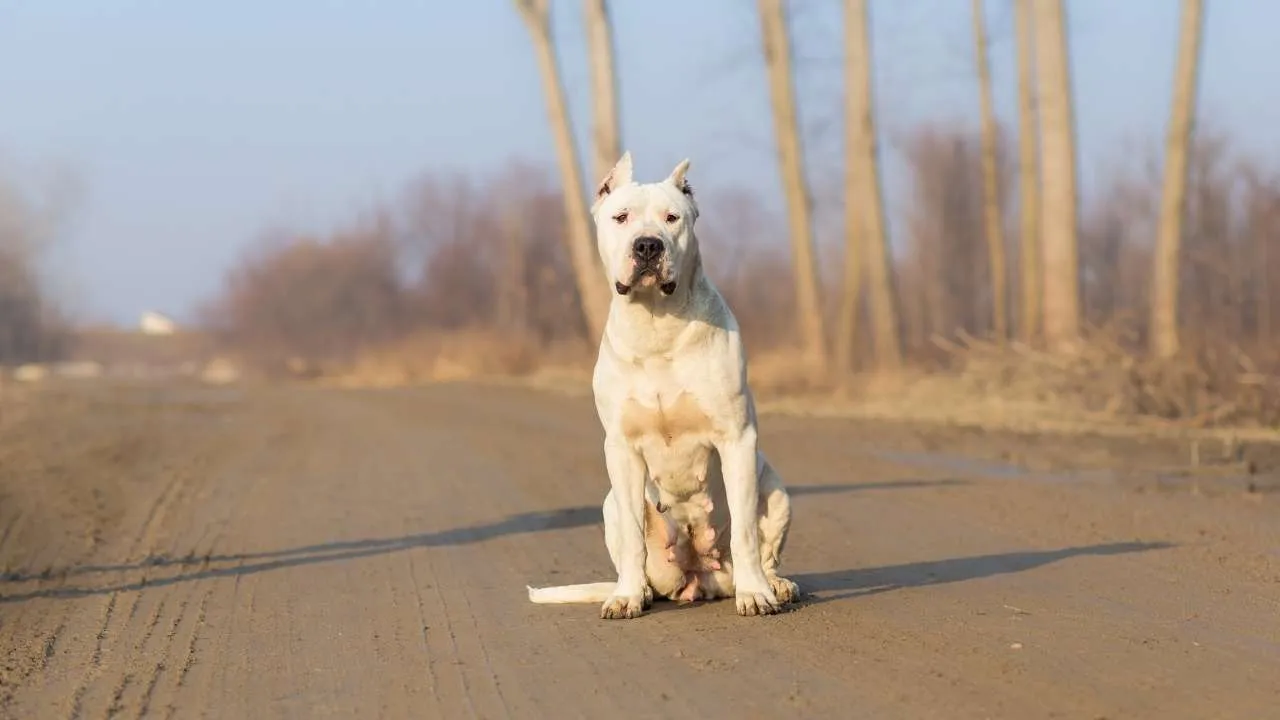
The Dogo Argentino is a sturdy, athletic breed developed in Argentina for big game hunting. It is known for its short white coat and muscular build, which contribute to its speed and endurance.
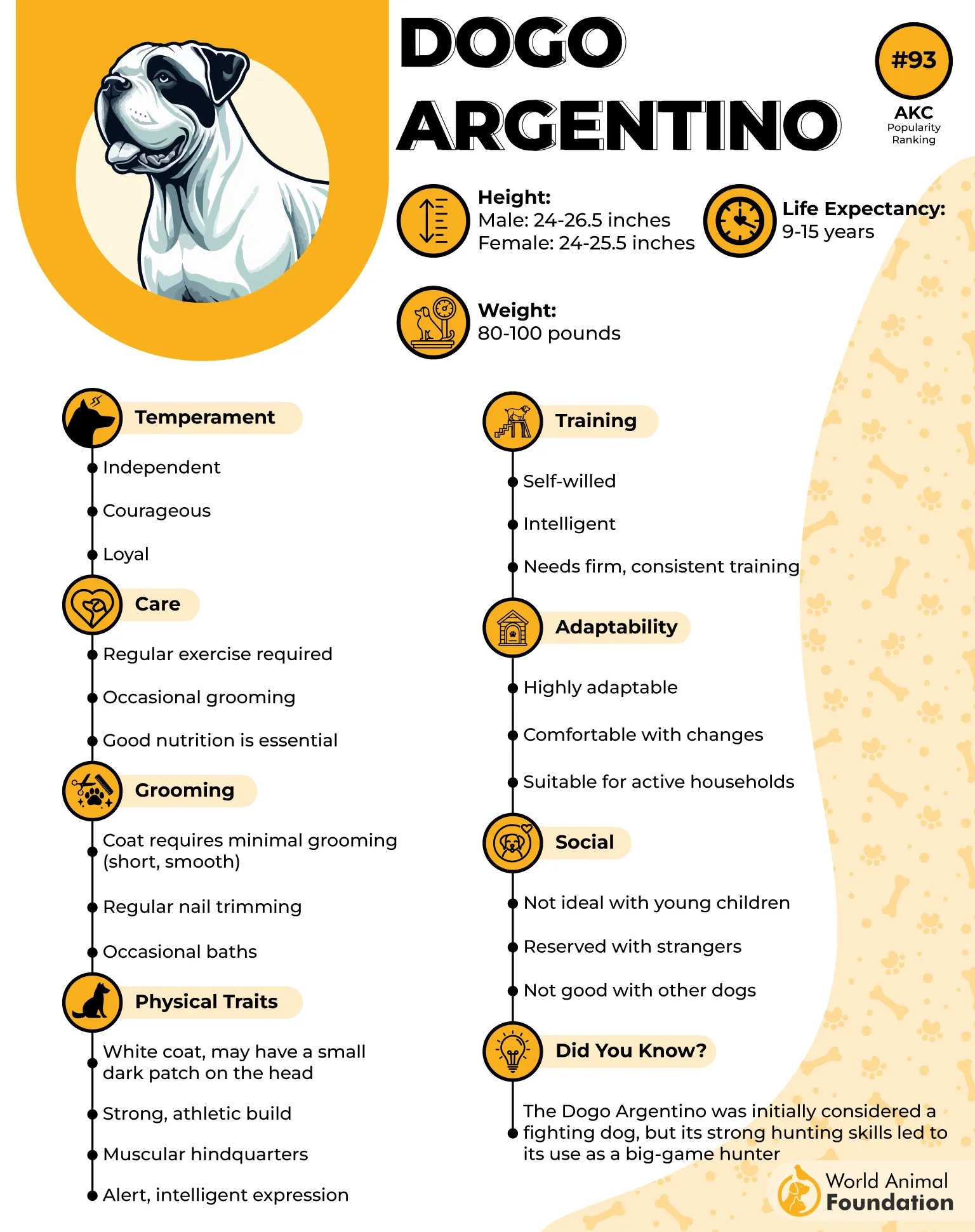
Dogo Argentinos that are well socialized and bonded with their owners tend to be affectionate and loyal. They are generally high-energy and ready to take part in all sorts of activities. With a strong prey drive, they should not be placed in a home with small pets unless they have had extensive training.
This breed needs daily exercise and consistent obedience training, along with games and tasks that challenge both mind and body. It may prove to be too much for novice dog owners. In a responsible home with clear rules and consistent handling, though, the Dogo Argentino can grow into a well-rounded, affectionate family companion.
5. Turkish Kangal

The Kangal is a large, muscular dog with a dense, short coat and strong legs, designed to guard livestock. Its size and strength help it protect sheep and other animals against all kinds of threats. The breed’s value comes from its brave, independent nature.
Although Kangals have a protective side, they generally aren’t going to get excited and jump for joy every time they meet someone new. That’s perfectly fine, but they aren’t dogs you should simply drop into any home or crowded environment, because they aren’t always ready for everything the way some dogs are.
Before choosing a Kangal, consider whether you have livestock to protect and enough space for a guardian dog. According to Purina, Kangals need regular activity, training, and a clear purpose to stay settled and well managed.
6. Boxer
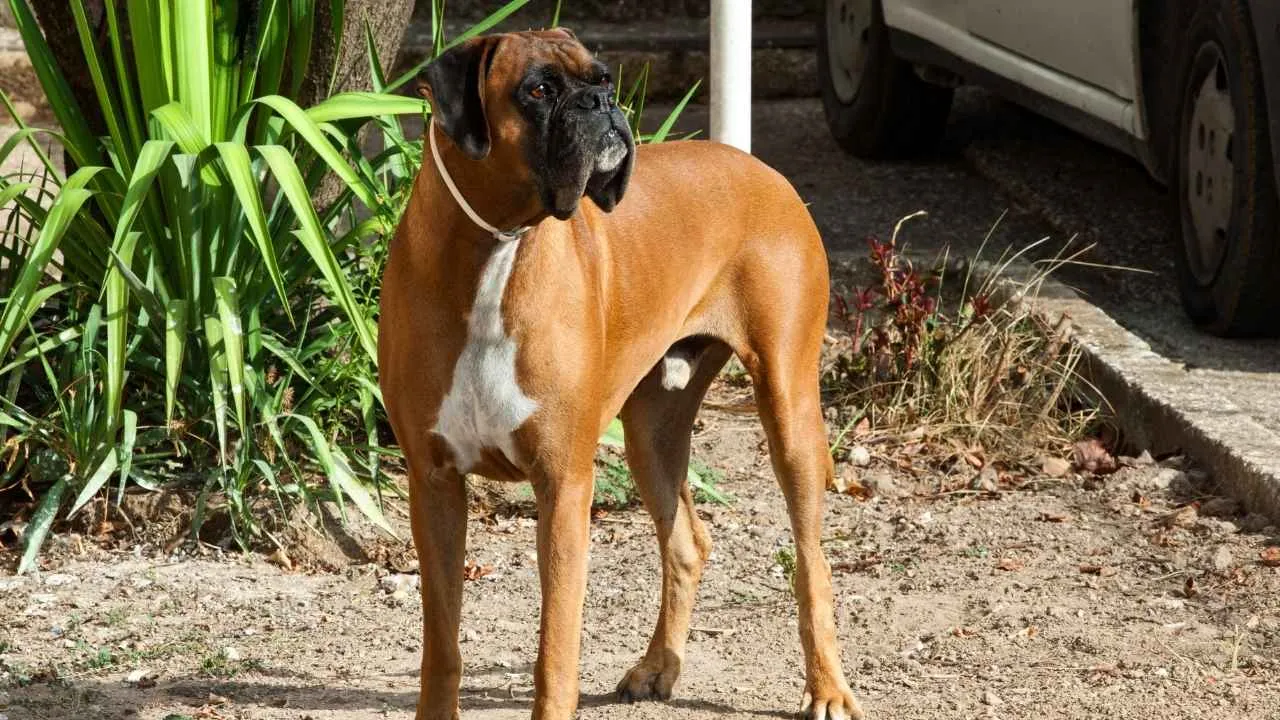
The Boxer is one of the most recognizable dog breeds, thanks to its strong, athletic build, broad chest, and short fawn or brindle coat. It inherited the strong bodies and swift movements of its ancestors. Although its roots are in guard work, most owners know the Boxer as a playful, fun-loving dog, a trait many households cherish.
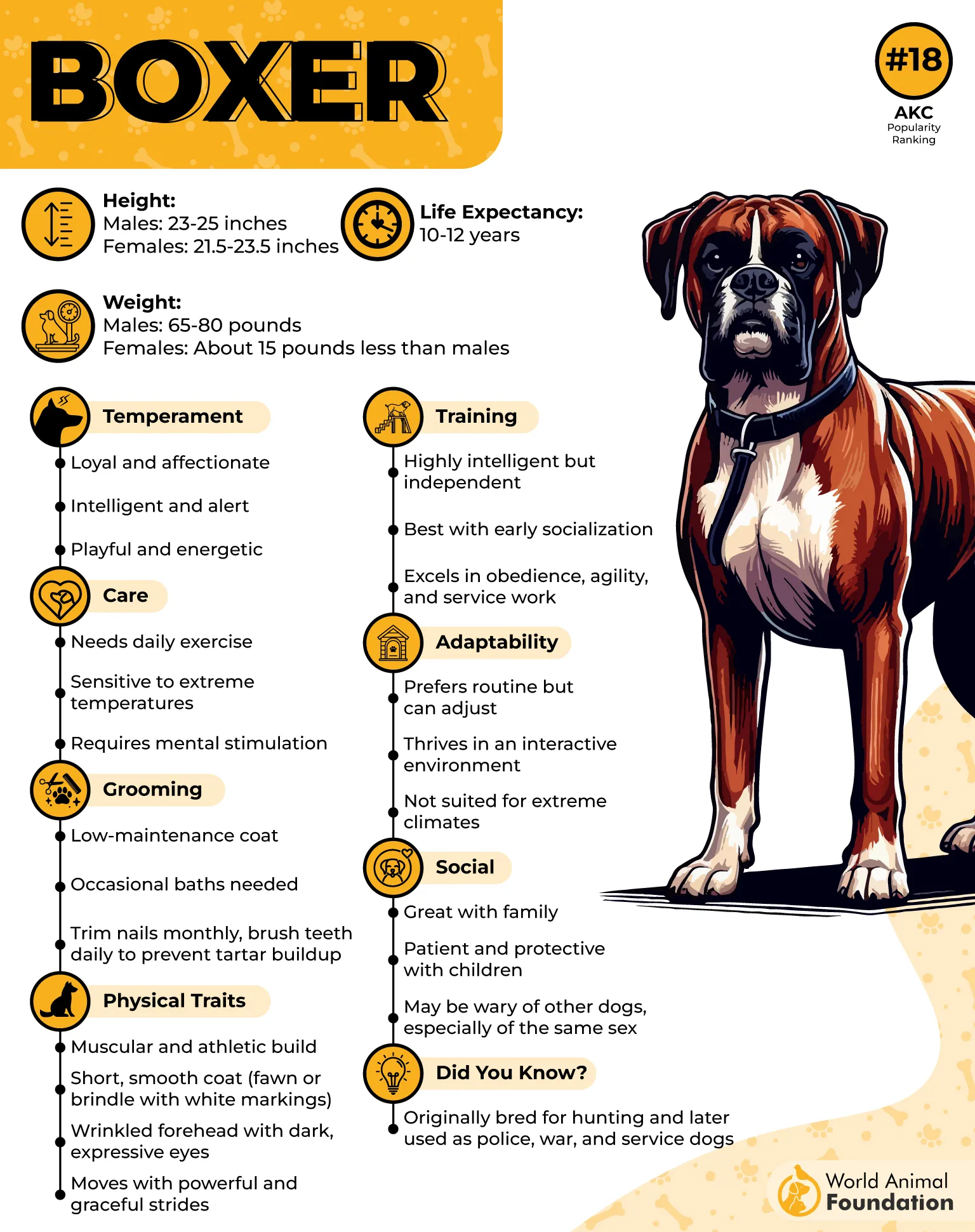
The wrinkled skin on its forehead, combined with an upbeat attitude, gives the Boxer an inquisitive look. Most Boxers love being the center of attention and enjoy having their family join in fun, engaging activities.
Boxers need plenty of exercise and do best with short, frequent training sessions and engaging games. They should be part of the family and shouldn’t be left on their own for long stretches. Introductions between Boxers and children or other animals should be supervised by adults.
7. Boerboel
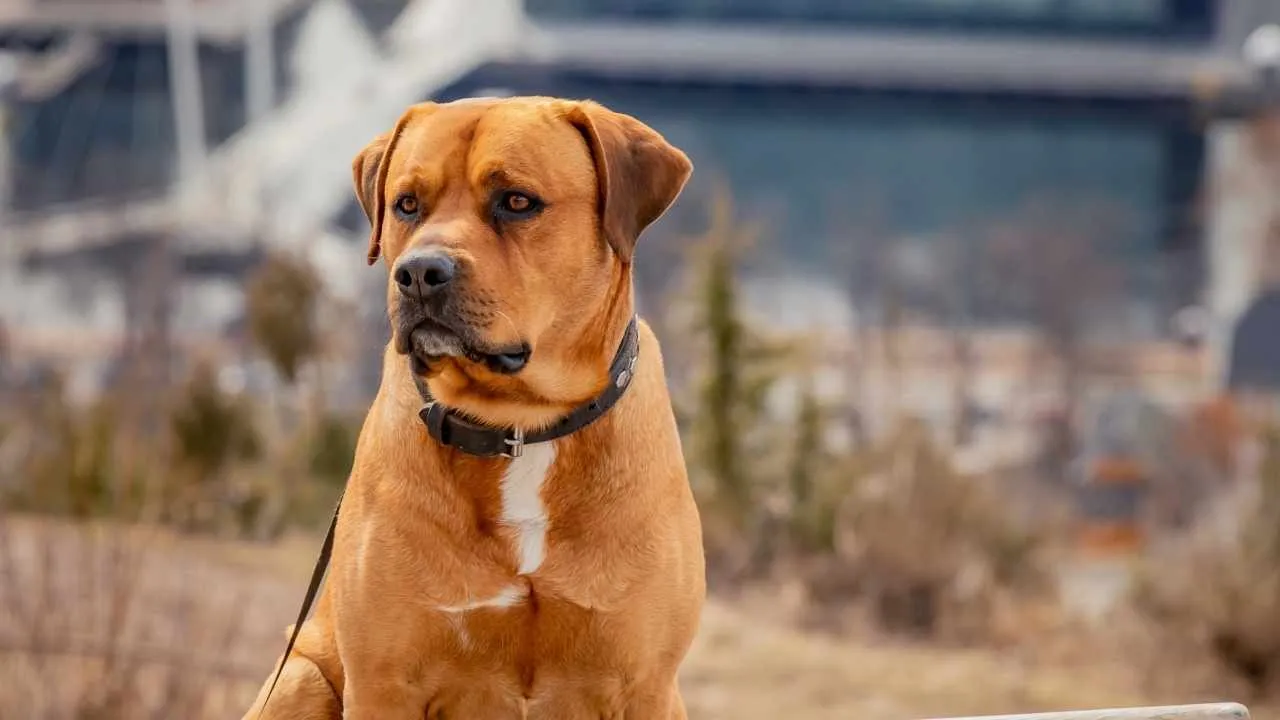
This large South African breed is powerful, with a wide head, a thick neck, and a muscular body. The Boerboel’s farm-guarding heritage gives it a confident, natural instinct to protect its family and friends.
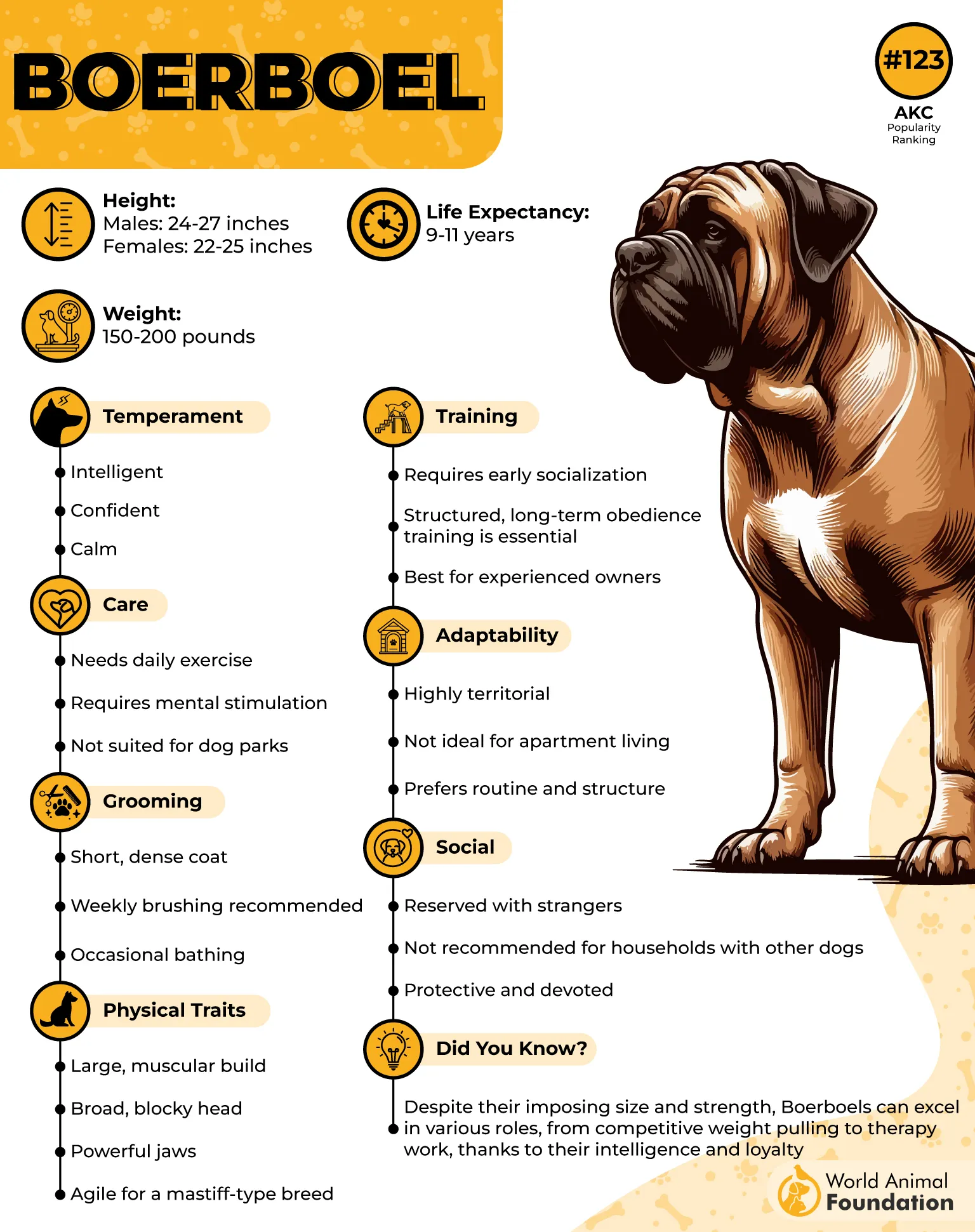
Because of their size, Boerboels should be raised by a responsible, caring owner who understands the commitment involved. They can be relaxed at home with well-trained family members, but they can become unruly without proper guidance. Their protective streak and independent way of thinking call for consistency in training.
Boerboels need daily exercise, clear boundaries, and ongoing obedience training. According to Zooplus, these powerful dogs benefit from early socialization and consistent guidance. They may enjoy relaxed walks and structured activities, but exercise should suit their age and physical condition.
Conclusion
Muscular dog breeds can make amazing canine companions, but it all depends on your needs. A Rottweiler is a great fit for an active household that wants protection and companionship. A Kangal, on the other hand, suits owners who have livestock to protect and plenty of space. A Boerboel will thrive with an owner who understands and can manage its strong protective instincts.
Don’t just choose the dog that looks strong. Consider each breed’s care needs, temperament, and activity level to make sure it matches your home and lifestyle. Caring for a powerful breed is much simpler with the right balance of love, attention, proper nutrition, plenty of exercise, and consistent training.
