




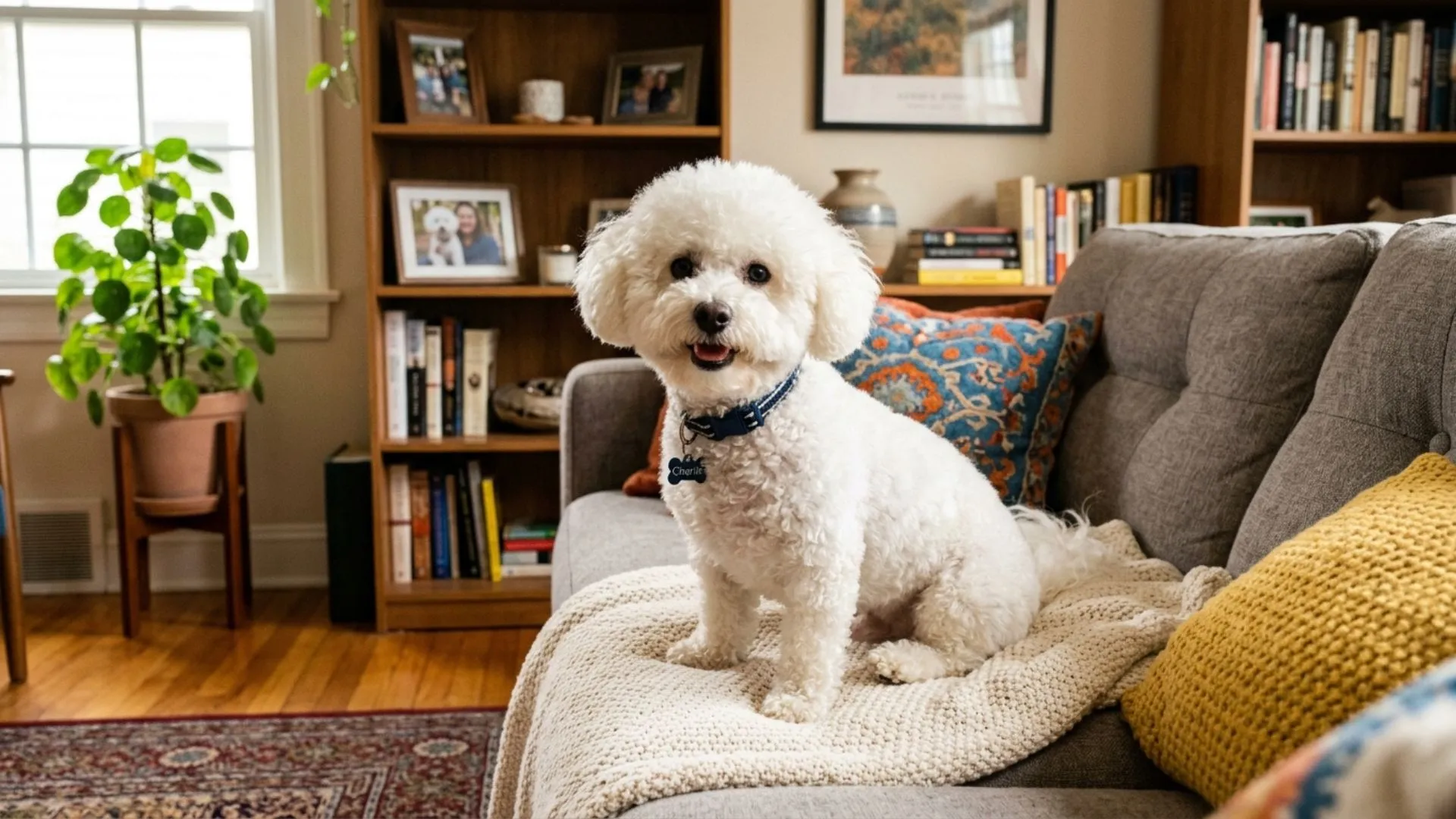
The vacuum had become part of the daily routine. Every morning started the same way: a quick sweep across the living room, a pass over the sofa, and a few minutes spent removing fur from clothes before leaving the house.
It was manageable at first, but eventually it felt like the house was working against every attempt to keep things clean. Then came a realization that many dog owners discover later than they would like. Some dogs simply leave behind far less mess than others.
The change was noticeable almost immediately. Cleaning became easier, furniture stayed presentable longer, and maintaining a tidy environment no longer felt like a never-ending task. That experience highlights an important truth for anyone considering a dog.
The right breed can make a significant difference in everyday life. Ahead, you’ll meet the dogs that help preserve a cleaner home without sacrificing companionship or personality.
Key Takeaways
Keeping a home clean with a dog is easier than many people think, once you meet the breeds that barely leave fur behind.
The Maltese has been admired since ancient times, while the Portuguese Water Dog once spent its days helping fishermen out at sea.
Then there is the Basenji, a dog that grooms itself with habits that often remind people of a cat, making it one of the most fascinating names on this list.
The last few breeds bring even more unexpected reasons to rethink which dog belongs in a tidy home.
Best Dog Breeds for a Tidy Home: Low-Shedding Options
1. Coton De Tulear
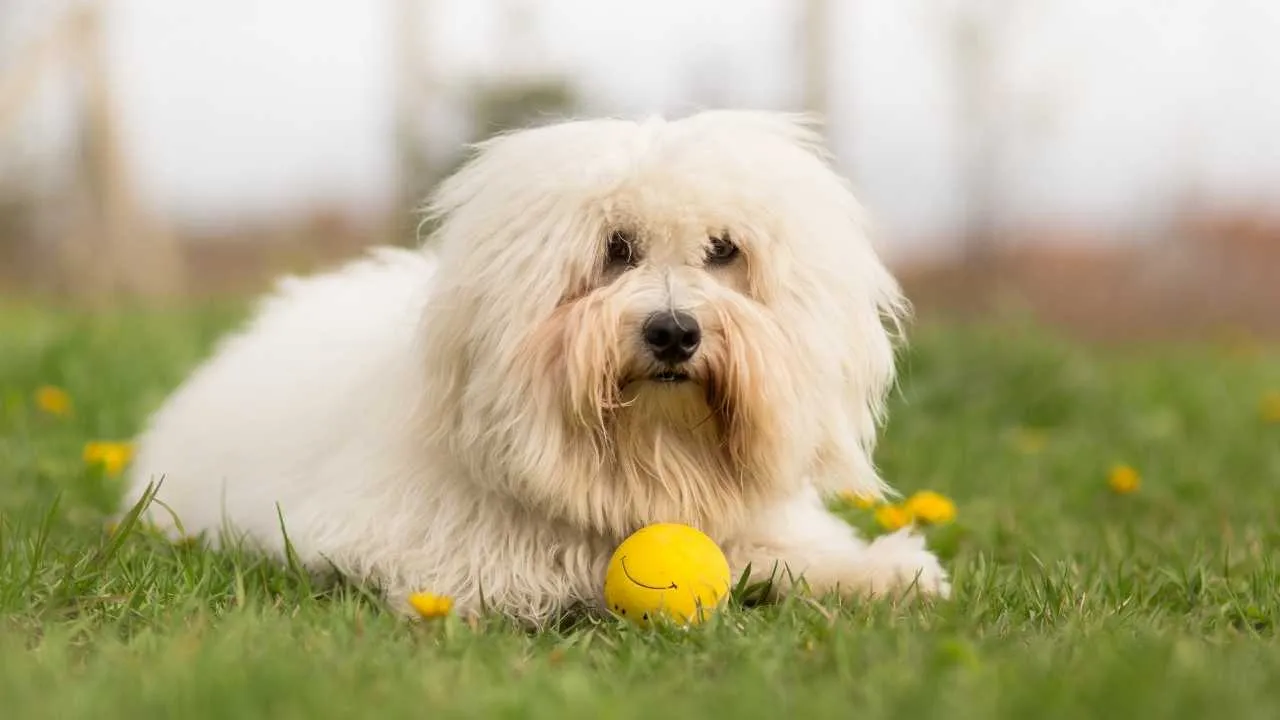
The Coton de Tulear takes its name from the port city of Toliara in Madagascar, where this cheerful little companion became closely associated with island life. Its fluffy appearance often draws comparisons to a cotton ball, a feature that inspired the breed’s distinctive name.
A Coat With Appeal
One reason this breed attracts attention is its soft white coat, which sheds very little compared with many other dogs. That trait makes the Coton a consideration for some allergy-sensitive households, though spending time with the breed first is always recommended.
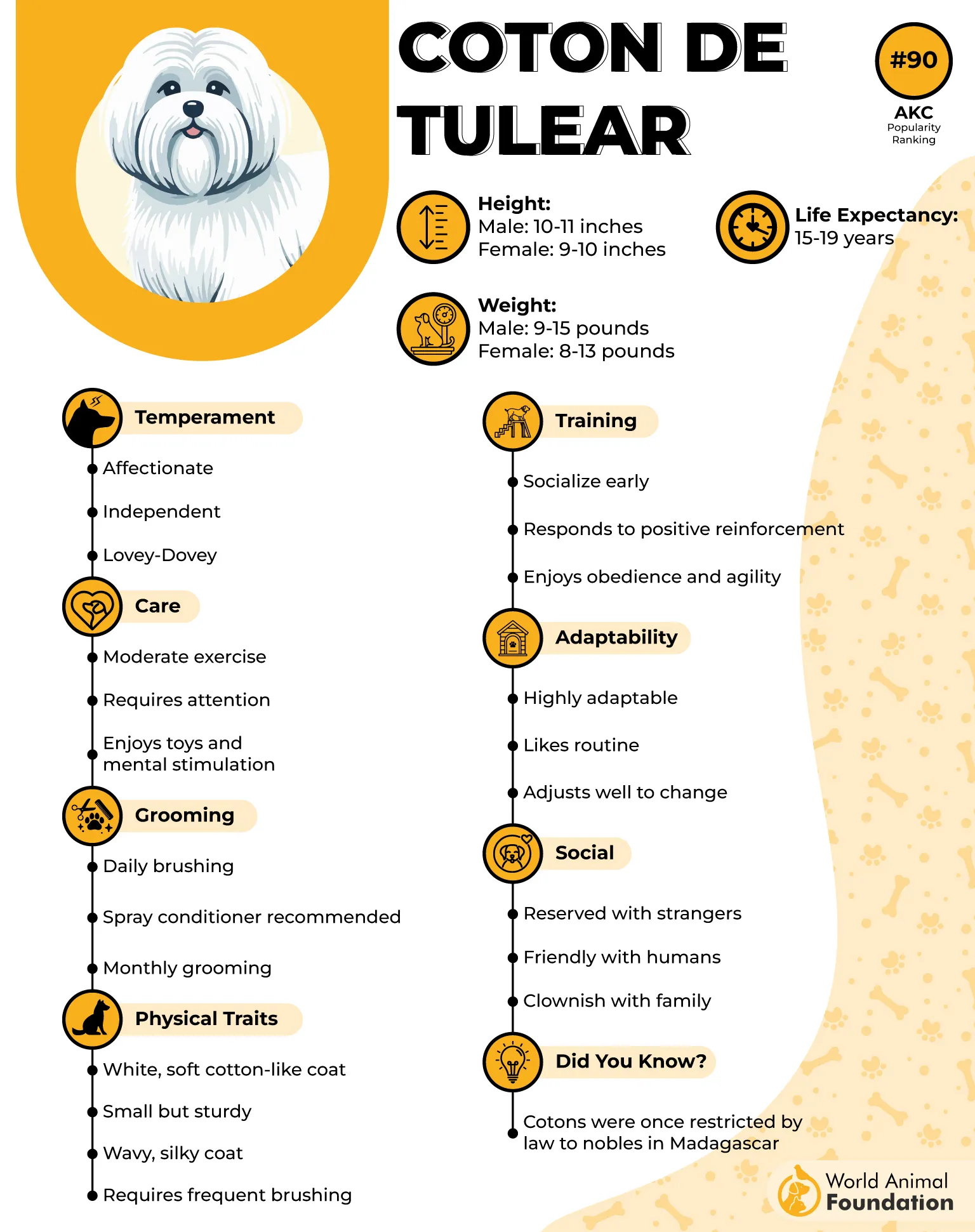
The following points reveal more about their past:
Linked to Madagascar’s noble families
Nicknamed the Royal Dog of Madagascar
Likely arrived by ship during the 15th century
People Come First
Coton de Tulear forms strong attachments and genuinely enjoys being involved in everyday household life. According to PetMD, friendly interactions with children, other pets, and visitors often come naturally when introductions are handled thoughtfully and at a comfortable pace.
2. Maltese
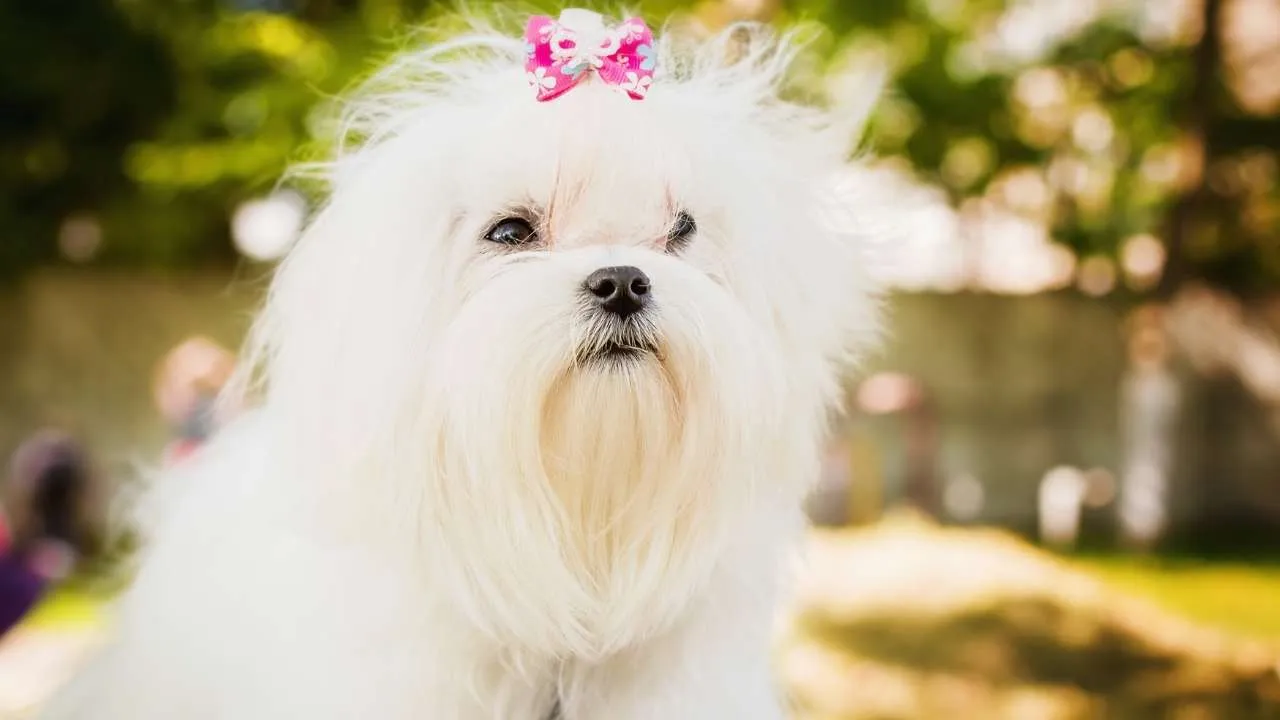
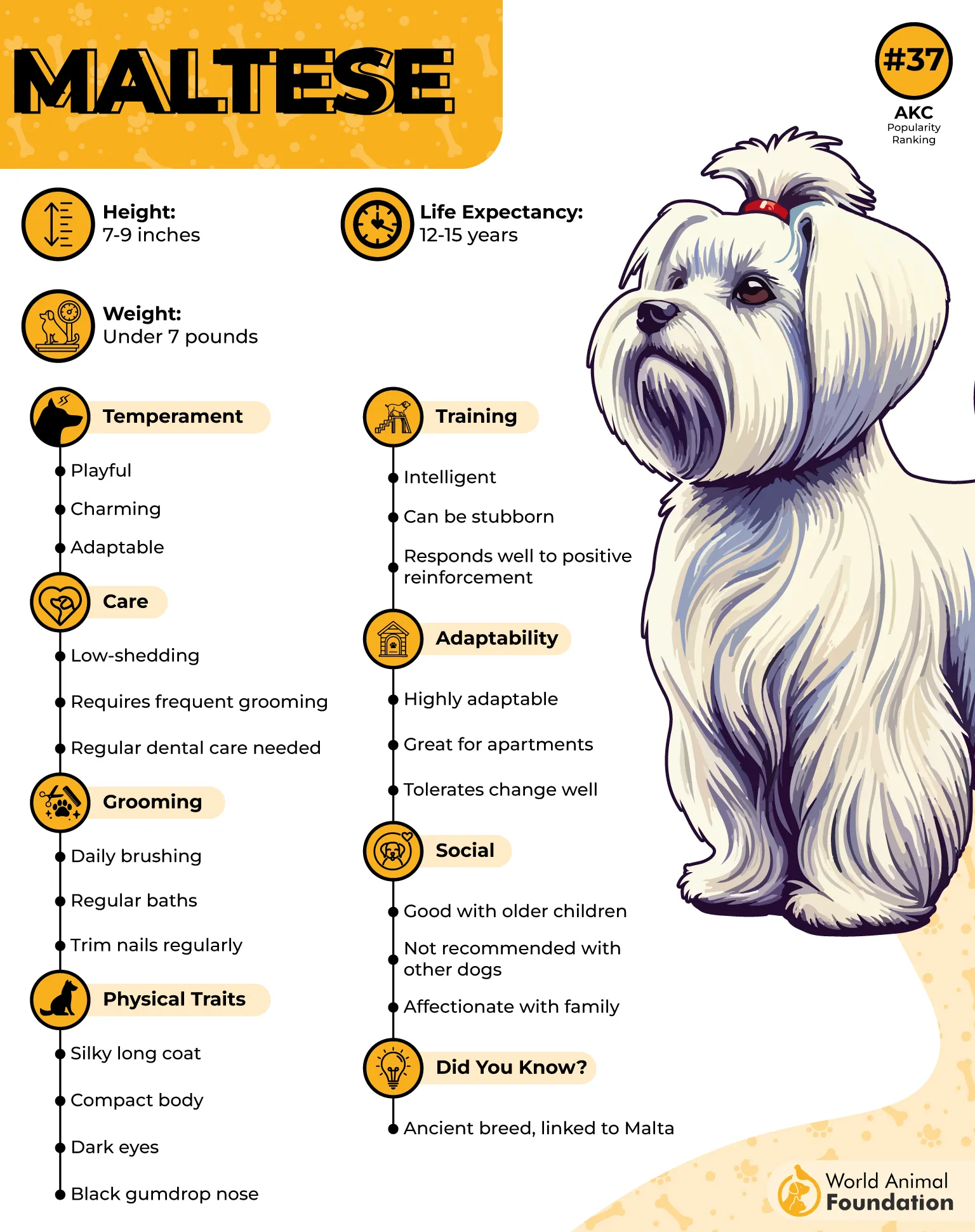
The Maltese draws attention with a floor-length white coat that has been associated with the breed for generations. References to these small companion dogs appear in Ancient Greek and Roman writings, adding another layer to their long connection with people.
More Than Appearance
That flowing coat contributes to the breed’s low-shedding reputation, which appeals to people who prefer less loose hair around the home. Keeping it looking its best, however, requires frequent grooming and consistent coat care.

Worth noting characteristics of the breed include:
Originated on the island of Malta
Often described as highly adaptable
Generally considered a healthy breed
Close by Choice
This low-shedding dog breed forms strong attachments to family members and prefers being involved in daily activities whenever possible, as noted by the AKC. Long periods without companionship can be difficult for this breed, sometimes leading to attention-seeking behaviors such as excessive barking.
3. Basenji
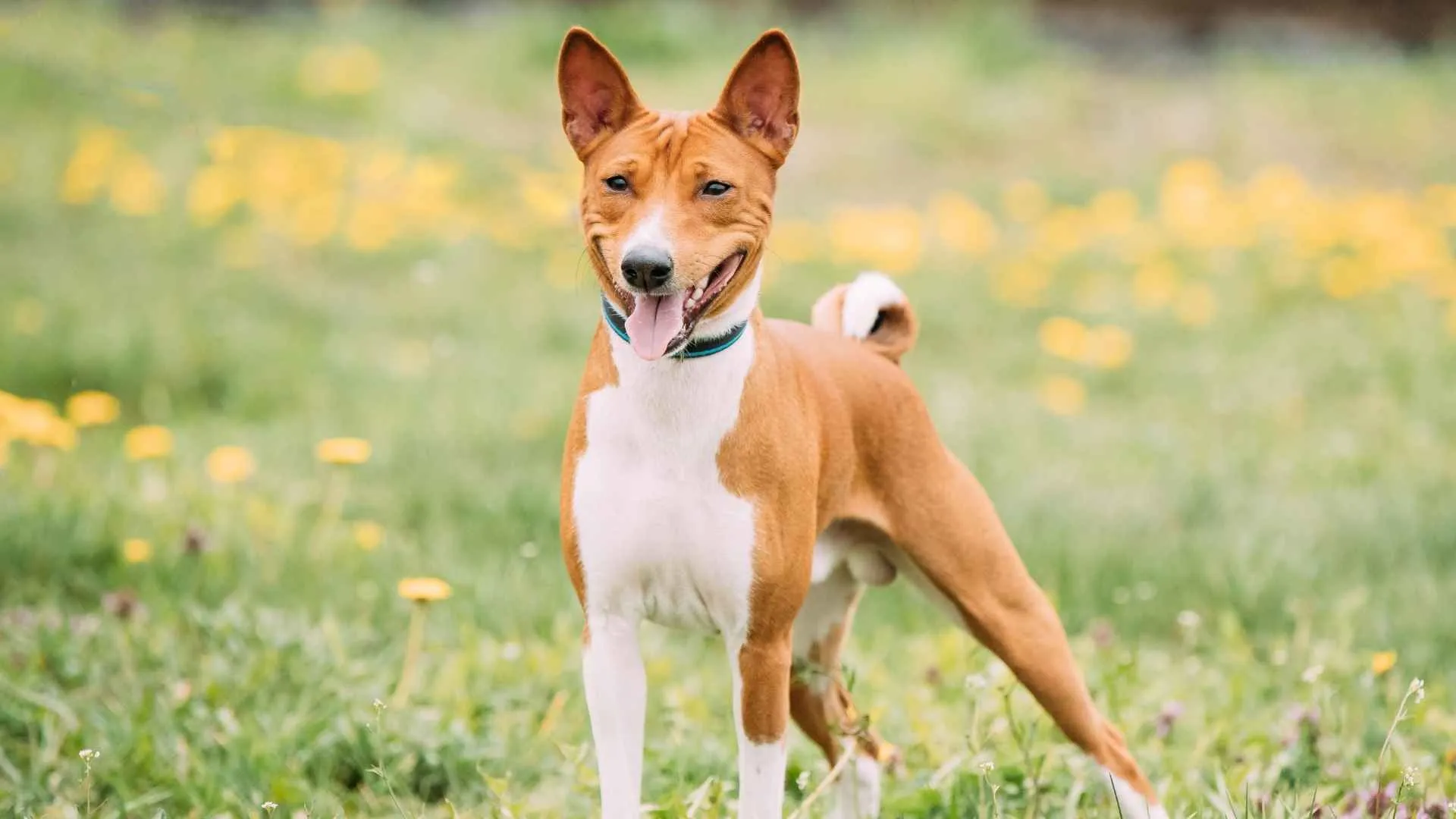
The Basenji appears in ancient cave paintings from Libya dating between 6000 BCE and 100 CE, where dogs of this type accompanied people during hunts. That long connection with human activity helps explain the breed’s sharp awareness, agility, and strong instincts today.
Quiet by Reputation
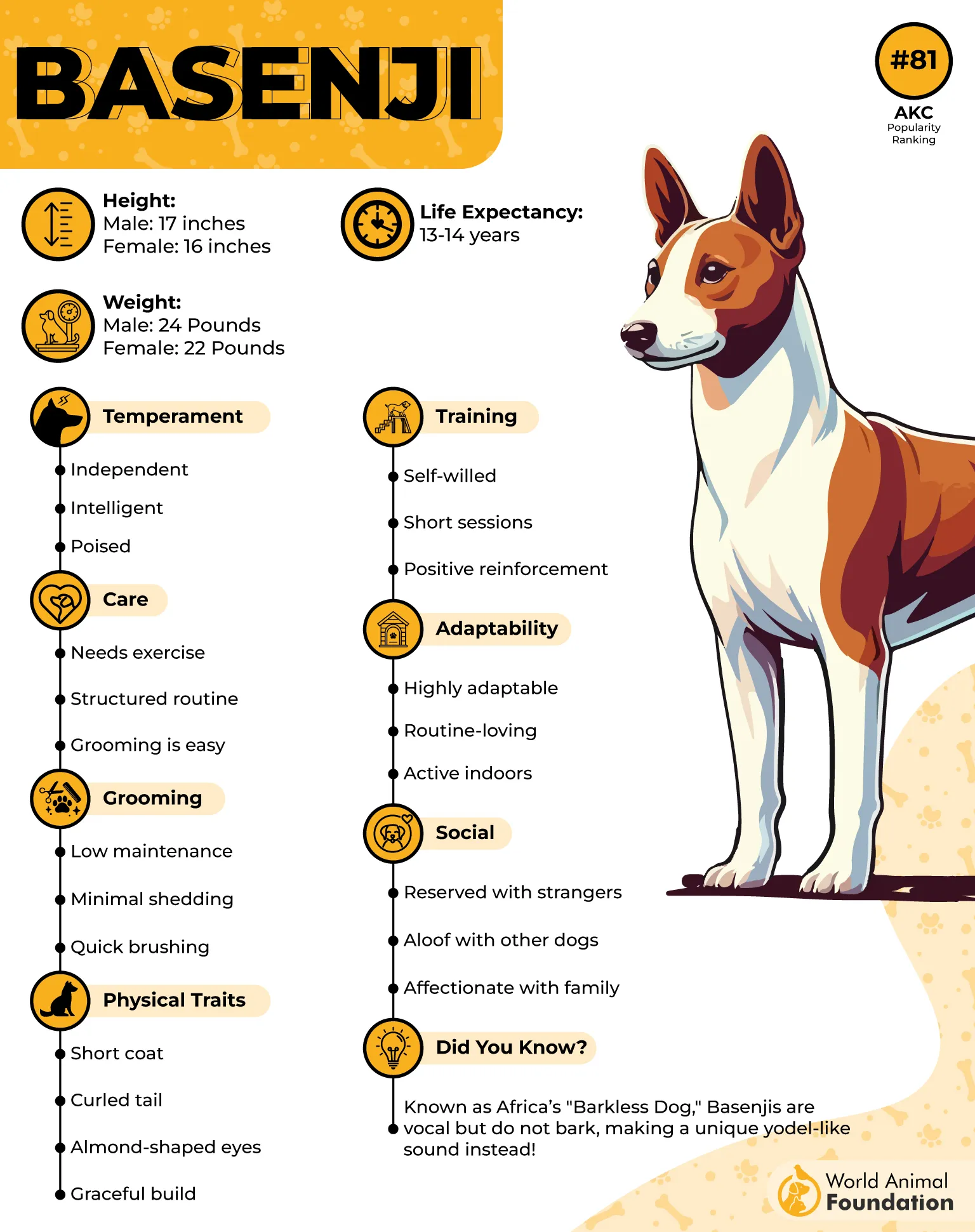
The Basenji attracts attention for a voice that sounds quite different from most dogs, producing a distinctive yodel instead of the typical bark. Its short, smooth coat also contributes to the neat appearance that appeals to tidy households.
The charm of this cat-like breed can be seen as:
Tightly curled tail
Catlike self-grooming habits
Strong vertical jumping ability
Independent Streak
This low-shedding breed approaches the world with confidence and often prefers making its own decisions rather than constantly seeking direction. Early socialization can help with unfamiliar people, while secure fencing is important because this athletic dog can clear surprisingly high barriers.
4. Yorkshire Terrier
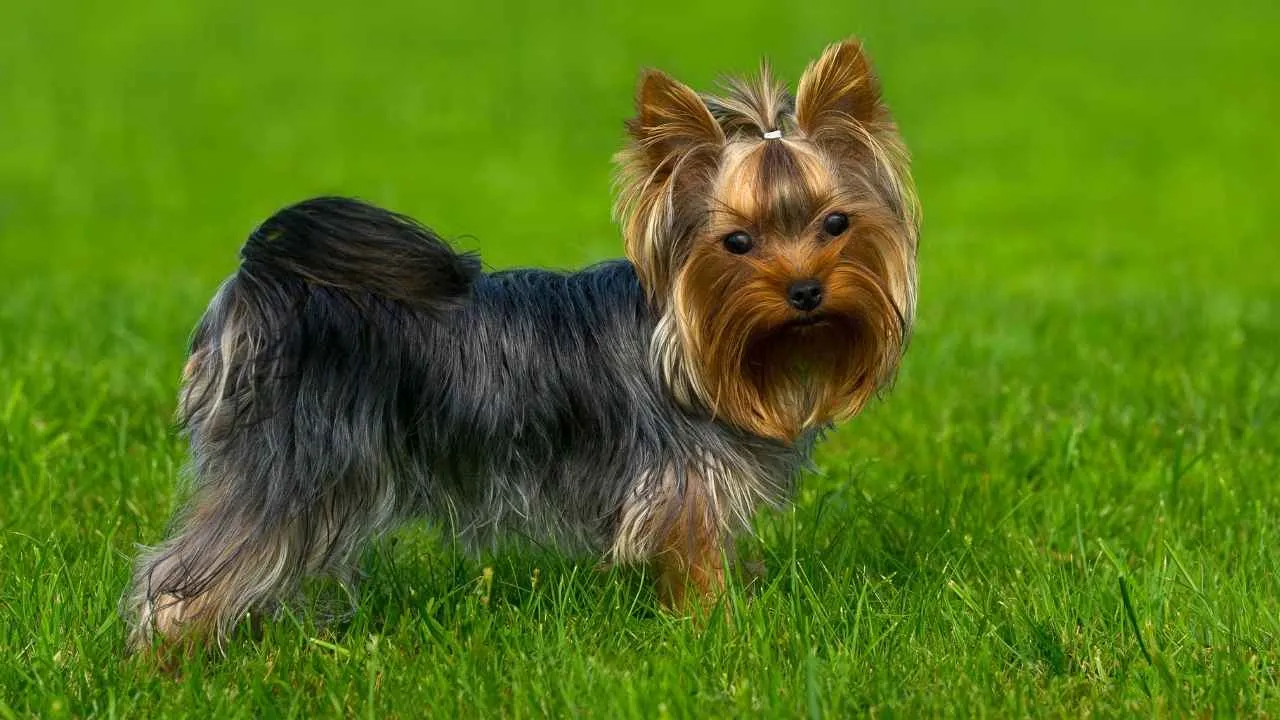
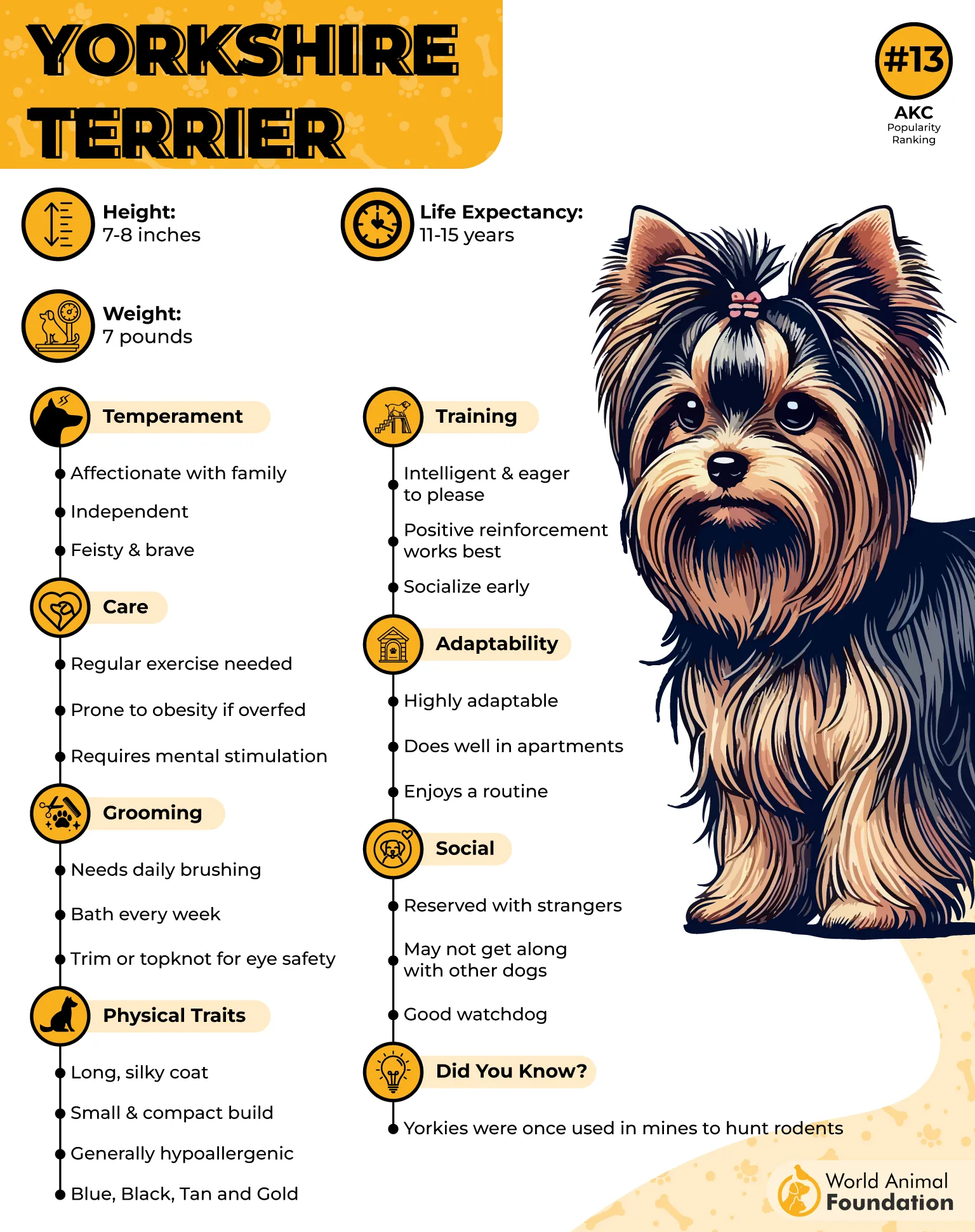
Yorkshire Terriers once spent their days pursuing rodents in textile mills alongside Scottish weavers who settled in England during the 1800s. That working role sits in sharp contrast to the affectionate companion that now enjoys a place much closer to home.
A Different Coat Type
Yorkies often appear on lists of dogs that may suit some allergy sufferers because of their distinctive coat characteristics. Even so, spending time with the breed beforehand can provide a clearer idea of how an individual reacts.
A few details add useful context:
Origin linked to textile mills
Associated with Scottish weavers
Careful supervision of children is required
Small Dog, Big Attitude
The Yorkshire Terrier approaches life with plenty of confidence and often displays a bold, determined personality that feels much larger than its size suggests, as Petplan writes. Family members and visitors alike are often greeted with warmth and enthusiasm from this outgoing little dog.
5. Bichon Frise
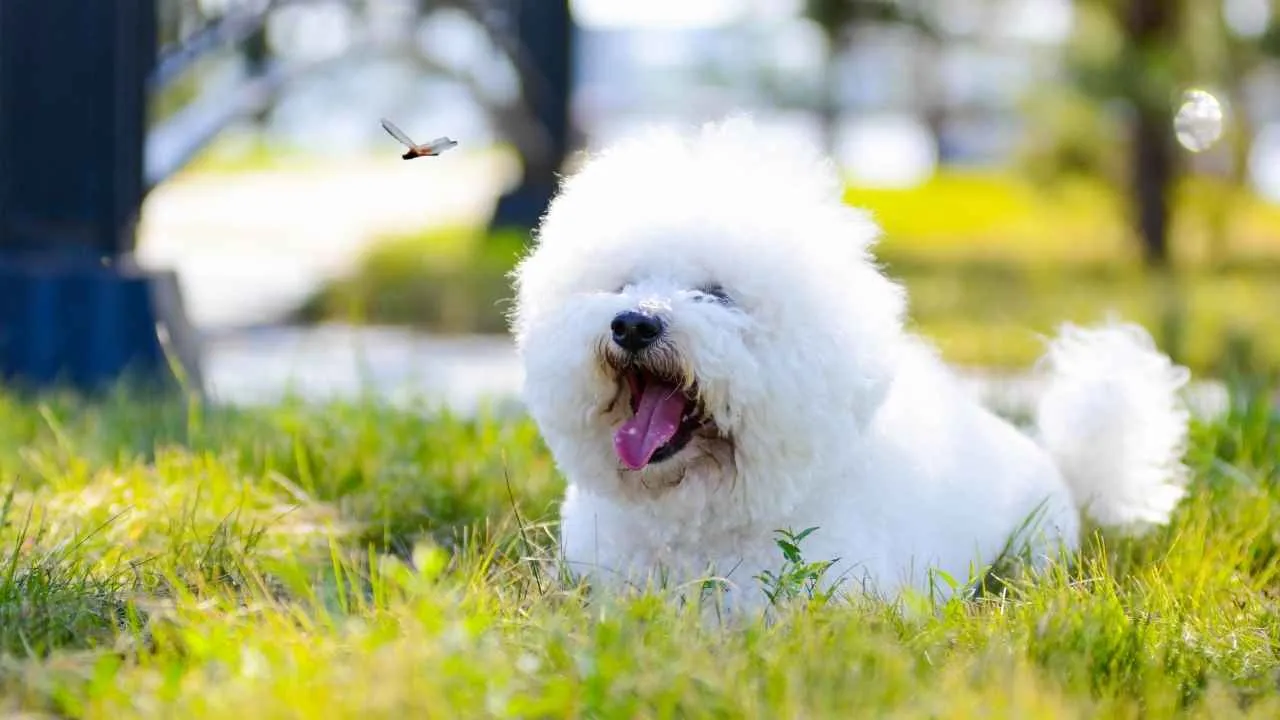
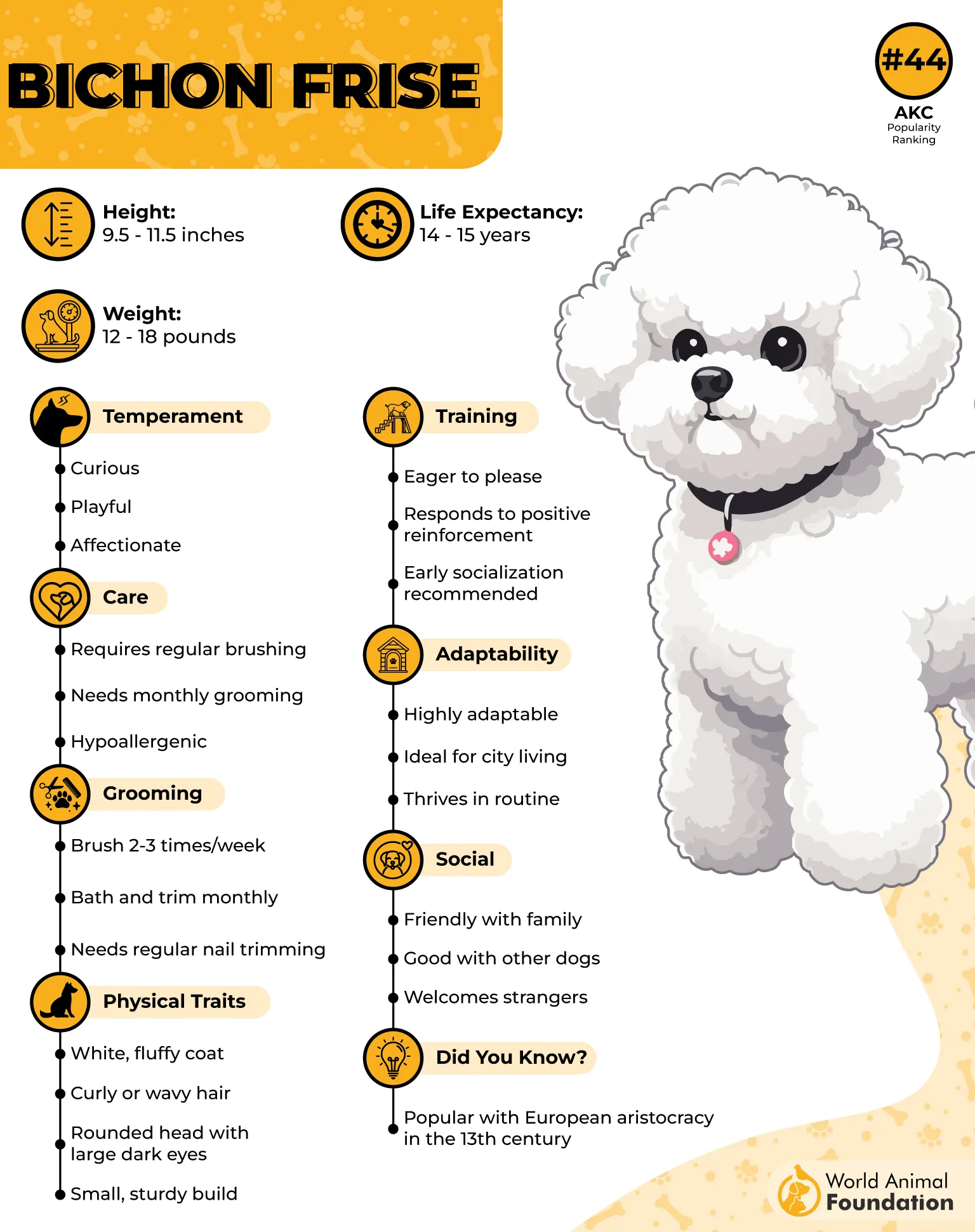
The Bichon Frise packs a lively personality into a compact frame, typically weighing between 12 and 18 pounds while standing under a foot tall. Its curiosity and enthusiasm for meeting people often make introductions feel easy and natural from an early age.
Easier on the Vacuum
It sheds less than many other breeds, which is one reason it is often discussed as a hypoallergenic option. While allergens still exist in the skin, saliva, and urine, the lighter shedding can appeal to many allergy-sensitive households.
The following details matter too:
Part of the non-sporting group
Often suitable for first-time pet parents
Fits comfortably in apartment settings
Always Ready to Join In
This hypoallergenic dog enjoys interactive games, favorite toys, and opportunities to learn new tricks throughout the day. Once that playful energy has an outlet, this affectionate companion is equally happy relaxing beside family members on the couch.
6. Portuguese Water Dog
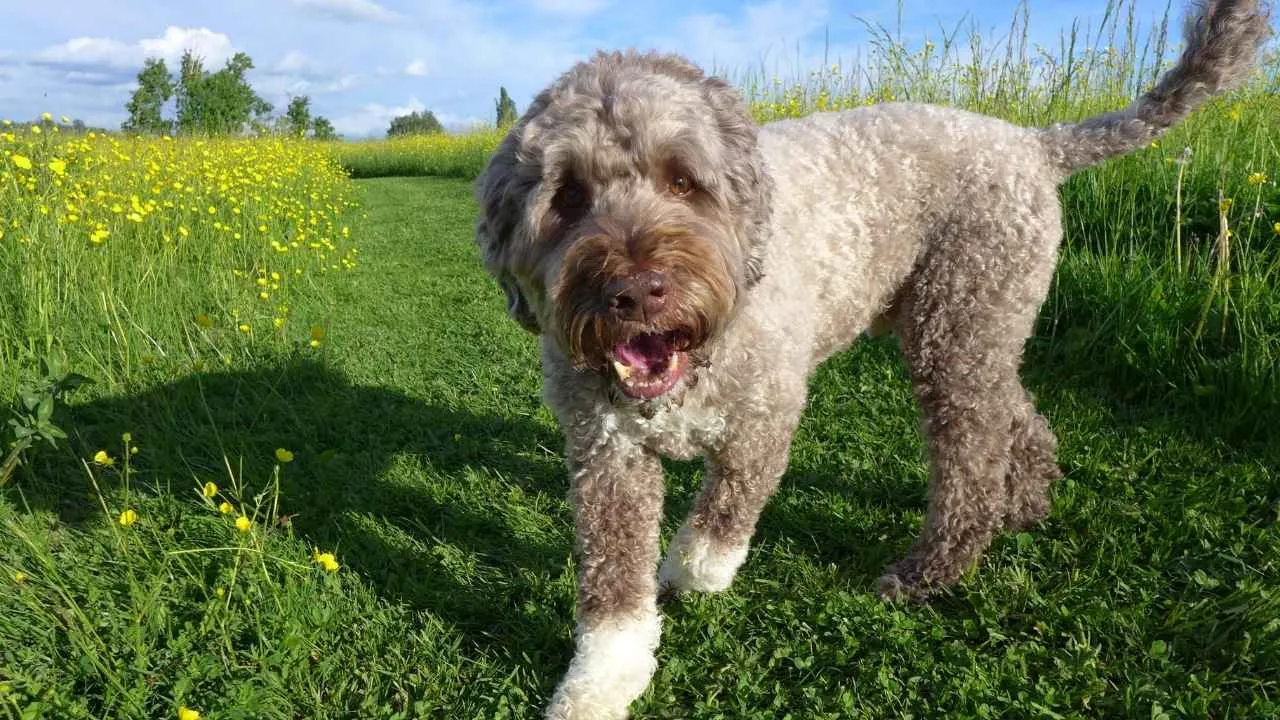
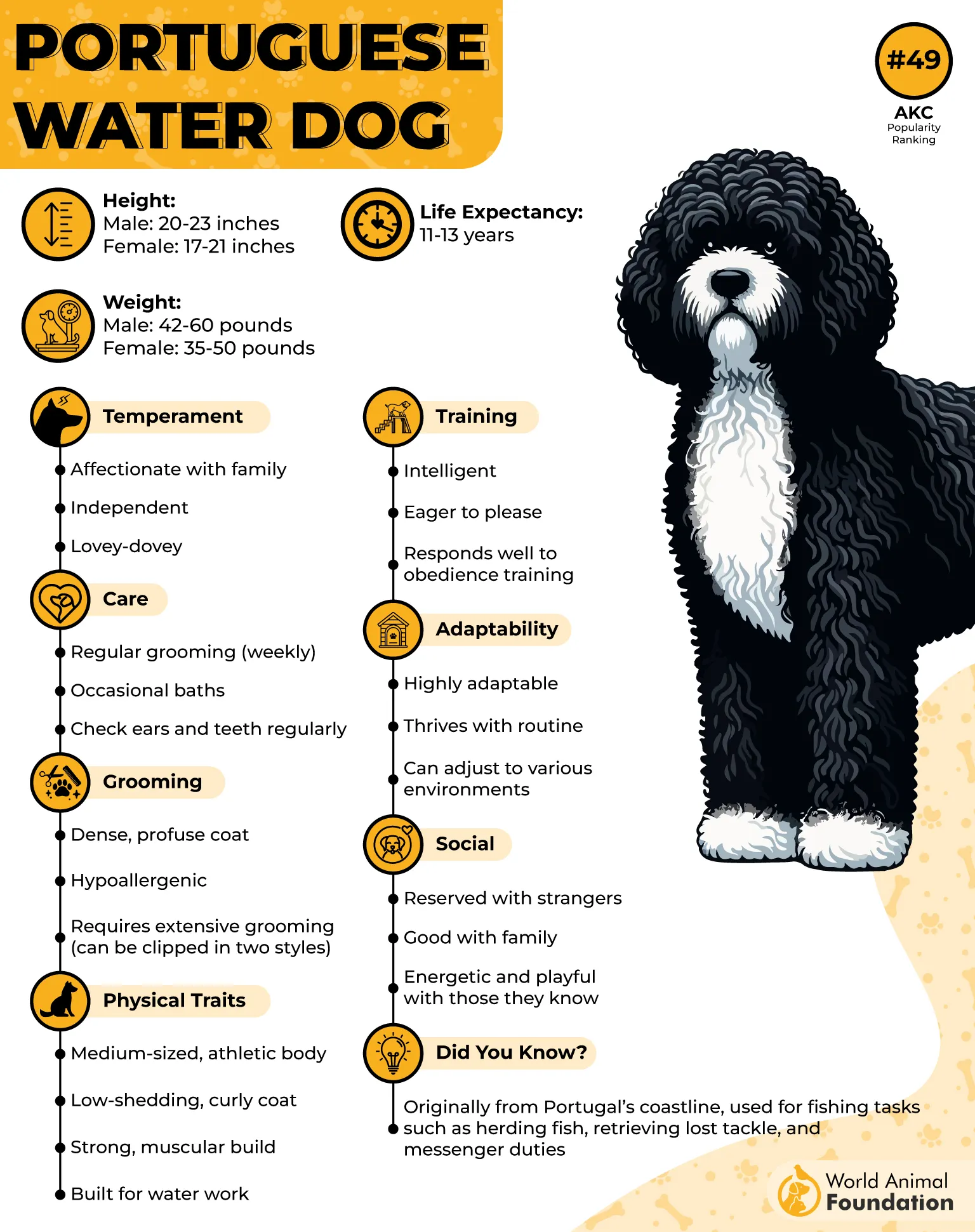
Portuguese Water Dogs made their way in assisting fishermen along Portugal’s coast, where swimming ability and a willingness to work were part of daily life. That seafaring connection still shapes the athletic, energetic character associated with the breed today.
Less Hair Around the House
PWD appeals to households looking for less loose hair because it has hair rather than fur and lacks an undercoat. As a result, it releases far less airborne dander than many breeds commonly found in family homes.
Let’s look a little closer at their interesting features:
Smart and easy to train
Medium-sized working dog
Always Looking for Something to Do
The Portuguese Water Dog combines intelligence with an active outlook, which is why early training and regular engagement matter so much. Daily activity in the range of 30 to 60 minutes helps channel the energy that originally served practical jobs on the water.
7. Chinese Crested
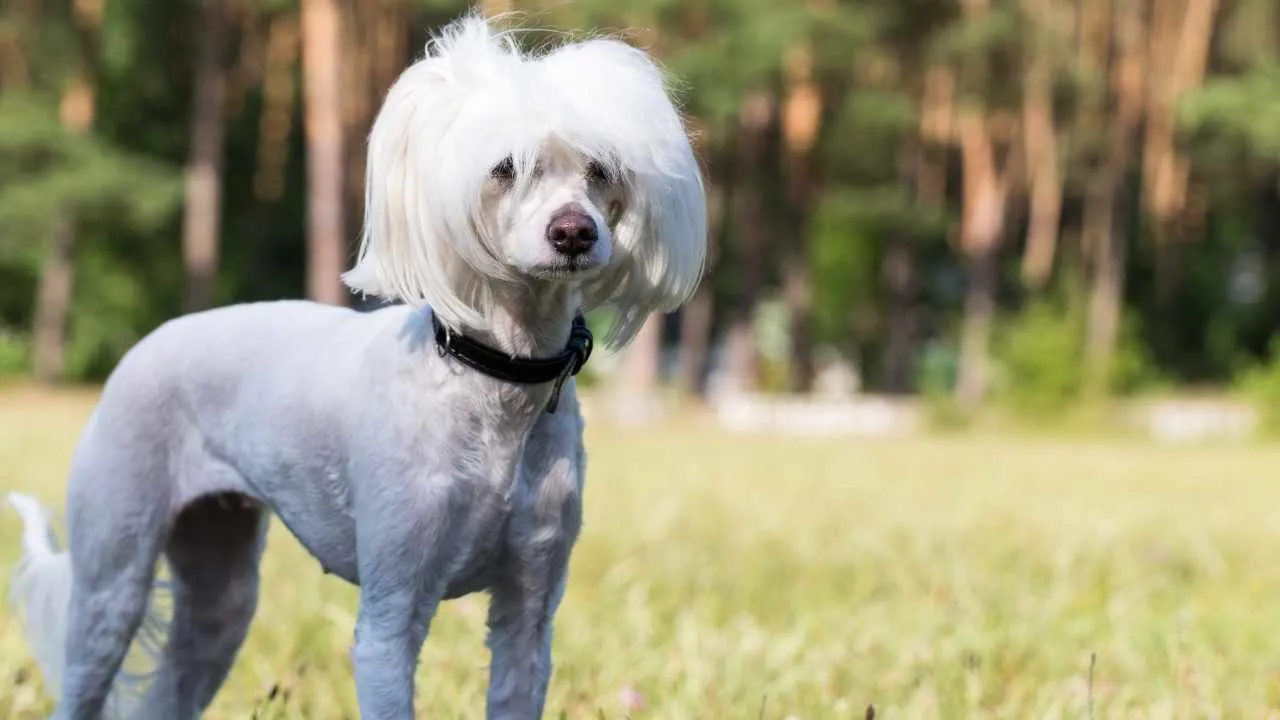
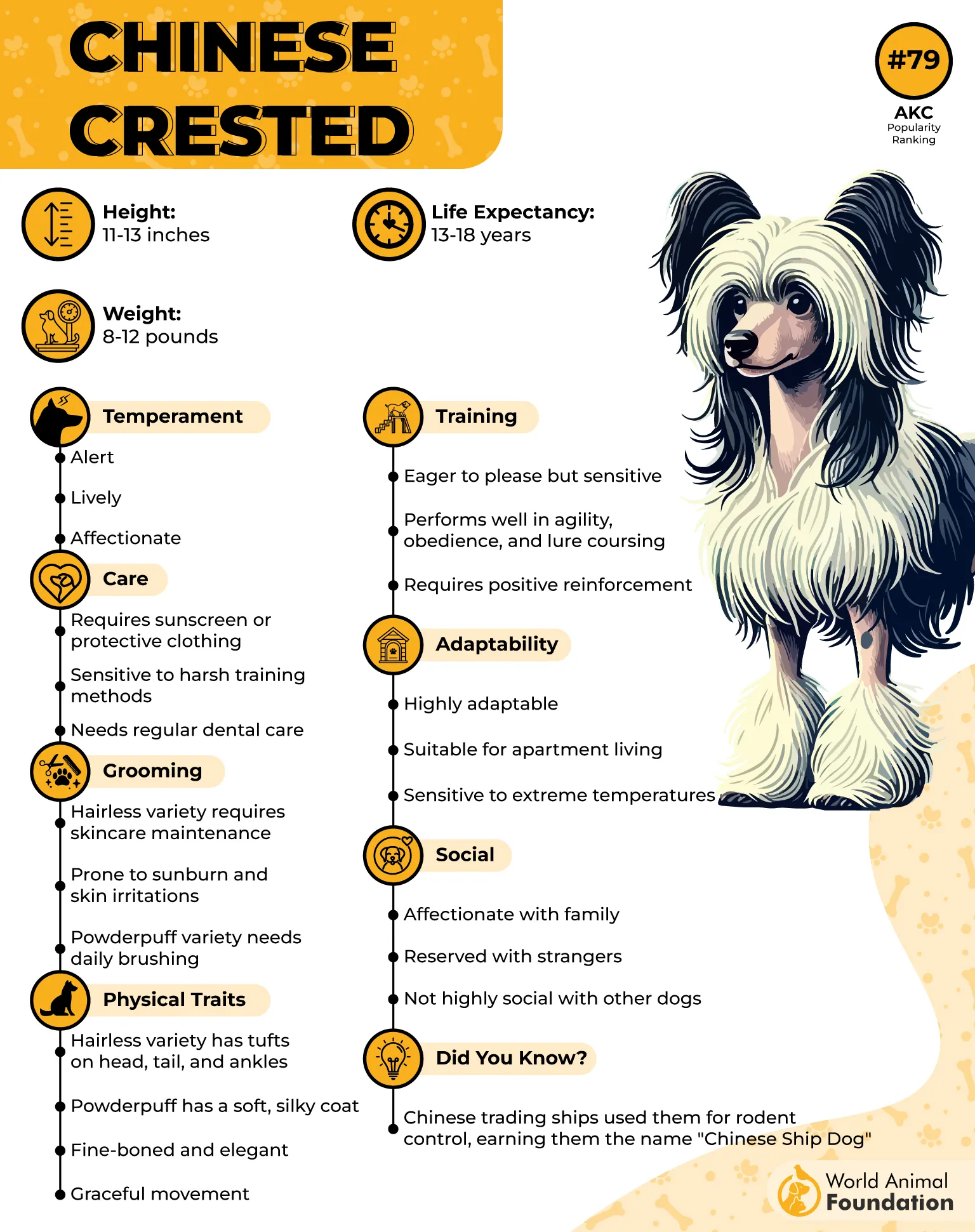
The Chinese Crested gets attention with its unusual appearance, particularly the hairless variety with smooth skin and silky tufts on the head, feet, and tail. A second variety, called the Powderpuff, grows a full coat of long, flowing hair that creates an entirely different look.
Less Hair Around the House
For households hoping to cut down on loose fur, this breed offers a practical advantage because both varieties are considered non-shedding and hypoallergenic. Coat care differs considerably depending on which type shares your home.
Its unique qualities continue here:
Genetic research points to Mexican origins
Hairless skin needs regular moisturizing
Light-colored dogs need sun protection
More Cat Than Dog?
The Chinese Crested has a quirky habit that surprises some people, as it may perch along the back of a couch, much like a cat surveying the room. Its cheerful personality also helps it fit comfortably into homes with children, other pets, and older adults.
Conclusion
Keeping a home clean becomes much simpler when a dog’s coat characteristics align with your expectations. Many hypoallergenic dog breeds shed less because their coats are more similar to human hair, reducing fur around the home. Beyond that advantage, these dogs offer personalities that range from playful and energetic to calm and affectionate.
Selecting a companion should involve more than appearance alone, since grooming requirements and lifestyle compatibility matter just as much. Some may still require professional grooming, while others are relatively low maintenance. A thoughtful decision can create a living environment that feels comfortable for everyone involved.
