




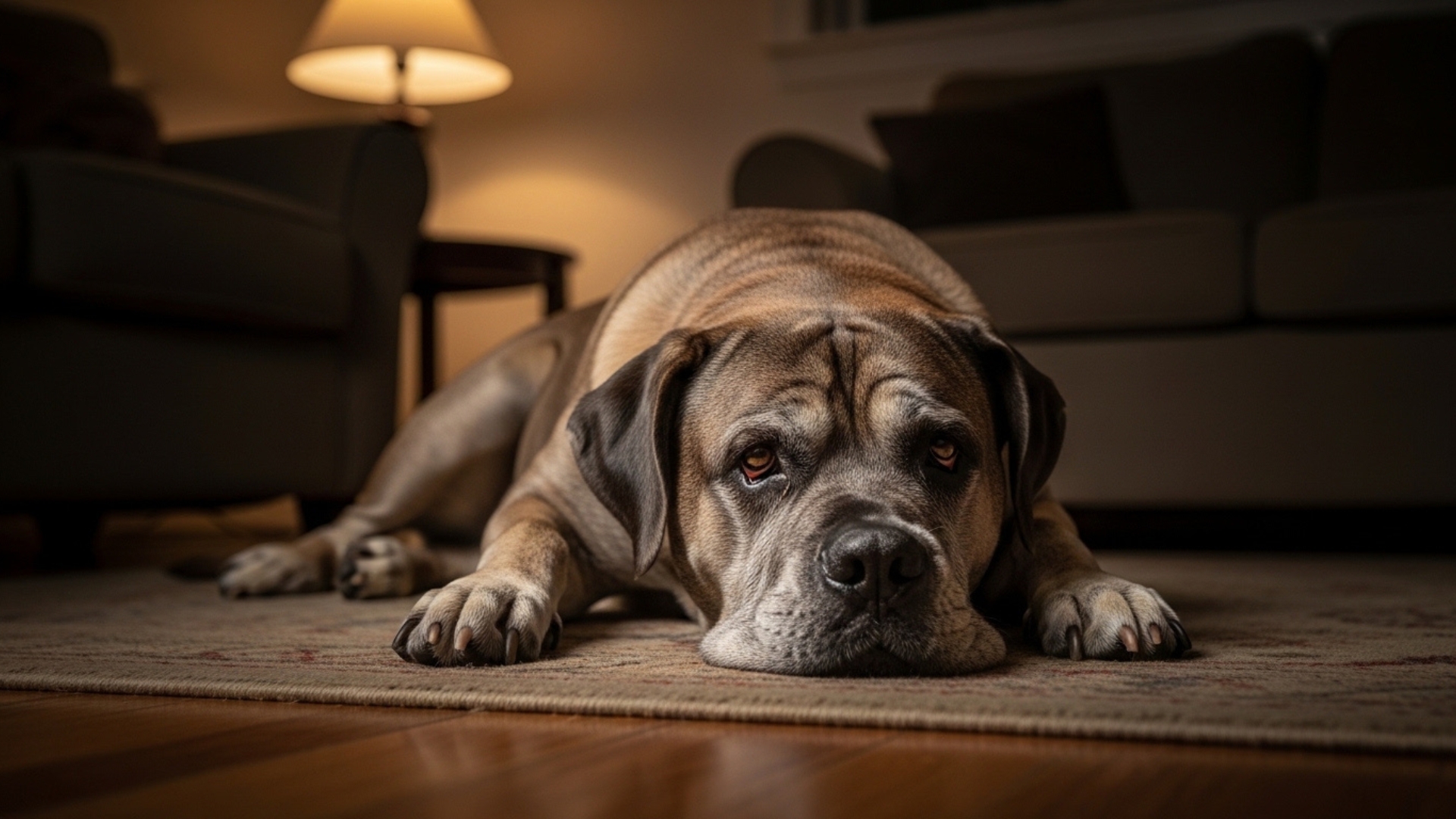
Some dogs are in our lives for a long time, and some leave us sooner than we hoped. If you are drawn to breeds known for shorter lives, it does not mean you should avoid them. It just means you should go in with open eyes, a solid care plan, and a realistic idea of what the journey can feel like.
In this guide, we will talk about why certain breeds may have shorter lifespans, what choices can support their health and comfort, and the questions to ask yourself before you bring one home.
Dog Breeds with Short Lives: Are You Prepared?
1. Great Dane
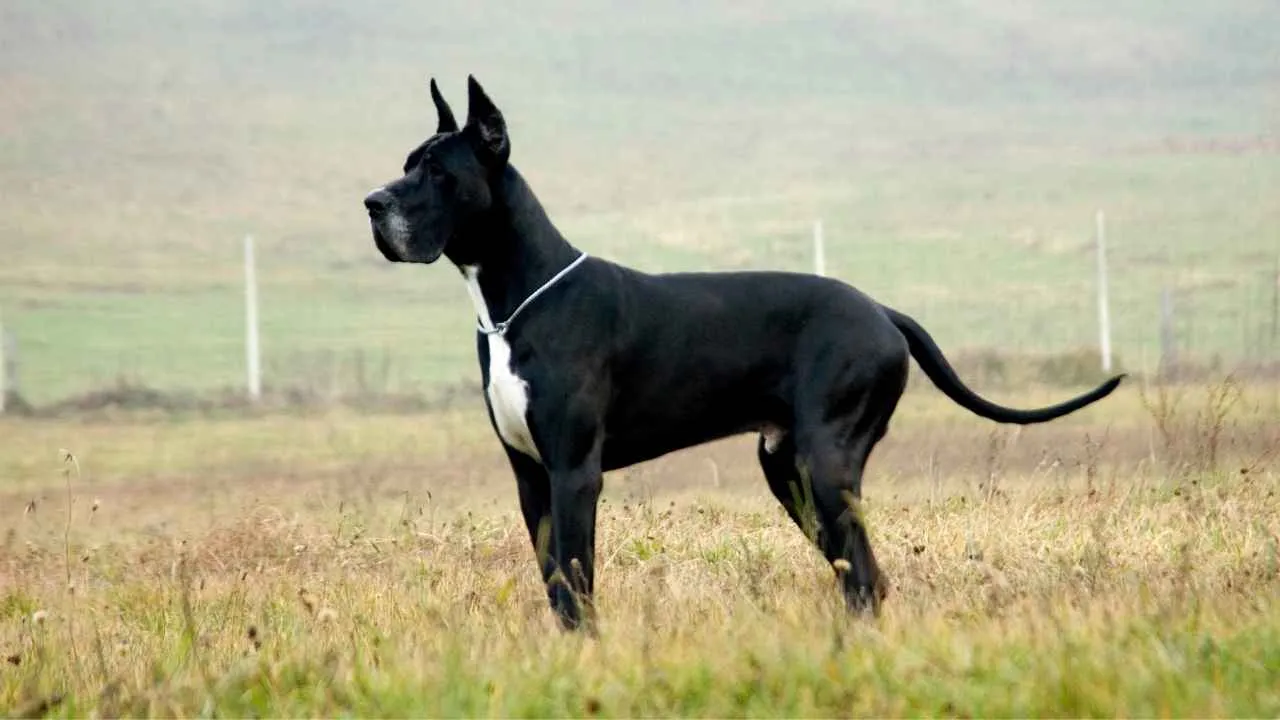
The Great Dane is a working dog developed at least 400 years ago in Germany, where it was used for boar hunting. Today, the great dane is typically swift and alert, with a reputation for courage, friendliness, and dependability, which matters when you are thinking about dog breeds with short lives.
That huge, square-jawed head and elegant body lines are part of the charm, but they also remind you that a large dog can be a bigger day-to-day responsibility.
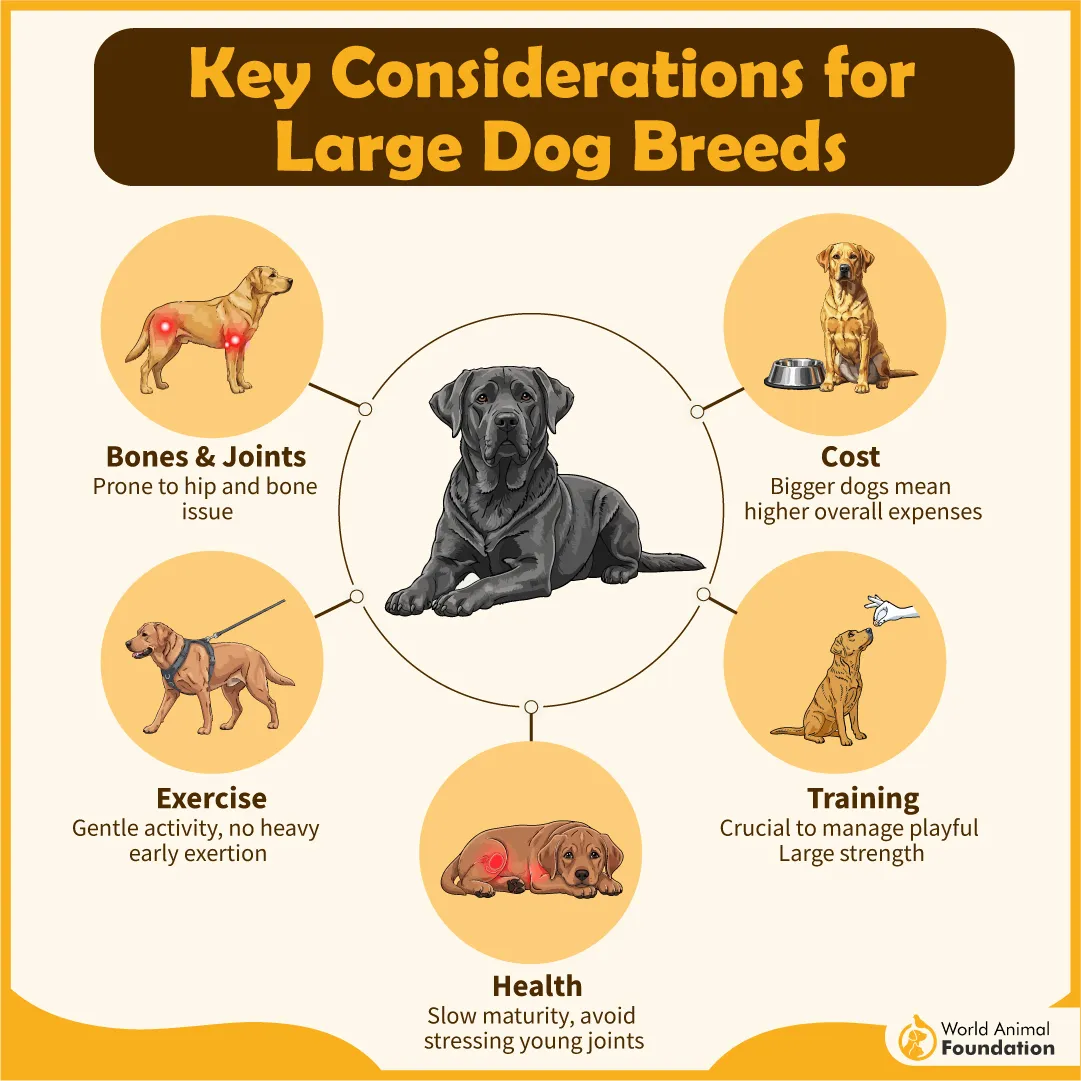
If you worry about short lifespan, start by planning for regular vet visits and asking what “good health” looks like for your house and routine, from food to calm exercise.
The great dane has a short coat that can be black, fawn, brindle, blue gray, harlequin, or mantle, with fawn and brindle dogs showing a black mask.
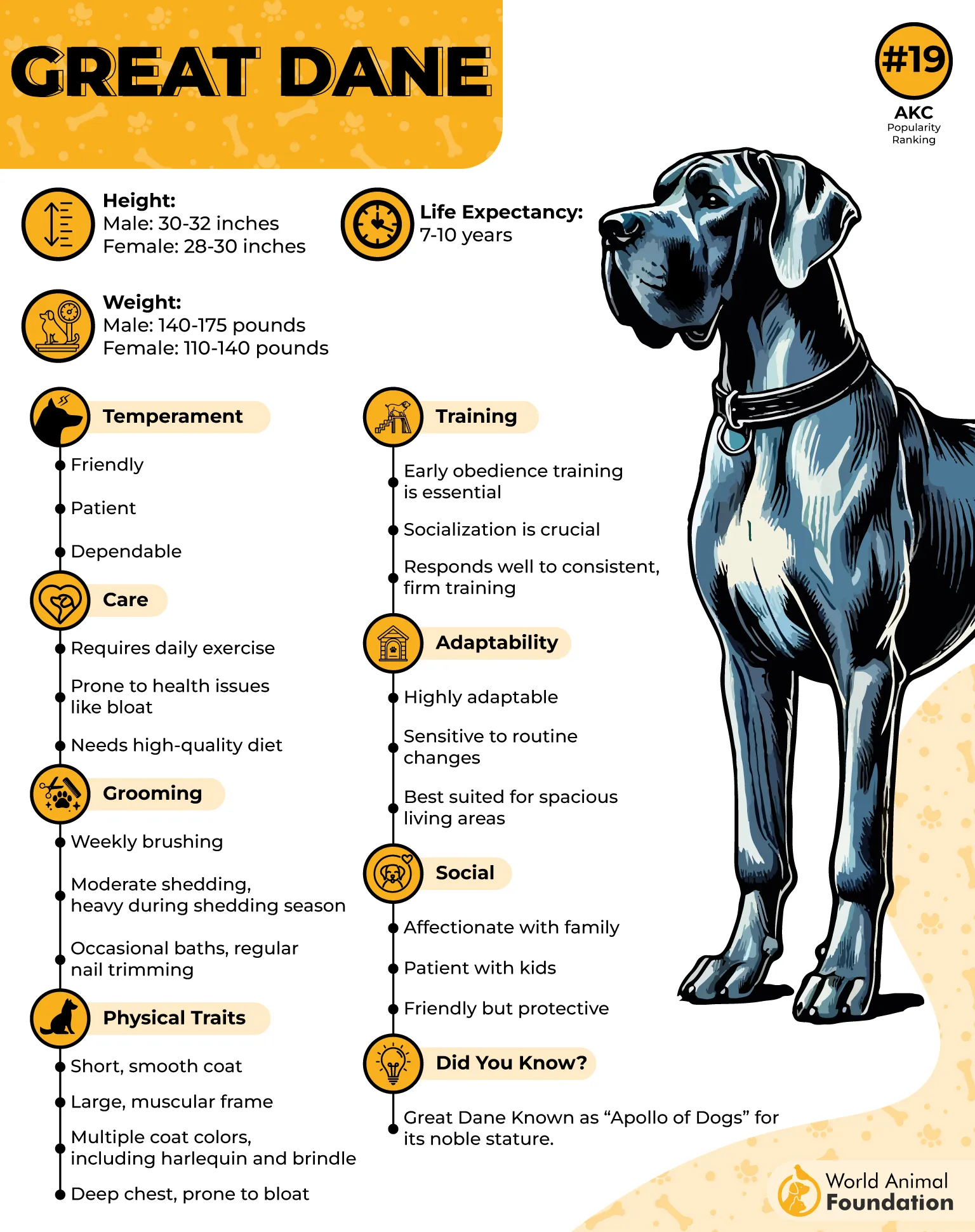
Keep toys sturdy, keep floors clear, and keep expectations realistic, because life with big dogs is about space, habits, and being prepared for the dog’s lifespan.
Why This Breed Is a Good Fit
You like giant breeds and want a friendly presence, even if you are mentally ready for shorter lifespans.
You can set a steady vet routine and stay calm about health concerns like heart disease talks and cancer checkups.
You have a house setup that fits a large-sized pup and enough toys to keep boredom from winning.
2. Bernese Mountain Dog
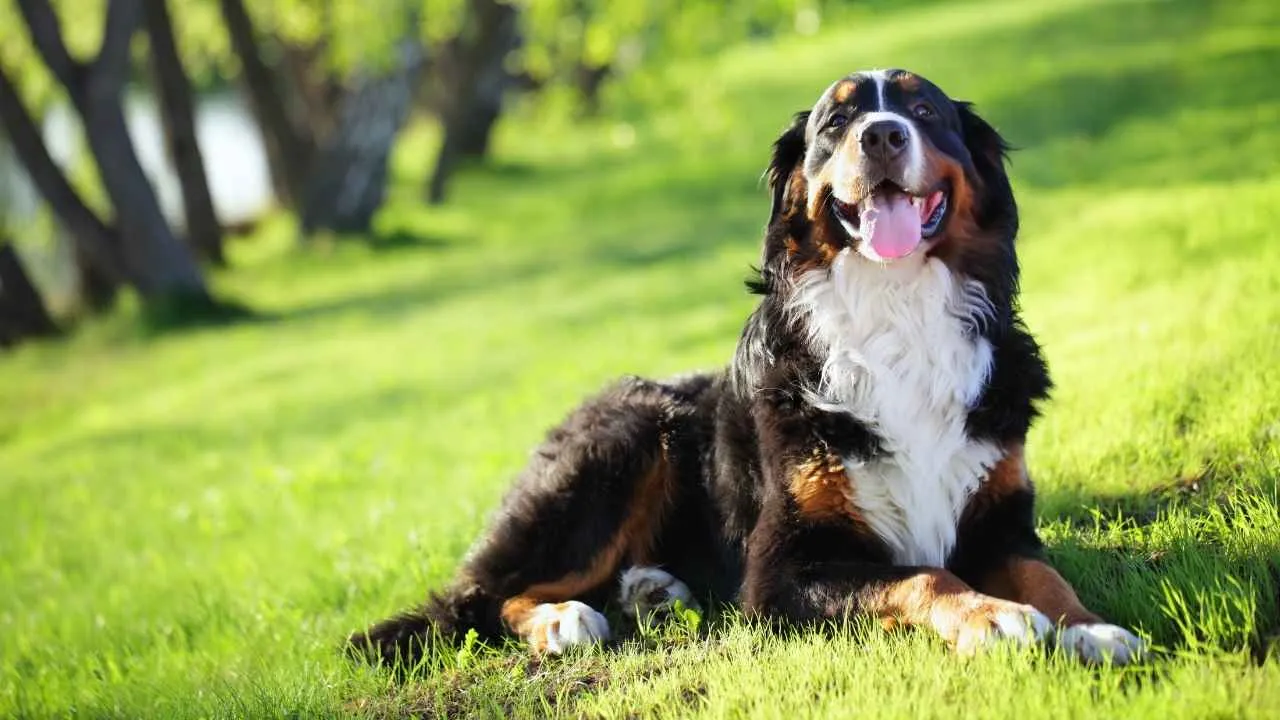
The Bernese Mountain Dog is a working dog brought to Switzerland more than 2,000 years ago by invading Romans. Bernese Mountain Dogs, also called Berners, were used to pull carts, drive cattle, and protect farms, which gives the Bernese Mountain a purposeful, steady vibe that many pet owners love.
According to Britannica, the Bernese Mountain Dog is noted for hardiness and has a broad chest, hanging V-shaped ears, and a long, silky, black coat with rust colored spots and white markings.
That beautiful coat can shape your daily life, because grooming, clean-up, and the right house habits matter when you are preparing for them without spiraling into doom.
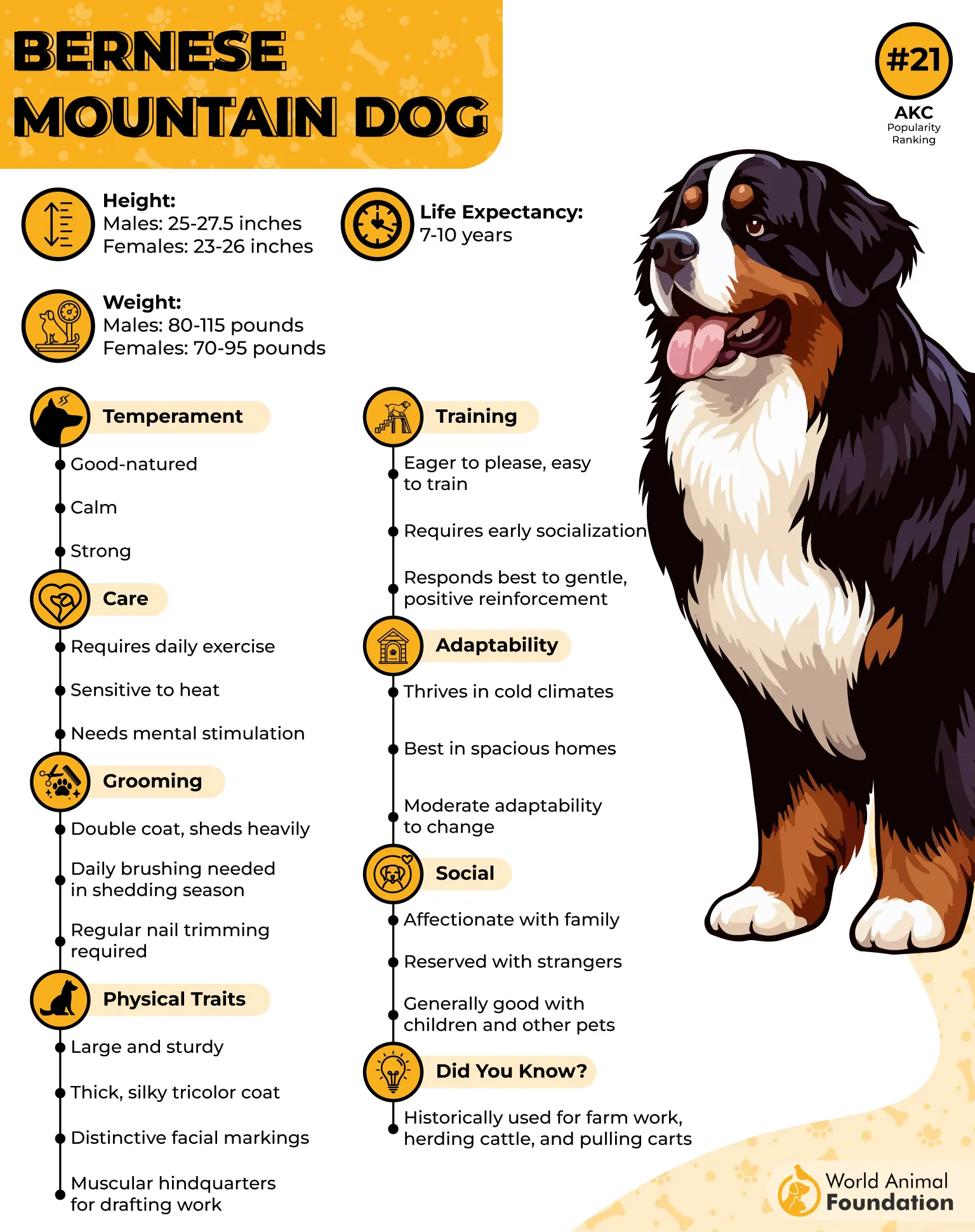
If you are reading about breeds with the shortest life expectancy, the best move is planning, not panicking. Talk with a vet about general health topics like joint disorders, hip dysplasia, and cancer.

Keep exercise calm and consistent, and choose toys that fit a large dog who likes to stay busy while living a healthy life.
Why This Breed Is a Good Fit
You want affectionate dogs with a working background, and you are prepared for the shortest life conversations.
You enjoy routines at home, including coat care, food habits, and structured toys instead of chaos.
You can commit to vet check-ins across age stages, even when the topic is shorter lifespans.
3. Bullmastiff

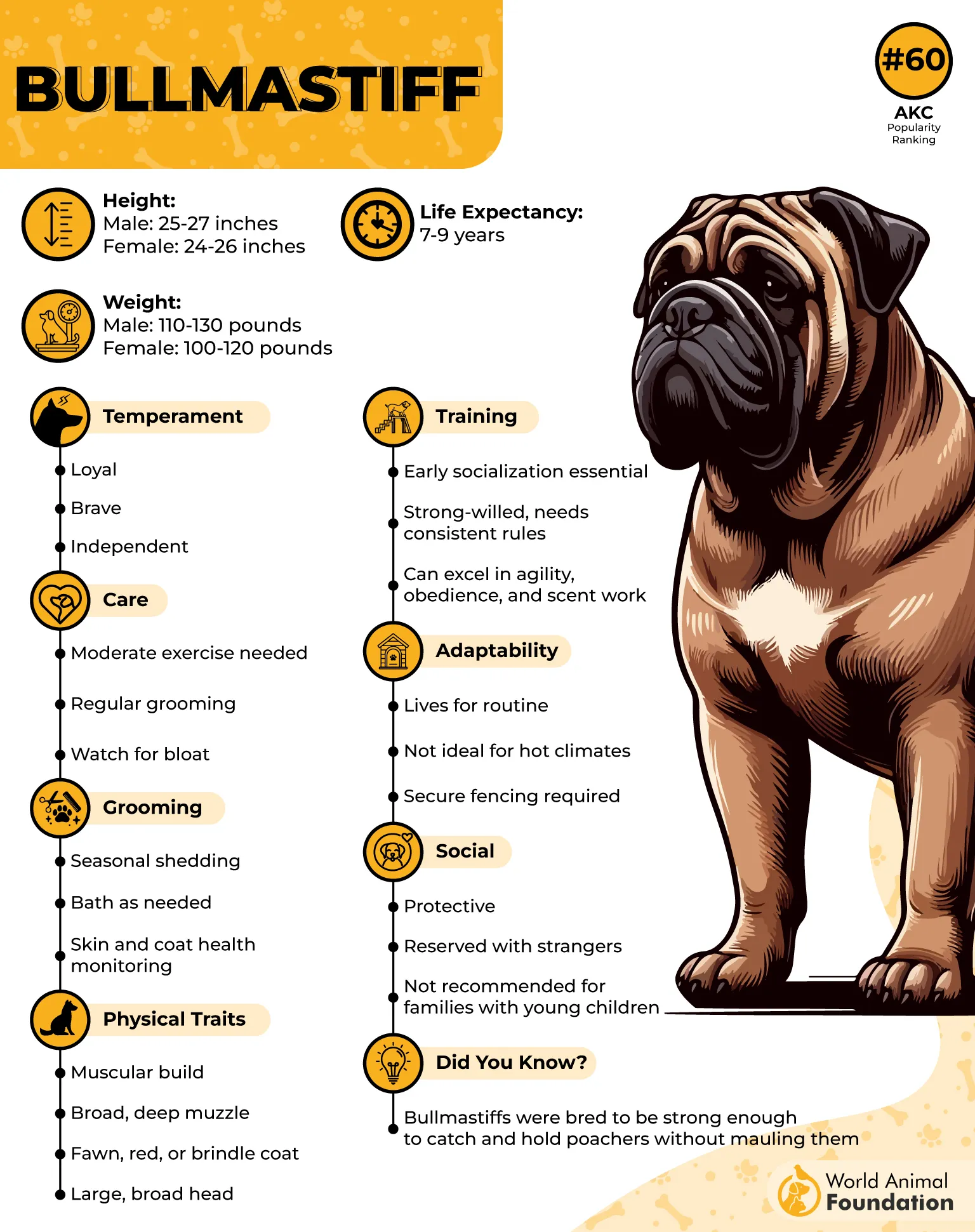
The British gamekeepers created Bullmastiff dogs by crossing Bulldogs with Mastiffs in 1860. Their goal was an extra-large guardian that listened well to cues.
According to PetMD, Bullmastiff size is impressive, with a weight range of 100 to 130 pounds and a shoulder height of 24 to 27 inches, depending on gender.
That large size can shape your house choices, from sturdy toys to safe spaces, and it can also shape how you think about average lifespan and planning in a calm, practical way.
These dogs are known for a large, broad head, V-shaped ears, dark eyes, and a muscular build, plus a short, dense coat in fawn, red, or brindle.
If you want to be prepared, keep your vet relationship strong, ask about general health issues like heart disease screening and skin infections, and create a routine that supports good health without turning life into a checklist.
Why This Breed Is a Good Fit
You like big dogs that listen well to cues, and you can handle the responsibility that comes with shorter lifespans.
You can keep a steady vet plan for health problems talk, including cancer awareness, without guessing or Googling at midnight.
You have a house that can handle a muscular pet and enough durable toys to prevent “I ate the couch” moments.
4. Irish Wolfhound
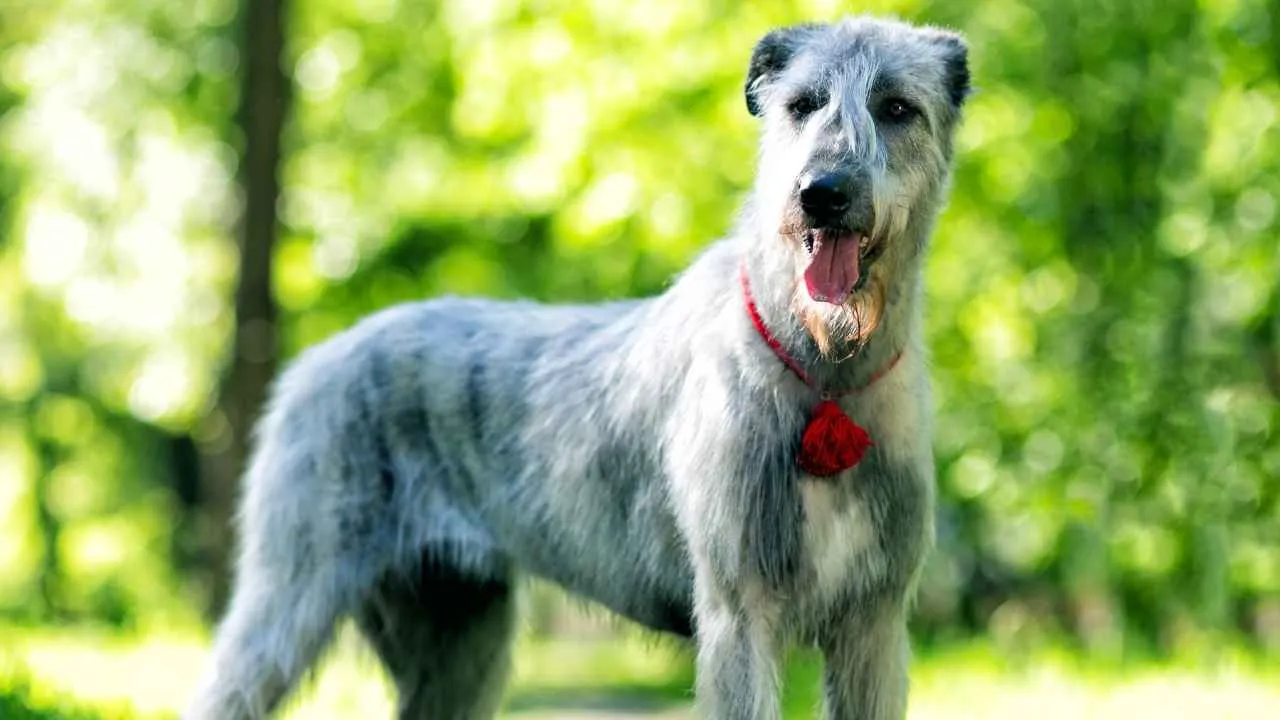
The Irish Wolfhound is described as calm, dignified, and kindly, and it is the tallest of all AKC breeds. Once fearless big game hunters, these giant dogs today are serene companions, which is great if you want a calm home, even while thinking about breeds with the short lives.
This is an immense, muscular hound built along classic Greyhound lines and capable of great speed at the gallop.
A male might stand nearly 3 feet at the shoulder and weigh up to 180 pounds, so planning your house and your daily life is not optional, especially if the dog’s lifespan is on your mind.
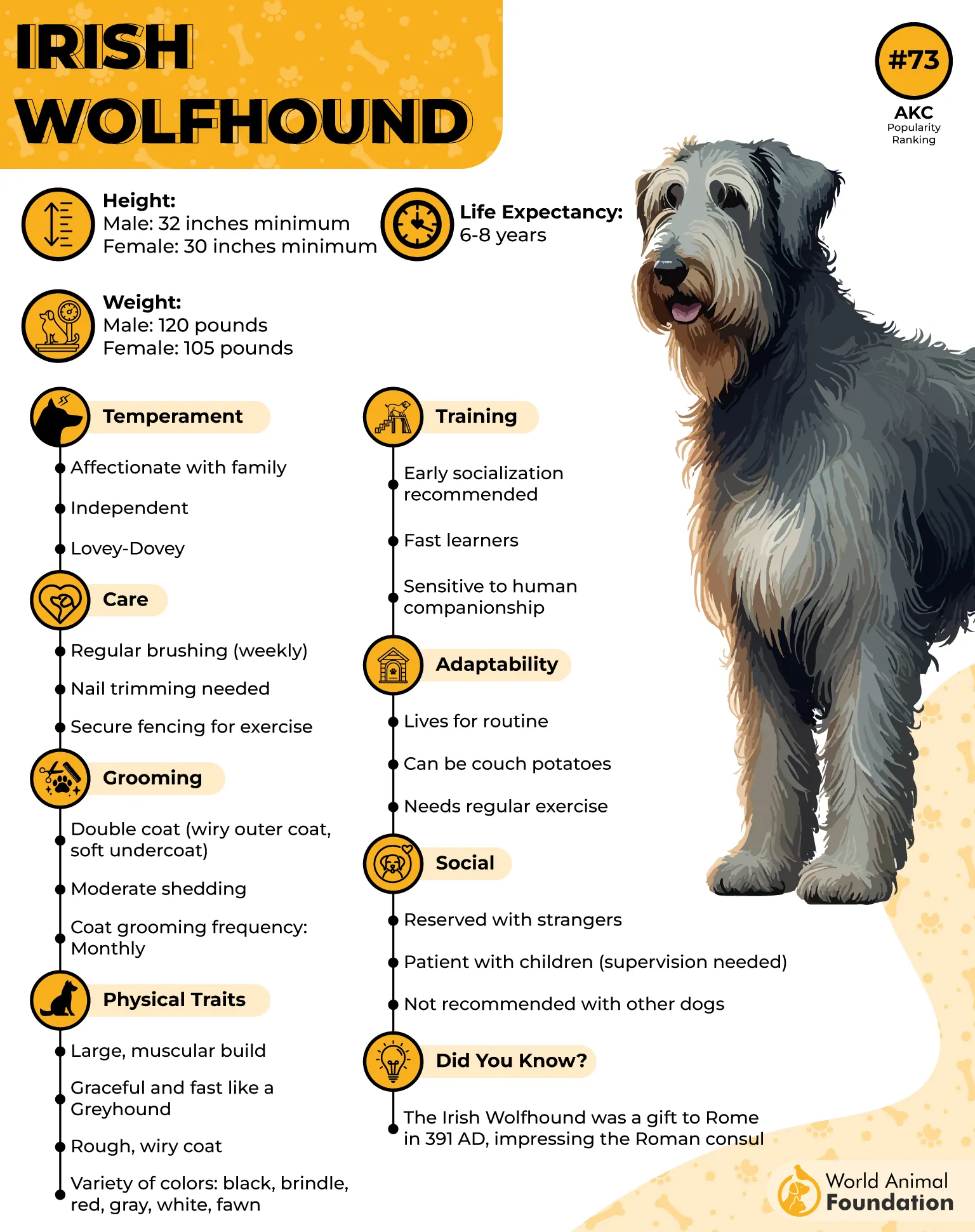
The rough, hard coat comes in many colors, and the breed is too serene to be a fierce guard dog, though the sight of one can deter intruders.
They are patient with kids but should be supervised around small children, and owning one is a commitment as big as the dog itself, so talk with a vet about general health topics like dilated cardiomyopathy, joint problems, and cancer, and keep toys sized for a gentle giant.
Why This Breed Is a Good Fit
You want a calm, agreeable pet, and you are emotionally ready for the short time without losing joy.
You can create a safe house routine for a giant breed pup, including toys that will not disappear in one gulp.
You will lean on a vet for good health planning as age changes, including heart disease conversations.
5. Dogue De Bordeaux

The Dogue de Bordeaux, also known as the Bordeaux Mastiff or French Mastiff, is a large and powerful breed that originated in France.
According to WebMD, Dogue de Bordeaux dogs are often brave, loving, and typically not aggressive. They tend to bond closely with their owner, which makes them a strong pick for companionship.
Its lineage can be traced back to the 14th century, and it gained popularity in the Bordeaux region of France.
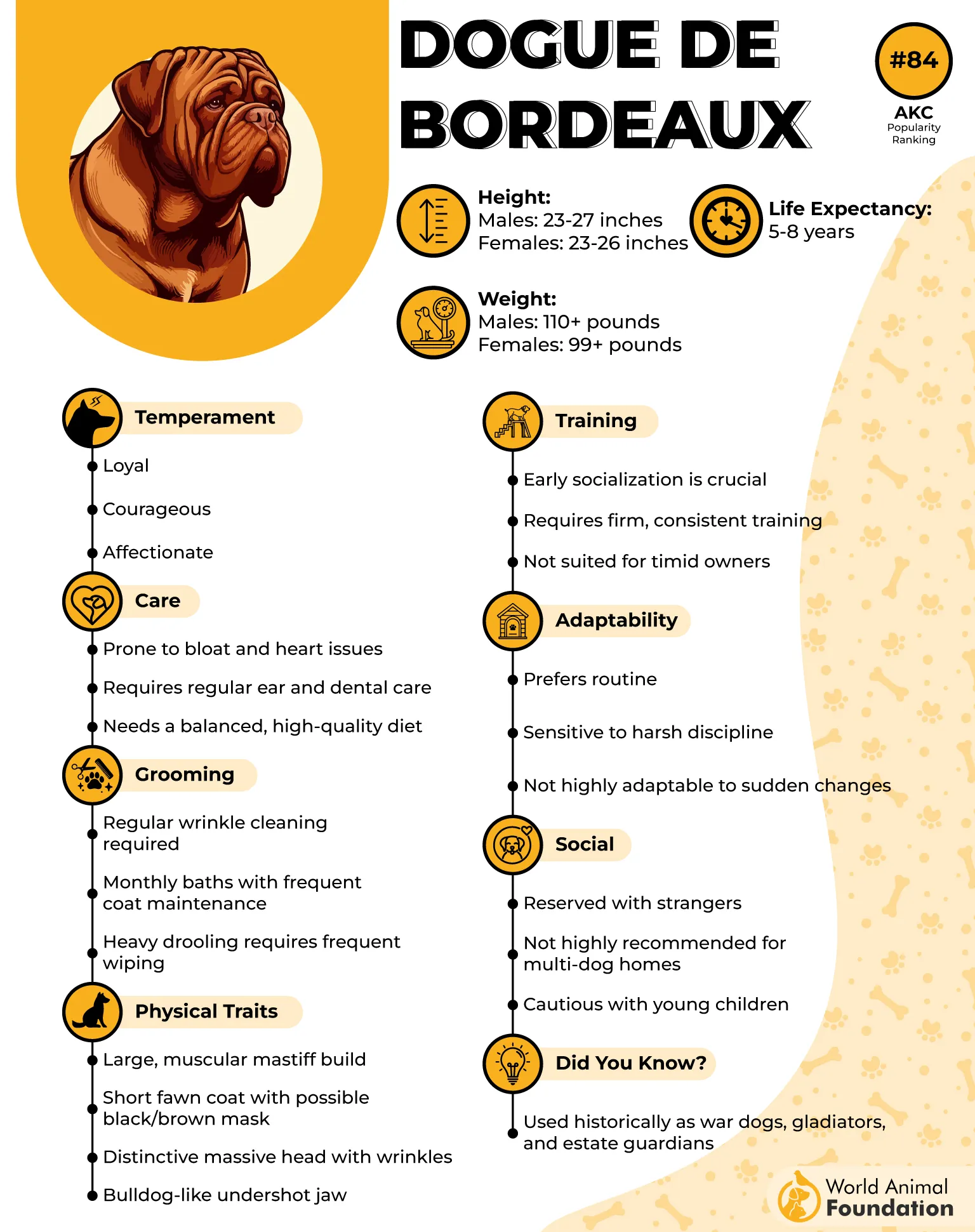
This is a tall, muscular dog with a broad head and a distinctive, wrinkled forehead, so daily life often means making your house comfortable, keeping routines simple, and having toys that match a strong pet.
If you are focused on breeds with the short lifespan, be proactive by building a vet routine that covers general health issues like cancer, heart disease, and brachycephalic airway syndrome discussions, plus careful food choices and calm exercise that fits your pet and lifestyle.
Why This Breed Is a Good Fit
You like a powerful working history and can stay practical about shorter lifespan planning.
You can keep a vet involved as age progresses, including health concerns like cancer check-ins and breathing talks.
You have a house setup for a large dog, plus tough toys that survive serious jaws.
6. Newfoundland
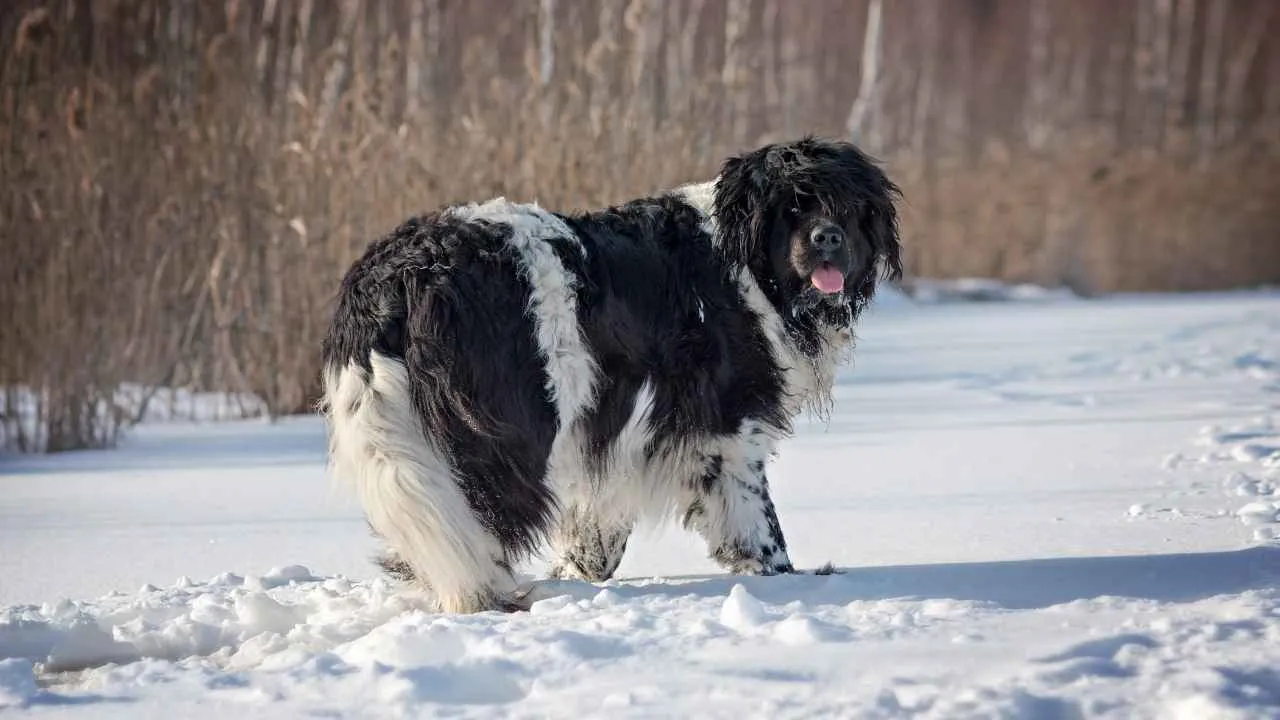
The Newfoundland is described as massive, strikingly large, and powerful, with heavy bone and a dignified bearing.
The sweet-tempered Newfie is a famously good companion and has a reputation as a patient, watchful “nanny dog” for kids, which can feel reassuring even when you are reading about dog breeds and the shortest expectancy worries.
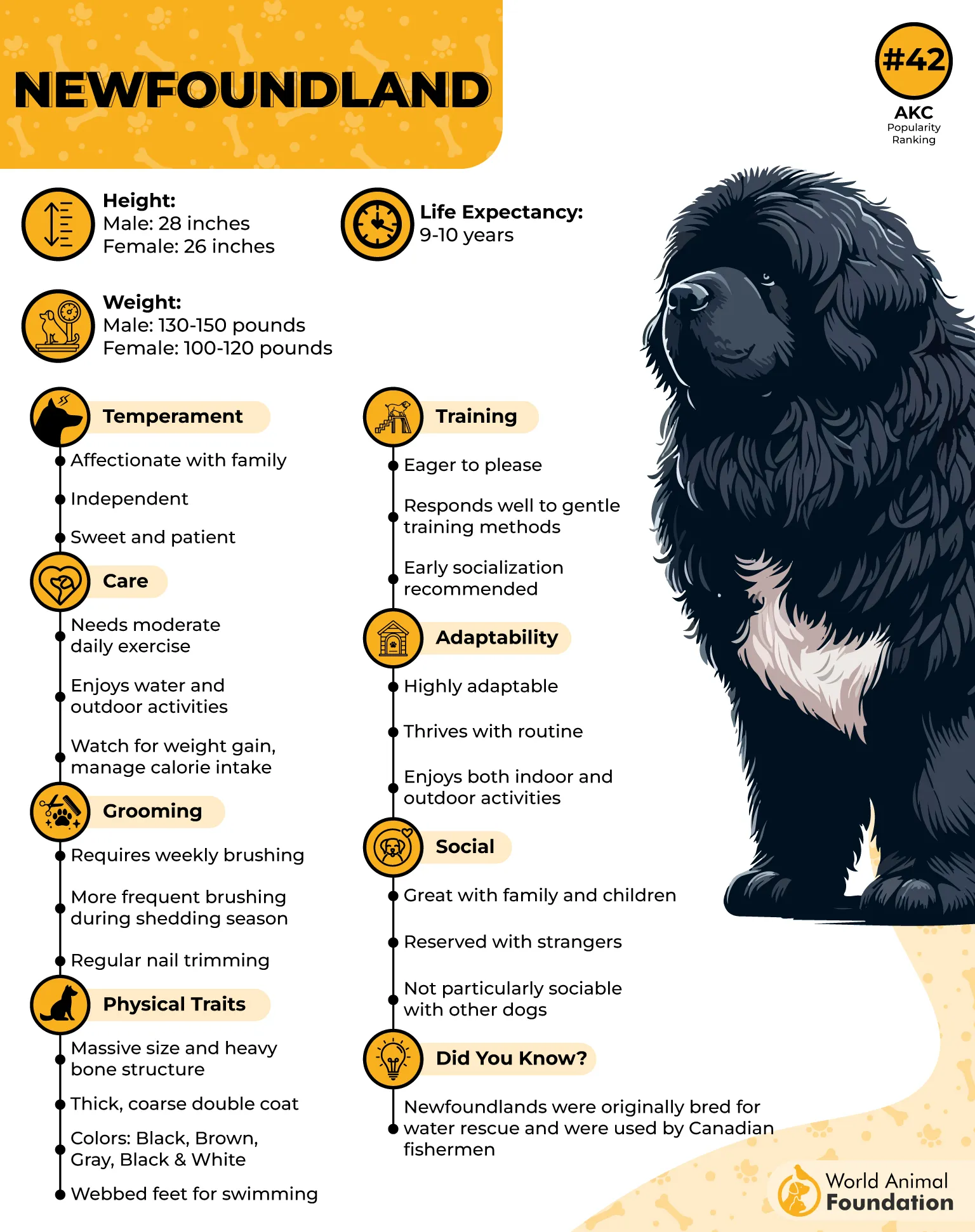
The head is majestic and the expression soft and soulful, and the outer coat is flat and coarse, coming in gray, brown, black, or black and white, which shapes your day-to-day life at home.
The breed standard says sweet temperament is the most important single characteristic, and Newfs respond well to gentle guidance.
Because these are giant breeds and acquiring a pet that could outweigh you comes with challenges, talk with a vet about general health topics like heart disease, joint disorders, and cancer, keep exercise steady and calm, and choose toys that keep big dogs busy without wrecking your house.
Why This Breed Is a Good Fit
You want a gentle family vibe and can handle the practical side of shorter lifespan planning.
You are ready to manage a large-sized pet at home, including space, training, and a mountain of toys.
You will keep a vet close for good health support as life moves through different age stages.
7. Saint Bernard
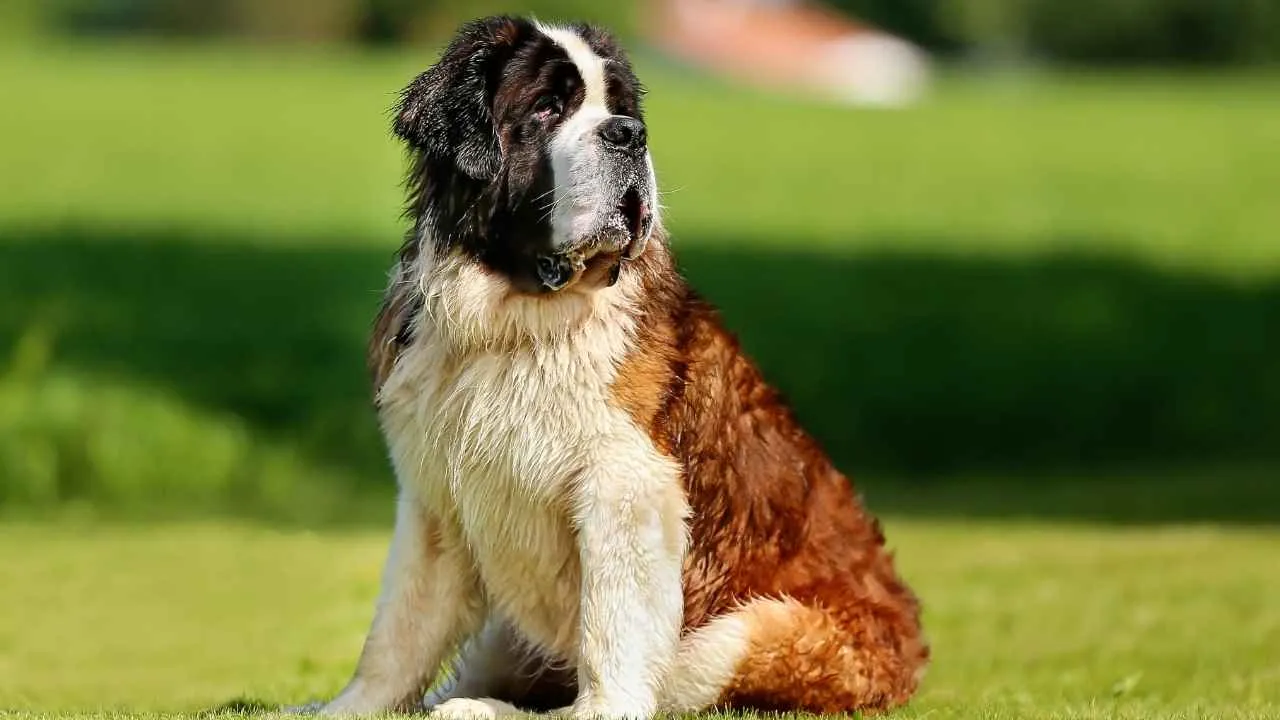
The Saint Bernard is a working dog credited with saving hundreds of lives in centuries of service as a pathfinder and rescue dog.
The breed is named after Saint Bernard, an 11th century Catholic archdeacon linked to hospices at two Alpine mountain passes later called the Great and Little St. Bernard passes along the Italian Swiss border, which gives this large dog breed’s legend a serious, meaningful backstory.
That rescue dogs’ heritage connects naturally to the article’s theme because commitment is not just about the cute days. A Saint Bernard is the kind of pet that asks you to think about your house setup, and your ability to handle big dogs with patience, calm routines, and plenty of room.
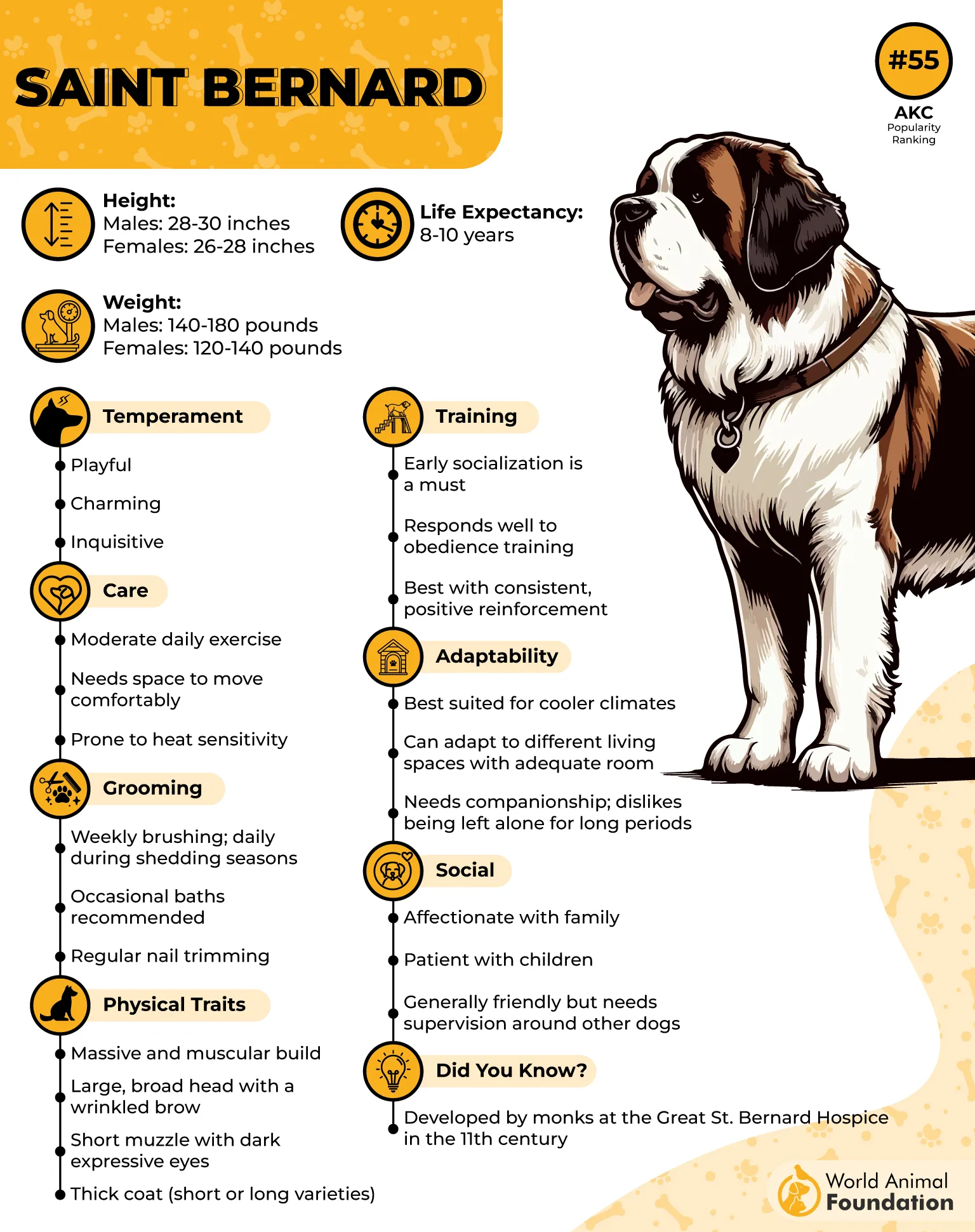
If you are drawn to topics with the shortest life expectancy, focus on preparation and support. Build a steady vet relationship and discuss general health issues like cancer, heart disease, and joint disorders.
Keep exercise calm, keep food consistent, and pick toys that suit a large dog who can turn a “small chew” into a magic trick.
Why This Breed Is a Good Fit
You love a rescue dog story and can still face a shorter lifespan with a grounded mindset.
You can manage a large dog in your house, including calm routines, safe spaces, and durable toys.
You will work with a vet across age changes, including health problems, such as cancer and heart disease screening.
Conclusion
Choosing dog breeds with short lives can feel a little scary, but it can also be deeply meaningful. The key is being honest about your time, budget, and emotional readiness, because the shortest life reality still deserves a warm, steady home.
If you can build a strong bond with your dog, keep health routines simple, and stay alert to changes as your pet’s age moves forward, you will be better prepared for your dog’s lifespan.
These large breeds can bring a lot of joy in a shorter window, and that is not “less,” it is simply different. Love them well, keep life fun with toys and calm routines, and focus on quality days, not just the number of years.
