




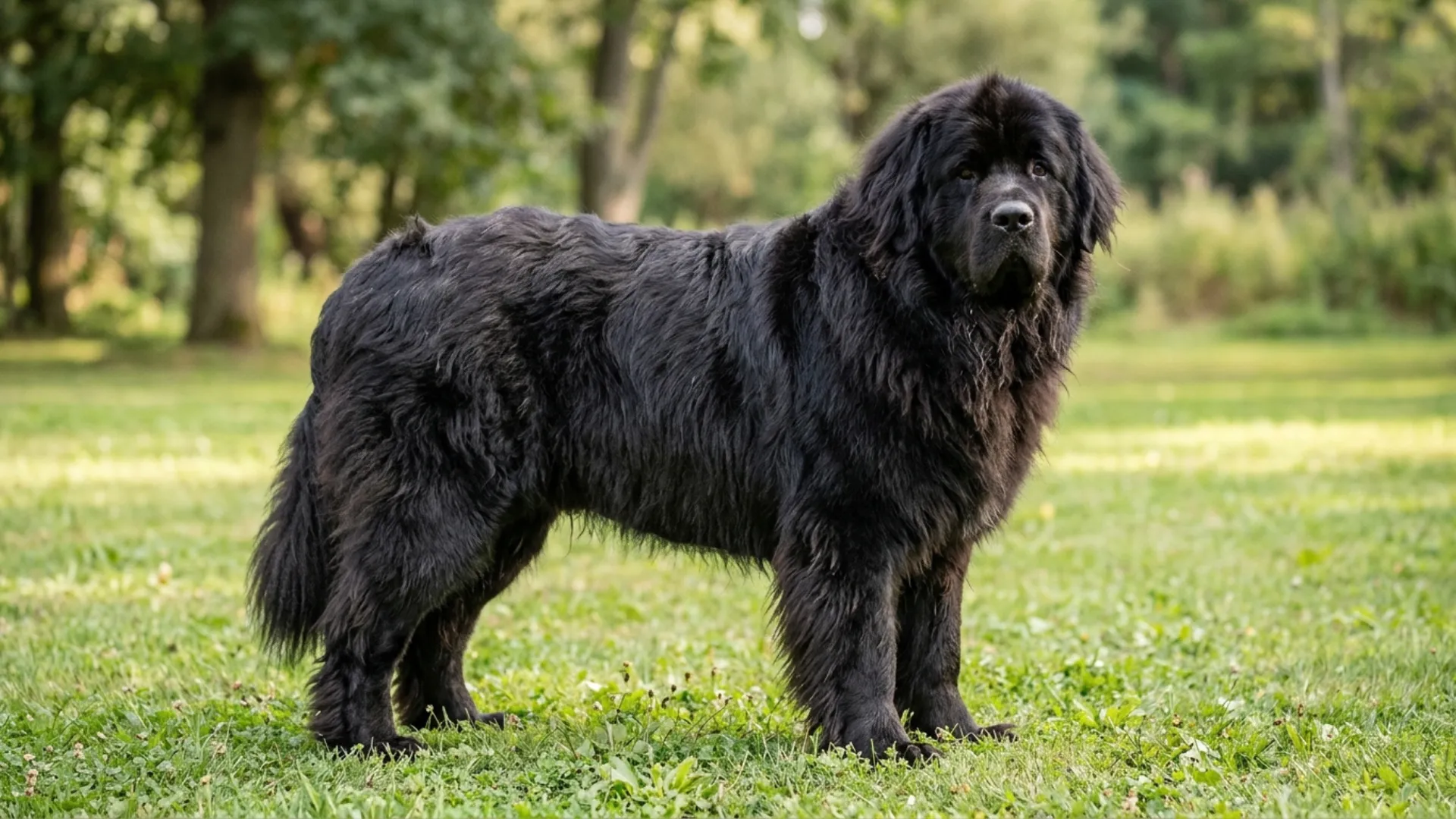
Some dogs have a little fur; others look like they stepped straight out of a luxury teddy bear collection. From majestic lion-like manes to thick, cloud-soft coats, naturally fluffy dog breeds are basically walking bundles of happiness with seriously impressive hairstyles.
But here’s the fascinating part: those gorgeous fuzzy layers aren’t just for collecting compliments; they often serve important purposes by protecting dogs from challenging weather conditions.
Many of the fluffiest breeds have double coats, featuring a soft, insulating undercoat beneath longer, protective guard hairs. These layers developed through generations of adaptation and selective breeding, helping working dogs handle cold environments, moisture, and outdoor adventures.
If you’re ready to discover the incredible personalities and fascinating coats behind these adorable fluffballs, these top dog breeds with naturally fluffy, fuzzy layers must have a spot on your radar.
Top Dog Breeds with Naturally Fluffy, Fuzzy Layers
1. Leonberger

The Leonberger looks like someone combined a majestic lion, a giant teddy bear, and the fluffiest blanket imaginable into one magnificent dog. Originating in Leonberg, Germany, this enormous working breed is famous for its abundant coat, impressive size, and signature lion-like appearance.
Its luxurious look comes from a double coat that combines a relatively long, straight-to-slightly-wavy outer layer with a thick, soft undercoat. The longer guard hairs protect against moisture and everyday debris, while the dense undercoat insulates in colder conditions.
Together, these layers create a full, natural silhouette that makes Leonbergers look impressively shaggy without appearing excessively woolly.
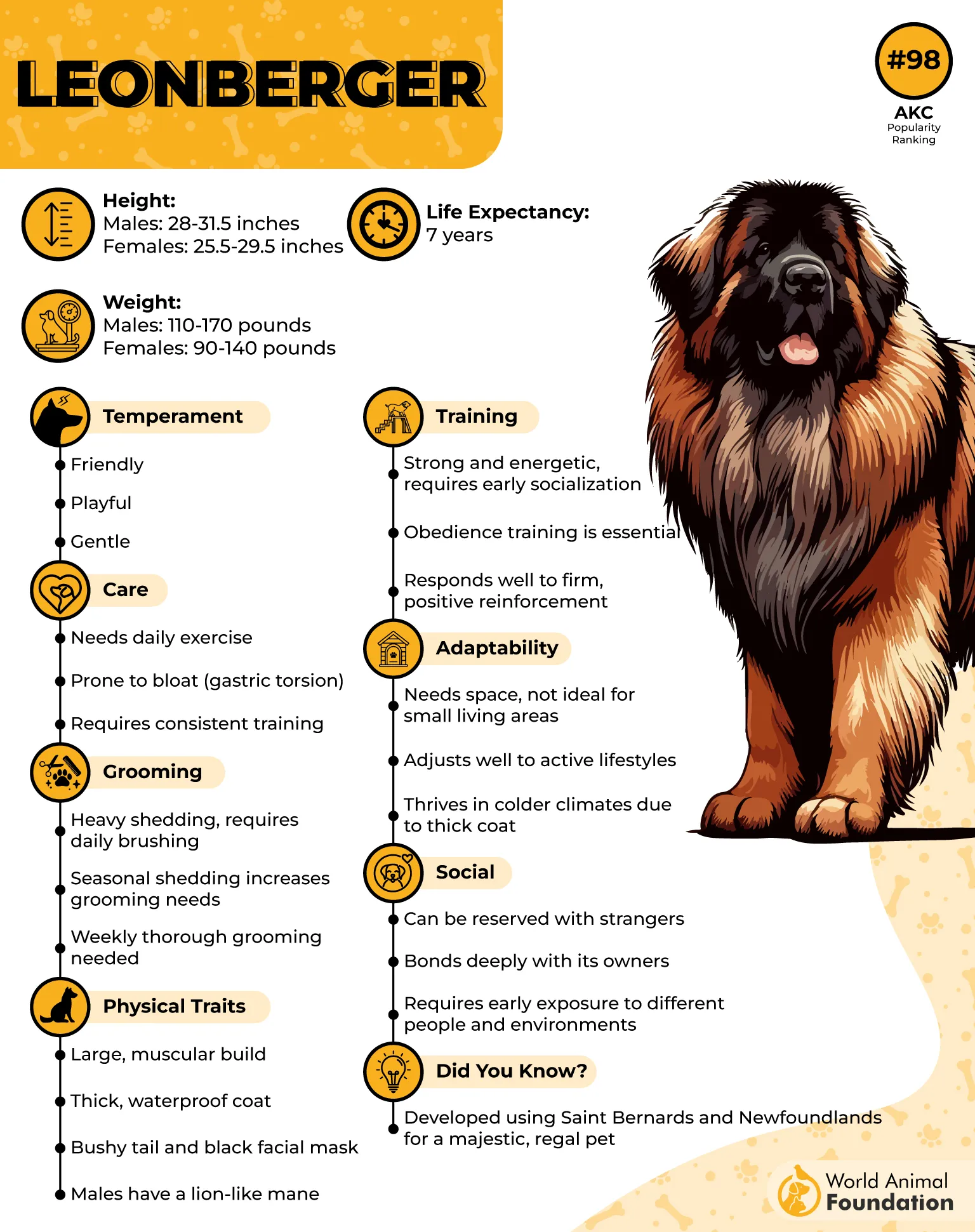
One particularly eye-catching feature is the dramatic mane surrounding the neck and chest, especially in mature males. Omlet says their fur can show beautiful combinations of lion-yellow, golden, reddish-brown, and sandy shades, usually paired with a distinctive black facial mask.
Long feathering along the legs, belly, and tail adds movement and creates an elegant appearance whenever these enormous dogs walk through the yard.
Maintaining this magnificent hairstyle takes dedication because these affectionate dogs shed year-round and often shed considerably more undercoat during seasonal changes. Regular brushing with a suitable slicker brush, undercoat rake, and comb helps remove loose hair and prevent tangles around the ears, armpits, and hindquarters.
2. Pekingese
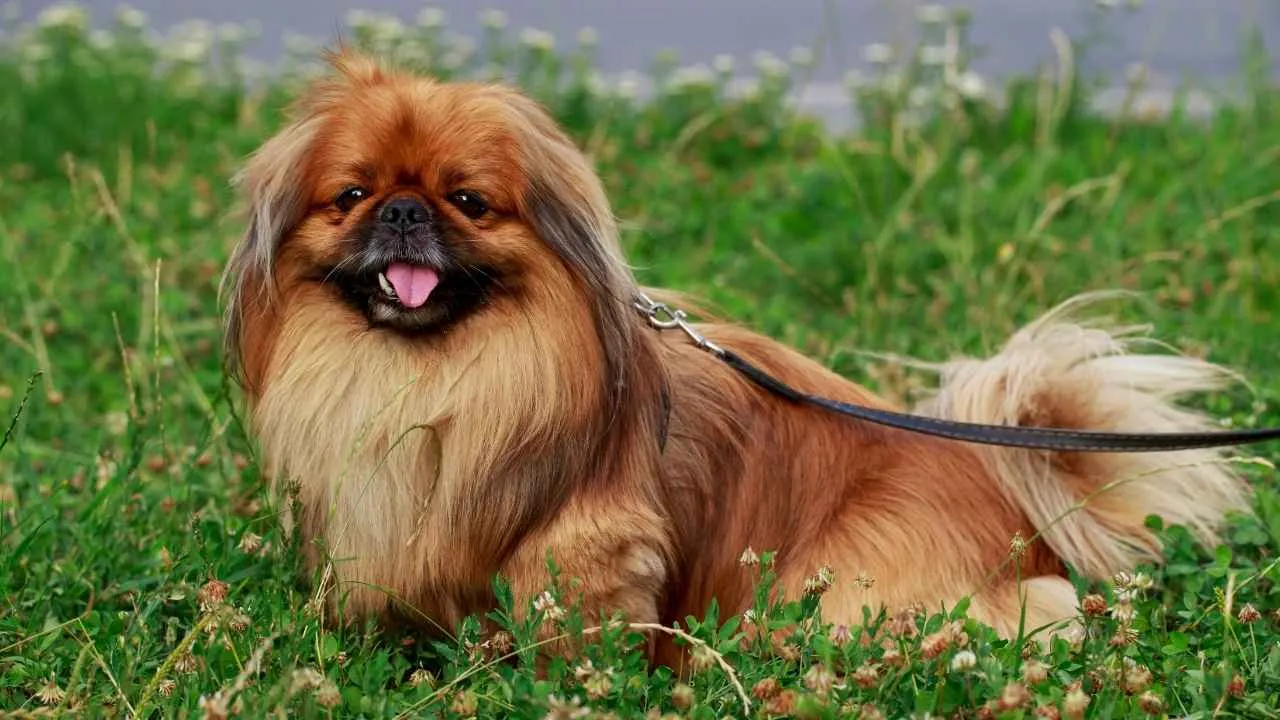
The Pekingese might be tiny, but its naturally fluffy coat delivers enough royal drama to rival a giant show dog. Developed as a treasured companion in imperial China, this compact breed is famous for its luxurious mane, flowing feathering, and unmistakably dignified expression.
Its magnificent coat has two distinct layers: a comparatively coarse, straight outer coat over a softer, denser undercoat. The hair becomes particularly abundant around the shoulders and neck, forming an impressive mane that enhances the breed’s traditional lion-like silhouette.
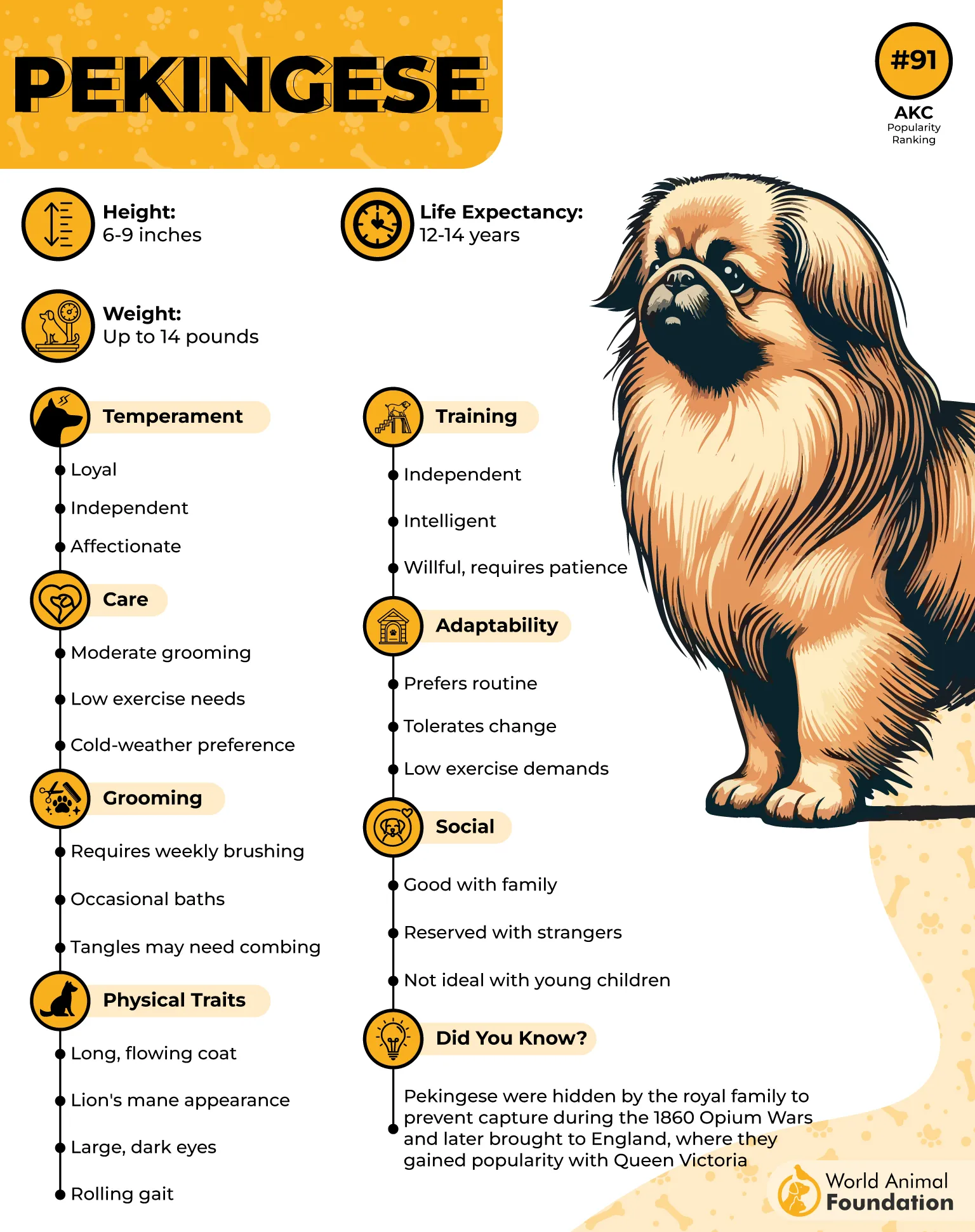
Unlike breeds with short, uniform hair, the Pekingese displays long feathering around its ears, chest, legs, and tail. Its coat comes in numerous colors, including red, cream, fawn, black, and various combinations, with some individuals displaying a dark facial mask.
The feathered tail arches elegantly over the back, creating a gorgeous plume that completes the breed’s glamorous, almost theatrical appearance.
Keeping that fabulous coat in excellent condition requires gentle but consistent grooming because long strands can tangle surprisingly quickly. Owners should pay close attention to the areas behind the ears, under the chest, and around the rear legs, where movement and friction can encourage matting.
3. Keeshond
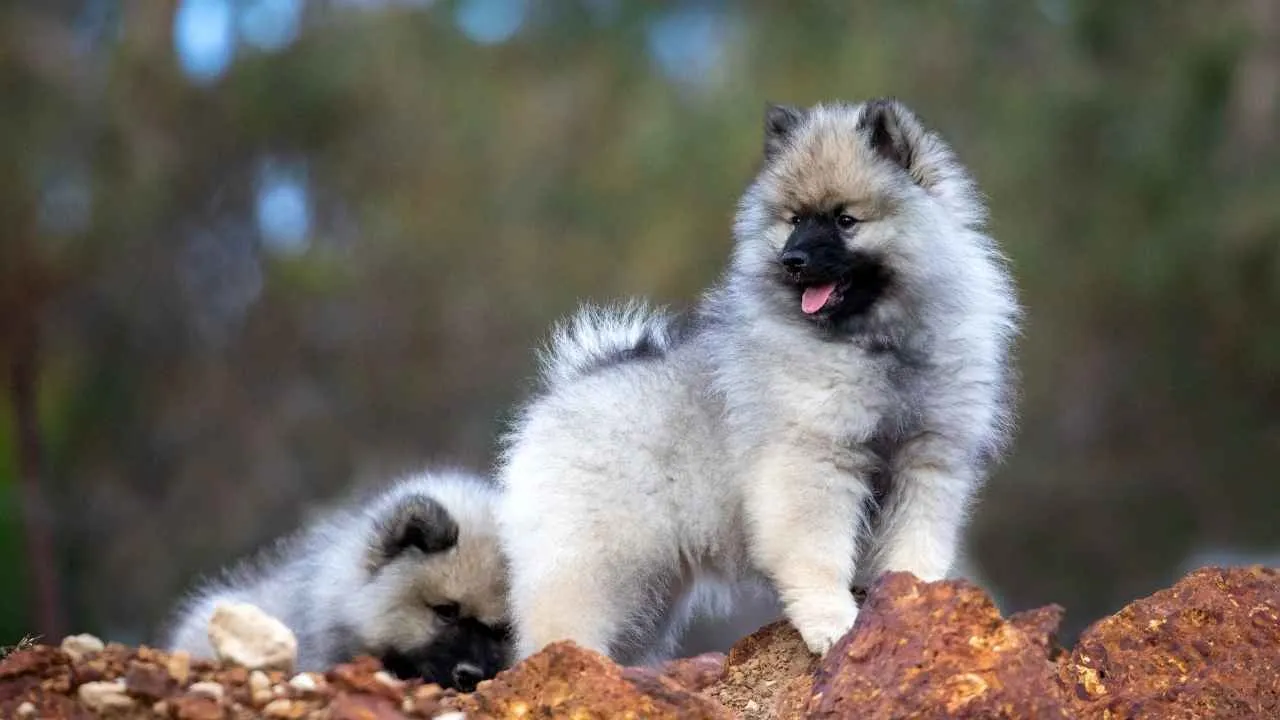
The Keeshond looks like an adorable gray cloud that somehow learned how to smile and became everyone’s favorite furry neighbor. Originally associated with Dutch canal barges, this charming spitz breed is known for its cheerful expression, abundant coat, and remarkable silver-and-black coloring.
What makes this intelligent dog exceptionally fluffy is its thick double coat, which naturally stands out from the body rather than lying flat. The soft, dense undercoat provides significant volume, while longer, harsher guard hairs form a protective outer layer with beautifully contrasting dark tips.
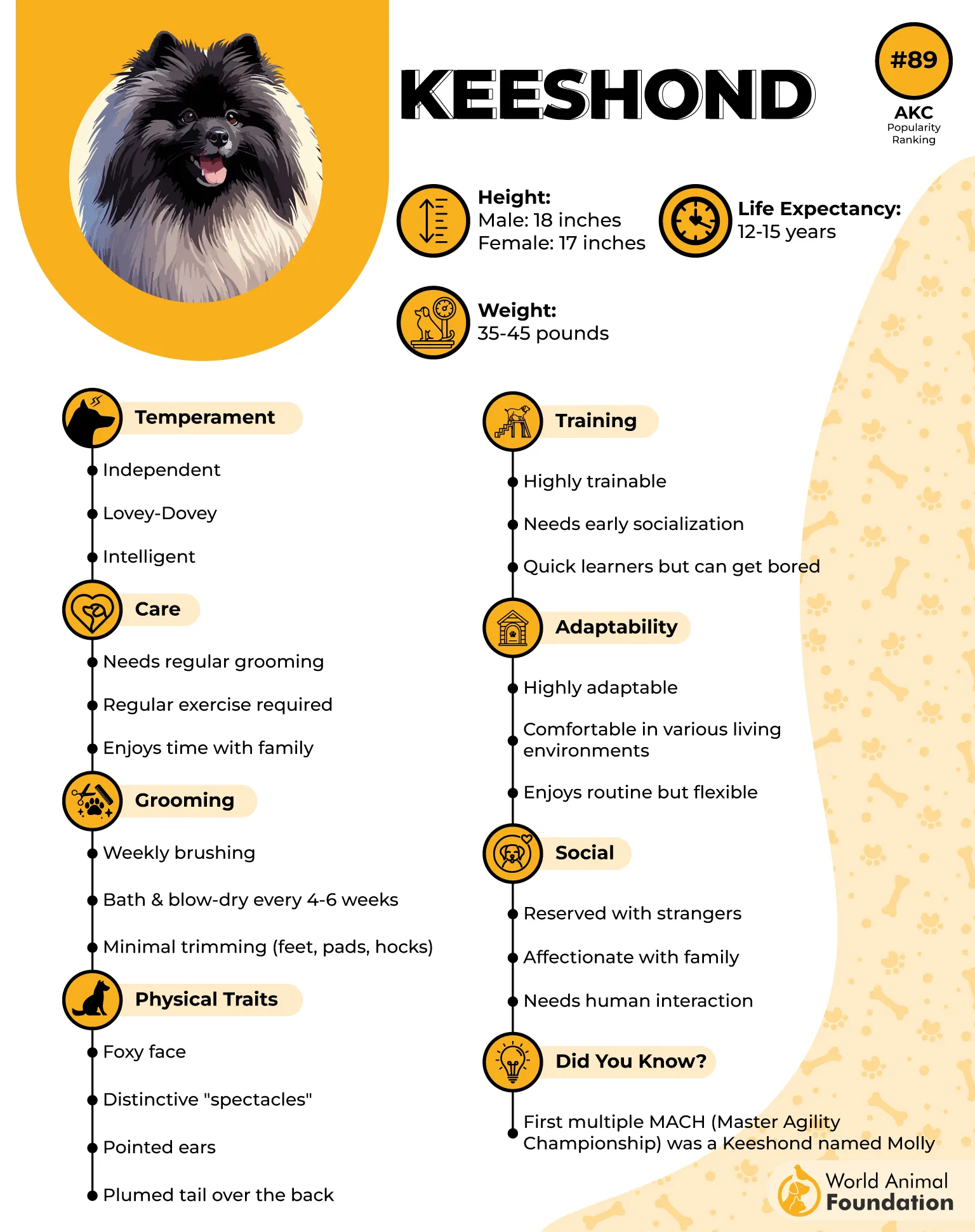
The neck and shoulders feature an especially impressive ruff, giving the Keeshond a dramatic appearance without the enormous size of a Leonberger. Thick feathering around the hindquarters forms adorable fluffy trousers, while the richly coated tail curls over the back like an elegant plume.
Despite its enormous volume, the Keeshond’s coat doesn’t necessarily require complicated styling to maintain its natural beauty. Frequent brushing helps release dead undercoat, prevent matting, and keep the longer guard hairs separated rather than pressed against the skin.
4. Newfoundland
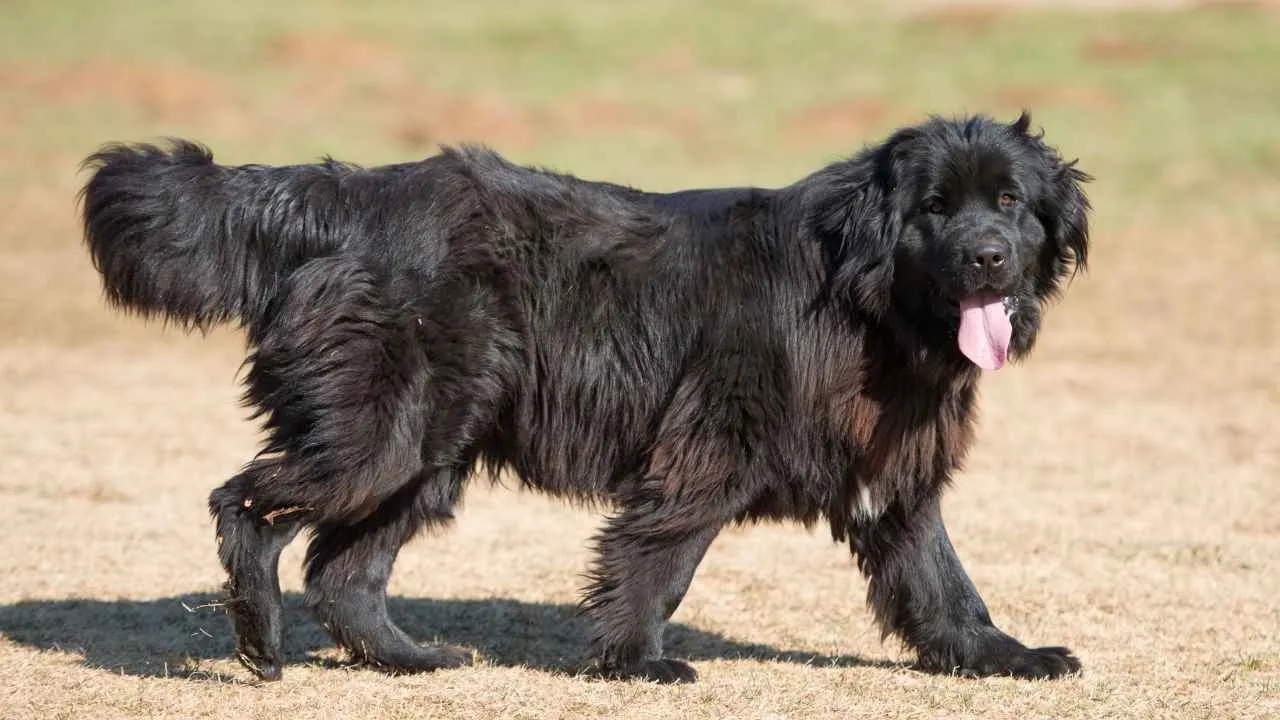
The Newfoundland is basically a big fluffy dog breed who decided that protecting people and looking incredibly huggable should be part of the same career. These powerful dogs possess substantial bodies covered in thick, naturally protective fur.
Unlike the outward-standing coats of many northern spitz breeds, the Newfoundland’s outer hair lies comparatively flat against the body. Beneath this moderately long, coarse, water-resistant layer lies a dense, soft undercoat that insulates in cold, damp conditions.
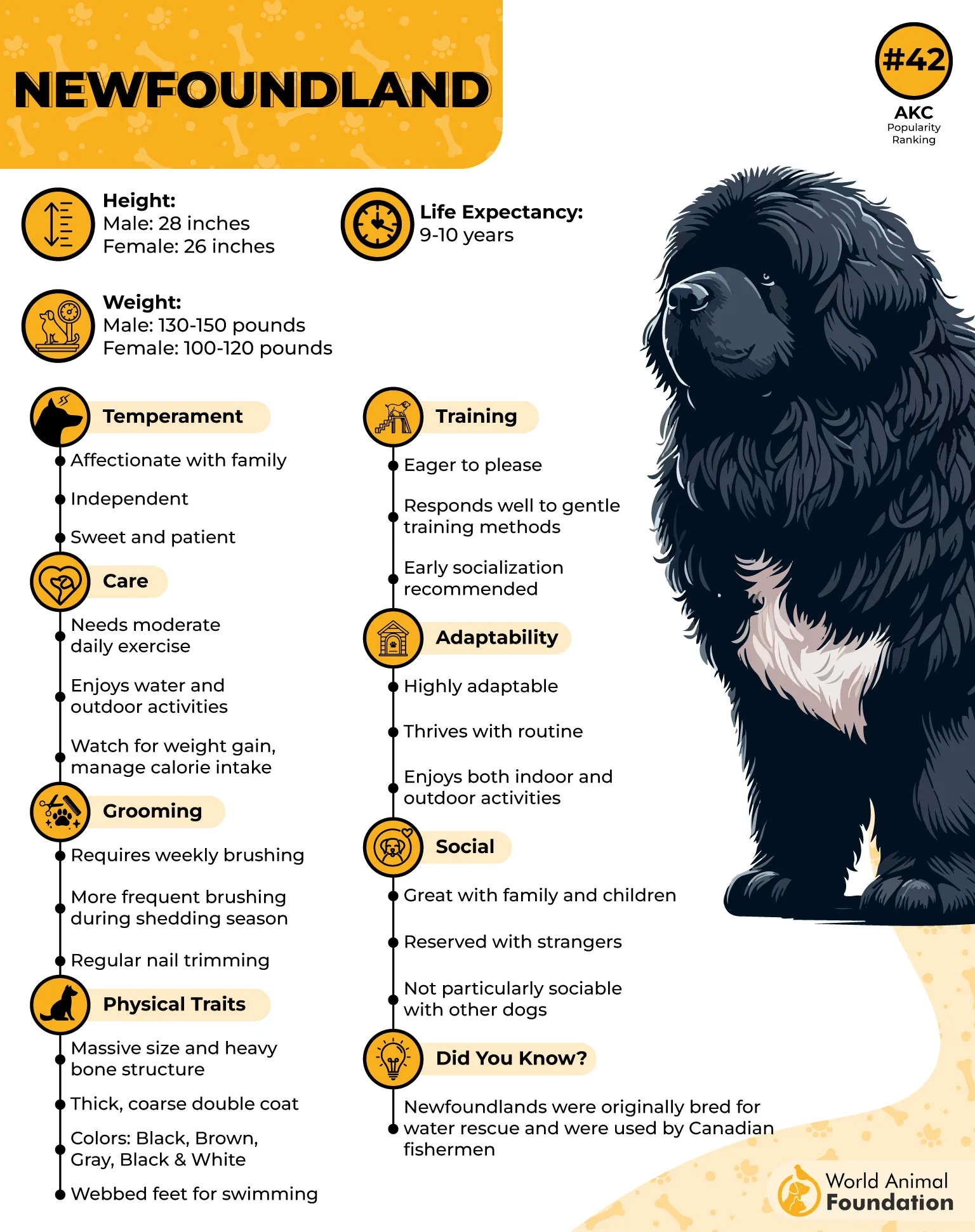
They commonly appear in black, brown, gray, or black-and-white Landseer coloring, with their dense coats highlighting the breed’s impressive physical proportions. Longer feathering appears around the chest, legs, and tail, adding graceful movement without creating an excessively exaggerated mane.
Beyond their remarkable coats, Newfoundlands are celebrated for their generally gentle temperaments and historical connection to water rescue. Their powerful swimming abilities, substantial bodies, and weather-resistant fur made them valuable companions in environments where cold water was an everyday reality.
5. Samoyed

Associated with the Samoyedic peoples of northern Siberia, the Samoyed is a beautiful working breed developed with an exceptionally dense coat suited to extremely cold environments. Its famous white appearance and cheerful expression have made it one of the world’s most recognizable fluffy dog breeds.
The Samoyed’s remarkable coat consists of a thick, woolly undercoat beneath longer, straight, harsher guard hairs. These layers create impressive natural volume because the outer hair stands away from the body rather than hanging loosely along its sides. The dense undercoat insulates, while the longer protective layer helps resist snow, moisture, and harsh weather.
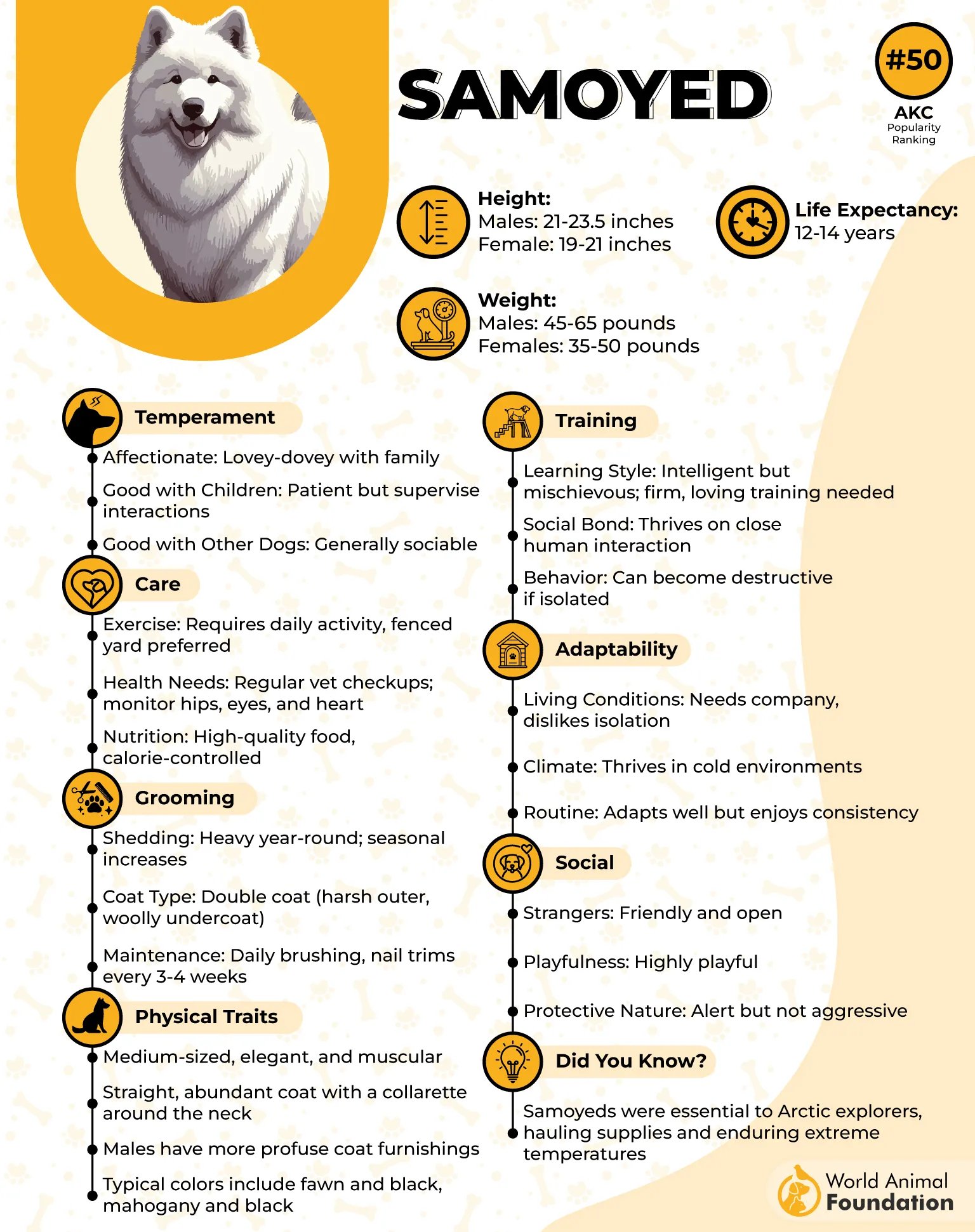
Although brilliant white is the breed’s most famous color, Samoyeds can also have cream, biscuit, or white-and-biscuit coats. A prominent ruff surrounds the shoulders and neck, while thick feathering decorates the legs and a beautifully plumed tail curls over the back.
One fascinating detail is that people have historically spun collected Samoyed undercoat into yarn to make warm clothing and accessories. Their thick fur reflects genuine working adaptations rather than simply generations of breeding for an adorable appearance.
6. American Eskimo Dog
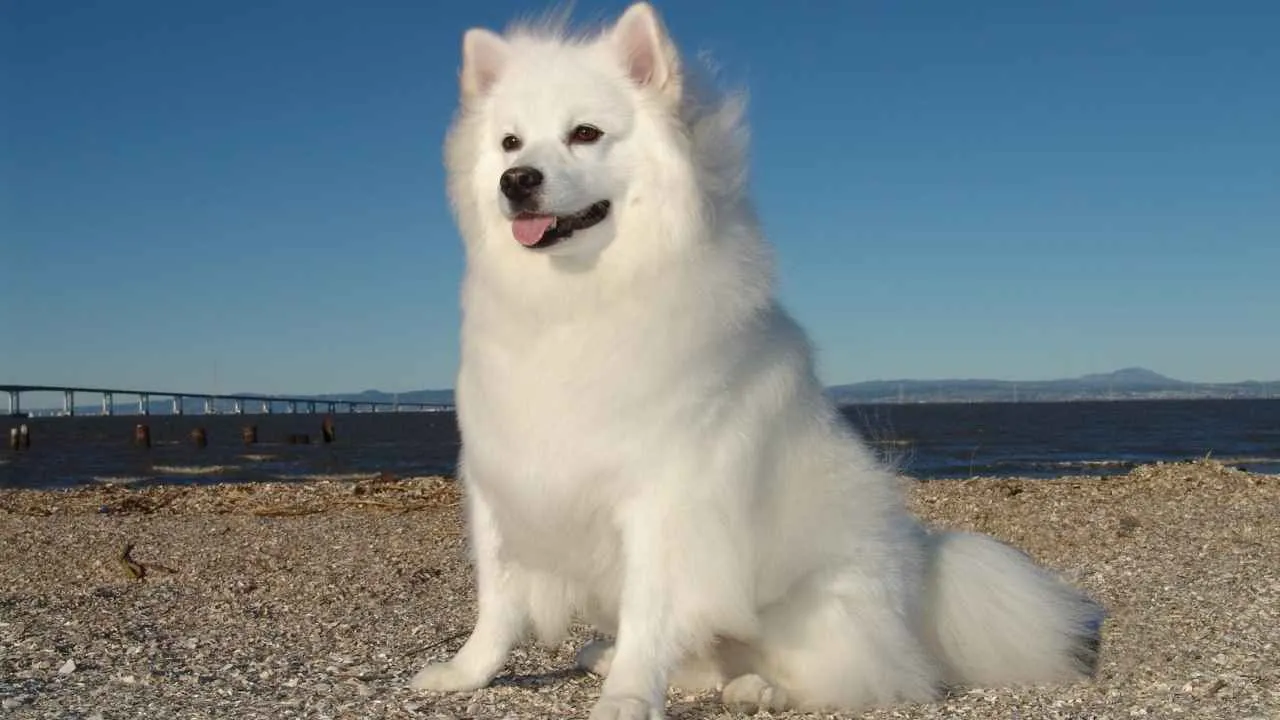
The American Eskimo Dog looks like a perfectly sculpted snowball with sparkling eyes and a personality that practically demands attention. Despite its name, this beautiful breed developed from European spitz ancestry and became popular in the United States as a companion and performing dog.
Its thick double coat creates a plush appearance from a dense, short undercoat and longer, straight outer hairs. WebMD says the outer layer grows outward from the body, forming a clean, rounded silhouette that makes the breed appear considerably fluffier than its actual frame.
Around the neck and chest, the abundant fur forms a noticeable ruff, giving the American Eskimo Dog a glamorous winter-coat look.
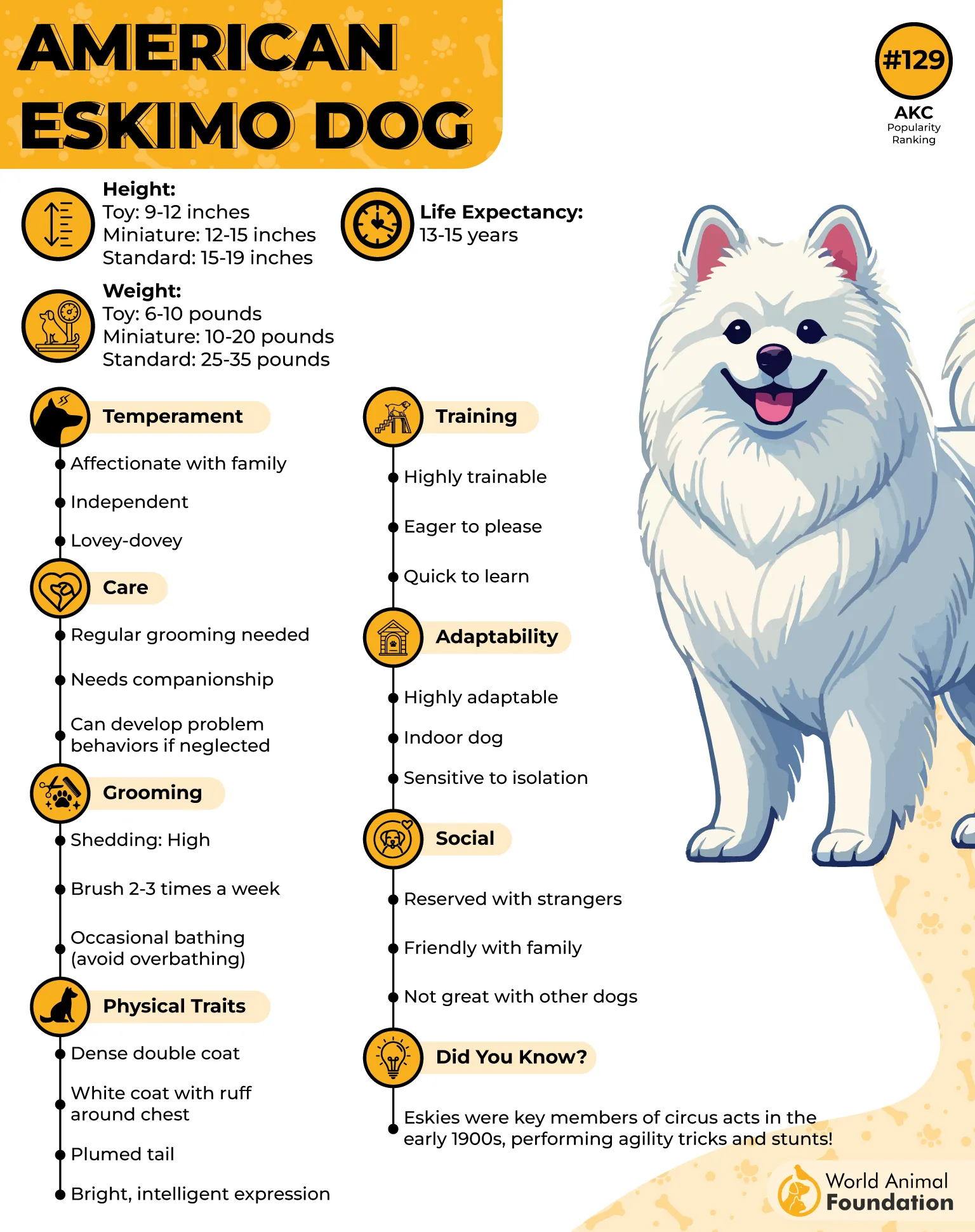
The breed is famous for its bright white coloring, though its official standard also accepts white with biscuit-cream. Its pointed ears remain comparatively tidy, while the tail carries an impressive plume of long fur that curls elegantly over the back. The strong contrast between the dark eyes, black nose, and pale coat gives these dogs an expressive look that makes them instantly recognizable.
Brushing several times a week removes loose undercoat, maintains the coat’s airy structure, and prevents tangles around the neck and hindquarters. Their white coats can also show dirt easily, but routine grooming and appropriate bathing are better than unnecessarily frequent washing, which can dry out the skin.
7. Pomeranian
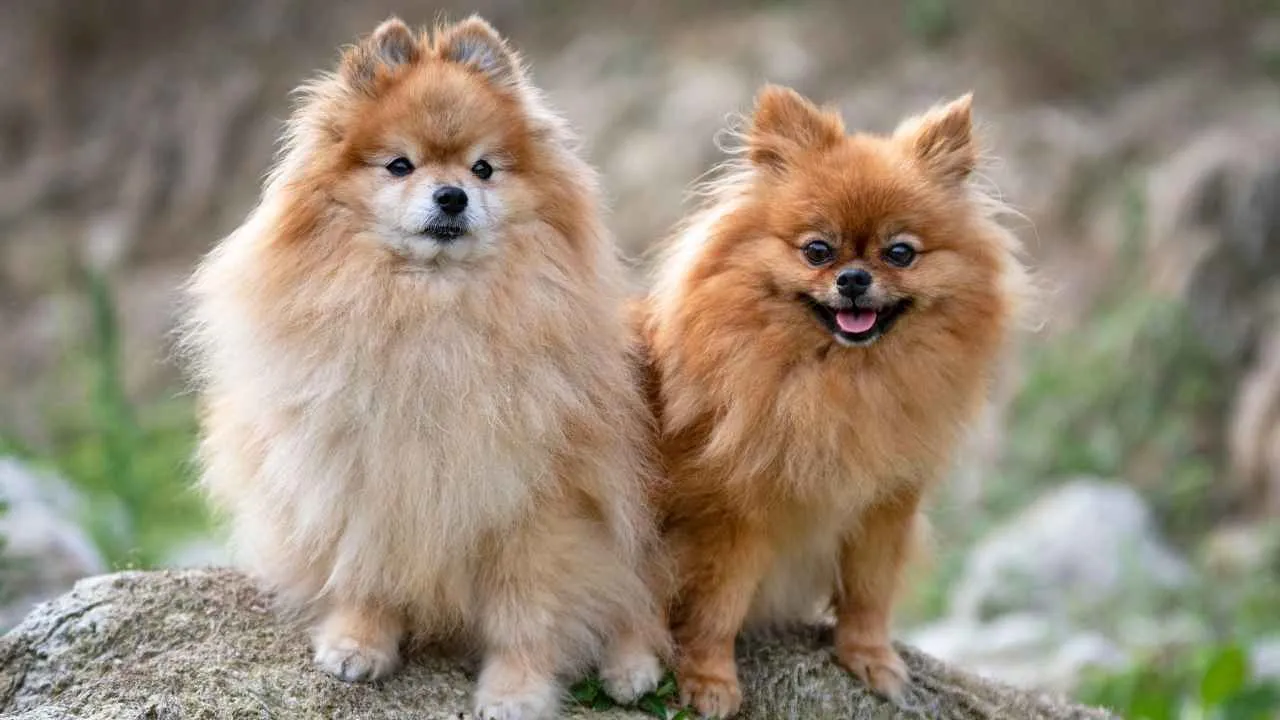
The Pomeranian is a tiny dog with superstar confidence and a hairstyle that deserves its own fan club. Its rounded silhouette, bright expression, and enormous fluffy ruff make the Pomeranian resemble a miniature fox hiding inside a luxurious ball of fur.
The secret behind that incredible fluff is a dense double coat featuring a soft, thick undercoat and longer, harsher outer hairs. These guard hairs stand outward from the body, creating an exaggerated rounded shape that makes the dog’s small frame almost disappear beneath its fur.
The coat is especially abundant around the neck and chest, forming a dramatic ruff that gives this tiny companion a surprisingly regal look.
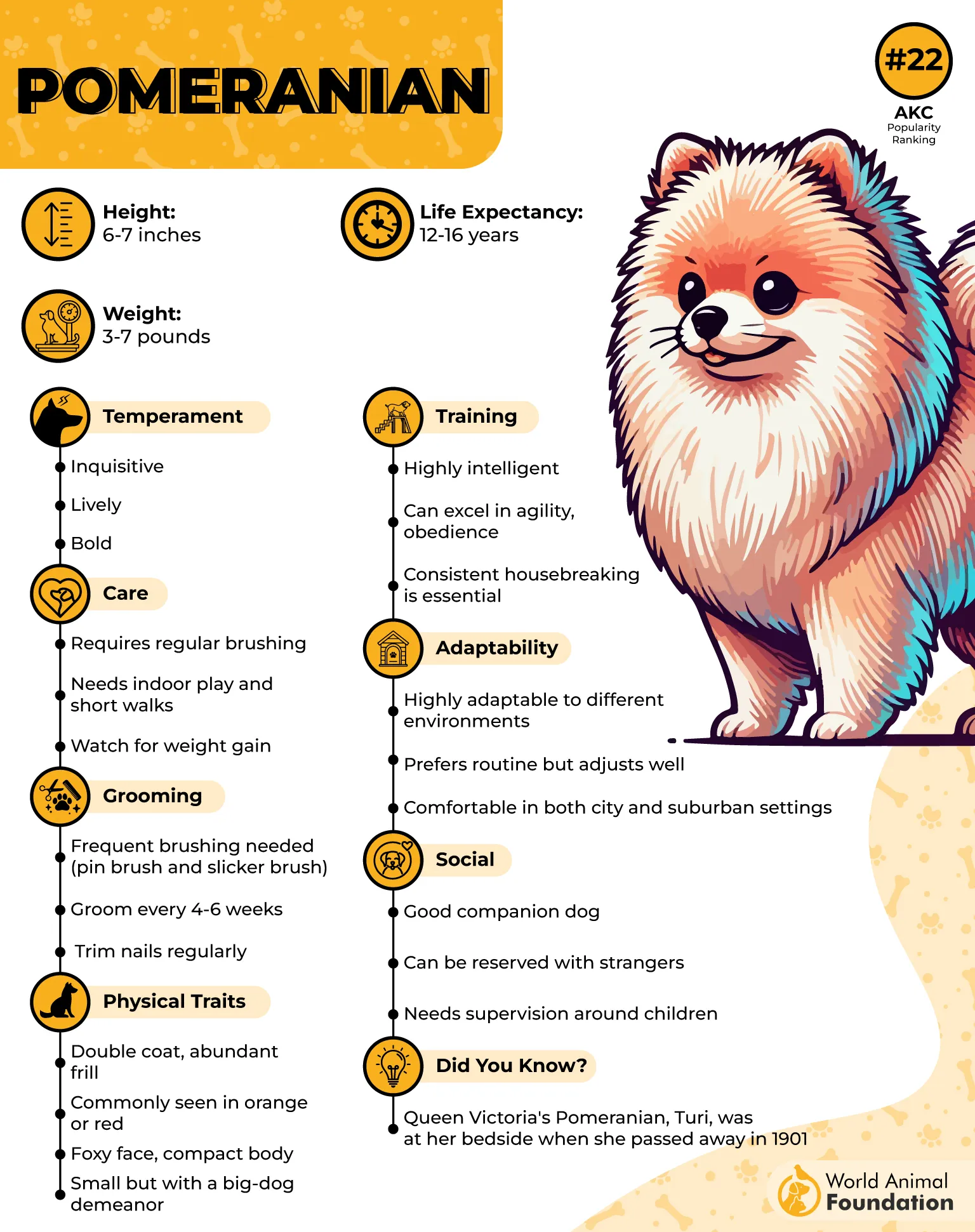
Pomeranians come in an impressive range of colors, including orange, cream, white, black, chocolate, and several sable and patterned varieties. Their heavily plumed tails arch over their backs, contributing additional volume and completing the breed’s unmistakable spitz silhouette.
Maintaining a Pomeranian’s fluffy appearance requires regular brushing and careful attention to areas where hair rubs together. Tangles can form behind the ears, around the collar, and near the hindquarters if loose undercoat is allowed to build up.
8. Old English Sheepdog
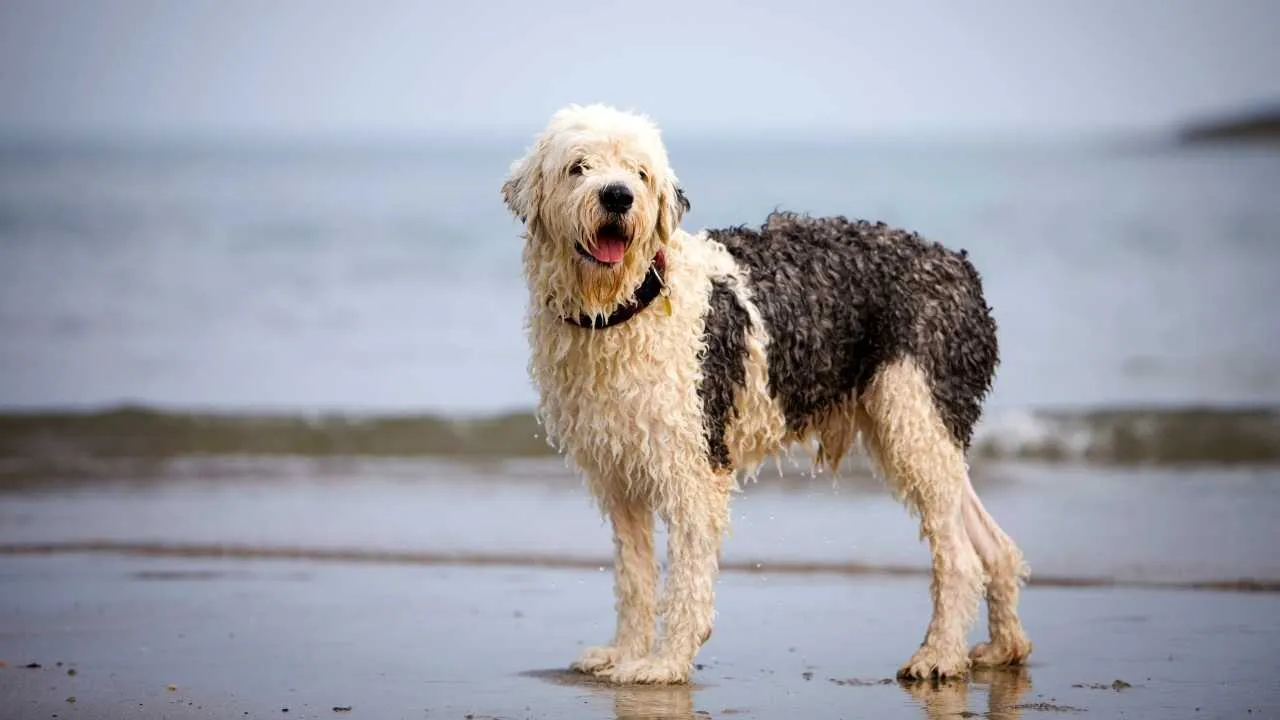
The Old English Sheepdog looks like an enormous shaggy mop that somehow developed legs, intelligence, and an adorable personality. Originally developed in Britain for driving livestock, this muscular working dog became famous for its profuse coat and distinctive bear-like movement.
The Old English Sheepdog’s coat has a distinctive shaggy texture that looks naturally tousled. Its outer hair is relatively harsh and neither excessively straight nor curly, while the thick undercoat adds body and protection.
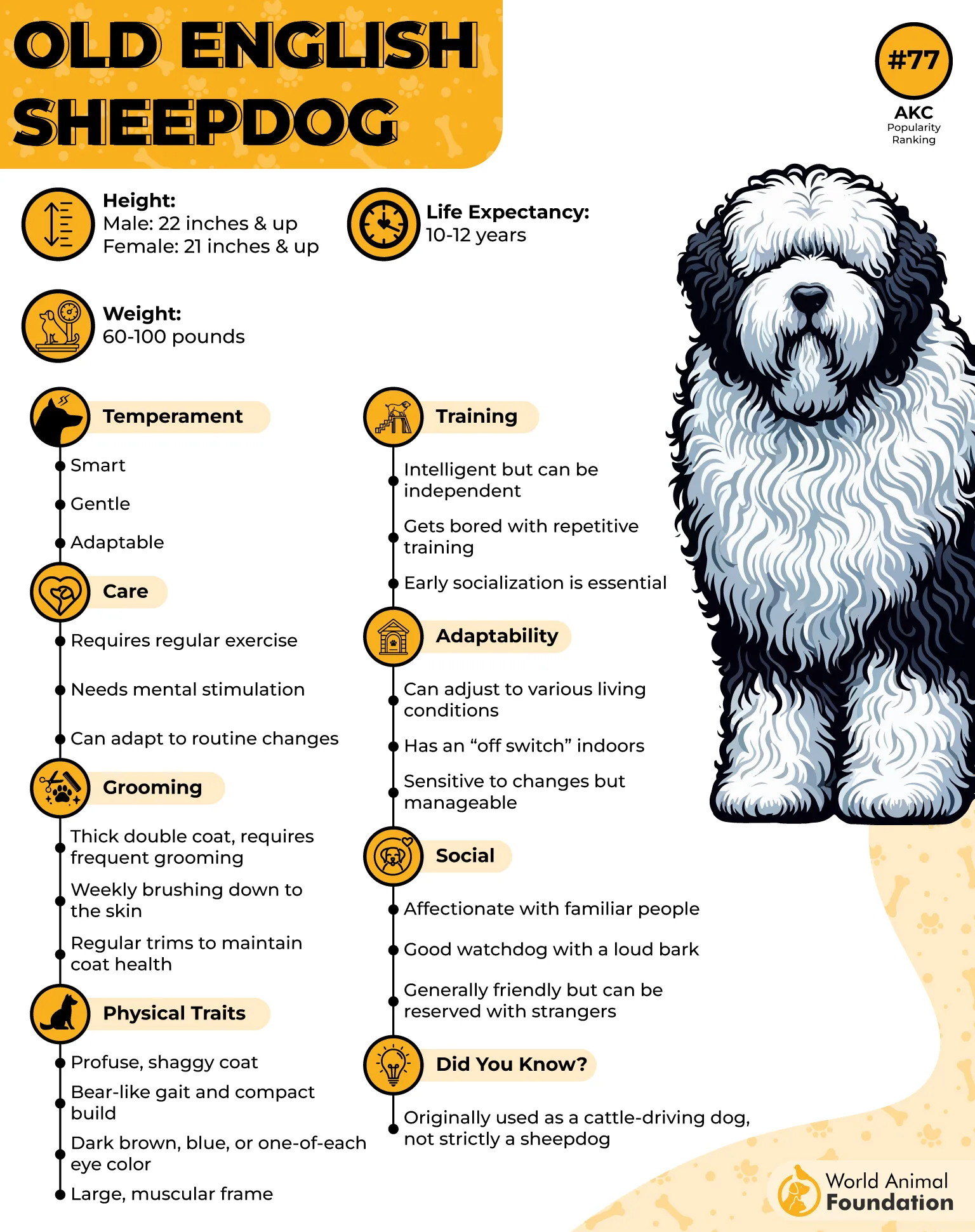
Its shaggy coat commonly features shades of gray, blue, or grizzle combined with white markings, producing an eye-catching patchwork of soft-looking colors. Long facial hair frequently falls over the eyes, creating the famous peekaboo hairstyle that has become one of the breed’s most recognizable features.
Keeping this shaggy masterpiece healthy isn’t exactly a five-minute grooming job. Purina recommends brushing thoroughly down to the skin at least once a week, and its breed-history guidance estimates full-coat maintenance can take about three to four hours weekly.
9. Chow Chow
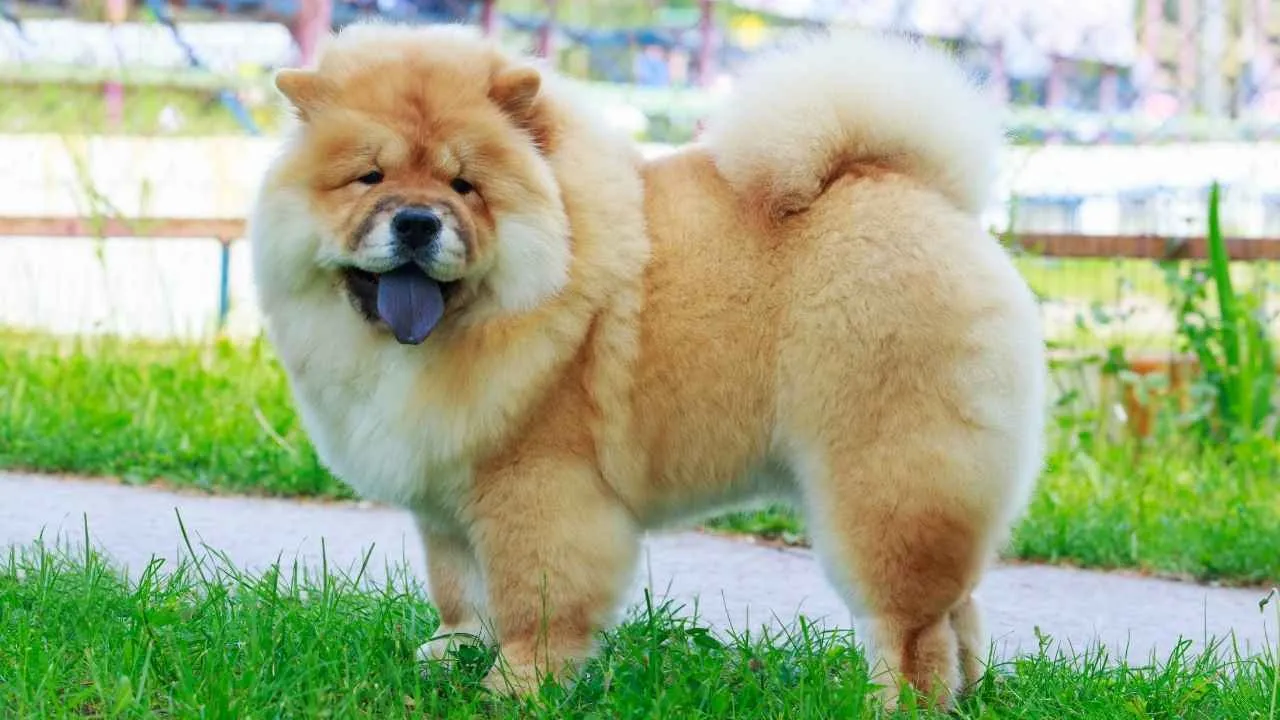
Known for its distinctive blue-black tongue, broad head, and dignified expression, Chow Chow possesses one of the most recognizable fluffy silhouettes in the canine world.
One especially interesting feature is that Chow Chows come in two officially recognized coat varieties: rough and smooth. Rough-coated Chows have abundant, straight outer hair supported by a dense, woolly undercoat, producing the dramatic lion-like appearance most people associate with the breed.
Smooth-coated Chows have shorter, dense fur that creates a plush outline without the same exaggerated mane and feathering.
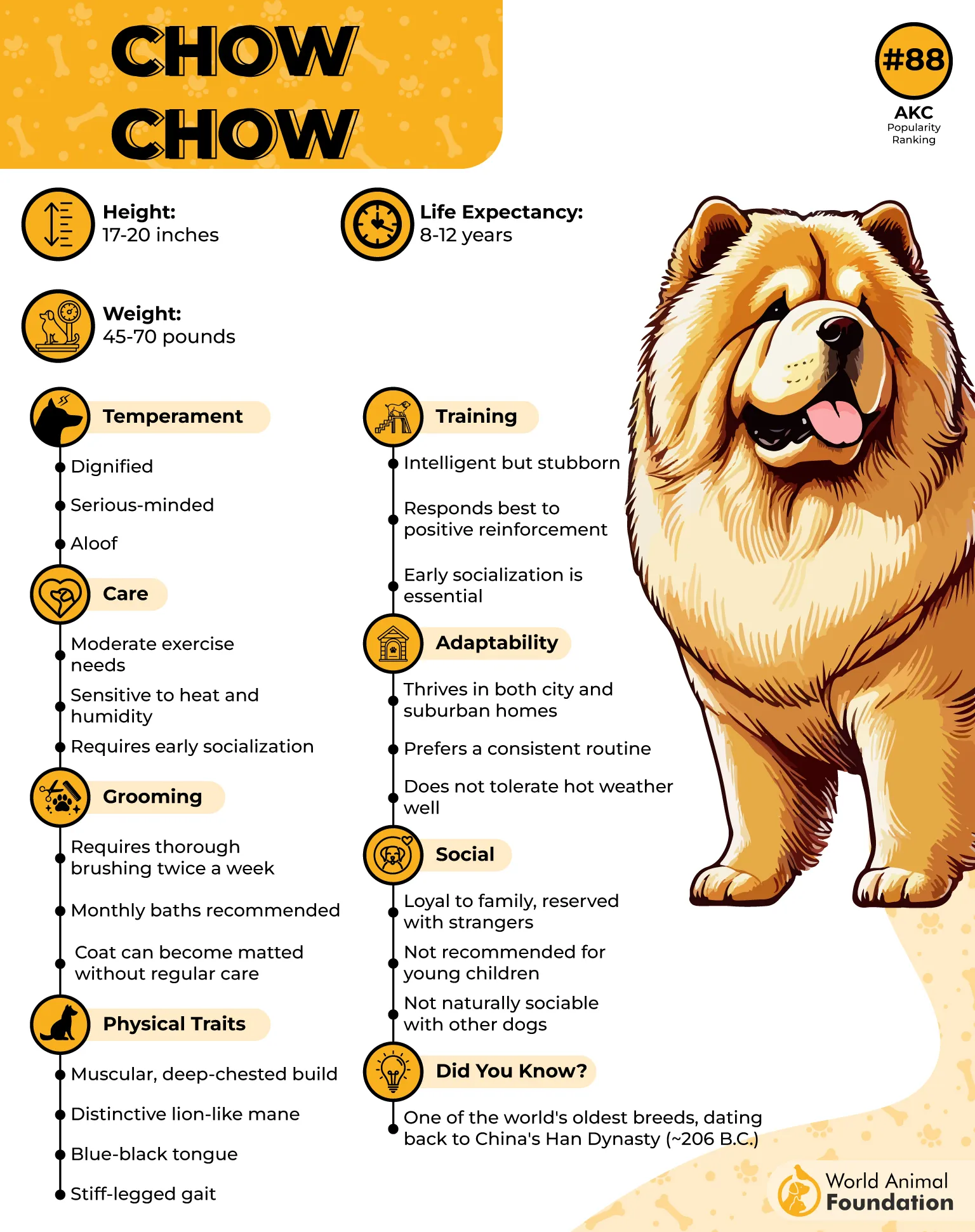
The rough-coated variety develops particularly thick fur around the neck and shoulders, creating a spectacular ruff that frames the broad head, according to CKCUSA. Its richly coated tail curls over the back, while fluffy breeches around the hind legs contribute to the breed’s sturdy, square silhouette.
Grooming a rough-coated Chow requires patience because the thick undercoat can retain loose hairs close to the skin. Regular brushing helps prevent matting, especially around the ears, neck, and hindquarters, where dense fur can compact.
10. Great Pyrenees
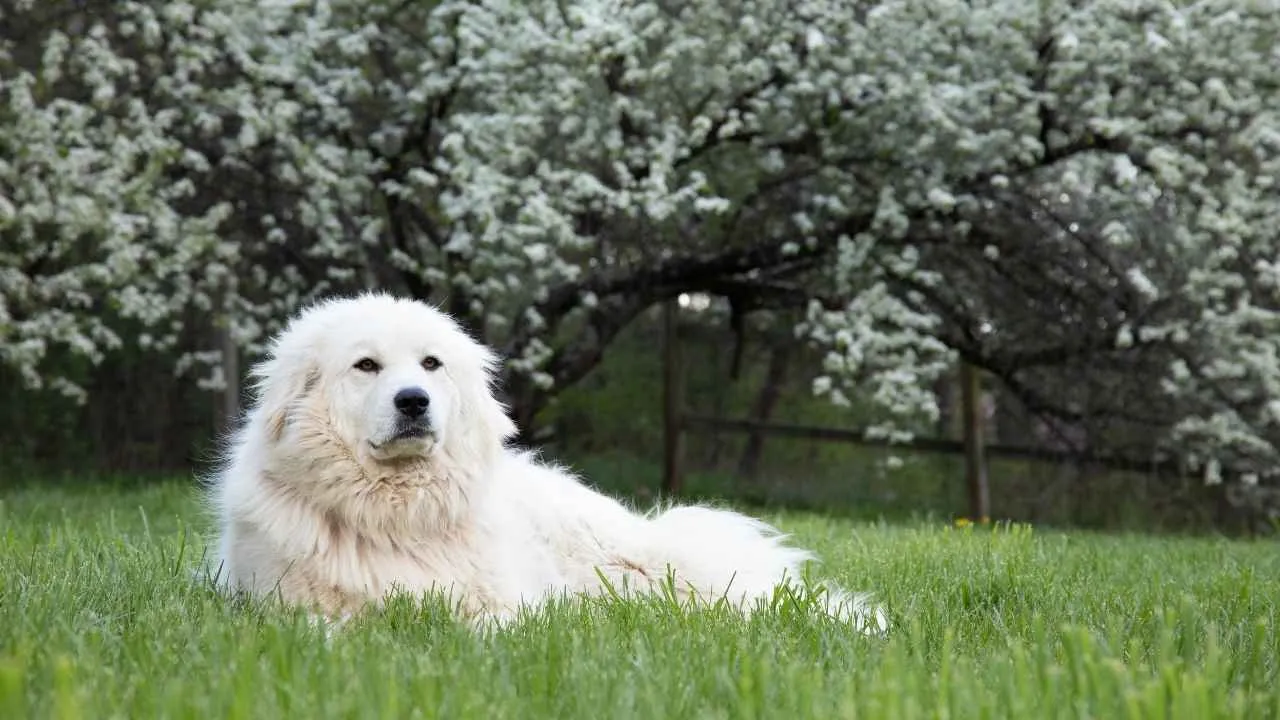
Developed to guard livestock in the Pyrenees Mountains between France and Spain, this magnificent gentle giant possesses a thick coat designed for demanding outdoor conditions.
This big, fluffy dog has a beautiful double coat: longer, coarse outer hairs over a dense, fine, woolly undercoat. The protective outer layer is typically straight or slightly wavy, while the softer undercoat creates the substantial fullness that gives these dogs their cloud-like appearance.
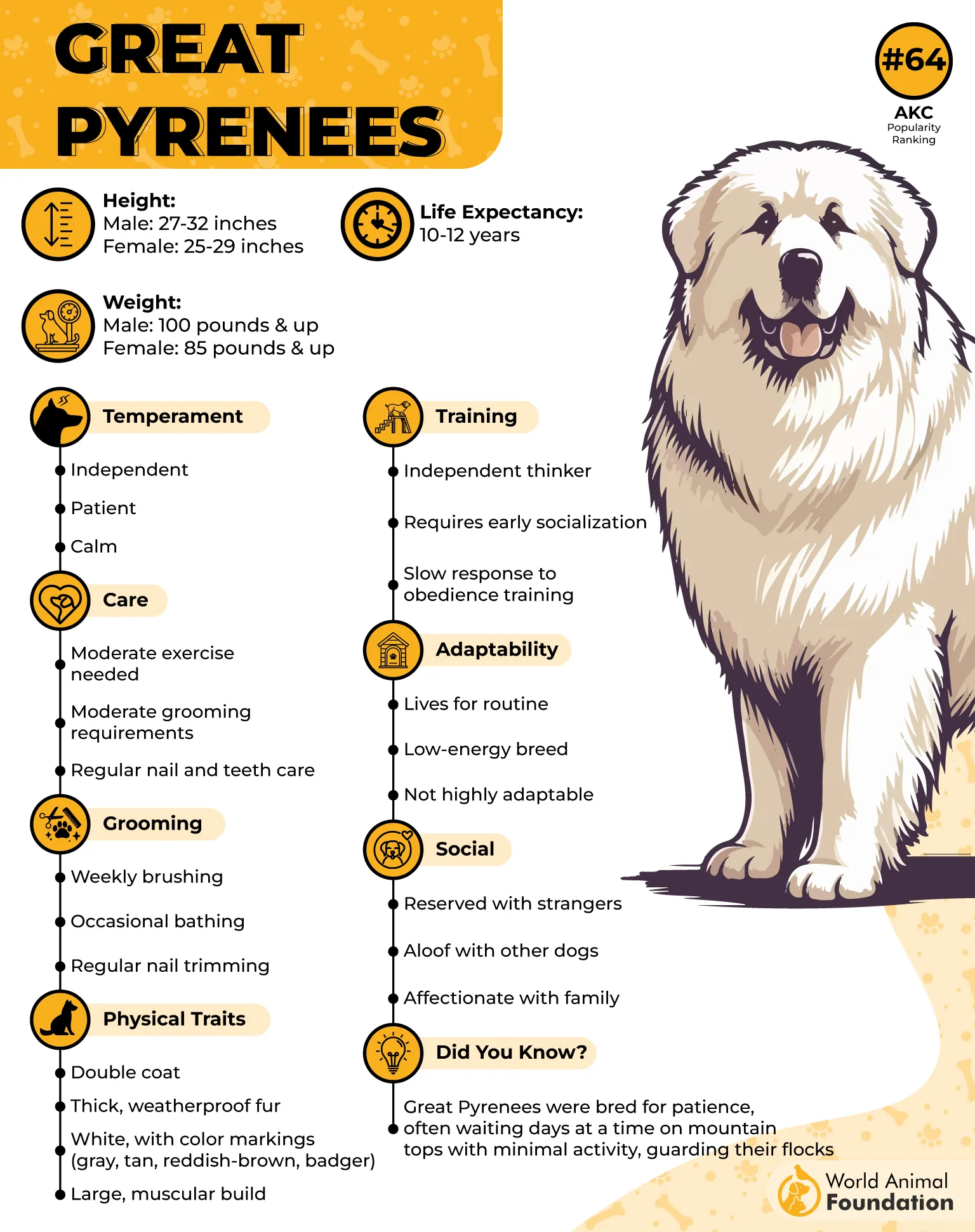
Although most people recognize the breed for its brilliant white appearance, the official standard also allows certain gray, tan, reddish-brown, and badger-colored markings. A prominent ruff surrounds the neck and shoulders, while long feathering on the backs of the legs and tail adds graceful movement.
Here’s some good news for prospective owners: the Great Pyrenees has a naturally dirt-resistant outer coat that can make routine maintenance easier than its enormous fluff suggests. However, these fluffy dogs shed year-round and can shed large amounts of undercoat during seasonal coat changes, so regular brushing is essential.
Conclusion
These ten breeds prove that natural fluffiness comes in an incredible variety of sizes, colors, and textures. Some have long, flowing feathering, while others have dense, outward-standing fur that makes them look like a perfectly rounded cloud.
Their beautiful double coats are more than decorative accessories because the soft undercoat and protective guard hairs work together to insulate the body and protect the skin. Regular brushing, appropriate bathing, thorough drying, and responsible hot-weather management help preserve both coat health and everyday comfort.
