




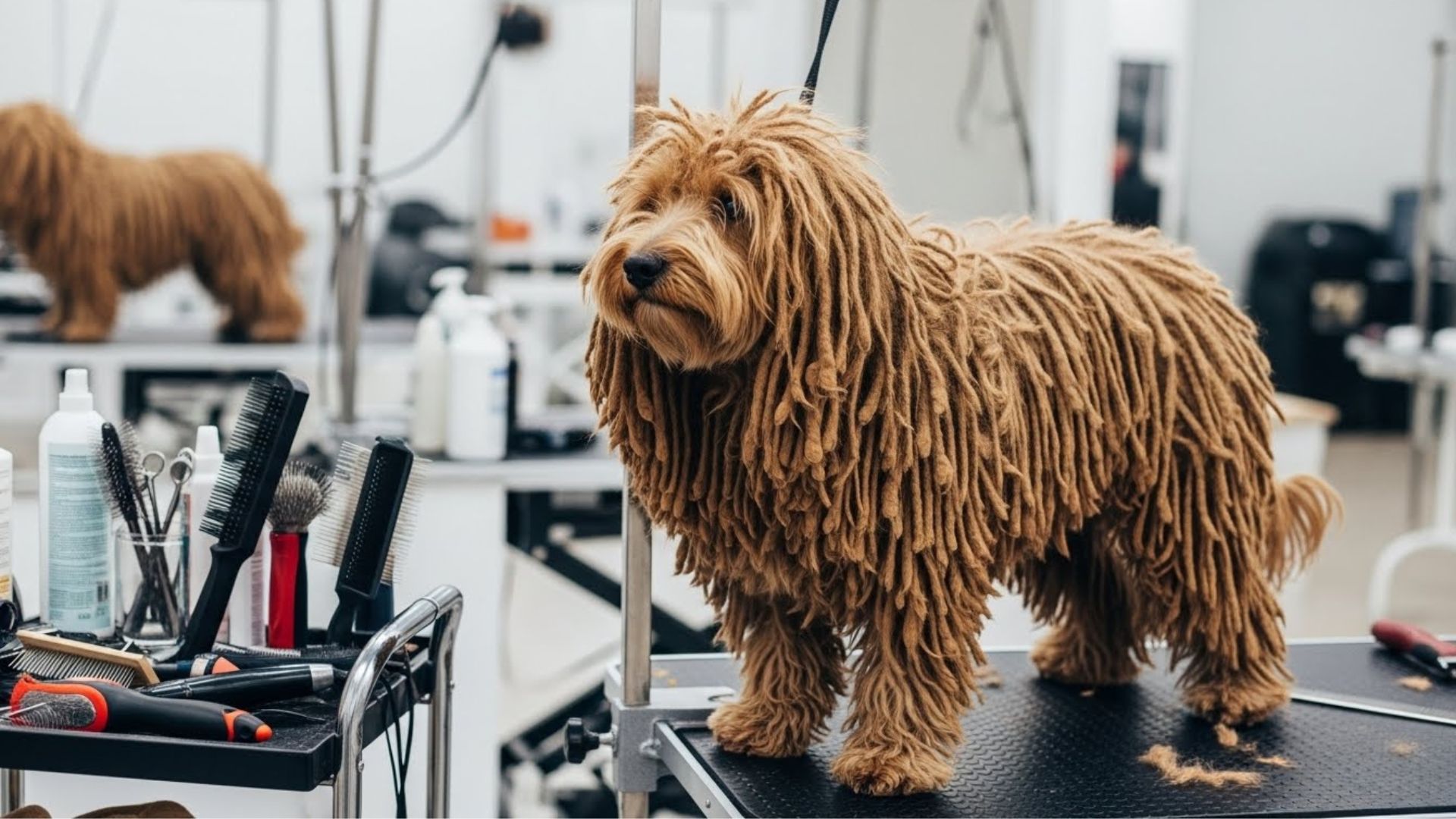
Dog of this type do not just come into your life; they change your daily routine, your level of patience, and your perception of fidelity. All breeds need care at the same level, but the samllest ones demand much more than regular brushing and the occasional bath. Their hair is alive, growing, and forming mats and requires a lot of time, consistency, and skill to be taken care of properly.
Grooming of the most challenging dog breeds is not for the casual pet-metal. These dogs will test your self-control, your timetable, and your commitment. However, for those who are ready to put in the work, the loyalty, the beauty, and the friendship will be the rewards that are beyond the imagination.
Fun Fact
According to experts in canine behavior, well-groomed dogs not only get a better look, but the regular care of their coat also leads to improved skin condition, infection prevention, and an even stronger bond between dogs and their owners.
Dog Breed with Challenging Grooming Requirements
1. Puli
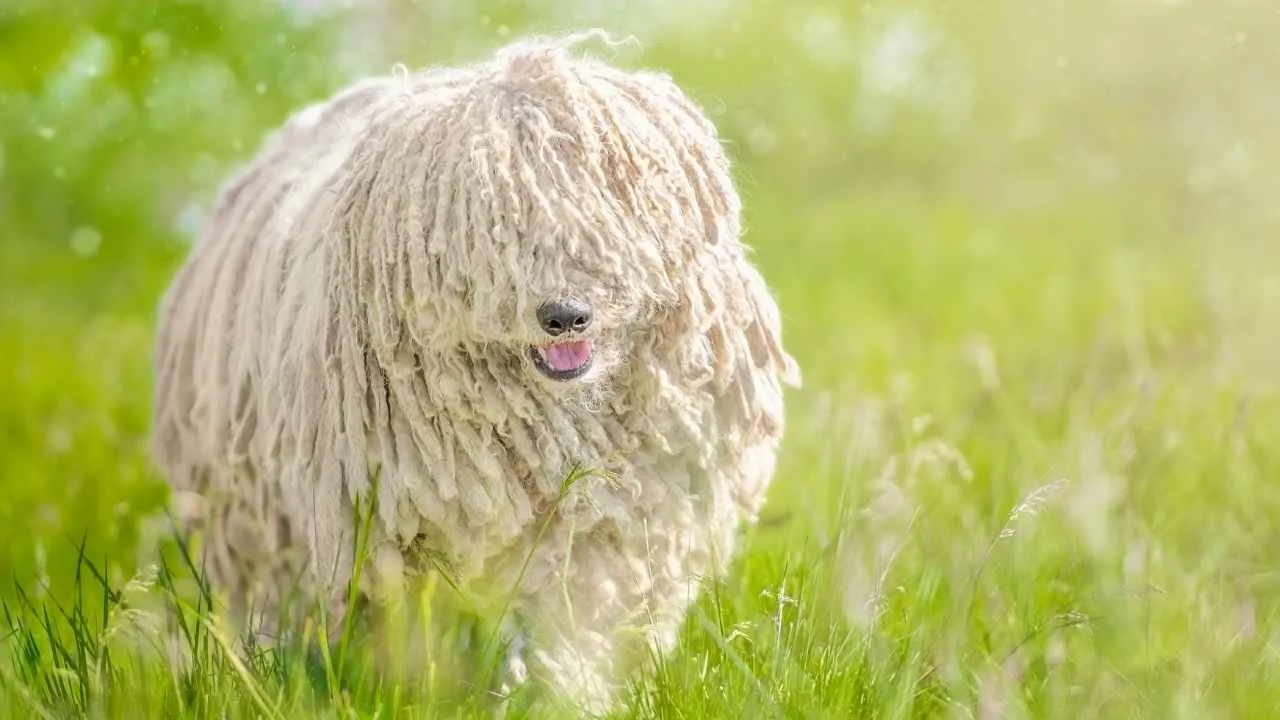
The Puli is the first dog that comes to one’s mind with its huge corded coat which resembles thick ropes flowing from the head to the feet. This smart dog breed originated in Hungary, when it was bred to work as a long-hour livestock guardian even in the harshest climates.
Although being playful and loving, the puli’s coat is hard to manage. cords must be sparated with great care by hand. otherwise, matting and hidden skin conditions will occur, Not doing this will cause moisture ande dirt to accumulate under the cords leading to a gradual process of discomfort and painful infection.
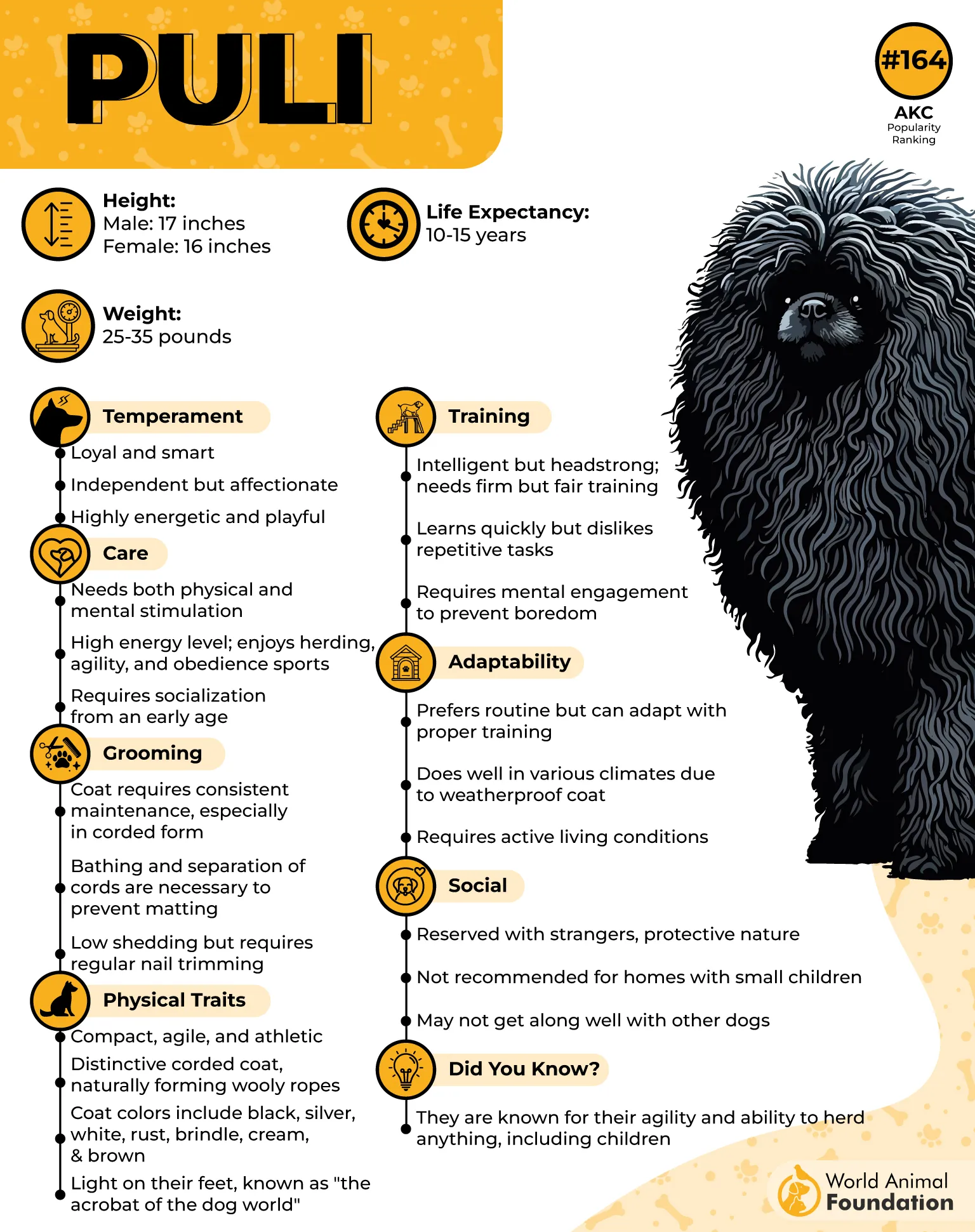
Powder and fluff become a part of everyday life instead of a task to do. The cords take a long time (years) to become fully developed and must be very dry as moisture can cause odor and fungal problems. Also, due to their thick coat, Pulik can suffer heat strokes.
The Puli is smart, and sociable, and needs a lot of activities happening around him. In fact, the Puli might even herd kids by gently “guiding” them through the house, and this may lead to the need for early training and alertness.
2. Bouvier des Flandres
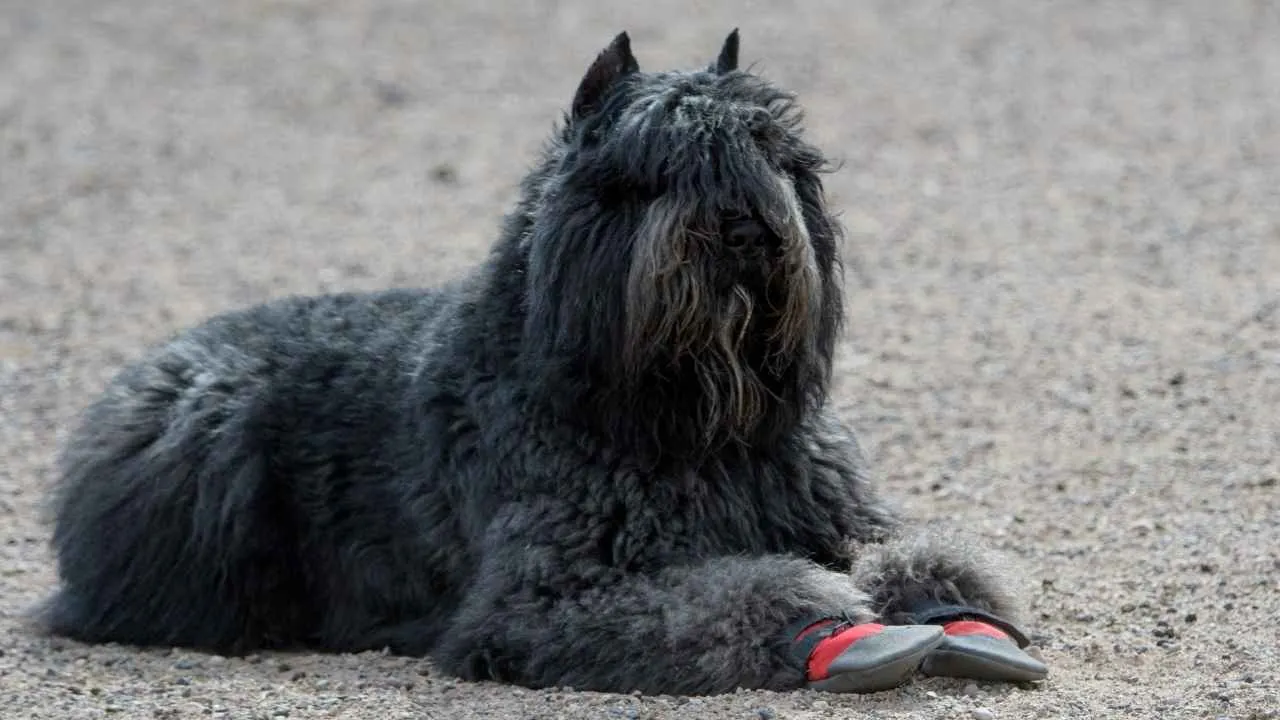
The Bouvier des Flandres is a dog that is powerful, calm, and self-assured and was bred in Belgium as a working dog. This breed which is characterized by a coat that is thick and rough has been able to survive in extreme weather conditions.
This strong appearance is combined with a high grooming requirement. The coat is prone to tangling and therefore needs brushing several times a week to keep it free of knots and thus avoid causing pain to the dog.
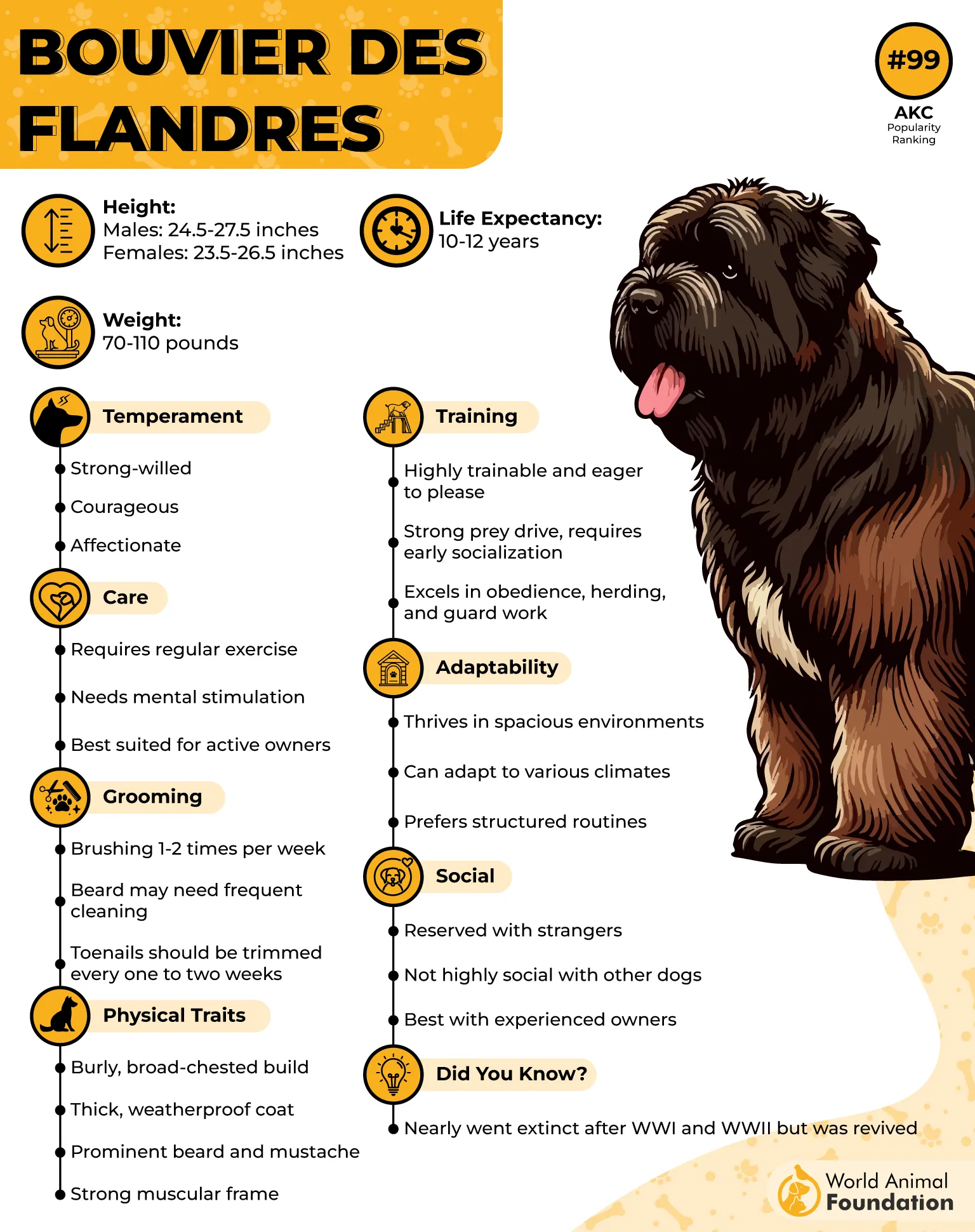
In addition to grooming, this breed also requires a structured routine. Bouviers like being around people and are quick to learn so they need to be kept busy or given advanced training.
They are quiet and still at home but require one to two hours of exercise daily. Their grooming sessions usually turn out to be times of bonding between them and their owners, helping to build trust and emotional security when they are treated gently and consistently.
3. Briard
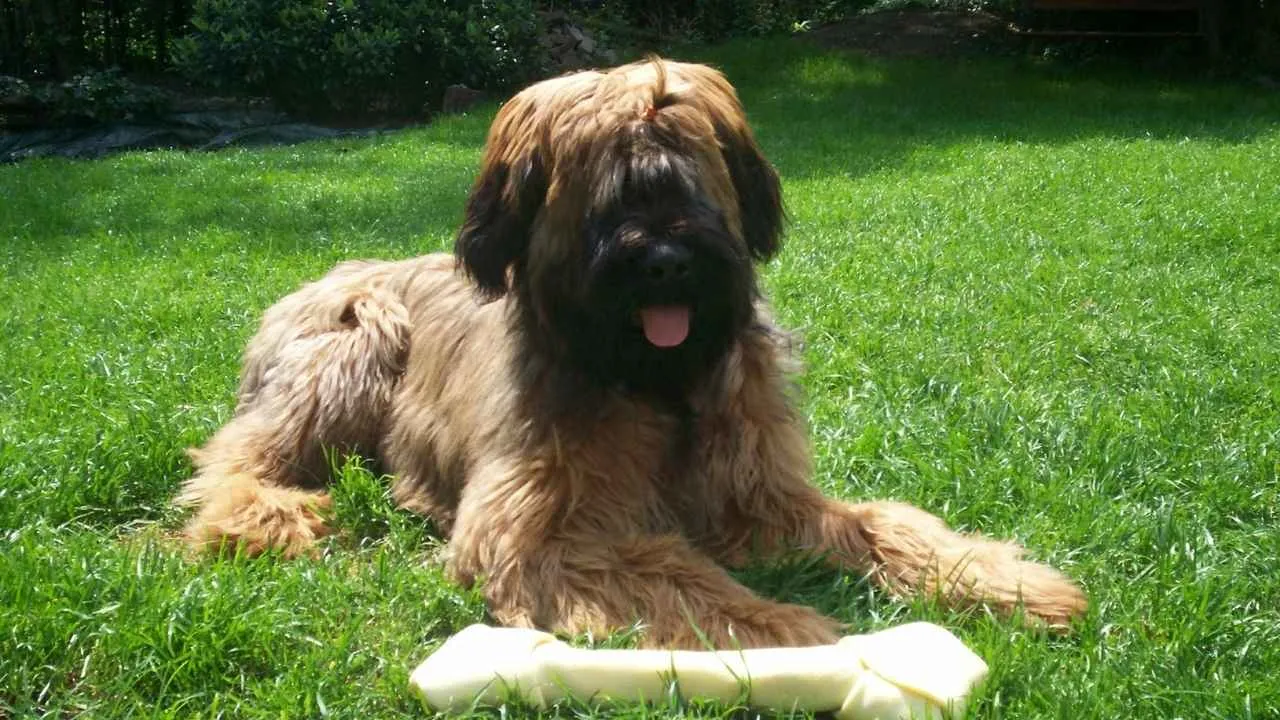
The Briard is a French herding dog that is both graceful and tough, and it is recognized for its long, flowing coat and expressive eyes which are somewhat covered by hair. The breed was sometimes referred to as sheep guardians, but it is loyal and attached to its family very deeply.
It is a fact that the Briard’s coat repels dirt and water, but this does not mean that grooming is eliminated. Weekly brushing sessions can take as long as two hours or more, as pointed out by Hill’s Pet Nutrition, especially if the coat is allowed to tangle at all.
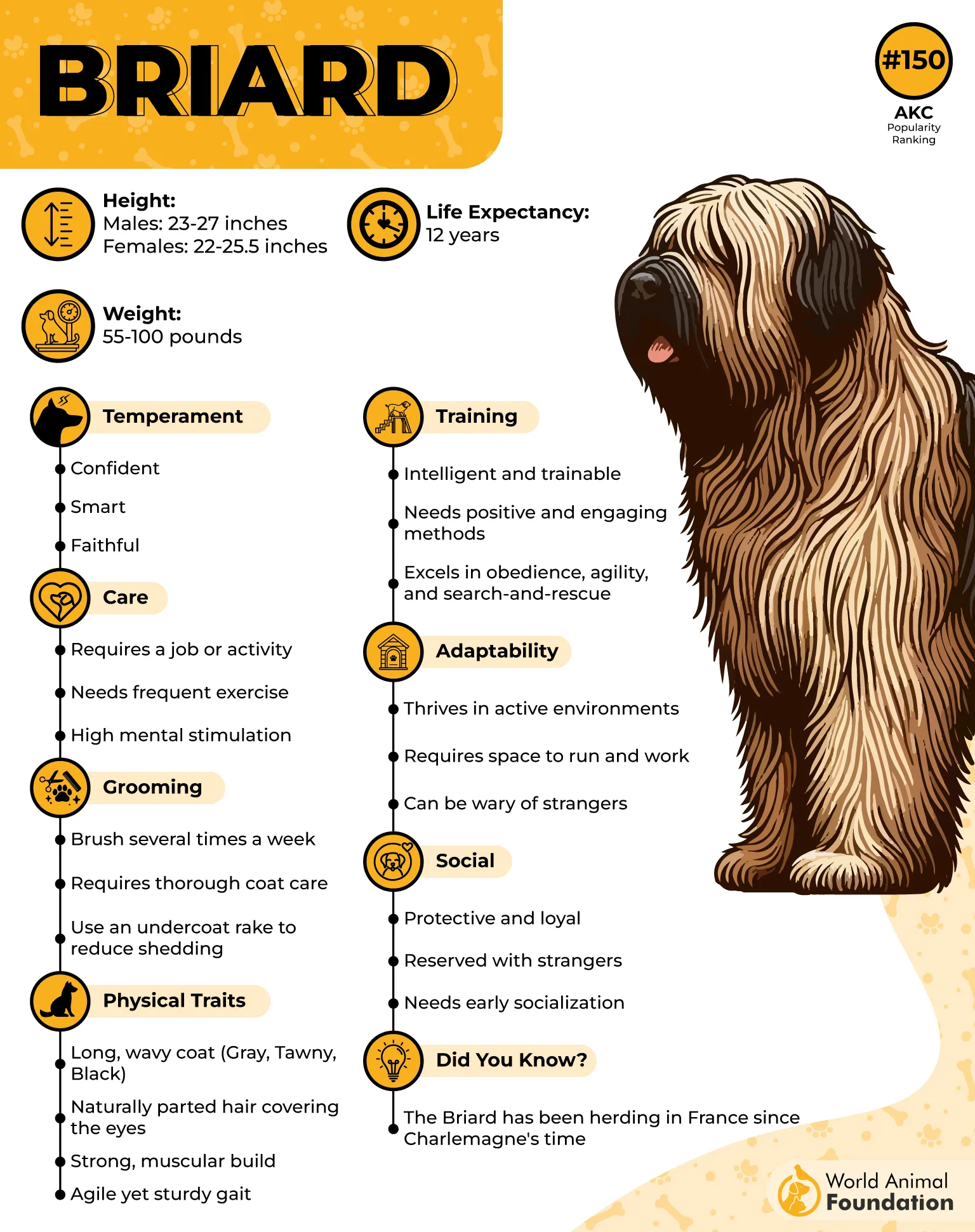
This breed does not like to be confined and will not be able to cope with living in a kennel-style arrangement. Briards require space, mental stimulation, and freedom of movement. Their independent character means that grooming must be started at an early age to avoid the dog becoming resistant to it.
If a dog is groomed correctly, the coat will be the pride of the owner. Groomers report that grooming sessions are intimate, concentrated rituals that consist of silent communication that ultimately leads to respect.
4. Giant Schnauzer
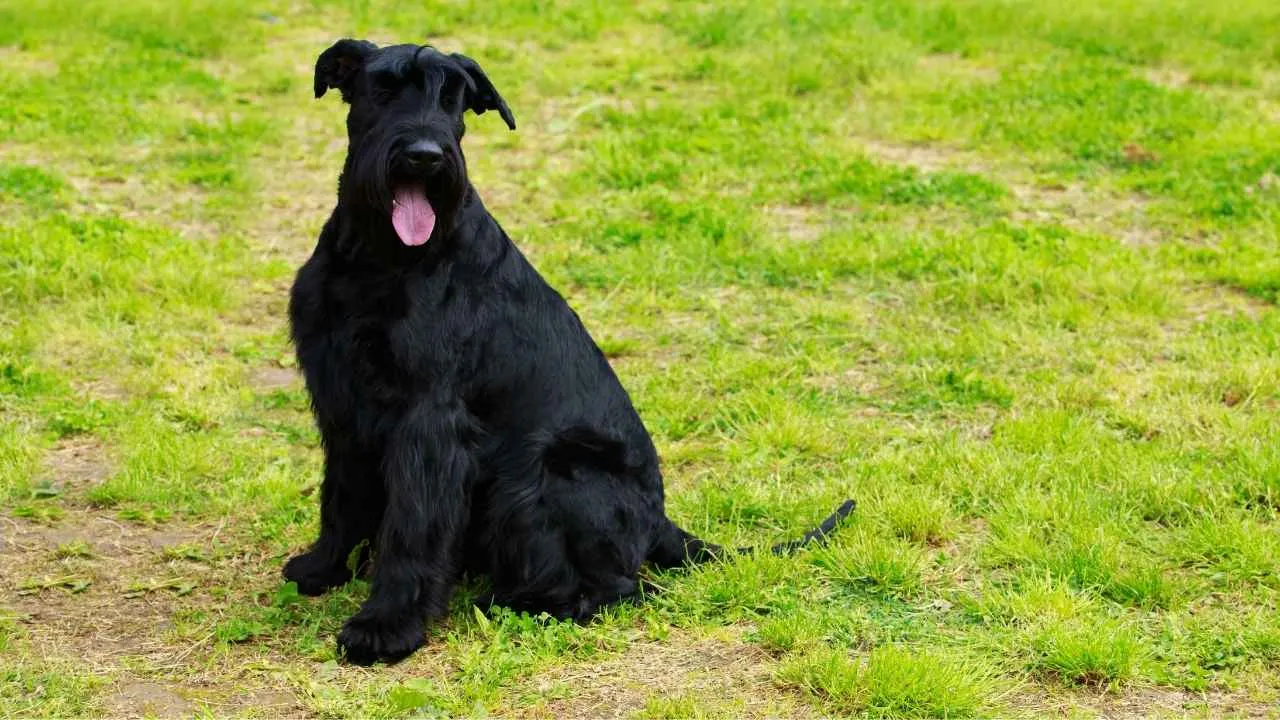
A strong, assertive, and extremely loyal dog, the Giant Schnauzer was bred in Germany as a cattle-herding dog. Today, the Giant Schnauzer is highly regarded in the police, military, and protection services mainly due to its intelligence and power.
The dog has ahair that is thick and wiry which calls for special care. Regular stripping or professional grooming is necessary to keep the dog’s coat healthy and its skin Diseases-free PetMD mentions that refusal to groom may result in matted fue and irritation caused by the hair of the beard and eyebrows growing in a wrong way.
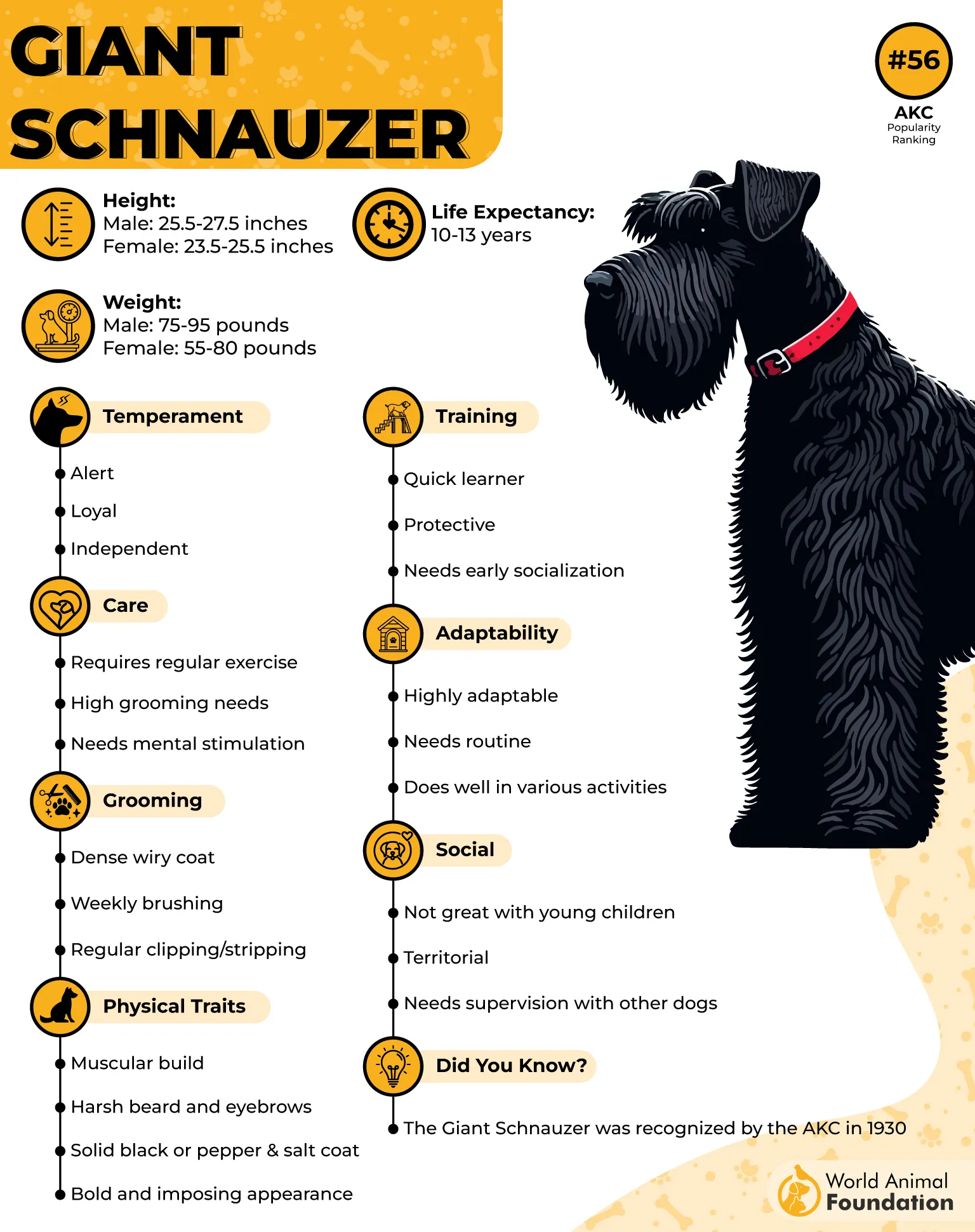
The energy of this breed is incredibly high, without vigorous daily routines of excercise and mental stimulation, the dog gets restless and tamed challenging the groomer. Hence, training and grooming should go hand in hand.
The giant schnauzer is a family protector, and he is very loyal and always on the alert. Besides, sessions with the groomer help owners check for skin problems, ticks, or irritation,thus making them a cruical part of the dog’s overall health care.
5. Poodle (Standard)
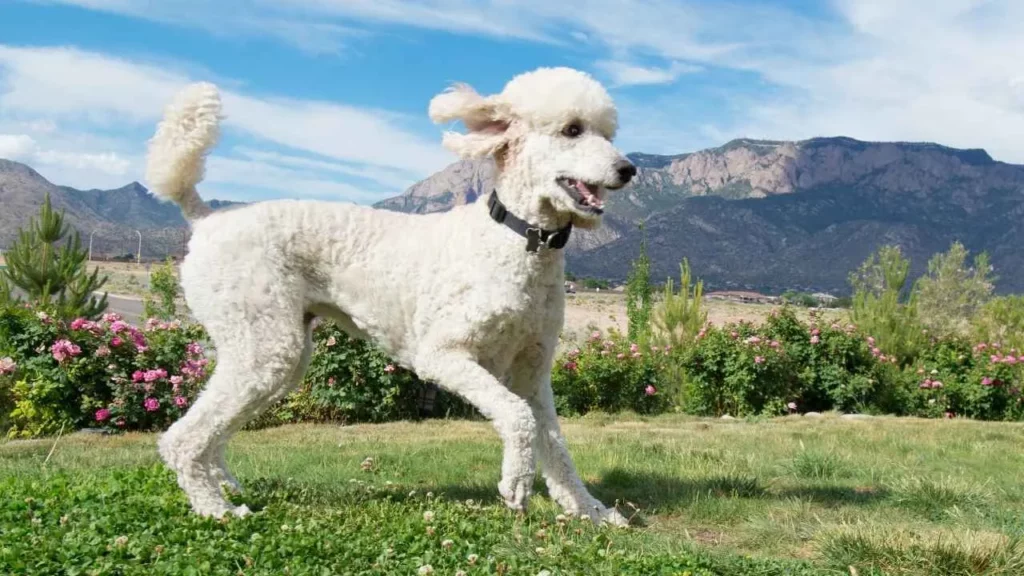
The Standard Poodle is a beautiful, bright, and often misinterpreted breed. The dog is not just a showpiece. its thick, curly hair keeps growing continuosly, thus making grooming a lifetime engagement instead of an occasional duty.
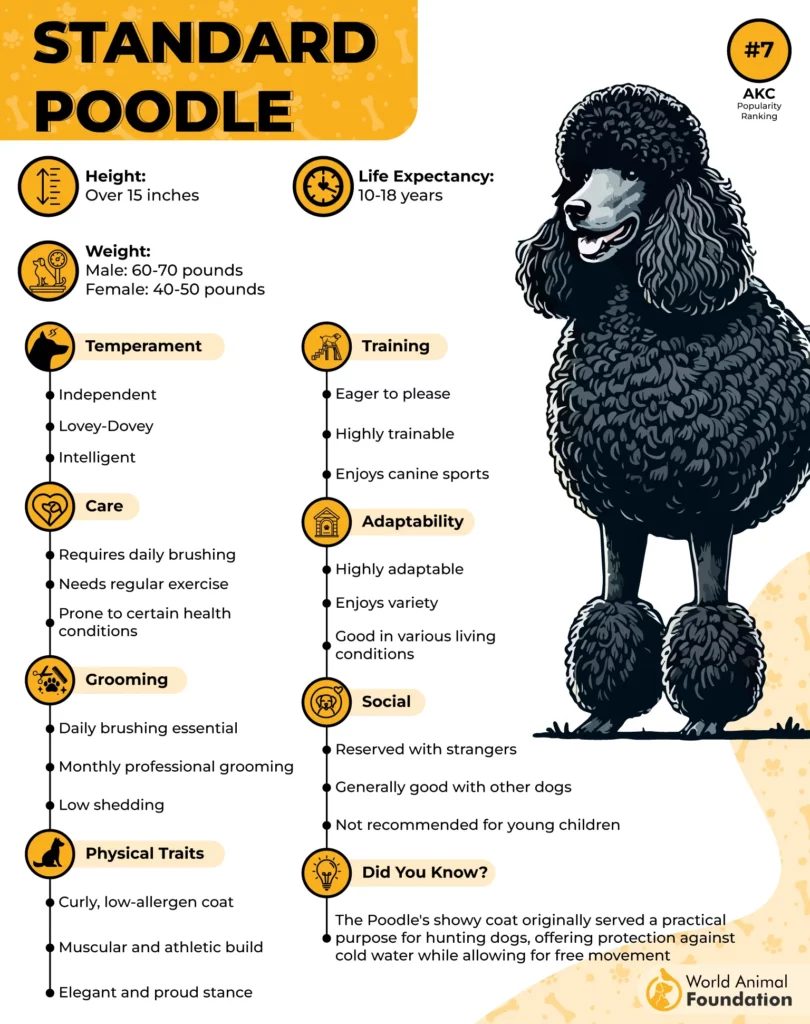
if the fur isn’t brushed regularly, mats can be formed very near the skin, which can be quite painful, limit the animal’s movement, and irritate the skin of the coat below. Having a professional groomer every six to eight weeks is significant as it maintains the health of the caot and lowers the risk of geeting infections.
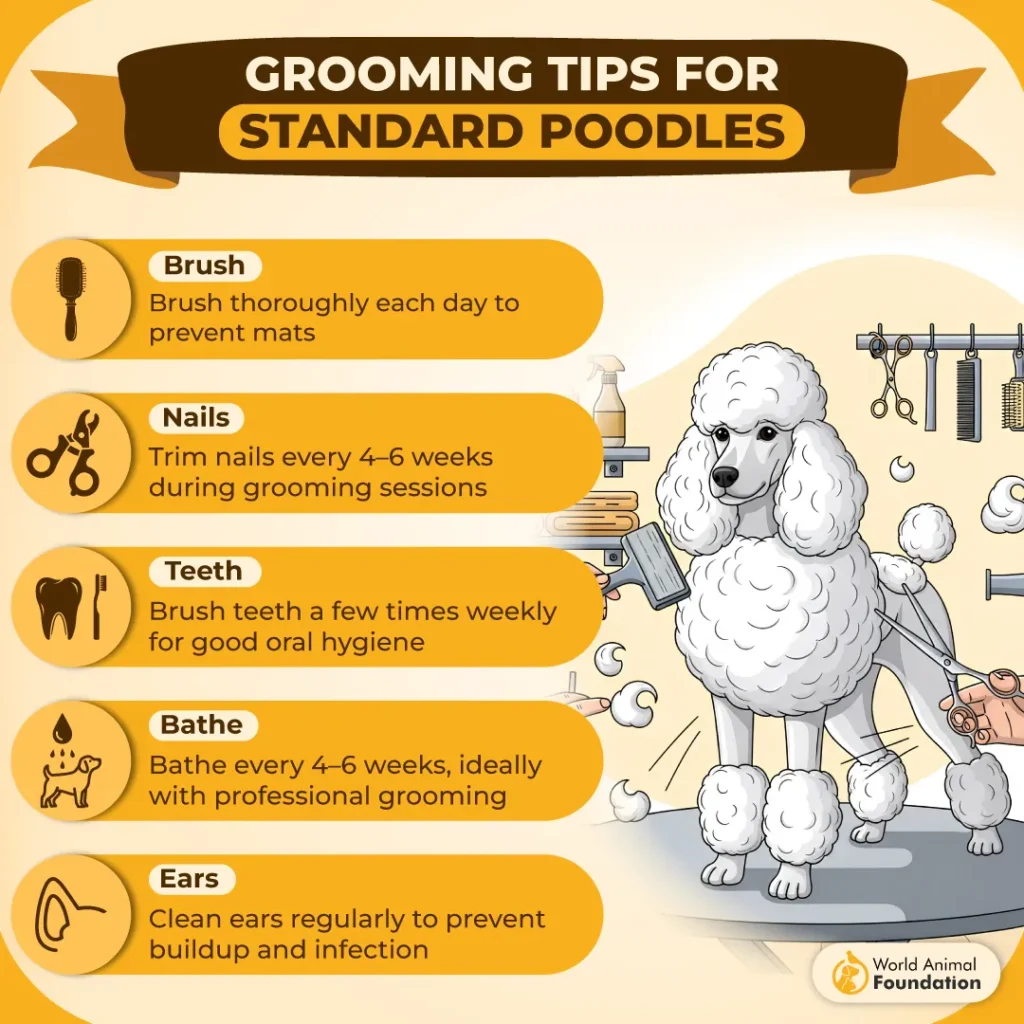
Brushing at home several times a week is a must. Along with grooming the pet, the owner is able to easily check the skin for any changes, allergies and ear health which are particularly sensitive areas for toy poodle.
6. Old English Sheepdog
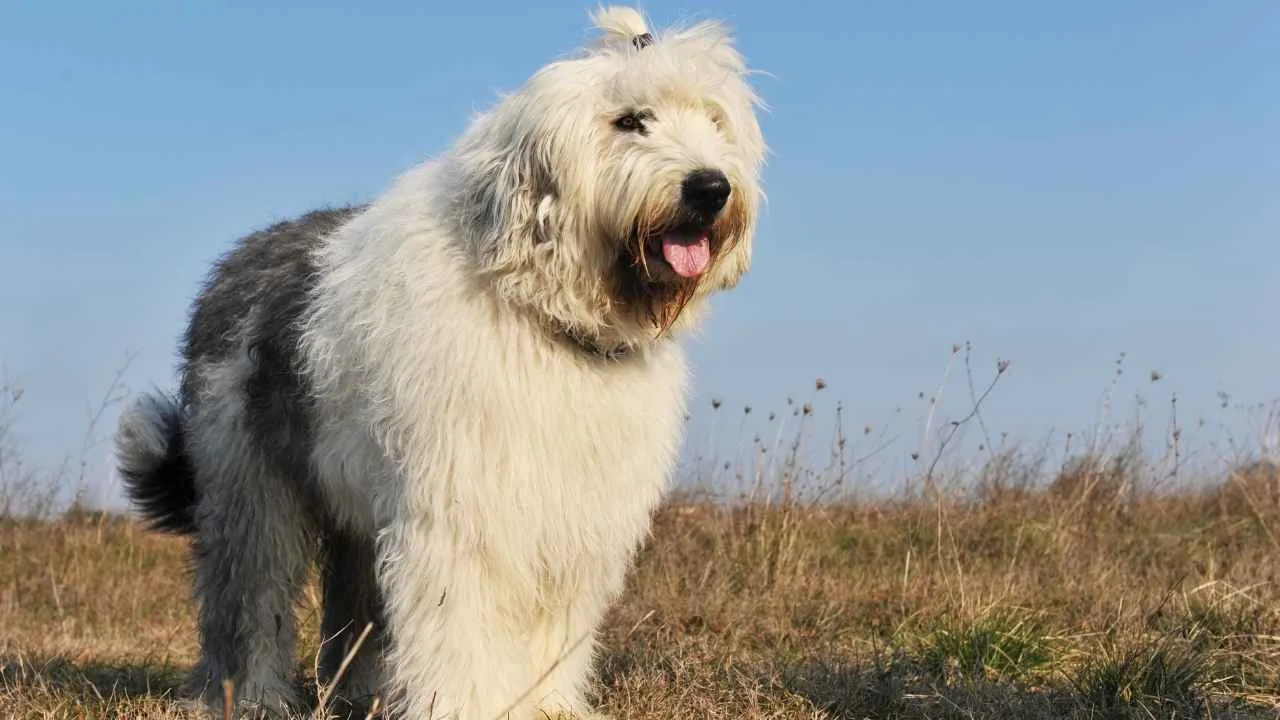
The Old English Sheepdog with its fluffy coat and playful personality is akin to a cloud that walks. This breed that was originally developed in England for herding sheep and cattle is characterized by a combination of remarkable strength and unexpected gentleness.
The care of that iconic coat is no less than a serious commitment. A grooming session of three to four hours per week is required to keep the fur from matting which can consequently lead to moisture and dirt being trapped therein. Purina resources also mention that often times, neglected coats require complete shaving.
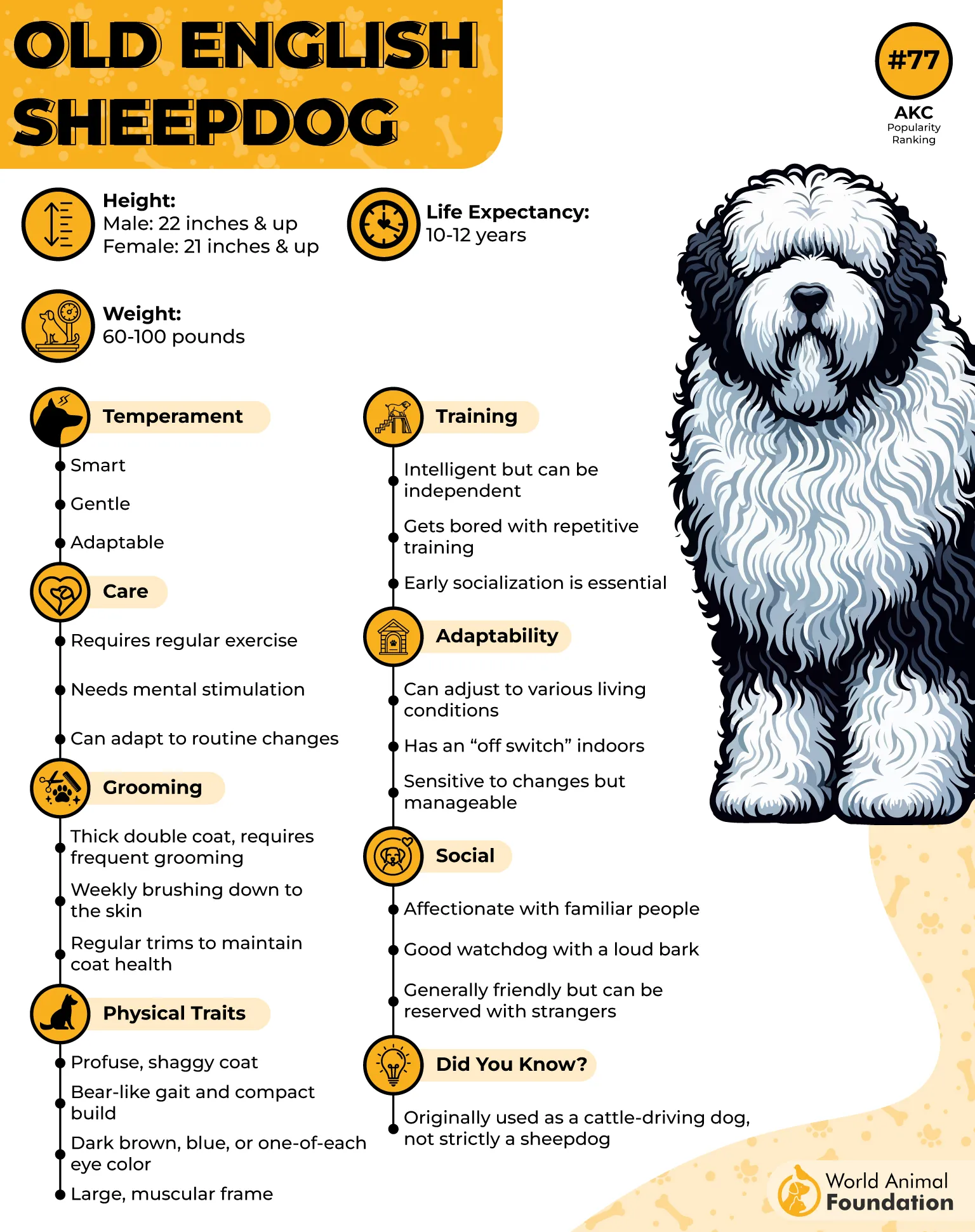
This breed, despite being large, can live indoors if it gets enough exercise. However, it is very necessary to socialize the dog early, as it might just be quiet around other people.
Establishing grooming sessions early on will help the dog to be more tolerant. The owners of the dogs consider these sessions to be family affairs, thus turning the maintenance into times of connection and relaxation.
7. Komondor
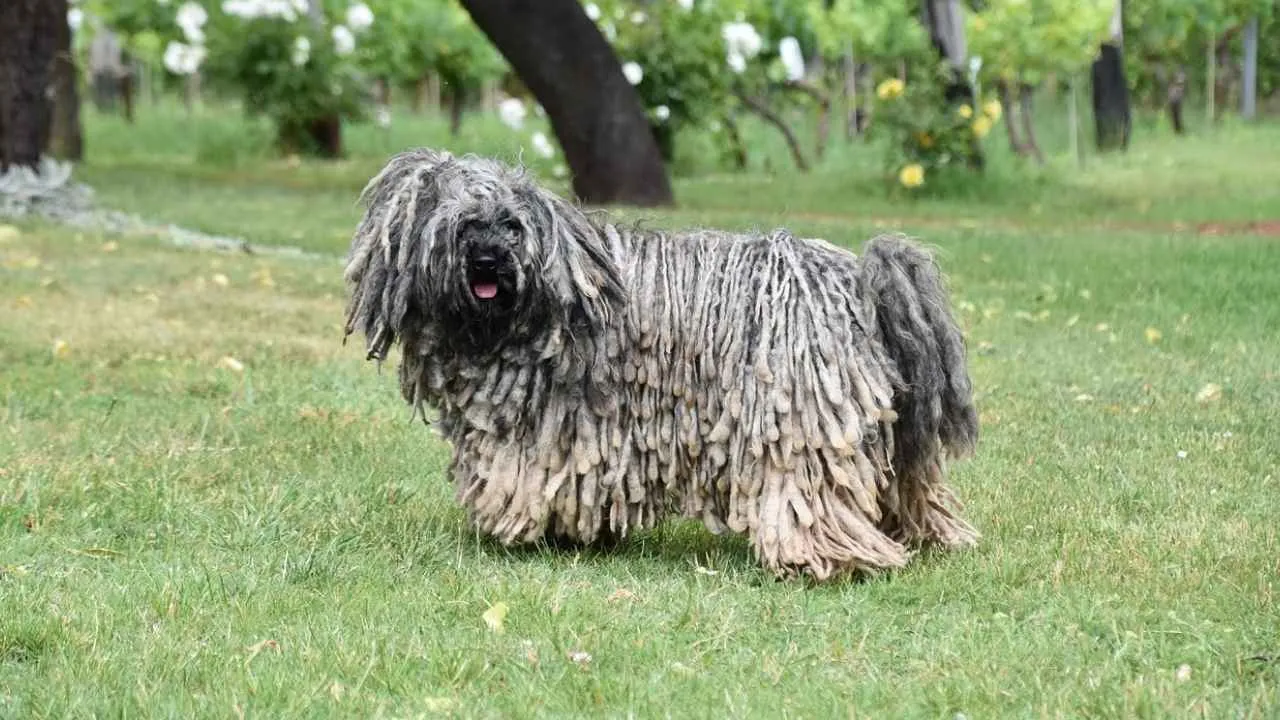
The Komondor is a very noticeable breed. Its corded, massive, mop-like coat is a main characteristic and besides, this breed was actually developed to be a predator of the sheep.
The cords can measure as much as 27 inches and they should be separated very carefully in order not to get matted. Pet Health Network warns that the skin infections which can be very severe and hard to detect will be the result of incorrect grooming under the cords.
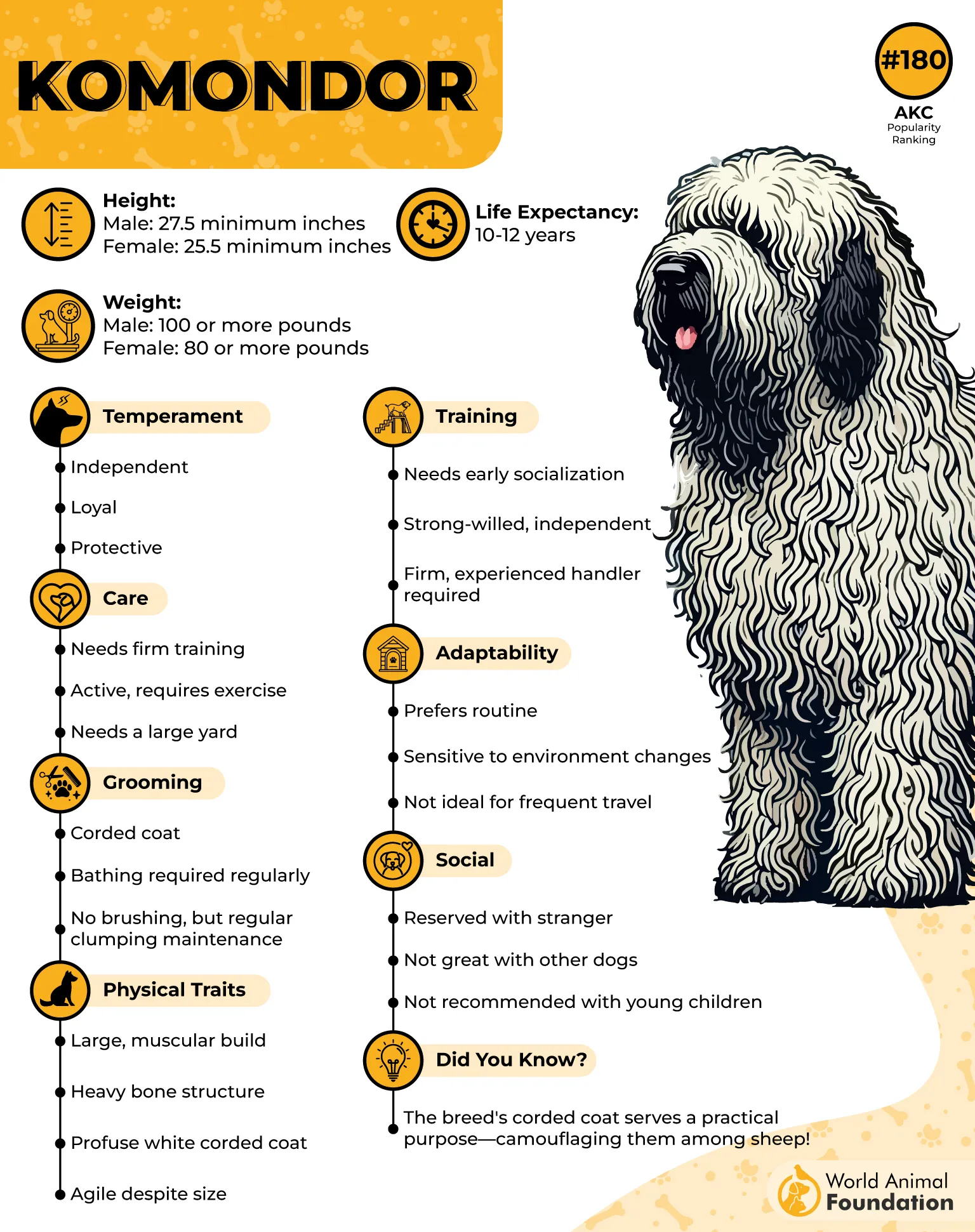
The training should start off early between four and eight months preferably, when dogs are quite nice and encourage the use of praise. The Komondor is self-sufficient and requires strong, respectful leadership.
With children this breed is still calm and gentle but it has already taken up its guardian duty. When grooming is the case, it also acts as a health check especially for conditions like hip dysplasia or bloat which require early detection.
Conclusion
Dog breeds that require extensive grooming are not merely pets, they are commitments concealed in fur. The grooming of these dogs often requires time, patience, and sometimes even daily consistency from the owners. Nevertheless, they reward the owners with loyalty, intelligence, and emotional depth that are comparable to very few experiences.
Picking up a breed from this category should never be a rash decision. Knowing the grooming requirements beforehead will not only mean a healtheir dog but also a happier owner. When care turns into a routine and love is seen as an effort, the bond created is one that lasts forever.
