




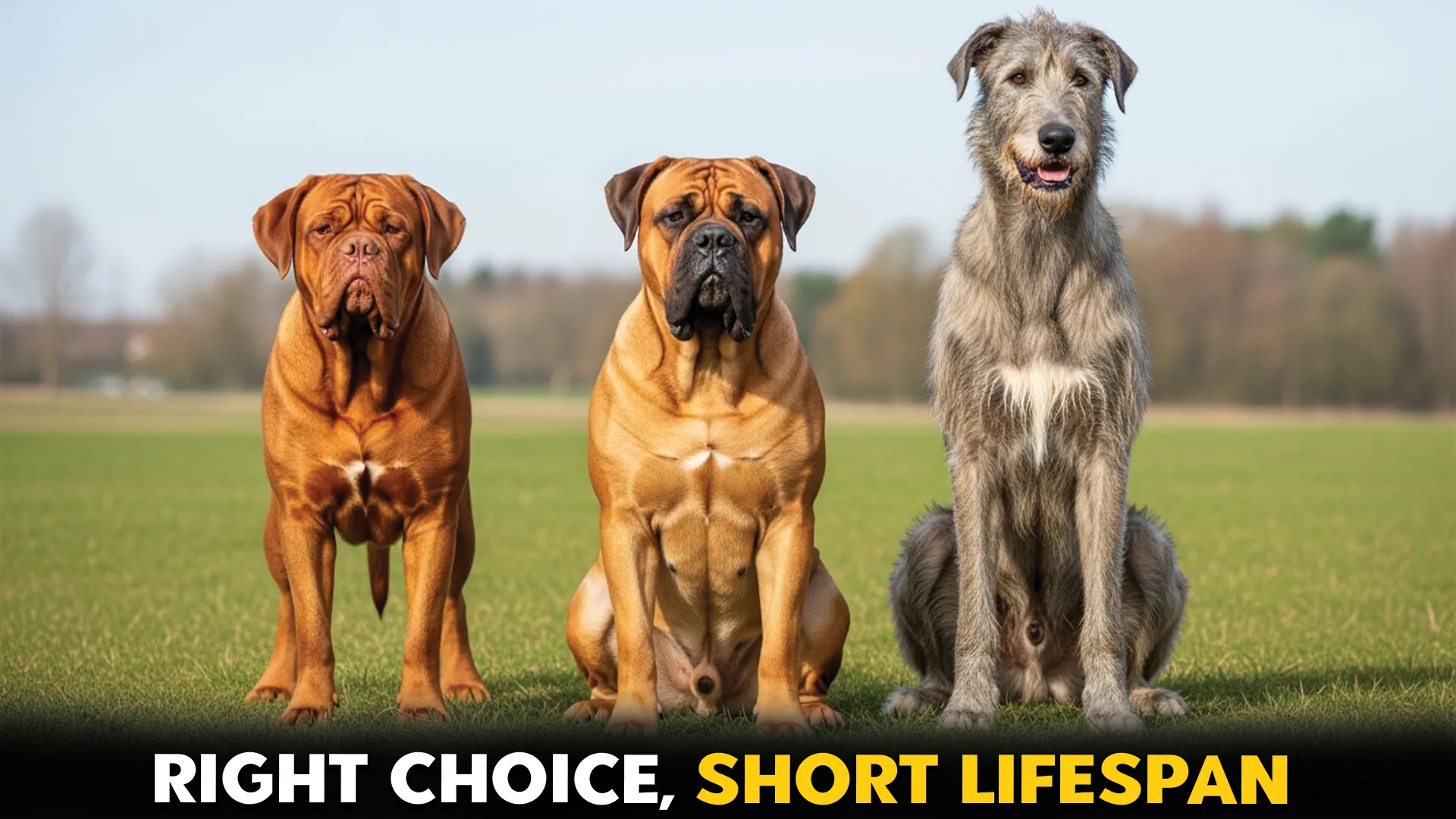
Falling in love with a giant dog is easy. One slow tail wag, one “lean” against your leg like a living weighted blanket, and you’re done for. But giant and extra-large breeds often come with a tough tradeoff: shorter average lifespans, largely linked to body size and faster growth, which research has associated with earlier aging and higher risk of certain diseases compared to smaller dogs.
That doesn’t mean these dogs aren’t “worth it.” It means they’re a heart-forward decision that benefits from clear expectations, solid budgeting, and proactive healthcare.
If you’d rather have eight incredible years with a best friend than fifteen lukewarm ones with a dog that doesn’t fit your lifestyle, you’re not wrong—you just need to go in prepared.
Below are seven adored breeds that tend to have shorter lifespans than average, plus what daily life actually looks like with each one—temperament, history, health realities, and the little joys that make people choose them anyway.
Dog Breeds with Brief Lives: Are They Right for You?
1. Dogue de Bordeaux
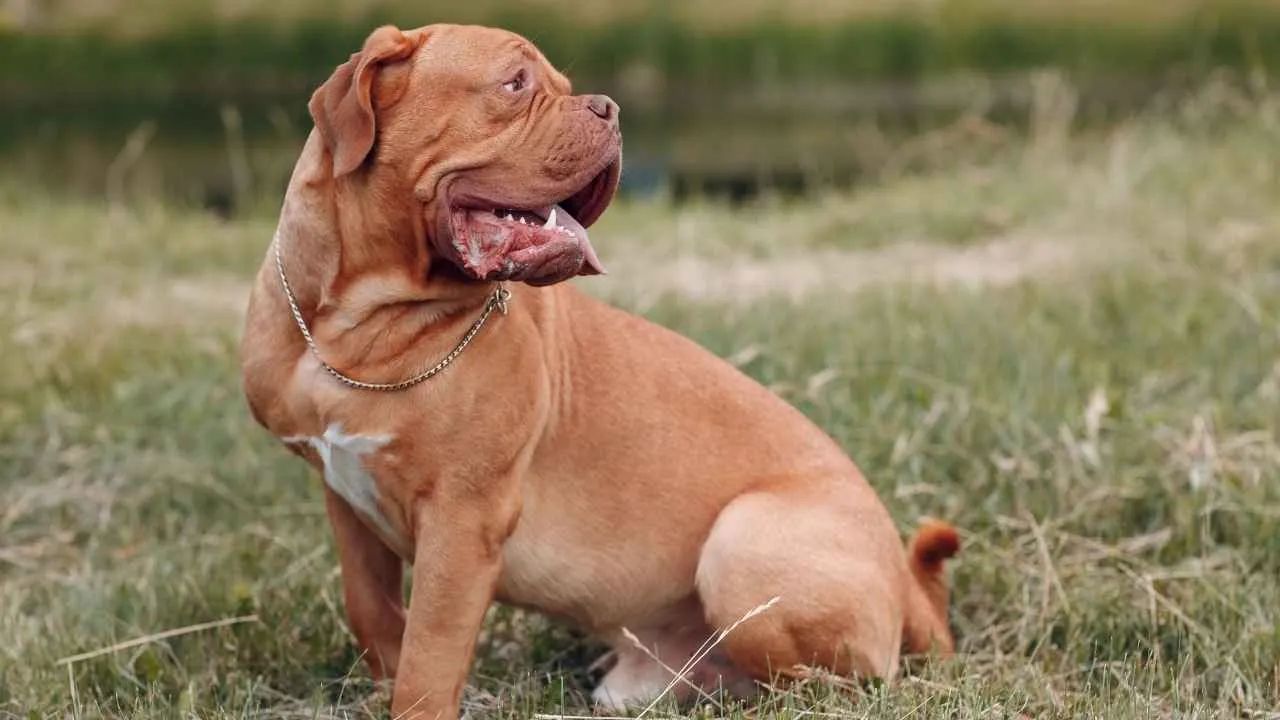
The Dogue de Bordeaux (French Mastiff) looks like a stern bouncer, but at home it often behaves like a sensitive grandpa who wants cuddles and a comfortable couch.
This breed is associated with France’s Bordeaux region and is famous for its massive head and powerful build—an old-style guardian type valued for its strength and presence. Their devotion can be intense, and many owners describe them as “velcro mastiffs” with a soft spot for their inner circle.
Now for the hard truth: this breed is widely cited as having a short lifespan—often around 5–8 years.
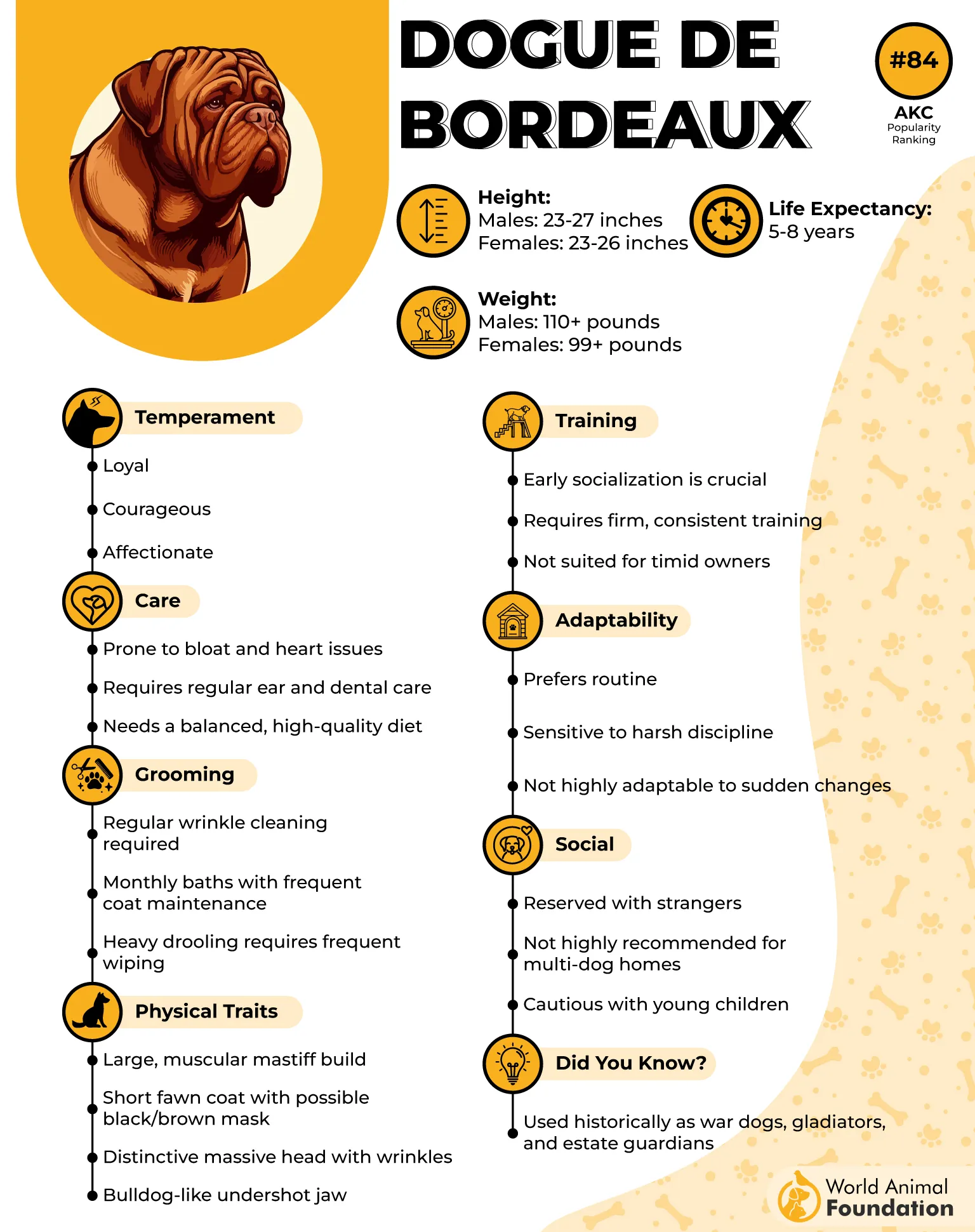
They’re not built for marathon exercise, but they do need consistent movement to keep joints and weight in check. Short, regular walks beat weekend-only chaos, and mental work (basic obedience, scent games, food puzzles) helps avoid boredom without stressing the body.
Training matters a lot because this is a strong dog that grows quickly, and “cute habits” become “oh no” habits at 120 pounds. Keep sessions short, upbeat, and consistent, and start polite greetings early so guests don’t get bulldozed by affection.
Socialization should be steady and positive, because a giant dog that’s unsure of the world is much harder to manage than a small one.
2. Bullmastiff
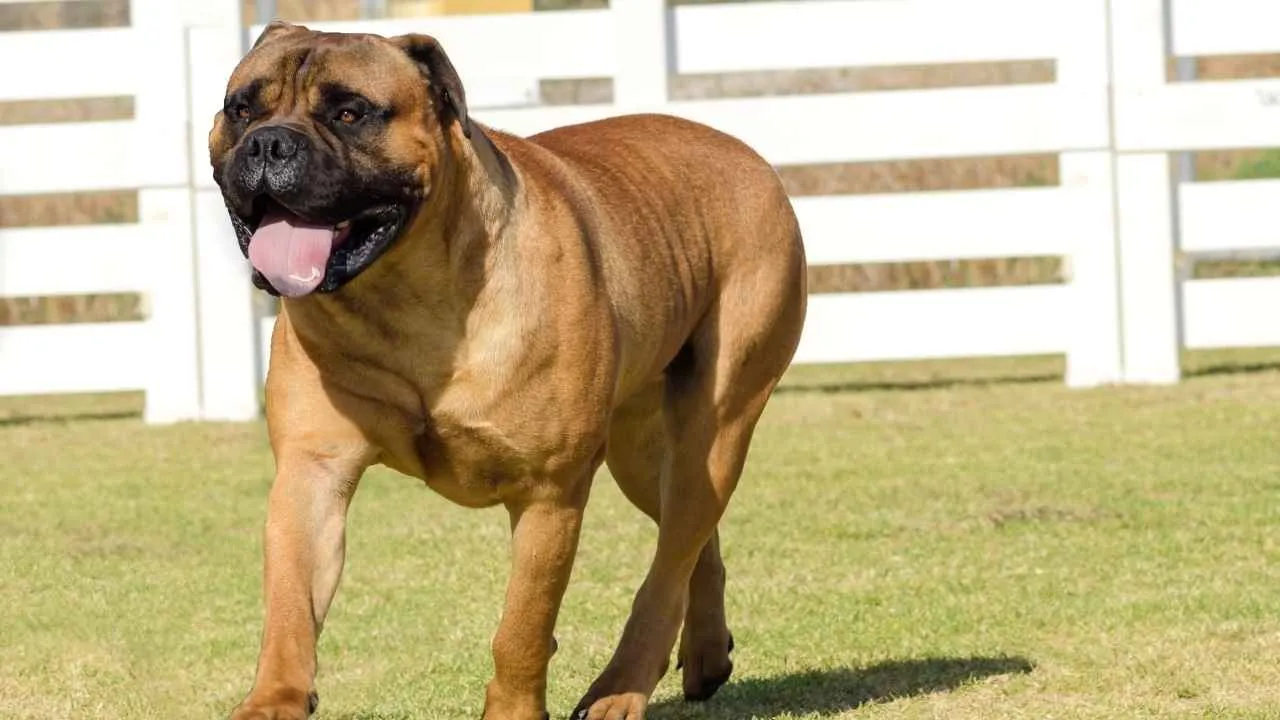
The Bullmastiff was developed in Britain as a “gamekeeper’s night dog”—a powerful, quiet guardian meant to deter and stop intruders on large estates. That origin story shows up in modern temperament: many Bullmastiffs are naturally watchful and steady, not frantic or barky by default.
They often prefer to be close to their people, doing their protective job like a calm security system that runs in the background.
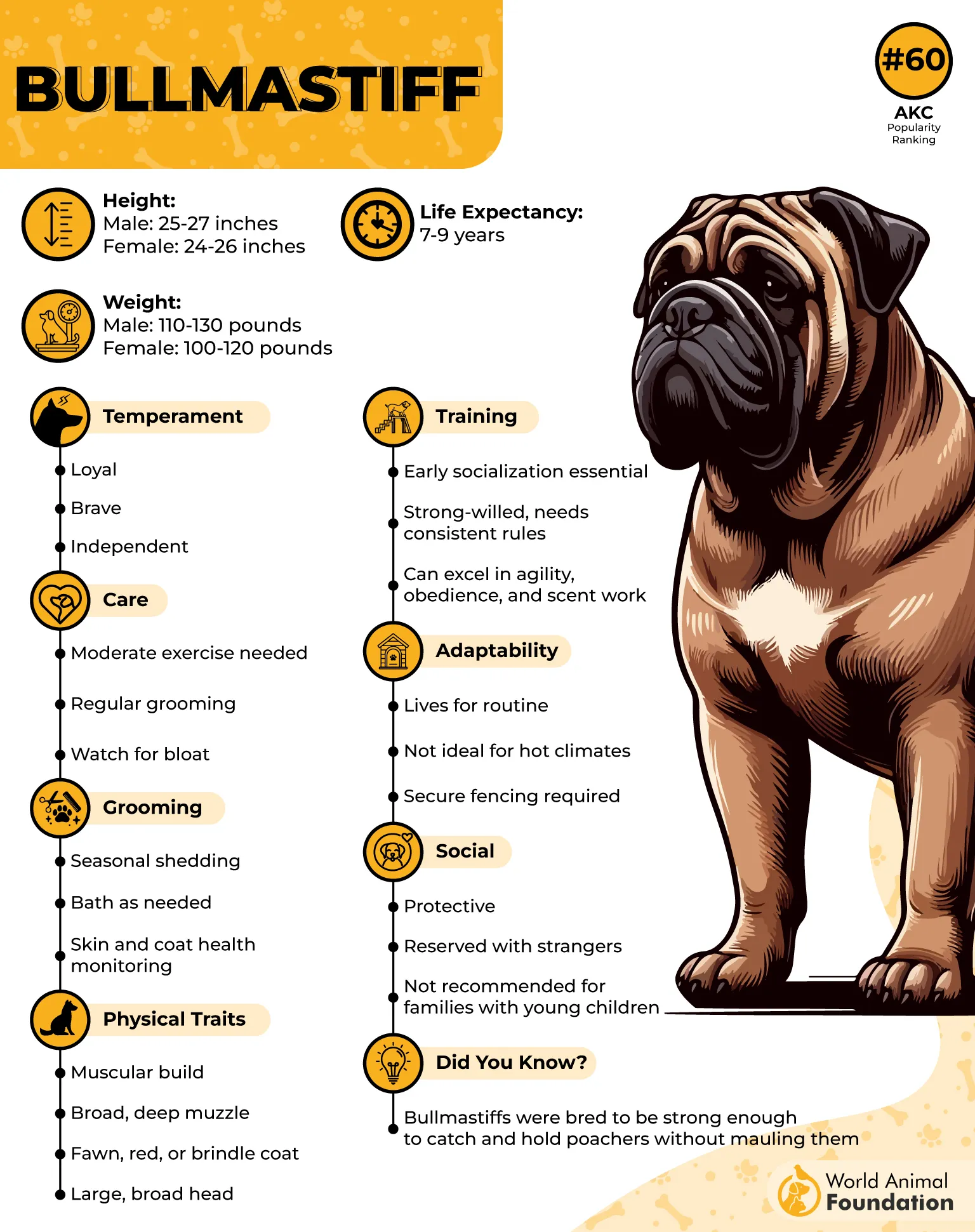
Lifespan is commonly described as 8–10 years for Bullmastiffs, as per PDSA, which is short compared to smaller breeds but typical for their size. Because they’re heavy and muscular, weight management is a big deal—extra pounds can stress joints and shorten comfort years.
They’re not a breed that needs endless running, but they do need regular, moderate exercise. Think daily walks, a bit of play, and enough movement to keep muscles strong without pounding the joints. Over-exercising young giant breeds can be risky, so the goal is “fit and steady,” not “exhausted.”
They are famously strong-willed in a quiet way. They don’t always argue—sometimes they just… pause… and decide whether your request is reasonable.
Training works best when you’re calm, fair, and consistent, and when you reward the behavior you want before the dog invents its own job (like guarding the fridge).
3. Irish Wolfhound
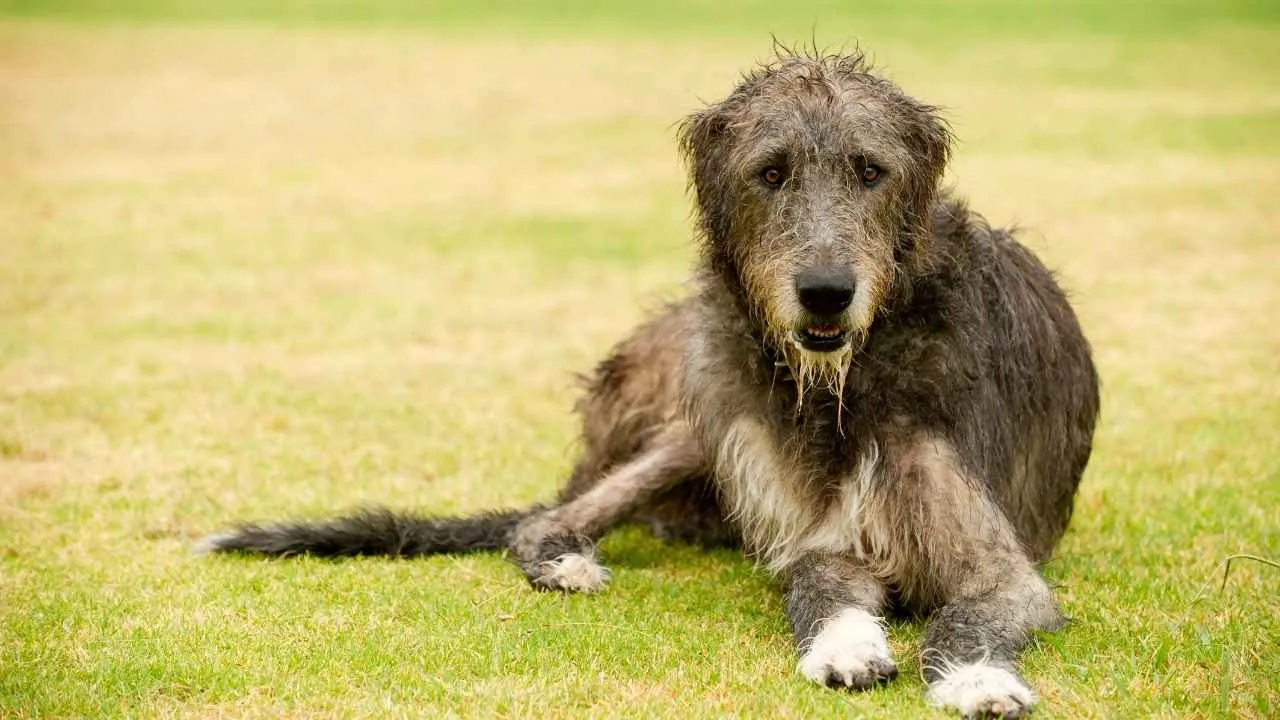
The Irish Wolfhound is legendary—literally. For centuries, they’ve been associated with Irish nobility and the hunting of large game, including wolves, and they still carry that noble, statuesque vibe today.
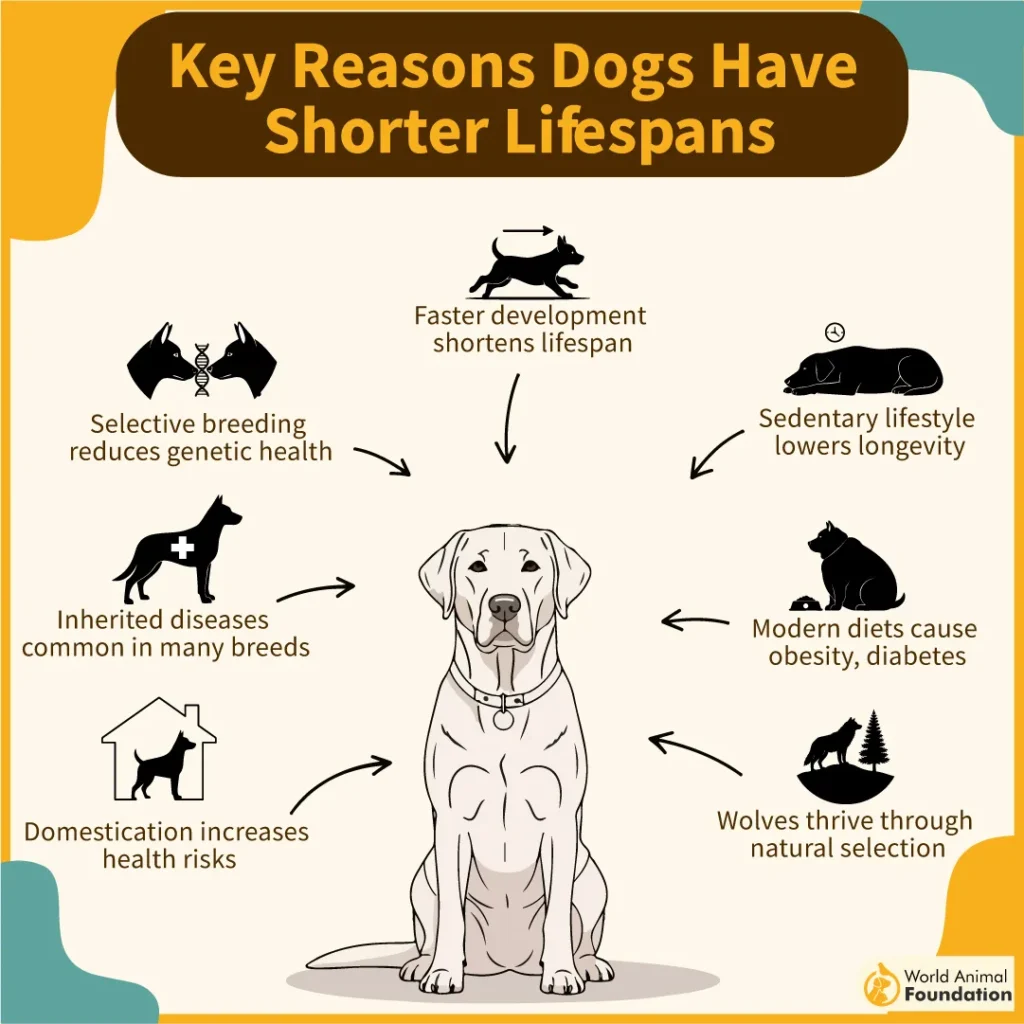
Their lifespan is frequently cited in the single digits, commonly around 6–10 years, with many references clustering toward the lower end of the average range. This is one of the toughest parts of Wolfhound ownership: you may get fewer years, but those years can be extraordinary.
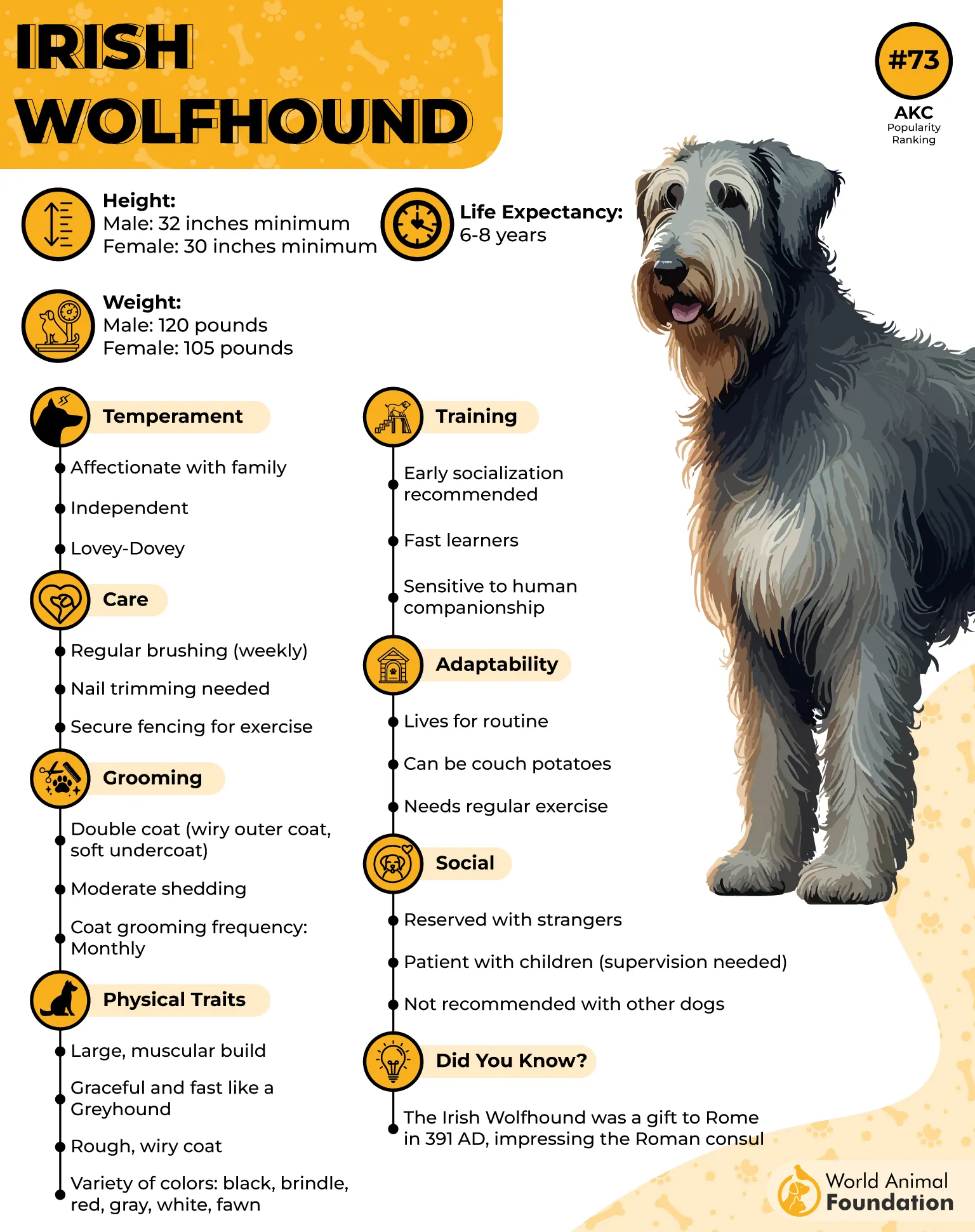
AKC says they need regular exercise, but it doesn’t have to be intense chaos. Long, sniffy walks and room to stretch those long legs are great; repeated high-impact jumping and extreme sprinting can be hard on a giant frame.
They often enjoy steady adventures more than frantic games—think “dignified hiking companion,” not “hyper fetch machine.”
Because they’re giant sighthounds, they can have that classic “prey drive moment,” so safe areas and good recall training matter. Their personalities can be sensitive, so harsh methods backfire; they respond best to patient, positive training that makes them feel secure.
The irony is that the biggest dogs often need the gentlest handling.
Their size also changes the practical stuff: beds are expensive, food bills are real, and travel logistics take planning. Vet care can be more complex because giant breeds can be prone to issues that require advanced diagnostics and specialist support.
4. Great Dane
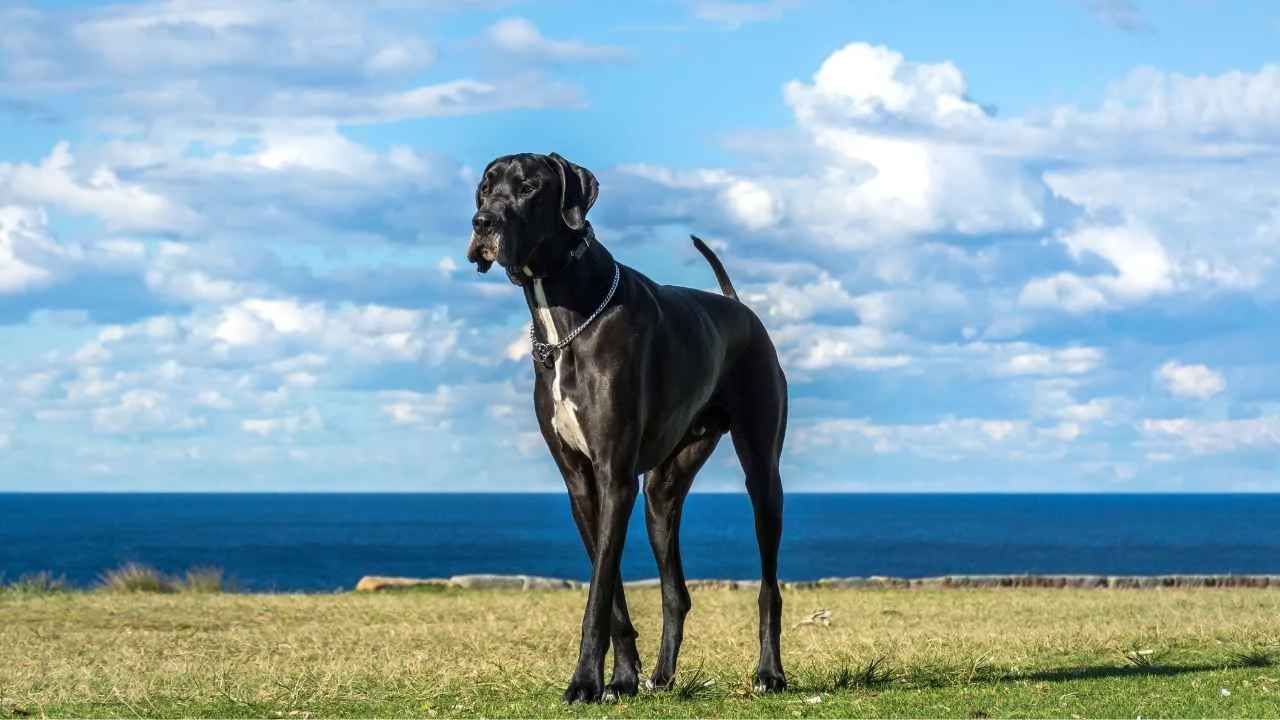
The Great Dane is often called a “gentle giant,” and it earns that nickname with its mix of size, friendliness, and goofy affection.
The breed’s development in Europe included roles in hunting and estate protection, but today most Danes are companion dogs with a surprisingly mellow indoor style—assuming their exercise needs are met.
This dog’s lifespan is around 7–10 years. The short lifespan reputation is one reason prospective owners hesitate, but many Dane lovers will tell you the same thing: the love is huge, the personality is bigger, and the memories are permanent.
That said, you want to choose breeders and healthcare routines carefully, because early prevention matters a lot in this breed.
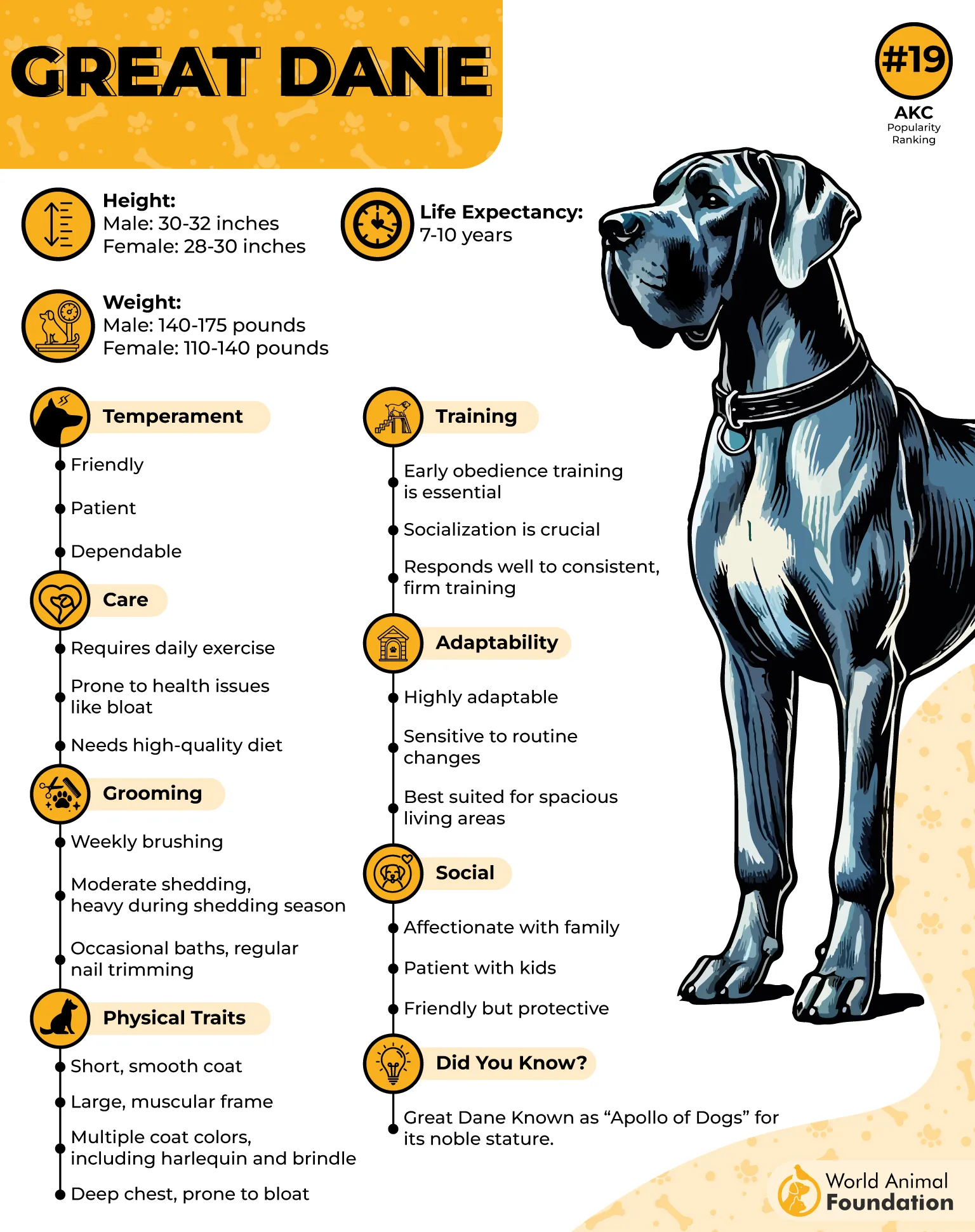
The Royal Canin claims that they need daily movement, but they’re not always the nonstop athletes people imagine. Many are happy with structured walks, gentle play, and enough room to stretch out—plus lots of couch time.
Like other deep-chested giant breeds, careful feeding routines and not exercising right after meals are common owner strategies to reduce the risk of digestive emergencies.
Training a Dane is less about “dominance” and more about making sure a huge dog has excellent manners. You want polite leash walking, calm greetings, reliable “place,” and solid impulse control—because even a friendly Dane can overwhelm visitors if it acts like a 20-pound puppy.
5. Leonberger
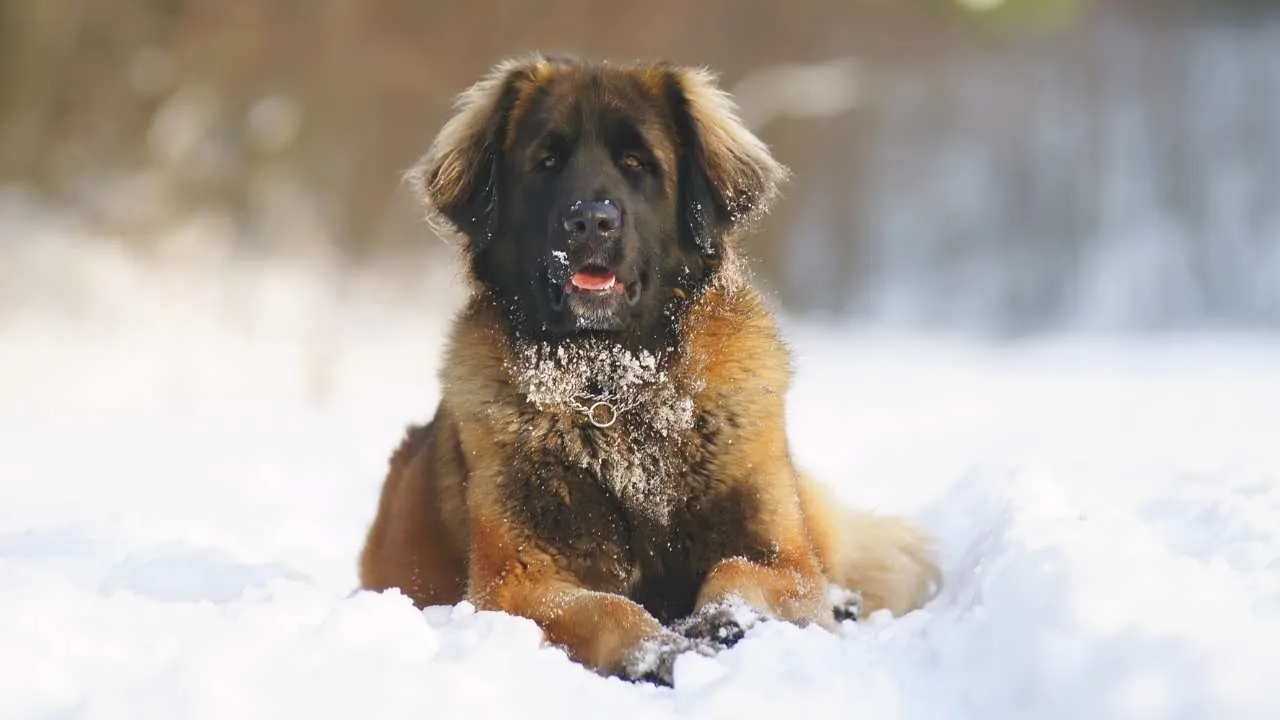
The Leonberger was developed in 19th-century Germany and is often described as a family-oriented giant with a sweet, stable temperament. They’re big, fluffy, and usually eager to be included—often happiest when they’re near their people rather than “living outside.”
Lifespan is commonly listed around 7 years for Leonbergers in general breed overviews, reflecting their giant-breed challenges. That reality can be especially bittersweet because they tend to be very emotionally connected dogs.
For Leonberger owners, the goal becomes maximizing healthspan—more good years, fewer fragile ones.
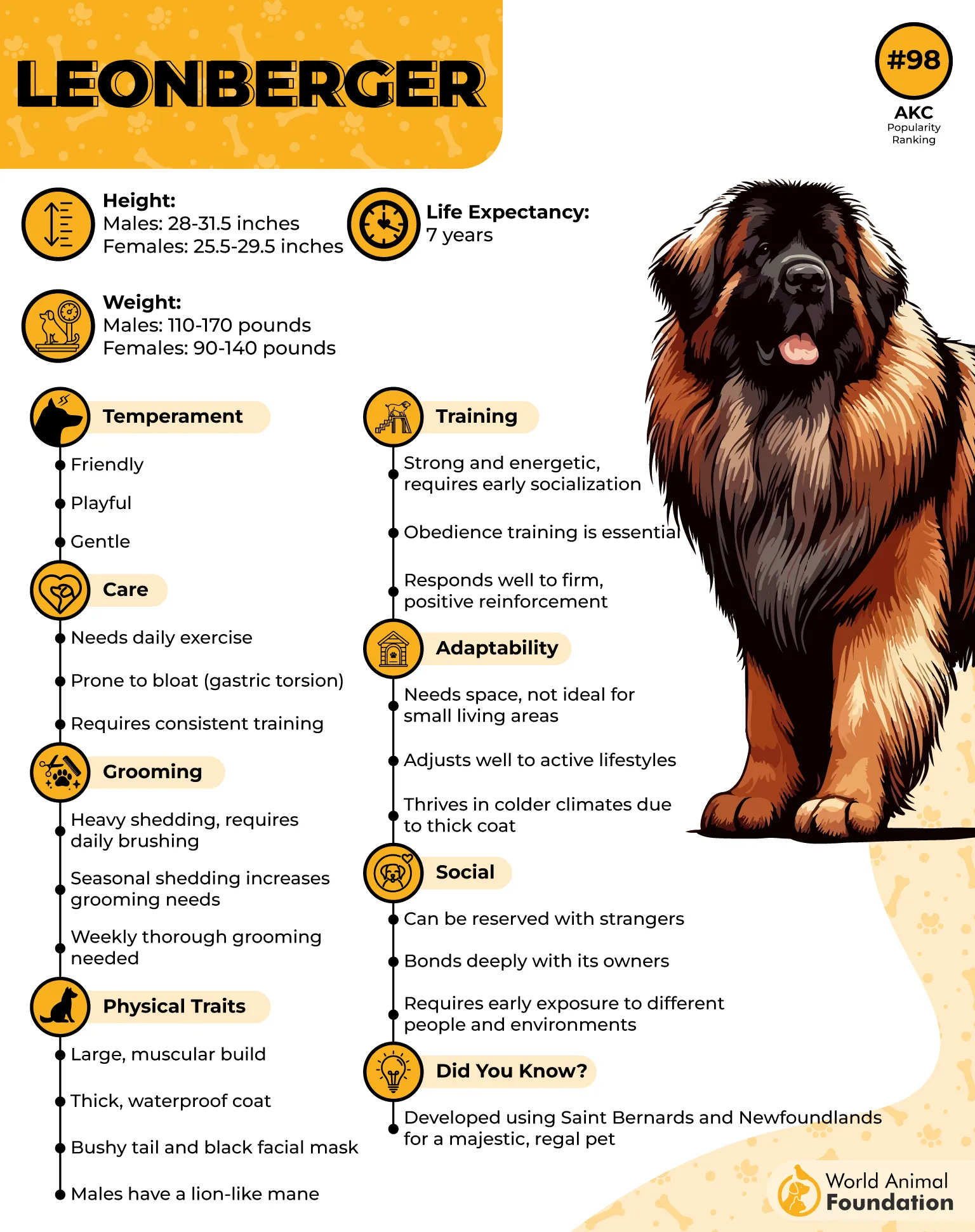
They’re not couch potatoes, though; many need real daily activity and mental engagement. Long walks, controlled hiking, swimming (if safe), and training games keep them content and help prevent behavioral issues caused by boredom.
Because they’re intelligent, they tend to enjoy learning—just don’t make sessions repetitive.
These large dogs often do best in homes where people are around and routines are predictable, as per PetMD. They can be wonderful with families when socialized well, but their sheer size means supervision around small kids is wise, especially during the goofy adolescent stage.
6. Rottweiler
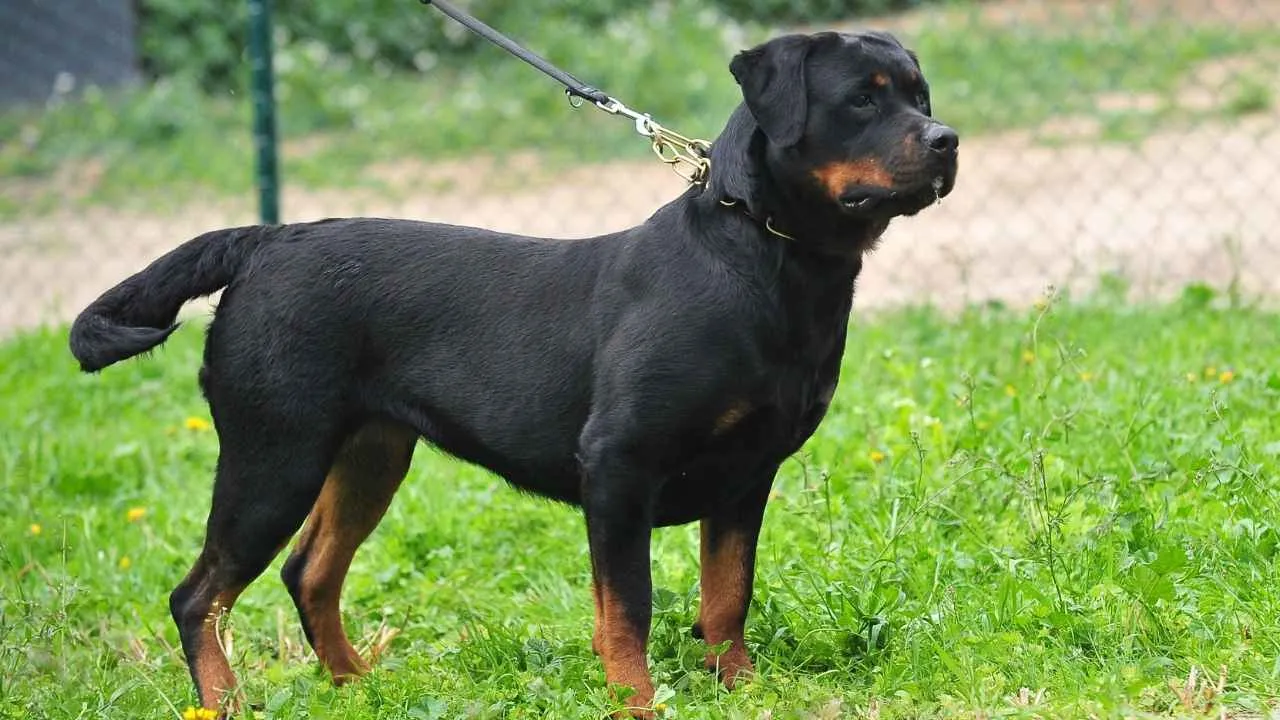
The Rottweiler is a classic working guardian breed with roots tied to droving and protection work, and that background still shows in its confidence and physical power. A well-bred, well-trained Rottweiler is often calm, steady, and deeply loyal—more “composed protector” than “chaos machine.”
They’re also famously affectionate with their people, and yes, many are total cuddle bugs at home.
This dog’s lifespan typically ranges from 9 to 10 years, though it varies with genetics, weight, and healthcare. Compared with the most short-lived giants, which can feel like “bonus time,” but it’s still shorter than many small breeds.
The best gift you can give a Rottie is structure: healthy body condition, regular exercise, and regular vet screening.
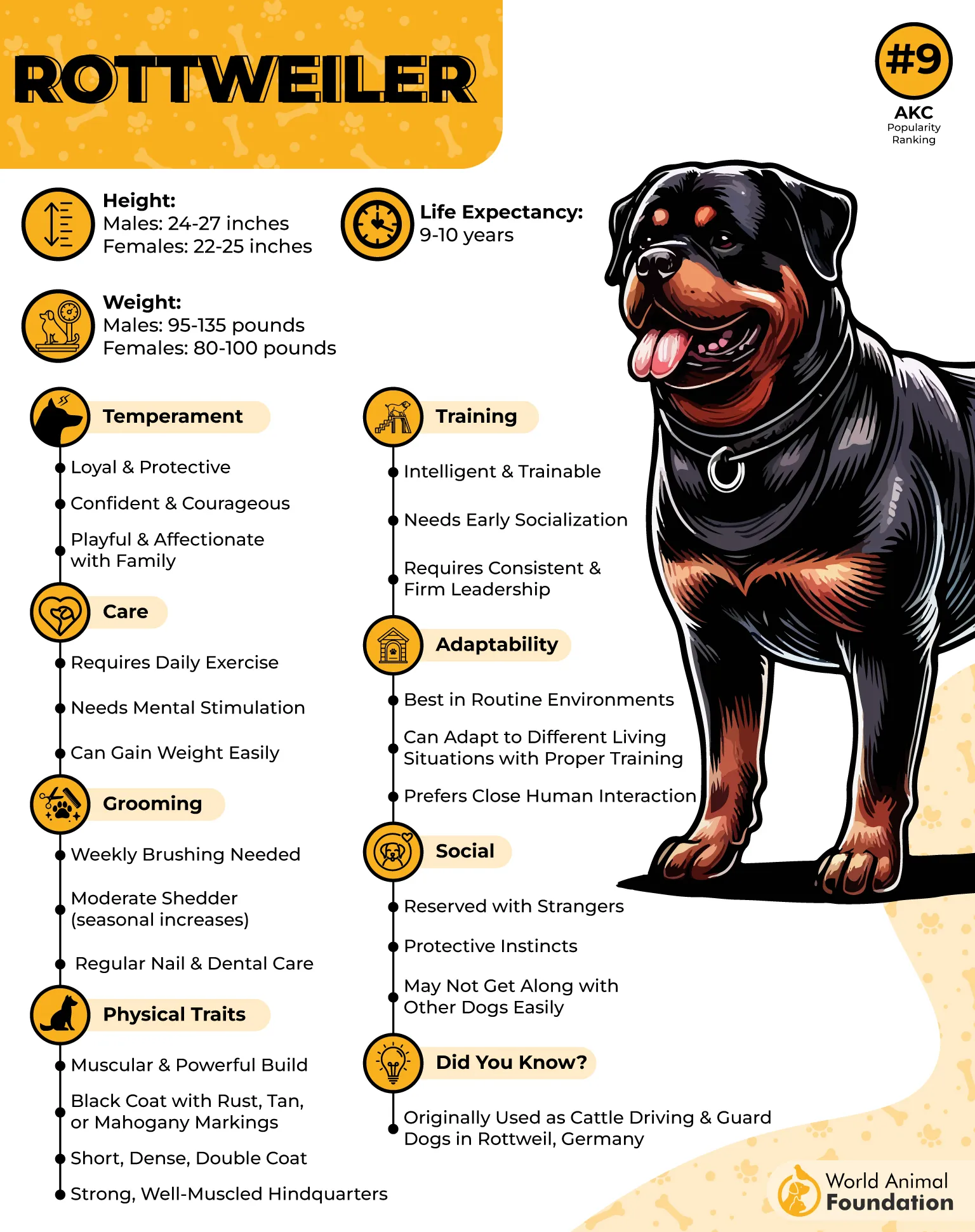
They need daily physical outlets, as per Purina, but they also need mental work—this is a smart dog that enjoys having a job. Obedience practice, scent games, puzzle toys, and controlled strength-building activities can keep them balanced.
If you skip enrichment, a bored Rottweiler may invent its own hobbies, and those hobbies might involve remodeling your furniture.
Training and socialization are huge for reputation and safety. This is a breed that should learn to remain calm and neutral around strangers and to show reliable manners in public, not to be frantic with suspicion or uncontrolled excitement.
Done right, you get a dog that’s confident, predictable, and wonderfully bonded to you.
7. Bernese Mountain Dog
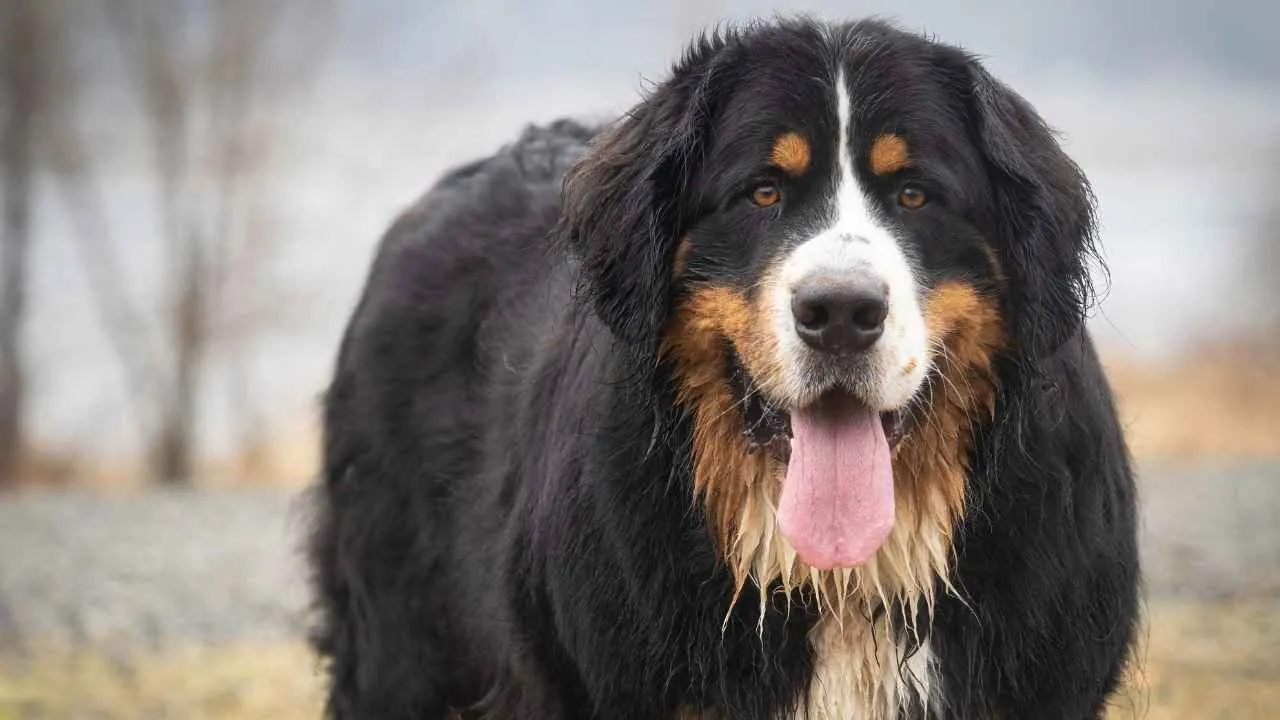
The Bernese Mountain Dog comes from Switzerland and was traditionally used as a farm dog—helping with draft work and general utility tasks—before becoming a beloved companion worldwide. They’re known for a gentle, friendly demeanor and that iconic tri-color coat that makes people stop you on the street like you’re walking a celebrity.
Unfortunately, they are also widely discussed in the context of their shorter lifespan for their size, commonly around 7–10 years. Orvis says they have a reputation for a higher cancer risk than many breeds, which is why breeder selection and health screening are especially important topics in Berner communities.
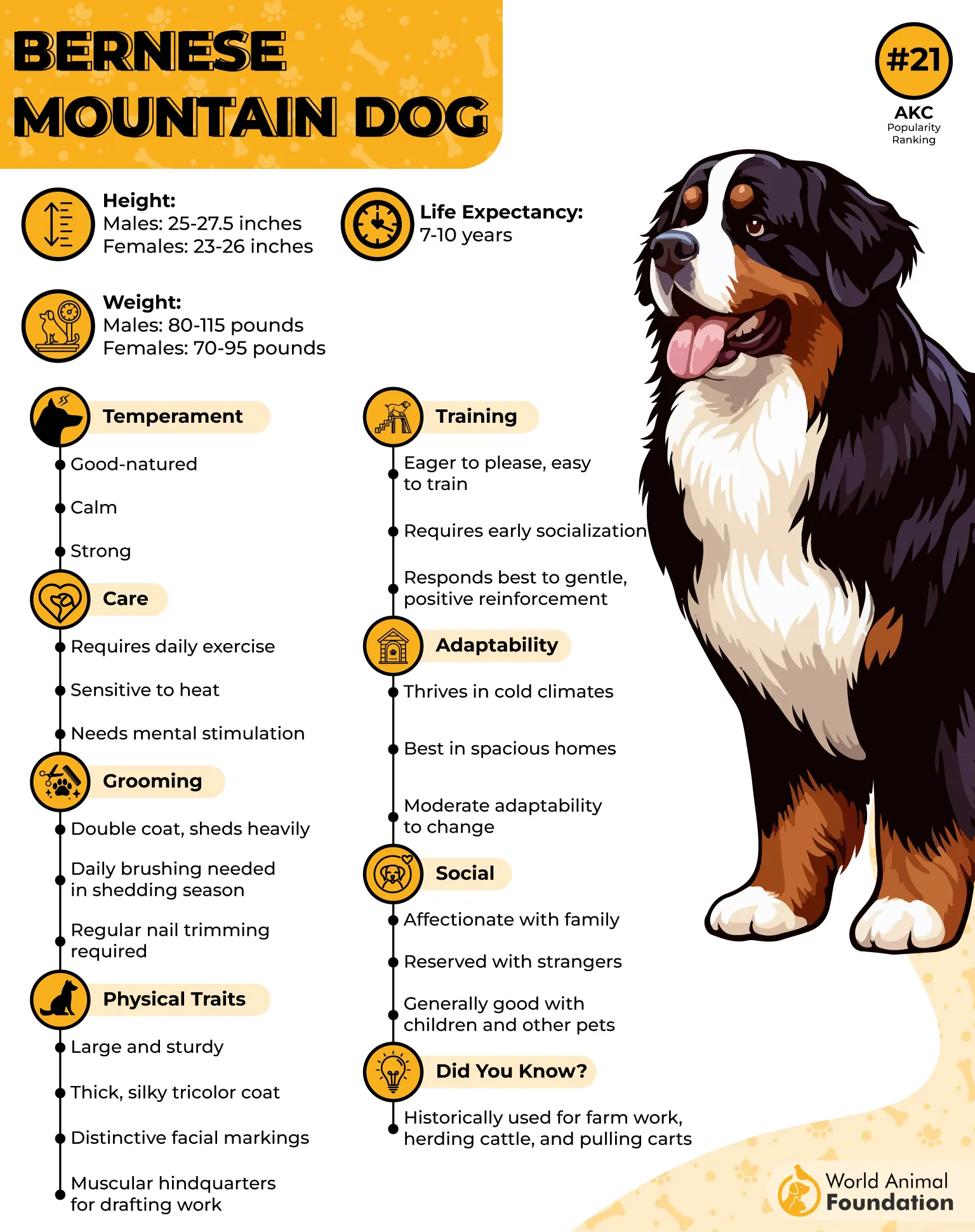
They usually enjoy moderate exercise—walks, gentle hikes, and cool-weather adventures suit them well. They’re not typically the kind of dog that wants endless high-intensity running, especially in heat, because their thick coat makes them prone to overheating.
As a family companion, the Berner’s temperament is a big reason people choose them, even with the lifespan concern. They’re often gentle with kids, friendly with visitors, and emotionally tuned-in in a way that feels almost human.
If your dream dog has a healthy weight, is an affectionate, soft-hearted companion—and you’re prepared for proactive healthcare and realistic expectations—it can be an incredible “short years, huge love” choice.
Conclusion
Choosing a dog with a shorter lifespan doesn’t mean choosing sadness—it means choosing intentional love. Giant breeds can bring unmatched companionship, calm presence, and a feeling of safety that smaller dogs simply can’t replicate.
Research has repeatedly linked larger body size in dogs to a shorter average lifespan, so this isn’t “bad luck”; it’s biology—and planning around biology is what responsible ownership looks like.
Greater Swiss Mountain Dogs and Saint Bernards are also some furry friends with health issues, such as hip dysplasia, that can lead to life-threatening situations if not treated promptly.
If you’re considering one of these breeds, the best approach is both practical and tender. Pick ethical breeders or reputable rescues, keep your dog lean, build habits around training and enrichment, and budget for higher veterinary costs.
