




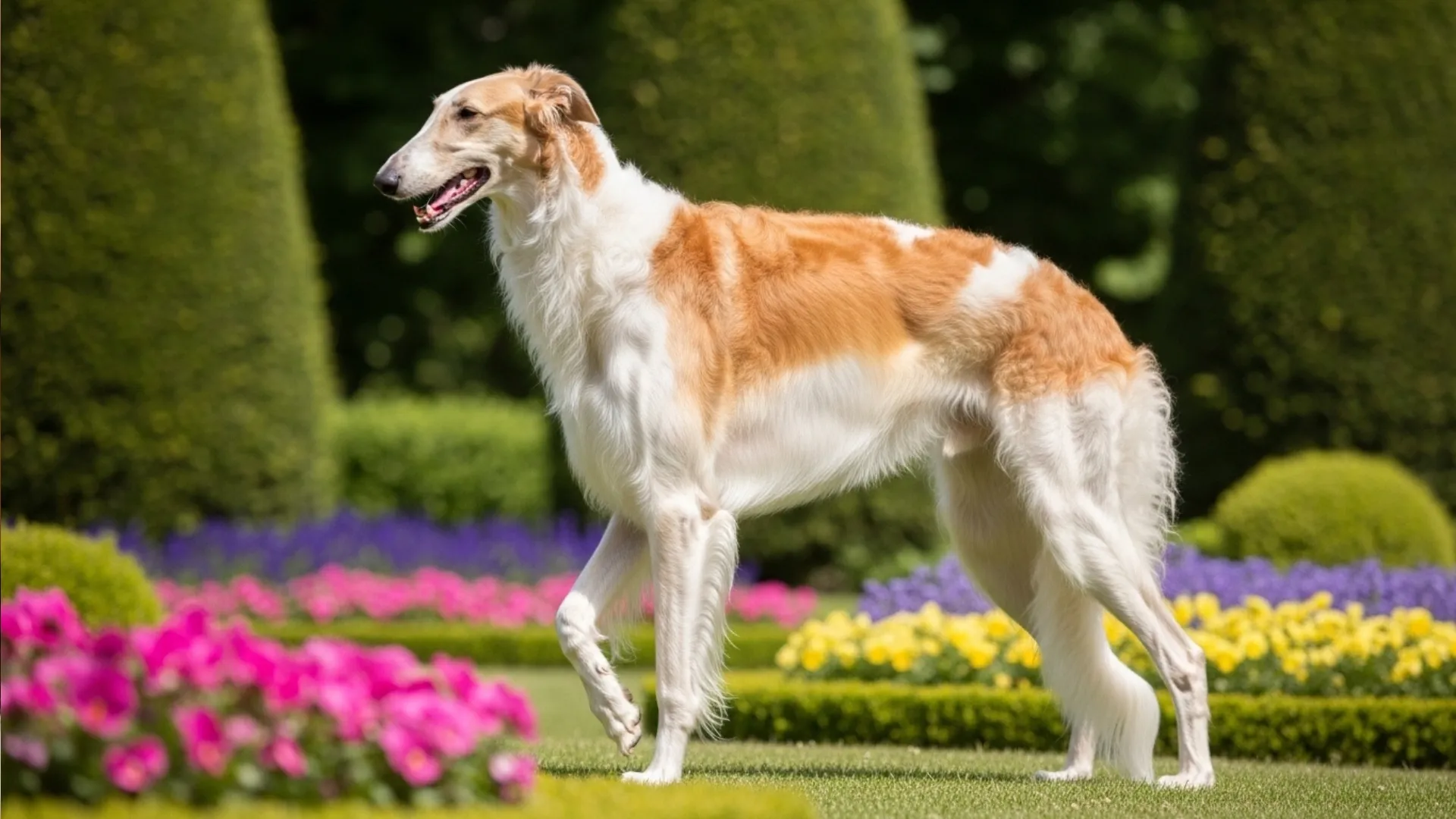
You start noticing it in photos first. Some dogs have faces that feel sharper, cleaner, almost carved with intention, while others appear softer and rounder.
That difference seems small at a glance, but it changes how a dog is perceived and even how it carries itself. A more sculpted, pointed snout often gives a sense of focus and alertness that stands out immediately. For many people, that detail becomes the deciding factor when choosing a dog.
It is not just about looks either. The structure of the face can influence breathing, scenting ability, and overall expression. Once you become aware of it, you begin to see it everywhere and realize how much it shapes the identity of certain dogs.
In the sections ahead, you will come across dogs where this feature feels naturally defined, consistent, and visually striking without looking exaggerated or out of place.
Key Takeaways
The first thing that catches attention is the shape of the face, where some dogs appear carved with sharper lines that feel intentional and refined.
Doberman Pinscher brings power and control into that shape, while the Borzoi reflects elegance built around speed and calm behavior in daily life.
Greyhound and Saluki turn that same structure into pure motion, relying on sight, reaction, and explosive acceleration across open ground.
As you move through the breeds, the connection between face shape and purpose becomes harder to ignore with every example.
Dog Breeds With Beautifully Sculpted, Pointed Snouts
1. Doberman Pinscher
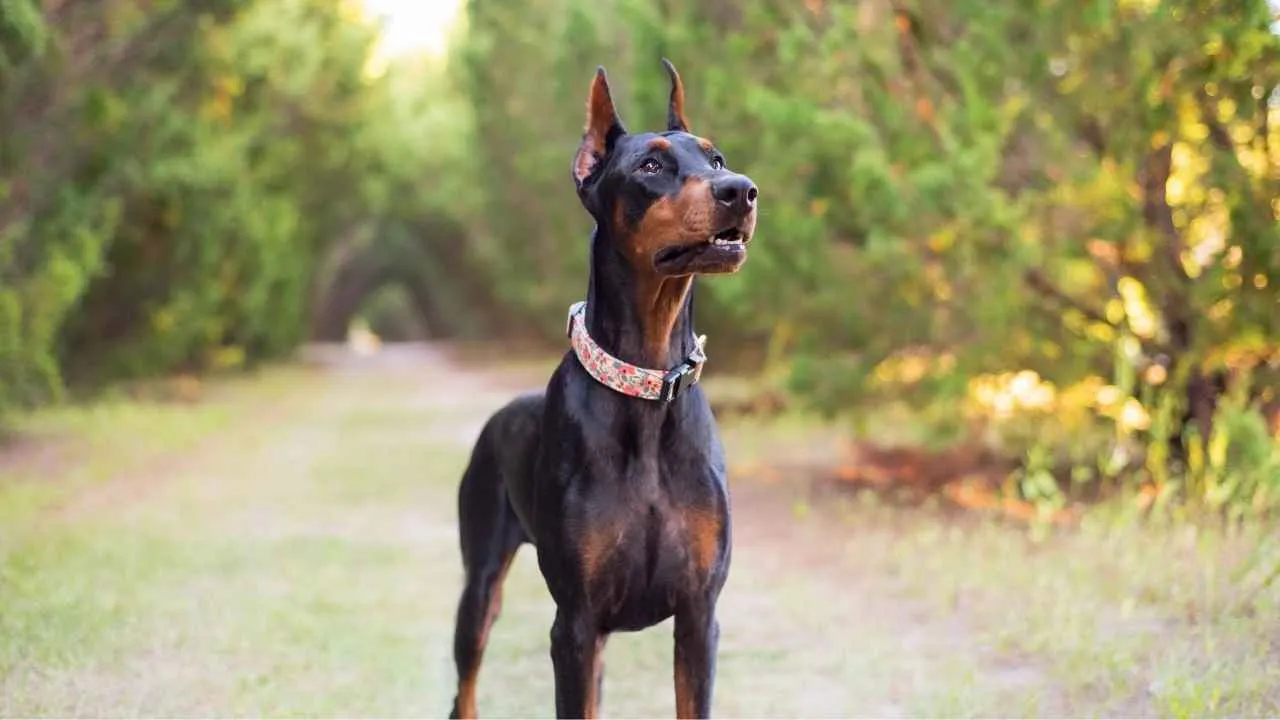
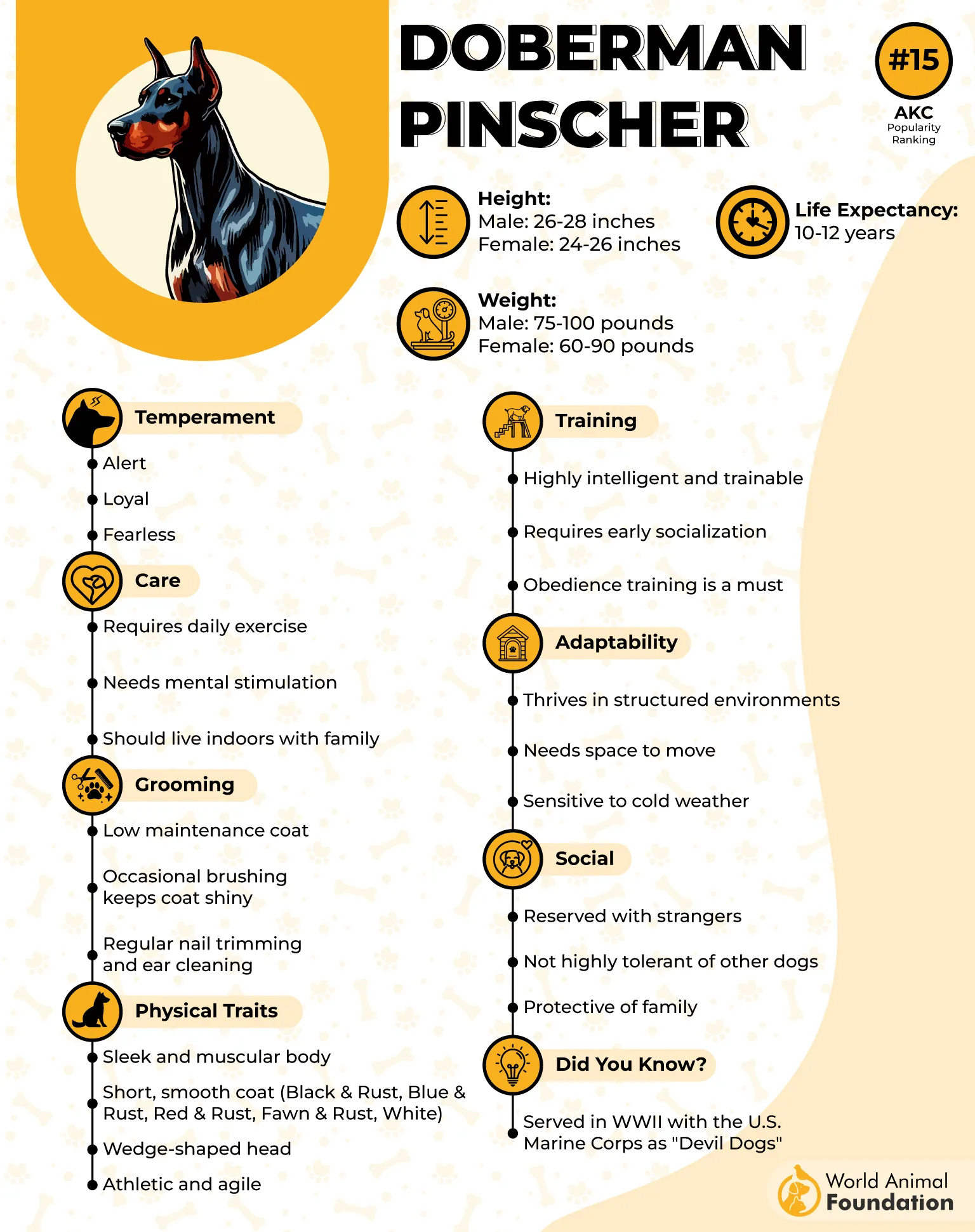
Doberman Pinscher presents a long, cleanly shaped snout that aligns with its sleek, powerful frame. The head structure blends precision with strength, reflecting both alertness and control. This refined outline contributes to its composed and attentive expression.
Form aligned with performance
This guard dog combines a compact, muscular build with speed and agility, shaping a body that responds quickly to movement and direction. Its physical structure connects closely with active engagement and responsiveness.
A closer look reveals key physical traits:
Long snouts with balanced proportions
Tight, muscular frame built for speed
Sleek coat enhances sharp body lines
Attachment that stays close
Dobbies builds strong emotional bonds, often staying physically near the people it connects with most. This constant proximity reflects its reputation as a “Velcro dog,” shaped by loyalty and attentiveness. Its affectionate behavior remains consistent within familiar spaces.
2. Borzoi
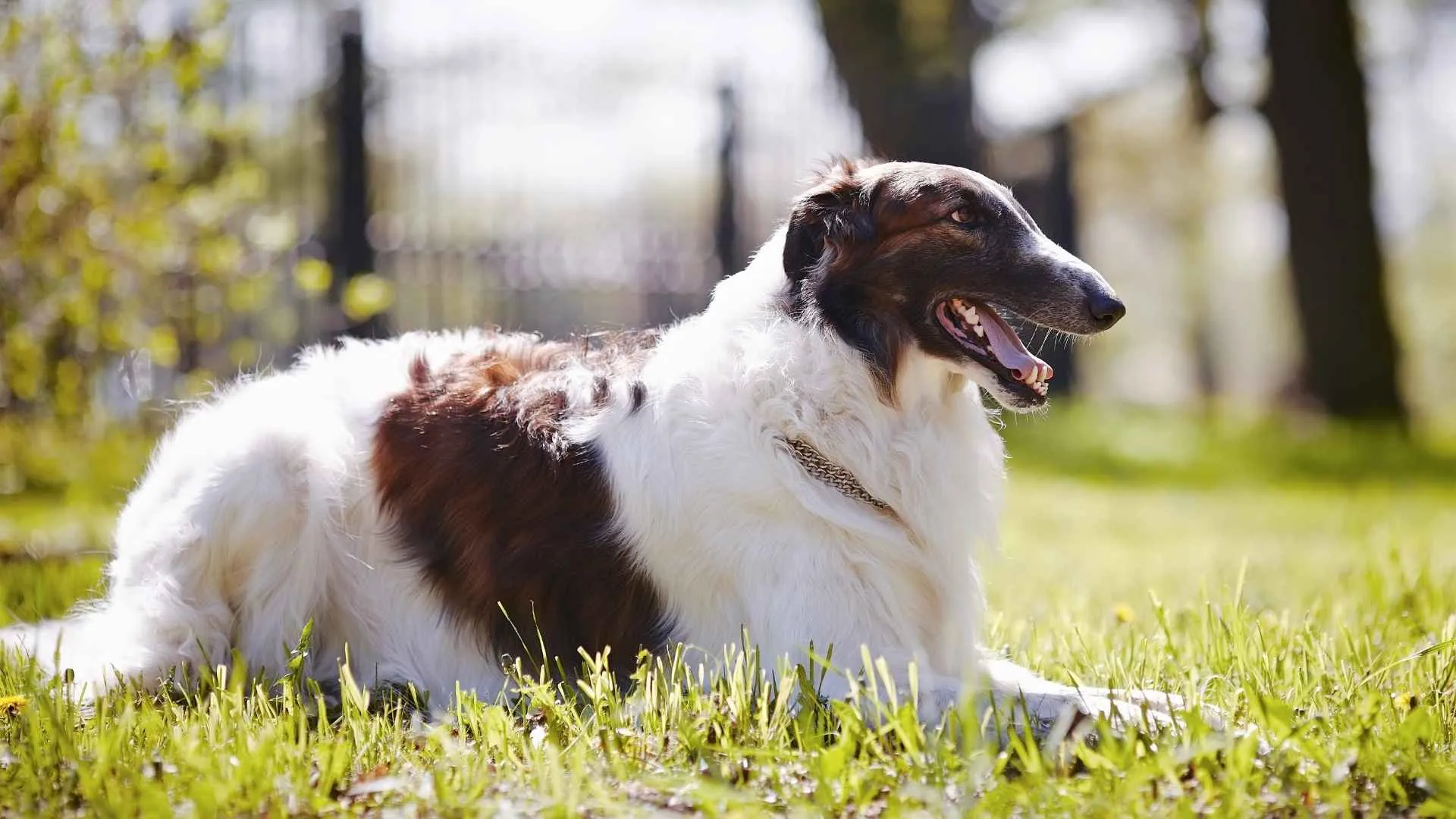
Borzoi is recognized for its elongated, narrow snout that shapes a refined and unmistakable profile. Known as the Russian aristocrat, its appearance reflects a history tied to elegance and selective breeding. The head structure alone gives it a distinct identity among long-nosed dogs.
Form aligned with speed
This racing dog has a streamlined head with a body built for sudden acceleration, reaching speeds between 35 and 40 miles per hour, as per the AKC. Its quiet demeanor often contrasts with this capability, revealing performance only when engaged.
That design becomes clearer through key features:
An extended snout supporting forward reach
Lean frame suited for high-speed bursts
Balanced proportions aiding quick turns
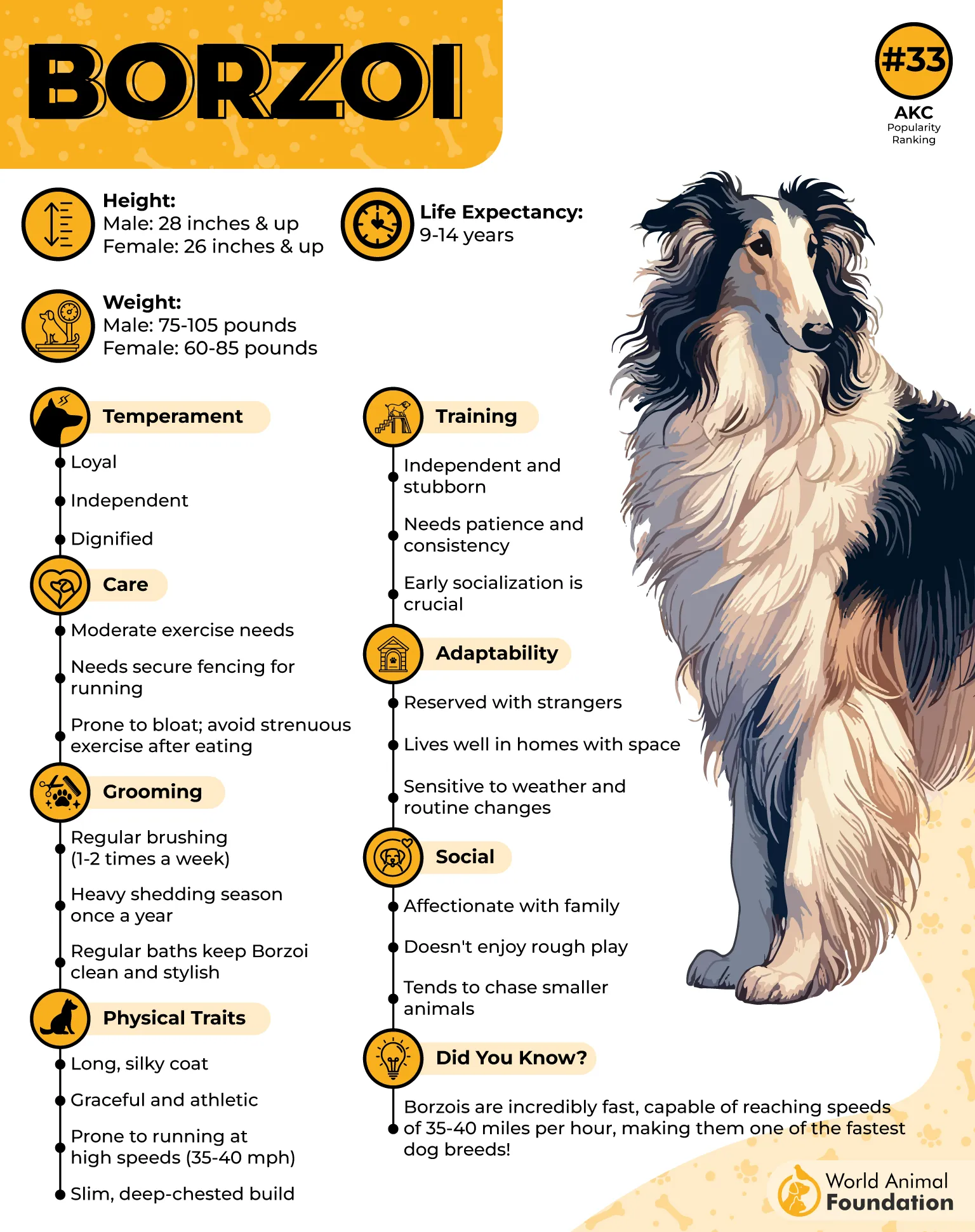
Calm behavior within daily life
Borzoi settles into a quiet routine, preferring calm interaction over constant activity. Their daily exercise consists of long walks and play, including dog sports, without seeking rough or overly energetic games. Indoor living suits it well, especially in spaces where movement is controlled.
3. Saluki
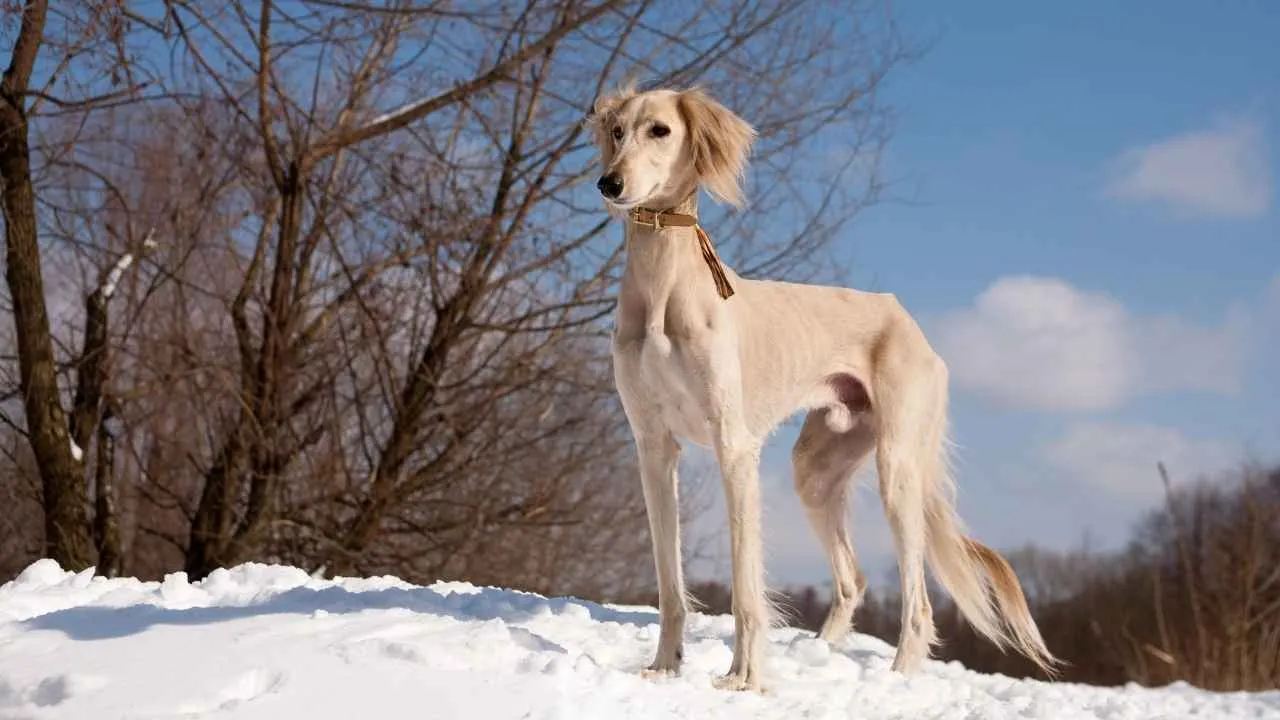
A symbol of ancient endurance and agility, the Saluki’s refined build flows into a slender, elongated snout. Its feathered ears and balanced proportions add to a silhouette once favored by Egyptian royalty. This refined structure connects directly to both function and status in early civilizations.
Speed and pursuit instinct
This hunting dog shows a strong chase response, guided by its background as a high-speed hunting hound capable of reaching remarkable sprinting speeds. Its focus sharpens when tracking fast-moving targets across open ground.
That instinct becomes clearer in key traits:
Reaches speeds up to 43 miles per hour
Locks onto fast-moving objects quickly
Requires controlled spaces for off-leash activity
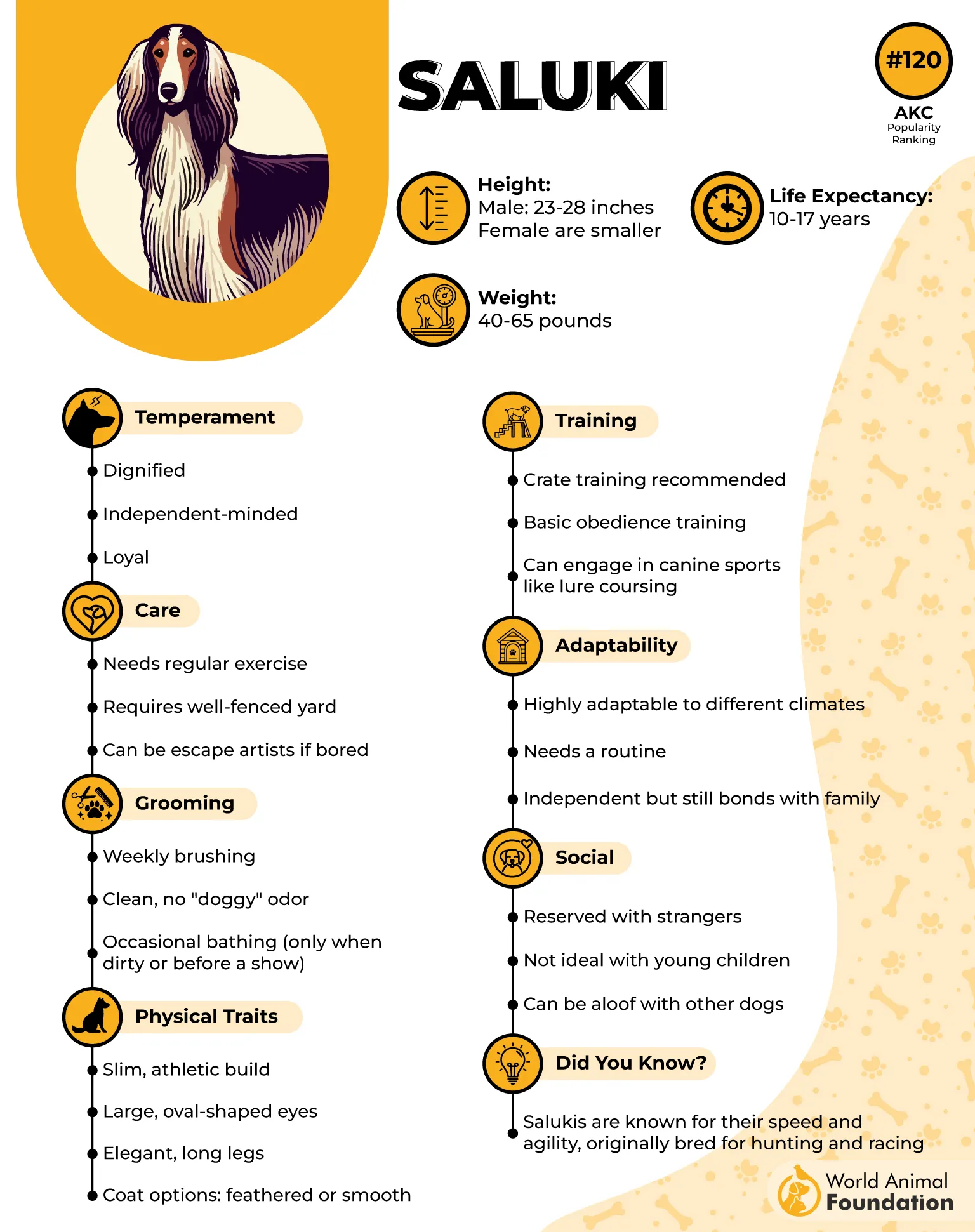
Preference for calm surroundings
Salukis has a reserved nature that aligns more closely with adults, but is also gentle with kids who are not interested in playing with them, as Orvis mentioned.
Its interactions remain measured, especially in settings with less noise or sudden movement. This temperament reflects a breed that values calm over constant activity.
4. Greyhound
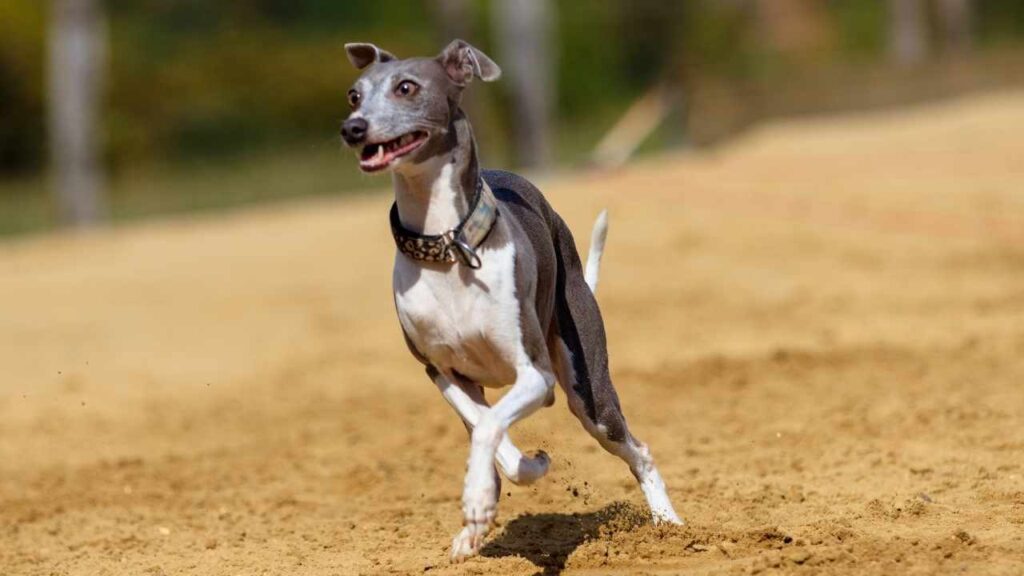
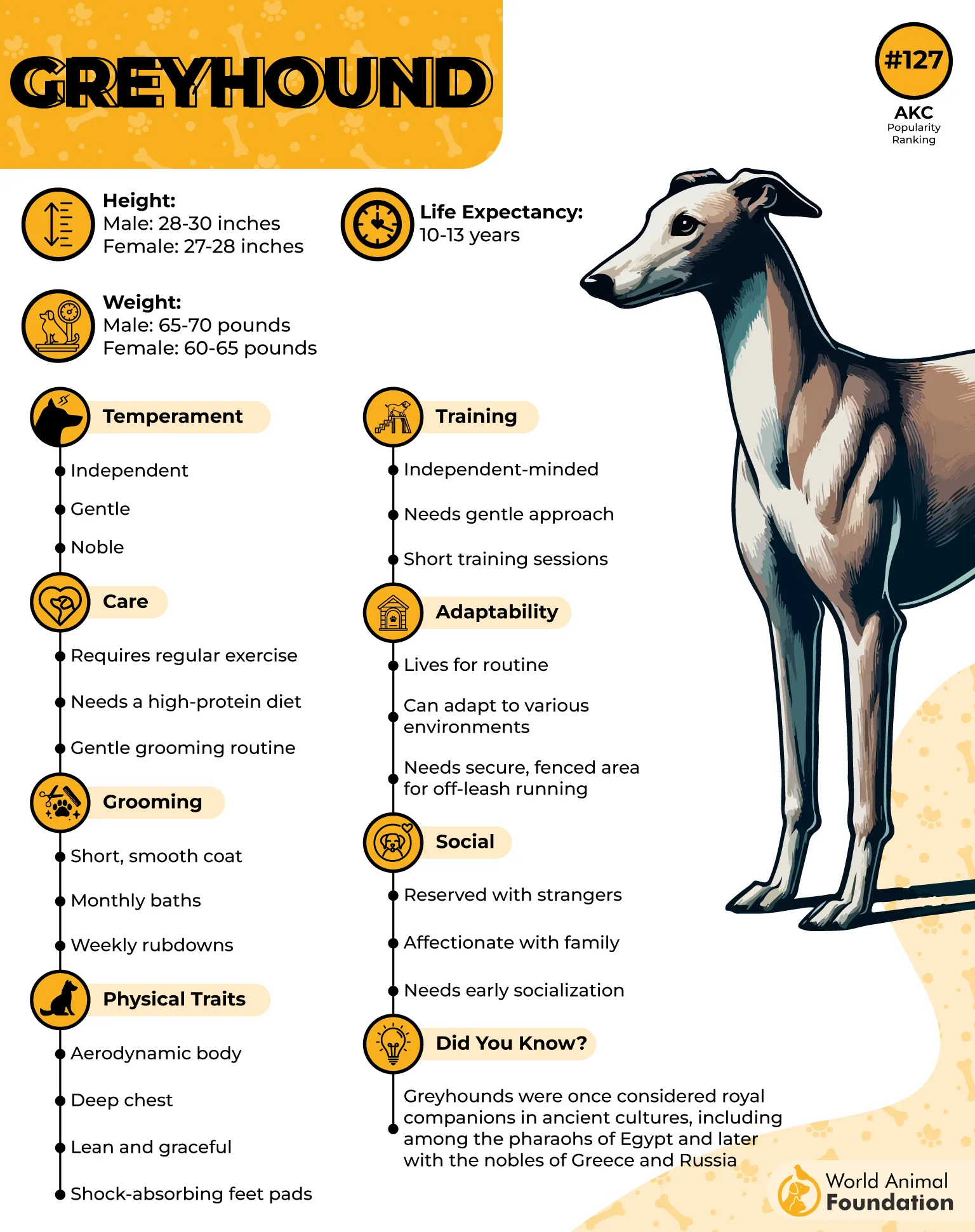
The Greyhound’s streamlined head reflects its racing heritage, finishing a long, finely shaped snout made for keen visual tracking. Its facial structure supports sharp visual tracking, paired with a body built for rapid acceleration. Every feature feels aligned toward precision rather than bulk.
Vision-led behavior
This racing dog relies on sight instead of scent, reacting to motion with quick focus and directional awareness. Its attention shifts toward visual cues, especially during outdoor exploration or walks.
That focus becomes clearer through distinct traits:
Locks onto moving objects instantly
Tracks direction using visual cues
Responds to motion over scent trails
Sensitivity shaped by physical design
Their short coat and low body fat make them more affected by weather conditions than heavily coated breeds. Pet parents should be careful with their exposure to extreme cold or heat, as they often need protection during outdoor time. This physical sensitivity influences how and when it stays outside.
5. Afghan Hound
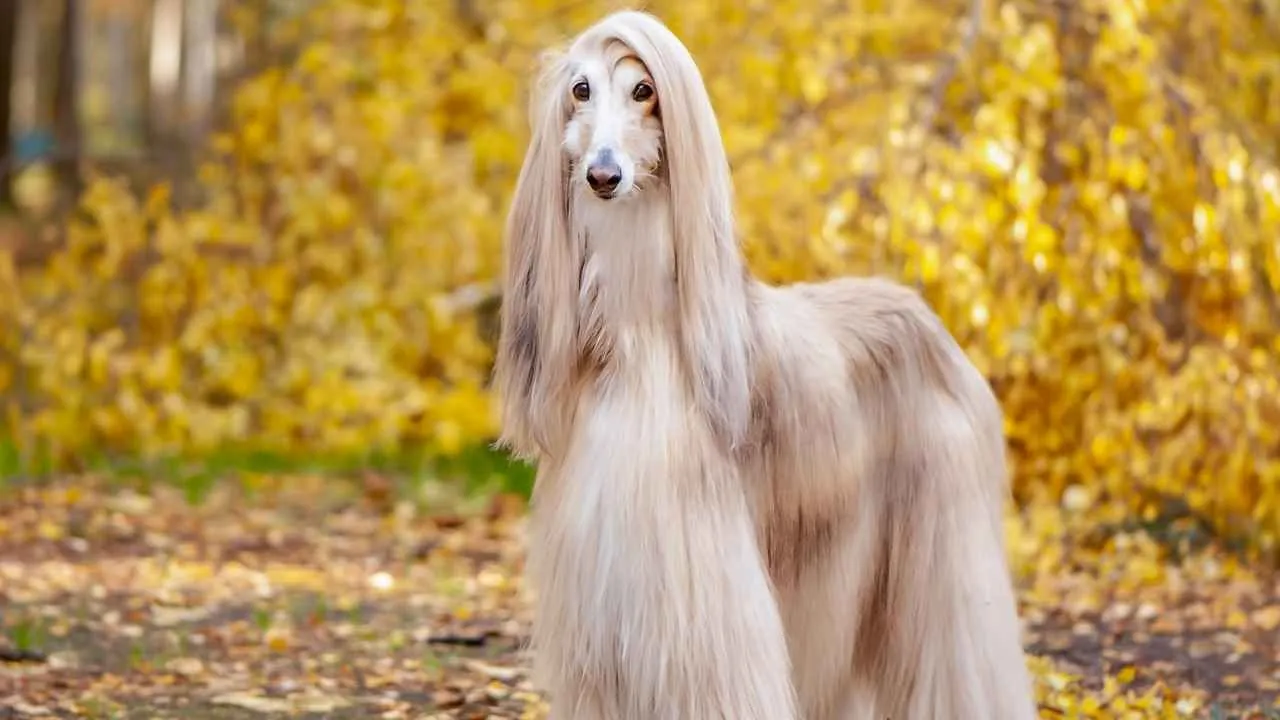
Afghan Hound draws attention through its long, refined snout and narrow face, paired with a flowing coat that frames its structure. Originally bred in rugged Afghan terrain, this form reflects its role as a hunter. The head shape supports focus and direction during pursuit.
Athletic instinct in open ground
This hound responds to movement with speed and agility, shaped by centuries of independent hunting work. Its preference for open spaces and active engagement reflects a dog that operates through instinct rather than constant guidance.
That instinct becomes clear through activity patterns:
Engages in lure coursing with focus
Reacts quickly to moving objects
Prefers running over stationary play
Controlled environment for natural drive
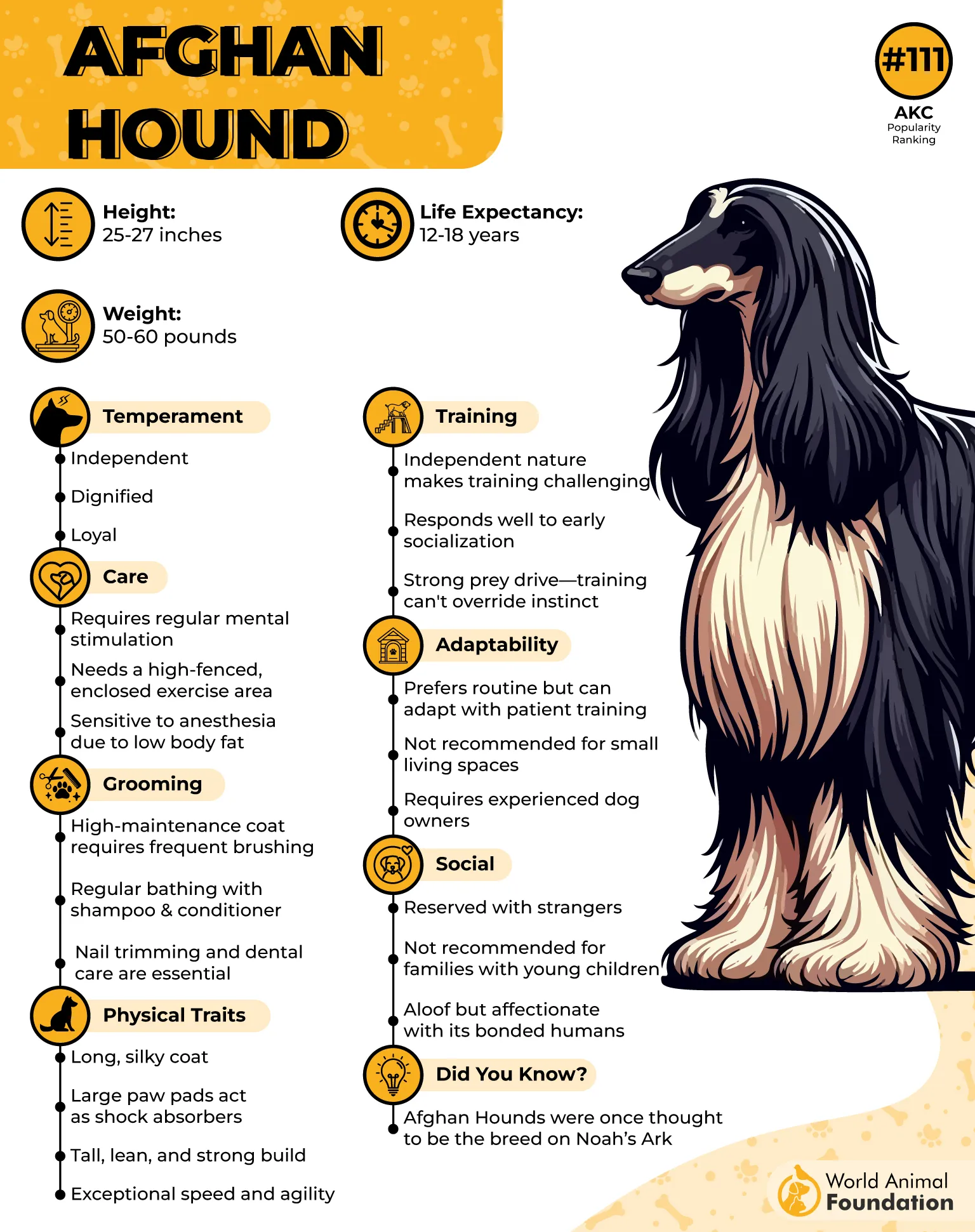
This long-snouted dog requires enclosed spaces during outdoor activity due to its strong chase response toward smaller animals, as PetMD claims.
Its daily routine includes extended physical engagement, often reaching up to two hours of structured activity. This setup reflects a breed guided by instinctive pursuit patterns.
6. Whippet
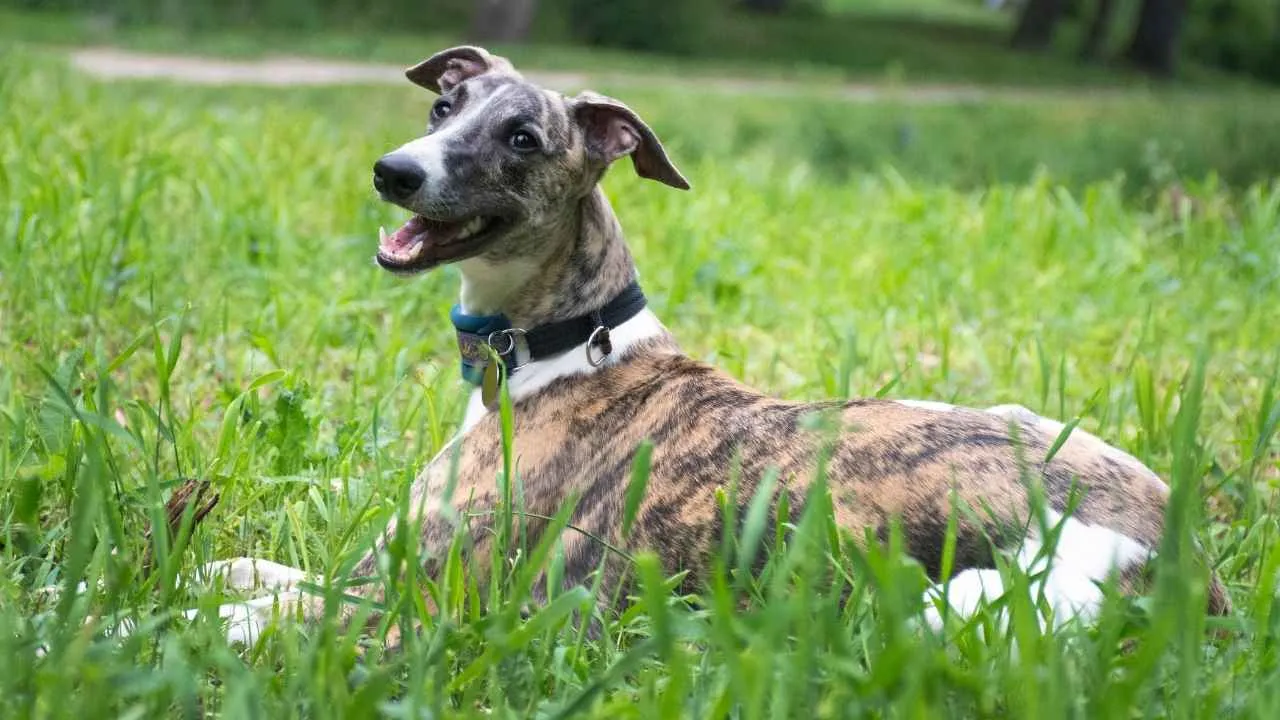
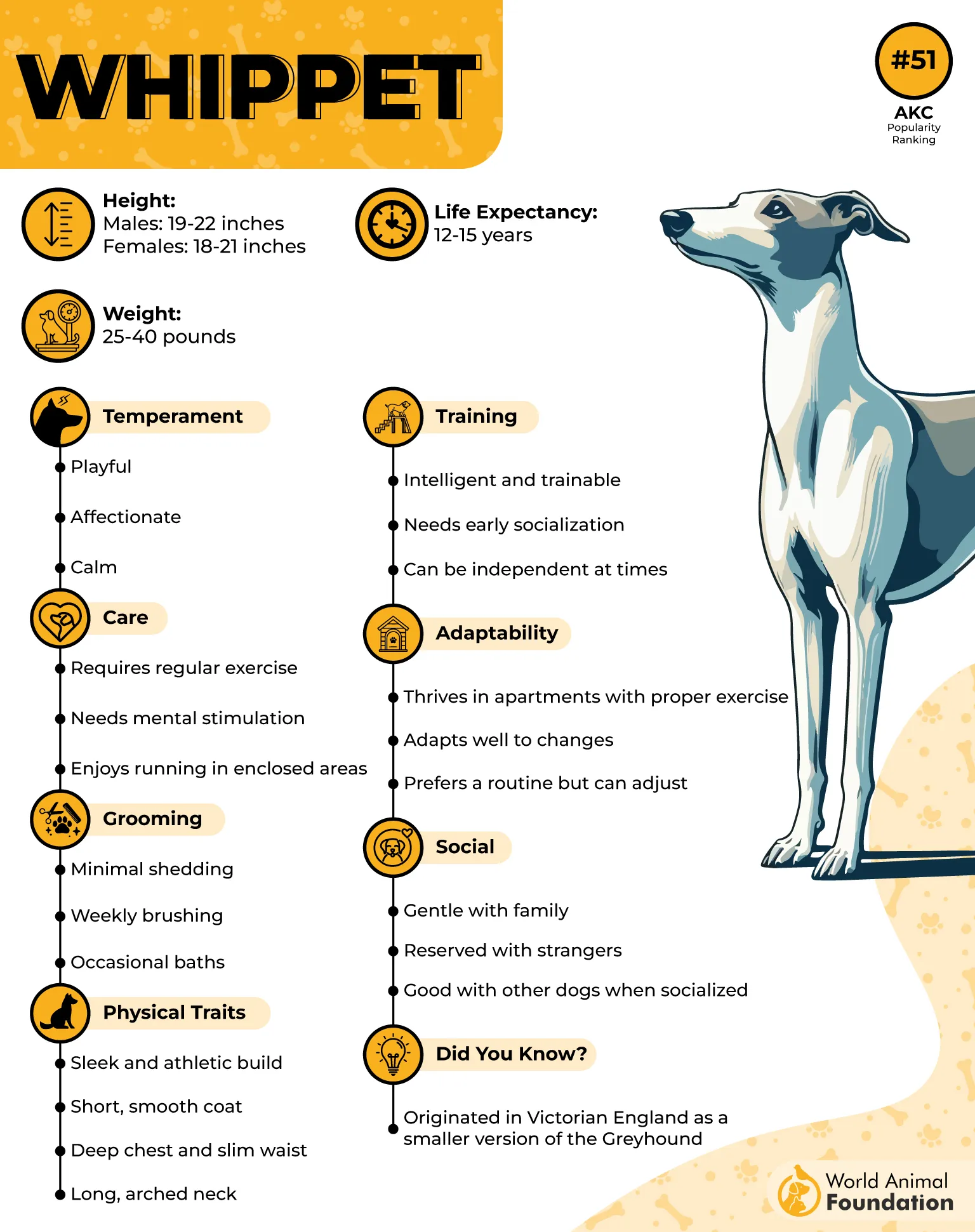
Every line of the Whippet’s form suggests lightness and precision, from its athletic build to its delicately shaped snout. Its close resemblance to the Greyhound often confuses, though its smaller size sets it apart. This head shape aligns with a sighthound built to track and chase with precision.
Built for visual pursuit
They respond strongly to movement, shaped by its history of chasing small game across open ground. Its speed reaches up to 35 miles per hour, placing it among the fastest in its size range.
That instinct becomes clear through defining traits:
Long snout aiding forward focus
Lean body structured for acceleration
Visual tracking of fast-moving targets
Affection tied to presence
Whippets stay closely connected to familiar people, often seeking attention and physical closeness during quiet moments. Their temperament blends playful interaction with a preference for staying near their chosen humans. Time spent at home strengthens this bond naturally.
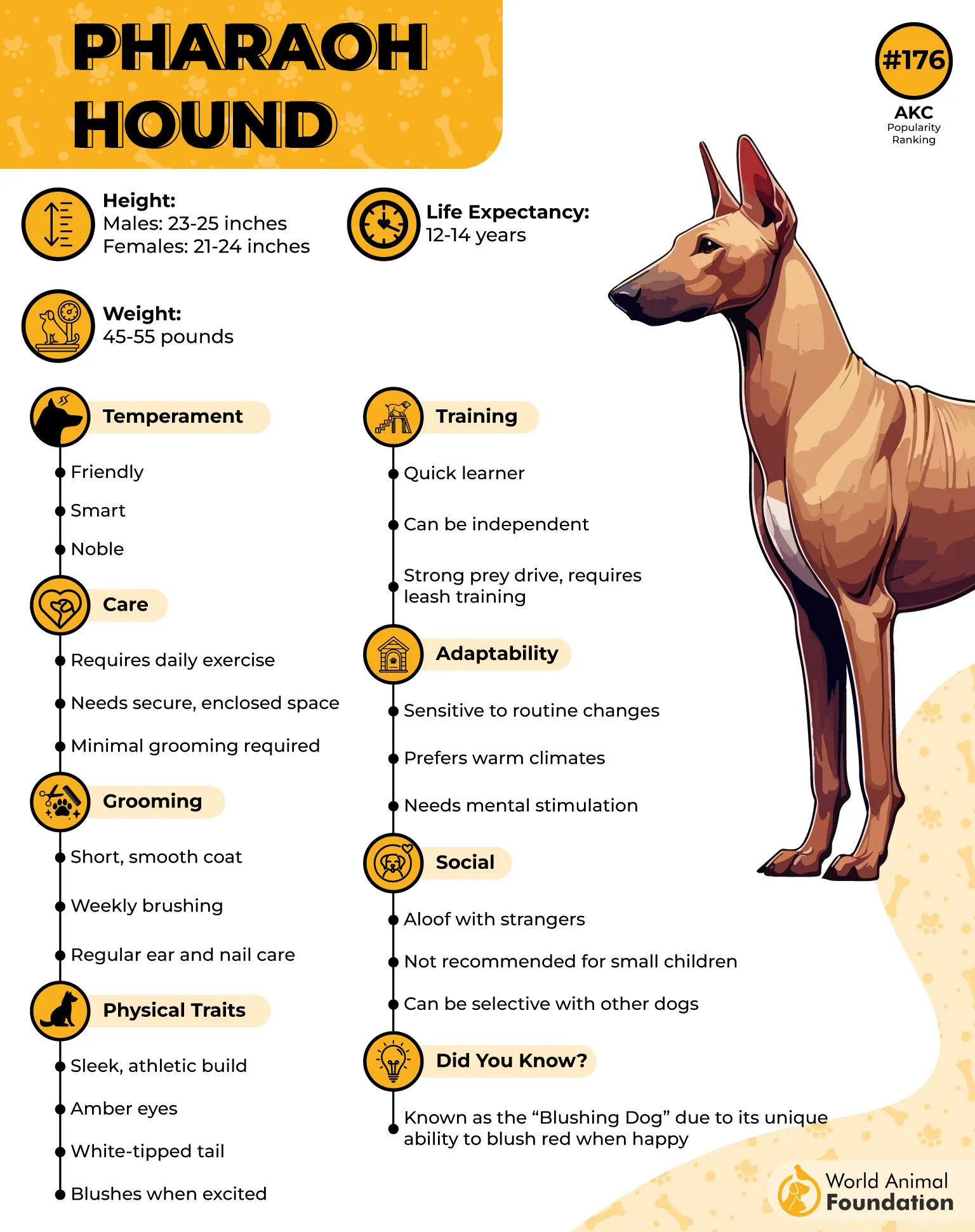
7. Pharaoh Hound
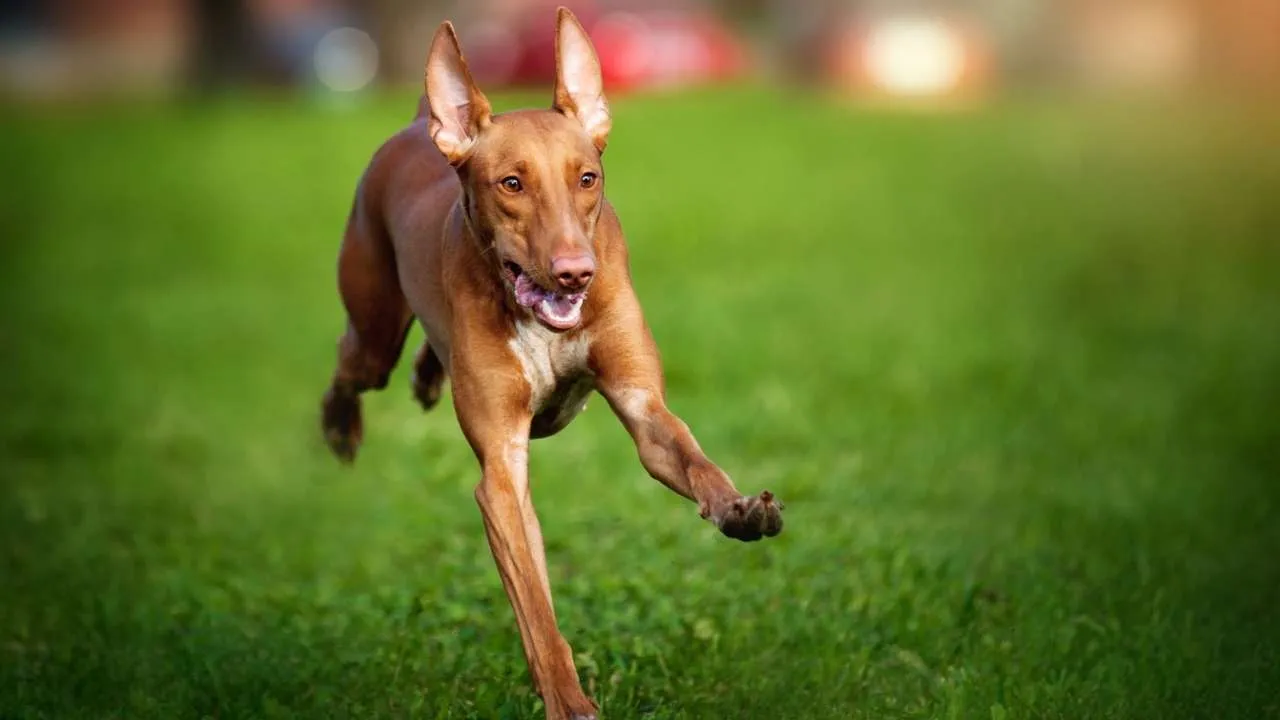
Pharaoh Hound shows a lean frame paired with a sharply defined snout and upright ears that reflect precision in structure.
Its appearance links back to early depictions seen in ancient Egyptian art, giving it a long-recorded visual identity. The overall outline feels refined, shaped for agility and alert awareness.
Expression shaped by sensitivity
They react strongly to excitement, even showing a visible change in skin tone when emotionally stimulated. Its interaction style remains friendly, often blending well with other pets and familiar animals when introduced early.
This behavior becomes clearer through key aspects:
Notable color change during excitement
Early social exposure supports balanced interaction
Strong chase response toward smaller animals
Energy is placed into short bursts
This hound requires focused activity sessions that match its natural pace, often involving running or structured play. Its lean structure supports quick bursts of motion rather than prolonged exertion. Controlled environments help channel its chase-driven instinct safely.
Conclusion
At first, it feels like a small detail. Just a slightly longer face, a cleaner line along the snout. But the more you notice it, the more it starts to stand out.
The long-nosed breeds here carry that shape in a way that feels natural, not designed to impress but built into who they are, often seen in affectionate dogs mostly suited for active families.
That presence does not fade with time. It settles into how the dog moves, observes, and reacts to its surroundings while spending time in familiar spaces. The structure stays consistent without drawing unnecessary attention. It simply becomes part of the dog’s identity, shaping a look that feels steady, refined, and easy to recognize.
