




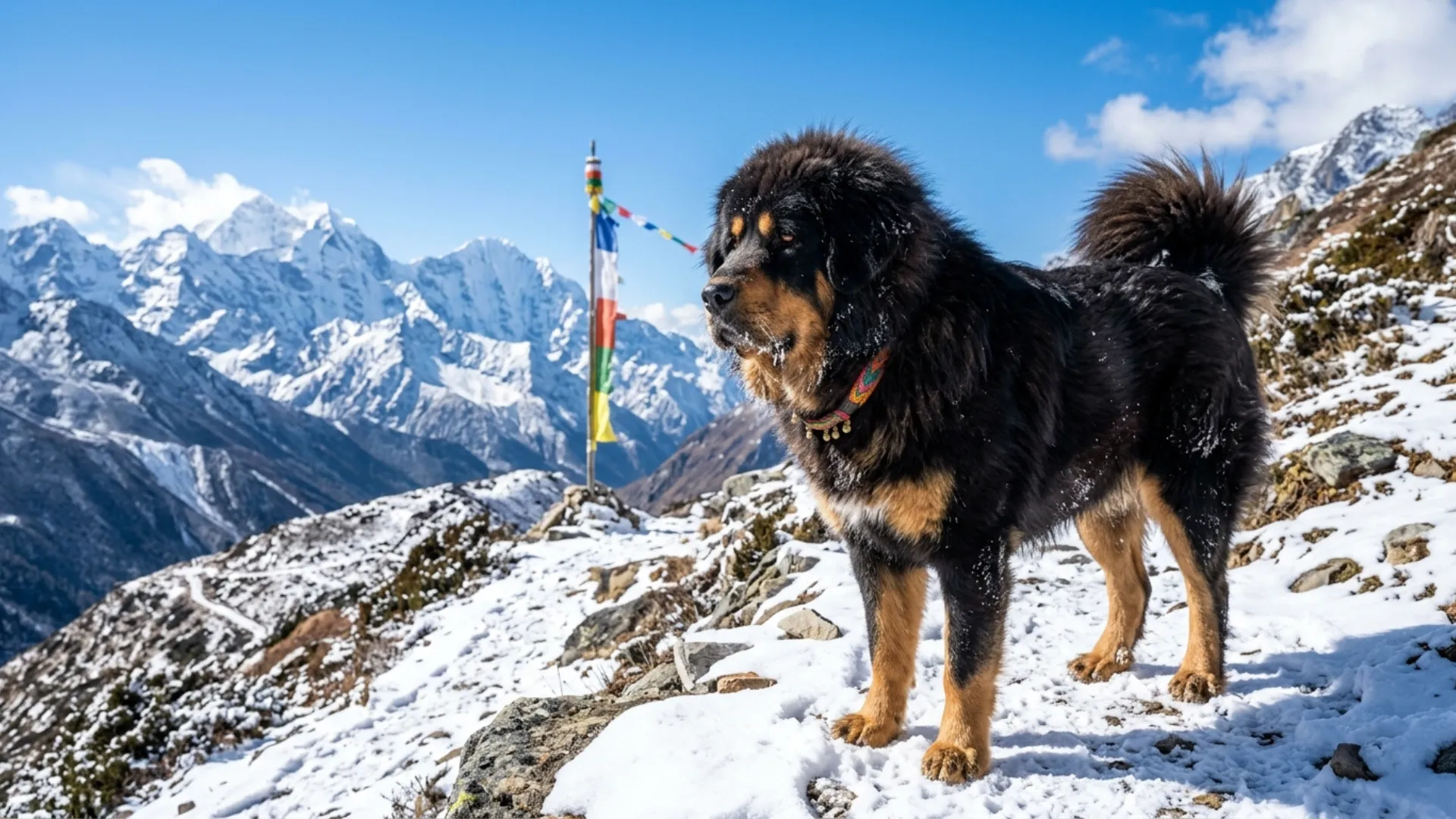
Ever wondered which dogs can keep up when the elements get tough? Some pups are built for extremes—from blizzards that freeze your eyelashes to sun-scorched landscapes that make you sweat just stepping outside. These dogs aren’t just surviving—they’re thriving, with stamina, resilience, and a spirit made for adventure.
But life with an extreme-condition dog isn’t just about toughness. They need exercise, mental stimulation, and a little love to stay happy and healthy.
And while some dogs naturally handle heat or cold, others struggle without careful attention. Think of it as matching your lifestyle—and your climate—to the dog’s natural strengths.
Whether you’re trekking through deep snow or exploring desert trails, the right canine companion can be a loyal, enthusiastic partner through it all. Get ready to discover dogs that aren’t just pets—they’re outdoor warriors built for the wild.
Dog Breeds That Thrive In Extreme Conditions
1. Siberian Husky
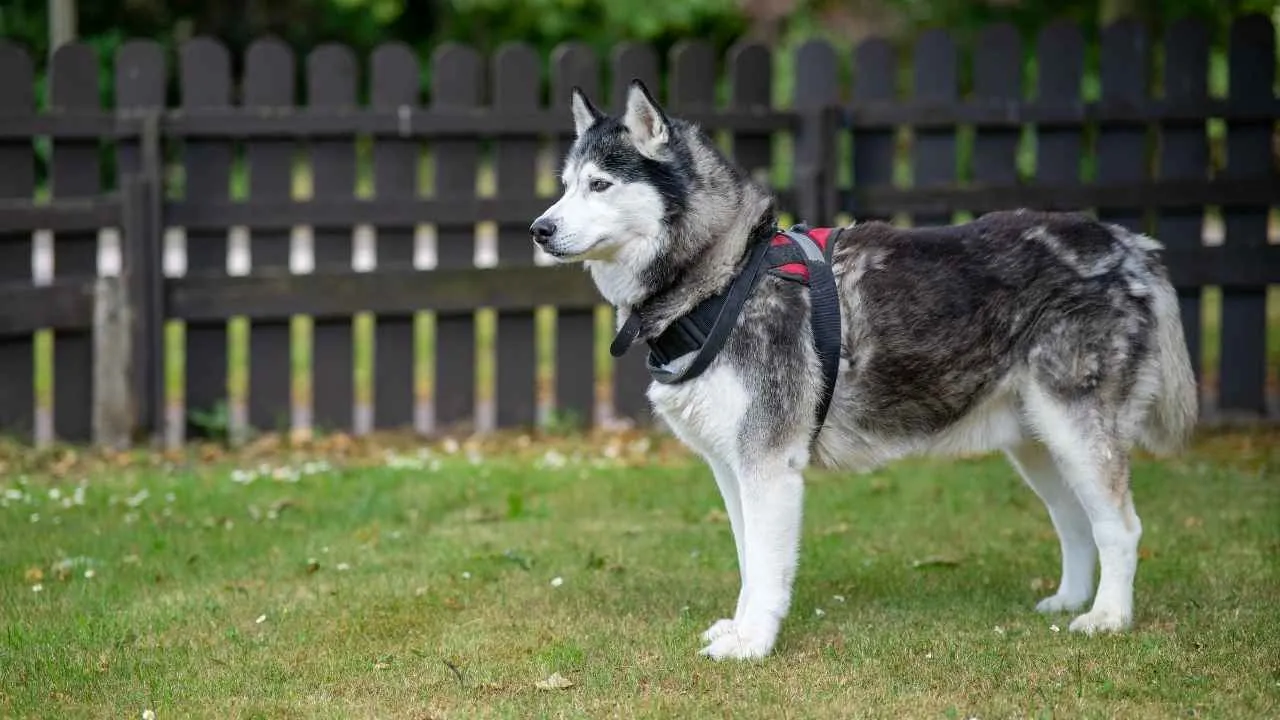
Siberian Huskies are strong, graceful, and friendly dogs originally raised by the Chukchi people in Siberia. They were valued as sled dogs and loyal companions, built to endure long journeys in harsh, frozen landscapes.
According to Britannica, their legendary endurance and intelligence made them heroes during the 1925 “Great Race of Mercy,” when teams of Huskies battled blizzards to deliver life-saving serum over 674 miles to Nome, Alaska.
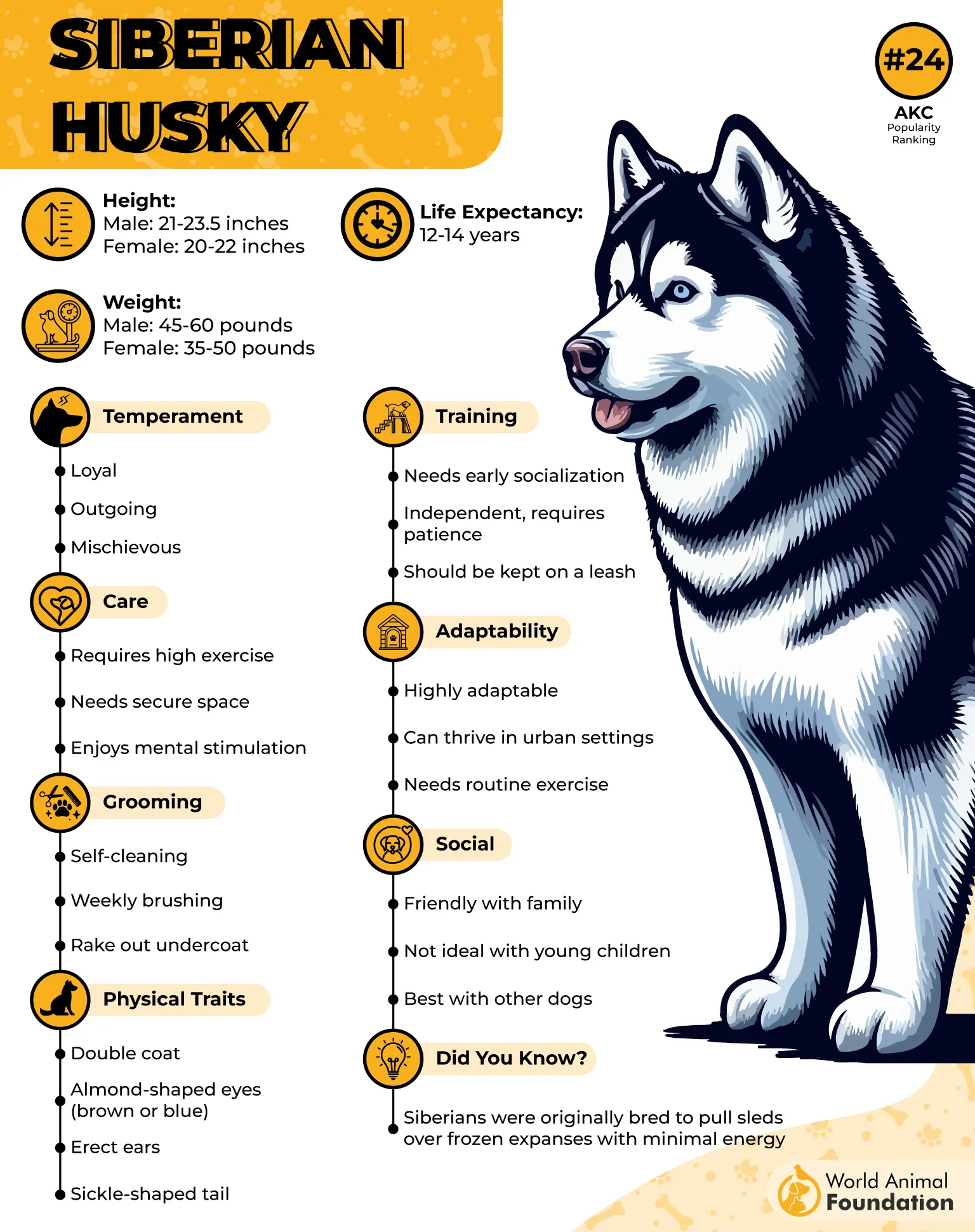
Temperament and Lifestyle Needs
Huskies are active, intelligent, and social dogs. They thrive on human company and enjoy being part of a pack, making them great family pets when properly trained. These dogs love exercise and mental stimulation, and they excel at activities like sledding, skijoring, or running.
Without enough activity, Huskies can become bored, dig, or try to escape. They are vocal dogs that howl and “talk” rather than bark, so they do best in homes where neighbors are not too close. Socialization from a young age is important to keep them focused and friendly with other dogs and people.
Care and Upkeep
Despite their endurance, Siberian Huskies are relatively easy to care for. Their dense coats need regular grooming, especially during shedding season. They are naturally clean dogs with little odor. Huskies are hardy and can live up to 14 years if exercised properly and not overfed.
They are not strong swimmers or retrievers, but they are clever, fast, and enjoy having a “job” to do, whether it’s jogging alongside their owner or pulling a sled. A secure yard is essential to prevent roaming, as these dogs have a high prey drive and love to explore.
2. Alaskan Malamute
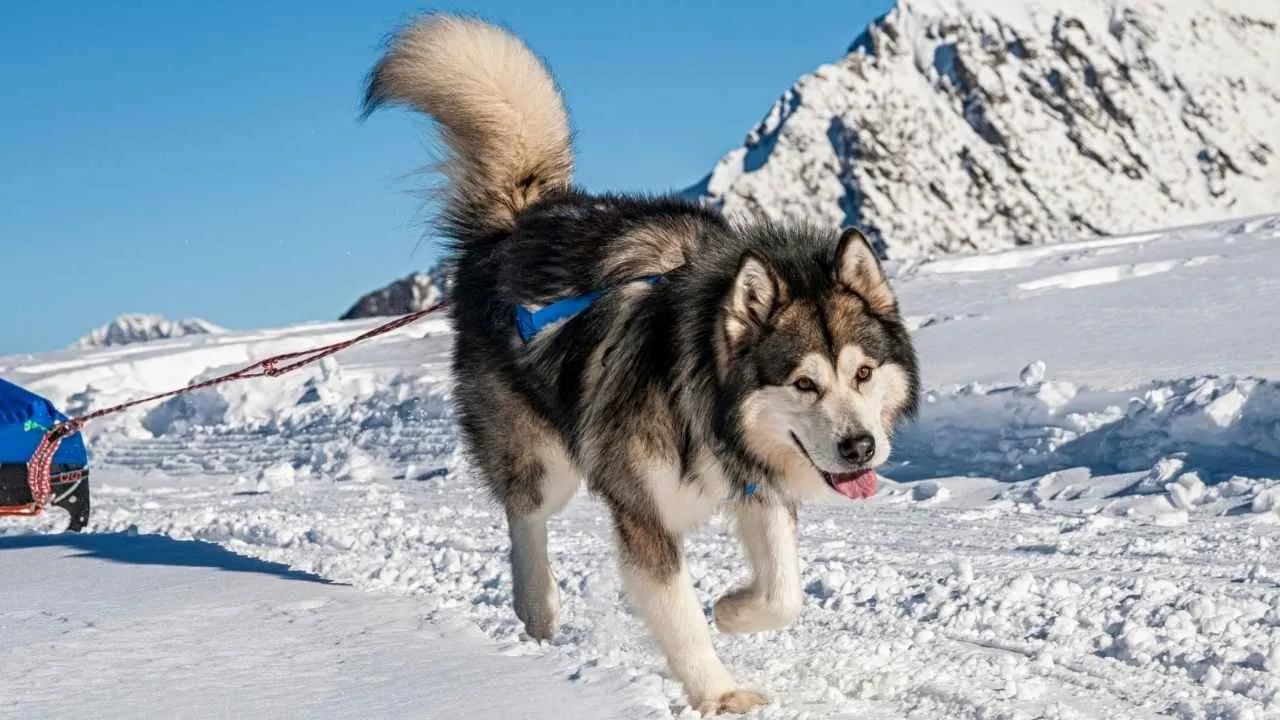
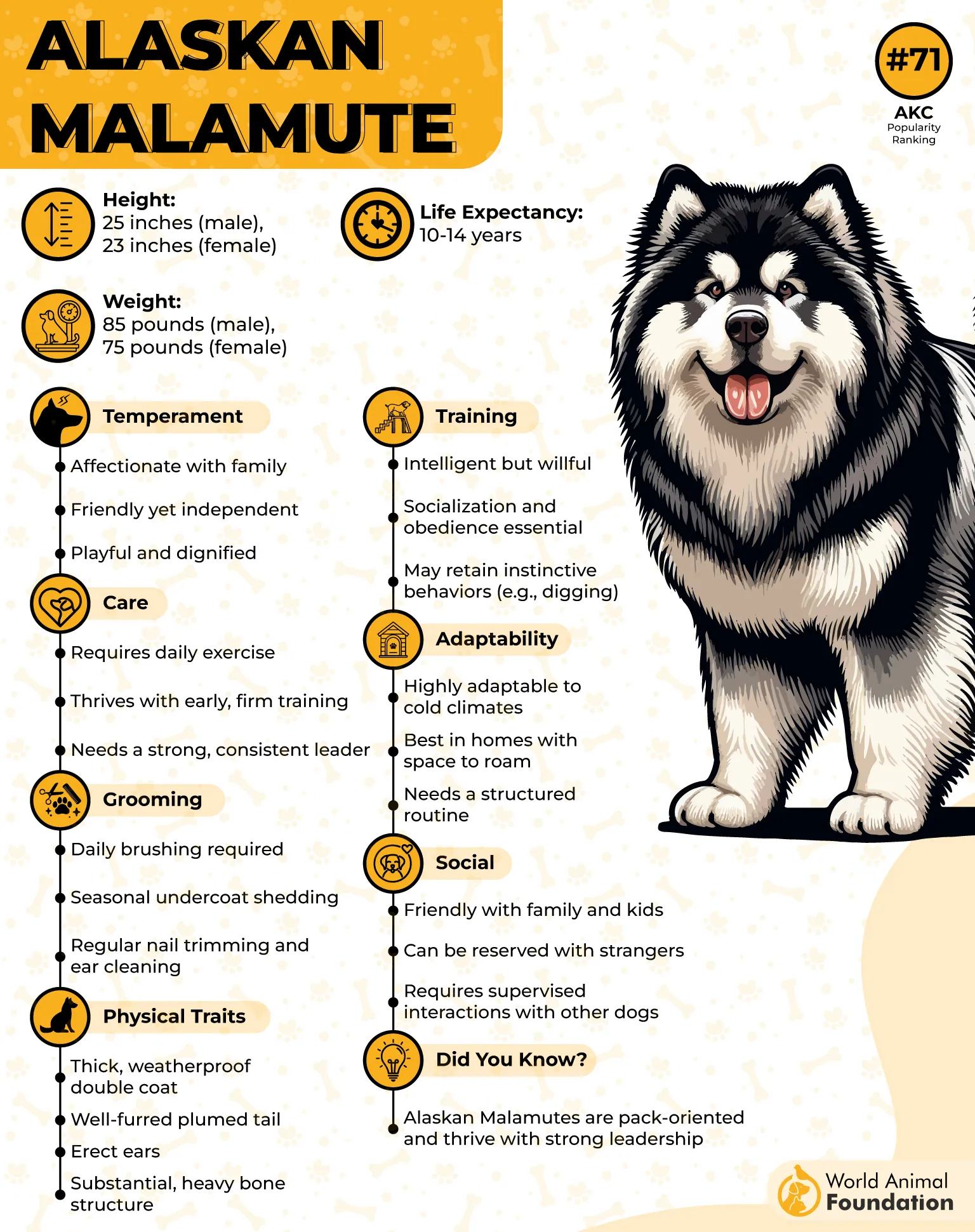
Alaskan Malamutes are strong, hardworking dogs developed alongside the Mahlemut tribe in Alaska. They helped hunt seals, scare polar bears, and pull heavy loads across frozen terrain.
During the Klondike Gold Rush, their endurance and reliability made them invaluable for hauling sleds. Today, these dogs are beloved companions for families who can match their energy and provide mental and physical challenges.
Temperament and Personality
Alaskan Malamutes are intelligent, playful, and social dogs. They thrive on human attention and love being part of the family pack. These dogs are clever and independent, often using their wits to get what they want.
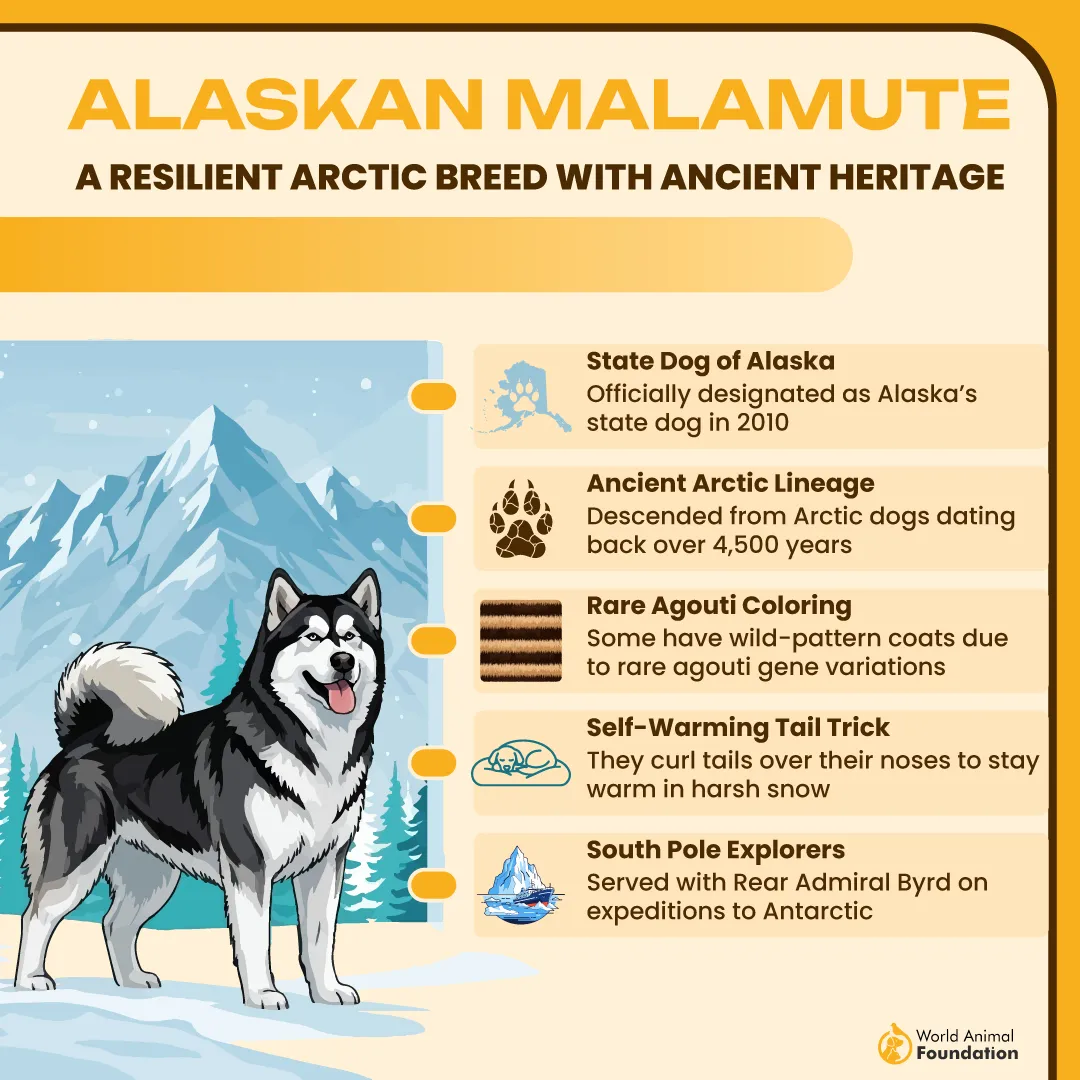
They are vocal in their own way, expressing themselves through howls, yelps, and “awoos.” Malamutes enjoy socializing with children, guests, and other pets when properly trained and introduced.
Care and Exercise Needs
These active dogs need plenty of exercise and mental stimulation. They excel at outdoor adventures like running, hiking, or pulling sleds, and enjoy puzzle toys indoors in hot weather. Their thick, weatherproof coats require regular brushing, especially during shedding season.
Malamutes are problem solvers and can get into mischief if bored, so secure spaces and engaging activities are essential. With consistent, loving training, they become loyal, affectionate, and endlessly entertaining companions.
3. Tibetan Mastiff
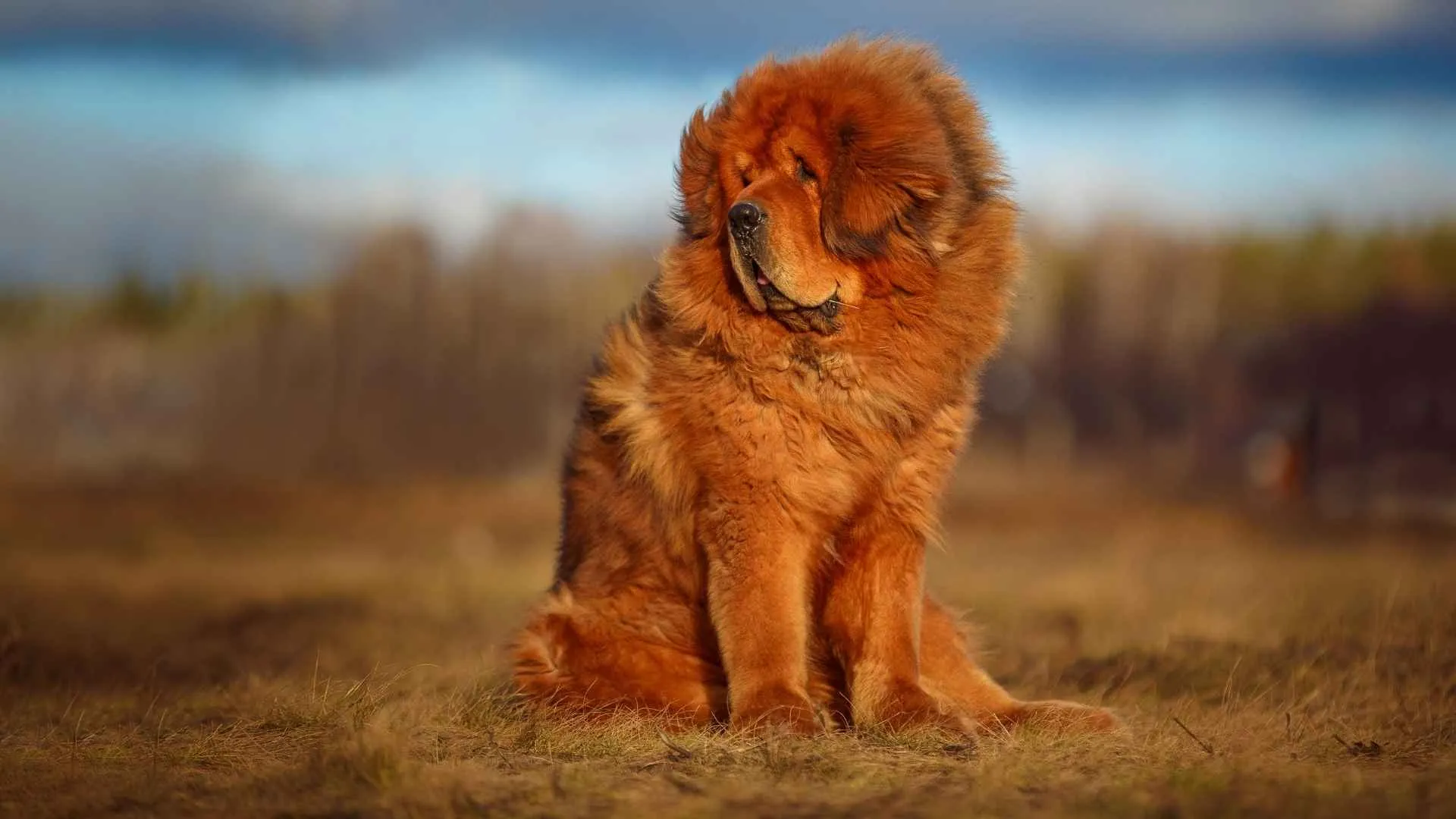
Tibetan Mastiffs are ancient, powerful dogs that originated in Tibet. Their exact ancestry is unknown, but they descended from mastiff-like dogs and split into two types: the Do-Khyi, who lived with nomads and guarded livestock, and the Tsang-Khyi, who protected monasteries and their residents. Known as the “lion of all dog breeds,” these dogs are imposing, watchful, and fiercely protective of their families.
Temperament and Personality
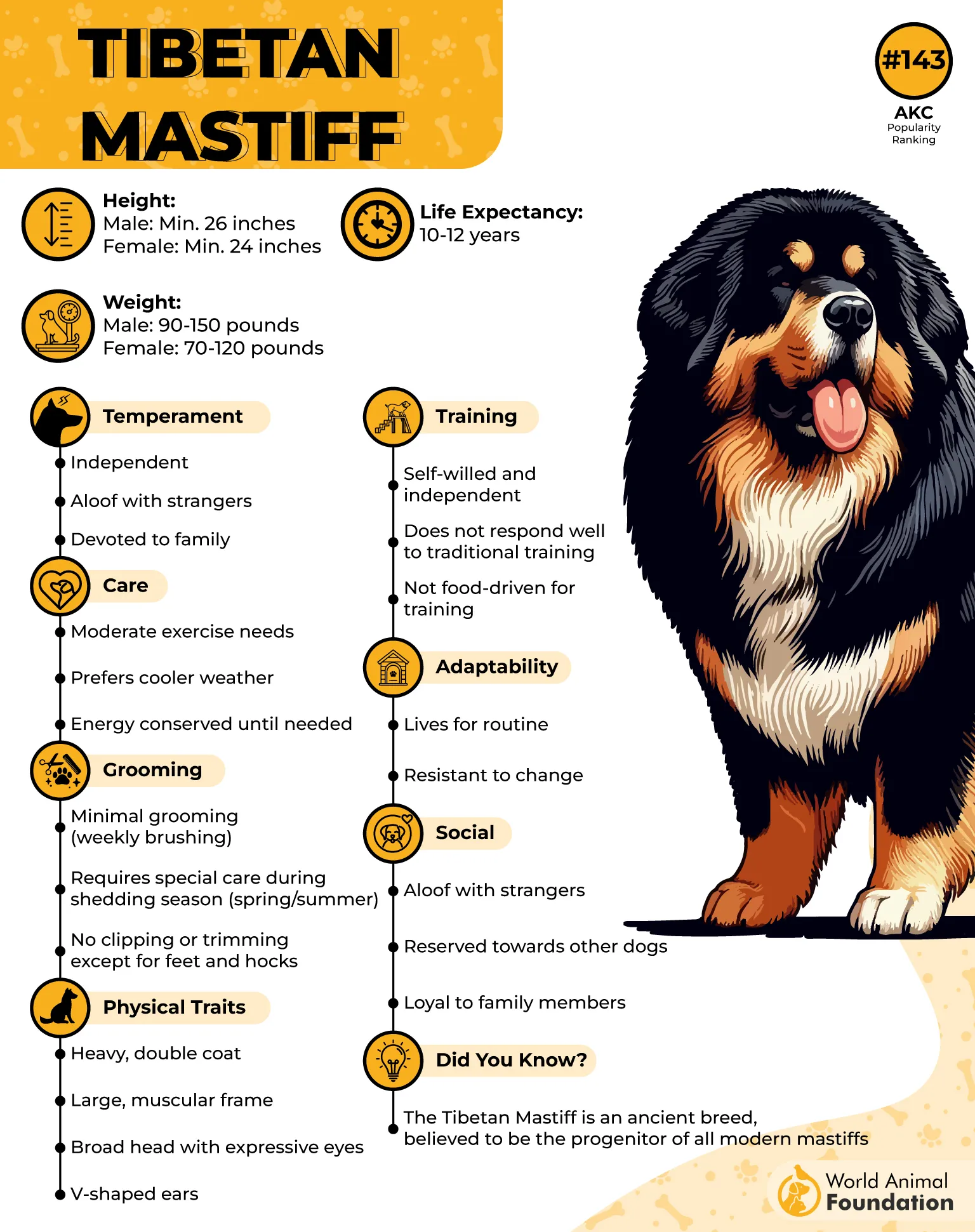
Tibetan Mastiffs are loyal, fearless, and hardworking, but they are also independent and stubborn. They may not always follow orders, making them unsuitable for first-time dog owners.
Socialization from a young age is essential so they can safely interact with strangers and other animals. These dogs enjoy outdoor play and roaming, but a secure yard is a must, as they are clever escape artists.
Care and Upkeep
Tibetan Mastiffs have double-layered, thick coats that require regular brushing and make them well-suited to cold weather conditions. They do not tolerate heat well, so owners must watch for signs of overheating in warm weather.
While intelligent and agile, they lack long-distance endurance, so daily exercise should focus on mental stimulation and moderate activity rather than jogging. With proper care and training, these giants are devoted, calm, and excellent guardians for experienced pet parents.
4. Saint Bernard
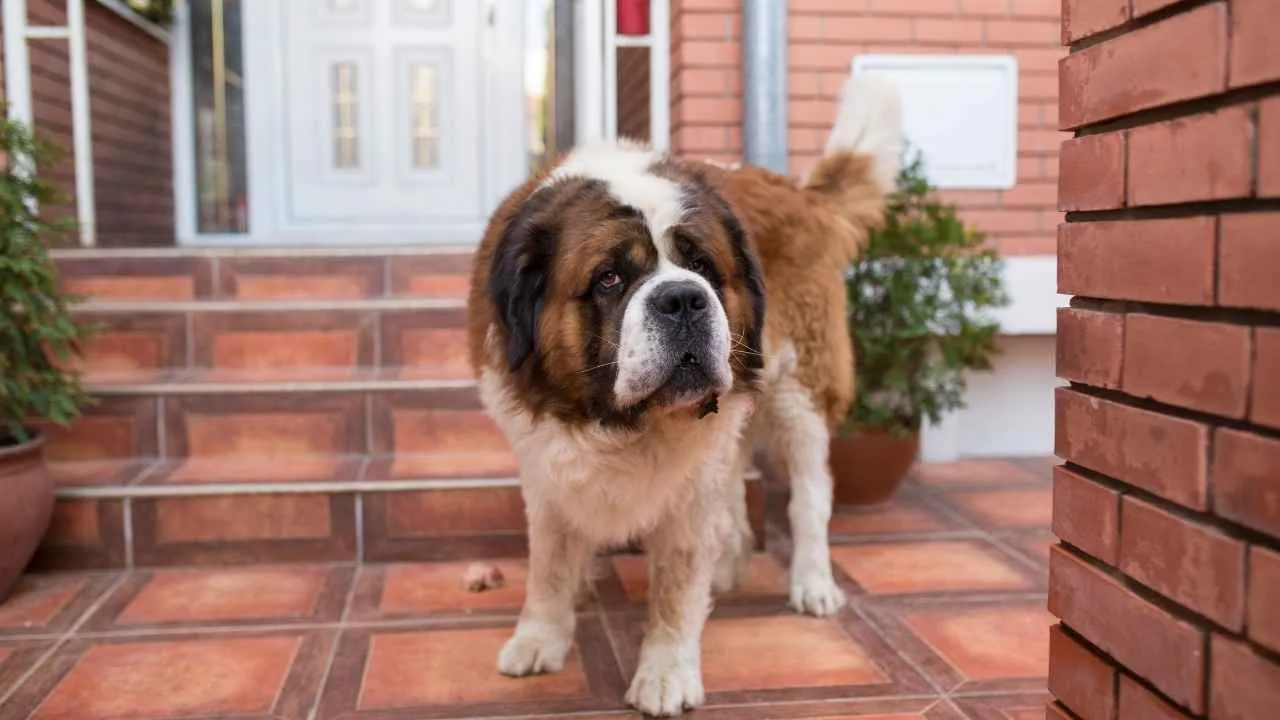
Saint Bernards are massive, calm dogs originally trained by monks in the Swiss Alps to locate and rescue people buried in avalanches, according to PetMD. Known for their affectionate nature and loyalty, they became beloved family companions while still retaining their rescue instincts.
These dogs thrive in cold climates and enjoy spending time outdoors, making them well-suited for families in cooler regions. Their sheer size and friendly demeanor make them impossible to ignore, drawing smiles wherever they go.
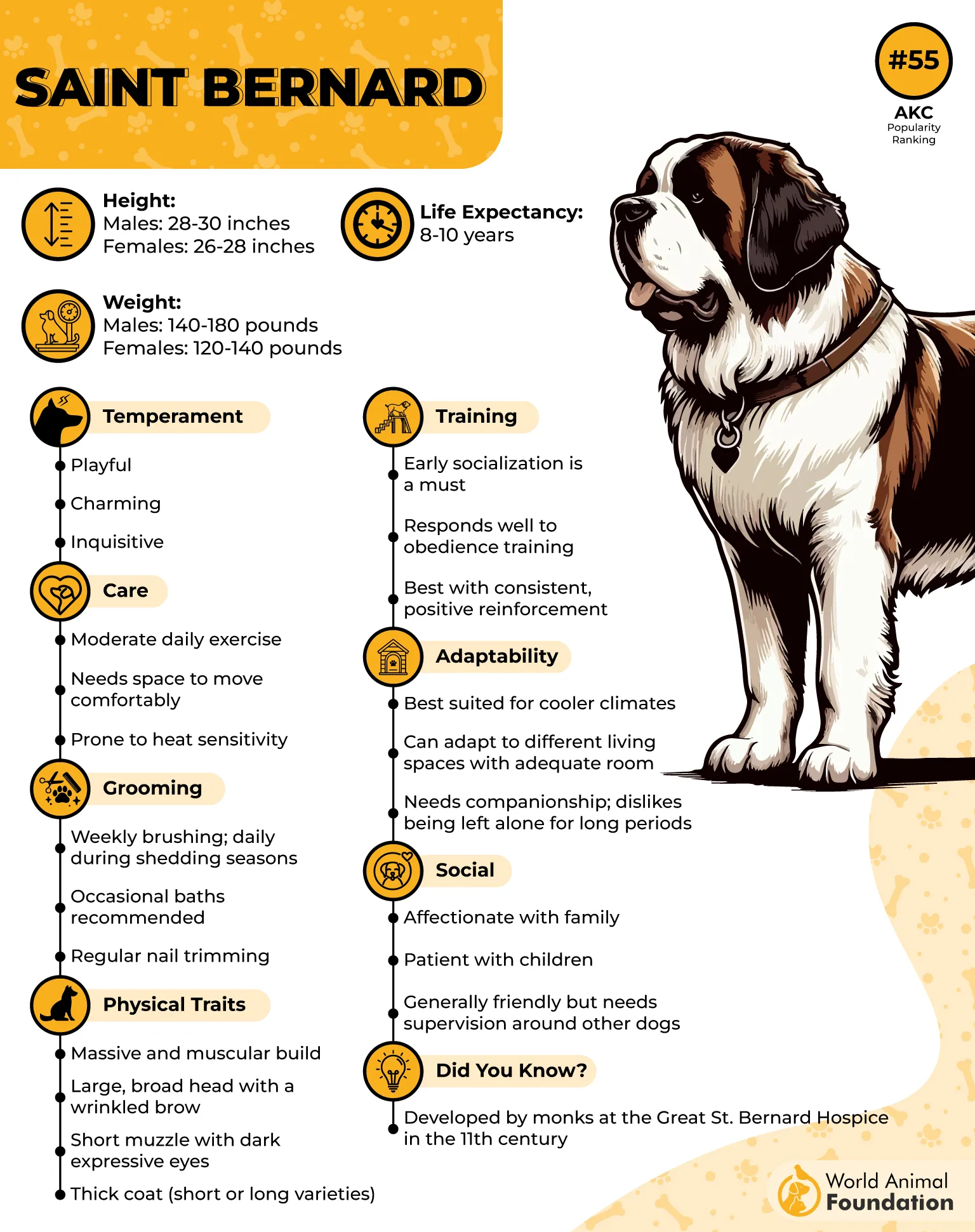
Temperament and Personality
Saint Bernards are gentle, patient, and social dogs. They love being part of family activities and are usually great with children, other dogs, and even cats. While their size can be overwhelming, they are careful and protective rather than aggressive.
They are eager to please, which makes training easier, though occasional stubbornness may appear. Saints enjoy short outdoor adventures and staying close to their loved ones at home. Their calm, easygoing personality makes them perfect companions for families seeking a big, loyal friend.
Care and Upkeep
Saint Bernards have thick fur that sheds heavily twice a year and requires regular brushing. They are calm dogs that need moderate exercise, such as daily walks or gentle hikes.
Overfeeding can strain their joints, so portion control is important. Life expectancy is relatively short, around 8–10 years, but with proper care, they remain affectionate, watchful, and patient companions for families who can handle their giant size.
5. German Shepherd
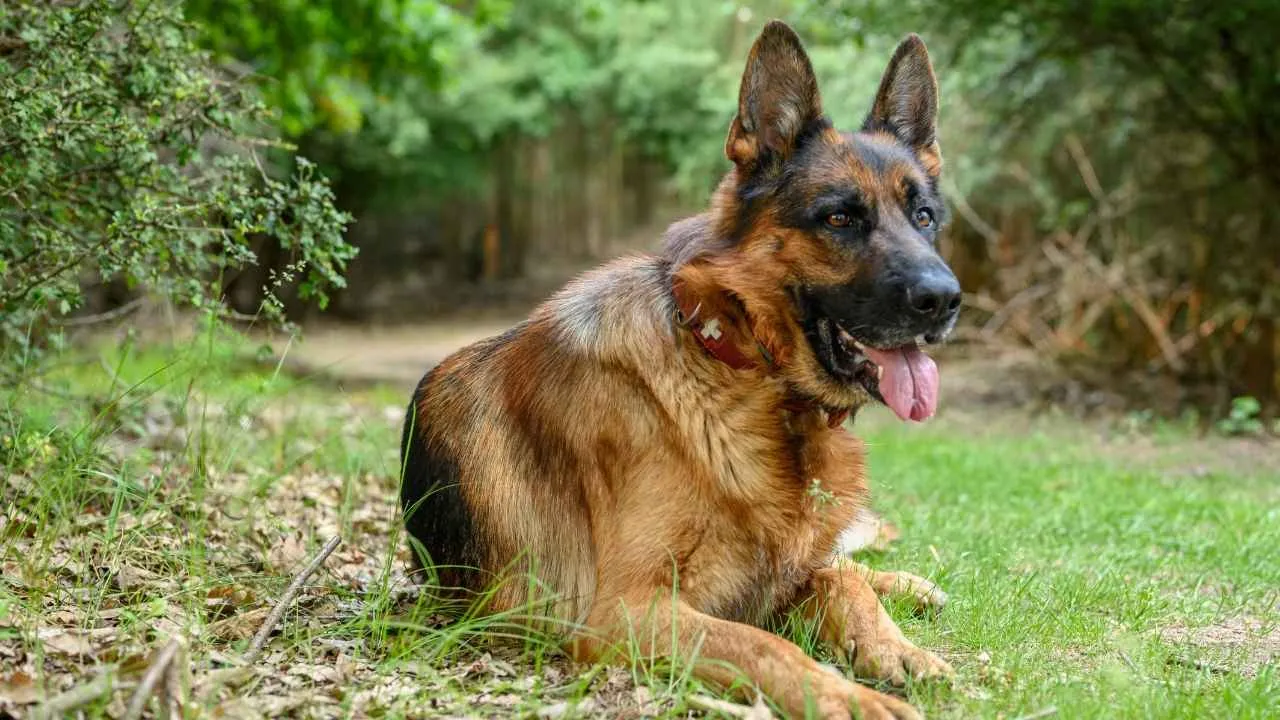
German Shepherds are highly intelligent, loyal, and courageous dogs originally bred in Germany from herding and farm dogs. Known for their strength, agility, and noble character, they excel in demanding roles as working dogs.
German Shepherds have served in police, military, and search-and-rescue roles, showing remarkable confidence, bravery, and adaptability. They are alert and protective, making them excellent family guardians while also remaining gentle with loved ones.
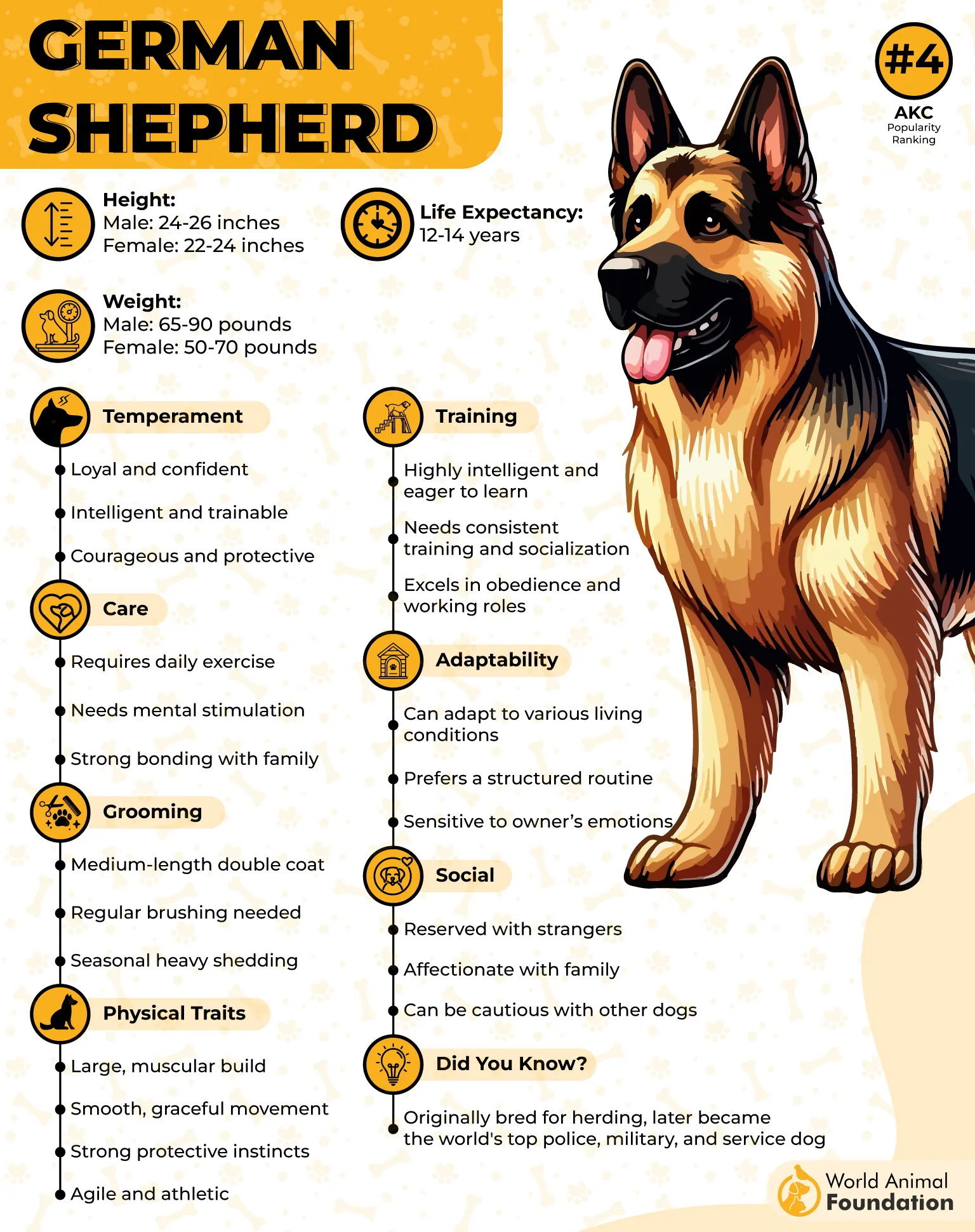
Temperament and Personality
German Shepherds are active, high-energy dogs who thrive when given a job or challenge. They are loyal, confident, and steady, but may be reserved around strangers. Early socialization and consistent training are essential to develop well-mannered, confident dogs.
These dogs are best suited for active families or experienced pet parents who can meet their physical and mental needs. They enjoy interactive play, agility, tracking, and tasks that stimulate their minds.
Care and Upkeep
German Shepherds have thick double coats that shed heavily, with two major shedding seasons in spring and fall. Regular brushing is necessary to keep their coat healthy. They need one to two hours of exercise daily, including walks, runs, or mentally challenging activities.
Fences should be secure, as these dogs are strong and agile. With proper exercise, training, and care, German Shepherds remain loyal, hardworking, and loving companions for families and individuals who can match their energy and intelligence.
6. Rhodesian Ridgeback

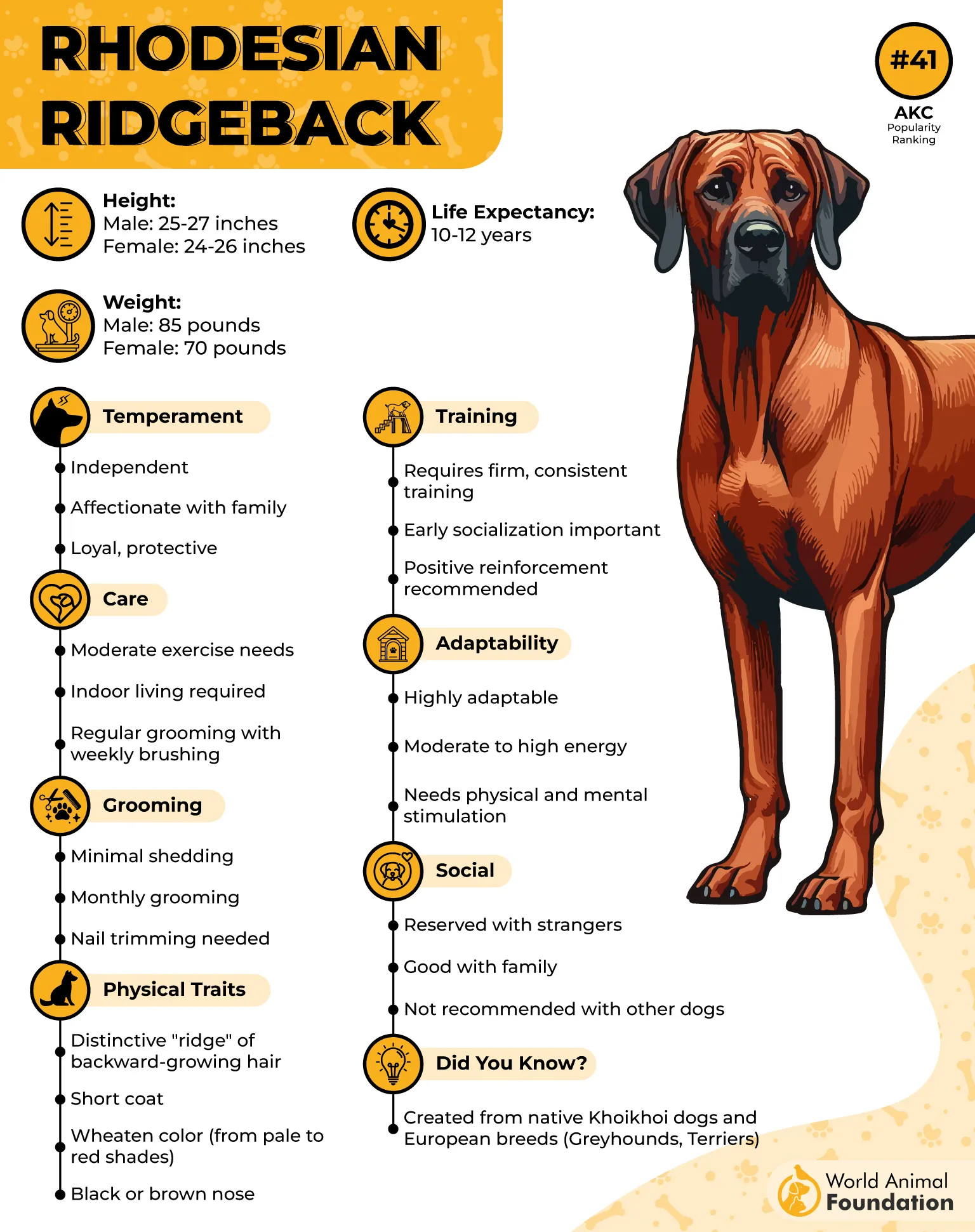
Rhodesian Ridgebacks are strong, athletic dogs originally bred in southern Africa to track and hold large predators, including lions. Their signature feature is the ridge of hair along their back that grows in the opposite direction from the rest of their coat.
These dogs are fearless, loyal, and protective, making them ideal companions for experienced families who can meet their energy and training needs.
Temperament and Personality
Ridgebacks are intelligent, independent, and affectionate with their families. They form strong bonds with loved ones and are protective, but they can be aloof or wary around strangers.
Early socialization and consistent, positive training are essential, as Ridgebacks have a high prey drive and can be strong-willed. They are moderate-energy dogs who enjoy outdoor activities, mental challenges, and spending time with their people.
Care and Upkeep
Rhodesian Ridgebacks have short, wheaten coats that require minimal grooming. They need at least 45 minutes of daily exercise and mental stimulation to stay happy and healthy.
While they are calm indoors, their athleticism and independence require secure spaces and active engagement. With proper care, these dogs become devoted, protective, and affectionate companions for families who understand their unique needs.
7. Akita
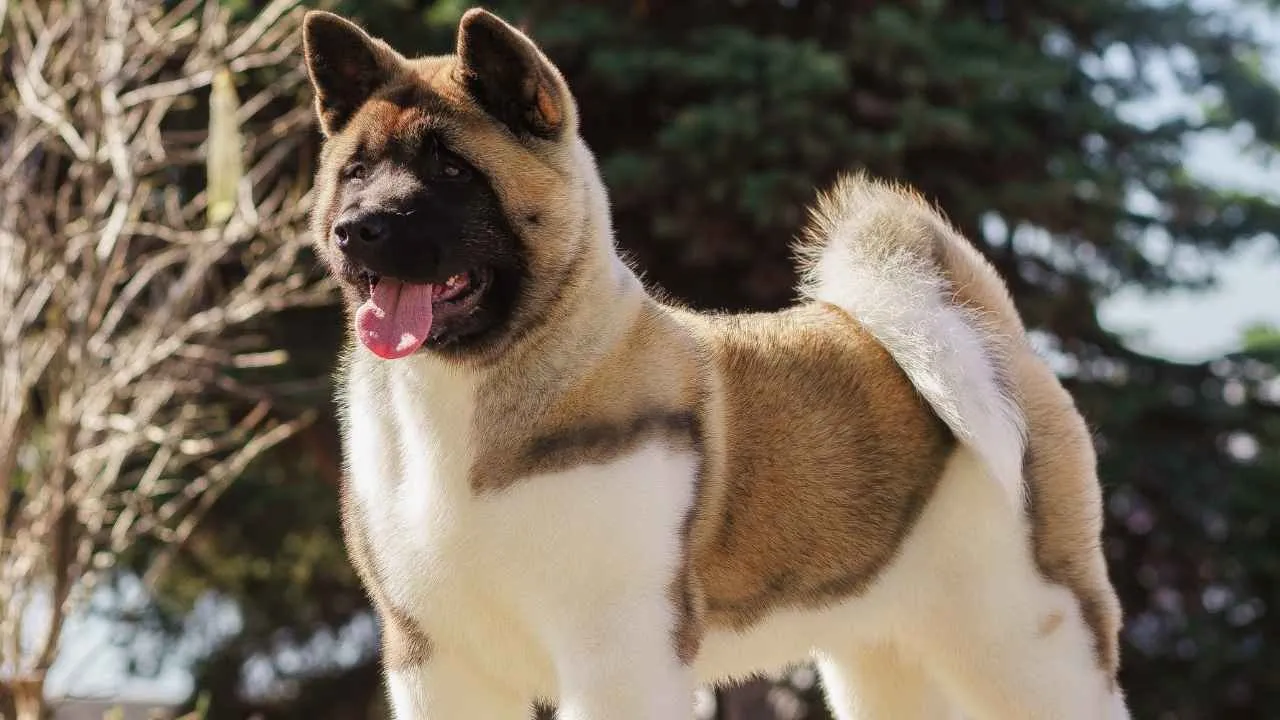
Akitas are large, powerful dogs originally bred in Japan for hunting and family protection. Known for their dignity, courage, and loyalty, they thrive as devoted companions to those they trust.
These dogs are best suited for cooler climates due to their thick double coat and are happiest when they have a job or challenge to channel their energy.
Temperament and Personality
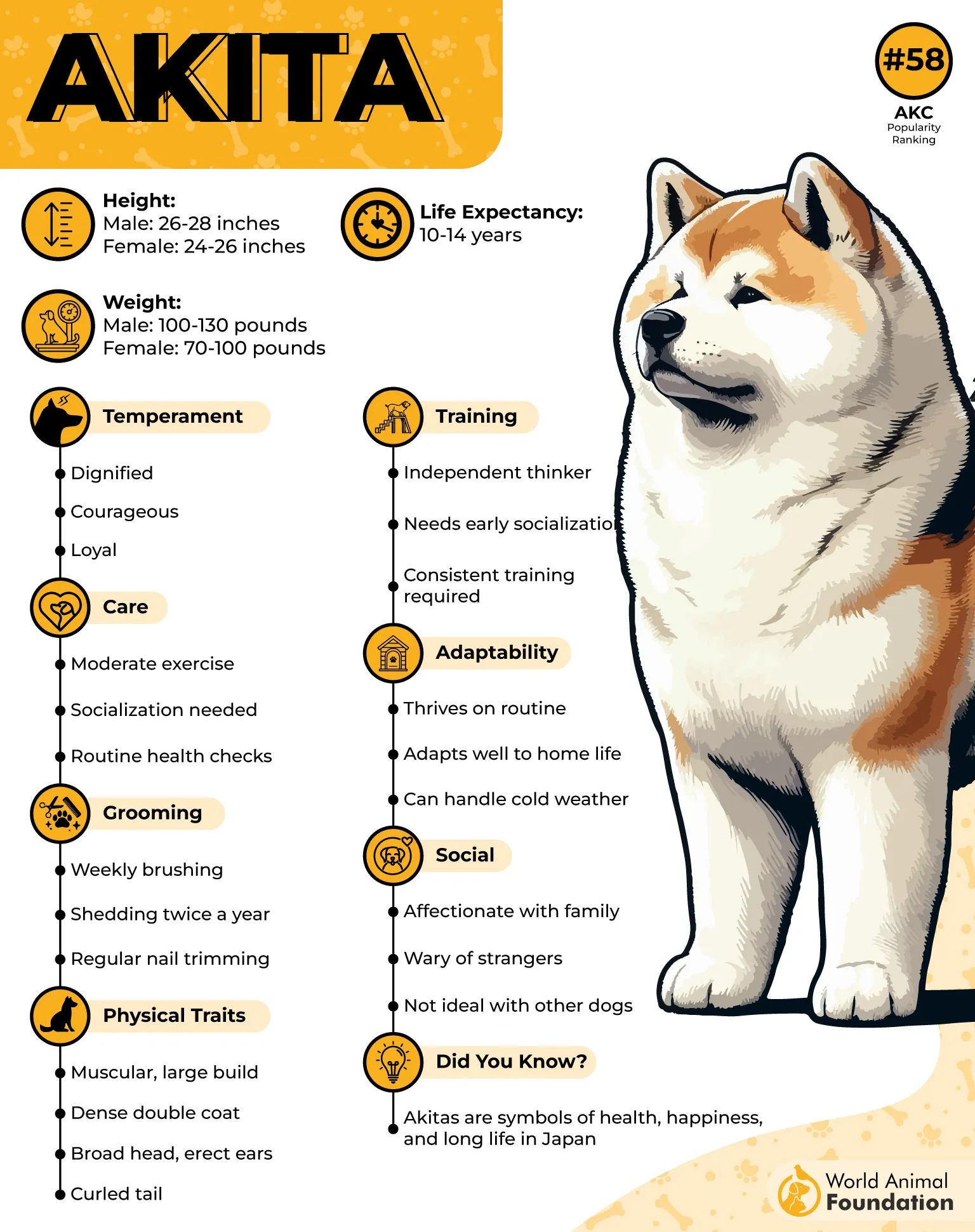
Akitas are loyal, affectionate, and protective of their families, but they are often aloof and cautious around strangers. They can be aggressive toward other dogs if not properly socialized.
Early socialization and consistent training are essential to help them respect boundaries and live harmoniously with children and other pets. Despite their size and strength, Akitas are intelligent and enjoy both mental and physical challenges, such as long hikes or puzzle toys.
Care and Upkeep
According to Hill’s Pet, Akitas are clean, relatively odorless dogs with dense double coats that need regular brushing. They are quiet, dignified, and enjoy spending time close to their human family.
While active, they do not require excessive exercise, but they do benefit from daily walks and structured activities. With proper care, socialization, and supervision, Akitas become loyal, watchful, and affectionate companions who thrive in a family environment.
Conclusion
Choosing a dog that thrives in extreme climates means looking beyond just size or strength. These breeds share common traits: endurance, intelligence, loyalty, and a love for outdoor challenges.
From freezing temperatures to harsh climates, the right dog can be a companion, guardian, and adventure partner all in one. Remember, each breed has unique needs—exercise, socialization, and mental stimulation are just as important as their natural resilience.
If you’re ready to welcome one of these hardy dogs into your life, take the time to match their energy, environment, and personality with your lifestyle. The bond you build with a dog suited for extreme conditions can be unlike any other—a partnership forged through trust, activity, and shared adventures.
Looking for more options? You can also check out the Bernese Mountain Dog, Border Collie, Shiba Inu, Great Pyrenees, Anatolian Shepherd, and Norwegian Elkhound.
