




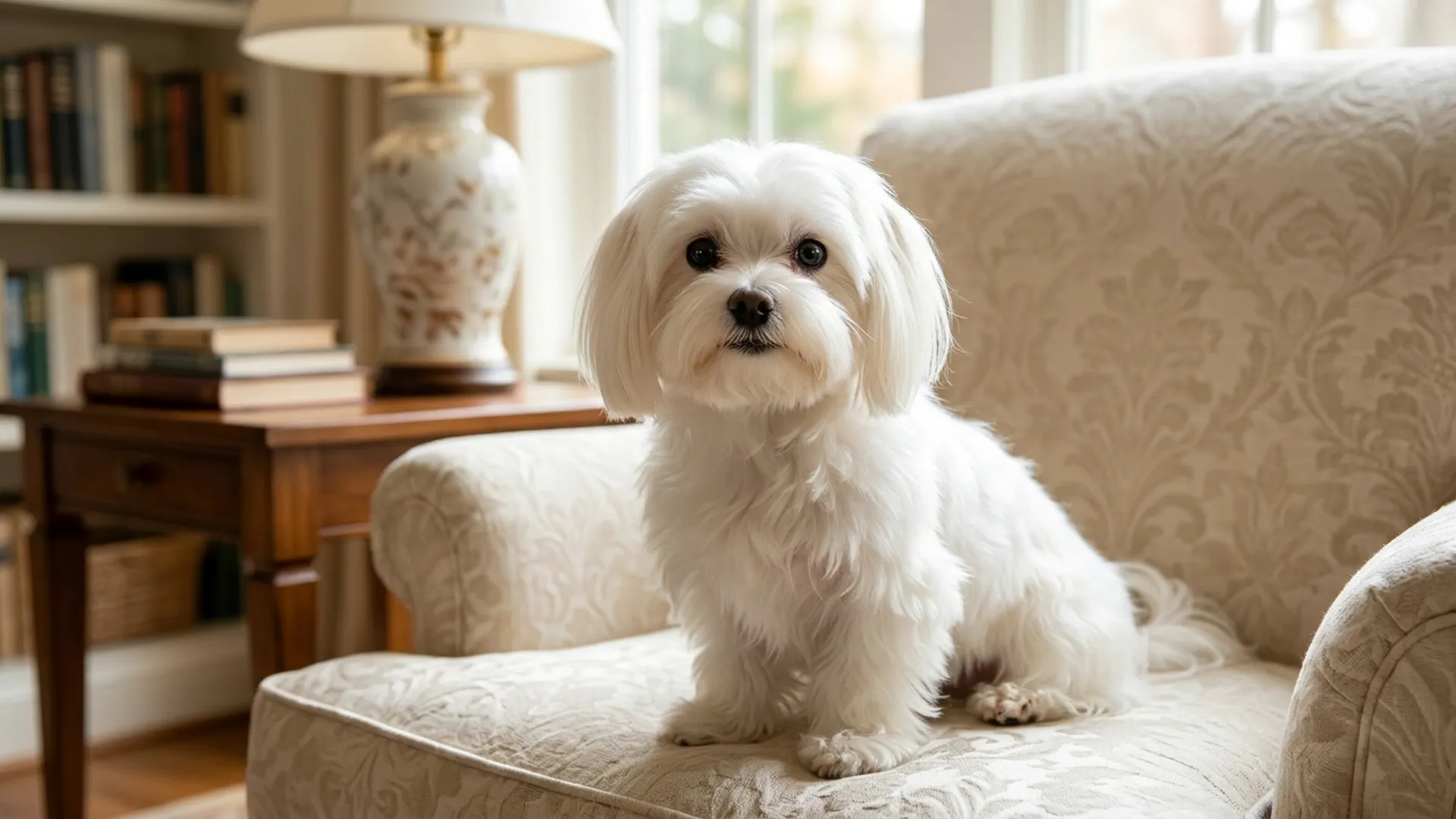
There’s something special about dogs that stay small. They can bring so much personality, affection, and fun into your home without taking up much space.
Whether you live in a cozy apartment or simply love the idea of a petite companion who can curl up beside you, these little dogs can make everyday moments feel a bit more joyful.
And don’t let their tiny size fool you! Many have playful personalities, big opinions, and enough energy to keep the whole family entertained.
Of course, size and breed can only tell you so much about a dog’s personality. Every pup has its own needs, habits, and quirks, and the right care and socialization can help bring out its best qualities.
Ready to meet some adorable companions that stay small and delightfully petite? Let’s discover which little dogs might steal your heart!
Dog Breeds That Stay Small and Delightfully Petite
1. Chihuahua
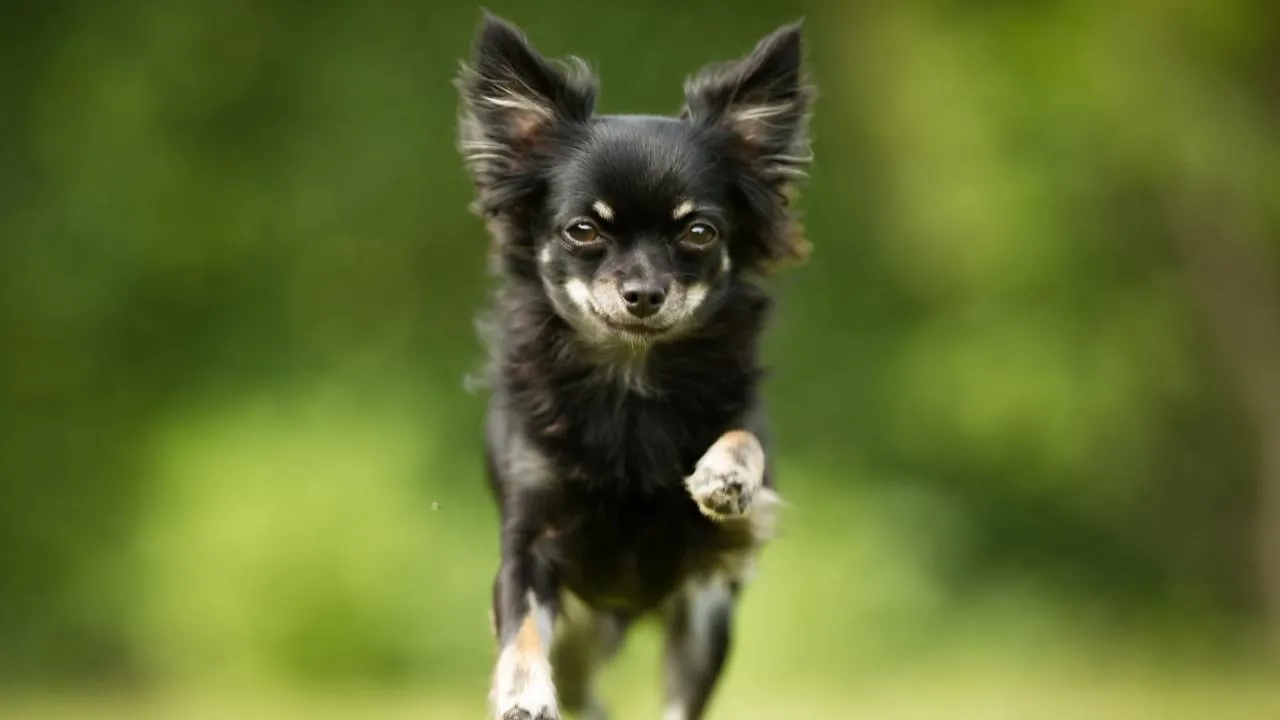
The Chihuahua is one of the smallest dog breeds in the world, but its personality is anything but tiny. Originally from Mexico, this ancient breed is known for its compact body, expressive eyes, and upright ears.
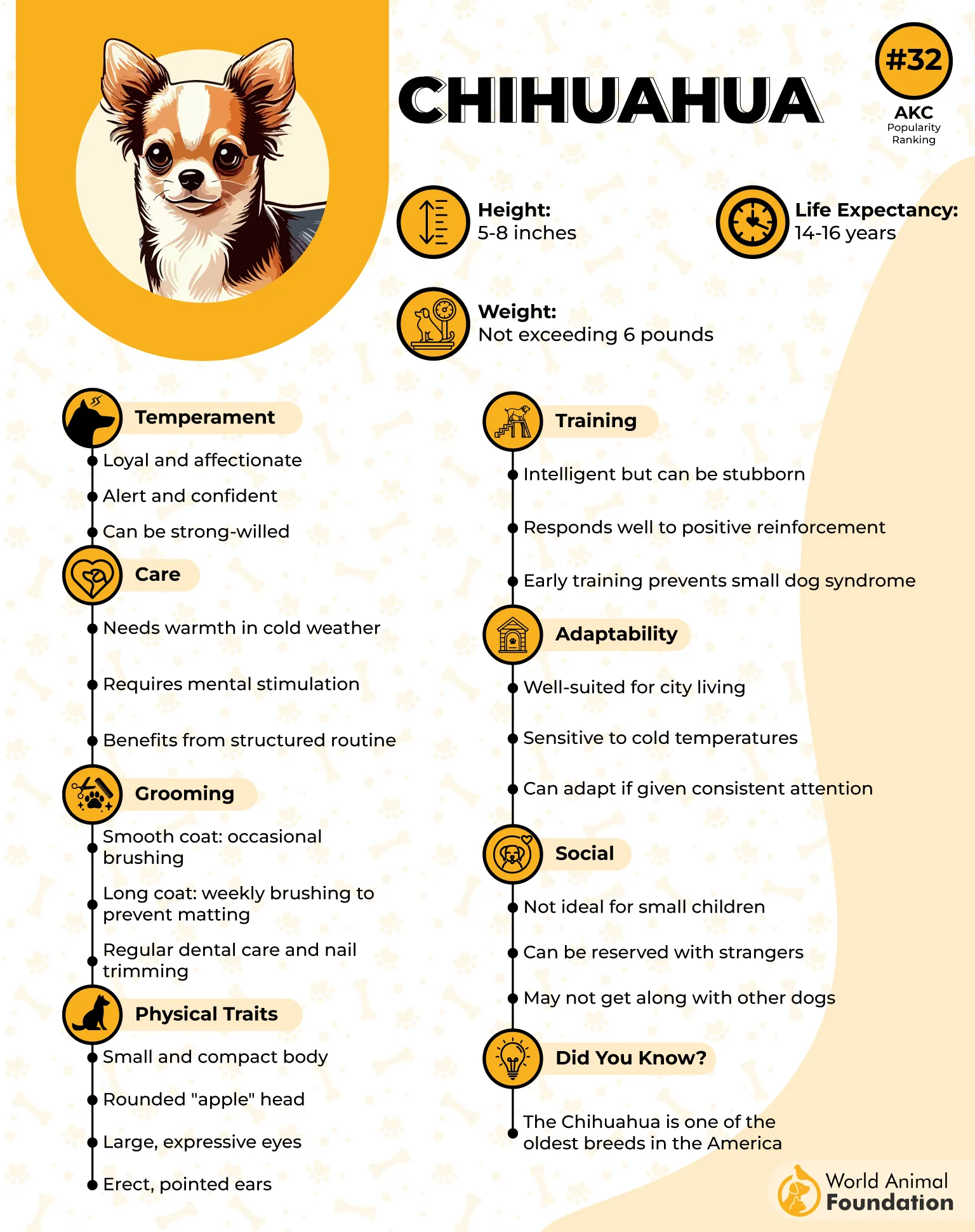
Personality and Temperament
Bold, playful, and full of charm, Chihuahuas love being around their favorite people. They enjoy games and outdoor adventures just as much as curling up on a warm lap. Many form strong bonds with one family member and can become protective of them, as Orvis notes.
They are also alert and quick to bark at unfamiliar people or sounds. Although confident by nature, some Chihuahuas can be timid, so early socialization helps them feel more comfortable around new people and other animals.
Training and Care
Chihuahuas are intelligent and capable of learning household rules, basic commands, and even dog sports such as agility and obedience. However, their stubborn streak means they need patient, consistent training from an early age.
Despite their small size, they still need daily exercise, playtime, and opportunities to sniff and explore outdoors. They can be too delicate for rough play with young children, and extra care is needed in cold weather.
2. Maltese
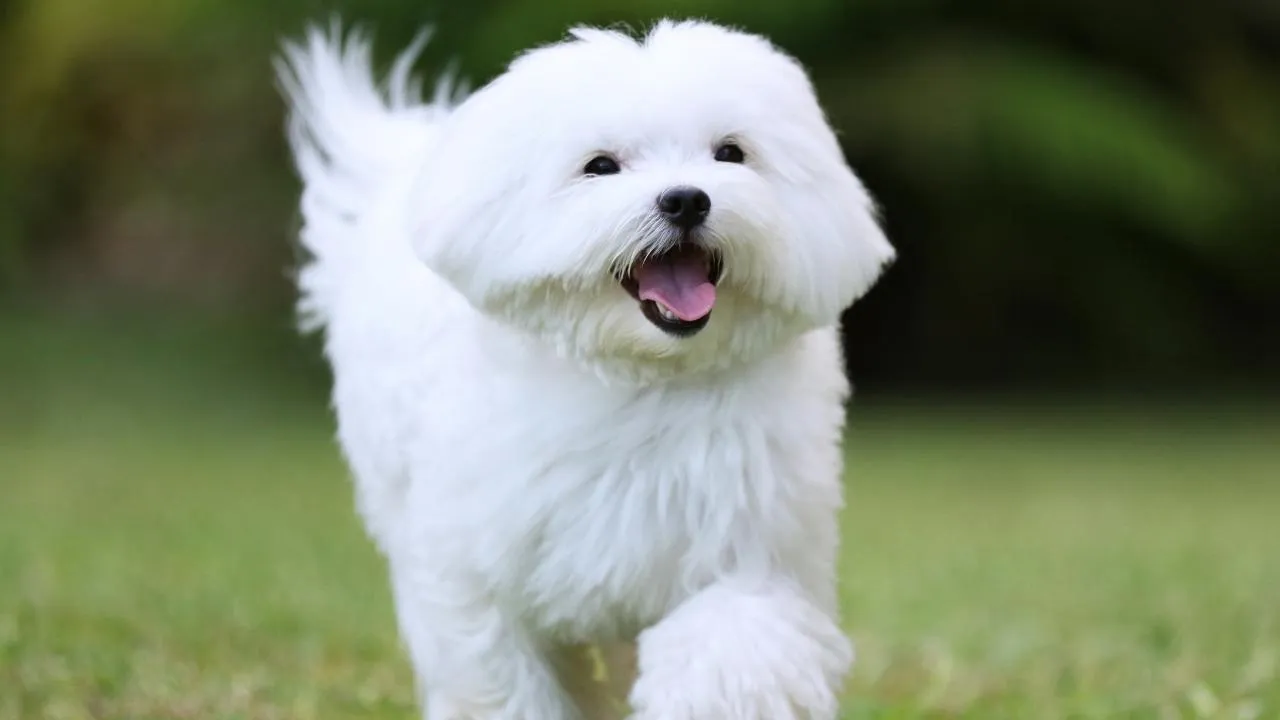
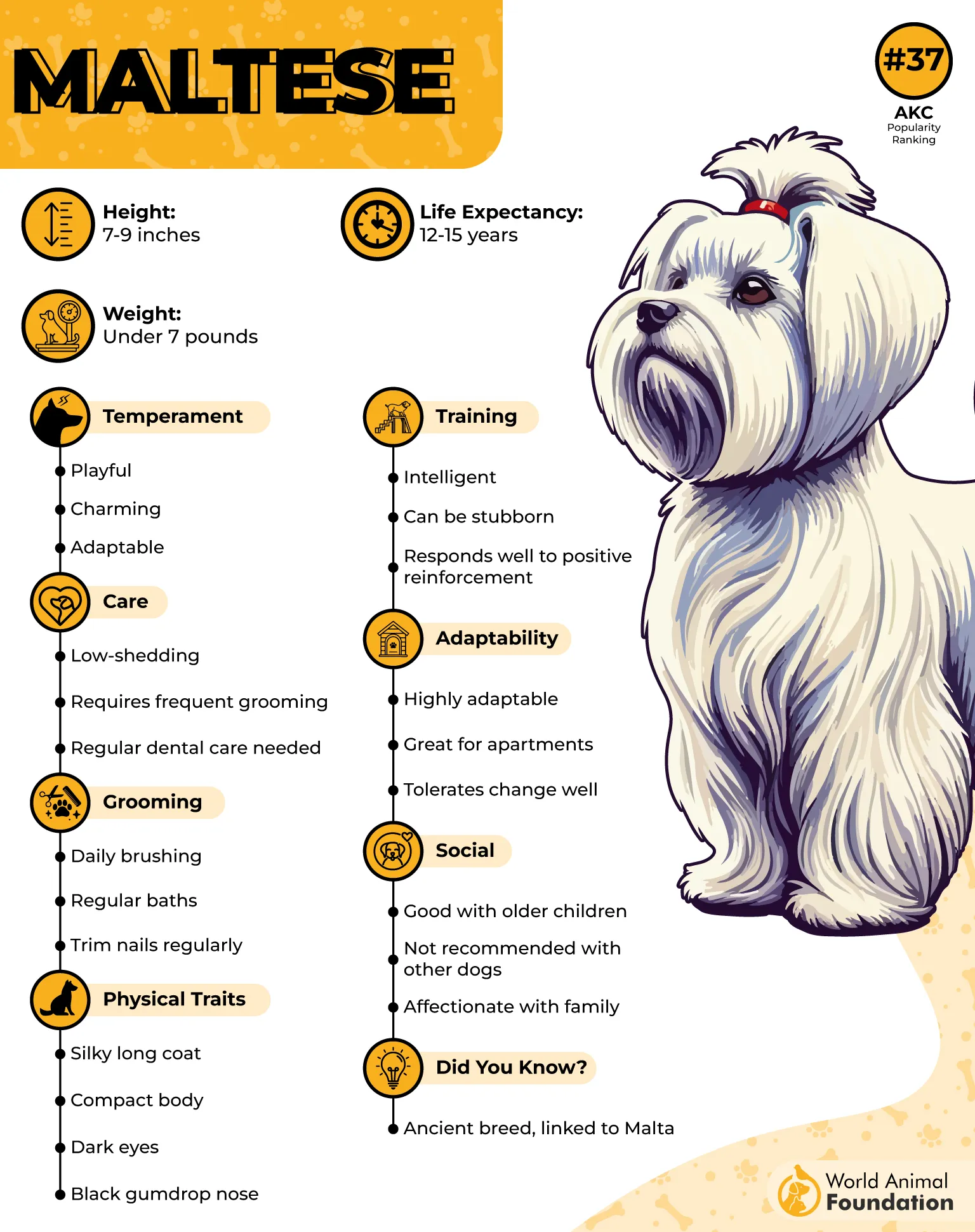
The Maltese is an ancient toy breed that originated on the Mediterranean island of Malta. Known as the “Ancient Dogge of Malta,” it has been a cherished companion for centuries.
This petite dog weighs less than seven pounds and is famous for its long, straight, silky white coat. Its large, dark eyes and small black nose give it an especially charming expression.
profile
Personality and Temperament
Beneath that glamorous coat is a lively, affectionate, and fearless little companion. Maltese dogs enjoy spending time with their families, making new friends, and learning entertaining tricks.
Their alert nature also makes them reliable little watchdogs, as they tend to bark at unfamiliar sounds. Maltese generally make loving family pets, but their delicate size means they may not be suitable for rough play with young children.
Training and Care
Maltese dogs respond well to reward-based training, positive reinforcement, and early socialization. House-training can take patience, so consistency is important.
Although they are energetic and enjoy playing, they do not need a large living space to stay happy. Their long, silky coat requires daily brushing and regular bathing to prevent tangles and mats.
3. Yorkshire Terrier
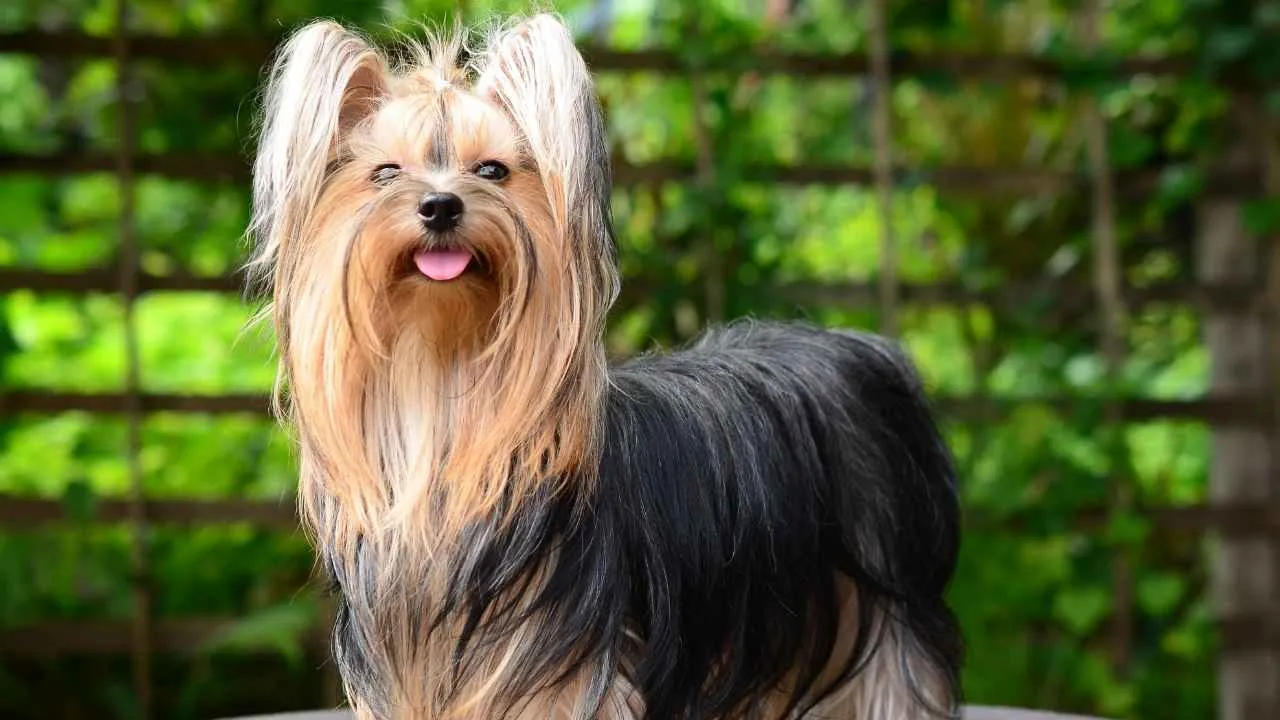
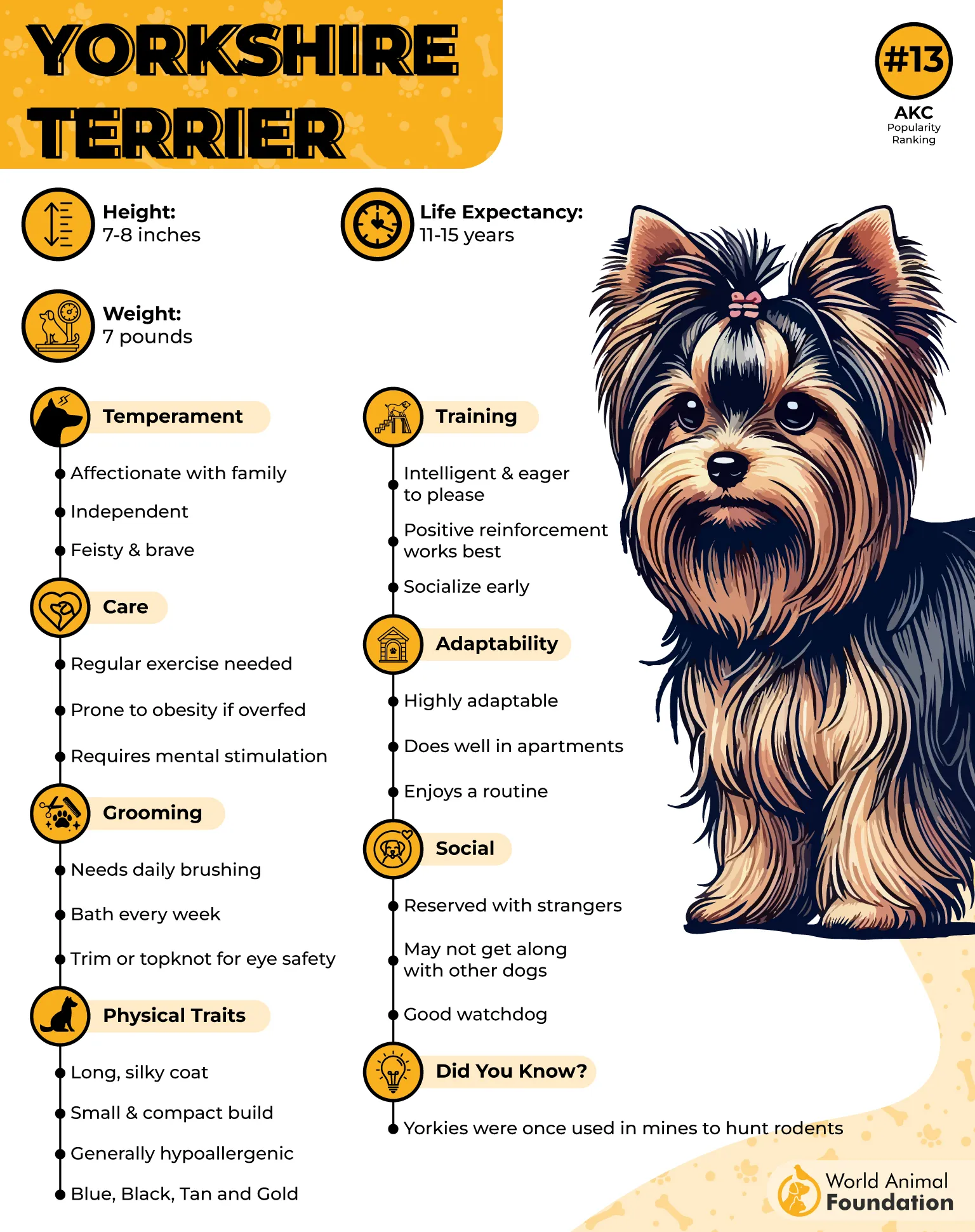
The Yorkshire Terrier, affectionately called the Yorkie, originated in 19th-century England, where it was used to hunt rats in mines and textile mills. Today, it is a popular companion dog known for its tiny size and elegant appearance.
Personality and Temperament
Yorkies are playful, affectionate, curious, and always ready for an adventure. They enjoy spending time with their families and make alert little watchdogs, although they can bark frequently.
Their bold nature may lead them to challenge larger dogs, and they can be protective of their owners. Early socialization helps them become more comfortable around strangers.
Training and Care
Intelligent and quick to learn, Yorkies respond well to patient, consistent training. Daily walks, indoor games, and mental stimulation help keep them happy and prevent boredom.
Omlet says they enjoy cuddles but do not like being left alone for long periods. Their long coats need regular grooming, and they may require extra warmth in cold weather.
4. Pomeranian
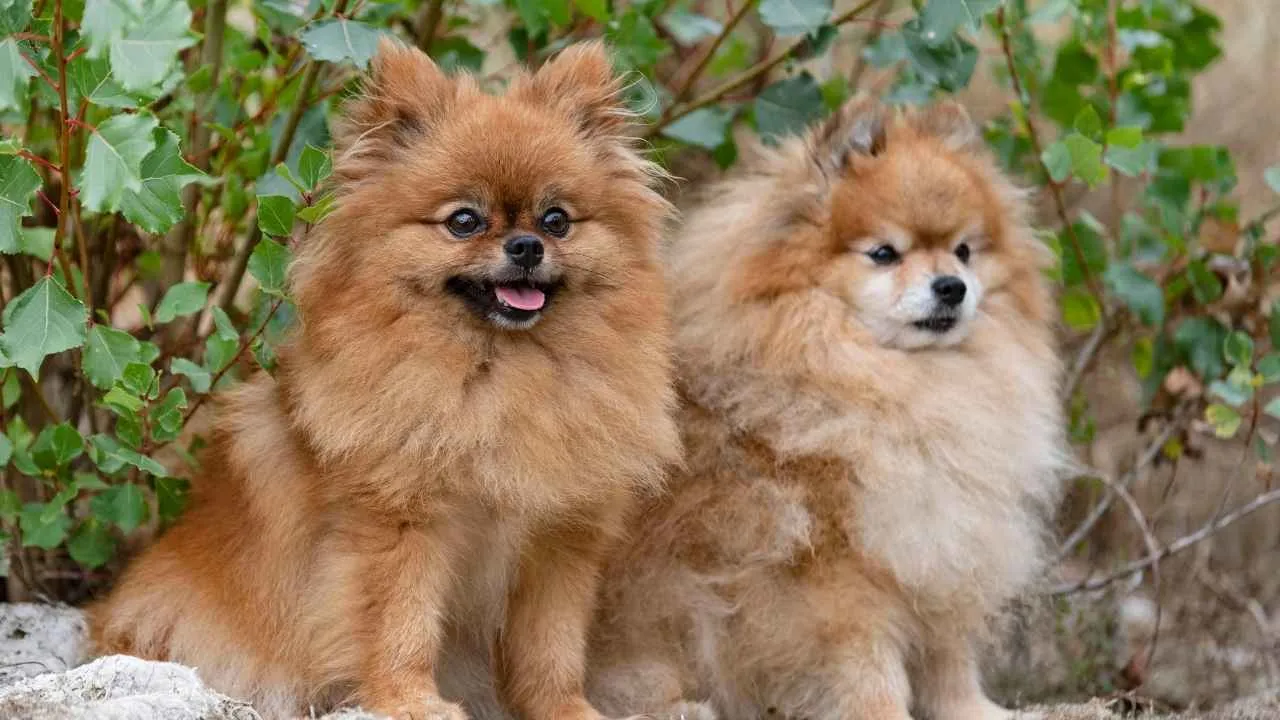
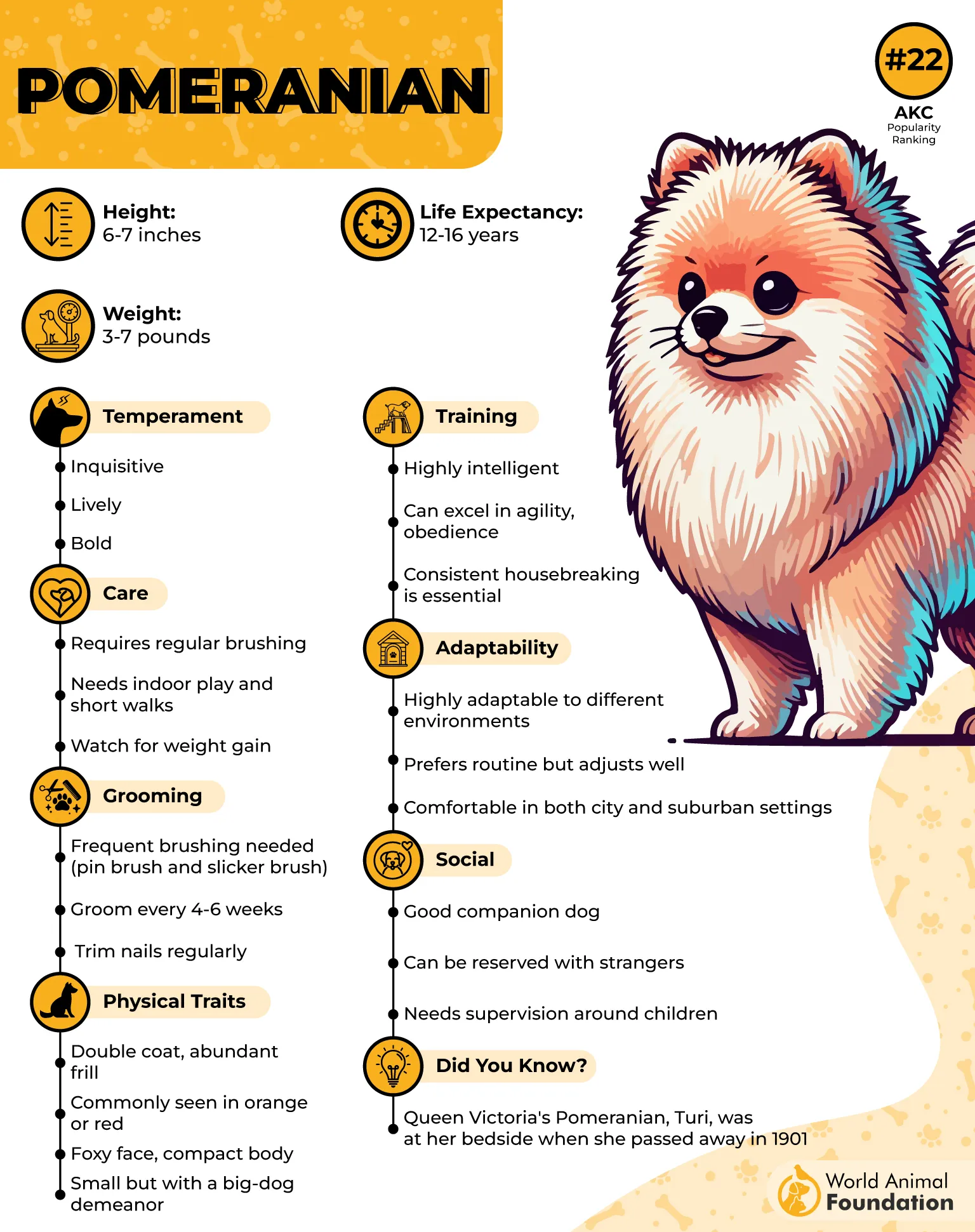
Pomeranians descended from larger Spitz dogs that were originally used for herding. Over time, they were bred to become the tiny companions we know today.
Pomeranians have a fluffy double coat, a foxlike face, and a thick ruff around their neck. Their coats come in many colors and patterns, including orange, black, white, and sable.
Personality and Temperament
Pomeranians have big personalities packed into tiny bodies. They are lively, curious, intelligent, and affectionate, often acting much bigger than they really are.
These playful little dogs enjoy attention, learning tricks, and spending time with their favorite people. They also make alert watchdogs, although their tendency to bark can become excessive without training.
Training and Care
Pomeranians learn quickly and enjoy games, tricks, and activities that keep their minds busy. Short walks and indoor play are usually enough to meet their exercise needs. Early training and socialization help manage their barking and confident nature.
Pomeranians also thrive on companionship and may struggle when left alone for long periods, so they suit homes where they receive plenty of attention.
5. Papillon
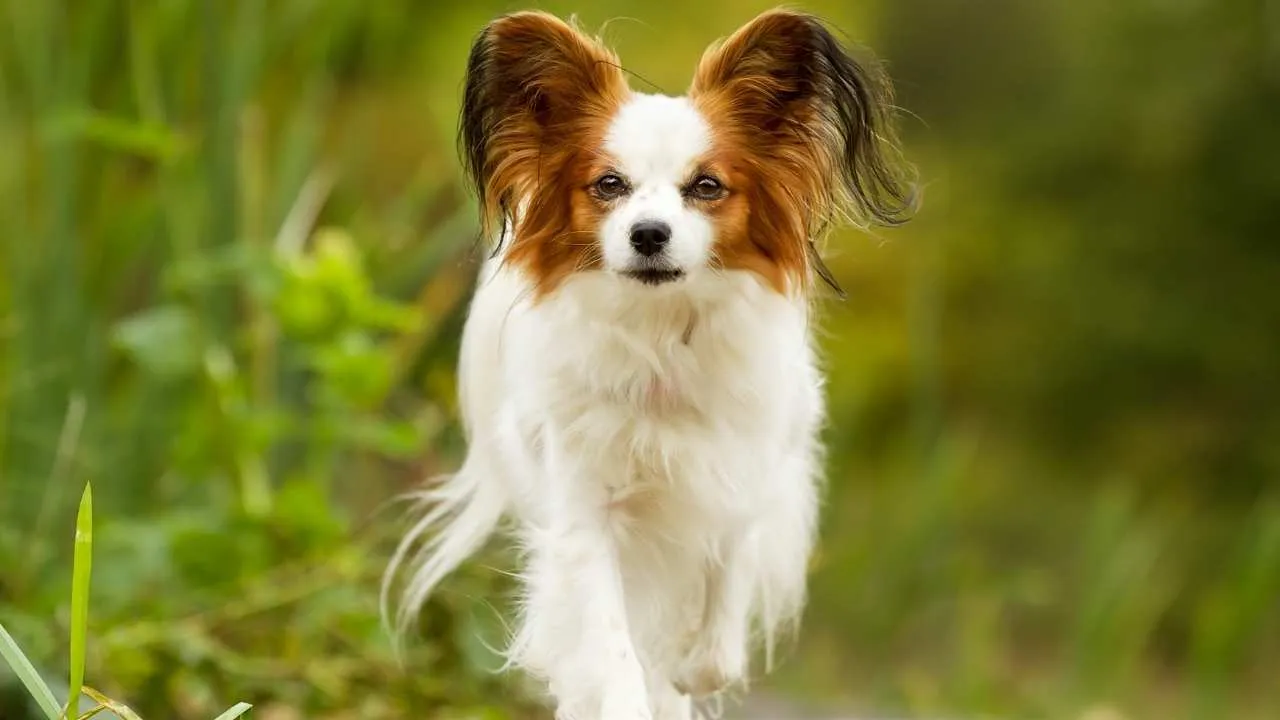
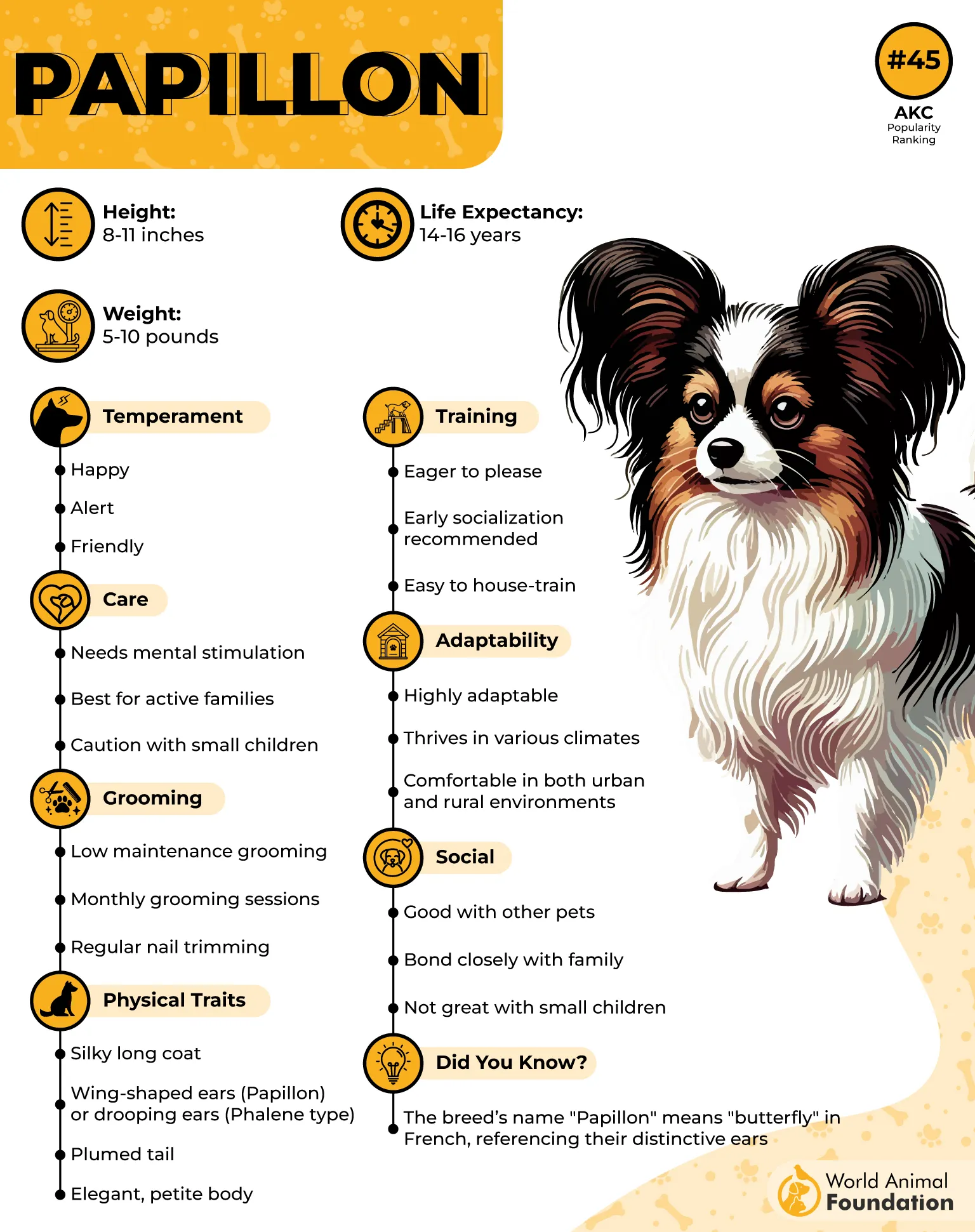
The Papillon is a petite toy breed known for its elegant appearance and distinctive butterfly-shaped ears. Its name means “butterfly” in French, reflecting its most recognizable feature.
This little dog has a long, silky coat, a plumed tail, and a mostly white coat with various color combinations. Despite its delicate looks, the Papillon is athletic, energetic, and more robust than it appears.
Personality and Temperament
Papillons are friendly, curious, and affectionate dogs that love being involved in family activities. They generally get along well with children, other dogs, and cats when properly socialized.
Unlike some toy breeds, they are not always content to sit on a lap and enjoy having space to explore and play. They are also alert watchdogs and may bark when someone approaches the door.
Training and Care
Papillons are among the most intelligent and trainable toy breeds. They learn commands and tricks quickly and often excel in obedience and agility competitions. Praise, play, and positive reinforcement help keep training enjoyable.
These energetic dogs need daily exercise and activities that challenge their minds. Early socialization and supervised interactions with young children are important because of their small size.
6. Japanese Chin
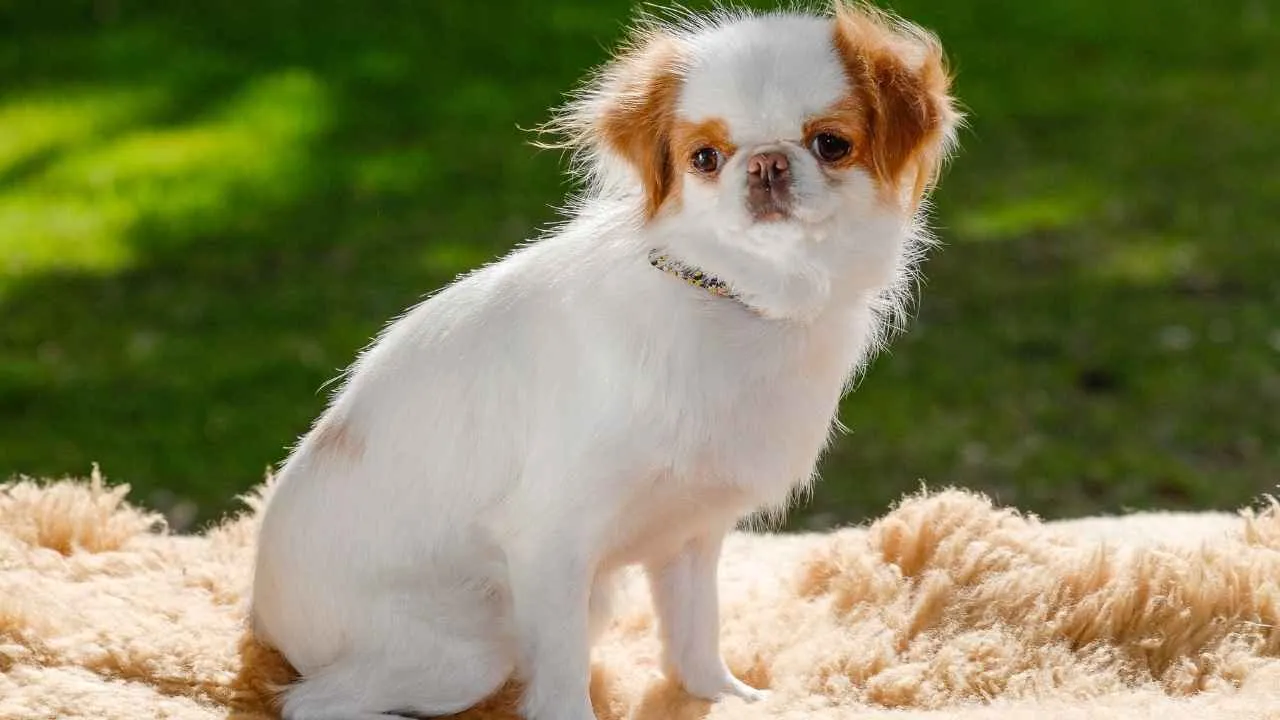
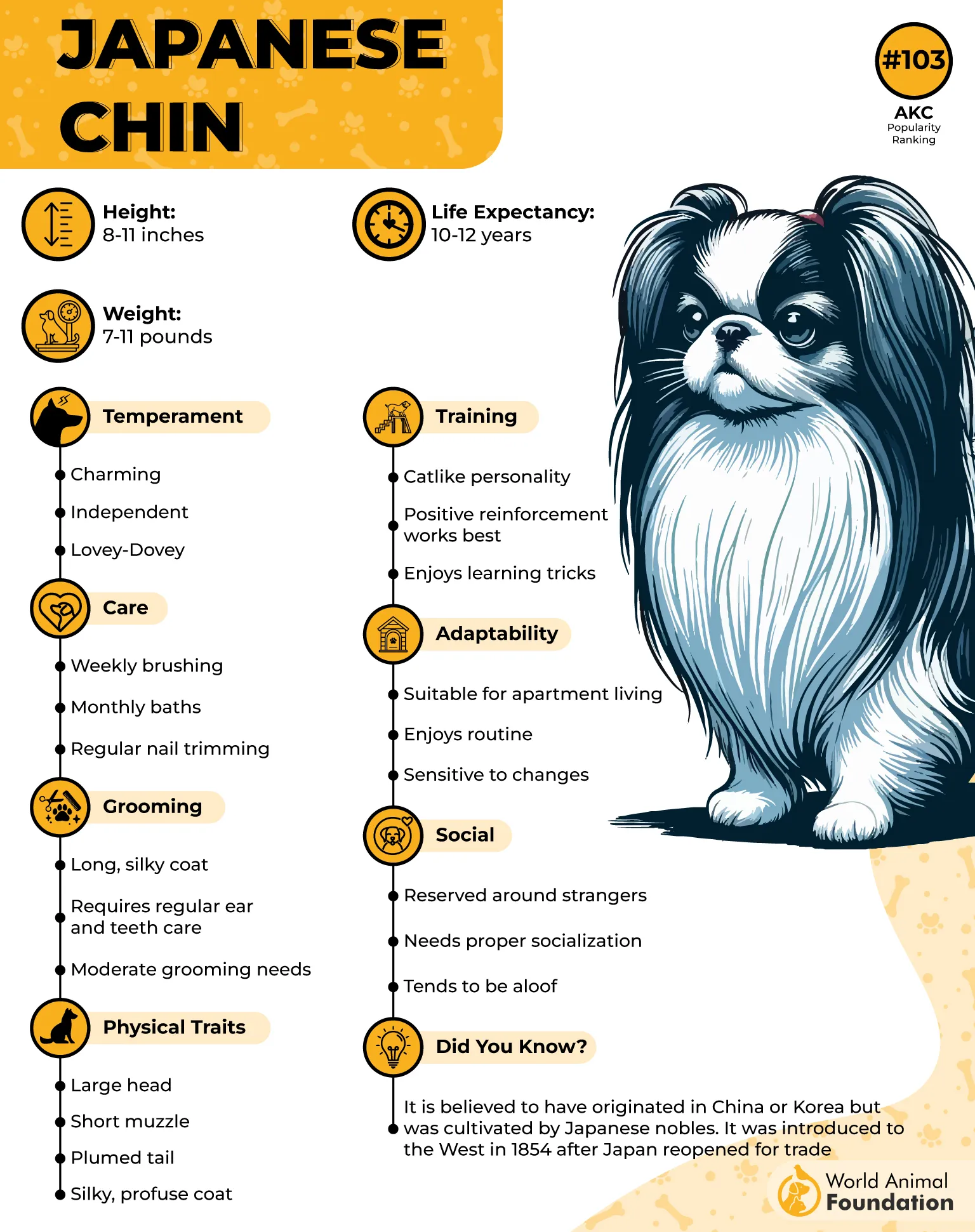
The Japanese Chin is an elegant toy breed with a long history as a companion to nobility. Although its name suggests Japanese origins, the breed is often believed to have originated in China before becoming a favorite in Japanese imperial palaces.
It has a broad head, short muzzle, large dark eyes, and a silky coat. Its fluffy mane and feathered tail add to its regal appearance.
Personality and Temperament
Japanese Chin dogs are affectionate, playful, and generally quiet. Often described as cat-like, they enjoy lounging on elevated spots, grooming their faces with their paws, and observing their surroundings.
They love spending time with their families and can get along well with children and other pets when properly introduced.
Training and Care
Japanese Chins are intelligent and enjoy learning tricks, but they can become bored with repetitive training. Short, playful sessions with plenty of praise and rewards work best.
They enjoy walks and indoor games without needing excessive exercise, making them suitable for apartment living. Their silky coat needs brushing once or twice a week to prevent tangles, along with occasional baths.
7. Toy Fox Terrier
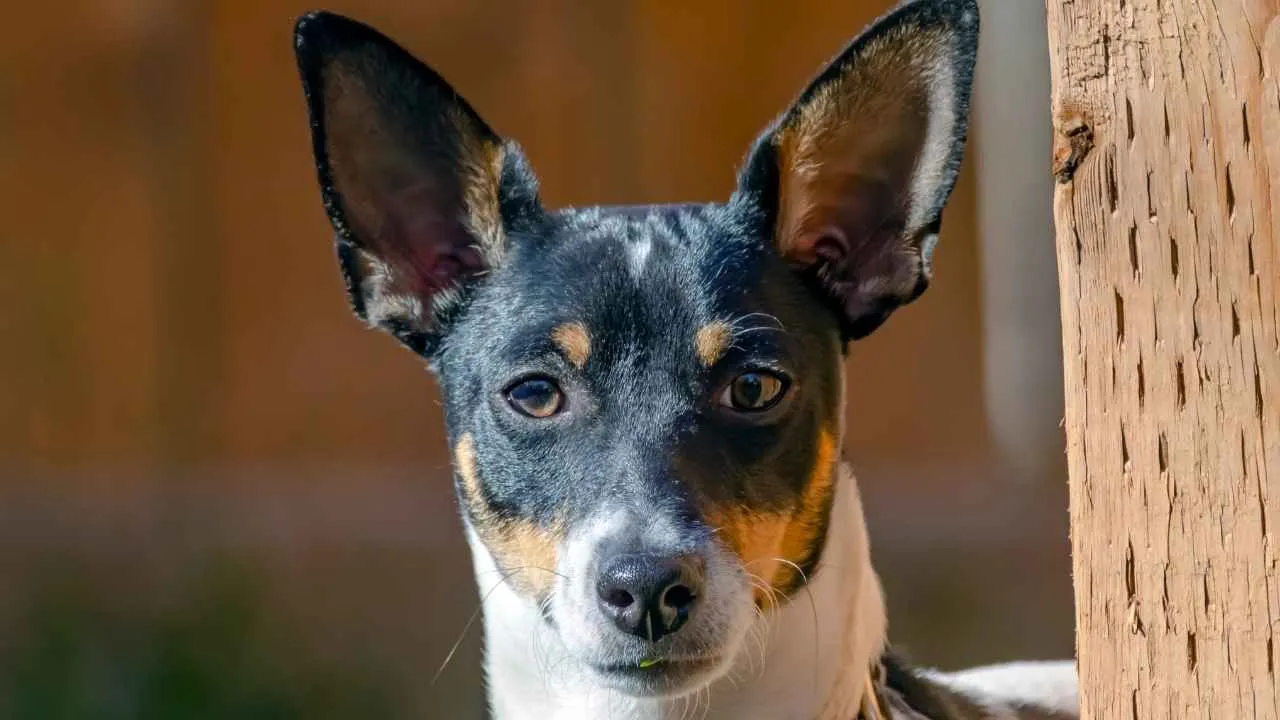
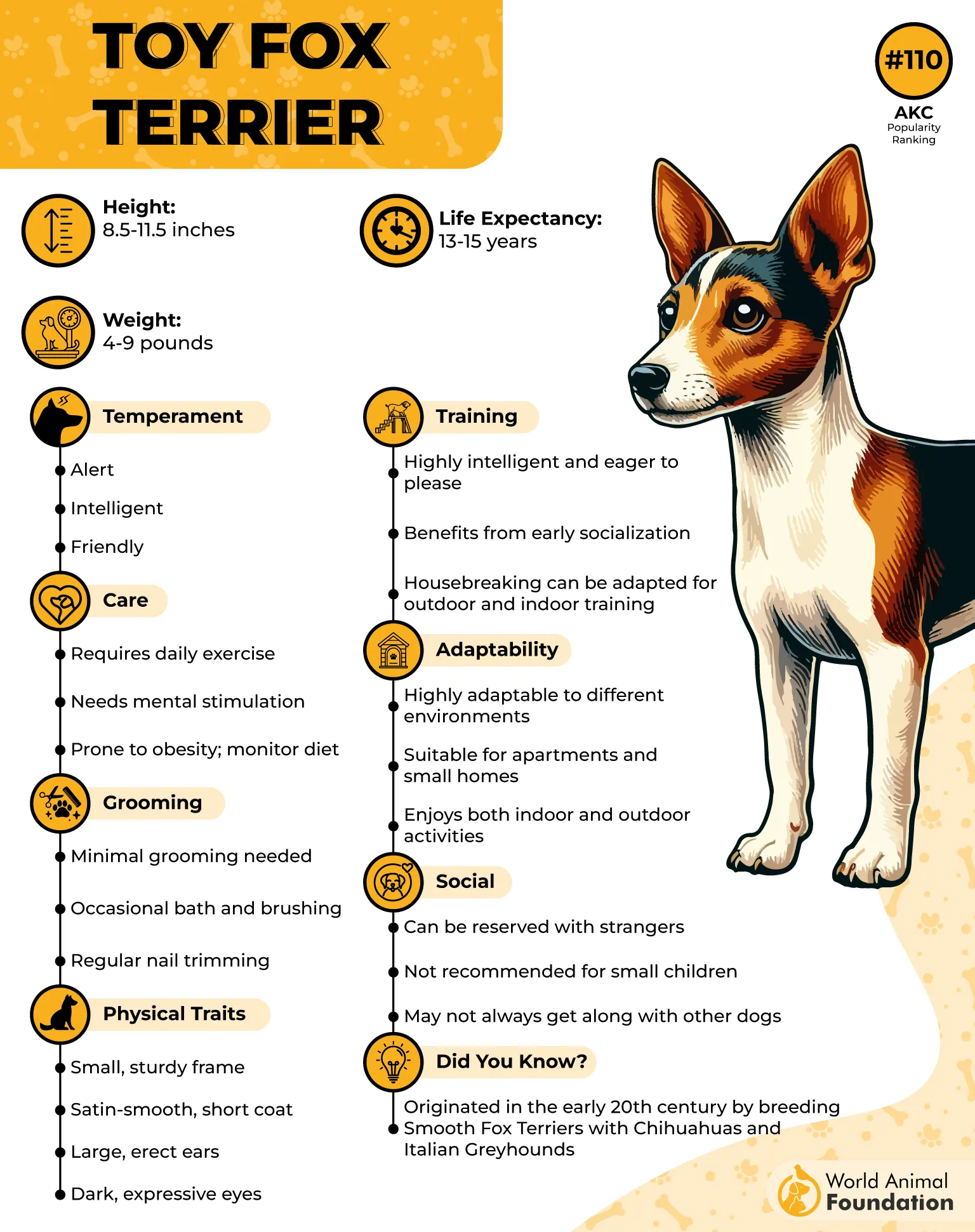
The Toy Fox Terrier originated from the Smooth Fox Terrier and was developed into a smaller companion dog in the early 20th century. Originally used to hunt rodents on farms, this breed later became popular for its playful personality.
It has a sleek, muscular body, a short satin-like coat, large upright ears, and bright, expressive eyes. Its coat is usually white with black and tan markings.
Personality and Temperament
Toy Fox Terriers combine the affection of a toy dog with the boldness of a terrier. They are lively, intelligent, loyal, and always ready for an adventure. These little dogs enjoy playing, exploring, and spending time with their families.
Purina says they can also make alert watchdogs thanks to their fearless nature. Although they love cuddling, they are far too energetic to spend the entire day lounging on a lap.
Training and Care
Toy Fox Terriers are quick, agile, and full of energy, so they need regular exercise and activities to keep their minds occupied. Daily walks, interactive toys, and playful games help prevent boredom.
Early training and socialization encourage good behavior and help them become well-adjusted companions. Their short, smooth coat is easy to maintain with weekly brushing and occasional baths.
Conclusion
Small dog breeds prove that you don’t need a big body to have a big personality. From affectionate lap companions to lively little adventurers, these petite pups offer different temperaments, energy levels, and care needs.
The best fit depends on your lifestyle, living space, and the kind of companionship you enjoy most. Before bringing one home, take time to learn about its grooming needs, exercise requirements, and temperament.
Meet the dog if possible and consider how well its needs match your daily routine. After all, the joy of having a small dog isn’t just in how little space it takes up, but in how much love, laughter, and personality it brings into your life.
