




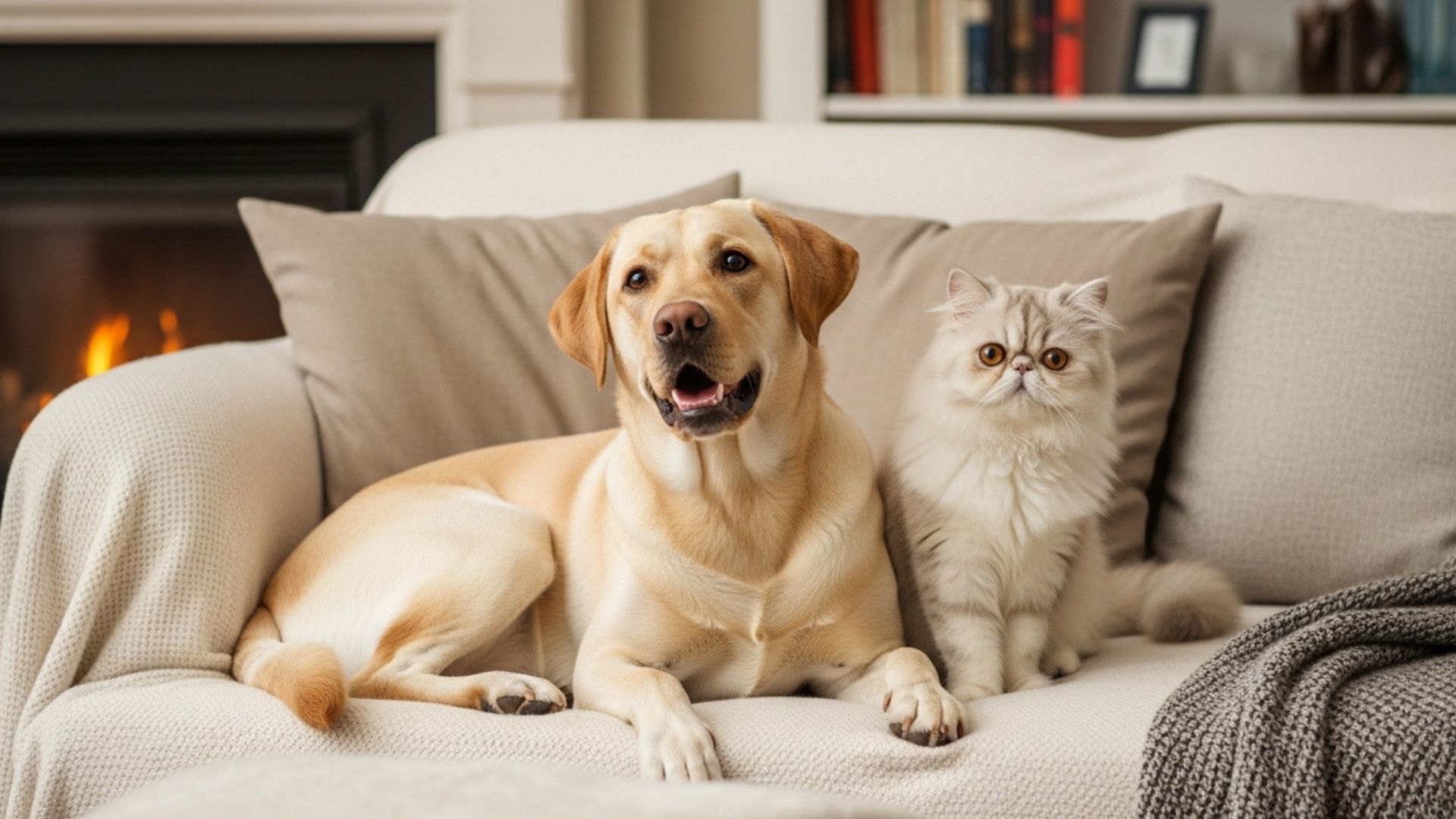
For decades, dogs and cats have been unfairly cast as eternal enemies, locked in a rivalry fueled by cartoons and clichés rather than real-life experience.
In today’s modern pet homes, that myth is quietly collapsing. According to the American Veterinary Medical Association, more than one in four households in the United States own both a dog and a cat, and most report peaceful coexistence.
Even more amazing is how often these animals aren’t just tolerating each other but forming genuine emotional bonds—sleeping together, grooming one another, and sharing space as if they’ve always belonged side by side.
What makes these relationships work isn’t luck. It’s a blend of temperament, early exposure, and choosing breeds whose instincts align with feline companionship. Some dogs are wired for patience, emotional sensitivity, and social cooperation, traits that naturally appeal to cats who value calm energy and predictable behavior.
This blog is written for dog lovers—people who see their pets as family, who value harmony over hierarchy, and who understand that emotional intelligence matters just as much as obedience.
Dog Breeds That Share a Loving Bond With Cats
1. Basset Hound

The Basset Hound enters a household with the emotional urgency of someone who has nowhere to be and all the time in the world. With their long ears, soulful eyes, and famously relaxed demeanor, Bassets radiate calm energy that cats instinctively trust.
They don’t rush into situations, they don’t overreact, and they certainly don’t feel the need to assert dominance. For cats, who value personal space and emotional predictability, the Basset is an ideal roommate.
These gentle dogs are also highly social. Originally bred to hunt in packs, they tend to accept other animals as part of their extended family. A cat isn’t seen as an outsider but rather as a strange-looking pack member who happens to nap a lot and occasionally steals warm spots.

This pack mentality often leads to surprisingly affectionate behavior, including cuddling and shared nap times.
Many owners report that Bassets develop a nurturing relationship with cats, sometimes referred to affectionately as “kitty daddy” behavior. These dogs often tolerate kittens climbing on them, gently sniff cats as a greeting, and remain unbothered by feline moods.
This emotional steadiness is linked to the breed’s low stress response and generally mellow heart rate.
2. Beagle

Beagles move through life as if every day is a group activity, and that mindset is exactly why they often do well with cats. Bred to hunt in packs, Beagles are wired to look for companionship, cooperation, and shared routines.
When introduced properly, they don’t view cats as rivals or prey but as fellow household members who happen to operate on a different schedule.

What makes Beagles unique is their emotional openness. They’re affectionate, curious, and generally eager to connect. In homes where cats are introduced early, Beagles often form sibling-like relationships, complete with shared naps, playful interactions, and mutual tolerance.
However, Beagles do have a compelling nose, and their curiosity can sometimes lead to chasing behavior. Importantly, this chase is rarely aggressive. It’s usually driven by excitement rather than by an instinctive prey response.
Training plays a critical role here, as Beagles who respond reliably to commands are far more successful in homes with cats.
Behavioral research indicates that Beagles trained with positive reinforcement are significantly more responsive in emotionally complex environments, including multi-pet households. When a Beagle understands boundaries, it learns quickly that the cat is off-limits for rough play.
3. Bulldog
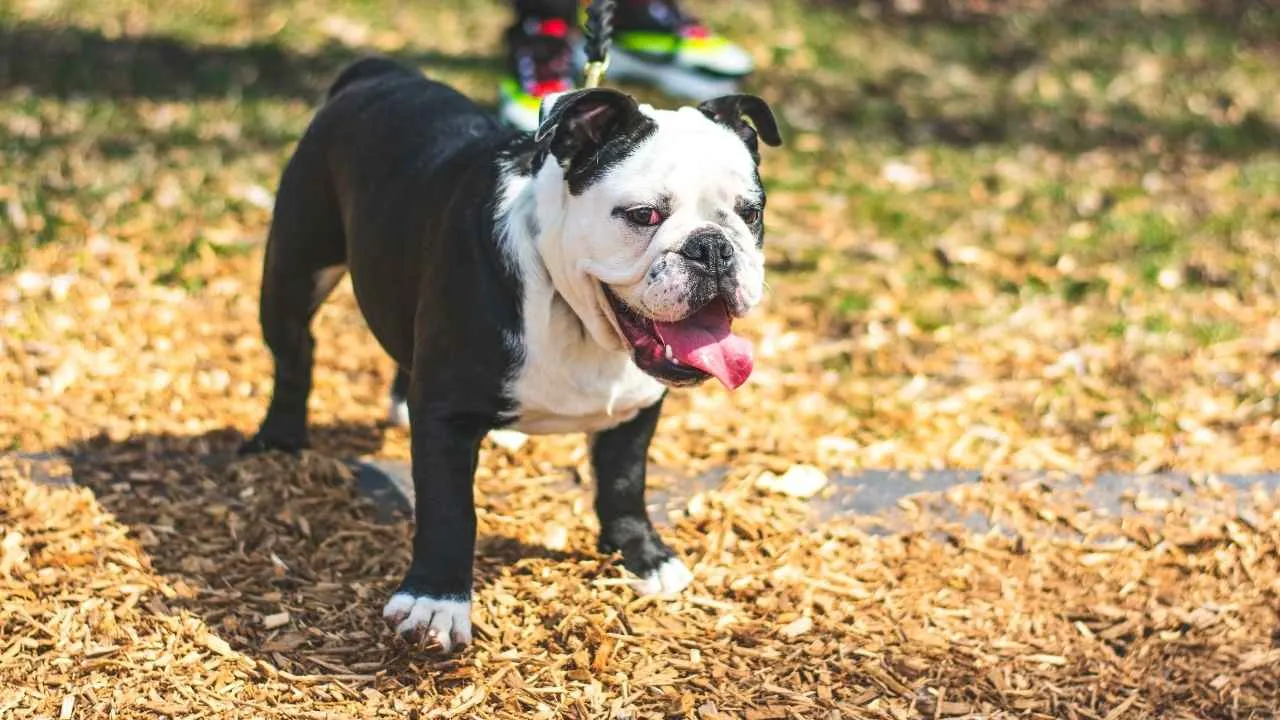
Bulldogs have perfected the art of calm existence. Whether English or French, this breed is defined by low energy, high affection, and an almost comical lack of interest in unnecessary activity. For cats, this makes Bulldogs exceptionally easy to live with.
One of the strongest advantages Bulldogs bring to a cat household is their extremely low prey drive. Unlike many breeds, Bulldogs were never developed for chasing or hunting. Bulldogs are the least reactive breeds when exposed to fast-moving animals, which means cats can move freely without triggering pursuit.
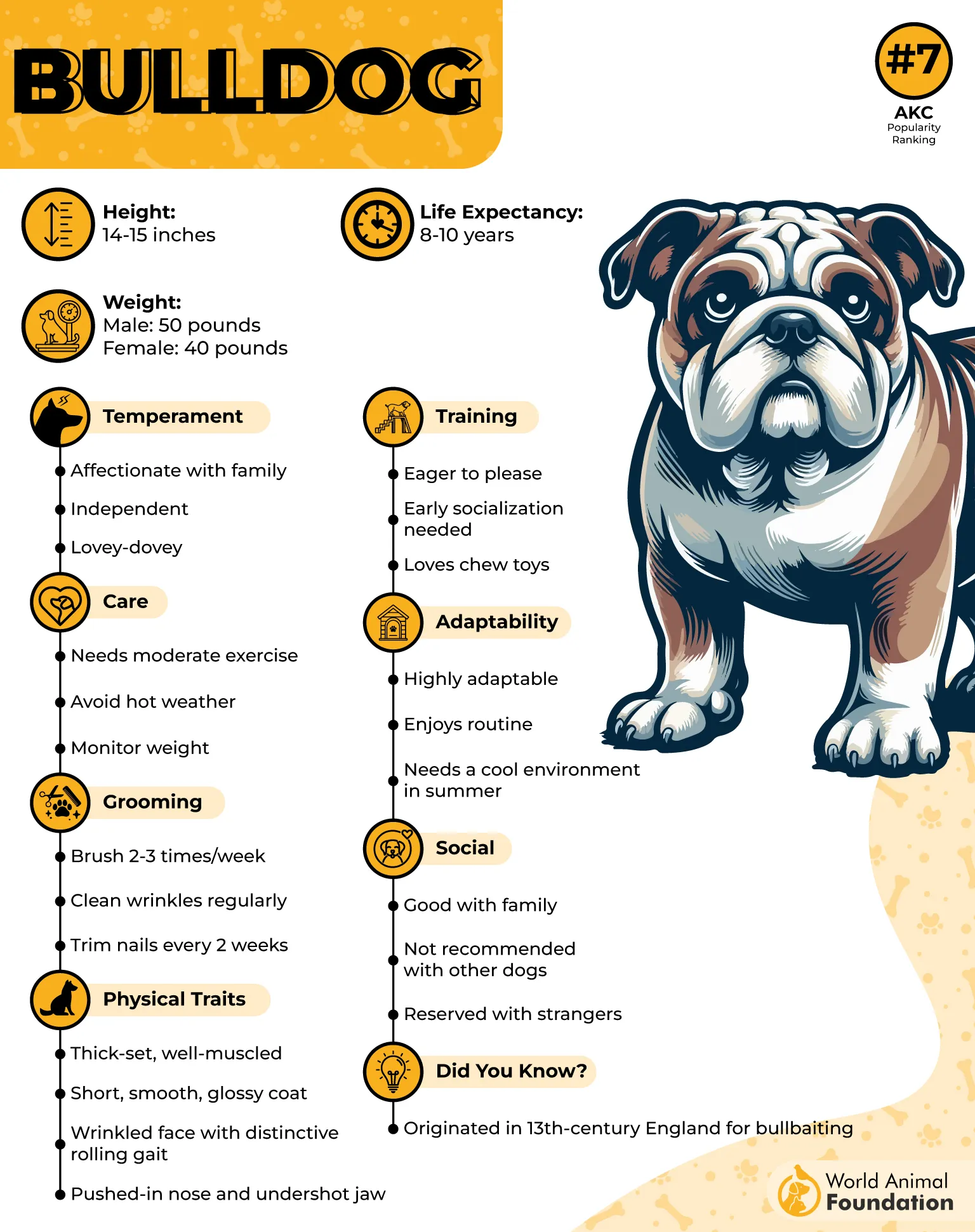
These family pets are also deeply affectionate and form strong bonds with other family pets. They seek closeness and physical comfort, often forming bonds that go beyond tolerance. It’s not uncommon to see Bulldogs sharing beds with cats, allowing themselves to be groomed, or simply leaning against their feline companions during naps.
Physically, Bulldogs aren’t built for speed or agility, which gives cats a subtle edge. This imbalance often allows cats to establish boundaries quickly and confidently, reducing long-term tension. Bulldogs tend to respect these boundaries without challenge.
4. Labrador Retriever

Labrador Retrievers have earned their reputation as one of the most emotionally intelligent dog breeds in the world over the decades.
Consistently ranked as the most popular dog breed in the United States, Labs are known for patience, adaptability, and an innate desire to belong. These qualities extend naturally to their relationships with cats.
Labs possess a relatively low prey drive compared to other sporting breeds, and their eagerness to please makes them highly responsive to feline signals. Research on canine social cognition shows that dogs can interpret body language and emotional signals from others, enabling them to adjust their behavior in social situations involving humans and other animals.

When introduced early, Labs often treat cats as siblings rather than separate species. Many develop protective instincts, positioning themselves near cats during unfamiliar situations or remaining close during rest periods. This guardianship behavior is widespread in Labs raised in multi-pet households.
For families who want a dog that embraces everyone equally, Labradors offer warmth, patience, and abundant emotional generosity.
5. Papillon
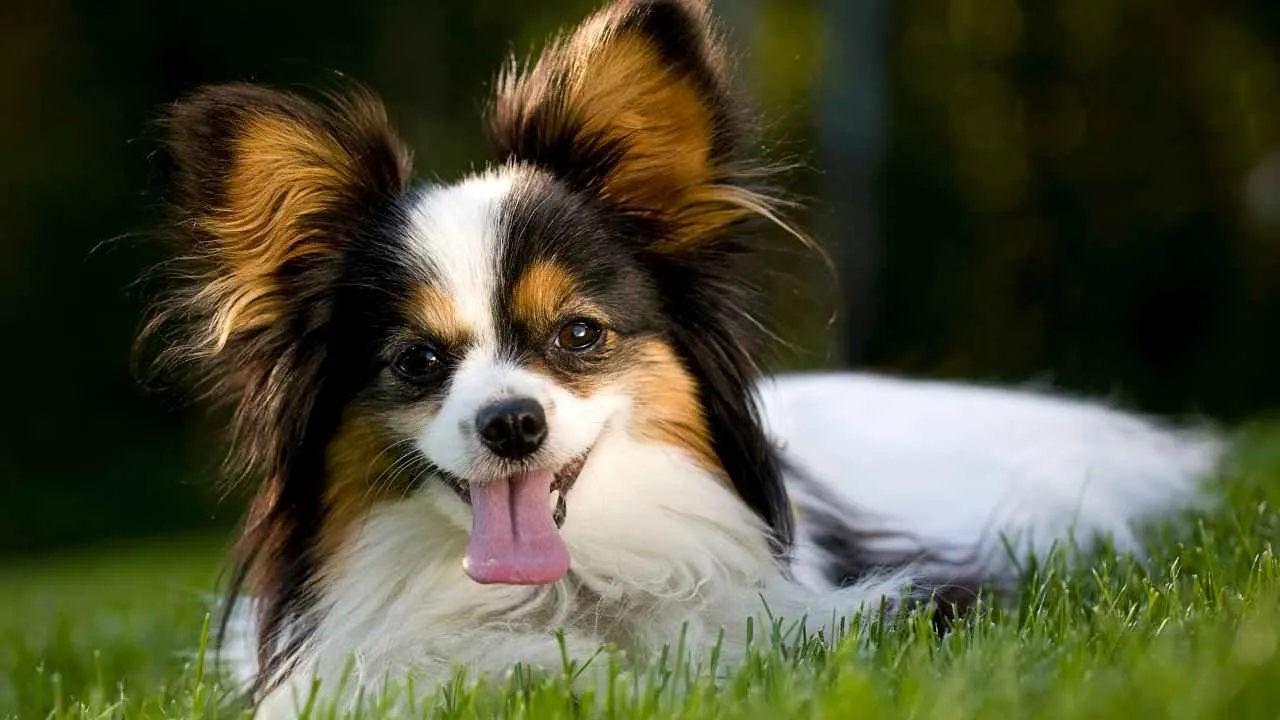
Papillons may be small, but their presence in a cat-friendly household is anything but insignificant. With their delicate butterfly-shaped ears and bright, intelligent eyes, Papillons often feel less like traditional dogs and more like honorary cats with better recall.
Their size alone plays a significant role in feline comfort, as cats tend to feel far less threatened by dogs who match their size rather than tower over them.
Temperamentally, Papillons are exceptionally social and emotionally perceptive. Ranked among the most intelligent toy breeds, they possess an impressive ability to read body language, including subtle feline signals.
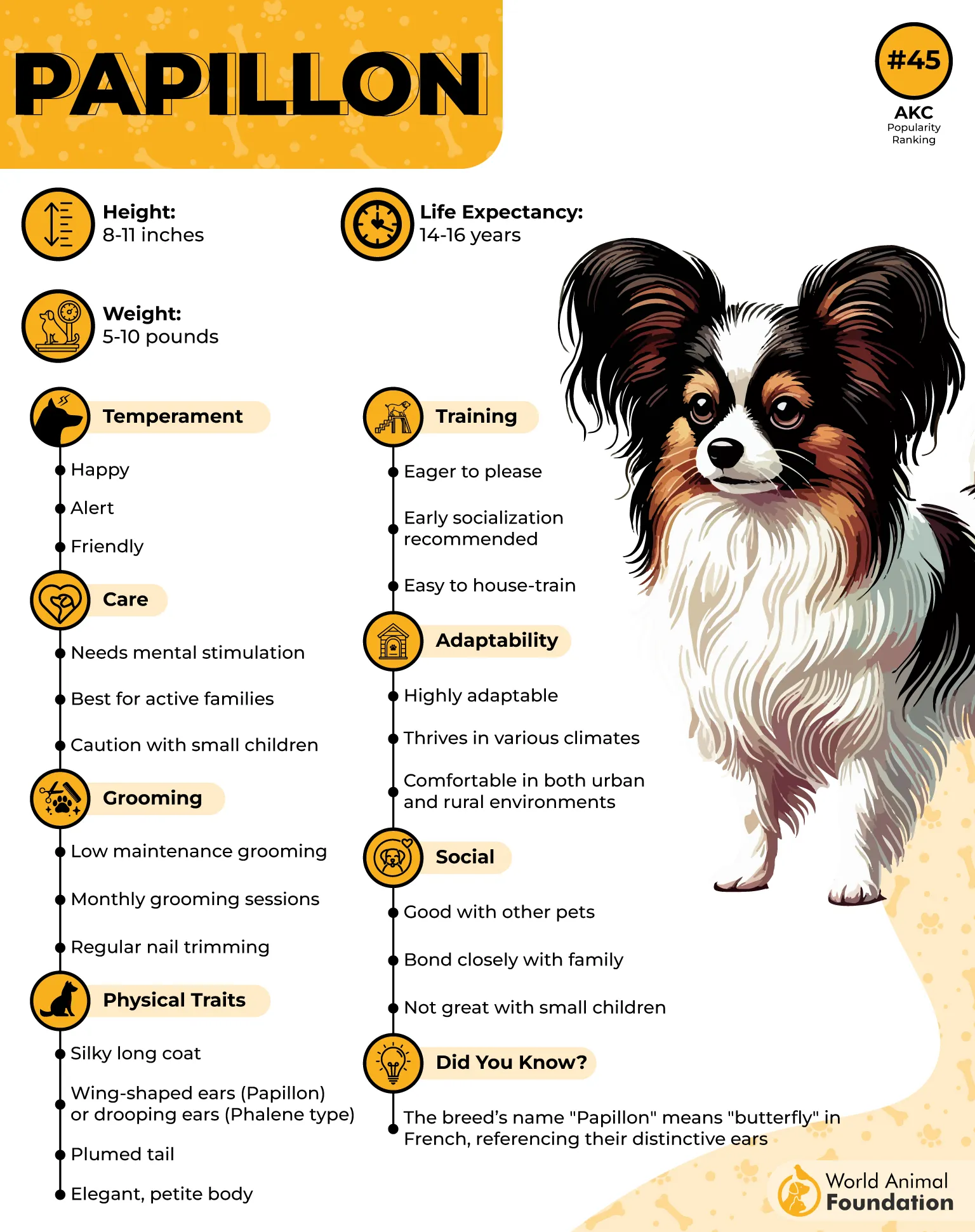
This cognitive sharpness allows them to adapt their behavior around cats, slowing their movements, softening their play, and respecting boundaries far more quickly than many larger breeds.
Papillons are also deeply relationship-oriented. They thrive on companionship and often struggle with separation anxiety if left alone too frequently. In homes where people are away during the day, a cat companion can serve as an emotional anchor, providing stability and a sense of routine.
Because they are energetic and curious, early introductions should be handled thoughtfully. Their enthusiasm can initially overwhelm a more reserved cat, but once the novelty fades, their energy levels often sync beautifully.
Interestingly, they tend to respect feline hierarchy. When a cat establishes dominance early on, Papillons usually accept it without challenge. This dynamic creates a surprisingly balanced relationship where neither animal feels the need to assert control aggressively.
6. English Foxhound
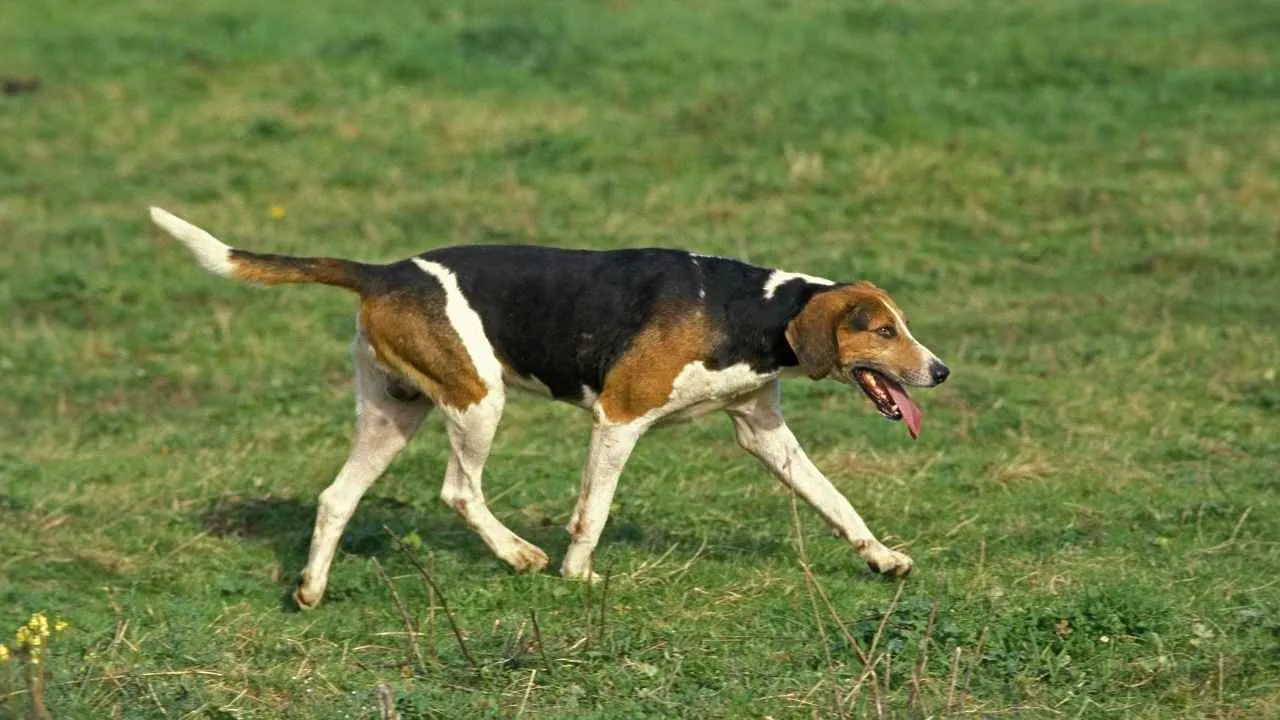
At first glance, the English Foxhound may seem like an unlikely candidate for cat companionship. Tall, athletic, and bred for endurance, this is a dog designed to move for miles. However, beneath that powerful physique lies a deeply social animal whose pack-oriented nature can translate into peaceful coexistence with cats when managed correctly.
According to the AKC, they were bred to live and work alongside other animals, including horses and fellow hounds. This upbringing fosters a tolerance for shared space that many breeds lack. When introduced to cats early, Foxhounds often accept them as part of the household structure rather than viewing them as targets.
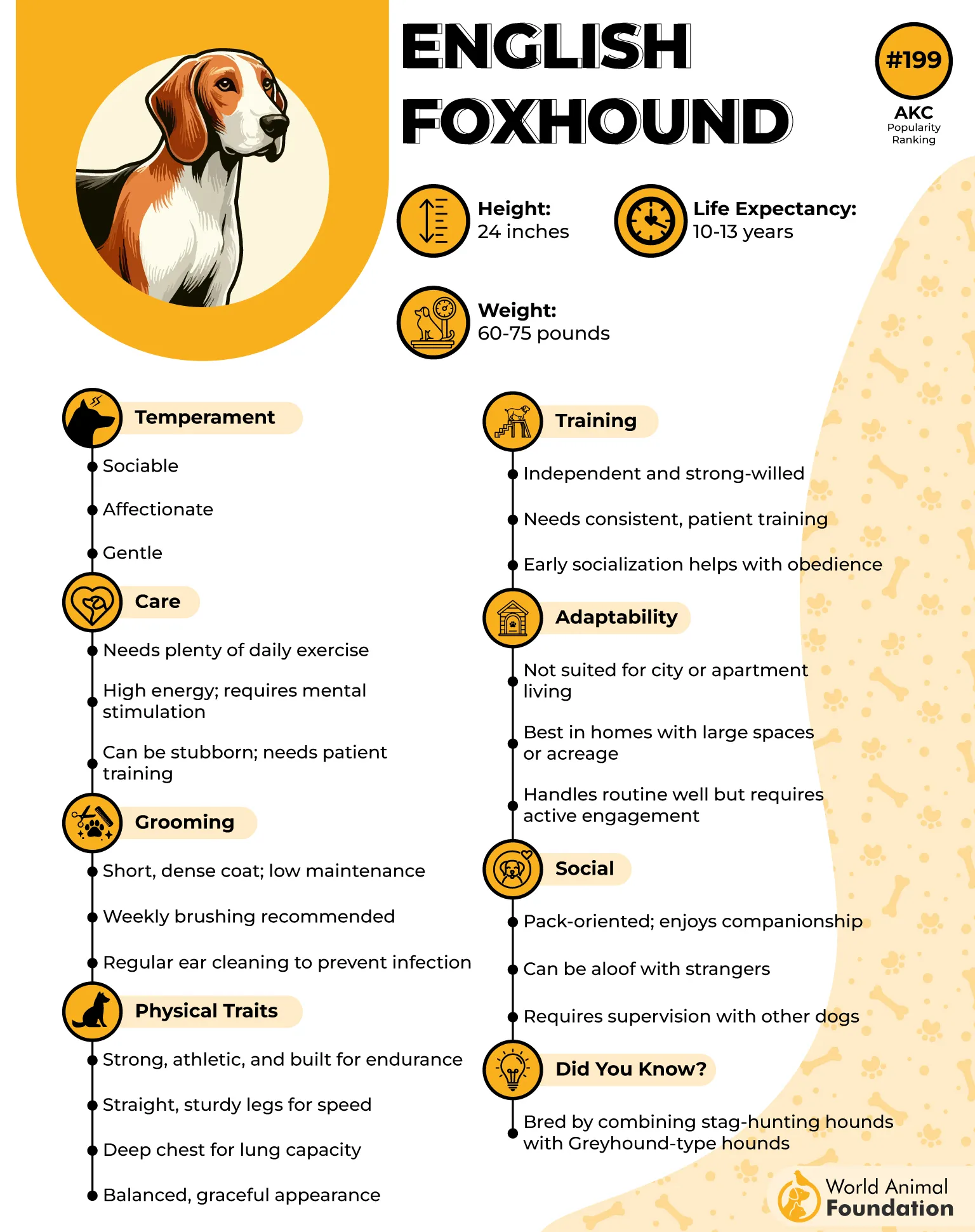
Unlike sighthounds, they rely primarily on scent rather than visual movement. This distinction matters. Sudden feline movements are less likely to trigger instinctive chase behavior, particularly when the cat is familiar. Behavioral studies show that scent hounds are generally less reactive to fast motion once an animal is categorized as “known.”
Exercise is the linchpin of success with this breed. A well-exercised Foxhound is calm, relaxed, and emotionally balanced indoors. Without adequate outlets, pent-up energy can increase impulsivity, which may stress a cat. Daily physical activity dramatically improves household harmony.
In the right environment, the English Foxhound demonstrates that energy and empathy are not mutually exclusive, offering loyalty, sociability, and surprising gentleness.
7. Pharaoh Hound

The Pharaoh Hound is a study in contrast. Graceful yet powerful, affectionate yet independent, this ancient breed brings a level of emotional depth that can either enhance or complicate life with a cat. Compatibility is possible, but it requires intention, patience, and a strong understanding of the breed’s instincts.
Bred to hunt small game, they possess a high prey drive that cannot be ignored. Fast-moving animals naturally activate their instincts, which makes careful early socialization essential. Cats introduced during puppyhood are far more likely to be categorized as family rather than prey.

Despite their hunting background, Pharaoh Hounds are deeply affectionate with their people and form strong emotional bonds. This attachment often extends to other household animals once trust is established. Many Pharaoh Hounds raised with cats develop a calm, respectful relationship built on familiarity rather than dominance.
Supervision remains essential, especially in high-arousal situations. Even well-socialized individuals may chase unfamiliar cats outdoors or react to sudden movements during play. Managing the environment is key to long-term success.
For experienced owners willing to invest time in early training and structured management, the Pharaoh Hound can become a loyal, gentle companion capable of respecting feline boundaries.
8. Pug
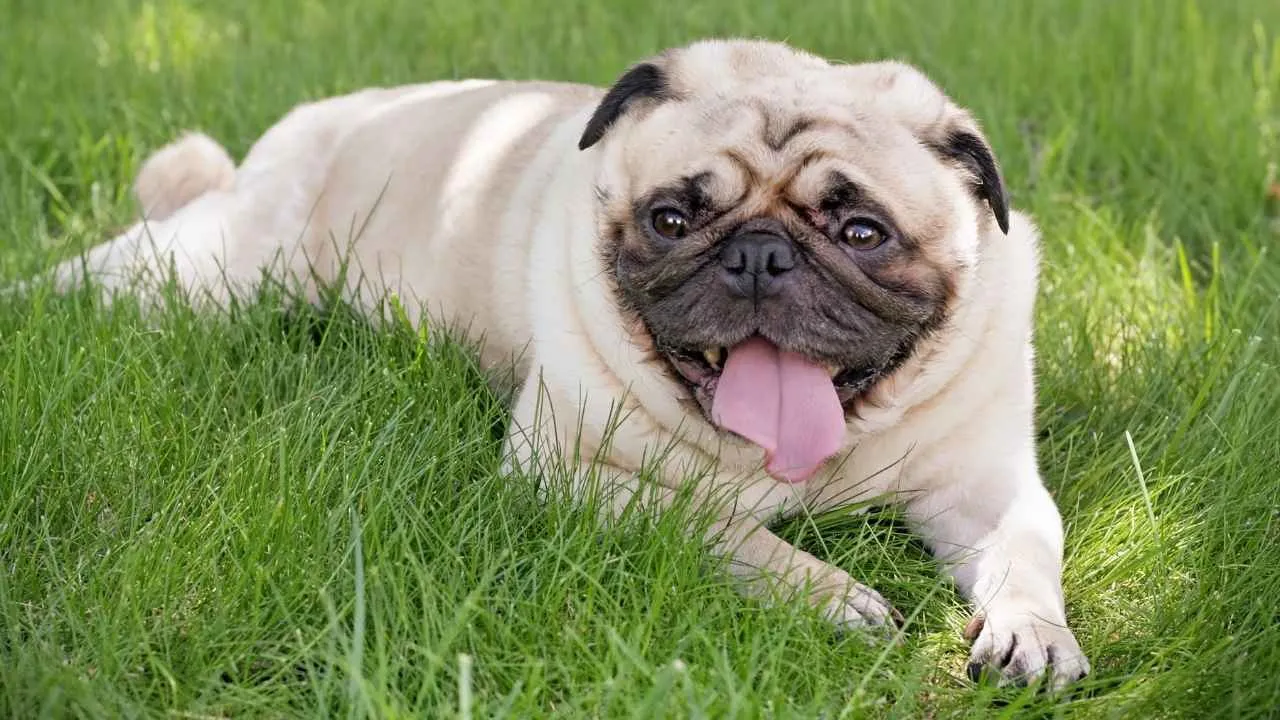
Pugs were never bred to chase, hunt, or guard. Their sole purpose has always been companionship, which makes them uniquely suited to cat-friendly homes. With their expressive faces and affectionate personalities, Pugs tend to approach cats with curiosity rather than intensity.
One of the Pug’s greatest strengths is its low prey drive. Unlike many breeds, Pugs show little interest in fast-moving animals, which allows cats to move freely without fear of pursuit. This neutrality often makes cats more confident around them from the very beginning.
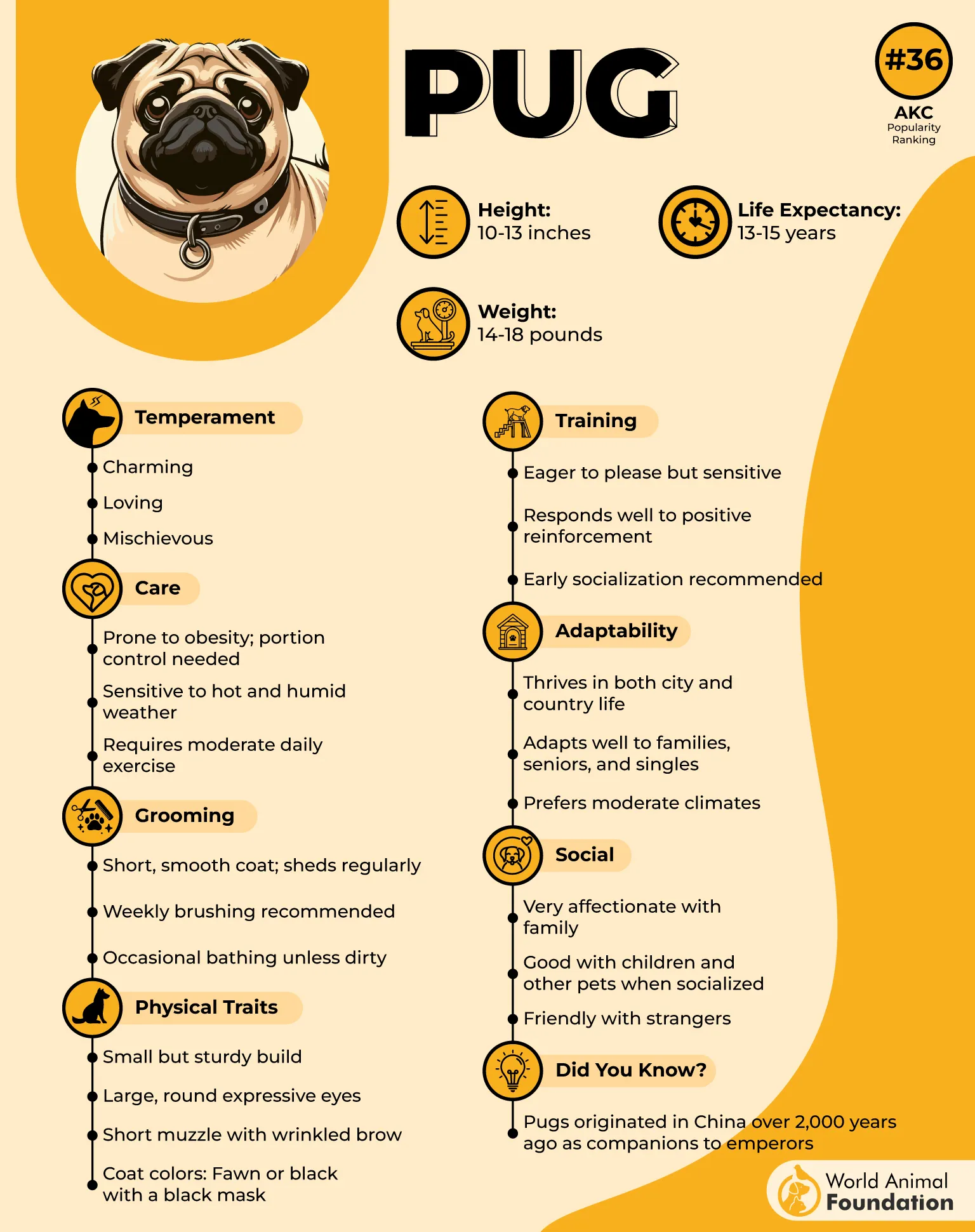
They are emotionally rich dogs who crave connection. They thrive in households where they can be close to others, whether human or feline. Many Pugs develop quiet friendships with cats, sharing sleeping spaces and simply enjoying each other’s presence without demanding interaction.
Socialization still plays a role. A Pug introduced to cats early is more likely to see them as regular household fixtures rather than unfamiliar creatures. That said, even adult Pugs often adapt well due to their easygoing nature.
Physically, they are sturdy enough to tolerate gentle feline play without becoming defensive, yet not imposing enough to intimidate other cats. This balance allows cats to engage on their own terms.
For households seeking a dog that complements a calm, affectionate environment, the Pug offers warmth, humor, and minimal disruption.
9. Plott Hound
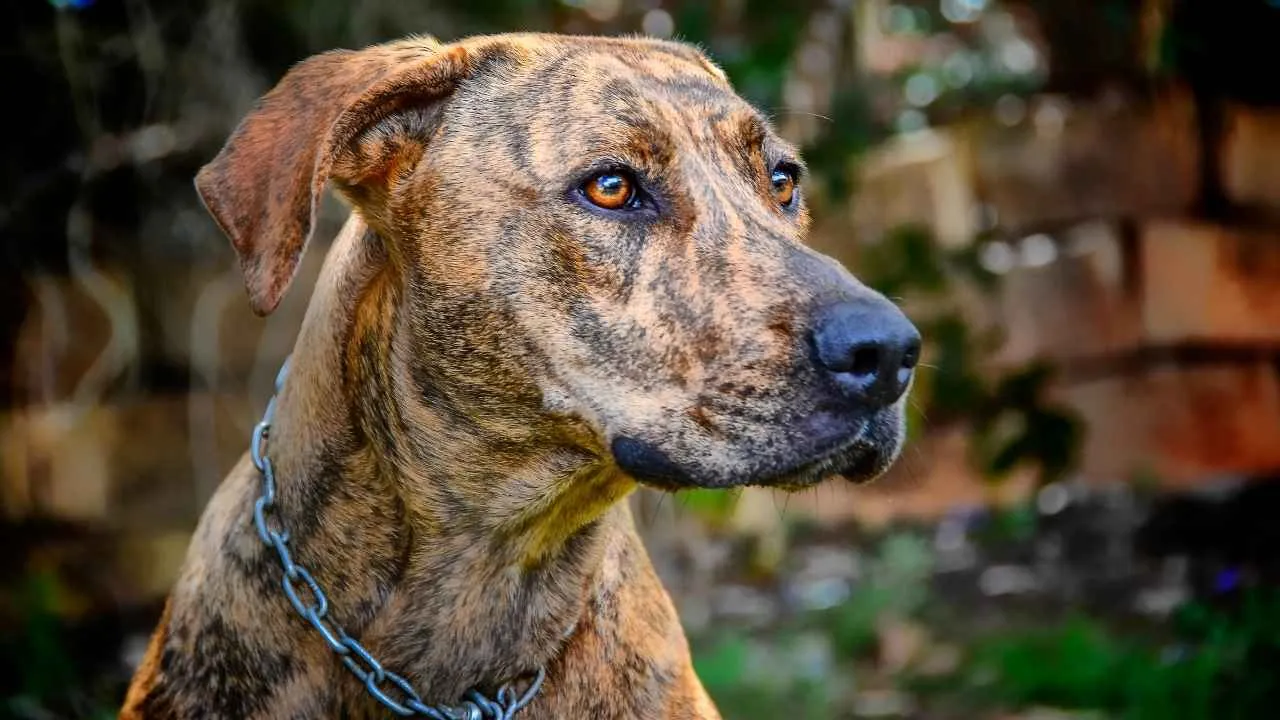
The Plott Hound is a powerful, determined breed developed for hunting large game. This background brings strength, intelligence, and intensity, which can complicate life with cats. However, compatibility is not impossible—it simply requires commitment.
Early socialization is the defining factor. Plott Hounds introduced to cats during puppyhood are significantly more likely to coexist peacefully. Without early exposure, their strong prey drive can become challenging to manage.

Training is essential for success. They are intelligent and responsive, but they require consistent reinforcement to understand boundaries. Commands that interrupt focus, such as recall and impulse control, are fundamental for cats.
Individual temperament varies widely within the breed. Some Plotts exhibit lower prey drive and adapt easily, while others remain too intense for safe unsupervised interaction. Understanding your specific dog is crucial.
Supervision is recommended even in successful pairings. Managing space, providing escape routes for cats, and maintaining structure ensure safety and reduce stress.
For experienced owners who value structure and are willing to invest in training, the Plott Hound can coexist respectfully with feline companions.
10. Cavalier King Charles Spaniel
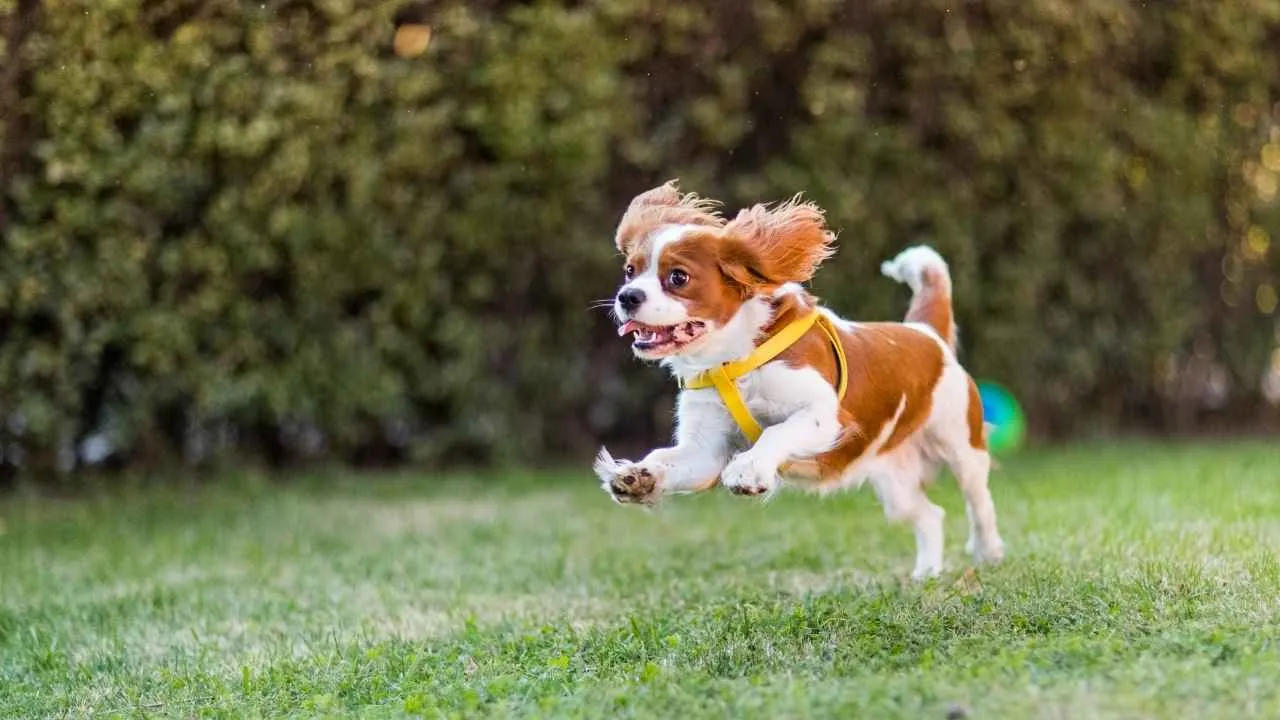
Few breeds are as naturally suited to cat companionship as the Cavalier King Charles Spaniel. Bred exclusively for affection and friendship, Cavaliers approach life with gentleness, emotional openness, and a remarkable lack of aggression.
Britannica says Cavaliers tend to adapt their behavior intuitively. They respond to feline cues, slow their movements, and respect boundaries without needing excessive training. This emotional intelligence makes them especially appealing in multi-pet homes.
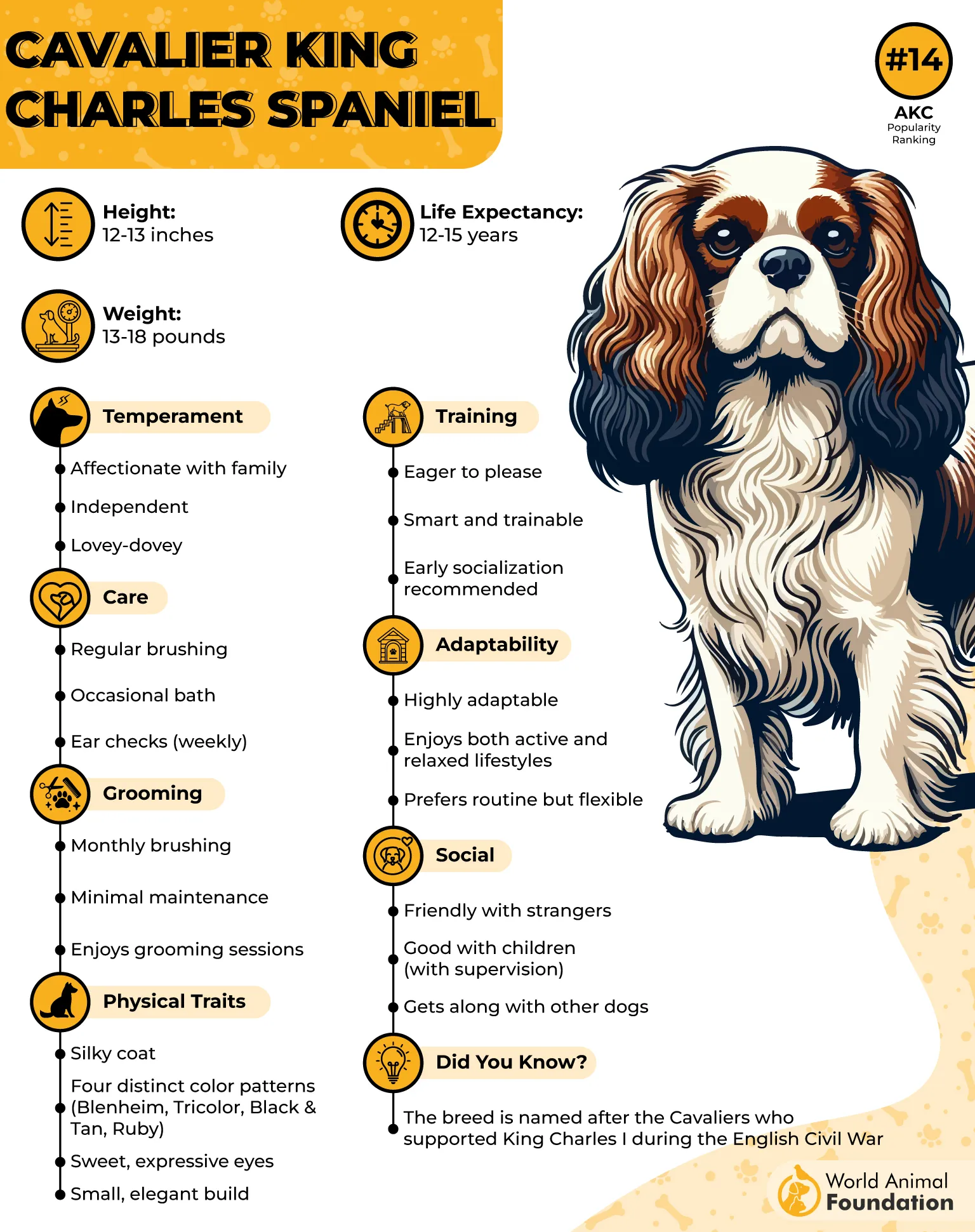
Their low prey drive and soft demeanor allow cats to feel secure quickly. They rarely chase and instead focus on staying close, often choosing to nap beside cats or follow them quietly through the house.
Early introductions enhance bonding, but even adult dogs often integrate smoothly. Their adaptability allows them to fit into established routines without disruption. For cat lovers seeking a dog that feels more like an extension of the household’s calm energy, the Cavalier is one of the safest and most rewarding choices.
Conclusion
Dogs and cats don’t have to tolerate each other—they can thrive together. When temperament, training, and environment align, interspecies relationships become deeply rewarding, emotionally rich, and genuinely heartwarming. These breeds show us that the old rivalry was never a rule, just a misunderstanding.
Golden Retrievers, Pit Bulls, Shih Tzus, Border Collies, Toy Poodles, and Shetland Sheepdogs are also some of the dog breeds that get along with most cats. Modern pet lovers are rewriting the narrative every day, one shared nap, gentle nose bump, and sunlit window perch at a time
