





The family expected a noisy first meeting when they brought their new dog home. Their cat watched carefully from the top of the stairs while everyone waited to see what would happen next.
Instead of charging across the room or barking with excitement, the dog paused, looked around, and quietly settled on the floor. The cat slowly came closer, curiosity replacing caution with every step. Nothing remarkable happened that day, and that was exactly what made the moment special.
Over the following weeks, they learned to share rooms, nap in the same sunny spots, and go about their routines without conflict. That experience reminded everyone that successful introductions often begin with choosing the right companion in the first place.
In this article, you’ll discover dog breeds that naturally fit into homes with cats and the qualities that help both pets build trust, comfort, and lasting harmony together.
Key Takeaways
Every cat has its own personality, and finding a dog that respects those quiet boundaries can make life much easier from day one.
Labrador Retrievers and Golden Retrievers are known for their easygoing nature, while Cavalier King Charles Spaniels often settle into shared spaces without creating unnecessary tension.
Even scent-driven breeds like the Beagle and laid-back companions like the Basset Hound have qualities that can help build trust when introductions happen the right way.
Keep reading because the breed that seems least likely to share its home with a cat might end up being the biggest surprise on this list.
Dog Breeds That Pair Perfectly With Cats for Harmony
1. Labrador Retriever

The Labrador Retriever’s early history is closely tied to fishermen, where confidence in the water became an important part of everyday life, as stated by Omlet. That early role still explains why this breed eagerly joins swimming trips, lakeside outings, and other outdoor activities with its family.
Easy Housemate
This popular dog usually accepts other household pets with an easygoing attitude, which helps create a calmer introduction when a cat is already part of the home. Careful supervision during those first meetings still gives both animals time to adjust at a comfortable pace.
Worth knowing details of the breed include:
Investigate the world with their soft mouth
Early training and supervision are required for unwanted behavior
Sporting breed classification

Always Looking for Action
Labrador Retriever keeps its enthusiasm well beyond puppyhood and enjoys spending time playing, exploring, or joining family activities throughout the day. About an hour of daily exercise helps channel that energy into positive routines while keeping this active breed engaged.
2. Golden Retriever

The Golden Retriever originated in Scotland during the mid-19th century, when Lord Tweedmouth wanted a dog that could retrieve game through dense undergrowth without damaging it. That gentle mouth and natural enthusiasm for retrieving continue to define the breed’s favorite activity today.
Easy Housemates
They approach other household animals with a calm, social attitude, making introductions with feline companions much smoother in many homes. Their affectionate personality and willingness to interact peacefully often help create a relaxed environment for both companions.
The following details show how versatile this breed is:
Frequently works as a guide dog
Assists search and rescue teams
Used for explosive detection work

Always Ready to Join In
Golden Retrievers enjoy having a purpose, whether that means retrieving toys, swimming, joining agility courses, or taking part in field trials and Flyball, as Britannica claims.
That eagerness to participate also makes training sessions enjoyable because the breed naturally responds well to guidance and teamwork.
3. Cavalier King Charles Spaniel

The Cavalier King Charles Spaniel shared countless chilly carriage rides and quiet moments inside drafty castles, where staying close to people was an everyday part of life. That early purpose still explains why this breed naturally enjoys being close to the people around it.
Easy Company
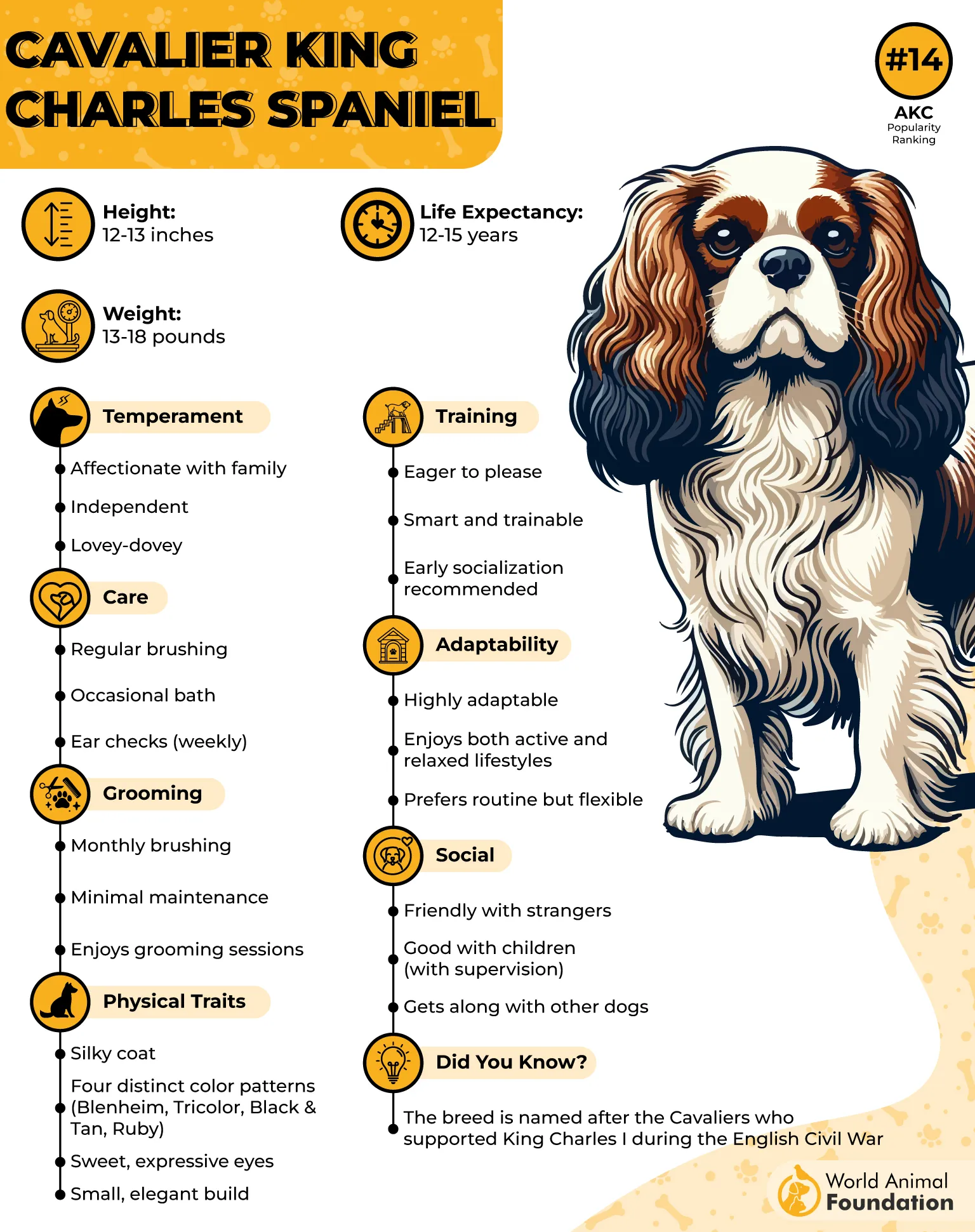
Calm manners and a patient personality help Cavaliers share a home peacefully with cats, children, and other dogs, as written by PetMD. That relaxed attitude often makes introductions smoother when every pet is given enough time to adjust to one another.
Another side of this breed is just as worth knowing:
Ranked 14th in AKC popularity
Descends from the sporting group
Best suited to fenced outdoor areas
Happy With Simple Routines
The Cavalier King Charles Spaniel enjoys a balanced lifestyle that combines quiet time indoors with moderate daily activity. Two walks lasting about 20 to 30 minutes each, along with playtime, usually provide enough variety to keep this breed content throughout the day.
4. Basset Hound

The Basset Hound comes from France and descends from the now-extinct St. Hubert Hound, a breed recognized for exceptional scenting ability. Its low frame, loose skin, long ears, and drooping face create a look that is difficult to mistake for any other dog.
More Than a Familiar Face
Centuries after its hunting days, this hunting dog spends much of its time enjoying a quieter routine around the home. Daily walks still matter, though, because limited activity can contribute to unwanted weight gain.
Some fascinating details complete the picture:
Deep baying voice instead of a typical bark
Extraordinary sense of smell
Often discovers dropped food before anyone else

Company Matters
The Basset Hound enjoys sharing its day with people or another pet, and long hours alone may lead to frustration expressed through vocalizing. Early introductions also help this easygoing breed settle comfortably around children and other household animals.
5. Beagle

Beagles became closely associated with hare hunting in England as far back as the 14th century, although the dogs from that period looked quite different. By the late 1800s, the familiar Beagle seen today had become the accepted breed type with an exceptional scenting ability.
A Life Around People
This loving companion enjoys company and feels most comfortable with either another dog, a feline friend, or regular human interaction throughout the day. Long periods without companionship can lead to boredom, which may turn into unwanted behavior around the home.
Here’s another reason to admire it:
Originally hunted foxes, hares, and rabbits
Distinctive baying follows an exciting scent
Also selected for research laboratory work because of its calm nature

Always Following a Trail
A Beagle can lock onto an interesting scent and continue tracking it for an impressive distance without losing interest. Secure spaces and a reliable leash become especially important because an exciting trail can quickly become this breed’s only focus outdoors.
6. Bichon Frise

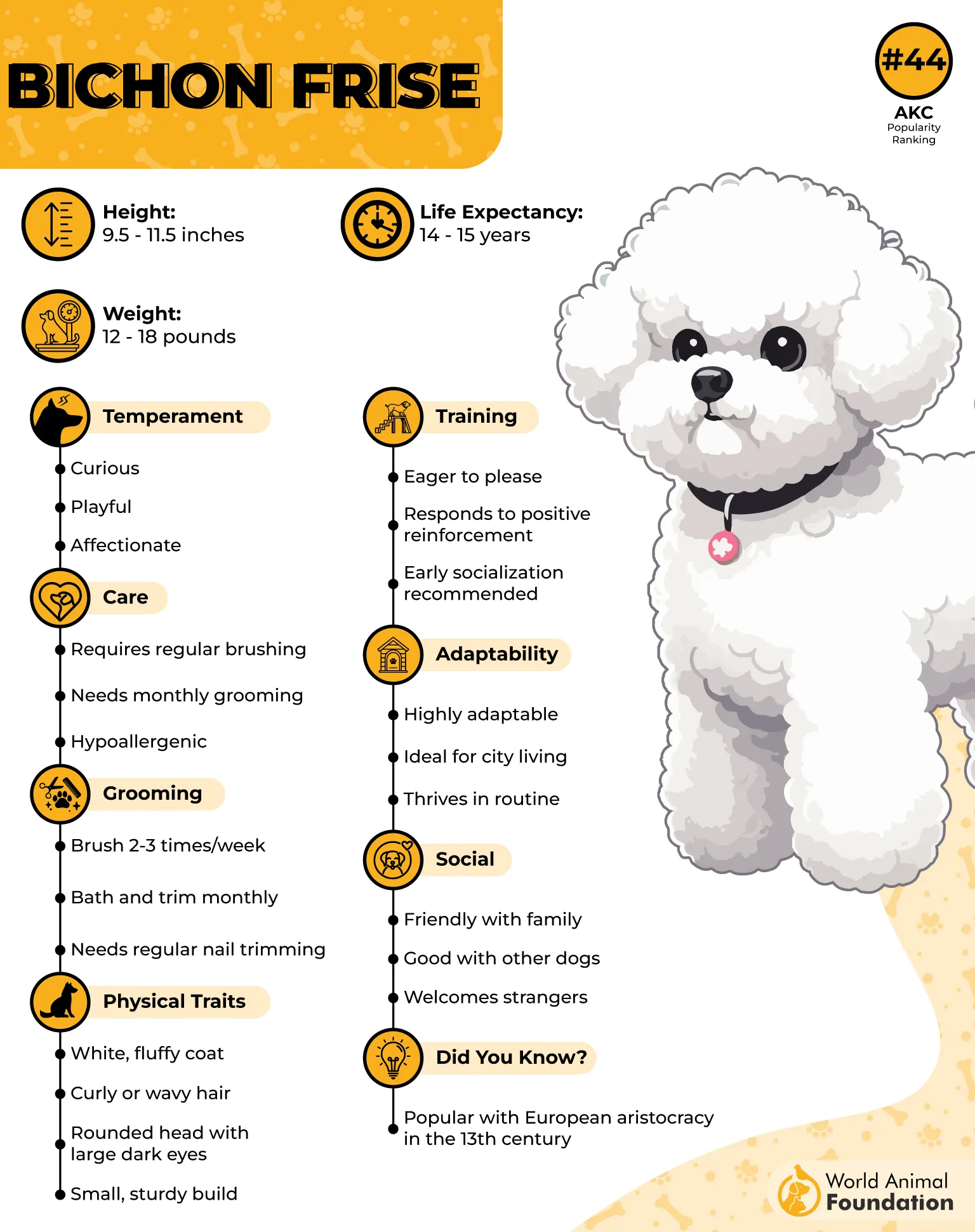
The Bichon Frise fills a home with playful energy and enjoys being part of whatever is happening around the family. This curious little dog loves meeting new people, picking up new games, and turning ordinary moments into something more entertaining.
Fits Into Daily Life
Its compact size makes this breed a practical choice for apartments as well as larger homes, especially for first-time dog owners. A willingness to learn and an adaptable personality help it settle into different routines without much difficulty.
There’s more to discover about this little breed:
Part of the Non-Sporting Group
Learns tricks quickly
Responds well to reward-based training
Friendly From the Start
Early training and proper socialization help this little breed feel comfortable around visitors, other pets, and unfamiliar surroundings.
This sociable breed can get along well with cats and coexist peacefully when introductions happen properly, while interactive toys also help prevent boredom that may lead to barking or chewing.
7. Collie
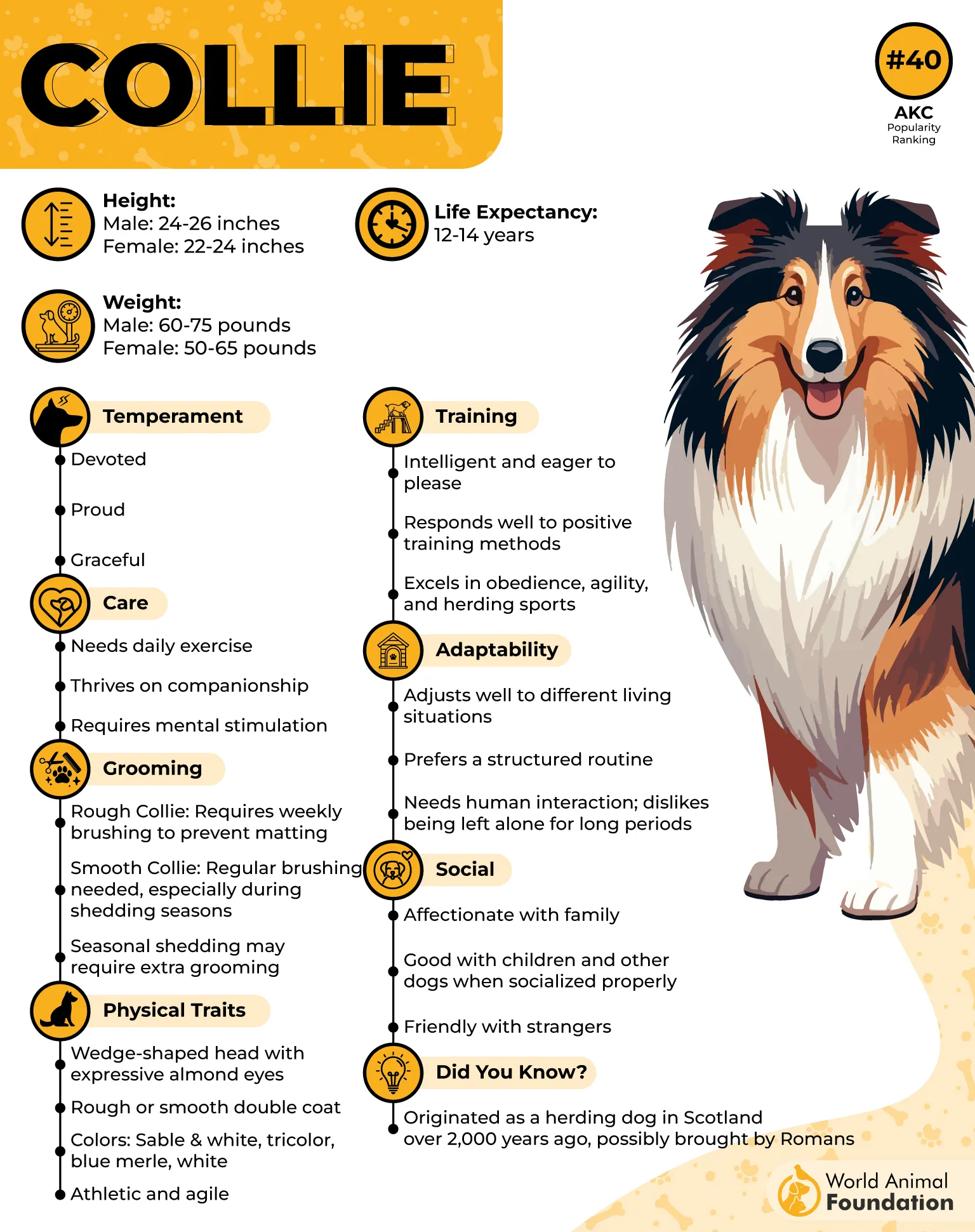
Collies gained widespread attention after Queen Victoria admired the breed during the 1860s, although their earlier role centered on herding livestock across Scotland and England.
That dependable working nature later reached an even wider audience through Lassie Come-Home, helping Collies become one of today’s well-recognized family pets.
Quick to Learn
The Collie responds eagerly to training and enjoys activities that challenge both its mind and body. Obedience, agility, herding work, and therapy visits all suit this intelligent breed exceptionally well.
A few interesting facts add another layer:
Ranked among the AKC’s top 50 breeds
Need at least an hour of outdoor activity
Without an activity, they can become vocal
Active Outside, Calm Indoors
The Collie brings plenty of enthusiasm to outdoor adventures, then happily trades that energy for quiet family time once the day winds down. Its gentle temperament also helps it interact well with children, other animals, and even a house cat when introductions are handled properly.
Conclusion
Building harmony between dogs and cats rarely depends on chance alone. It grows through thoughtful choices, patient introductions, and a companion whose temperament naturally supports peaceful living. While every pet has its own personality, selecting one that adjusts well to shared spaces often makes the transition much smoother.
Consistent routines, positive experiences, and respectful supervision help trust develop day by day without rushing the process. Before long, both companions begin sharing the same home with growing confidence and comfort. Those quiet everyday moments often become the greatest reminder that the right match can create lasting balance for the entire household.
