




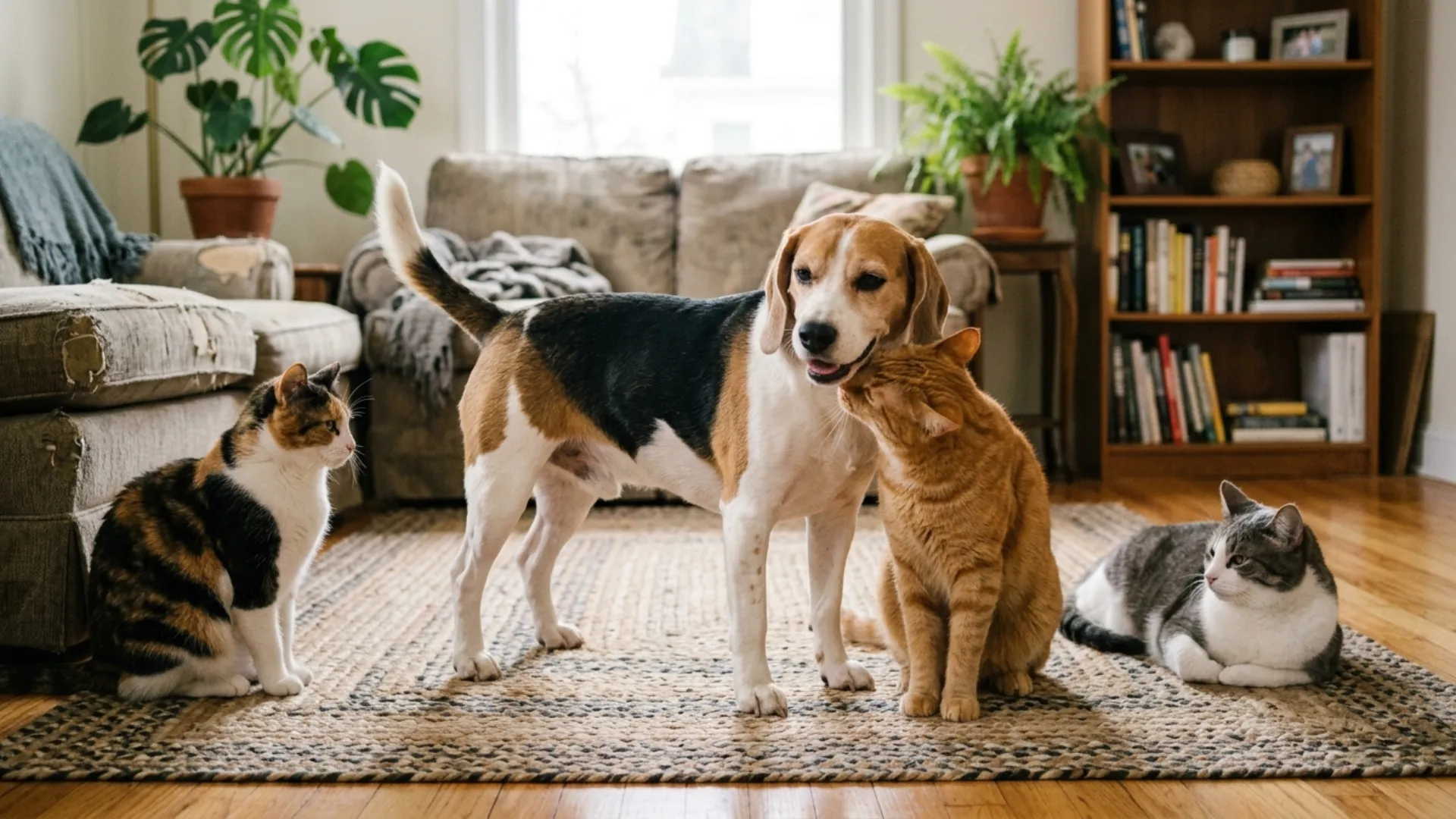
What if the biggest rivalry in your household isn’t actually between your dog and cat?
For decades, conventional wisdom has told us one thing: dogs chase cats, cats resent dogs, and that is the end of the story. However, modern pet owners are discovering a heartwarming truth. Some dog breeds do not just tolerate felines—they genuinely adore them.
Certain canines possess a gentle, calm, and adaptable nature that allows them to happily share the couch, a sunny spot by the window, and occasionally even a food bowl. They can coexist beautifully without turning your living room into a battleground. On the flip side, choosing the wrong breed can lead to complete chaos.
This compatibility factor is the critical detail that many prospective pet owners overlook. Selecting the right dog breed means trading a stressful, noisy household for peaceful naps and playful interspecies friendships.
So, which canines are most likely to become your cat’s unexpected best friend? Let’s dive into the top 10 dog breeds that get along with cats perfectly.
Top Dog Breeds That Get Along with Felines
1. Cavalier King Charles Spaniel
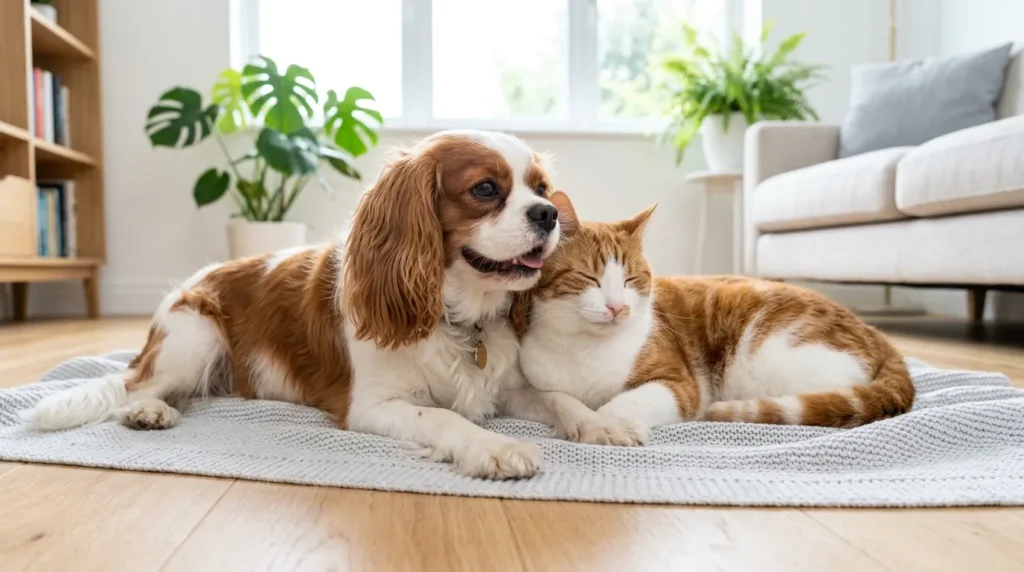
The Cavalier King Charles Spaniel looks like the kind of dog that would rather make friends with your cat than argue over territory.
And honestly… that’s usually exactly what happens.
Cavalier King Charles Spaniels are affectionate and adaptable, often forming strong bonds with cats and enjoying companionship and playtime together.
Instead of charging through the house or pestering a cat nonstop, Cavaliers often settle quietly beside them, making shared living spaces feel peaceful instead of stressful.
Picture a lazy afternoon on the couch.
Your cat is napping near the window… and the Cavalier curls up nearby without creating chaos. That soft, patient nature is one reason many multi-pet households find this breed surprisingly easy to manage.
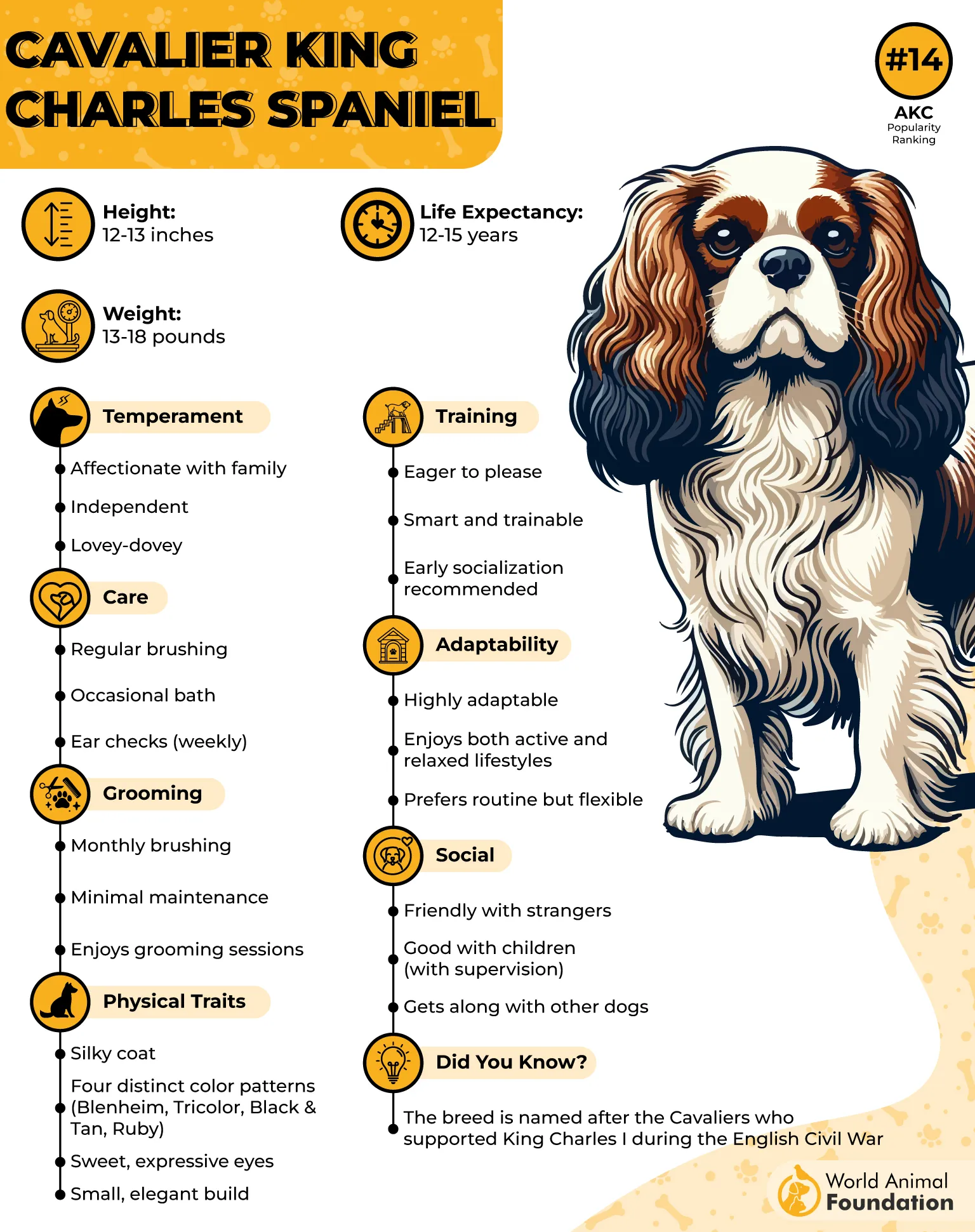
Originally bred to accompany British royalty, Cavaliers were designed for companionship, not conflict.
They love staying close to their people and usually prefer cuddles and attention over rough behavior. Even their exercise needs stay fairly moderate, which helps keep the home environment calmer for more sensitive cats.
Their long, silky ears, expressive, round eyes, and naturally warm temperament give them a comforting presence that often helps felines relax around them much faster than expected.
🎧 Dogcast
Episode 37 — Why Dogs Stay Close without Touching
If you don’t hear sound, tap the button above to enable audio.
2. Beagle
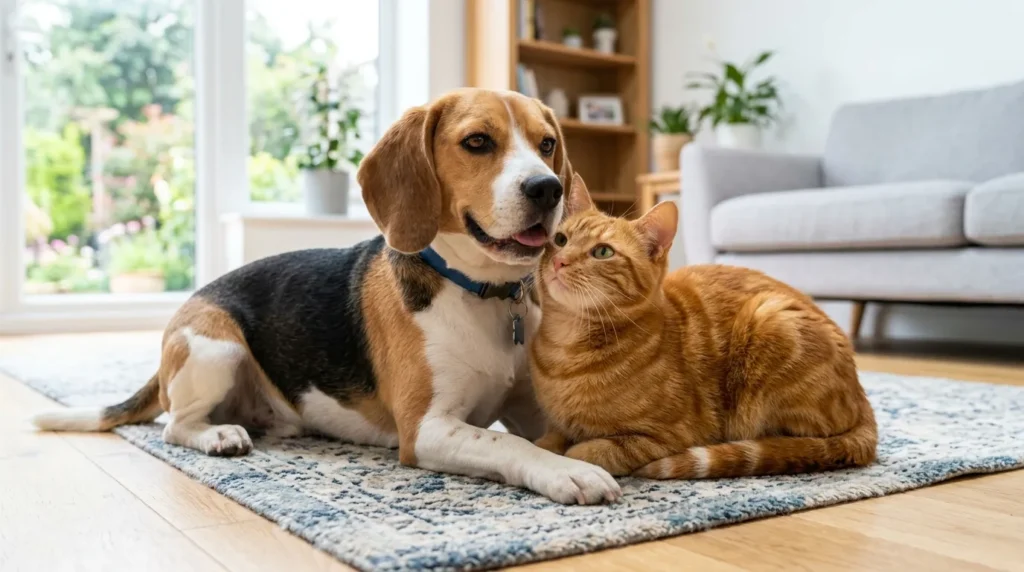
The Beagle may look innocent with those floppy ears and big pleading eyes… but this little scent hound can turn your backyard into a full detective mission within seconds.
Still, when it comes to living with cats, Beagles often do surprisingly well.
Why?
Because they were bred to work in packs. That social mindset often makes Beagles good with cats when introduced properly. Being around other animals feels natural to them, which can make sharing a home with a confident cat much smoother than many people expect.
In many households, a Beagle will happily trail behind a cat from room to room, curious but rarely confrontational, as stated by WebMD.

Picture the scene.
Your cat jumps onto the sofa… and the Beagle follows, tail wagging, hoping to join the group instead of starting trouble. That social personality is one of the breed’s biggest strengths in multi-pet homes.

Of course, there’s a catch.
That powerful nose can completely distract them. A Beagle catching an interesting scent during a walk may suddenly ignore everything else around it. Their famous baying howl is hard to mistake, too loud, dramatic, and impossible to ignore when they get excited.
With proper introductions and daily activity, though, many Beagles become playful companions for feline housemates.
3. Shih Tzu
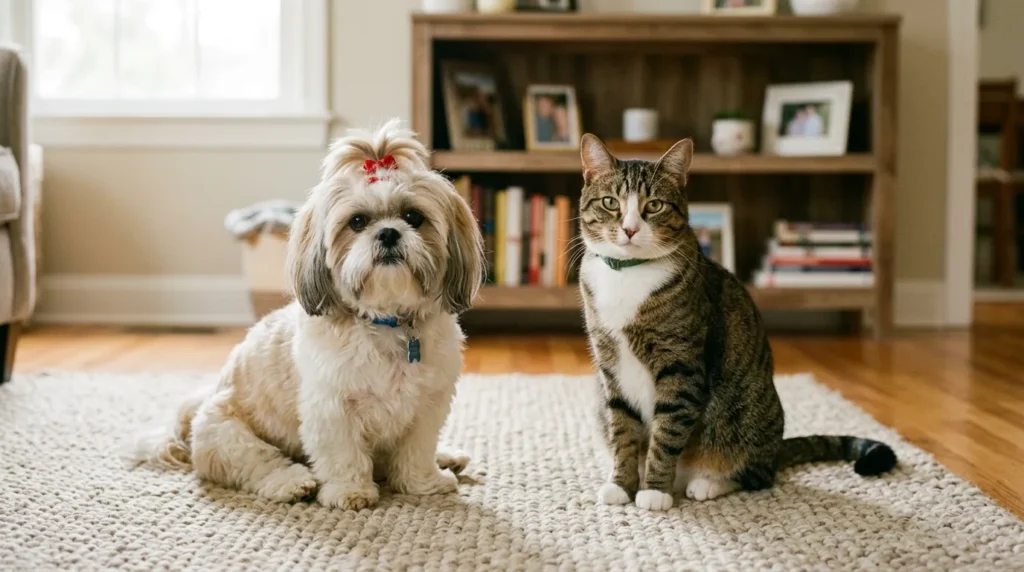
The Shih Tzu may look like a tiny royal dog that belongs on a velvet pillow… but behind that flowing coat is a surprisingly social little companion that often gets along beautifully with cats.
Seriously.
Many Shih Tzus seem far more interested in making friends than picking fights. Their calm, people-focused personality usually helps them adjust well in homes where a cat already rules the furniture.
Instead of constantly chasing or intimidating felines, they often prefer following their humans around the house or relaxing beside whoever happens to be nearby — including the cat.

Visualize this for a moment.
Your cat is perched on the arm of the couch… and the Shih Tzu trots over, circles twice, and settles down nearby like it has been part of the group forever.
That easygoing nature comes from centuries of life as a companion dog in Chinese royal courts, where these small dogs were bred mainly to provide company indoors rather than hunt or guard.
Their warm, affectionate nature makes shared living spaces feel calmer and less tense for many cats.
One thing owners quickly notice is their charming underbite and chrysanthemum-shaped face, where the facial hair grows outward in every direction, giving them an unmistakably expressive look.
4. Pug
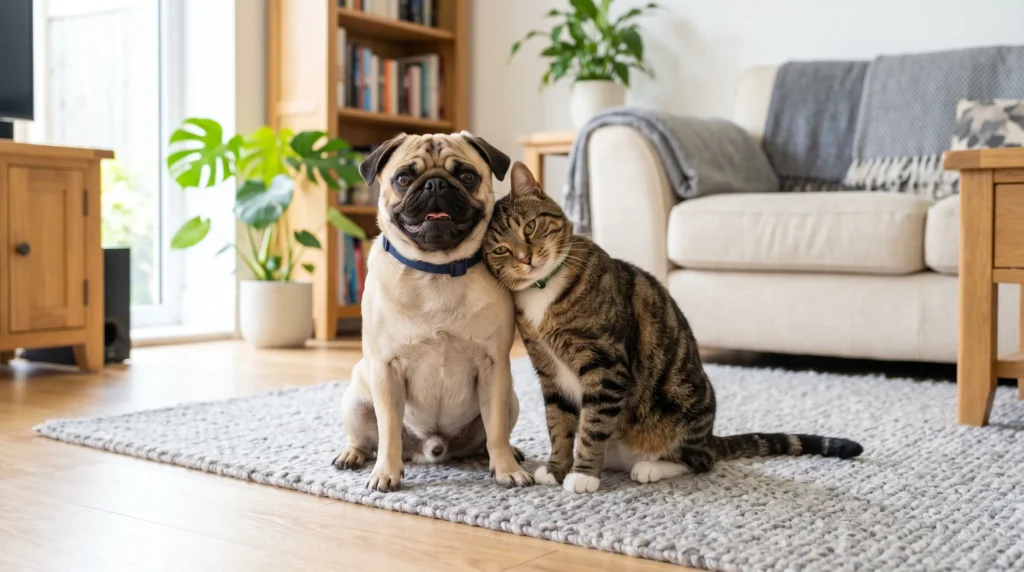
The Pug may snore like a tiny motorcycle and follow your cat around with endless curiosity… but underneath all that goofy charm is one of the most loving companion dogs you can bring into a multi-pet home.
Pugs are known for their calm disposition and social nature, making them likely to coexist peacefully with cats rather than engage in rough play.
These small breeds usually crave friendship more than dominance. That matters a lot when a cat is already claiming the sofa, the windowsill, and basically the entire house as personal property.
Instead of trying to challenge a feline, most Pugs simply want to be included in whatever is happening nearby.
Picture a quiet evening at home.
Your cat is stretched across the rug… and the Pug waddles over, drops beside it, and falls asleep five minutes later while making those famous snorting sounds owners know so well.
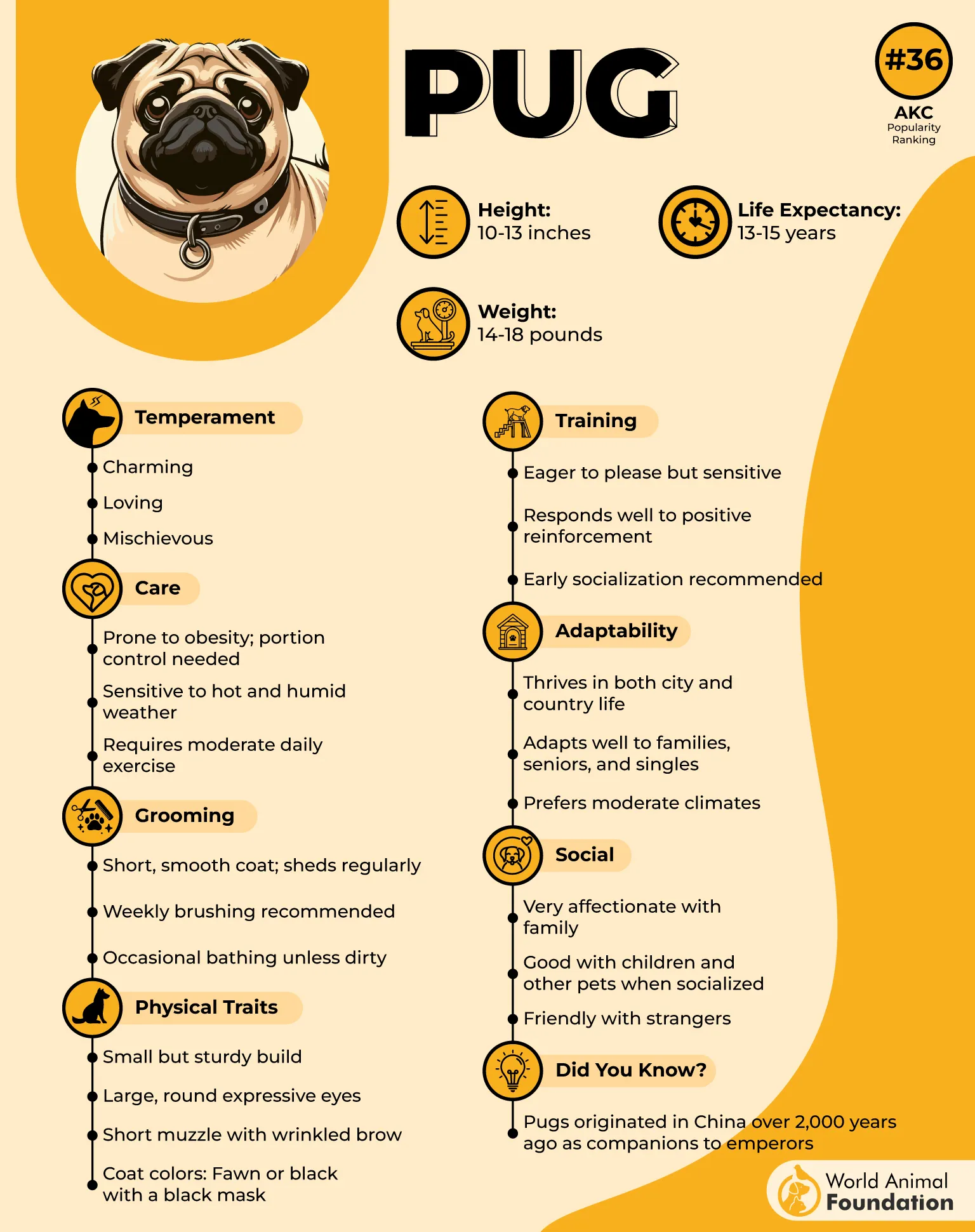
That relaxed personality comes from their long history as companion dogs for Chinese emperors, where they were bred mainly to stay close to people and provide affection indoors. They thrive on attention and usually enjoy homes where someone is nearby most of the day.
Their deeply wrinkled forehead and expressive flat face give them an almost human-like range of reactions, which often makes interactions with curious cats unexpectedly entertaining to watch.
5. Golden Retriever
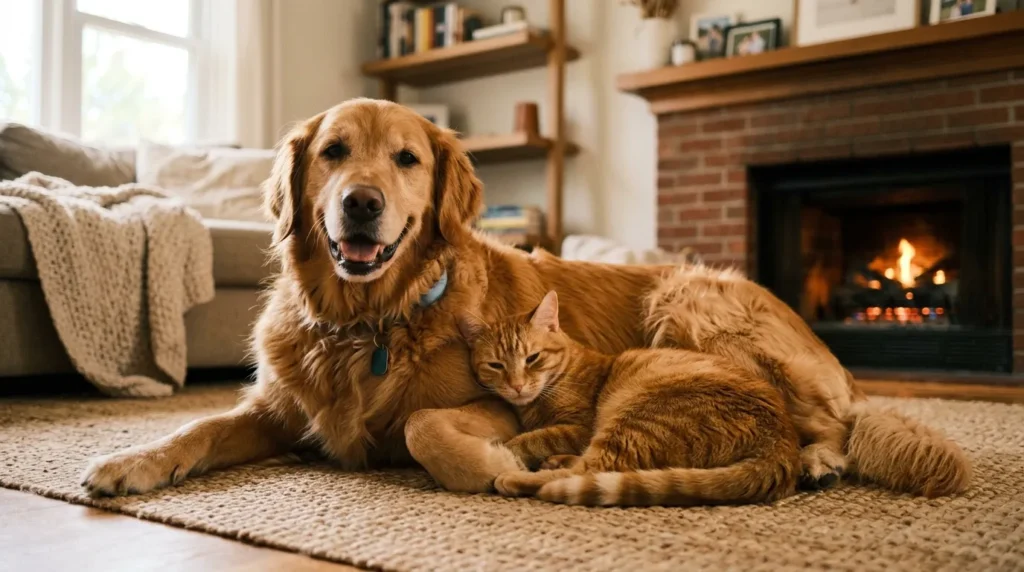
Golden Retrievers are intelligent, friendly, and easy to train, making them good companions for cats due to their gentle and social nature. good
That friendly attitude is exactly why this breed often fits beautifully into homes with felines.
Goldens are naturally social, patient, and eager to please, which helps them adjust to sharing space with cats far more easily than many high-drive breeds, as highlighted by PetMD.
Instead of obsessively chasing a cat through the house, a well-socialized Golden is more likely to follow it around with curious enthusiasm and then flop onto the floor beside it a few minutes later.
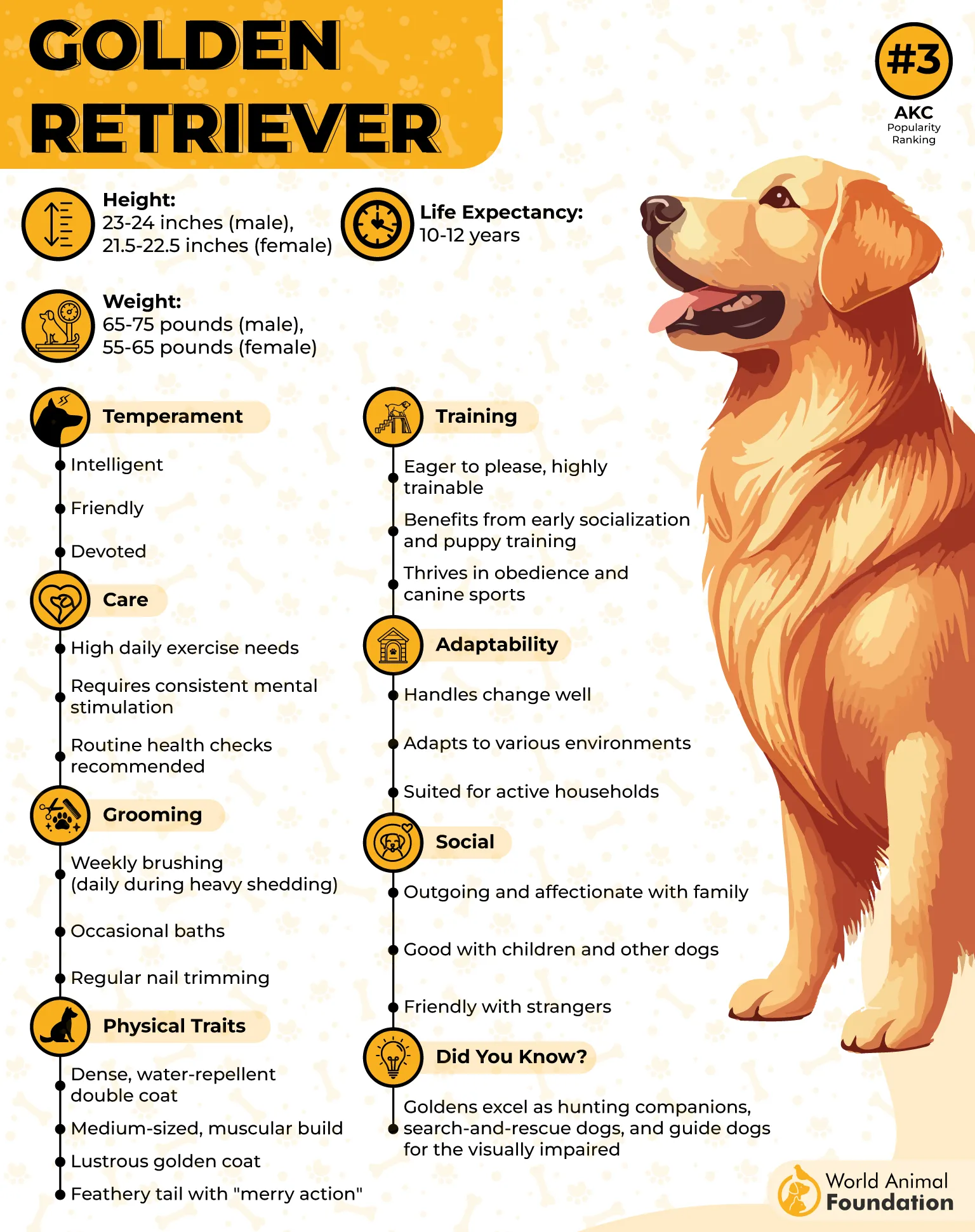
Picture the moment.
Your cat hops onto the bed… and the Golden gently rests its head nearby, quietly waiting for attention from literally anyone in the room.
Originally bred to retrieve game for hunters, these cat-friendly dogs were trained to work closely with people and respond calmly under pressure. That steady temperament still shows today, especially in busy households with children, guests, and multiple pets moving around all day.
One thing owners quickly notice is the famous “Golden lean,” where the dog presses its whole body against people for affection. Many cats eventually learn that this oversized cuddle machine means absolutely no harm.
6. Maltese
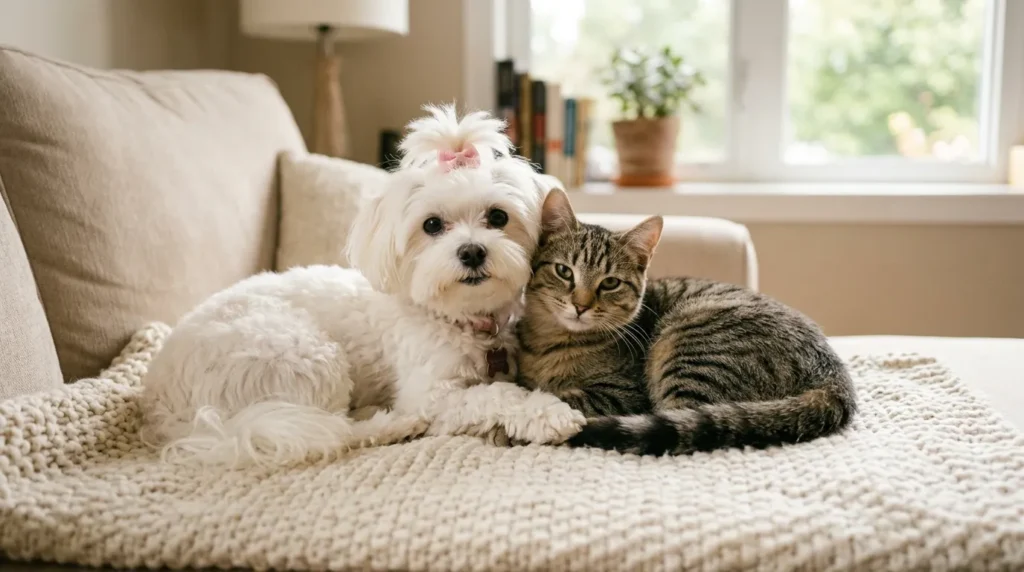
The Maltese may look like a delicate little cloud drifting around your house… but this tiny dog has a surprisingly confident personality and often forms sweet bonds with cats.
Especially when raised together early.
Unlike high-energy breeds that constantly invade a cat’s space, the Maltese usually prefers companionship over confrontation.
Many owners notice their cat and Maltese quietly sharing the same couch, following each other from room to room, or peacefully watching the world from a sunny window without much drama at all.
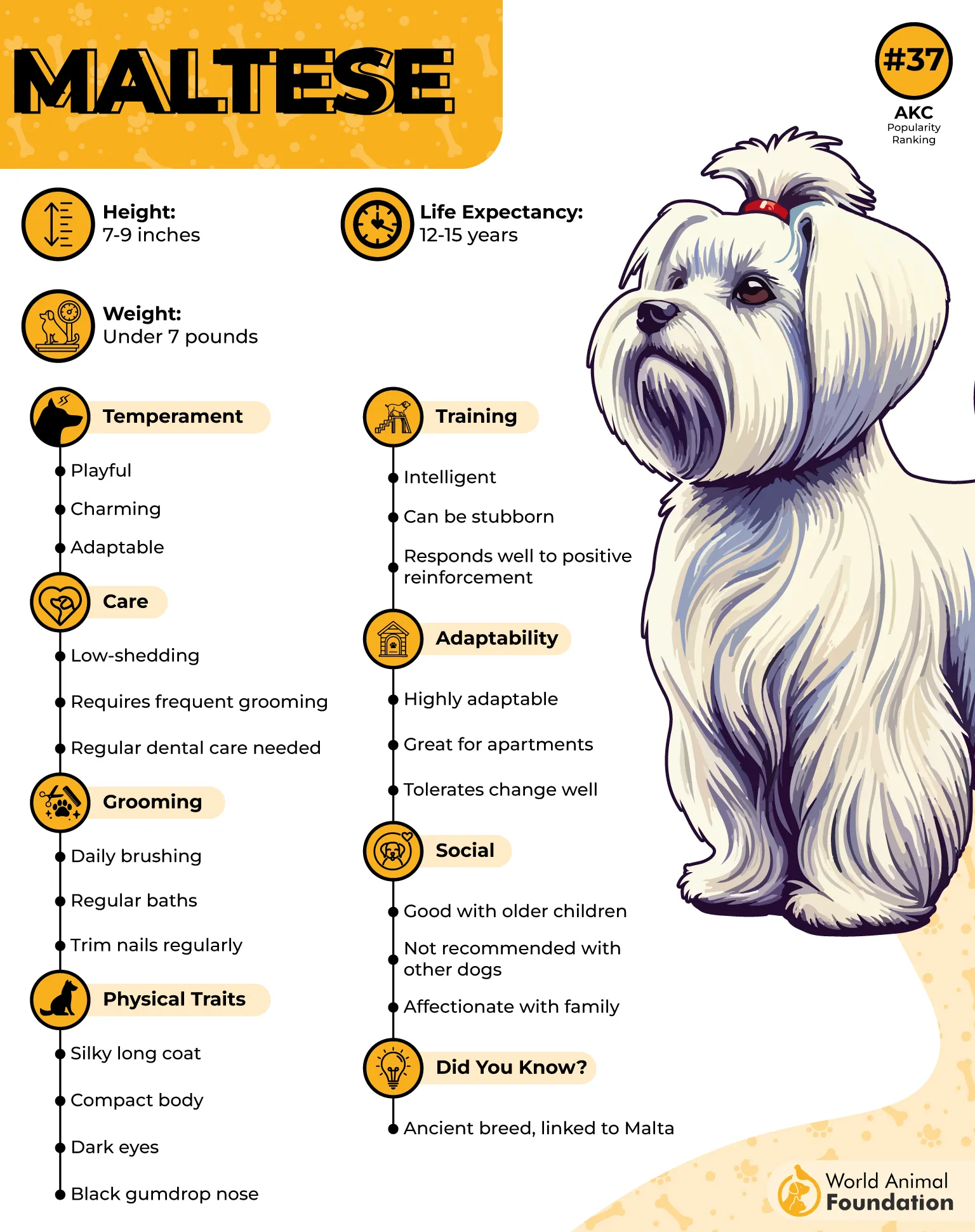
And honestly… that calm coexistence matters.
Some small dogs can be noisy or overly territorial. The Maltese, however, is typically affectionate, people-focused, and eager to stay close to its family instead of creating tension with other pets.
They were bred mainly as companion dogs for centuries, which explains why they thrive on closeness and attention rather than rough behavior.
One thing that makes this breed unforgettable is its long, silky white coat that hangs almost to the floor when fully grown, giving the dog an elegant floating appearance as it moves through the house.
Still, early socialization is important. Without it, some Maltese can become overly possessive of their favorite person around other animals.
7. Bichon Frise
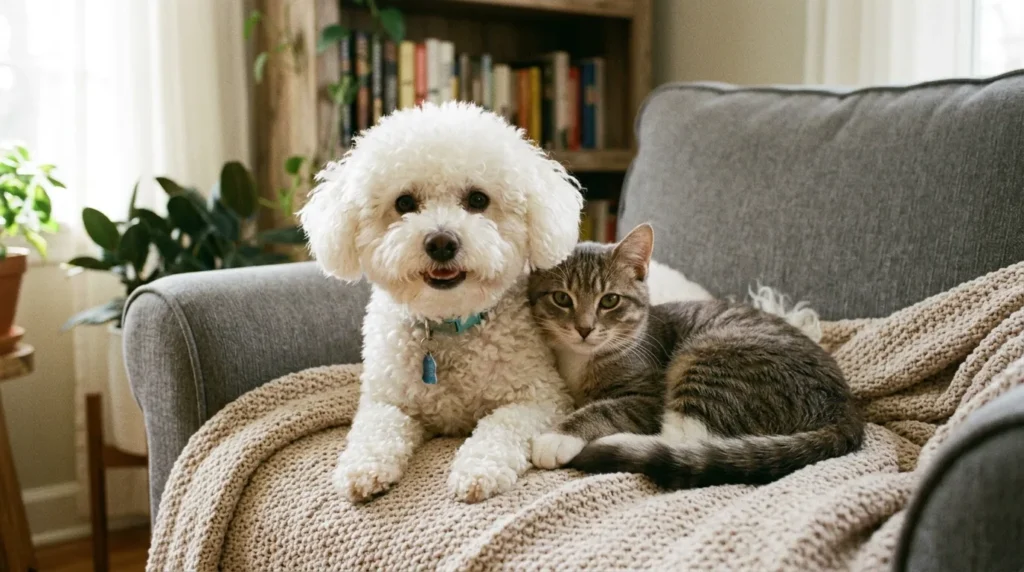
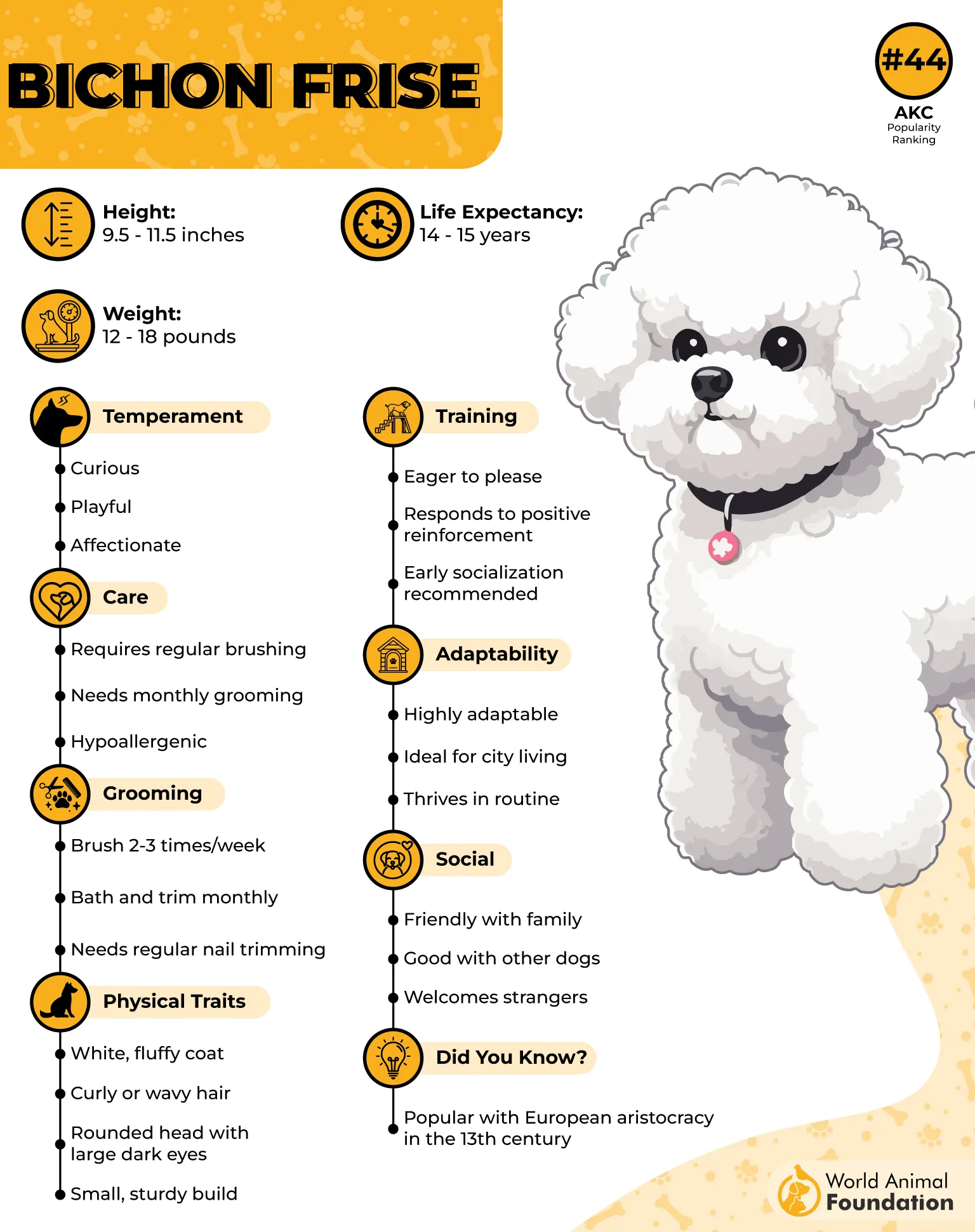
The Bichon Frise looks like a tiny walking cotton ball… but behind that fluffy white coat is a cheerful little dog that usually loves having feline company around — including cats.
That social personality is a huge reason this breed often adapts well in multi-pet homes.
Bichons were bred mainly to be companion dogs, so they naturally enjoy attention, interaction, and staying close to their family instead of acting territorial.
Many cats find them easier to tolerate because Bichons tend to approach with playful curiosity rather than intimidating energy.
Now imagine the scene.
Your cat claims the sunny spot near the window every afternoon… and the Bichon happily settles nearby without turning it into a dramatic standoff. In many homes, they quickly learn each other’s routines and move around the house comfortably together.
Their playful nature also helps keep things light. A Bichon often treats other pets like potential friends instead of competition, which can make introductions smoother when done patiently.
One thing people instantly recognize is their powder-puff appearance created by the breed’s soft double coat, which gives them that famous rounded, cloud-like look.
Despite their elegant appearance, though, Bichons are lively little entertainers that love making people — and sometimes even cats — part of the fun.
8. Basset Hound
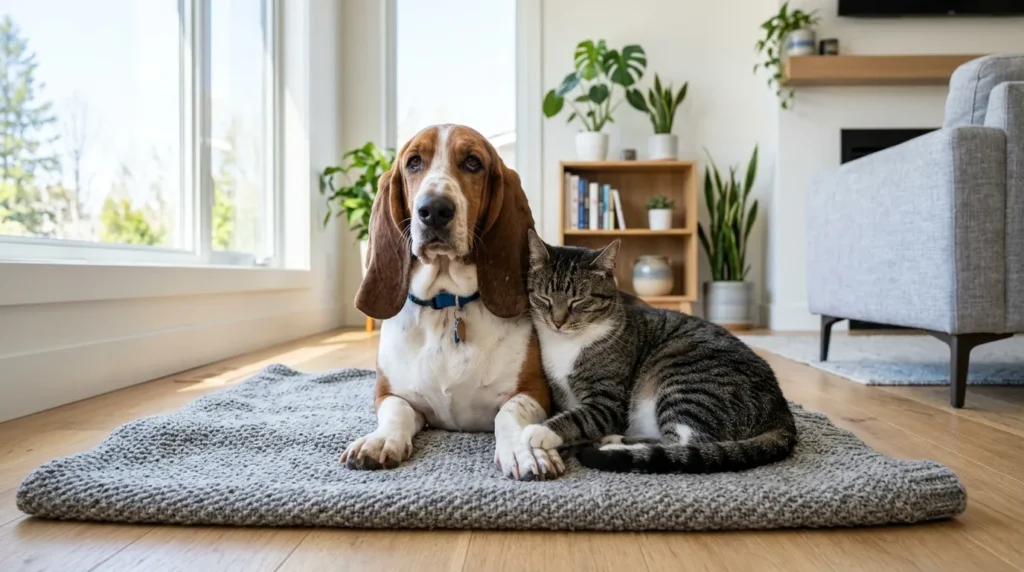
The Basset Hound looks like a dog that permanently just woke up from the world’s longest nap… and honestly, that laid-back attitude is exactly why many cats feel comfortable around it.
Unlike loud, hyper dogs that turn the house upside down, Basset Hounds usually move through life at their own slow and steady pace. That calm energy can make living with cats far less stressful, especially for felines that prefer quiet routines and personal space.
Your cat is stretched across the floor near the couch… and the Basset Hound simply waddles past, gives one curious sniff, then flops into its bed like the interaction already exhausted it.

Originally bred as scent hounds, Bassets have powerful noses and excellent tracking instincts, but indoors, they are often affectionate, gentle companions that enjoy relaxing close to their family.
They also tend to be social dogs that dislike being left alone for long hours, which is why many enjoy having another pet nearby for company.
One thing nobody forgets is their incredibly long ears, which help stir scents toward the nose while tracking.
Combined with their droopy eyes and low-slung body, the Basset Hound has one of the most recognizable appearances in the dog world.
9. Boston Terrier
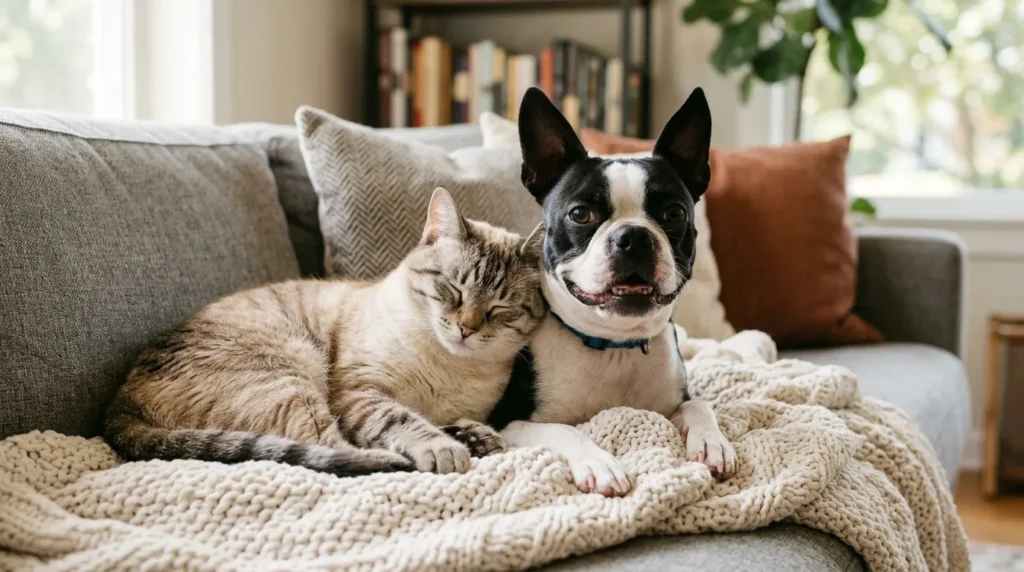
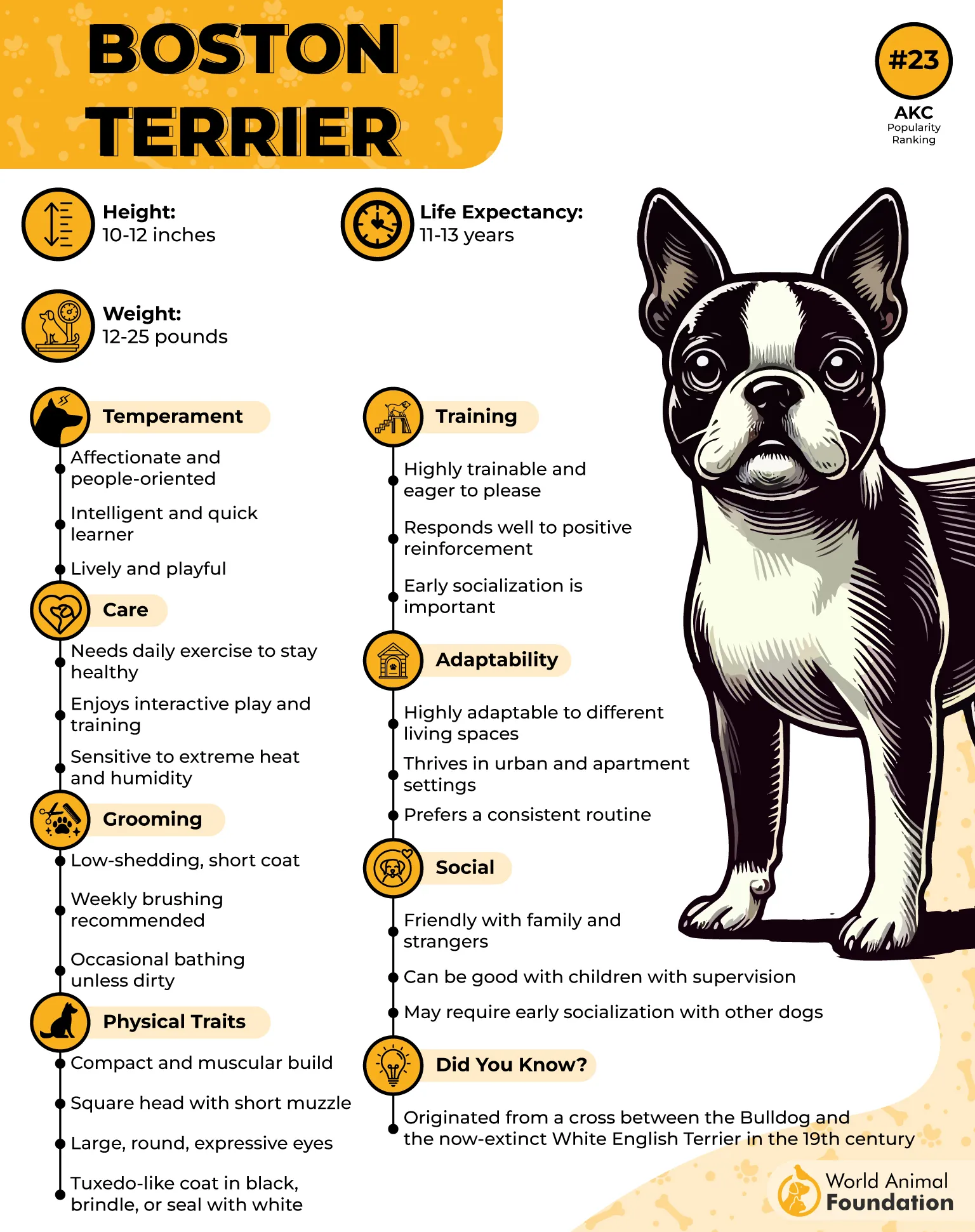
The Boston Terrier may walk into your house looking like a tiny gentleman in a tuxedo… but give it five minutes, and this goofy little dog will probably be zooming around the living room trying to make everyone — including the cat — part of the fun.
That playful personality is one reason Boston Terriers often adjust well to feline companions.
Unlike some energetic breeds that overwhelm cats with nonstop chasing, Boston Terriers are usually more social than pushy.
Many enjoy simply being near others, whether that means curling up beside their humans or curiously watching the cat patrol the house like it owns the place, as noted by Orvis.
Imagine this.
Your cat is calmly sitting on the staircase… and the Boston Terrier pauses halfway up, tail wagging, waiting for permission to continue like an overly polite roommate.
They are intelligent, affectionate, and eager to stay involved in family life, which makes them easier to integrate into homes with multiple pets.
Early socialization helps a lot, especially because their excitement around unfamiliar animals can sometimes turn into barking rather than aggression.
One thing people instantly recognize is their black-and-white coat pattern that resembles formal evening wear, earning them the nickname “The American Gentleman.” Beneath that classy appearance, though, is a mischievous comedian who loves attention.
10. Labrador Retriever
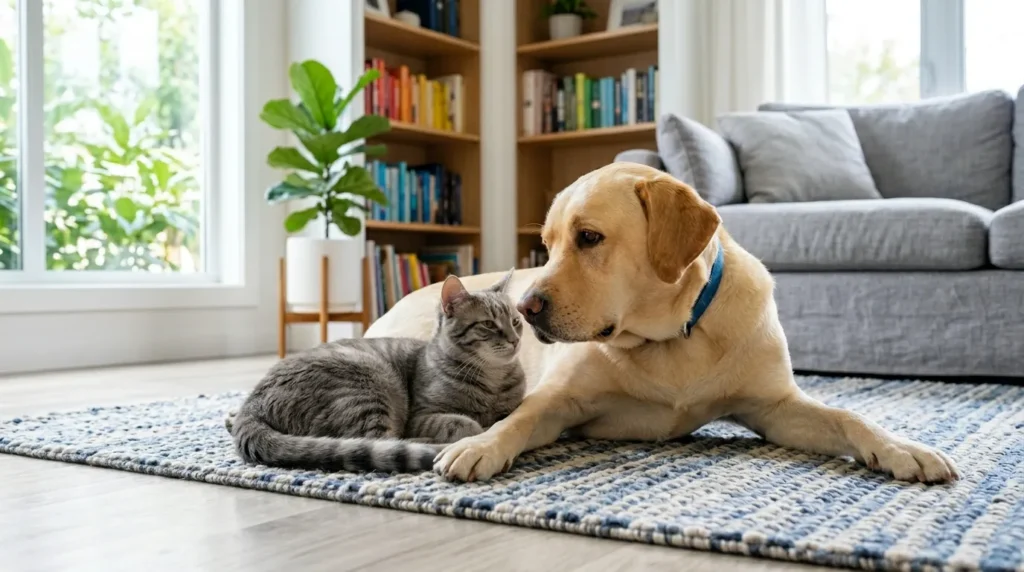
The Labrador Retriever has two goals in life: make friends… and somehow be included in absolutely everything happening around the house.
Luckily for cat owners, that friendly attitude often works surprisingly well with felines, too.
Labs have a happy-go-lucky nature and usually enjoy being part of a group, whether that means a busy family, another dog, or even a confident cat lounging on top of the furniture.
Their playful personality can seem overwhelming at first, especially for shy cats, but well-socialized Labradors often learn quickly when to calm down and give their feline housemate space.
Picture this.
Your cat walks through the kitchen like royalty… and the Labrador follows behind carrying a toy, hoping someone — anyone — wants to play.
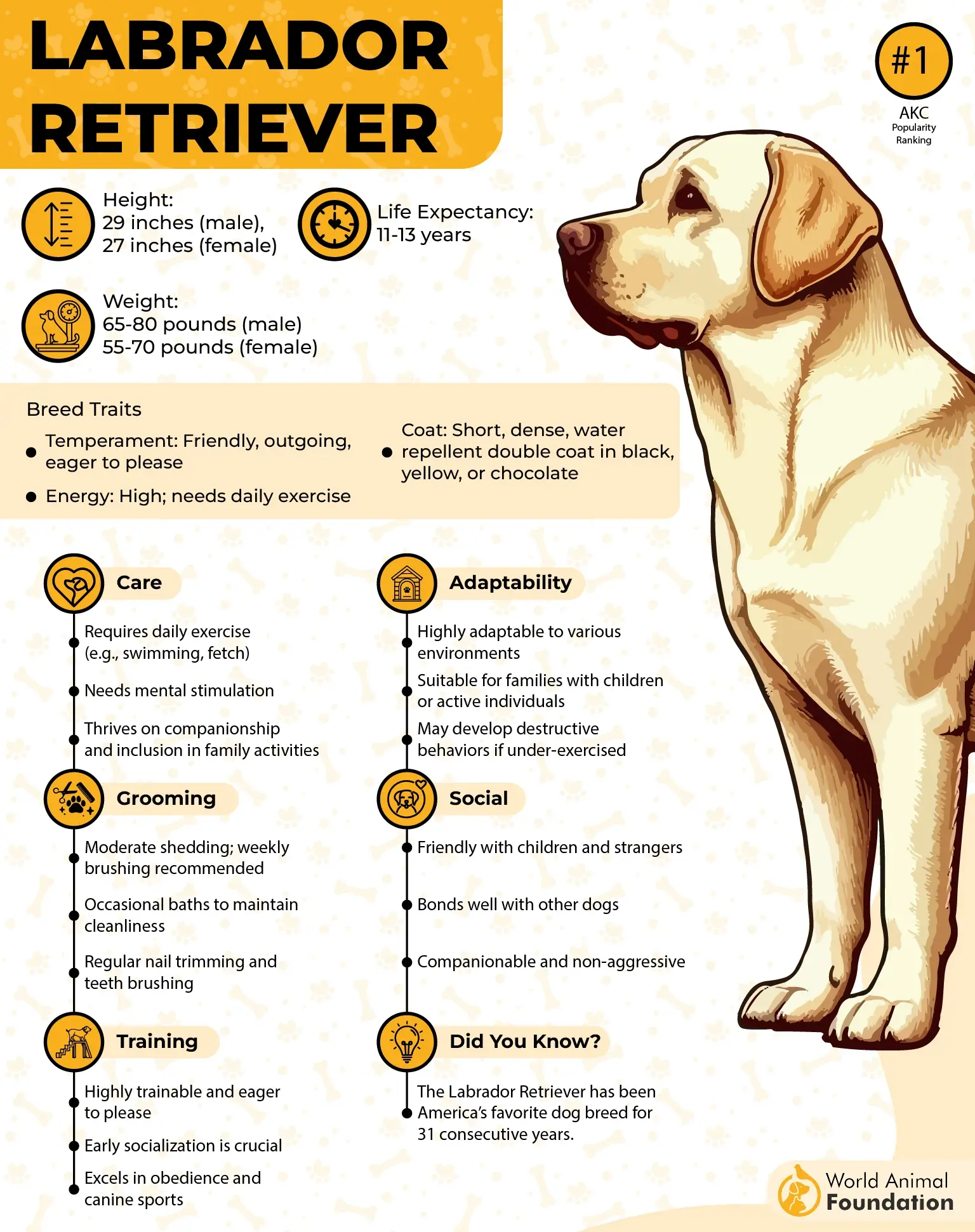
Originally bred as retrieving dogs for hunters, Labs were trained to work closely with people while staying steady and responsive in active environments. That cooperative nature still makes them easier to train around other pets compared to many high-energy breeds.
One thing many owners notice immediately is the breed’s famous “otter tail,” a thick, powerful tail originally designed to help Labs swim efficiently in icy water.
Of course, there’s one trade-off: all that dense coat means heavy seasonal shedding around the house.
Conclusion
Not every dog will turn your cat’s life into a furry disaster.
In fact, the right temperament can completely change the atmosphere inside your home. Gentle, social, and adaptable dogs often learn to respect a cat’s space, share routines, and even form surprisingly close bonds over time.
Of course, successful introductions still matter. Early socialization, patience, and proper training can make the difference between daily chaos and peaceful coexistence.
At the end of the day, creating a happy multi-pet household is less about luck… and more about choosing a dog whose personality naturally fits life with a feline companion.
