




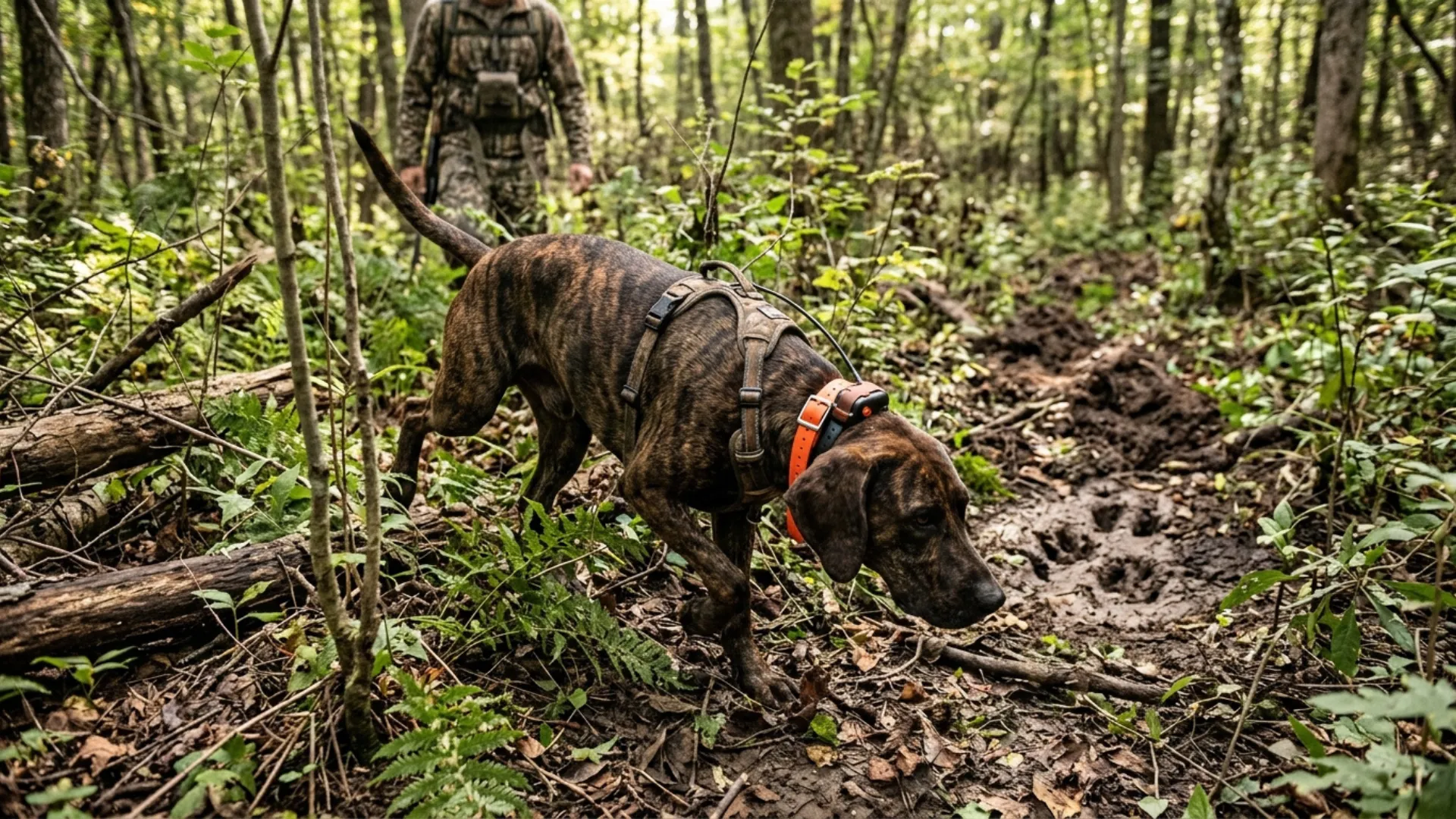
Wild boar tracking is not the kind of job where a dog can casually sniff around, take a snack break, and hope the target sends a location pin. Feral pigs are powerful, intelligent, highly mobile animals that can travel through forests, swamps, farmland, and seriously unforgiving undergrowth.
Fieldwork should only happen where legal, with experienced handlers, reliable control, appropriate tracking equipment, protective gear, veterinary planning, and respect for animal-welfare rules. Breed reputation alone is never enough, because training, physical condition, individual temperament, local terrain, and handler decisions ultimately determine whether a dog can work safely and effectively.
The seven breeds in this guide were selected from your shared material because each brings a distinct combination of scenting ability, courage, endurance, independence, and working history to wild boar tracking.
Proven Dog Breeds That Excel in Tracking Wild Boars
1. Plott Hound
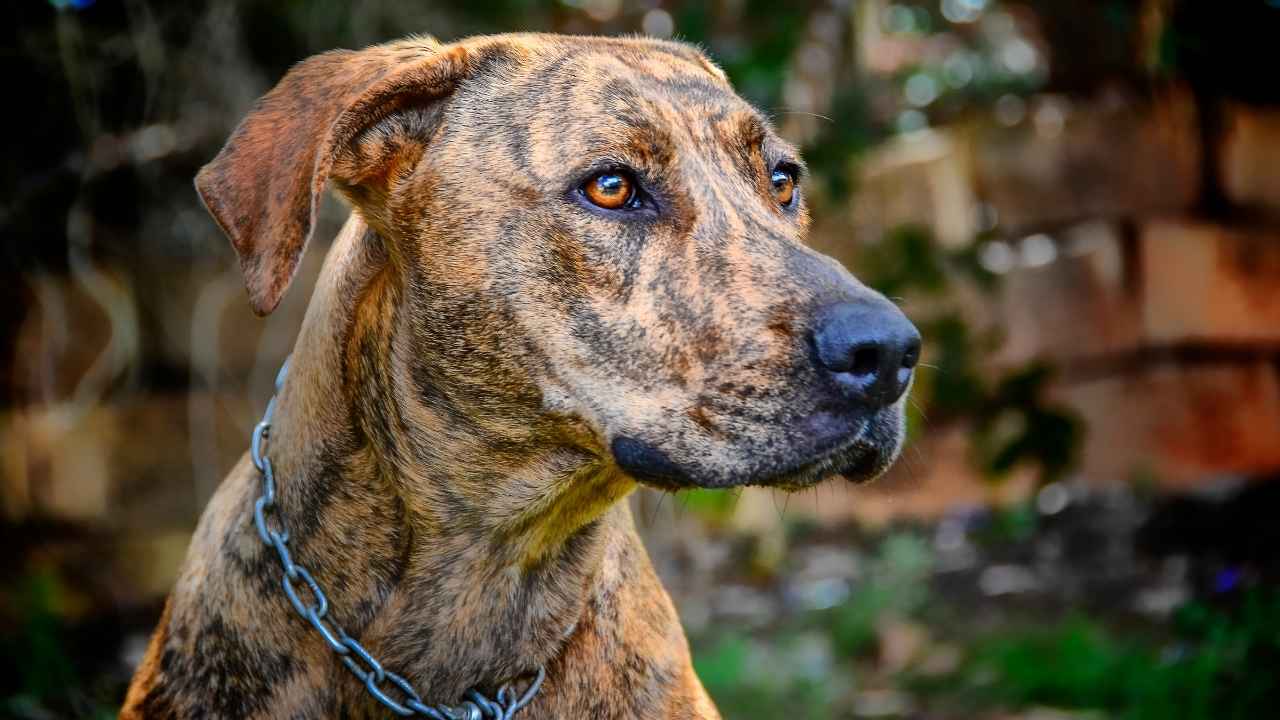
The Plott Hound traces its development to German dogs brought to North Carolina during the eighteenth century. Generations of the Plott family refined those dogs in the southern Appalachian Mountains for demanding work involving bears, wild boars, and other large game.
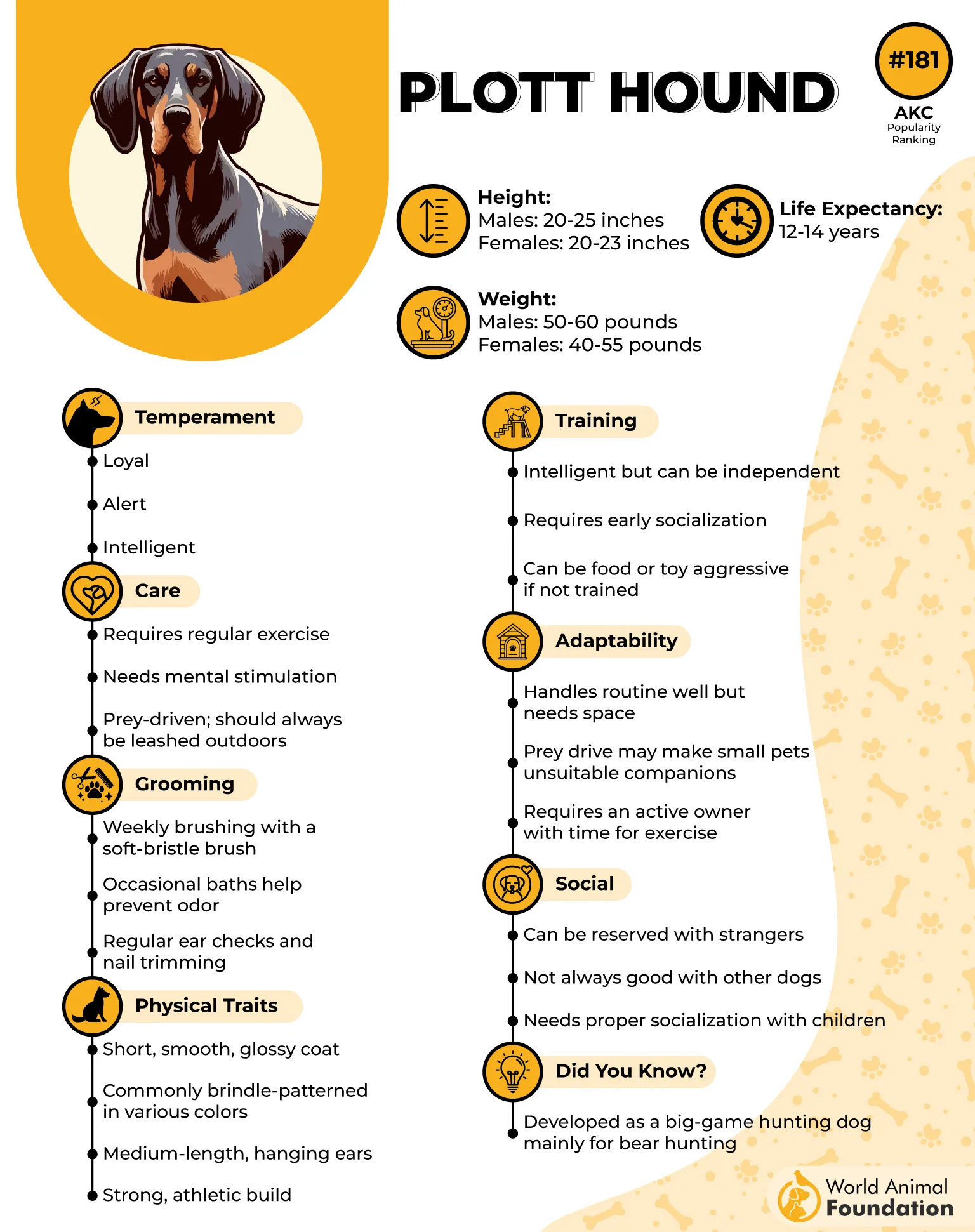
The breed’s lean, muscular structure gives it enough power for demanding work without sacrificing agility on steep slopes or through thick vegetation. Its short, dense coat also dries relatively quickly and collects less debris than the longer coats carried by some hunting breeds.
Hunters have traditionally valued the Plott’s distinctive bay, which can communicate both direction and changes in the chase across considerable distances. The sound is not just dramatic forest karaoke; it helps handlers follow the dog when trees, ridges, darkness, or undergrowth block visual contact.
Their Specific Wild Boar Tracking Strategy
The Plott typically works as a determined trailing and baying hound, using ground scent to follow a boar through woodland, water crossings, and broken Appalachian-style terrain.
Its carrying voice lets the handler hear whether the dog is advancing, circling, or holding quarry at bay, even when visibility is basically nothing.
Rather than relying on raw speed alone, the breed combines persistence, terrain awareness, and repeated scent checks to stay connected to a twisting trail.
2. Catahoula Leopard Dog
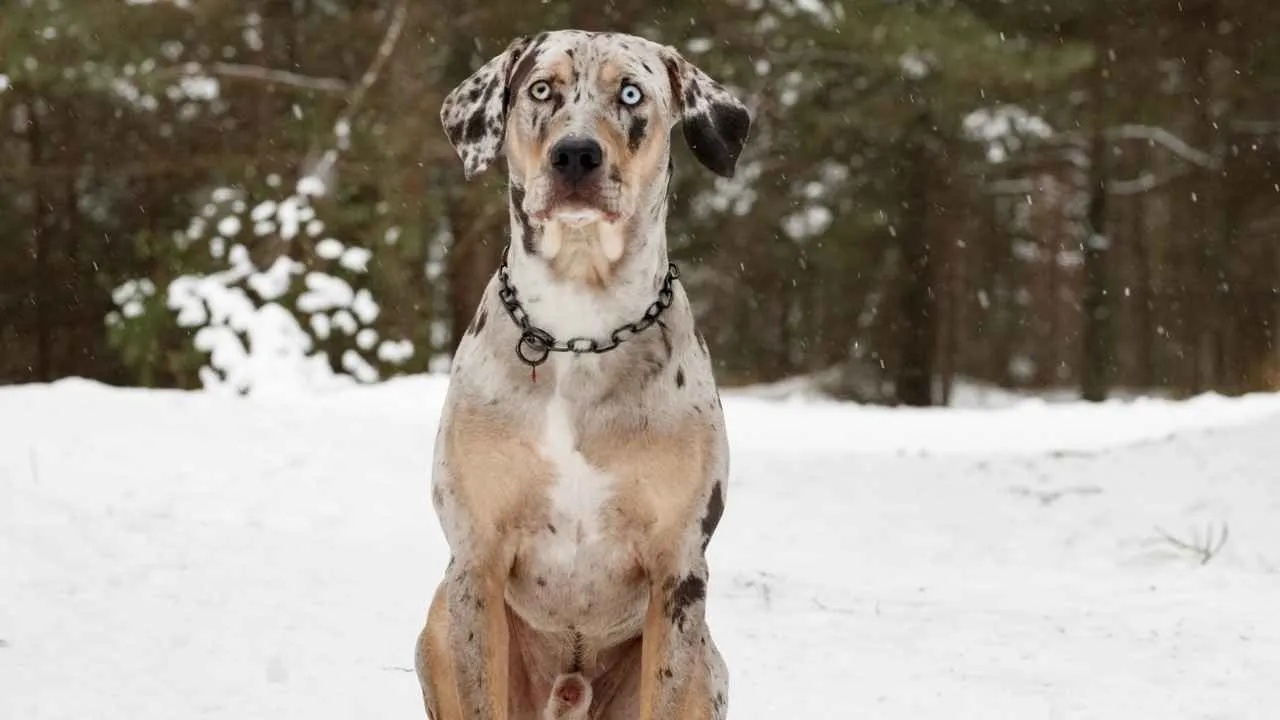
The Catahoula Leopard Dog looks like someone gave a working dog a custom paint job, but the striking coat is only the opening act.
Purina says that these hunting dogs were selected for independent decision-making because a dog working in swamps or dense cover could not wait for instructions every few seconds. That independence can be a major advantage during a difficult track, especially when the scent line crosses mud, water, livestock paths, or disturbed vegetation.
In everyday life, however, the same trait can produce a dog that hears a command, considers the proposal, and submits its own revised plan.
Their bodies are generally powerful without being excessively bulky, allowing them to cover ground with a smooth and efficient gait. Long legs, strong muscles, and good endurance help them negotiate marshes, woods, farmland, and uneven trails while continuing to analyze scent.
This hog dog needs a genuine job rather than a decorative title such as “yard dog.” Tracking practice, search work, canicross, herding exercises, obedience challenges, and carefully controlled outdoor adventures can help channel its huge reserve of physical and mental energy.
UKC Dogs says that for a skilled handler, that mixture of bravery, athleticism, independence, and loyalty can create an exceptionally adaptable wild-boar tracking partner.
Their Specific Wild Boar Tracking Strategy
The Catahoula commonly uses an independent, sweeping search pattern to locate hog scent across broad areas rather than staying glued to the handler’s legs.
Once it finds the animal, its traditional strength is coordinated pack baying, with dogs applying controlled pressure while avoiding a reckless straight-line rush.
Its versatility is especially useful in wetlands and mixed farm country, where the trail may shift between water, mud, thick vegetation, and livestock scent.
3. Bloodhound
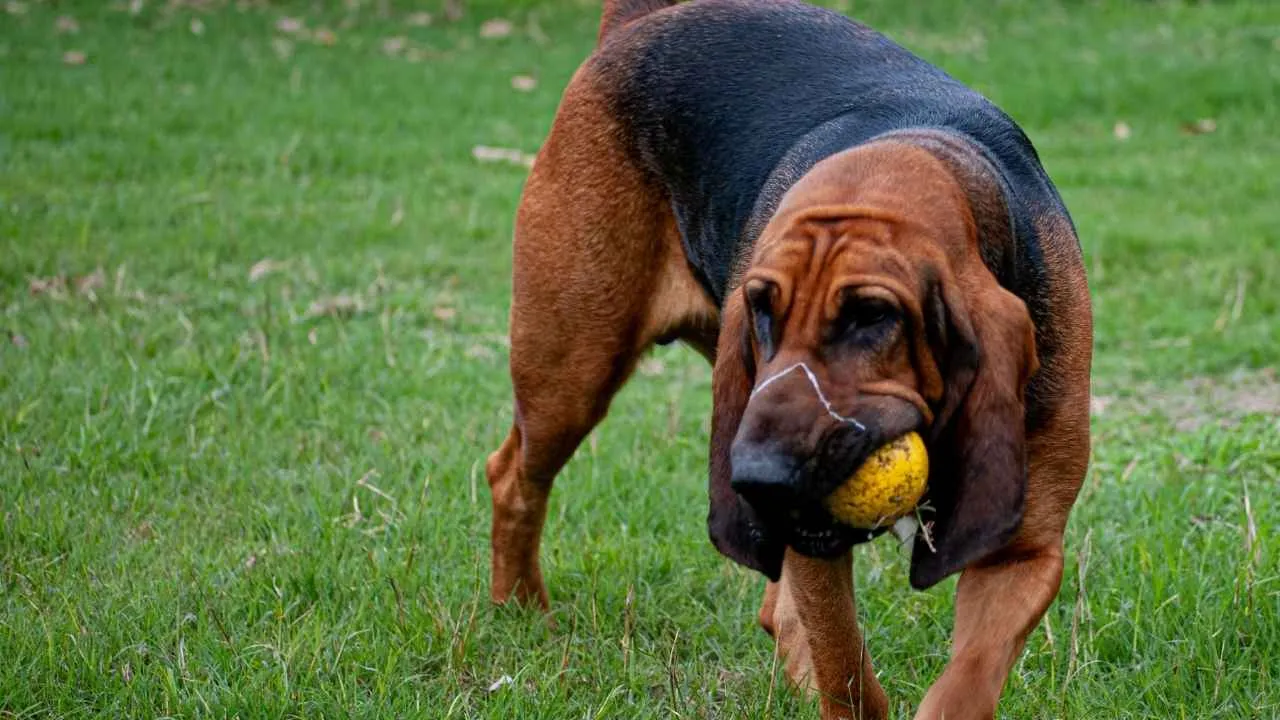
The Bloodhound is the scent-detection legend of this list, and honestly, the nose has earned the hype. Centuries before the breed became famous for missing-person and law-enforcement work, Bloodhounds were used to locate deer and wild boar in European forests.
Their traditional role often involved finding and following the quarry’s trail before faster hounds took over the chase.
PDSA claims that this boar-hunting dog does not need to sprint around randomly, hoping to bump into the right animal. It works methodically, nose low, sorting individual odor information from soil, vegetation, water, human activity, and the scent left by other wildlife.
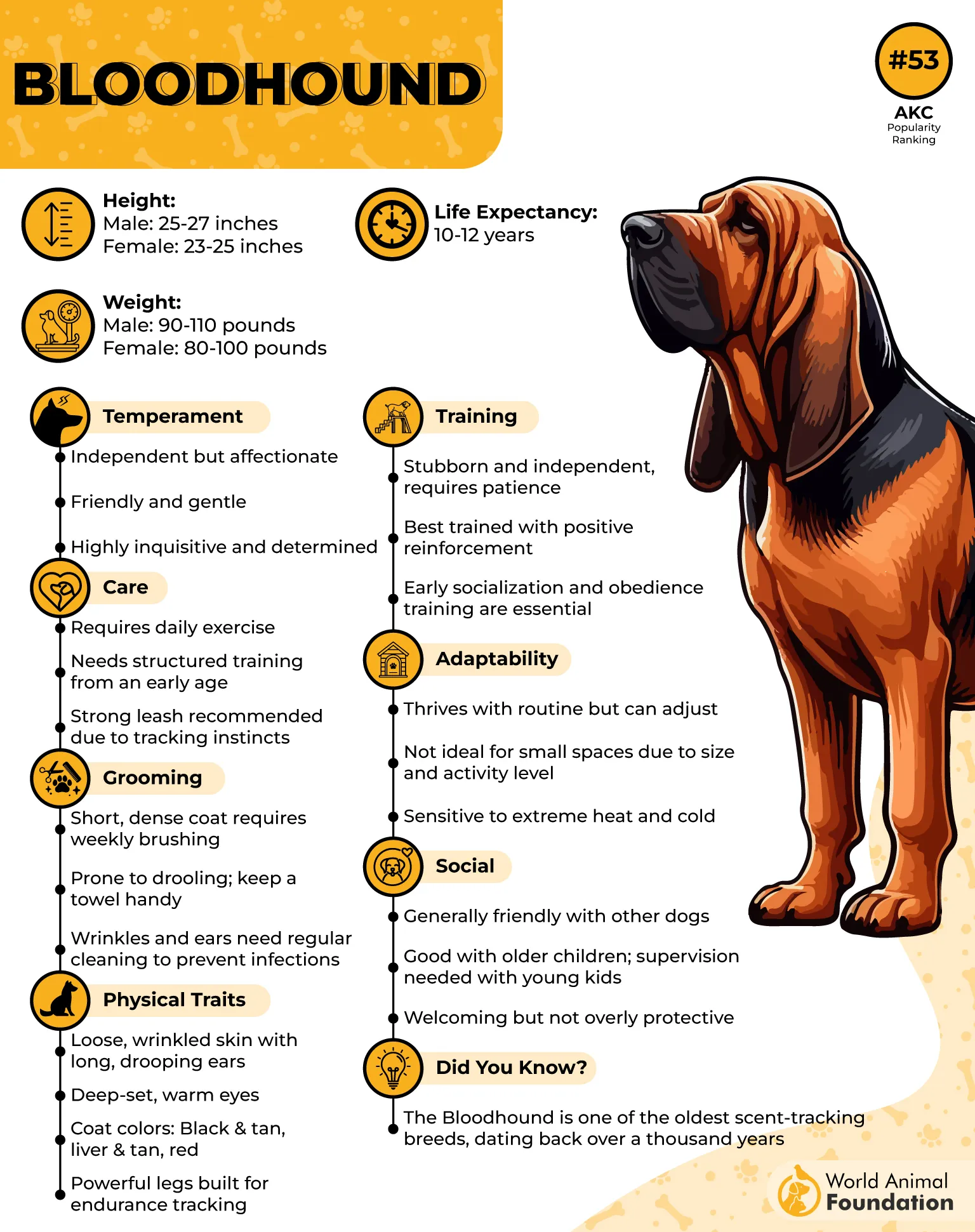
It is the most established search and rescue dog breed on the list. Its exceptional scent-trailing ability is widely used to locate missing people, follow older human scent trails, and assist law enforcement.
The breed’s loose facial skin and long ears are traditionally believed to help channel scent toward the nose while the dog tracks close to the ground. Once committed to a scent, they can become so focused that recall, traffic awareness, and the handler’s dignity all risk becoming secondary concerns.
Their Specific Wild Boar Tracking Strategy
The Bloodhound is best suited for deliberate scent trailing, especially when handlers need to identify the route a boar has already taken.
It usually follows the odor, its nose close to the ground, carefully working through scent gaps rather than relying on visual contact or rapid pursuit.
Because concentration can override recall, the breed is most effective under controlled handling with secure equipment and a handler capable of reading subtle changes in body language.
4. Redbone Coonhound
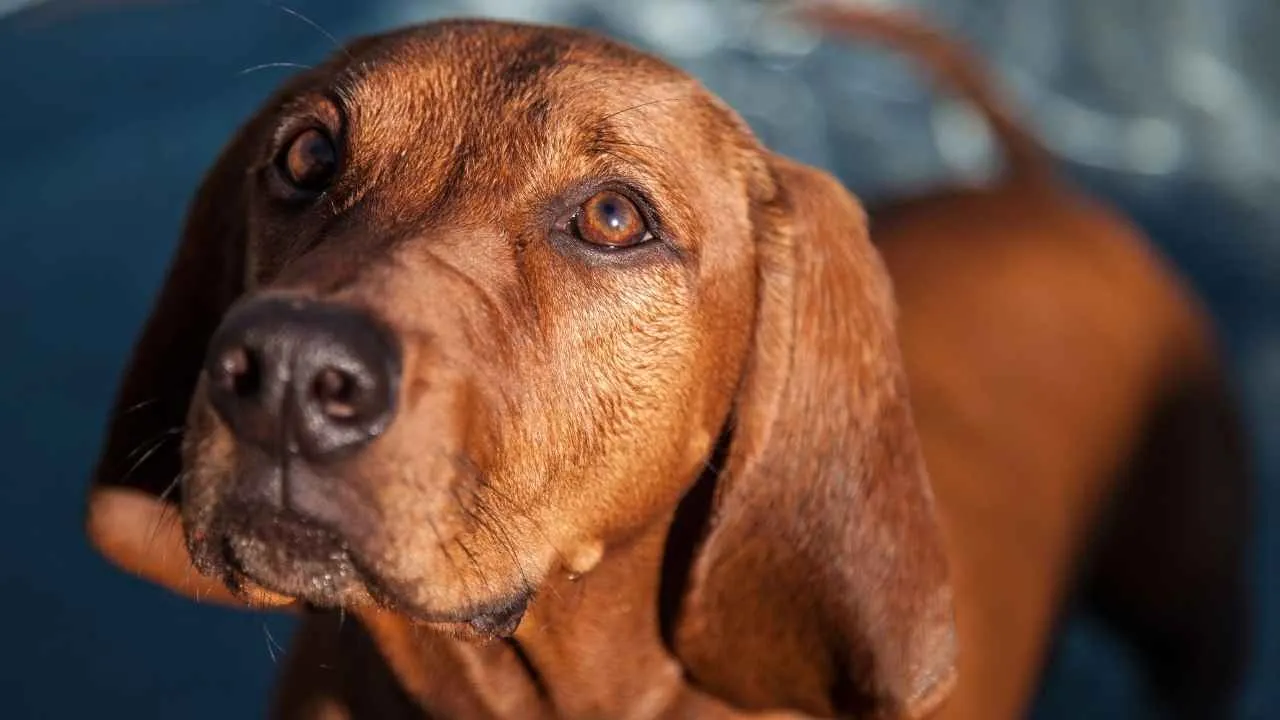
The Redbone Coonhound brings speed, endurance, a strong nose, and a glossy red coat that looks unfairly good even after a long day outdoors.
Its development began taking recognizable form in the American South before the Civil War as hunters sought faster and more determined hounds. Careful breeding eventually produced a lean athlete known for following cold trails and pursuing quarry with very little interest in giving up.
Redbones were historically associated with raccoon and wild pig hunting, but their field abilities have also been applied to larger game. Their long legs, deep chest, balanced frame, and efficient movement allow healthy adults to cover substantial distances over varied terrain.
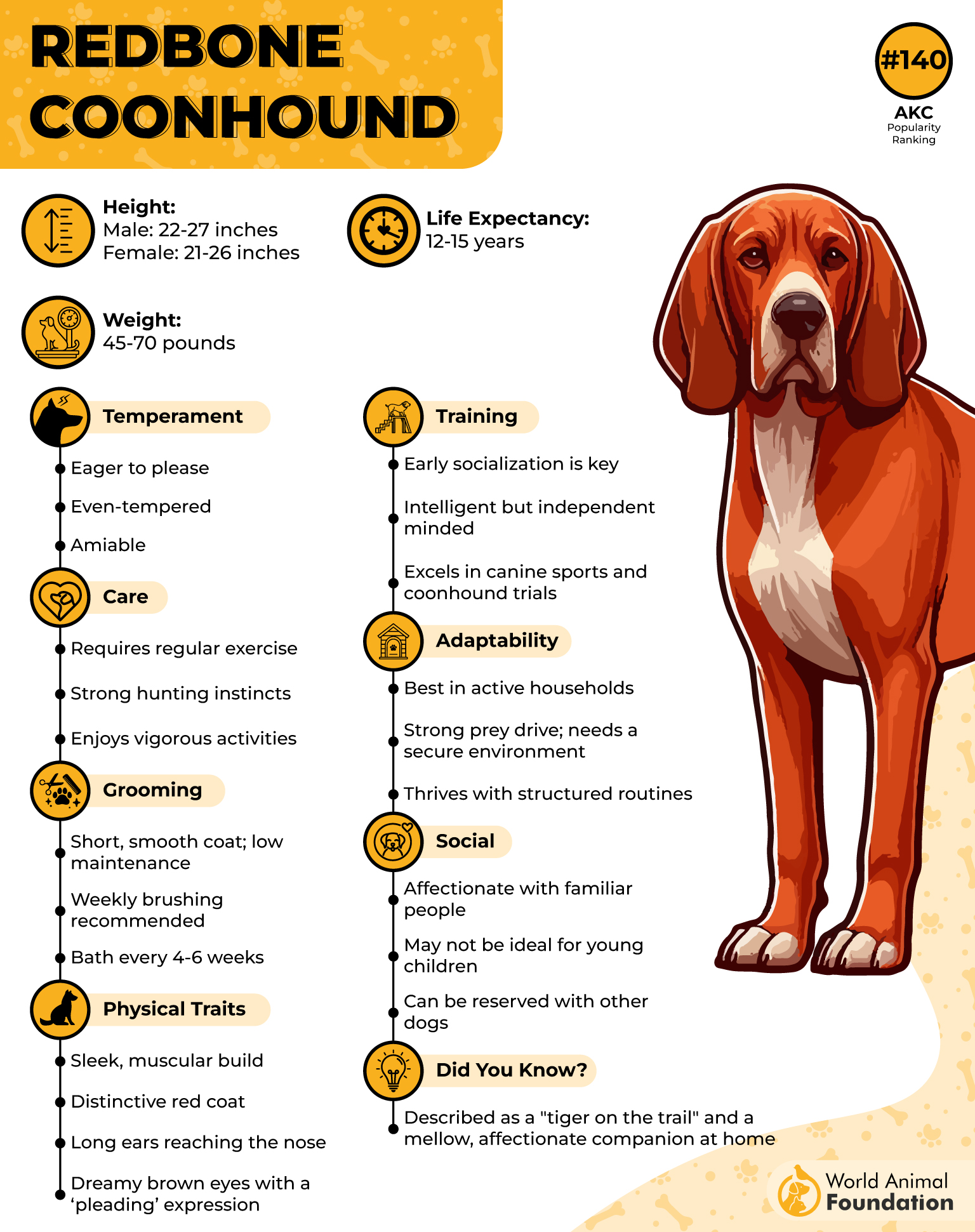
One quality frequently praised by Redbone enthusiasts is purposeful forward movement on a trail, as cited by the AKC. They are highly focused when on a scent trail.
Training works best when the dog understands how an exercise connects to something rewarding, such as tracking, food, play, or access to the outdoors. Redbones are sensitive and intelligent, so shouting matches generally achieve less than structured repetition and clear consequences.
Their Specific Wild Boar Tracking Strategy
The Redbone combines a cold nose with steady forward drive, making it useful when a trail is faint but still continuous enough to carry through woodland or rolling ground.
Its athletic build supports a faster tracking tempo than heavier scent hounds, allowing it to reduce the distance between the pack and a moving boar.
Vocal communication helps handlers monitor the chase, while careful training is needed to prevent speed and excitement from turning into uncontrolled pursuit.
5. Black and Tan Coonhound
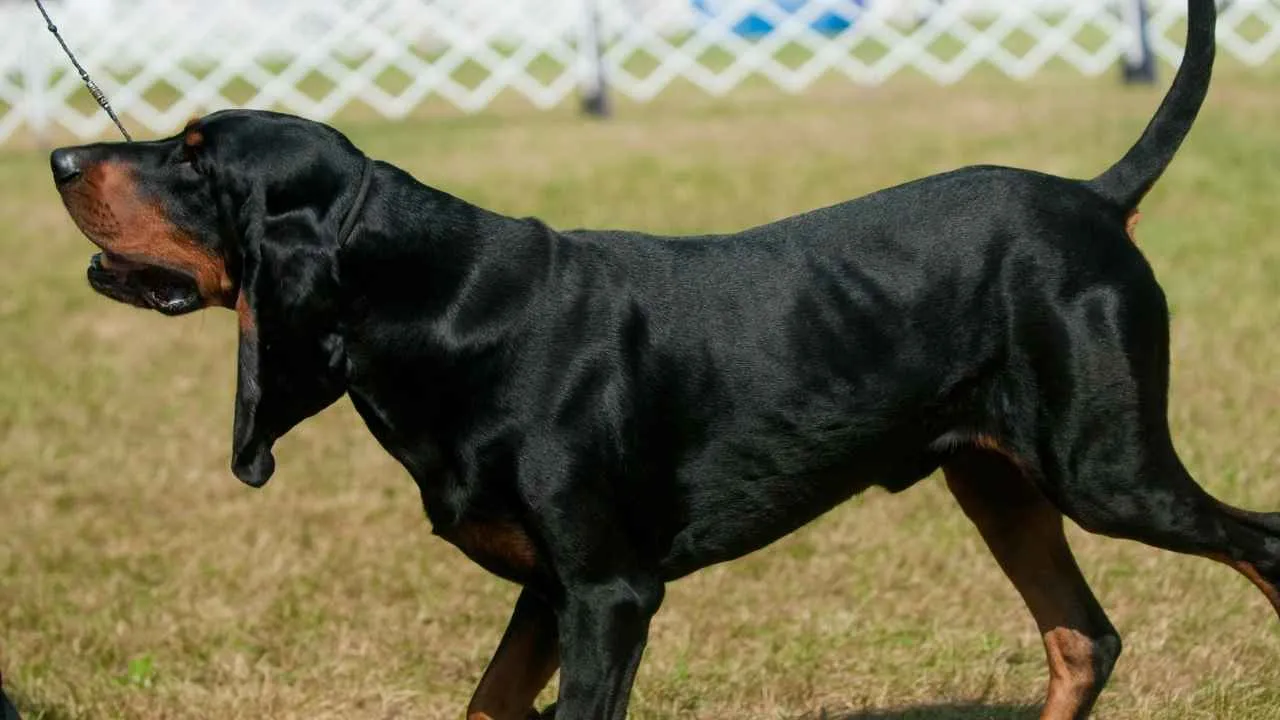
Descended from old hound families associated with Bloodhounds and Foxhounds, the Black and Tan Coonhound was developed in the United States for determined nighttime trailing. Although raccoons shaped its name and reputation, it also possesses the ability to work deer, bears, mountain lions, and other large game.
This breed generally trails with its nose near the ground, relying more on scent accuracy and endurance than explosive speed. Its powerful build, long ears, deep voice, and methodical style make it well suited to long searches across difficult country.
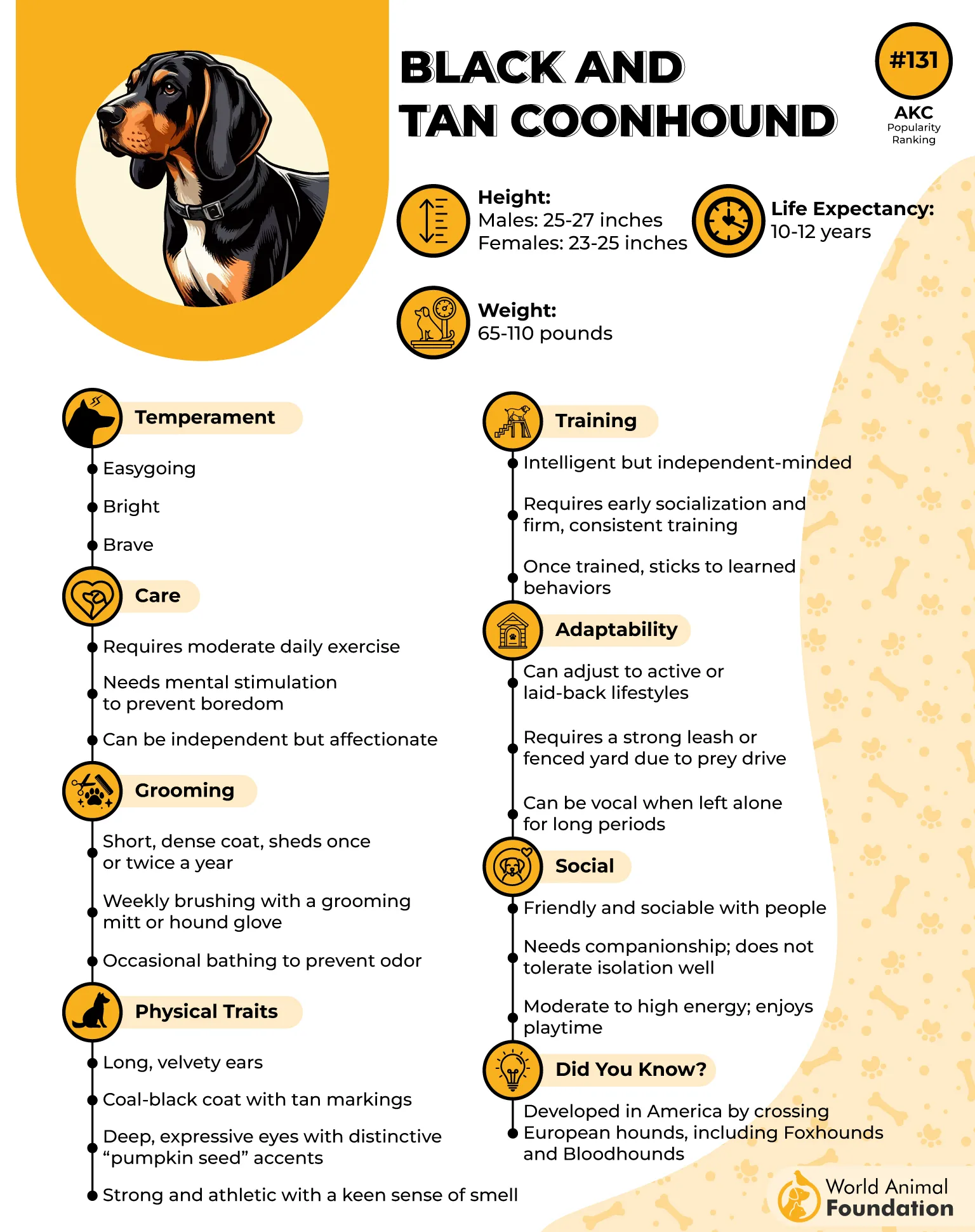
In the woods, that bugle-like bay is less a casual bark and more an audio tracking update delivered at maximum volume.
Away from work, Black and Tan Coonhounds are often friendly, sociable, and surprisingly relaxed. Purina describes the contrast neatly: easygoing beside the fire, tenacious once the trail begins. That switch makes them appealing dual-purpose companions, provided the owner can accommodate their voice, size, stamina, and deeply embedded need to track.
Their Specific Wild Boar Tracking Strategy
The Black and Tan usually follows a slow-to-moderate, nose-down trailing pattern that prioritizes scent continuity over immediate speed.
Its stamina makes it useful on extended tracks where a boar has traveled a long distance or repeatedly changed direction through varied cover.
The breed’s individually recognizable bay can help experienced handlers identify which dog is closest to the quarry or has reached a holding position.
6. Dogo Argentino
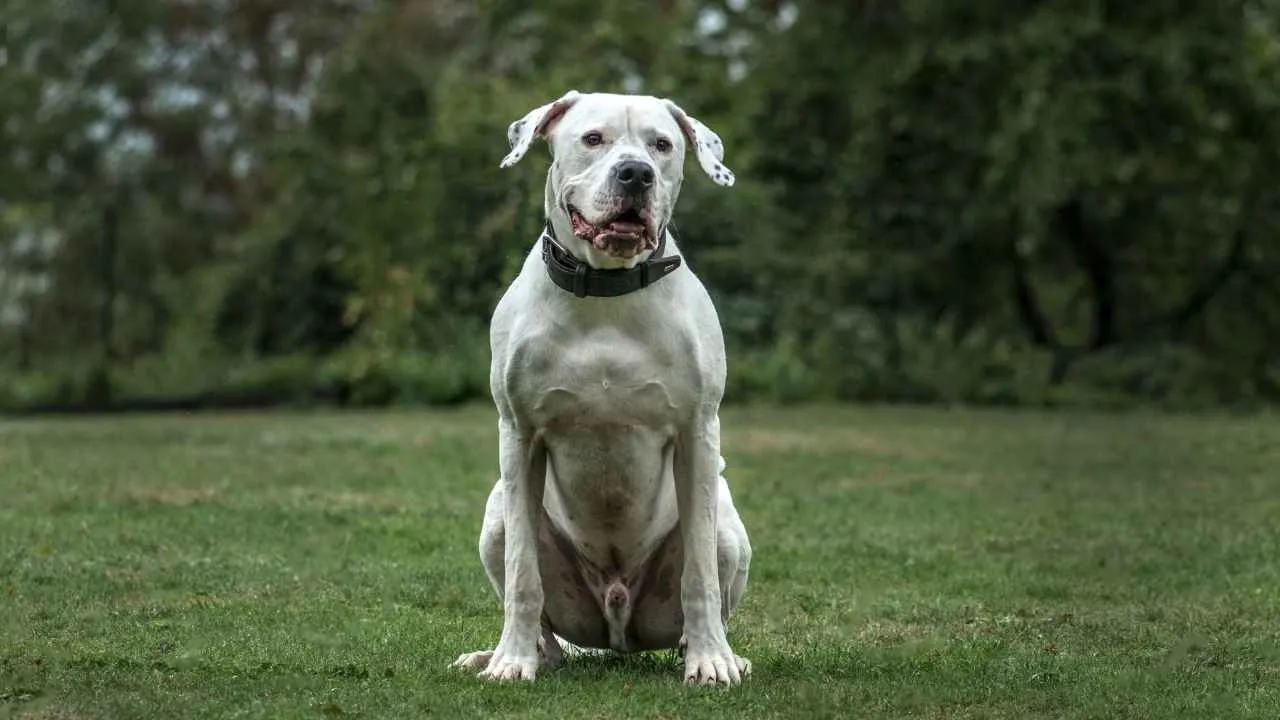
The Dogo Argentino is not a traditional floppy-eared scent hound, and that difference matters when discussing its role in boar work. Dr. Antonio Nores Martinez began developing the breed in Córdoba, Argentina, during the 1920s to produce a powerful, stable, athletic pack hunter.
Wild boar and puma were central quarry, so the final dog needed scenting ability, speed, courage, teamwork, and the physical strength to engage dangerous game. It is a specialized working breed with serious power and equally serious management requirements.
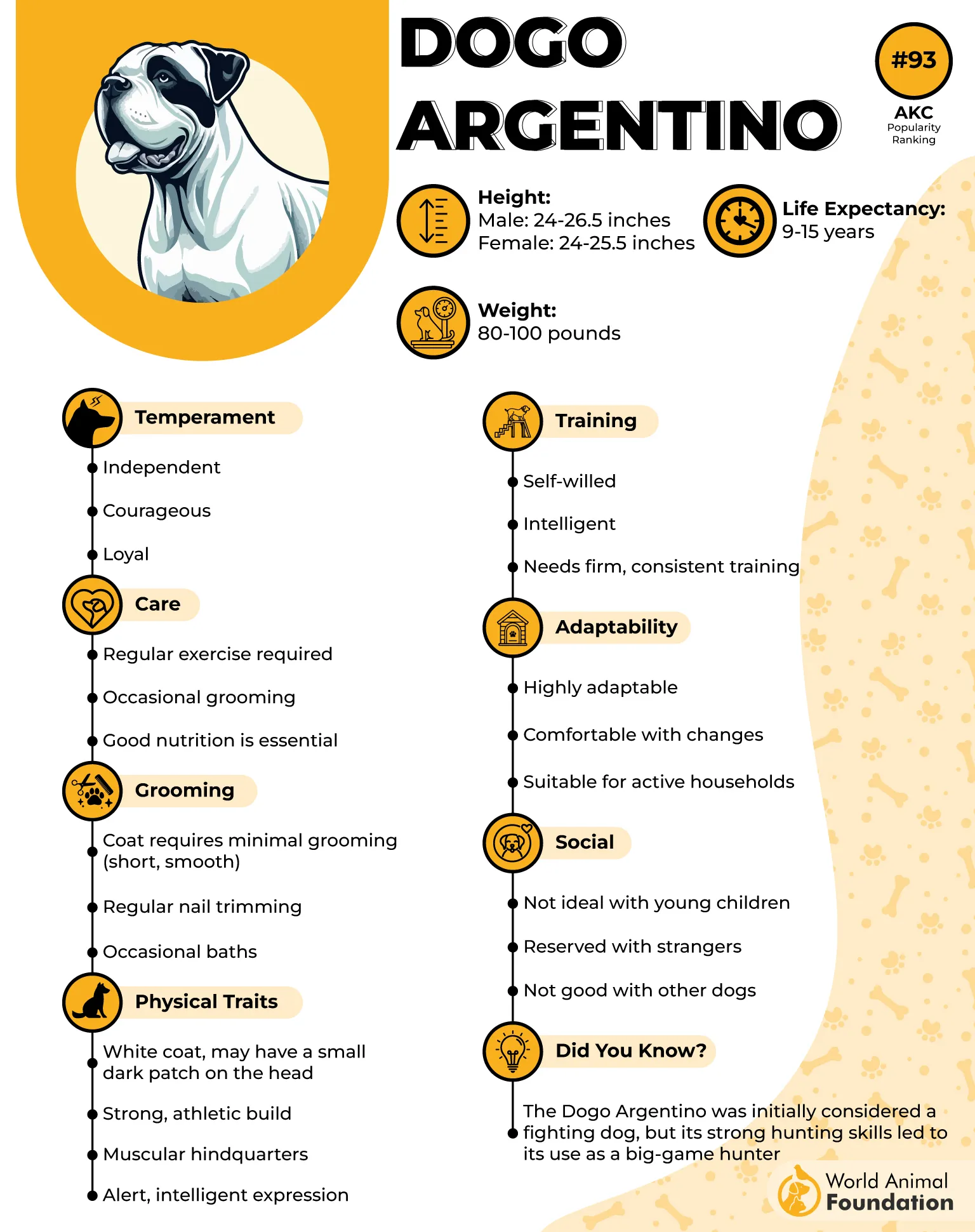
Dogos are often used differently from baying hounds because their historical strength lies in closing distance and physically controlling large quarry.
Experienced Dogo owners repeatedly stress the importance of early training, extensive socialization, and calm, confident handling. Harsh punishment can create conflict or defensive behavior, whereas consistent positive reinforcement helps teach impulse control without weakening trust.
Dogo Argentino Club mentions that protective vests, tracking collars, veterinary readiness, legal compliance, and disciplined pack control are crucial because bravery cannot make tusks harmless.
Their Specific Wild Boar Tracking Strategy
The Dogo can use air and ground scent to help close on nearby quarry, but it is most famously deployed after bay dogs have already located and contained the boar.
Its strategy centers on rapid commitment, physical control, and coordinated pack action rather than prolonged, voice-led trailing from a great distance.
Because direct contact poses a high risk of injury, Dogos require expert supervision, protective equipment, reliable release commands, and immediate veterinary planning.
7. Airedale Terrier
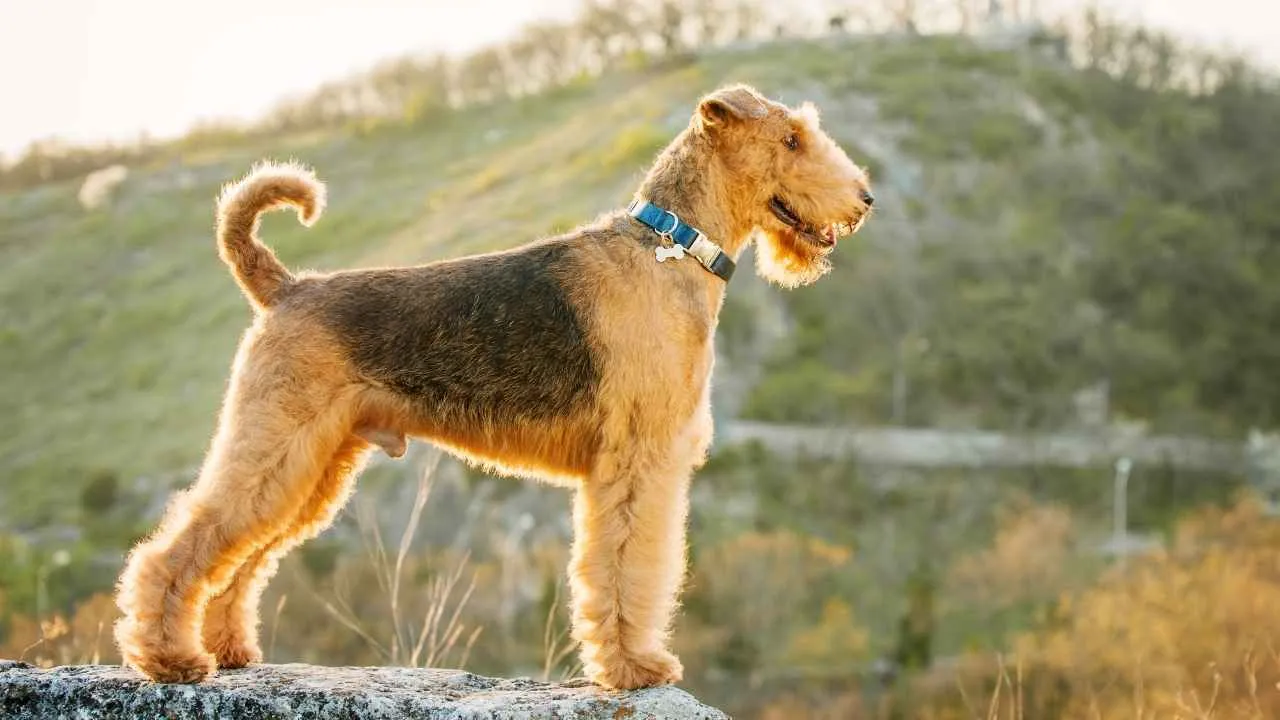
The Airedale Terrier is the multitool of this lineup, bringing terrier grit, hound-influenced scenting talent, intelligence, and a love of getting involved.
That broad job description explains why the Airedale earned the nickname “King of Terriers.” It is larger and more versatile than many earth-working terriers, with enough stamina to travel across land while retaining confidence around water.
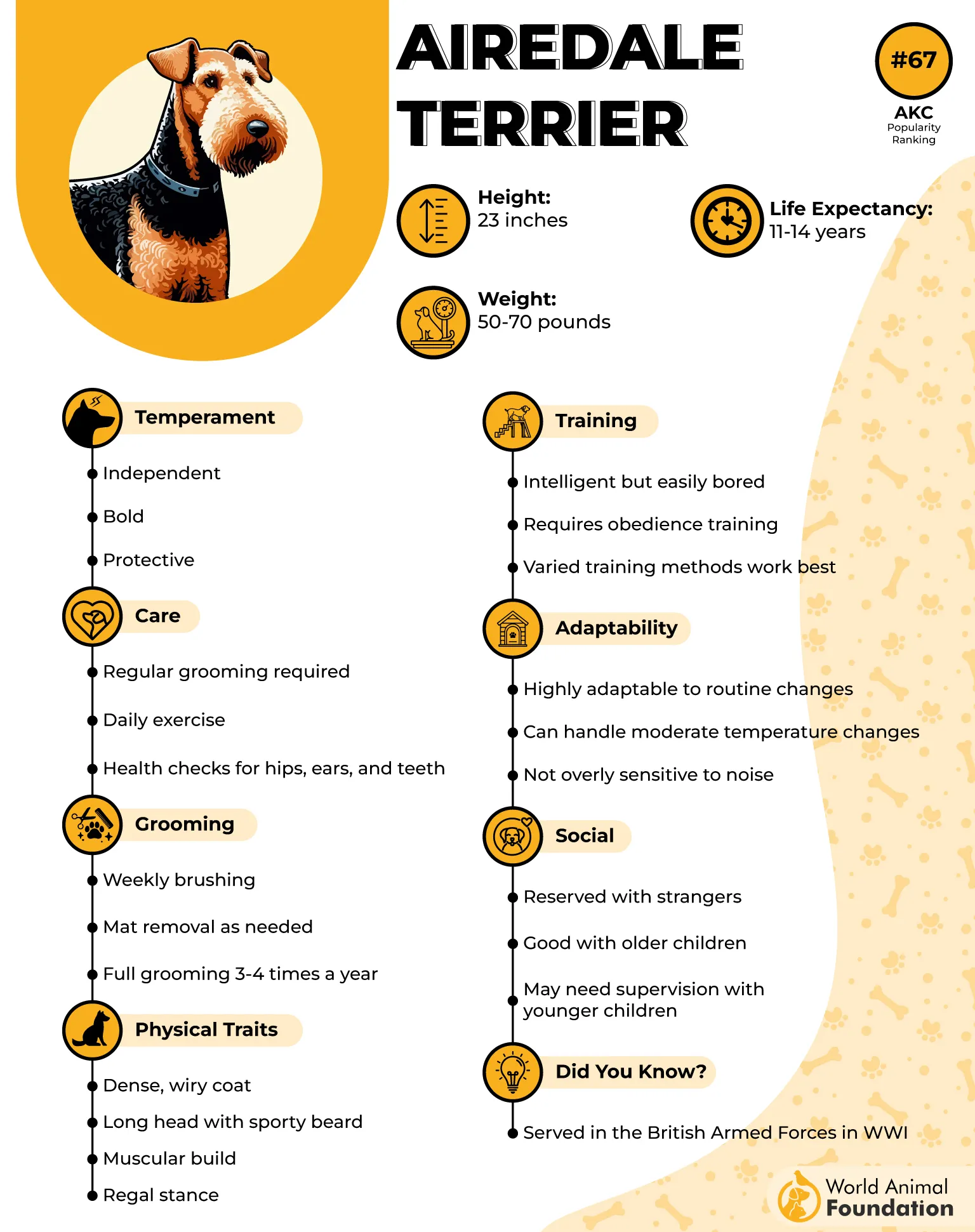
Hunters have praised Airedales for quickly understanding new field tasks and working closely with people. Their wiry coats offer useful protection in cooler and wetter environments.
Compared with specialized scent hounds, an Airedale may work a trail with more visual scanning, air scenting, and handler interaction. Terrier confidence can help it push into cover, but that boldness also needs control so the dog does not rush dangerous quarry without reading the situation.
For experienced owners who appreciate a dog that can track, swim, retrieve, guard, and still invent comedy between assignments, the Airedale remains a fascinating all-rounder.
Their Specific Wild Boar Tracking Strategy
The Airedale tends to combine ground scenting, air scenting, visual searching, and close handler cooperation rather than relying entirely on a single prolonged scenting style.
Its wiry coat and versatile movement help it investigate dense cover, water edges, and rough farm terrain where boars may feed or shelter.
The breed is most effective when trained to locate and indicate rather than charge blindly, using intelligence and controlled pressure to avoid unnecessary contact.
Conclusion
A proven tracking dog is ultimately built through genetics, training, experience, trust, conditioning, and responsible handling. The impressive breed history provides the handler with raw material, but it does not automatically instill recall, judgment, fitness, or field discipline.
German Hunting Terrier, Jack Russell Terrier, Labrador Retriever, Rhodesian Ridgeback, English Springer Spaniel, American Bulldog, and Basset Hound are other catch dogs that are great at wild boar hunting.
Choose carefully, train patiently, obey wildlife laws, protect the dog, and remember that real expertise looks less like reckless bravery and more like calm preparation.
