




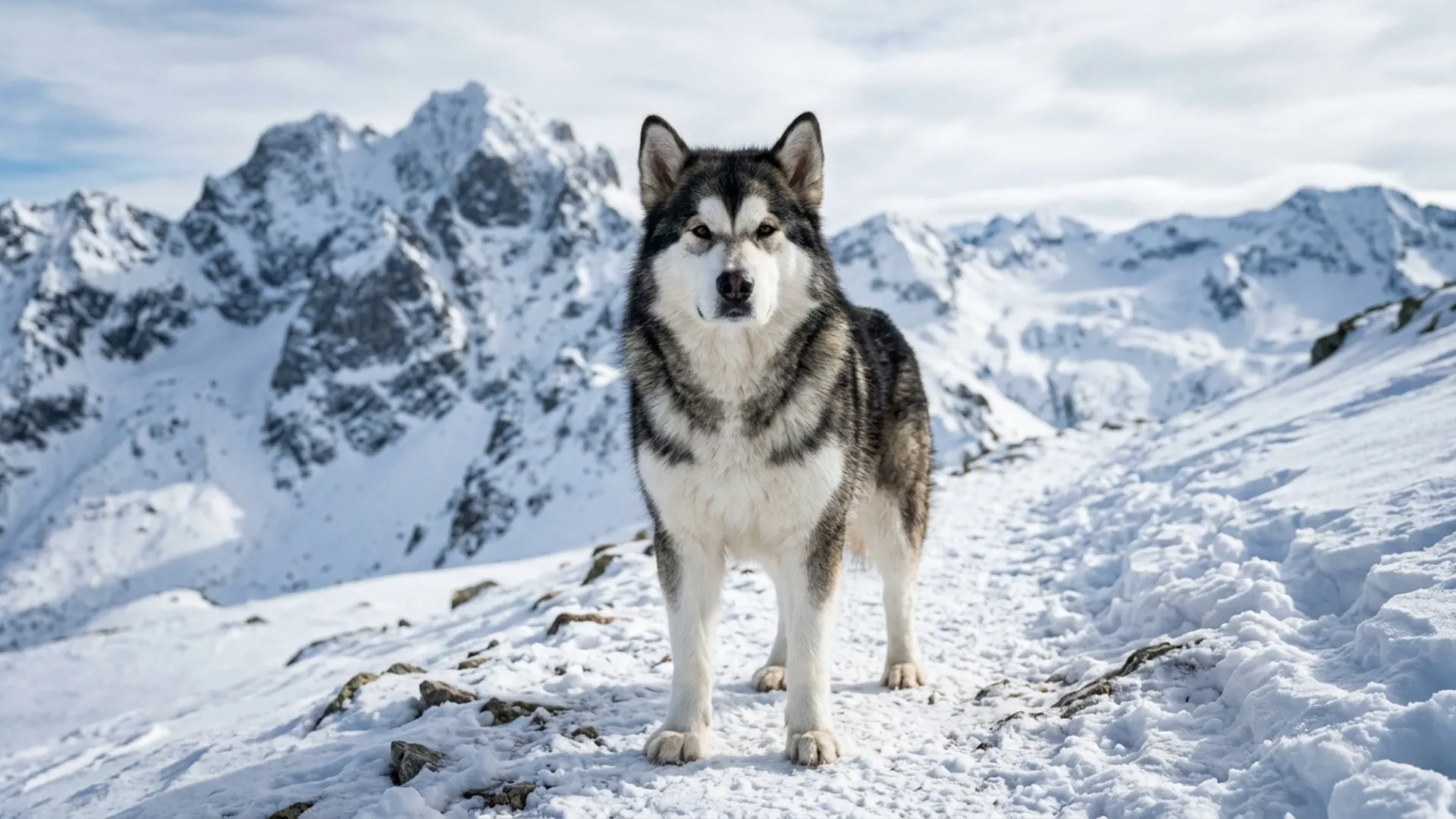
What kind of dog can face biting cold, rugged terrain, blazing heat, or demanding outside conditions and keep moving? Certain breeds have developed physical traits and remarkable resilience that help them adapt to challenging environments where other dogs may struggle.
Thick double coats can provide insulation in frigid climates, while lean builds, short coats, and other features can support heat tolerance. Their abilities often reflect generations of adaptation to the regions and working conditions where their ancestors lived.
From snowy trails to scorching landscapes, these seven resilient breeds bring impressive endurance and adaptability to every adventure. Still, even weather-hardy dogs need appropriate shelter, water, rest, and protection from dangerous temperatures.
FACT: A dog’s tolerance for extreme climate varies by individual, so even highly adaptable breeds can be vulnerable to heat or cold.
Dog Breeds That Excel in Harsh Environments and Weather
1. Siberian Husky
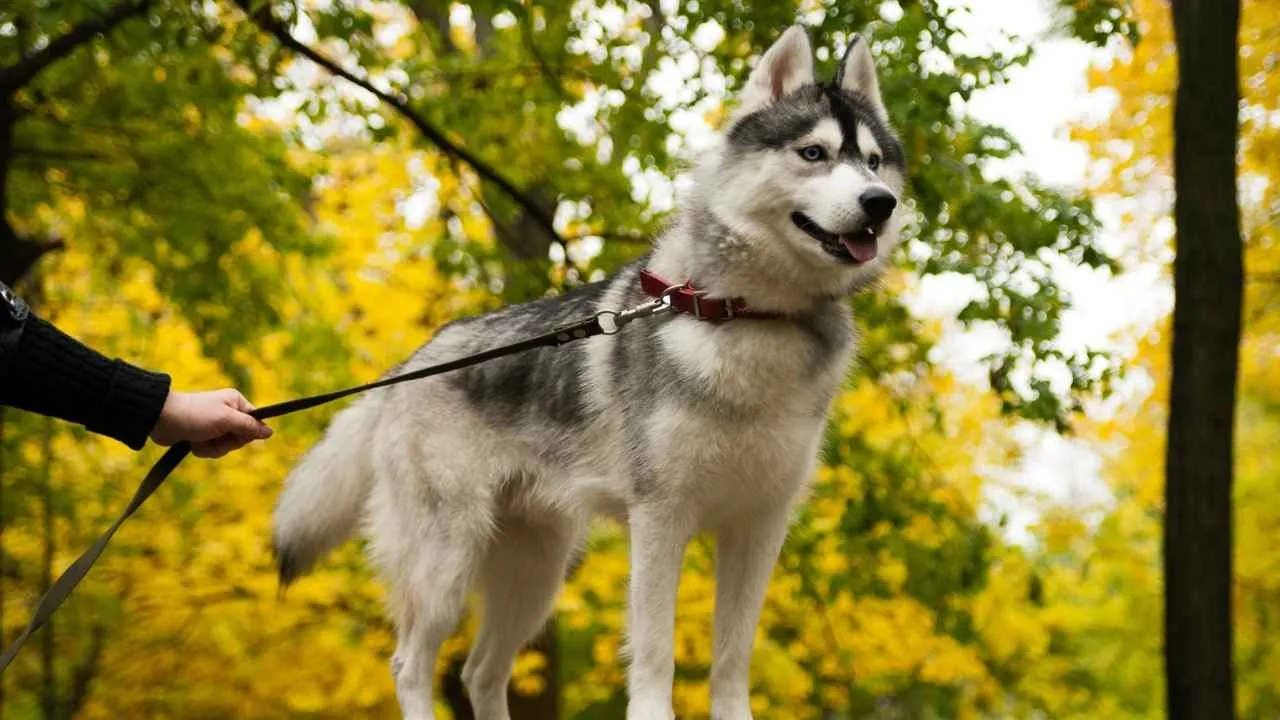
Bred by the Chukchi people, Siberian Huskies were developed to travel across the demanding Arctic landscape. Their heritage as sled dogs gave them the stamina needed to cover long distances in severe winter conditions.
A dense double coat acts as natural insulation, helping Huskies stay comfortable through freezing temperatures, snow, and icy terrain. Their thick fur is especially useful when exterior adventures take them into exposed, wintry environments.
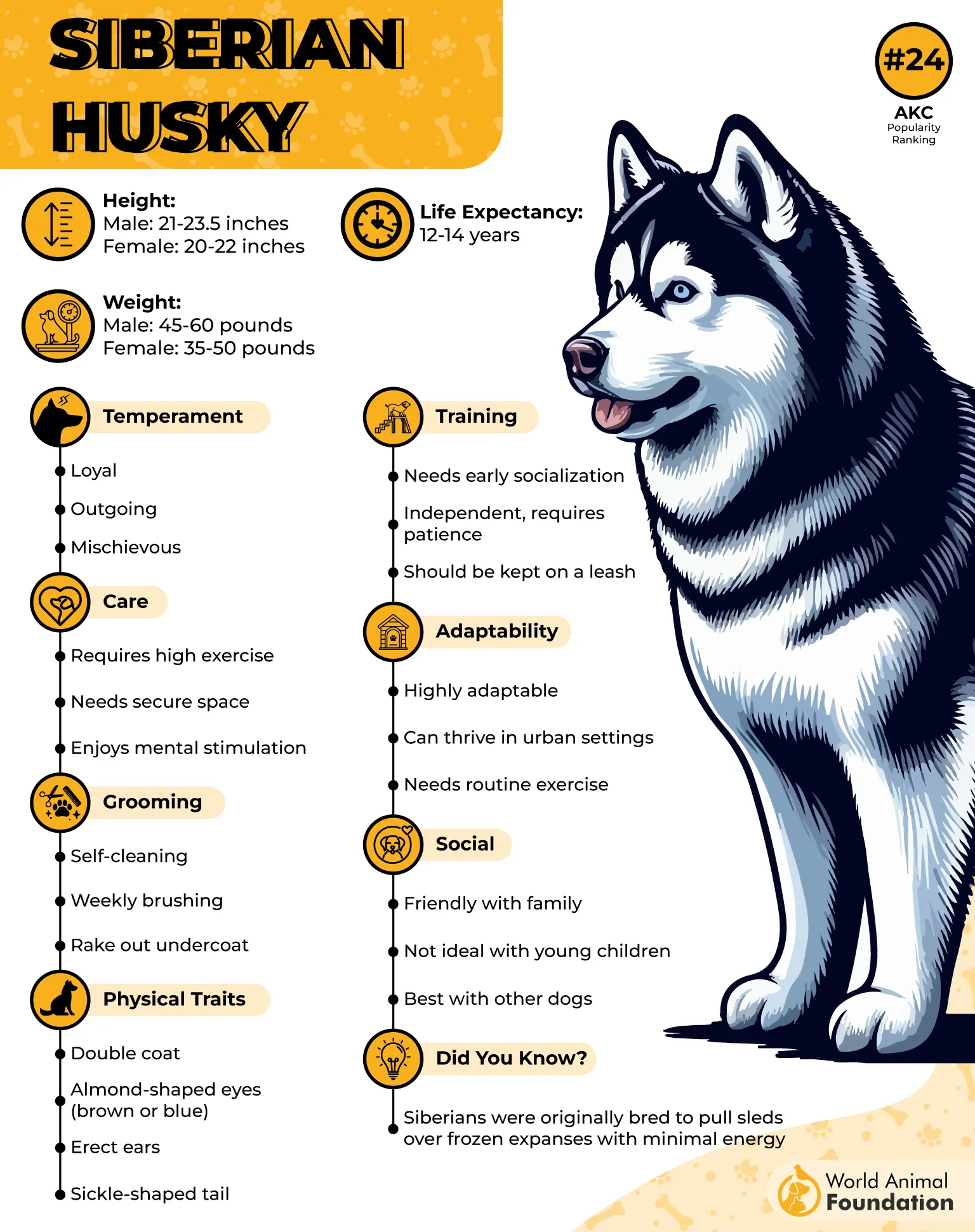
Built more for endurance than short bursts of speed, these energetic dogs can maintain a steady pace over lengthy treks. Their athletic build and remarkable resilience make them natural companions for snowy trails, rugged mountains, and other challenging landscapes. According to Hill’s Pet, Siberian Huskies enjoy sledding and skijoring.
Adventure comes naturally to the Siberian Husky, particularly when the environment is cold and demanding. They are independent, energetic, and capable of tackling difficult terrain, although their heavy seasonal shedding requires regular grooming.
2. Alaskan Malamute
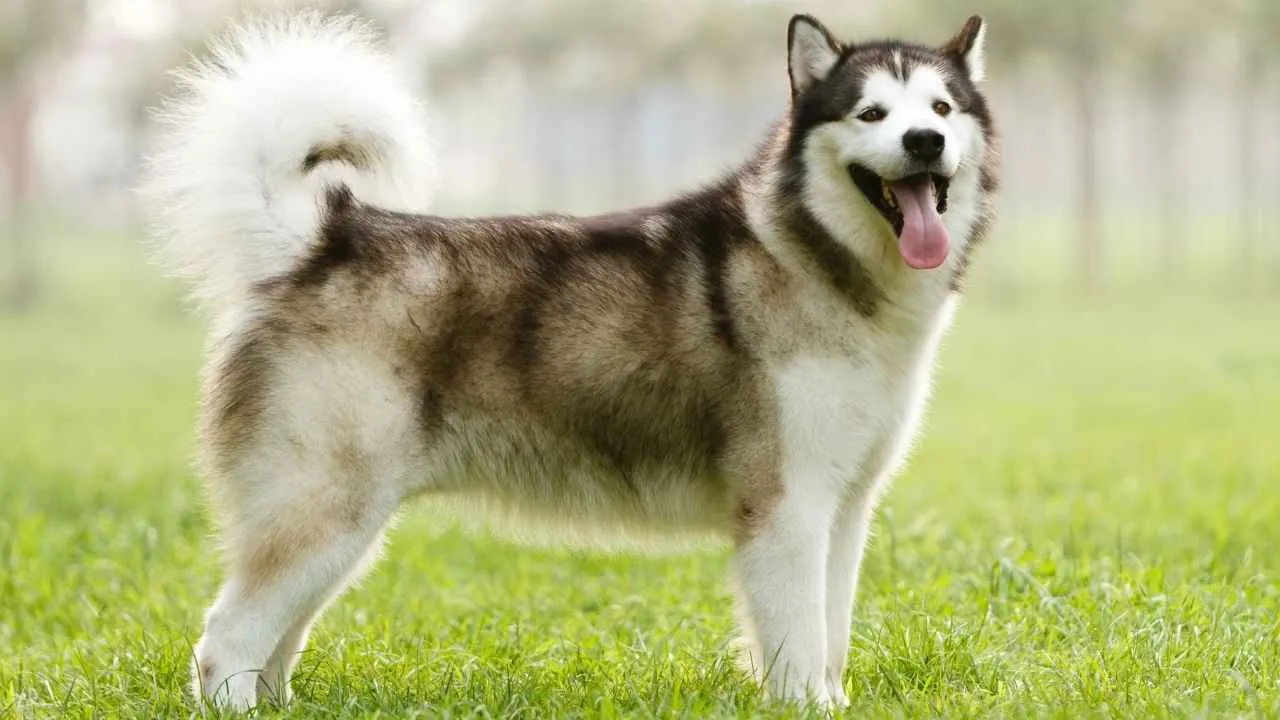
The Alaskan Malamute was developed for demanding work in Alaska’s frozen wilderness. The Mahlemut people depended on these powerful dogs to haul heavy sled loads and assist with hunting, giving the breed its remarkable strength and endurance.
Its dense double coat works like natural insulation, helping protect the Malamute from freezing temperatures, snow, and moisture. A muscular build and sturdy frame allow it to handle rugged terrain and long stretches of strenuous activity.
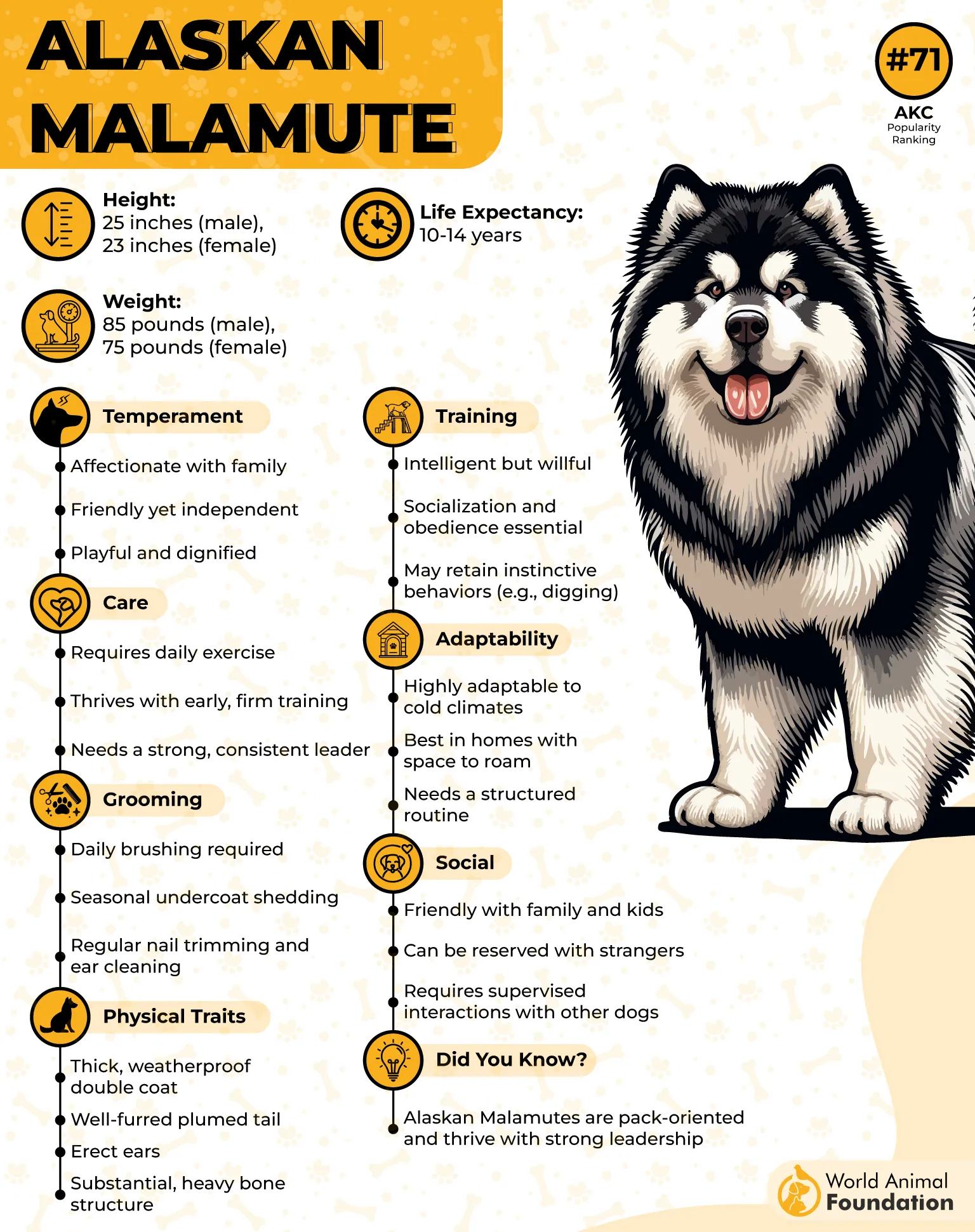
Unlike breeds built mainly for speed, the Malamute is a heavy-duty hauler designed to pull substantial weight over difficult ground. Its independent, hardworking nature also makes it well suited to demanding open-air adventures in cold climates. According to PDSA, Malamutes have an intense prey drive.
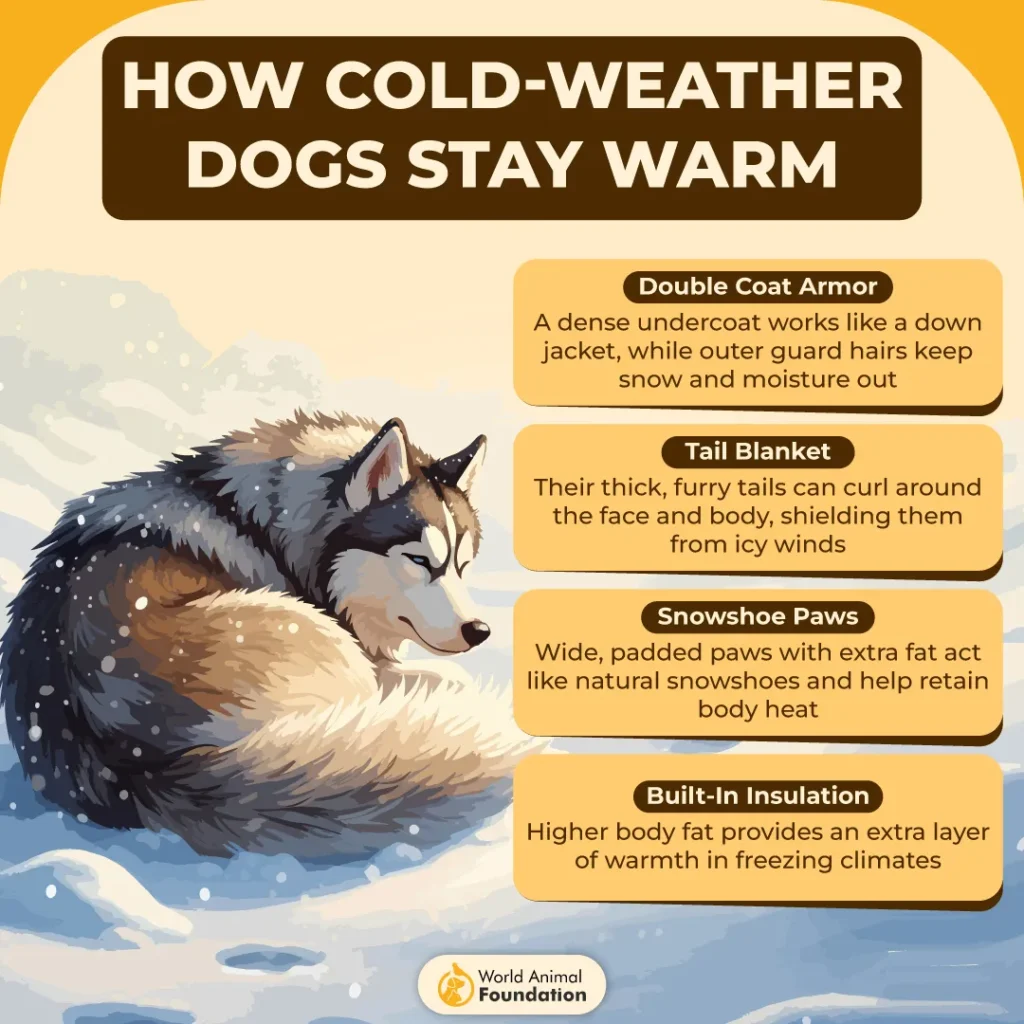
However, its thick coat can make hot weather challenging. During warmer months, exercise should be scheduled during the coolest parts of the day, with plenty of opportunities for the dog to stay comfortable and avoid overheating.
3. Tibetan Mastiff
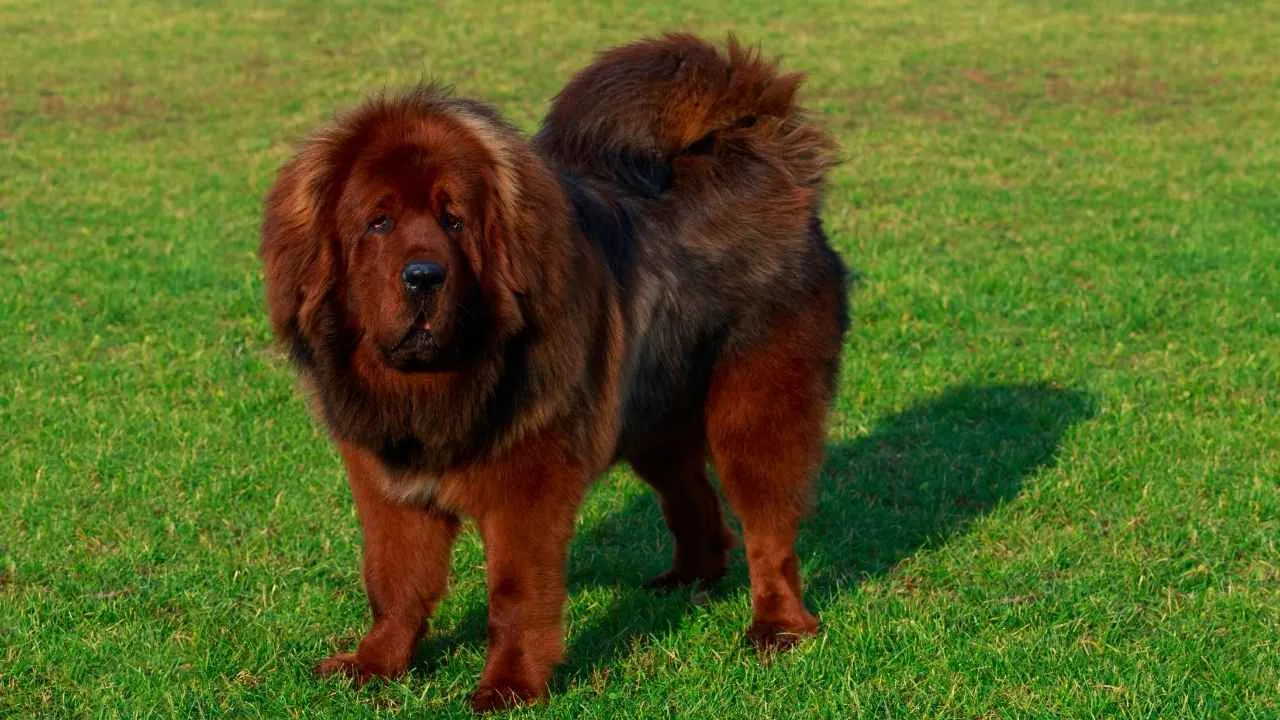
The Tibetan Mastiff developed as a formidable guardian, shaped by freezing temperatures and rugged terrain. This ancient breed has a commanding presence, with historical records tracing its origins back to around 1100 BCE.
Its thick, woolly coat forms a lion-like mane around the neck, providing insulation against severe mountain cold. The coat is especially abundant in males, while the heavily feathered hind legs and bushy tail add further protection from harsh conditions.
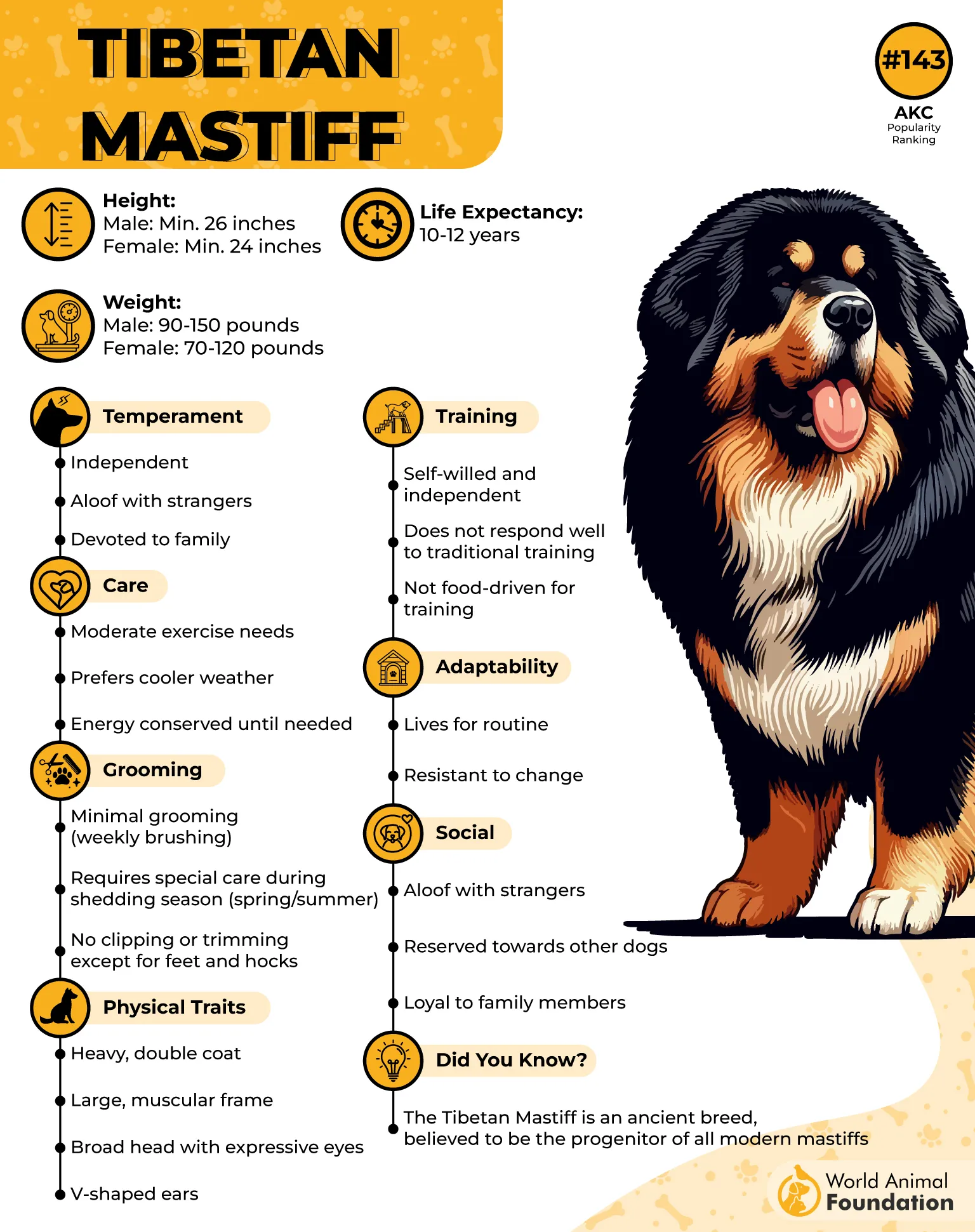
Beneath that imposing appearance is a calm and affectionate companion with a strong bond to its owners. Naturally alert, the Tibetan Mastiff watches over its family and property, often remaining reserved when unfamiliar people approach.
Independent and strong-willed, this breed has the confidence of a seasoned mountain guardian. Early, consistent socialization helps channel its protective instincts and teaches it to interact appropriately with people and other animals.
4. Newfoundland

Newfoundlands, affectionately known as Newfies, were developed in Newfoundland, Canada, where demanding work and cold climates shaped their remarkable resilience. Their history is closely tied to fishermen, sailors, and hauling tasks along rugged coastlines.
A thick, water-repellent double coat provides insulation when temperatures drop and helps protect these gentle giants from chilly, wet conditions. Seasonal shedding can be especially heavy as they blow their undercoat in preparation for changing conditions.
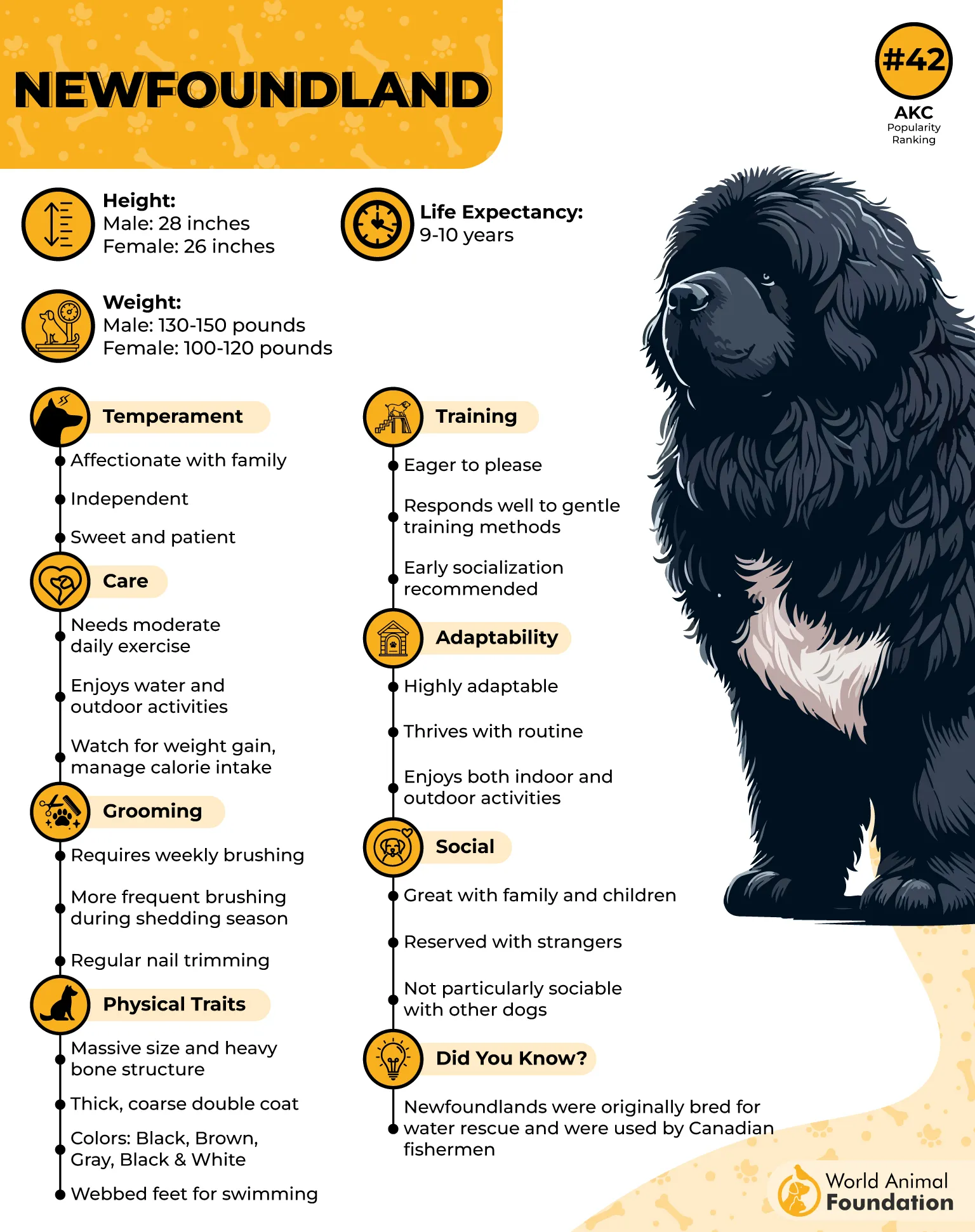
Water is where the Newfoundland truly shines. Strong, webbed feet support powerful swimming, while their sturdy build helps them navigate rocky shores, steep terrain, and rough environments with confidence.
Despite their imposing size, Newfoundlands have a calm, affectionate nature that makes their working heritage especially heartwarming. Their combination of strength, swimming ability, and natural cold-weather protection makes them remarkably suited to life around frigid waters and challenging landscapes.
5. Basenji
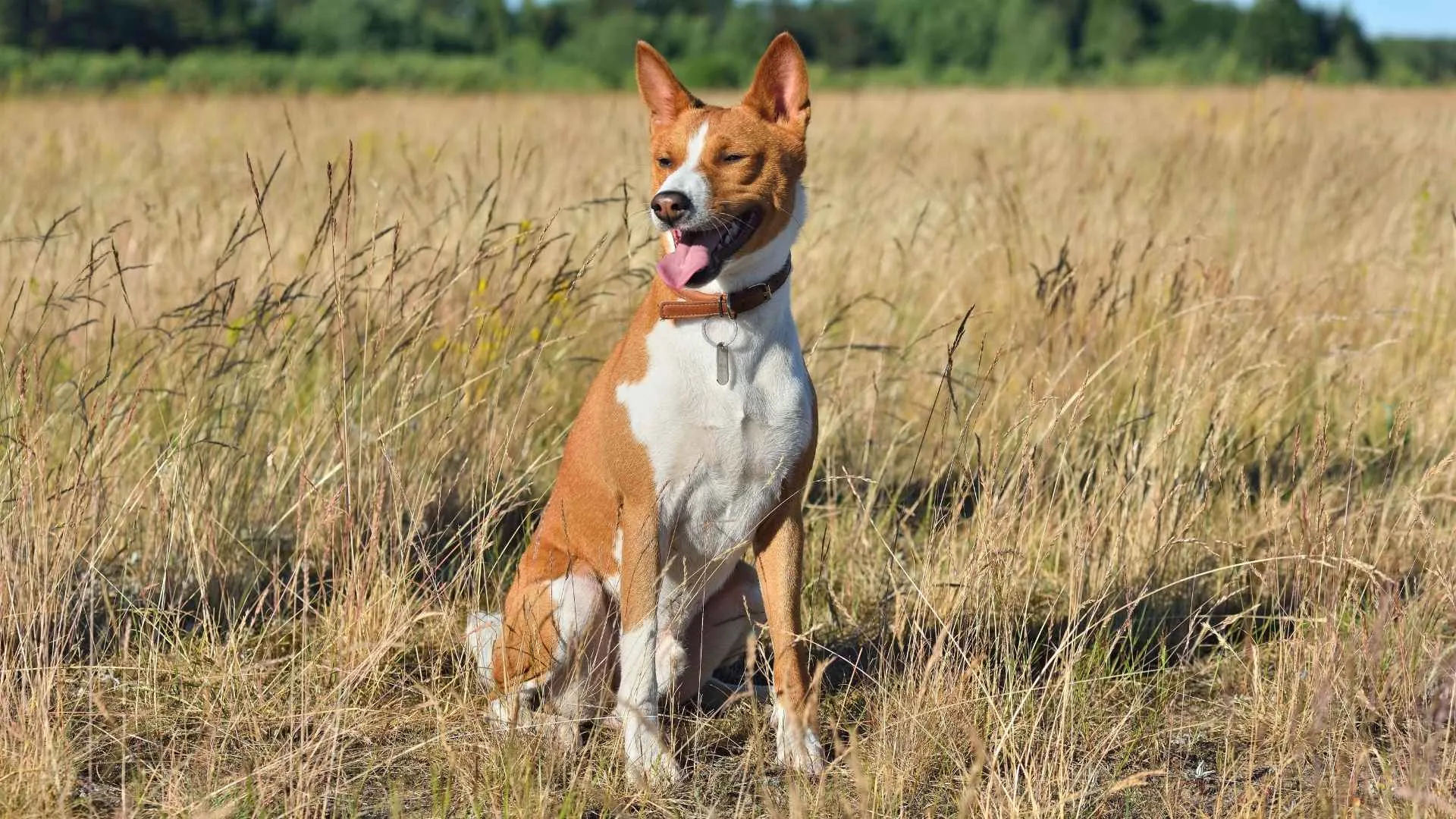
Originating in Central Africa, the Basenji developed as a hunting dog in the hot, humid environments of the Democratic Republic of the Congo. Its history in equatorial regions gives this breed natural adaptations for coping with intense heat.
Its sleek, short coat offers little insulation that could trap excess warmth, while its athletic build supports efficient movement during hunting. Large, upright ears are particularly useful in hot conditions, allowing heat to dissipate while remaining exposed to cooling air.
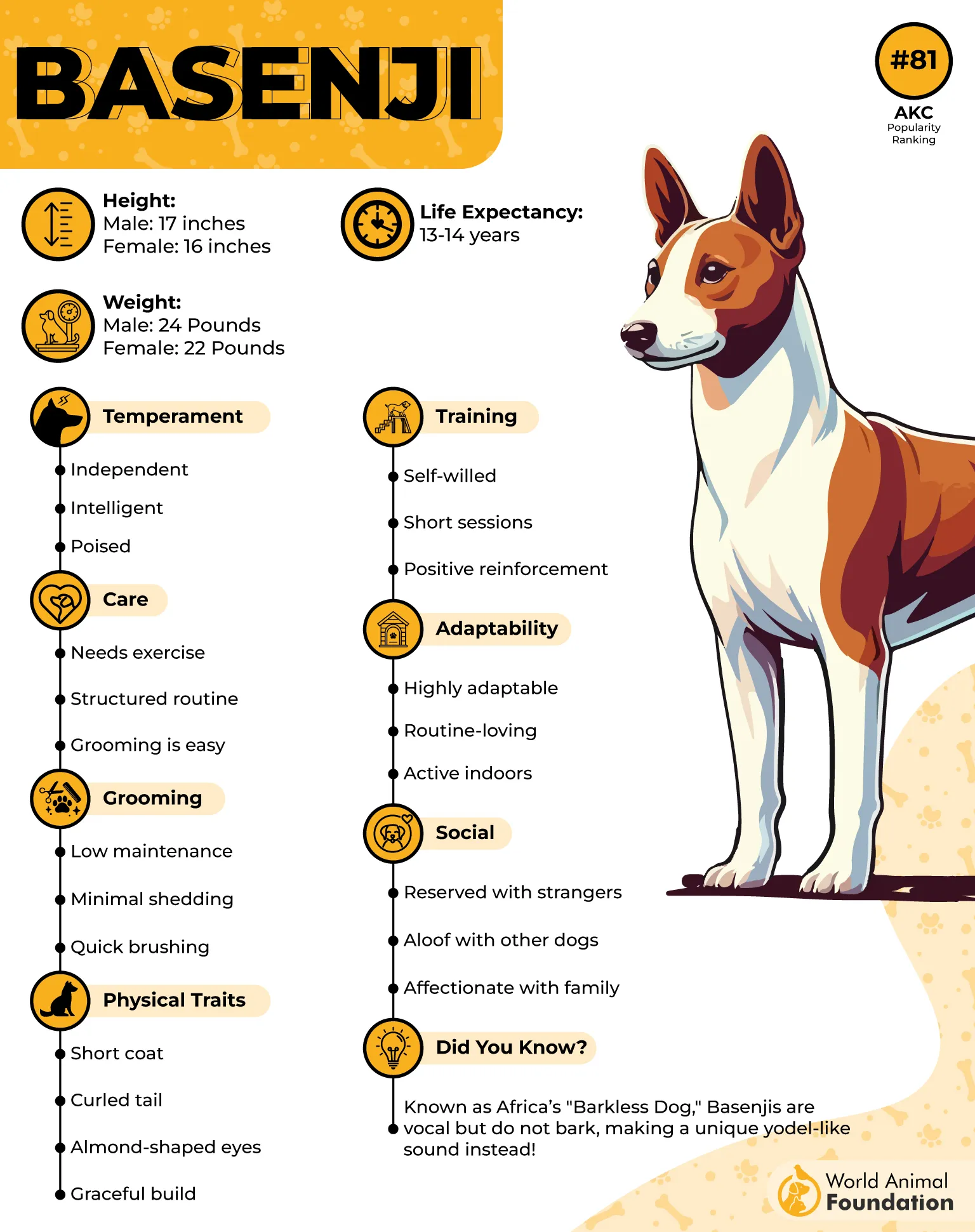
The Basenji’s compact frame and smooth coat make it better equipped for heat than many heavily coated breeds. Its distinctive coat may appear chestnut red, black, brindle, or tricolor, typically paired with white markings on the feet and legs.
Beyond physical adaptations, Basenjis are known for an independent, catlike temperament. Their intelligence and stubborn streak can make training challenging, so consistent, knowledgeable handling is especially important for owners unfamiliar with this ancient hunting breed.
6. Rhodesian Ridgeback
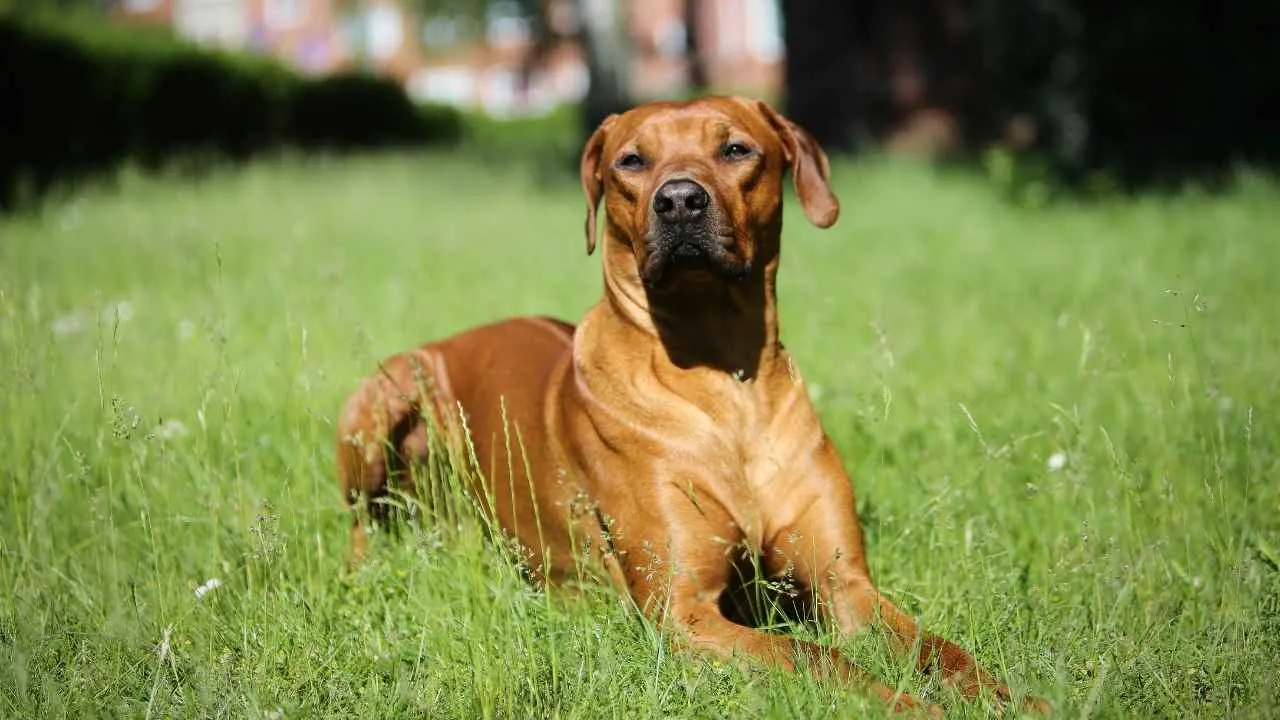
Bred in southern Africa, the Rhodesian Ridgeback was developed to pursue large game across hot, demanding landscapes. Its short, smooth coat helps it stay comfortable in warm conditions.
According to the AKC, Ridgebacks are fast and robust athletes. This rugged dog has a lean, muscular body built for endurance rather than brief bursts of speed. It can cover long distances while navigating rocky ground, uneven trails, and thick brush.
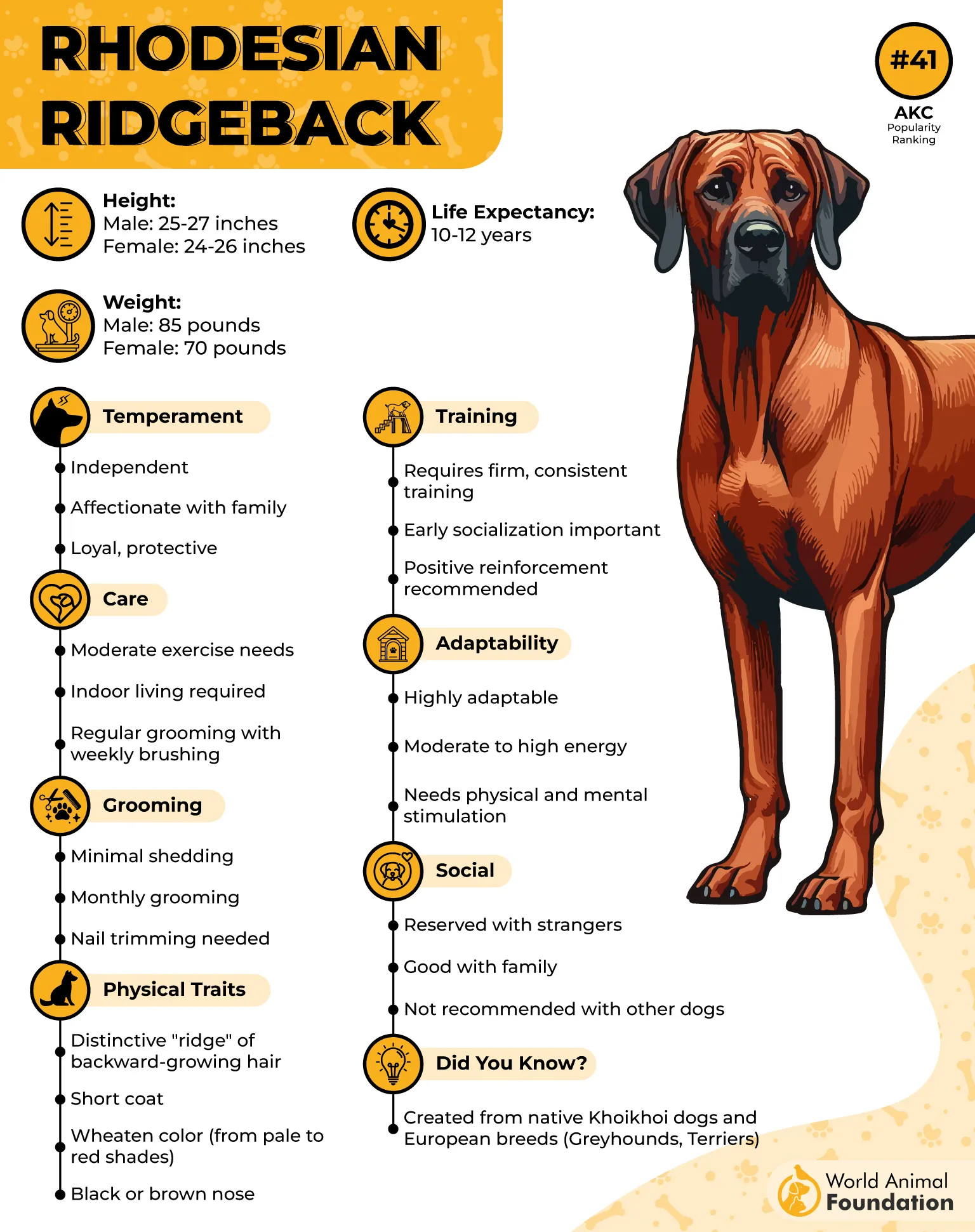
Adventure comes naturally to the Ridgeback, whose stamina and physical resilience suit challenging outdoor activities. Its athletic build allows it to move confidently through varied terrain without tiring quickly.
Independence is another defining quality of this breed. Historically expected to work with limited direction, the Ridgeback can adapt to demanding surroundings while remaining capable and self-reliant during outdoor pursuits.
7. Ibizan Hound
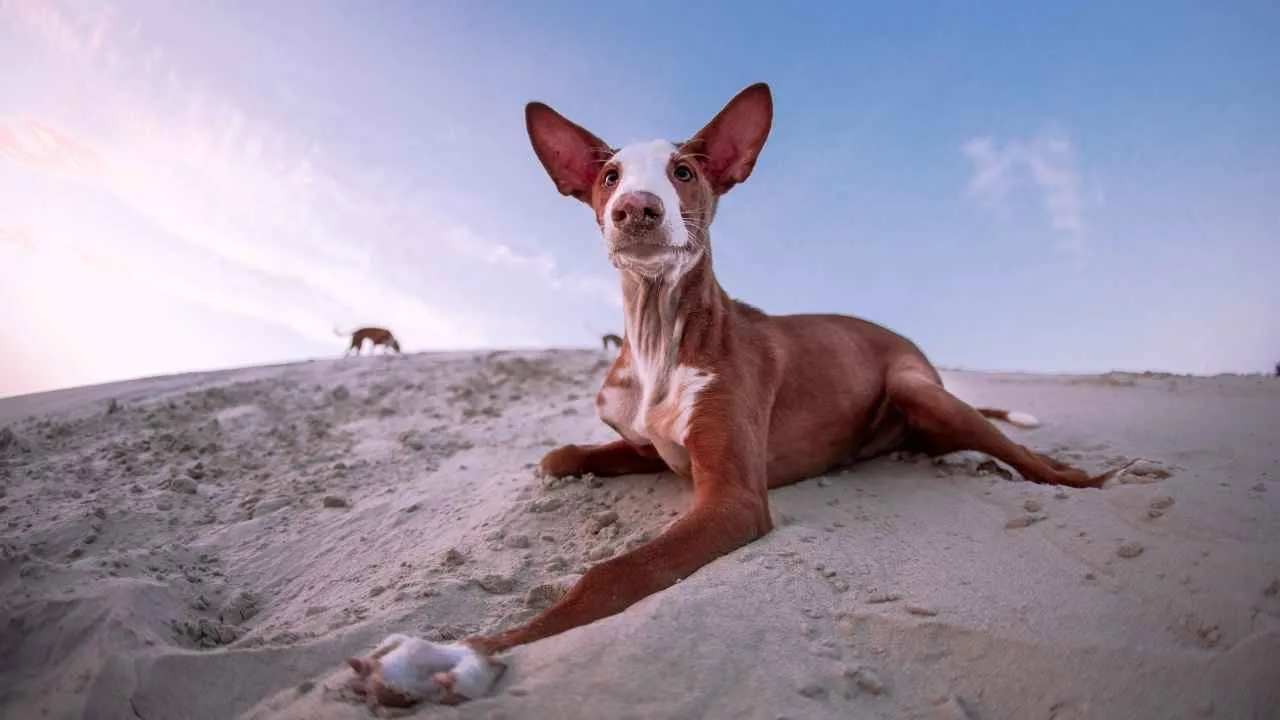
The Ibizan Hound is a lean, athletic breed shaped by the warm Mediterranean landscape of Ibiza and the Balearic Islands. Its long legs and lightweight build support quick movement across rugged, uneven terrain.
Large upright ears help give this rabbit hunter its distinctive appearance, while its short or wiry coat is well suited to sunny, warm conditions. Red, red-and-white, and white coloring are characteristic of the breed.

For owners living in hot climates, the Ibizan Hound can fit naturally into an active open-air lifestyle. It thrives with plenty of exercise, whether through long walks, running, or energetic dog sports.
Despite its stamina outdoors, this breed can settle comfortably after activity. Its Mediterranean background and efficient build make it particularly accustomed to warm surroundings, while its energetic nature suits households that enjoy spending time outside.
Conclusion
Choosing a dog for challenging environments means considering more than appearance. Climate, terrain, activity needs, and natural adaptations all influence how comfortably a breed can handle demanding conditions.
Some breeds are naturally suited to intense heat, while others are better equipped for cold climates, rough landscapes, or changing climates. Their coats, body structures, endurance, and instincts can all contribute to their resilience.
Lifestyle also matters when finding the right companion. A breed that thrives in outside environments may need regular exercise and stimulation, while another may be more comfortable with a quieter routine despite its climate tolerance.
Understanding these differences can help prospective owners make thoughtful choices based on both the environment and the dog’s everyday needs. With suitable care, exercise, shelter, and protection from extreme conditions, these resilient breeds can adapt well to challenging surroundings.
