





Not everyone fits neatly into the “dog person” or “cat person” category—some households welcome both.
Sharing a home with cats and dogs is not only possible but can result in a calm, cooperative relationship when the pairing is approached thoughtfully.
While temperament, training, and proper introductions play essential roles, the choice of breed can significantly influence how smoothly the transition unfolds.
Certain dog breeds are known for their adaptable nature, gentle temperament, and strong social awareness, making them more inclined to respect a cat’s boundaries while remaining open to companionship.
Breeds with lower prey drives and balanced energy levels are often better suited to multi-pet environments, as they are less likely to chase or intimidate feline housemates.
With gradual introductions and consistent guidance, many dogs move beyond coexistence and develop genuine bonds with cats, often sharing resting areas, routines, and moments of play.
Selecting a breed with compatible traits lays the foundation for a stable and harmonious multi-pet household, where cats and dogs can comfortably coexist and, in many cases, thrive together.
Dog Breeds That Bond Quickly With Cats
1. Labrador Retriever
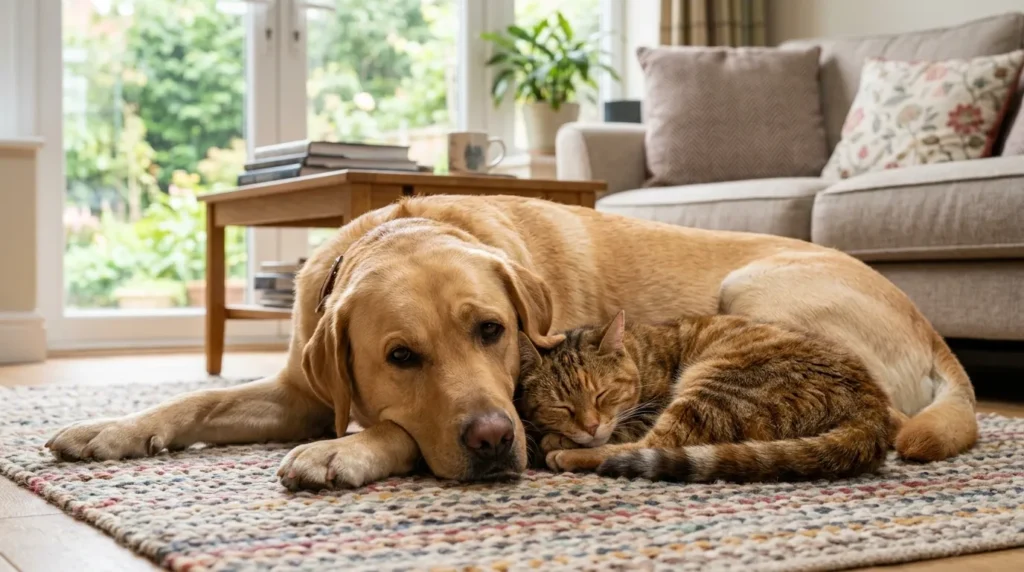
Enthusiastic yet gentle in nature, the Labrador Retriever stands out among dog breeds that tend to form quick and stable bonds with cats.
Despite their large size compared to felines, their temperament is defined by friendliness, patience, and a strong inclination toward companionship.
Known for a consistently outgoing personality, these cat breeds typically display an easygoing attitude toward new environments and other animals, including cats.

Their intelligence and eagerness to please contribute to responsive behavior during training, which helps establish respectful boundaries within a multi-pet household.
A naturally low tendency toward aggression, combined with a cooperative and social disposition, allows these large dogs to adapt smoothly to living alongside household cats.
Rather than showing dominance or territorial behavior, Labrador Retrievers often demonstrate curiosity followed by acceptance, creating opportunities for peaceful coexistence.
With proper socialization and a calm introduction process, this breed frequently transitions from initial interest to comfortable familiarity, and in many cases, develops a relaxed, friendly bond with feline companions.
🐾 Cat & Dog Compatibility Checker
Answer a few questions to find out how well your pets will get along
Which dog breed do you have (or are considering)?
What is your dog’s age and socialization history?
How would you describe your cat’s personality?
How much space do you have at home for them to have separate areas?
How experienced are you with introducing pets to each other?
How much time can you dedicate to a structured introduction period?
💡 Personalized Tips for Your Pairing
2. Beagle

Bred to work in packs alongside other dogs, the Beagle is naturally sociable and generally comfortable sharing space with other pets, including cats, as noted by Britannica.
This breed’s history as a cooperative hunter contributes to a temperament that favors companionship over conflict, making interactions with feline housemates smoother when properly introduced.

The Beagle is widely recognized for an outgoing, cheerful, and playful nature, combined with a gentle disposition that supports coexistence in multi-pet households.
Curiosity often guides the Beagle’s behavior, allowing gradual acceptance of a cat’s presence rather than immediate aggressive behavior or dominance.

While independence and strong scent-driven instincts can make consistent training a challenge, positive reinforcement helps establish household boundaries.
In a home environment, the Beagle can adapt to indoor calmness after sufficient physical activity, helping reduce restlessness.
With adequate exercise, structured guidance, and early social exposure, the Beagle typically transitions into a relaxed companion that shares space peacefully, often gets along with cats rather than viewing them as competition.
🎧 Dogcast
Episode 37 — Why Dogs Stay Close without Touching
If you don’t hear sound, tap the button above to enable audio.
3. Golden Retriever
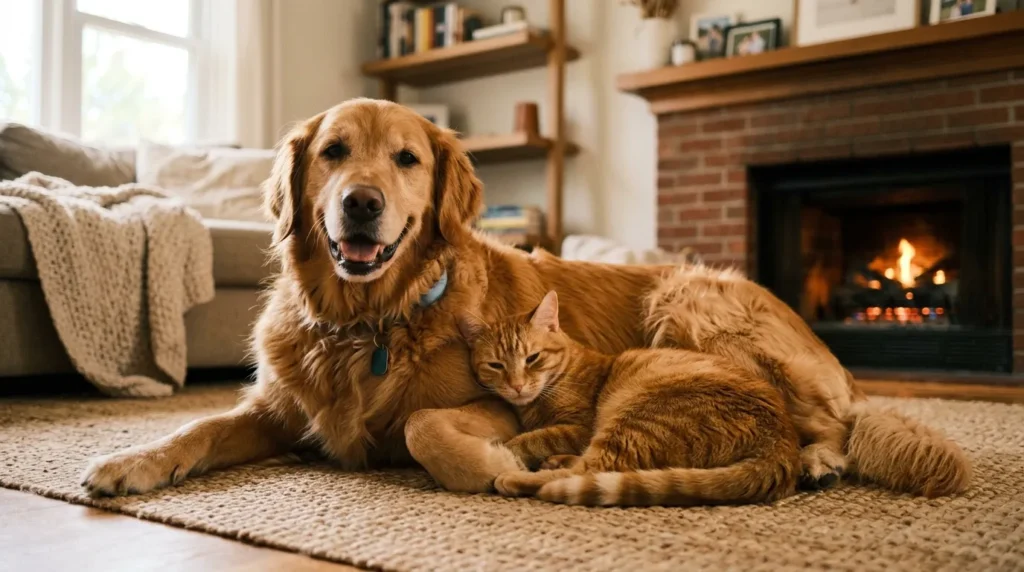
Widely recognized for their friendly and balanced temperament, the Golden Retriever is often considered one of the most reliable breeds for multi-pet households that include cats.
Their naturally social and affectionate disposition encourages positive interactions not only with humans but also with other animals in the home.

Known for adaptability and patience, Golden Retrievers typically approach new companions with curiosity rather than tension, which helps ease introductions with feline housemates.
This breed does require regular physical activity and mental stimulation, which contributes to a well-regulated and content demeanor indoors.
When their energy needs are met, cat-friendly Golden Retrievers are more likely to remain calm and respectful around cats, reducing the likelihood of overly excitable behavior that could overwhelm more reserved felines.

Their gentle mouth, cooperative nature, and responsiveness to training further support harmonious coexistence.
With structured introductions and appropriate boundaries, Golden Retrievers often move beyond simple tolerance and develop friendly, sometimes affectionate relationships with cats, making them a strong candidate among breeds known to bond quickly in shared living environments.
4. Pug
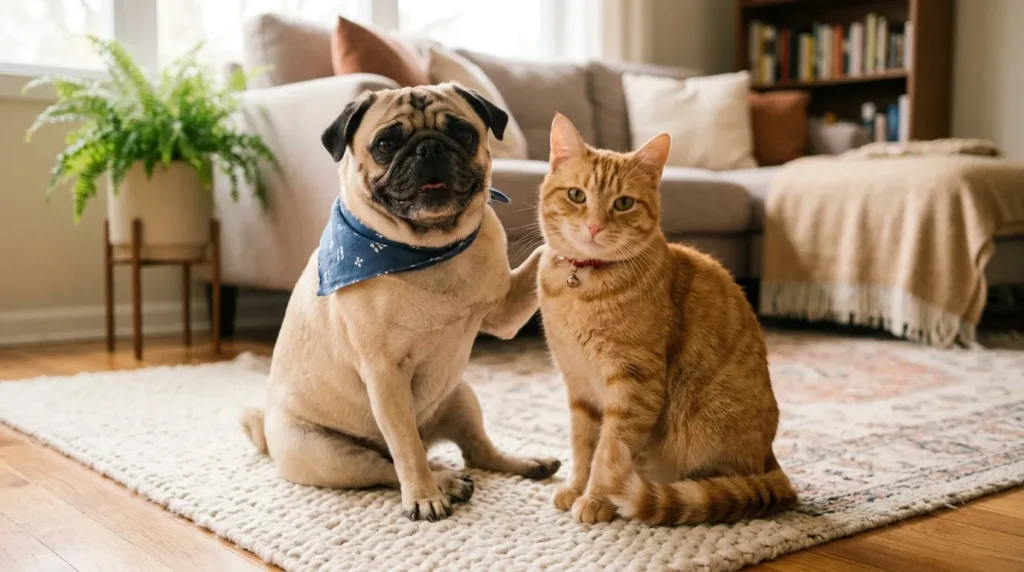
Compact, sociable, and naturally affectionate, the Pug is often a strong candidate among dog breeds that adapt well to living alongside cats.
This breed’s easygoing nature and preference for companionship make it more inclined to accept feline housemates without conflict.

Rather than displaying strong prey drive or territorial behavior, Pugs typically exhibit curiosity followed by calm acceptance, which can lead to relaxed, shared spaces and even proximity resting.
Their small size allows them to navigate shared environments without overwhelming a cat’s personal space, an important factor in encouraging positive interactions.
While they still require regular walks and moderate activity to maintain overall health, Pugs are generally content in indoor settings and do not demand excessive exercise compared to larger, more energetic breeds.
Social by nature, these friendly breeds tend to enjoy being part of a household group, which can extend to bonding with other pets when introductions are handled gradually.

With their gentle demeanor and preference for companionship, Pugs often transition into peaceful coexistence with cats, sometimes forming close, comfortable relationships over time.
5. Maltese
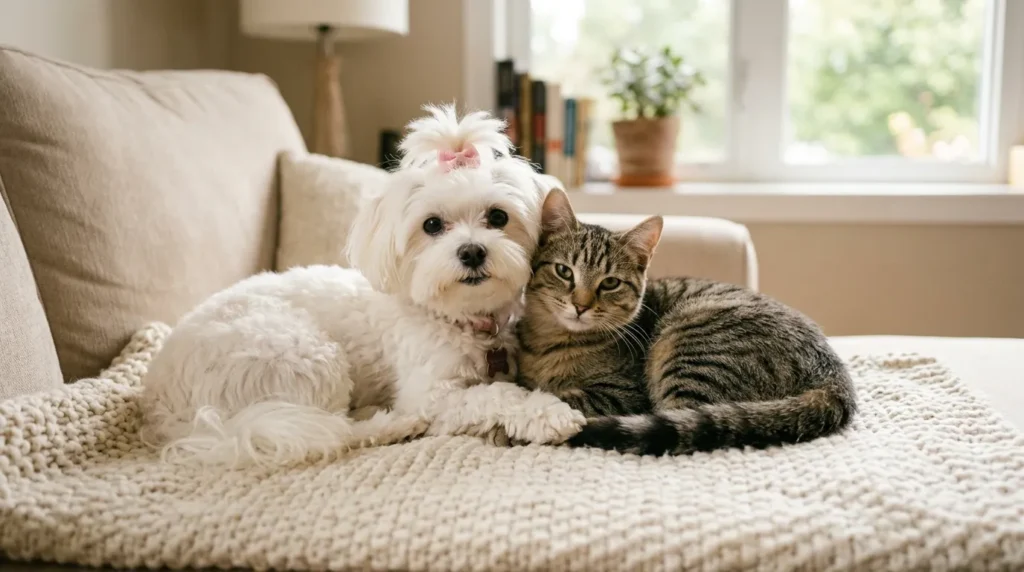
Elegant in appearance and gentle in temperament, the Maltese is often well-suited for households that include cats.
This small companion breed is known for its sociable nature and affectionate temperament, which supports positive interactions with other pets when properly introduced, as mentioned by Orvis.
Rather than displaying strong prey instincts, Maltese dogs tend to be people-oriented and comfortable forming close attachments within a home environment, a trait that can extend to feline companions.

Early socialization plays a key role in shaping their behavior around other animals. When exposed to cats from a young age, Maltese dogs are more likely to accept and coexist peacefully, often sharing living spaces without tension.
Their compact size also helps minimize intimidation, allowing cats to feel more at ease during interactions.
While they can become attentive to their owners and may occasionally show possessive tendencies if not guided, consistent training and clear boundaries encourage balanced behavior.
With proper social exposure and a stable routine, the Maltese frequently transitions into a calm, cooperative companion that can bond quickly with cats and maintain a harmonious presence in multi-pet households.
6. Boston Terrier
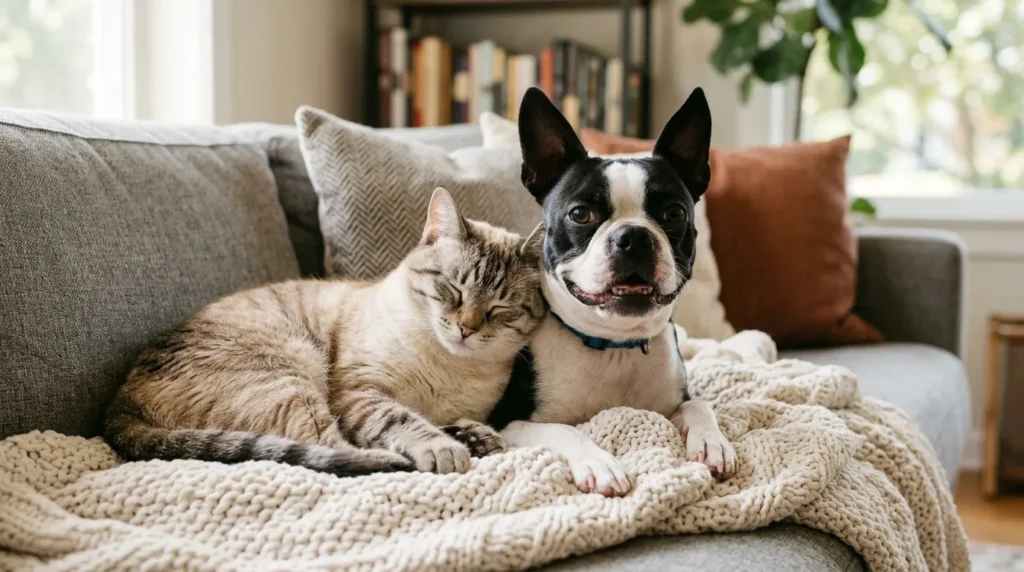
Compact, sociable, and easygoing, the Boston Terrier is widely regarded as a breed that integrates well into multi-pet households, including those with cats.
Known for their friendly disposition and adaptable temperament, Boston Terriers typically show a willingness to share space rather than compete for it, which supports smoother introductions with feline companions.
Their balanced energy levels allow them to engage in play without becoming overly intense, helping maintain a comfortable environment for more reserved pets.
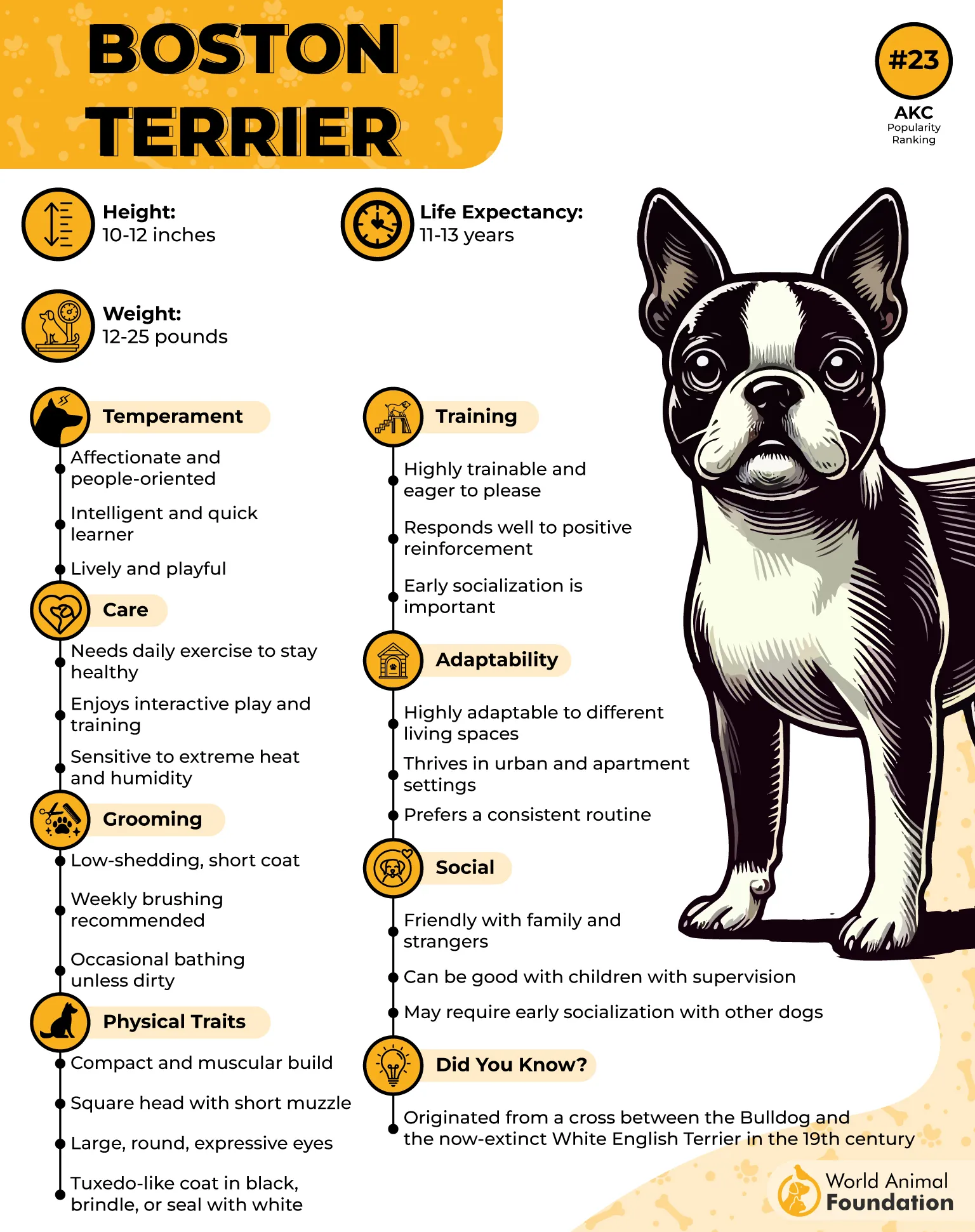
This breed is generally cooperative with other dogs and, when properly socialized, also gets along well with cats. While Boston Terriers may react vocally to unfamiliar animals outside the home, such behavior is usually more alert-driven than aggressive.
With consistent exposure and structured introductions, they learn to recognize and respect established household members, including cats.
Their affectionate and people-oriented nature often translates into a desire for companionship within the home, making them more inclined to coexist peacefully.
Over time, Boston Terriers can move from initial curiosity to relaxed familiarity, often developing friendly, low-conflict relationships with cats in shared living spaces.
7. Basset Hound
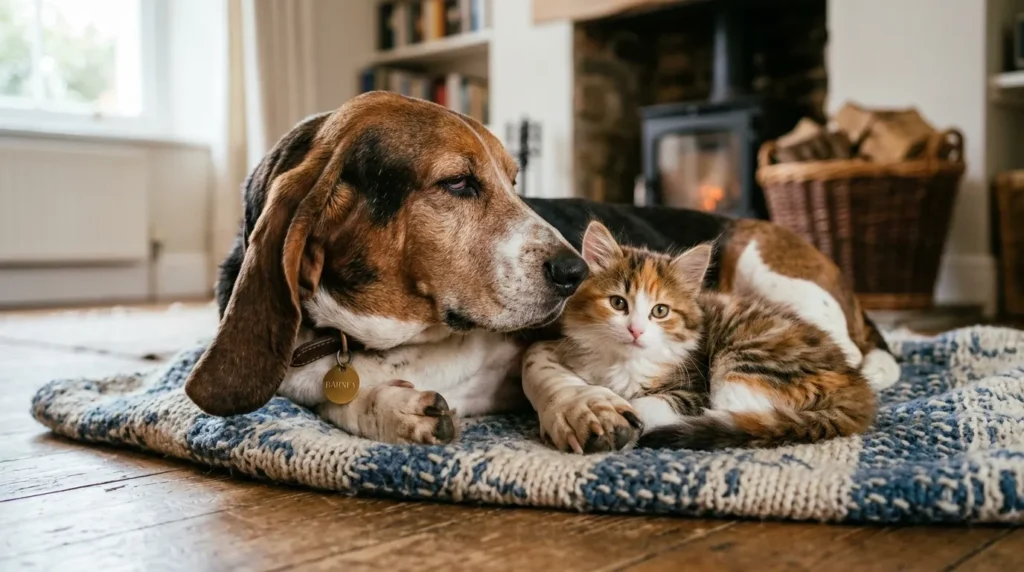
Known for a calm, patient demeanor and a naturally sociable attitude, the Basset Hound is often well-suited for households that include cats.
This breed’s easygoing temperament and low-key energy levels contribute to a relaxed approach when encountering other animals, reducing the likelihood of conflict in shared spaces.
Rather than reacting with dominance or chase instincts, Basset Hounds typically respond with mild curiosity and a tolerant presence, which helps foster peaceful coexistence with feline companions.

Their background as pack-oriented scent hounds also plays a role in their behavior, as they are accustomed to working alongside others rather than competing with them.
This cooperative nature often translates into acceptance of cats as part of the household group, especially when introductions are handled gradually.
While they enjoy companionship and may form close attachments with family members and other pets, their slower pace and steady temperament make them less overwhelming for cats.
With proper supervision, consistent routines, and respectful interactions, Basset Hounds can integrate smoothly into multi-pet environments and often develop comfortable, non-confrontational relationships with cats over time.
8. Cocker Spaniel

Affectionate, sociable, and naturally people-oriented, the Cocker Spaniel is often a strong match for homes that include cats.
This breed is widely recognized for its friendly disposition, which extends beyond human interaction to other animals sharing the same household.
Their balanced energy levels and manageable size make them well-suited for indoor living, where proximity to other household members is common.

Cocker Spaniels tend to form strong attachments to their families and are known for staying close to their companions throughout the day.
This desire for closeness, combined with a gentle and cooperative temperament, often encourages acceptance of feline housemates rather than competition or tension.
When properly introduced, they are more likely to observe and adapt to a cat’s behavior, gradually settling into a calm coexistence.
Their responsiveness to training and eagerness to engage with others further support positive interactions in multi-pet settings.
With consistent socialization and clear household structure, Cocker Spaniels frequently transition into reliable companions that are good with cats and, in many cases, develop friendly, comfortable bonds over time.
9. Bichon Frise
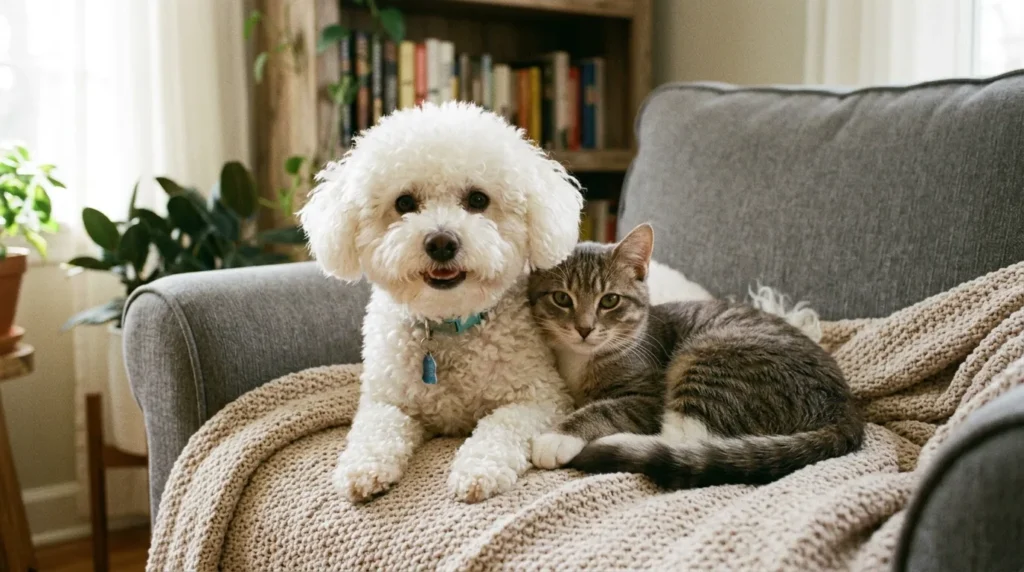
Cheerful, affectionate, and naturally social, the Bichon Frise is often a well-matched companion in homes that include cats, as noted by Purina.
This small but sturdy toy breed thrives on companionship and tends to integrate smoothly into family environments where multiple pets are present.
Their friendly and outgoing temperament encourages positive interactions rather than competition, making them more likely to accept feline housemates as part of their social circle.
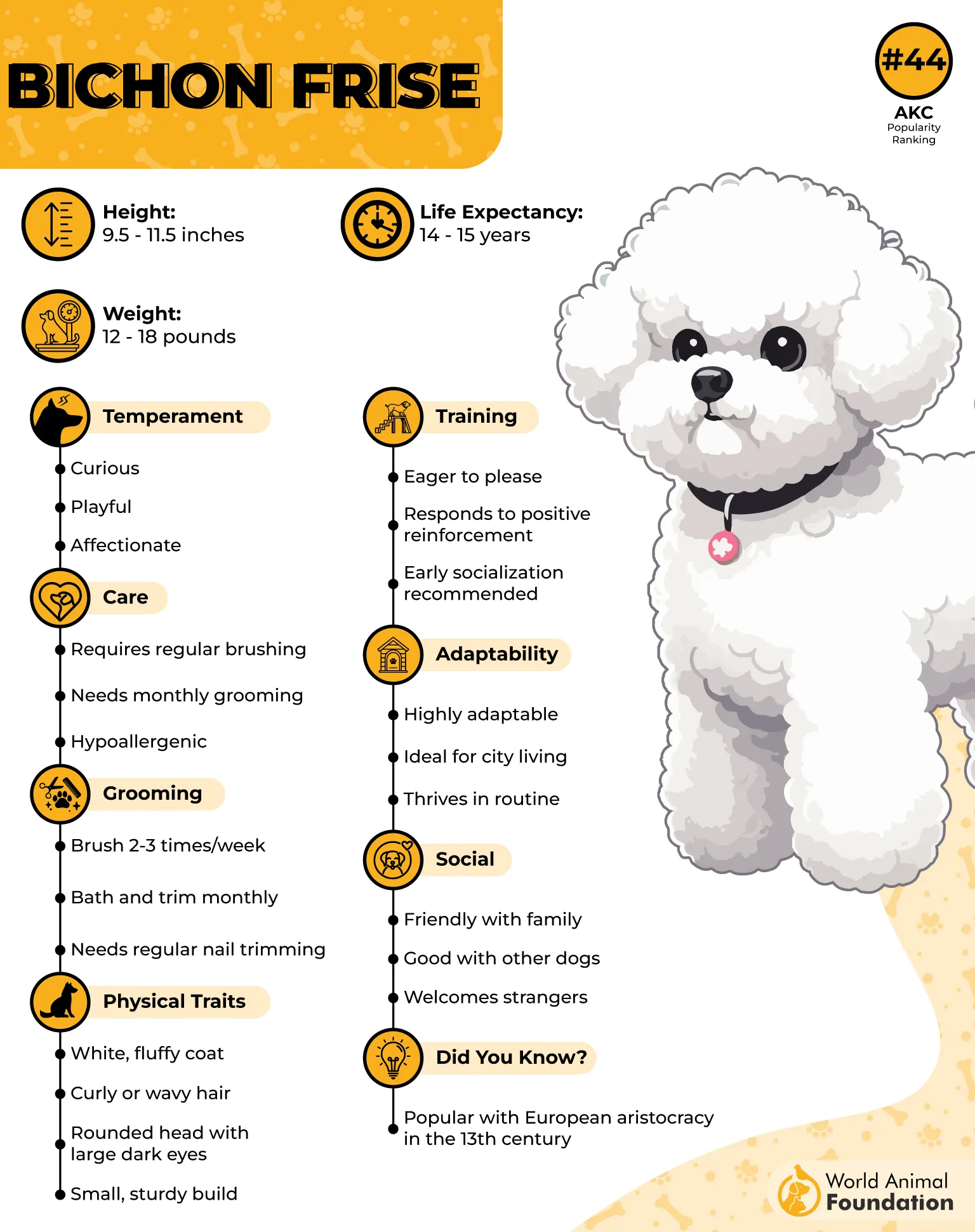
Bichon Frises are known for their adaptability and generally calm demeanor indoors, especially when their need for daily activity and engagement is met.
They enjoy being involved in household routines and typically respond well to consistent social exposure, which supports gradual and comfortable introductions to cats.
Their gentle nature and lack of aggressive tendencies make them less likely to intimidate or provoke other animals, helping maintain a balanced atmosphere in shared living spaces.
With proper guidance and early socialization, Bichon Frises often develop cooperative relationships with cats, coexisting peacefully and, in many cases, forming friendly, affectionate bonds within a multi-pet household.
10. Miniature Poodle
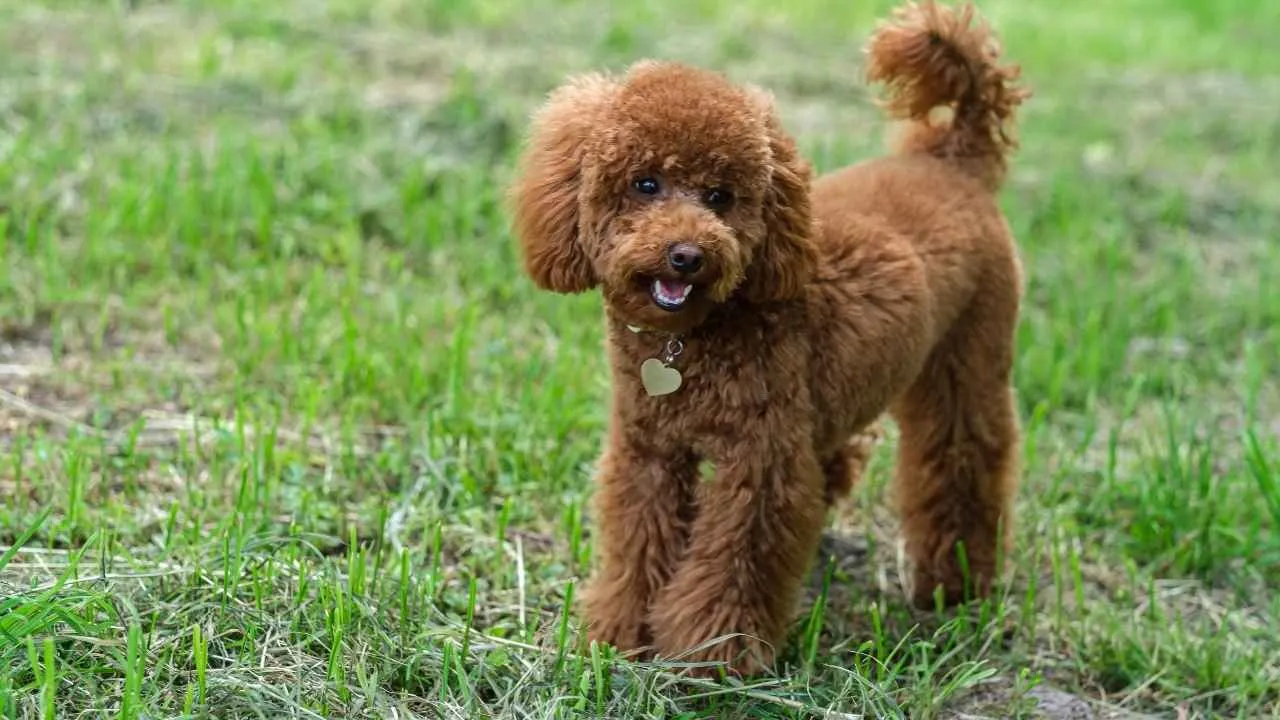
Intelligent, alert, and highly trainable, the Miniature Poodle is often a strong match for households that include cats.
This size of Miniature Poodle is especially known for its adaptable temperament and balanced energy level, which allows it to settle comfortably into shared living spaces without overwhelming more reserved feline companions.
These cat dogs are naturally social and responsive, traits that support structured introductions and consistent training when bringing a cat into the home.
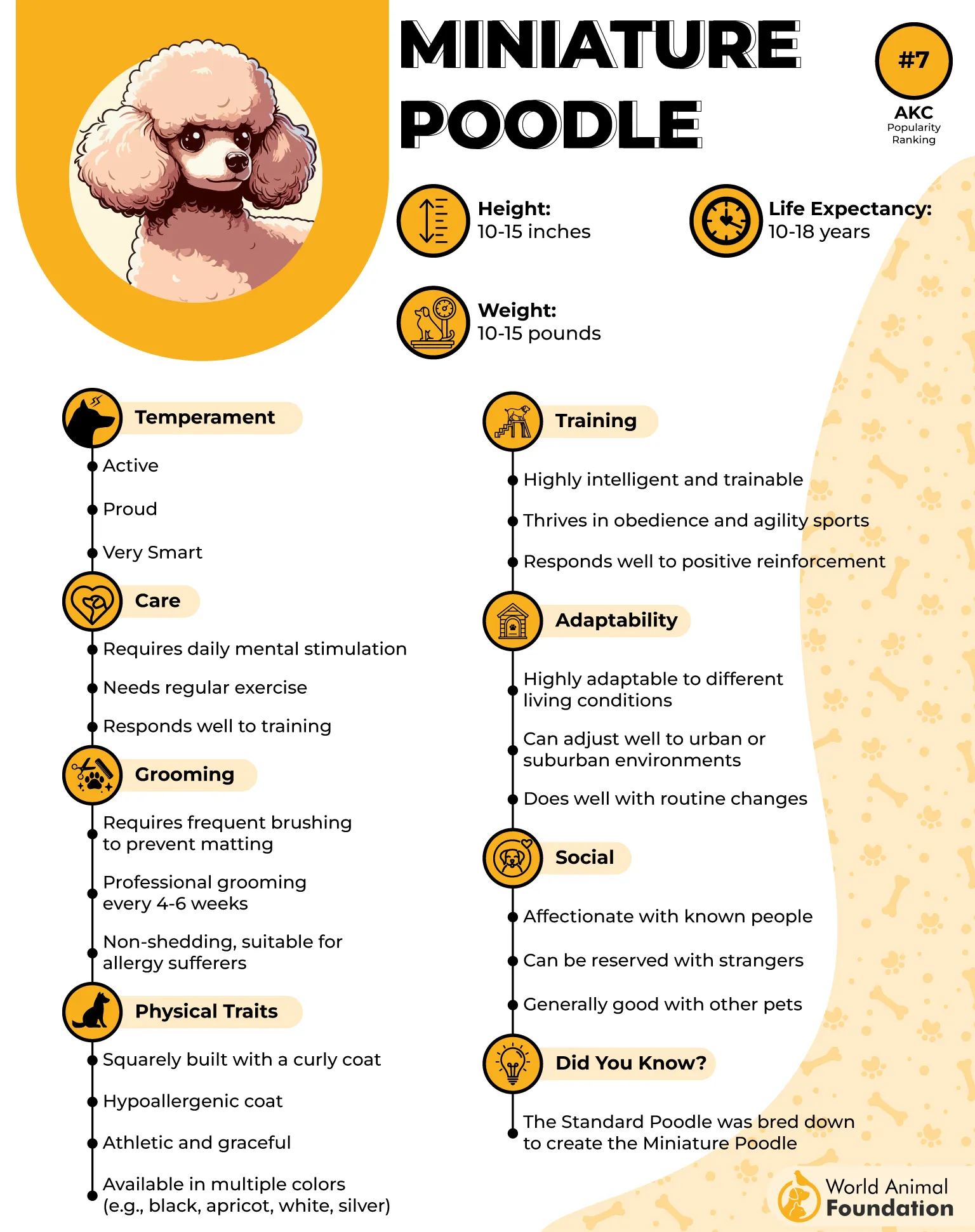
Their eagerness to learn and strong bond with their environment make it easier to establish boundaries, helping reduce unwanted behaviors such as chasing or overly excitable play.
When properly guided, they tend to observe and adjust to a cat’s signals, promoting respectful coexistence.
Regular mental stimulation and daily activity contribute to a calm and well-regulated demeanor indoors, which is important in multi-pet households.
While individual personalities vary, Miniature Poodles generally exhibit a cooperative attitude toward other animals.
With early socialization and clear guidance, they often transition from initial curiosity to peaceful coexistence, and in many cases, develop friendly and stable relationships with cats over time.
Conclusion
Creating a harmonious multi-pet household is achievable when temperament, proper introductions, and consistent training are prioritized.
Dogs with adaptable, social, and gentle personalities are more likely to respect feline boundaries and adjust to shared living spaces.
Lower prey drive, balanced energy levels, and responsiveness to guidance all contribute to smoother interactions and long-term compatibility.
With gradual introductions, supervision, and clear routines, many dogs and cats move beyond simple coexistence to develop mutual comfort and even companionship.
Thoughtful selection and management remain key factors in fostering peaceful, stable relationships between different species under one roof.
