




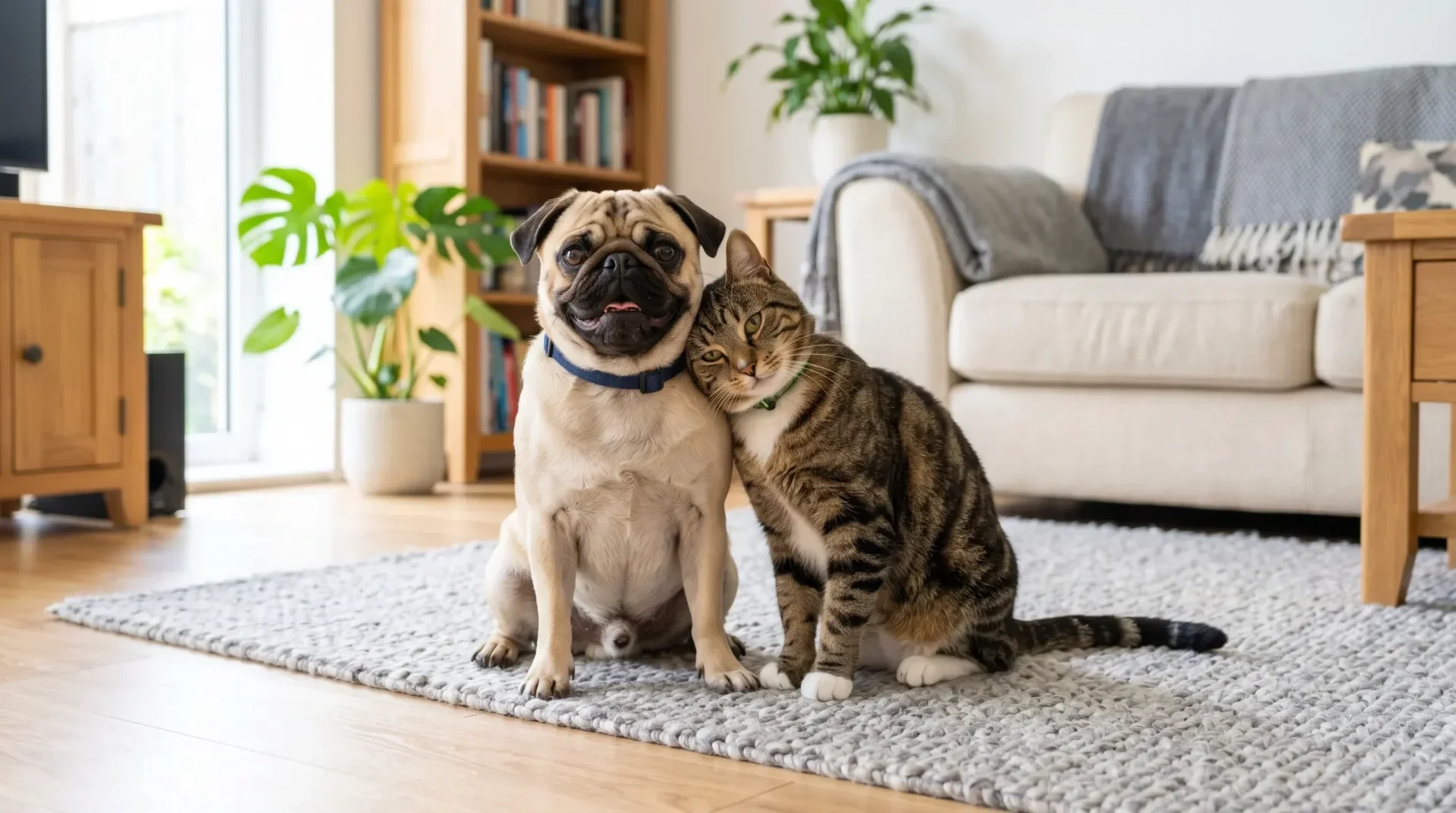
When a dog and a cat are taken into the same home, it may seem like trying to bring two totally different pets together. One can be active and curious, the other animal is content to sit and watch from the top of the couch.
But numerous dog breeds are just naturally adapted to be feline companions and are able to develop a surprisingly strong friendship with a cat when making proper introductions.
It all depends on temperament and whether you are taking a gentle dog breed into your home. The pets that may be in harmony with cats include breeds of dogs with mild personalities that have a low prey drive, are social dogs, and are flexible in terms of energy levels.
Building harmony is also significant in early socialization, supervised introductions, and respecting the personal space of the cat.
Certain breeds end up being so good with cats that they sleep together, groom each other, and follow them around the house, which is a testament to how both the dog and cat can be strong friends with each other.
These specific breeds of dogs are particularly reputed to quickly form a close bond with cats and form unusually cute multi-pet families.
Dog Breeds That Become Fast Friends With Cats
1. Beagle
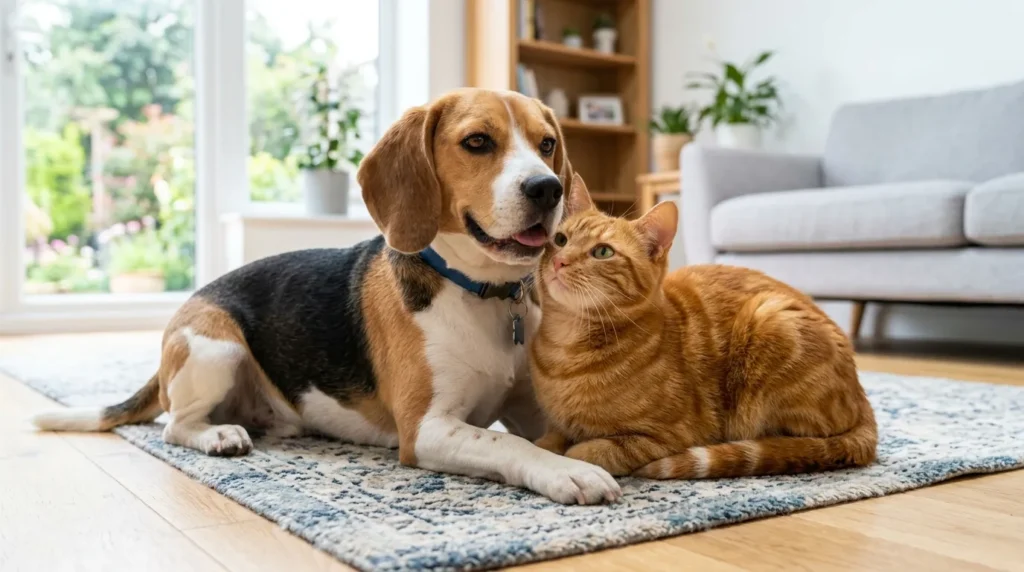
Beagles are gregarious, joyful animals that tend to love both human and animal company. They are naturally pack hunter dogs, and this aspect makes them easily adapt to the cats since they are more than comfortable with other animals.
Introducing dogs can be fun as they are very playful, but Beagles can be curious as well in the beginning. The majority of Beagles just seek a new companion to be trailing them around the house.
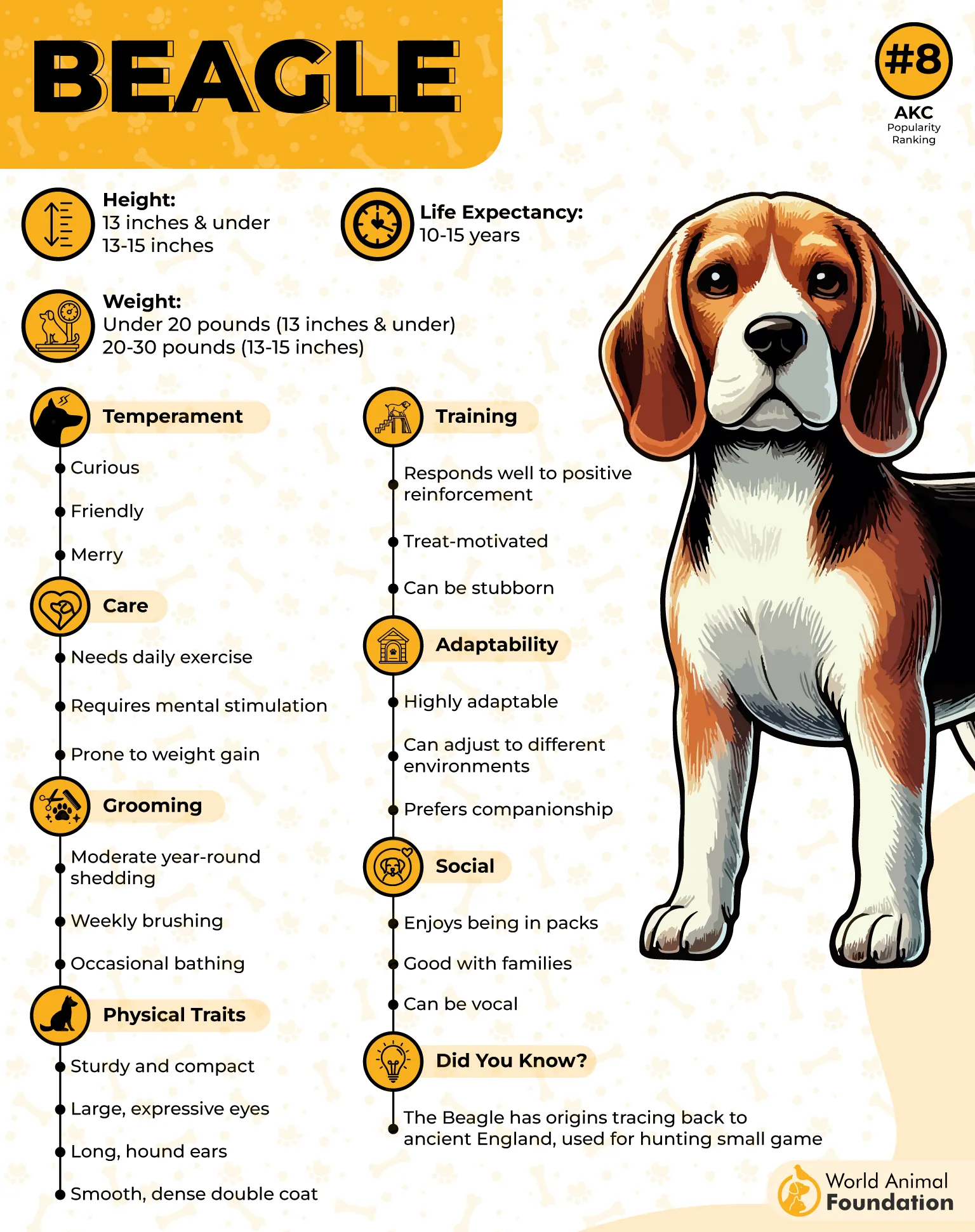
These cat-friendly breeds are scent-driven dogs, and at first, they might find it necessary to explore all the actions of the cat. But when boundaries are set, most surprisingly, they take up co-existence with other family pets.

Beagles are loving and active, but not over-dominating like other animals. They tend to be friendly, and thus, this sometimes makes shy cats feel more at ease with them due to their easygoing nature.
The American Kennel Club attributes the sociable nature and flexibility of Beagles in the family setting due to their breed characteristics.
2. Golden Retriever
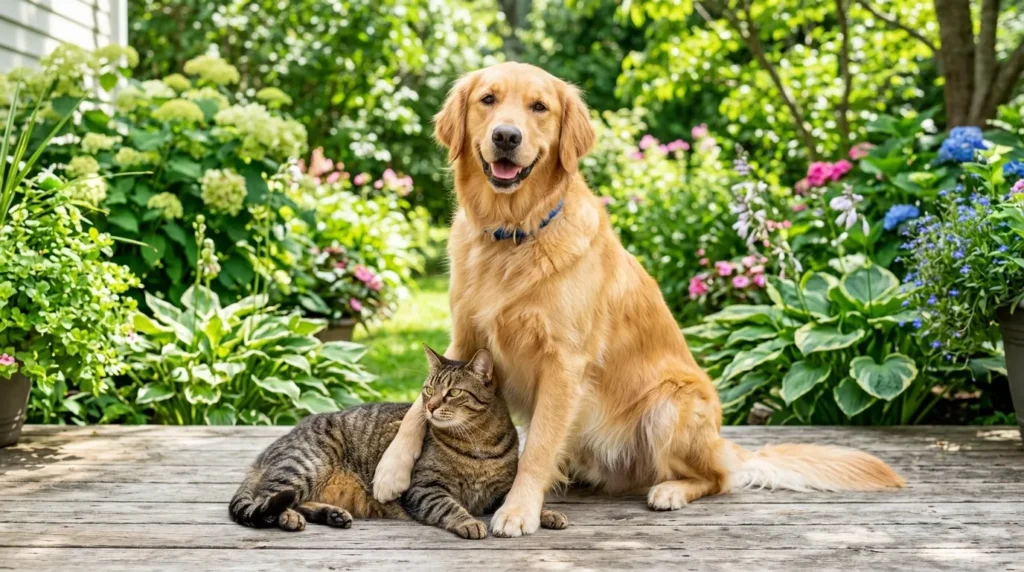
Golden Retrievers are known to get along with almost everyone, including cats and other pets. Their docile and tolerant nature ensures that they are among the safest pets of multi-pet families.
Goldens are very social dogs and tend to approach most cats in a curious, non-aggressive manner. Mostly know how to get along well with cats and coexist peacefully in the household.
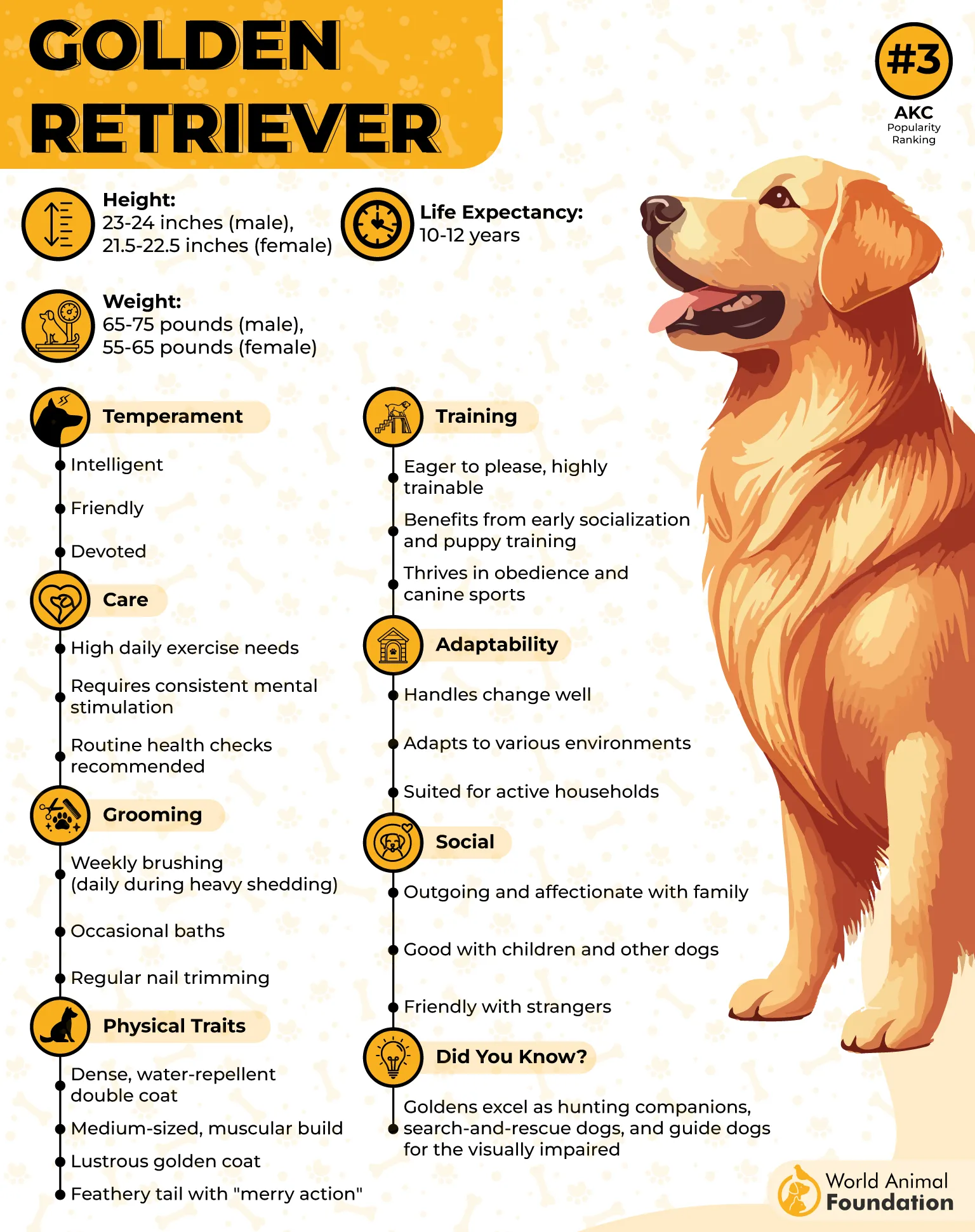
The primary reason for this is that these dogs have great emotional intelligence. They are more likely to interpret body language attentively and change their behavior when another animal or other family pets are not comfortable.
They are very kind-hearted, even though they are so large, when it comes to mingling with smaller pets. Most of the cats end up relaxing next to a Golden as this breed is one of the best cat dogs in the canine world.
Goldens need physical exercise and mental stimulation regularly, though usually they have a moderate temperament inside the house.
🎧 Dogcast
Episode 37 — Why Dogs Stay Close without Touching
If you don't hear sound, tap the button above to enable audio.
3. Labrador Retriever
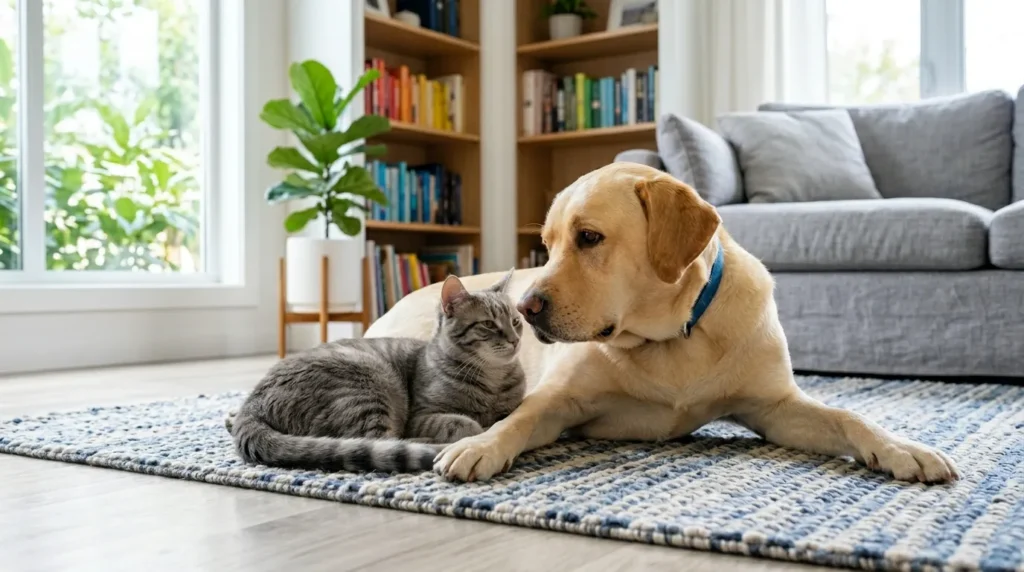
Labs are fun-loving, versatile pets that tend to get along with cats when well socialized.
Labs are inherently outgoing and tend to be interested in communicating with all people around them. Their boisterous nature can initially confuse shy cats, but most Labs soon figure out their boundaries at home.
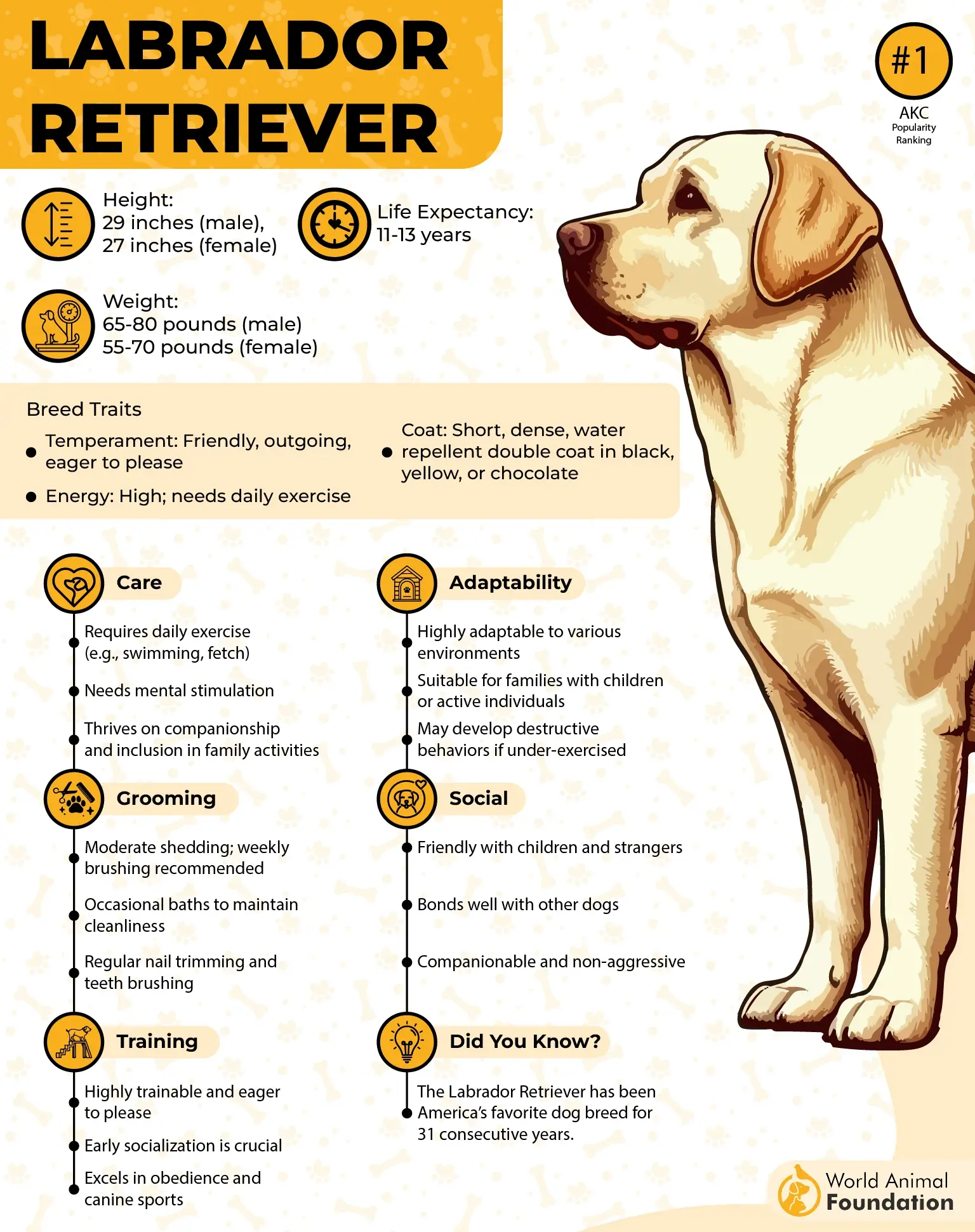
Due to their trainability, Labs are sensitive to commands that assist them to control introductions, e.g., leave it or stay. It is easier to establish positive experiences and early interactions among pets this way.
Another aspect that Labradors prefer is company, and they do not like to be alone; hence, they are good with cats, as they make them a member of their social circle.
Purina says that Labs are characterized by their stable temper and great adaptability in family homes and with other family pets.
4. Miniature Poodle
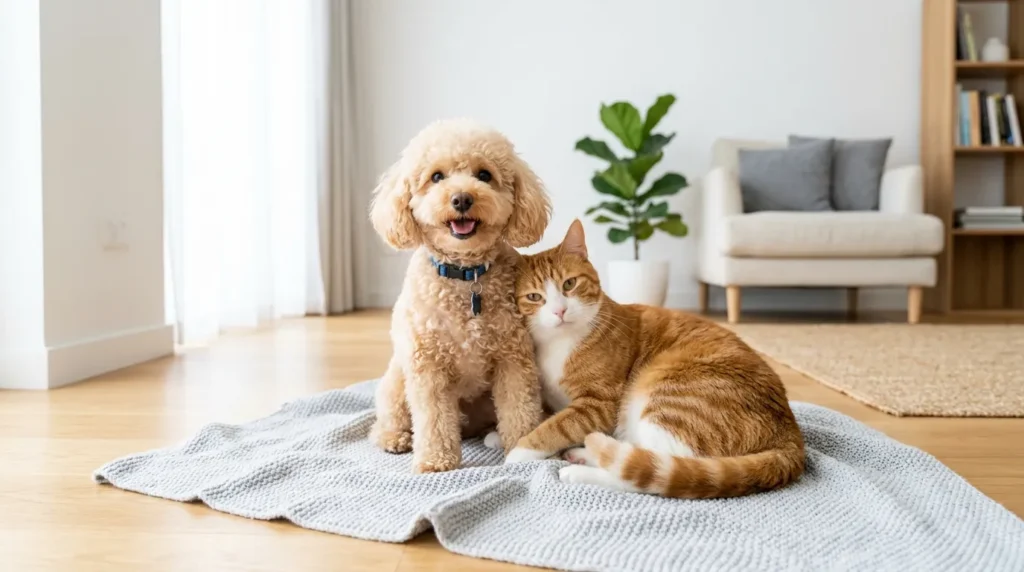
Mini Poodles are smart dogs that are flexible and tend to get along with cats. These small dogs, with their size and their friendly nature, make it easier to make a new acquaintance compared to other breeds that are more active.
Poodles are very attentive and may pick up on the household habits easily. Most people appear to know when a cat wants to be alone and when it is up to some play.
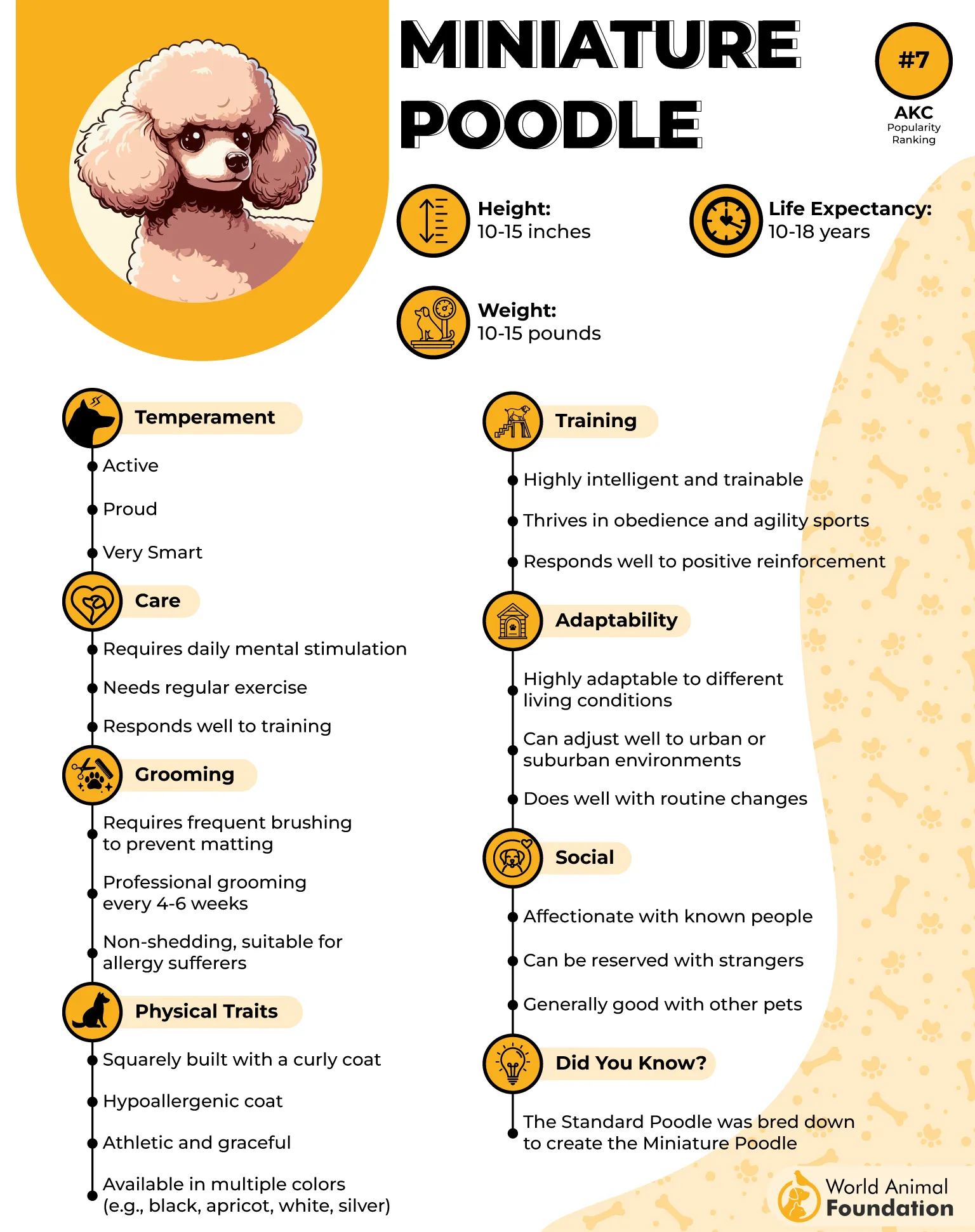
These breeds are sociable and like mental stimulation, and this implies that they tend to be intrigued by feline behavior and yet not be aggressive.
Poodles are also easier to redirect during training due to their intelligence and willingness to learn.
They tend to be quite playful, and their energy level usually fits with confident cats that like to interact with others as well as calmer cats due to their flexible nature.
5. Basset Hound
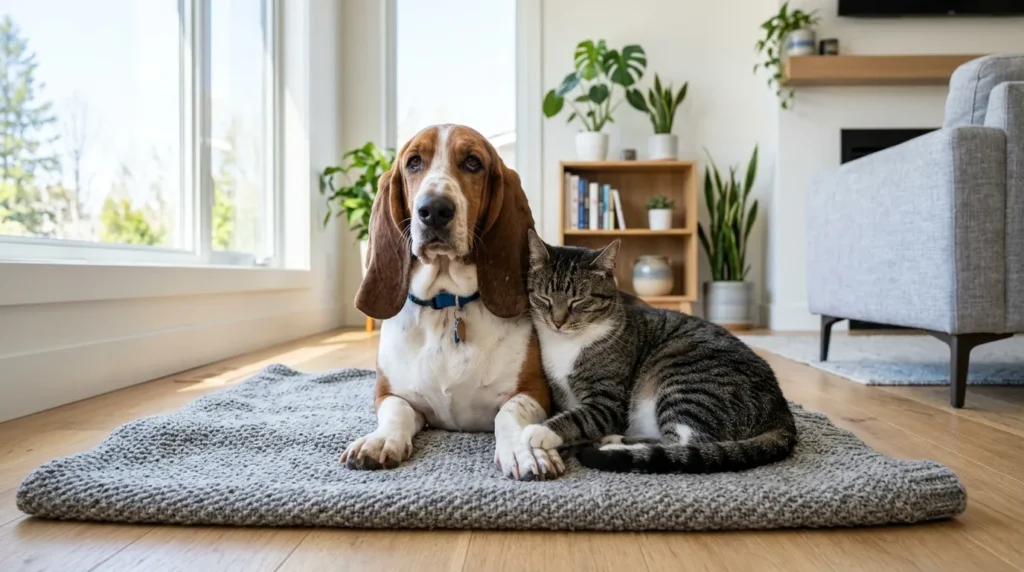
Basset Hounds are also one of the most leisurely and carefree breeds of dogs, which can frequently make them surprisingly compatible with cats.
Their docile nature would reduce their tendency to run or overpower their feline friend. The cat is very energetic compared to the Basset Hound in most houses.
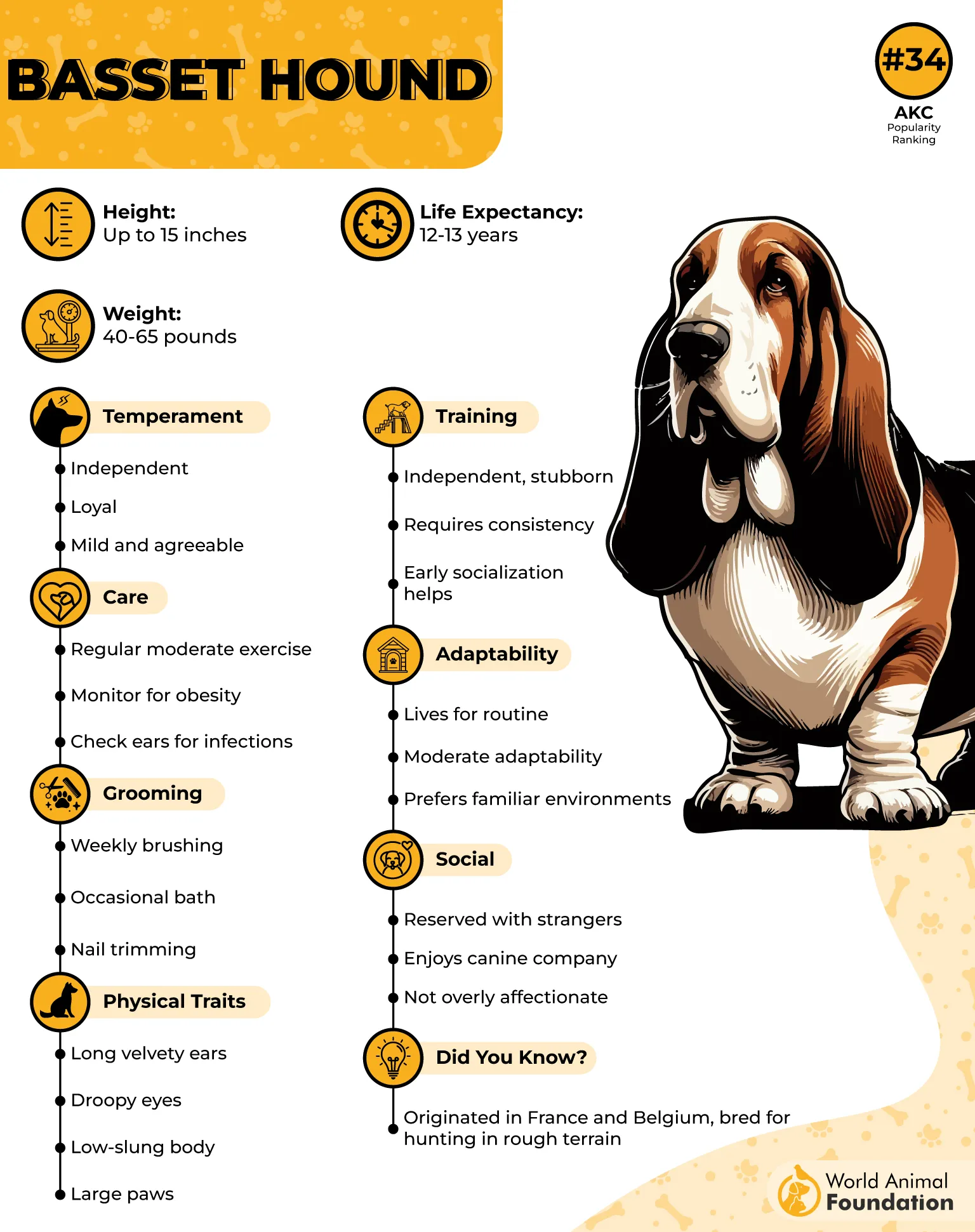
Despite being scent hounds in their origins, Basset Hounds tend to explore and relax rather than be active all the time. Their relaxed nature may make cats feel nervous and thus feel safer, and make a good relationship.
These dogs are loving and gregarious but not demanding. Some are quite happy to share couches, beds, and sunny windows with feline housemates.
They are also a good option and a safe space in quieter homes with their calm behavior and their typically friendly attitude with many cats.
6. Cavalier King Charles Spaniel
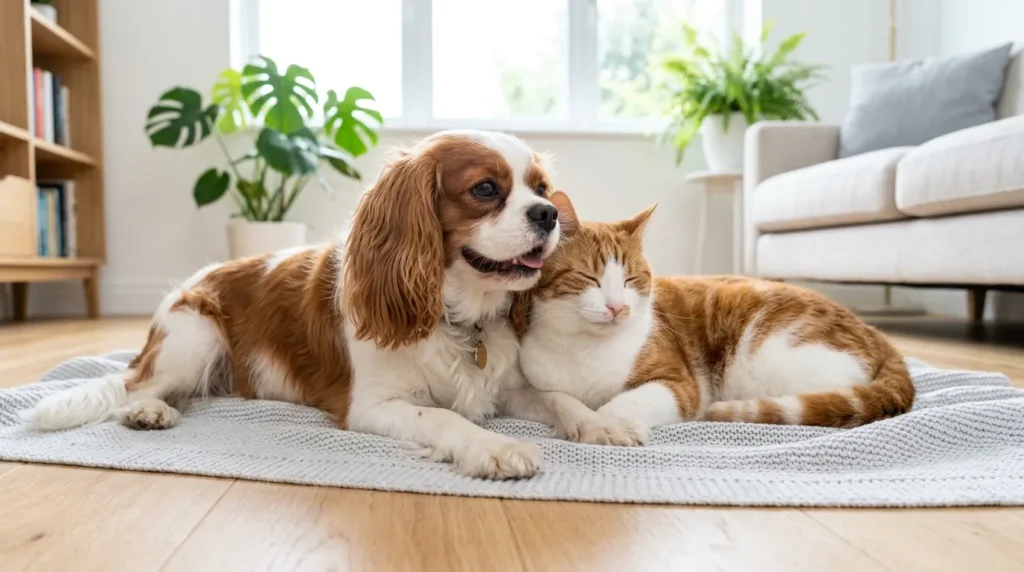
Cavalier King Charles Spaniels are loving companion dogs and are quick to form a bond with a cat due to their sensitive and tender nature.
This cat-friendly dog does not like confrontations and likes to be with people instead of competing for them, and most of them tend to be curious and friendly towards cats, as opposed to dominating them like many dogs.
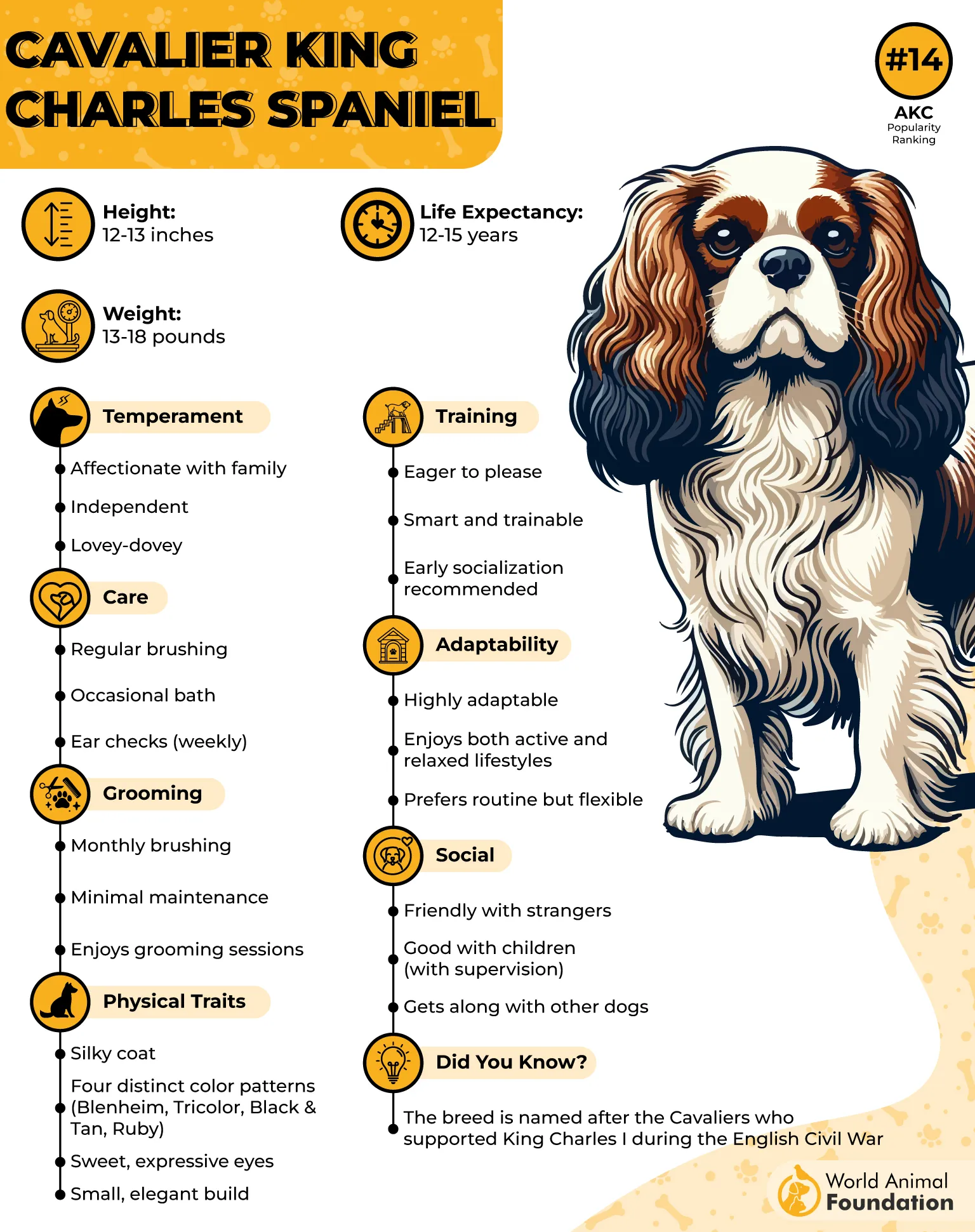
Cavaliers are flexible and quite relaxed inside, which makes it less stressful when introducing them. They are also fond of cuddling and cozy surroundings, which many cats also love.
Cavaliers are often not so threatening to cats as energetic and larger breeds are, owing to their medium and small breed size.
Cavaliers are also very loving dogs, as referred to by PetMD, which have a friendly and adaptable temperament.
7. Bichon Frise
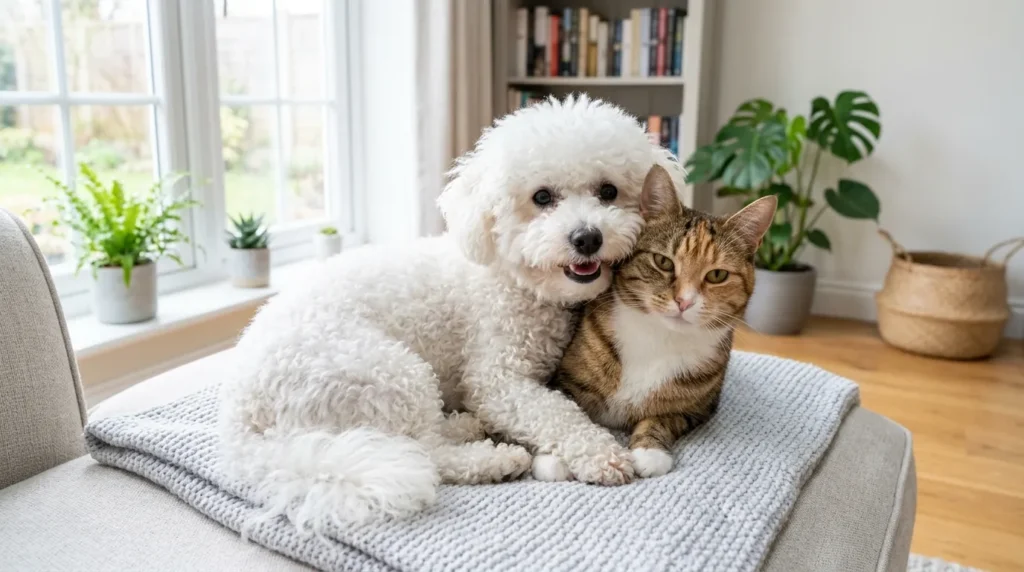
Bichon Frises are happy, friendly dogs that have an innate social nature and can usually get along well with cats in the home.
This small animal is more likely to view other cats as playmates and not rivals, making them just another member of the family. Bichons are not very aggressive and are affectionate dogs that will adjust easily to multi-pet families.
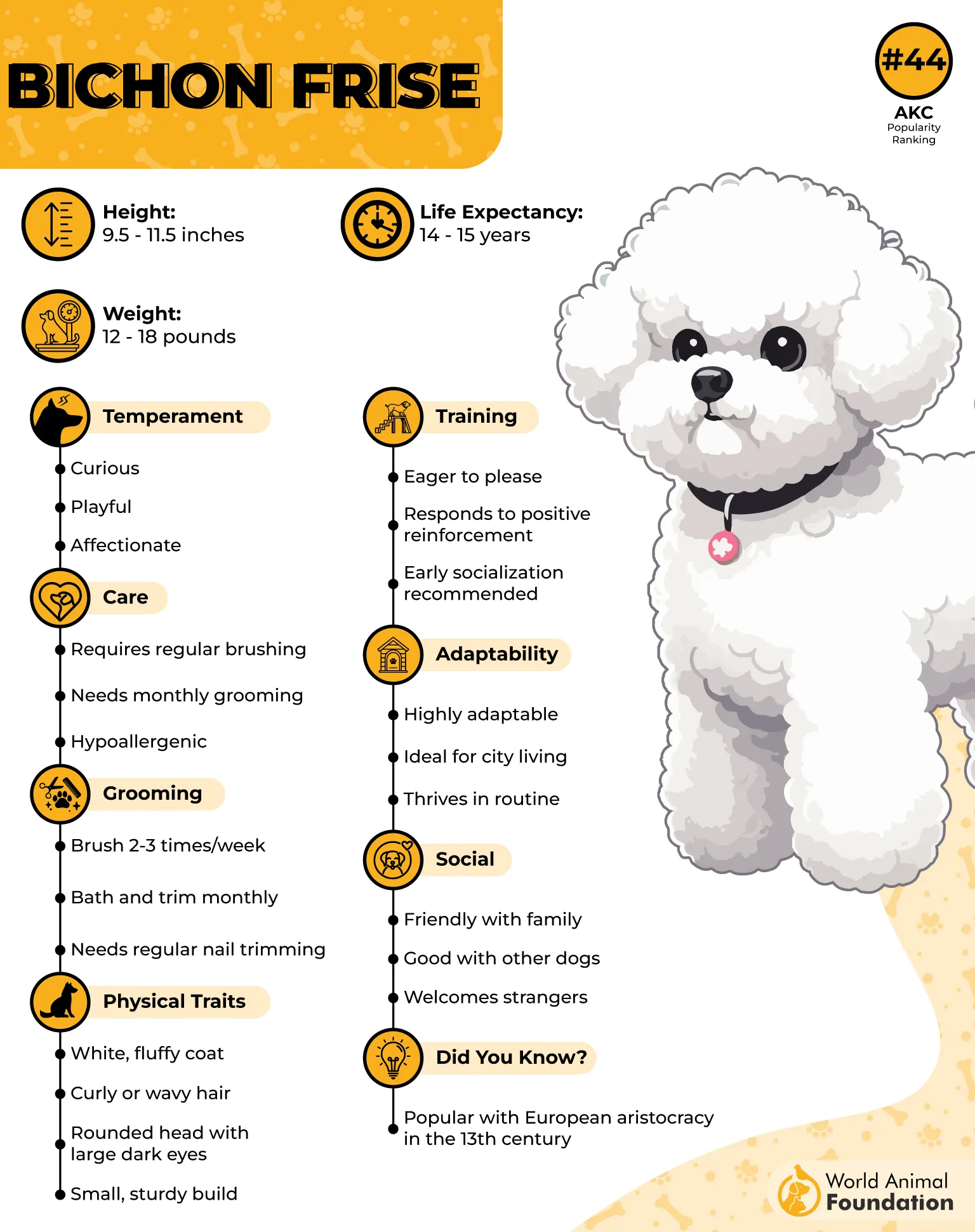
Their size can also make nervous cats feel less threatened during introductions because they are small. Most Bichons are less concerned with dominance and more about making friends.
This breed is active, but not oppressive, and generally reacts to positive reinforcement training.
Bichons are pets that live well in a home that gives them a lot of attention. They are good pets to have in a home, as they will not treat cats like mortal enemies and will instead become family members with them.
8. Pug
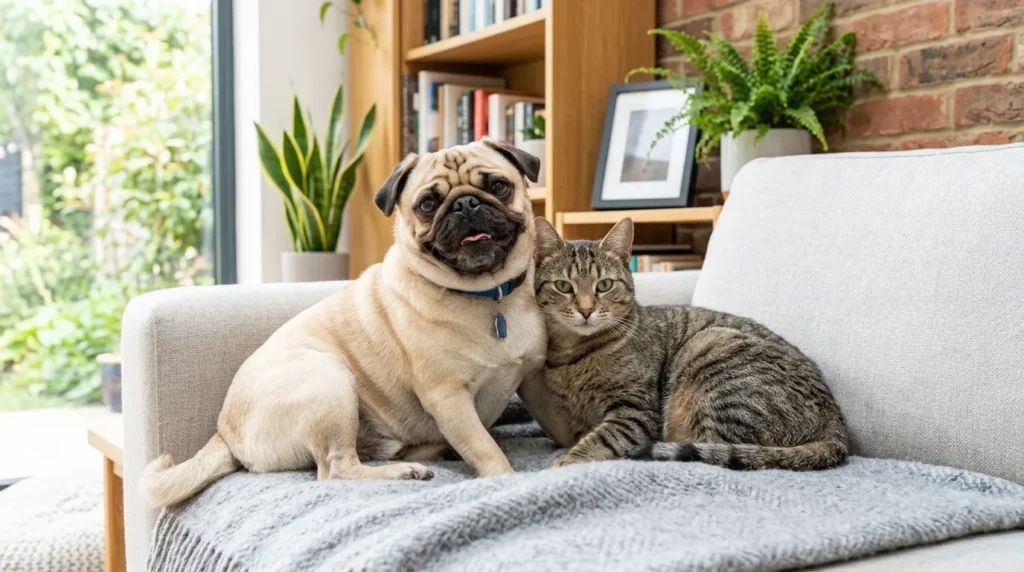
Pugs are cute, loving dogs that tend to become unexpectedly close to cats due to their easy-going and funny nature.
These puppies tend to be more of a relaxed companion and indoor creatures, unlike other highly energetic, large dogs. They are quite content when they stalk a cat around the house without causing any tension.
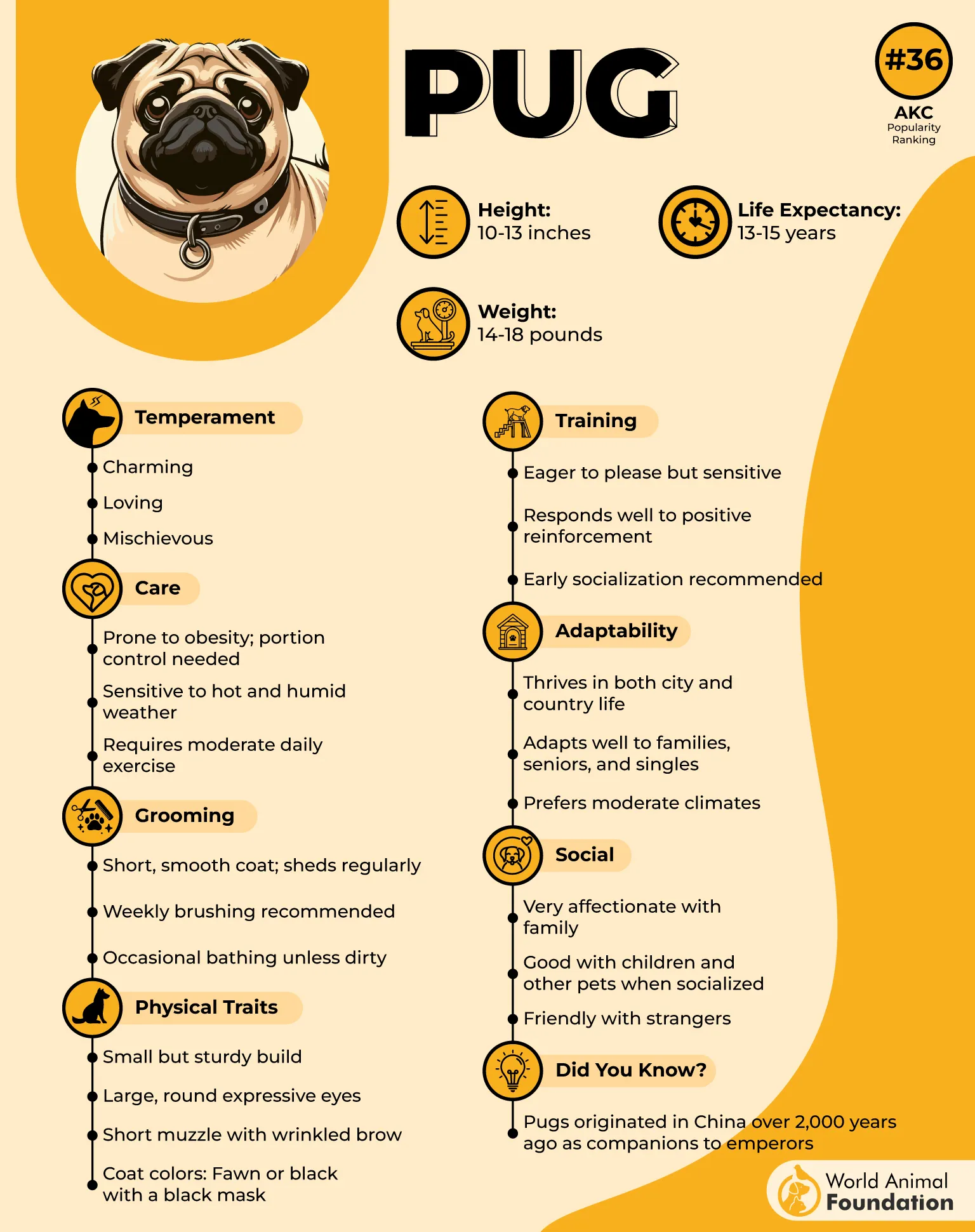
Their friendly yet harmless nature will make cats progressively more at ease with them. Pugs also prefer being around their humans and are quick to adjust to the household schedules.
Pugs are not active physically, as they have a flat face and a small size, which does tend to diminish their chasing instincts around the cats.
Most owners discover that Pugs and cats do eventually end up in some funny routines, be it sharing sleeping spots or just watching the household activity together.
9. Papillon
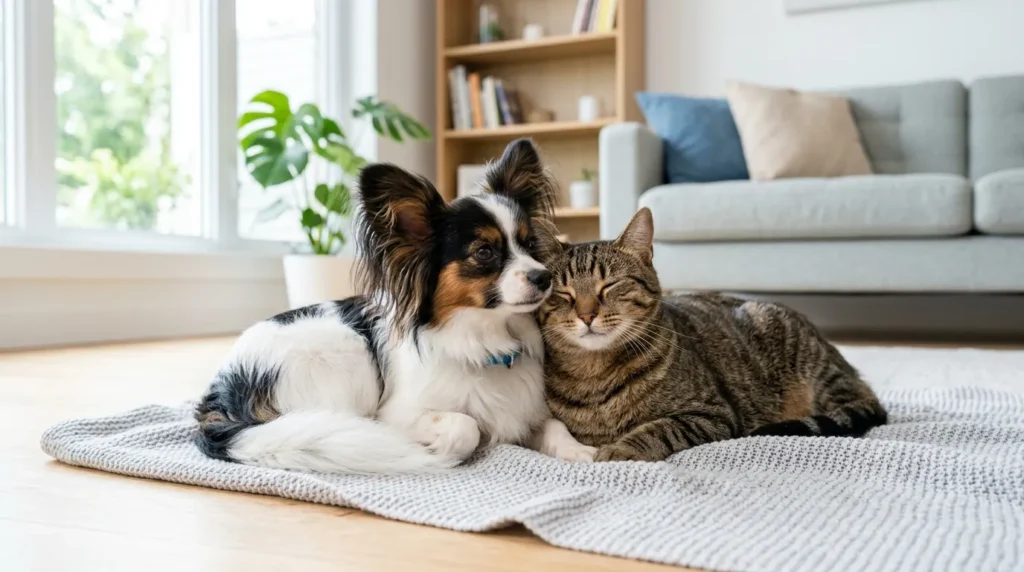
Even though Papillons are small dogs, they are very intelligent and socially flexible dogs that tend to get along with cats due to their individual personalities.
Their inquisitive nature normally makes them look and play with feline friends instead of scaring them. Papillons are mental stimulators and are usually fascinated with the behavior of the cat in many households.
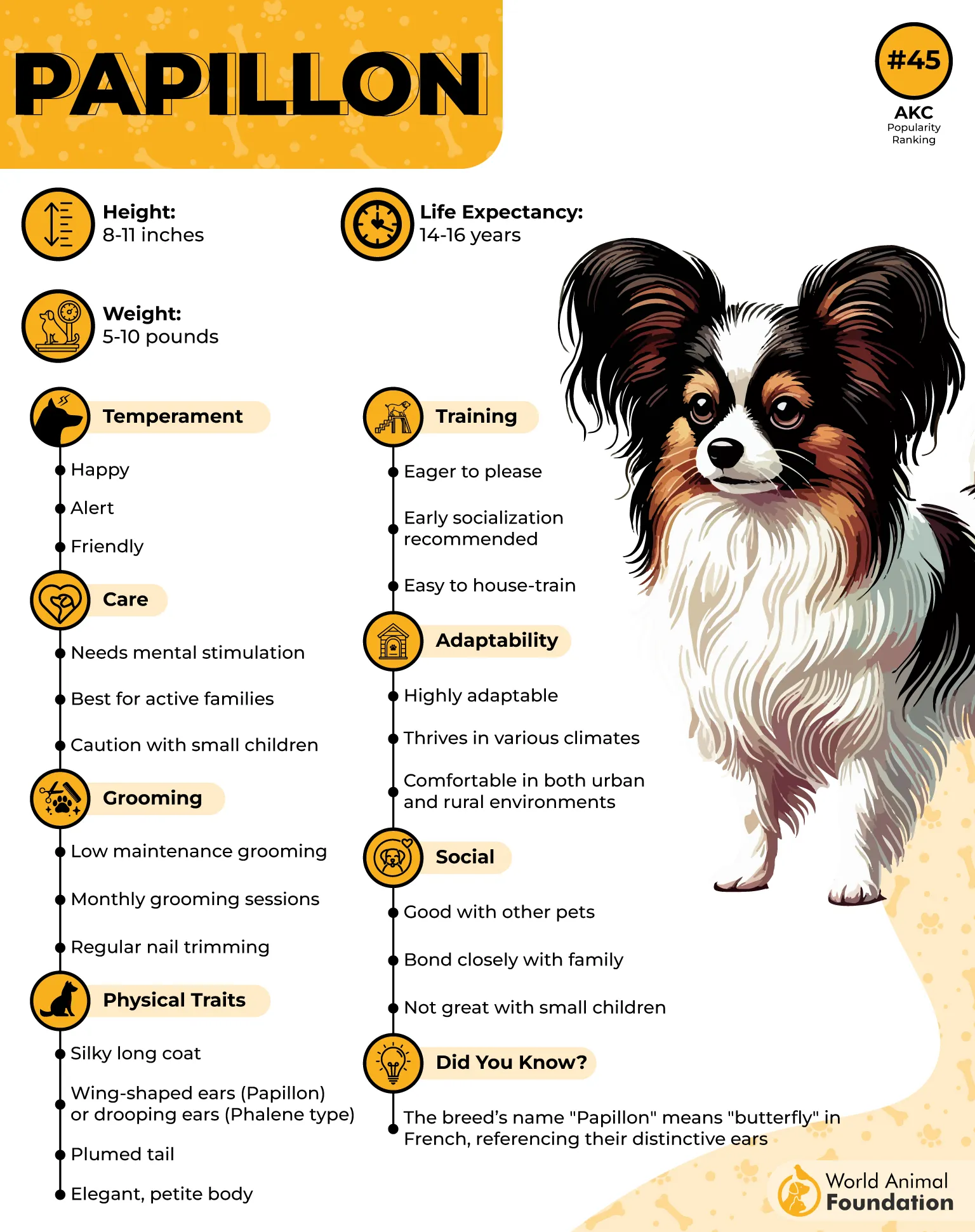
Due to these dogs being highly trainable, the owners can, in most cases, be able to influence the interaction and set limits early.
Papillons are strong yet light and nimble, and cats are not as physically intimidated by them as by bigger dog breeds.
This breed can usually be playful and can make a funny companion to self-assured social cats.
Conclusion
Dogs and cats may have different personalities and ways of communicating, and not every dog naturally sees cats as suitable companions. However, certain dog breeds are better suited for multi-pet households because of their gentle temperament, friendly nature, emotional sensitivity, and balanced energy levels.
Effective introductions, however, involve patience, monitoring, and consideration of the level of comfort of each animal. Providing cats with secure areas, routines, and rewarding them to act calmly can help the transition go a lot more easily.
It can be a relaxed Basset Hound, lounging on the couch with an older cat, or a playful Papillon running around the toys with a feline companion; the correct breed of dog can make a mixed-pet household a surprisingly touching tale of friendship.
