




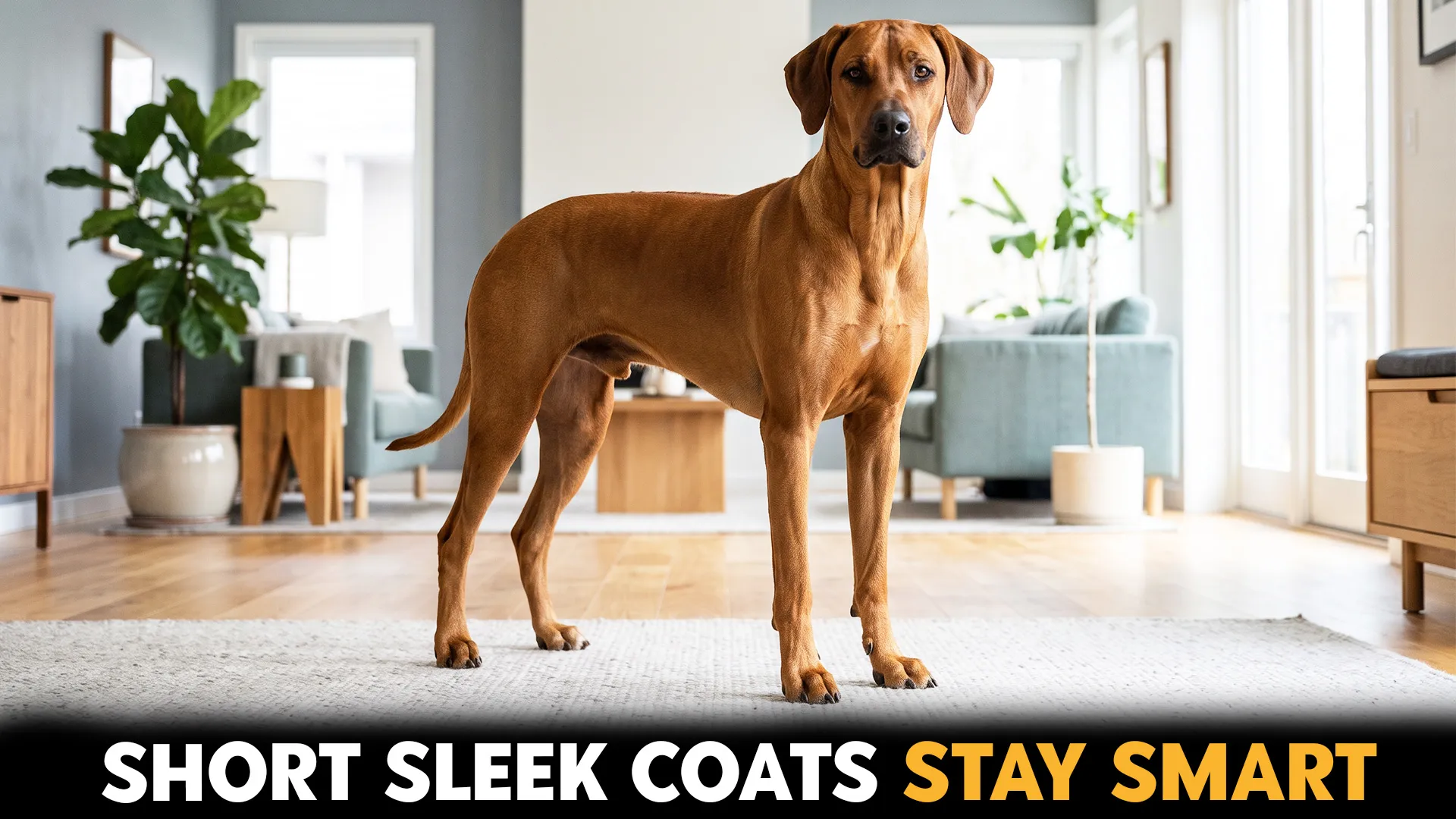
Anyone who has ever brushed loose hair off the sofa or spent half an hour working through a tangled coat knows that a dog’s appearance can come with extra work.
Short-coated dogs offer a different experience. Their fur usually lies close to the body, creating a neat, smooth appearance without the long strands that often need frequent brushing. For people who prefer a well-groomed pet without an elaborate grooming routine, this coat type has plenty of appeal.
Still, short fur does not automatically mean a dog sheds very little or needs no care. Some short-haired dogs shed throughout the year, while others have sensitive skin that benefits from regular brushing and occasional bathing. Coat texture, skin health, and the dog’s daily activities all influence how much care is needed.
The breeds featured in this article bring together sleek coats, distinctive looks, and different personalities, helping you find a stylish companion that suits your home and routine.
Key Takeaways
If you love a smooth, shiny coat, this list has some eye-catching dogs worth getting to know.
The Anatolian Shepherd once protected livestock from dangerous predators across Turkey, and its short coat helps reveal the powerful build beneath.
Next comes the Rhodesian Ridgeback, known for its unusual line of backward-growing hair, followed by the towering Great Dane with its elegant, glossy fur.
The list also includes a little German dog with a big personality, plus other breeds with their own distinctive coat colors and care needs.
Dog Breeds Sporting Short, Sleek, and Stylish Fur
1. Anatolian Shepherd
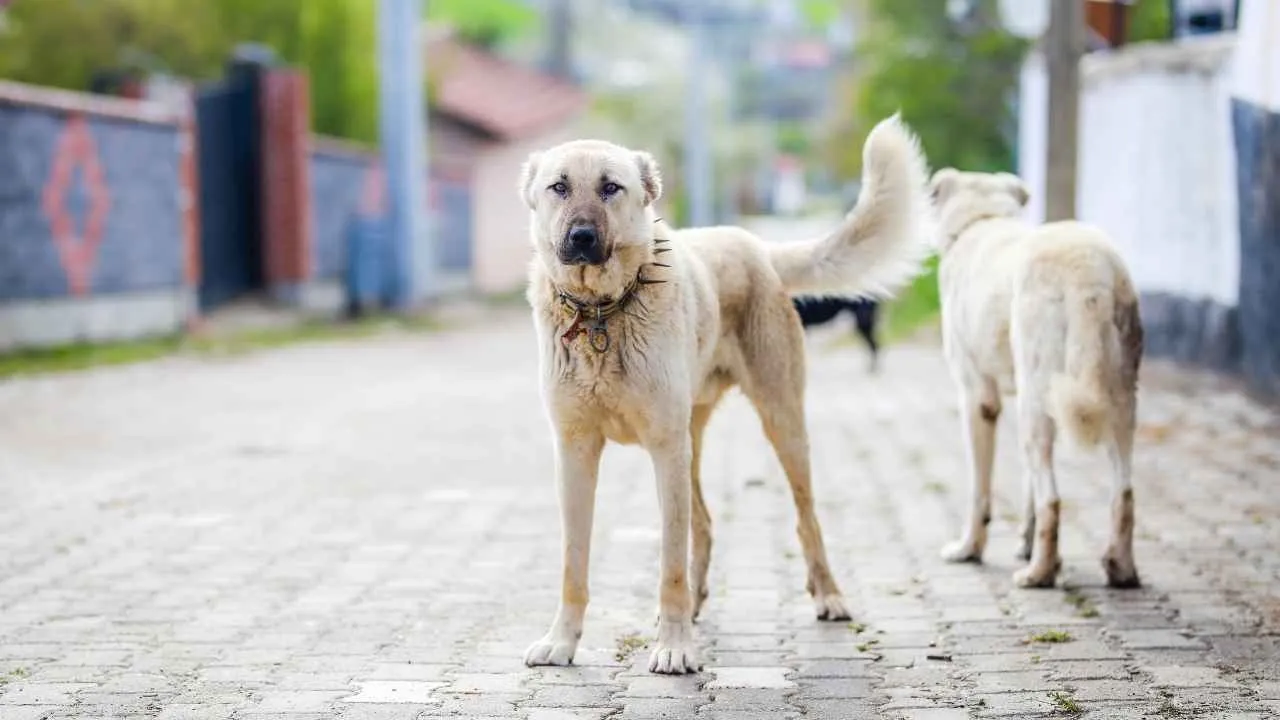
Anatolian Shepherd was originally bred in Turkey’s Anatolia region more than 4,000 years ago, protecting livestock from wolves and bears across open grazing lands. Nomadic shepherds relied on these powerful dogs to patrol independently and confront predators before they could reach the flock.
A Close-Cropped Coat
Anatolian Shepherd has a dense double coat, with its shorter version measuring about one inch and lying flat against the body. This close-fitting outer layer reveals the breed’s muscular frame, while longer-coated dogs can have rough fur reaching around four inches.
Some other coat essentials of the breed include:
Weekly brushing for the shorter coat
More frequent grooming during spring and fall shedding
Longer feathering around the ears, legs, and tail in some dogs
Training With Purpose
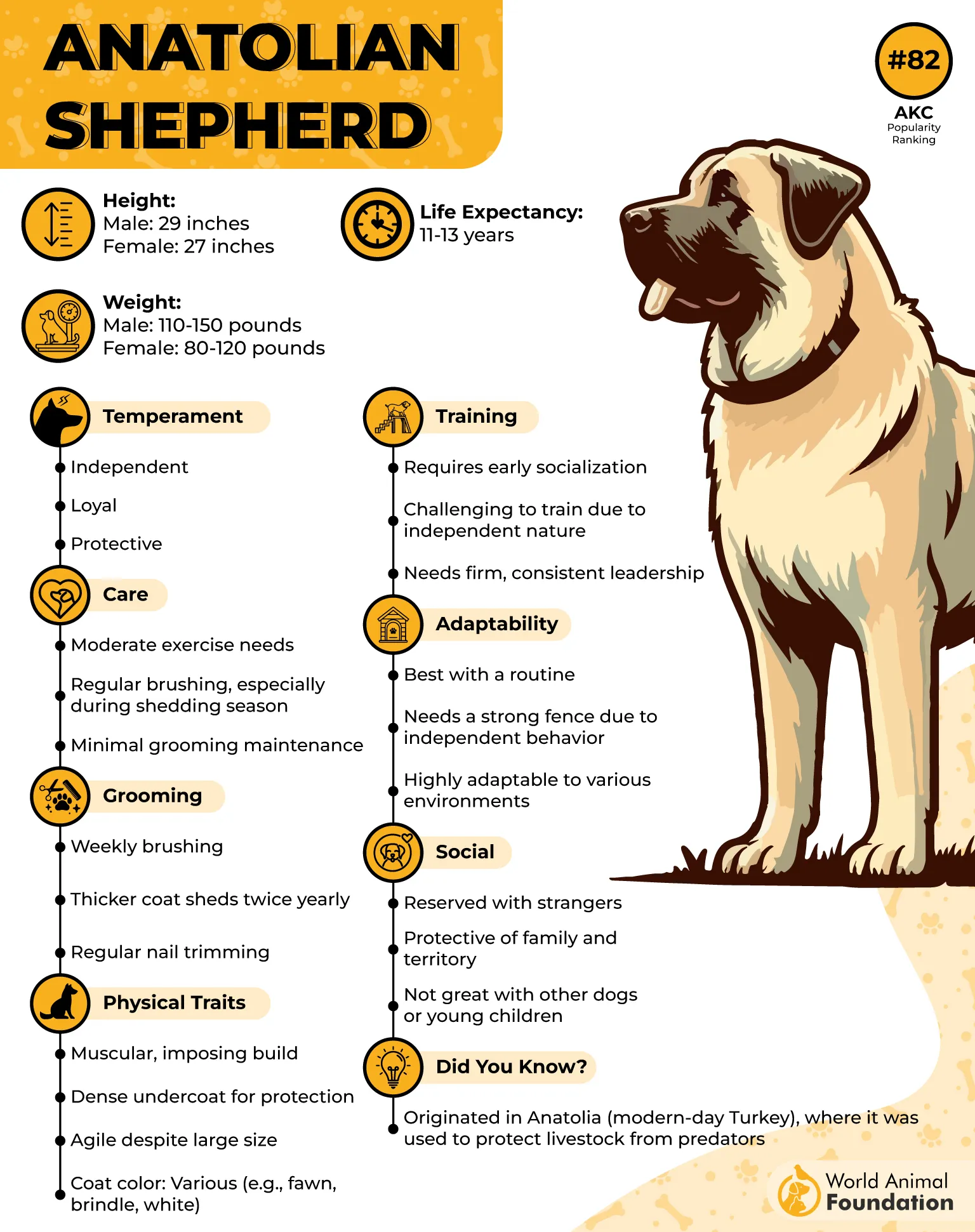
Anatolian Shepherd learns readily but can make independent decisions, so consistent rules and firm, calm handling are important with a dog of this size, as PetMD writes.
It is generally gentle with children and may accept household cats when introduced early, although it usually prefers a quieter style of interaction over lively play.
2. Rhodesian Ridgeback
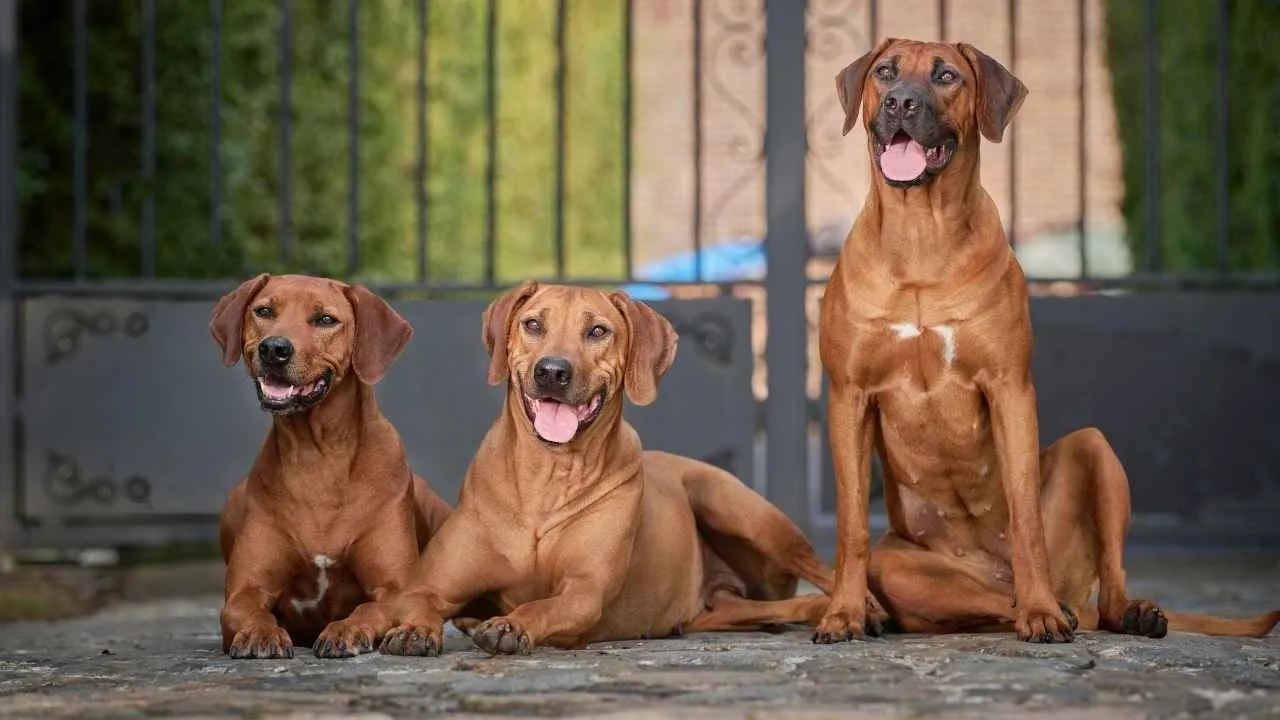
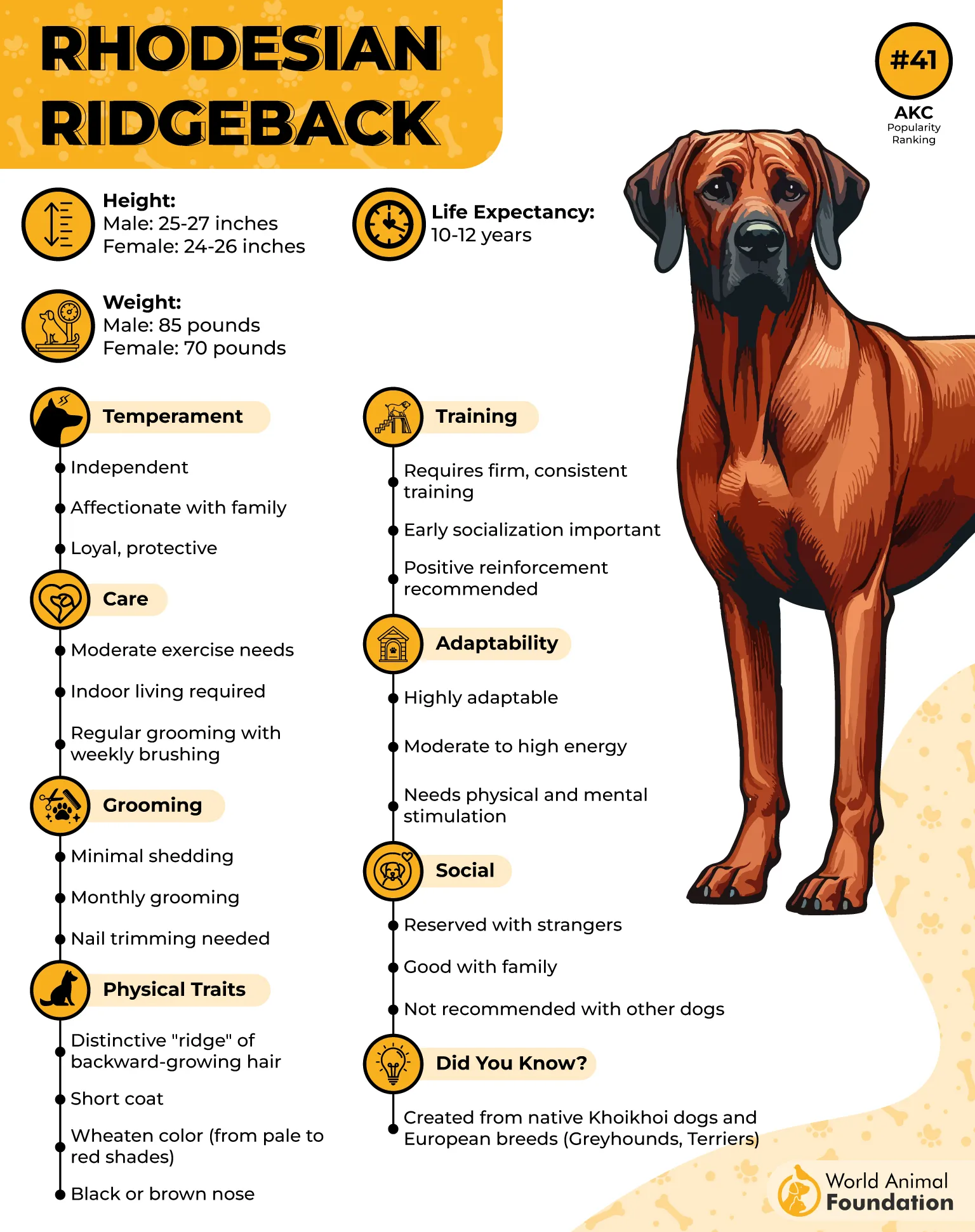
Rhodesian Ridgeback developed in Rhodesia, now Zimbabwe, where local Khoikhoi hunting dogs were crossed with breeds brought by Dutch settlers, including Greyhounds and terriers.
These dogs became skilled at navigating Africa’s demanding terrain, and some were used to track and confront lions during hunts.
A Coat With Character
This big dog has a short, dense coat that lies close to its muscular body, giving the dog a smooth, polished appearance, as Showsight Magazine claims.
Its color falls within the wheaten range, from pale flaxen and light tan to deep reddish brown, sometimes with white markings on the chest or toes.
Three details make its coat especially distinctive:
A symmetrical ridge of backward-growing hair along the spine
A smooth texture rather than a woolly or silky finish
Light, year-round shedding that calls for weekly brushing
A Strong-Willed Companion
The Rhodesian Ridgeback can be affectionate and confident with familiar people, yet cautious around unfamiliar humans and dogs. Its independent nature is not for first-time dog owners, as it requires consistent training and early socialization that continues into adulthood.
3. Great Dane
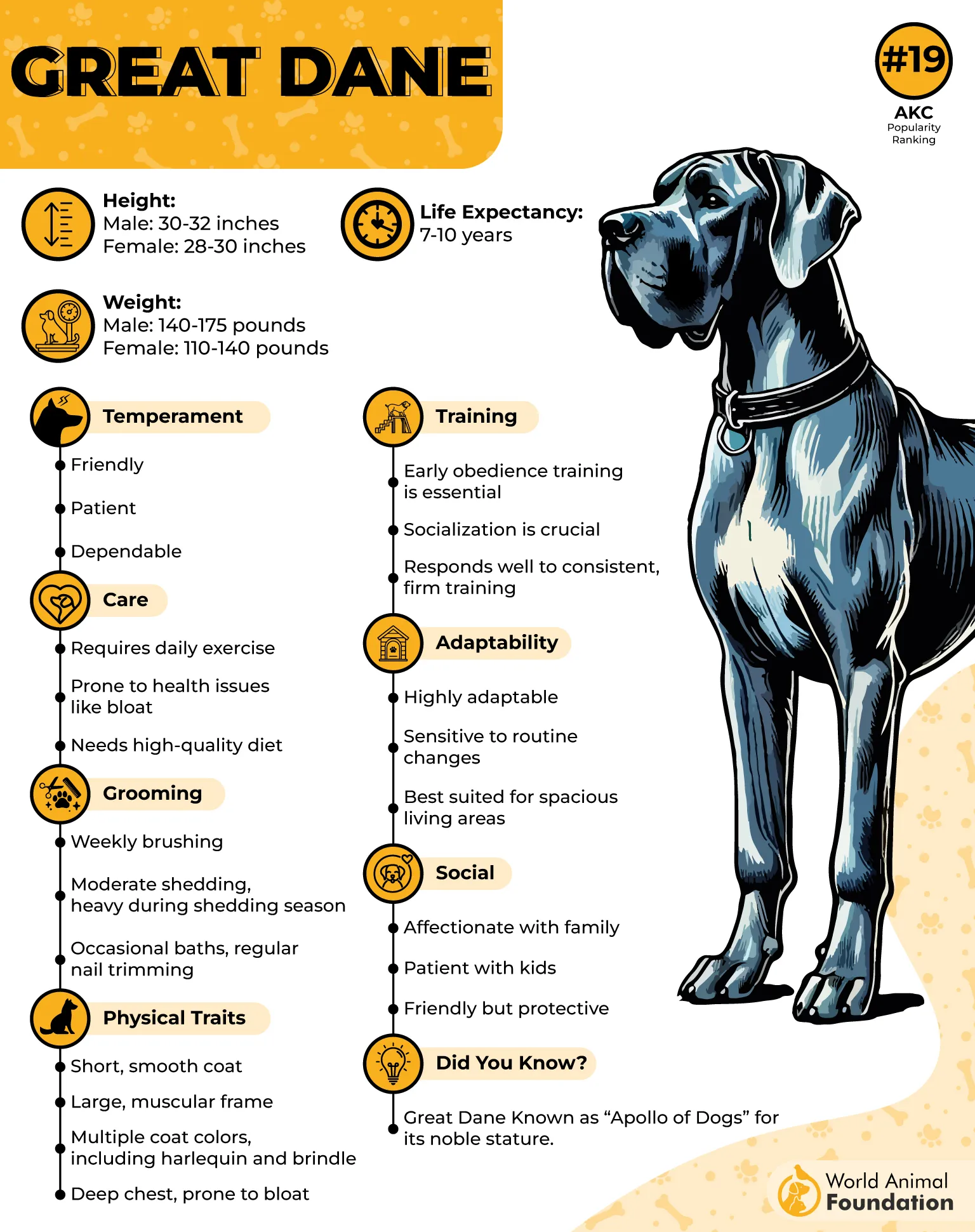
The Great Dane has a history in Germany, where its immense size and powerful build made it a formidable wild boar hunter. British hunters once called the breed the German Boarhound, while its modern name remains a puzzle because the breed has no established connection to Denmark.
Sleek From Head to Tail
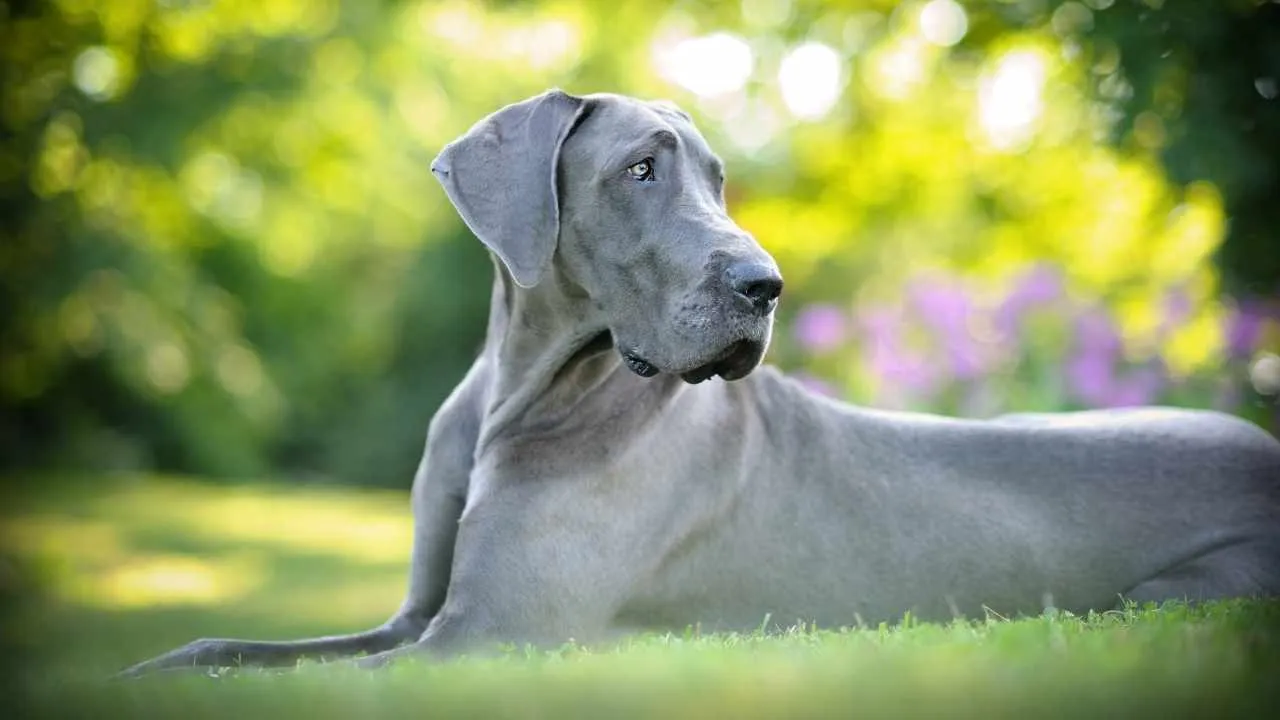
The Great Dane has a short, smooth, glossy single coat that lies close to its muscular frame, giving its enormous body a clean, elegant outline.
With no thick undercoat for extra insulation, this breed can feel the cold quickly and needs protection during freezing weather.
Its glossy coat comes in several striking patterns and shades:
Harlequin: White fur with distinct black patches
Brindle: Fawn or other base shades marked with dark stripes
Mantle: A black coat with white markings on the chest, neck, and other areas
A Gentle Giant
This giant breed may initially seem reserved around unfamiliar people, so early socialization helps them become more comfortable with visitors and other animals.
At home, this affectionate dog often follows its favorite person from room to room, while its deep, booming bark can announce an unexpected sound or visitor.
4. Doberman Pinscher
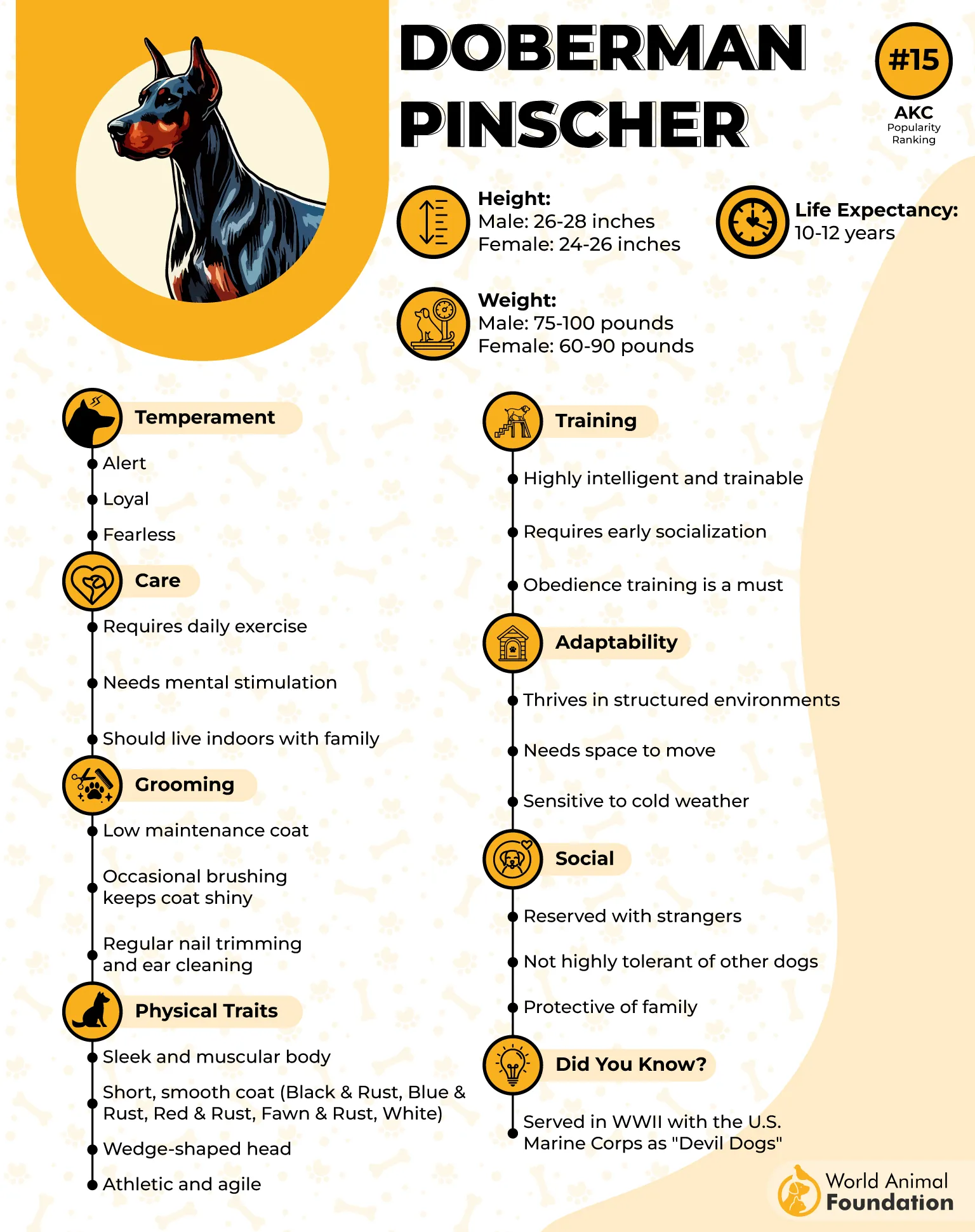
The Doberman Pinscher traces back to Thuringia, Germany, where tax collector Louis Dobermann wanted a dependable dog to accompany him during his rounds.
Early breeding likely involved the Old German Shepherd and German Pinscher, with later crosses adding Weimaraner and Manchester Terrier blood.
A Sleek, Low-Fuss Coat
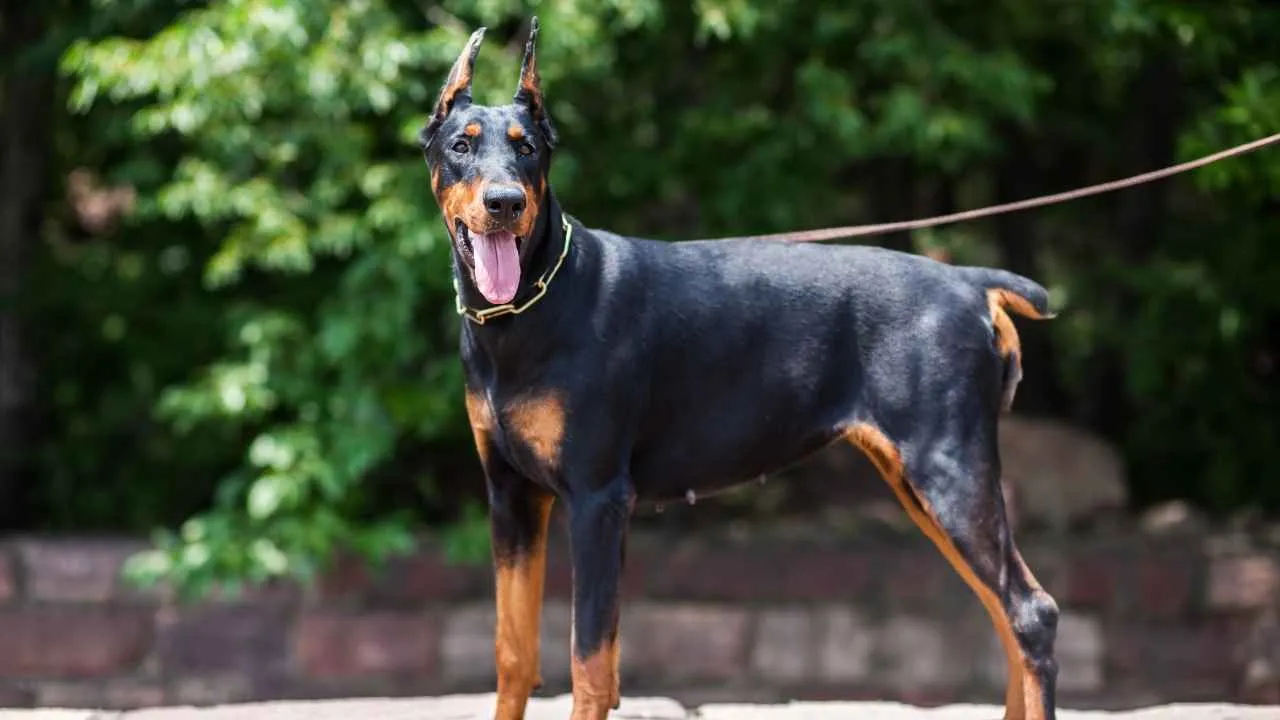
The Doberman Pinscher has a short, smooth coat with a firm, dense texture that needs little grooming compared with long-haired breeds. A bristle brush a couple of times a week helps control loose hair and keeps the coat glossy without a lengthy grooming routine.
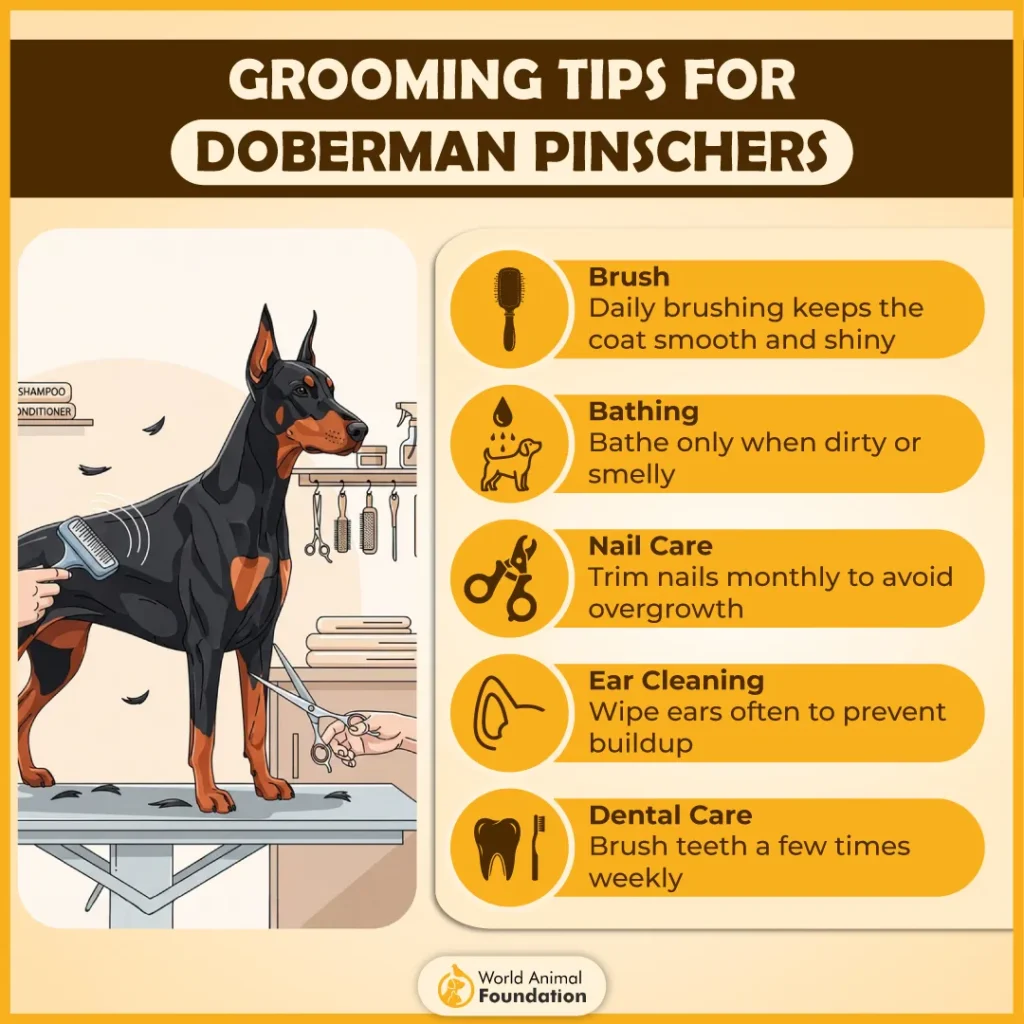
These points explain its coat’s distinctive appearance:
Black with rust markings across the face, chest, and legs
Blue with rust-colored markings
Red or fawn with rust markings
More Than Appearance
This extremely devoted breed is an intelligent, physically active dog that responds well to obedience training and needs regular mental challenges, as noted by Omlet.
Long runs and consistent training sessions give this powerful breed useful outlets for its energy, while clear boundaries help manage its protective instincts around unfamiliar people and dogs.
5. Weimaraner
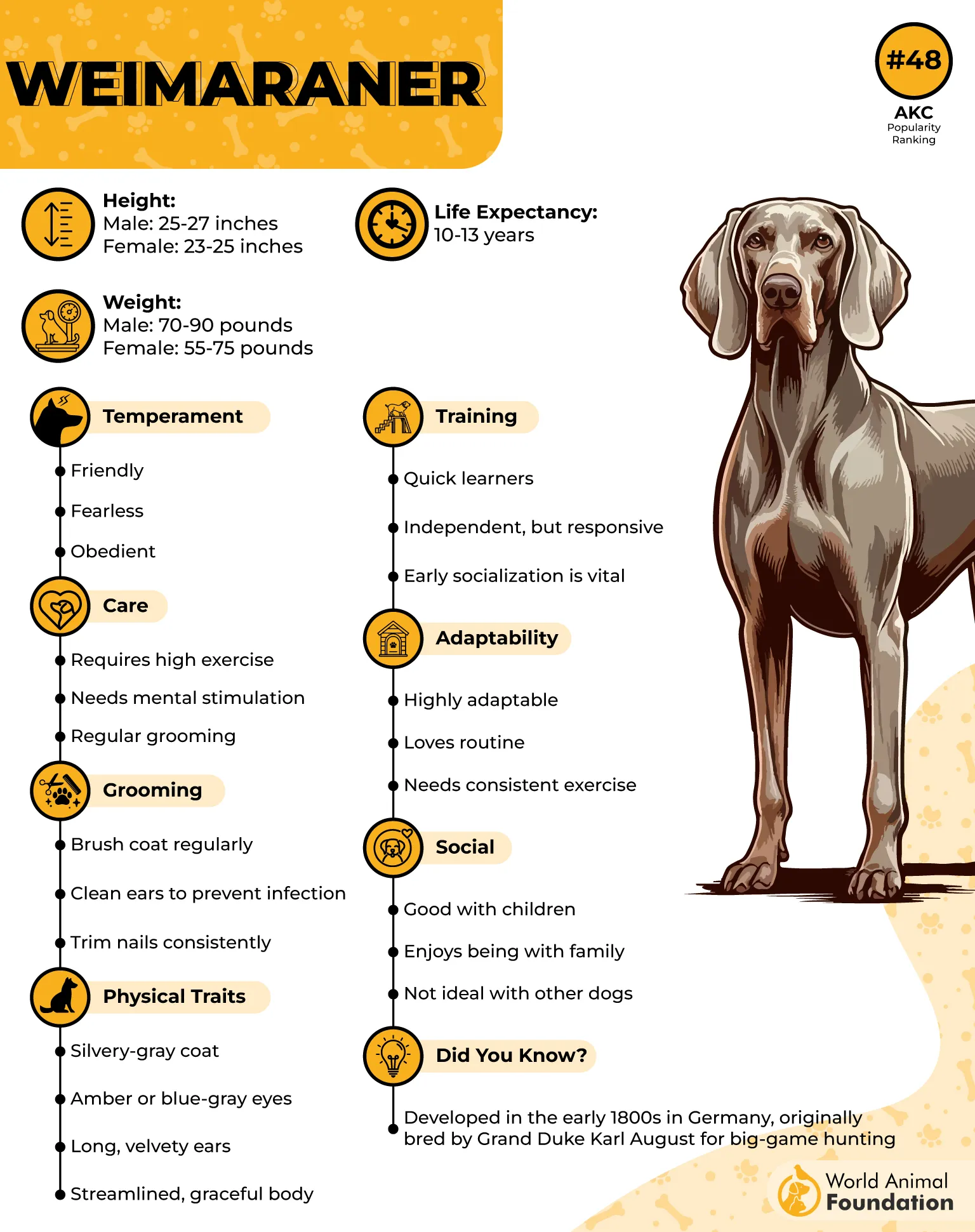
The Weimaraner was established in 19th-century Germany, where hunters wanted a capable, all-purpose gun dog that could pursue game ranging from deer to bears. Bloodhounds, Schweisshunds, and other pointer breeds contributed to its ancestry and helped shape the breed seen today.
A Silvery Finish
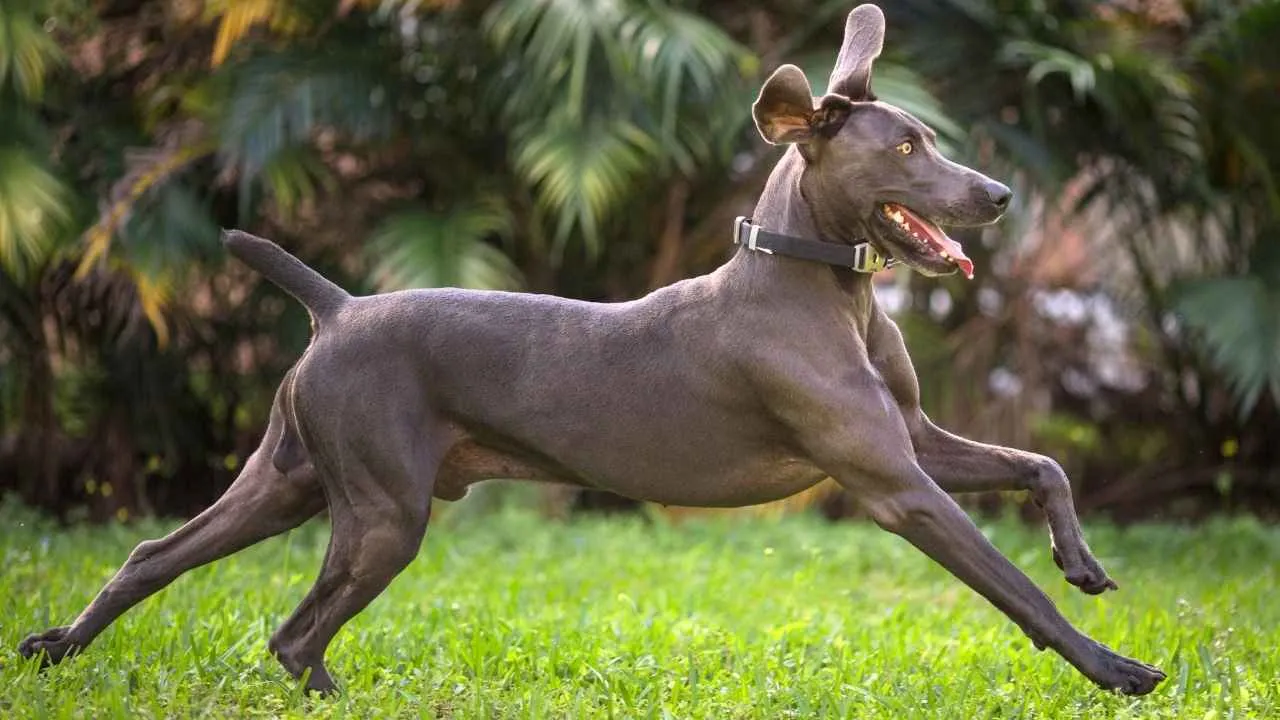
Weimaraner has a short, close-fitting coat that reflects sunlight with a distinctive metallic sheen, ranging from pale silver-gray to darker gray-blue. A small white marking may appear on the chest, adding a subtle detail to its otherwise uniform coloring.
The following practical details help explain their grooming needs:
Short, smooth fur requires little trimming.
Shedding increases during spring and fall.
Monthly bathing is generally sufficient
Always in Motion
This great family dog needs substantial daily activity, with long walks, jogging, and running beside a bicycle offering outlets for its stamina. Its hunting instincts can also take over outdoors when an interesting scent catches its attention, so reliable leash training matters.
6. Miniature Pinscher
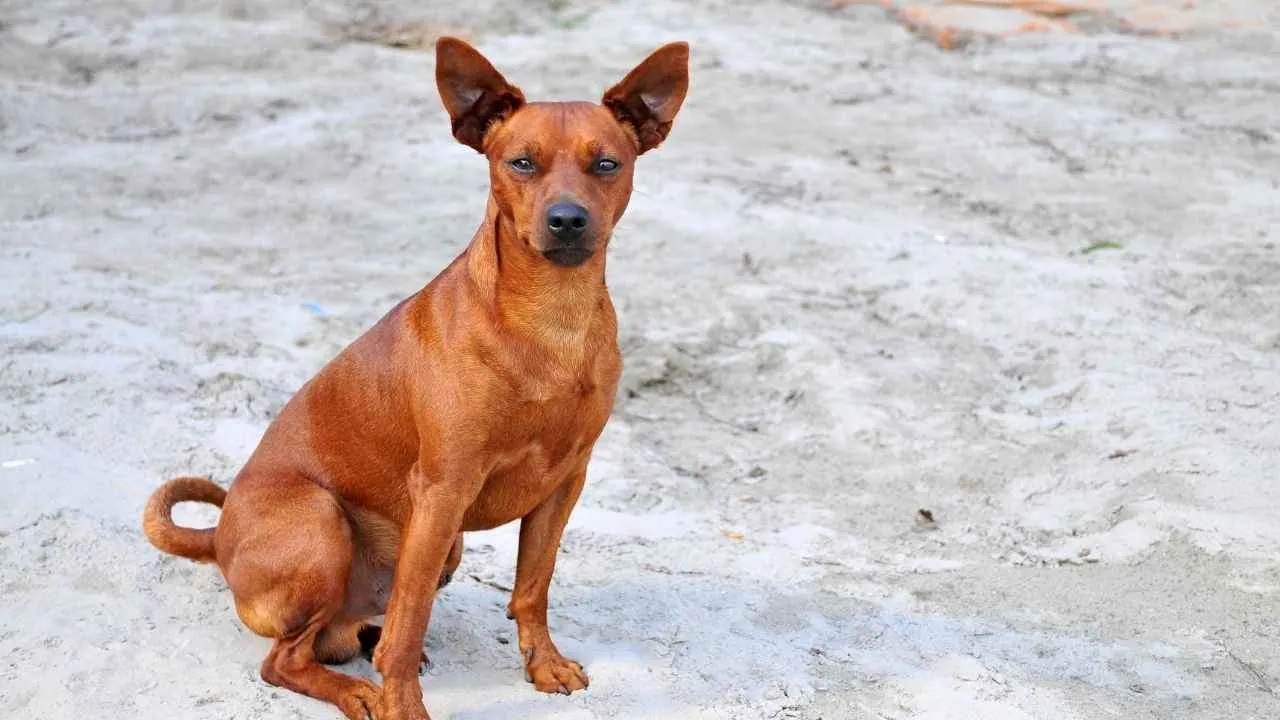
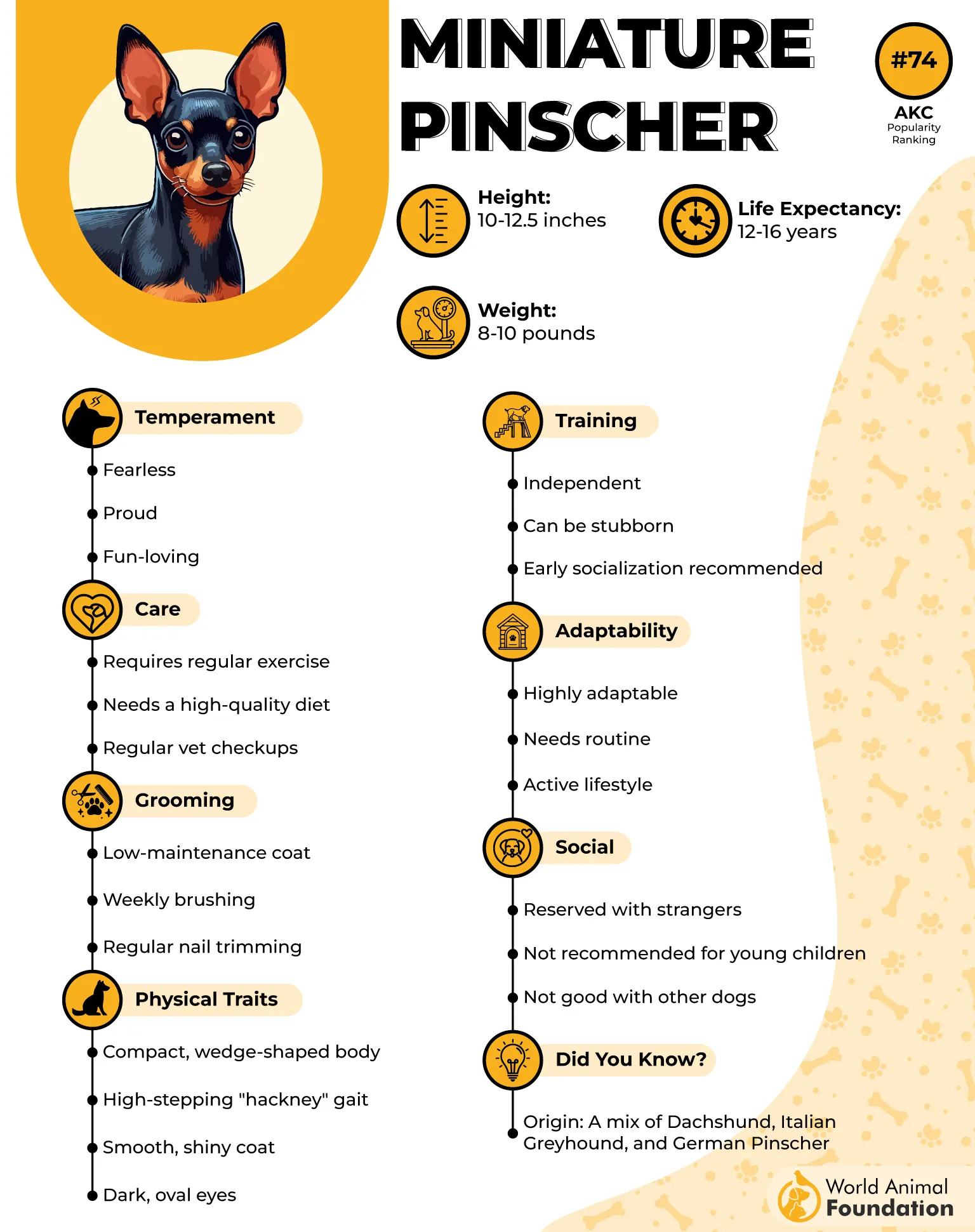
Miniature Pinscher originated in Germany centuries ago, with written records dating back roughly 200 years. Bred to catch rats and control vermin in homes and on farms, this small dog existed before the Doberman Pinscher, despite the long-standing misconception that it was a miniature version of that breed.
Sleek and Low-Fuss
Miniature Pinscher has a short, straight coat that lies close to the body, giving its outline a neat, polished appearance. Weekly brushing with a soft-bristle brush or grooming glove helps remove loose hair, while a bath every six weeks is usually sufficient.
The dog hair of this breed offers several color options:
Black and rust or black and tan
Chocolate and tan or chocolate and rust
Solid red or stag red
Big Personality
This small dog breed approaches play with plenty of spirit and enjoys learning new tricks, especially when there is a chance to show off. Its independent streak can make training a test of patience, so short sessions with rewards can help keep its attention.
7. Cane Corso
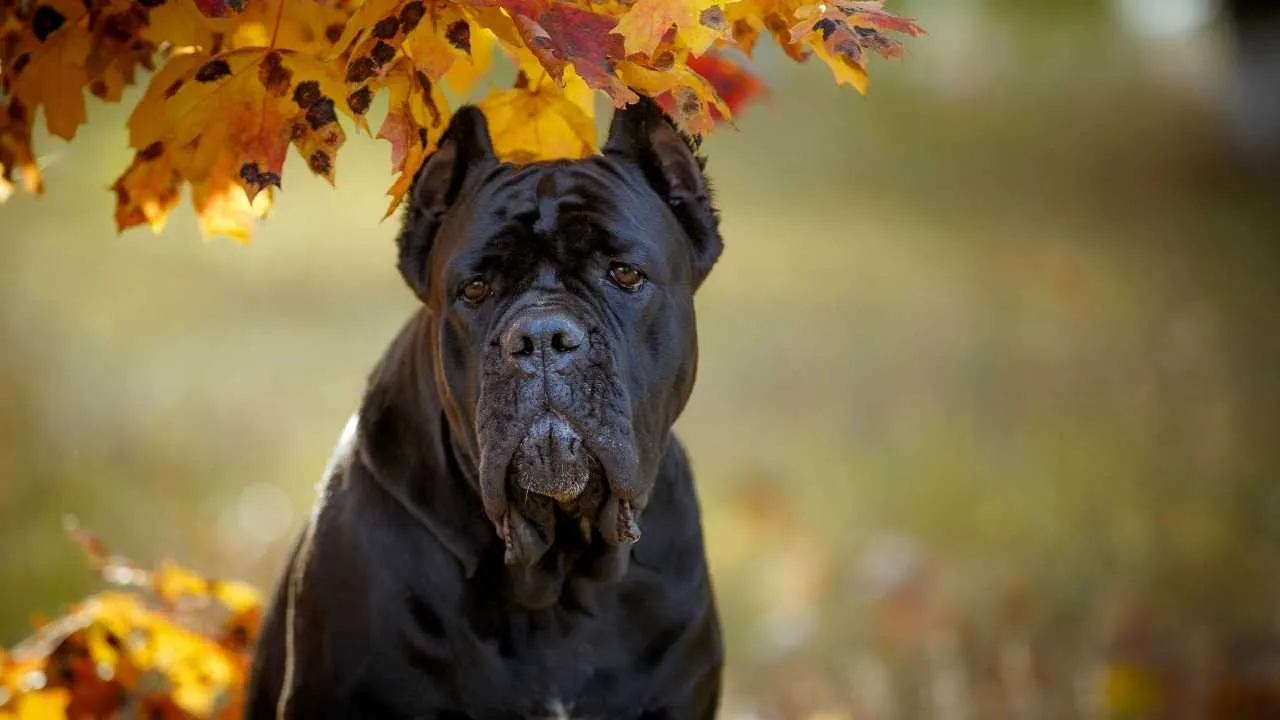
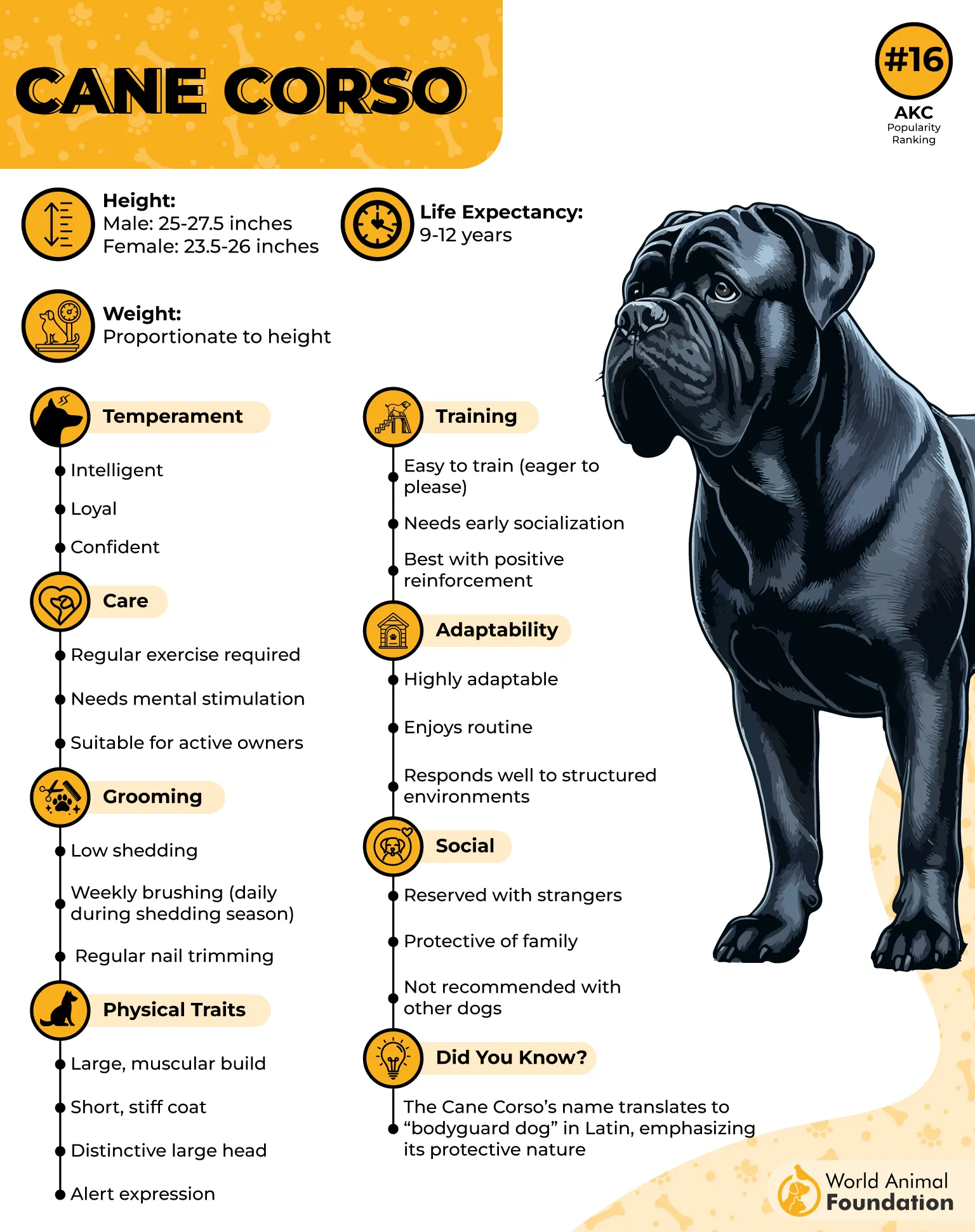
Cane Corso is an Italian mastiff-type breed believed to descend from Roman war dogs, with early duties that included guarding property, helping on farms, and hunting game. Its numbers dwindled as farming became mechanized, but breeding efforts revived the population during the 1970s.
A Close-Cropped Coat
Cane Corso has a short, stiff coat that gives its muscular frame a clean, low-fuss appearance. Colors include black, fawn, gray, and red, with brindle patterns also appearing in black, gray, or chestnut shades.
Its coat has a few details worth knowing:
Lighter coats may have a gray mask across the muzzle and eyes
Weekly brushing is generally sufficient outside seasonal shedding
Spring can bring heavier shedding that calls for extra brushing
Careful Handling
Cane Corso is powerful enough to overpower people or other animals, so consistent training and responsible supervision matter from an early age. Its strong prey drive can trigger pursuit of smaller animals, while introductions to children and household pets require particular care from experienced owners.
Conclusion
Keeping a dog well-groomed does not always require a complicated routine, especially when its coat lies close to the body. Still, pet parents must consider individual needs, from regular brushing to exercise, training, and mental stimulation. Your choice should reflect more than color, coat texture, or overall appearance, even in dogs with a silky coat.
Consider how much time you have each day, whether the dog’s bold personality suits your household, and how comfortably you can manage its size and energy.
A little research before bringing a dog home can prevent unexpected challenges later. The right companion will fit your routine while bringing enjoyment to everyday life.
