




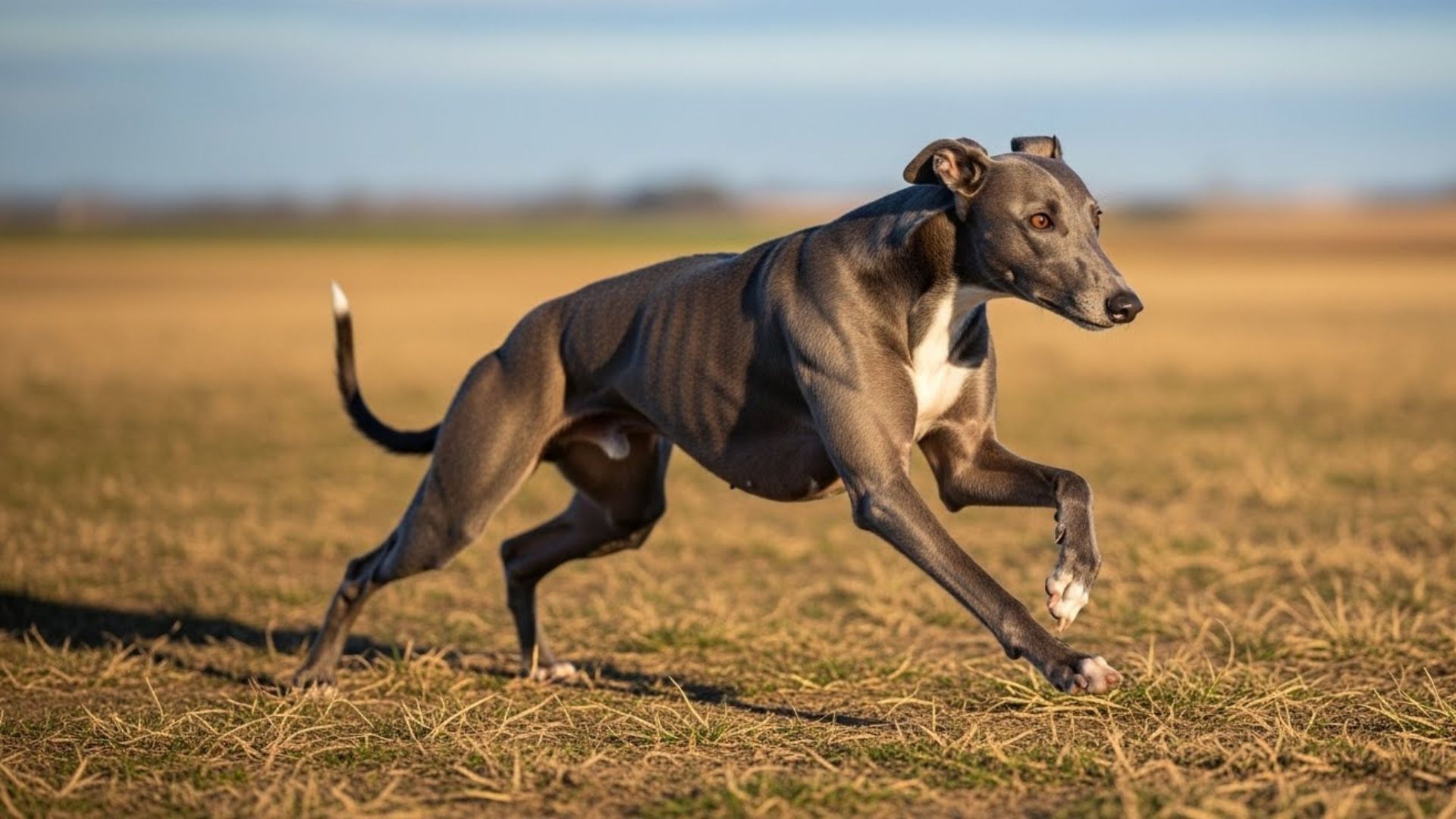
Ever watched a dog’s eyes lock onto a squirrel or a ball and wondered if there’s more than just play in that chase?
Some dogs possess an unstoppable urge to pursue anything that moves, turning even a quiet backyard into a high-speed adventure zone. This intense focus and drive are part of what make certain breeds so remarkable and energetic companions.
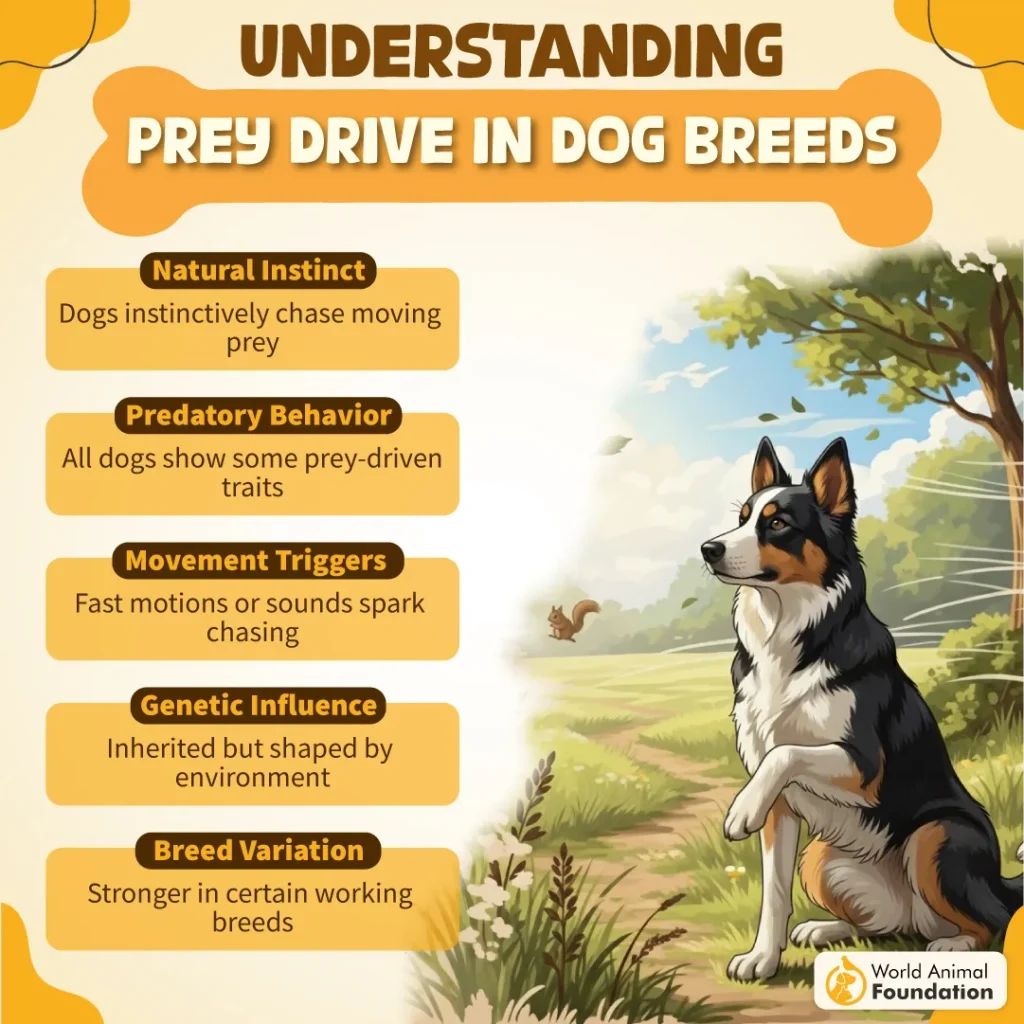
Predatory aggression comes from a dog’s instinct to chase and catch prey, something inherited from their ancestors. It isn’t caused by fear, dominance, or anger; it’s simply the hunting part of a dog’s behavior that hasn’t been “learned out” of them. This instinct shapes how some dogs interact with the world around them.
In this blog, we explore dog breeds known for their high prey drive. We also examine their history, traits, energy levels, and tips for managing their natural hunting instincts in everyday life.
Dog Breeds Ready to Pursue – High Prey Drive List
1. Greyhound
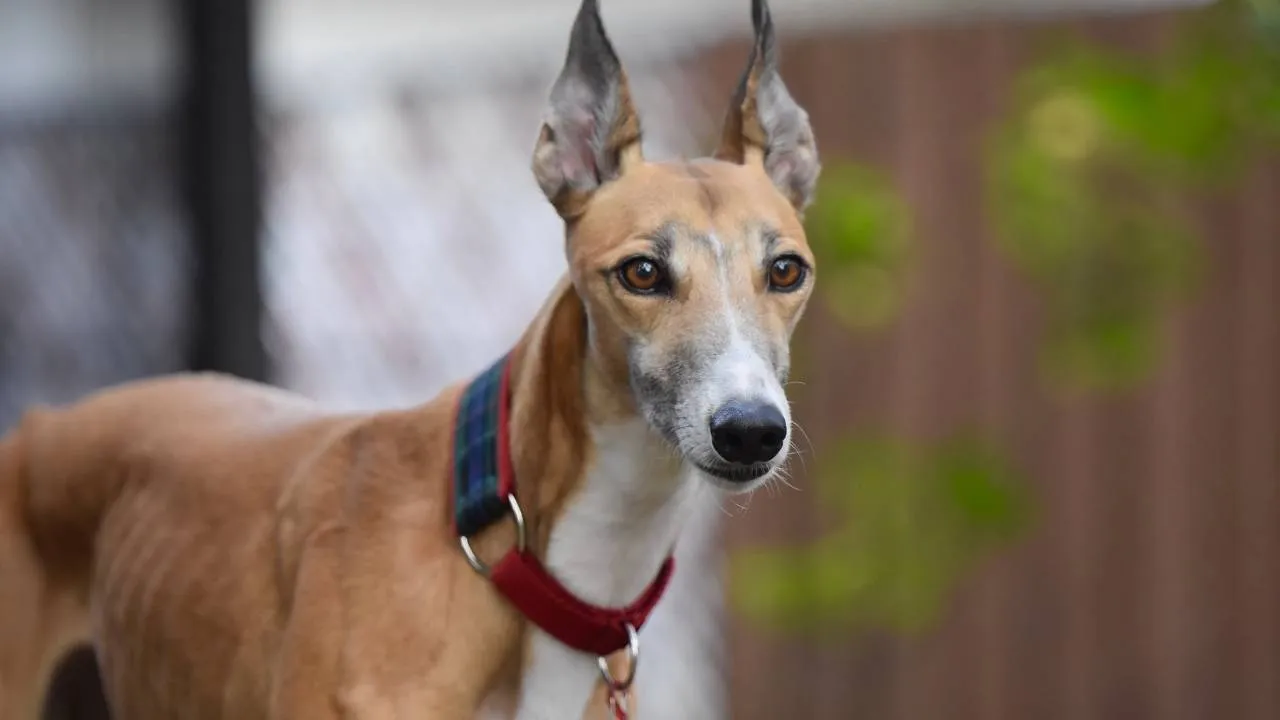
These sleek speedsters were originally crafted to sprint after nimble hares using their incredible eyesight. Britannica mentions that since a Greyhound can hit 45 mph, they basically function like a furry Ferrari with a massive urge to chase small animals that flutter. This intense prey drive has to be managed with training.
When they aren’t zooming, these tall noodles are surprisingly lazy dogs who enjoy snoozing for hours. This gentle temperament makes them weirdly perfect for apartment living, provided they get a few short, explosive bursts of exercise.
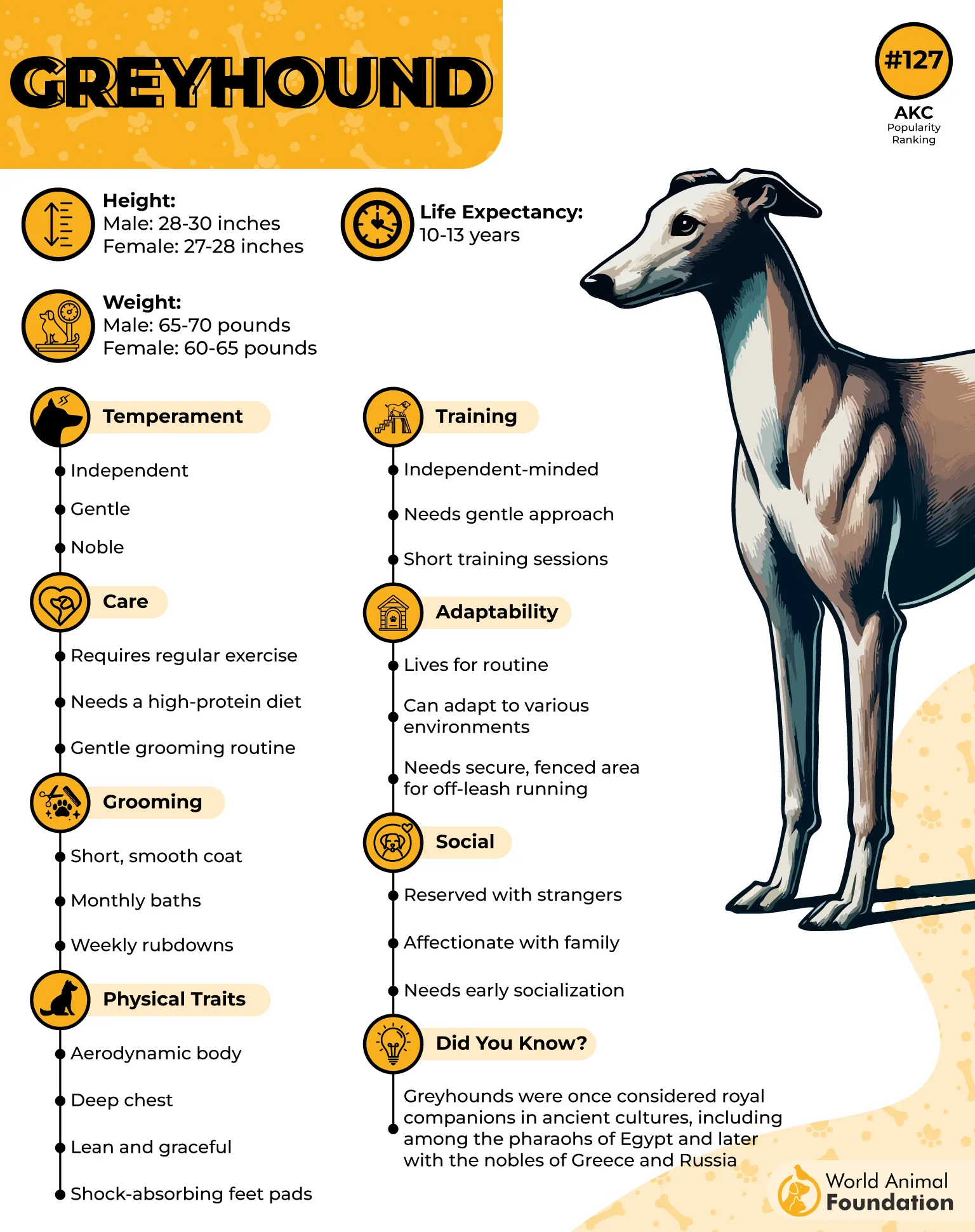
Maintenance is a total breeze because their short coats require almost zero grooming effort. Plus, a Greyhound typically possesses a quiet, polite nature that makes them super easygoing roommates for humans who appreciate a chill, low-maintenance friend.
Famous Dogs: Peritas, often described as a Greyhound, was the beloved hunting companion of Alexander the Great.
2. Border Collie
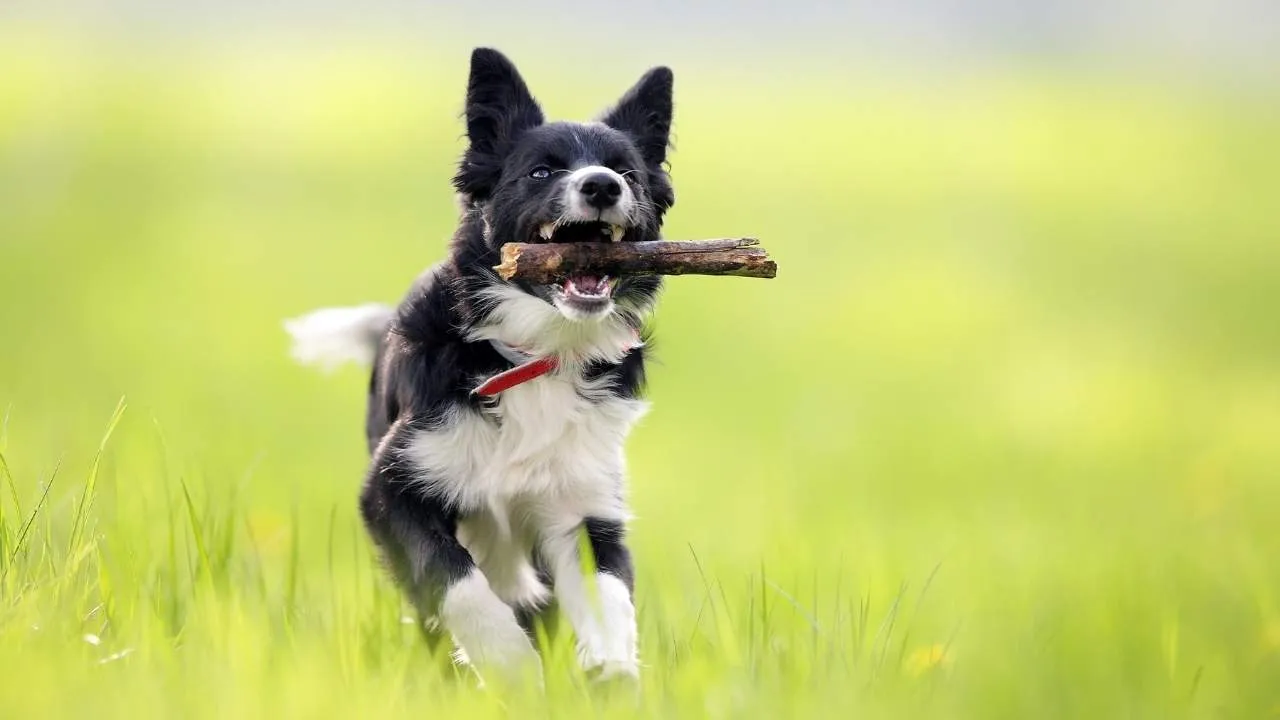
Hailing from the rugged hills between Scotland and England, this intense worker uses a famous “eye” to control sheep. A Border Collie doesn’t just chase; they calculate every movement with genius-level intelligence and a truly unstoppable work ethic. These canines are elite athletes that thrive when they have a specific task to do.
Because their energy levels are sky-high, you’ll need to provide constant mental stimulation and vigorous training. Without a task, a Border Collie might decide to herd small children or the neighborhood cats, which is hilarious but slightly chaotic.
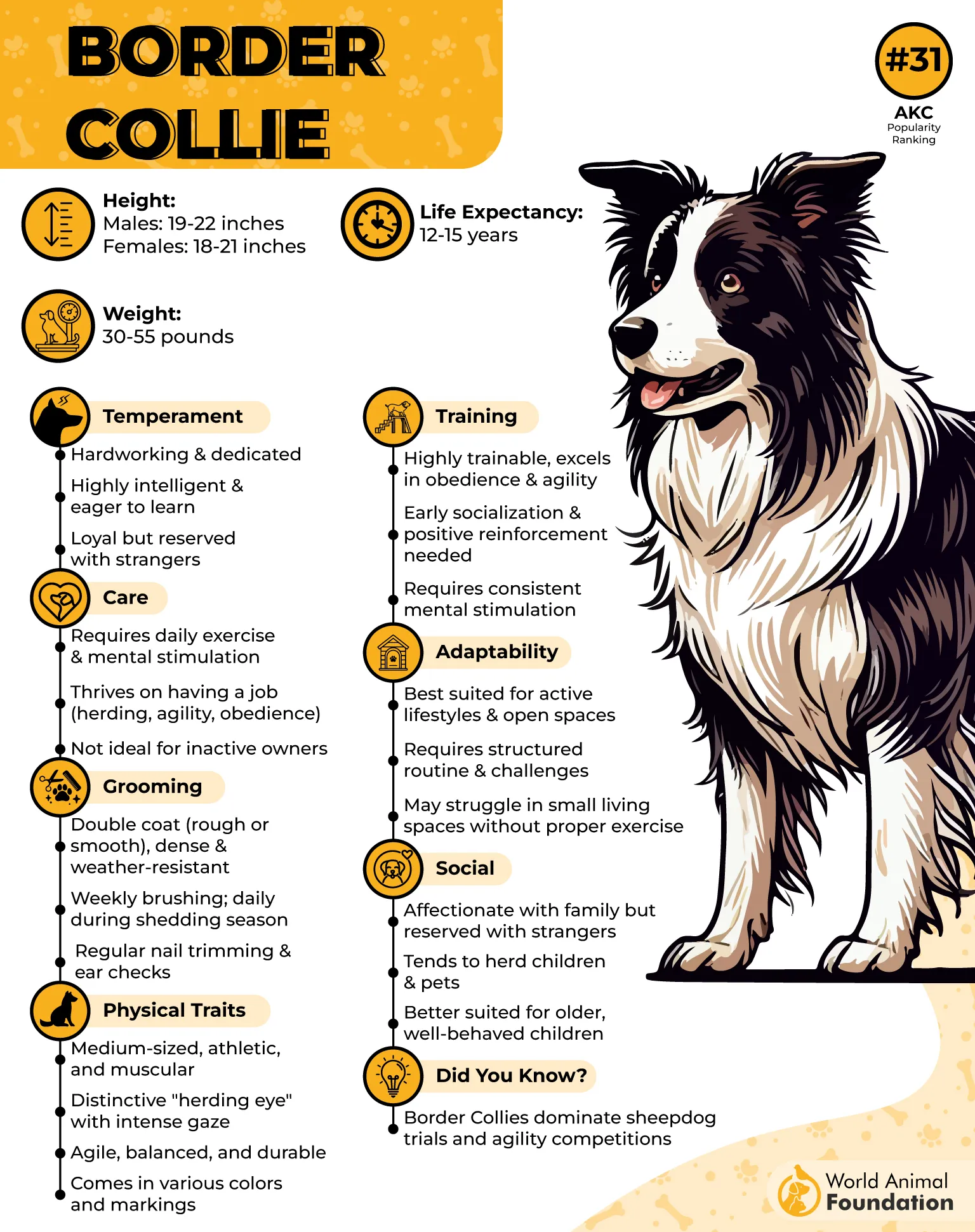
Despite being a bit obsessive about their chores, they are incredibly loyal dogs to their favorite person. Sharing your time with a Border Collie means having a shadow that is always ready for the next big adventure. They are eager to please, yet their strong instinct to herd cattle makes them unique among different breeds.

Training Tips: Keep sessions short and varied to prevent these brainy dogs from getting bored.
3. Basenji
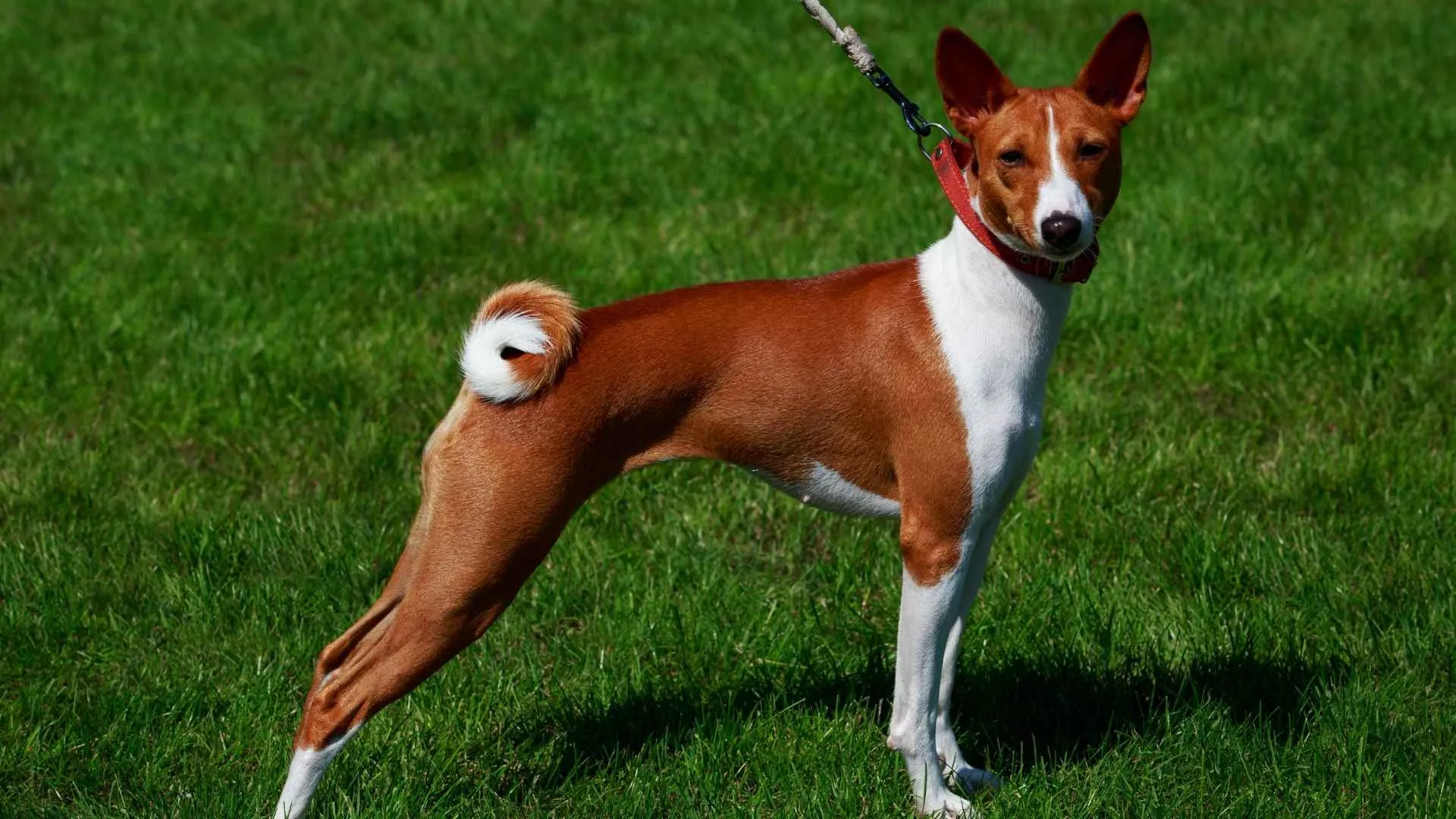
Commonly known as the “barkless dog,” these African hunters used scent and sight to drive small game into nets. The Basenji is a fiercely independent spirit who views fences as mere suggestions rather than actual boundaries.
Since they are basically the felines of the canine world, expect a quirky, self-cleaning puppy with minimal grooming needs. Your Basenji will likely yodel or chortle at you instead of barking, which definitely keeps the neighborhood noise levels interesting. Remember, they might not get along with other pets, as mentioned by Purina.
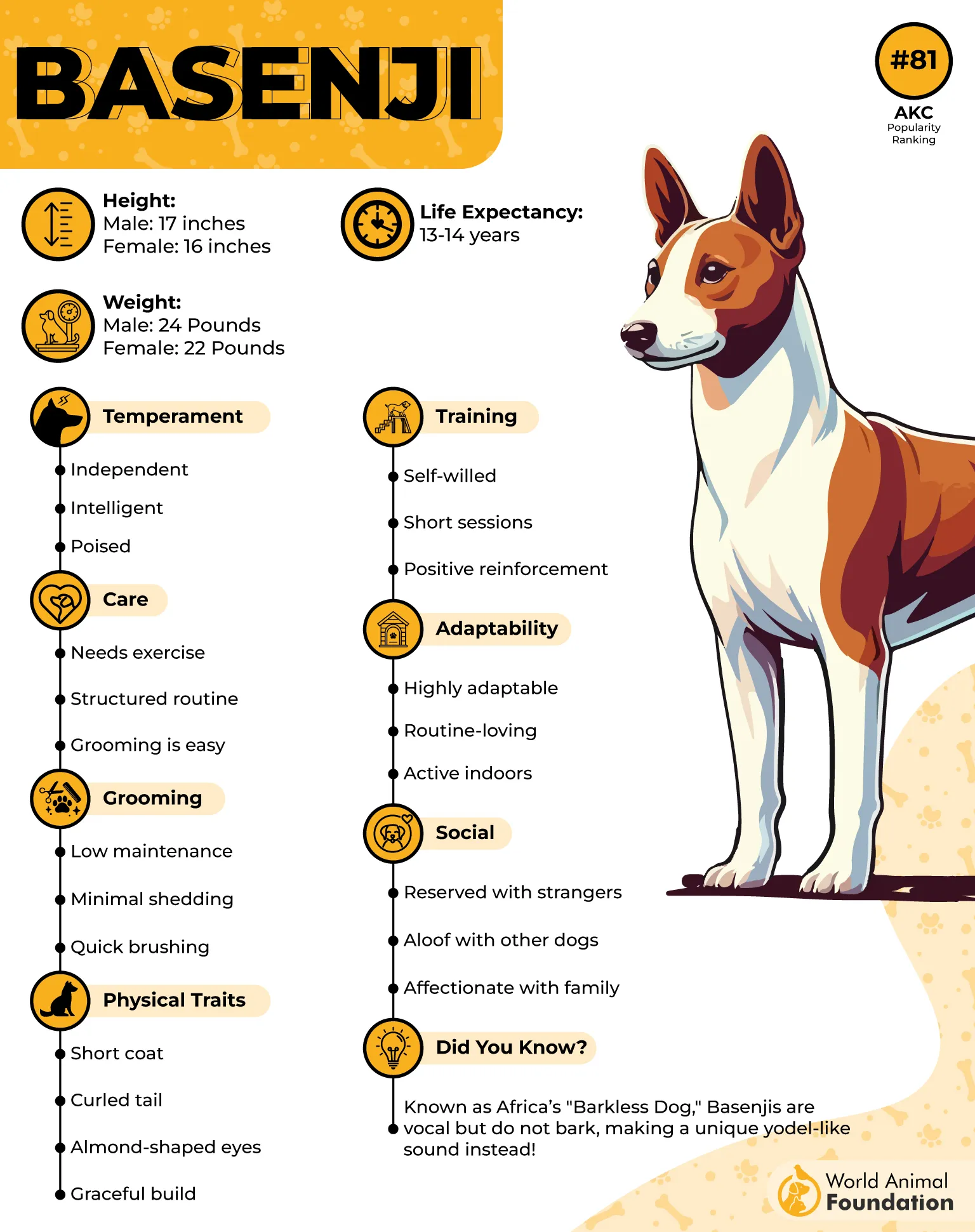
Living with such an energetic escape artist requires a very secure yard and plenty of patience during a walk. While a Basenji is deeply affectionate with their family, they usually prefer being the only small predator in the household.
Did You Know? This breed is one of the few that cleans itself like a feline.
4. Russell Terrier
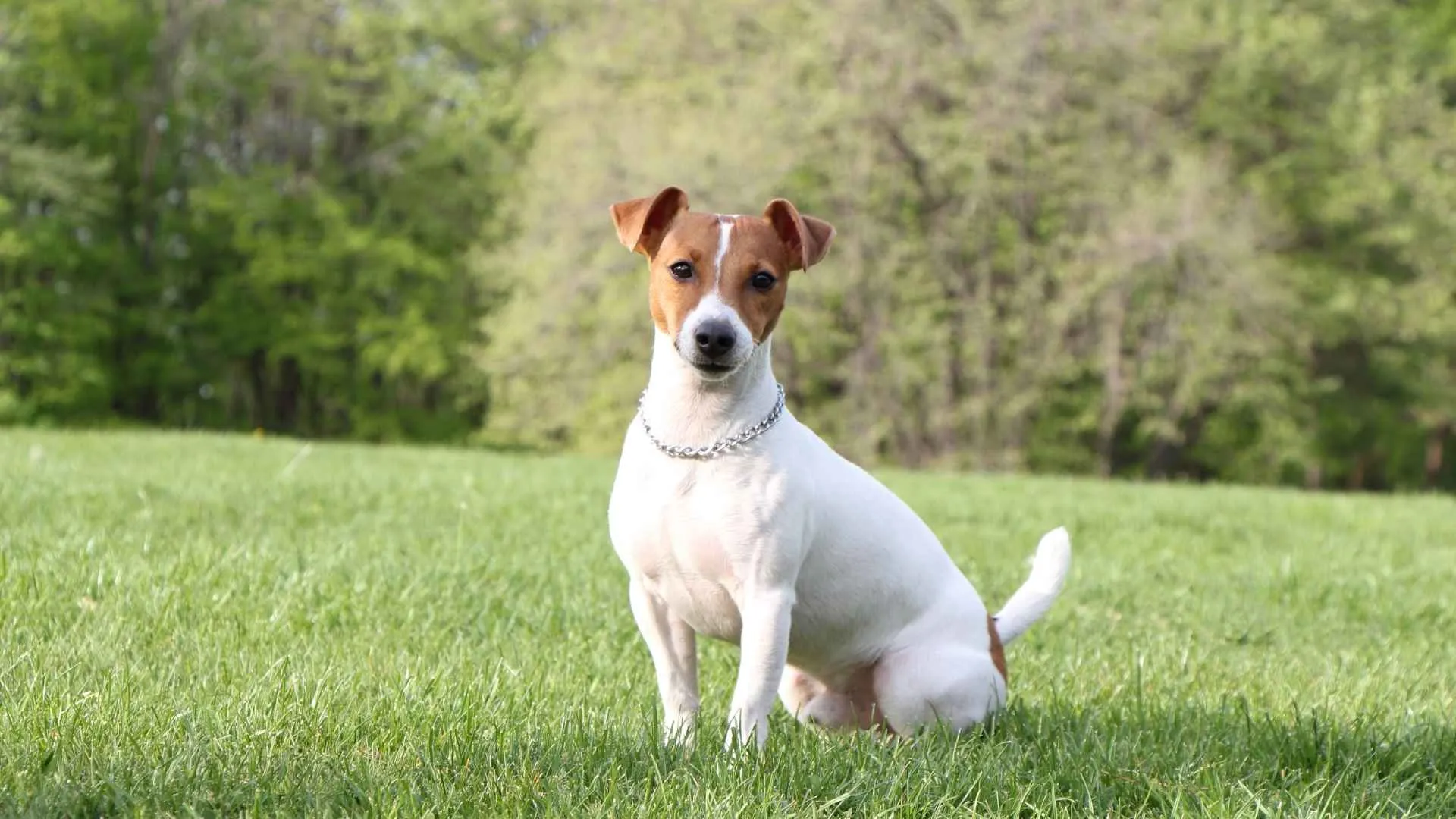
Don’t let that small size fool you because this feisty fellow was built for serious underground hunting. A Jack Russell possesses a massive personality and enough grit to take on challenges way above their actual weight class. These high-energy terrors are classic high prey drive dogs that will pursue small animals until the sun goes down.
These little dynamos will happily dig up your prize petunias if they sense a squirrel. A Jack Russell needs a secure, tall fence because they are surprisingly talented climbers who can scale chain link easily. Their strong prey drive makes them a fun challenge for dedicated dog owners.
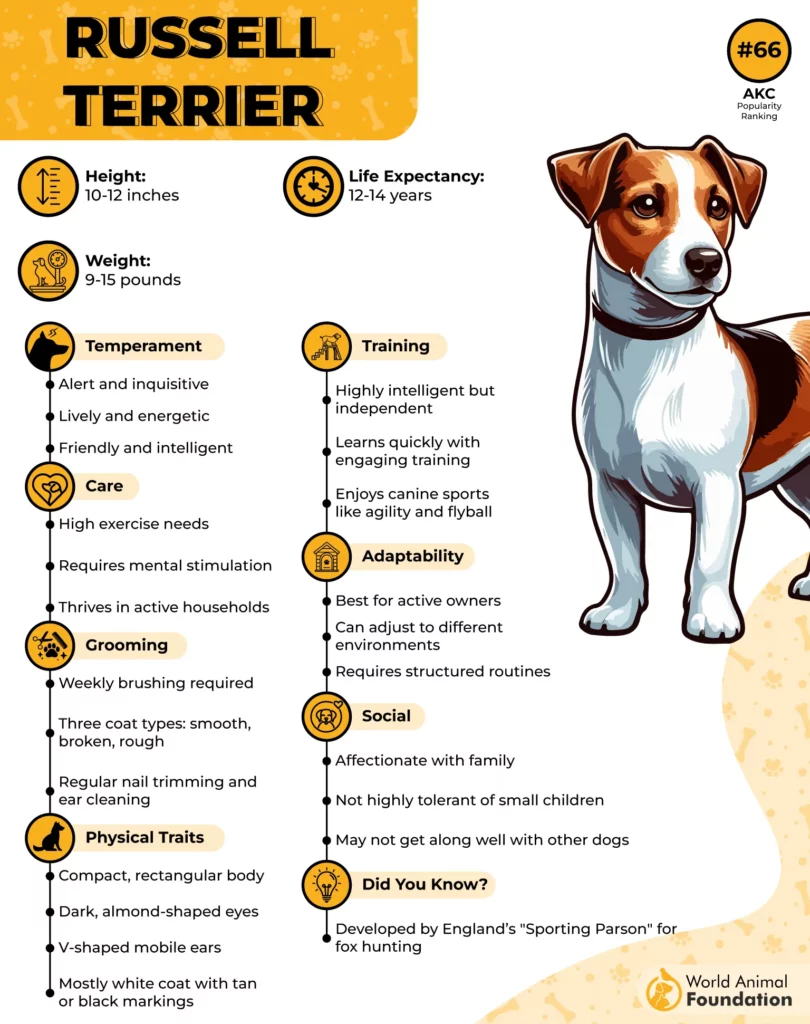
They make fantastic jogging partners for active owners who can keep up with their relentless, buzzing pace. While a Jack Russell is an incredibly smart dog, their stubborn streak means you’ll need a firm hand and a great sense of fun.
Playtime Ideas: They absolutely love “earthdog” trials, where they can use their natural digging instincts.
5. Rhodesian Ridgeback
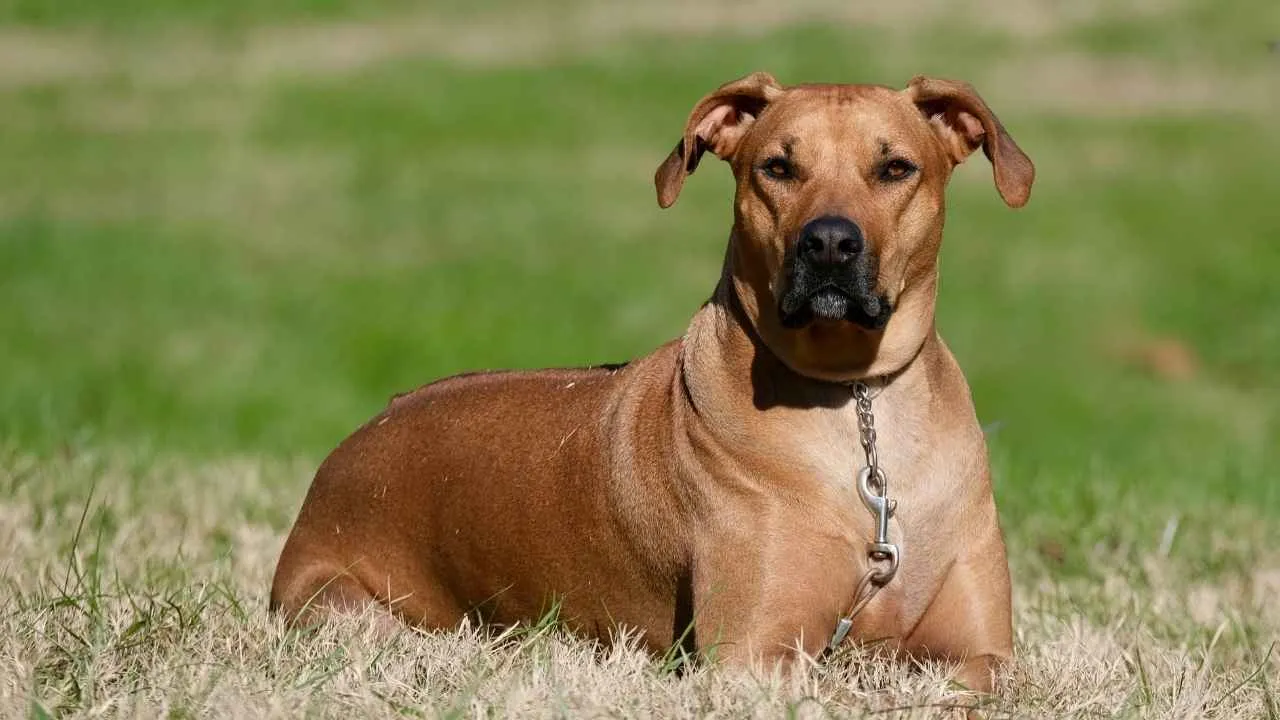
Known as the “Renaissance hound,” this powerful African breed once tracked lions across the vast, sun-drenched savannahs. A Rhodesian Ridgeback is famous for the unique strip of hair growing backwards along its spine, marking its tough heritage. As high prey hunters, they are meant for catching prey and guarding their family.
While they are brave enough to face big cats, they are actually quite calm and quiet around the house. A Rhodesian Ridgeback rarely barks without a legitimate reason, which is why it is a dignified protector that takes the safety of small children very seriously.
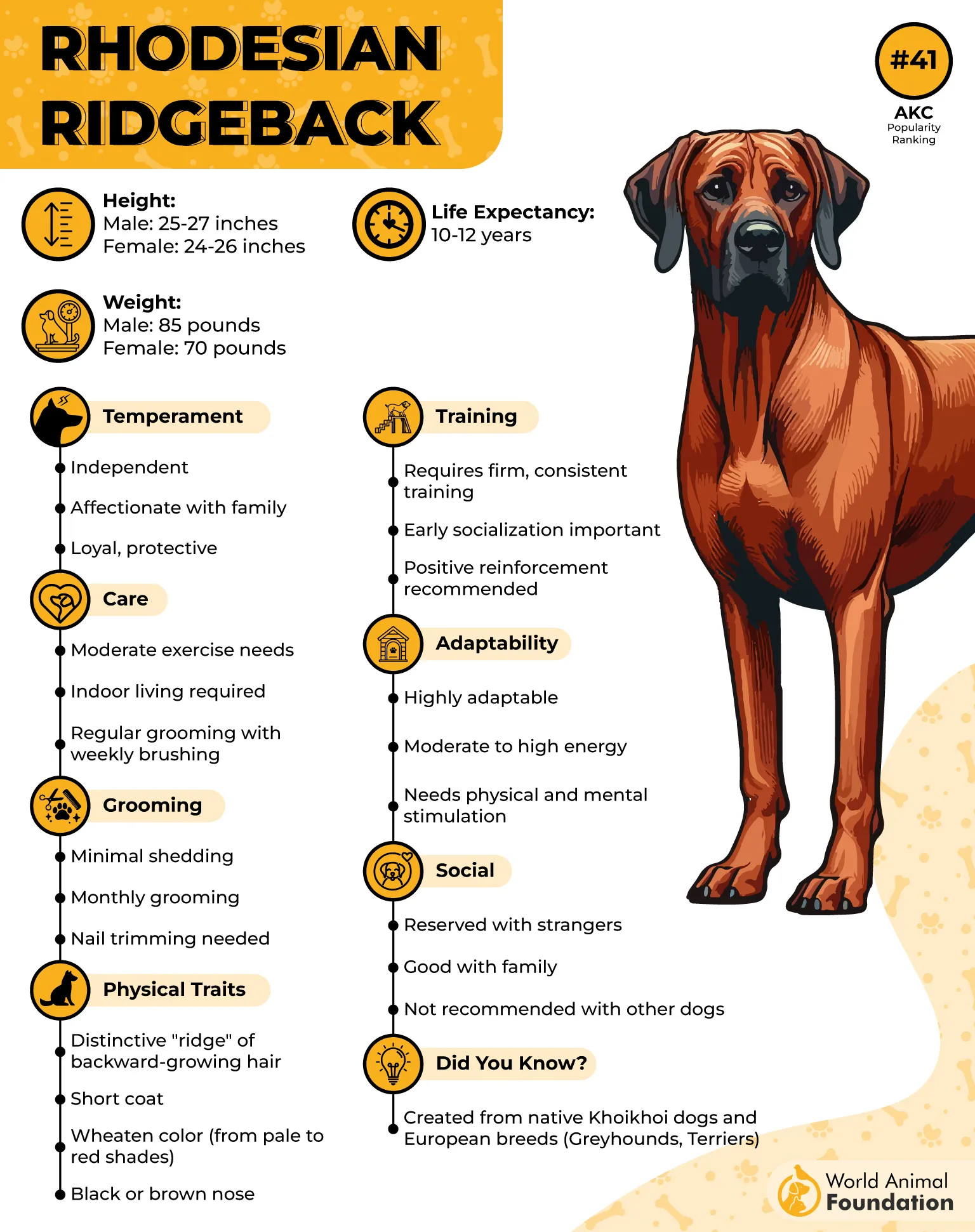
You’ll need to prioritize early socialization to manage their prey instinct and high physical power. Despite their rugged history, a Rhodesian Ridgeback deeply craves indoor comfort and hates being left alone for long periods.
Health Insights: Always check their unique ridge for a condition called dermoid sinus during puppyhood.
6. Weimaraner
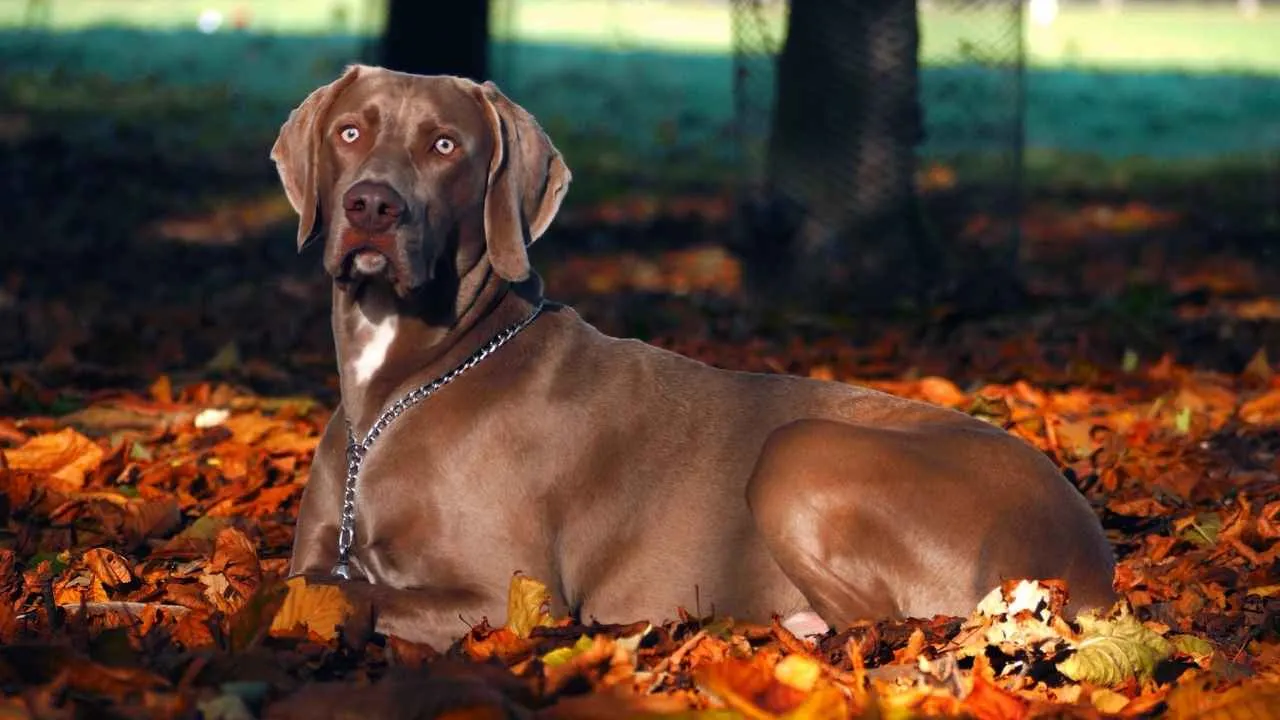
Often called the “Gray Ghost,” these striking hunting dogs were bred to hunt big game alongside German royalty. A Weimaraner has a relentless drive to find and retrieve, which translates into a pup that needs a constant job.
They are the ultimate “velcro dogs” who absolutely insist on being in the same room as you at all times. This Weimaraner’s loyalty is beautiful, though it does mean they can get a bit anxious if left solo. These energetic dogs are famously eager to stay active, often chasing cats or other small animals if bored.
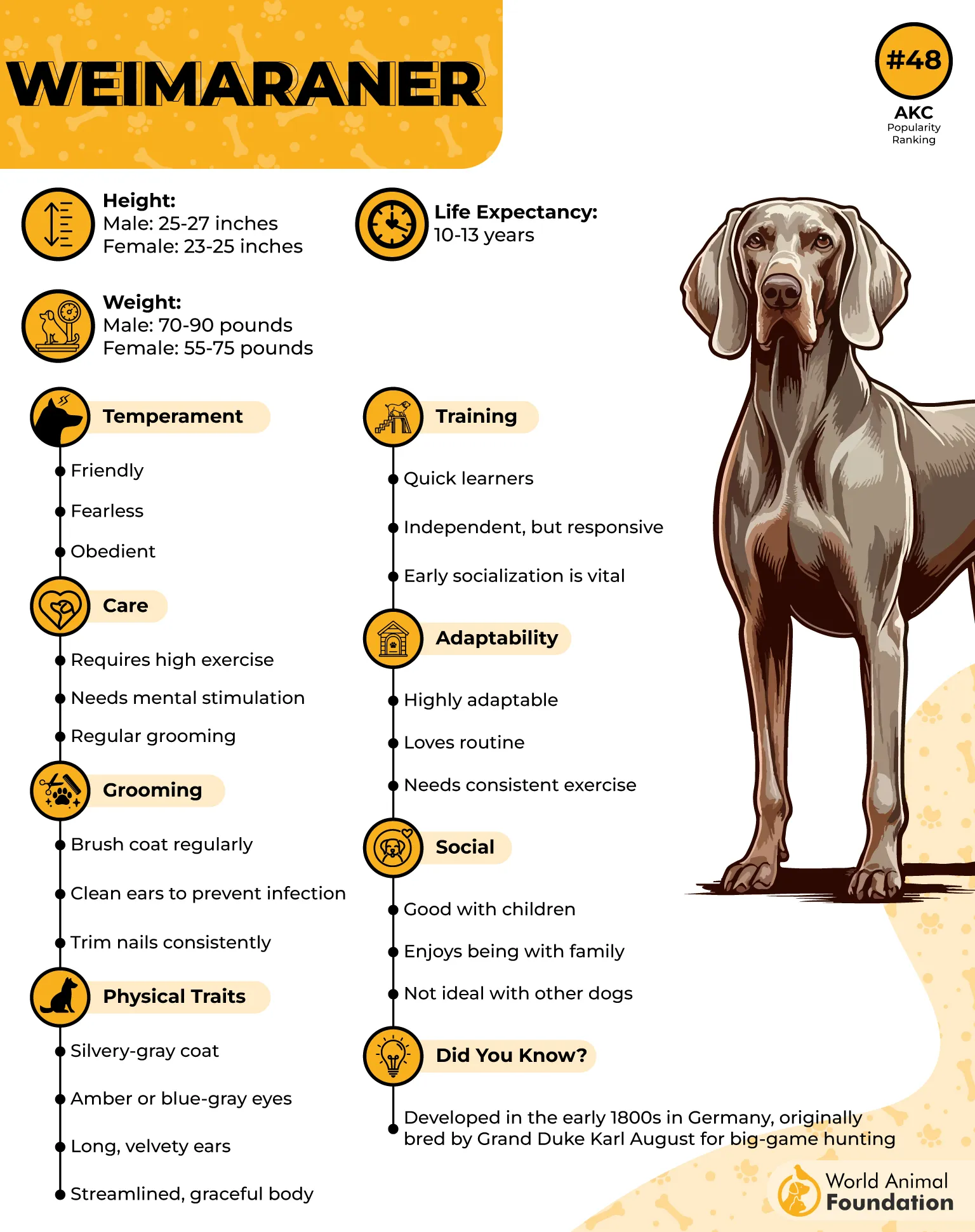
While they are gentle with older kids, their bouncy energy can be a bit much for tiny toddlers. A Weimaraner thrives in a home where they get plenty of outdoor fun and a clear leader to follow. If you are a busy person, PetMD states that Weimaraners are easier to groom.
Fun Behaviors: Many owners report their “Gray Ghost” likes to “woo-woo” when they are excited or happy.
7. Irish Setter
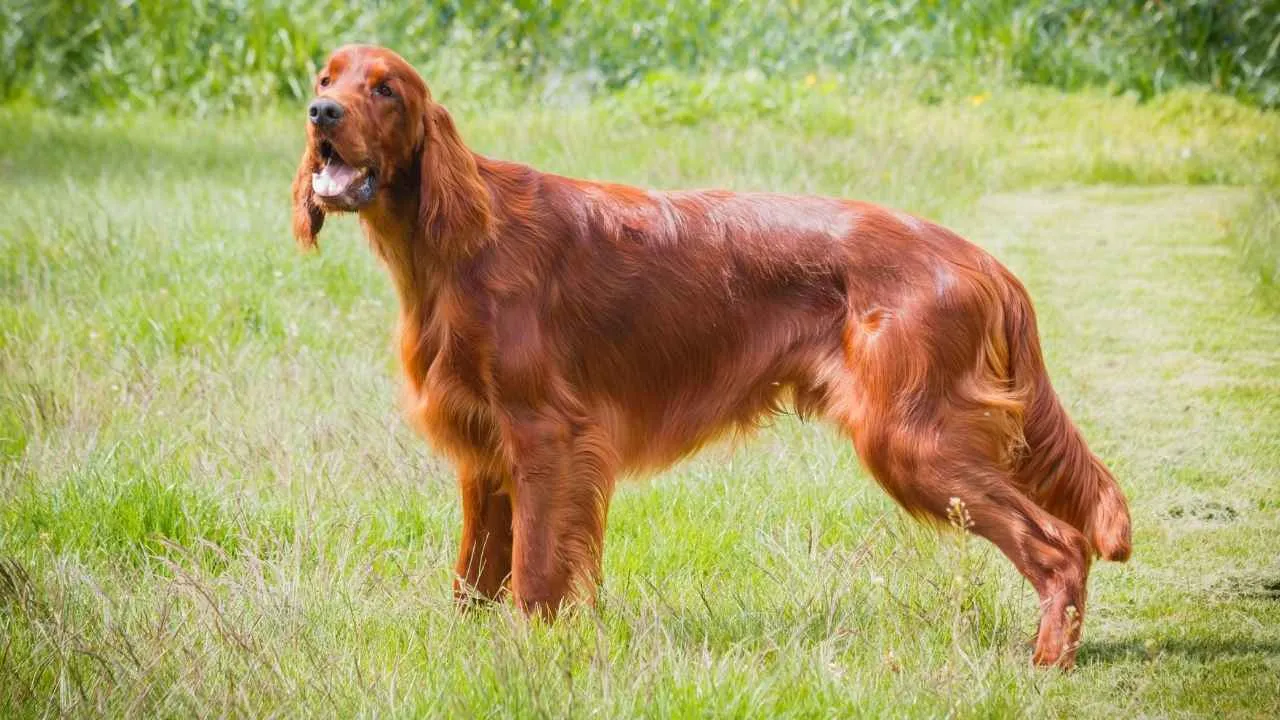
With a stunning mahogany coat and a mischievous grin, this friendly bird dog is always ready for a party. Irish Setters use a keen nose to locate birds, showing off a playful spirit that never truly fades. This dog’s prey drive is focused on feathers, making them energetic hunters that love the great outdoors.
They are incredibly sweet-natured and patient, making them wonderful playmates for energetic children who love to run. However, an Irish Setter can be a bit of a slow learner because they are often too busy chasing. However, they are much more interested in making friends with other dogs.
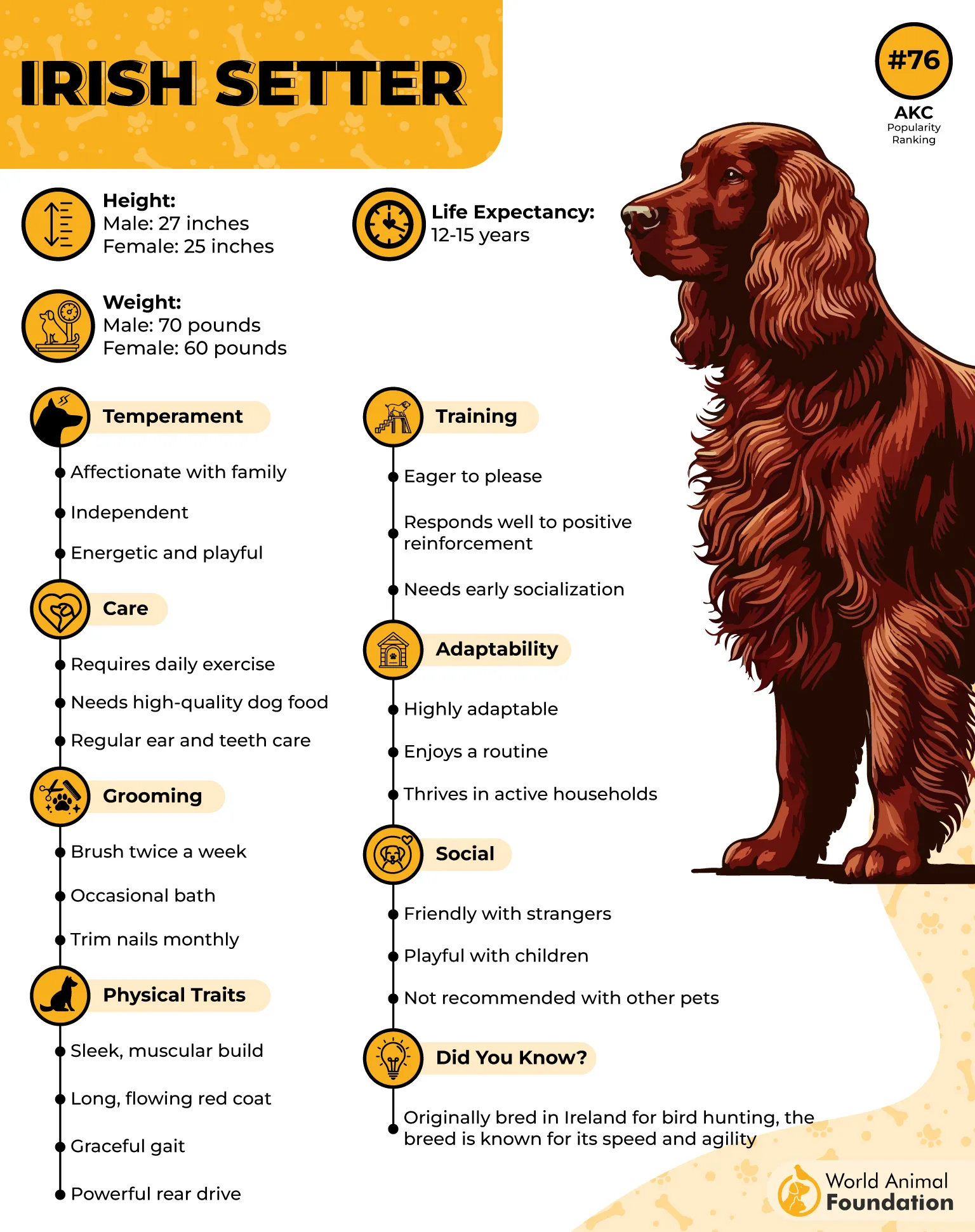
You will need to commit to regular brushing to keep those long, silky feathers from getting tangled. Overall, the Irish Setter is a joyful, affectionate dog that brings a bright splash of color to any household.
Breed Trivia: They were originally red and white before the solid mahogany coat became the standard.
Conclusion
High prey drive showcases a dog’s natural hunting instincts, combining focus, energy, and alertness into a powerful behavioral trait. These dogs are constantly ready to chase, explore, and engage with moving targets, making them lively and entertaining companions.
To manage this drive effectively, owners need consistent training, plenty of physical exercise, and mental stimulation. Structured activities, interactive toys, and safe outlets for chasing instincts help prevent unwanted behaviors and keep dogs happy. Understanding the instinctive roots of this behavior allows for better guidance and control.
When properly managed, high prey drive can be a rewarding and exciting trait, providing both challenge and joy for attentive owners.
