




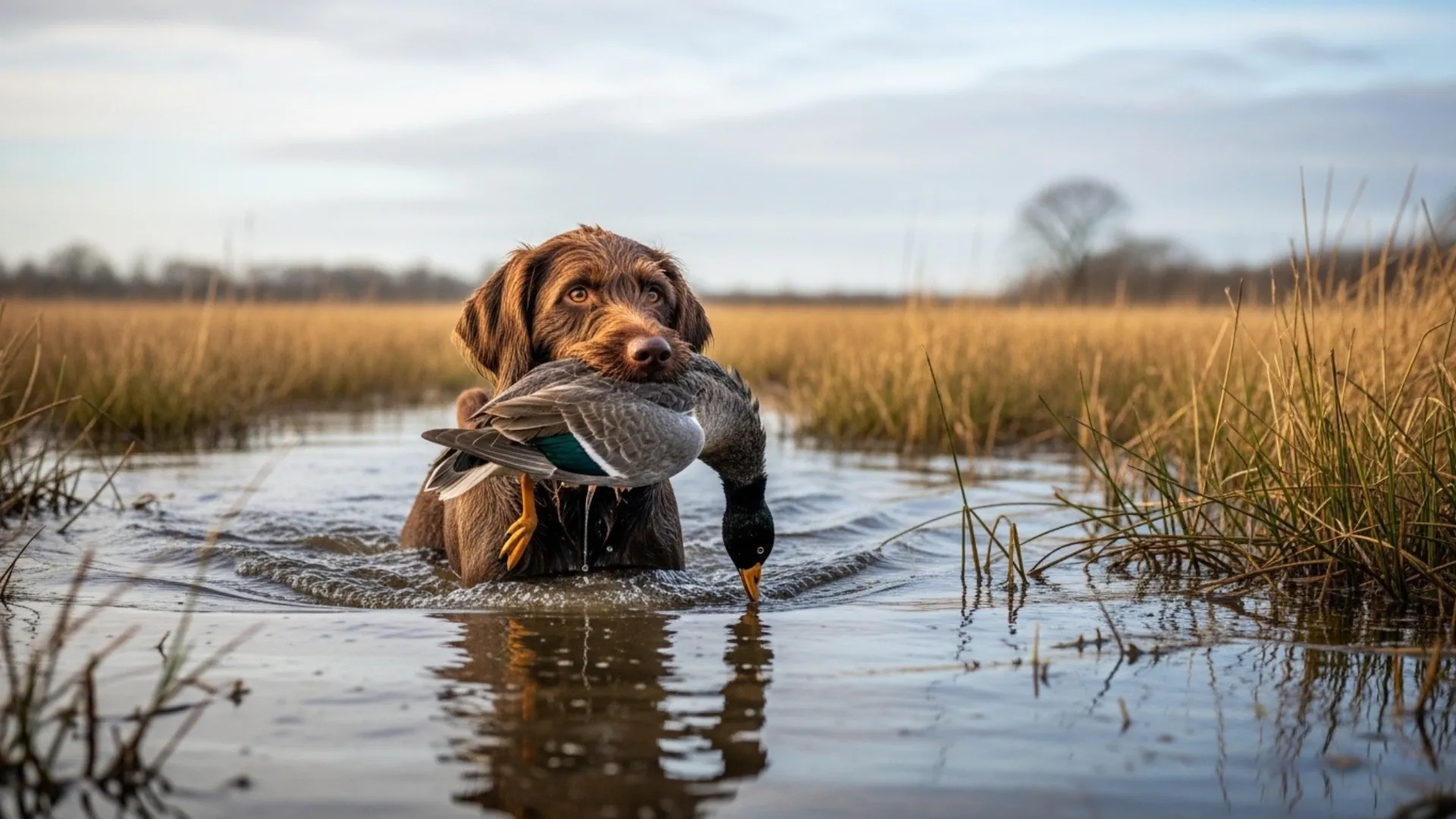
When the morning mist clings to the reeds and the first flight of mallards breaks the horizon, you need more than just a pet. You need a specialist. Waterfowl hunting is a game of grit, and the dogs that dominate this field are the elite “wet-work” athletes of the canine world.
Bred over generations to mark falling birds through blinding sleet and navigate the thickest marshland, these breeds are defined by a singular, obsessive drive to retrieve.
From the explosive swimming power required for open-water retrieves to the “quiet, steady” needed in a cramped duck blind, these dogs are a masterclass in instinct and intelligence. It isn’t just about the hunt, either; many of these powerhouses are the top contenders on the AKC eligibility lists, proving their mettle in field trials and retriever tests that push their mental and physical limits to the edge.
Whether you’re setting decoys in a flooded timber hole or trekking through a frozen coastal marsh, these are the breeds that live for the splash. Ready to meet the legendary partners who never clock out? Let’s dive in.
Top Dog Breeds Known for Waterfowl Hunting
1. Pudelpointer
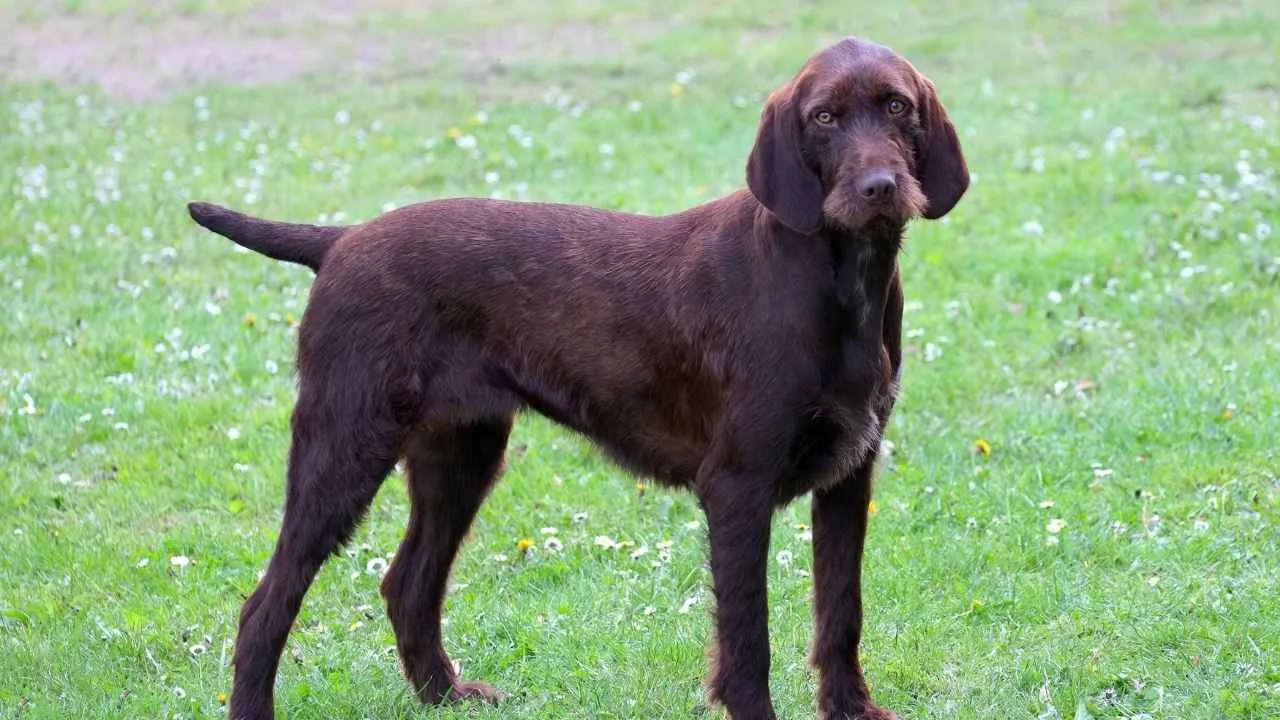
The Pudelpointer was purpose‑bred in Germany as a versatile gun dog capable of upland and waterfowl work, blending the scenting ability of a Pointer with the water instincts of a Poodle. This medium‑sized breed is intelligent and trainable, with a dense yet water‑resistant coat that helps protect it during cold-water retrieves.
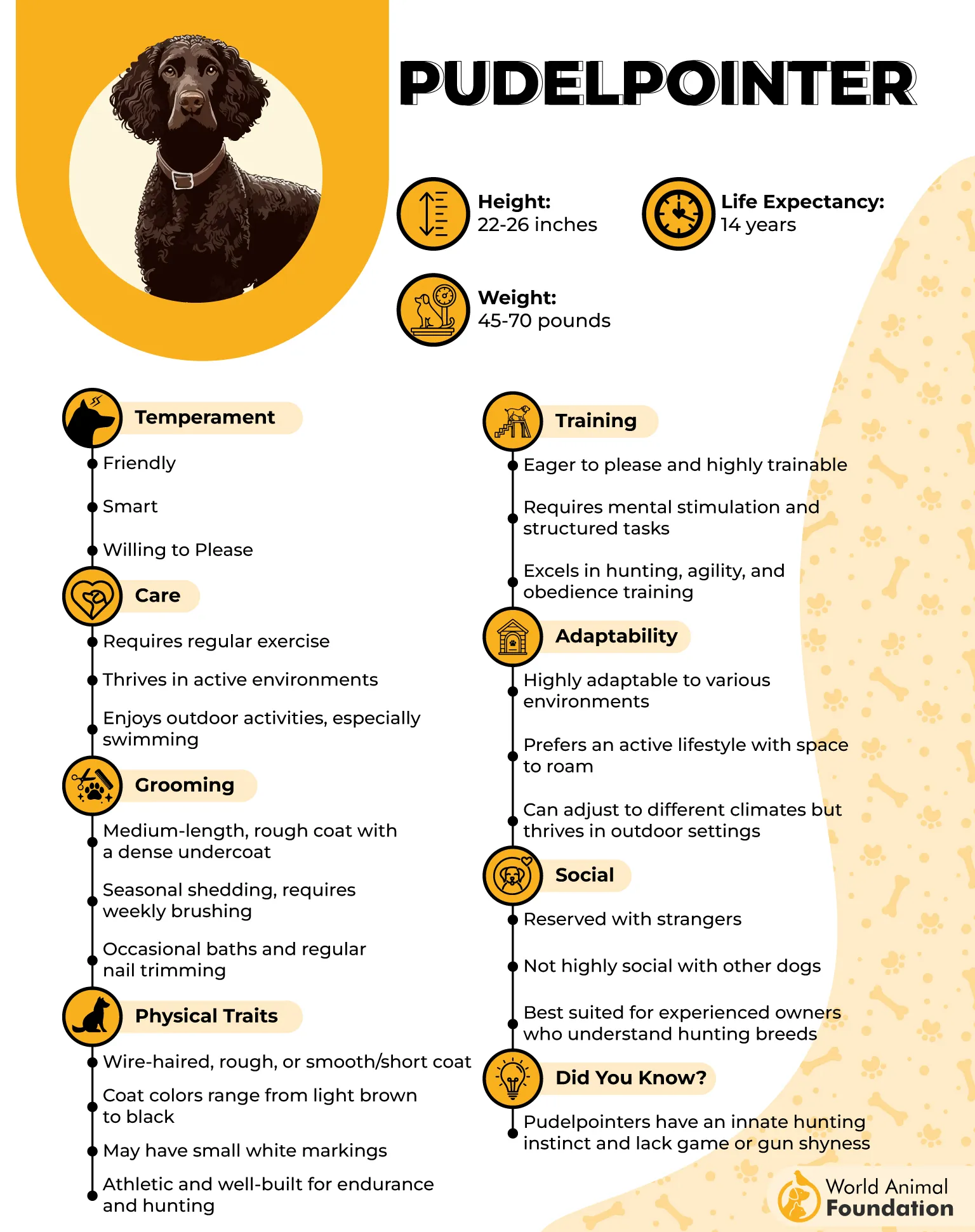
Developed to combine the Poodle’s water skills with the Pointer’s game ability, making it a versatile hunting dog, excellent for pointing, flushing, and retrieving across different terrains. Beyond hunting, their toughness shows in their adaptability and resilience to harsh conditions.
Royal Canin says they can handle cold, wet, or uneven environments without losing focus or energy, and they’re generally healthy and sturdy dogs with few chronic issues when well-cared for.
They excel in multiple hunting scenarios — locating, pointing, and retrieving birds from both land and water — which makes them ideal for hunters who want one dog that does it all.
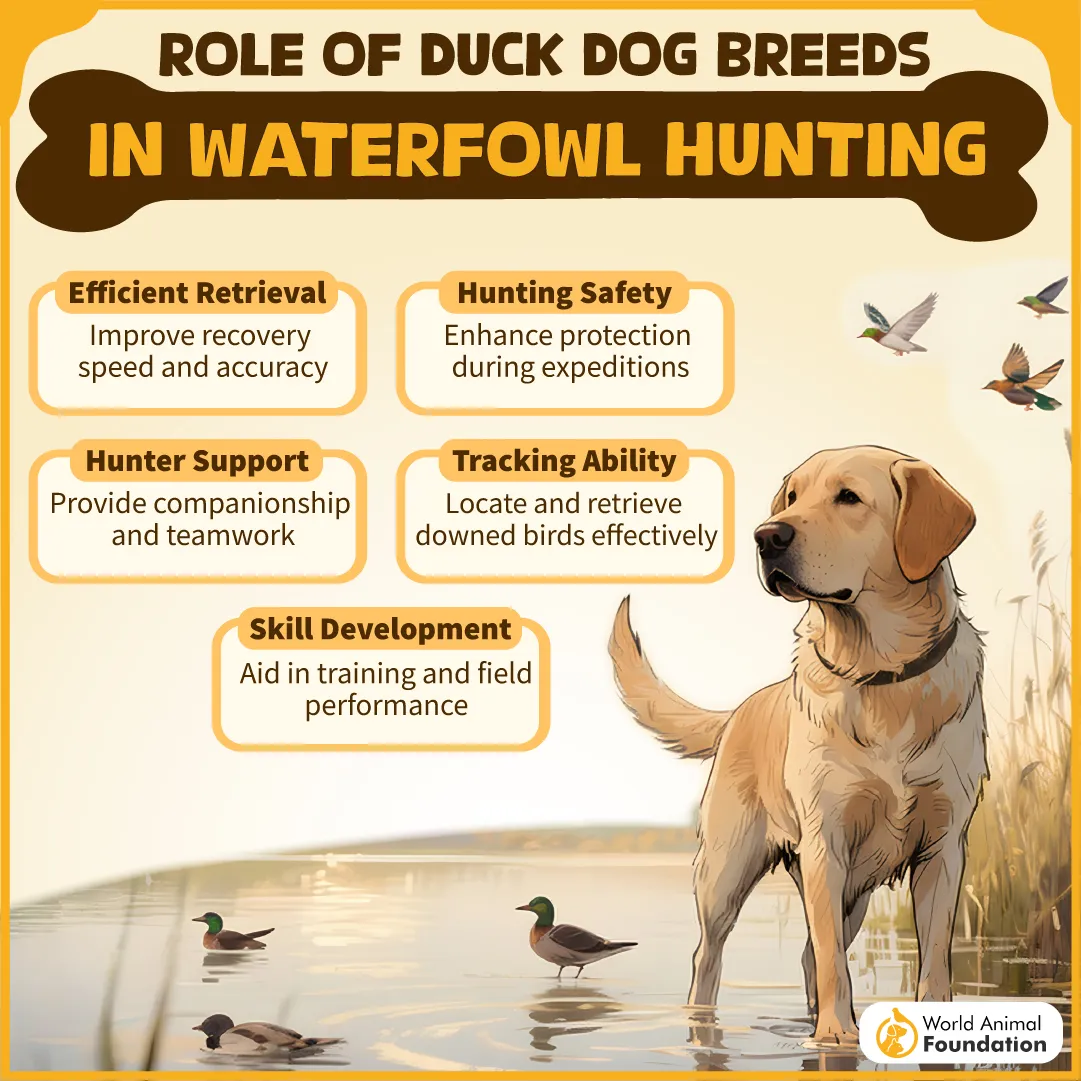
These tough dogs are the definition of a hardworking, versatile, and resilient hunting dog, tough enough to endure rigorous hunts while staying loyal and trainable.
Three Traits That Make Them Great for Waterfowl
Strong scenting and tracking ability
Excellent versatility across upland and water conditions
Eager to please with high trainability
2. American Water Spaniel
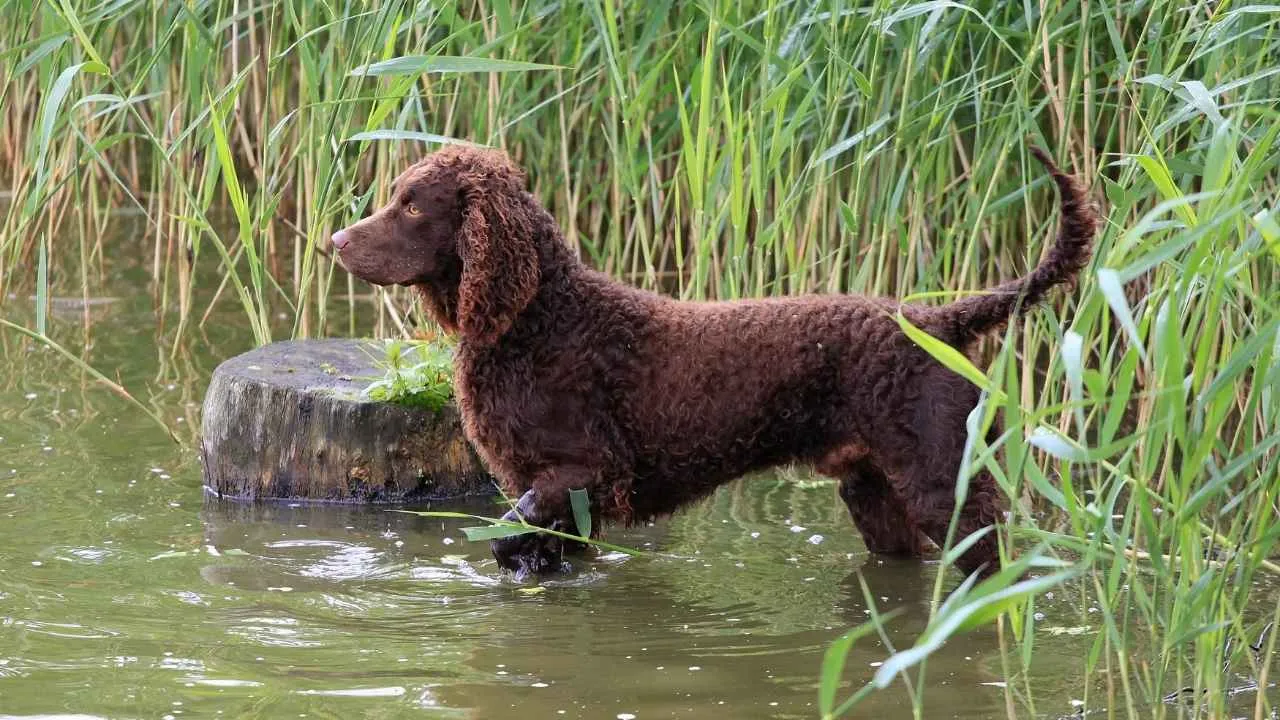
The American Water Spaniel (AWS) was developed in the United States specifically for duck hunting and retrieving from small boats and marshes. It is a true duck dog, bred specifically in the Midwest for retrieving ducks from icy waters.
This medium‑sized sporting dog is muscular and active, known for a curly or marcelled coat that helps shed water and brambles.
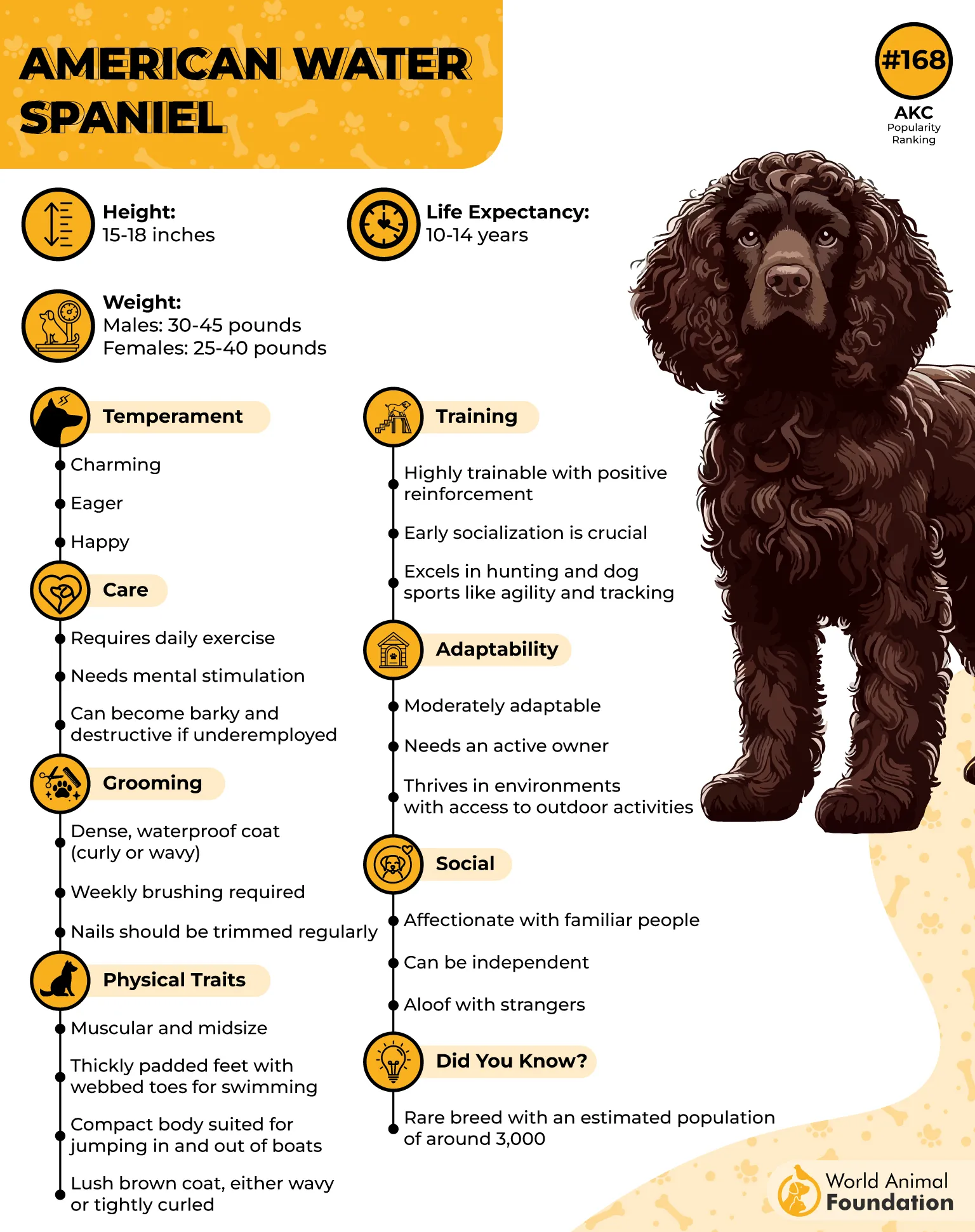
They are excellent swimmers with an instinct to seek out and retrieve waterfowl, and the AKC recognizes them for both hunting and field performance.
Their hunting instincts aren’t just physical—they are mentally sharp and alert, able to respond to hand signals, whistle commands, and the subtle cues of their handler, which is essential for coordinated hunting trips.
They also have a strong retrieving drive, so once they flush or find waterfowl, they instinctively bring it back to their owner, minimizing losses during a hunt.
Socially, their hunting instincts are paired with a loyal, eager-to-please temperament, making them highly trainable both in and out of the field. This combination of intelligence, energy, and instinct means the AWS thrives when given both mental stimulation and physical activity.
Three Traits That Make Them Great for Waterfowl
Built for aquatic retrieving from boats and shore
Durable, weather‑ready coat protects in rough conditions
Intelligent, eager workers with strong bird instincts
3. German Shorthaired Pointer
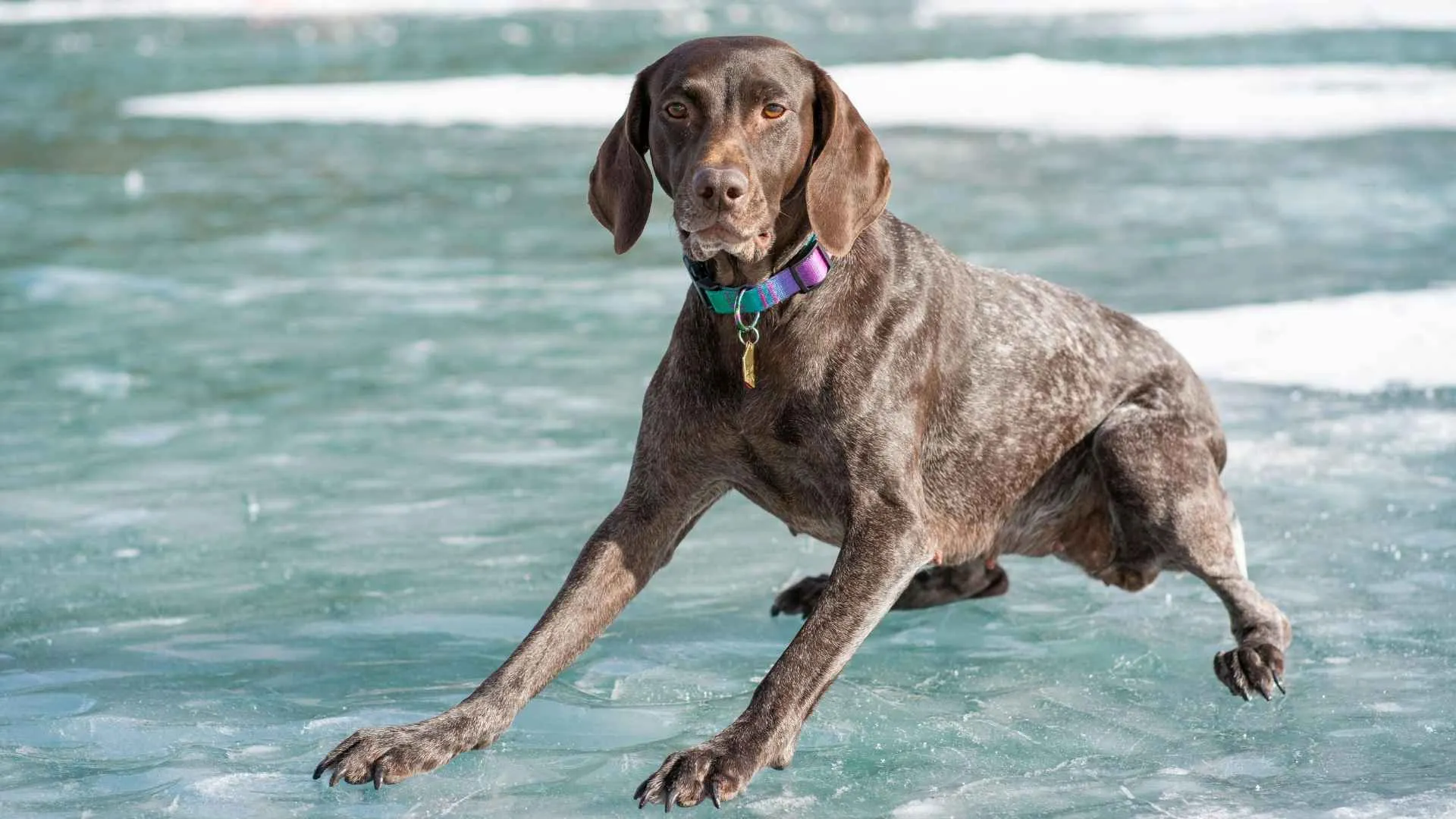
The German Shorthaired Pointer is an all‑purpose gun dog equally at home with upland birds and waterfowl. Originating in 19th‑century Germany, GSPs were bred to locate (point) and retrieve game, and they can fetch waterfowl from marshy or open water terrain if trained accordingly.
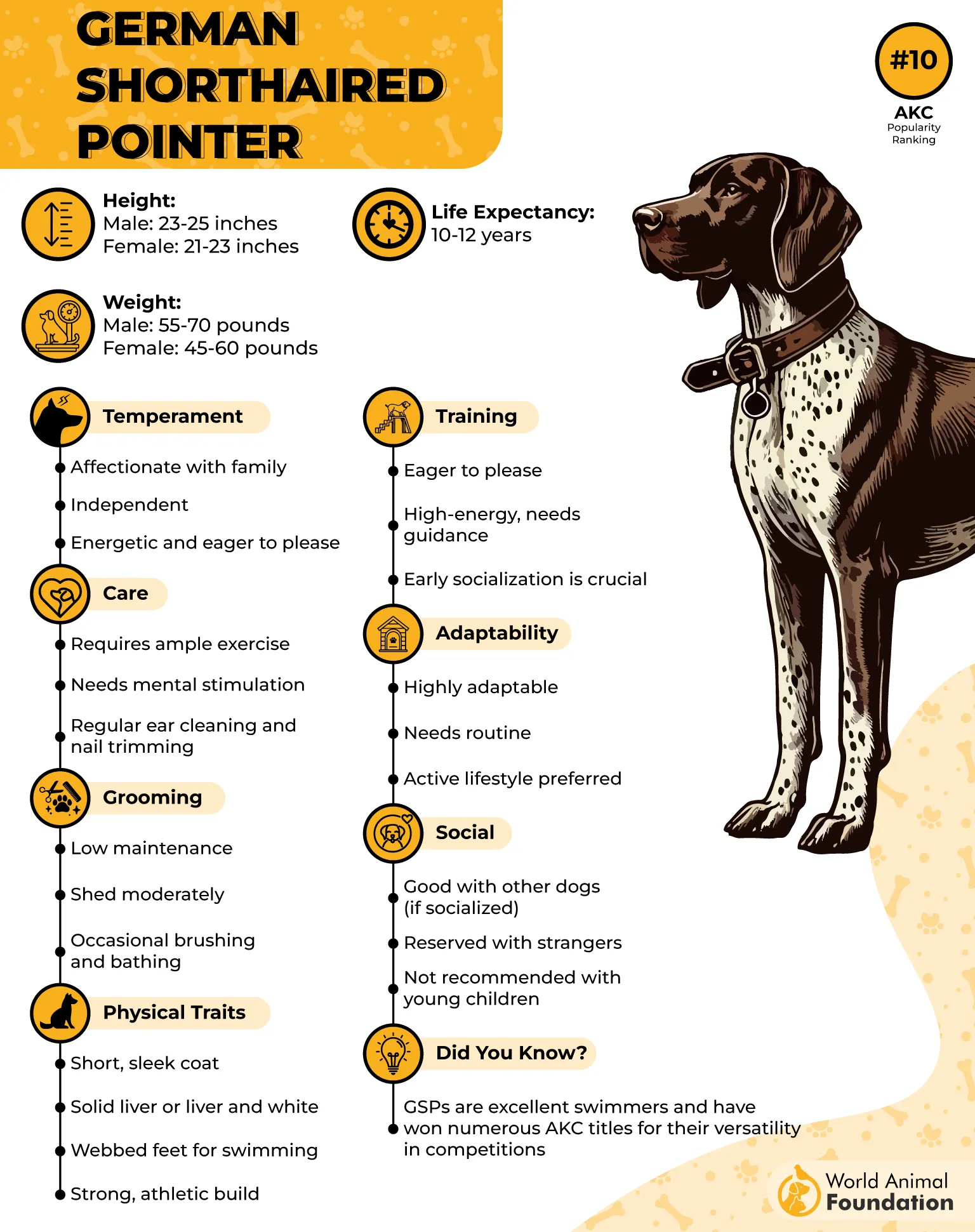
They are athletic, energetic, and highly trainable, making them popular among hunters seeking a dual‑purpose bird dog capable of both pointing and retrieving.
Famous for its all-around hunting skills, it can point, track, flush, and retrieve both upland and waterfowl, making it one of the most adaptable gun dogs.
This dog is widely considered a great upland game hunter, excelling at pointing, tracking, and retrieving, which are key skills for upland birds. It is fast, athletic, and highly intelligent with a natural hunting instinct; it can cover large areas and locate birds efficiently.
Three Traits That Make Them Great for Waterfowl
Versatile pointer Pointerriever
Highly energetic with great stamina
Adaptable to diverse hunting environments
4. Labrador Retriever
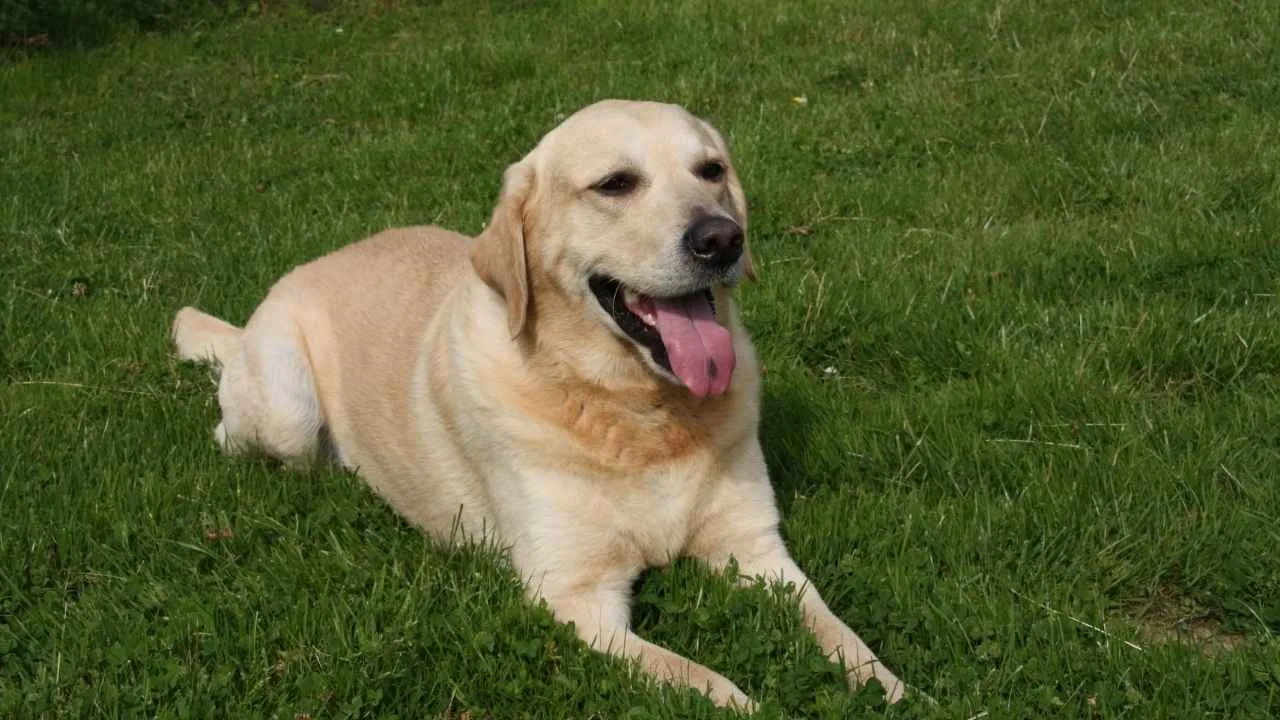
If there’s a breed synonymous with waterfowl retrievers, it’s the Labrador Retriever.
Labs were further developed in England from dogs that worked with fishermen, retrieving nets and catching fish off the coast of Newfoundland. They have a dense, water‑resistant double coat, webbed feet, and an otter‑like tail that make them formidable swimmers.
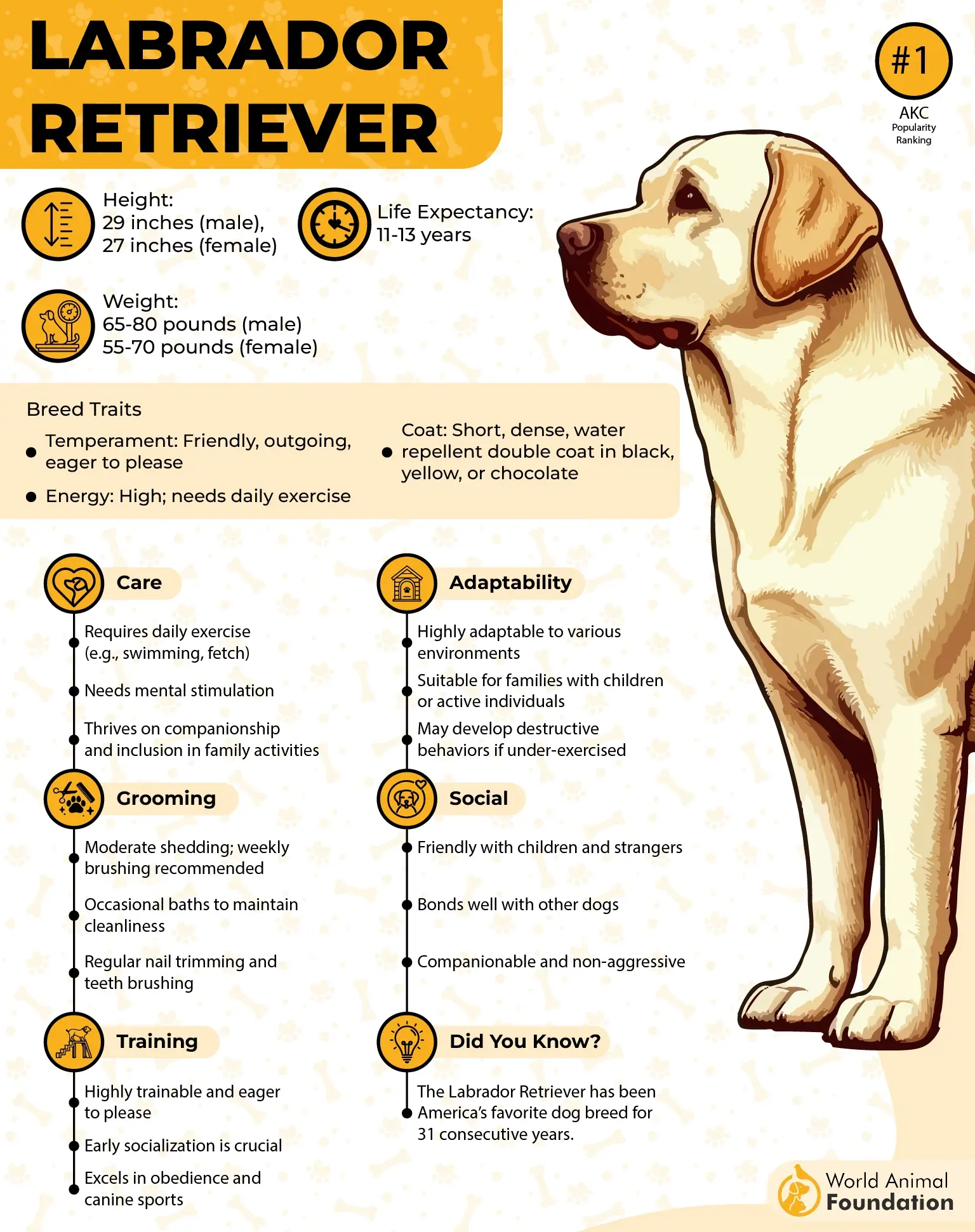
Their marking ability, eagerness to retrieve, and cooperative nature explain why Labs are among the most popular and reliable waterfowl hunting dogs worldwide. What makes Labs excellent waterfowl dogs is their stamina and endurance.
They can work for hours in tough conditions, whether it’s trudging through muddy marshes, wading through cold water, or navigating thick reeds, without losing focus.
Additionally, PetMD says their soft mouths allow them to carry birds carefully without damage—a trait that’s highly valued among hunters.
They combine intelligence, instincts, physical prowess, and adaptability, making them one of the most trusted and effective waterfowl-hunting dogs ever developed. They aren’t just hunters—they’re loyal partners in the field and at home.
Three Traits That Make Them Great for Waterfowl
Exceptionally strong swimming capacity
Friendly, trainable, and reliable
Excellent with both novice and experienced hunters
5. Golden Retriever
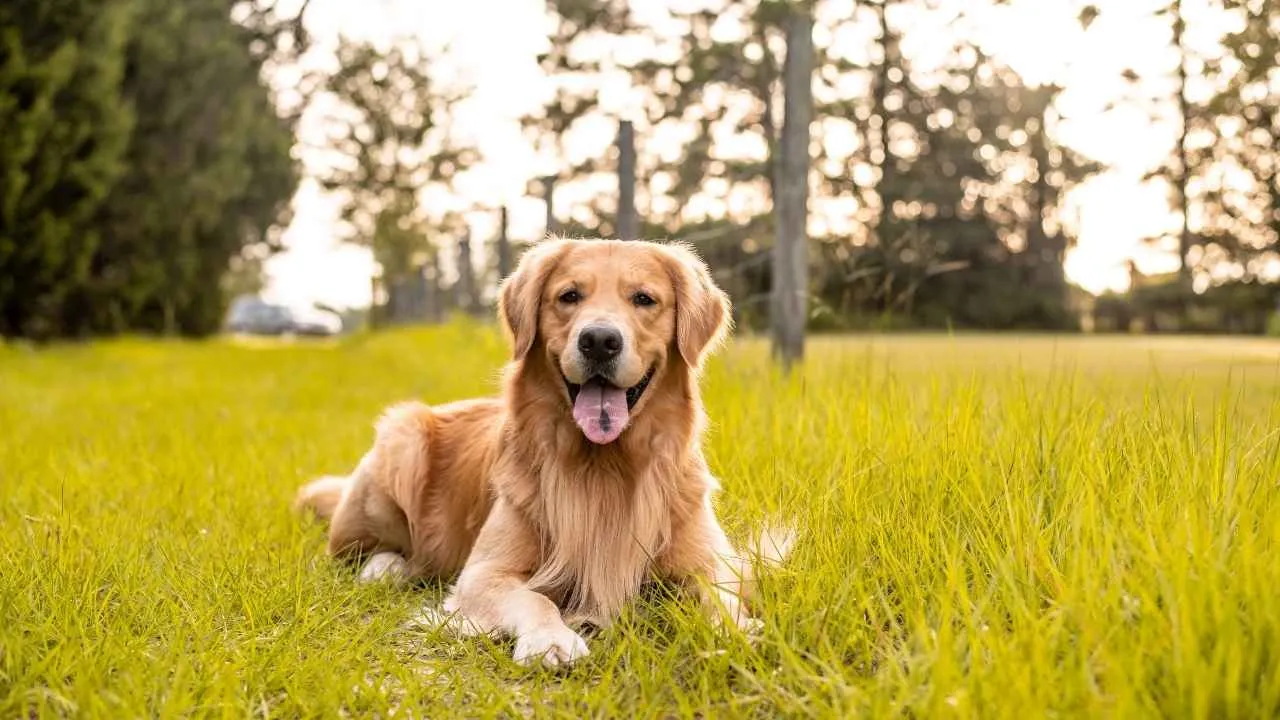
The Golden Retriever was developed in Scotland in the mid‑1800s with retrieving in mind, including waterfowl and upland game. They are strong swimmers and patient retrievers, ideal for waterfowl hunting in cold water.
They share many traits with other retriever breeds—a water‑resistant coat, an athletic build, and a gentle—but driven—retrieving instinct.
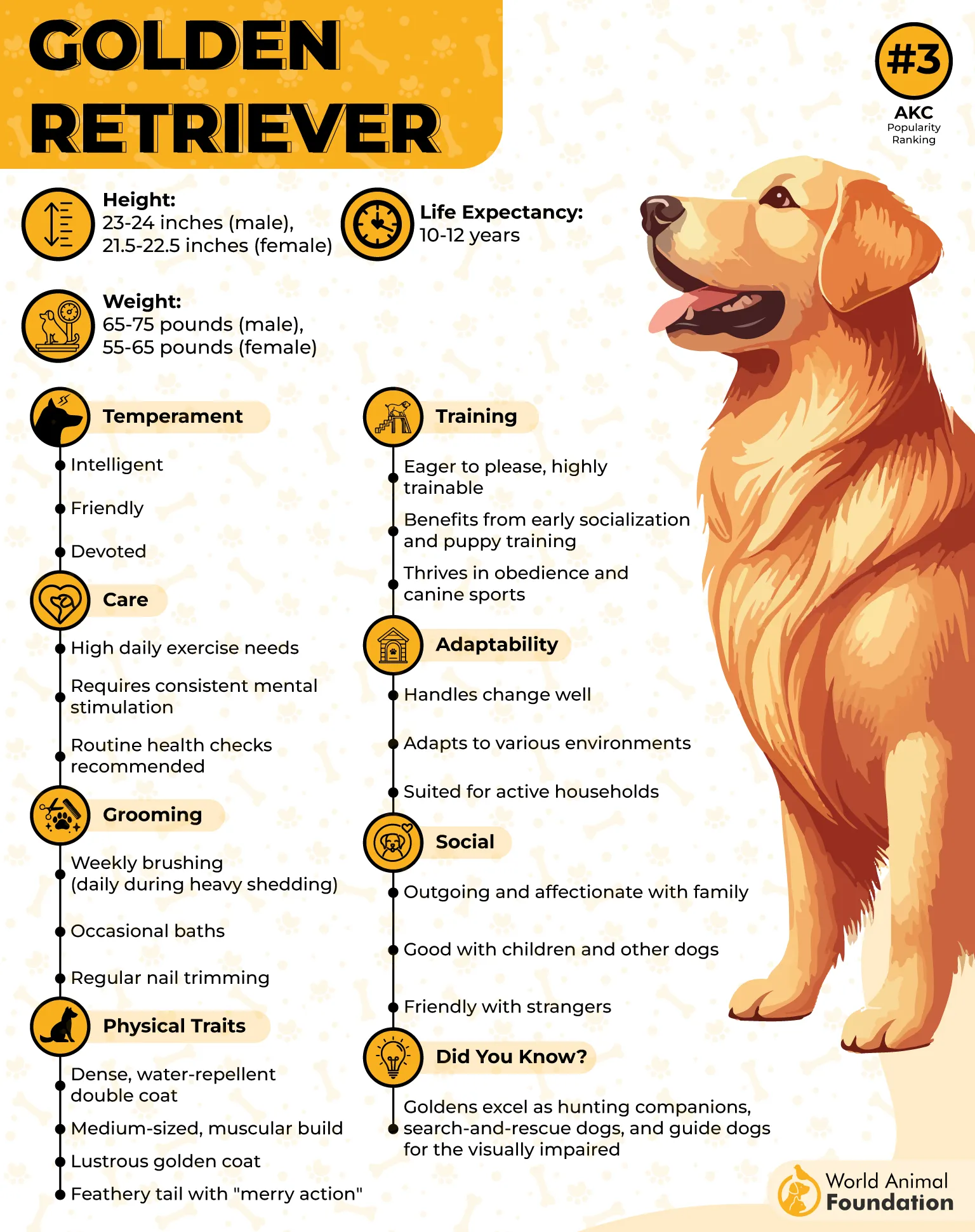
Goldens are also known for patience and cooperation, which help them work steadily in waterfowl fields while maintaining strong bonds with their handlers.
They are highly trainable, responding well to positive reinforcement and structured training, allowing them to excel in hunting, agility, obedience, and therapy work. They have a playful, enthusiastic personality that often lasts well into adulthood, making them a favorite for families with children or other pets.
Their retrieving instincts are strong, and paired with their boundless energy, they’ll happily work all day in the field, covering long distances and navigating challenging terrain with grace. Their boundless enthusiasm and loyalty make them stand out as one of the most versatile and beloved breeds in the world.
Three Traits That Make Them Great for Waterfowl
Dense coat suited for water work
Gentle and precise retrieving style
Intelligent and responsive to training
6. Chesapeake Bay Retriever
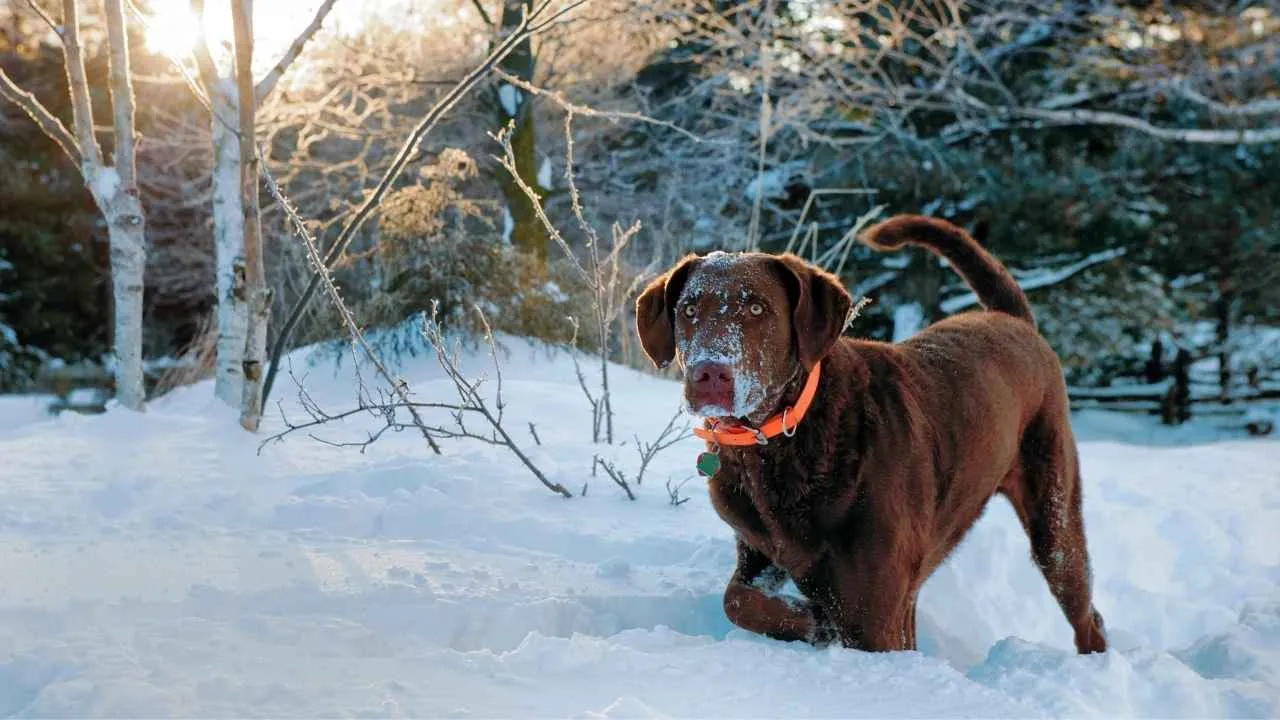
The Chesapeake Bay Retriever, often called the “Chessie,” was developed in the Chesapeake Bay region of the U.S. to retrieve waterfowl from icy, rough water conditions. They have a distinct water‑repellent double coat and a strong physique that allows them to swim for long periods in extreme temperatures.
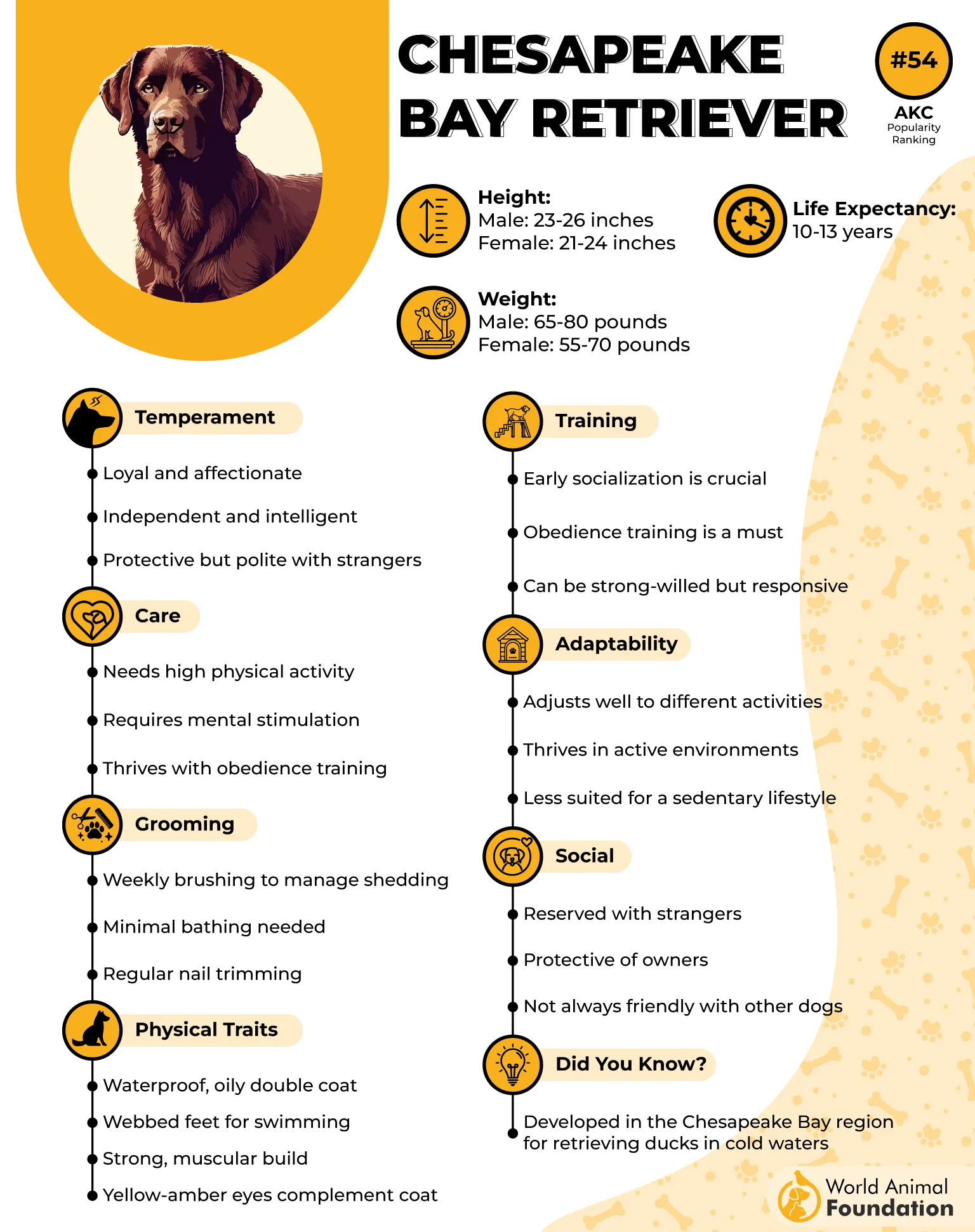
Purina notes that they are known for their perseverance, independence, and loyalty — traits prized by experienced hunters who challenge tough environmental conditions.
Another hallmark of these dogs is their intelligence and focus, which allows them to perform complex hunting tasks like marking downed birds, honoring other dogs’ finds, and executing blind retrieves. Their water-resistant coat protects them in wet and cold environments, allowing them to swim confidently in lakes, rivers, or marshes during hunting expeditions.
Their retrieving instincts are strong, and paired with their boundless energy, they’ll happily work all day in the field, covering long distances and navigating challenging terrain with grace.
Three Traits That Make Them Great for Waterfowl
Exceptional cold‑water endurance
Powerful, water-repellent coat
Loyal, focused, and driven
7. Boykin Spaniel
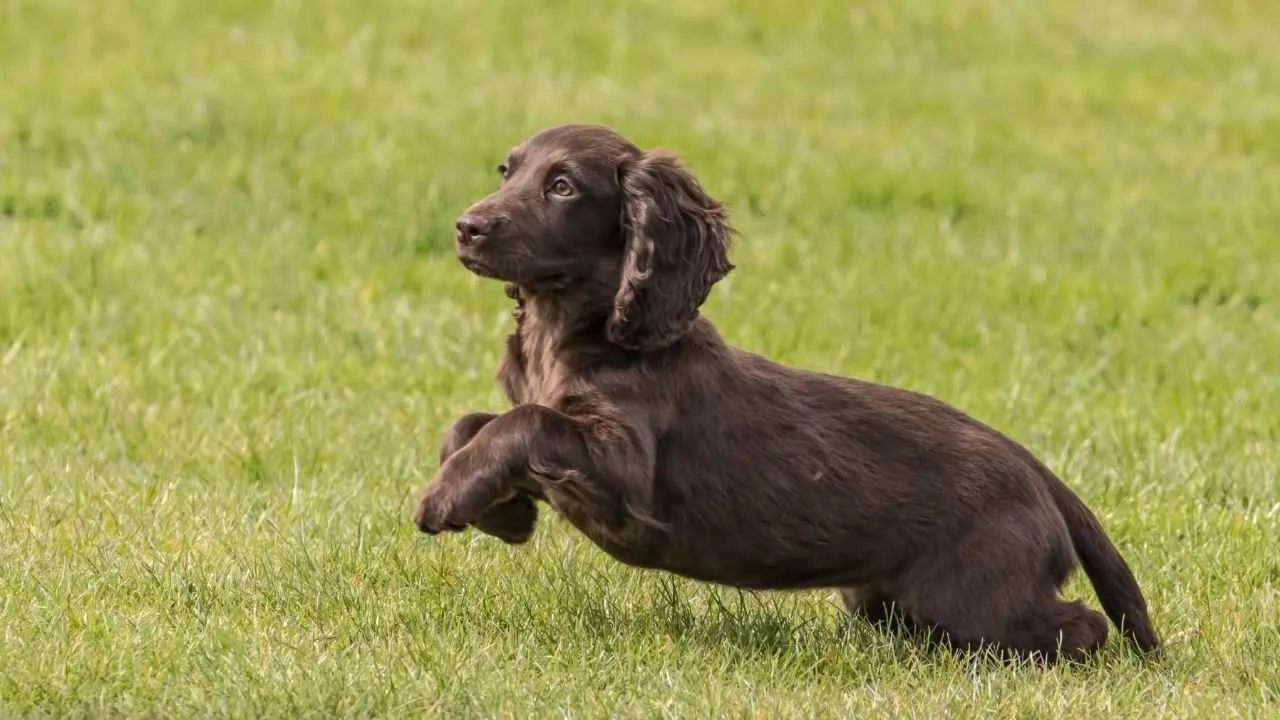
The Boykin Spaniel was developed in South Carolina to work in swamps, marshes, and small waterfowl habitats while hunting from flatboats. They are intelligent, compact, and hardy dogs that can flush and retrieve birds from dense cover or water with agility.
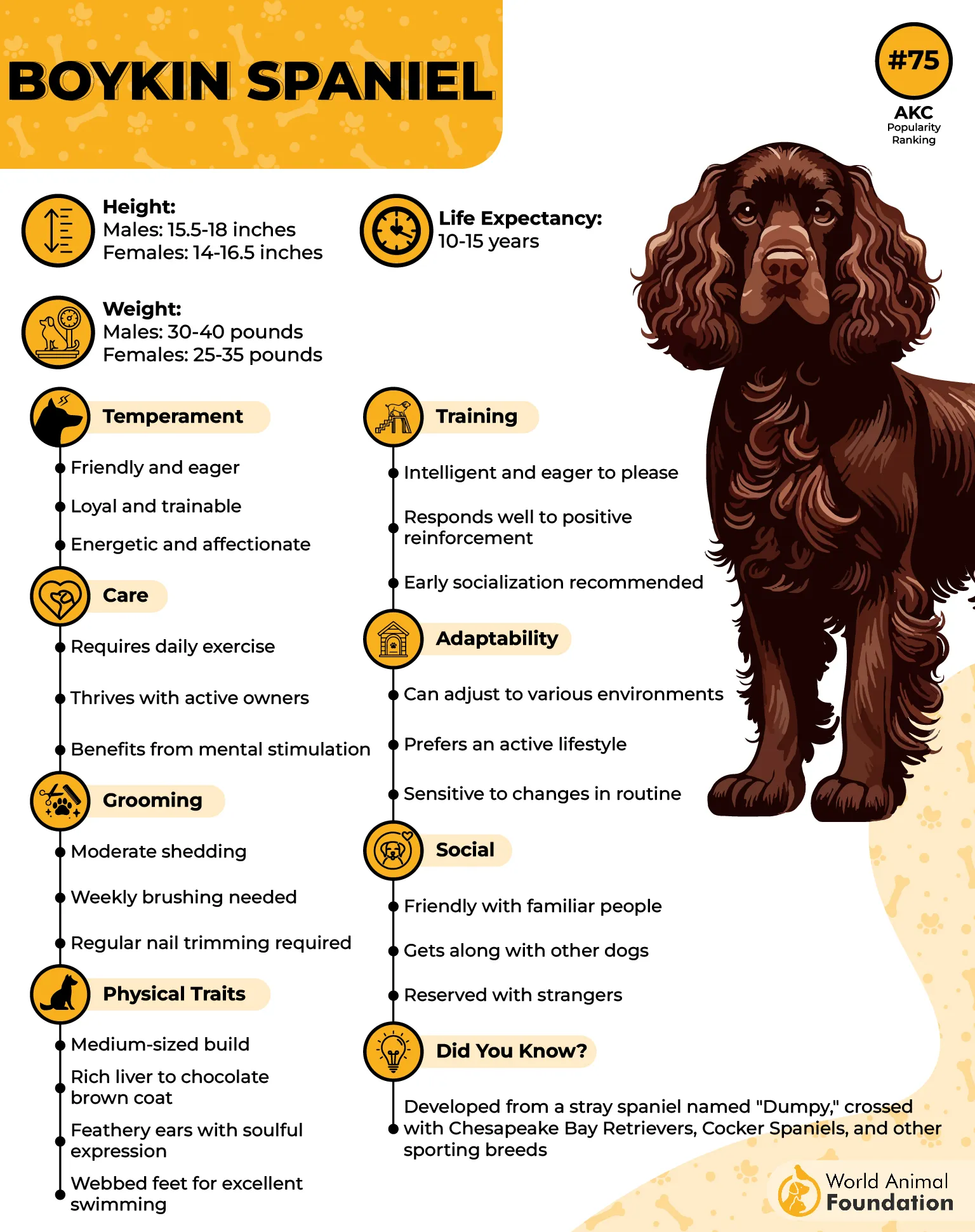
Their affectionate temperament also makes them beloved companions outside the field.
Though smaller than other skilled hunting dogs, Orvis states it’s extremely agile and versatile, capable of flushing, retrieving, and working in water or marshes, making it perfect for hunters in diverse environments.
These Spaniels are energetic dogs that have high activity levels and need regular physical and mental stimulation to stay happy and healthy.
It is great for flushing upland birds from dense cover. It is perfect for upland game hunting, specifically upland bird hunting, for humans who prefer a more compact dog as a hunting companion.
Three Traits That Make Them Great for Waterfowl
Compact size ideal for small‑boat hunting
Excellent flushing and retrieving skill set
Loyal and adaptable outside the field
8. Irish Water Spaniel
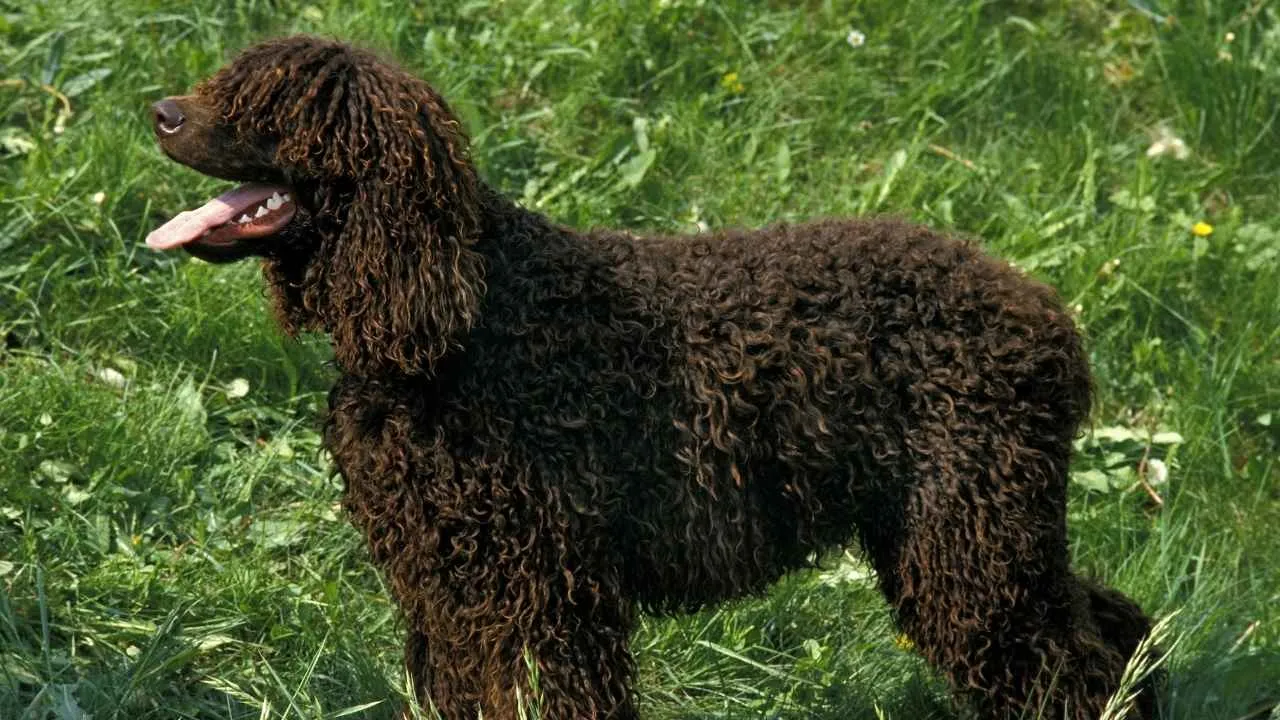
The Irish Water Spaniel is one of the older retriever breeds, developed in Ireland to work in cold water and marsh conditions. Their curly, water‑resistant coat and strong build protect them from harsh conditions while swimming.
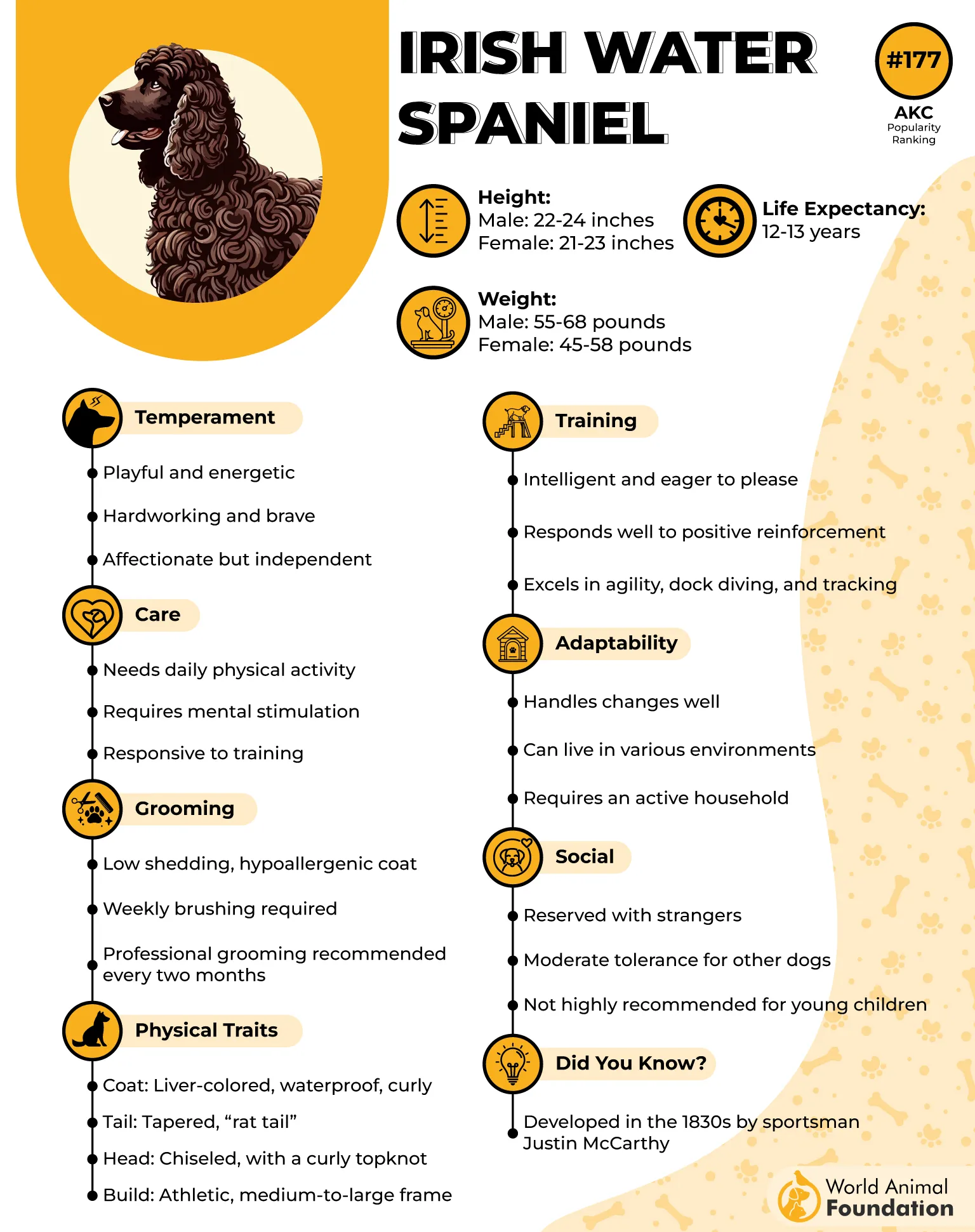
They are intelligent and versatile, capable of working upland game as well as retrieving waterfowl, and are still recognized in hunting tests for their water work.
This breed was originally developed to retrieve birds from lakes, rivers, and marshes, so hunting behavior is deeply ingrained in its DNA. Even without heavy training, WebMD says many Irish Water Spaniels show a natural tendency to seek, track, and retrieve objects, especially in water environments.
Their love for swimming and their confidence in rough conditions make them especially effective in wetland hunting. This dog doesn’t just learn to hunt—it’s born with the instinct, making it a naturally capable and efficient hunting companion.
Three Traits That Make Them Great for Waterfowl
Dense, water‑shedding coat
Strong retrieving ability
Intelligent and adaptable
9. Nova Scotia Duck Tolling Retriever
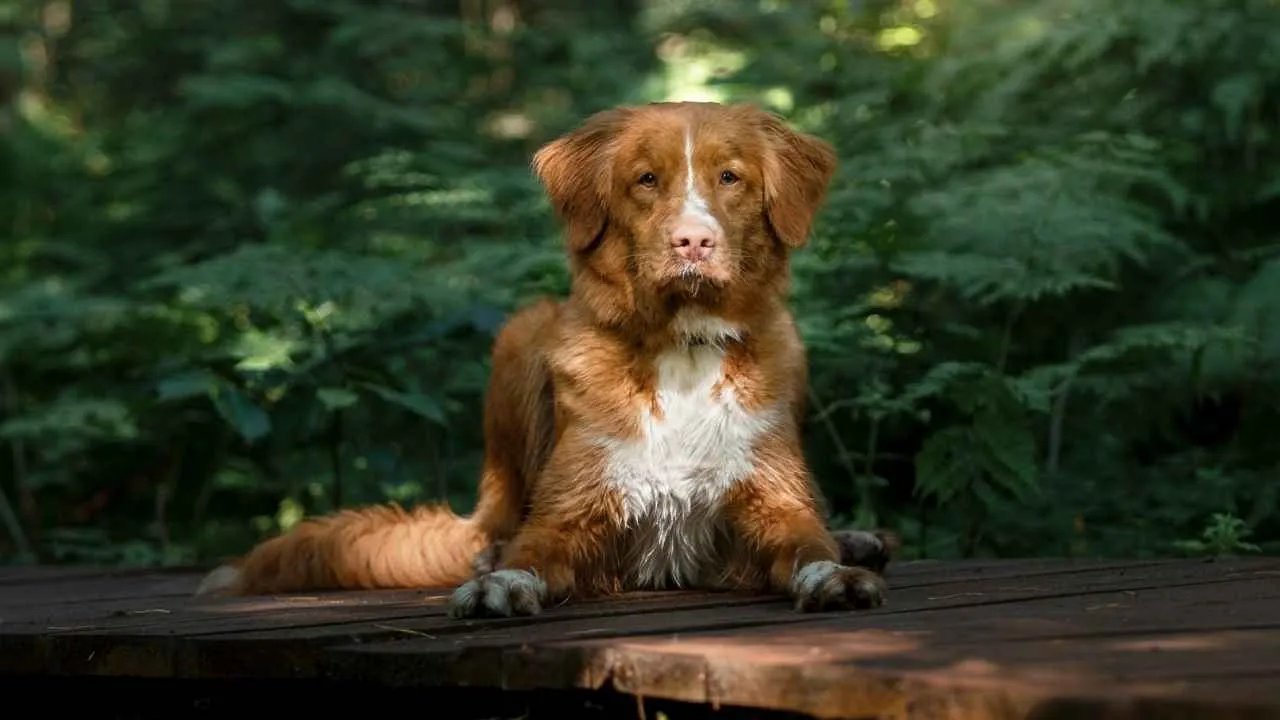
The Nova Scotia Duck Tolling Retriever (Toller) is unique because of its specialized tolling technique — an active lure method used to draw curious waterfowl closer before flushing and retrieving. Originally developed in Canada, Tollers are the smallest of the retriever breeds but still possess a water‑repellent double coat and webbed feet, making them capable swimmers.
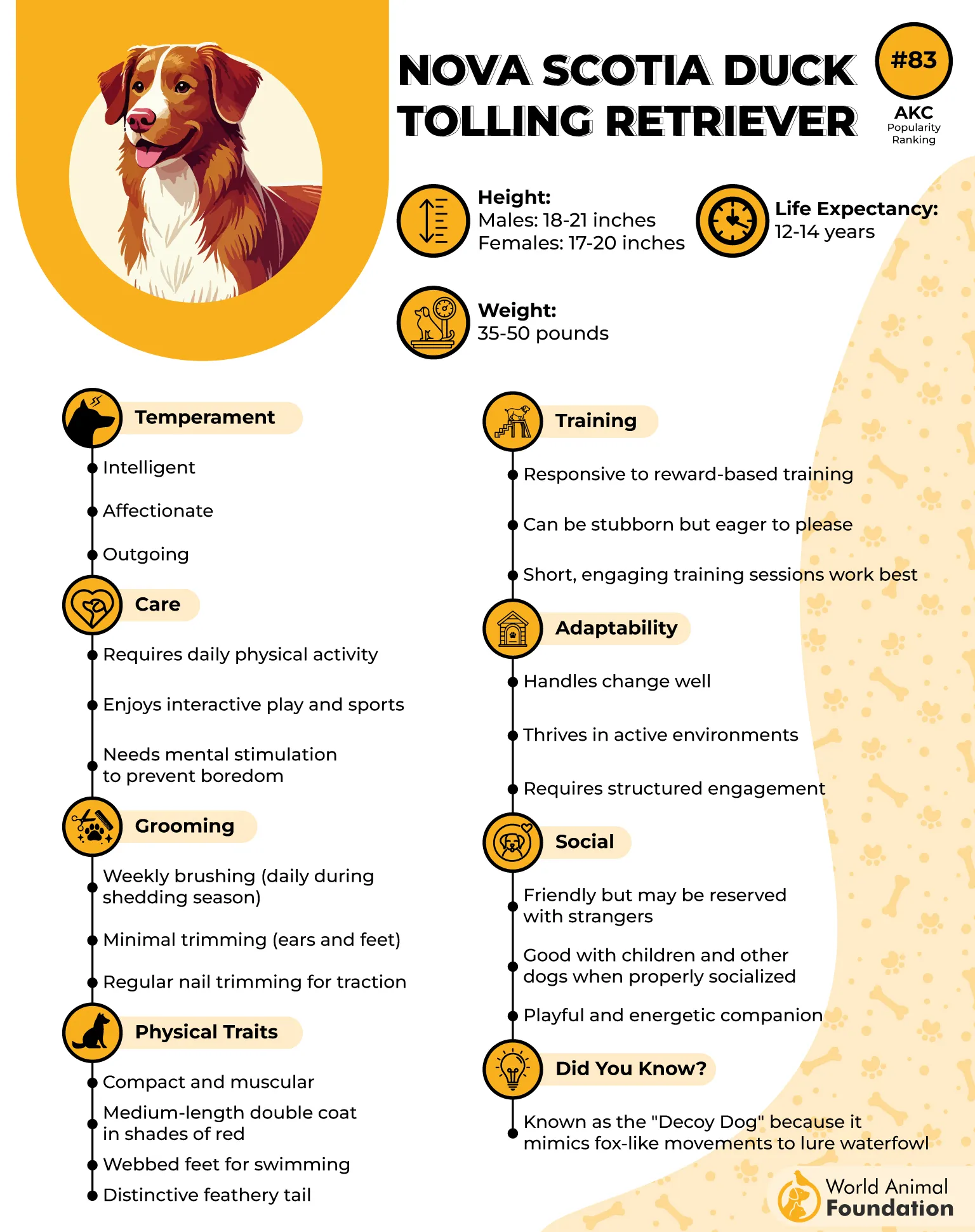
Highly energetic and intelligent, Britannica notes that they combine playfulness with a hunting instinct — a combination that has worked historically and continues in fields today.
What makes this breed stand out is its specialized “tolling” technique, where it playfully moves along the shoreline to attract curious ducks within shooting range. This natural behavior, combined with proper training, turns the Toller into an incredibly efficient hunting partner.
As a well-trained hunting dog, it excels in retrieving downed birds from water and land. It has a strong work ethic, high energy levels, and an instinct to fetch, making it reliable during long hunting sessions.
Their water-repellent double coat and webbed feet help them perform well even in cold water environments, which is essential for duck hunting.
Three Traits That Make Them Great for Waterfowl
Unique tolling method attracts birds
Compact yet strong swimmers
Energetic and intelligent workers
10. Flat‑Coated Retriever
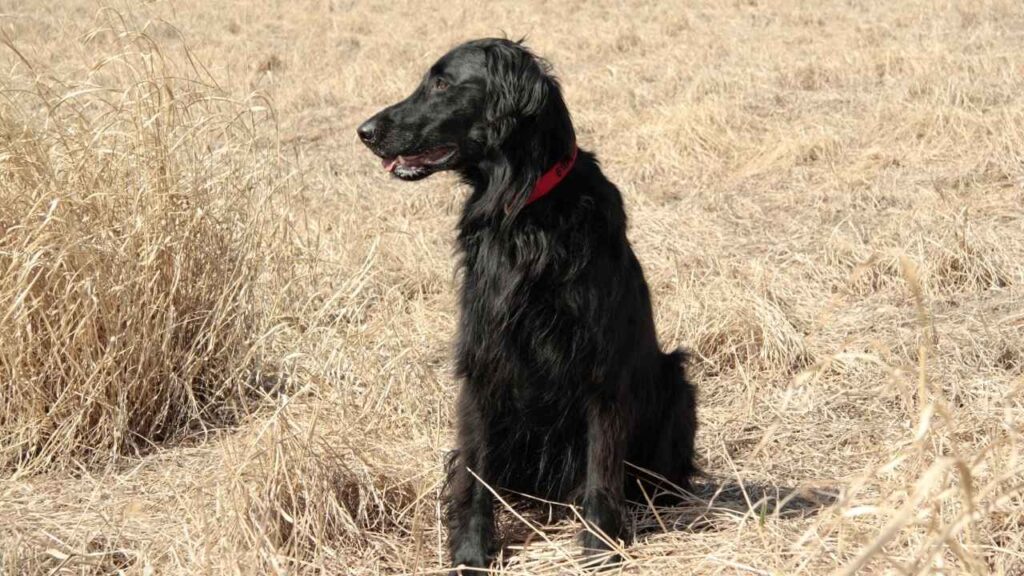
The Flat‑Coated Retriever is a classic retriever with a long history in both upland and waterfowl hunting.
Recognized for its flat, water‑resistant coat and enthusiastic retrieving style, this breed combines athleticism with a friendly temperament.
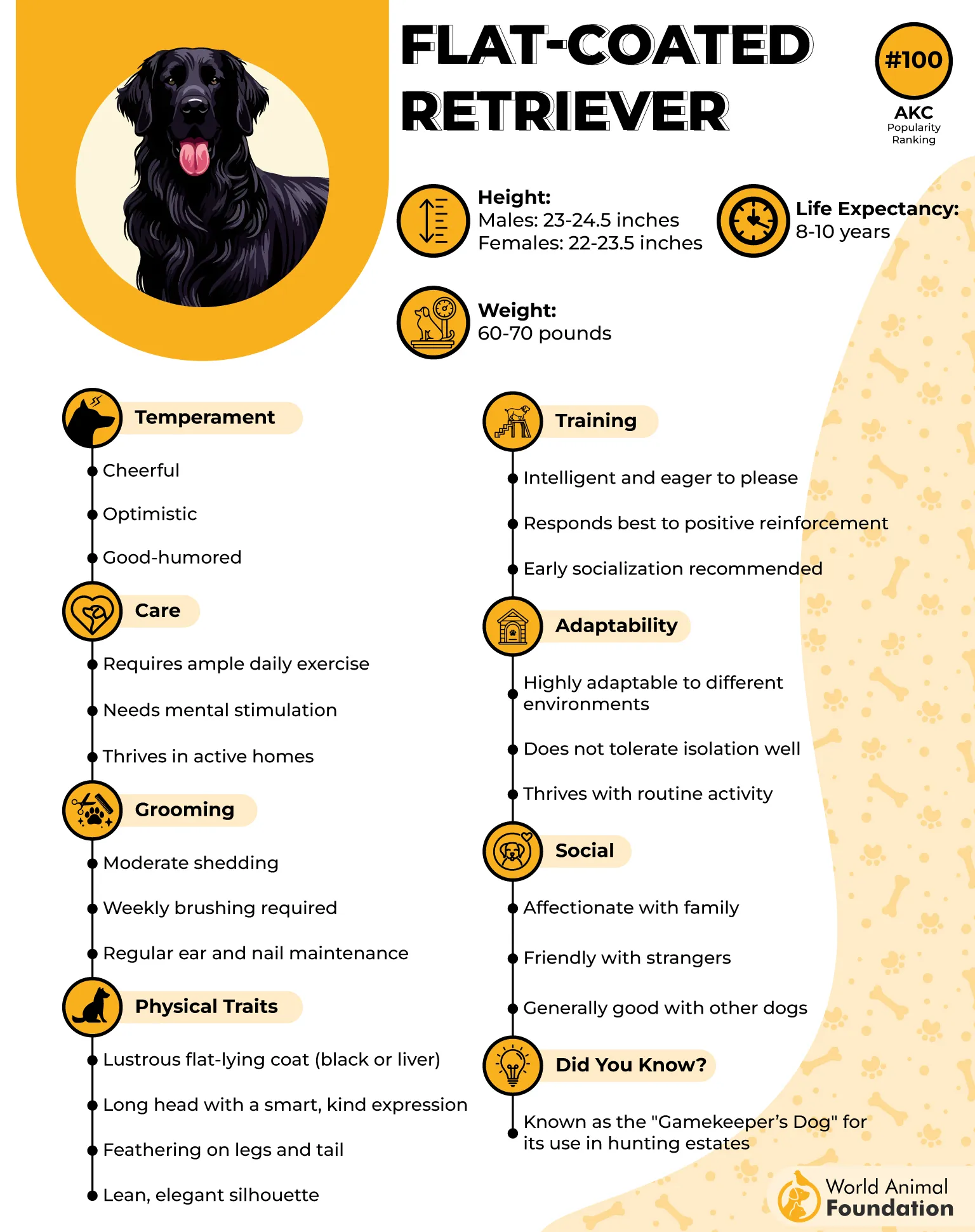
While not as common in modern duck blinds as Labs or Goldens, Flat‑Coated Retrievers are still valued by hunters who want a versatile, spirited retriever with strong water work ability.
This breed is known for its strong bond with its handler, which translates into excellent teamwork in the field. During hunts, this loyal companion stays attentive, responsive, and eager to follow commands, making it a reliable partner for retrieving game.
Their natural enthusiasm and “always-happy” attitude mean they work with energy and dedication rather than stubbornness. What really sets them apart is their combination of loyalty and drive.
They don’t just work for the task—they work closely with you, often checking in and staying connected throughout the hunt.
Three Traits That Make Them Great for Waterfowl
Water‑resistant coat suited for aquatic work
Enthusiastic and driven retriever
Friendly and adaptable personality
Conclusion
Choosing the right waterfowl hunting dog means matching your hunting style, environment, and experience with the breed’s natural abilities. From the iconic Labrador Retriever leading many duck hunts to versatile pointers like the Pudelpointer that combine scenting and retrieving, each breed brings unique strengths to the field.
Whether your hunt takes place in icy northern lakes, marshy southern swamps, or wooded wetland edges, these ten versatile hunters have proven themselves over decades of hunting tradition and competitive hunting tests.
