




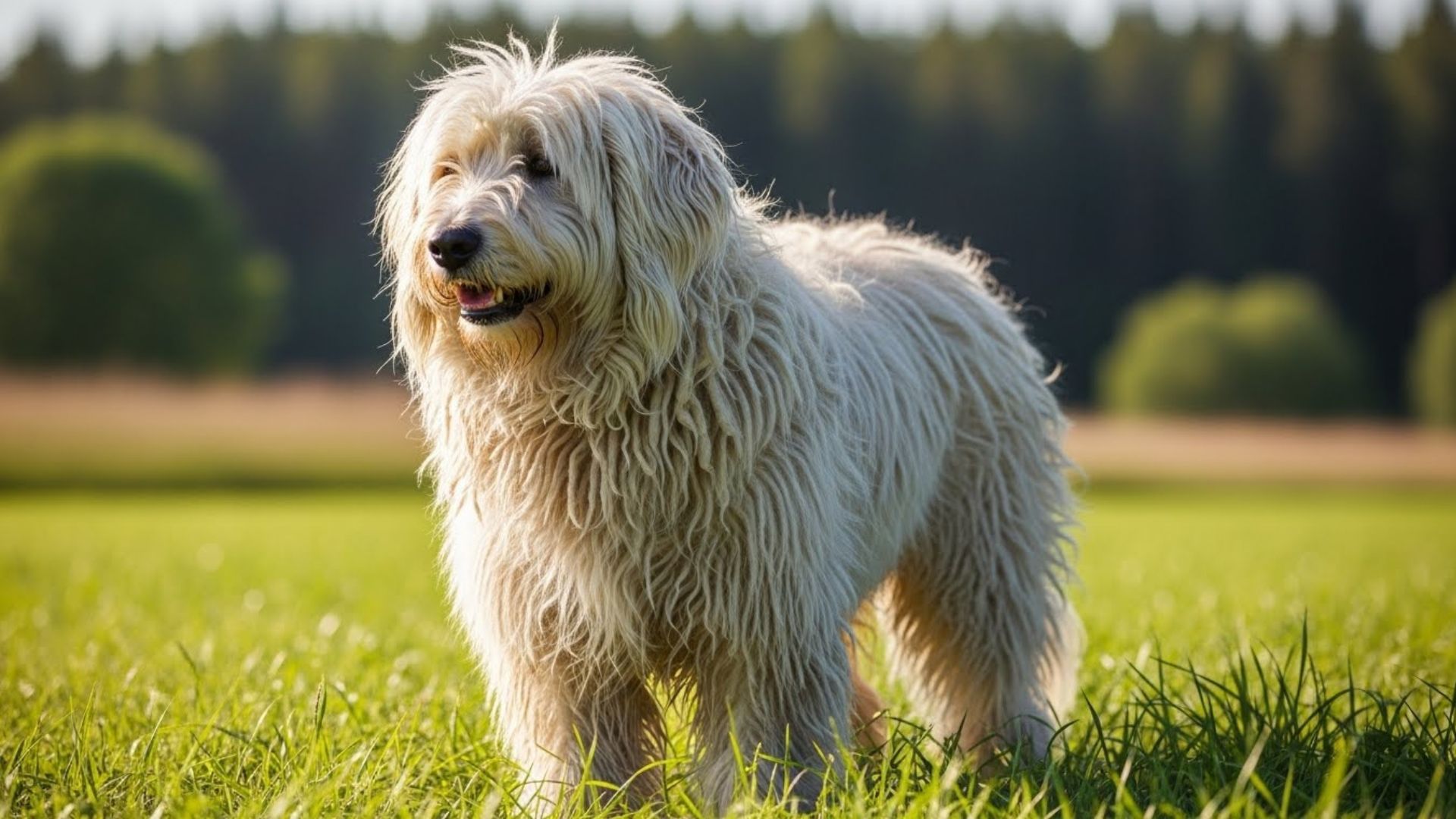
Choosing a dog often goes like this. You see a face you love, imagine daily walks, and picture a new family member. What many owners do not think about right away is time. Some dog breeds are known for shorter lifespans, and understanding that can help you go in with open eyes and an open heart.
Knowing this does not take away from the joy. It changes how you show up as an owner. You linger a little longer on walks, take more photos, and stop rushing through the small stuff. Those ordinary moments start to feel more meaningful.
Dogs with shorter lives still give everything they have. The love, the loyalty, the laughter. This guide is about being prepared, not pessimistic, and making every shared moment count.
Fun Fact
Small dogs often live longer than giant ones, even though they age faster in their early years. Larger dogs tend to grow quickly and put more stress on their bodies, especially their joints and organs. That extra strain over time can shorten a dog’s lifespan, which is why tiny dogs often stick around longer than their towering counterparts.
Dog Breeds Known for Brief Lifespans: A Guide
1. Komondor
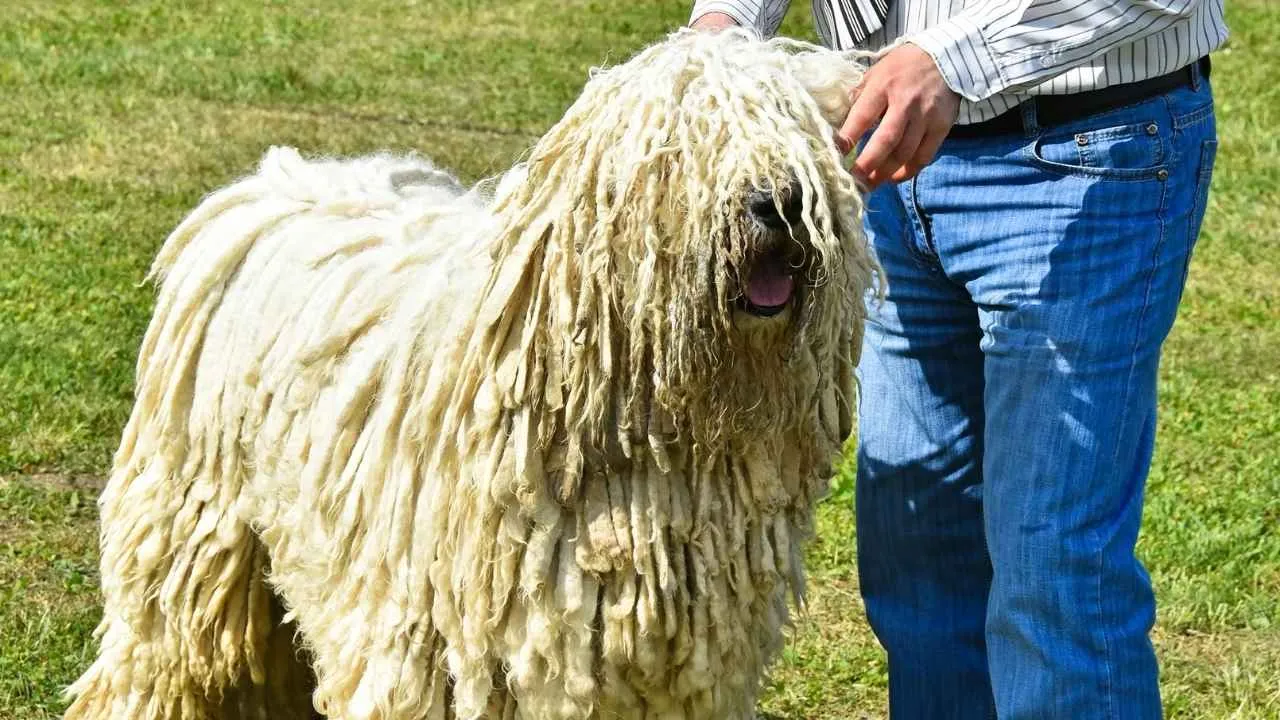
At first glance, the Komondor looks like it wandered out of a snowdrift with legs. That iconic corded coat is not decorative flair but a practical feature developed over centuries of livestock guarding in Hungary.
Built large and solid, this breed was meant to stand its ground quietly rather than chase trouble. As mentioned by AKC, this dog’s life expectancy is 10 to 12 years, which is still an impressive lifespan for such a large breed.
Komondor tend to observe more than they react. They are naturally protective, steady in temperament, and deeply bonded to their household. Affection shows up in subtle ways, often through presence rather than constant attention, which appeals to owners who value calm companionship.
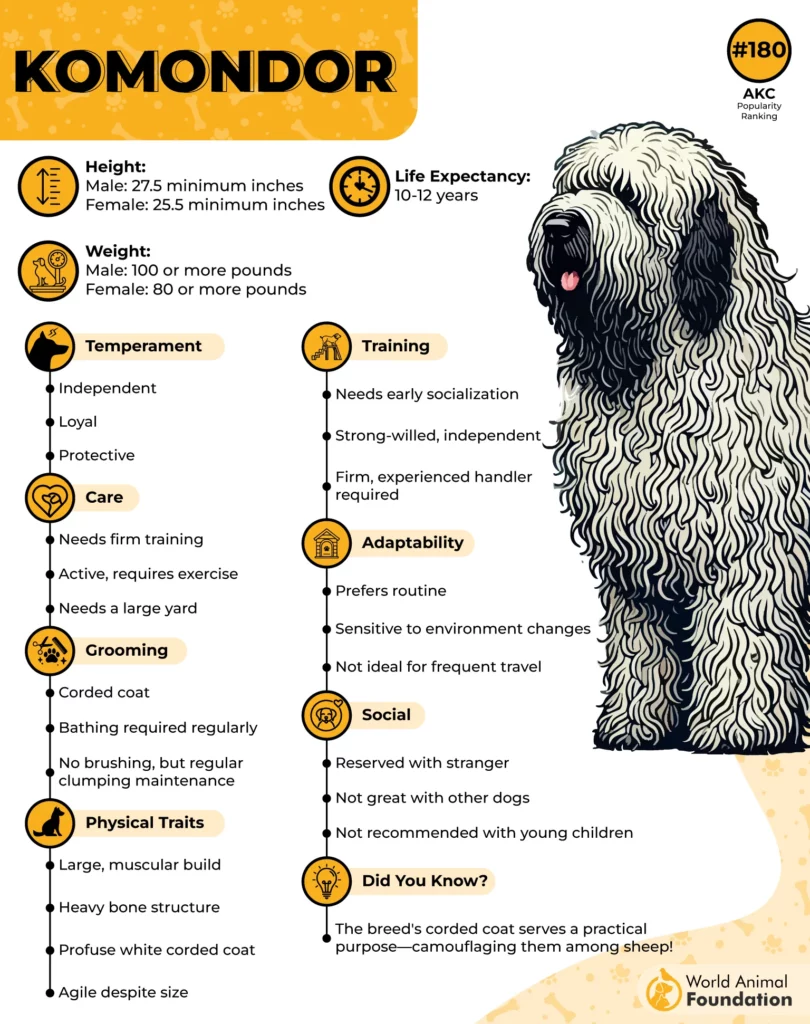
Their coats need hands-on maintenance to stay clean and healthy, especially after outdoor adventures. With early socialization and purposeful routines, they settle well into family life and take their role seriously.
Fun Fact
The Komondor’s coat develops cords naturally as the dog matures, usually by around two years of age. Puppies start out fluffy before transforming into their famous mop-like appearance.
2. Scottish Deerhound
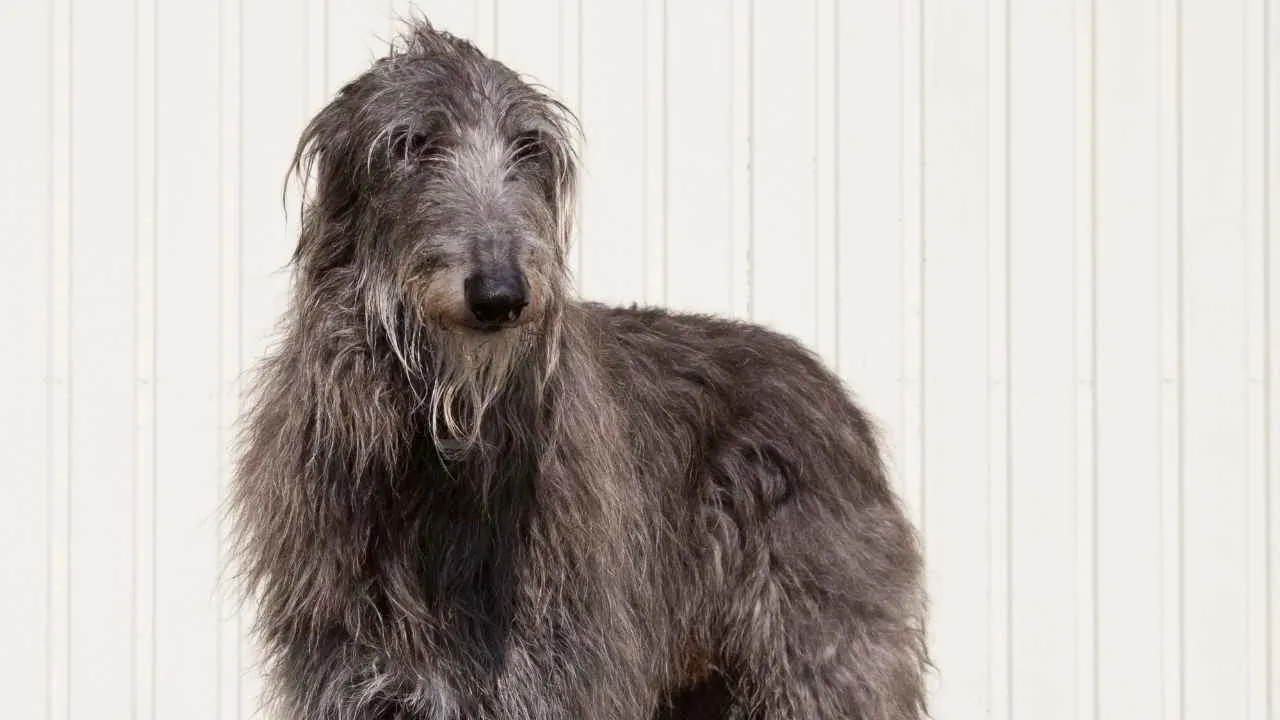
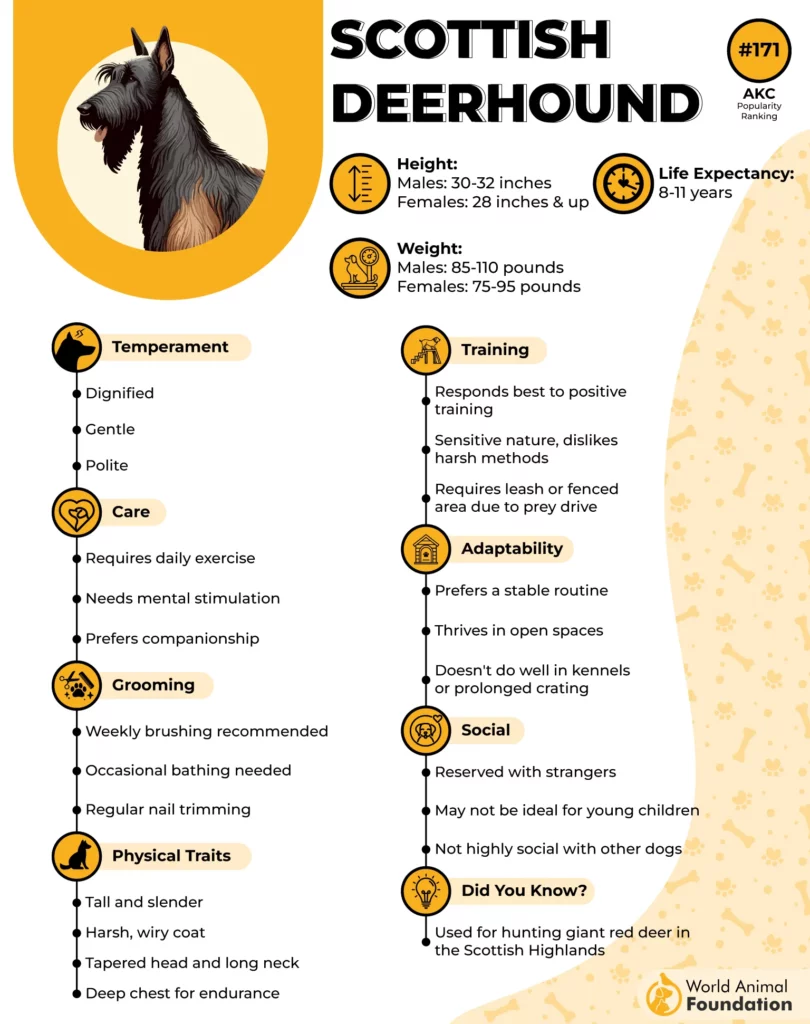
Few dogs carry themselves quite like the Scottish Deerhound. Tall, lean, and unmistakably elegant, this ancient hound was bred specifically to pursue red deer across rugged landscapes. Their long stride and athletic build hint at speed, even when they are standing perfectly still. They have an average lifespan of 8 to 11 years.
Physical activity is essential, but it does not have to be complicated. Frequent exercise and space to move keep them content, while their wiry coat requires only basic grooming. Their quiet nature often surprises people expecting high-energy behavior from such a large dog.
At home, Deerhounds are gentle souls who value closeness over chaos. They are very affectionate without being clingy and prefer a peaceful environment where they can stretch out and relax. Their sensitivity makes them happiest when treated as true family members.
Fun Fact
Scottish Deerhounds have been recognized by the AKC since 1886. Their breed standard emphasizes grace and power rather than flashiness.
3. Bernese Mountain Dog
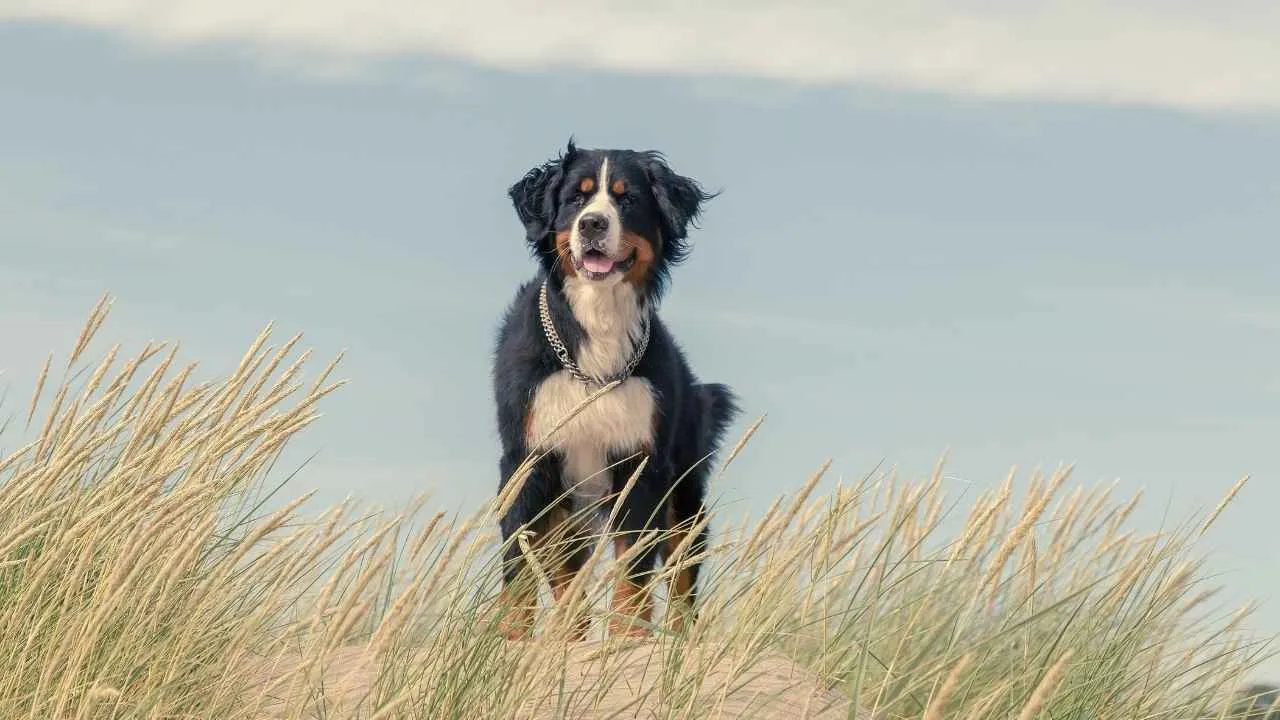
The Bernese Mountain Dog brings both size and softness into one impressive package. Originally farm dogs in Switzerland, they transitioned easily into family life, thanks to their patient and friendly nature. Their average lifespan is 7 to 10 years.
Berners thrive on connection. They enjoy being near their people and often follow family members from room to room. Playful when invited and calm when not, they strike a balance that suits many households.
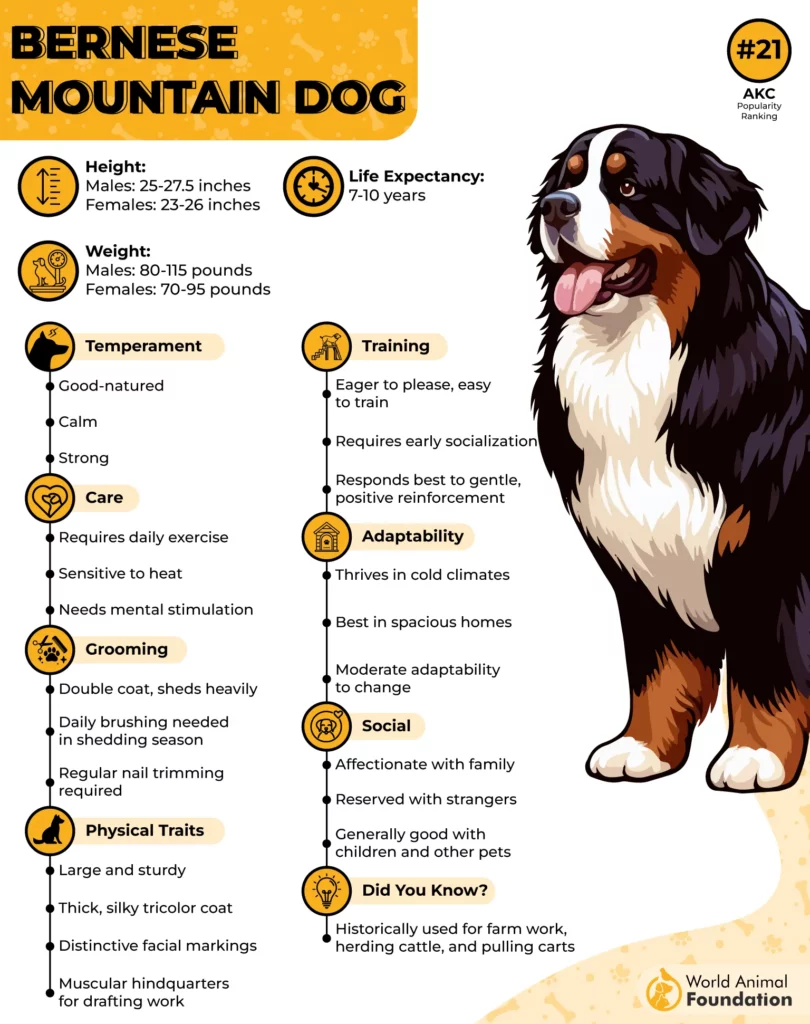
As per WebMD, their thick double coat sheds generously and requires regular brushing. Pet owners should keep in mind that this breed needs extra attention in warm weather, as they handle cooler climates far better.
Fun Fact
Bernese Mountain Dogs were historically used for cart pulling. Their strength made them reliable helpers on farms and in transporting goods.
4. Bloodhound
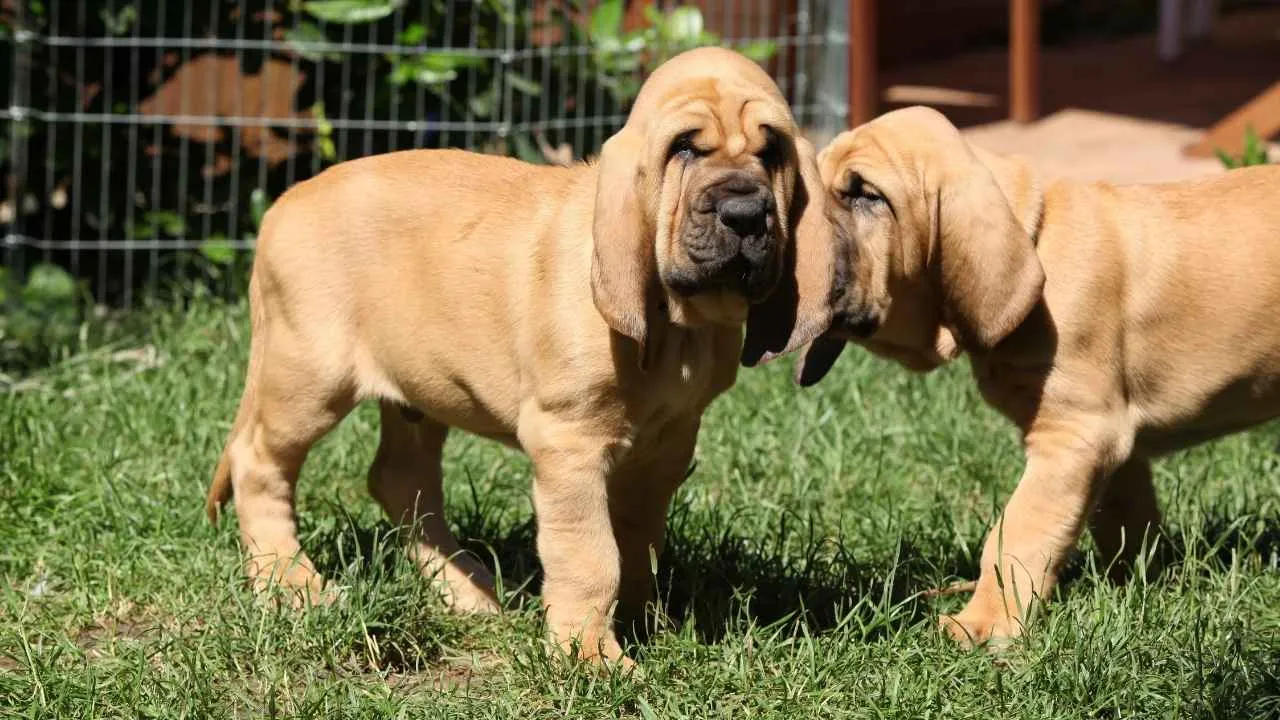
The Bloodhound is impossible to mistake for any other breed. Long ears, loose skin, and a thoughtful expression give them a distinctive look that matches their slow, deliberate movement. Originating in Belgium, they were developed for tracking scents rather than speed.
Regular ear and eye care is important due to their facial structure, and secure outdoor areas help manage their curiosity. When their needs are met, Bloodhounds offer steady companionship and quiet loyalty.
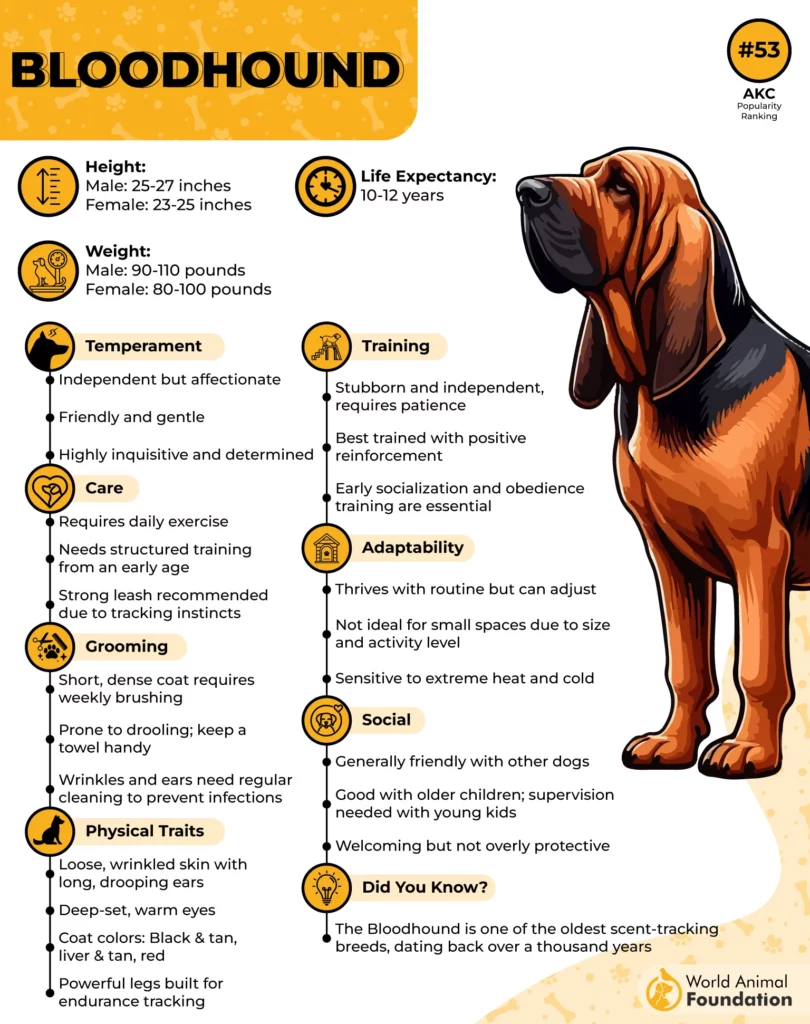
Their personality leans calm and gentle, with a stubborn streak that appears when a scent takes over. Bloodhounds are sensitive dogs who respond best to patience and consistency. Their life expectancy is 10 to 12 years.
Fun Fact
Bloodhounds are also known as the Chien de St. Hubert in Belgium. The breed has been carefully preserved in European stud books for generations.
5. Leonberger
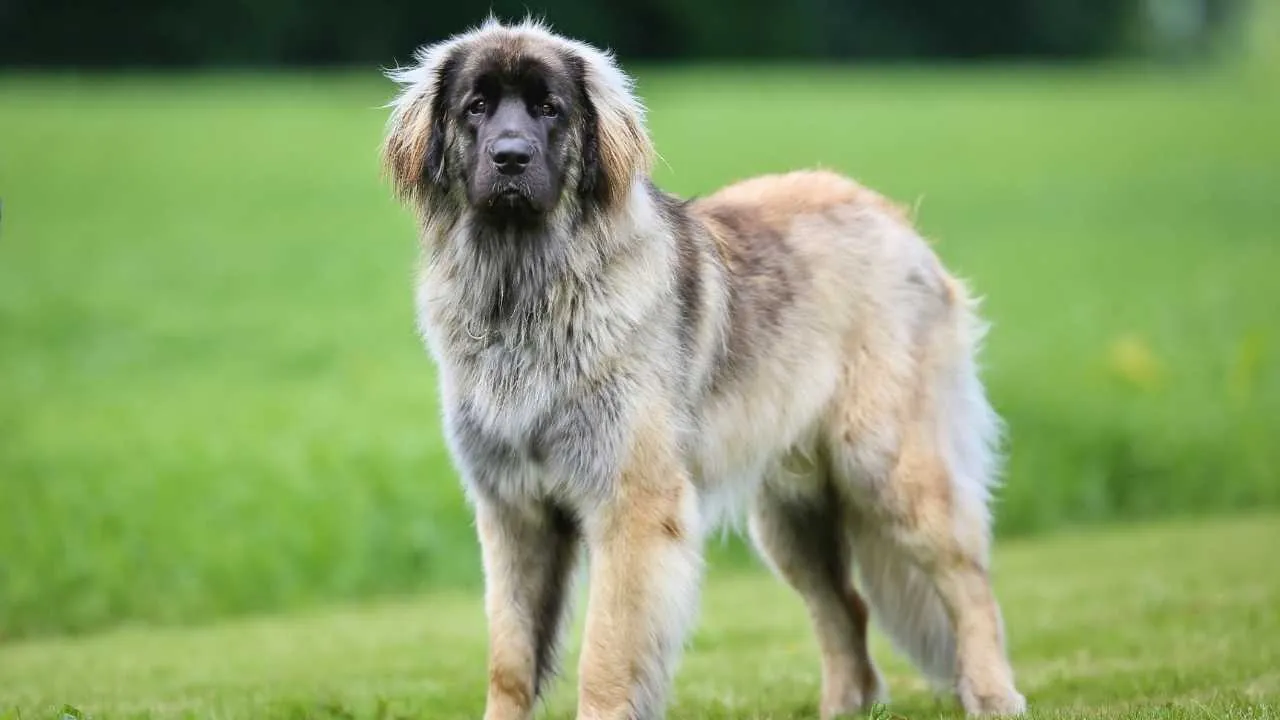
The Leonberger is a massive, striking dog created to impress both in strength and appearance. With its lion-like coat and powerful build, this breed was historically used for demanding tasks such as cart pulling and farm work. Their size alone makes them hard to overlook, yet their movements are typically calm and deliberate. Unfortunately, their average life expectancy is only about 7 years.
As per PetMD, this breed is prone to certain health issues, such as hip dysplasia, which can affect joint health, and heart disease, such as dilated cardiomyopathy.
The Leonberger is a large breed, so it’s important that these dogs maintain a healthy weight, as obesity can worsen joint problems. Routine veterinary visits can help detect symptoms of these health problems early on in giant breeds.
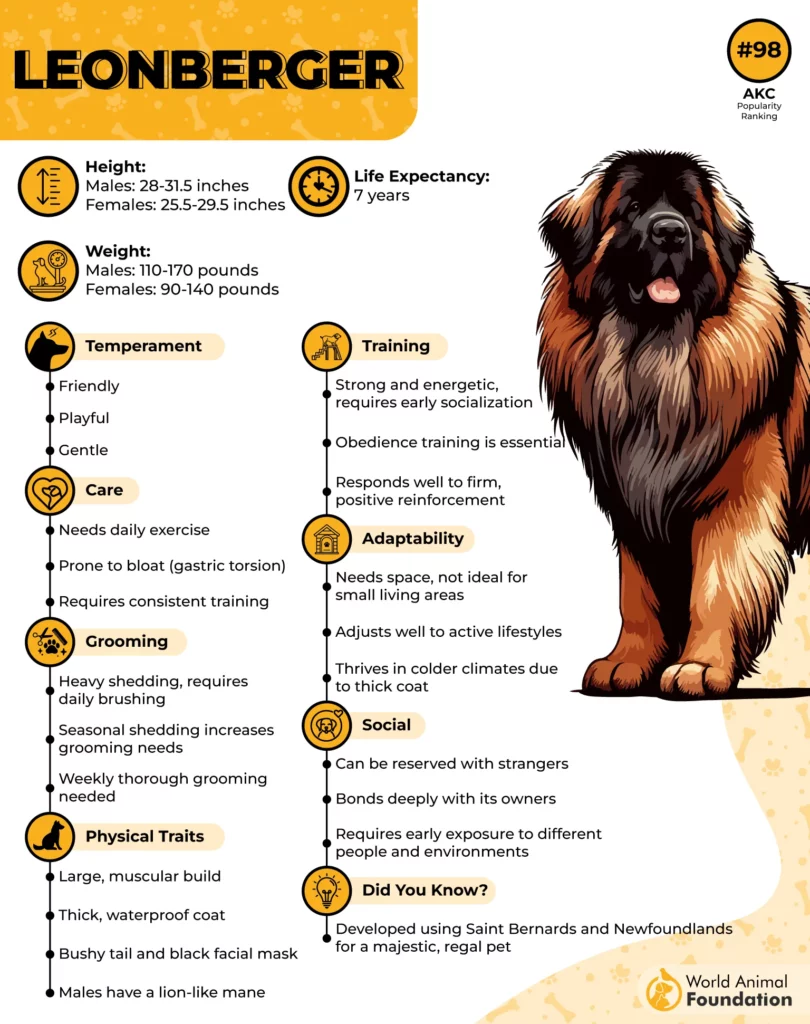
Daily care focuses on managing their thick coat and large frame. Regular brushing helps control shedding, and steady routines suit them best. Leonbergers tend to thrive in spacious environments where they can move comfortably and stay close to their people.
Fun Fact
Leonbergers were once considered symbols of status in Europe. Their appearance was intentionally designed to resemble a lion.
6. Black Russian Terrier
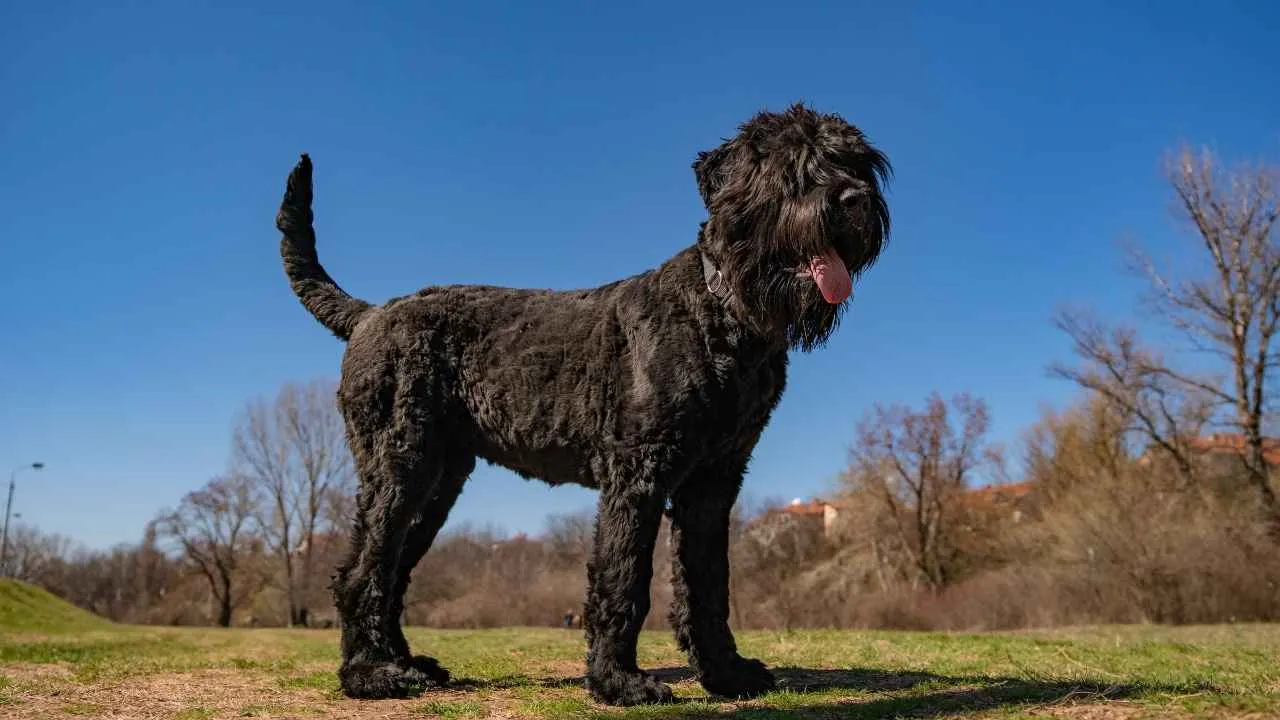
The Black Russian Terrier was built with purpose rather than aesthetics in mind. Developed through a controlled breeding program, this dog was intended to guard and patrol in harsh climates. Its dense black coat and heavy bone structure reflect that working heritage.
Training shapes nearly every part of life with this breed. Black Russian Terriers are intelligent and quick learners, but they expect consistency and respect. Without firm guidance, they may test boundaries, especially as they mature into their full size and strength.
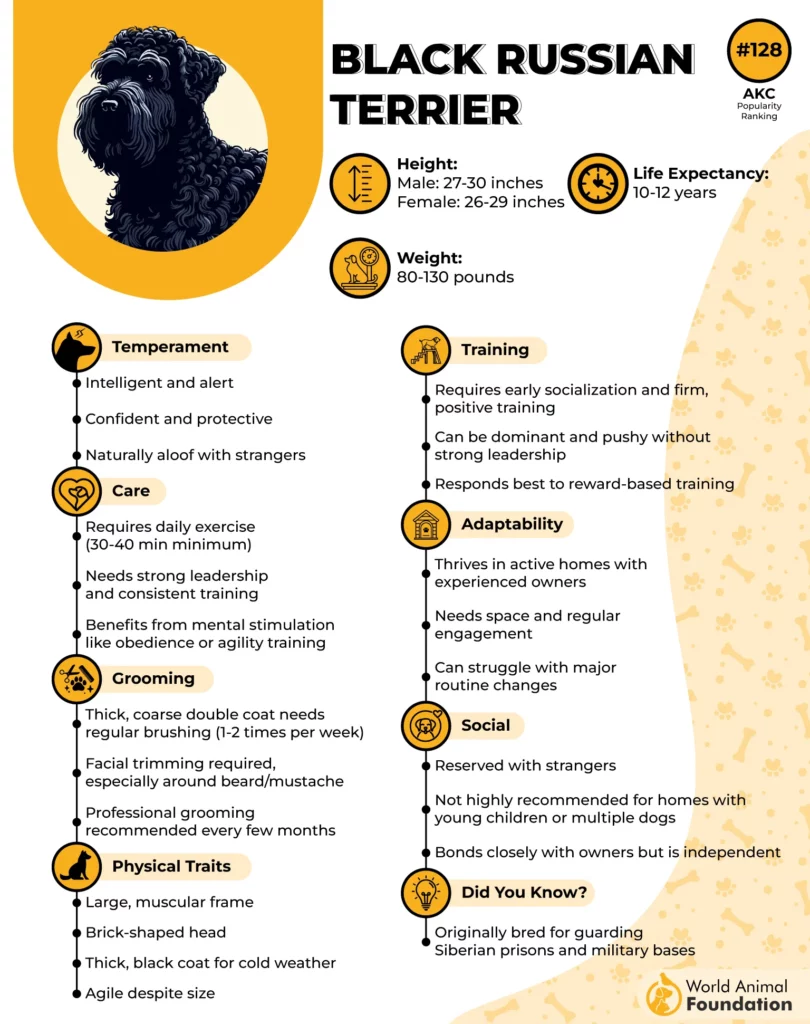
Black Russian Terriers are not overly energetic, but they do need regular exercise. Activities such as long walks and engaging play help keep them physically healthy and mentally engaged. Their lifespan is 10 to 12 years.
Fun Fact
The Black Russian Terrier earned the nickname “Black Pearl of Russia.” Retired military dogs helped introduce the breed to civilian life.
7. Dogue de Bordeaux
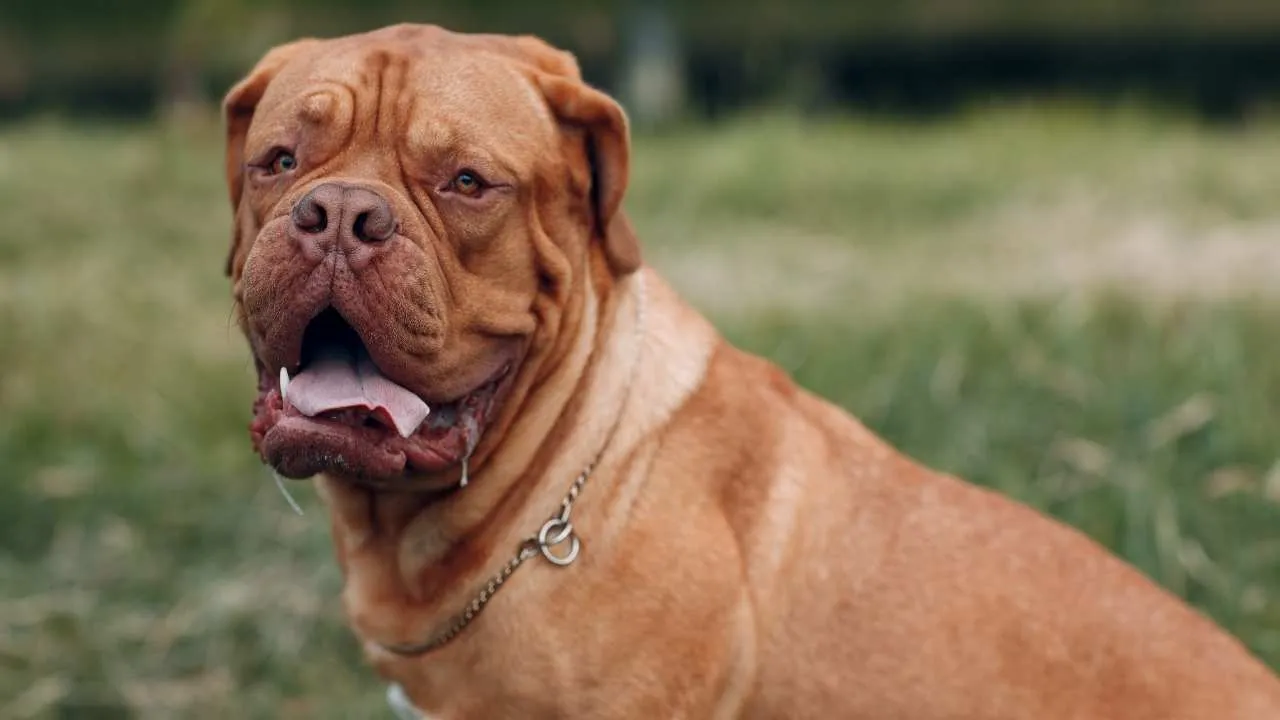
The Dogue de Bordeaux makes an immediate impression with its oversized head, muscular body, and deeply wrinkled face. Known as the French Mastiff, this breed dates back centuries and was originally bred for guarding and farm work. Their short coat is simple to maintain, but drool is part of the package.
These dogs are not highly energetic and are content with brief walks or short play sessions. Heat sensitivity is an important consideration, as they do not tolerate hot conditions well. Sadly, the lifespan of these remarkable dogs is only 5 to 8 years.
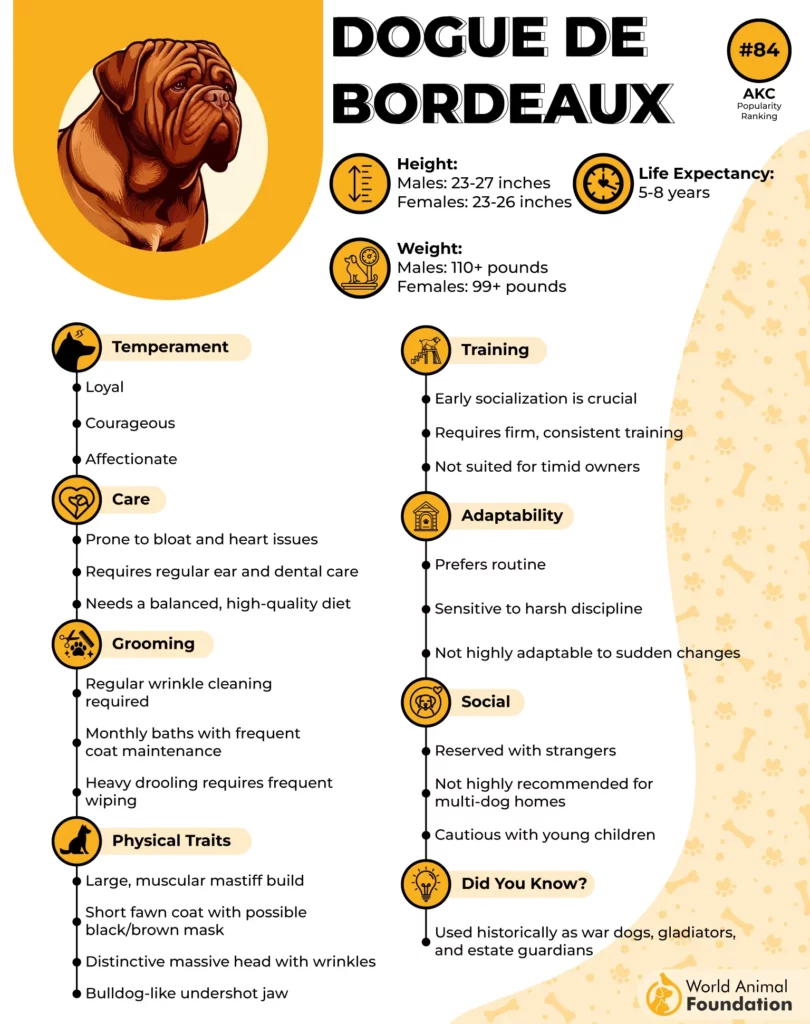
Training requires patience and consistency. While intelligent, they can be stubborn and slow to warm up to unfamiliar people or animals. Clear boundaries, early social exposure, and calm leadership help bring out their steady, loyal nature.
Fun Fact
The Dogue de Bordeaux gained worldwide attention after appearing in the movie Turner and Hooch. The breed’s expressive face made it unforgettable on screen.
Conclusion
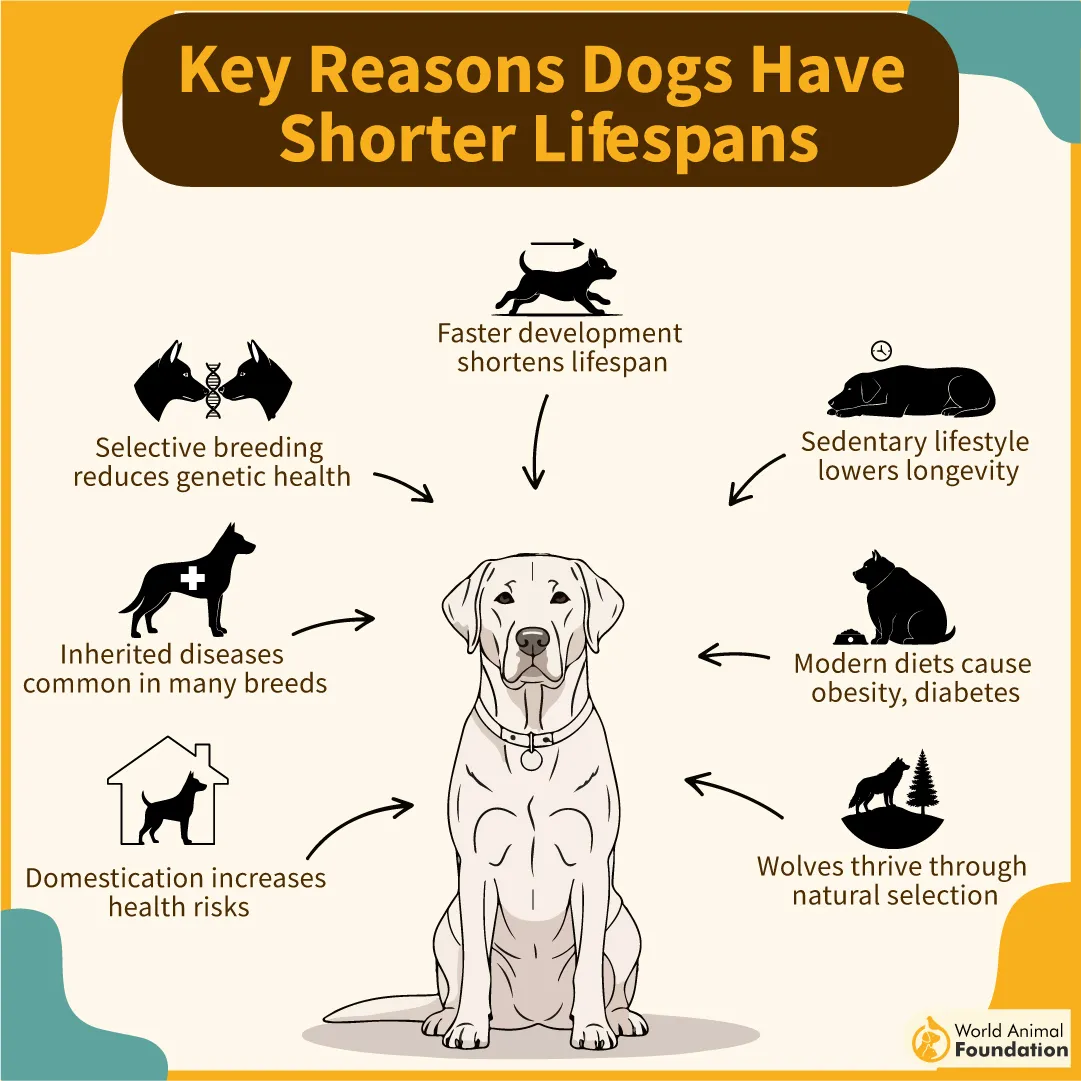
Every dog’s life is shaped by care, genetics, and the everyday choices made by pet parents. Understanding a dog’s lifespan helps dog owners support companion dogs through all dog years, from playful puppies to elderly dogs. Factors like breeding practices and awareness of genetic diseases can influence whether a dog enjoys a long life.
Other shorter living dog breeds that you can look up such as the Australian Cattle dog, Shih Tzus, Jack Russell Terrier, Toy Poodles, Yorkshire Terrier, Border Collie, West Highland White Terrier, Golden Retriever, German Shepherds, Labrador Retriever, French bulldogs, and Eiener dogs show how different dog breeds, purebred dogs, mixed breed dogs, and some smaller breeds can follow very different paths through life depending on a dog’s health, care, environment, and commitment.
