




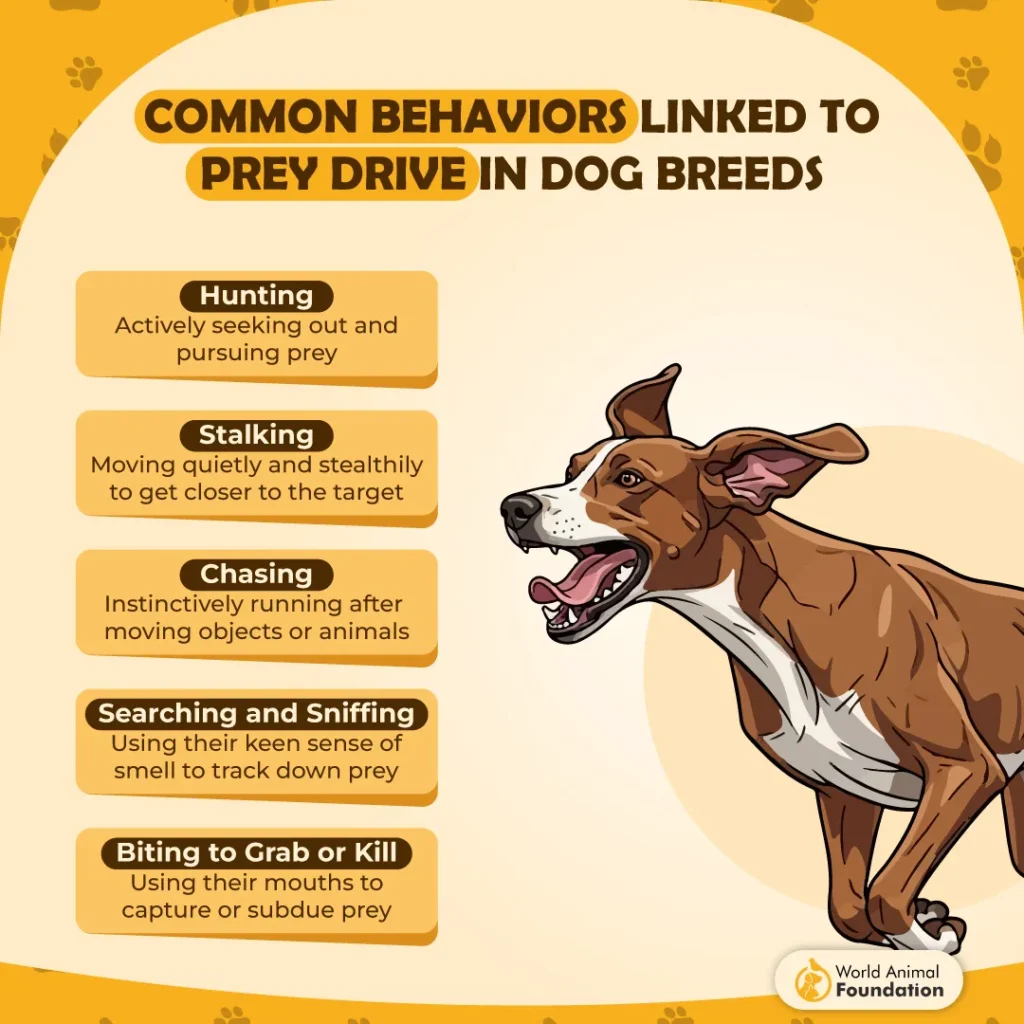
Ever watched a dog lock eyes with a squirrel and completely ignore you? That’s what we call ‘prey drive’, the raw instinct that makes certain breeds want to chase anything that moves. It is all about genetics. Some dogs were literally bred for hundreds of years to spot, stalk, and pursue animals.
Stanley Coren, a great author, once said, “The greatest fear dogs know is the fear that you will not come back when you go out the door without them.” This makes them slightly possessive, leading to adaptive instincts such as protecting the owner, followed by a high prey drive.
Understanding prey drive is not just about preventing mishaps with your cat. It’s about respecting what these incredible athletes were built to do.
Whether you own one of these chasers or you are thinking about getting one, this guide breaks down seven high prey drive breeds, what makes them tick, and how to channel their intensity into something productive.
Dog Breeds Driven to Chase – High Prey Drive Explained
1. Bluetick Coonhound
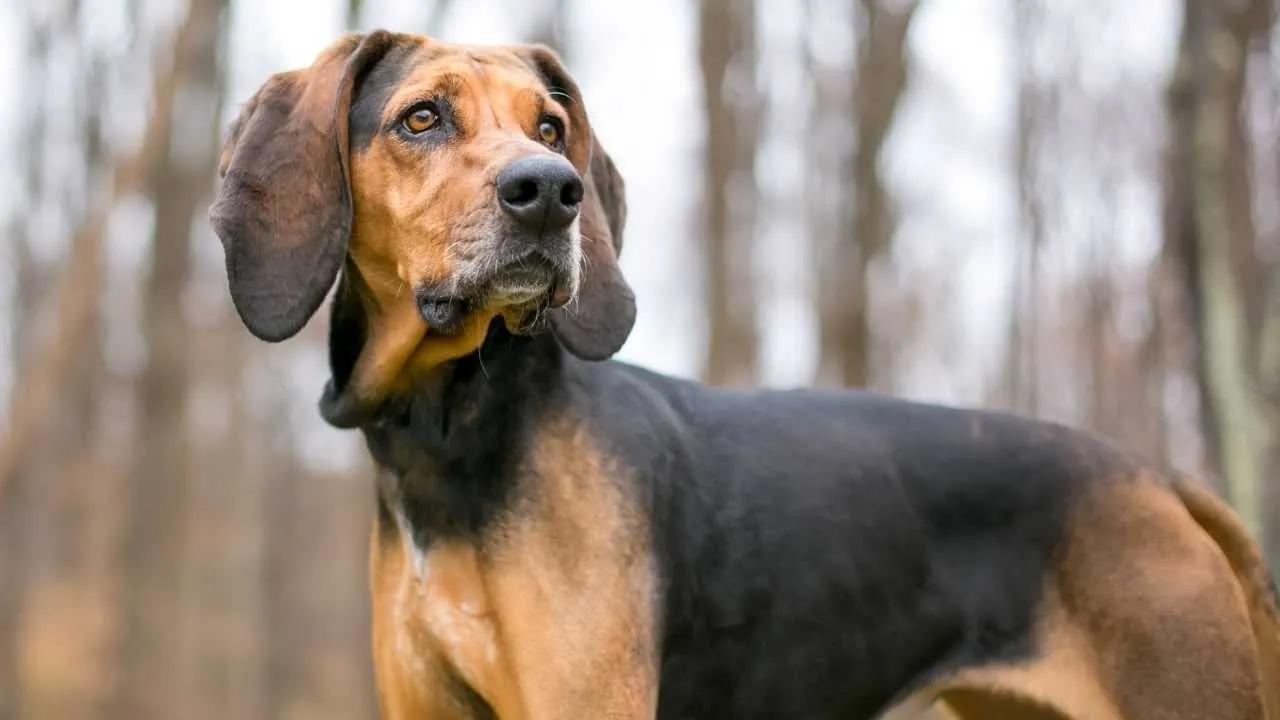
Originally bred in South America during the 19th century, the Bluetick Coonhound was bred specifically to hunt raccoons at night. Their English Foxhounds and Black and Tan Coonhounds. This means their prey drive is wired into every fiber.
These dogs work by scent, making them relentless trackers. Once they catch a trail, they’ll follow it for miles. And their dense and thick coat helps them run and walk through brush and water unharmed. Their unique bay helps them communicate their location to the hunter in the dark
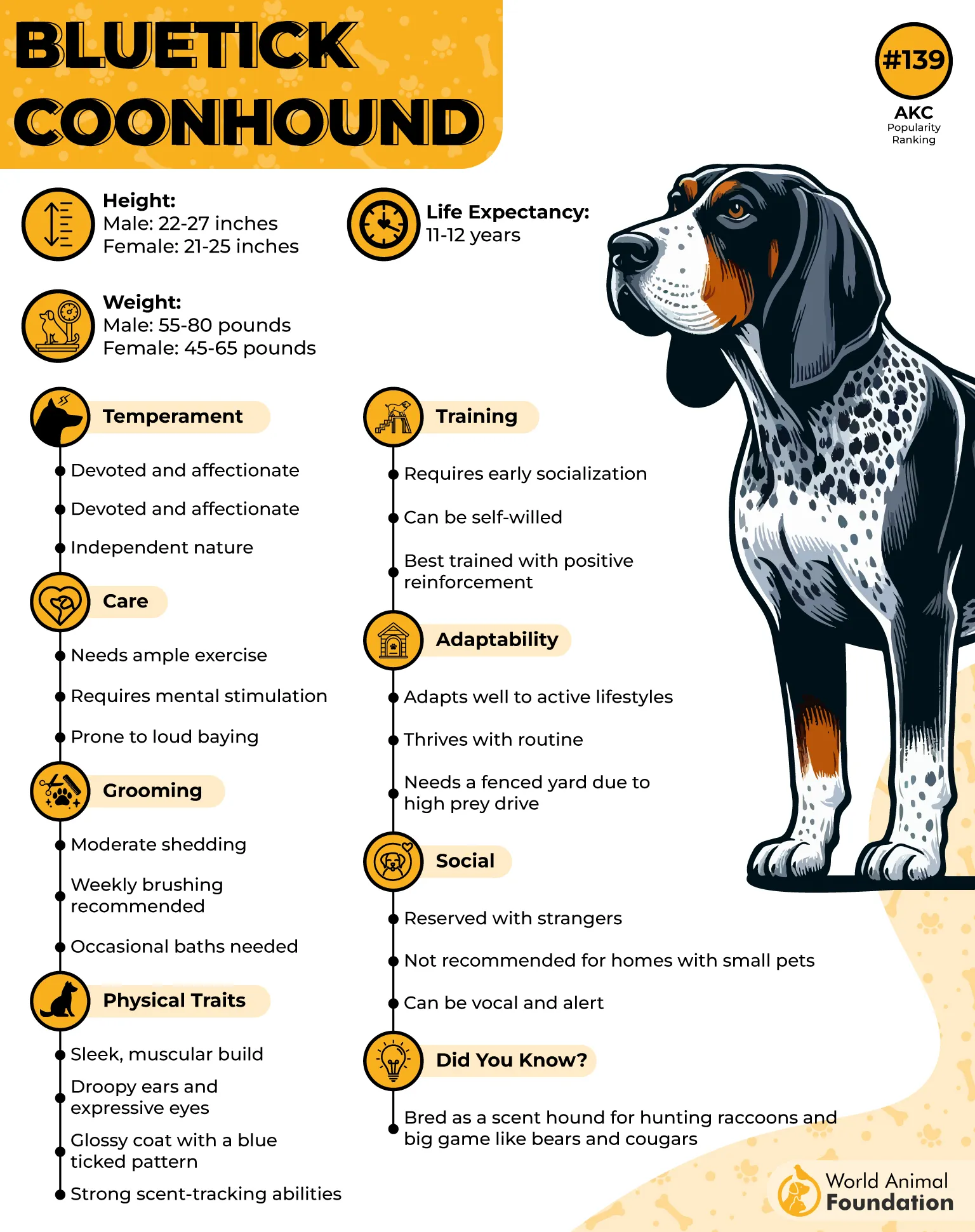
Exercise Needs: Intense daily workout (60 minutes): long runs, fenced yard sprints, and scent games, etc.
Temperament: Loyal, intense, forms a strong bond with the owner, energetic, affectionate, and a good working partner
Training: Early training, vocal lessons, and socialization. Positive reinforcement helps
Focused Prey: Raccoons, foxes, cats, and other nocturnal games
2. Rhodesian Ridgeback
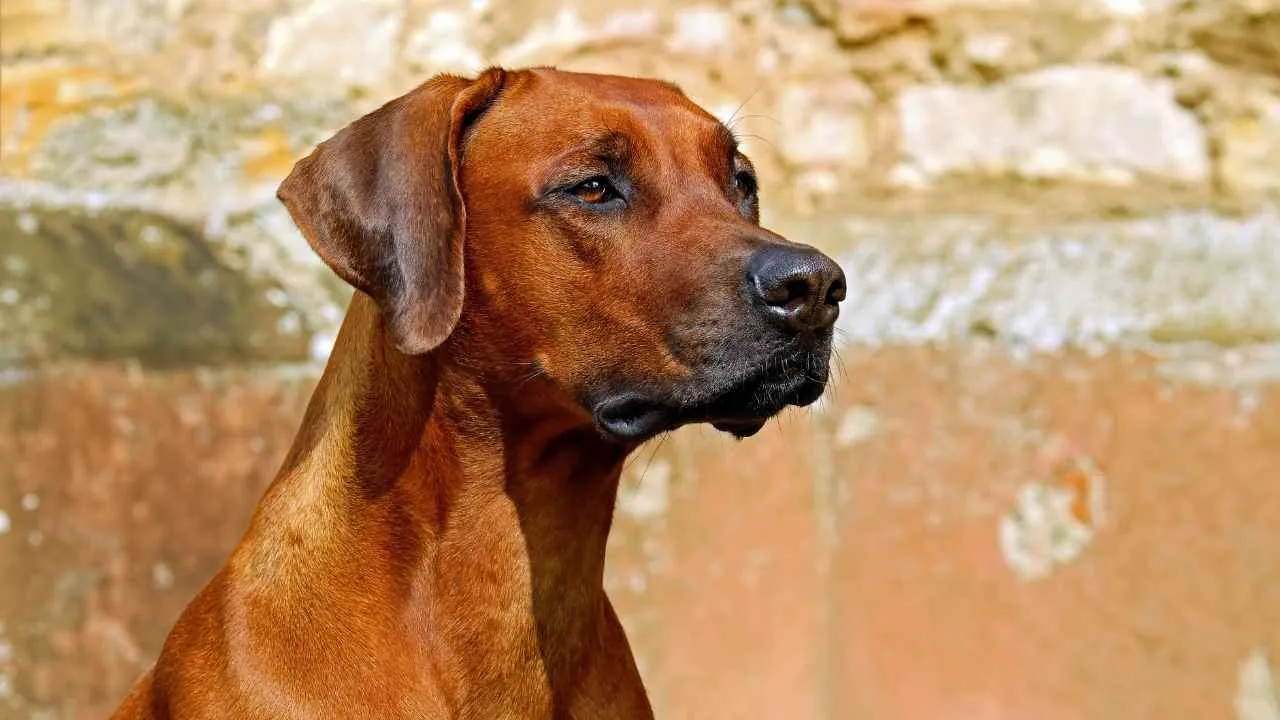
The prey drive of Ridgebacks is carved into their history. Originally bred by Rhodesian settlers to hunt actual lions, modern-day Ridgebacks are the result of a crossbreed of the African hunting dog, European Mastiffs, and Greyhounds.
This crossbreed results in a very high prey drive breed with high speed, natural ‘active chase instincts’, and bravery. Their prey style is a scent-sight mix, using their nose to find the target and locking onto it with strong vision.
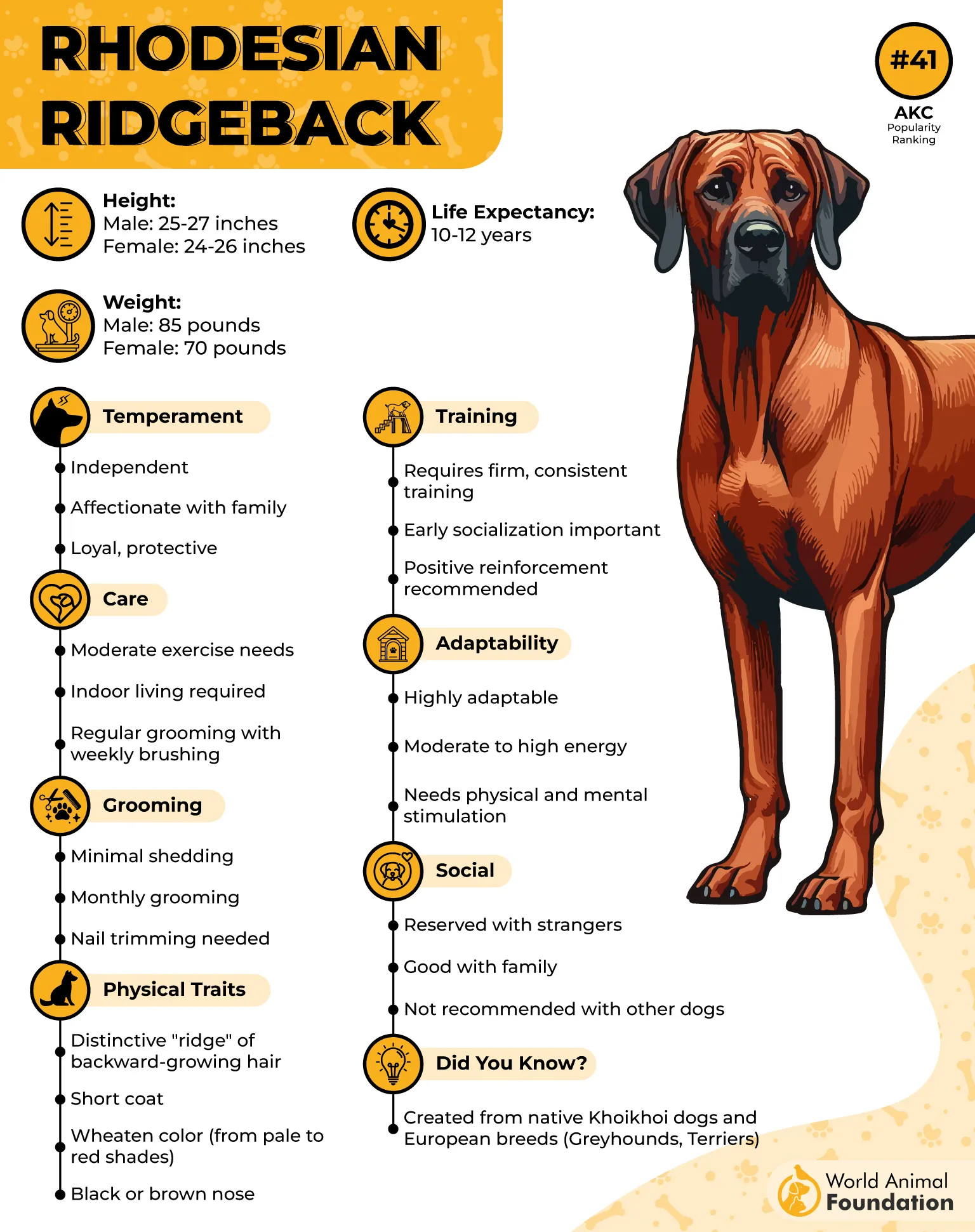
Exercise Needs: Moderate to high (45-60 minutes): Daily walk, lure coursing, agility, hiking, tug of war, fetching, etc.
Temperament: Brave, dignified, protective, fierce family pet, independent, intelligent, stubborn, and loyal.
Training: An experienced owner is suggested, even though they are highly trainable. Consistency and patience are required.
Focused Prey: Bred to hunt lions, boars, and bears, and also on small prey, rabbits, and anything furry that moves.
3. Weimaraner
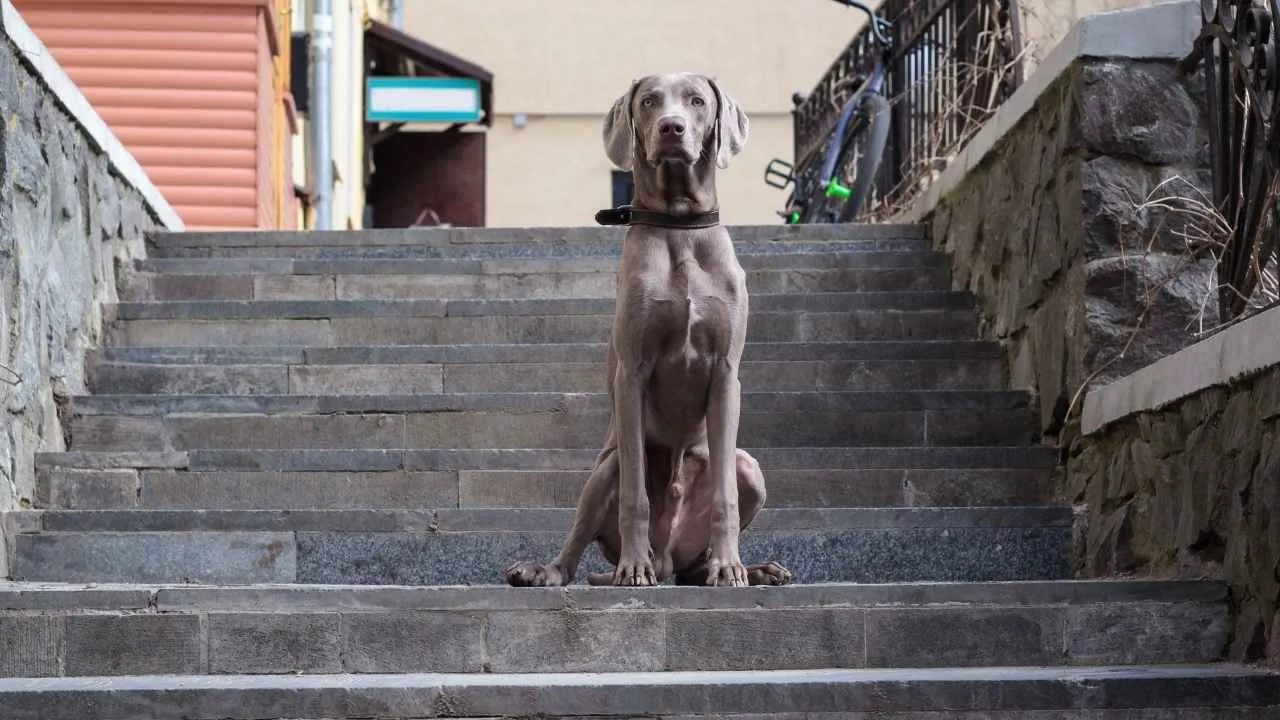
These silver ghosts (nicknamed for their sleek grey coats) were engineered for pointing, stalking, and retrieving game birds, boars, and deer. Their obsessive instincts make them highly active prey. Despite just noticing the moving objects, Weimaraners become hyper-focused on them.
Its eyes will lock onto a squirrel three hundred feet away. This gaze is similar to herding breeds, an intense, unblinking focus that means they are calculating a pursuit path to chase squirrels. Their multi-step strategy involves chasing, tracking, and then catching the prey.
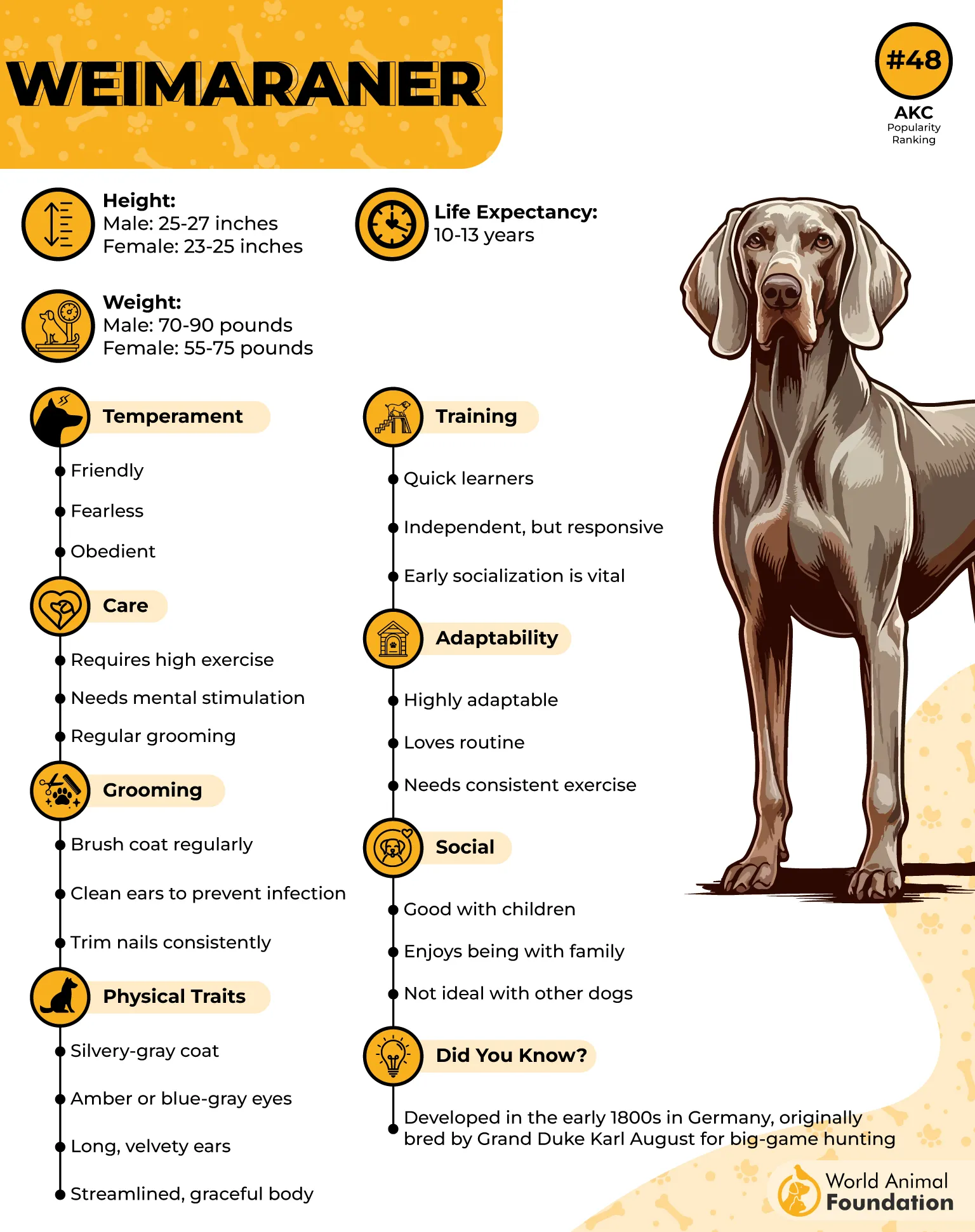
Exercise Needs: Moderate to intense(60-90 minutes): Running, dock and diving, mental games, fetching, and neighborhood walks
Temperament: Intelligent, independent, sensitive, affectionate, family-centered, and incredible working dogs
Training: Positive reinforcement, off-leash training, and vocal and chewing lessons
Focused Prey: Boar, deer, birds, and other game birds. They were originally German hunting dogs.
4. Irish Setter
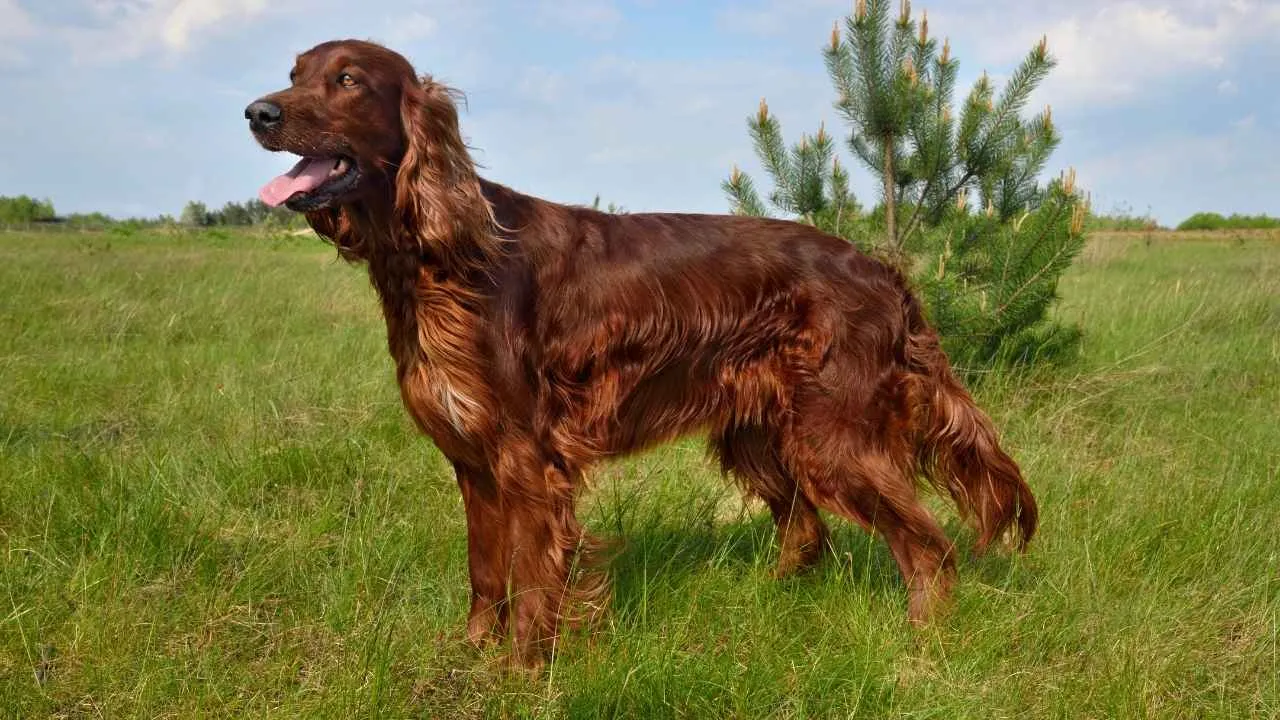
This high prey drive dog was developed by mixing spaniel, pointer, and golden setter bloodlines. Unlike scent-driven hounds, setters rely heavily on sight to locate game. Their prey drive is expressed differently; they are ‘pointers’, meaning they freeze and indicate prey location rather than immediate chase.
Their long legs and lean frame make them sprinters; they are built to cover ground quickly. However, this breed is divided into 4 categories: spaniel, retriever, pointer, and setter, according to PDSA.
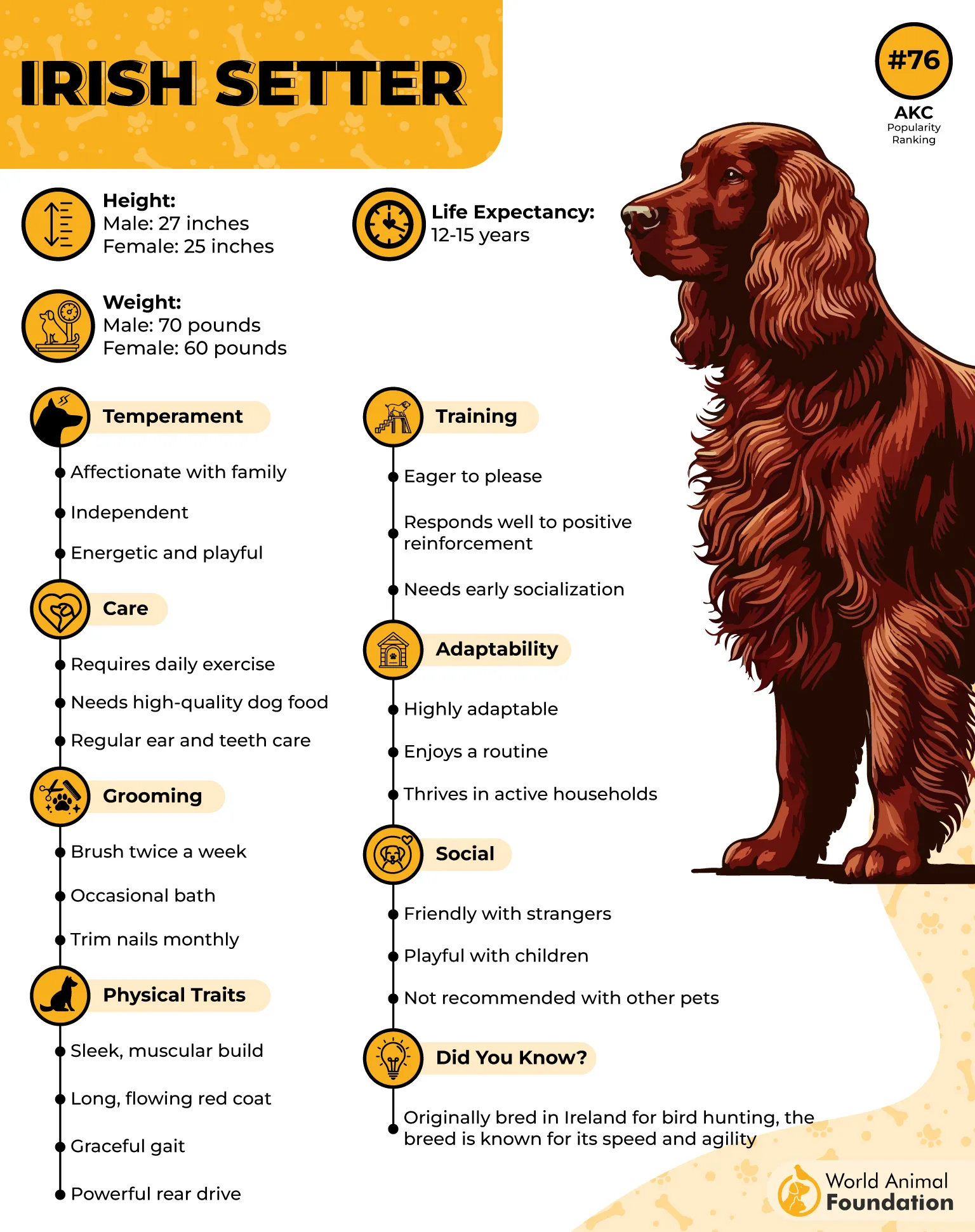
Exercise Needs: Intense (60-90 minutes): Long runs, hiking, off-leash play, swimming, hiking, fetching, etc.
Temperament: Friendly, eager to please, playful, bouncy, happy, energetic, active, affectionate, and will forget you when a bird passes by.
Training: They get easily distracted by scents and fast-moving animals. Early socialization, proper training, and positive reinforcement are recommended
Focused Prey: Game birds, particularly pheasants, partridge, quail, waterfowl, and grouse. They were bred as pointer retrievers.
5. Border Collie
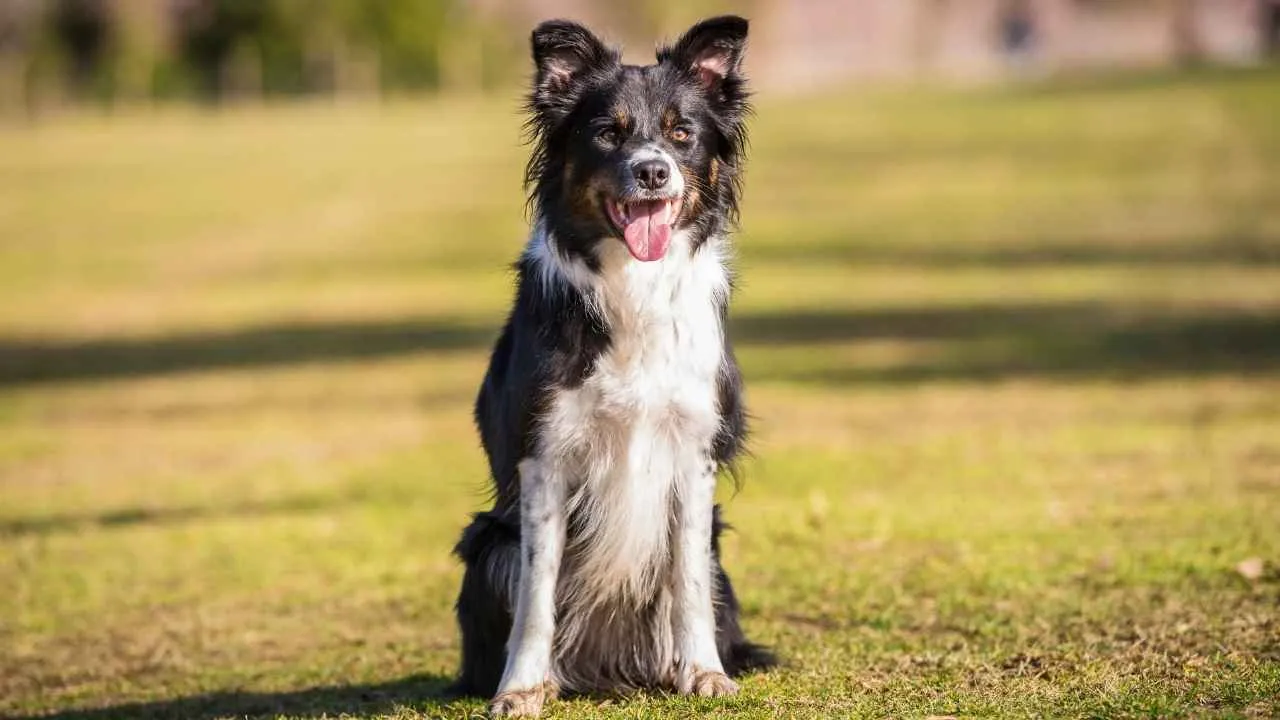
This breed was specifically bred to herd sheep in mountain terrain. Their unique herding drive makes them a very high prey drive dog breed. They are wired to control movement and not kill anyone. Their whole life is about ‘gathering’ things, moving, organizing, and catching prey.
Their sharp stare is intense enough to control sheep movement without physically contacting them. Even 1 Border Collie is enough to work in hundreds of acres of land. When chasing a rabbit, this dog’s behavior is rather more herding than hunting.
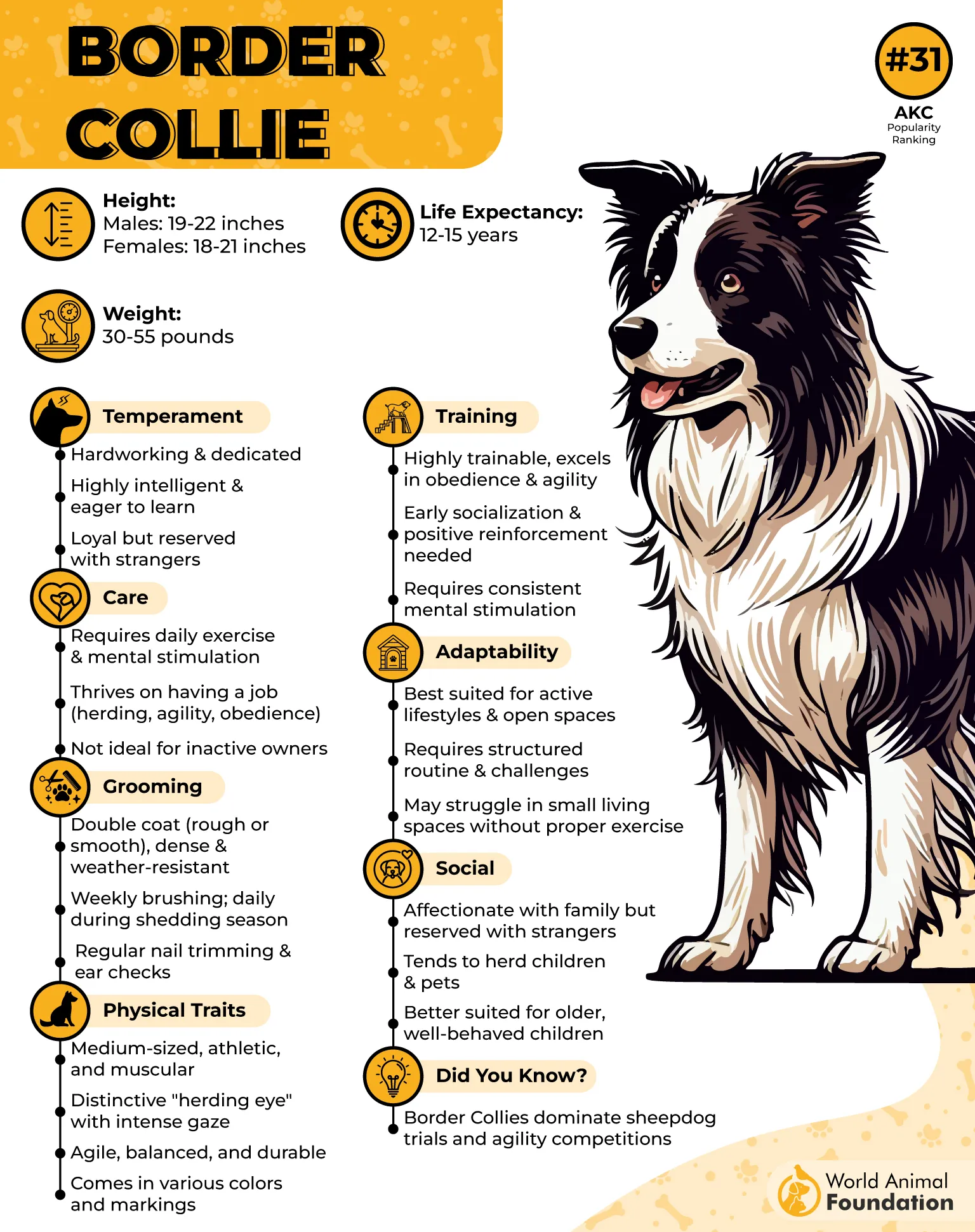
Exercise Needs: Moderate (30 minutes): ‘Herding cattle’ jobs, puzzle-solving games, agility, scent work, fetching, and frisbee playing, etc.
Temperament: Extremely intelligent, intense, focused, obsessive, athletic, and strong working dog instincts
Training: Positive reinforcement, early socialization, and consistent mental stimulation
Focused Prey: They basically have a herding drive. They are obsessed with moving livestock, small animals, and neighborhood cats.
6. Greyhound
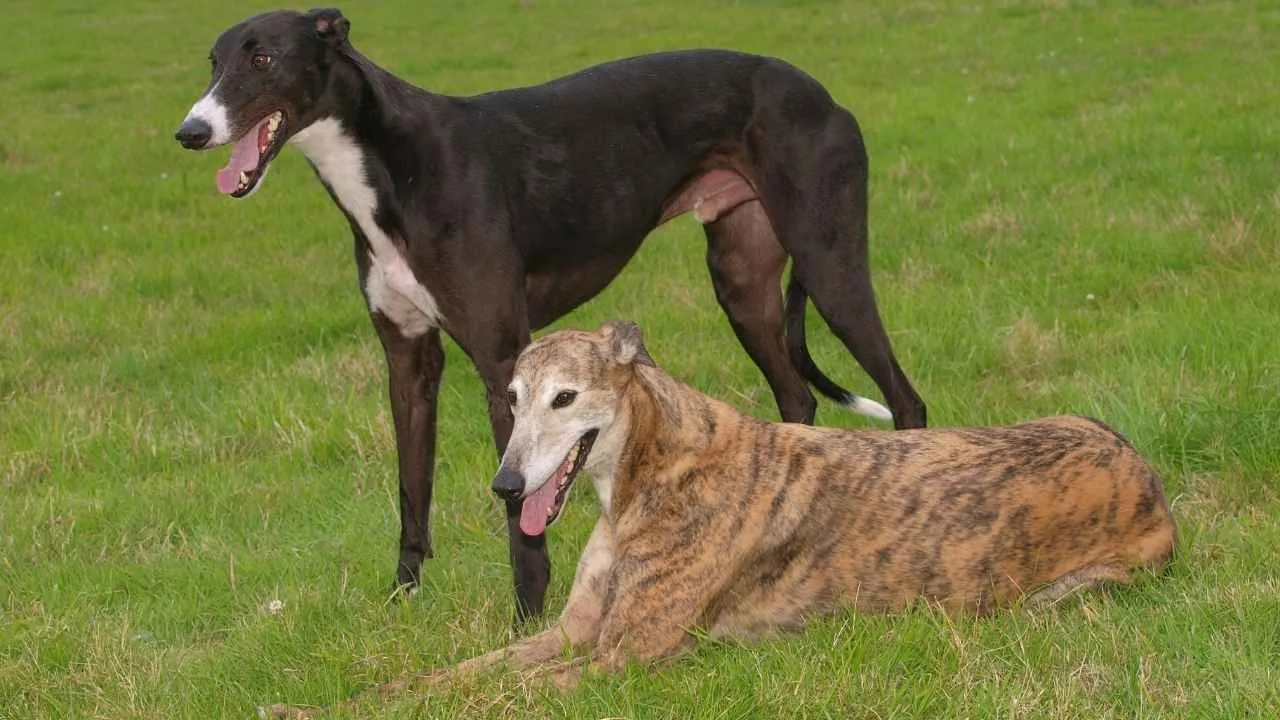
Greyhounds are one of the oldest documented dog breeds, with origins tracing back to ancient Egypt and Greece. They were bred exclusively for one purpose: high speed and the ability to catch fast-moving prey. The entire skeleton is optimized for this.
Their long, narrow skull houses an eye positioned to track movement, and their legs are designed for explosive acceleration. Unlike other dogs, they have shock-absorbing pads on the feet that prevent jerks when working in rough terrain, as per the AKC
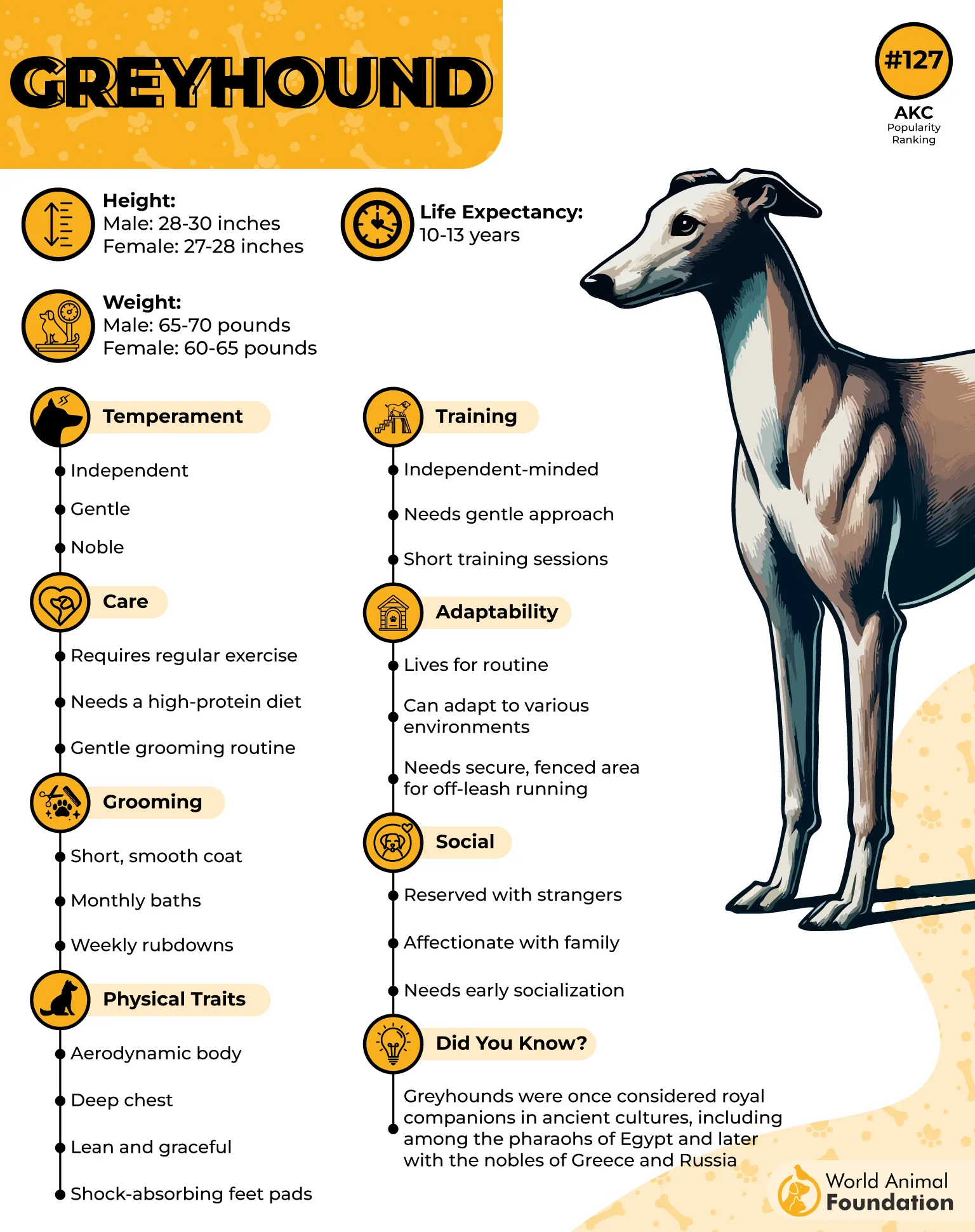
Exercise Needs: Low (20-30 minutes): intense speed work, weekly hard running, sprinting
Temperament: Gentle, quiet, affectionate, athletic, chill indoors, calm
Training: Positive reinforcement, off-leash training, and early socialization
Focused Prey: Large animals, rabbits, hares, cats, and small wildlife.
7. Siberian Husky
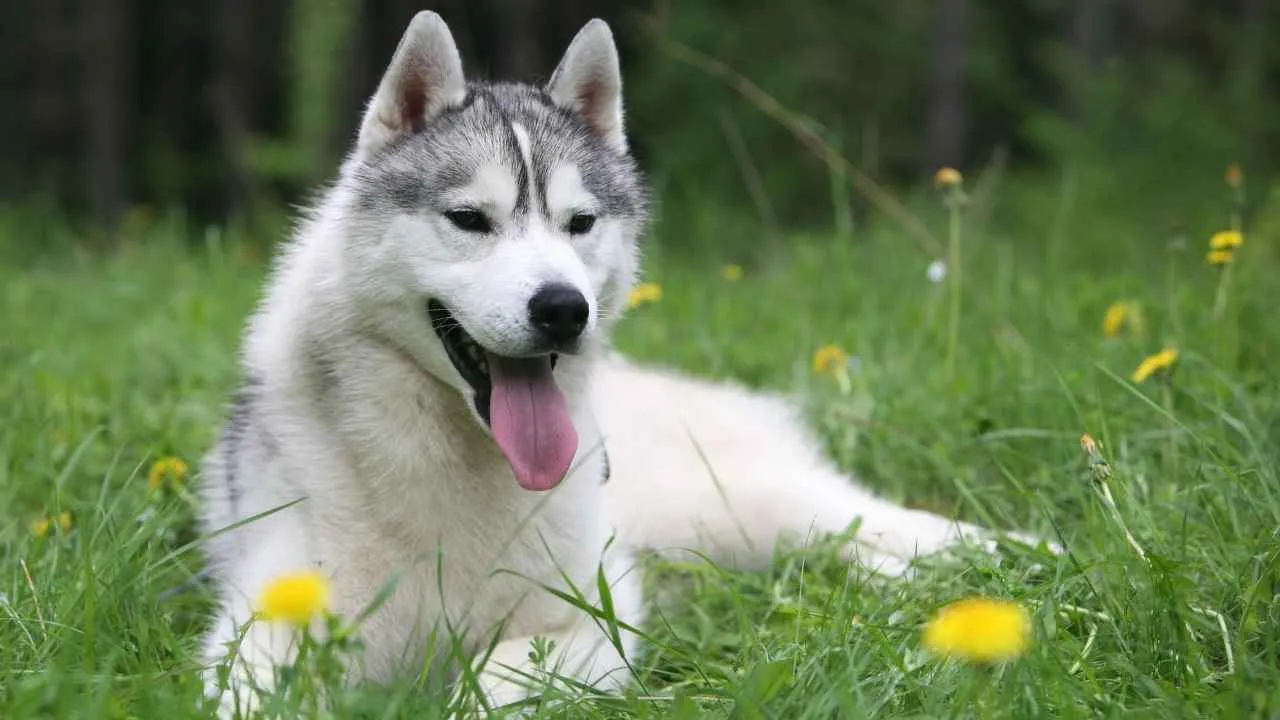
Siberian Huskies were developed by the Chukchi people of northeastern Siberia as sled dogs, but that’s only part of their genetics. They are also descendants of spitz-type dogs that hunted small animals and large game.
Orvis notes that they are designed to hunt in packs. Pack dynamics means they show natural behaviours of hunting in the presence of other dogs. They are web-footed to work and chase in snow, and their dense double coat makes them cold-weather resistant
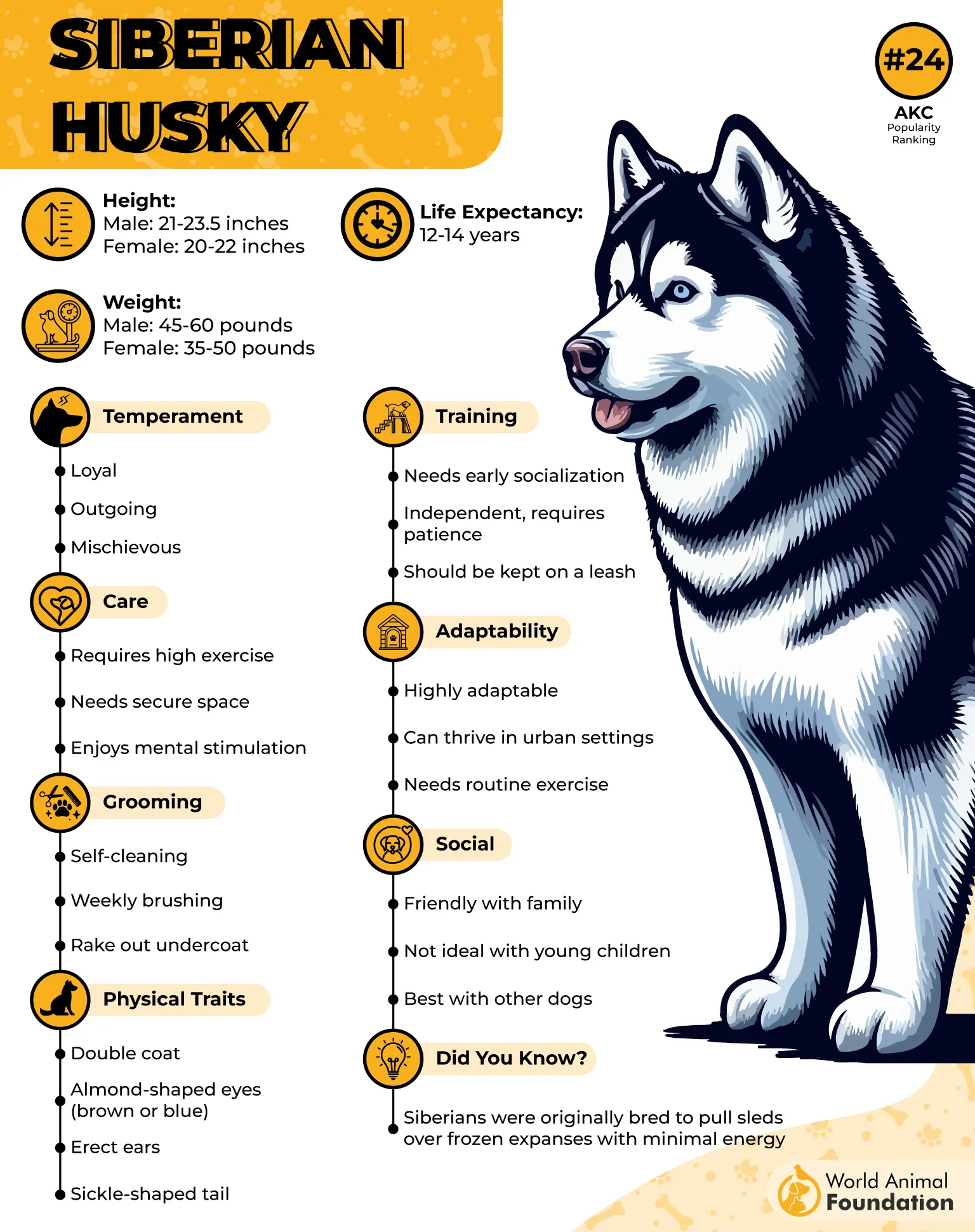
Exercise Needs: Moderate to high (60-90 minutes): sledding, long walks.
Temperament: Stubborn, independent, smart, strong prey drive, friendly, mischievous, pack-oriented, fun-loving, people-loving, and good escape artists.
Training: Patient and consistent training. Polite behavior is highly recommended.
Focused Prey: Small rodents, rabbits, and other small pets. Their prey drive is real, even though they were primarily bred for hauling, not hunting.
Conclusion
Owning a high prey drive dog is not for everyone. These breeds demand serious commitment. They need exercise, training, and mental stimulation.
If you respect what these dogs are built for and are willing to put in the work, you will get the most incredible companion. They do what exactly hundreds of years of selective breeding designed them to do.
So choose wisely. Choose the breed that matches your lifestyle. And then celebrate what makes them drive. Because that drive, properly channeled, is extraordinary.
