




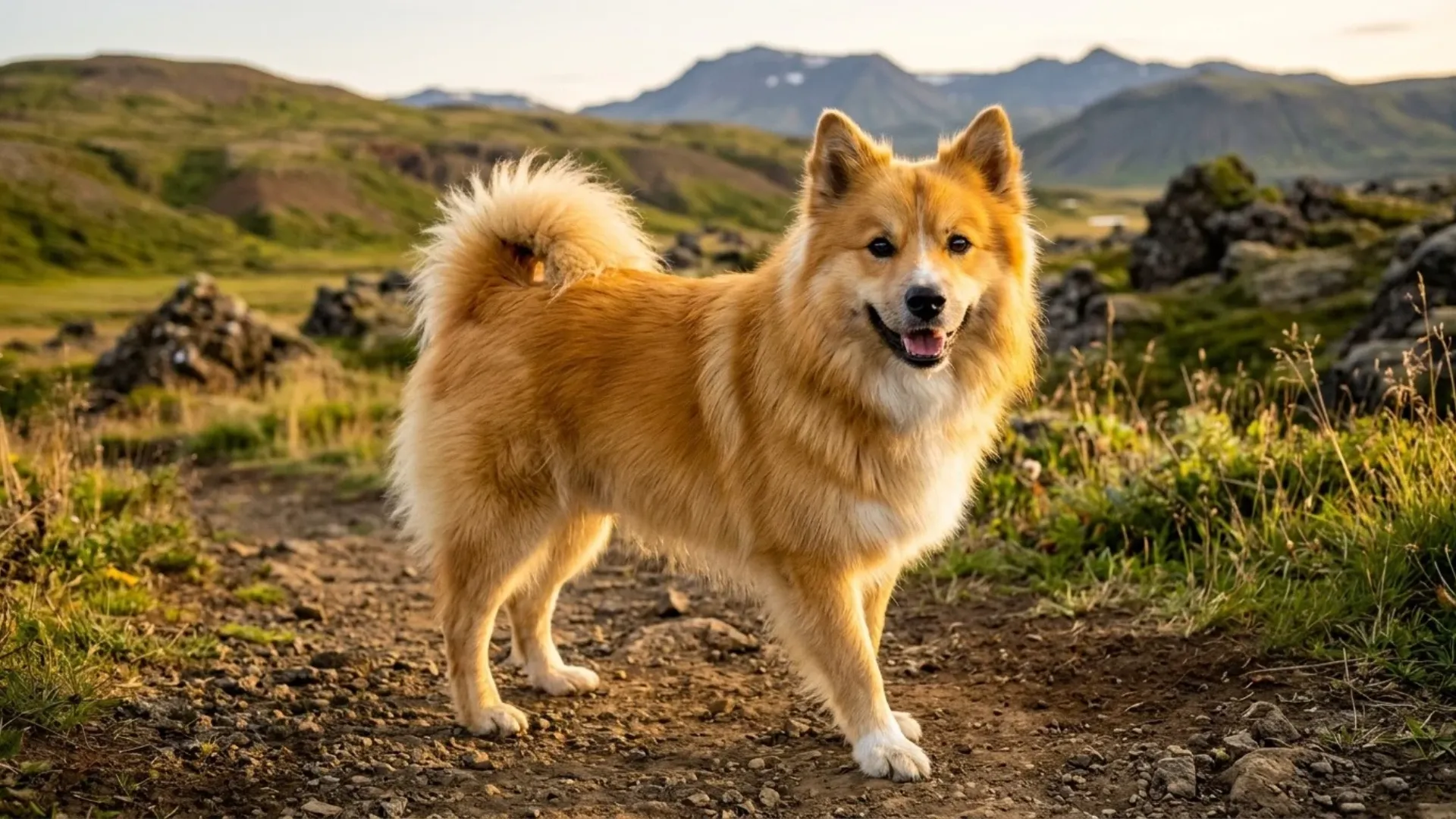
Some dogs look like they were dipped in honey, warmed by the sun, or rolled straight through a field of ripe wheat. Their golden coats catch the light in a way that makes strangers stop mid-walk and say, “Okay, I need to know what breed that is.”
But “golden” is not one color. It can be pale cream, rich apricot, coppery rust, sandy fawn, or deep red-gold. It can sit on a fluffy Nordic herder, a sleek Hungarian hunter, or a small spaniel with ears like velvet curtains. Each shade tells a little story about where the breed came from and the job it once did.
Below are seven breeds that wear golden tones beautifully. Some are famous. Some deserve way more attention. All of them prove that a gorgeous coat is only the beginning; personality is what really steals the show.
Dog Breeds Displaying Gorgeous Golden Coat Shades
1. Icelandic Sheepdog
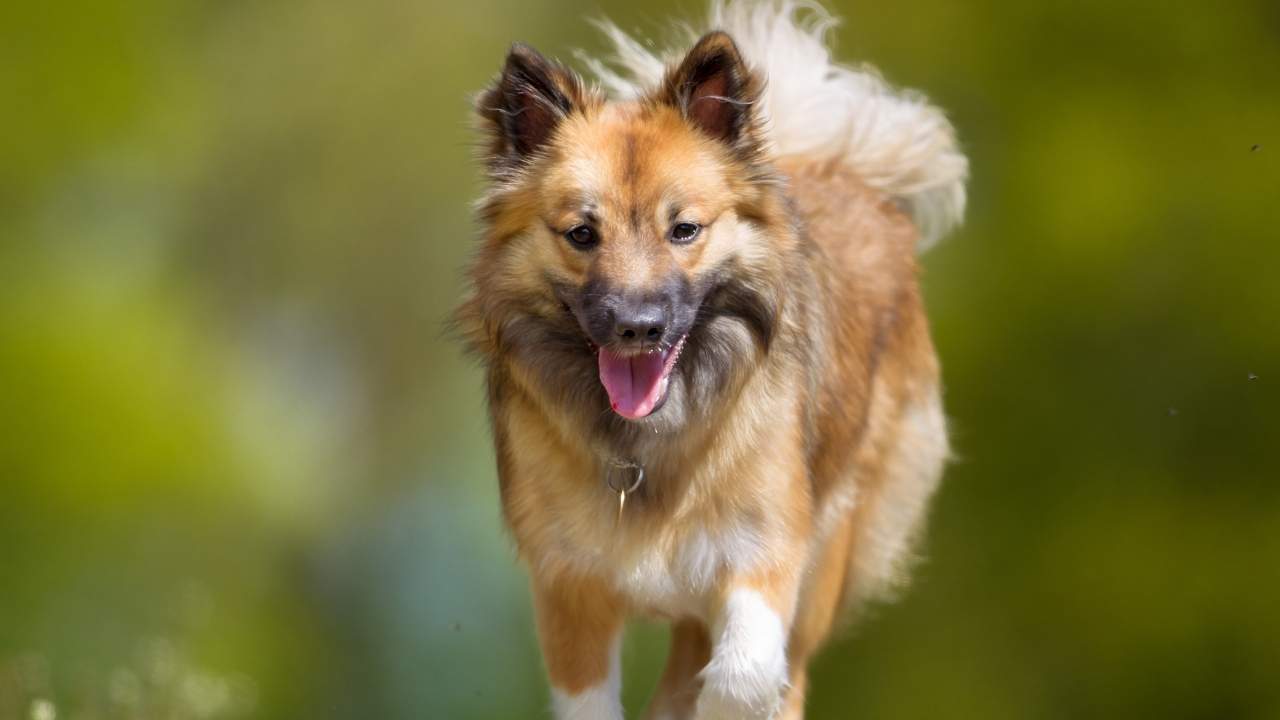
The ancient breed was developed from the dogs brought by the Viking settlers between 870 and 930 CE in Iceland. This farm dog was adapted to herd livestock and do other farm chores. The Nomadic herding Spitz dog is known for its curled tail and erect ears, according to Dogs Australia.
The dog breed comes in two distinct coat types: the short coat (medium length, hard outer coat and a shorter and softer undercoat with longer fur on the chest, belly, and thighs) and the long coat (feathering behind the ears, chest, neck, thighs, and withers). The golden shade spectrum has light fawn, milk cream, rich gold, tan, and reddish brown colors.
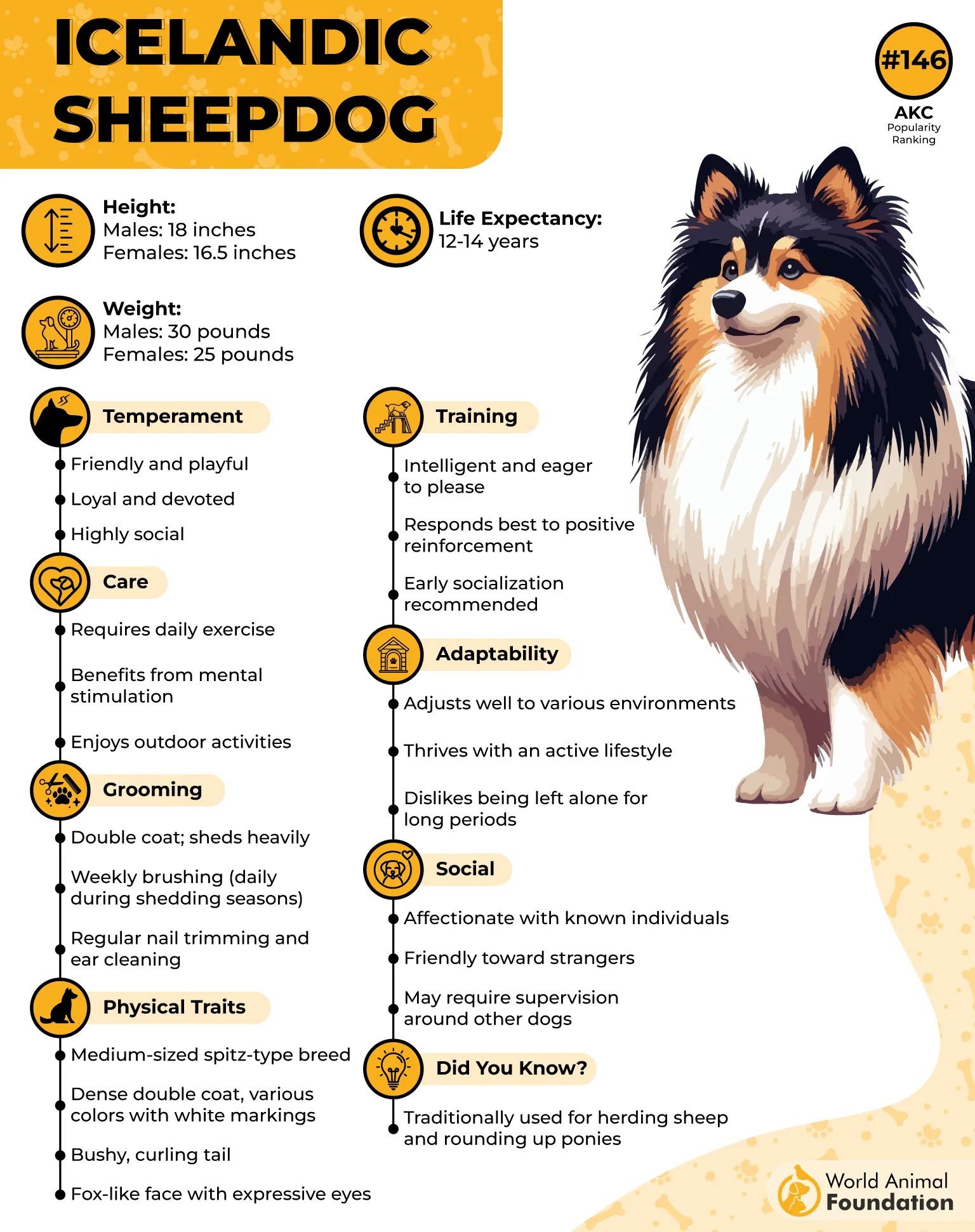
The breed is frequently presented with a black facial mask over the muzzle and shades around the eyes. The gold coat must always be accompanied by irregular white markings.
2. Golden Retriever
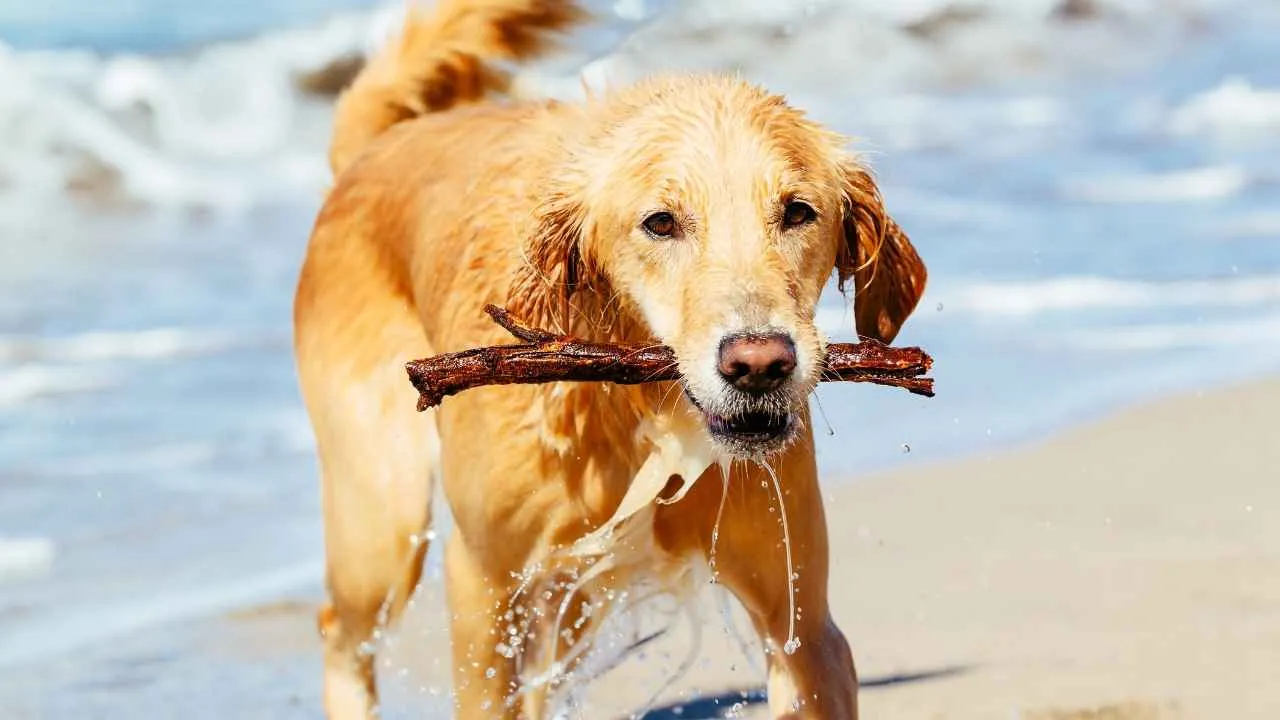
The gentle giant was bred by Sir Dudley Marjoribanks by crossing the Tweed Water Spaniel and the Yellow colored retriever in England in the mid-19th century. The resultant dogs were further interbred with other dogs, such as the Labrador, Bloodhound, and the Red Setter, for 20 years to yield the Golden Retriever we know today.
The golden spectrum has a wide range (phaeomelanin). It comes in cream/pale gold, light gold, classic gold, dark gold, and red/fox-red gold colors. However, extreme pale or dark mahogany/red are strictly prohibited for show rings. The coat type is determined on the basis of one of the three genetic lineage types: the American, the British, and the Canadian.
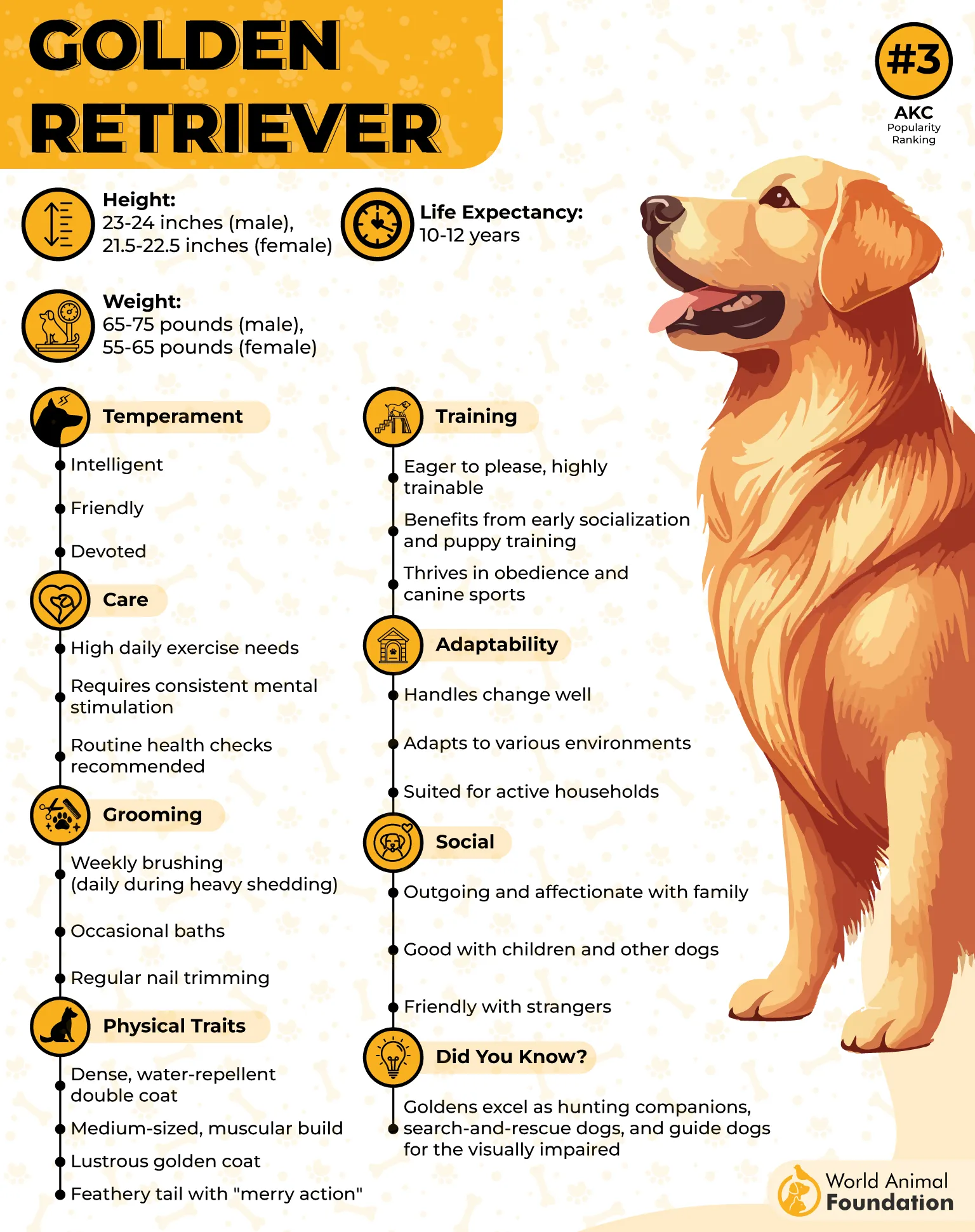
Shaving the breed entirely is strictly prohibited, as the double coat is supposed to protect the breed from external stimuli. It needs weekly brushing (2-3 times) and daily brushing during the shedding seasons.
3. Vizsla
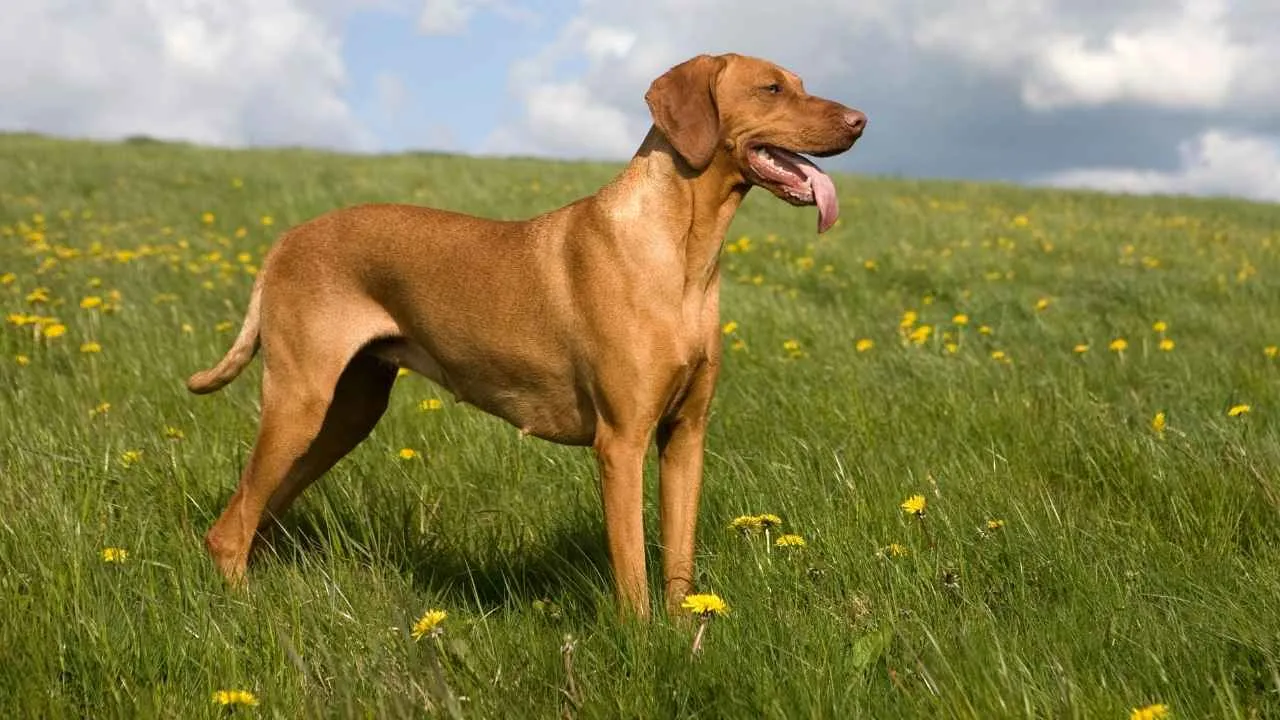
The hunting breed was originally bred in Hungary centuries ago. It is closely related to the companion dogs that worked alongside the Magyar warriors when they invaded Central Europe during the Dark Ages. It almost went extinct after WWI, but was revived and officially recognized by the AKC in 1960, says Hill’s Pet.
The coat comes in two types: the standard (smooth coat) that lacks an undercoat, and the wirehaired coat, which has double layers. The dog breeds display gorgeous golden coat shades, including gold, rust/russet gold, esterhazy saddle, and sandy gold. The forechest and toes may have white markings.
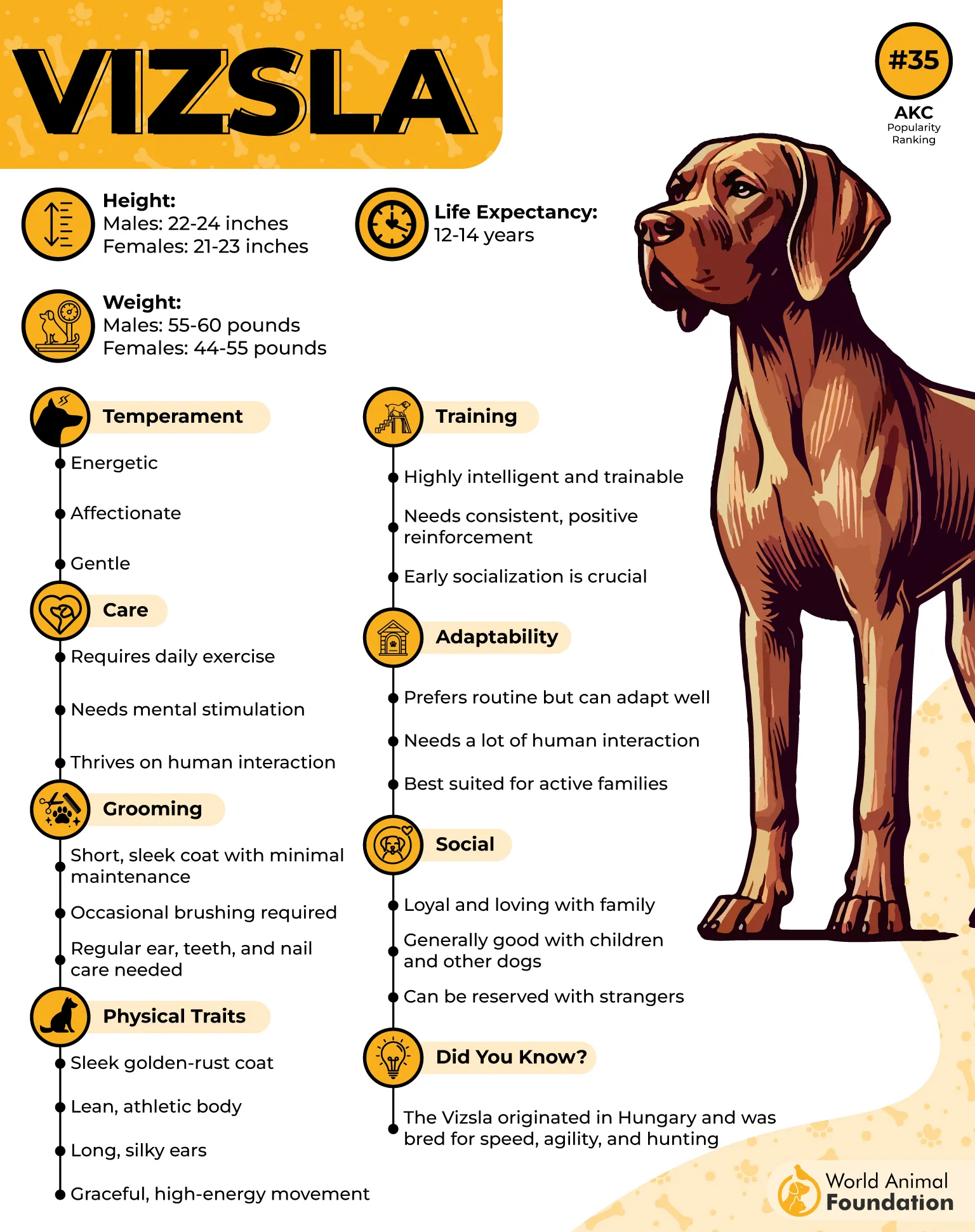
While the stunning coat sheds continuously round the year, it ‘blows’ during the summer and spring. Use a rubber grooming mitt and a soft bristle brush to brush the coat weekly.
4. Tibetan Spaniel
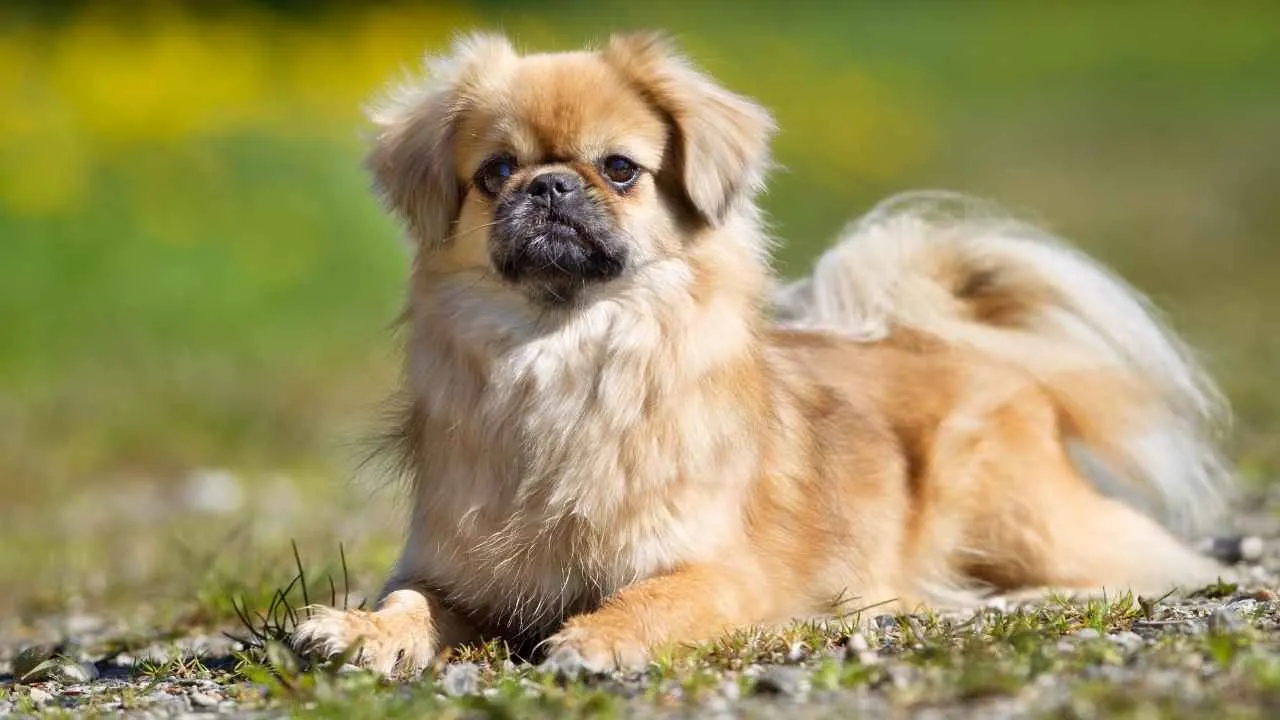
The small dog breed was originally developed in Tibet some 2,000 years ago by the Buddhist monks. Known for its strong sense of hearing and sight, the breed was primarily used as a companion and as an interior watchdog. The dog arrived in England in the late 19th century.
It has a longer and thicker mane around the neck and the shoulders, giving it a lion-like appearance, as noted by Purina. There is feathering around the ears, back of the forelegs, tail, and the ‘pants.’ The golden coat comes in fawn and cream, pure gold, sable gold, and red-gold colors. The golden Tibbie features white markings on the paws and the chest.
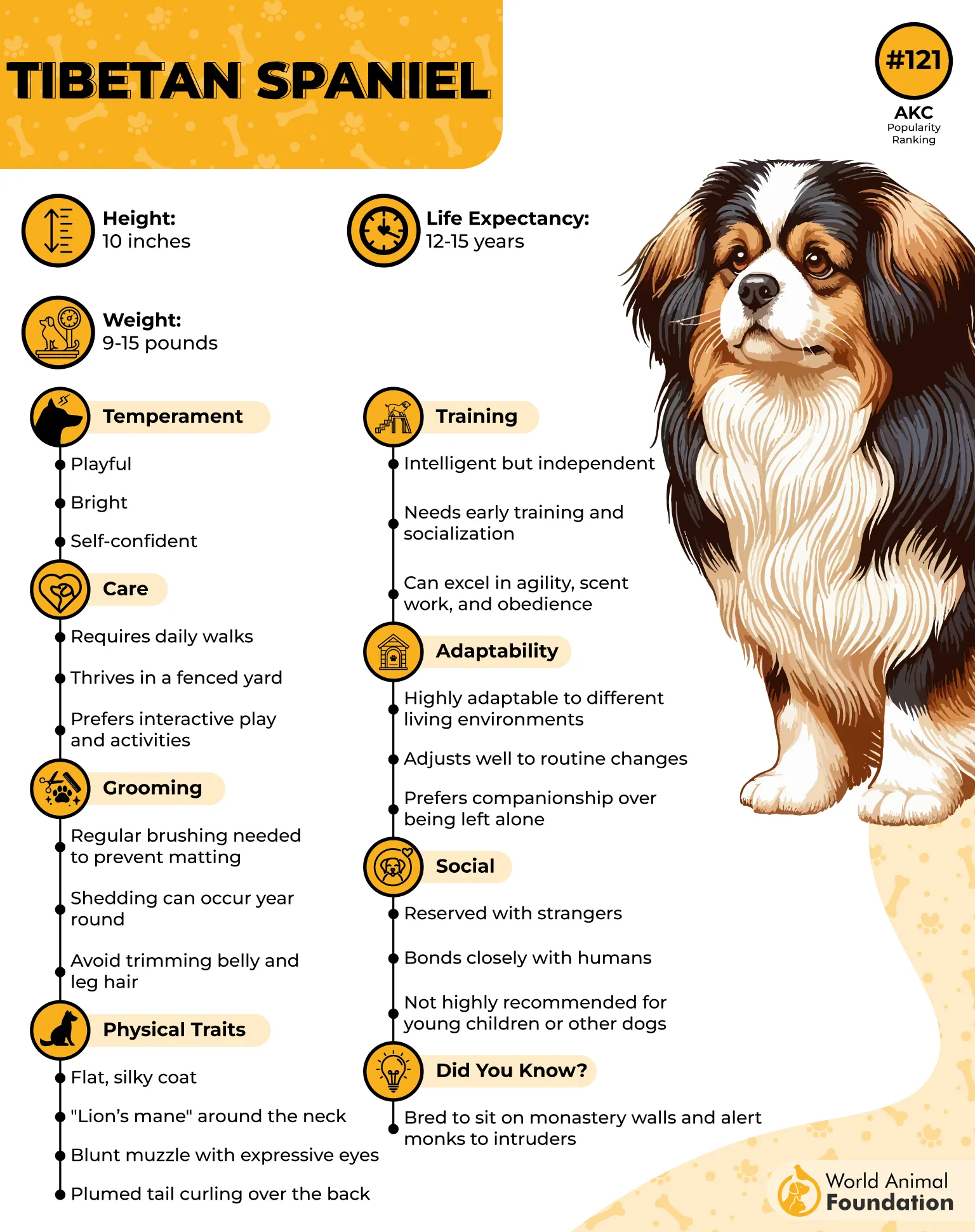
The shades must contain pigmented eye rims, a black nose, and dark brown eyes. Use a high-quality pin brush and a long slicker brush to brush the coat 2-3 times a week.
5. English Cocker Spaniel

The gun dog was developed in England and was categorized in the sporting group. The breed is closely related to the English Springer Spaniel and the Field Spaniel. Also known as the ‘Merry Spaniel,’ the breed wags its tail in excitement when it greets its favorite people.
The affectionate and intelligent breed has 2 distinct breeding lines: the bench (show) strain and the working (field) strain. The classic golden coat sits perfectly between dark red and pale cream and has a dark nose and eyes. Other colors include lemon, red, liver nose gold, orange, lemon roan, and gold parti.

The loyal breed needs extensive grooming to prevent matting. Pay close attention to the feathering while brushing using the steel comb and the high-quality slicker brush. Hand stripping is recommended to preserve the weather-resistant texture.
6. Pharaoh Hound
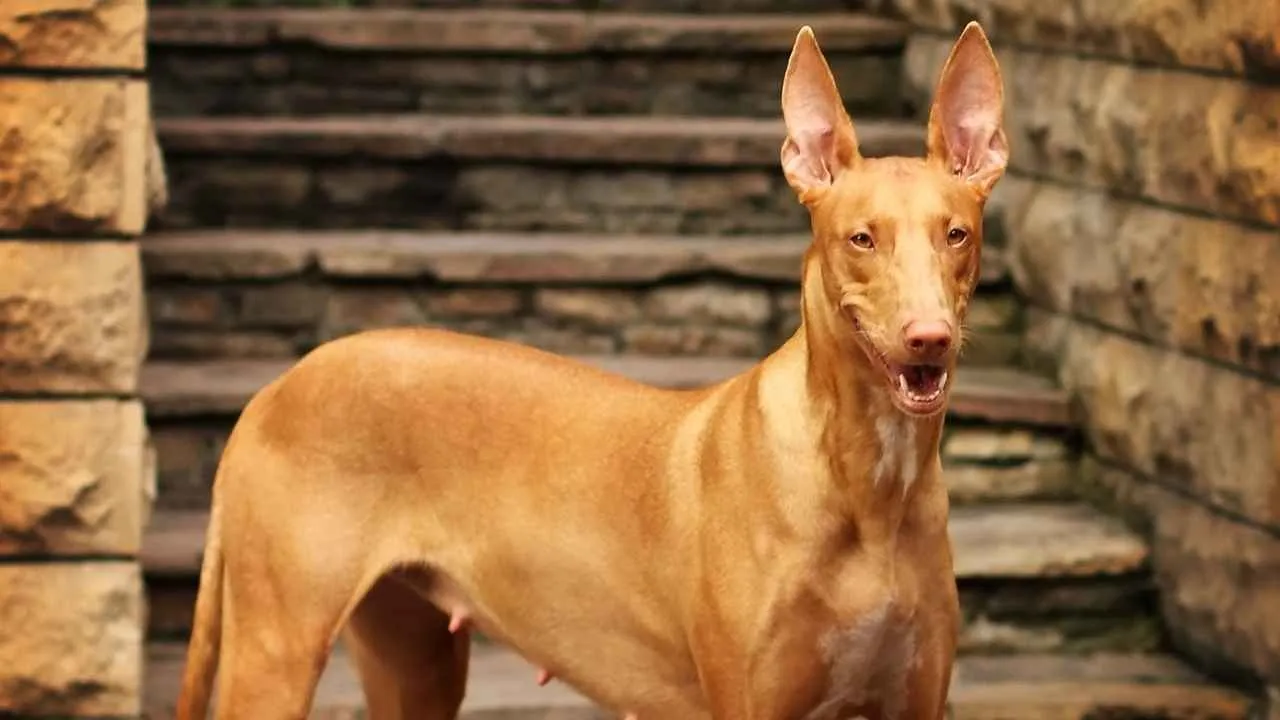
The history dates back to ancient Egypt, where a similar breed was shown in tomb artwork. At some point in time (about 2,000 years ago), this dog was brought to Malta, where it was used to hunt rabbits. The national dog of Malta was recognized by the AKC in 1983.
The puppies are born with a longer and softer coat, which sheds out as the dog transitions towards adulthood. The adult coat is shorter and glossier and tends to lie flat against the body. The acceptable coat colors include tan, red-golden, and chestnut. A gray muzzle is the standard sign of aging.
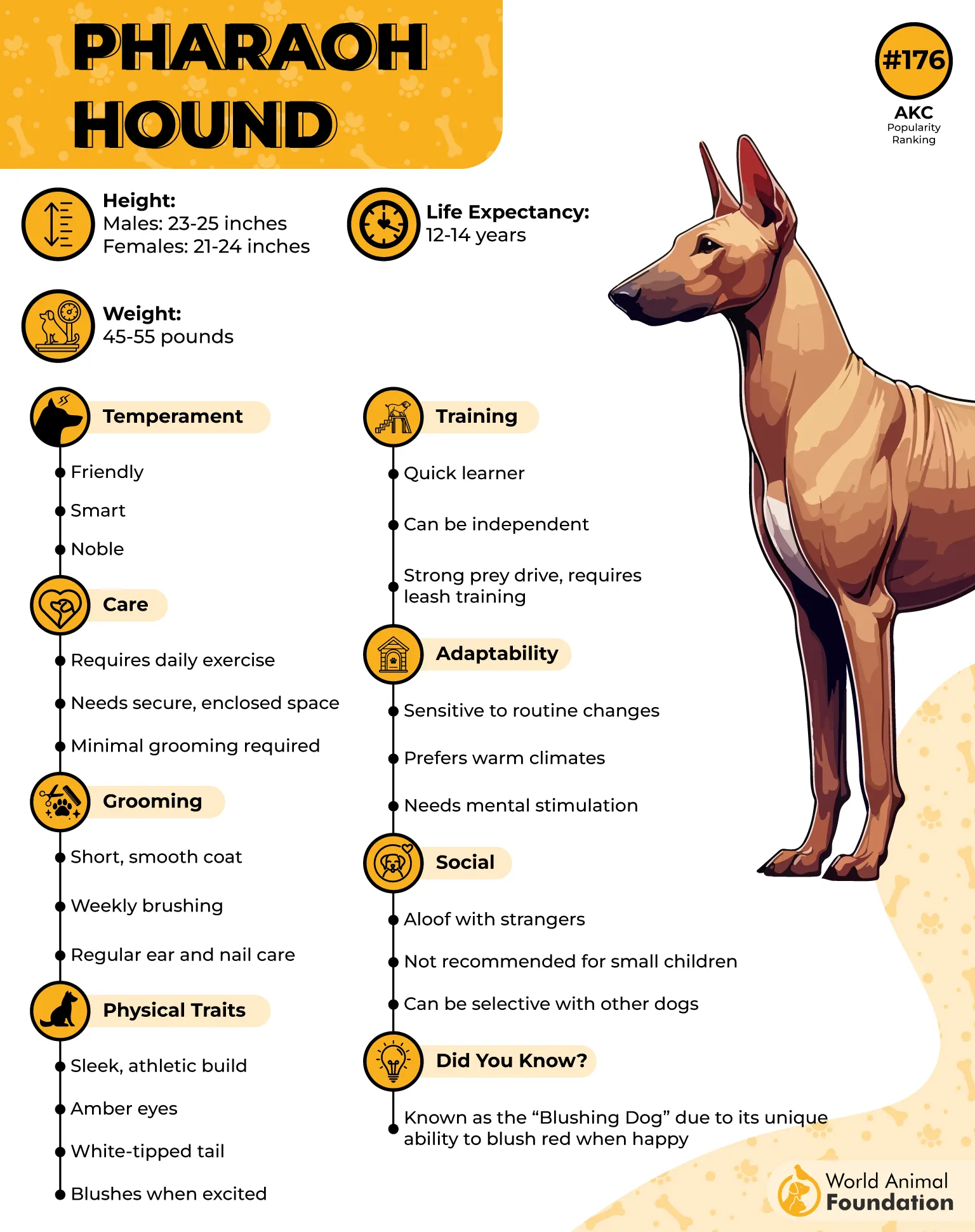
White markings are allowed on the tail tip, chest, face, and toes. An excited Pharaoh Hound is known for blushing, where the ears, nose, and the chest turn slightly pink.
7. Nova Scotia Duck Tolling Retriever
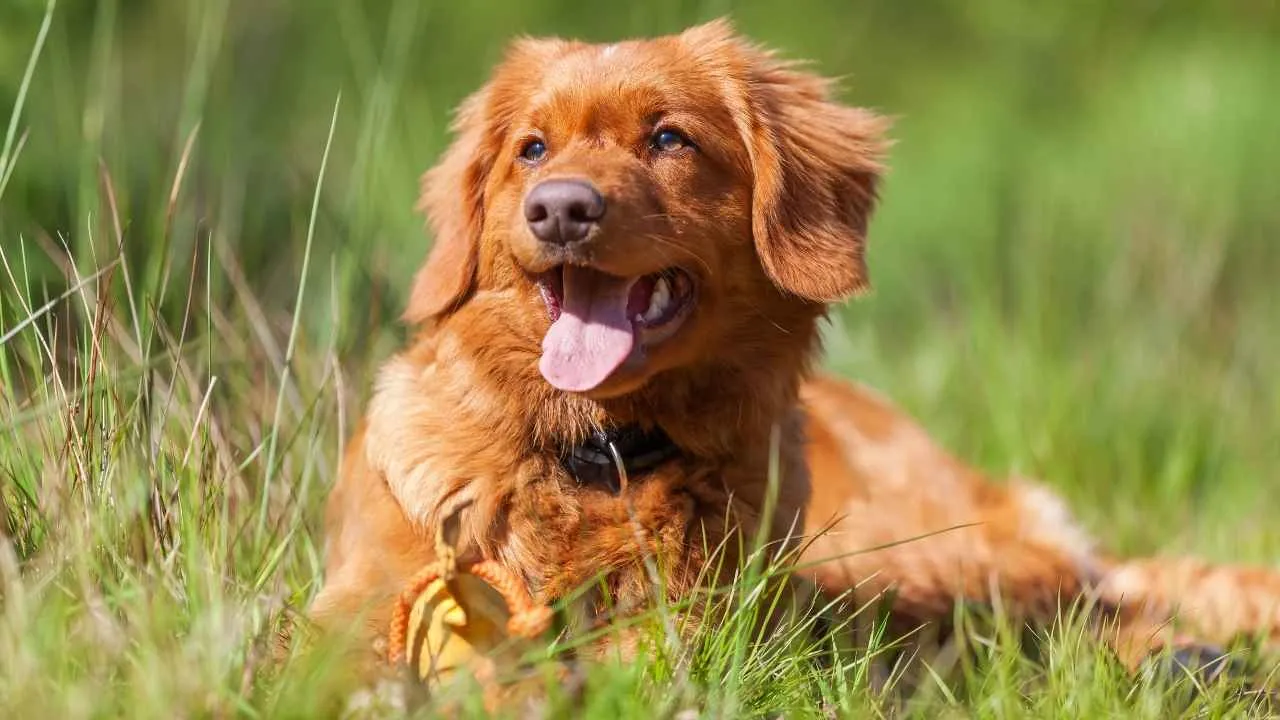
The breed was originally bred by hunters in Canada in the 19th century. Being a retriever, it tends to fetch targets from the water and land alike. It was officially recognized by the Canadian Kennel Club in 1945. The breed has a close resemblance to foxes.
It is genetically a clear red dog; however, any shade of red or orange is acceptable. The primary shades include the golden-red/red-gold, crimson, bright red, and dark copper. The signature white markings are present on the chest, blaze, feet, and tail tip.
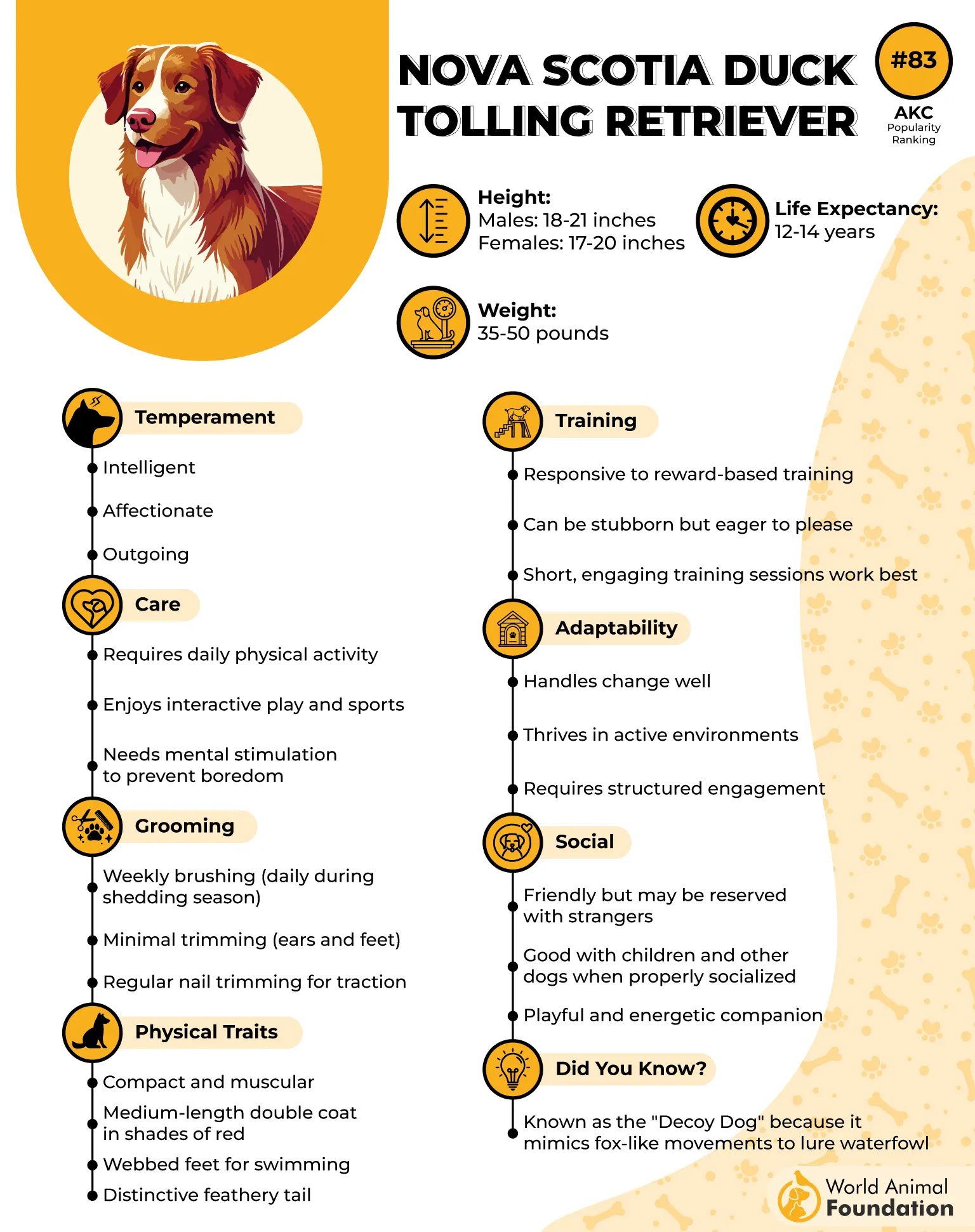
Use an undercoat rake and a slicker brush for weekly brushing to remove loose hair and evenly distribute natural oils. Bathing is needed every 6-8 weeks.
Conclusion
A golden coat is easy to admire, but it should never be the only reason to choose a dog. These breeds differ widely in size, energy, grooming needs, and personality. A Tibetan Spaniel may suit a quieter home, while a Vizsla or Toller needs an active family with time to spare.
Before falling for that honey-colored fur, think honestly about your routine. Can you provide exercise, training, companionship, and grooming? The right match will feel less like adding a pet and more like gaining a loyal, funny, occasionally chaotic family member.
Whichever golden-coated breed fits your life, the best part is simple: every sunny walk, muddy paw print, and happy tail wag becomes a little brighter with the right dog beside you.
