




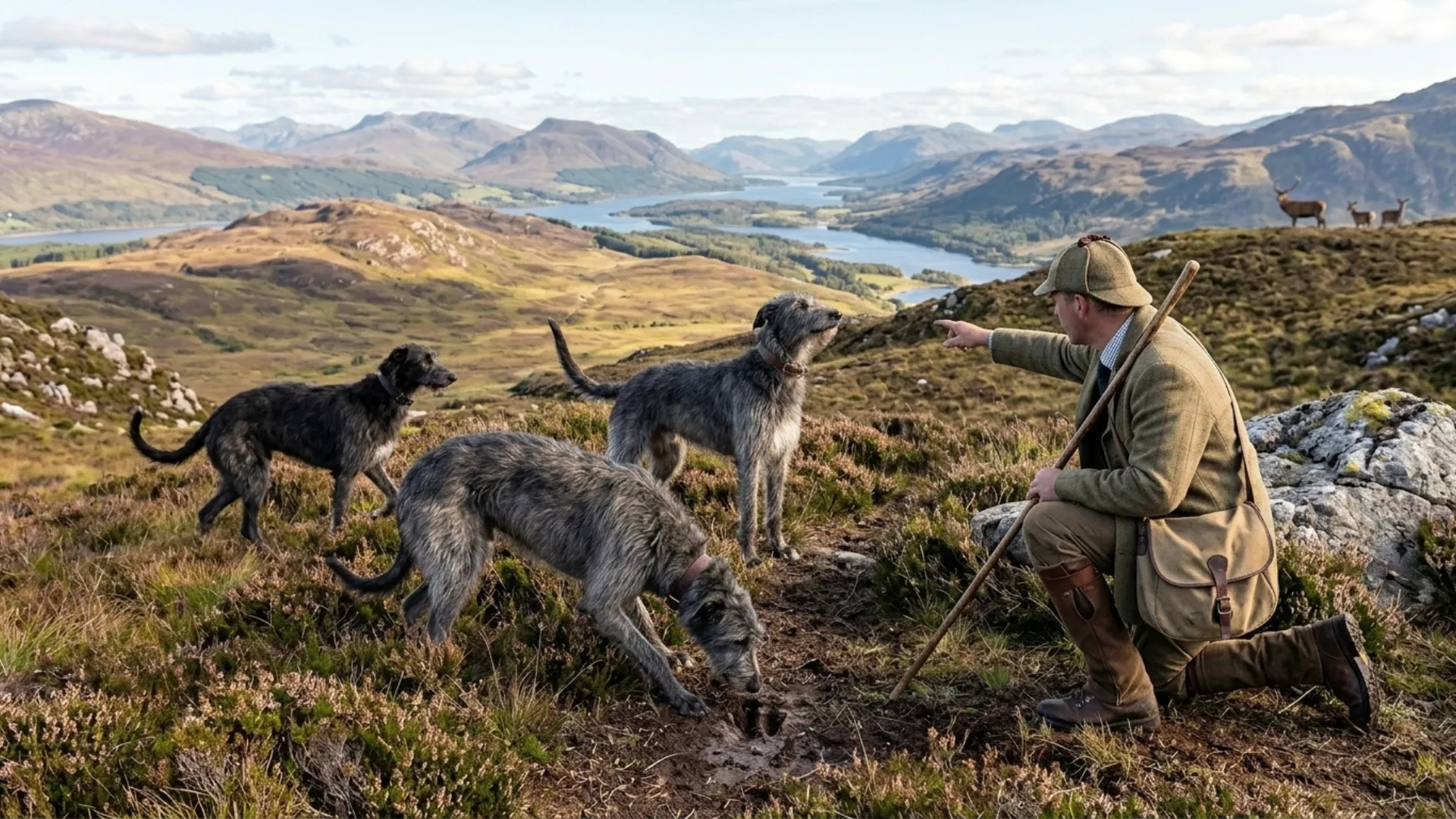
For deer and game tracking, the nose should be near the top of your checklist. A dog can look athletic, intelligent, and confident, yet still be poorly suited to following a scent over a long and complicated trail.
Tracking requires a different mix of abilities. The dog needs scent sensitivity, concentration, stamina, persistence, and enough obedience to work as part of a team. Field conditions add another layer, since wind, moisture, temperature, vegetation, and terrain can influence how scent behaves.
Strong choices tend to have natural qualities that support scent work before training. Their physical structure and working temperament can also affect how comfortably they handle long searches. Once you know what to look for, selecting the right hunting dog gets much easier.
If you want a dependable partner for tracking deer and game, this article covers the leading breed choices and the practical qualities worth comparing before you choose.
Key Takeaways
- Deer can leave behind a trail that changes with wind, weather, terrain, and time, so choosing the right dog can make a real difference.
- The Black and Tan Coonhound can work an older scent trail even after fresher smells cross its path, which gives this hound a fascinating edge in the field.
- Then there is the Mountain Cur, a hardworking tracker that once helped frontier families earn money from the animals their dogs found and hunted.
- The remaining breeds have their own stories and hunting talents, including one small spaniel that can track deer, flush birds, and retrieve from water.
Top Dog Breeds Choices for Deer and Game Tracking
1. Scottish Deerhound
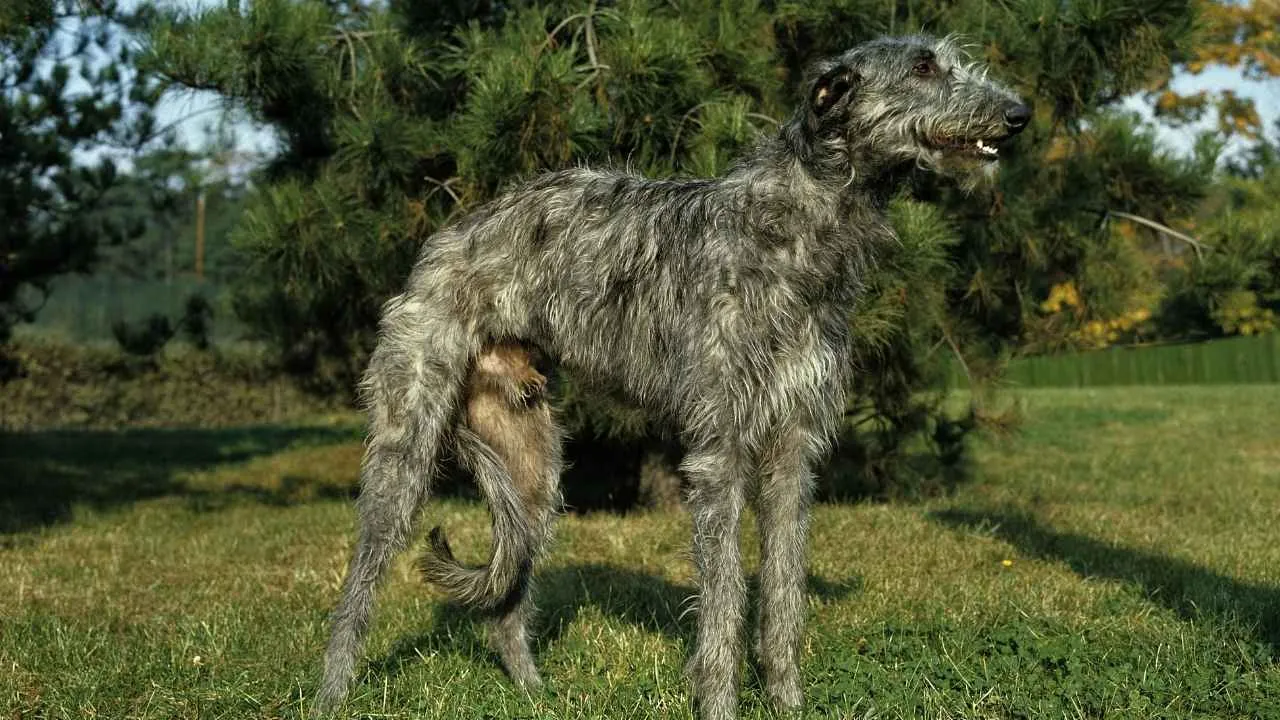
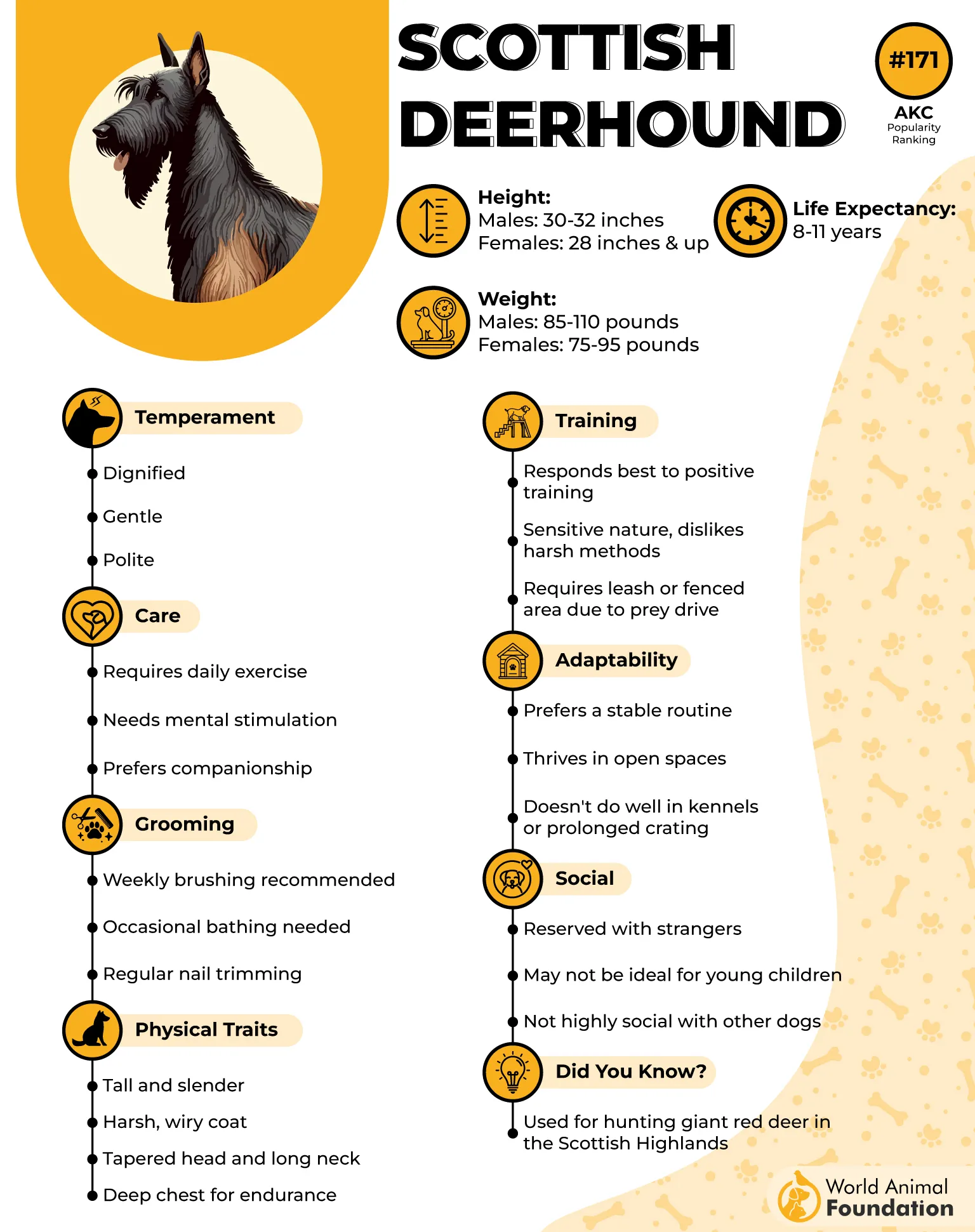
Scottish Deerhound, known as the “Royal Dog of Scotland,” spent centuries in the Scottish Highlands as a prized companion of nobles and a hunter of red deer. Its long limbs, large frame, and rugged coat suited the demanding landscape where these hunts took place.
Eyes on the Quarry
Scottish Deerhound was bred to pursue red deer by sight, using sharp vision to spot its quarry across open, uneven ground. Speed, a deep chest, and powerful strides gave it the physical capacity for sustained chases over rugged terrain.
The breed’s hunting profile includes several other types of quarry:
- Fallow deer in European hunting traditions
- Coyotes and wolves in historical North American use
- Hares and foxes in controlled coursing
Conditioning for the Field
This hunting companion benefits from conditioning that builds endurance, coordination, and focus without relying on repetitive drills.
Lure coursing, hill runs, obstacle navigation, and pack walks can prepare the body for demanding terrain while encouraging controlled movement, as SDCA notes.
2. American English Coonhound
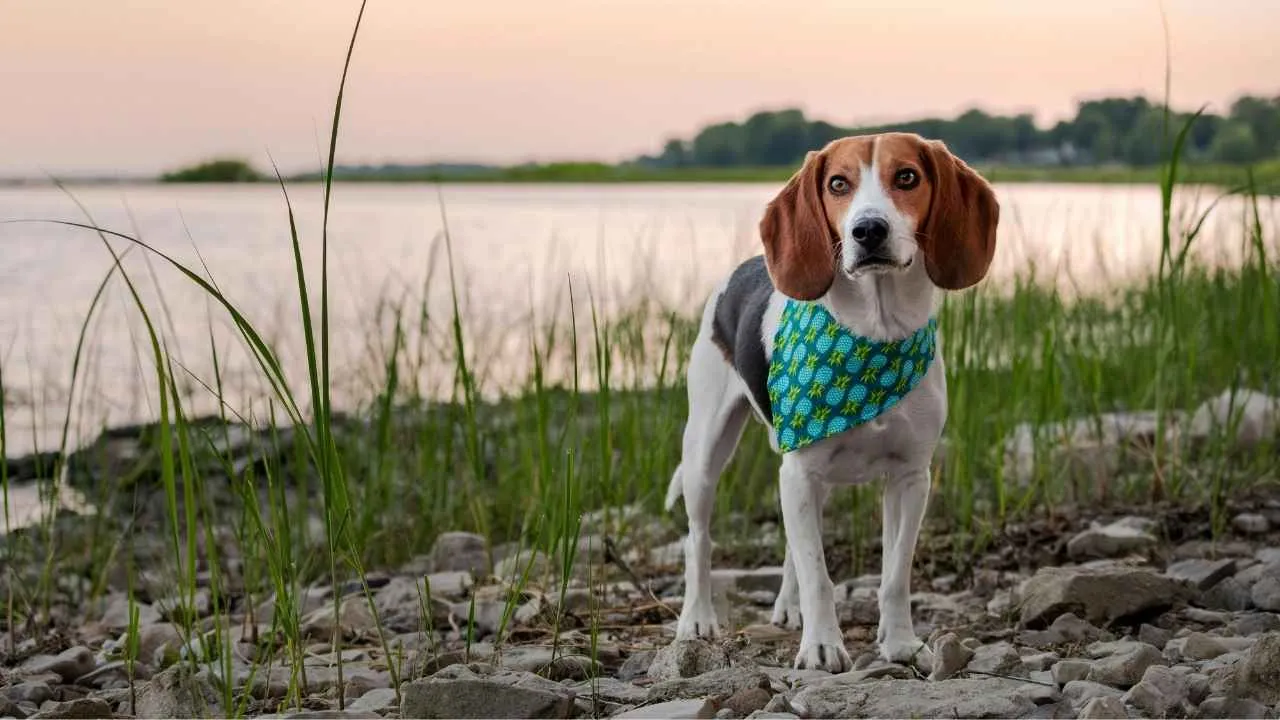
American English Coonhound emerged in the United States as a hound bred for tracking raccoons and foxes across demanding ground. Sometimes called the Redtick Coonhound, it combines a lean, muscular frame with the speed and endurance needed for long pursuits.
Scent Leads the Way
For deer recovery, this tracking dog can be conditioned to recognize a mixture of deer blood, gut fluids, pheromones, and individual body scents. Its tracking behavior can change with the trail, from broad barking on a fresh line to slower, more deliberate work near an injured animal.
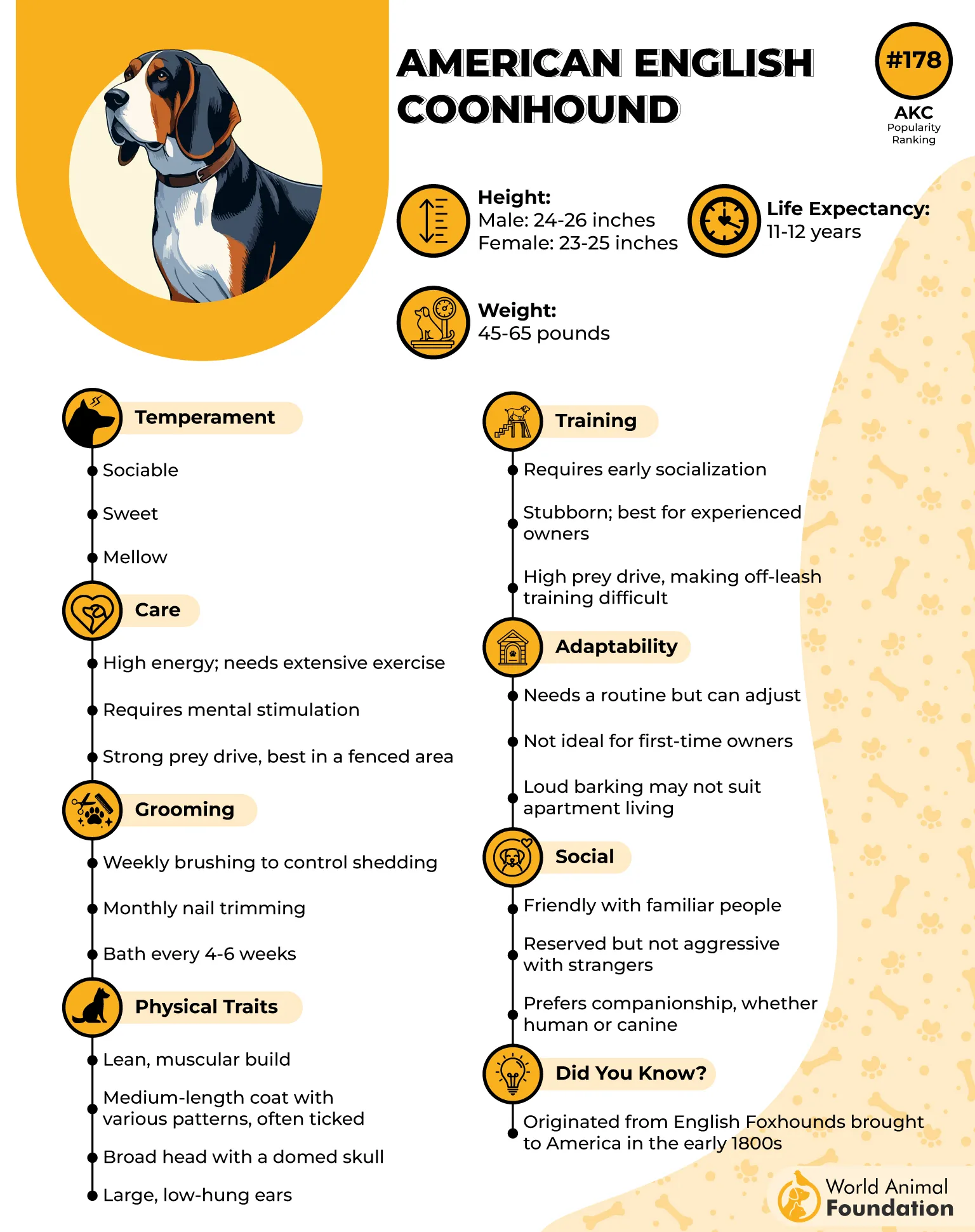
Three field details are especially useful:
- Balanced gait for covering substantial grounds
- Loud baying after quarry is treed
- Independent hunting drive
A Vocal Tracker
American English Coonhound is a naturally vocal pack hound, with a piercing bay that can become frequent when its needs are not met, as WebMD claims. Intensive scent work such as mantrailing, secure boundaries, and consistent field training are important for managing its strong hunting instincts.
3. Black And Tan Coonhound
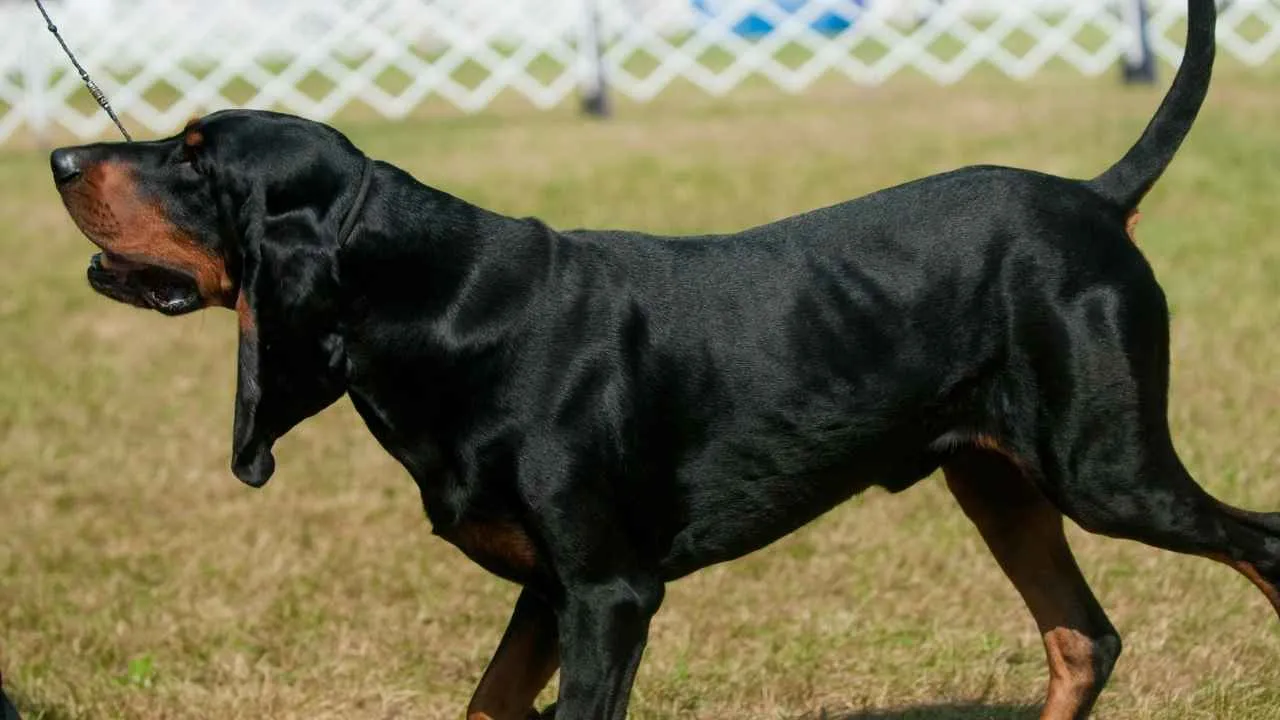
Black and Tan Coonhound was originally bred in the southeastern United States during the late 1700s, when hunters crossed Bloodhounds with Foxhounds. The goal was a hound capable of following prey independently over long distances and through rugged terrain.
A Cold-Trail Specialist
Black and Tan Coonhound has an unusually deliberate scenting style, allowing it to work an older trail even after encountering fresher scents along the way. Its nose can guide it across rugged ground while tracking deer, bears, pumas, and other large game.
Three working details make that approach especially useful:
- Can work through both winter and summer conditions
- Able to work in packs as well
- Retains learned lessons with little repetition
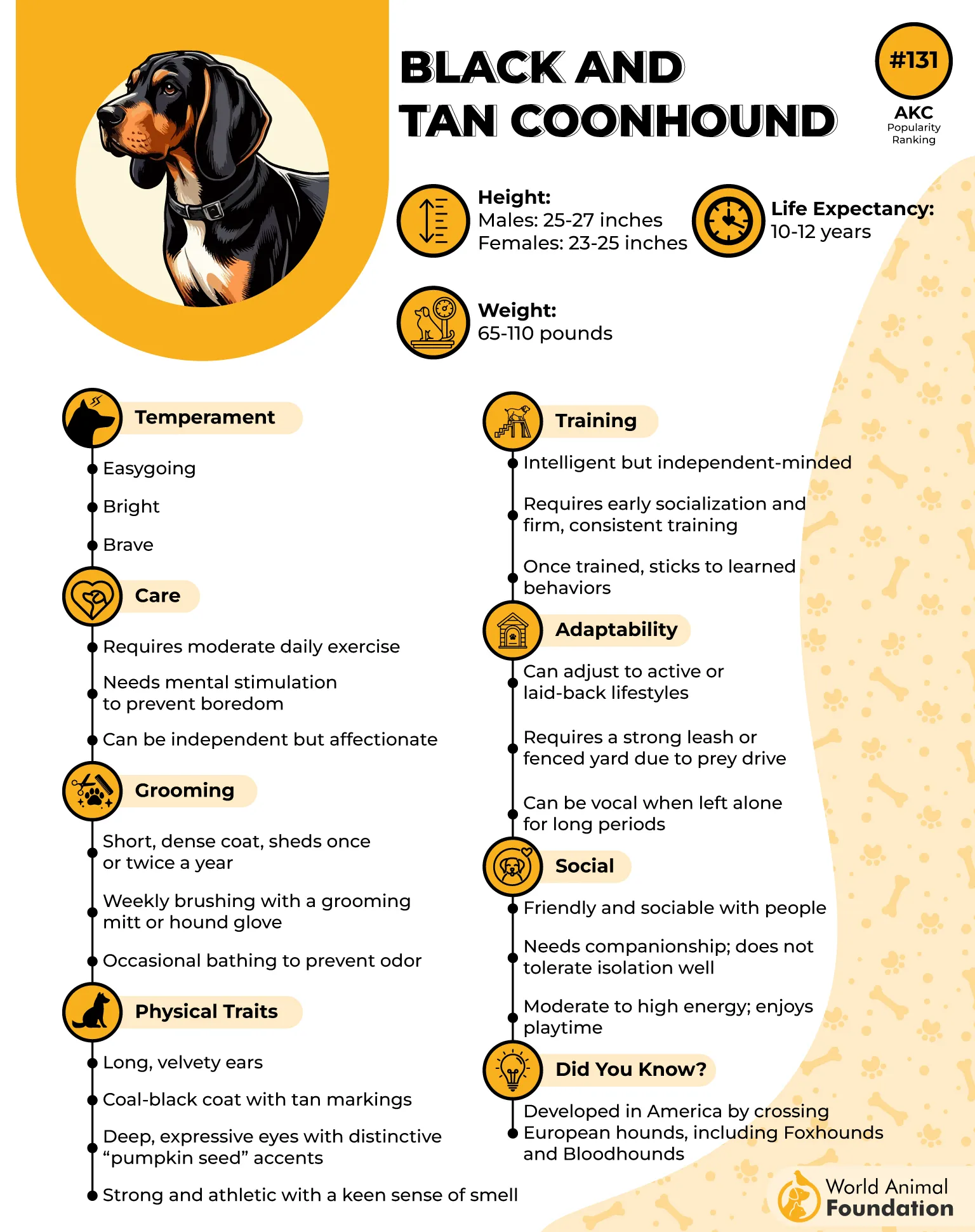
Life Beyond the Hunt
This high-energy breed has an easygoing side at home, where its playful, gentle nature suits families with people of different ages. It can also become vocal around squirrels or nearby cats, while a secure fenced area helps prevent its powerful nose from sending it after an interesting scent.
4. Mountain Cur
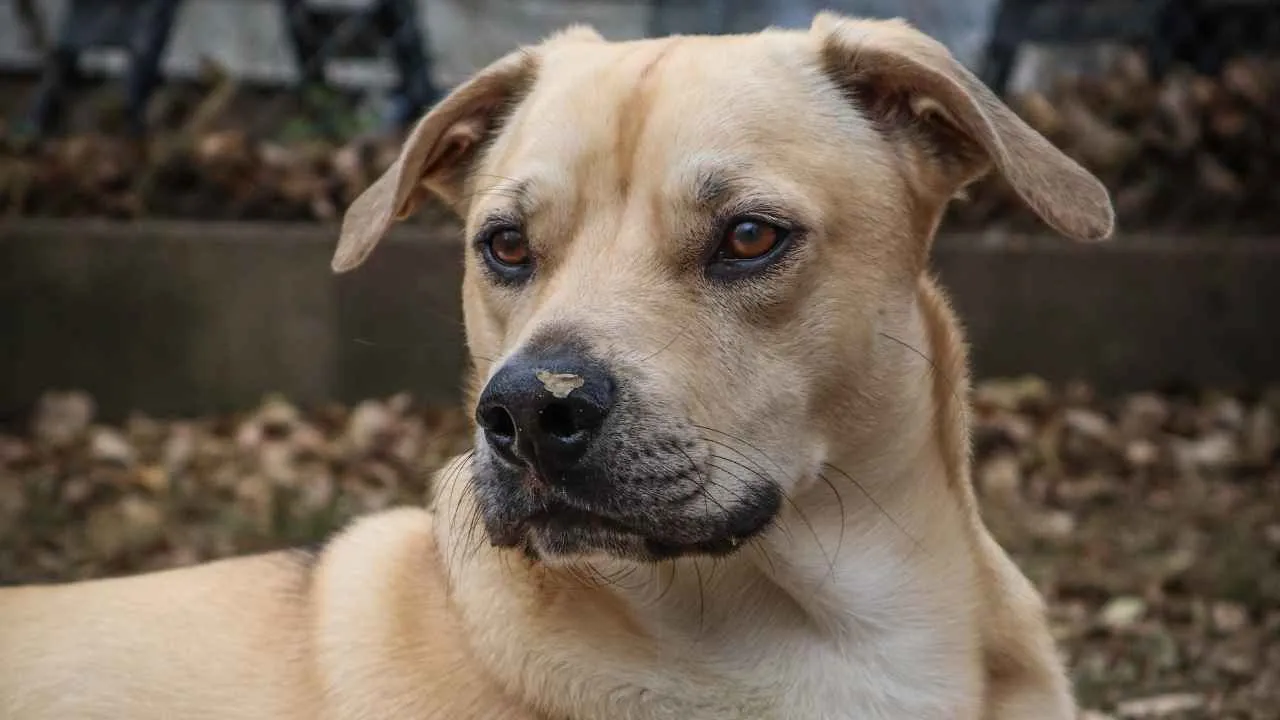
Mountain Cur became an important working dog for frontier families in the rugged Appalachian mountains, helping protect livestock and households from wild animals and intruders.
And did you know? Its hunting work also helped families earn income by supplying furs through the animals their dogs located and hunted.
A Skilled Tracker
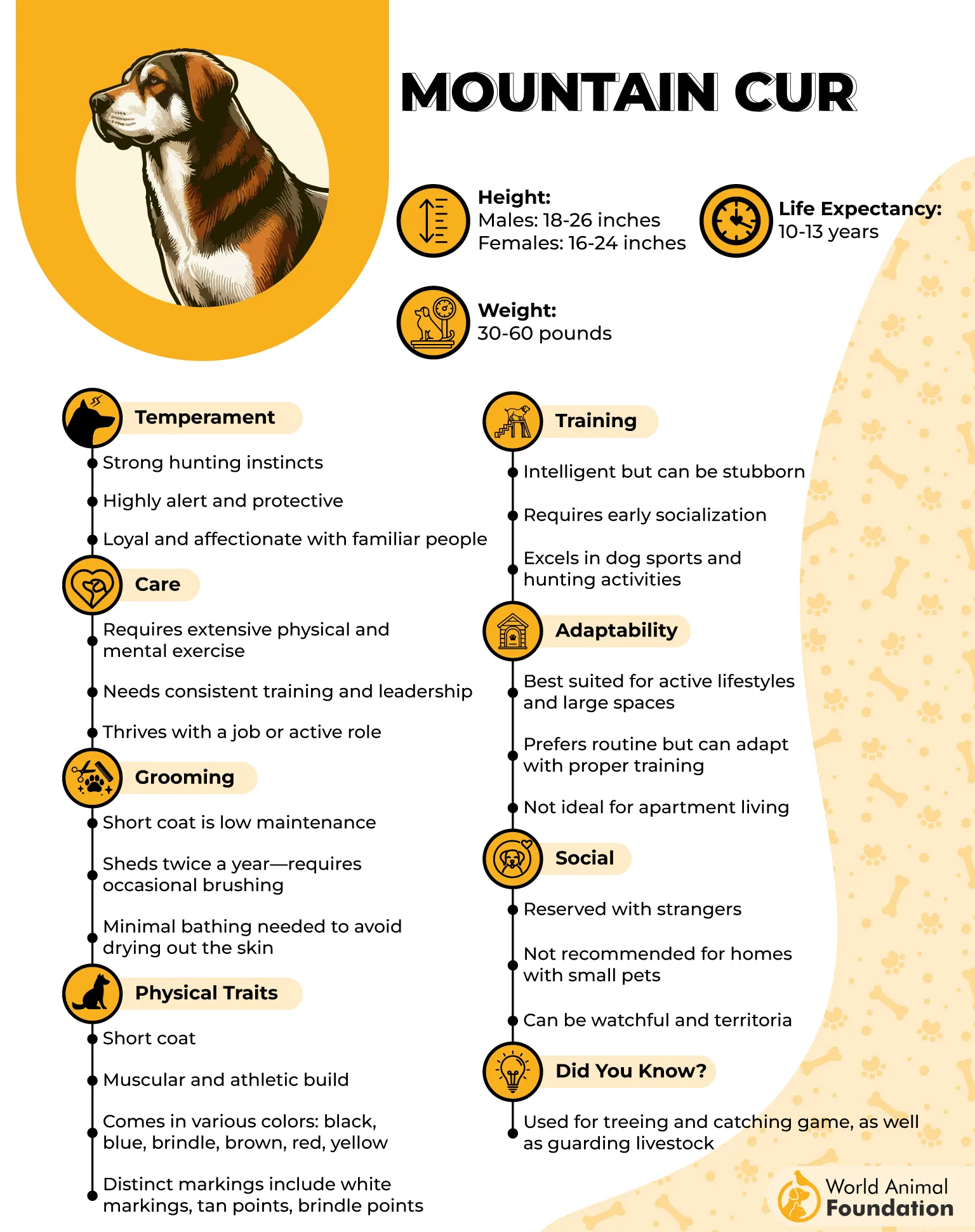
Mountain Cur runs a track with its head held high and can work silently, semi-open, or openly while following a scent, as the AKC highlighted. Its hunting range includes rabbits, squirrels, wild boar, and other game, with treeing used to force quarry into trees.
These working details are especially useful to know:
- Distinctive, far-reaching bark
- Strong focus during scent work
- Have a powerful prey drive
Bright and Protective
Mountain Cur is highly intelligent and responds well to consistent training with plenty of human interaction, although individual dogs can be stubborn.
Its protective nature and intense chase instinct also make reliable leash habits, secure fencing, and careful socialization important around unfamiliar animals.
5. Plott Hound
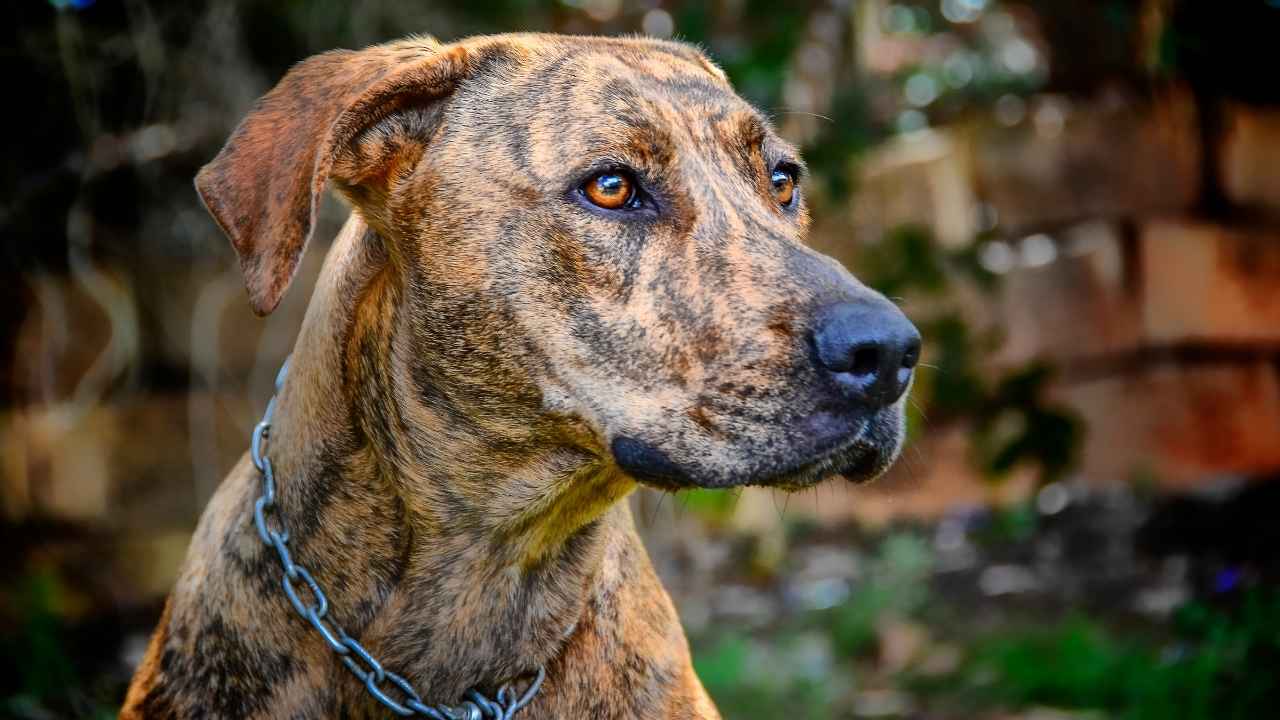
Plott Hound began with German Hanover tracking hounds brought to North Carolina by Johannes Plott in the 18th century. Over generations in the Appalachian region, these dogs became closely associated with rugged environments and demanding big-game work.
A Nose for Game
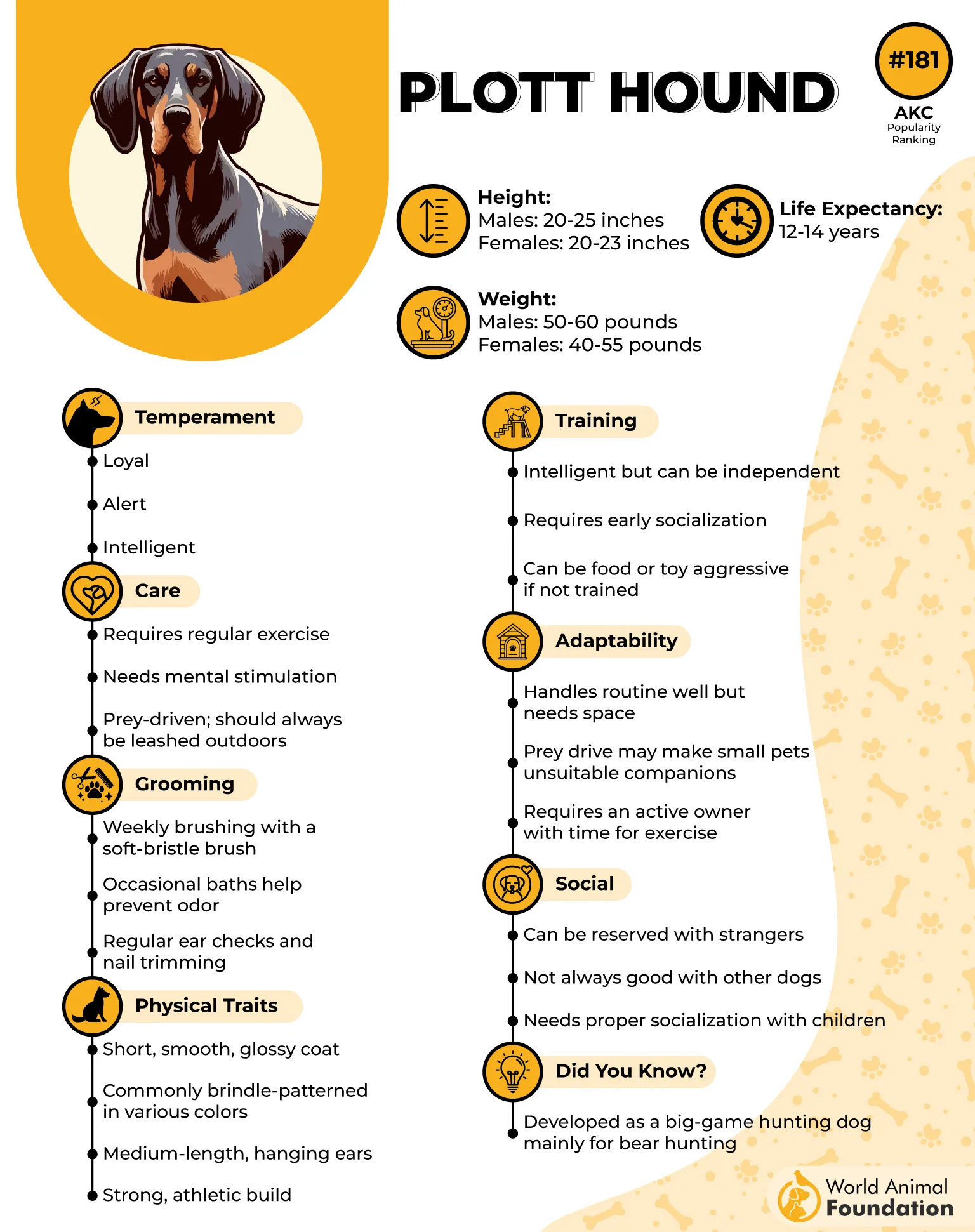
Plott Hound was selectively bred for long-distance scent work, giving it the ability to follow both fresh and older trails through dense, difficult cover. Its muscular frame, deep chest, and strong forequarters support the stamina needed for extended tracking sessions.
Three details make its field work especially distinctive:
- Tracks bear, boar, deer, and mountain lion
- Uses a loud bay to locate game
- Can hunt independently or in packs
Grit in the Field
Plott Hound can continue pursuing a scent across long distances and dense cover, supported by its high stamina and notable tolerance for physical discomfort. Its independent nature also means consistent recall and obedience work are important when working in open areas.
6. Treeing Walker Hound
Treeing Walker Hound emerged in the United States during the 19th century from Foxhound lines used for night hunting. Its early work centered on raccoons and later extended to deer, bears, bobcats, and cougars across American hunting country.
A Nose for Fresh Tracks
This hound is especially suited to fresher scent trails, using a highly developed sense of smell to follow complicated odors across varied terrain. Its lean, athletic frame supports fast pursuit over long distances while tough feet and resilient skin handle thorns and rough undergrowth.
These working traits add another layer:
- Long ears funnel ground scent toward the nose
- Strong prey drive encourages focused pursuit
- Treeing instinct locates quarry above ground
Energy With Independence
Treeing Walker Hound is intelligent and highly energetic, yet its independent streak can make training more demanding than its intelligence suggests. Long daily walks, running, games, and consistent training give this determined hound useful outlets for its drive.
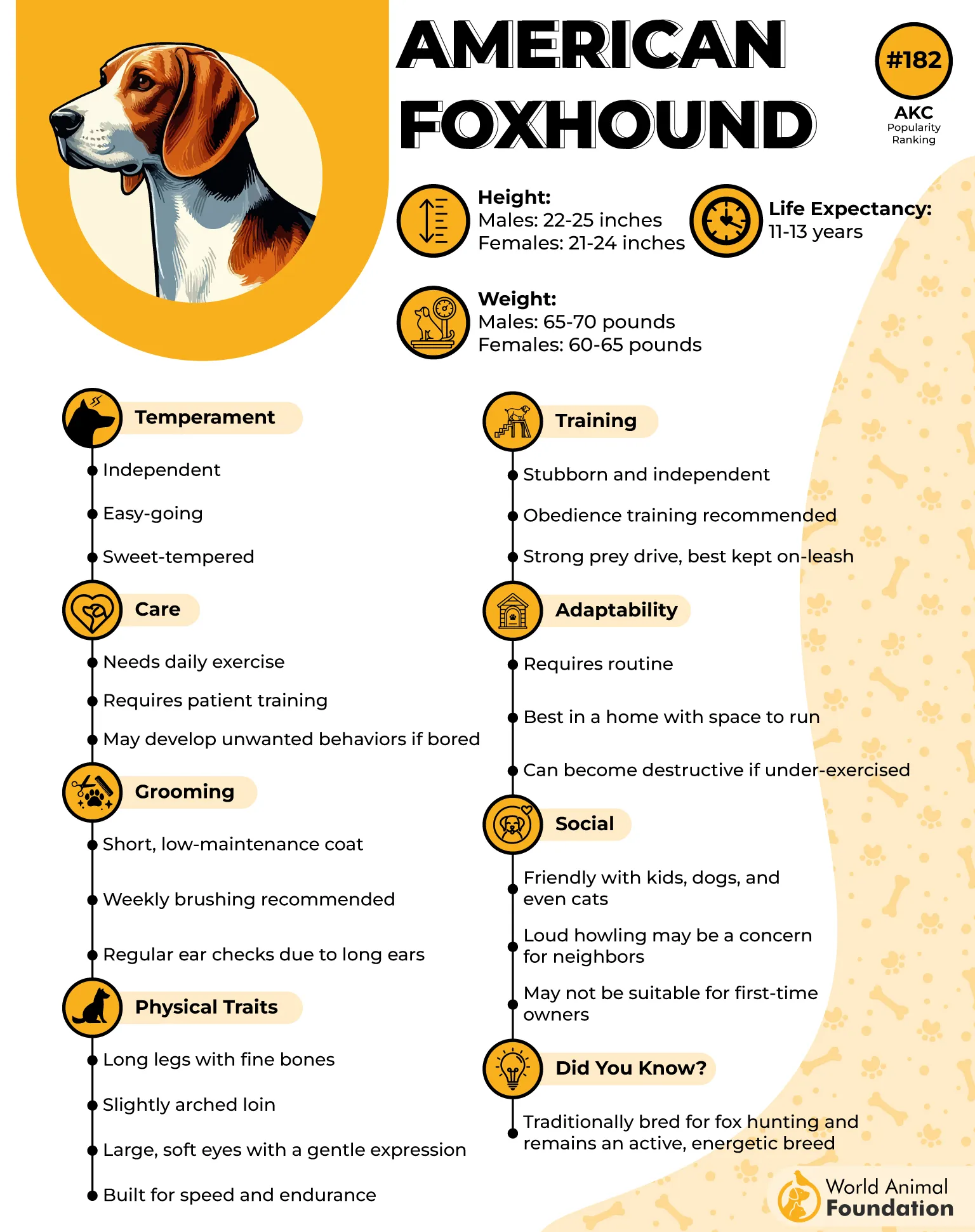
7. American Foxhound
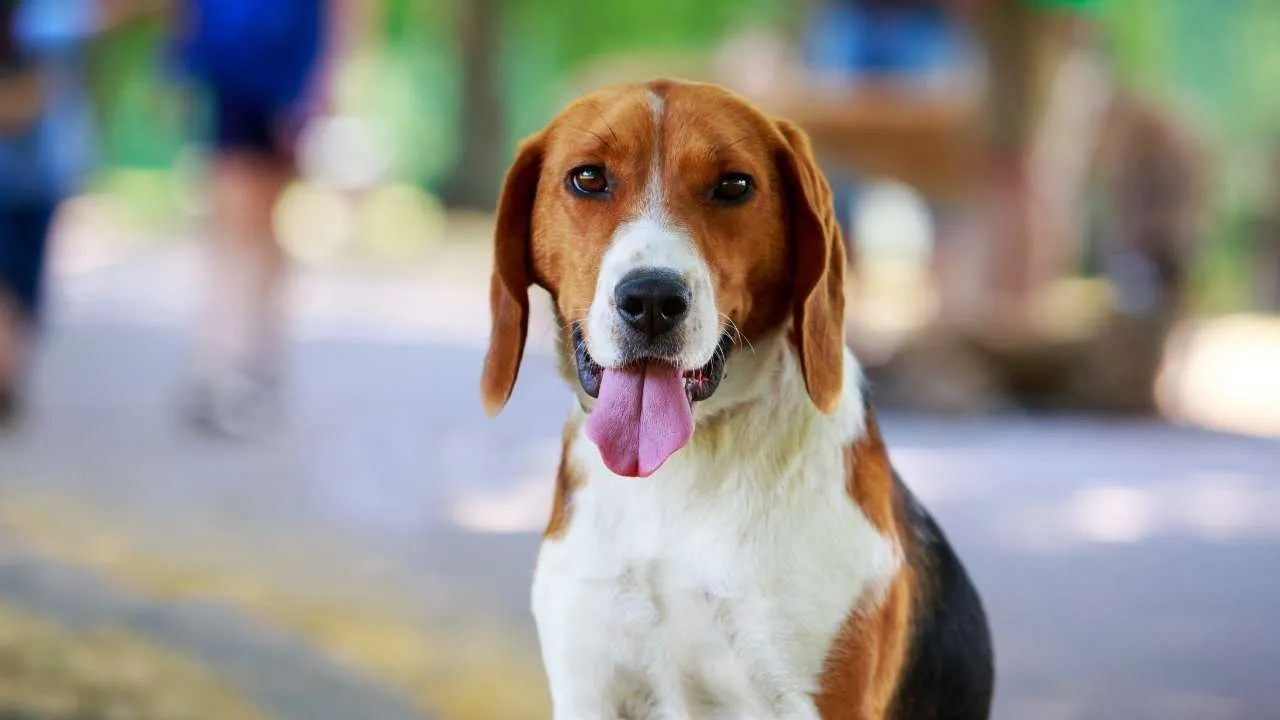
American Foxhound emerged as one of the United States’ native breeds, with early foxhounds shaped for the country’s terrain and climate. European hounds were brought into the breeding picture, creating a lighter, faster scenthound suited to long pursuits across American landscapes.
A Nose Built for Tracking
As a good tracking dog, it uses an exceptionally capable nose to follow scent trails while its lean, long-legged frame supports hours of steady running. Its long, low-set ears and broad nasal area are also characteristic of scent hounds, helping direct ground-level odors toward the nose.
Three details are especially useful when considering its tracking ability:
- Upright “flag” tail helps with visibility in cover
- Melodious bay signals progress along the trail
- Can hunt cooperatively in groups
Built for Long Pursuits
American Foxhound has a deep chest, efficient stride, and rangy athletic frame suited to sustained activity rather than brief bursts of speed. Secure fencing and dependable recall work are especially important because a compelling scent can send this determined tracker far beyond its starting point.
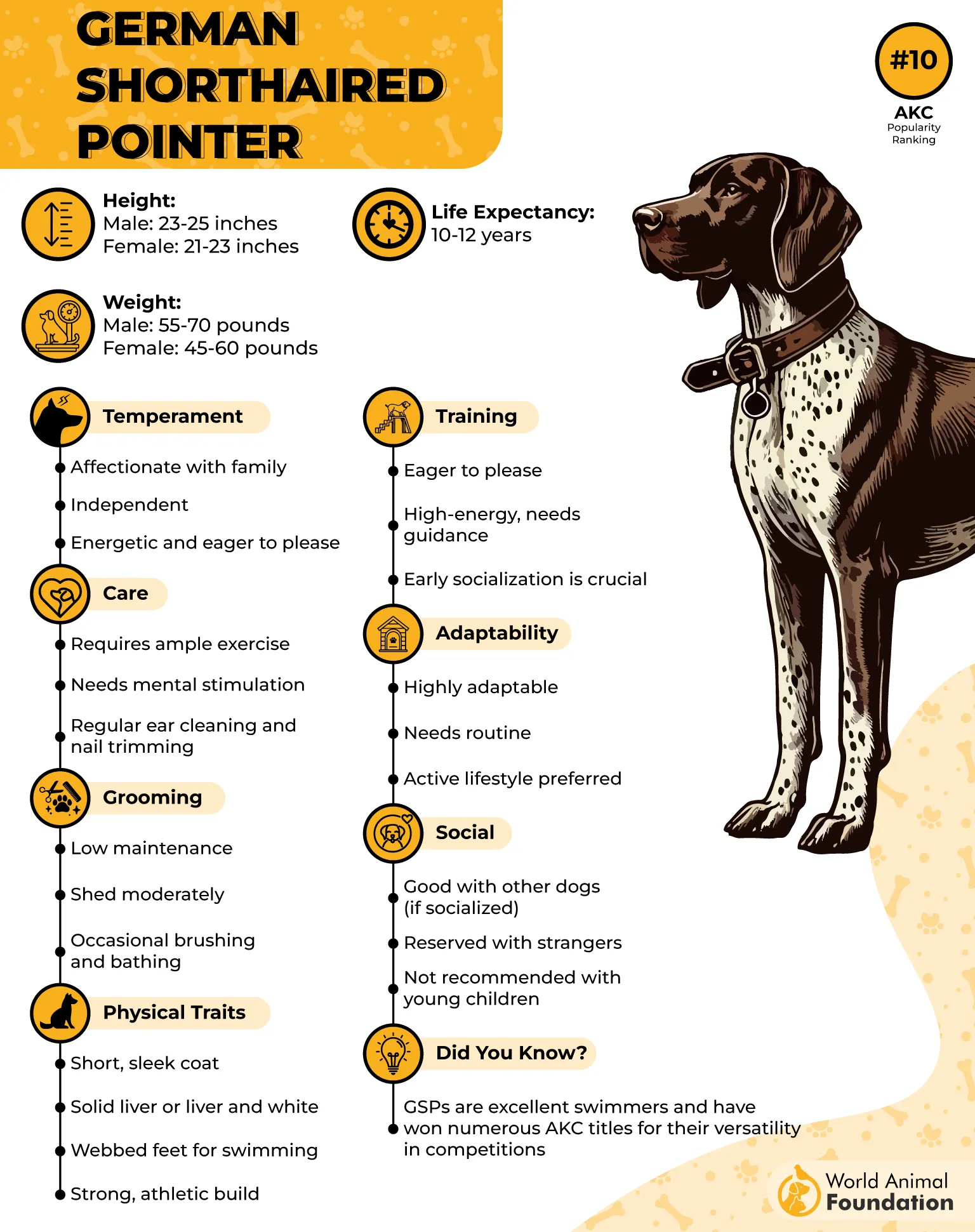
8. German Shorthaired Pointer
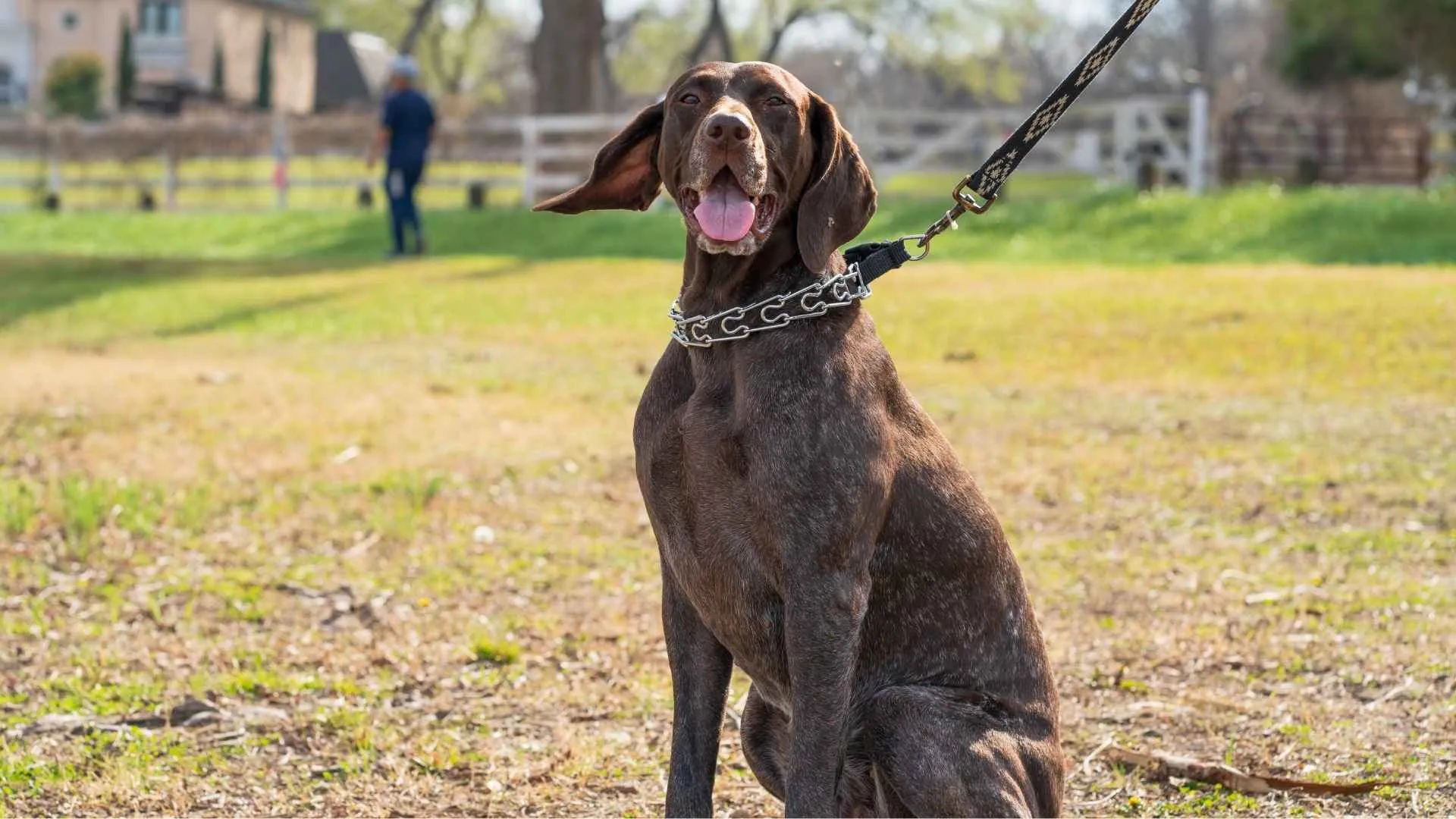
German Shorthaired Pointer took shape in Germany during the mid-to-late 19th century as hunters sought one dog capable of handling several kinds of game.
Earlier German Pointers had Spanish Pointer and Bloodhound ancestry, while later English Pointer bloodlines refined the breed for work on land and in water.
Following Deer Trails
They can search for game, point, retrieve, and follow the scent of wounded deer through demanding terrain. Its blood-tracking ability combines hot-scent and air-scent work, allowing trained dogs to follow blood trails without relying solely on the cold-nosed approach.
These details add useful context for tracking work:
- Can track wild boar by scent
- Rates a five out of five for energy
- Has strong stamina and high prey drive
Home Life Matters
German Shorthaired Pointer is strongly people-oriented and responds especially well to praise, play, and food during training. Long periods alone can lead to separation anxiety or destructive behavior, while an unsupervised outdoor area requires a fence at least six feet high.
9. Boykin Spaniel
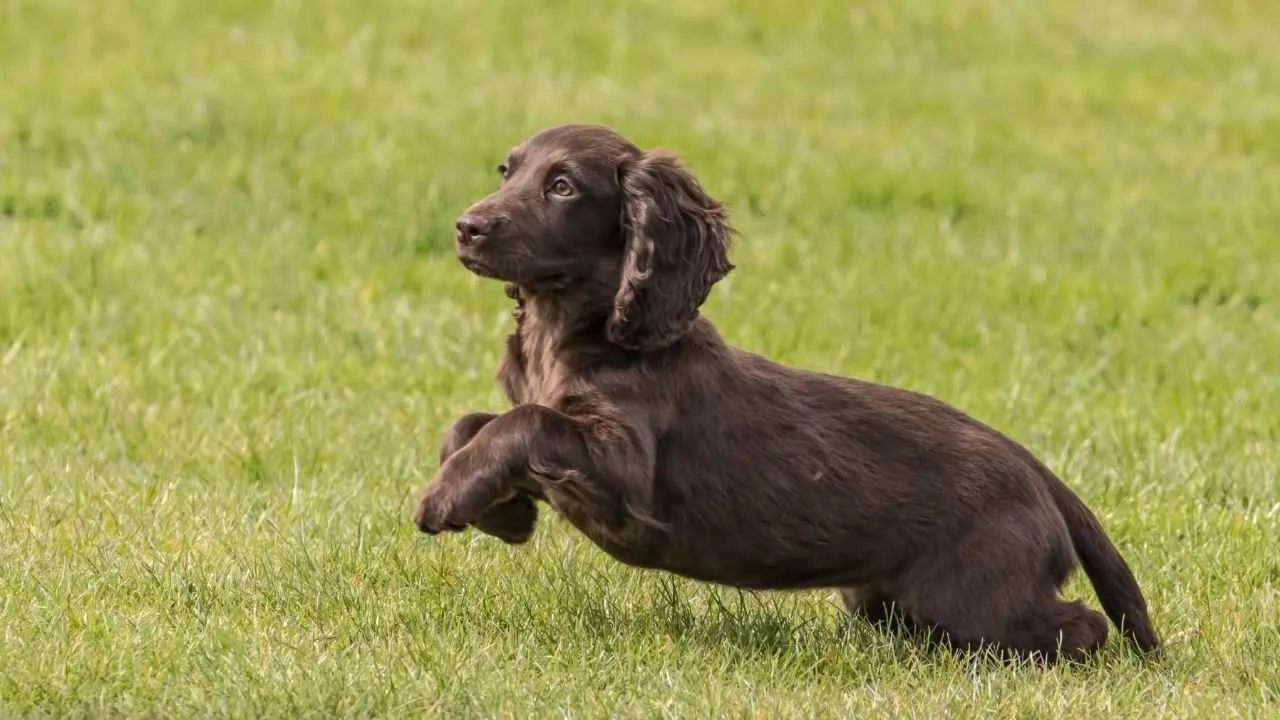
Boykin Spaniel began with a small brown spaniel found outside a Spartanburg church in the early 1900s by Alec White, who named him Dumpy. After seeing his natural talent for flushing and retrieving, White sent him to hunting companion Whit Boykin, whose breeding work shaped the breed.
Made for the Hunt
Boykin Spaniel handles several jobs in the field, from retrieving waterfowl to flushing upland birds and tracking deer. Its natural quartering pattern lets it search nearby cover, locate birds, flush them, and return to the hunter when called.
The following characteristics are especially useful in hunting:
- Webbed toes for water retrieving
- Quiet movement beside a hunter
- Can work in boats with limited space
Compact Athletic Build
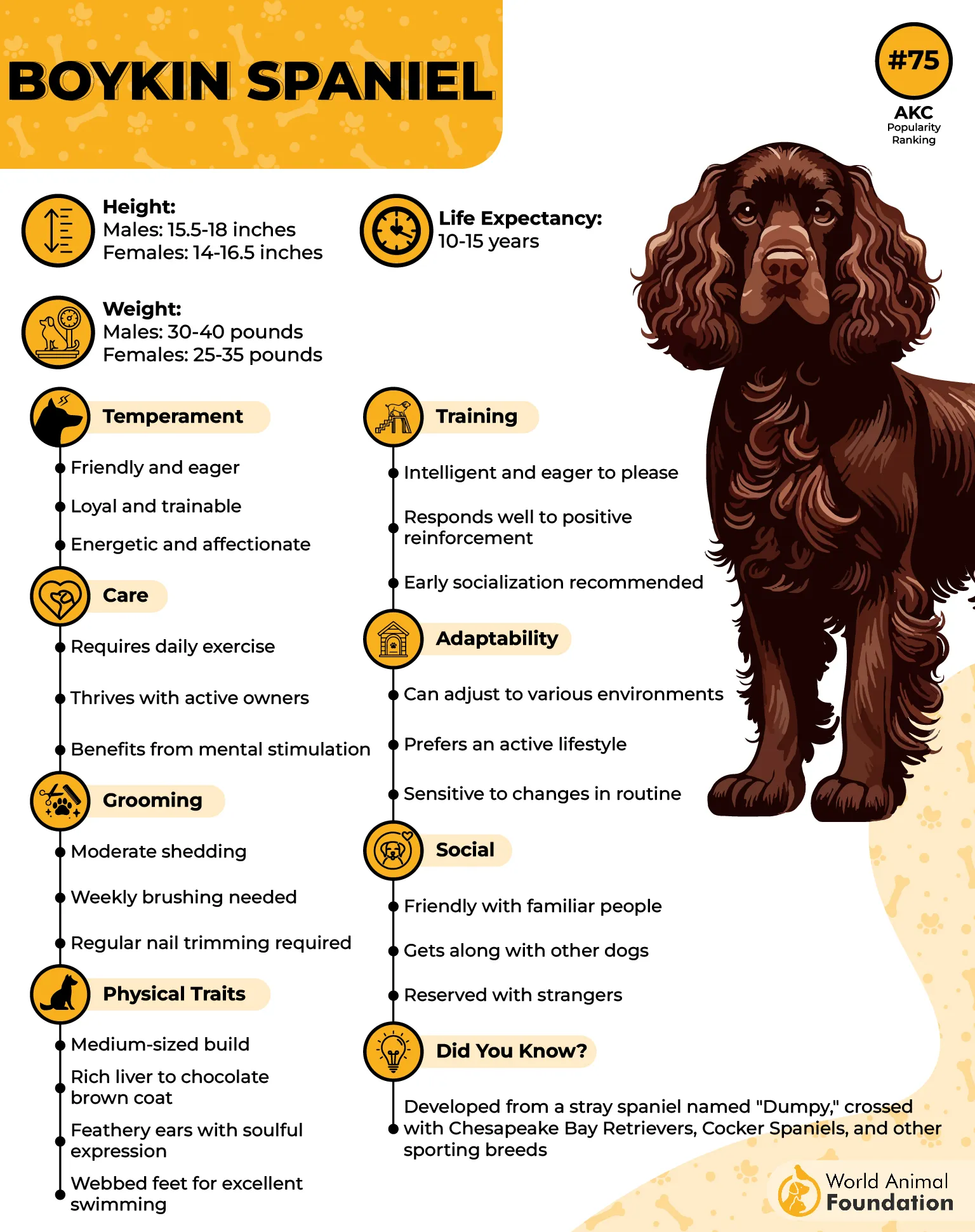
Boykin Spaniel weighs around 35 to 40 pounds and has a sturdy, muscular frame without excessive bulk. Its body is slightly longer than it is tall, while the medium-length double coat may be curly or wavy and comes in brown, liver, or dark chocolate shades.
10. Bluetick Coonhound
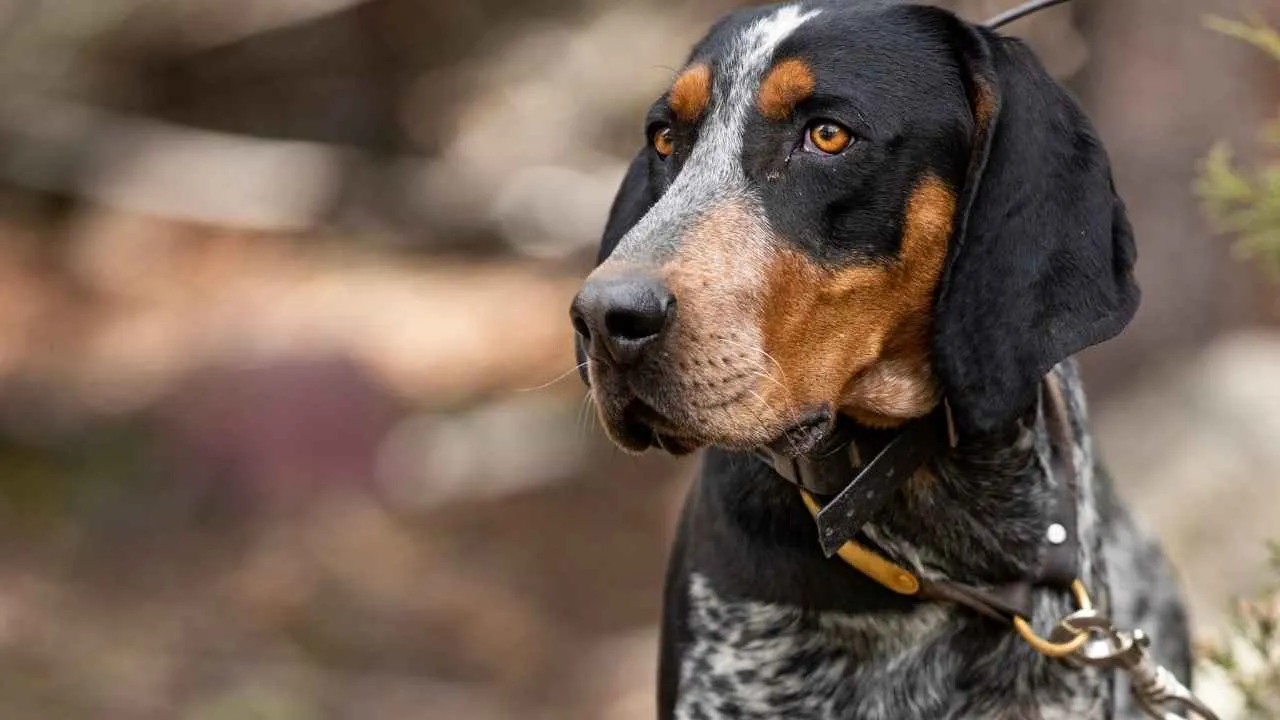
Bluetick Coonhound developed in the United States as a scent hound used to pursue raccoons and larger game, particularly during nighttime hunts. Early hounds were selected for powerful noses and the stamina needed to follow an animal through long stretches of difficult country.
A Nose for Old Trails
Bluetick Coonhound is a cold-nosed trailer, meaning it can follow older scent trails that other breeds may have trouble locating. Its long ears and loose skin help funnel scent toward the nose, giving this hound valuable tools for tracking game.
These matter when working with this kind of tracker:
- Prolonged isolation may contribute to unwanted behaviors.
- Loud, recognizable baying voice
- Weekly brushing removes field debris
Driven and Determined
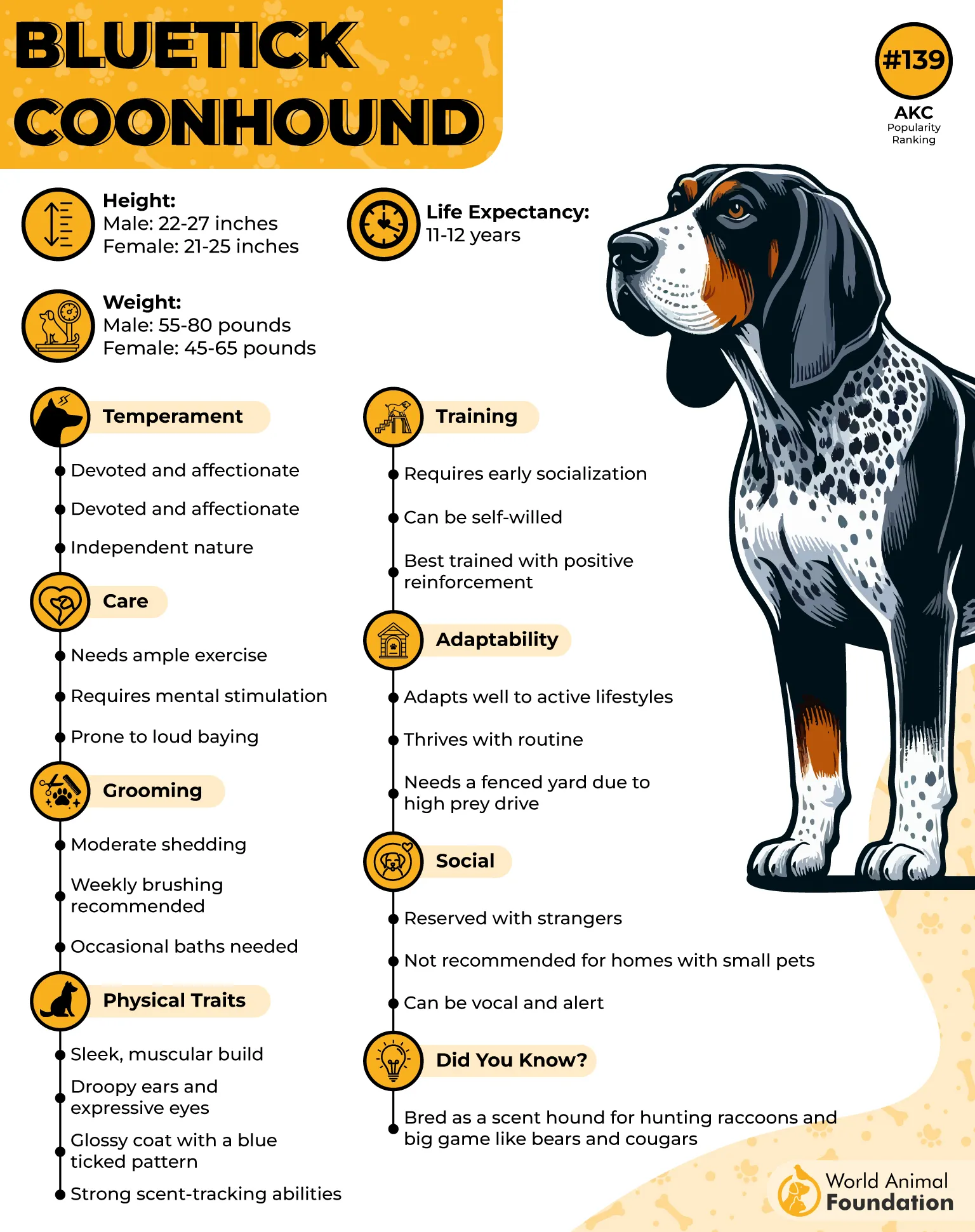
Bluetick Coonhound combines intelligence with an independent streak, so training calls for patience, consistency, and rewards rather than harsh corrections. Its strong prey drive can also lead to chasing smaller animals, making early socialization particularly useful.
Conclusion
A capable tracking partner needs more than enthusiasm for chasing a scent. Strong scenting ability, stamina, concentration, and reliable training can all influence a good blood trailing dog once the trail becomes difficult. Field conditions can also change a dog’s ability to follow wounded game, making adaptability and persistence valuable qualities during longer searches.
Some dogs naturally prefer older trails, while others are better suited to fresher tracks or broader hunting work. Before choosing a companion, consider the terrain, game, distance, and training time involved. A well-matched dog can make demanding tracking work feel more organized while building a dependable partnership together in the field, while also becoming a good family pet at home.
