





Every dog owner shares one heartfelt wish—to enjoy as many healthy, happy years as possible with their furry companion. While genetics play a role in a dog’s lifespan, the way we care for them can make a powerful difference.
From daily routines to emotional connection, small choices add up to a longer, richer life for our dogs. Some dog breeds are naturally predisposed to longer lifespans, but even they thrive best with the right balance of nutrition, exercise, mental stimulation, and preventive care.
Regular vet visits, a loving environment, and understanding a breed’s unique needs can significantly extend both lifespan and quality of life.
Here, we’ll explore dog breeds and the proven ways to help them live longer and happier lives. Whether you’re welcoming a puppy or caring for a senior dog, these insights will help you build years filled with energy, companionship, and tail-wagging joy.
Longevity Secrets: Veterinary studies consistently show that proper nutrition, regular exercise, dental care, and mental stimulation can add 1–3 extra healthy years to a dog’s life—regardless of breed.
Dog Breeds and How to Maximize Their Long, Happy Lives
1. Papillon

Life expectancy: 14-16 years
If small dog breeds had personality sizes instead of body sizes, the Papillon would be classified as extra-large. Don’t let their dainty frame fool you—this breed is packed with charm, intelligence, and enough energy to power a small city.
Named after the French word for “butterfly,” Papillons are instantly recognizable thanks to their elegant, wing-shaped ears.
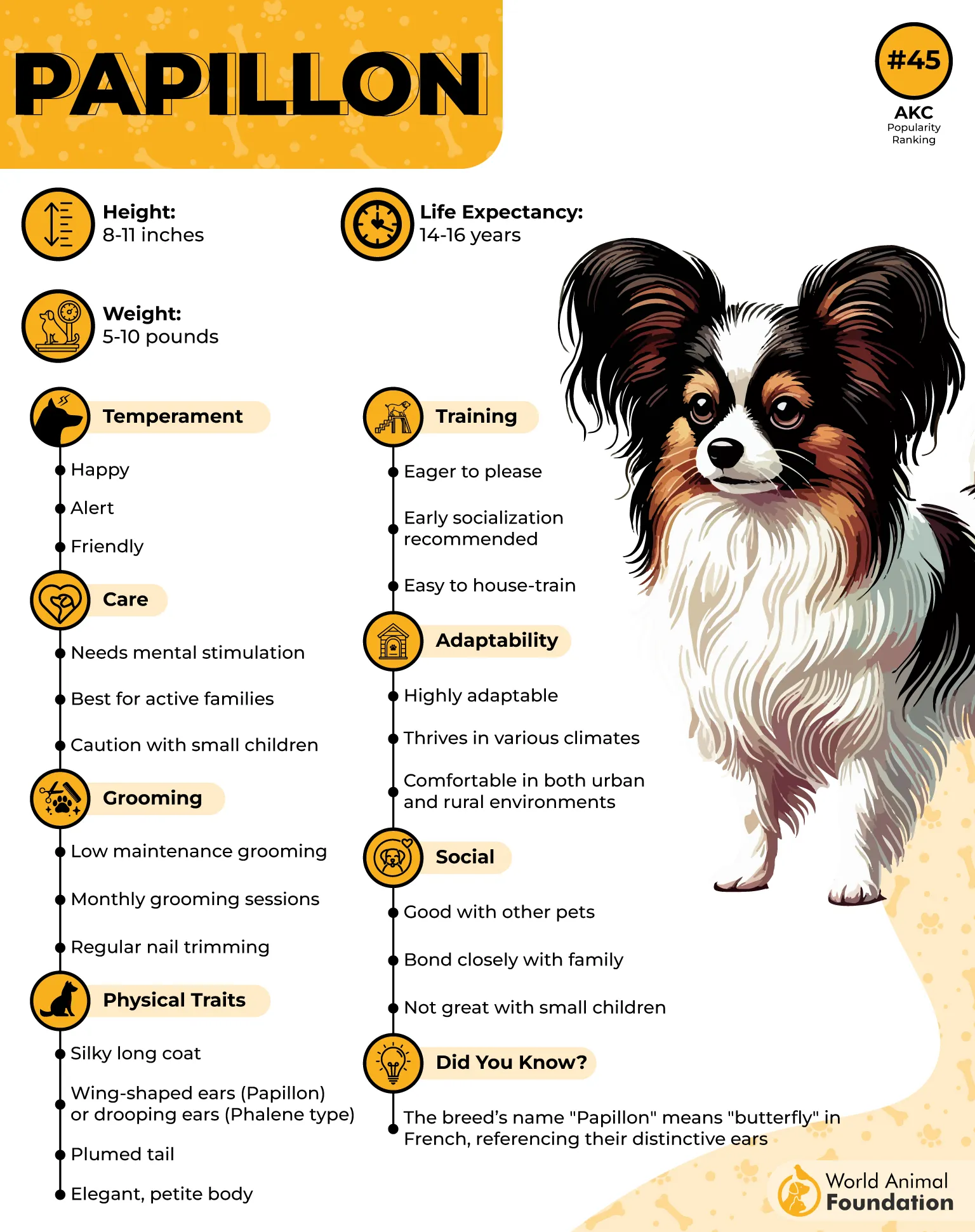
They look like they should be sipping espresso at a Parisian café—but in reality, they’re more likely zooming across your living room or showing off a new trick they learned in five minutes flat.
These dogs love mental challenges and physical activity. Agility courses? Yes. Learning tricks? Absolutely. Outsmarting you into giving extra treats? Also yes. They thrive when they’re engaged, so boredom is their true nemesis.
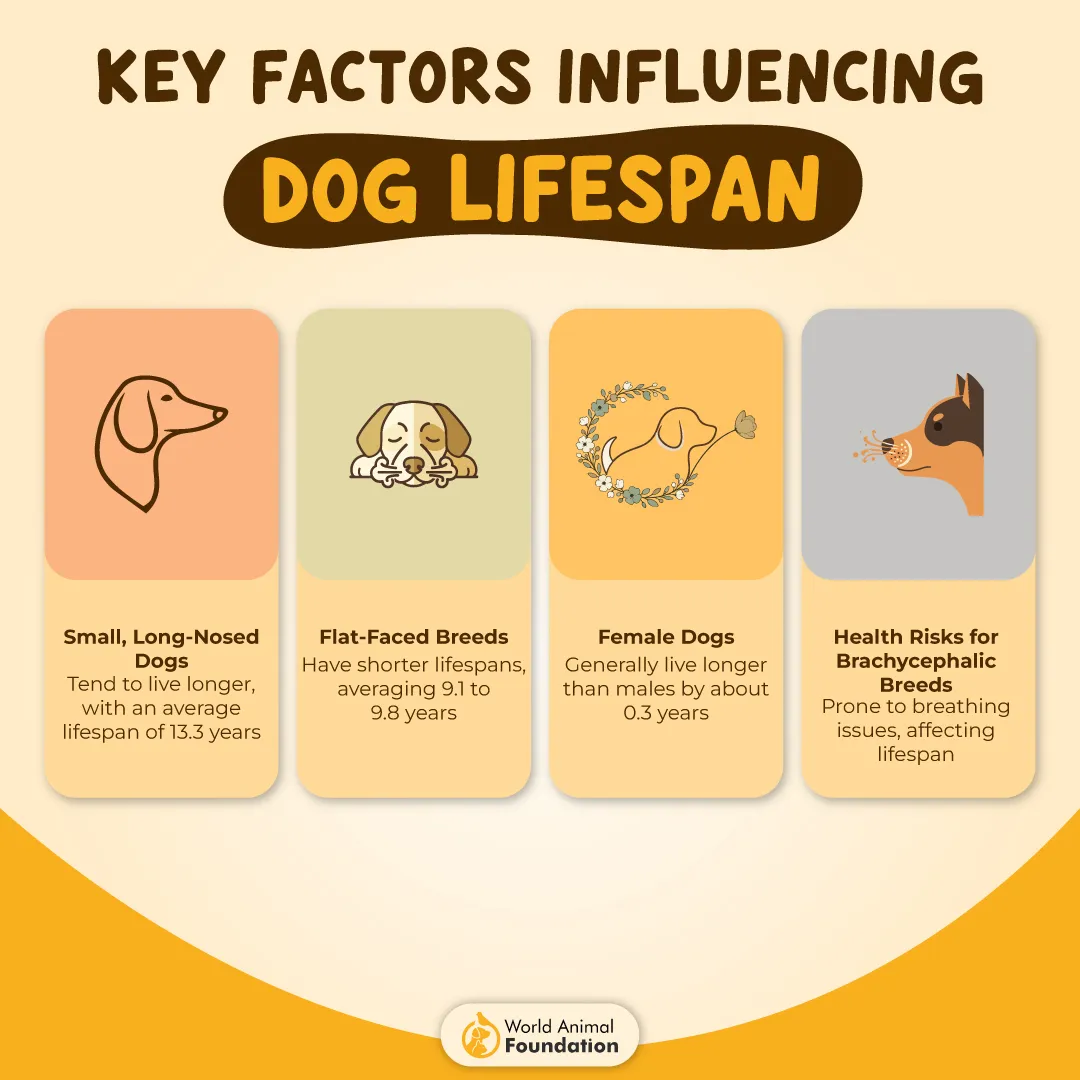
One of the biggest bragging rights of the Papillon is their impressive lifespan: 14–16 years, and often longer with excellent care. To help your Papillon live their longest, happiest life, keep an eye on a couple of common health concerns:
Dental Disease
Luxating Patellas
Tips to Maximize a Long, Happy Life
Feed high-quality, portion-controlled meals
Schedule regular vet visits
Brush those tiny teeth like you mean it
A Papillon may be small enough to fit in your tote bag, but their heart, brain, and personality are absolutely enormous. With proper care, plenty of playtime, and a sense of humor to match theirs, this butterfly-eared companion will flutter happily by your side for many wonderful years.
2. Rat Terrier

Life expectancy: 12-18 years
Rat Terriers are the no-nonsense coworkers who show up early, stay late, and somehow still have energy to hit the gym afterward. According to the American Kennel Club (AKC), these smoothly muscled exterminators are built for efficiency—and it shows.
Rat Terriers were bred to work all day, chasing down vermin with speed, agility, and laser focus. Translation? This is a dog that thrives on movement, purpose, and having something to do.
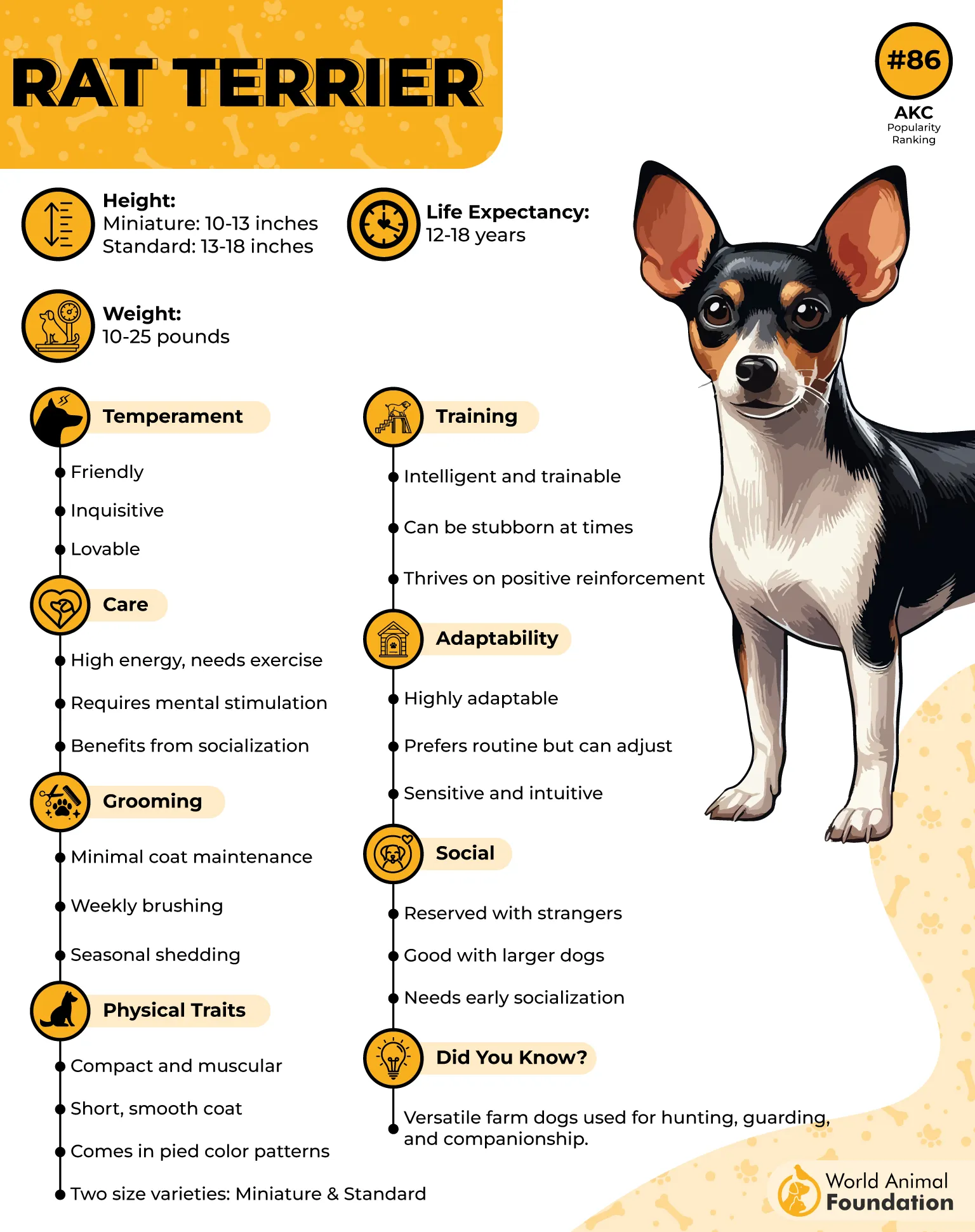
Rat Terriers are athletic, quick, and always ready for action. Without enough exercise or mental stimulation, a Rat Terrier may invent their own entertainment—and trust us, you may not approve of their creative choices.
Rat Terriers are one of the longer-living dog breeds. To help them reach those golden years with a wagging tail: Watch for:
Dental problems
Patellar luxation
Allergies
Tips for a Long, Happy Life
Provide daily physical exercise and brain games
Feed a high-quality, balanced diet
Keep teeth clean and vet visits regular
The Rat Terrier may be compact, but don’t mistake that for calm or delicate. This breed is tough, loyal, and endlessly entertaining—a perfect mix of athlete, watchdog, and best friend.
Give them purpose, playtime, and plenty of love, and they’ll happily stick by your side for well over a decade—probably reminding you the whole time that they are the boss.
3. Chihuahua
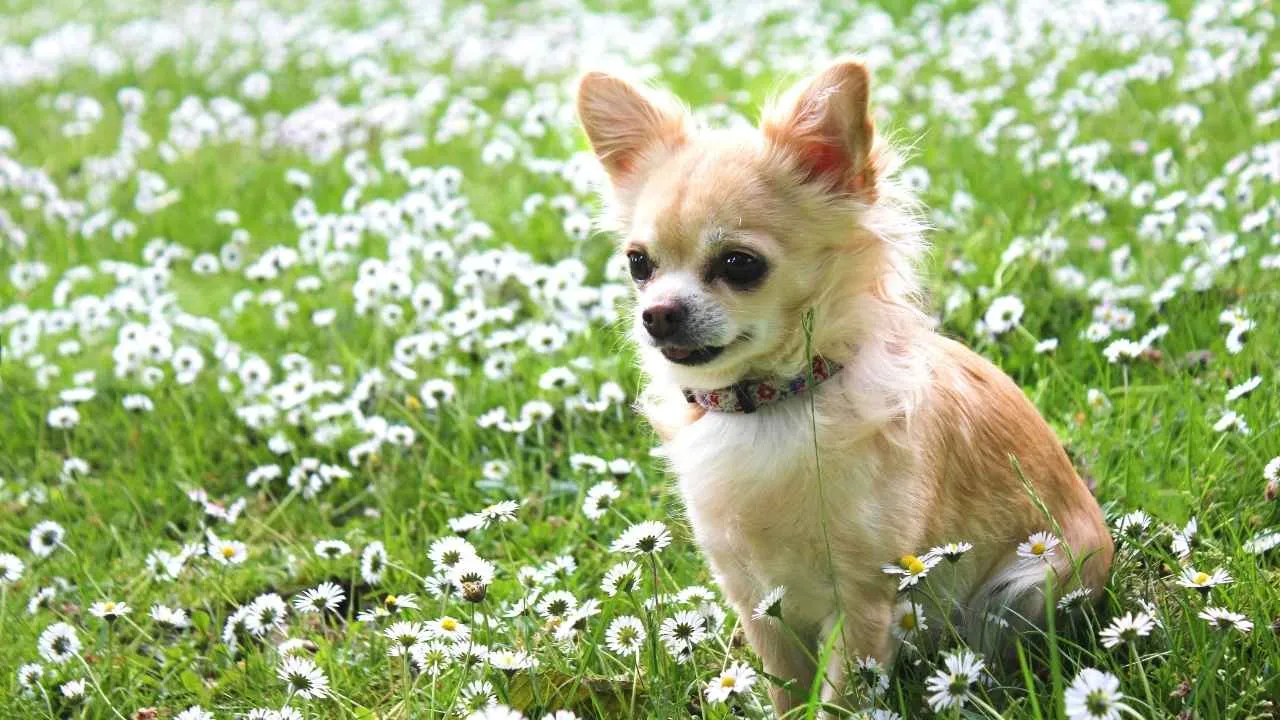
Life expectancy: 14–16 years
If confidence could be bottled, it would come in Chihuahua size. The Chihuahua is one of the longest-living dog breeds—and one of the boldest. These pint-sized pups may fit neatly in your lap, but in their minds, they’re ten feet tall and fully in charge.
Chihuahuas belong to the toy group, but there’s nothing toy-like about their attitude. They’re energetic, alert, and fiercely devoted to their people. Once a Chihuahua chooses you, congratulations—you now have a loyal shadow who believes personal space is a myth.
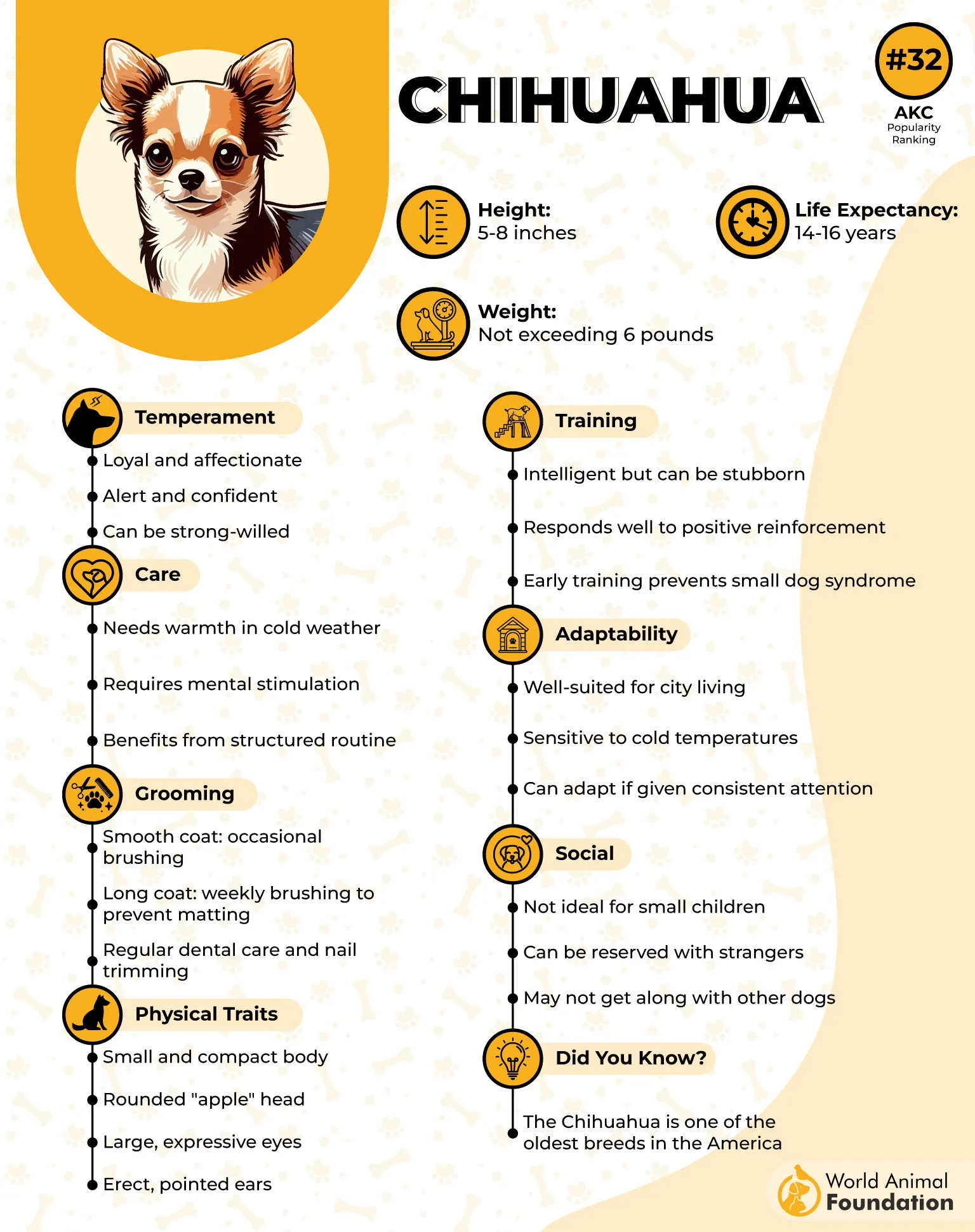
They love cuddling under blankets just as much as they love strutting around like they own the neighborhood. Don’t let their size fool you—these dogs are intelligent and benefit greatly from training and socialization.
Many Chihuahuas live well past 15 years, and according to WebMD, some even reach the impressive age of 20 years. That’s a very long relationship, so adopting a Chihuahua is less like getting a pet and more like signing a long-term friendship contract. Chihuahuas are generally hardy, but pet parents should watch for:
Heart disease
Patellar luxation
Dental care is also especially important for this breed, as small mouths can mean crowded teeth.
Tips for a Long, Happy Life
Feed a high-quality, portion-controlled diet
Brush teeth regularly
Keep them warm (they hate the cold)
The Chihuahua may be the smallest dog on the block, but it often has the biggest personality—and the longest memory. With proper care, stimulation, and lots of affection, this feisty little companion can be part of your life for decades.
4. Australian Shepherd

Life expectancy: 12–15 years
If there were a “Most Likely to Organize the Household” award, the Australian Shepherd—often called the Aussie—would win it every year. This medium-sized dynamo is bursting with intelligence, enthusiasm, and an undeniable love for having a purpose.
Despite the name, Aussies were perfected in the United States, but wherever they’re from, one thing is clear: these dogs are born to work.
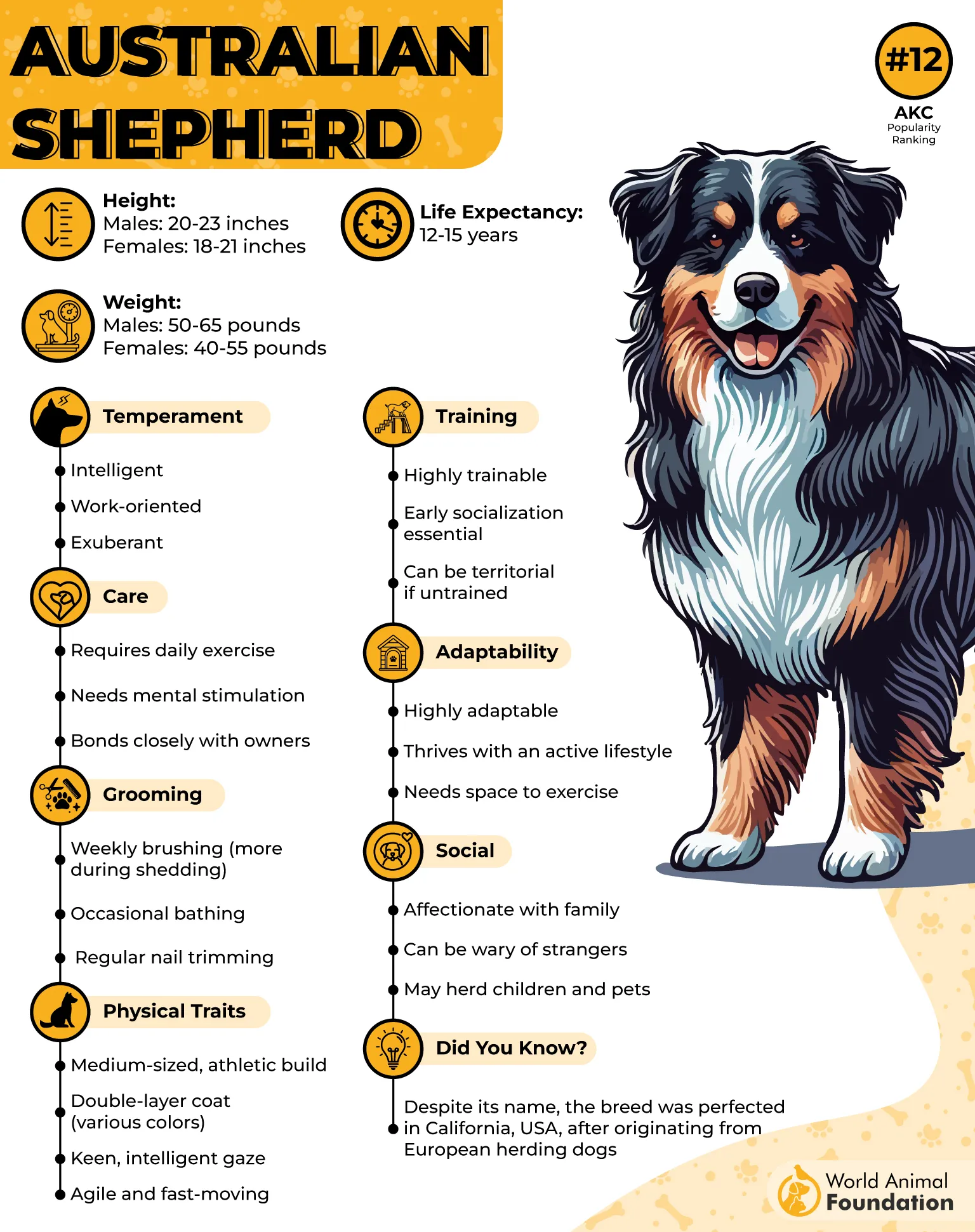
Herding sheep, running agility courses, learning complex tricks, or supervising your daily routine—Aussies take their responsibilities very seriously. They thrive when given a job to do. Without one, they may invent their own—like herding children, other pets, or even you.
Australian Shepherds are among the longer-living medium-sized breeds. They’re overall healthy, but responsible pet parents should watch for genetic health issues like:
Hip dysplasia
Cataracts
Epilepsy
Early health screenings and routine vet visits go a long way in keeping Aussies thriving well into their senior years.
Keep their minds busy with training and games
Feed a high-quality diet suited for active dogs
Schedule regular check-ups and eye exams
Australian Shepherds are loyal, lively, and endlessly impressive. They’re the kind of dog that doesn’t just live with you—they actively participate in your life. Give them purpose, patience, and plenty of activity, and they’ll reward you with years of companionship, laughs, and a wagging tail that never seems to slow down.
5. Dachshund

Life expectancy: 12-16 years
Ah yes, the Dachshund—also known as the wiener dog, sausage dog, or “the dog who definitely thinks it’s bigger than it is.”
These long-bodied, short-legged charmers are famous for their bravery, stubborn streak, and surprisingly impressive longevity. It’s not uncommon to meet a Dachshund who’s happily trotting along well past 15 years old.
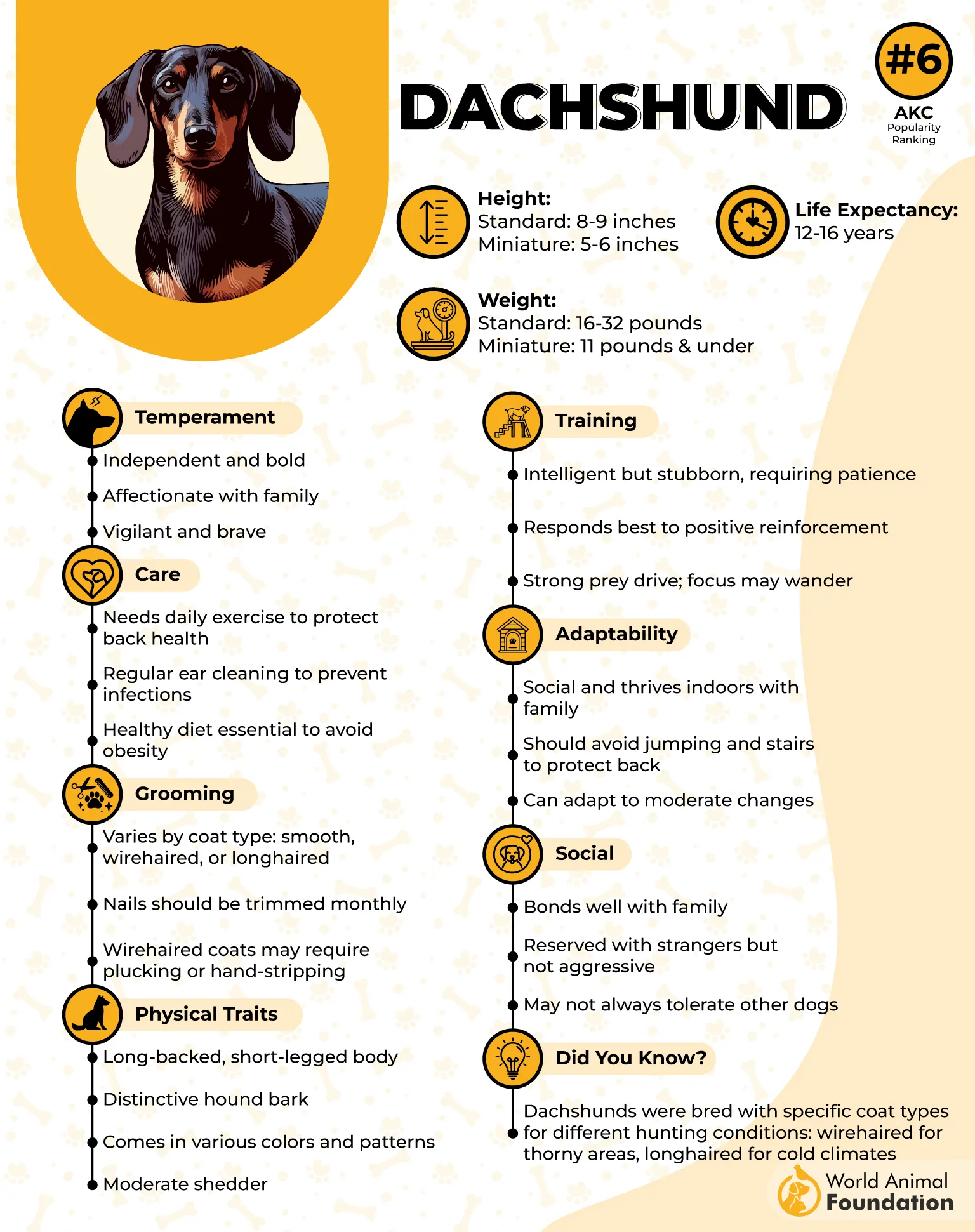
In fact, a Dachshund named Chanel even set a Guinness World Record as the oldest living Dachshund before passing away in 2009 at an astonishing 21 years old. Talk about a long dog living a long life.
According to PetMD, even though Dachshunds are small, they absolutely need regular exercise to stay fit and protect their backs. Strong muscles help support their long spine and reduce injury risk.
Yes, they may look like couch potatoes, but underneath that cozy blanket is an athlete-in-training. The most common health issue for Dachshunds is:
Intervertebral Disc Disease (IVDD)
Deafness
Dental Disease
Epilepsy
Tips for a Long, Happy Life:
Provide daily, low-impact exercise
Keep weight under control
Schedule regular vet checkups
Dachshunds may be long, low, and occasionally dramatic—but they’re also incredibly loving and resilient. With proper care, activity, and a little back-friendly planning, your Dachshund could be by your side for well over a decade, reminding you daily that courage comes in all shapes… even sausage-shaped ones.
6. Poodle

Life expectancy: 10-18 years
Don’t let the glamorous haircut fool you—the Toy Poodle is not just a pretty face. Beneath those stylish curls lives a sharp, energetic brain that’s always plotting its next activity (or outsmarting you for extra treats).
Sassy, intelligent, and full of personality, Toy Poodles make excellent family pets for people who enjoy an interactive companion.
It’s not uncommon for Toy Poodles to live 16 to 18 years, earning them a well-deserved spot among the longest-living dog breeds. Adopting one is basically agreeing to a long-term relationship with a tiny genius.
Without enough stimulation, a bored Toy Poodle can become vocal, mischievous, or just dramatically disappointed in you. Like many small breeds, Toy Poodles can experience a few common health concerns, including:
Eye issues
Dental disease
Legg-Calvé-Perthes disease
Luxating patellas
Early detection and routine vet visits go a long way in keeping these little dynamos healthy.
Maintain regular grooming (those curls don’t manage themselves!)
Brush teeth often and schedule dental checkups
Feed a high-quality, portion-controlled diet
The Toy Poodle is proof that elegance and intelligence can come in a tiny package. With the right care, stimulation, and plenty of love, this curly-coated companion can stay by your side for nearly two decades—keeping you entertained, impressed, and very well-trained in the art of Poodle appreciation
7. Shih Tzu

Life expectancy: 10-18 years
The Shih Tzu may look like a tiny lion (their name literally means “lion dog”), but at heart, they’re sweet, friendly companions who believe their true calling is keeping you company—preferably from your lap.
Bred specifically to be companions, Shih Tzus take their job very seriously… and they’re excellent at it. Friendly, adaptable, and generally happy just being near their people, Shih Tzus commonly live 14 years or longer, making them one of the longer-living dog breeds.
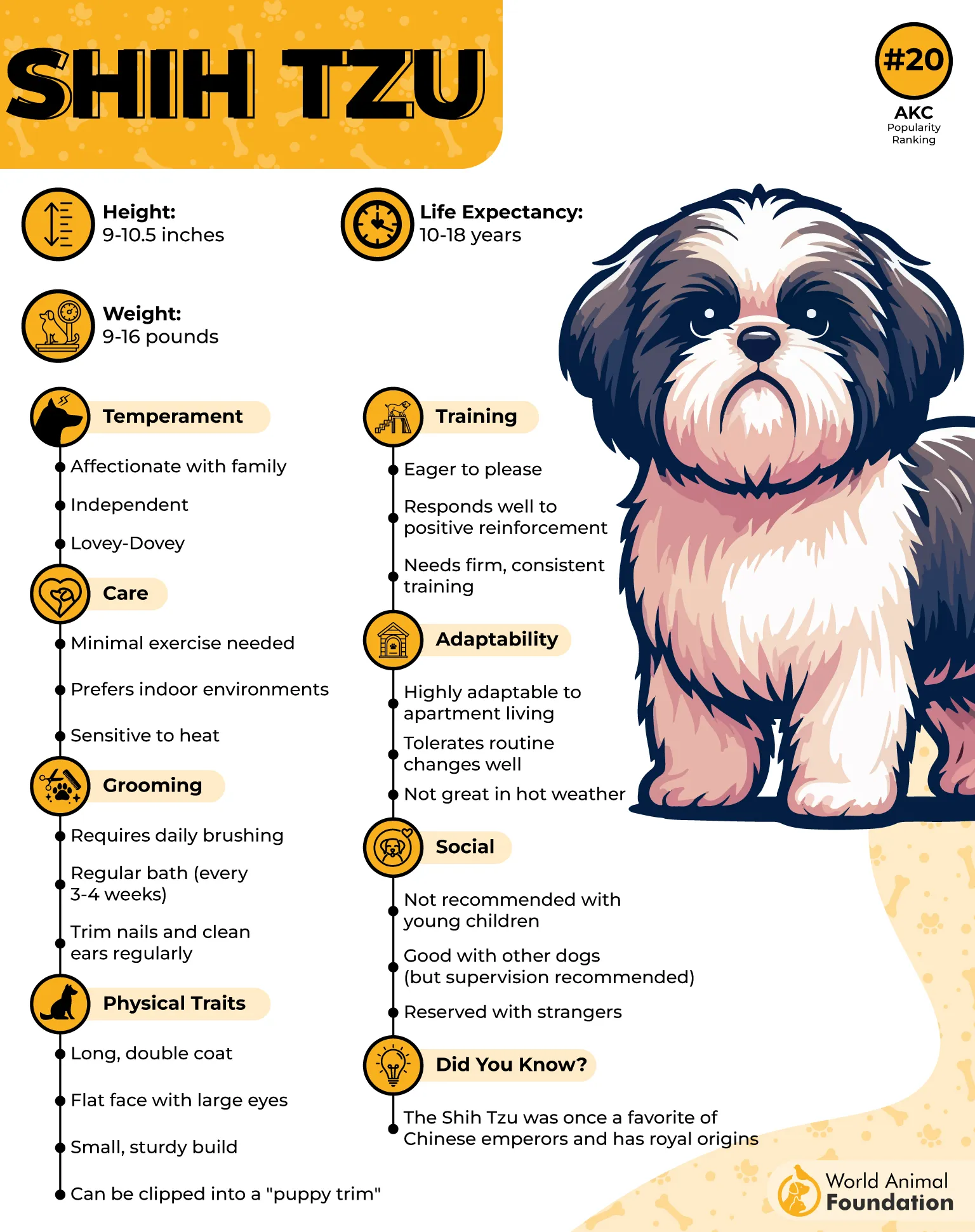
They don’t need intense exercise routines—short daily walks and playtime are plenty. Their idea of a workout is following you from room to room and supervising your activities with mild curiosity.
Skip grooming too long, and you may find your Shih Tzu looking more like a mop than a monarch. Because of their brachycephalic (flat-faced) structure, Shih Tzus can be prone to:
Breathing problems
Overheating
Keeping them cool, avoiding overexertion, and using air conditioning during warm months can make a big difference in their comfort and health.
Maintain a consistent grooming routine
Keep them cool in hot weather
Schedule regular vet checkups
The Shih Tzu is proof that you don’t need to run marathons to live a long, happy life—sometimes, all you need is love, comfort, and a really good hair routine. With proper care and attention to their unique needs, this little companion can rule your heart and your couch for many joyful years.
Conclusion
When considering dog breeds and how to maximize their long, happy lives, it’s essential to look for different dog breeds, from Australian Cattle Dogs and Border Collies to Great Danes, as each breed has unique needs and tendencies. Maintaining a healthy weight, overall dog’s health, and robust health through proper care, consistent grooming, parasite control, and dental cleanings supports their well-being.
Engaging dogs in puzzle toys, agility training, and an active lifestyle addresses unwanted behaviors while promoting physical and mental fitness. Choosing responsible breeders and performing genetic testing helps prevent health problems, ensuring the pet’s well-being and extended lifespan. By combining attentive care, breed-specific strategies, and loving interaction, pet owners can maximize life span and quality of life for their beloved canine companions.
