




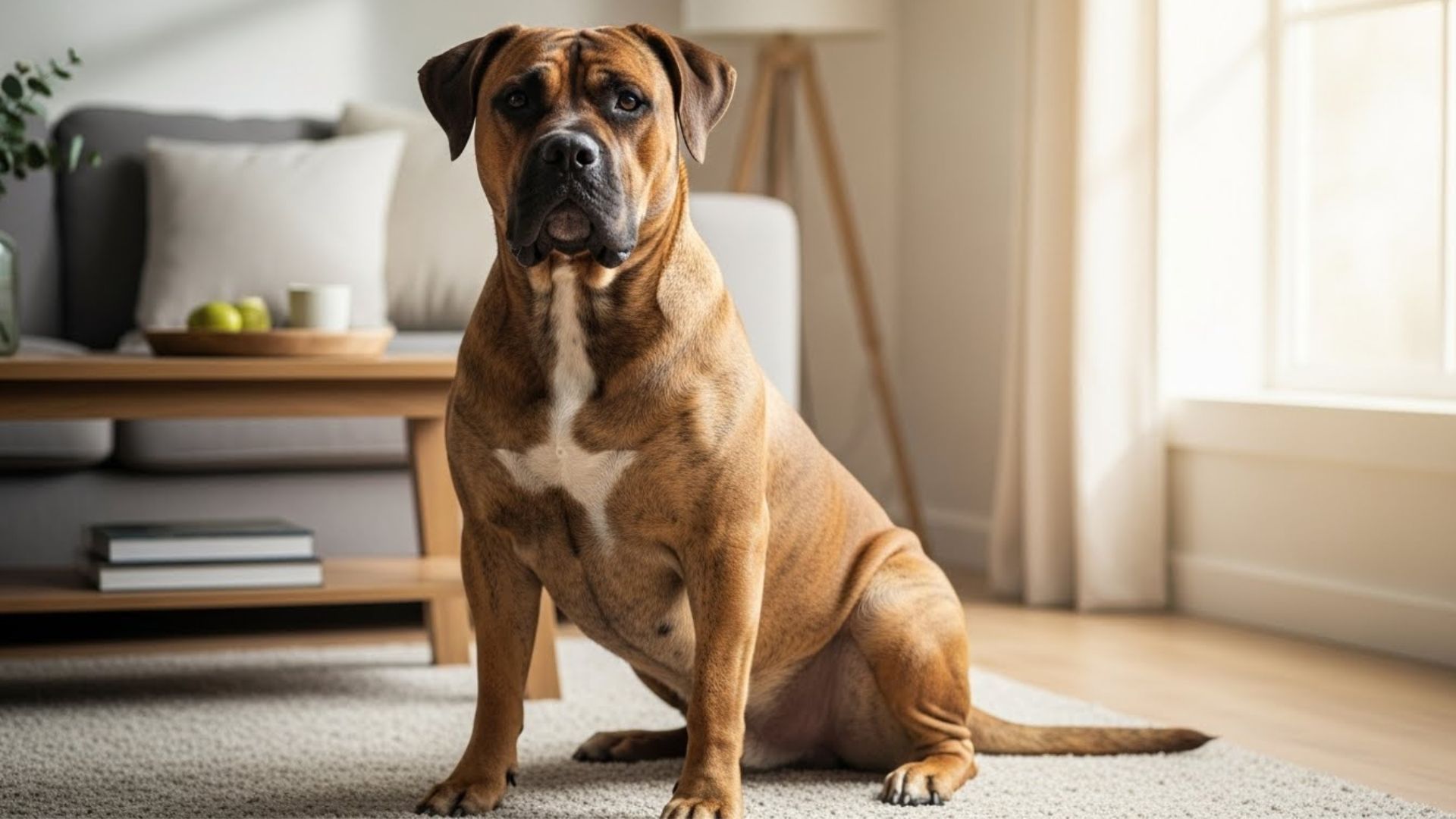
Choosing the best guard dog doesn’t have to mean living with constant tension or aggression. Many breeds are extremely protective yet calm, blending watchful instincts with a gentle, family-friendly temperament. These great family guard dogs excel at reading situations, stepping up when needed, and relaxing when all is well.
These excellent guard dogs are especially appealing for households with children, guests, or shared spaces. They’re loyal, trainable, and confident, relying more on presence and intelligence than brute force. With proper socialization, they become steady companions who deter trouble without causing it.
In this guide, we highlight seven protective dog breeds known for offering reliable protection with a soft touch. From large, imposing guardians to quietly vigilant partners, these great guard dogs prove that safety and serenity can go paw in paw.
Docile Guard Dog Breeds That Offer Gentle Protection
1. BoerBoel
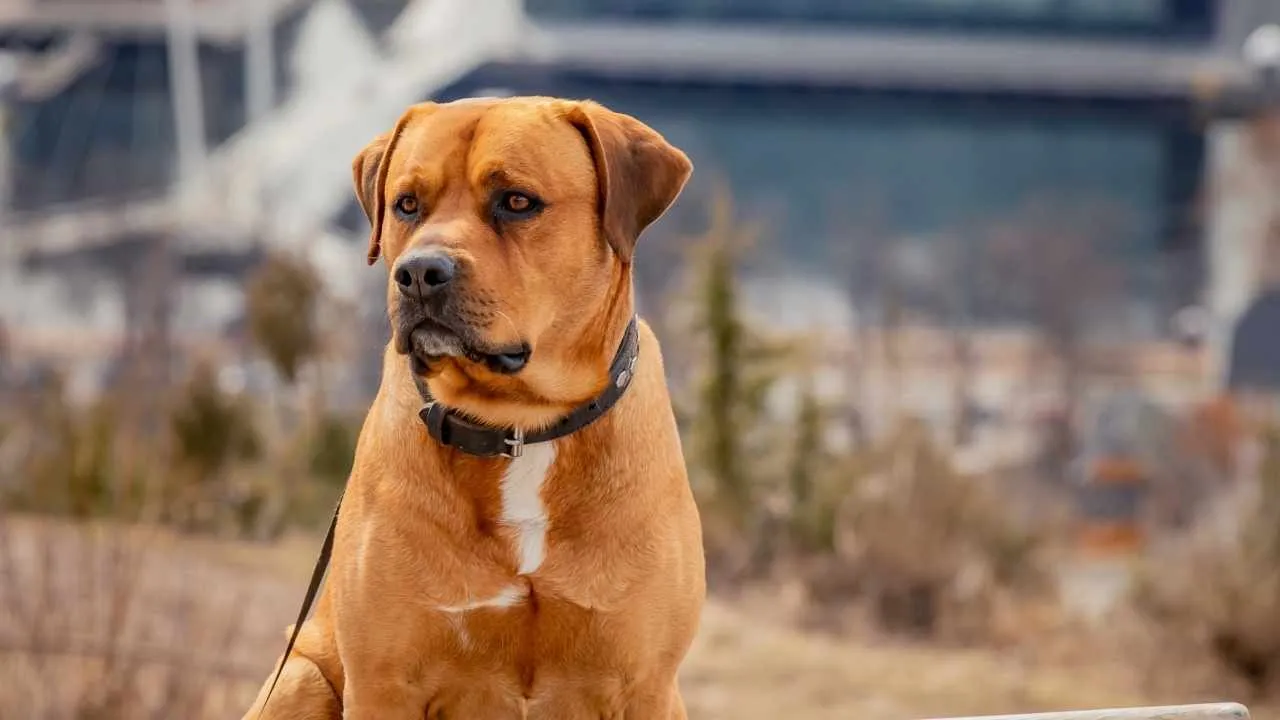
From Frontier Farms to Faithful Guardians
The Boerboel’s story begins on remote South African homesteads, where early settlers relied on powerful dogs for survival. Its name, meaning “farmer’s dog,” reflects a legacy rooted in loyalty, strength, and watchful devotion.
Strength Guided by Sensitivity
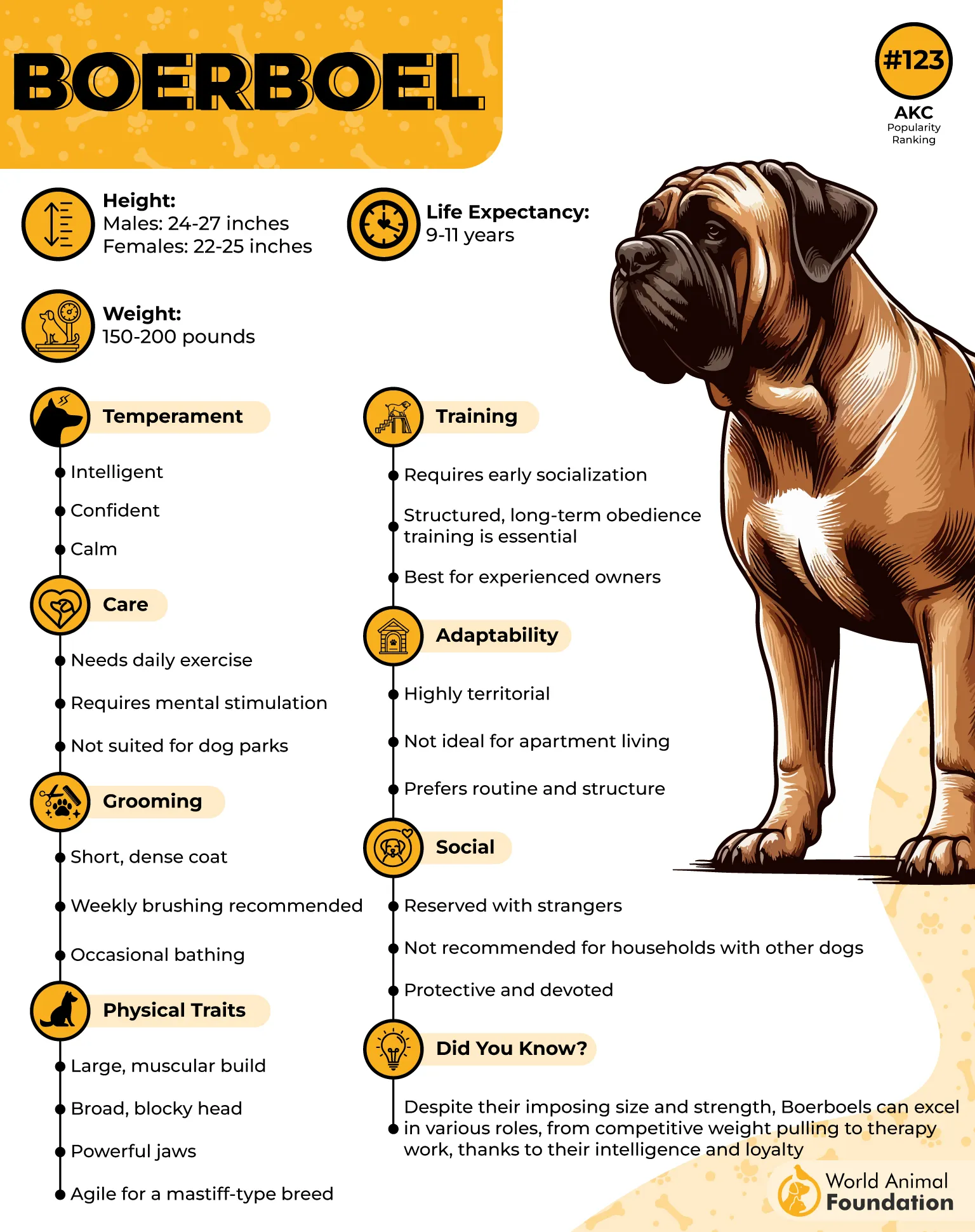
Despite their imposing size, Boerboels are calm, discerning, and form deep bonds with their families. They are confident and dominant when necessary, yet surprisingly gentle and affectionate at home. Known for their intelligence, they learn quickly and respond best to consistent, positive training.
Simple Care for a Powerful Companion
Boerboels have a short, sleek coat that requires minimal grooming and only occasional brushing. Regular exercise is essential to keep their agile bodies and sharp minds. Joint care and proper nutrition are especially important given their size.
Why the Boerboel Excels at Gentle Protection
Naturally distinguishes between real threats and normal visitors
Maintains calm watchfulness instead of constant aggression
Deeply loyal and emotionally attuned to family members
Protective presence alone acts as a strong deterrent
Responds well to training that reinforces controlled guarding behavior
2. Saint Bernard
Born in the High Passes of Heroism
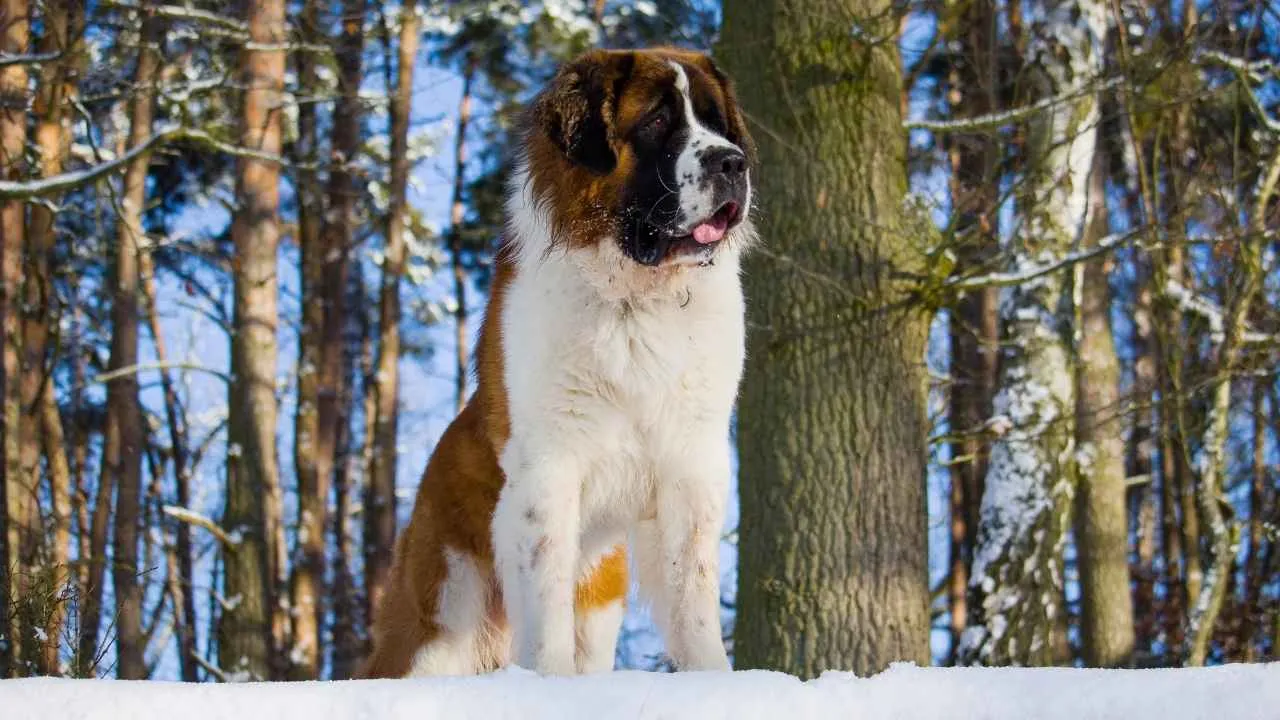
The Saint Bernard’s legacy was shaped high in the Swiss Alps, where monks bred these dogs to guard hospices and rescue stranded travelers, as per Hill’s Pet. Descended from ancient mastiff-type dogs brought by Roman armies, the breed became famous for lifesaving work in snow and avalanches.
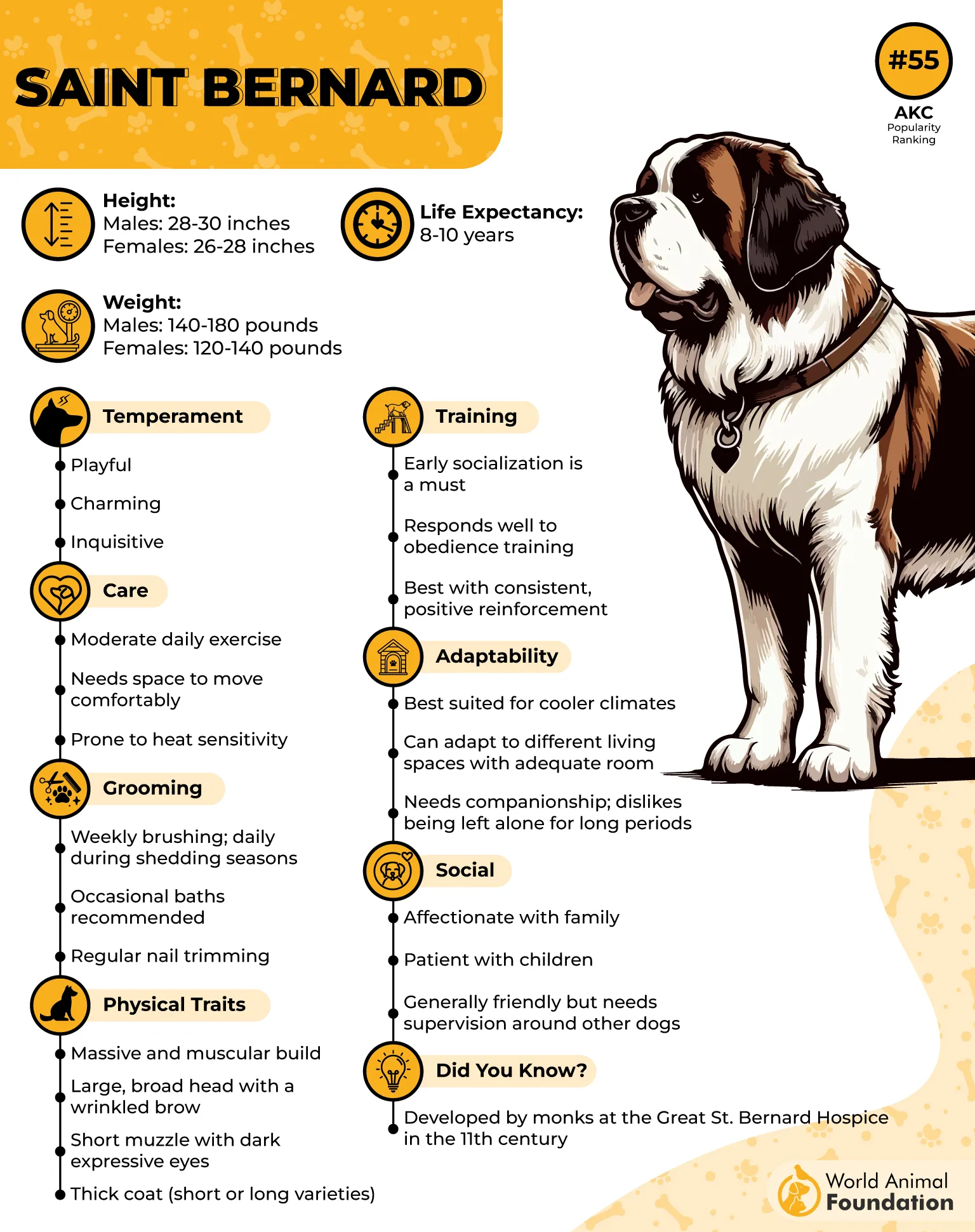
A Gentle Giant with a Watchful Soul
Saint Bernards are calm, affectionate, and deeply people-oriented, earning their title as true gentle giants. They are friendly with family, patient with children, and typically welcoming toward strangers. While not aggressive, their massive size and deep bark provide natural deterrence.
Big Dog, Simple Care Needs
Despite their size, Saint Bernards are relatively low-maintenance when it comes to grooming. Weekly brushing keeps their short or long coat healthy, with more attention during shedding seasons. They require moderate daily exercise and cool living conditions, as heat tolerance is low.
How Saint Bernards Provide Gentle Protection
Intimidating size alone discourages unwanted visitors
Naturally calm and non-reactive in normal situations
Deep, purposeful bark alerts without constant noise
Strong attachment keeps them attentive to family safety
Discerning temperament helps them remain friendly yet watchful
3. Pekingese
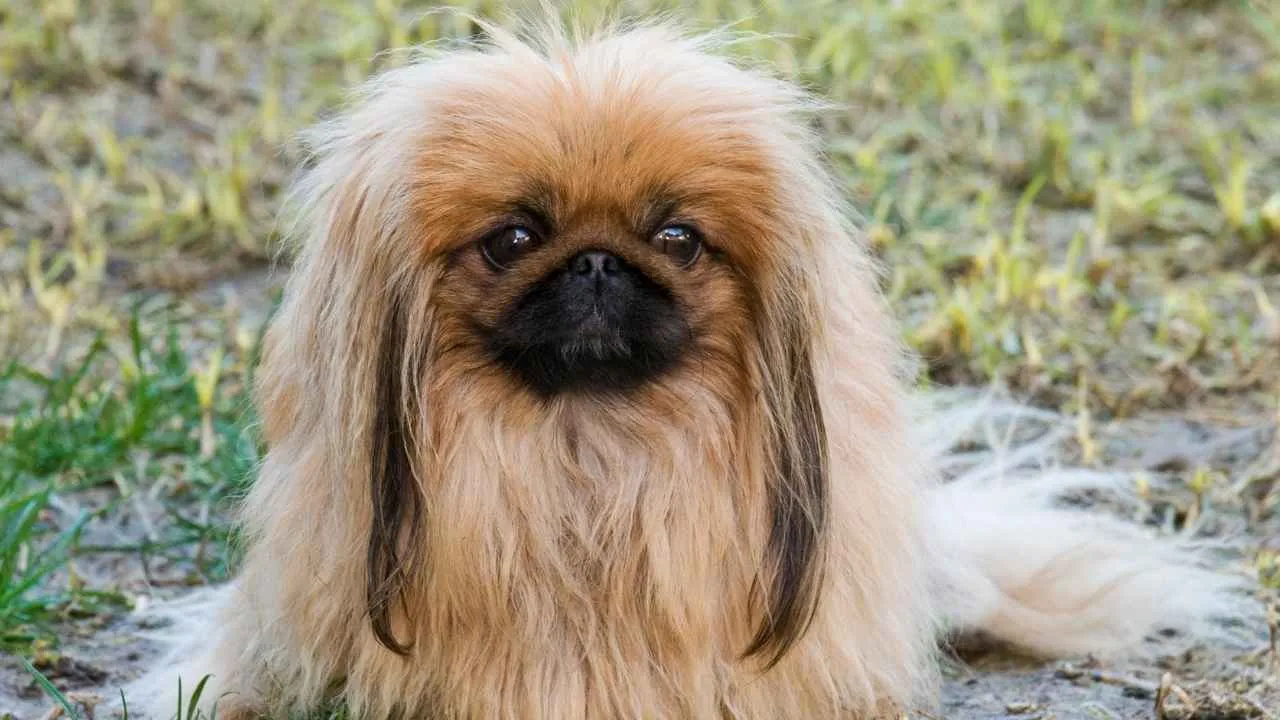
From Imperial Sleeves to Modern Homes
The Pekingese traces its origins to ancient China, where it lived exclusively among royalty and nobility. Bred to resemble sacred lions, these dogs symbolized power and protection within imperial courts, according to PetMD. Legend says the smallest were carried in emperors’ sleeves and released to confront danger.
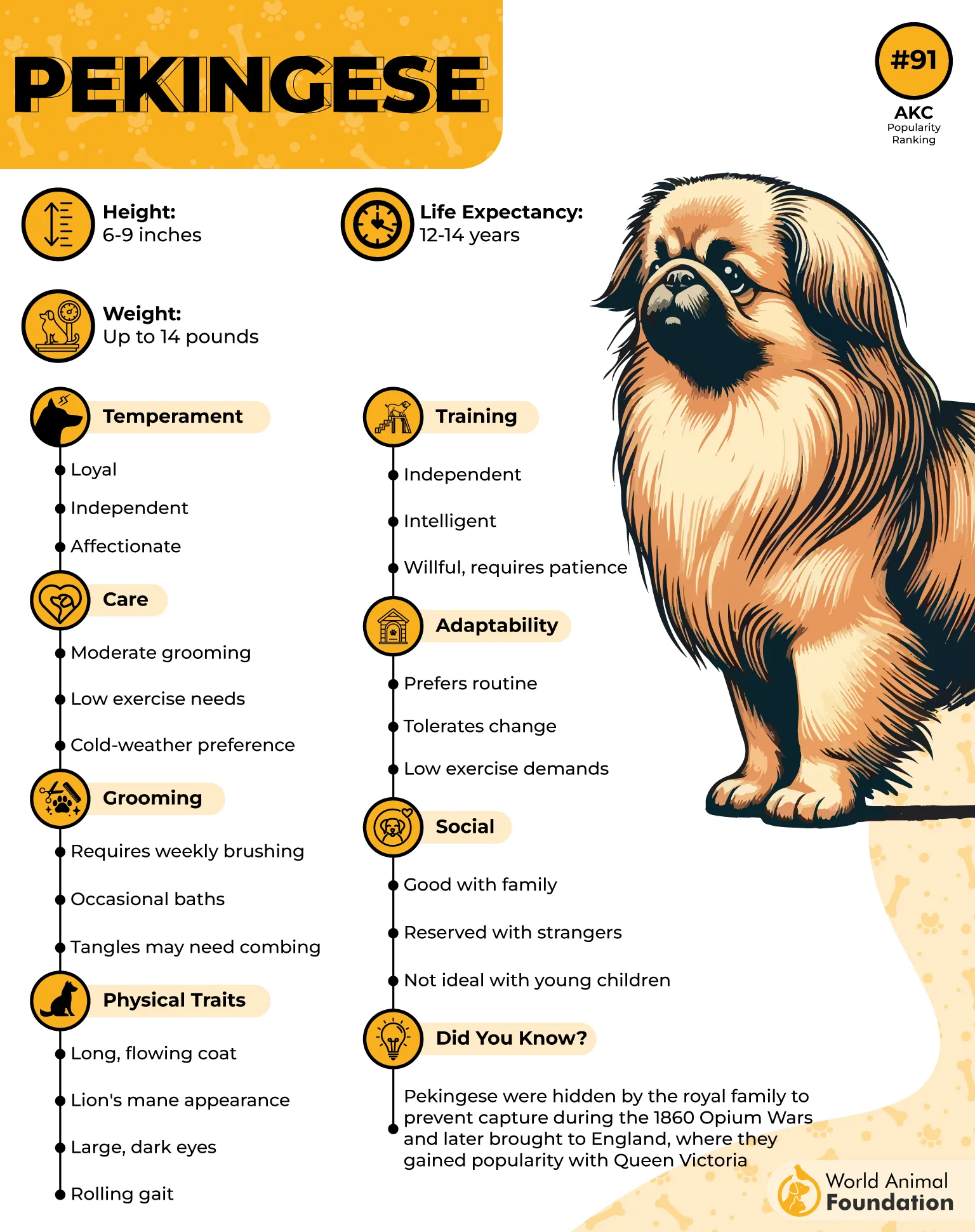
Small Body, Fearless Spirit
Dignified yet deeply devoted, the Pekingese carries itself with quiet confidence. With family, they are affectionate and entertaining, but they remain reserved and alert around strangers. Despite their size, they are brave, stubborn, with surprisingly protective nature.
High Style, Thoughtful Care
The Pekingese’s long, flowing coat is its signature feature and requires regular grooming. Many pet owners opt for shorter trims to simplify daily care, though facial wrinkles still need attention. With their flat faces, they prefer cool environments and plenty of close human companionship.
How the Pekingese Delivers Gentle Protection
Extremely alert and quick to sound an alarm bark
Naturally suspicious of unfamiliar people
Strong attachment to family heightens protectiveness
Brave attitude despite small size
Calm indoors yet vigilant over their territory
4. Tibetan Mastiff
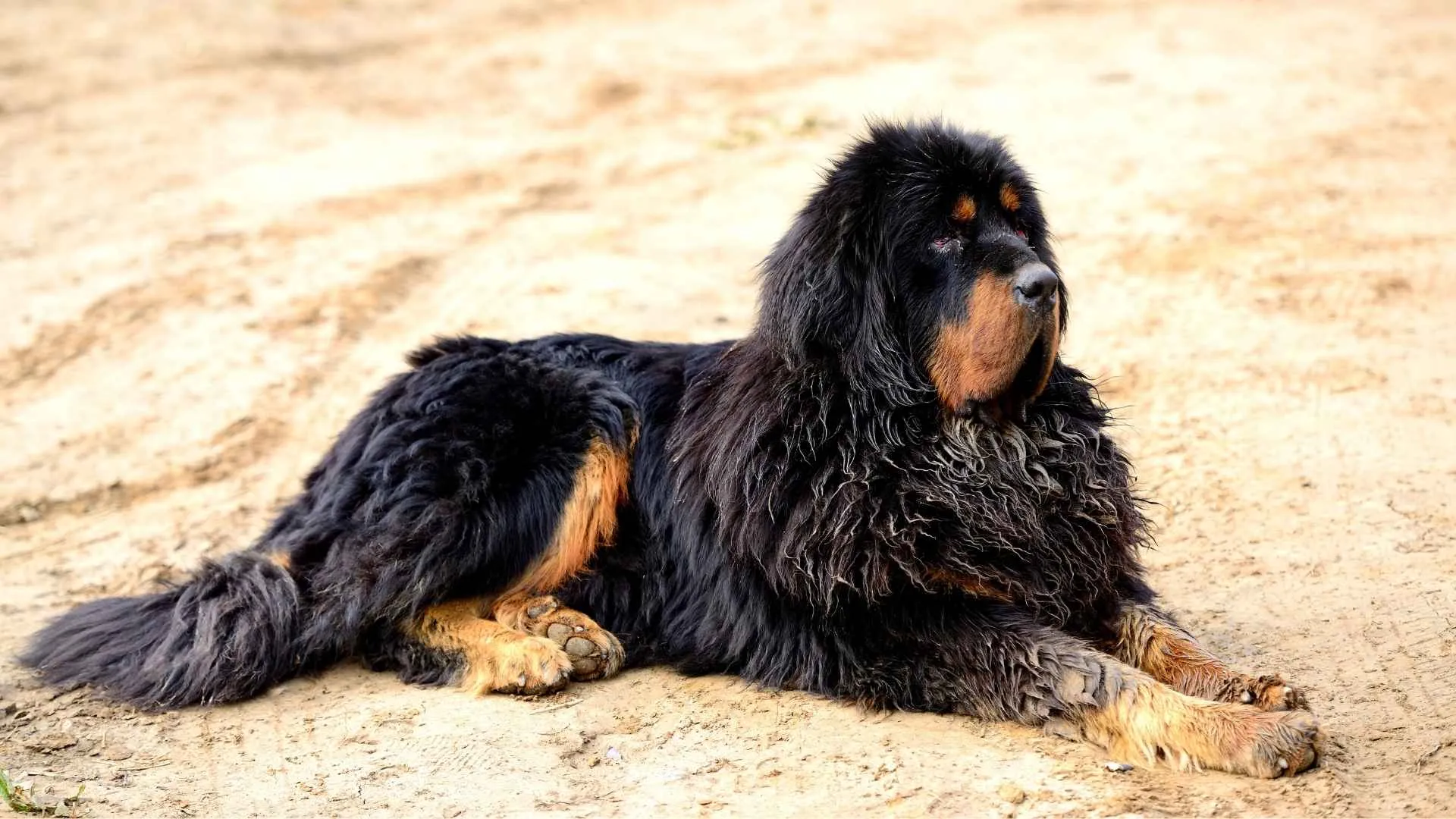
Guardians of the Himalayan Highlands
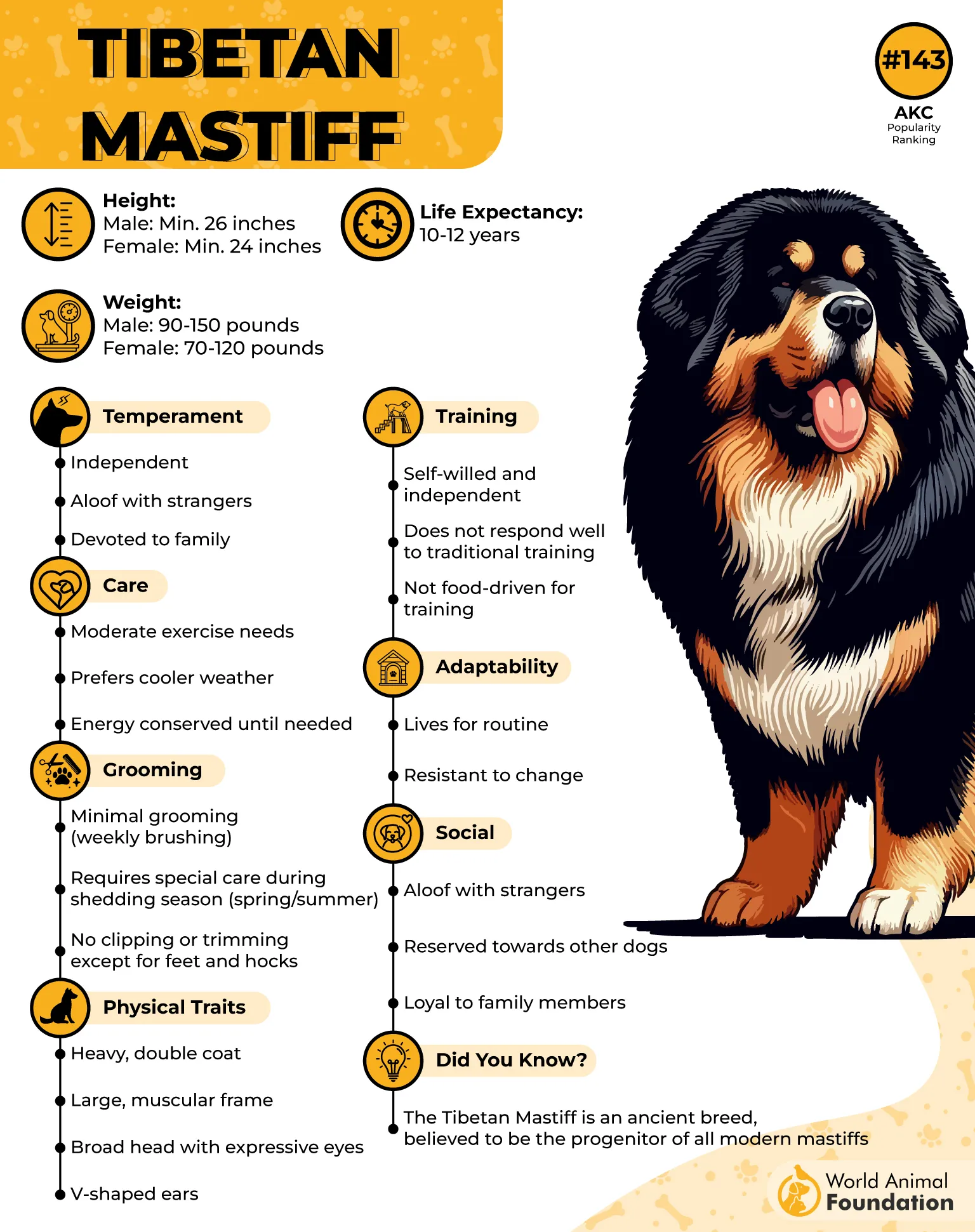
The Tibetan Mastiff is an ancient breed shaped by life in the harsh Himalayan mountains of Central Asia. For thousands of years, they guarded homes, monasteries, and livestock against predators and intruders. Their isolation helped preserve strong protective instincts and independent thinking.
Calm Loyalty with an Independent Mind
Despite their imposing appearance, Tibetan Mastiffs are gentle, loyal, and deeply bonded to their families. They are naturally territorial at home, yet surprisingly relaxed once indoors. With proper socialization, they become gentle companions who protect without unnecessary aggression.
A Majestic Coat with Practical Needs
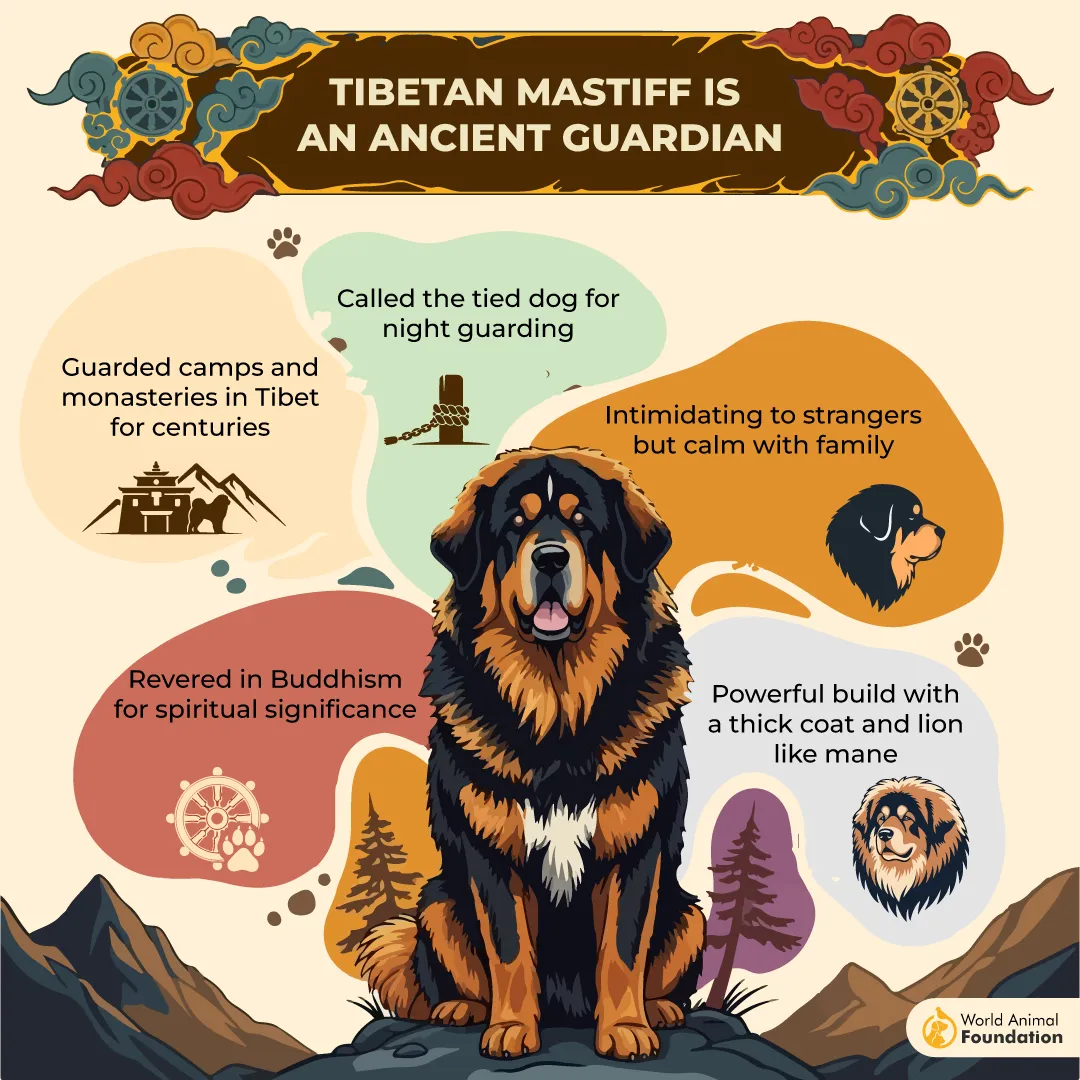
Tibetan Mastiffs are known for their thick double coat and striking lion-like mane. Grooming is moderate most of the year, with heavier brushing needed during seasonal shedding. Daily exercise and mental stimulation keep them balanced and content.
Why the Tibetan Mastiff Offers Gentle Protection
Naturally territorial without being overly reactive
Calm indoor demeanor balances strong outdoor vigilance
Extremely intelligent, and their judgment helps assess real threats
Protective instincts rooted in centuries of guarding work
Loyal bond keeps them attentive to family safety
5. Irish Wolfhound
From Ancient Battlefields to Noble Estates
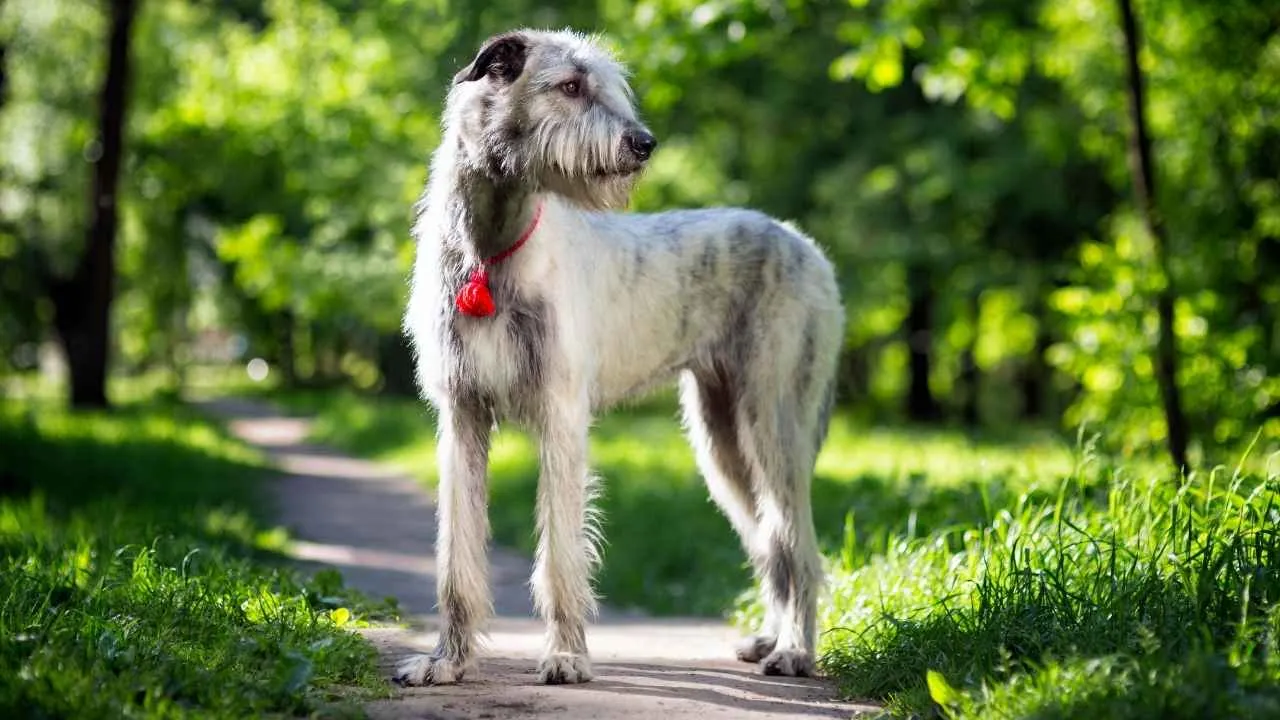
The Irish Wolfhound is one of the oldest and most storied dog breeds in the world. Developed by crossing Middle Eastern hounds with native British dogs, they were prized for hunting wolves and guarding lands in ancient Ireland, as per the AKC.
A Gentle Soul in a Giant Frame
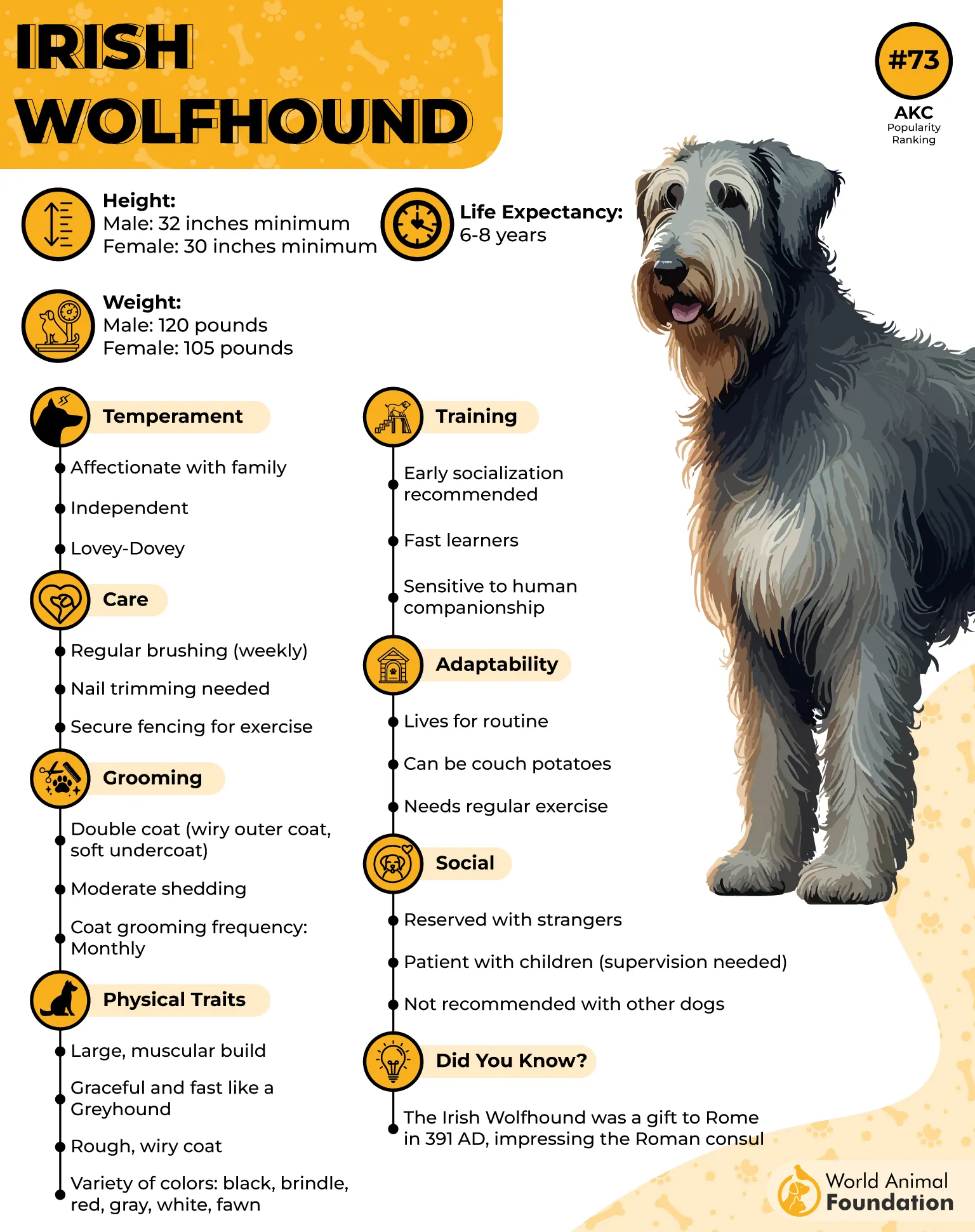
Despite their towering size, Irish Wolfhounds are famously calm, kind, and even-tempered. They are affectionate with family, patient with children, and generally peaceful with other dogs when properly socialized. While not overly vocal, they will alert their owners when something feels wrong.
Low Fuss Care for a Large Companion
Irish Wolfhounds have a wiry, medium-length coat that is easy to maintain with occasional brushing. They benefit from regular exercise to support joint health and prevent weight gain. With balanced care, they are relaxed, clean, and comfortable house companions.
How the Irish Wolfhound Provides Gentle Protection
Imposing height and presence discourage intruders
Naturally calm and non-confrontational demeanor
Alerts family without excessive barking
Deep loyalty keeps them close and watchful
A steady temperament creates a reassuring sense of safety
6. Newfoundland
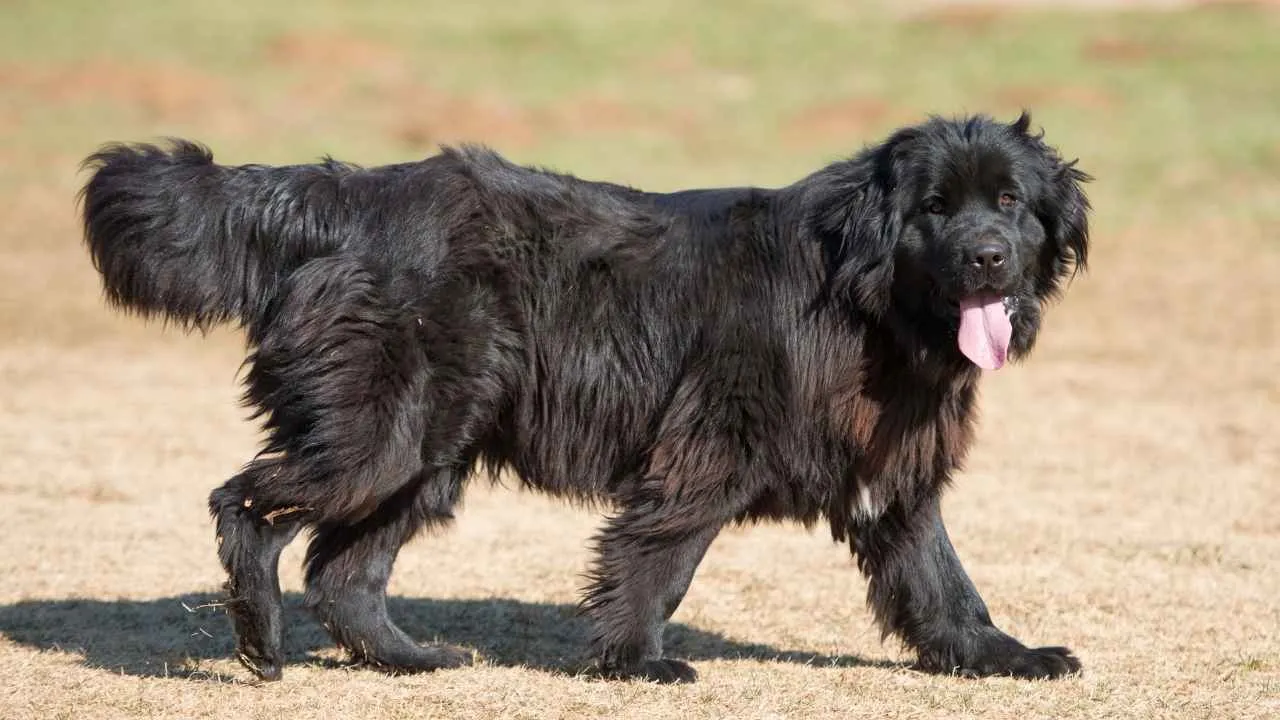
Forged by Sea and Storm
The Newfoundland was developed on Canada’s Newfoundland island, where strength and swimming skills meant survival. Likely descended from native dogs and Great Pyrenees brought by fishermen, this breed became famous for heroic water rescues.
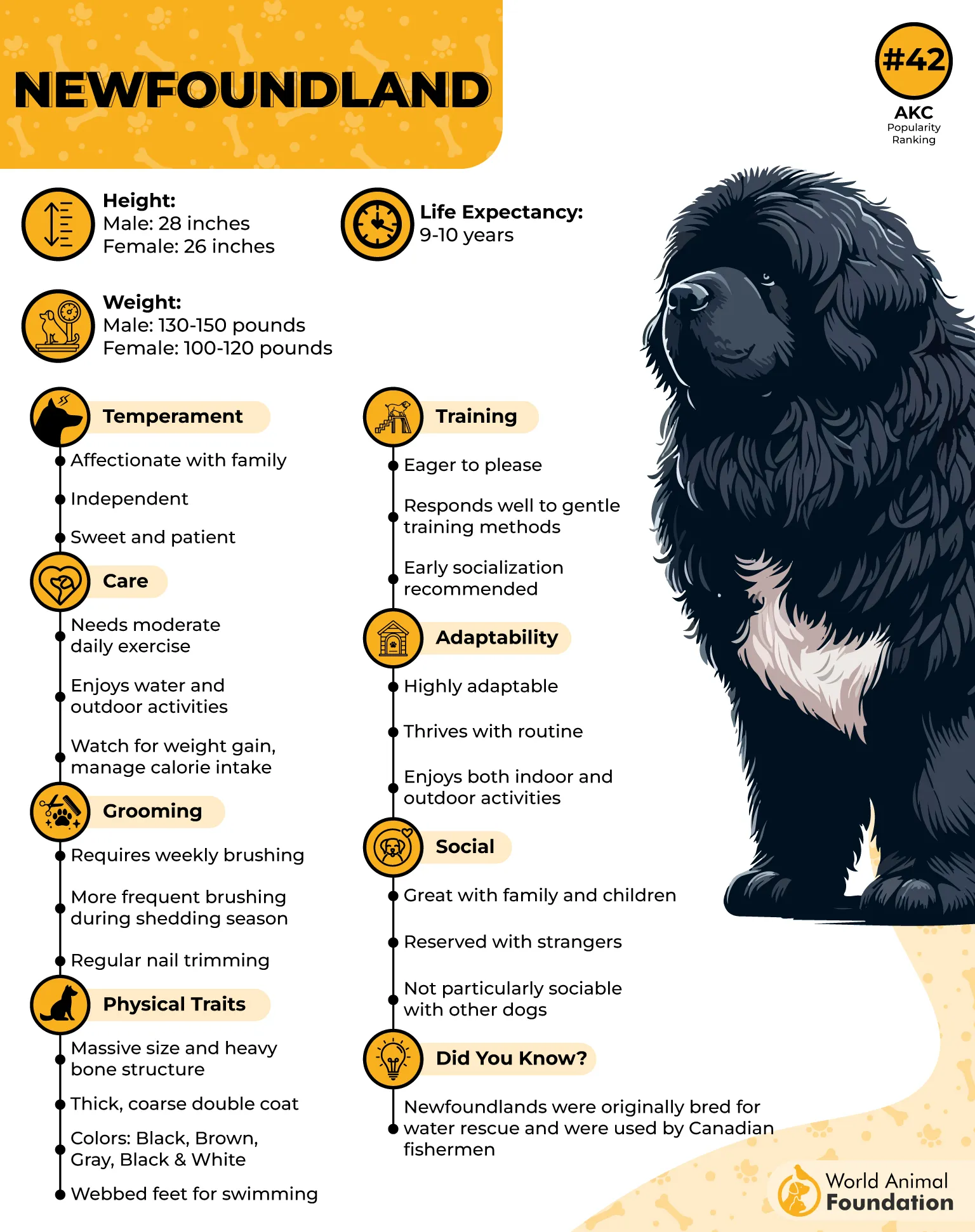
A Tender Guardian with a Giant Heart
Newfoundlands are famously gentle, patient, and deeply affectionate with their families. Often called “nanny dogs,” they are exceptionally tolerant with children and calm around strangers. While not aggressive, they are naturally protective and will place themselves between loved ones and perceived threats.
Heavy Coats and Easygoing Care
This breed’s thick, water-resistant coat needs regular brushing and extra attention during shedding seasons. Exercise needs are moderate, with swimming being their favorite activity. Newfoundlands thrive in cooler climates and spacious homes, as per Britannica.
How the Newfoundland Provides Gentle Protection
Massive size alone deters most intruders
Naturally positions itself between family and strangers
Calm, non-reactive temperament prevents escalation
Highly observant and responsive to unusual situations
Deep loyalty encourages instinctive protective behavior
7. Great Pyrenees
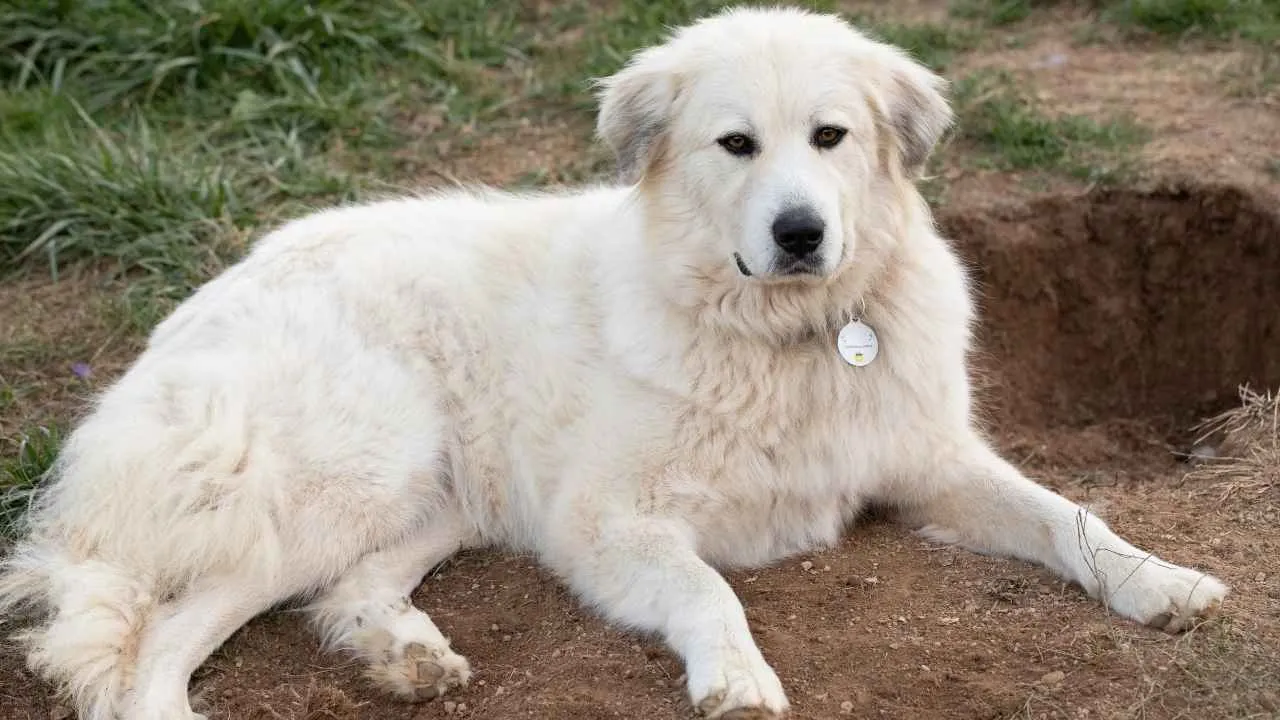
Born of Mountains and Guardianship
The Great Pyrenees takes its name from the rugged Pyrenees Mountains between France and Spain, where it guarded flocks for thousands of years. Fossil evidence traces the breed back to the Bronze Age, highlighting its ancient working roots.
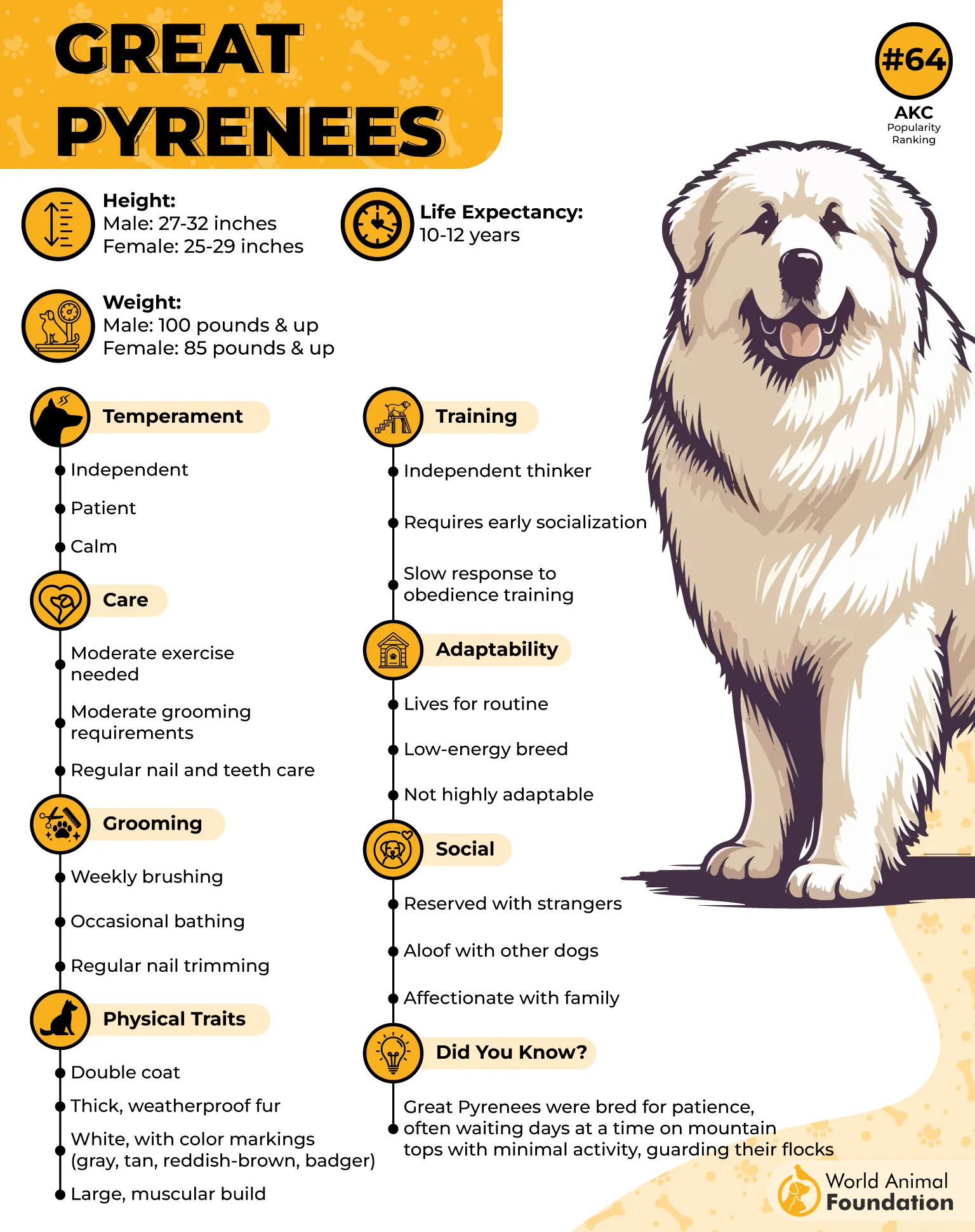
Calm Authority with a Protective Instinct
Great Pyrenees are gentle, affectionate dogs, and deeply devoted to their families. Bred to think independently, they are calm decision-makers rather than eager rule-followers. While mellow indoors, they remain highly alert and naturally suspicious of unfamiliar people.
Regal Coats and Practical Care
The Pyr’s thick, weather-resistant double coat gives it a majestic appearance and sheds heavily year-round. Weekly brushing helps manage loose hair and keeps the coat healthy. Exercise needs are moderate, favoring daily walks and safe roaming space.
How the Great Pyrenees Provides Gentle Protection
Naturally alert and highly aware of surroundings
Deep, warning bark deters threats without confrontation
Independent judgment helps assess real danger
Strong territorial instincts focused on home and family
Calm temperament balances vigilance with gentleness
Conclusion
Many docile guard dog breeds were originally bred to protect livestock or property, combining natural protective instincts with loyalty and intelligence. With proper training and early socialization, these dogs form strong bonds with family members, other pets, and children, making them both loving family pets and effective protection dogs.
Large, muscular dogs and other energetic breeds can deter intruders with their deep bark and alert presence while remaining gentle giants at home. Regular exercise and mental stimulation are essential to keep these loyal companions happy and healthy.
For first-time dog owners or experienced handlers, understanding the natural instincts of protective dogs ensures the right breed is chosen for personal protection and companionship. Incredibly loyal and courageous, these dogs make excellent family pets, excelling in both protection work and affectionate family roles.
