





Ever wish you had a dog who would happily spend the day relaxing with you? If your idea of a perfect day includes a slow walk, cozy time at home, and plenty of sofa lounging, a laid-back dog could be a great match. Some dogs naturally enjoy a slower pace and don’t need constant activity to stay happy.
That doesn’t mean calm dogs lack personality. Many are affectionate, easygoing, and happy to stay close to their owners. They may enjoy a daily walk or some playtime, then settle down when it’s time to relax.
Still, every dog is different. Age, personality, training, socialization, and daily enrichment can all affect how calm a dog is.
In this article, we’ll explore cozy dog breeds that are well suited to relaxed routines, quiet homes, and pet owners who simply prefer chill days.
Top Cozy Dog Breeds for Owners Who Prefer Chill Days
1. Cavalier King Charles Spaniel

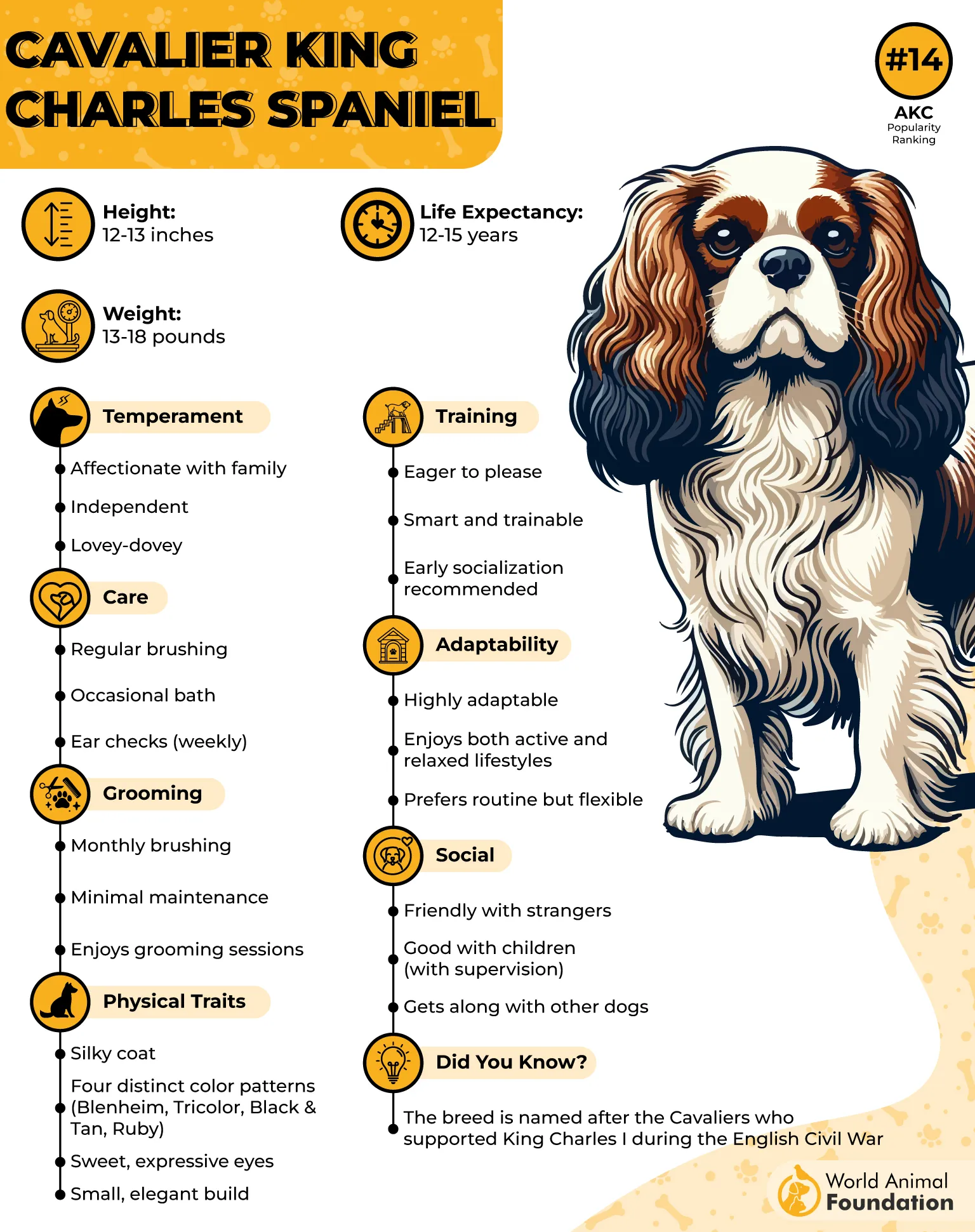
Cavalier King Charles Spaniels are hard to resist with their gentle expressions, silky coats, and long, feathered ears. They were originally bred as companion and lap dogs, making them natural cuddling companions.
Their affectionate and kind temperament helps them fit beautifully into relaxed homes. If your ideal day includes quiet time on the sofa, these dogs are happy to stay close.
Temperaments and Family Life
Cavaliers are friendly, playful, intelligent, and eager to please. They usually get along well with children, other dogs, cats, and strangers, as noted by PetMD.
Their cheerful and patient nature makes them suitable for families, seniors, and first-time owners. They are not usually protective or heavy barkers, so they are better suited to companionship than guarding.
Exercise and Care Needs
Although Cavaliers enjoy relaxing, they still need regular activity and mental stimulation. Daily walks, backyard play, hiking, retrieving, swimming, and activities such as obedience or agility can keep them happy.
Their silky coats need regular brushing, with occasional bathing and trimming as needed.
Regular ear and eye checks are also helpful, while veterinary care is important because the breed can be prone to heart disease, syringomyelia, eye problems, hip dysplasia, and middle ear infections.
2. Bolognese
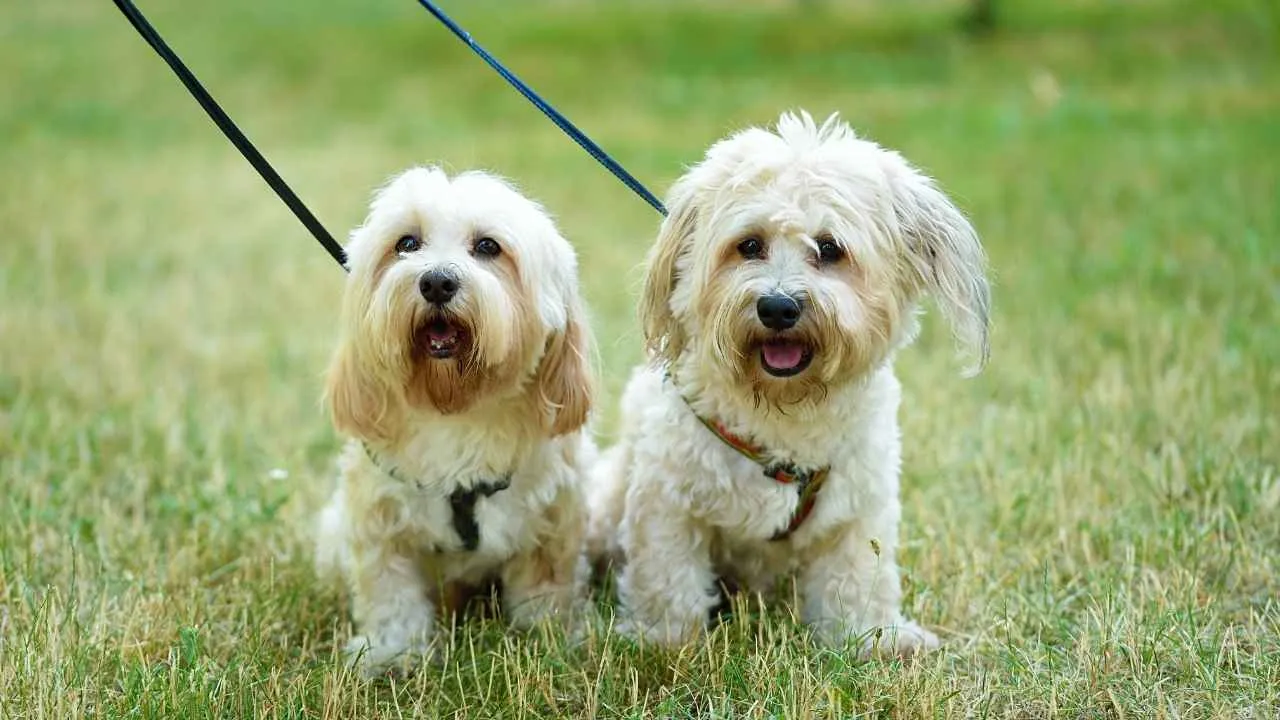
Bolognese dogs are the kind of companions who seem happiest when they are close to their people. They were bred as lap dogs for wealthy Italian families and were often given as treasured gifts.
Today, they remain loving, calm, and devoted house companions. They especially enjoy curling up on a soft spot beside their favorite person.
Temperaments and Daily Life
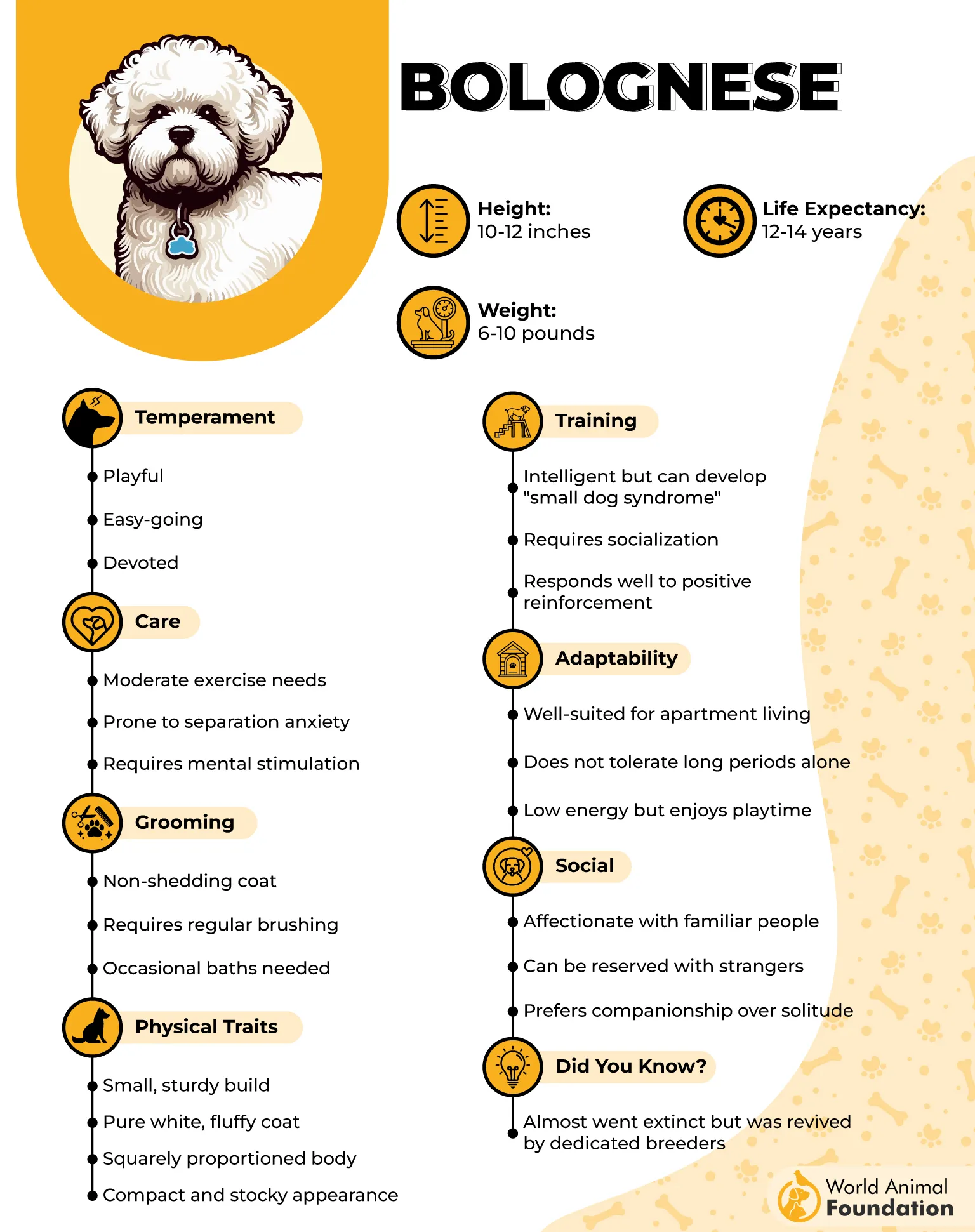
These dogs are affectionate, patient, and playful without being overly energetic. They usually do well with children, cats, and other dogs when socialized early.
Bolognese dogs can be reserved around strangers and may bark at unfamiliar sounds or people. They form strong bonds with their families and do not enjoy being left alone for long periods.
Exercise and Care Needs
Bolognese dogs have modest exercise needs, so a couple of short walks and indoor play can usually keep them fit. They are intelligent, eager to please, and respond well to fair, consistent positive training.
Their fluffy, low-shedding coat needs brushing every few days to prevent mats, while tear stains, floppy ears, and dental health need regular attention.
3. Japanese Chin
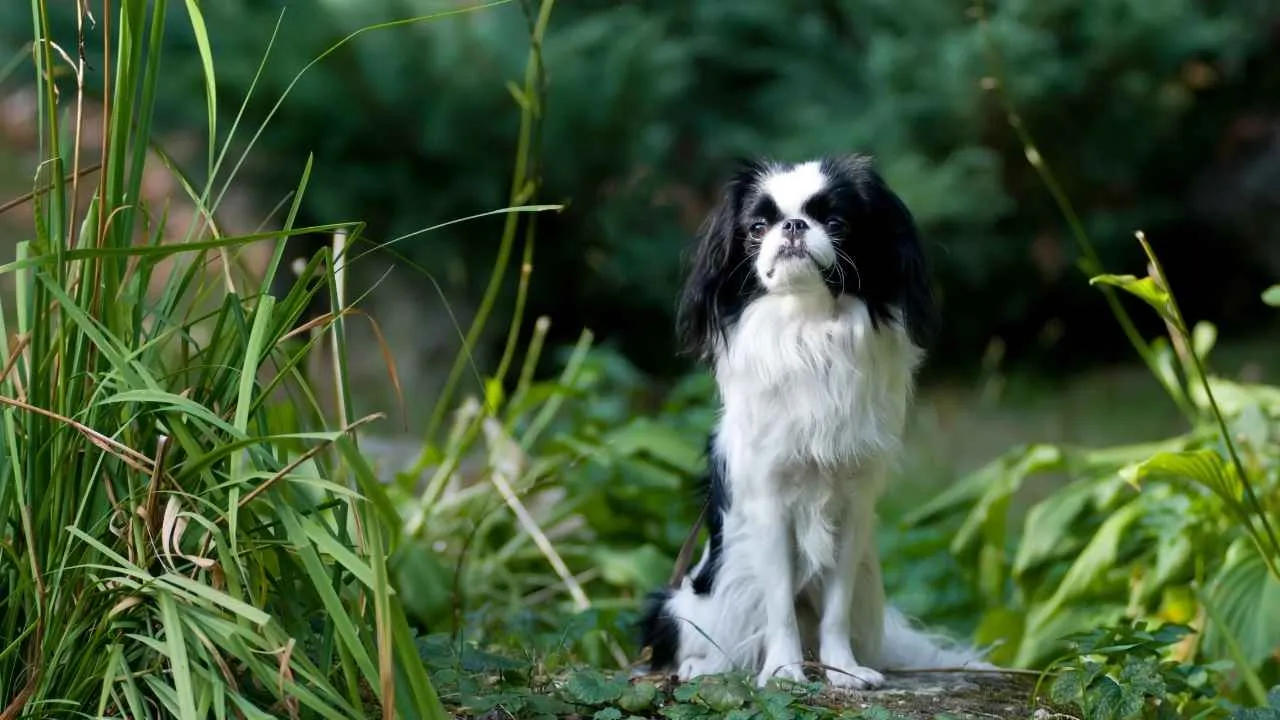
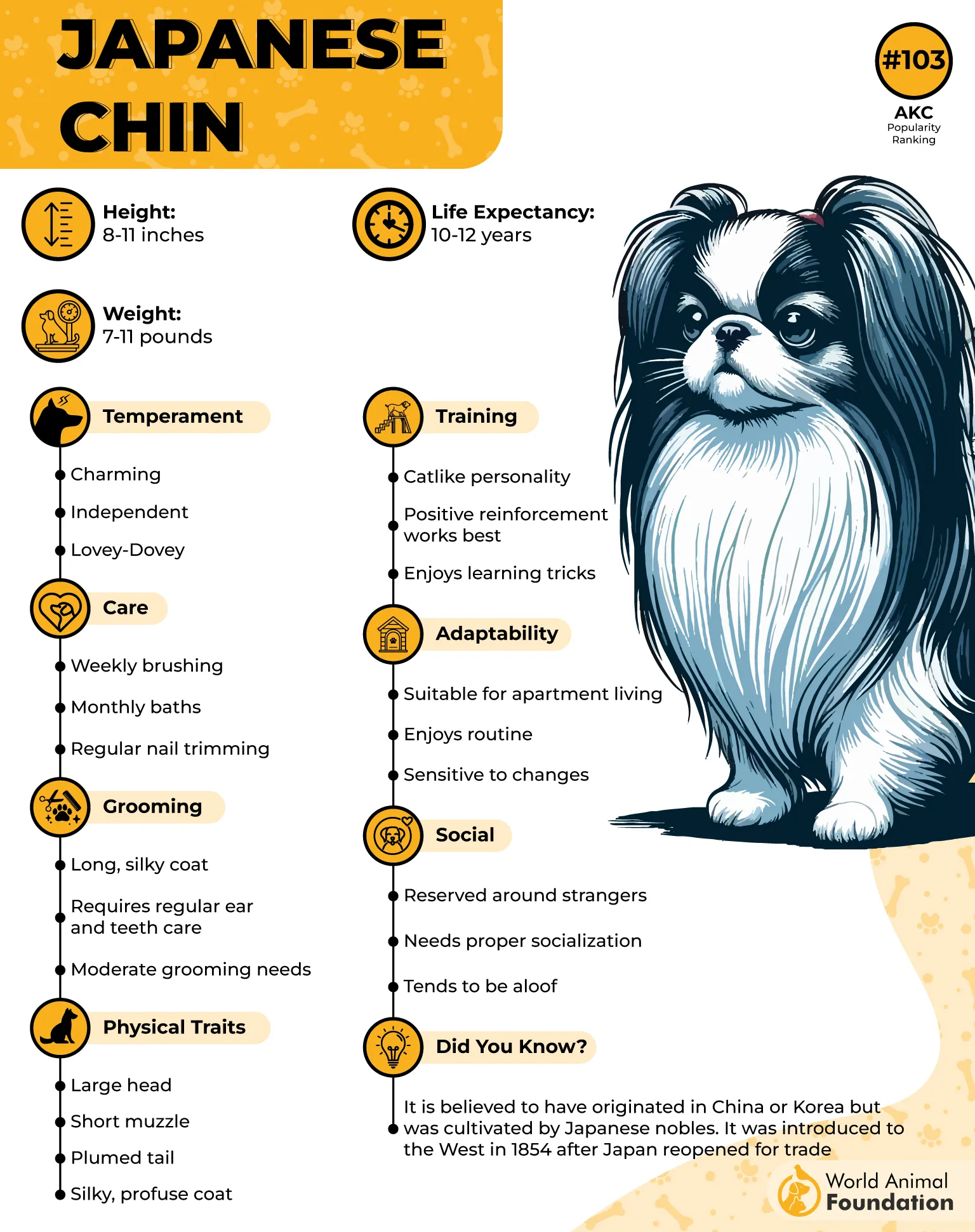
Japanese Chins bring a quiet, almost cat-like charm to relaxed homes. These elegant toy dog breeds were bred as companions and are happiest when they can stay close to their people.
They enjoy curling up on laps, lounging on the back of a couch, and spending peaceful time with family. Their silky coats, large eyes, and sweet expressions add to their charming personality.
Personalities and Daily Life
Japanese Chins are affectionate, intelligent, lively, and gentle. They have moderate energy but do not need long exercise sessions. A short daily walk and some playtime are usually enough to keep them content.
They can live happily in apartments or houses and generally get along with children and other pets when socialized early, although young children should be supervised around these tiny dogs.
Care and Training Needs
These dogs are smart but can have an independent streak, so short, fun training sessions work best. Praise and positive reinforcement can help keep them interested. Their silky coats need brushing once or twice a week, while their eyes and ears need regular attention.
Because they have short faces, they can be sensitive to heat and may experience breathing problems. They also bond closely with their families and can struggle to cope with separation, according to Purina.
4. Basset Hound
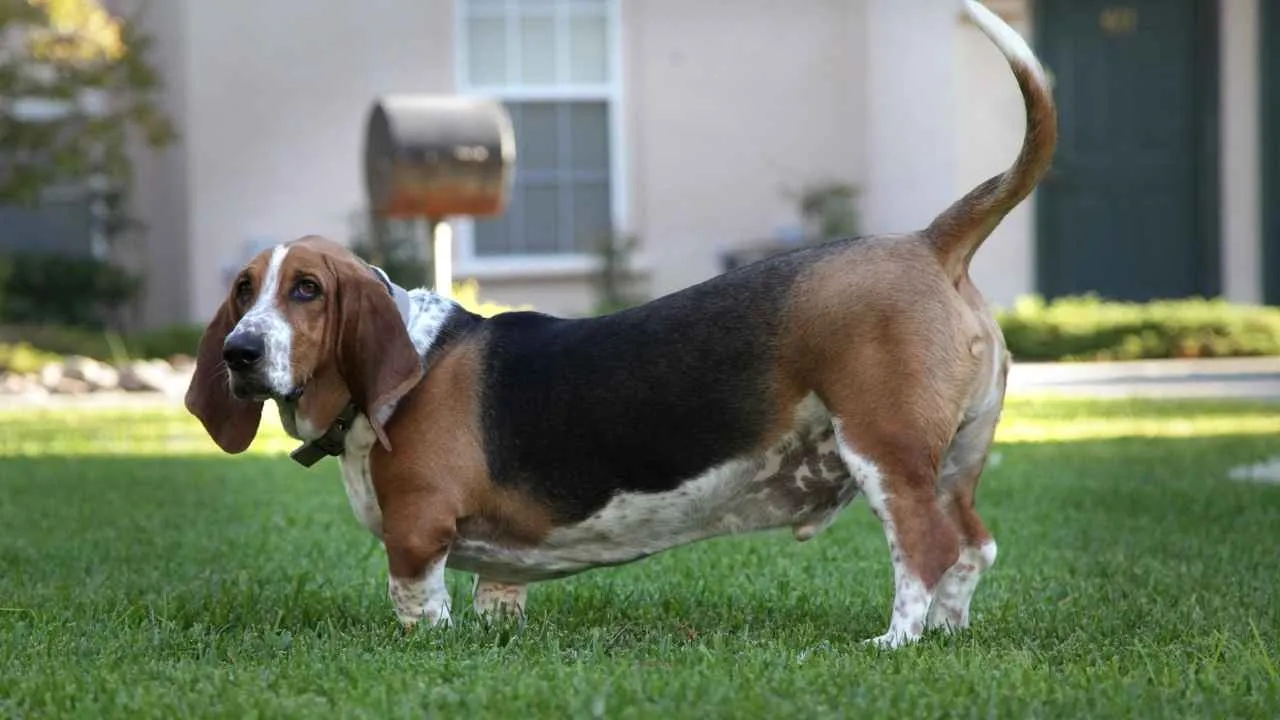
Originally bred in France to hunt rabbits and hares, these short-legged, sturdy dogs are now popular companion pets. They are known for their droopy ears, wrinkled skin, long bodies, and soulful expressions.
Although they have a hunting background, most Basset Hounds are happy spending time with their families and relaxing indoors.
Personalities and Daily Life
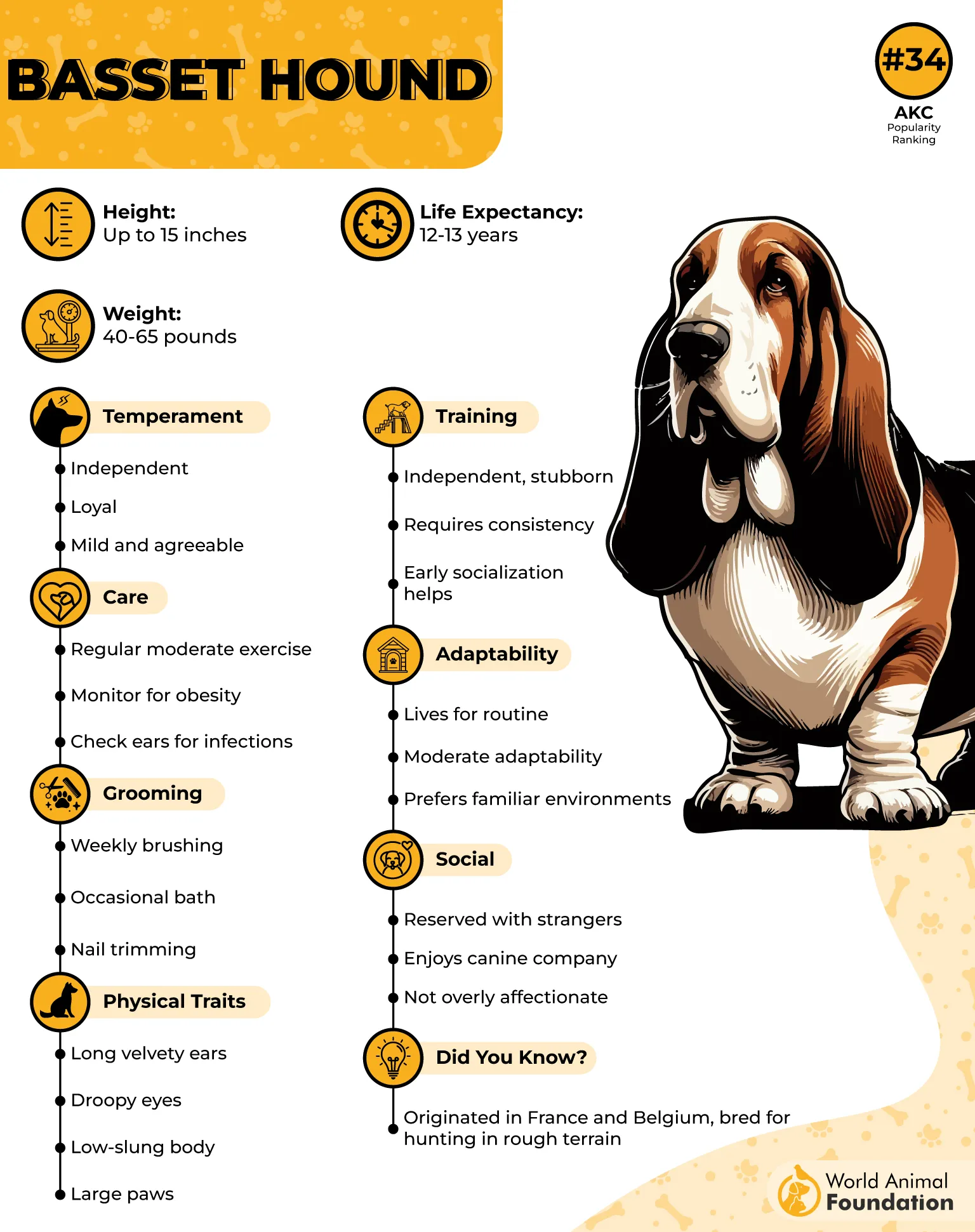
Basset Hounds are good-natured, affectionate, and generally easygoing. They have low energy but still need daily walks and opportunities to sniff and explore. Their powerful noses can easily lead them after interesting scents, so leash walks or fenced areas are important.
They usually get along well with children, other dogs, and pets when properly introduced. However, their loud, distinctive bark and tendency to drool may not suit every household.
Care and Training Needs
Basset Hounds have short, smooth coats that need regular brushing to manage shedding. Their long ears, skin folds, and droopy eyes also require frequent cleaning and attention to help prevent infections.
They can be stubborn and independent during training, but food rewards and positive reinforcement can make lessons more effective.
Because they are prone to obesity and joint problems, measured meals and regular moderate exercise are important. Their long backs and short legs also mean strenuous activities should be avoided.
5. English Bulldog
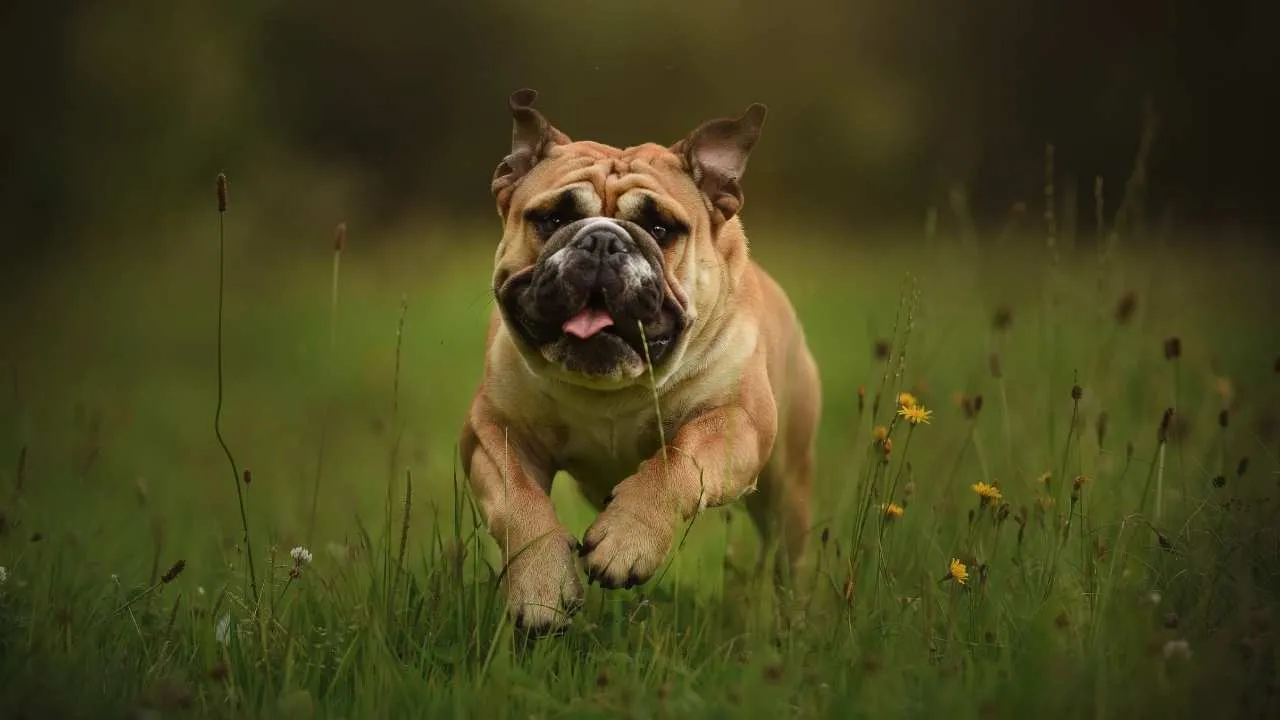
English Bulldogs were originally bred for bull-baiting but have since become gentle and loyal family companions.
Their wrinkled faces, short muzzles, muscular bodies, and distinctive rolling gait give them an unmistakable appearance, while their easygoing nature makes them happiest spending time with their people.
Personalities and Daily Life
English Bulldogs are friendly, loyal, courageous, affectionate, and generally calm. They have moderate energy but do not need strenuous exercise. A short daily walk, gentle play session, or some indoor activities can help keep them healthy and prevent weight gain.
They can adapt well to family homes and usually do well with children and other pets when properly socialized. They also enjoy lounging around the house and staying close to their families.
Care and Training Needs
English Bulldogs are intelligent but can be strong-willed and stubborn, so patient, consistent training with praise and positive reinforcement works best.
Their short coats need only occasional brushing, but their facial, neck, and tail folds require regular cleaning and thorough drying to help prevent skin infections.
As a flat-faced breed, their short muzzles make them sensitive to heat and prone to breathing difficulties, so strenuous exercise and hot weather should be avoided.
6. Clumber Spaniel
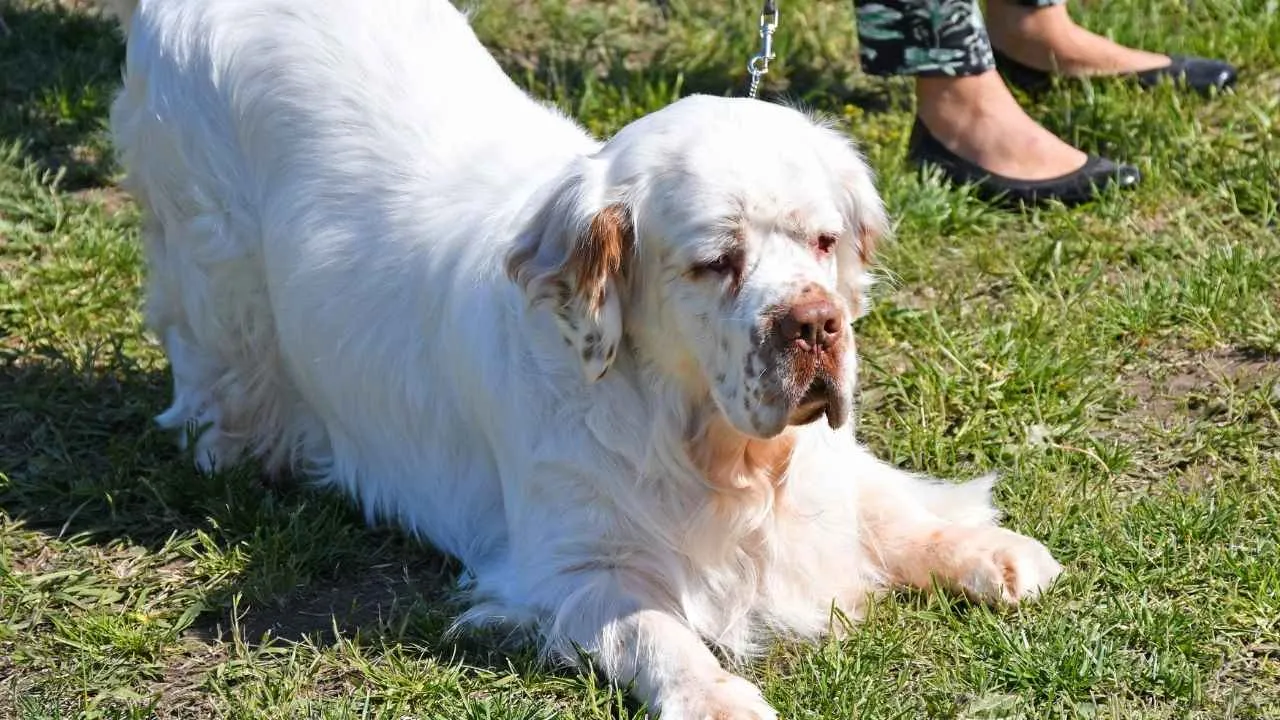
Clumber Spaniels were developed as hunting and retrieving companions and became favorites among British royalty and nobility.
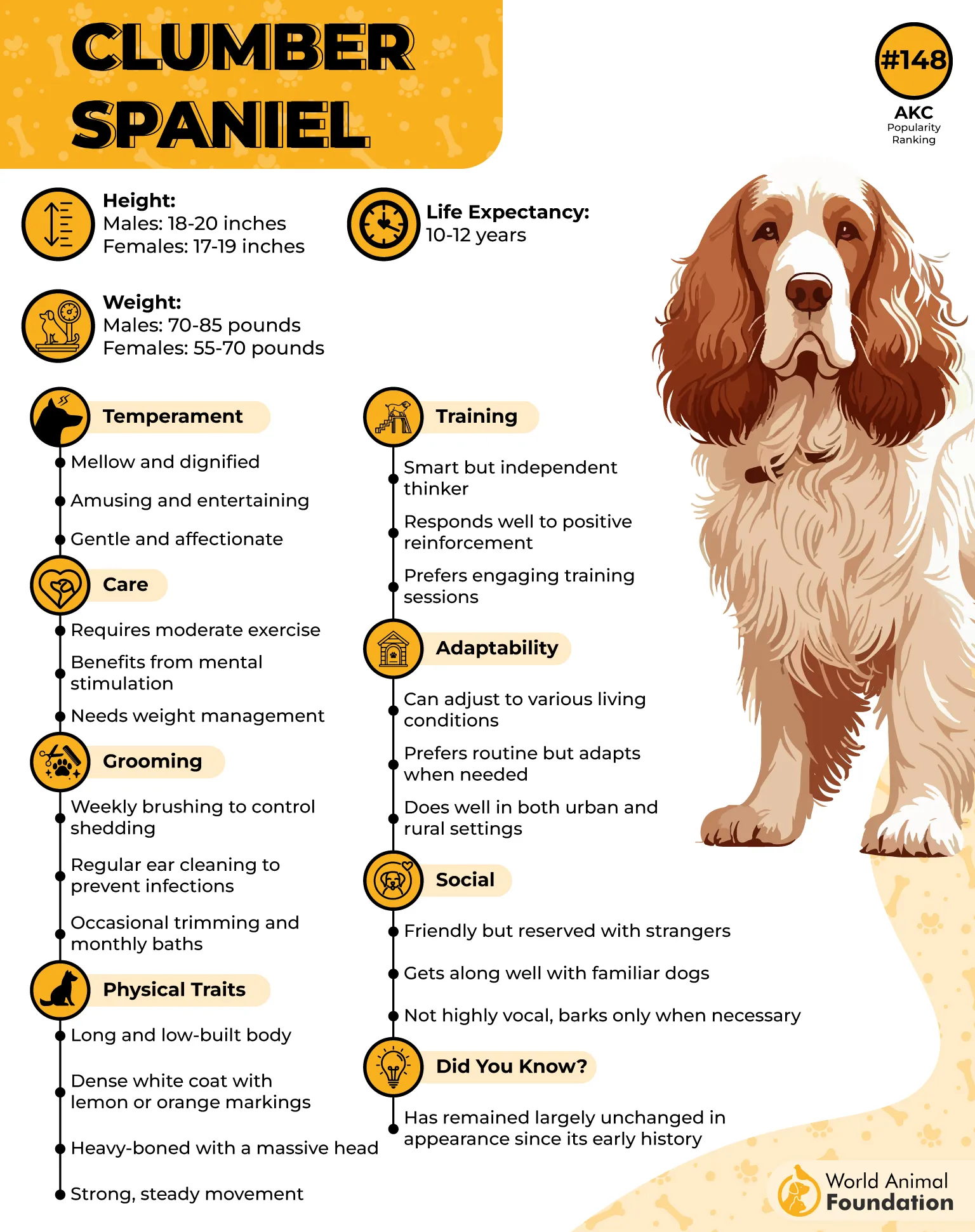
Their heavy build, large square heads, deep-set eyes, hanging ears, and low-set bodies give them a distinctive appearance, while their calm and loyal nature makes them happiest when spending time with their families.
Personalities and Daily Life
Clumber Spaniels are affectionate, loyal, gentle, cheerful, and generally laid-back. They have moderate energy and enjoy regular walks, outdoor play, and activities that keep them mentally stimulated.
They can adapt to different living situations and usually get along well with children and other pets when properly socialized. They also enjoy having a job or task to fulfill, especially activities connected to their natural hunting and retrieving instincts.
Care and Training Needs
Clumber Spaniels are intelligent and eager to please but can have an independent streak, so patient, consistent training with praise and positive reinforcement works best.
Their dense, flat coats need brushing at least two or three times a week, with extra attention to the feathering around the ears, chest, abdomen, and legs to prevent matting.
Regular bathing, ear cleaning, eye care, and parasite checks are also important. They benefit from daily exercise and mental stimulation and should not be left alone for long periods, as they may develop separation anxiety.
7. Saint Bernard
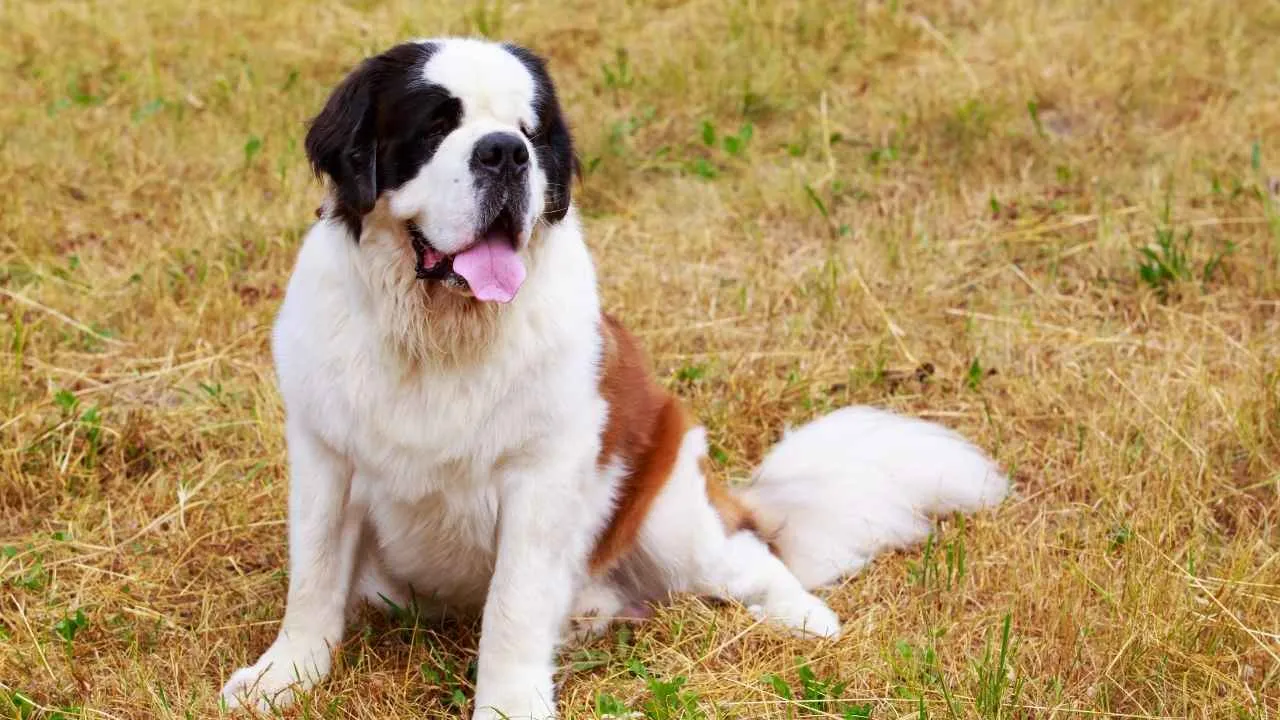
These giant, powerful dogs were originally developed in the Swiss Alps for search-and-rescue work and became known for helping locate people buried by avalanches.
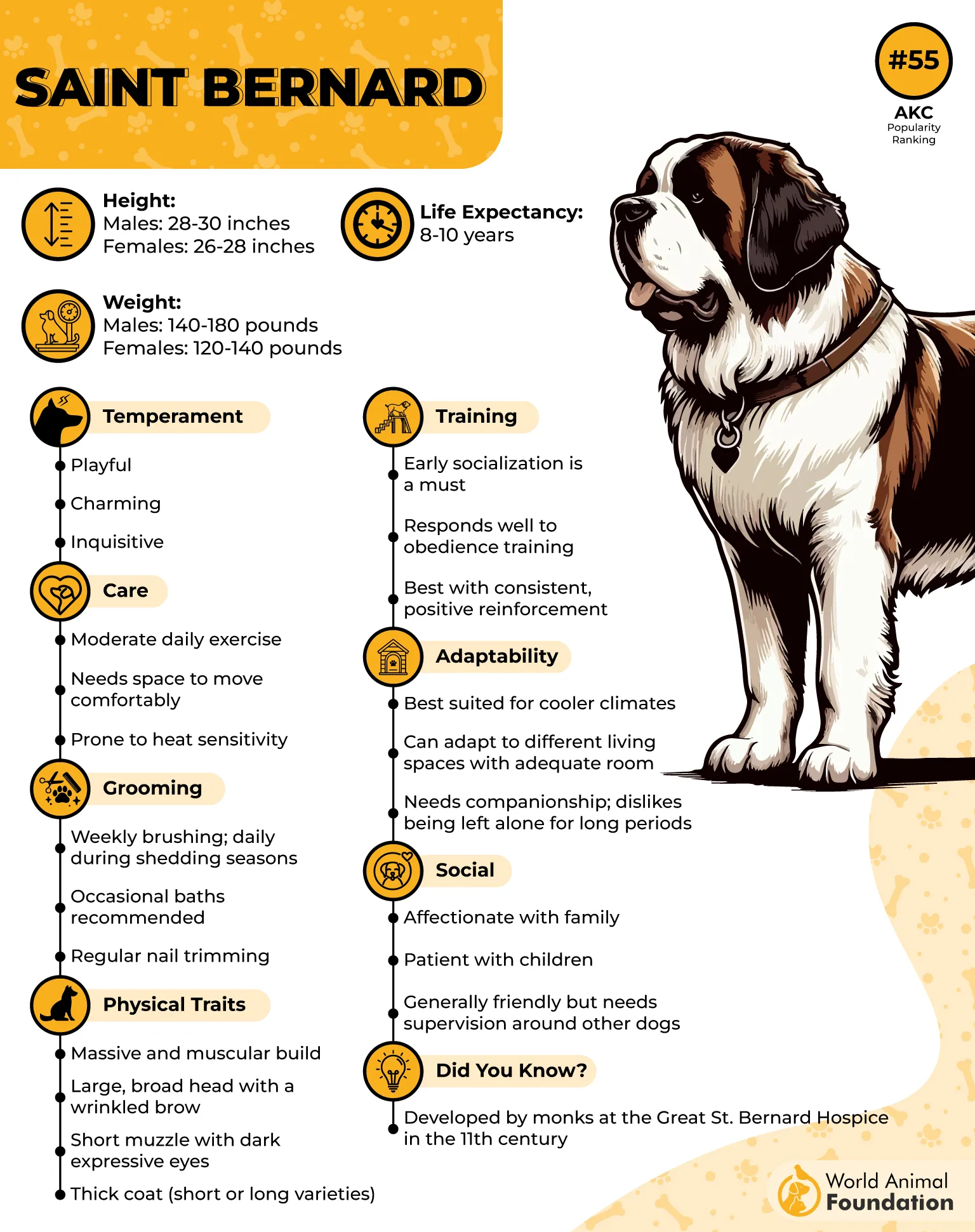
Their massive bodies, floppy ears, droopy eyes, wrinkled foreheads, and distinctive red-and-white or brindle-and-white coats give them an unmistakable appearance. At the same time, their calm and friendly nature makes them one of the best family dogs.
Personalities and Daily Life
Saint Bernards are loving, gentle, patient, social, and generally laid-back. They have moderate energy and do not need strenuous exercise, but they benefit from daily walks, relaxed outdoor activities, and time with their families.
Chewy says they usually do well with children and other pets when properly socialized, although their enormous size means young children should be supervised around them.
Saint Bernards are highly people-oriented and enjoy participating in family activities, so they may become unhappy or develop separation anxiety if left alone for long periods.
Care and Training Needs
Saint Bernards are intelligent and eager to please, but they can occasionally be stubborn, making early, consistent training and socialization important. Positive reinforcement works well with this gentle breed.
Their coats may be short and smooth or long and rough, and regular brushing helps manage seasonal shedding.
They also tend to drool heavily, so keeping the area around their mouth clean is important. Because they are a giant breed, maintaining a healthy weight is essential to reduce strain on their joints.
Conclusion
Choosing a calm and lazy dog breed is about more than finding a dog that enjoys lounging at home. Breeds like the English Bulldog, Clumber Spaniel, and Saint Bernard each offer an affectionate and gentle nature, but they still have different exercise, grooming, training, and care needs.
Understanding these differences can help you choose a companion that fits naturally into your home and daily routine. Before bringing one home, consider your available space, time, activity level, and ability to meet the breed’s specific needs.
The calmest dogs still need attention, companionship, training, and proper care. And when those needs are met, they can become wonderfully loyal companions who bring a relaxed and loving presence to everyday life.
