




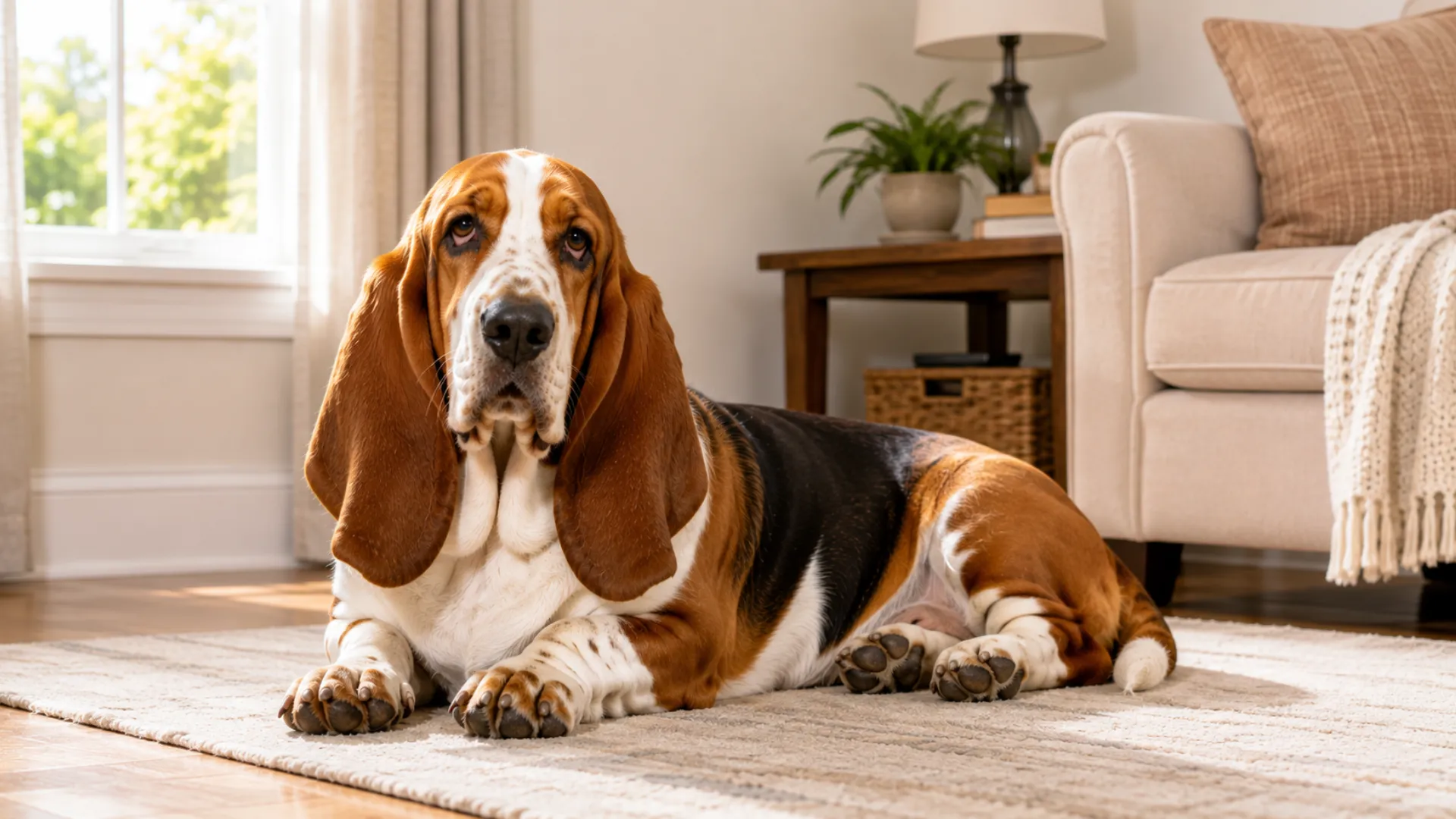
Some dogs follow their owners around like unpaid security guards, even when the destination is only the kitchen. Others are more likely to claim a comfortable bed, watch the household from a distance, and quietly enjoy their own company. Calm, independent breeds may find reasonable alone time easier, but their relaxed attitude should never be mistaken for a lack of emotional or physical needs.
Breed history can help explain why certain dogs are comfortable making their own decisions. Scent hounds once followed trails independently, palace companions learned to rest without constant activity, and livestock guardians watched animals for long periods without direct supervision.
Let’s talk about the best dog breeds that stay composed even when they have to stay alone for several hours.
Composed Dog Breeds That Stay Still When Alone
1. Basset Hound
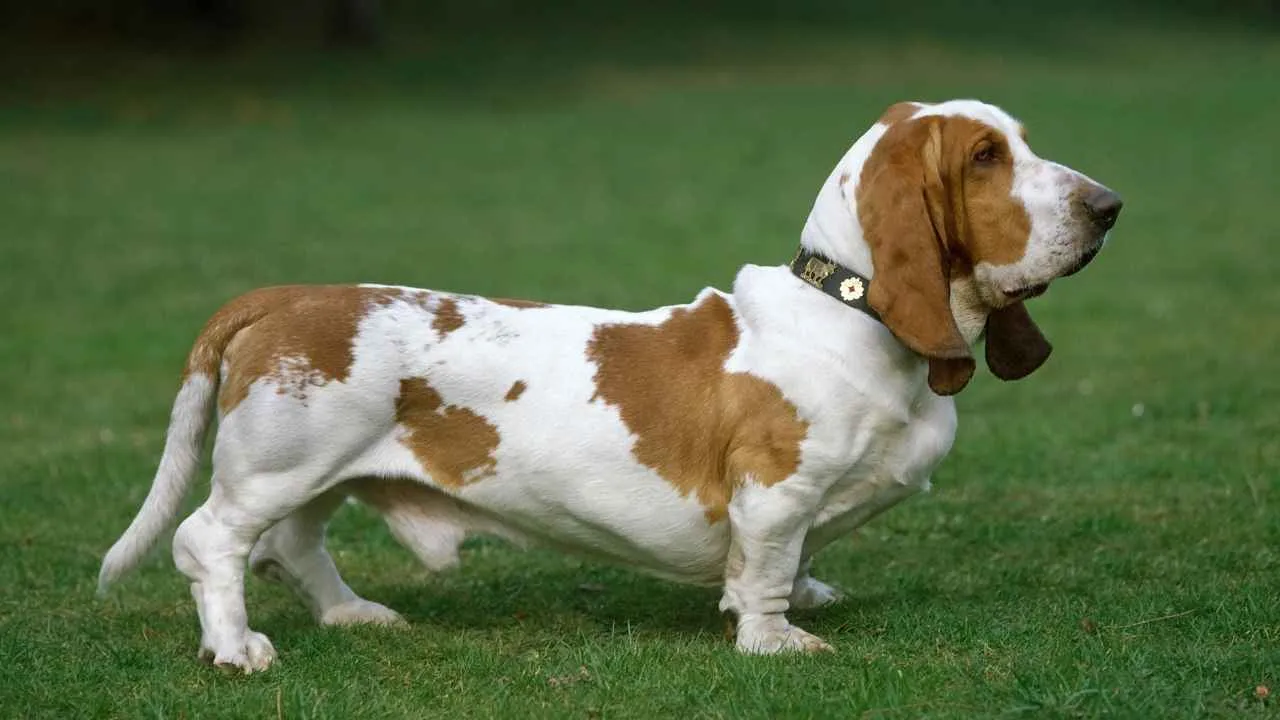
The Basset Hound looks as though it has already completed a long workweek and would now appreciate complete silence. Purina mentions that this low-set scent hound is known for moving at a deliberate pace and settling comfortably after suitable exercise.
Their independent personality comes from generations of scent work in which dogs had to follow a trail without constant human direction. That self-reliance can help them relax without requiring nonstop attention, but it also makes obedience training a patience-building experience.
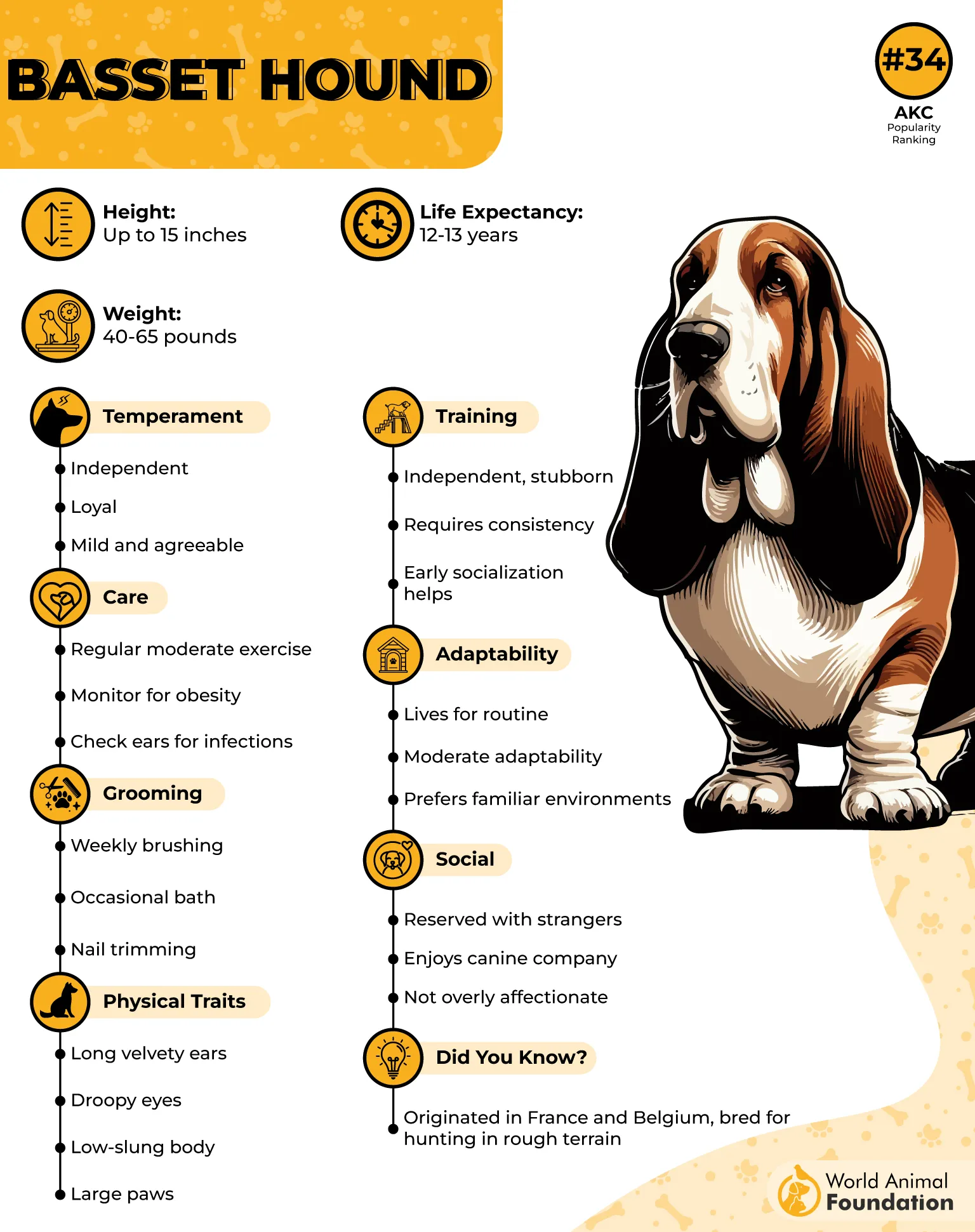
A moderate daily walk gives the Basset time to move, sniff, and process its environment before being asked to rest. Food puzzles and safe scent games can keep the brain occupied during short absences, while protected rubbish bins and cupboards prevent less desirable investigations.
Owners should not assume that a motionless Basset is automatically happy, because quiet dogs can still experience separation stress. Use a camera occasionally to check for hidden pacing, whining, drooling, or repeated trips to the door.
2. Lhasa Apso
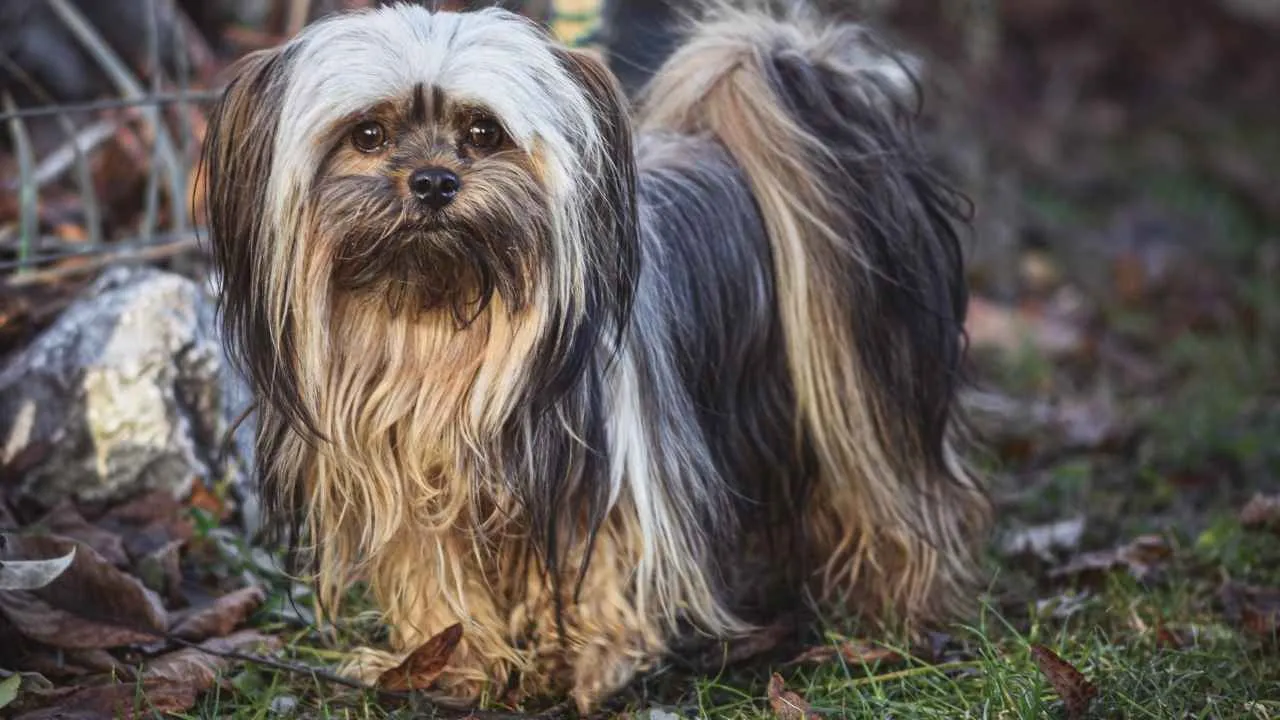
The Lhasa Apso is small, elegant, and blessed with the confidence of a dog that once supervised entire monasteries. Developed as an indoor sentinel in Tibetan palaces and Buddhist buildings, it learned to detect changes without constant stimulation.
PetMD describes the breed as independent and notes that Lhasa Apsos rarely struggle with separation anxiety compared with many more dependent companion dogs. This does not guarantee that every.
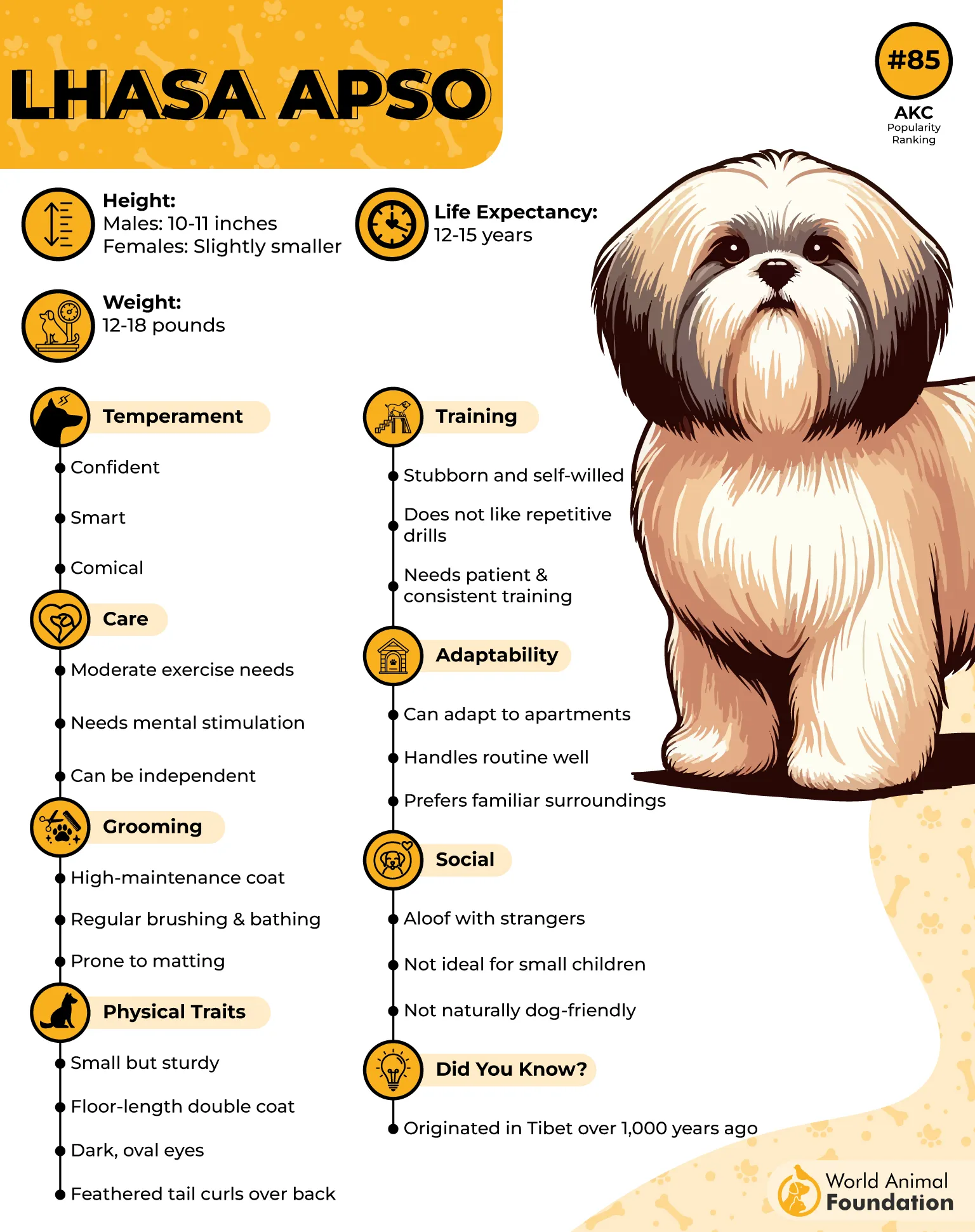
Lhasas do not require extreme exercise, but daily walks, opportunities to sniff, and indoor games still matter. Their alert nature can turn hallway noises, delivery workers, and passing neighbors into official announcements, so curtains or a quiet resting room may help reduce barking.
Training should be creative and positive because this intelligent breed can become bored by endless repetition. Practise short departures after exercise, leave a safe activity, and return before the dog becomes worried.
3. Pekingese
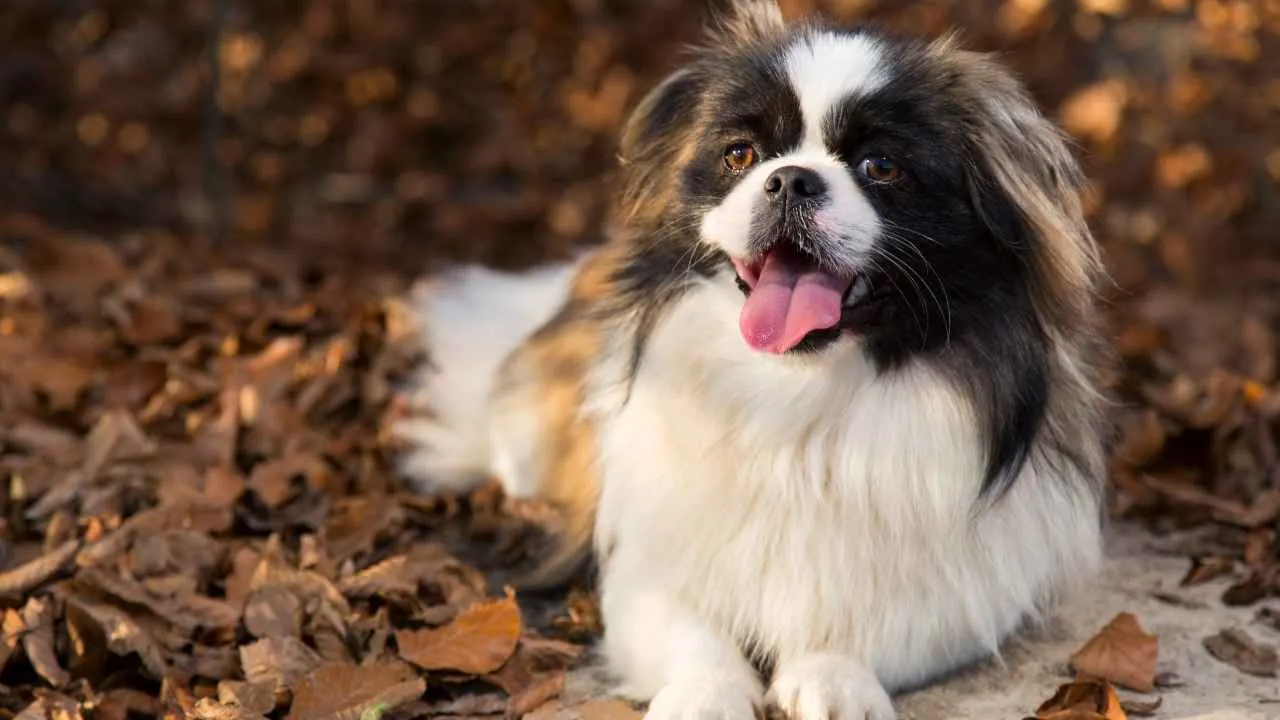
The Pekingese has centuries of palace history behind its calm, slightly royal demeanor. These compact companions were created for the ruling classes of ancient China and are known for being affectionate yet serenely independent.
Their long coat and rolling movement create the impression of a tiny royal cushion travelling across the floor. Once that cushion selects a resting spot, it may remain there until food, visitors, or a suspicious sound changes the schedule.
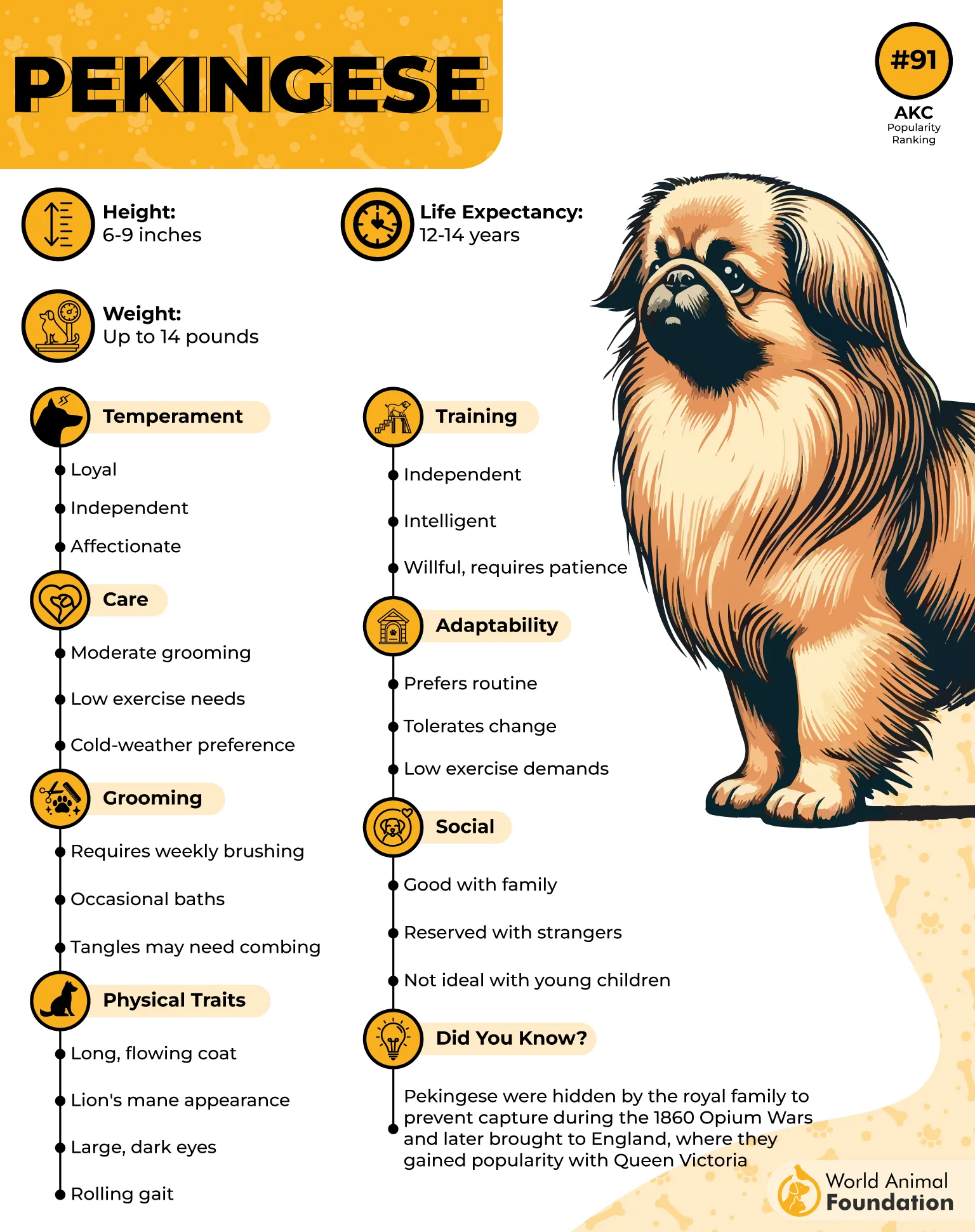
This small dog breed is relatively low-energy and generally requires less intense exercise than active sporting or herding dogs. Short walks, gentle indoor play, and calm exploration may be enough for many healthy adults.
Independence does not make training optional, because Pekes can be self-willed and strongly opinionated. Short reward-based sessions help teach settling, quiet behavior, doorway manners, and acceptance of a predictable daily routine.
Their short facial structure also means that alone-time conditions must be cool, well-ventilated, and carefully managed. A calm dog still needs physical comfort, temperature control, fresh water, and someone available to check on its well-being.
4. Tibetan Spaniel
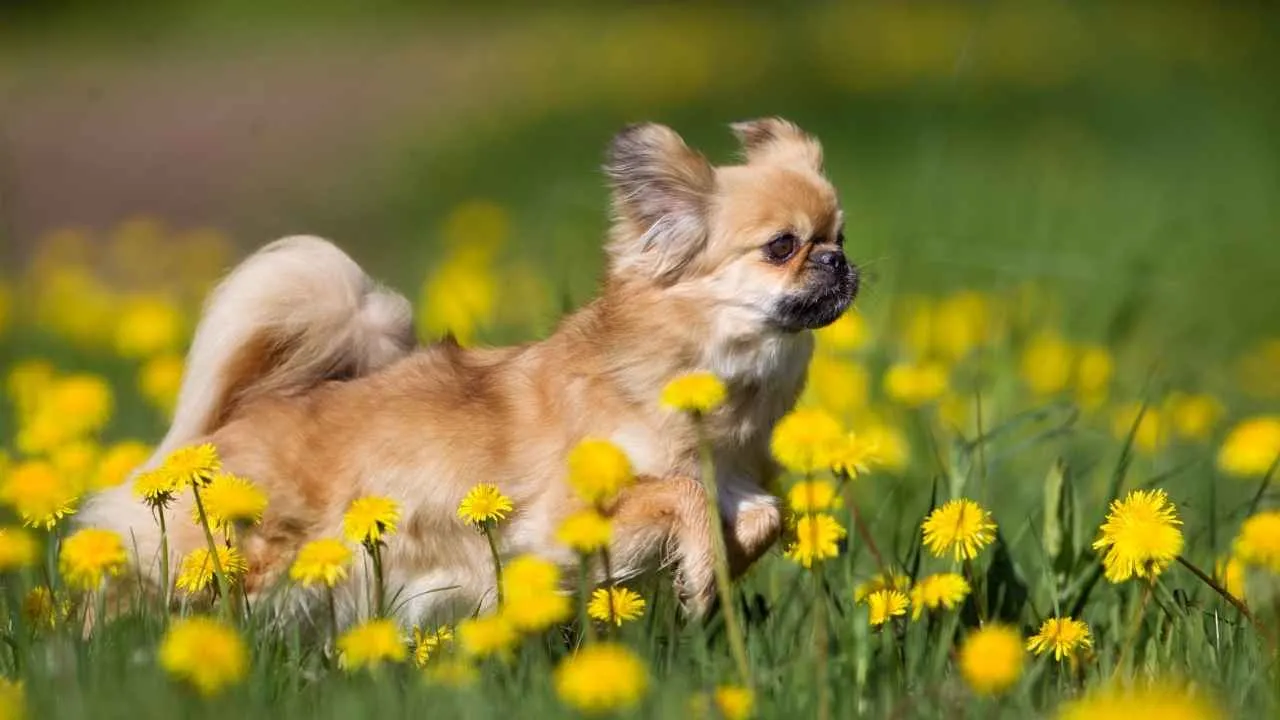
The Tibetan Spaniel is a small observer with major lookout-tower energy. These dogs once worked as sentinels on monastery walls, watching the surrounding area and alerting people when something unusual appeared.
Despite its name, the Tibetan Spaniel is not closely related to traditional gun-dog spaniels. Its historical role was closer to that of a companion, comforter, and little watchdog living beside Buddhist monks.
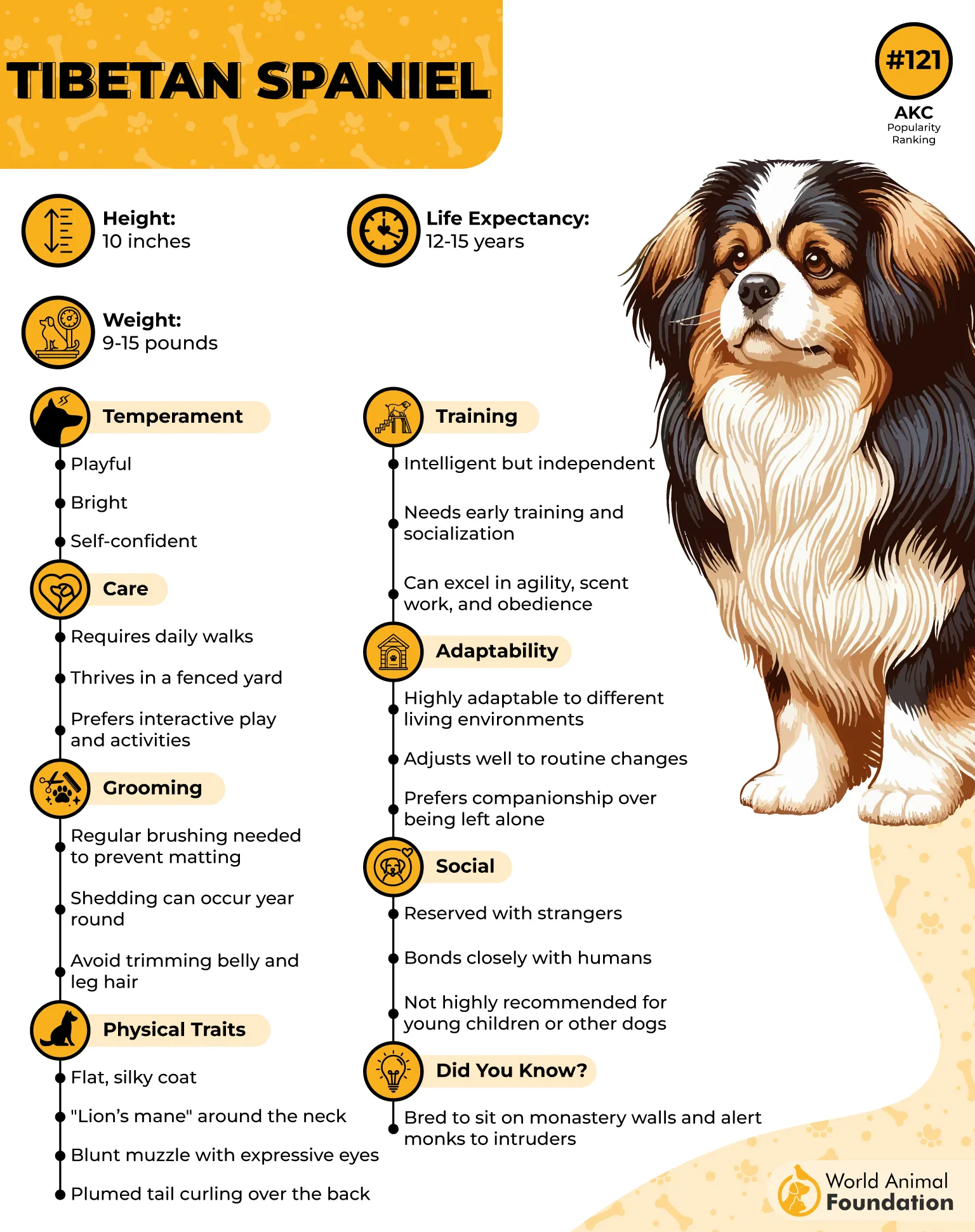
This breed is intelligent, independent, gentle, and playful. Those qualities allow many Tibbies to switch between short periods of fun and longer stretches of peaceful observation. They are not lifeless couch decorations, but they usually understand that not every minute requires a new activity.
A window seat can provide entertainment, though a busy street view may prompt the watchdog to bark repeatedly. Closing curtains, using privacy film, or placing the bed in a quieter room can help the dog remain settled instead of announcing every bicycle.
These smart dogs form very close bonds with their people, so their independence should not be mistaken for emotional distance. Build absence training slowly and check that the dog is actually resting rather than silently watching the door in distress.
5. Chow Chow
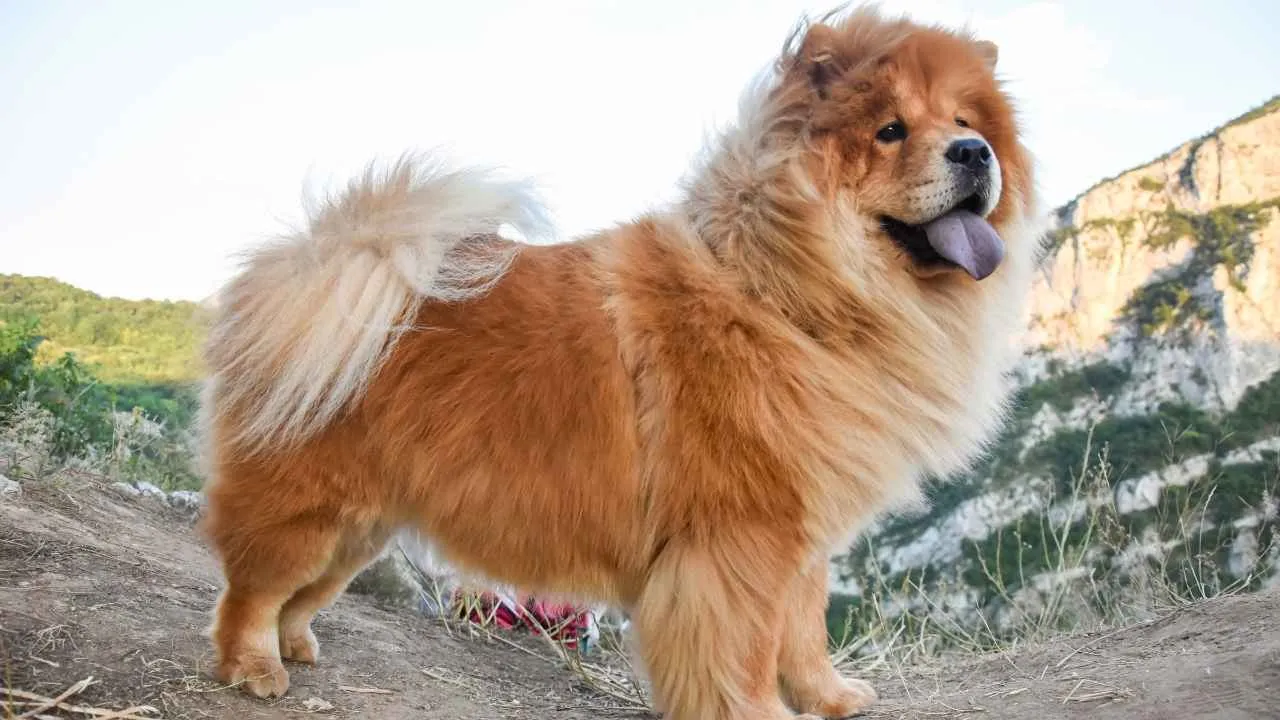
The Chow Chow carries itself like a serious housemate that pays rent through dignity alone. Calm, intelligent, loyal, and independent, the breed often prefers quiet observation to constant social performance.
A Chow’s self-contained temperament may make brief absences easier than they would be for an intensely clingy breed. However, aloof behavior can hide discomfort, so owners should still watch for changes in appetite, pacing, barking, or destructive chewing.
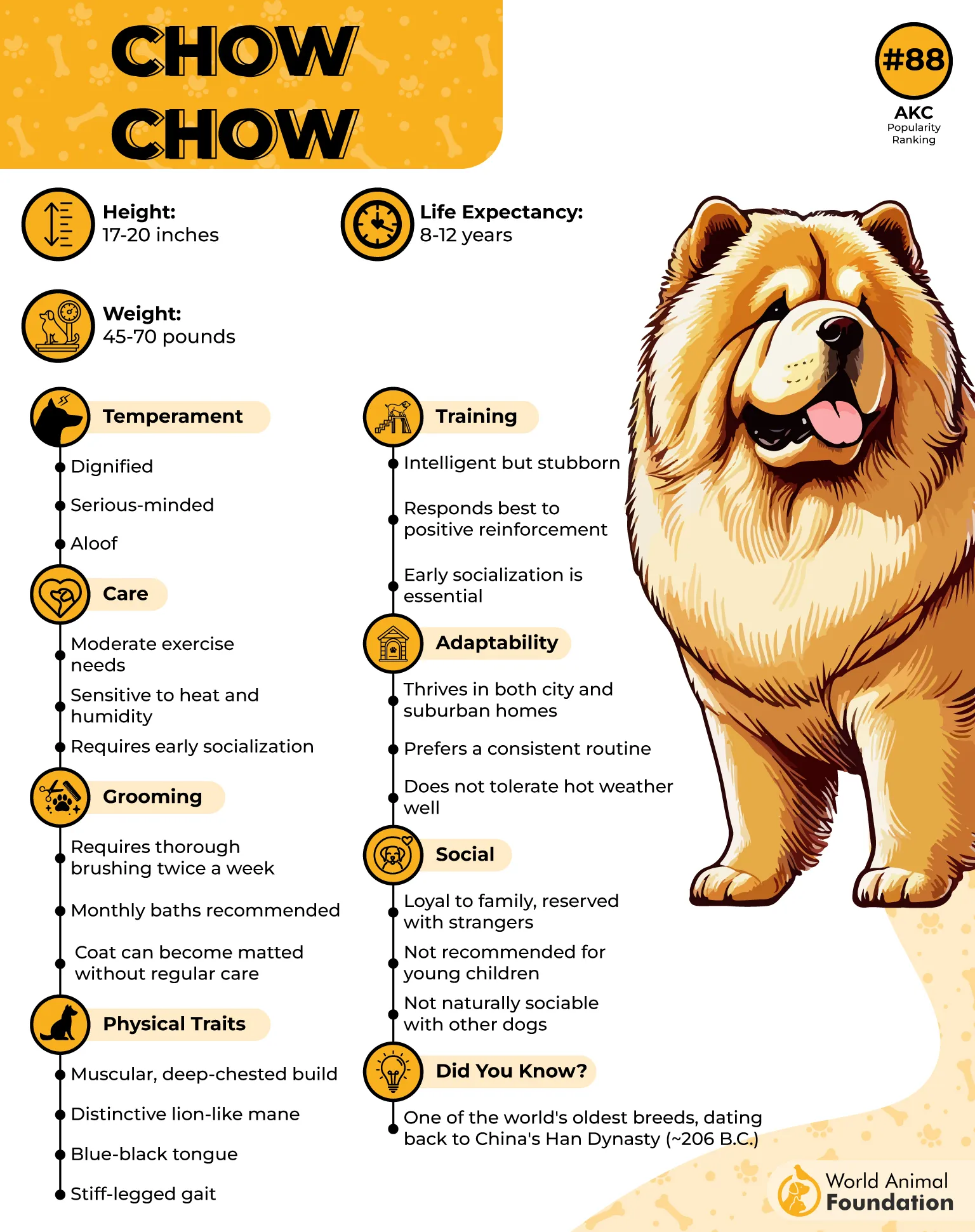
Early socialization and consistent training are essential because calm reserve can otherwise become suspicion of unfamiliar people or situations. Reward-based lessons and positive reinforcement should cover settling, accepting visitors, walking politely, and responding when called away from a doorway or window.
Temperature control is especially important because the Chow’s dense coat can make hot spaces uncomfortable. Provide cool flooring, shade, ventilation, fresh water, and a safe indoor environment before leaving the dog for any period.
6. Irish Wolfhound
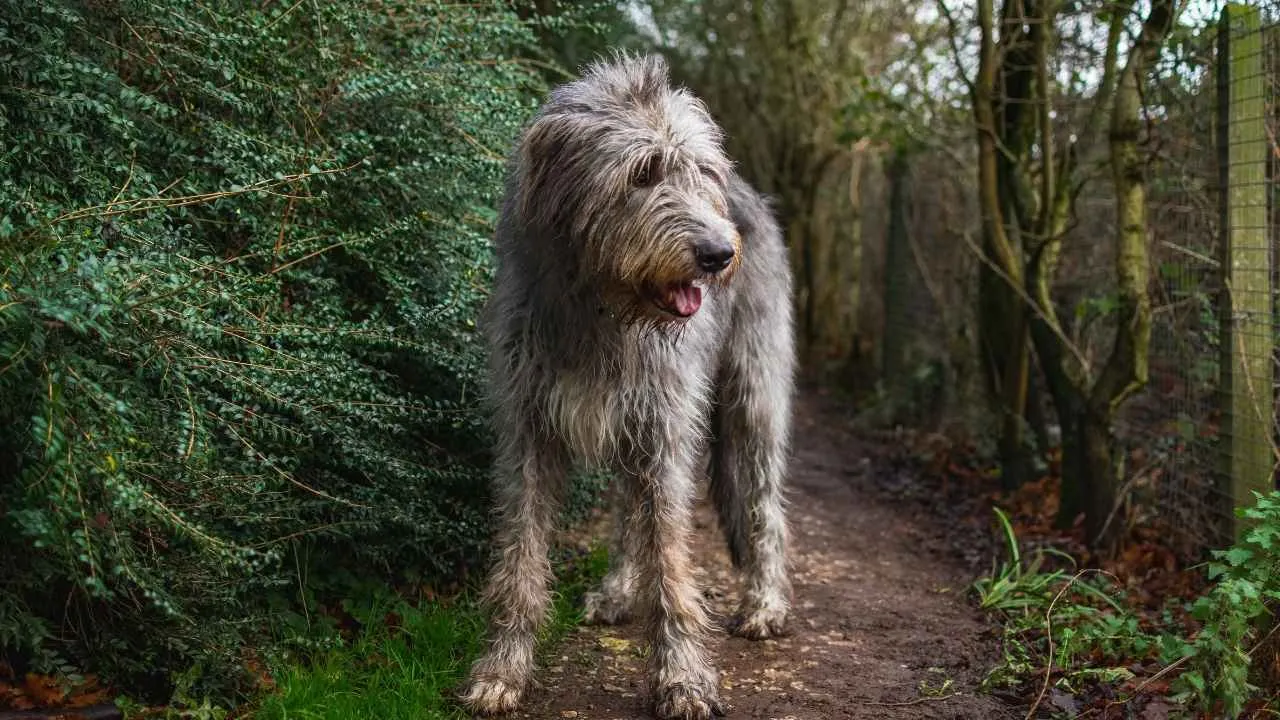
The Irish Wolfhound is enormous, dignified, and often surprisingly quiet inside the home. The AKC describes the breed as courageous and kind, and as one of the most serene canine companions. It may look like medieval castle security, but its modern personality is generally far more gentle than suspicious.
A mature dog may stretch across a rug for hours after receiving appropriate exercise. Its ability to turn into a silent, long-legged piece of furniture is one of the breed’s most charming indoor talents.
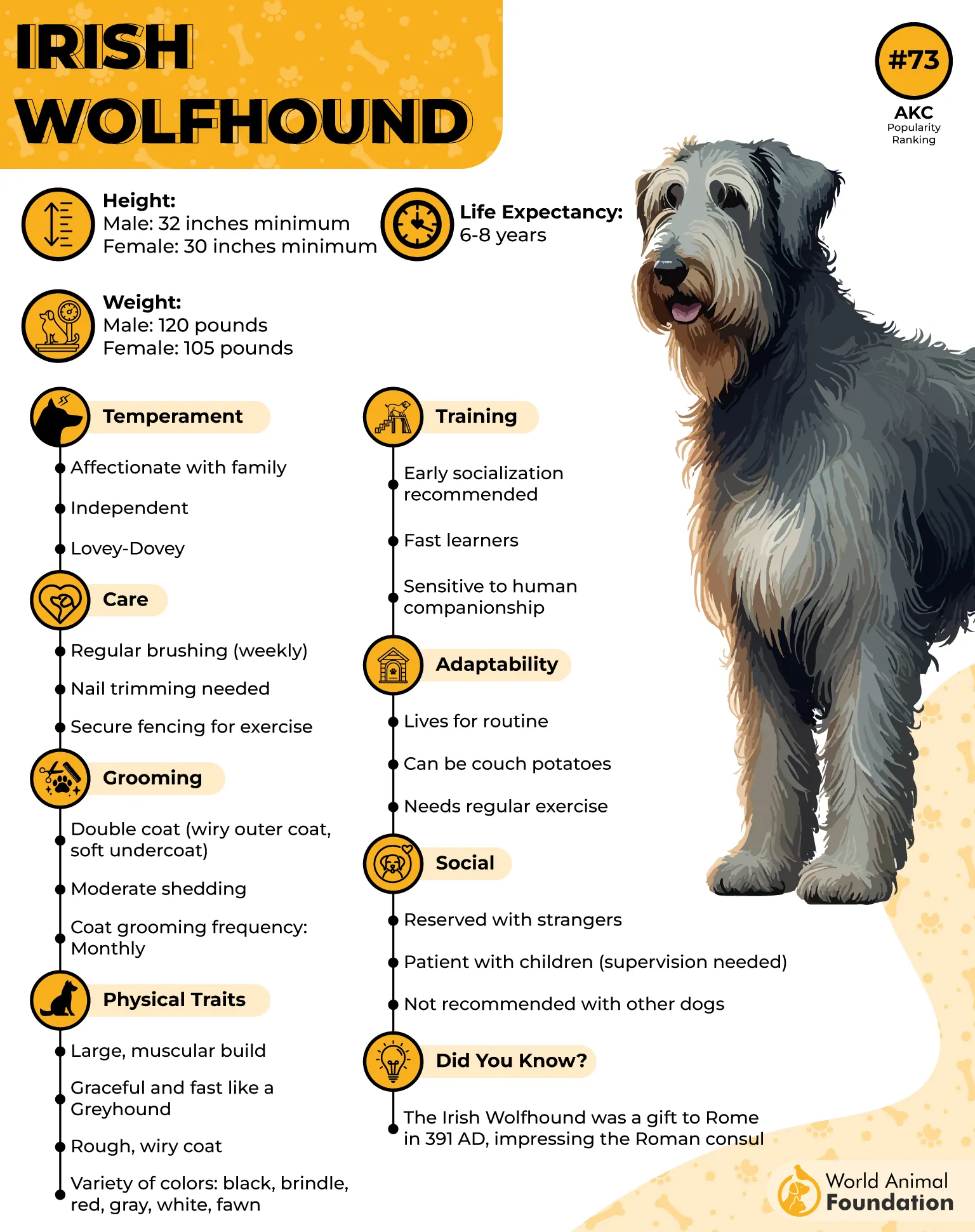
Their hunting history required courage and independent movement, yet today’s Wolfhounds are strongly connected to their families. They are not natural guard dogs and are generally alert without being highly suspicious or aggressive. This means their calmness comes from steady temperament rather than a desire to patrol an empty house.
Puppies are a very different story because Wolfhound puppyhood can last more than a year. Leaving an immature giant unsupervised for long periods can lead to unsafe chewing, damaged furniture, or accidental chaos on an industrial scale.
7. Great Pyrenees
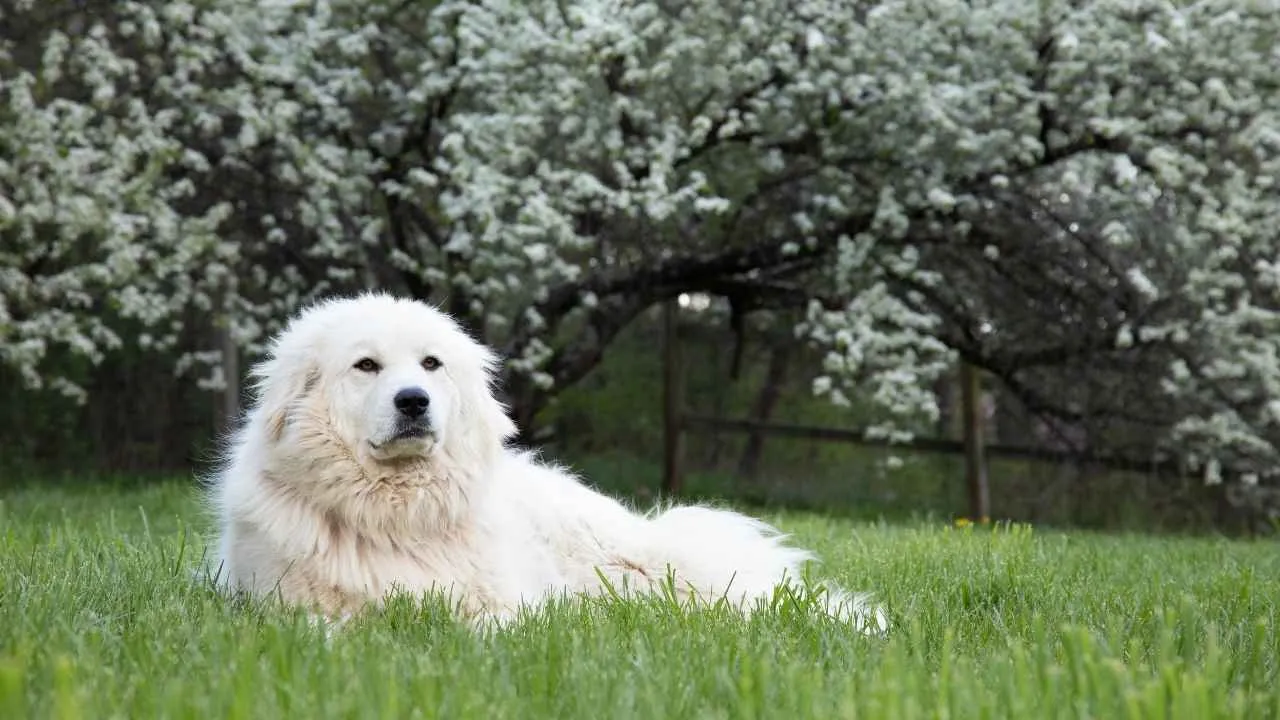
The Great Pyrenees was practically designed to remain calm while carrying serious responsibility. These livestock guardians stayed beside the sheep, watched the land, and protected the flocks without a shepherd to supervise every decision.
This breed is patient, calm, and comfortable making independent decisions. It can conserve energy during long quiet periods rather than requiring constant games or high-speed exercise. That ability may support relaxed alone time, provided the dog has a secure environment.
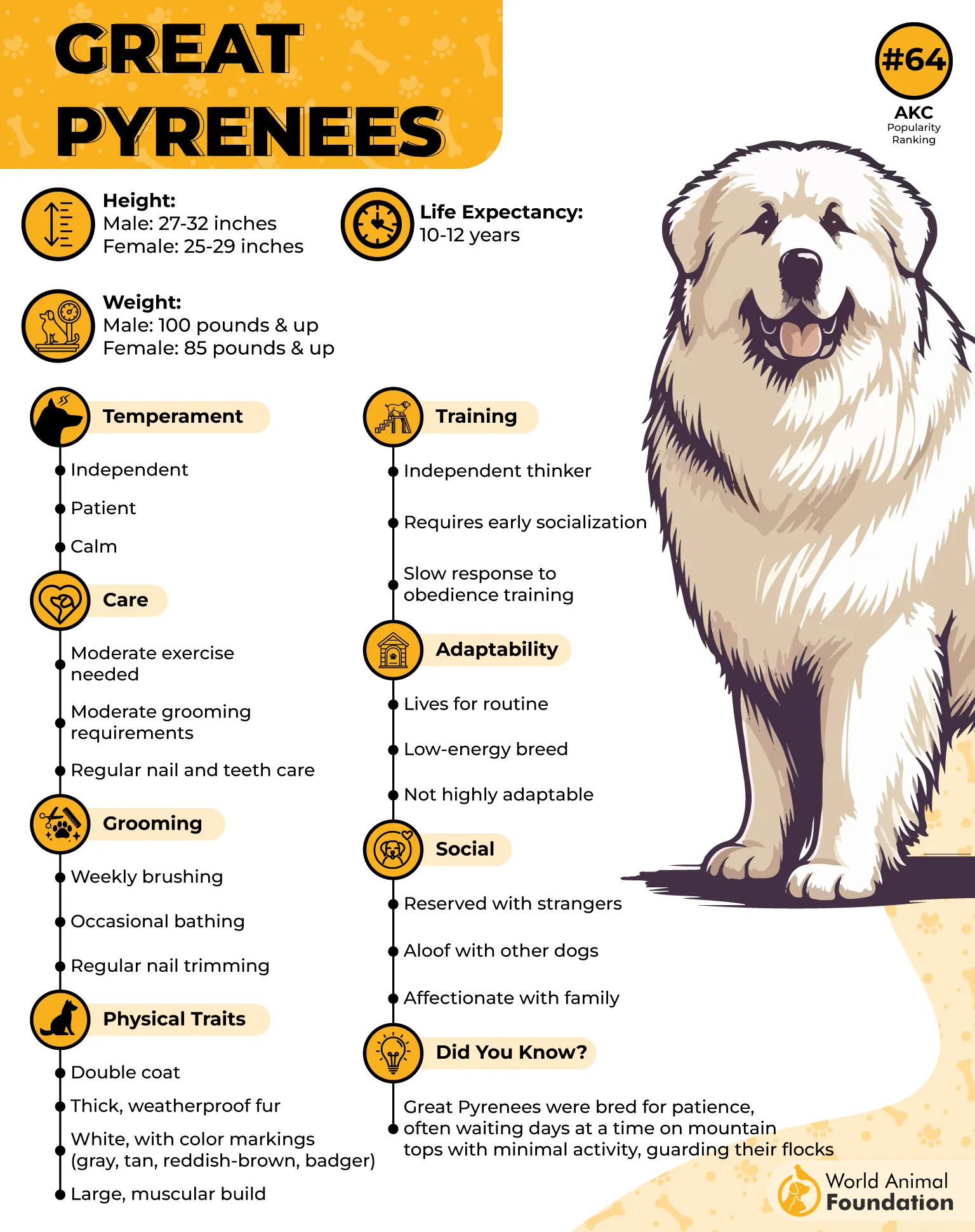
The major plot twist is barking, because Great Pyrenees tend to become especially alert at night. A dog that appears completely still may suddenly announce a car door, a passing fox, a distant dog, or a suspicious leaf with a voice capable of travelling across the neighborhood.
Great Pyrenees bond closely with their families and should never be treated as outdoor security equipment. Despite that, they won’t develop separation anxiety if they are left alone. They still need walks, grooming, social contact, training, and regular opportunities to check in with their people.
Conclusion
A calm dog should still receive exercise, a toilet trip, mental enrichment, fresh water, and a comfortable environment before an owner leaves. Alone-time training should begin with seconds or minutes and grow only while the dog remains relaxed.
Boston Terrier, Border Collie, Shiba Inu, German Shepherd, Bichon Frise, Cavalier King Charles Spaniel, Jack Russell Terrier, French Bulldog, and Miniature Schnauzer also form strong bonds with their parents but still showcase low separation anxiety.
The ideal dog does not stay frozen in the same place because it has given up waiting. It is a dog that feels safe enough to sleep, chew a toy, change resting spots, and trust that its person will return. With patient training and responsible scheduling, these composed breeds can enjoy healthy independence without ever feeling forgotten.
