




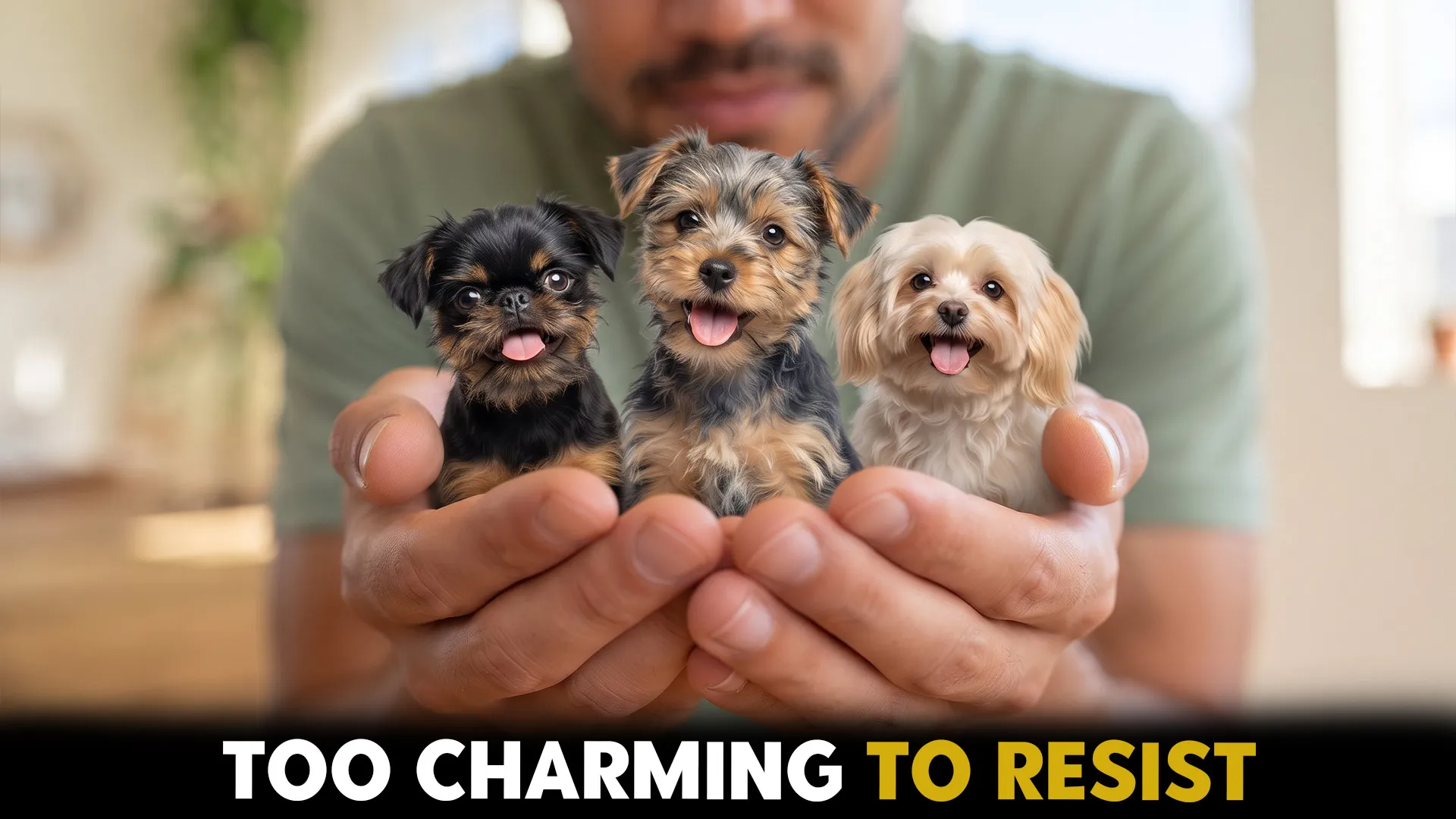
Small dogs can be wonderful companions for people experiencing dog ownership for the first time. Their compact size can make everyday handling, transportation, and indoor living more manageable, although a tiny body does not mean a dog has minimal needs.
Every breed has its own personality, exercise requirements, grooming routine, training style, and potential health considerations. Some small dogs are lively and adventurous, while others prefer staying close to their people.
New owners should consider those differences rather than choosing solely according to appearance.
The seven breeds below offer an interesting mixture of companion dogs, terriers, and rare small breeds.
Their individual histories have shaped very different personalities, giving first-time owners plenty of options to consider.
Charming Mini‑Dog Breeds for New Owners
1. Russian Toy
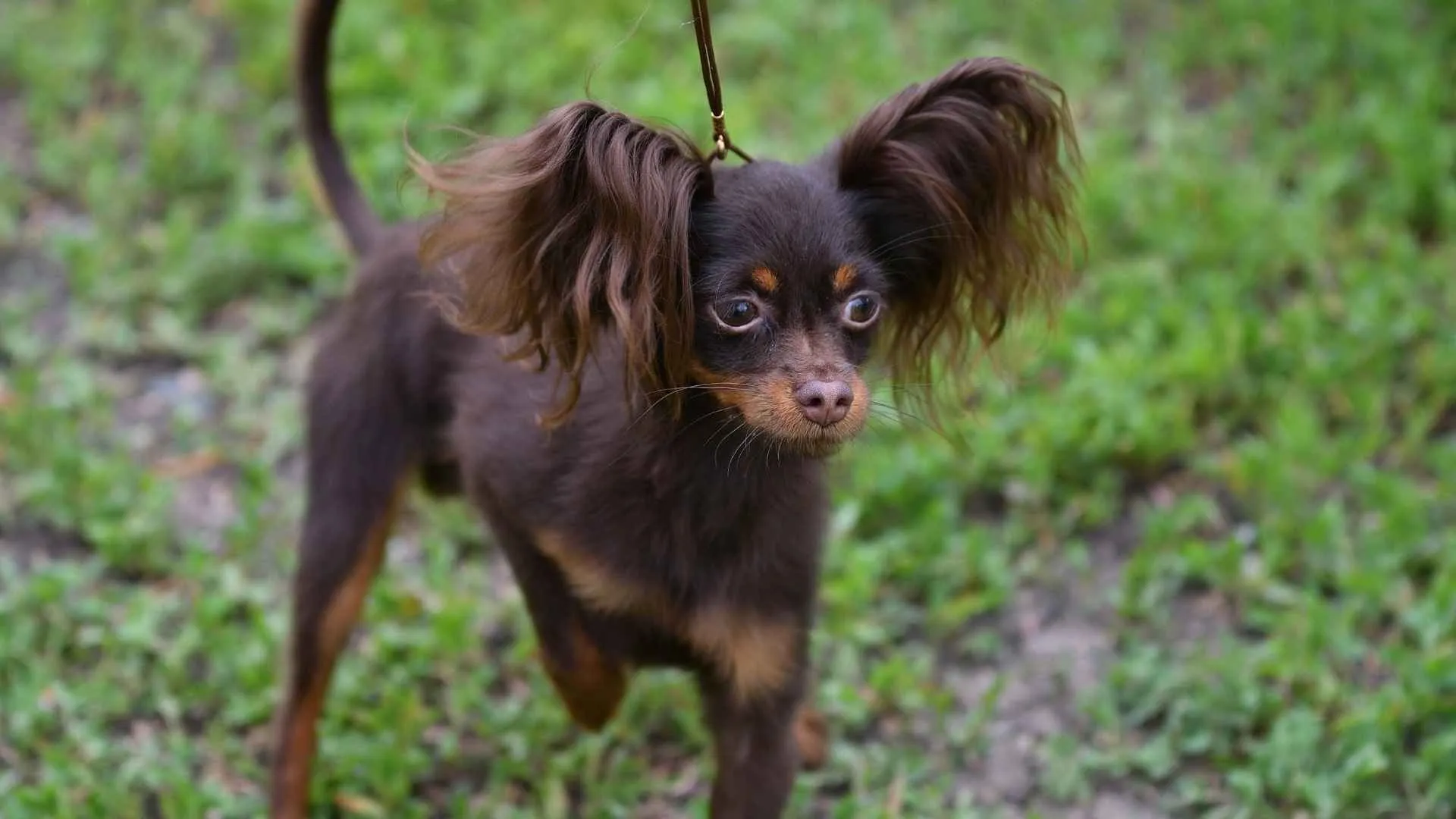
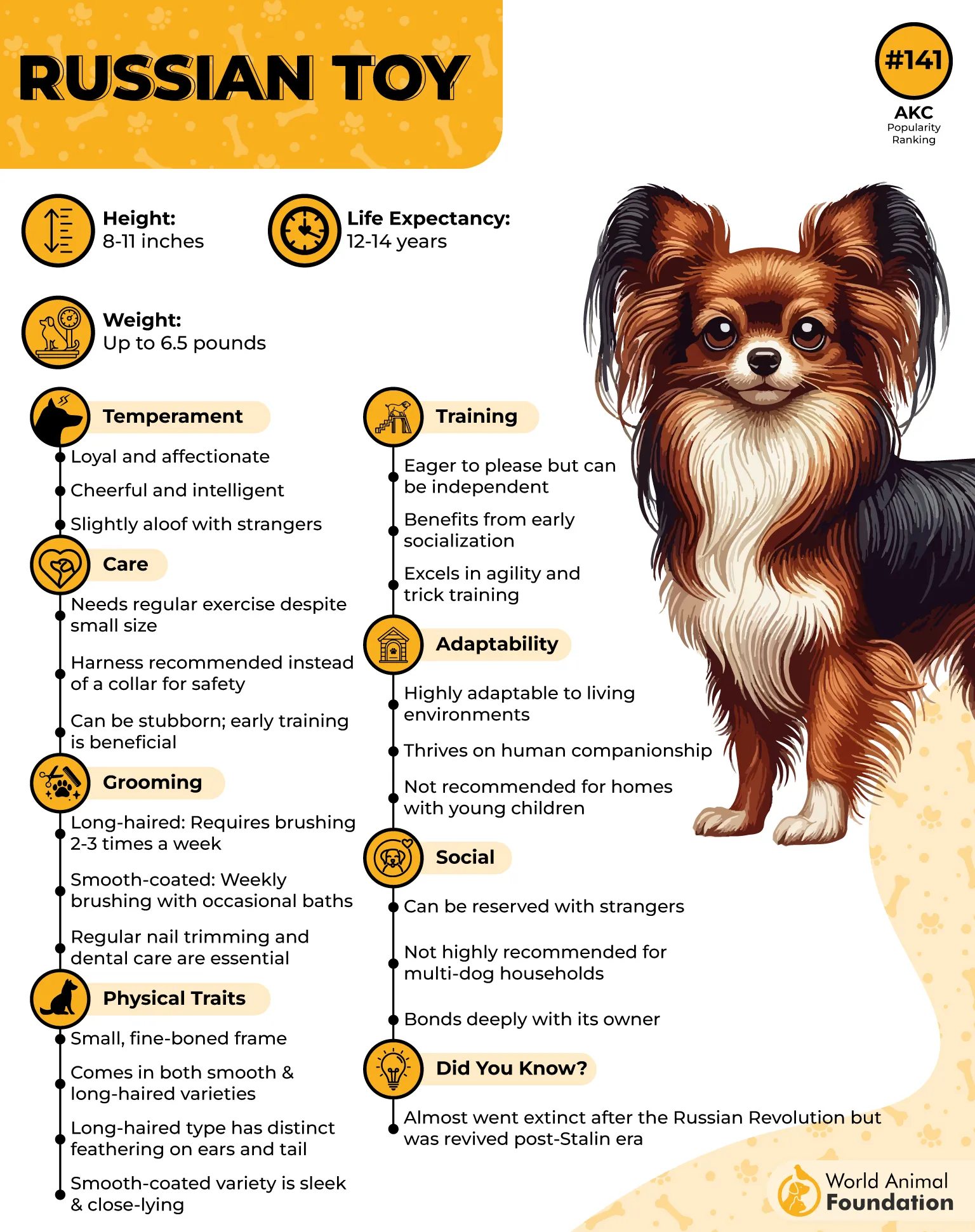
The Russian Toy is a very small companion breed that developed in Russia from small English Toy Terriers and related toy dogs. It became particularly associated with Russian households and eventually developed into a distinct breed with both smooth- and long-coated varieties, as per Royal Canin.
Its tiny stature makes it one of the more compact breeds available, but its personality can be much bigger than its physical size. Russian Toys are often lively, attentive, and strongly attached to their owners.
A Lively Little Companion With a Big Personality
Russian Toys can be affectionate and highly responsive to their families. They often enjoy interactive games and short training sessions, making them entertaining companions for owners who want an engaged little dog.
Their small size means they should be handled carefully, especially around larger dogs and young children. Early socialization can help prevent excessive nervousness or overprotective behavior.
Keep Their Small Bodies Comfortable and Well Supported
Smooth-coated Russian Toys generally need minimal grooming, while long-coated individuals require more frequent brushing to prevent tangles. Regular nail care, dental hygiene, and ear checks should also be part of their routine.
Because very small dogs can be vulnerable to accidental injury, owners should create a safe indoor environment. Appropriate nutrition and regular veterinary examinations are important for supporting healthy development and maintaining their delicate frames.
2. Russian Tsvetnaya Bolonka
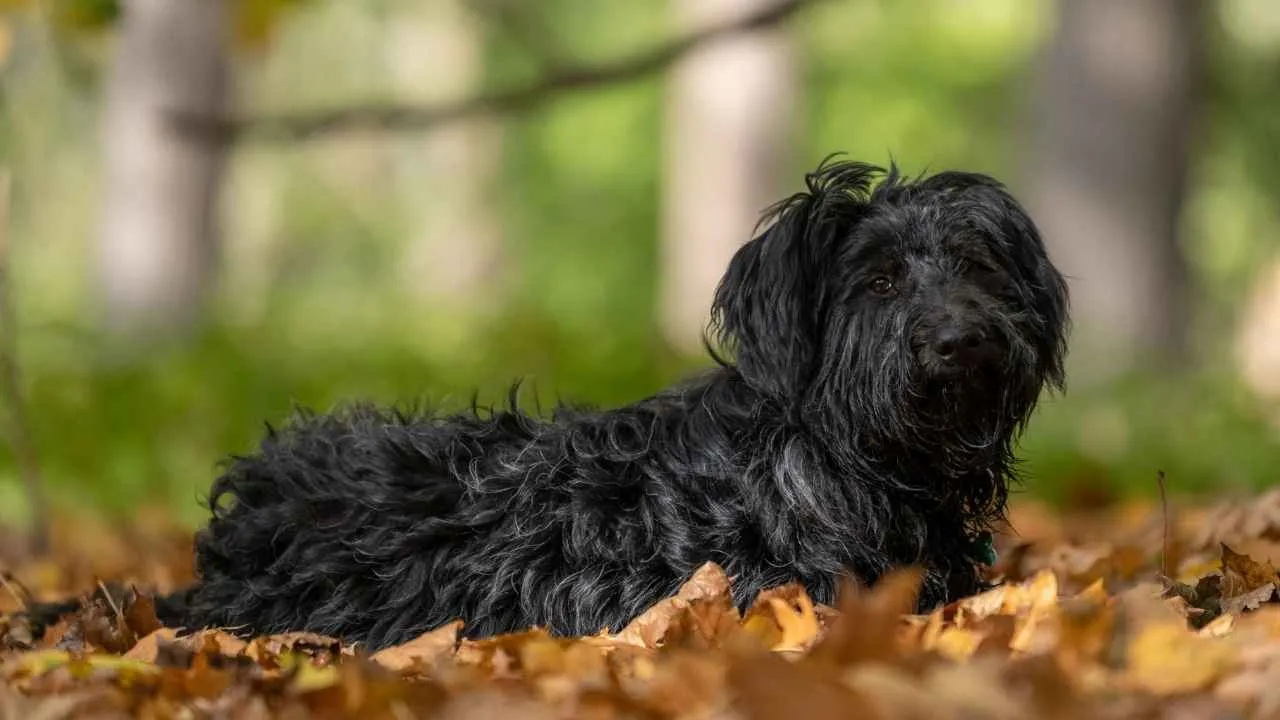
The Russian Tsvetnaya Bolonka is a small companion breed developed in Russia. Its name refers to a colorful lapdog, distinguishing it from the white-coated Bolognese and other related companion breeds.
The breed was developed primarily for companionship and became appreciated for its affectionate nature and manageable size. Its soft, often curly or wavy coat gives it a distinctive appearance, as noted by the AKC.
A Sociable Lapdog With a Gentle Outlook
Russian Tsvetnaya Bolonkas are generally affectionate, friendly, and interested in staying close to their families. Their companion-dog background means they often enjoy participating in ordinary household life.
They can be suitable for people who want a small dog that does not need intense athletic exercise. Even so, regular walks, play, and mental stimulation help prevent boredom and encourage balanced behavior.
Their Fluffy Coat Needs Consistent Attention
Their long, textured coat requires regular brushing to prevent mats and keep the hair manageable. Owners who prefer easier maintenance may choose a shorter pet trim while still maintaining routine grooming.
Dental care is particularly useful for small companion breeds, along with nail trimming and ear checks. Regular veterinary visits and sensible nutrition can help support healthy weight and general wellness.
3. Havanese
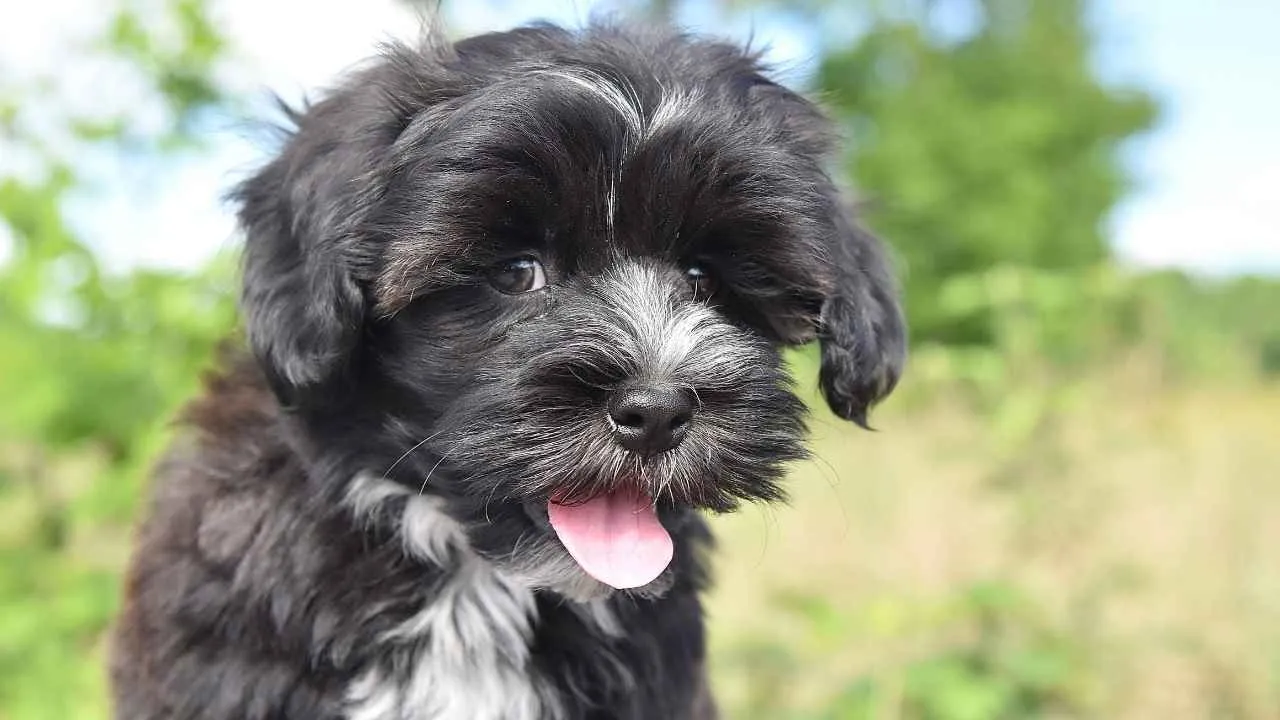
The Havanese developed in Cuba and became closely associated with households seeking affectionate companion dogs. Its small size, silky coat, and cheerful expression helped establish its reputation as a devoted household pet.
Rather than being bred primarily for hunting, herding, or guarding, the Havanese was shaped largely around companionship. Its people-oriented background remains visible in its desire for social interaction.
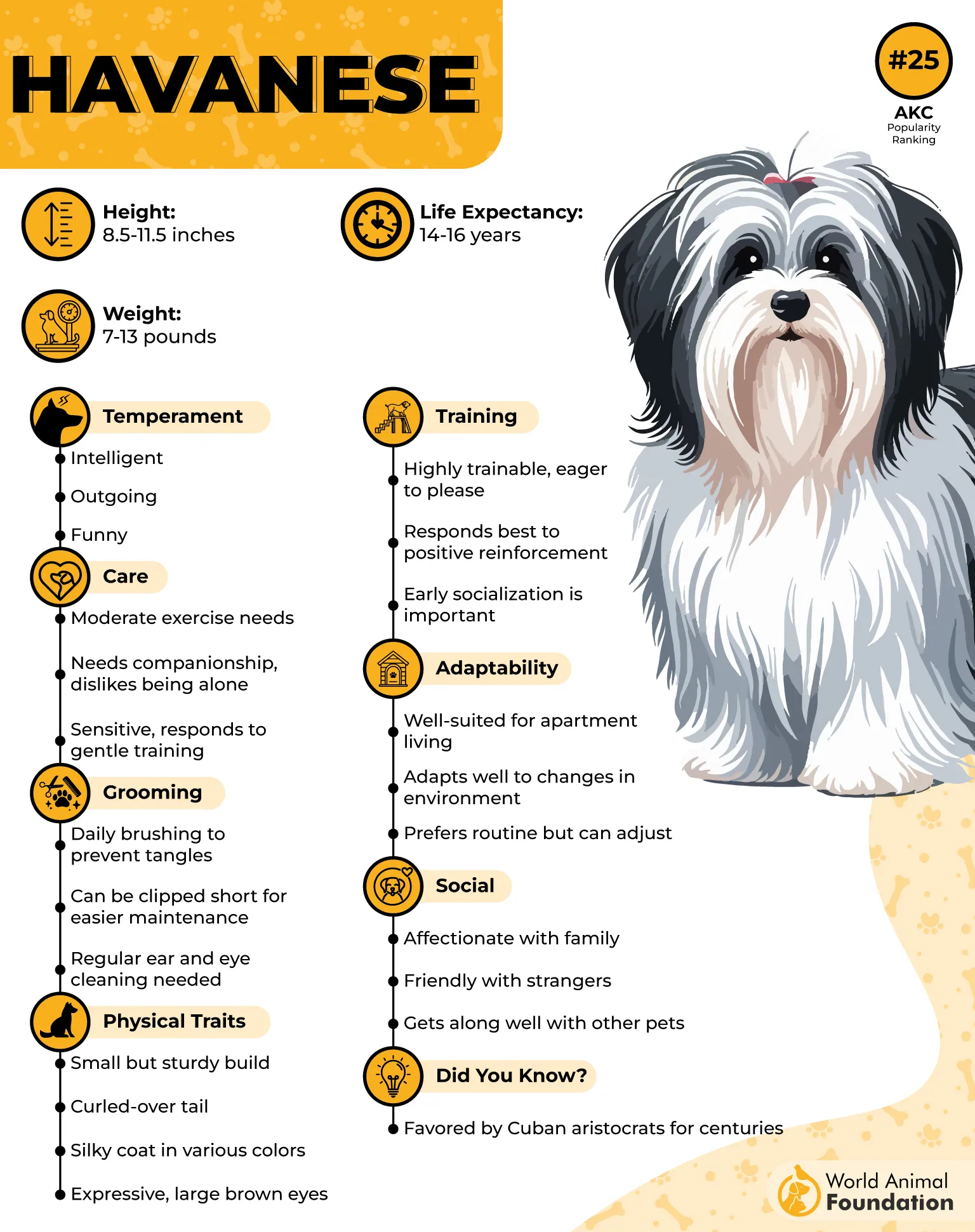
Affectionate, Playful, and Highly People-Oriented
Havanese are often cheerful dogs that enjoy being around their owners. They can be playful without requiring the strenuous exercise expected by many working breeds.
Their intelligence can make them responsive to positive training. They generally benefit from early socialization and gentle instruction that teaches appropriate greetings, household routines, and polite behavior.
Their Silky Hair Requires Regular Grooming
The Havanese has a long, soft coat that can develop tangles without frequent brushing. Owners who keep the coat long should be prepared for regular grooming, while shorter trims can make maintenance easier.
Routine dental care, nail trimming, ear cleaning, and veterinary examinations are also important. Their small size makes careful weight management worthwhile, since excess weight can place additional stress on their joints.
4. Cavalier King Charles Spaniel
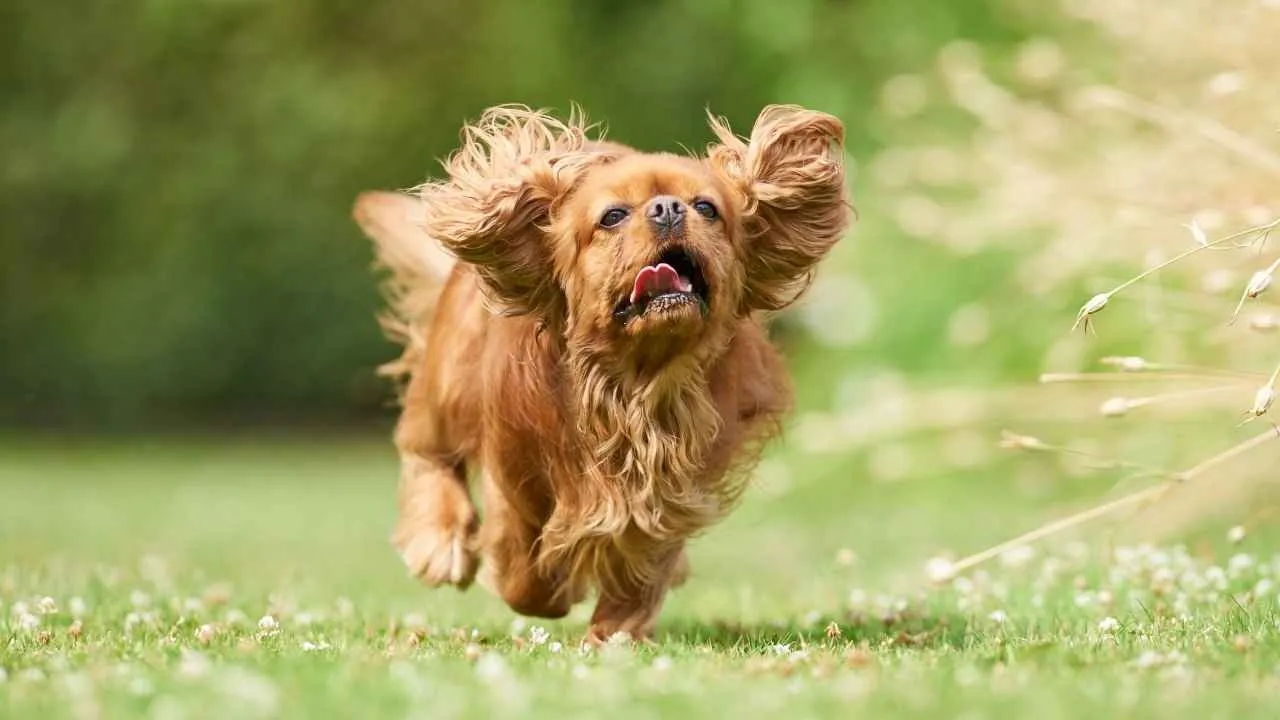
The Cavalier King Charles Spaniel is a British toy breed with a long history as a companion to people in aristocratic and royal households. Its spaniel ancestry is reflected in its feathered coat, expressive eyes, and graceful appearance.
The breed was developed primarily for companionship while retaining some of the lively and affectionate qualities associated with spaniels. Today, Cavaliers are often appreciated for their gentle social nature.
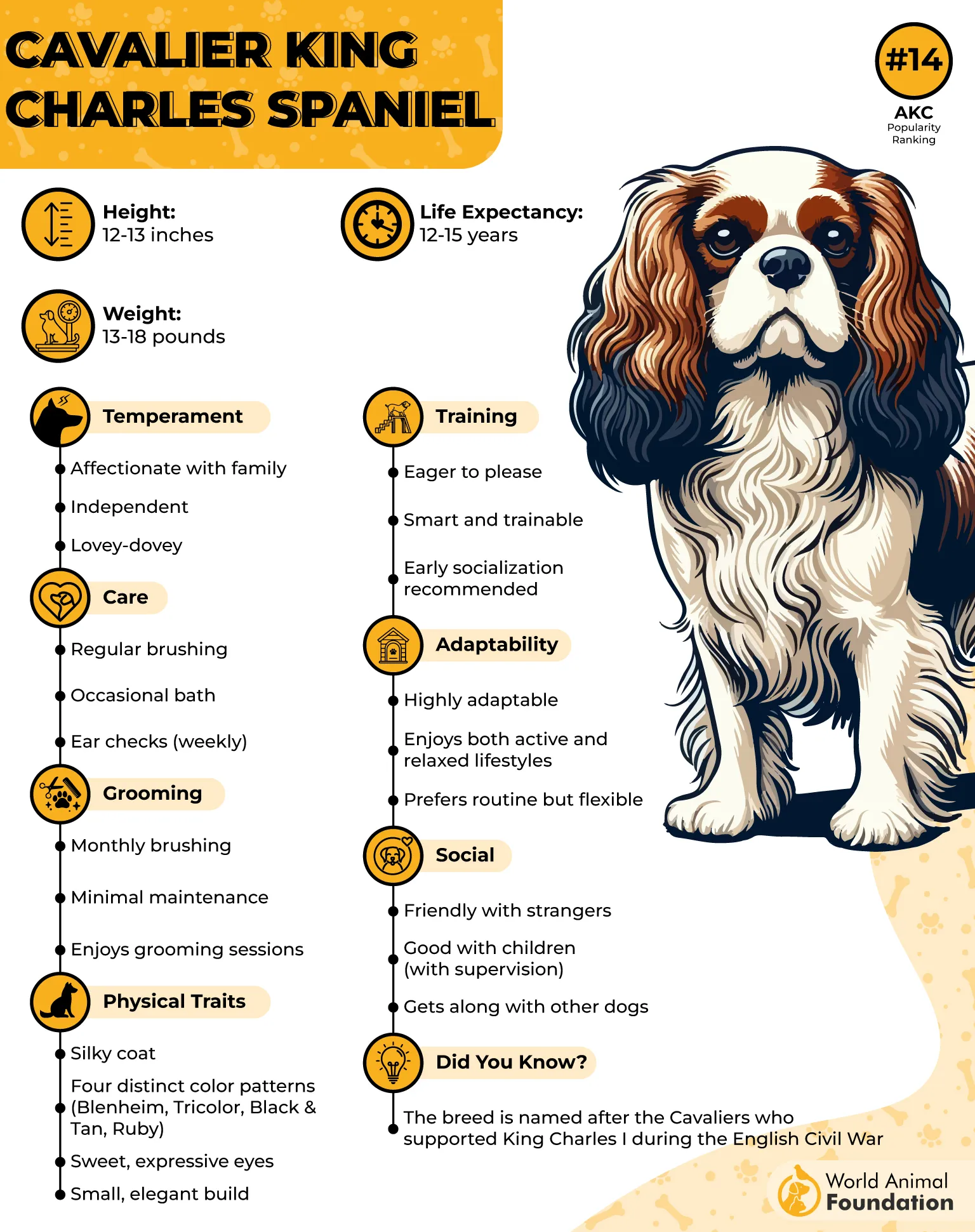
Sweet-Natured, Adaptable, and Eager for Company
Cavaliers commonly enjoy human companionship and can adapt well to different household routines. Their affectionate temperament may appeal to first-time owners looking for an affectionate dog that enjoys close interaction.
They still need daily walks, play, and training. Because they are sensitive dogs, positive reinforcement and calm communication are generally preferable to harsh corrections.
Care for Their Feathered Coat and Monitor Their Health
Their medium-length coat has feathering around the ears, chest, legs, and tail that can tangle without regular brushing. Ear care is especially important because their long, floppy ears can limit airflow.
Owners should also prioritize dental hygiene, healthy weight, nail maintenance, and routine veterinary care. Cavaliers can be predisposed to certain inherited heart and neurological conditions, making appropriate health screening and monitoring valuable.
5. Australian Terrier
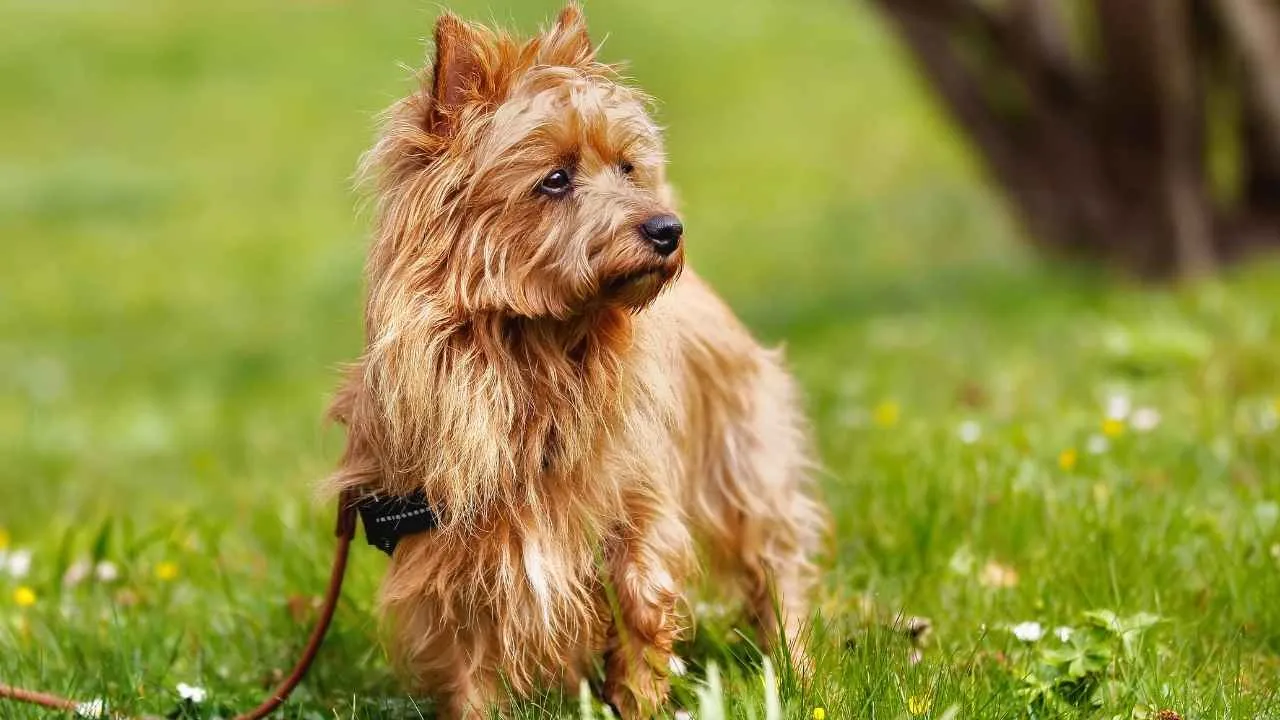
The Australian Terrier was developed in Australia from British terrier stock and became a versatile small working dog. It was used for controlling vermin and assisting around farms and homesteads.
Its compact body was practical for navigating difficult terrain, while its alert nature helped it respond quickly to movement and potential threats. Although tiny compared with many working breeds, the Australian Terrier retains considerable confidence.
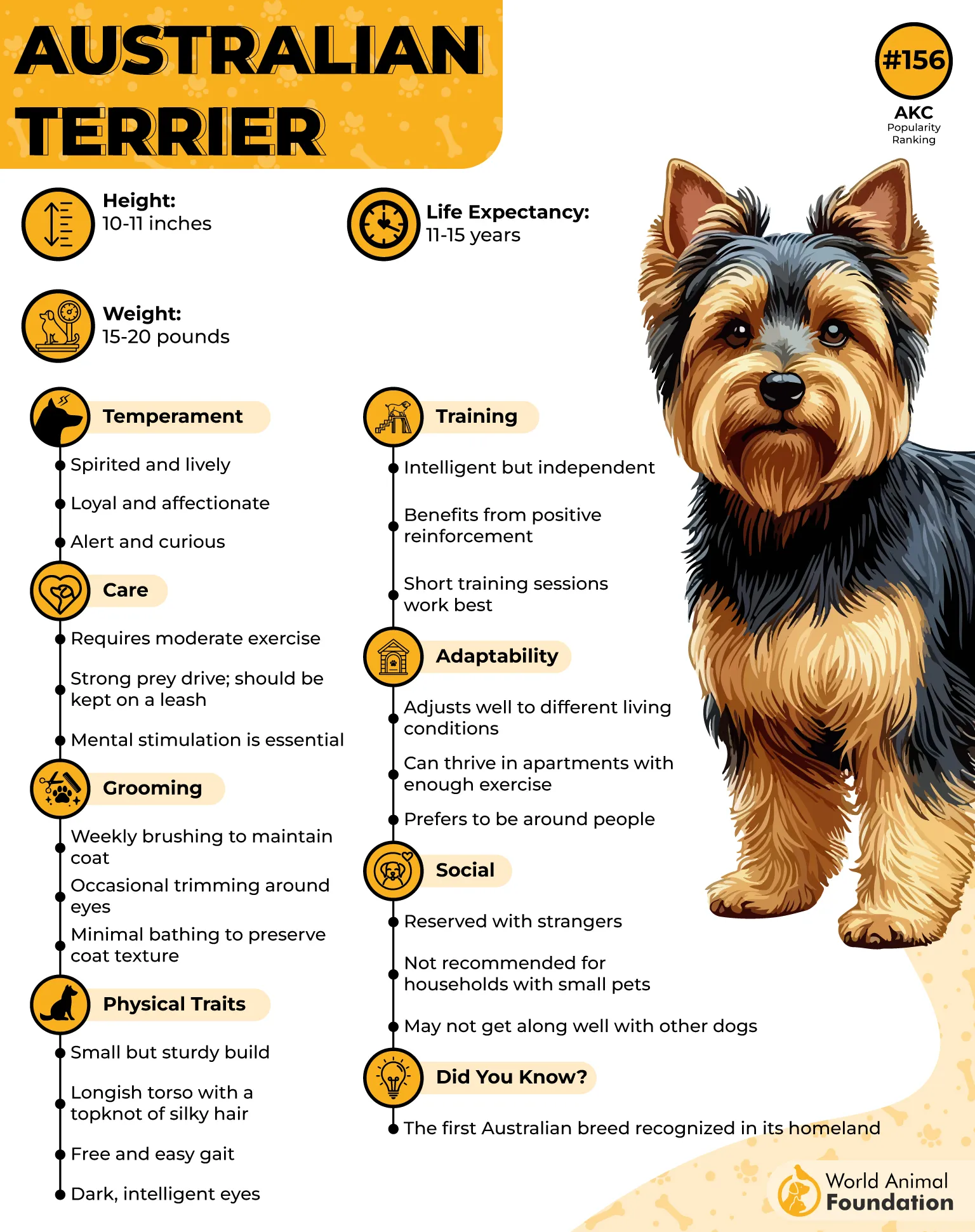
Bold, Alert, and Full of Terrier Character
Australian Terriers are often lively, curious, and confident. They can form close bonds with their families but may retain the independent streak associated with terrier breeds.
They generally benefit from daily walks, games, and activities that allow them to investigate their environment. Early training is useful for managing barking, digging, chasing, and other behaviors that can emerge from their working instincts.
A Practical Coat With Manageable Grooming Needs
Their harsh outer coat and softer undercoat benefit from regular brushing and occasional grooming to keep the coat tidy. Some owners use hand-stripping or trimming depending on the desired coat appearance.
Basic care should also include dental cleaning, nail maintenance, ear checks, and routine veterinary examinations. Maintaining a healthy weight helps support their active little bodies and mobility.
6. Brussels Griffon
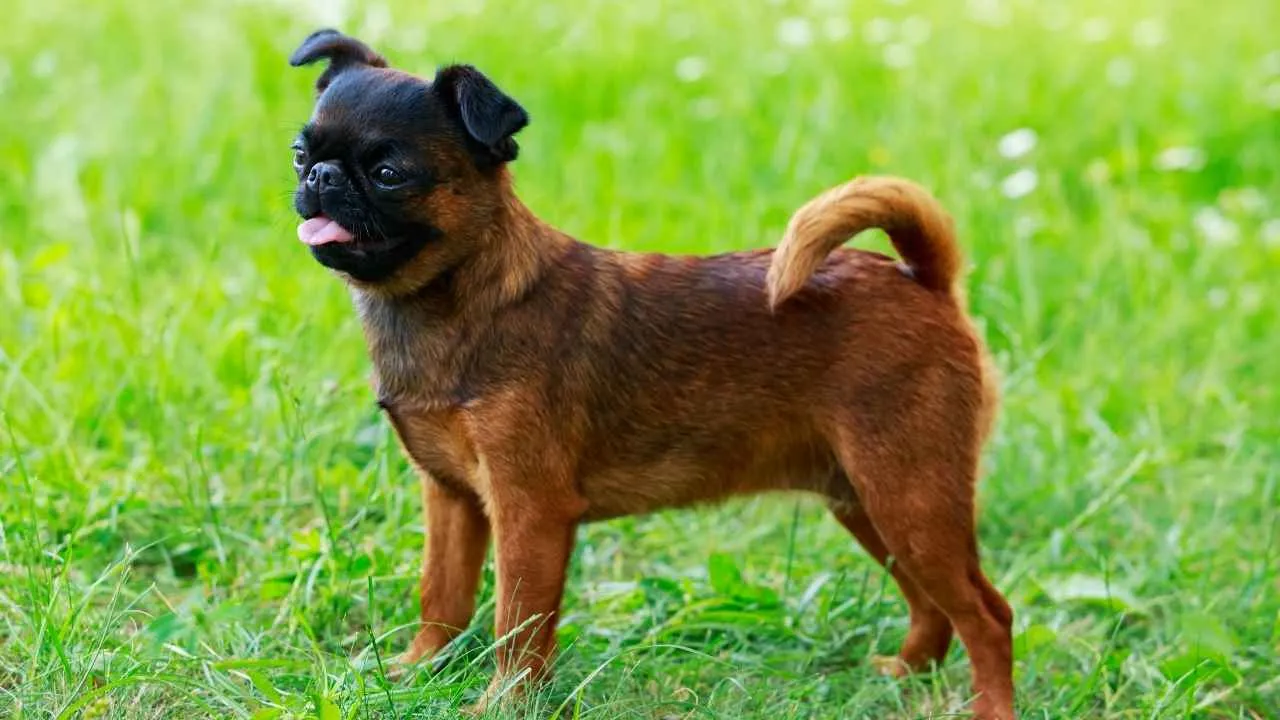
The Brussels Griffon originated in Belgium and developed from small stable and working dogs associated with Brussels. These smart dogs were initially valued for controlling vermin before becoming increasingly popular as companion animals.
Their distinctive facial features and expressive eyes make them immediately recognizable. Despite their small size, they often display a surprisingly confident personality.
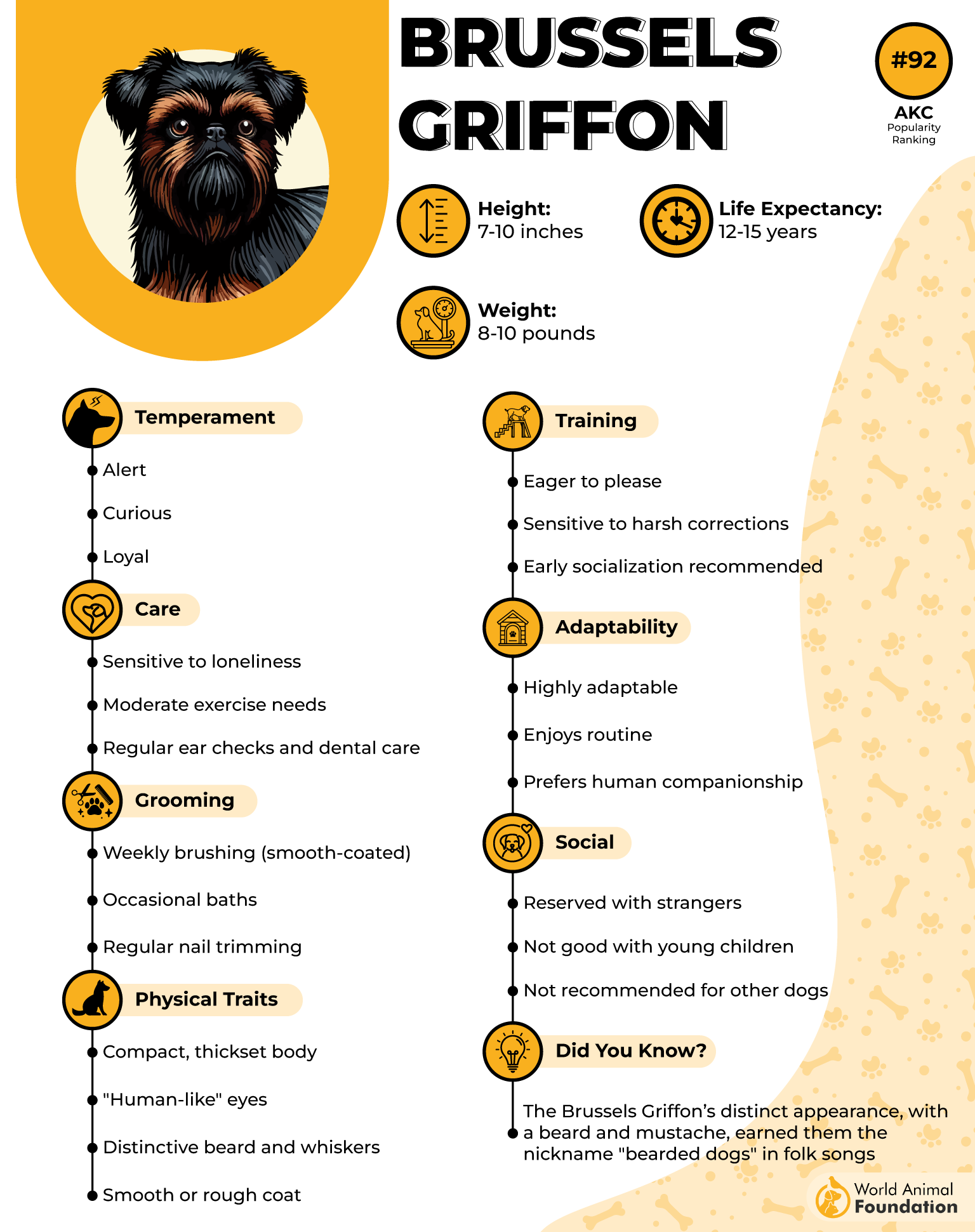
Expressive, Intelligent, and Closely Bonded to Their Owners
Brussels Griffons are often affectionate and attentive, with personalities that can range from playful to sensitive. They typically enjoy being involved in household activities and can become strongly attached to their favorite people.
Their intelligence makes training possible, but they may not respond well to harsh handling. Short, reward-based lessons can encourage cooperation while strengthening their confidence.
Coat Care Depends on Their Hair Type
Brussels Griffons can have either rough or smooth coats, and grooming requirements vary accordingly. Rough-coated individuals usually need regular brushing and more involved coat maintenance, while smooth-coated dogs generally require less work.
Owners should pay attention to dental care because small breeds can be prone to oral problems. Regular veterinary visits, nail trimming, ear checks, and careful monitoring of body condition are also important.
7. Lowchen
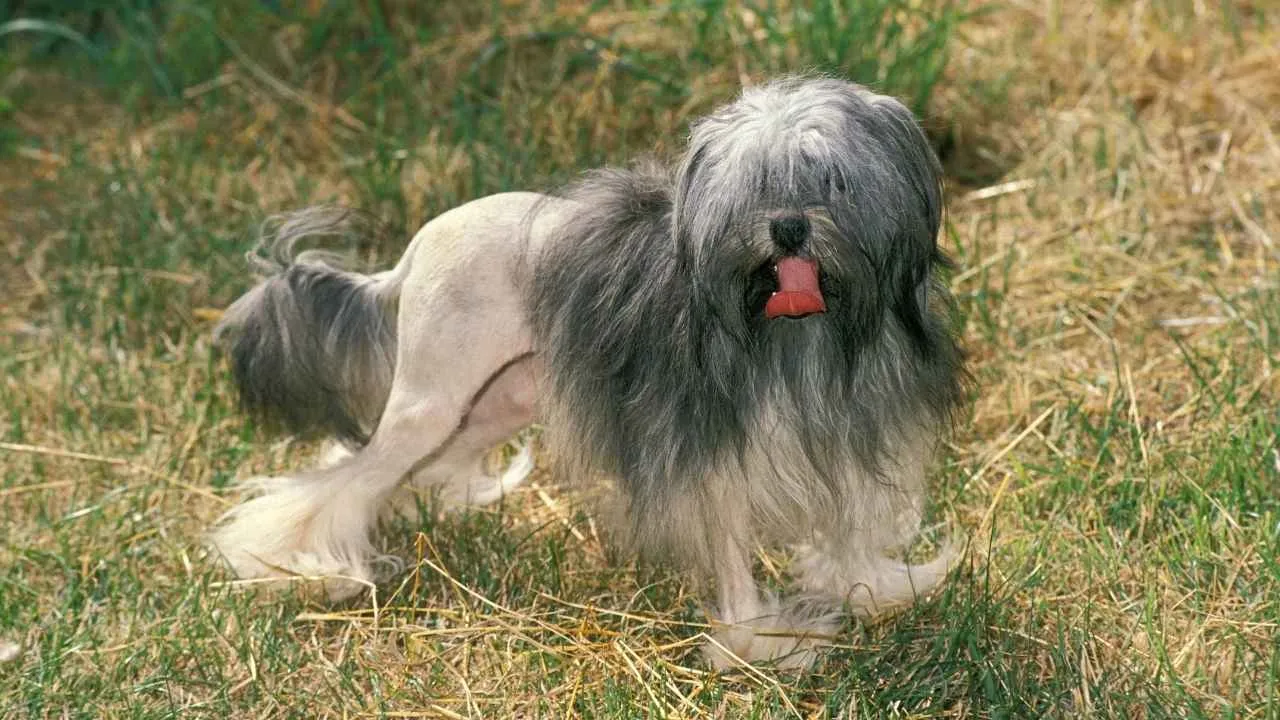
The Lowchen, sometimes called the Little Lion Dog, is a historic European companion breed recognized for its small body and distinctive coat, as per PetMD. Its exact origins are complex, but the breed has long been associated with European households.
Its traditional lion trim gave it a memorable appearance, with the rear portion of the body clipped while the front and mane were left fuller. Today, owners may choose different grooming styles.
Cheerful, Devoted, and Surprisingly Athletic
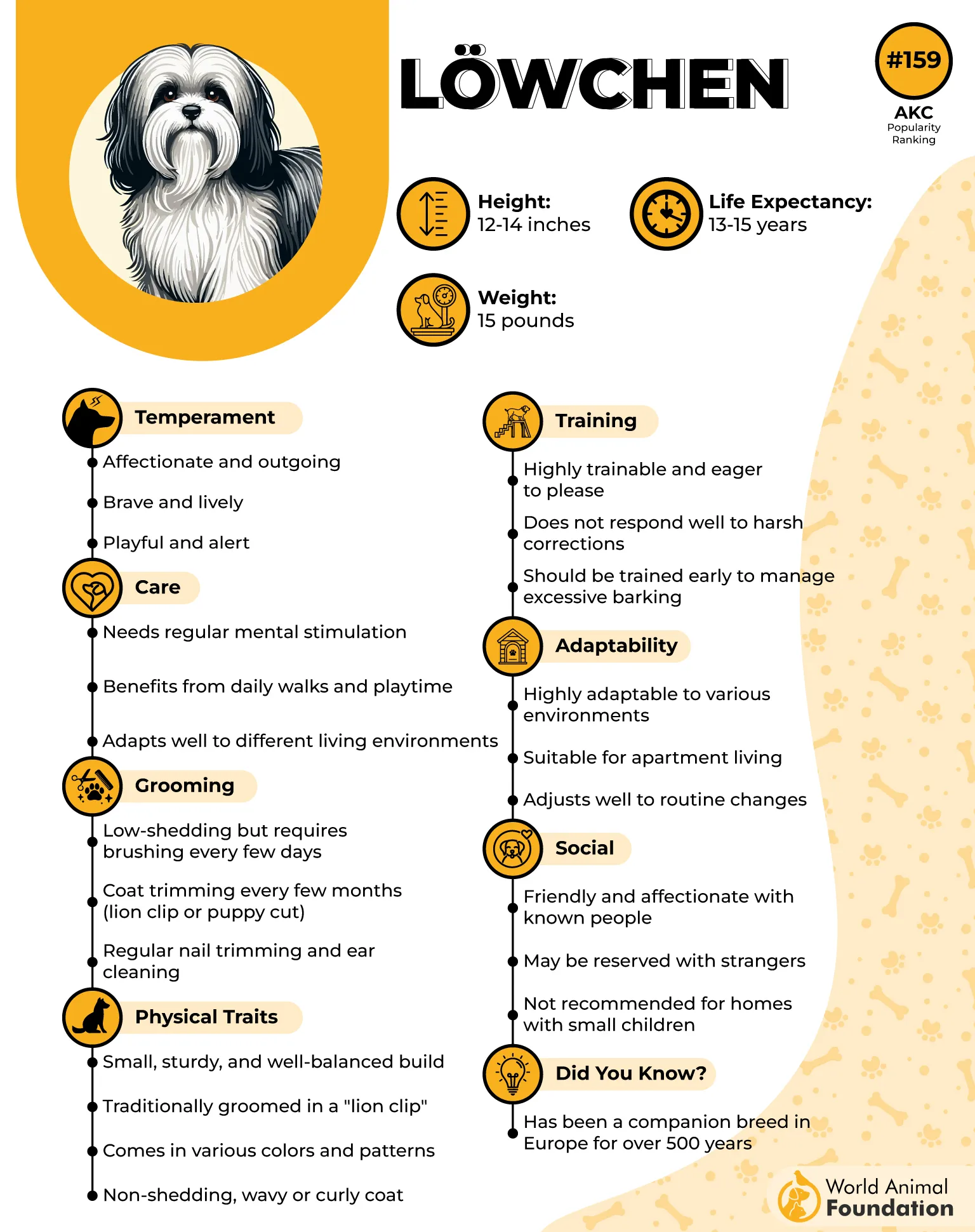
Lowchens are often affectionate, outgoing, and confident despite their compact size. They can enjoy play, walks, training, and interactive activities with their owners.
Their adaptable personality can suit different households when their exercise and companionship needs are met. Early socialization helps them become comfortable around unfamiliar people, animals, and environments.
Their Signature Coat Calls for Regular Grooming
The Lowchen’s long, slightly wavy coat needs frequent brushing to prevent mats. Owners who maintain the traditional lion trim will also need regular clipping to preserve its distinctive appearance.
Routine dental hygiene, nail care, ear checks, balanced nutrition, and veterinary examinations should accompany coat maintenance. Keeping the dog at a healthy weight is particularly useful for protecting its small joints and supporting an active lifestyle.
Conclusion
Each of the above dog breeds offers something different to new dog owners. Some are affectionate lapdogs, while others bring the confidence and curiosity of a working terrier into a much smaller package.
First-time owners should remember that small dogs are not automatically low-maintenance. Tiny breeds still need training, socialization, exercise, grooming, preventive veterinary care, and appropriate nutrition. Their size can also make them more vulnerable to accidental injuries, so household safety deserves special attention.
The best choice is the breed whose personality and daily requirements fit the owner’s lifestyle. With realistic expectations, patient training, and consistent care, one of these charming little dogs can become a loyal companion and a rewarding introduction to life with a canine friend.
