




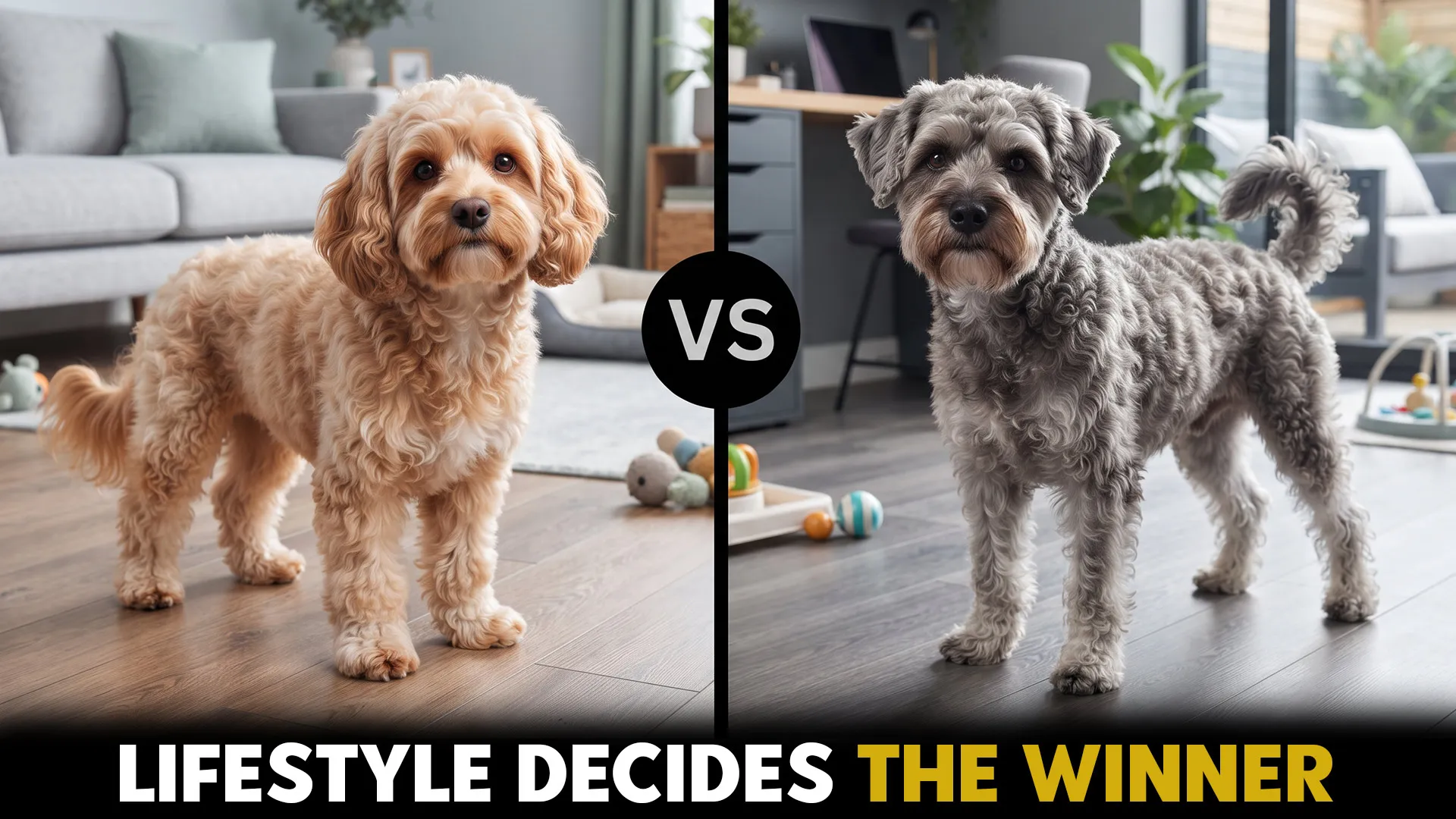
Choosing between a Cavapoo and a Schnoodle can feel like picking between two equally adorable personalities.
Both are popular Poodle mixes known for their intelligence, affectionate nature, and playful charm, but they can be quite different when it comes to energy levels, temperament, grooming, and family life.
While both can make wonderful companions, the better choice depends on what you want from your dog and how well their needs fit your lifestyle.
In this article, we’ll compare Cavapoos and Schnoodles, from size and temperament to exercise, grooming, trainability, health, and suitability for different households. By the end, you’ll have a clearer idea of which lovable Poodle mix could be the right match for you.
Cavapoo vs. Schnoodle: The Ultimate ‑Point Guide to Choosing
Parent Breeds & Development History
Cavapoo
The Cavapoo is a cross between a Cavalier King Charles Spaniel and a Poodle. While its exact origins are uncertain, the mix became popular alongside the rise of designer dog breeds in the 1990s, according to Chewy.
Breeders aimed to combine the Cavalier’s affectionate, friendly nature with the Poodle’s intelligence, playful personality, and low-shedding coat.
Cavalier King Charles Spaniels have a long history as companion dogs associated with European royalty, while Poodles originated as hunting and retrieving dogs in Germany before becoming popular companion dogs.
Schnoodle
The Schnoodle is a cross between a Poodle and a Schnauzer. Its exact origins are unknown, but the mix is considered a relatively modern designer dog that became popular as Poodle crosses gained attention during the 1980s and later decades.
The Poodle contributes intelligence, athleticism, and a low-shedding coat, while the Schnauzer brings an alert, lively, and hardworking nature. Both parent breeds have German roots, with Poodles originally bred for retrieving and Schnauzers developed as versatile farm dogs.
Size, Weight & Physical Appearance
Cavapoo
Cavapoos can vary considerably in size and appearance because there is no official breed standard, and their traits depend on the Poodle and Cavalier King Charles Spaniel parents.
Those descended from Toy Poodles are generally smaller than Cavapoos with Miniature Poodle heritage. Most stand around 9–14 inches tall and weigh 8–25 pounds.
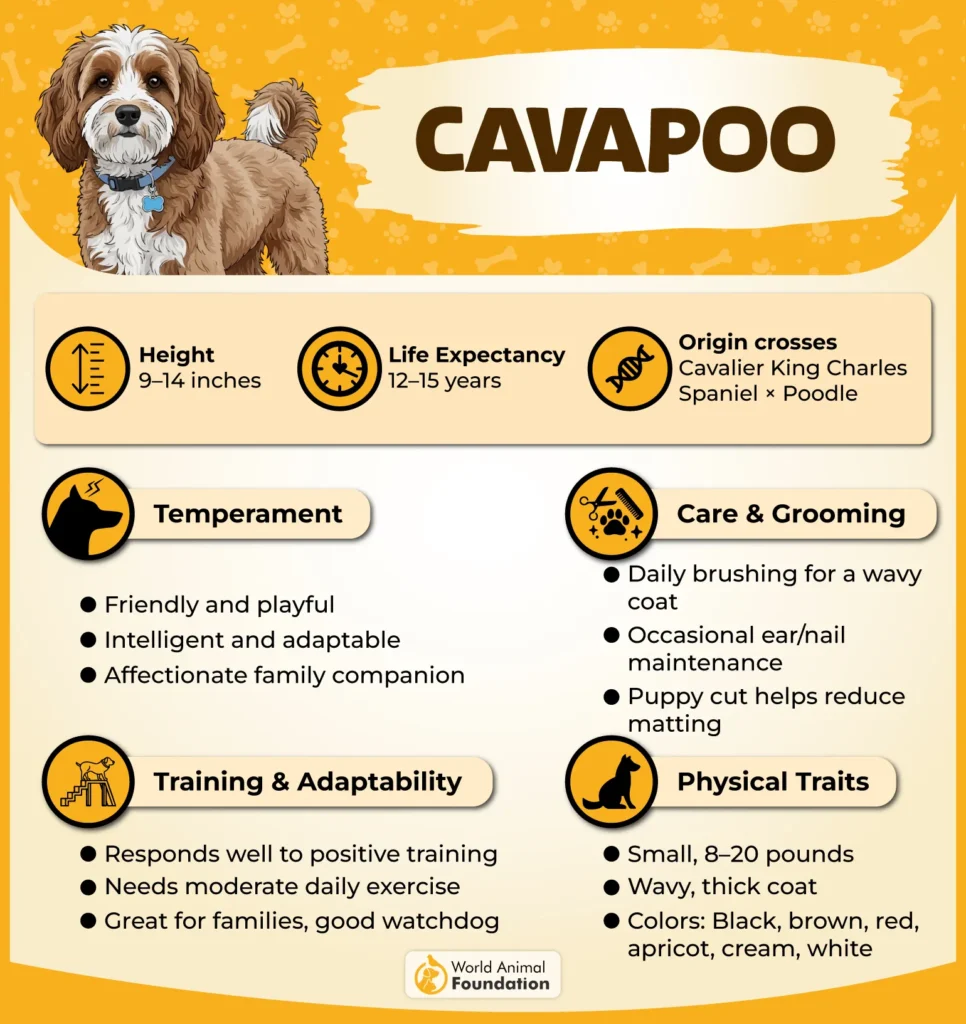
Cavapoos typically have a soft, fluffy coat that can range from wavy to curly, along with the large, dark eyes and floppy ears associated with the Spaniel side of the mix.
Ears: Long and folded, framing the face.
Eyes: Large, dark, and expressive.
Nose: Round and usually black or brown.
Tail: Often long, although naturally bobbed tails can occur.
Schnoodle
Schnoodles have an even wider size range because both Poodles and Schnauzers come in Toy, Miniature, Standard, and Giant varieties.
Their size depends heavily on the specific parents. A smaller Schnoodle may weigh just 5–10 pounds, while a Giant Schnoodle can reach around 80 pounds.
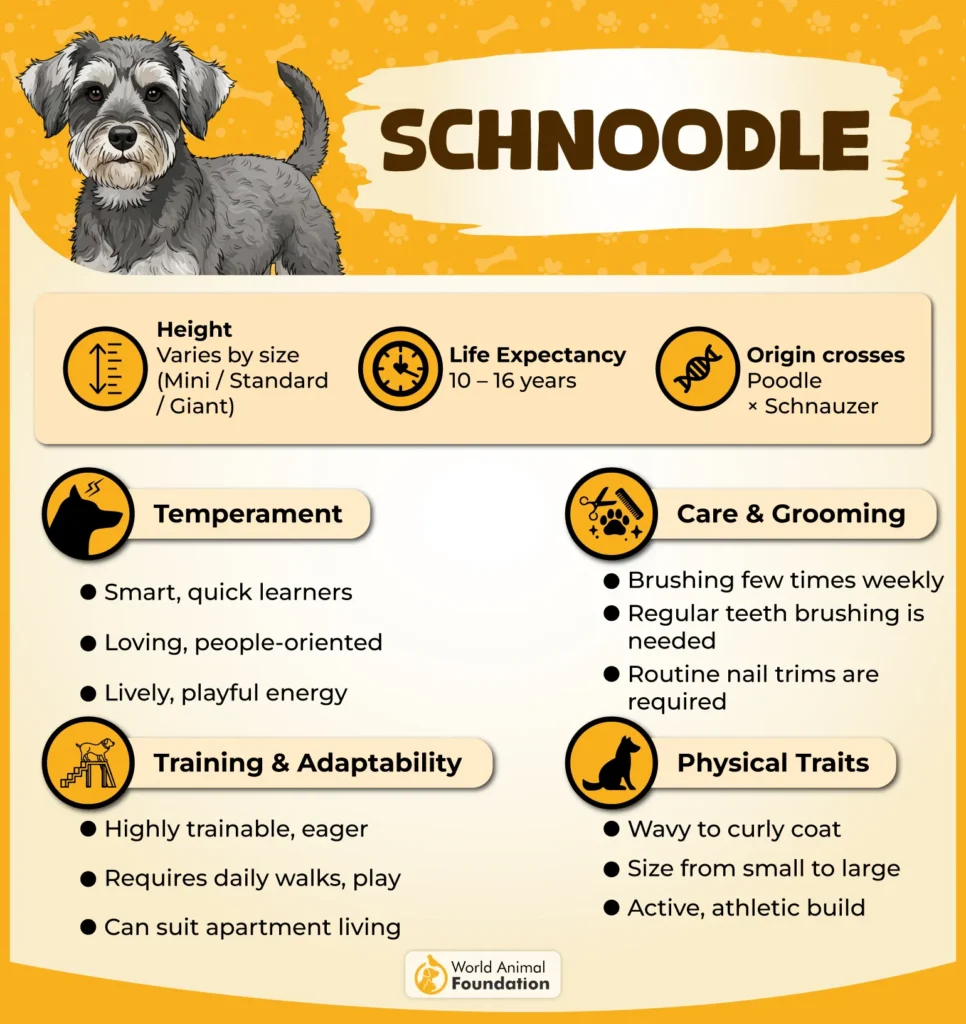
Their appearance combines features from both parent breeds, often resulting in a shaggy or curly coat, expressive eyes, and a face framed by folded ears.
Ears: Usually folded and lying close to the head.
Eyes: Large and round, often black, brown, or hazel.
Nose: Typically square-shaped and black or brown.
Tail: Medium-length and often carried with a slight upward curl.
Coat Type, Grooming & Maintenance
Cavapoo
Cavapoos typically have a soft, fluffy coat that ranges from wavy to curly, depending on which parent they take after. Their low-shedding coat can come in colors such as black, gray, red, brown, tan, beige, and white. Some Cavapoos may also experience coat color changes as they mature.
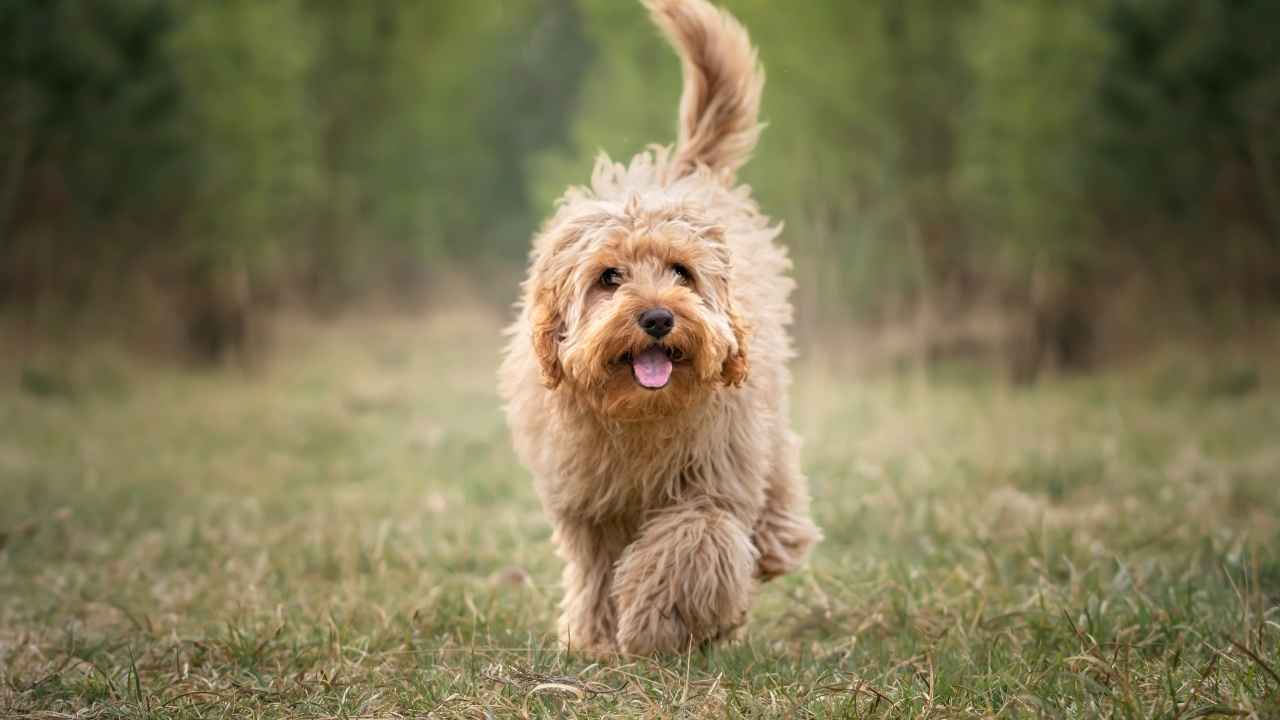
Although they shed relatively little, Cavapoos need consistent grooming to prevent their hair from becoming tangled or matted. Regular brushing, bathing, and trimming help keep the coat healthy and comfortable.
The type of brush needed depends on the coat. A slicker brush generally works well for curlier, Poodle-like coats, while a pin brush may be better suited to straighter hair.
Schnoodle
Schnoodles generally have a dense, curly or wavy coat that can grow quite long. Their coats are usually low-shedding and may produce less dander than heavily shedding breeds, but this does not mean they are completely hypoallergenic. Because their hair grows continuously, regular grooming is essential.
Schnoodles should typically be brushed several times a week to prevent tangles and painful mats, particularly when they inherit a curlier Poodle-like coat. Professional grooming is generally recommended every 4–6 weeks to keep the coat manageable.
Personality, Temperament & Behavior
Cavapoo
Cavapoos are generally gentle, affectionate, playful, and highly people-oriented. They enjoy being around their families and are often happiest when they can follow their favorite person around the house or curl up beside them.
Their friendly nature can make them good companions for children and other pets, including cats, as long as children are taught to interact with them gently.
Their strong attachment to their humans can also become a challenge. Cavapoos may be prone to separation anxiety if they are not gradually taught to spend time alone.
Early practice with short periods of separation, along with enough exercise, play, mental stimulation, food, and potty time before being left alone, can help them become more comfortable on their own.
Schnoodle
Schnoodles are typically bright, clever, energetic, and social dogs. Both Poodles and Schnauzers were developed as working breeds, so Schnoodles often enjoy having something to do and staying involved with their families.
PetMD mentions that they can get along well with children and other pets and usually enjoy being part of household activities.
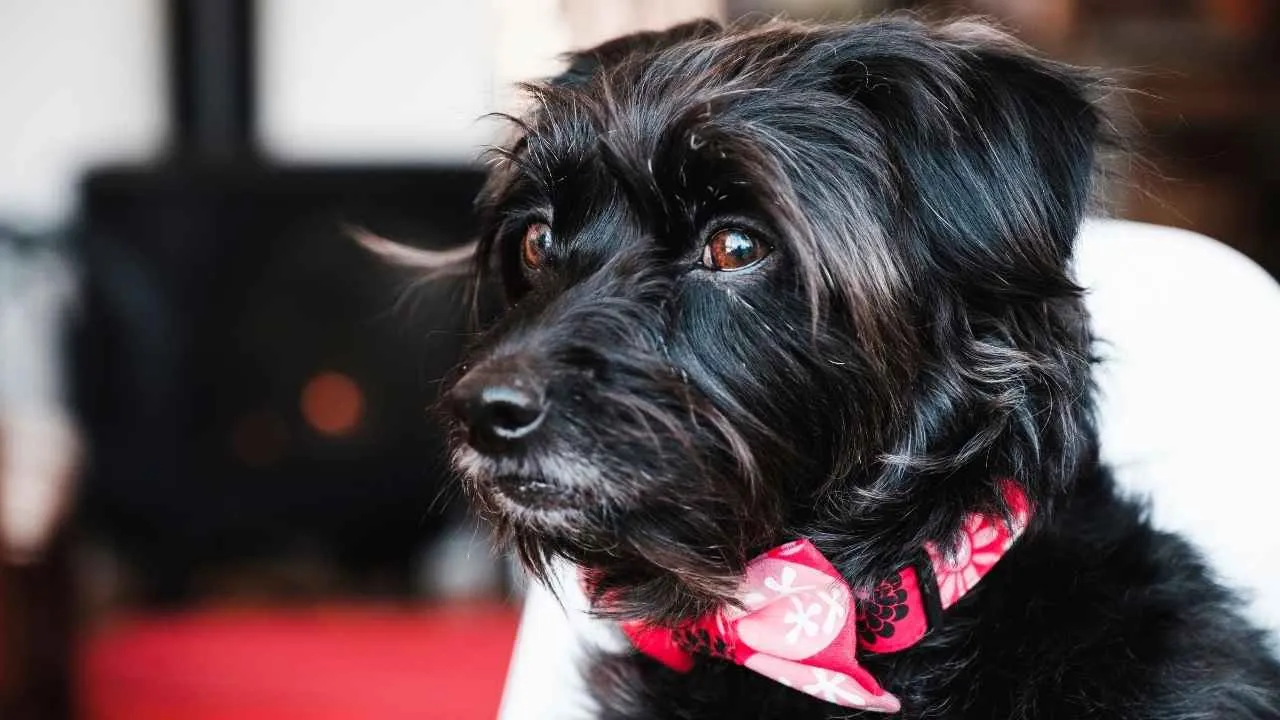
However, their intelligence and energy mean they need plenty of daily exercise, mental stimulation, and consistent boundaries. Walks, interactive games, fetch, trick training, and dog sports can help keep them physically and mentally satisfied.
Some Schnoodles may be cautious around unfamiliar people, making early and positive socialization especially important.
Intelligence & Trainability
Cavapoo
Cavapoos are highly intelligent dogs that are eager to please and highly trainable. They can begin learning basic obedience from around 12 weeks of age, with rewards such as treats, praise, and play helping reinforce desired behaviors.
Their strong bond with their owners can also make them attentive learners, particularly when training sessions are kept positive and engaging.
Training approach: Positive reinforcement works well.
Early learning: Basic obedience can begin during puppyhood.
Mental enrichment: Lick mats, KONG toys, and puzzle toys can provide useful stimulation.
Potential challenge: Their strong attachment to people can make being left alone difficult.
Schnoodle
Schnoodles inherit intelligence from both the Poodle and Schnauzer, making them generally quick learners. Most are eager to please and can enjoy learning commands, tricks, and more advanced skills.
However, individual Schnoodles may sometimes show an independent or stubborn side, so patience and consistency are important during training.
Best starting age: Training can begin as early as 8–10 weeks.
Key foundation: Early socialization helps puppies develop appropriate manners around people and other dogs.
Training style: Short, rewarding sessions can help maintain their interest.
Advanced learning: Their intelligence allows them to progress from basic commands to more complex tricks and tasks.
Energy Levels & Exercise Needs
Cavapoo
Cavapoos have moderate energy levels and generally need daily exercise without requiring intense workouts.
A brisk walk, play session, or time in a fenced yard can usually help them stay active. Their smaller size and adaptable nature also make them well-suited to apartment and urban living.
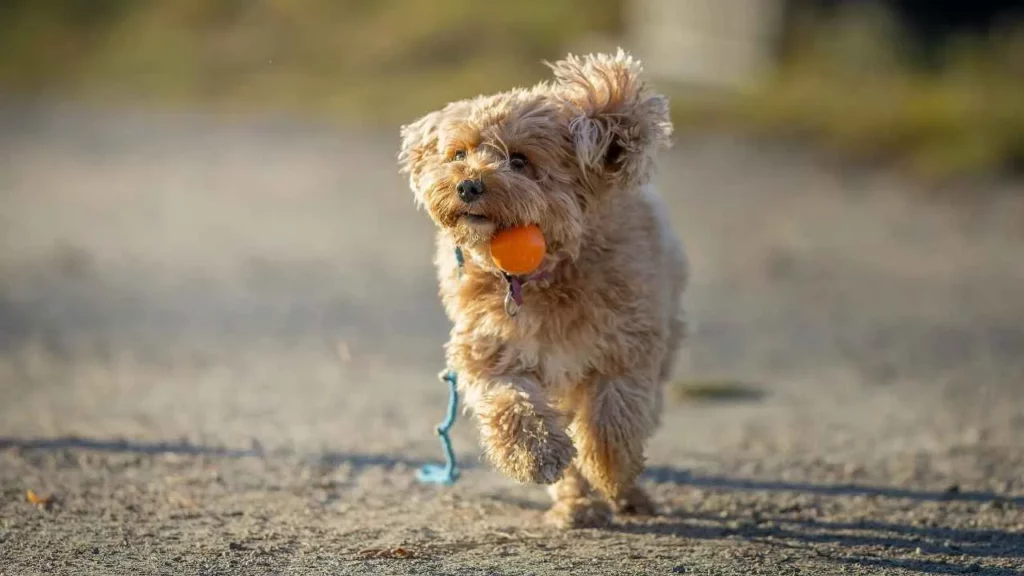
Favorite activities: Fetch, tug-of-war, neighborhood walks, agility, obedience, and rally.
Mental exercise: Puzzle toys, food puzzles, scavenger hunts, and nose work can keep their intelligent minds engaged.
Health benefit: Regular activity helps manage their weight, which is particularly important because Cavapoos can be prone to weight gain.
Schnoodle
Schnoodles tend to be more energetic and playful, reflecting the active working backgrounds of both parent breeds.
They typically benefit from around 45–60 minutes of exercise each day, which can be divided into two or more sessions, according to Purina. Regular activity helps prevent excess energy from turning into boredom or unwanted behaviors.
Physical activities: Brisk walks, fetch, agility, and interactive games.
Mental stimulation: Puzzle and treat-dispensing toys can challenge their problem-solving abilities.
Interactive play: Hide-and-seek and scent-based games provide both engagement and enrichment.
Health Issues & Average Lifespan
Cavapoo
Cavapoos typically have a lifespan of around 12–15 years and are generally healthy dogs. However, like any mixed breed, they can inherit health conditions from either parent breed.
Regular veterinary checkups, a healthy diet, appropriate exercise, and preventive care can help identify and manage potential problems early.
Allergies
Mitral valve disease
Patellar luxation
Progressive retinal atrophy (PRA)
Distichiasis
Entropion
Corneal dystrophy
Cataracts
Schnoodle
Schnoodles generally live around 10–16 years, although lifespan can vary with size, with Mini Schnoodles often living longer than Giant Schnoodles.
Their health risks can come from either the Poodle or Schnauzer side of their lineage. Routine veterinary care and early attention to unusual symptoms are important for supporting their long-term health.
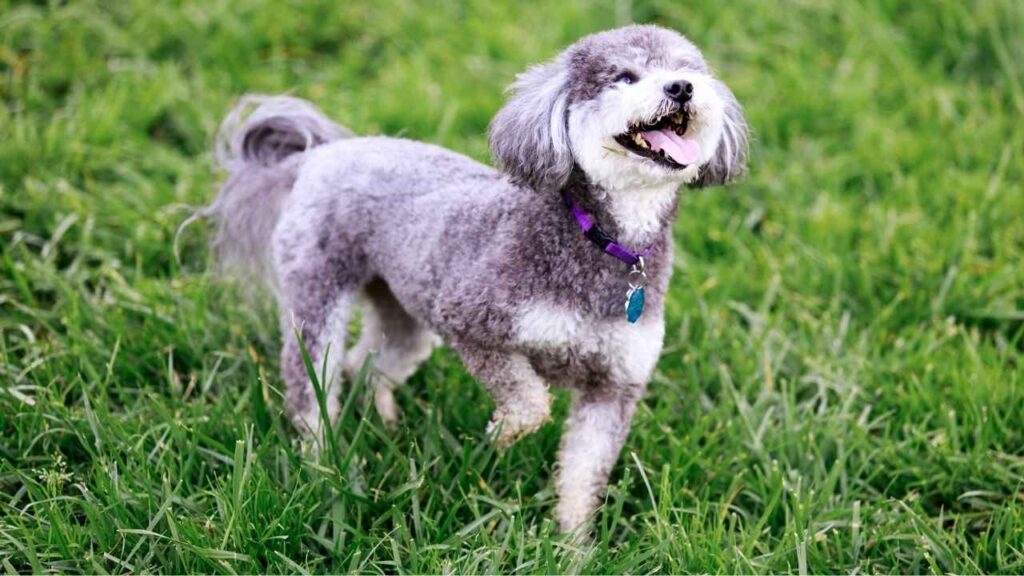
Dental disease
Dilated cardiomyopathy (DCM)
Mitral valve disease
Patellar luxation
Hip dysplasia
Elbow dysplasia
Bloat
Gastric dilation-volvulus (GDV)
Family Fit & Ownership Experience
Cavapoo
Cavapoos are often a great fit for families looking for an affectionate, adaptable, and capable companion. They generally enjoy being around people and can get along well with children and other pets, including cats.
Their moderate exercise needs also make them suitable for apartments, urban homes, or families with a backyard.
However, their strong attachment to their owners means they may struggle when left alone for long periods. New owners should be prepared to provide companionship, daily activity, mental stimulation, and regular grooming.
Schnoodle
Schnoodles can be wonderful family dogs for households that enjoy an active and engaging companion.
They typically enjoy spending time with adults, children, and other pets, but their energetic and intelligent nature means they need plenty of exercise, interaction, training, and mental stimulation.
They may be more cautious around unfamiliar people, so early socialization is important. Schnoodle owners should also be comfortable with regular grooming, as their curly or dense coats require frequent brushing and professional care.
A Schnoodle is likely to thrive with a family that can give them plenty to do rather than leaving them bored or inactive for long periods.
Conclusion
Choosing between a Cavapoo and a Schnoodle ultimately comes down to the kind of companion that fits your lifestyle. Cavapoos tend to be affectionate, adaptable, and moderately active, while Schnoodles are often more energetic, clever, and eager for mental challenges.
Both can be loving family dogs, but their differences in size, grooming, exercise, training, and health are worth considering before making your choice.
Before bringing either breed home, think honestly about the time, attention, activity, and grooming you can provide. Meet the dog and, when possible, learn about the health and temperament of the parents.
Whether you choose the cuddly Cavapoo or the spirited Schnoodle, the best match is the one whose needs fit naturally into your everyday life.
