




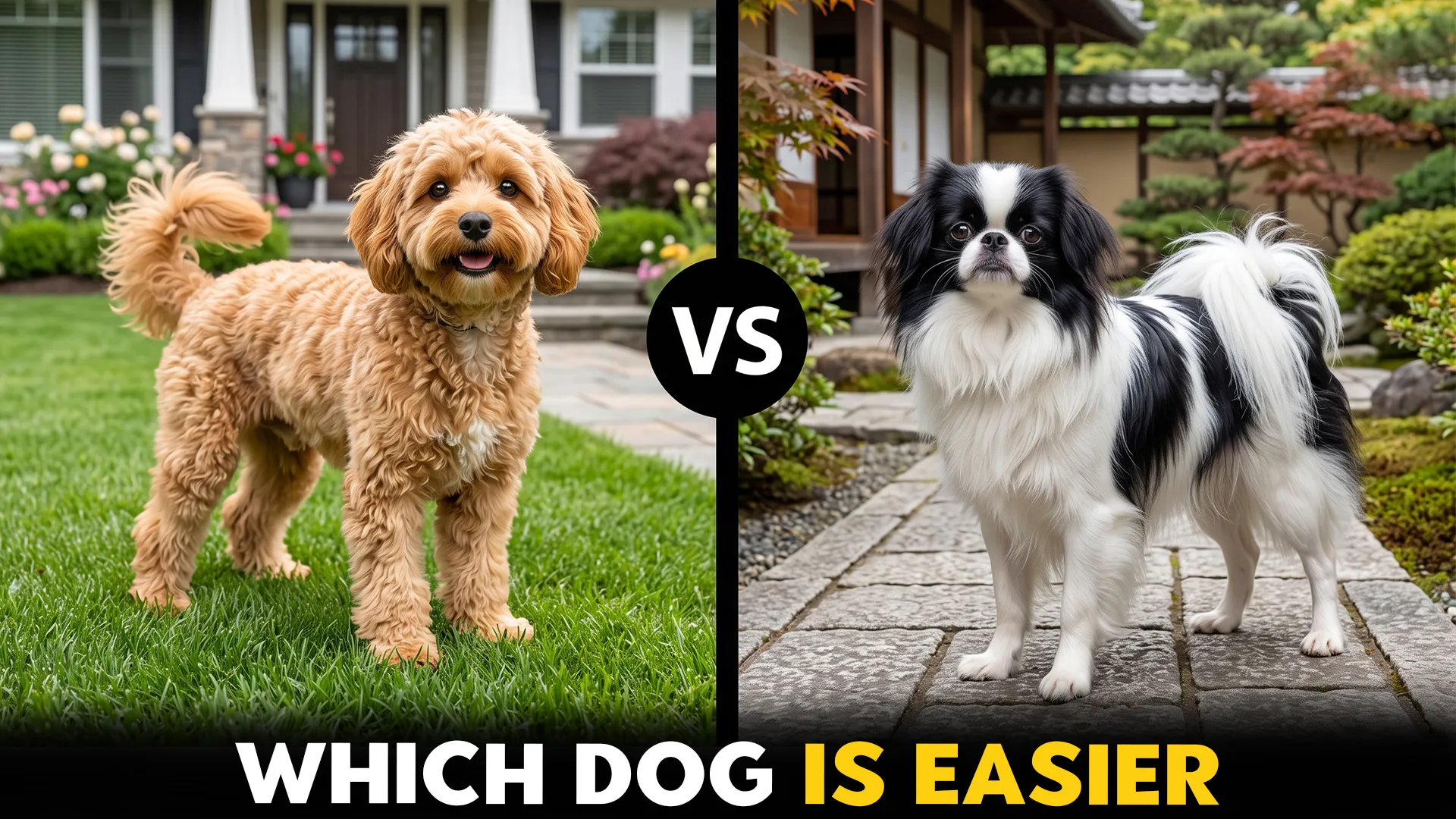
Choosing between a Cavapoo and a Japanese Chin is basically choosing between an affectionate social butterfly and an elegant little introvert with royal main-character energy. Both are compact companion dogs that can live comfortably in apartments, curl up beautifully on a sofa, and form close relationships with their humans.
The Cavapoo is a modern cross between a Cavalier King Charles Spaniel and either a Toy or Miniature Poodle. The Japanese Chin is an established toy breed with centuries of history as a palace and aristocratic companion.
One comes with a playful, adaptable, people-pleasing personality, while the other brings calm affection, feline independence, and the unmistakable attitude of a dog that expects the furniture to meet royal standards.
Let us break down the differences without pretending that “small and cute” automatically means “basically the same dog.”
Cavapoo vs. Japanese Chin: A Quick Guide
Breed Origins and Functional Background
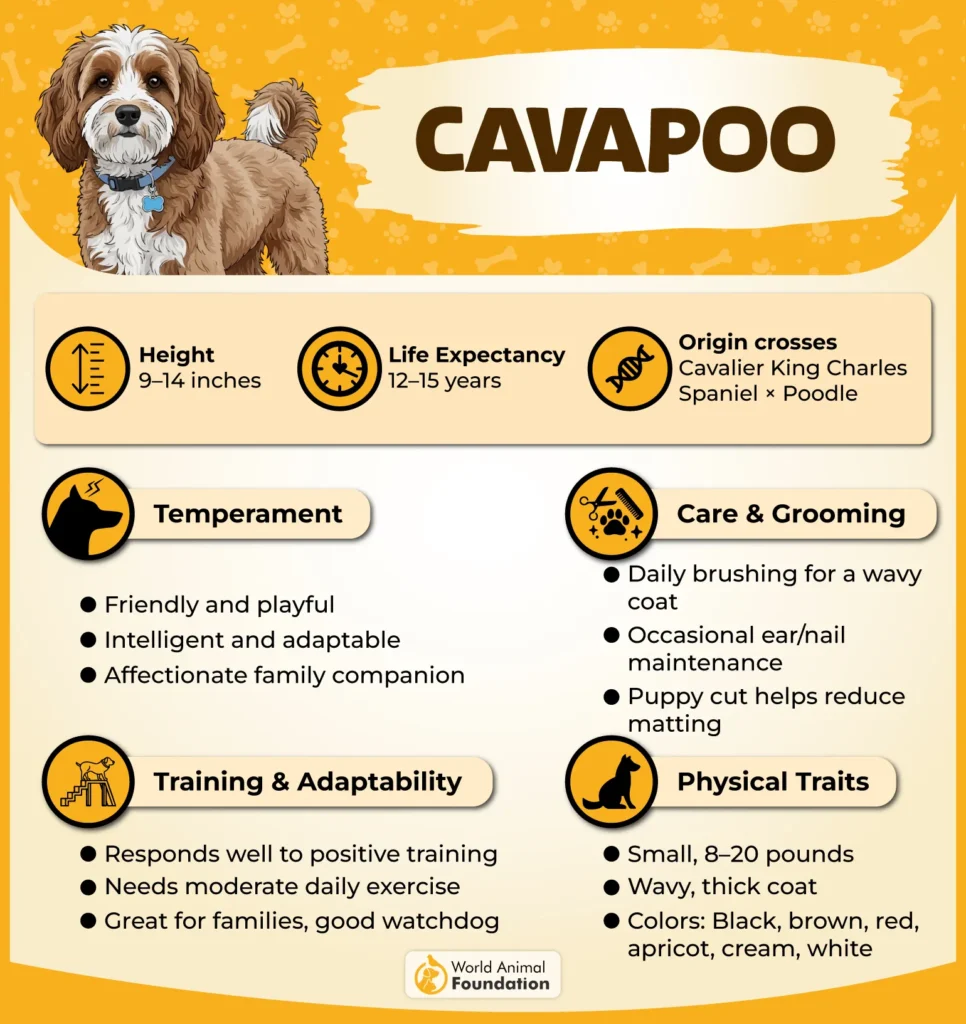
The Cavapoo represents the modern demand for intelligent, affectionate companion dogs with manageable dimensions and potentially lighter shedding. Because it is a cross rather than an established breed, one Cavapoo may resemble a compact Poodle, while another may strongly reflect its Cavalier parent.
Buyers should therefore evaluate the actual parents, health testing, temperament, coat type, and expected adult size rather than trusting a breeder’s aesthetic labels.
The Japanese Chin comes from a world of palace rooms, royal courts, diplomatic gifts, and carefully cultivated companionship. Its historical purpose explains why the breed is neither intensely work-driven nor desperate for hours of physical activity.
A Chin does not wake up wondering what job it must complete; it wakes up wondering why breakfast has not yet been presented.
This difference in background shapes daily behavior. Cavapoos often seek active interaction and repeated engagement with their people, while Japanese Chins are more comfortable alternating between closeness and self-directed relaxation.
Physical Characteristics and Body Structure
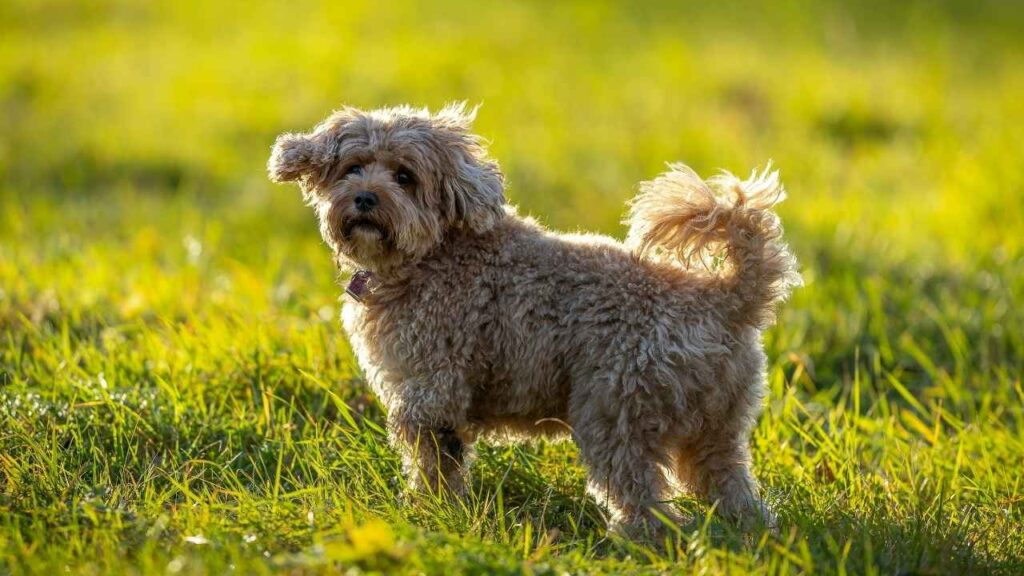
The Cavapoo’s appearance is less predictable because genes do not follow a custom order form. Some puppies inherit tight Poodle curls and finer bodies, while others develop softer waves, broader faces, and distinctly Cavalier expressions. Even siblings can differ in adult size, coat texture, shedding, and overall shape.
Japanese Chins offer much greater physical consistency. They are extremely compact, fine-boned dogs with broad heads, large eyes, short muzzles, silky coats, and plumed tails carried over their backs. That delicate construction makes them portable, but it also means rough handling or an accidental fall can cause more serious injury than it might in a sturdier Cavapoo.
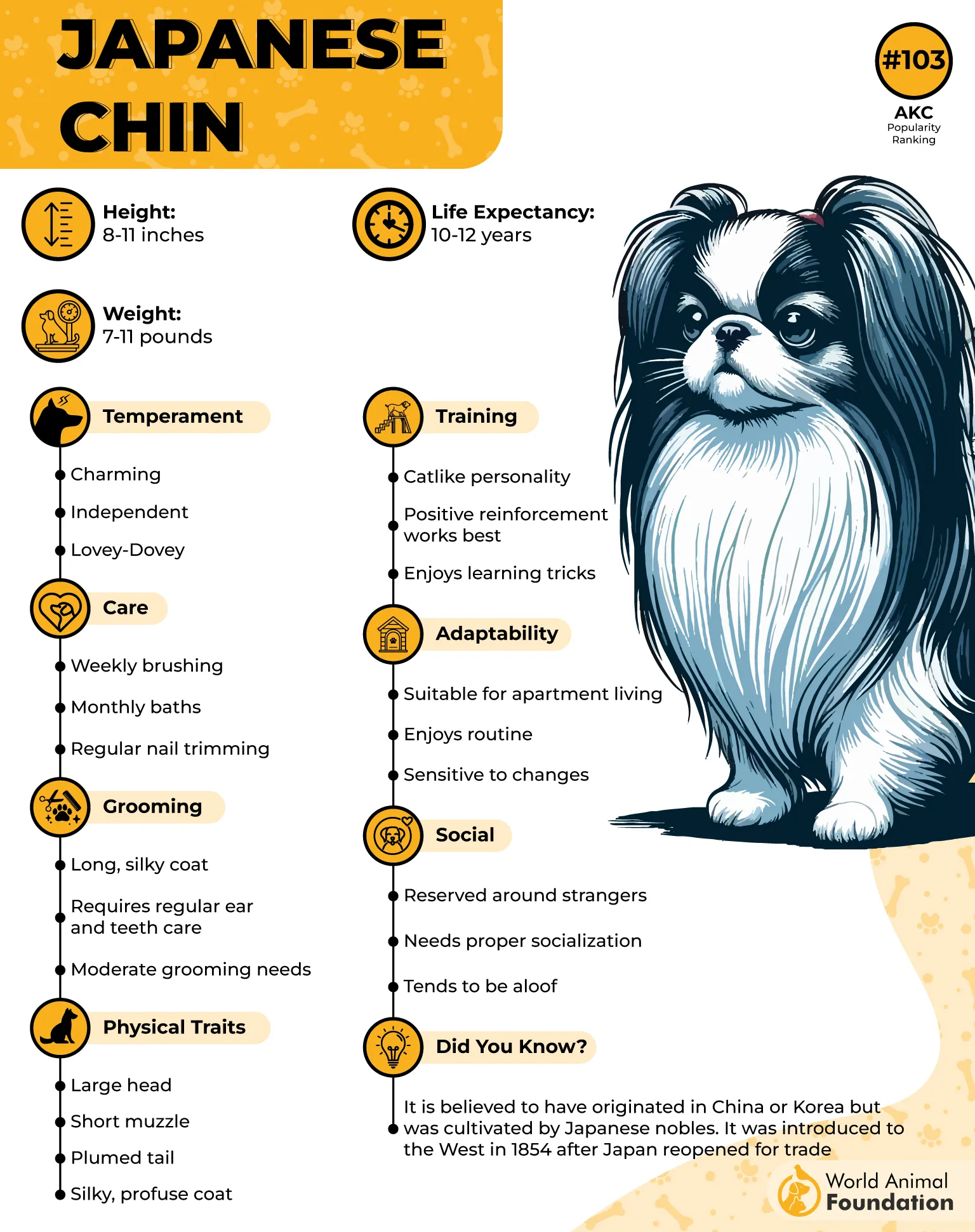
The Chin is also brachycephalic, meaning its skull and muzzle are shortened. Cavapoos generally have more functional muzzle length, although individual facial structure still depends on their parents. This distinction gives most Cavapoos an advantage during warm-weather activities, while owners of Chins must carefully monitor breathing, temperature, exertion, and weight.
Temperament and Behavioral Profile
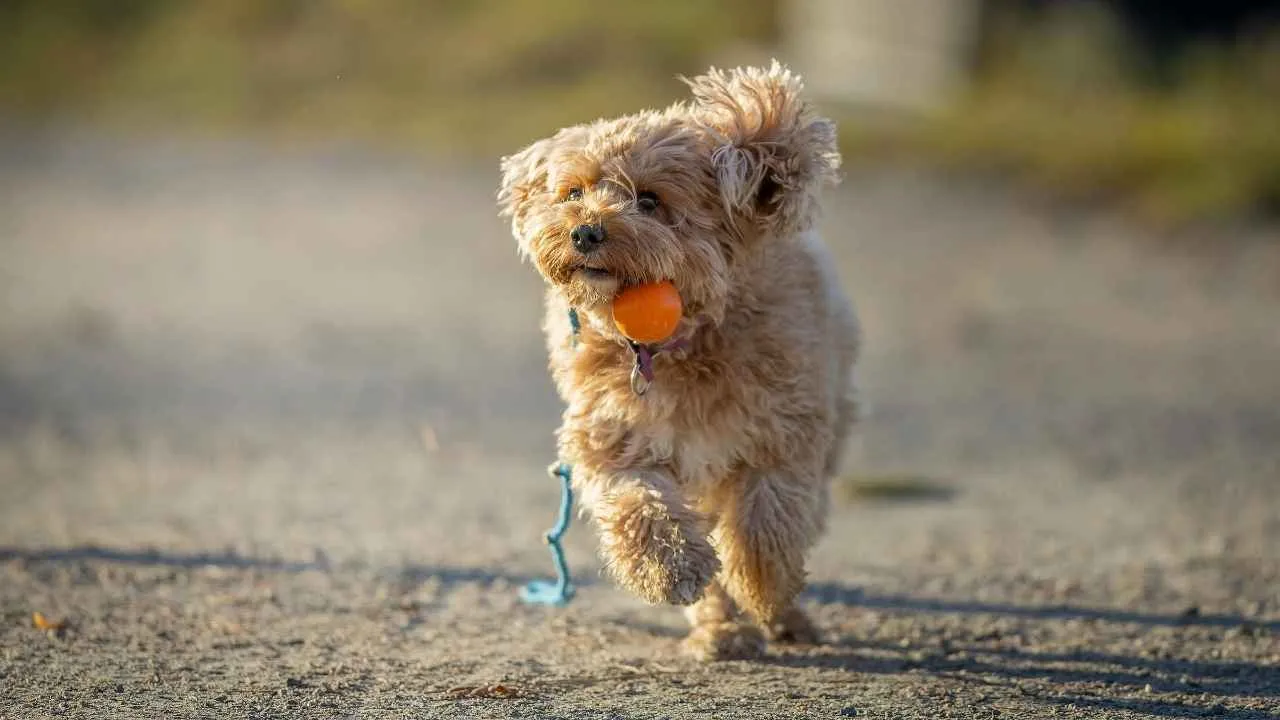
A Cavapoo typically approaches life as though every person might become a new best friend. These dogs are often affectionate, cheerful, confident, and eager to participate in whatever their family has planned. They can adapt to homes with children, other dogs, and cats when introductions and supervision are handled properly.
The Japanese Chin is loving but more selective. Many are sensitive to household atmosphere and may become playful in lively homes or quiet and reserved in peaceful environments. They are not antisocial; they simply prefer reviewing the vibes before subscribing to the friendship plan.
Neither temperament should be confused with guaranteed behavior. Genetics, socialization, previous experiences, pain, training, and individual personality all affect how a dog responds to people and animals.
Activity Requirements and Energy Levels
Cavapoos usually need light-to-moderate exercise distributed across walks, games, training, and mental enrichment. Trust Pet Plan when it says that they are not typically endurance athletes. But they appreciate more sustained engagement than the Japanese Chin.
A family wanting a small dog for neighborhood adventures and energetic play will generally find the Cavapoo easier to motivate.
Japanese Chins can stay fit through gentle walks and short indoor activities. Their small bodies and short muzzles make intense exercise unnecessary and potentially unsafe, particularly during hot or humid weather. Hide-and-seek, soft-toy games, and short training sessions can provide enough action without turning the living room into a canine boot camp.
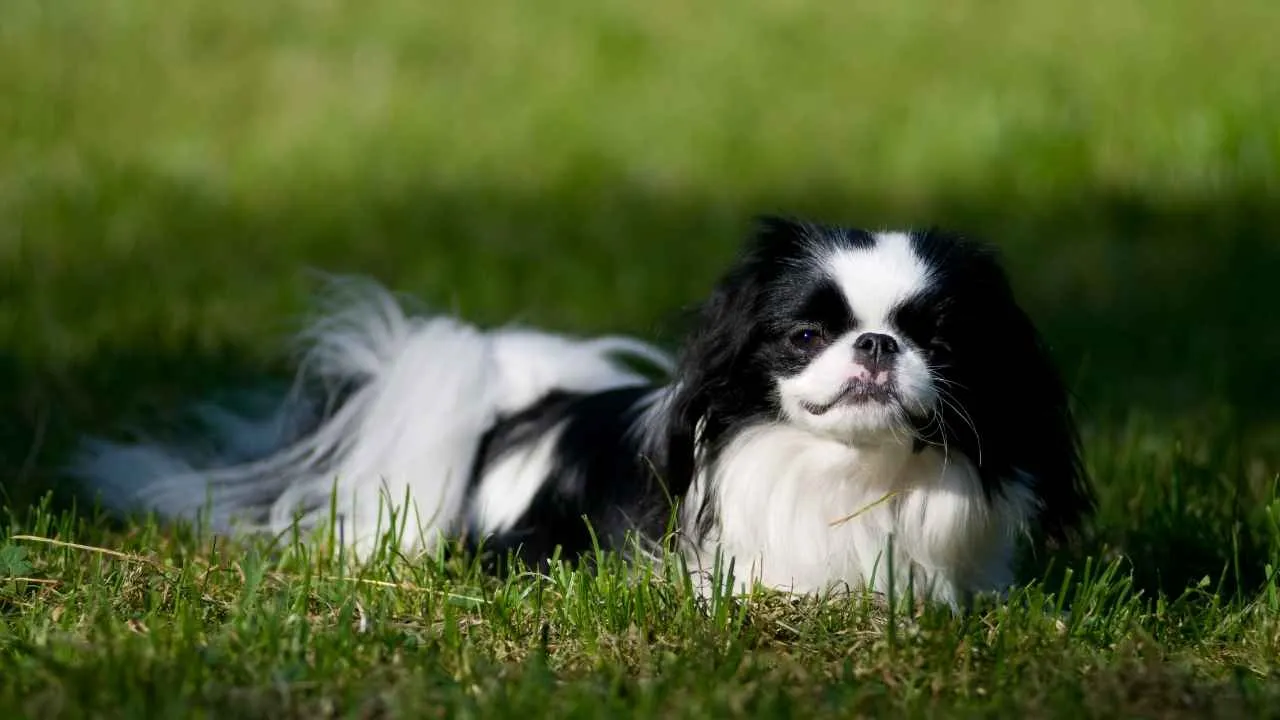
Both dogs can live comfortably in apartments when their needs are met. Square footage matters less than regular exercise, companionship, toilet access, enrichment, and a realistic daily routine.
Trainability, Intelligence, and Learning Ability
The Cavapoo is usually the easier choice for a first-time owner interested in obedience or trick training. Poodles are highly trainable, and Cavaliers tend to be eager to cooperate, creating a cross that often enjoys working closely with humans.
Positive reinforcement can teach Cavapoos household manners, entertaining tricks, and practical skills with impressive speed.
Japanese Chins are intelligent, as per the Royal Kennel Club, but more independent in how they apply that intelligence. They may understand a command perfectly while waiting to see whether participation improves the current situation. Trainers succeed by using brief, varied lessons that make the Chin feel less like an employee and more like the creative director.
Harsh handling is inappropriate for either dog, but it can be especially damaging for the sensitive Chin. Cavapoos may also become worried or confused during punishment-based training because they are highly attuned to human emotions.
Coat Maintenance and Grooming Needs
Neither dog offers a grooming-free lifestyle.
Cavapoo grooming is a serious recurring responsibility rather than an occasional beauty appointment. Their soft coats can trap tangles close to the skin, especially around the ears, legs, collar area, and places where the body moves. This requires regular grooming.
Missing several brushing sessions can turn cute curls into painful mats really fast.
Japanese Chins generally need less coat work despite their long, silky appearance, says the AKC. Their single coat is less prone to heavy matting than many curly or dense coats, although regular brushing remains important during shedding periods. Facial cleaning, nail trimming, ear checks, and dental care must remain part of the routine.
Average Lifespan and Health Considerations
Cavapoos typically live 12–15 years, giving them a slight statistical longevity advantage over the Japanese Chin’s typical 10–12-year lifespan.
However, lifespan estimates describe populations rather than predict what will happen to a single dog. Breeding quality, preventive care, weight, exercise, dental health, environment, and random illness all influence longevity.
Cavapoos may inherit health risks associated with either Poodles or Cavalier King Charles Spaniels. PetMD highlights concerns such as hip dysplasia and patellar luxation, and prospective owners should also ask breeders about the cardiac, eye, orthopedic, and genetic testing performed on both parents. Hybrid status is not an invisible force field against inherited disease.
Japanese Chin breeders should screen eyes, hearts, and patellas and perform DNA testing for the breed-specific GM2 mutation. Their brachycephalic anatomy also increases vulnerability to noisy breathing, heat intolerance, and airway difficulties, making weight management and temperature control essential.
Cavapoo vs. Japanese Chin: Suitability for Family Life vs. Guard Duties?
For family life, the Cavapoo is generally the stronger all-round choice because its sturdier build, playful personality, and sociable nature can suit homes with considerate children, other pets, and plenty of daily activity.
The Japanese dog, on the other hand, is usually better suited to adults, seniors, or gentle older children, as its fragile body and quiet temperament can find rough play and noisy households overwhelming. Both breeds value companionship, but Cavapoos are often more vulnerable to separation anxiety, while Japanese Chins may cope slightly better with short periods of peaceful solitude.
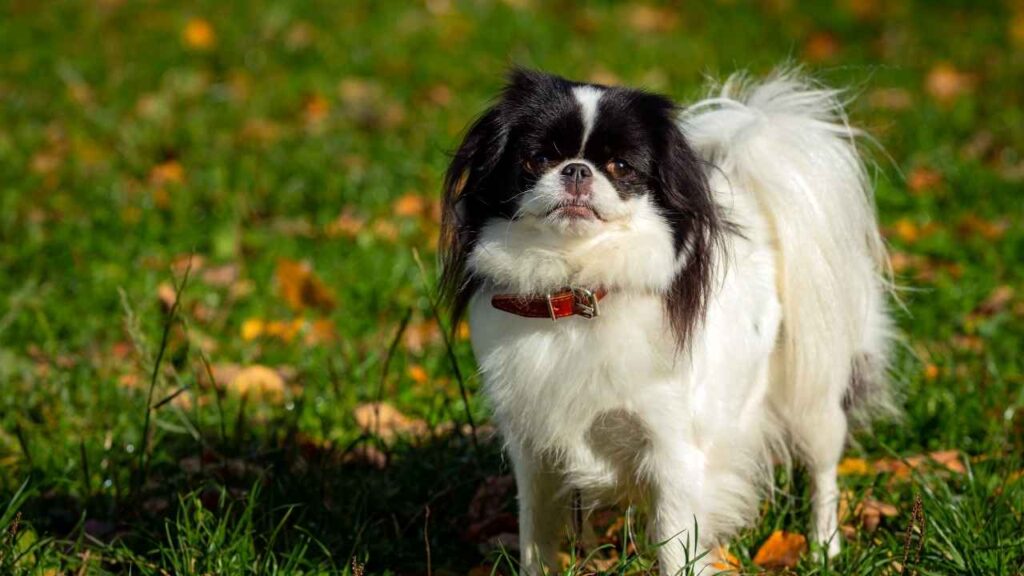
Neither breed should be expected to perform serious guard or protection work because both are small companion dogs rather than physical defenders. Japanese Chins are watchful and may calmly alert their owners when someone arrives, whereas Cavapoos can also bark at visitors but often switch quickly into friendly greeting mode.
Conclusion
Choose the Cavapoo when you want a playful, trainable, socially enthusiastic dog that can participate in a busier family lifestyle, but go for the Japanese Chin when you want a smaller, quieter, more independent lapdog with modest exercise requirements and aristocratic charm.
Be prepared to protect its fragile body, manage heat carefully, maintain dental care, and train with patience rather than pressure. This is the elegant option that watches the group chat from the back of the sofa and responds only when the conversation is worth it.
