




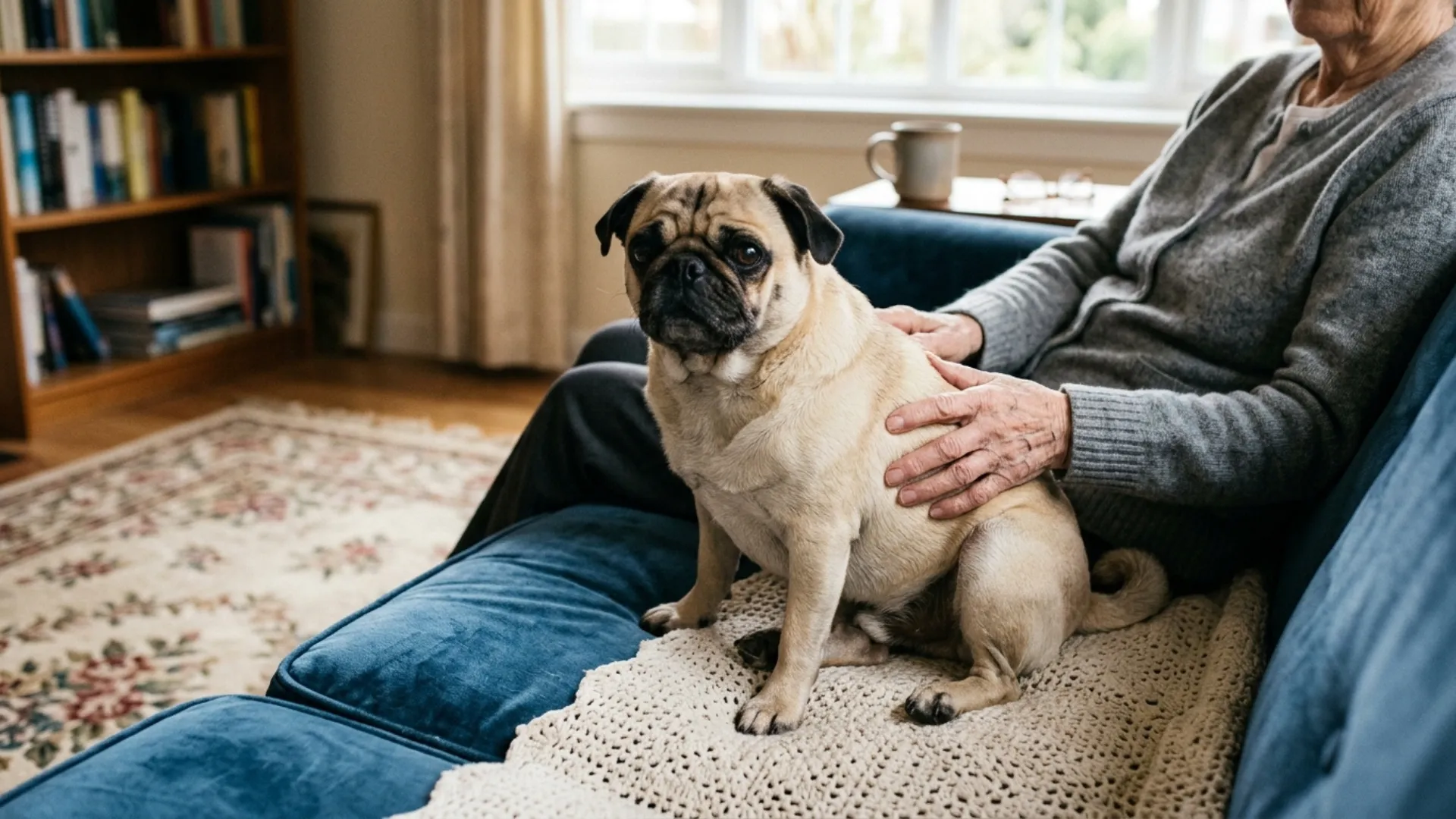
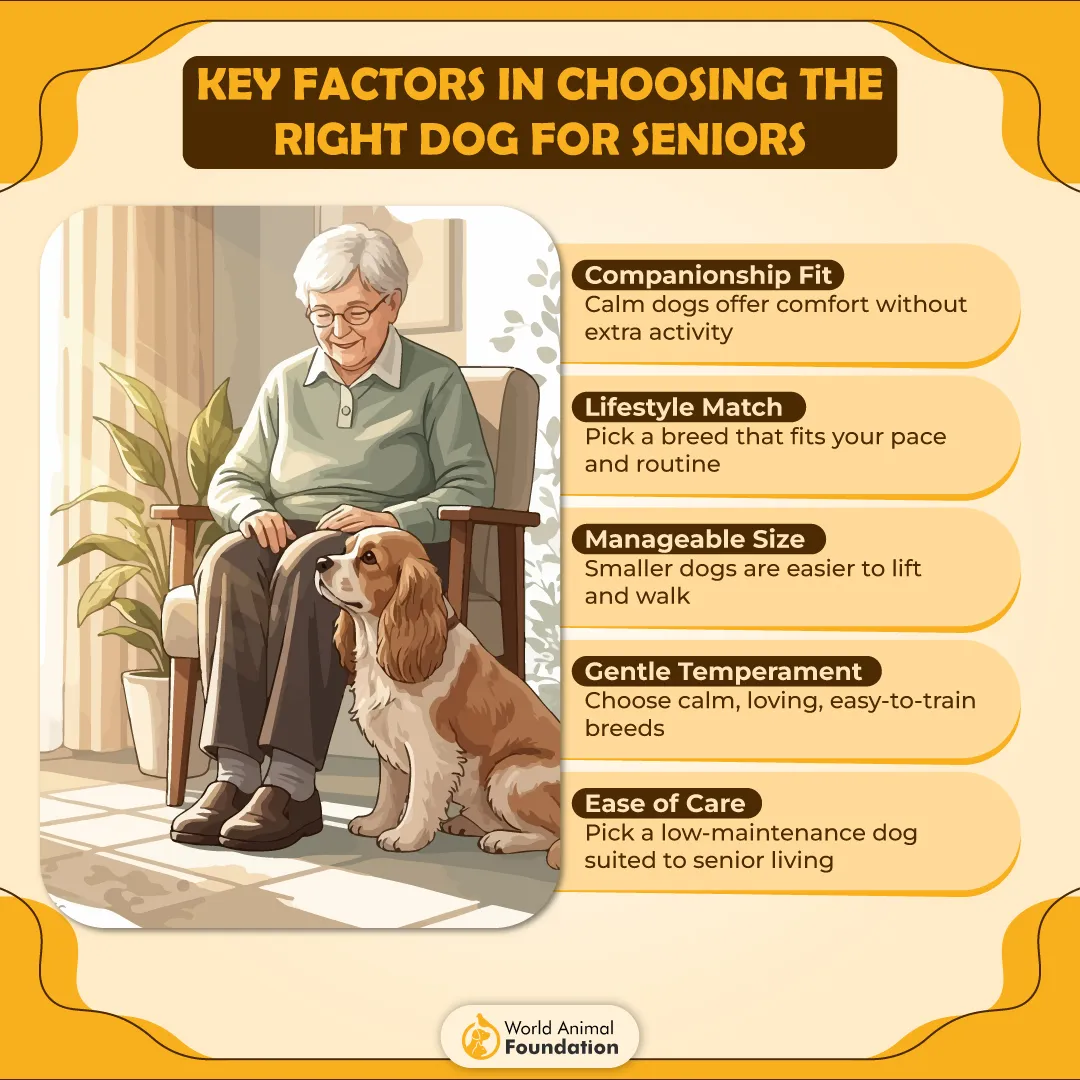
Choosing the right dog as a senior isn’t something to rush, because not every breed fits a quieter, more relaxed lifestyle. The ideal companion is calm, gentle, and easy to manage. You want a dog that brings comfort and joy without demanding too much exercise, grooming, or constant attention.
While some seniors do prefer larger dogs, and that’s completely a personal choice, small breeds are often the better match for those who want a close, easygoing companion. These dogs tend to stay by your side, enjoy cuddles, and adapt well to slower routines.
Most small dogs have lower exercise needs, manageable grooming (with a few exceptions), and are easy to handle or carry. A short walk around the block is usually enough to keep them happy. Plus, their affectionate nature and adorable size make them natural lapdogs.
In this guide, we’ve listed 7 calm and gentle dog breeds that are especially suited for seniors living in smaller spaces. These little companions are low-drama, loving, and perfectly content with a peaceful home life.
Calming Dog Breeds Perfect for Senior Citizens
1. Cavalier King Charles Spaniel
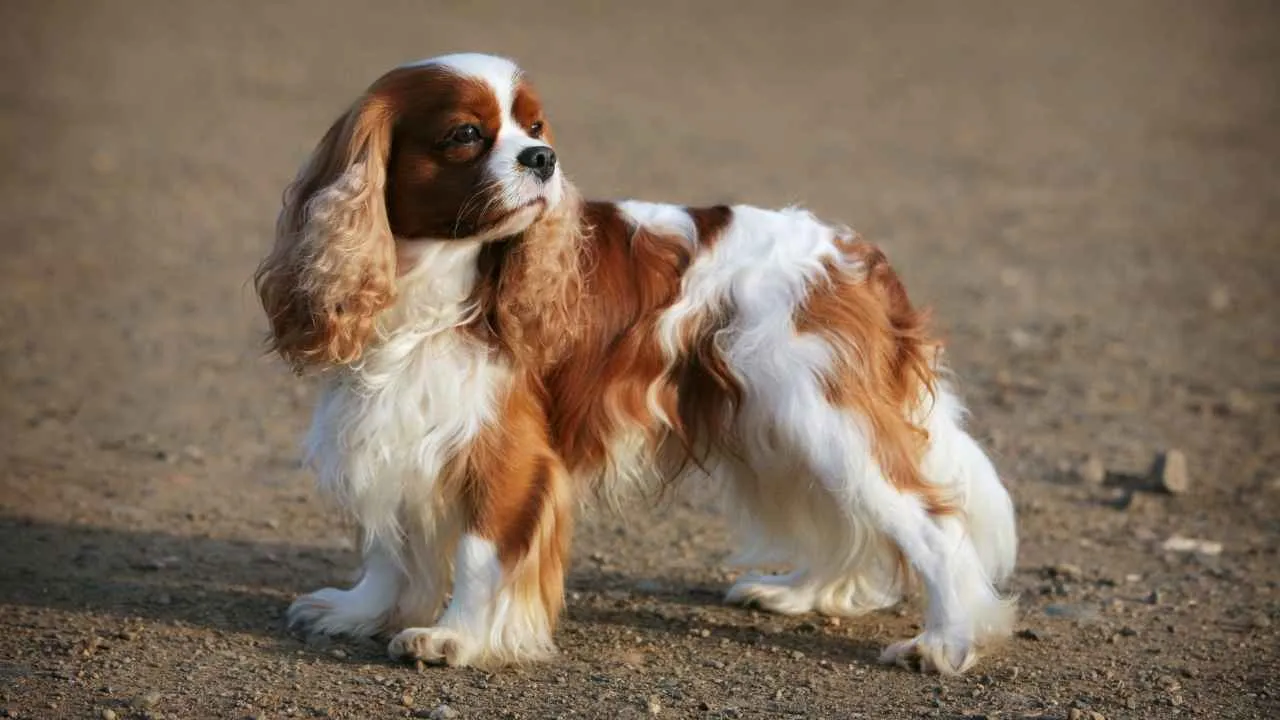
The Cavalier King Charles Spaniel was originally bred as a royal companion, and that gentle, affectionate nature still defines the breed today. Calm, loving, and deeply attached to their families, they make excellent lapdogs for seniors. Their small size makes them easy to handle, and they naturally prefer staying close to their owners.
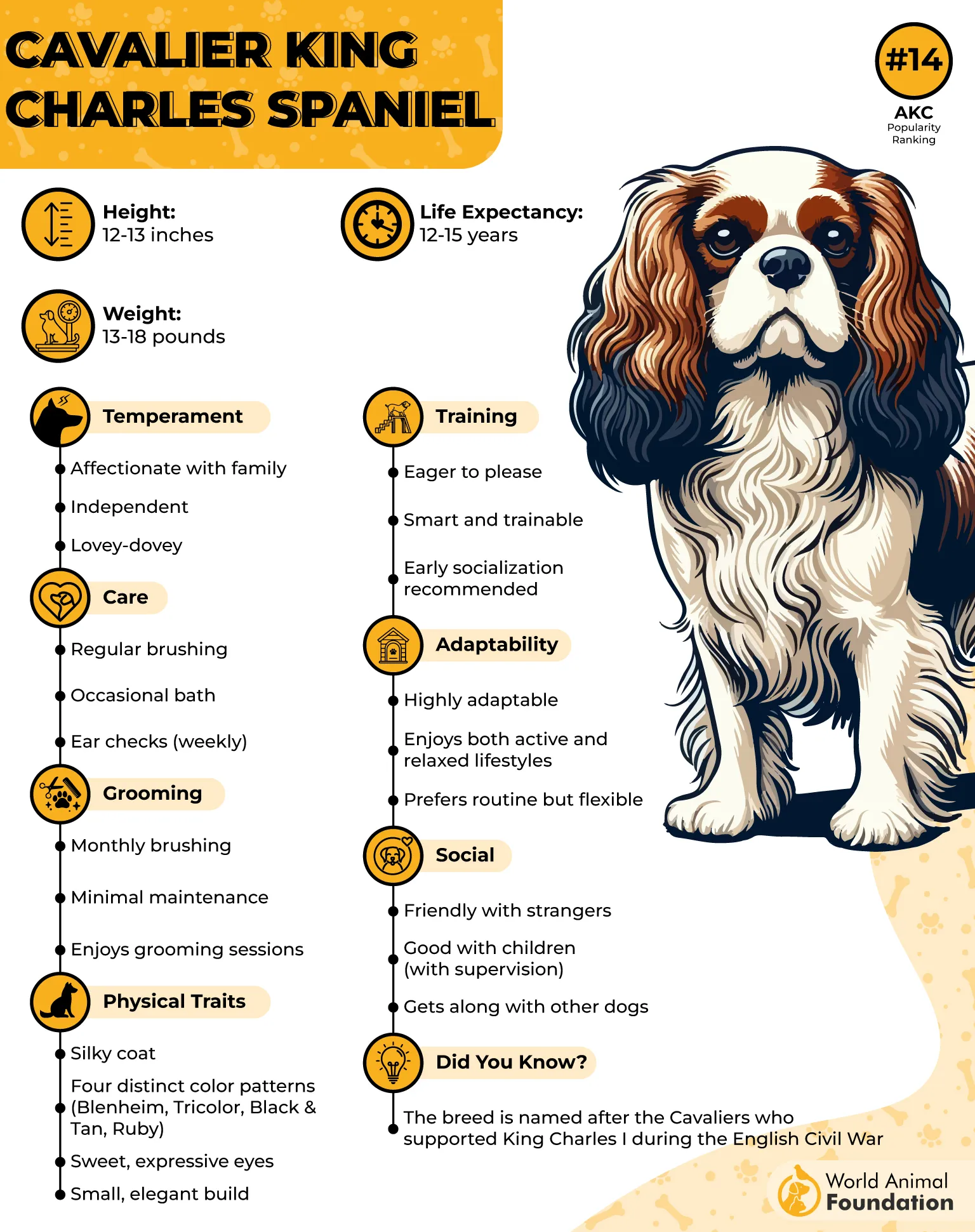
The AKC states that they were named after King Charles I and King Charles II, who were famously devoted to these dogs and often took them everywhere, even into parliament, according to the American Kennel Club.
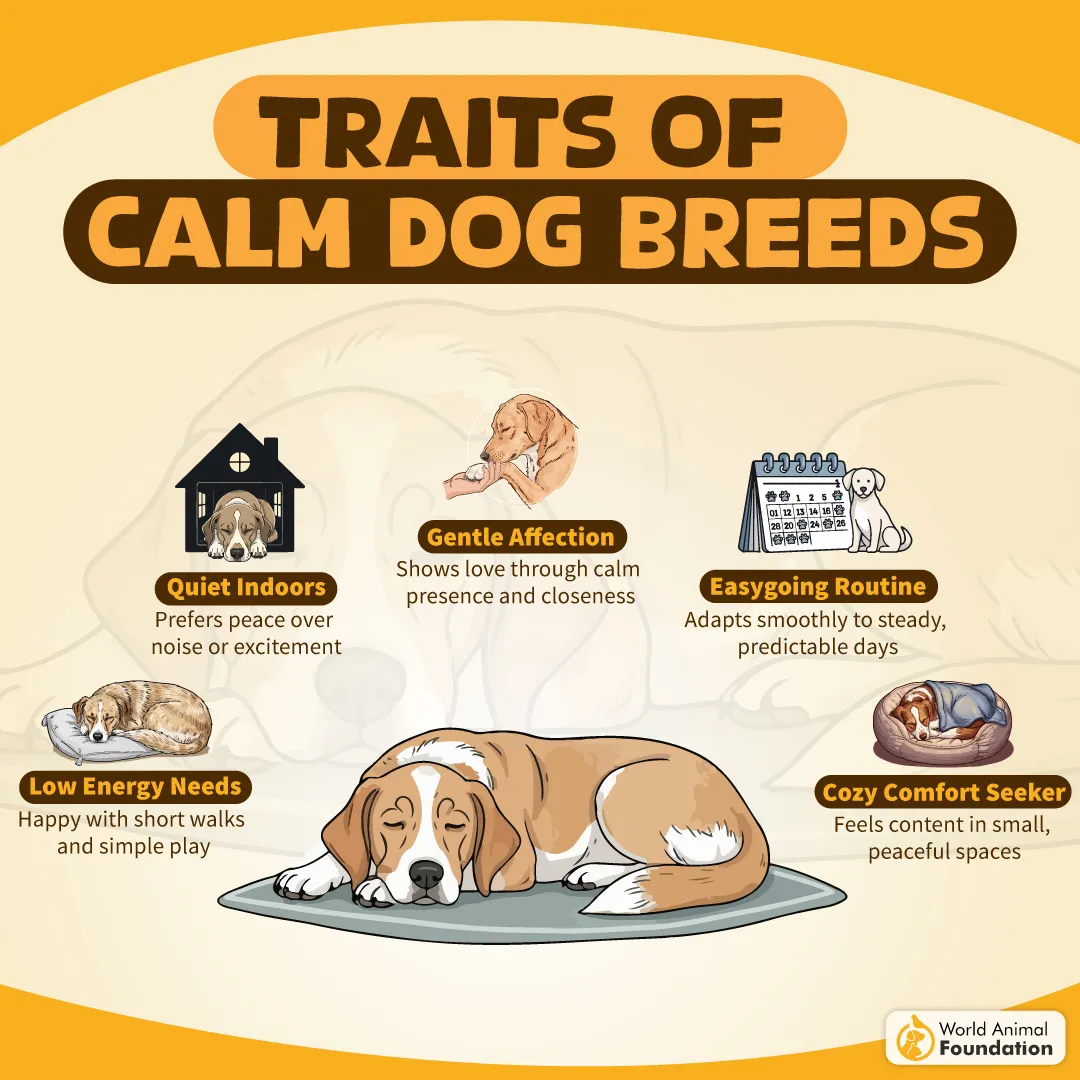
Cavaliers are low-demand companions. A short walk once or twice a week is usually enough to keep them content. Their eager-to-please personality also makes them easy to train; they quickly learn basic commands and adapt well to different routines.
That said, their silky, medium-length coat does require some upkeep. Brushing a few times a week helps prevent tangles and keeps them looking their best.
2. Shih Tzu
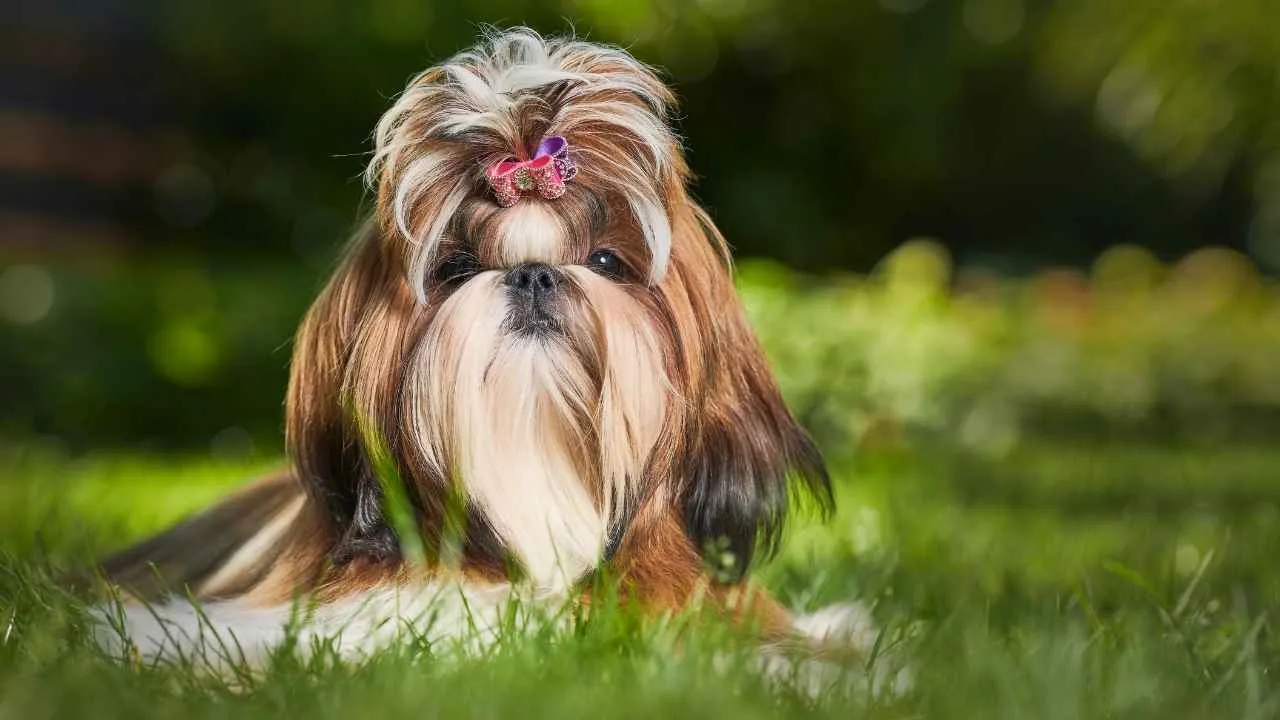
The Shih Tzu, often called the “little lion dog,” was originally bred in China as a royal companion. True to its history, this breed is warm, gentle, and deeply affectionate, making it one of the calmest and most loving dogs for seniors. Shih Tzus thrive on companionship and enjoy spending most of their time close to their favorite people.
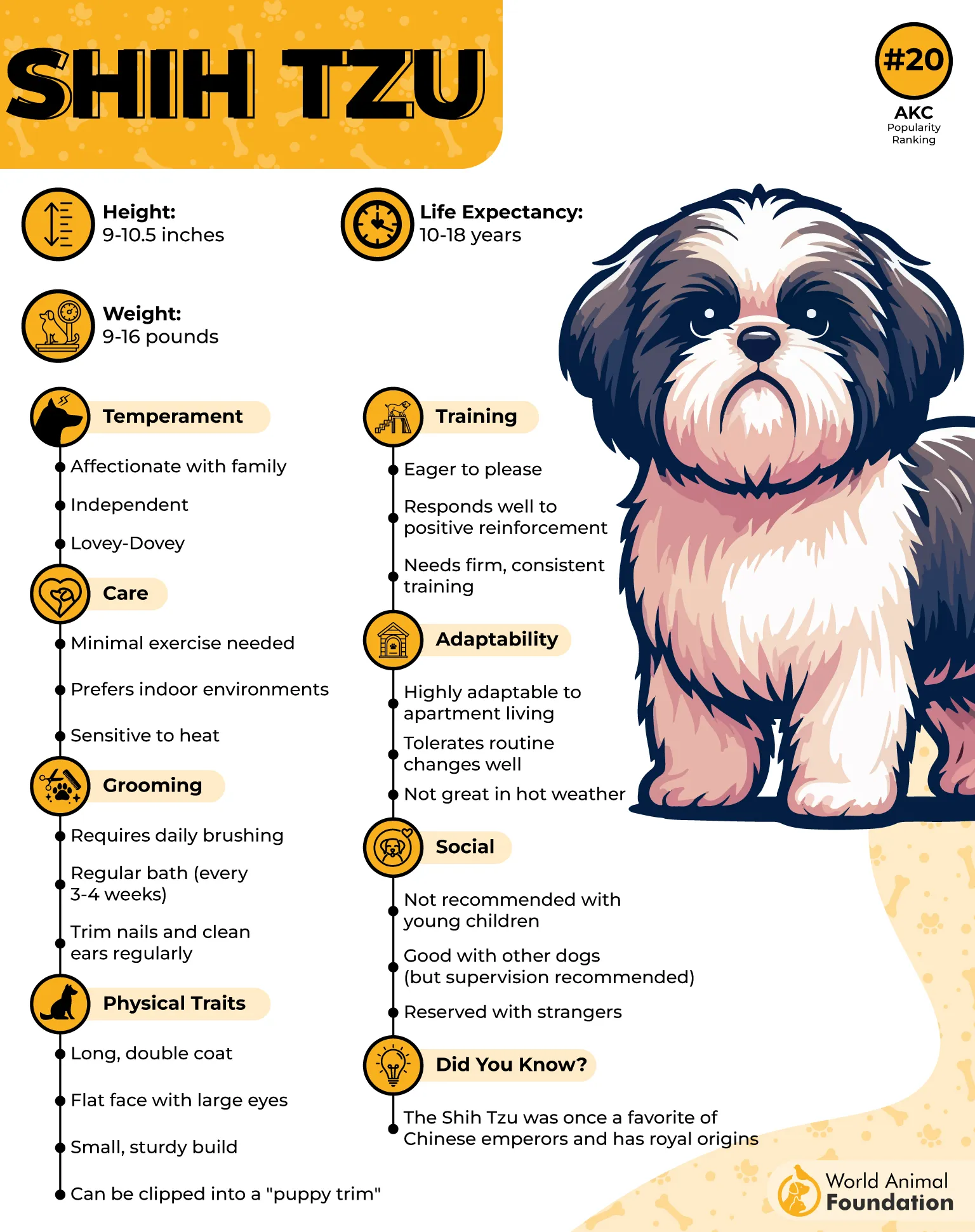
They’re intelligent but can show a bit of stubbornness now and then, that classic “royal attitude.” With patience and consistent training, however, they respond well and settle into routines easily. A gentle daily walk along with some indoor playtime is usually enough to keep them happy and healthy.
Their long, flowing coat does require regular care. Daily brushing helps prevent tangles and keeps it looking neat. Many seniors opt for a “puppy cut” to make maintenance easier. While they don’t shed much, they still need professional grooming every 4–6 weeks to stay in top condition.
3. Bichon Frise
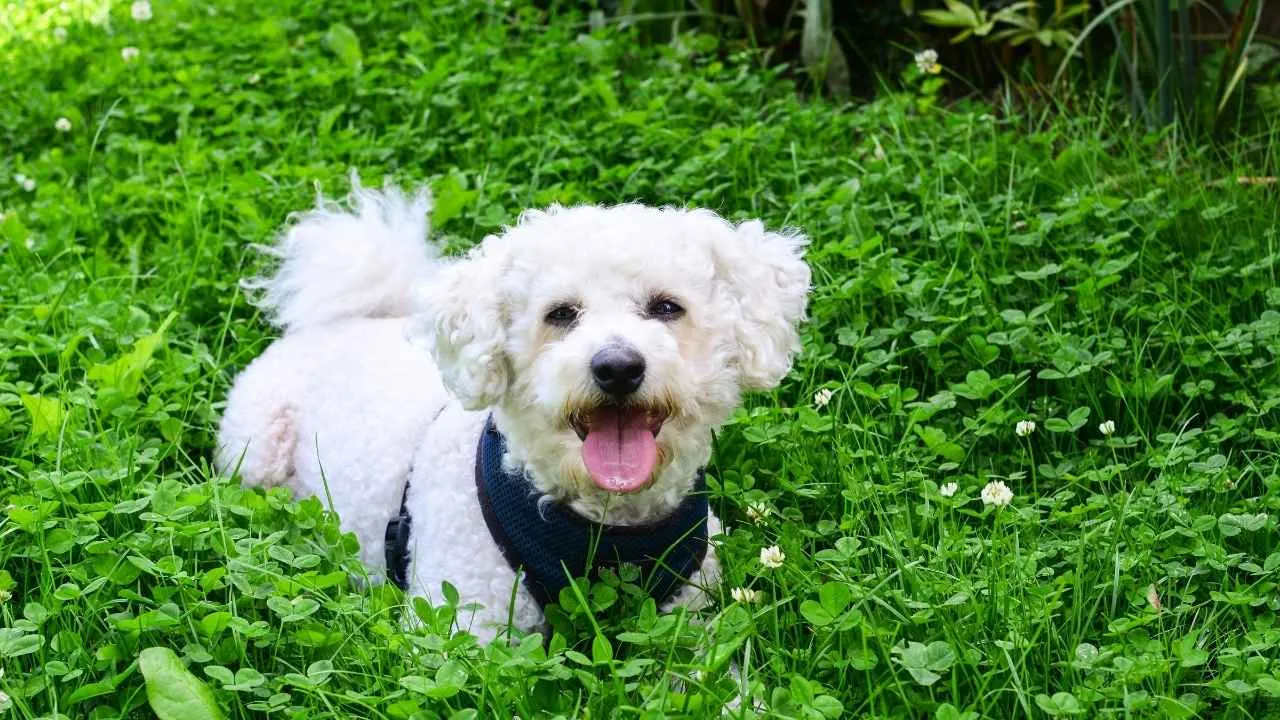
The Bichon Frise was bred as a companion for European royalty and looks like a little walking cloud. With their cheerful, gentle, and affectionate nature, they’re among the calmest and most loving small dogs for seniors.
Chewy notes that this tiny white dog is low-shedding and doesn’t need much exercise, making it a great fit for older adults or those with a relaxed routine. Bichons are also intelligent and eager to please, so they respond well to gentle, positive training; no harsh methods needed.
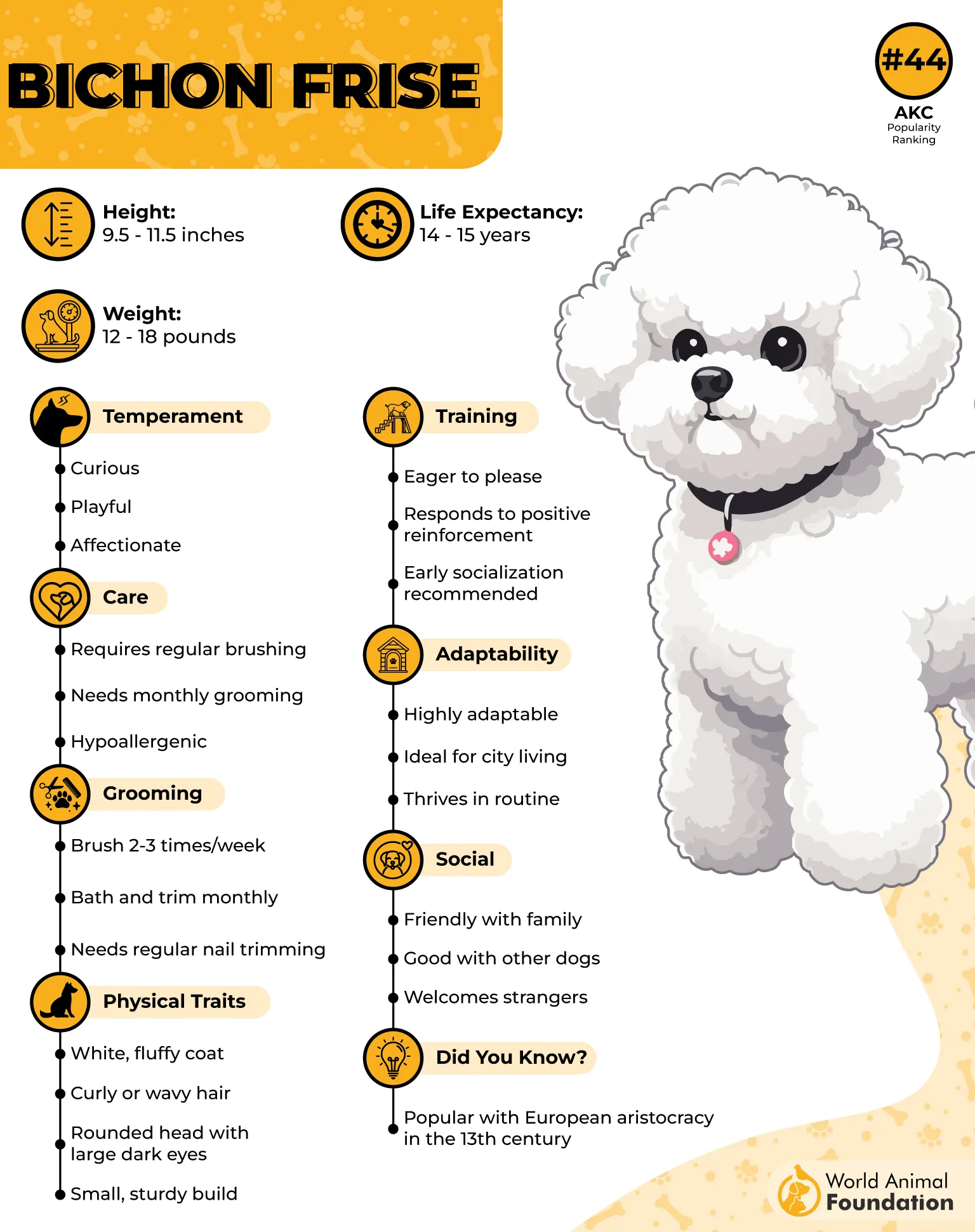
That said, their soft, curly coat does require care. Brushing a few times a week helps prevent tangles, and regular professional grooming every 4–6 weeks keeps them looking neat and healthy.
4. Maltese
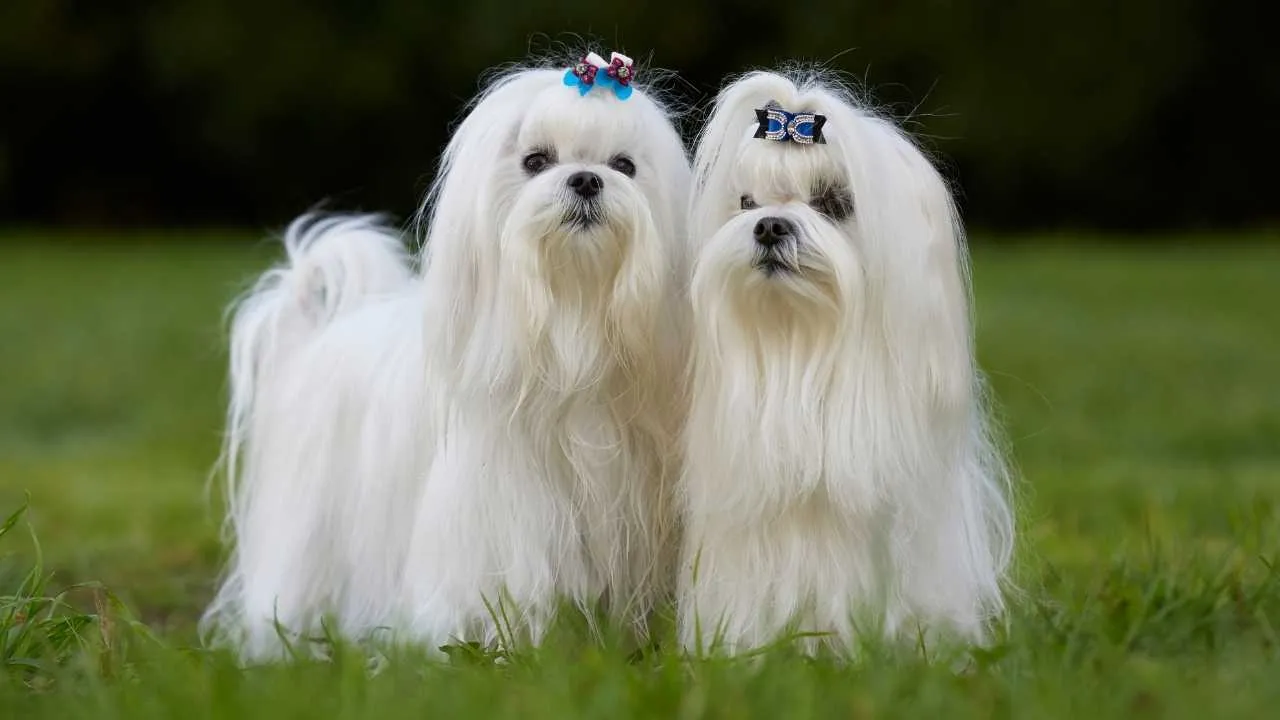
The Maltese is often compared to a little marshmallow thanks to its soft, white, fluffy coat. This breed has a long royal history, dating back over 2,000 years, and was favored by figures like Mary Queen of Scots and Queen Elizabeth I, according to the ASPCA.
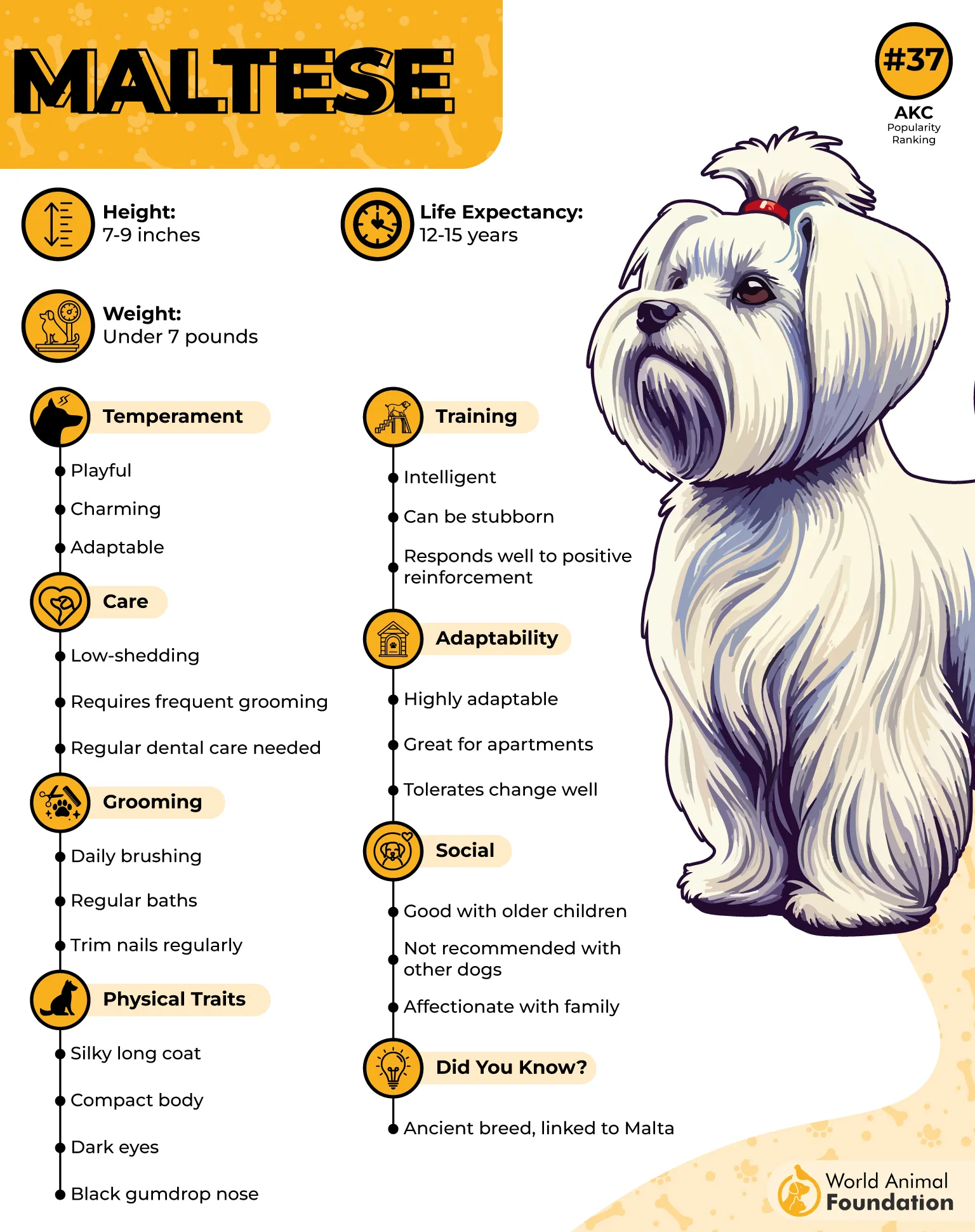
Maltese dogs are gentle, playful, and naturally calming companions. They love staying close to their owners and bring a sense of comfort and joy to everyday life. Their sweet and trusting personality makes them easy to bond with, and their eagerness to please means they respond well to positive reinforcement during training.
They don’t need much exercise; just short daily strolls are enough to keep them happy. However, their long, flowing coat requires regular care. Daily brushing helps prevent tangles, and professional grooming every 4–6 weeks keeps their coat in top condition.
5. Pug
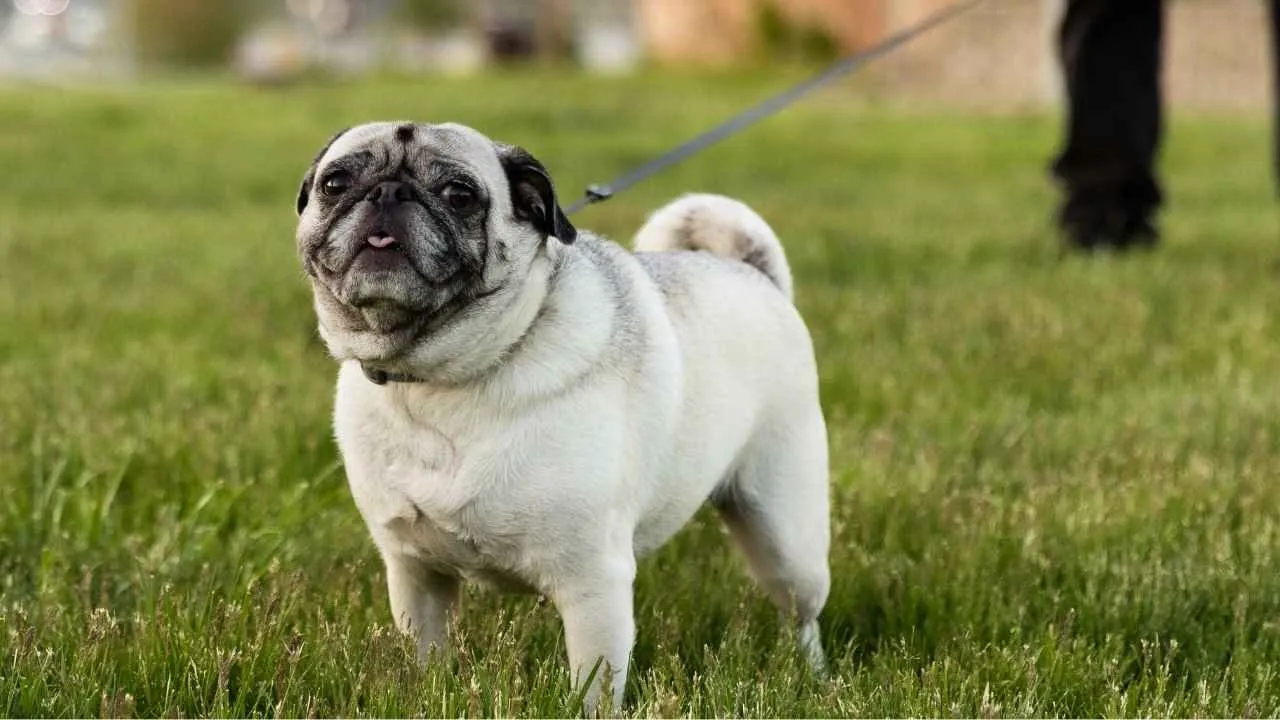
The Pug was bred thousands of years ago in China as a royal lapdog and companion. Known for their warm, charming, and deeply affectionate personalities, Pugs are a great match for seniors looking for a loving, low-key companion.
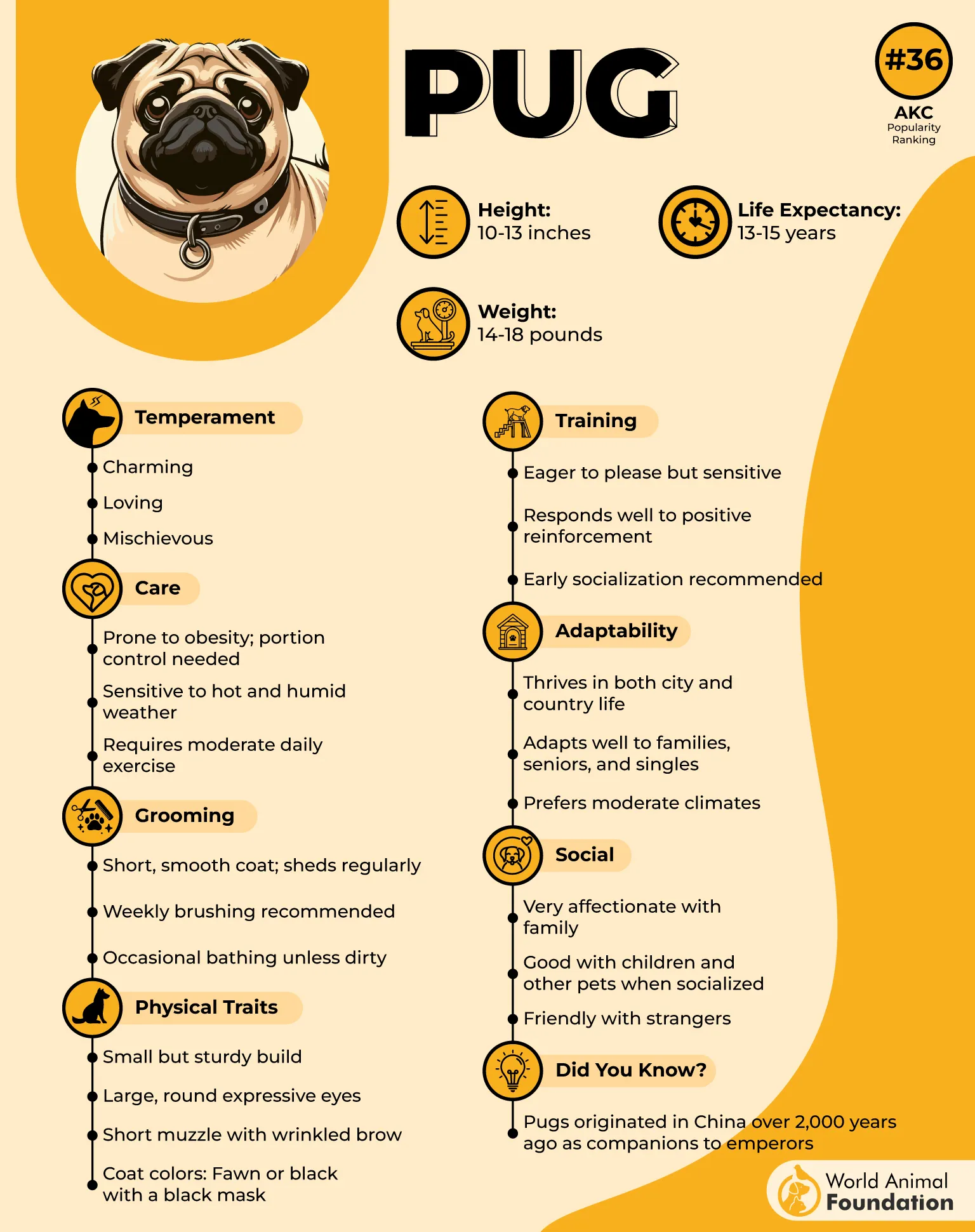
While they do have bursts of energy, once their needs are met, they’re more than happy to relax and enjoy a couch-potato lifestyle. Pugs also have a playful side and often do funny little antics just to make their owners smile. Their affectionate nature means they enjoy attention but are also easygoing if you’re spending time with other pets.
They’re generally easy to train with patience and positive reinforcement, making them fairly manageable even for first-time owners.
However, due to their flat-faced structure, Pugs are a brachycephalic breed and can experience breathing issues. This often leads to loud snoring and heavier breathing, which is something owners should be aware of and monitor, especially in hot or humid weather.
6. French Bulldog
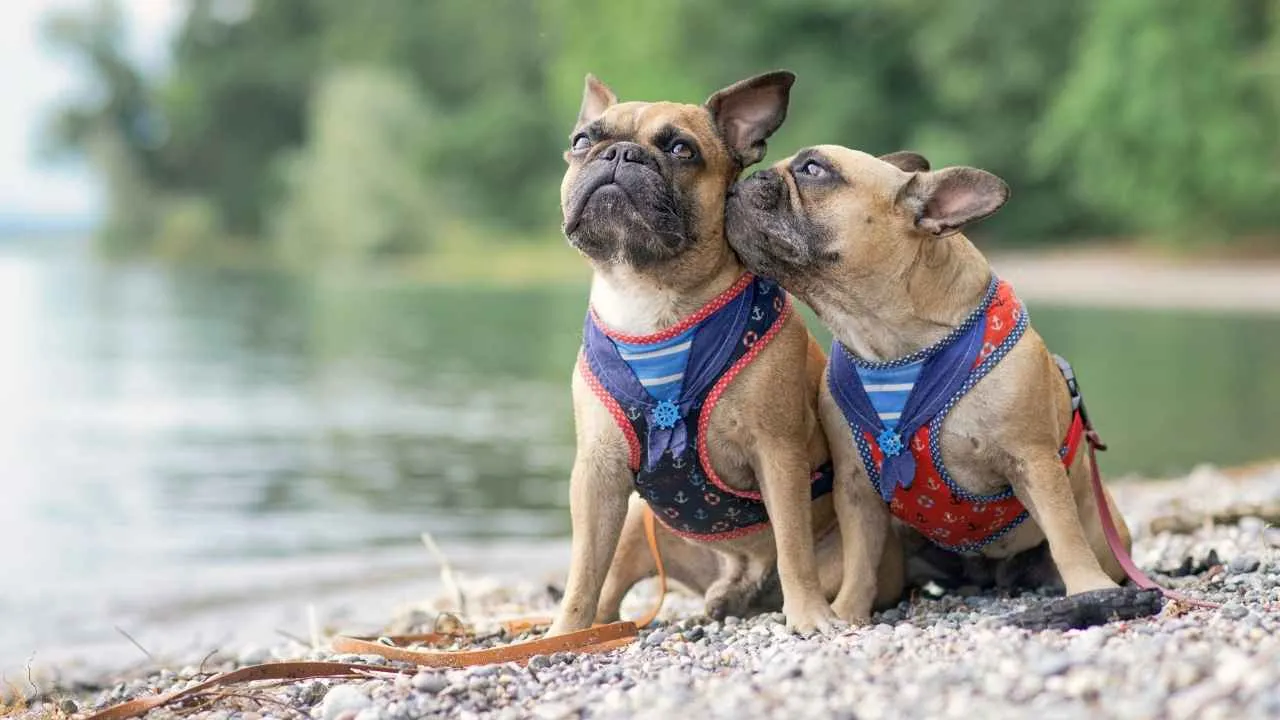
The French Bulldog was bred in France as a beloved indoor companion and has become one of the most popular small dogs for modern living. They are playful, intelligent, easygoing, and naturally calm, making them a great match for seniors looking for a low-energy, affectionate pet.
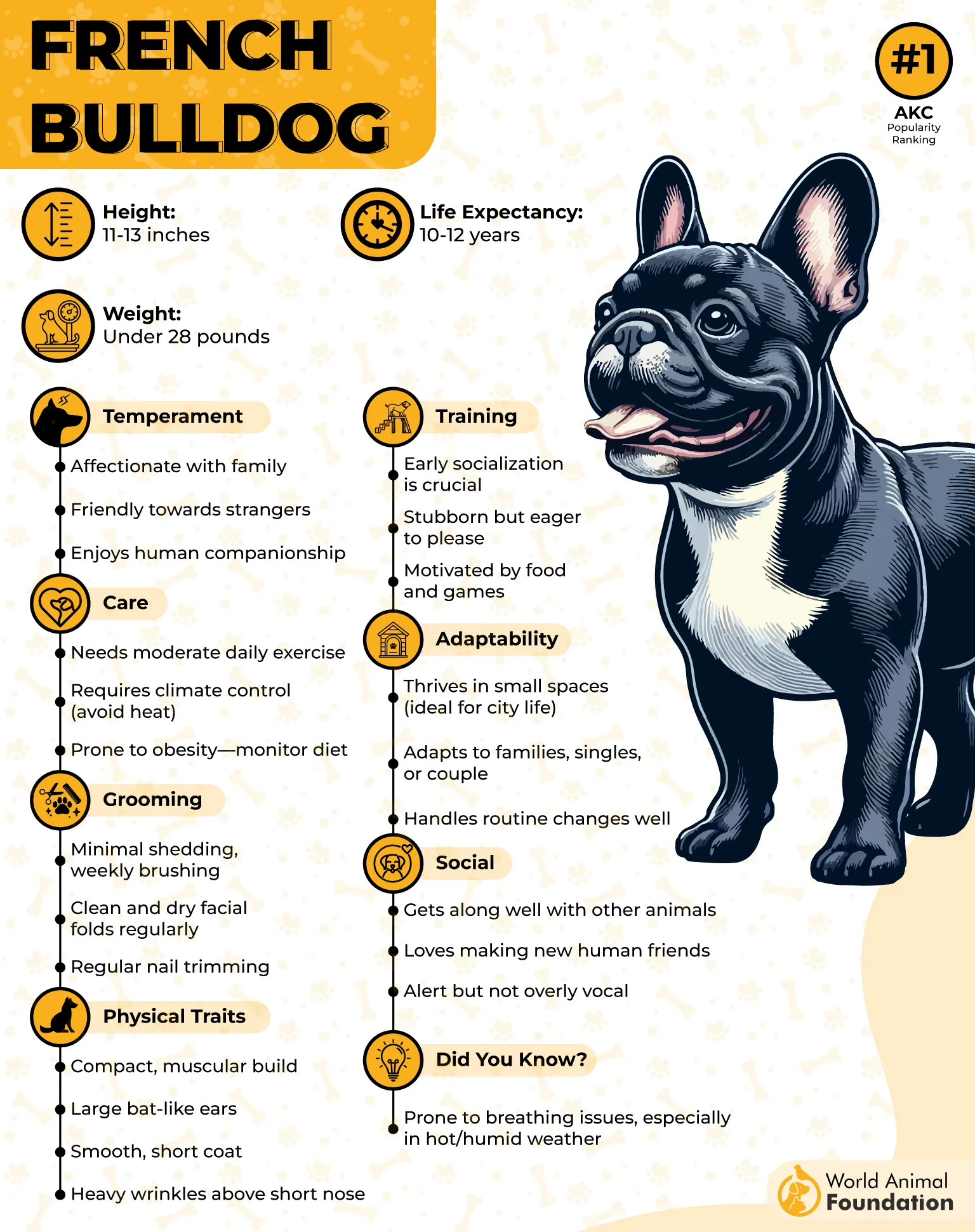
French Bulldogs are small in size and low in exercise needs, but they still benefit from short, gentle walks twice a day for light physical activity and mental stimulation. Their relaxed, adaptable nature also makes them ideal for quieter lifestyles, especially for people who enjoy staying indoors and keeping a peaceful routine.
They have a short, smooth coat that is low maintenance, which is a big plus for easier grooming. However, their facial wrinkles do require regular cleaning to prevent irritation and skin infections.
7. Havanese
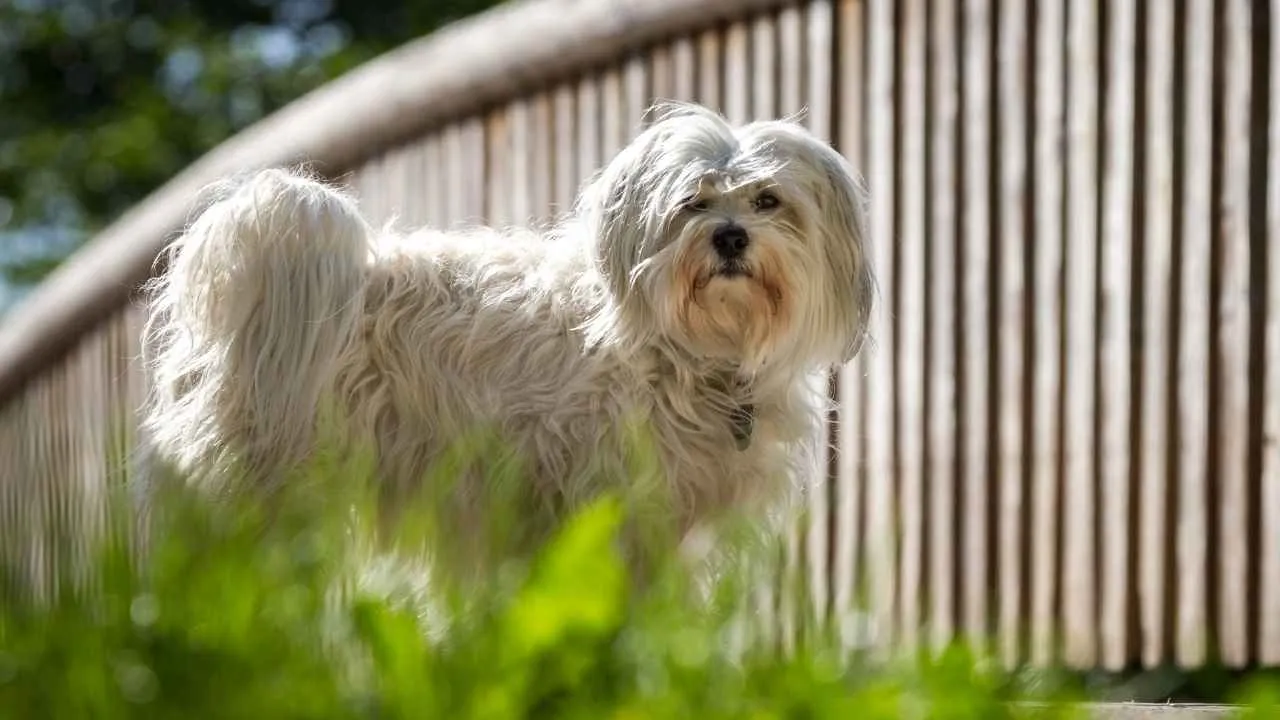
The Havanese is the national dog of Cuba and is known for its intelligent, funny, and outgoing personality. Despite their playful nature, they are calm indoors, one of their best traits for senior living. Havanese dogs form strong bonds with their owners and don’t enjoy being left alone for long periods.
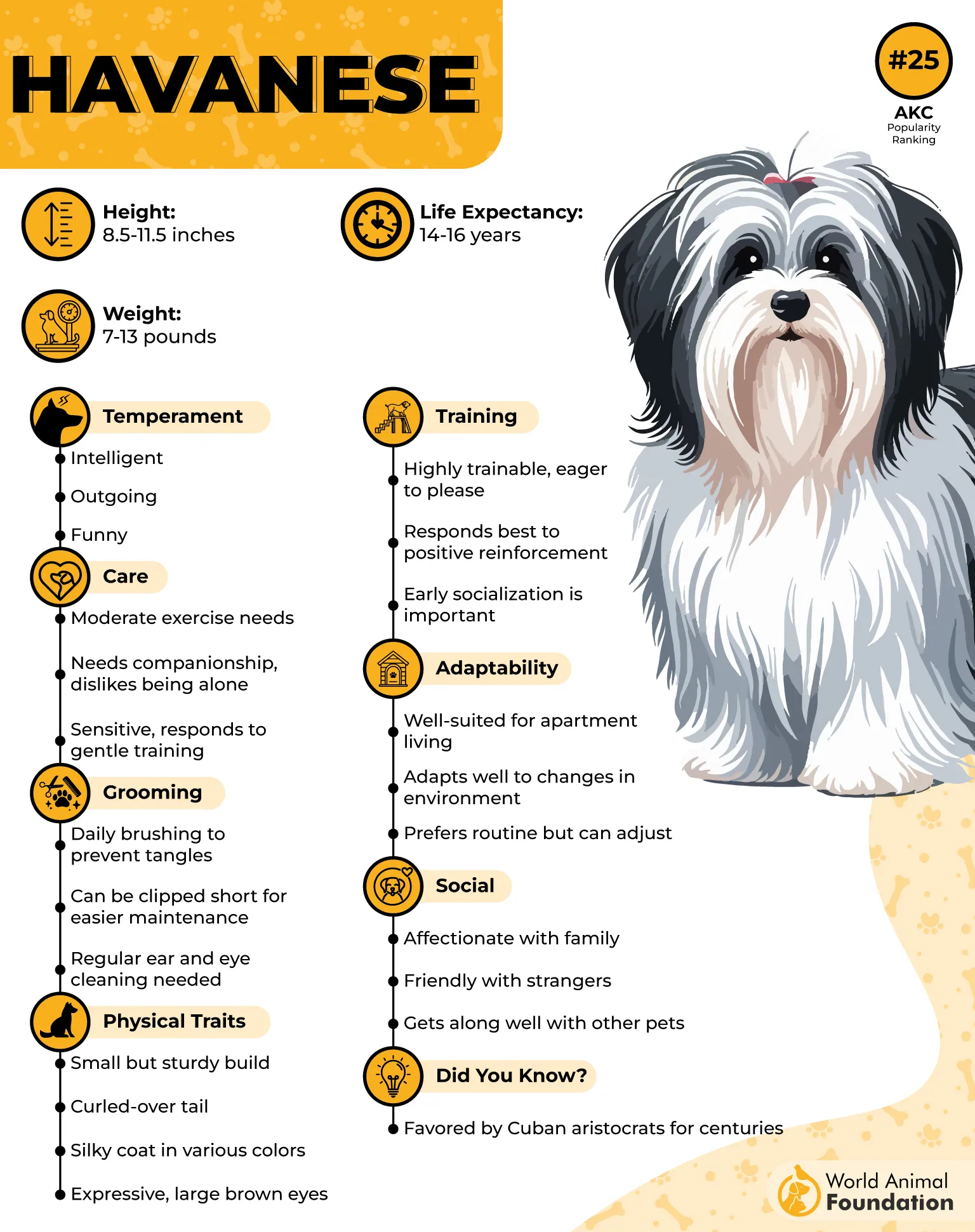
This small breed is eager to please, which makes training simple using positive reinforcement. They are naturally gentle and well-mannered, so there’s no need for harsh training methods. With consistency and kindness, they quickly learn good behavior and routines.
Their long, silky coat does require regular care. Brushing several times a week helps prevent tangles and keeps it healthy. Many seniors choose a shorter “puppy cut” for easier maintenance. In addition, professional grooming every 4–6 weeks is recommended to prevent their hair from growing into their eyes or becoming difficult to manage.
Conclusion
These 7 best dog breeds for seniors are especially calm, affectionate, and easygoing. Most of them were originally bred as companion dogs, meaning they naturally enjoy human company and typically have low prey drive, an added advantage for a peaceful home environment.
However, their grooming needs are quite different. Some breeds, like the Pug, have short coats that are relatively easy to maintain, while others, such as the Maltese, have long, flowing coats that require more frequent care. This means shedding levels and grooming effort can vary significantly from one breed to another.
If you’re not comfortable with regular coat maintenance, especially for long-haired breeds, be prepared for routine brushing or even professional grooming appointments. Ultimately, it’s always best to carefully review each breed’s temperament, grooming requirements, and care needs before making a decision.
