




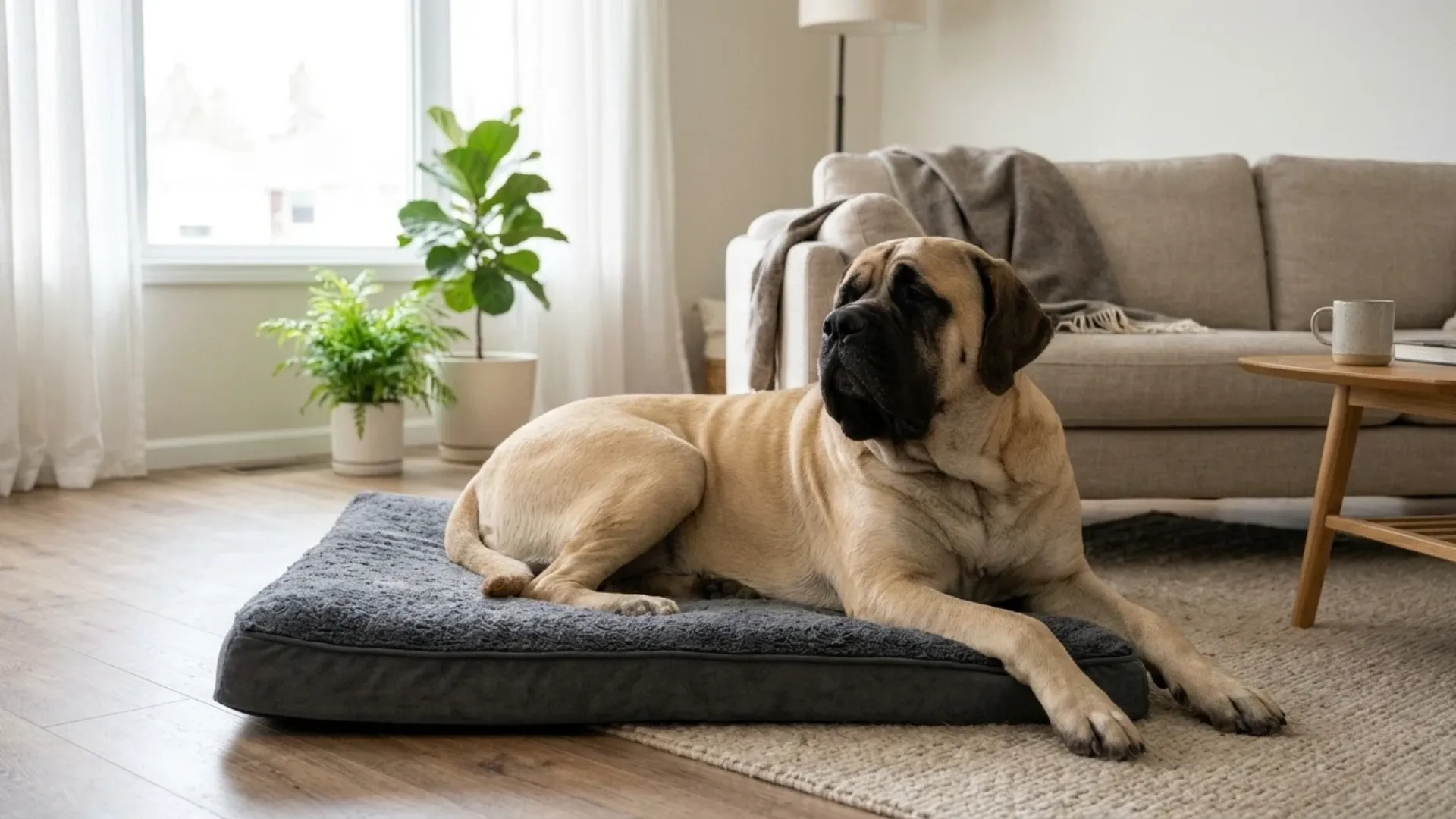
Imagine sharing your home with a dog that looks big enough to carry you but would rather curl up beside you for a quiet afternoon!
Giant dogs have a way of turning heads with their impressive size, yet many are known for their calm nature, gentle behaviour, and strong bonds with their families. Sometimes, the biggest dogs have the softest personalities.
Of course, living with a giant dog is about more than enjoying their loving nature. Their size means they need enough space to move comfortably, a suitable place to rest, and care that supports their health and well-being.
So, are you wondering which giant dogs are known for their laid-back personalities? You’re in the right place! We’re exploring nine calm dog breeds that may enjoy life in quieter homes.
Calm Giant Dog Breeds That Thrive in Quiet Homes
1. Newfoundland
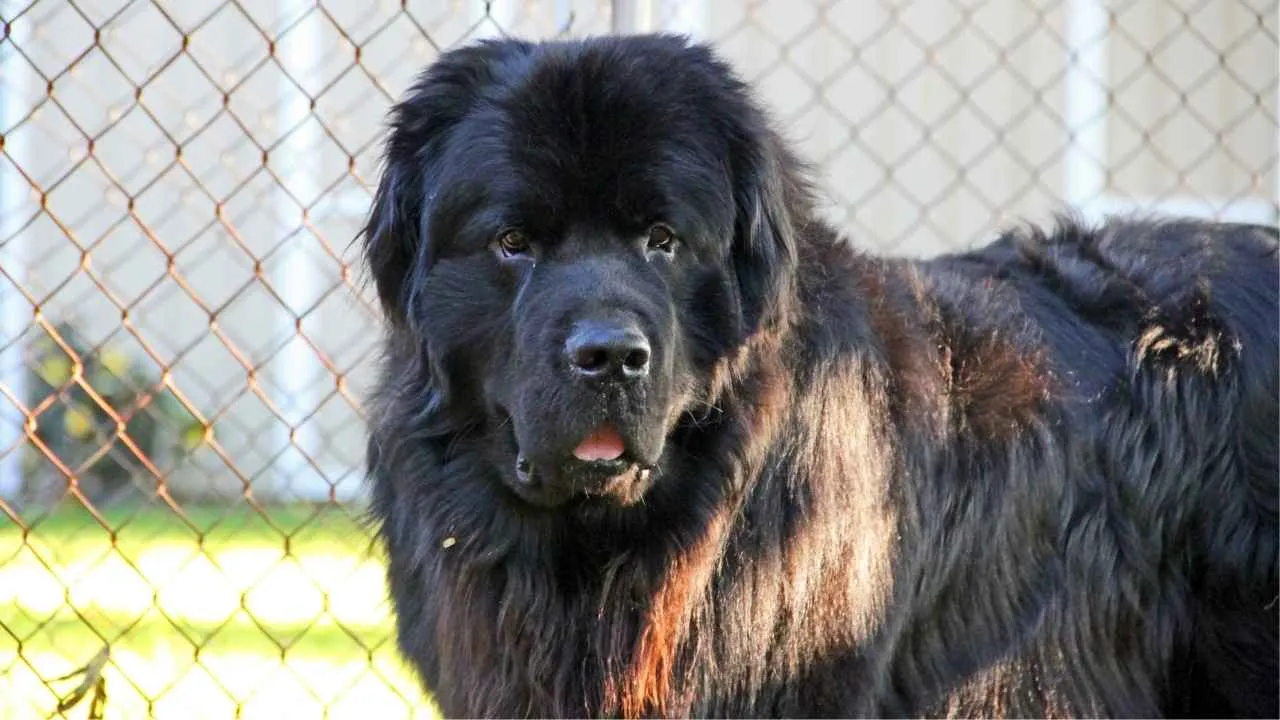
Newfoundlands, often called Newfies, are large working dogs known for their calm nature and sweet temperament. They originated in Newfoundland, Canada, where they helped fishermen and worked as water rescue dogs.
Their webbed paws and thick double coats make them natural swimmers. They enjoy being around people and form close bonds with their families.
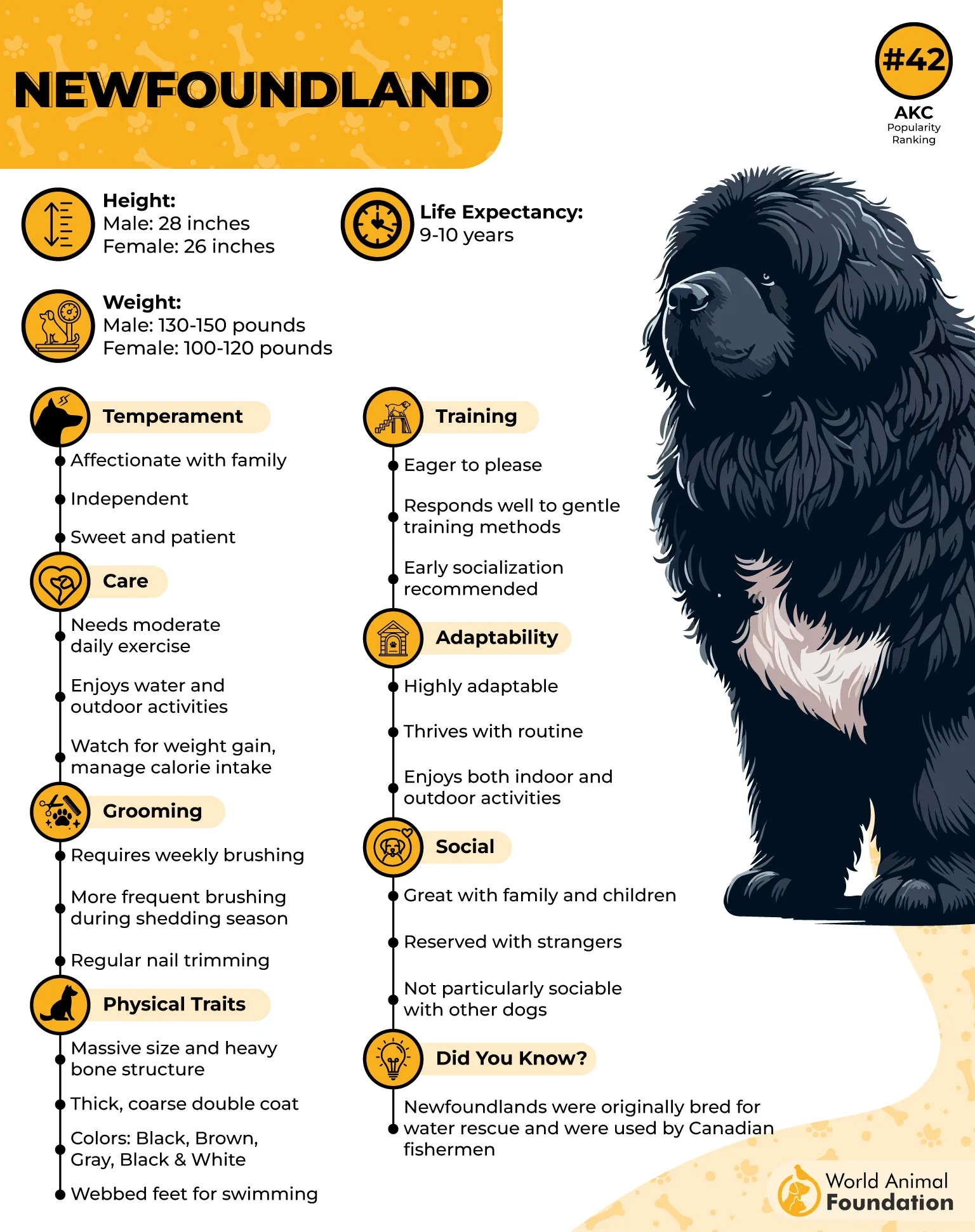
These gentle dogs are affectionate, playful, and usually friendly with strangers, other dogs, and household pets. Britannica mentions their patience around children has earned them the nickname “nanny dogs.”
They are also intelligent, obedient, and willing to please, although they may learn at their own pace. Their gentle nature can make them suitable therapy dogs, but they may become protective if they sense a threat to their family.
Care and Training Needs
Early training: Start training young, as these powerful dogs can become difficult to manage on a lead if basic lessons are delayed.
Coat care: Their thick double coats shed throughout the year and need regular brushing. Drooling is also part of daily upkeep.
Space and supervision: Their size and strength require careful handling. They may accidentally knock over small children. They also need enough room to rest comfortably and move around.
2. Saint Bernard
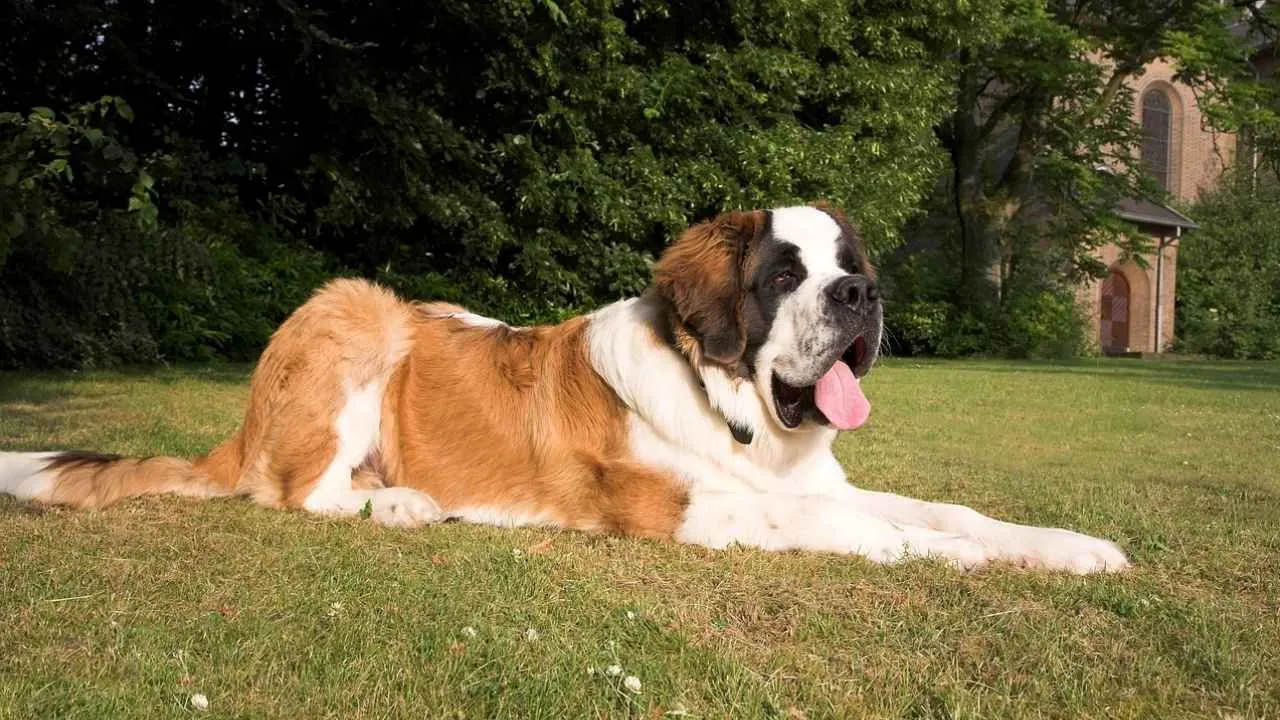
Saint Bernards are famous for their massive build and gentle nature. They originated in the Swiss Alps, where monks trained them in the 1600s to rescue travellers trapped by avalanches.
Today, they are often loving family companions. Their history as rescue dogs reflects their patient and watchful nature.
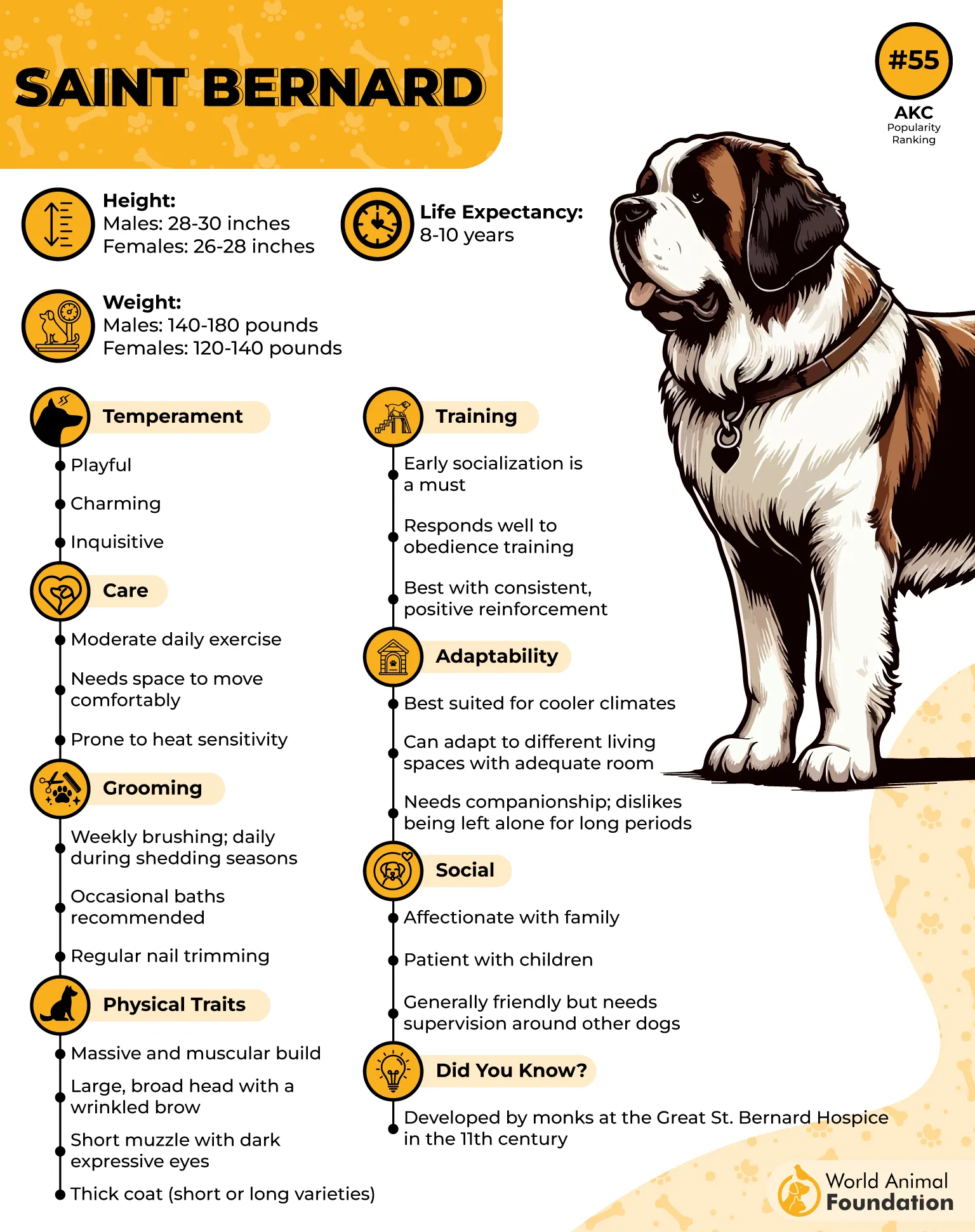
These calm, affectionate dogs enjoy spending time with their families and are usually friendly towards strangers. They are known for being gentle with children and generally get along with household pets, including cats and other dogs.
However, they may not interact as well with unfamiliar dogs. Saint Bernards learn quickly but respond at their own pace. They have a moderate energy level and often prefer relaxed activities over long periods of play.
Care and Daily Needs
Exercise: Aim for around 30 minutes of daily exercise. They enjoy walks and snow but have limited tolerance for heat.
Grooming: Their large heads can produce plenty of drool, so regular cleaning around the mouth is important.
Family time: These people-oriented dogs may develop separation anxiety if left alone for long periods. Their size and strength also require careful handling around children and seniors.
3. Great Dane
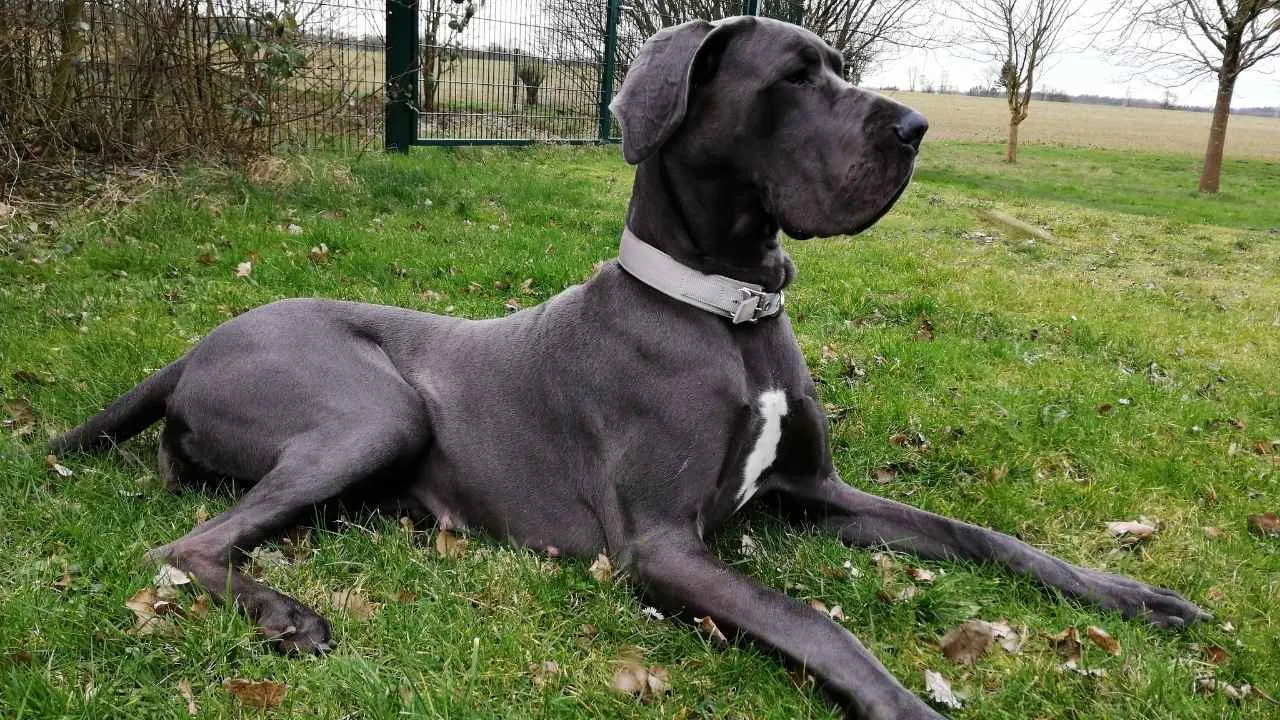
Great Danes originated in Germany during the 1800s, where they were bred to hunt wild boar and guard estates, according to PetMD. Often called the “Apollo of Dogs,” they are known for their elegant appearance, powerful build, and gentle nature.
Despite their imposing size, these dogs can be affectionate and easygoing companions who enjoy family life. These friendly dogs form close bonds with their families and usually welcome strangers.
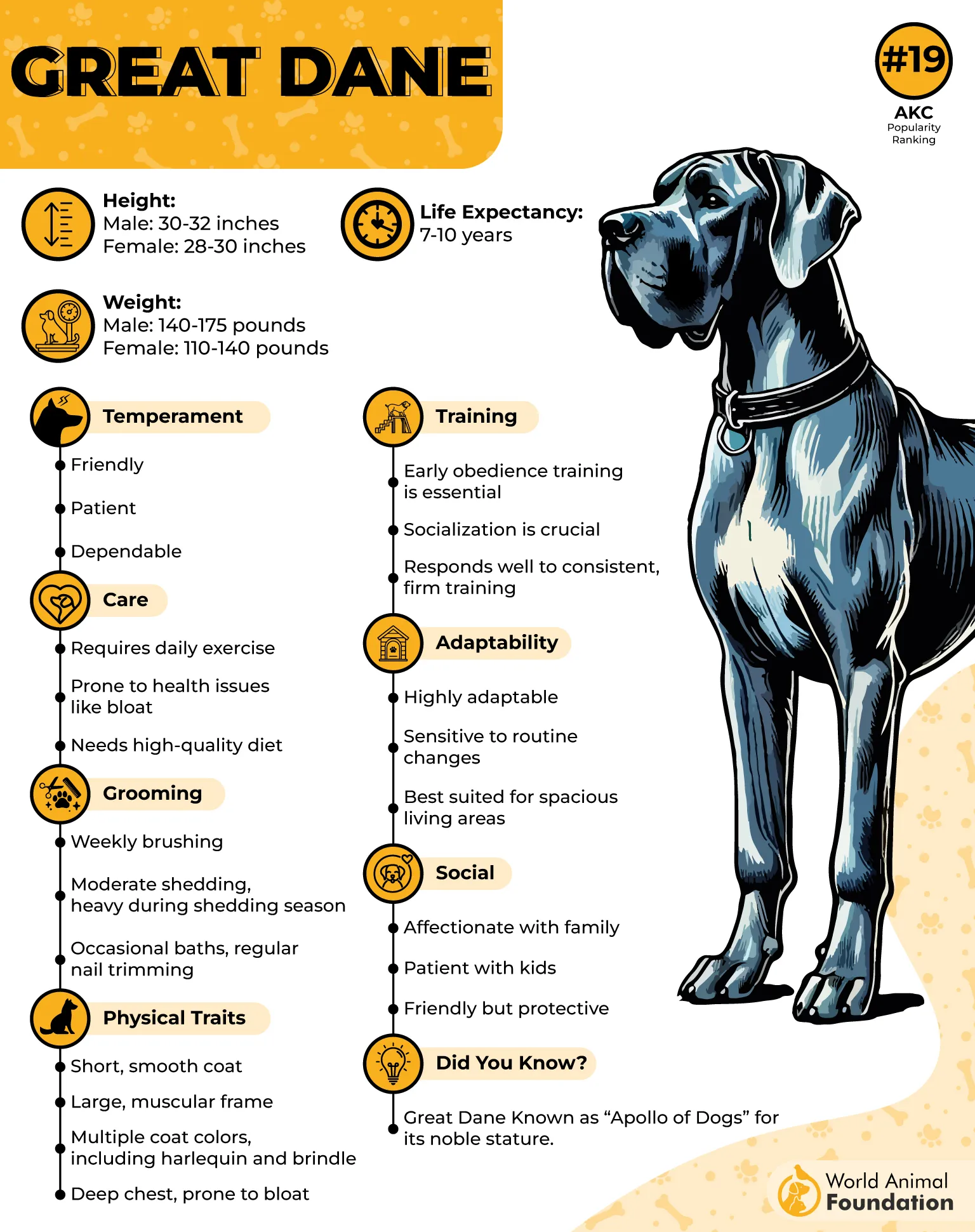
They are patient with children and often get along well with other dogs and household pets. Great Danes have a fairly low energy level and enjoy playtime, but they are often happy to settle down afterwards. They are also alert home guardians.
Their impressive presence can deter intruders, and they rarely bark without reason. Although intelligent and easy to train, they may take their time responding to commands.
Care and Daily Needs
Exercise and training: Great Danes need regular activity and consistent training. Their size and strength make early training especially important.
Coat care: Their short coat comes in several colours and patterns, including the distinctive black-and-white harlequin pattern. Weekly brushing helps keep it in good condition.
Home environment: These dogs need enough room to move comfortably. Their strength can make them difficult for children or seniors to manage, even with their gentle temperament.
4. Mastiff
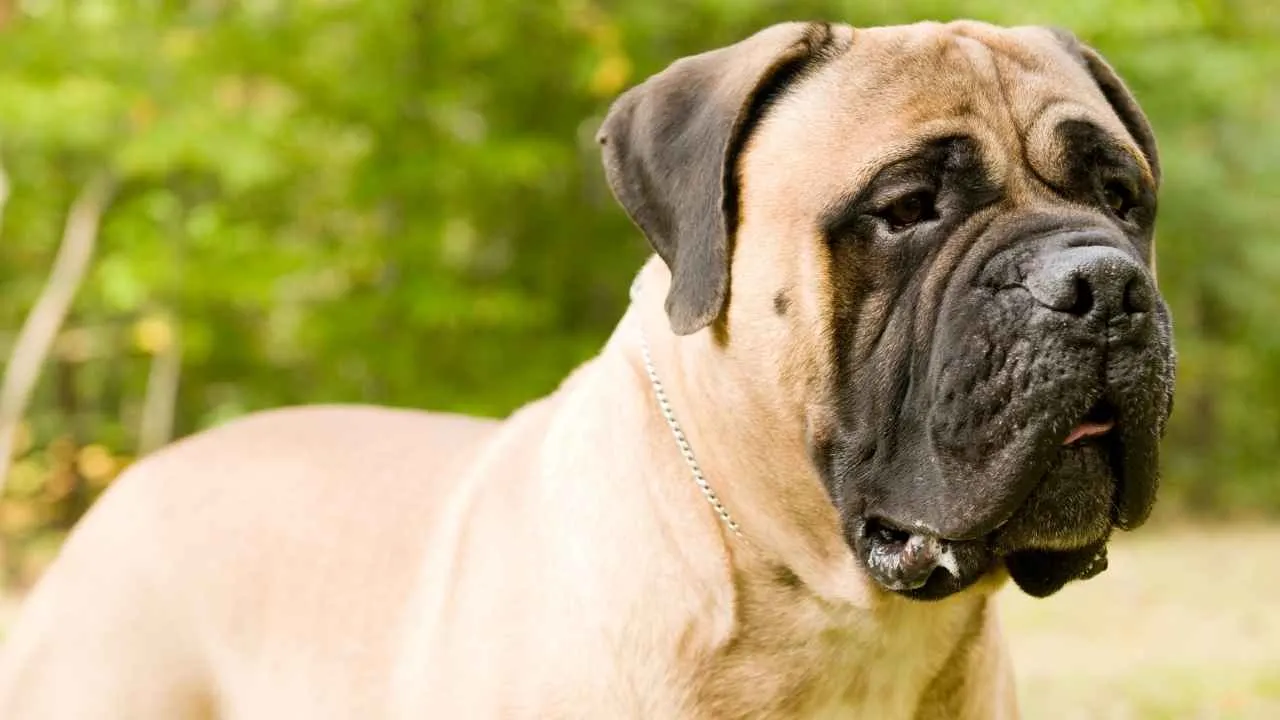
Mastiffs belong to an ancient canine family and are known for their massive build, courage, and strength. Despite their imposing appearance, these dogs are often calm, dignified, and gentle with their families.
They form strong bonds with their loved ones and may even try to sit on their laps, forgetting just how big they are. These loyal dogs are naturally protective and can be wary of unfamiliar people and dogs. They make watchful guardians and rarely bark without reason.
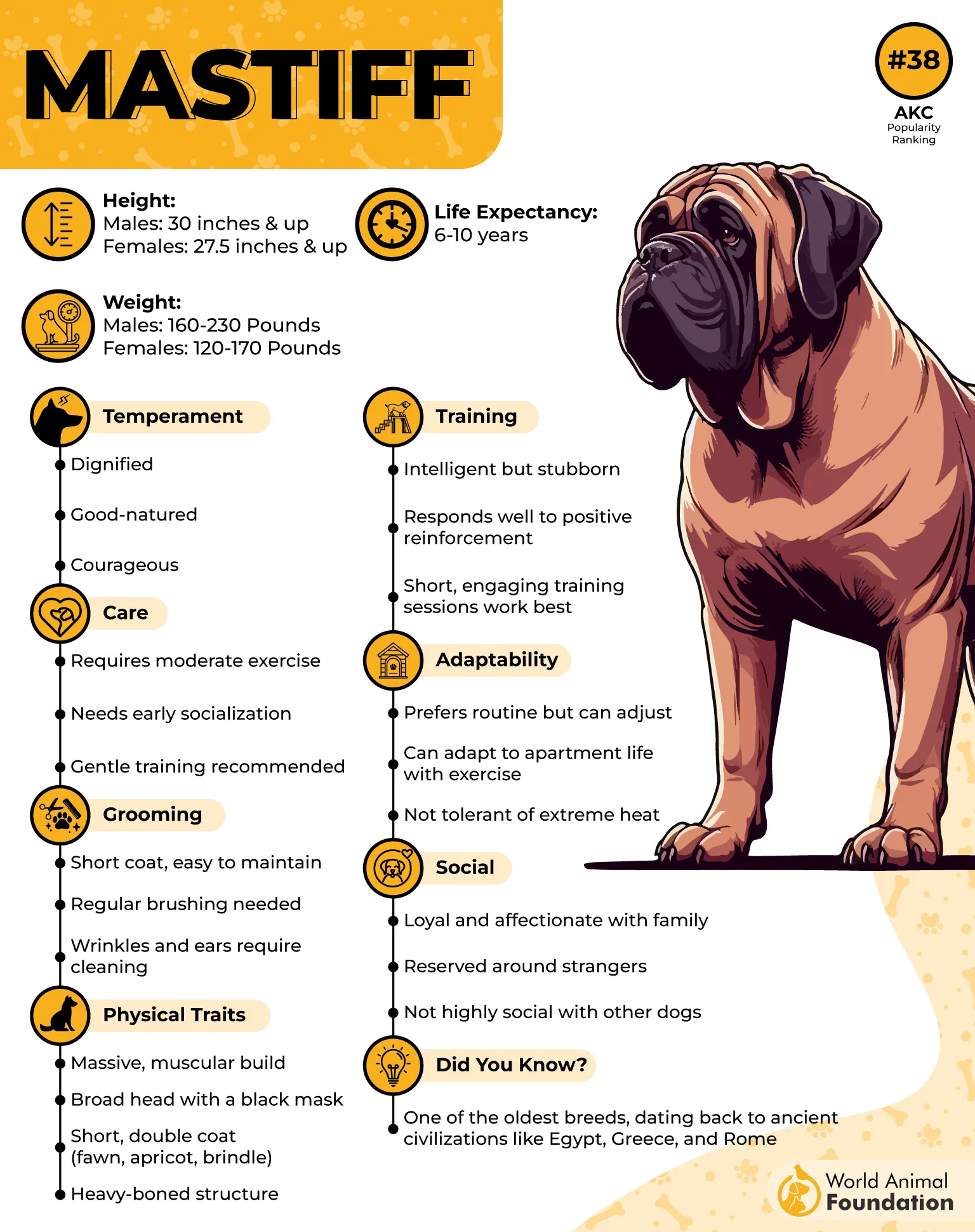
Mastiffs are generally easy to train, but they tend to respond slowly. Gentle training and early socialisation help them learn how to behave around others. Their relaxed nature also means they are better suited to a slower pace than demanding activities like jogging or long hikes.
Care and Daily Needs
Training and socialisation: Start early and use gentle, consistent methods to build good manners and manage their protective instincts.
Space and handling: Mastiffs can live in different types of homes, but extra room helps them move comfortably, especially because of their large bodies and long tails. Their strength can make them difficult for children and seniors to manage.
Exercise and care: Their low energy levels suit quieter routines rather than strenuous outdoor activities. Like other giant breeds, they often have shorter lifespans, so consistent care is important.
5. Bullmastiff
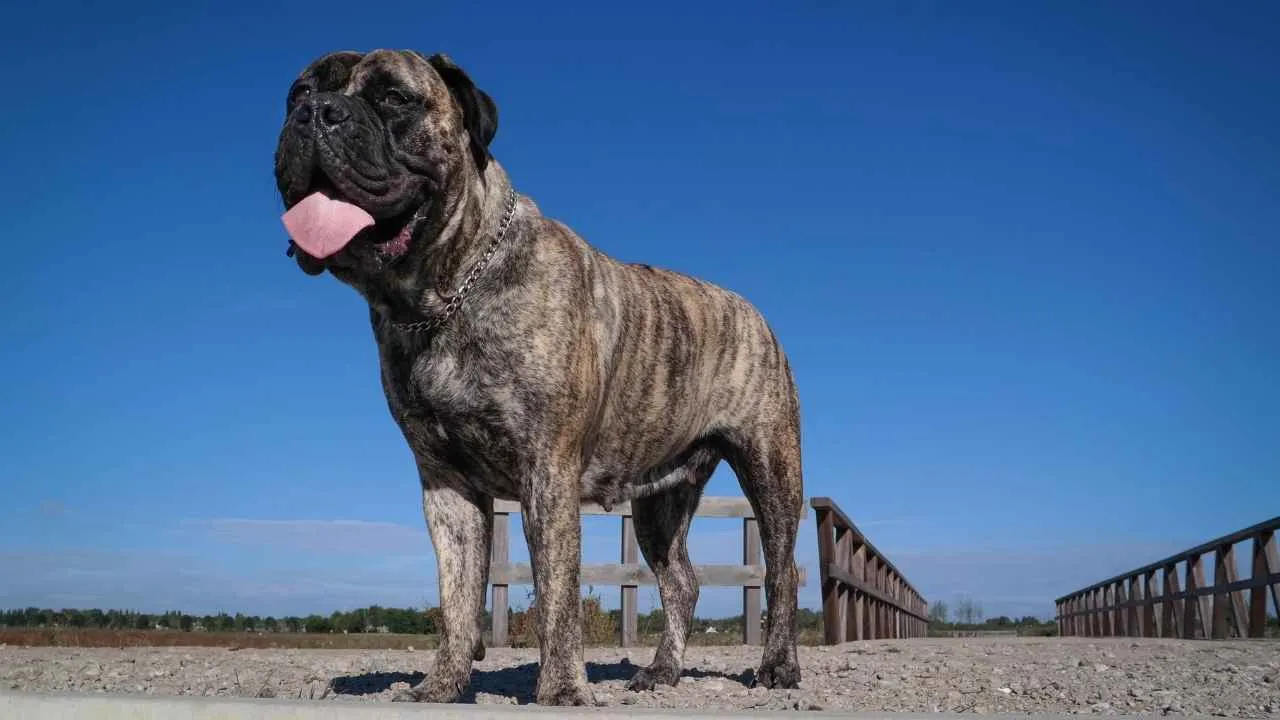
Bullmastiffs were developed in England during the 19th century by crossing Bulldogs with Mastiffs. British gamekeepers bred them to guard estates and catch poachers.
These muscular dogs are known for their strength, confidence, and protective nature. Despite their imposing appearance, they can be docile, affectionate, and devoted companions at home.
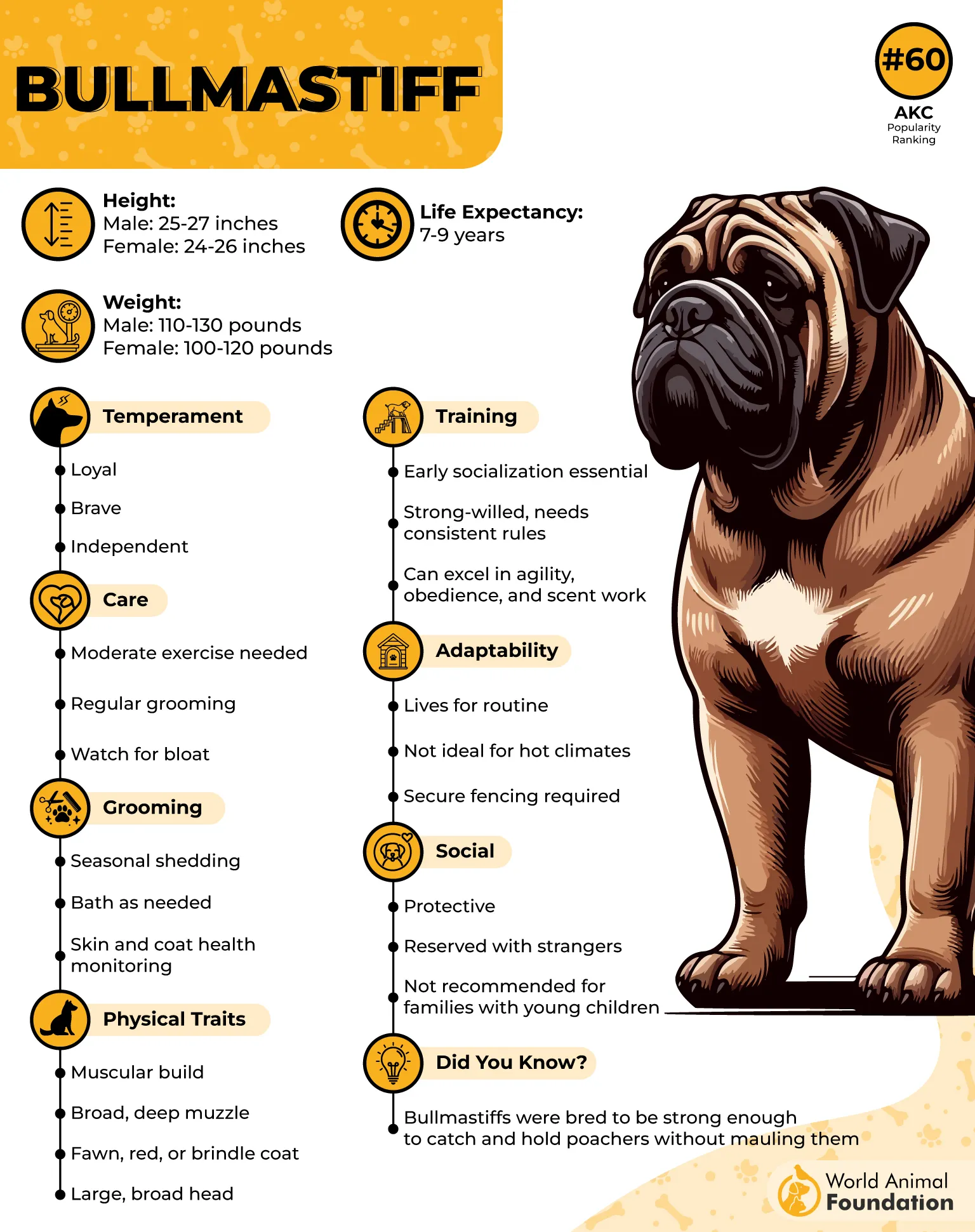
Bullmastiffs form close bonds with their families and are often gentle with children and other dogs. However, they may take time to accept strangers and can be suspicious of unfamiliar visitors.
They are intelligent and usually learn quickly, but their strength and protective instincts make early training and socialisation essential. These dogs enjoy daily walks and playtime, although they lack the stamina for long-distance running.
Care and Daily Needs
Training and socialisation: Teach basic commands and lead manners early. Consistent training helps manage their strength and natural guarding instincts.
Exercise and nutrition: Provide daily walks and play in a secure yard. Balanced nutrition and weight management help protect their joints from extra strain.
Family life: Supervise interactions with young children, as these bulky dogs may knock them over accidentally. Their protective nature also means they need careful introductions to unfamiliar visitors.
6. Irish Wolfhound
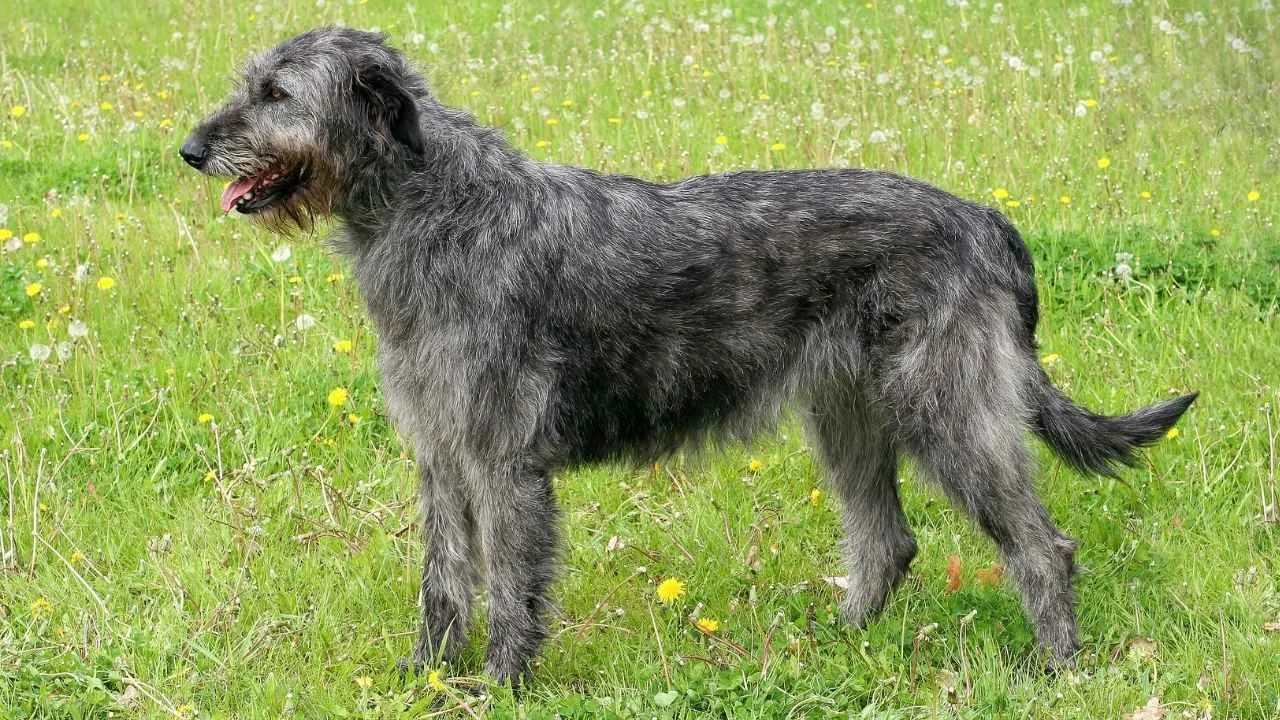
Irish Wolfhounds are an ancient breed with a long history of hunting large game. Their earliest recorded mention dates back to 391 AD, and they later became known for hunting wolves in Ireland.
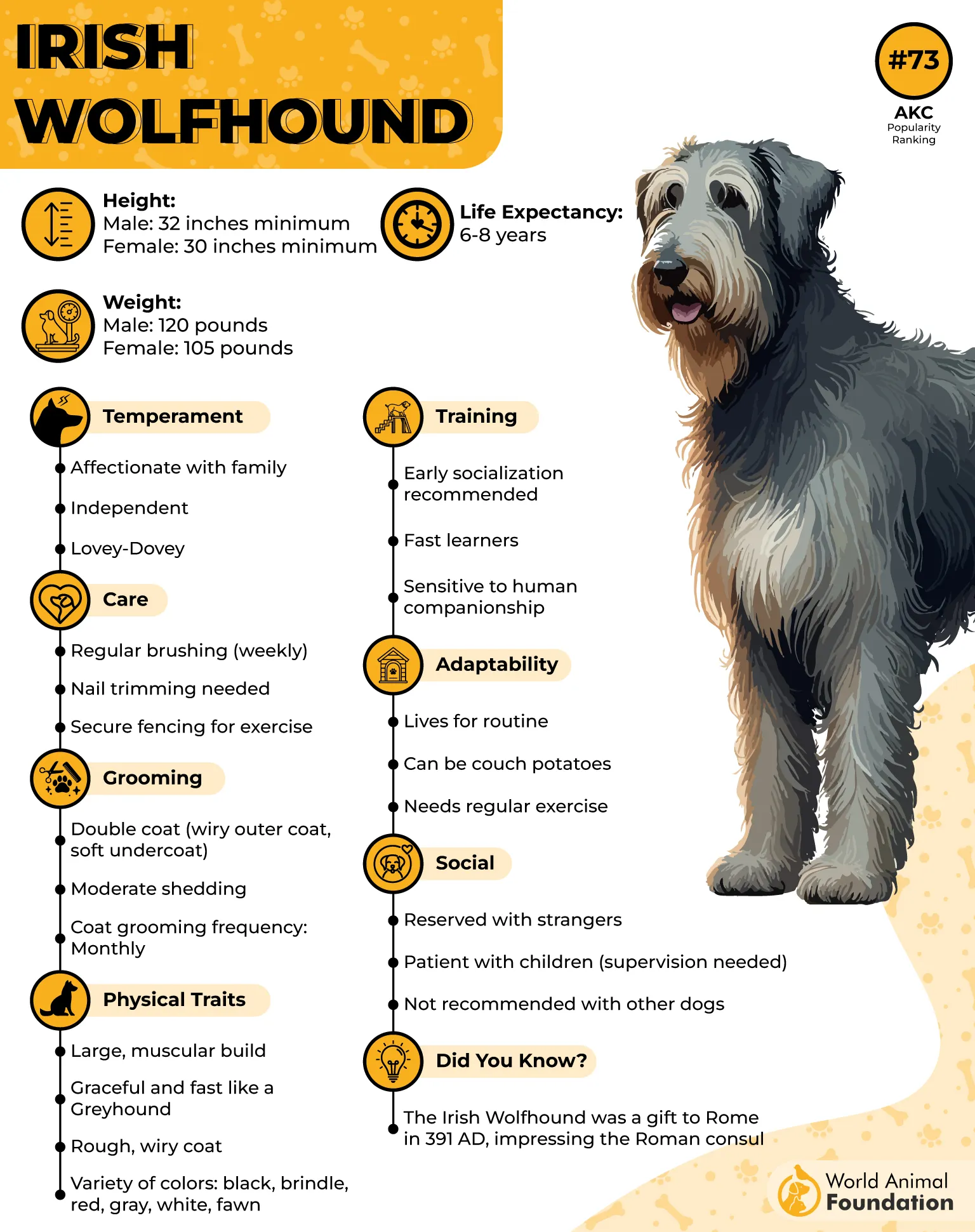
Despite their hunting background, these dogs are now admired for their calm nature, dignified appearance, and gentle temperament.
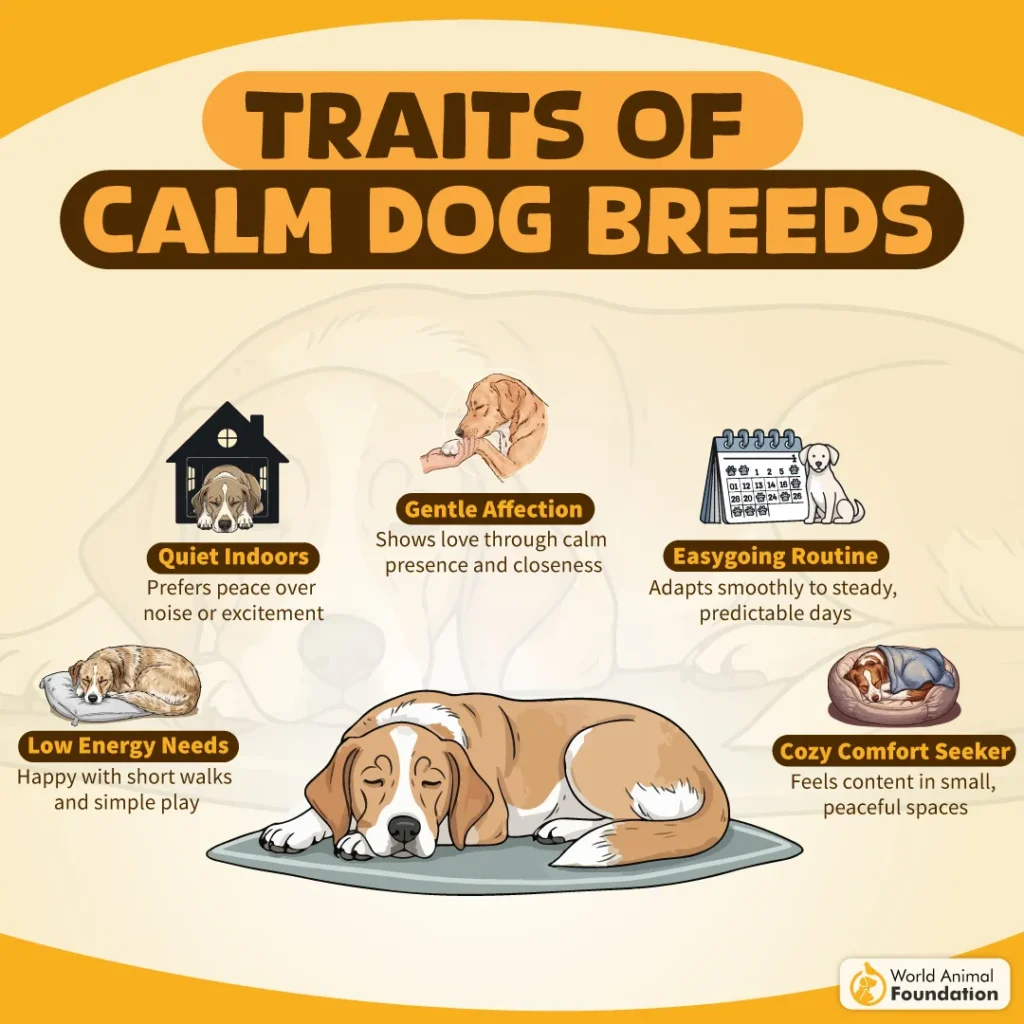
These affectionate dogs form strong bonds with their families and are generally patient with children. They are friendly towards people and can adapt to living with other pets when properly introduced. However, their hunting instincts may lead them to chase smaller animals.
Irish Wolfhounds enjoy running and outdoor play but can also be content relaxing at home. They need enough activity to prevent boredom and benefit from early socialisation and obedience training.
Care and Daily Needs
Exercise and space: Provide opportunities to run and play safely. A tall, secure fence helps prevent them from chasing wildlife.
Training and socialisation: Start early to encourage good manners and help them adjust to different people and pets.
Family life: Their large size and sometimes clumsy movements can accidentally knock over young children. Supervise interactions and provide enough room for comfortable movement and rest.
7. Scottish Deerhound
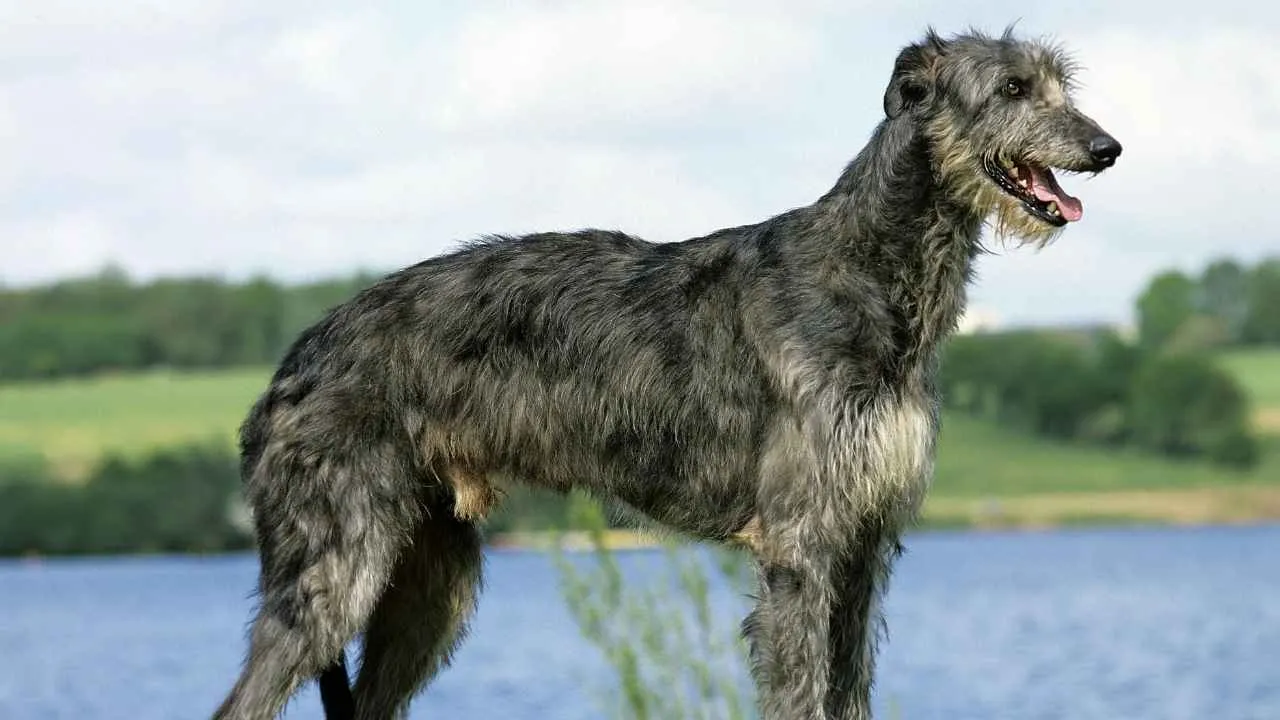
Scottish Deerhounds originated in Scotland, where they were bred to hunt deer across the Highlands as early as the 1500s.
These tall, graceful dogs have a wiry coat and a build similar to other sight hounds. Despite their athletic background, they are known for their gentle nature and love of being close to their families.
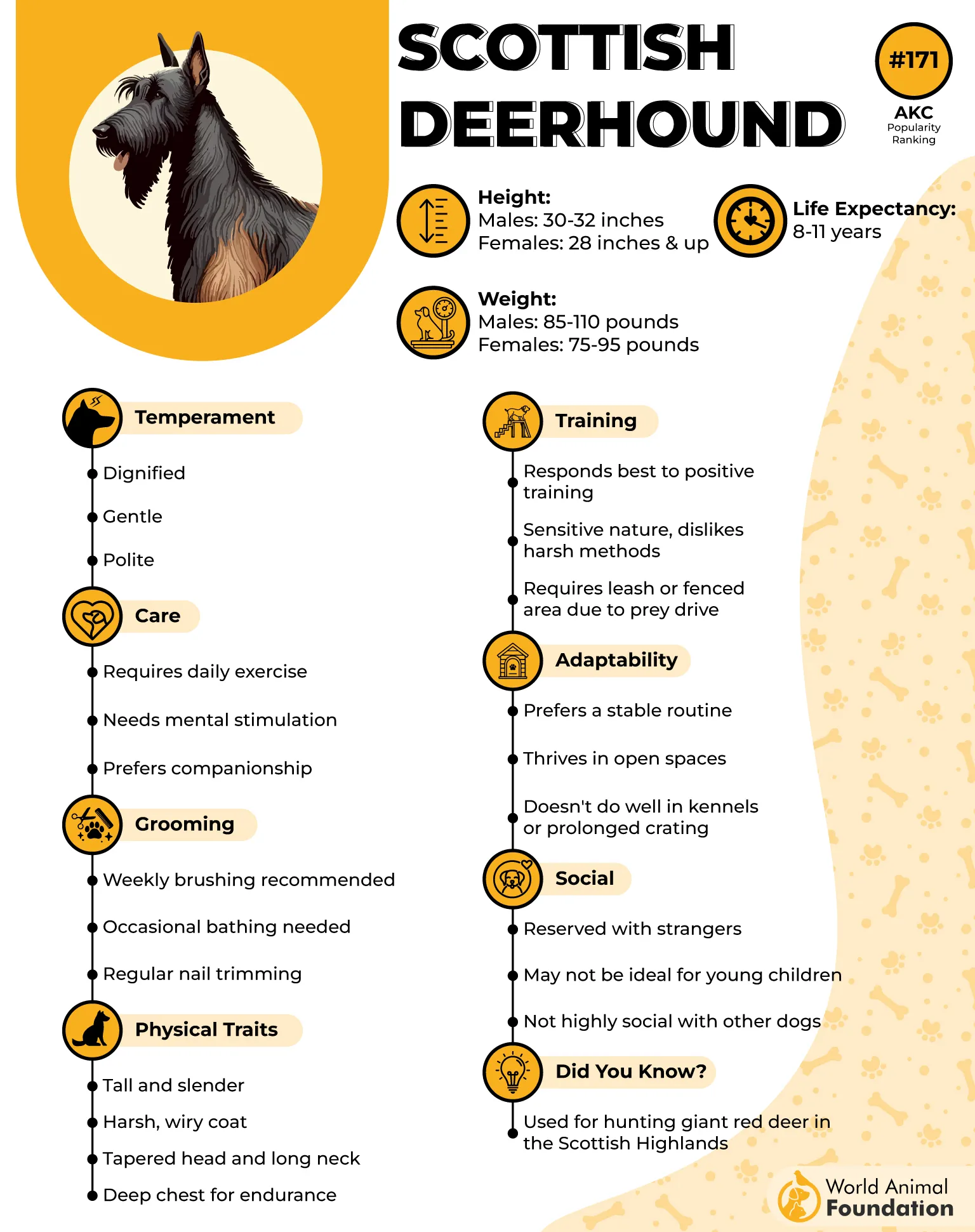
Scottish Deerhounds are affectionate, calm, and devoted companions. They enjoy spending time with their people and often become relaxed couch companions as adults.
Omlet says they can get along well with children and other pets when raised with them, but their strong prey drive may lead them to chase smaller animals.
Care and Daily Needs
Exercise and safety: Provide at least an hour of daily exercise, including opportunities to run in secure, fenced areas. Their chasing instincts can make off-leash outings risky.
Coat and comfort: Brush their coarse coat weekly and bathe them occasionally. Soft bedding helps them rest comfortably.
Training and companionship: Use gentle, reward-based methods and allow plenty of time for learning. They thrive on human company and may become bored without enough attention and activity.
8. Leonberger
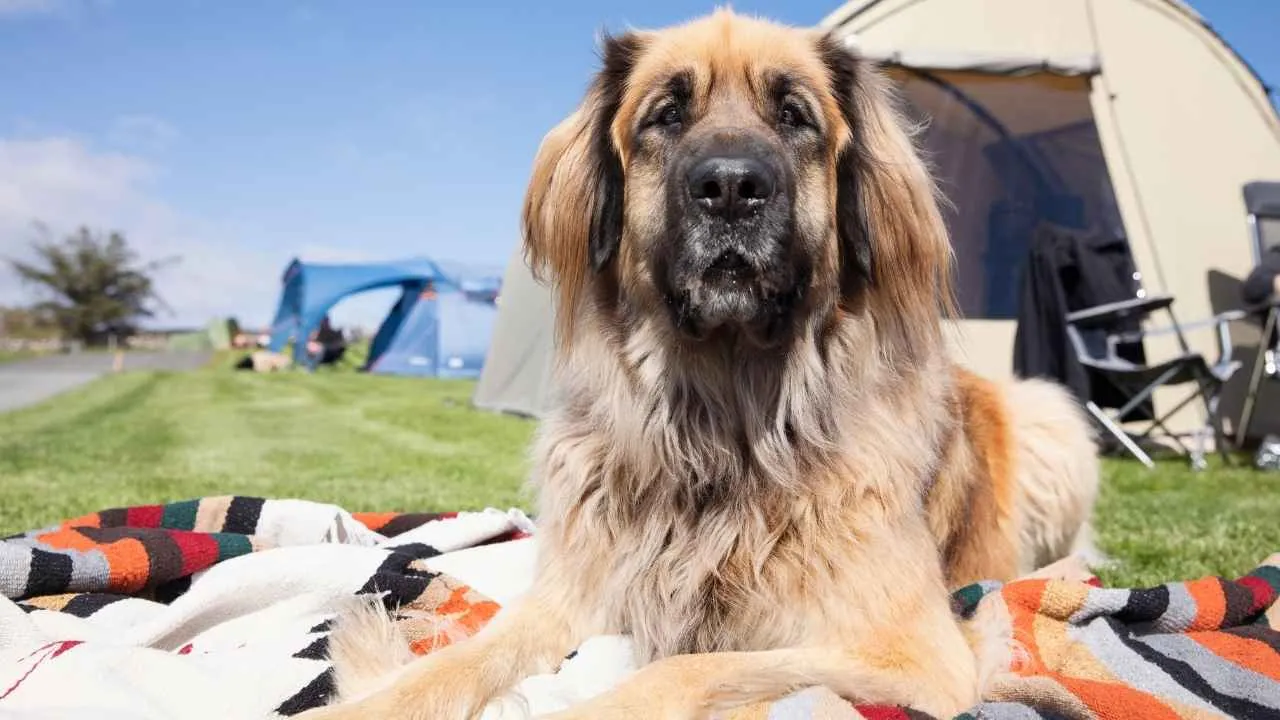
Leonbergers originated in Leonberg, Germany, and are known for their majestic appearance and lion-like mane. These powerful dogs have a gentle, even-tempered nature.
These intelligent and loyal dogs are generally patient with children and get along well with other dogs and household pets. They are confident and alert, reflecting their background as working and guarding dogs, but they rarely show aggression.
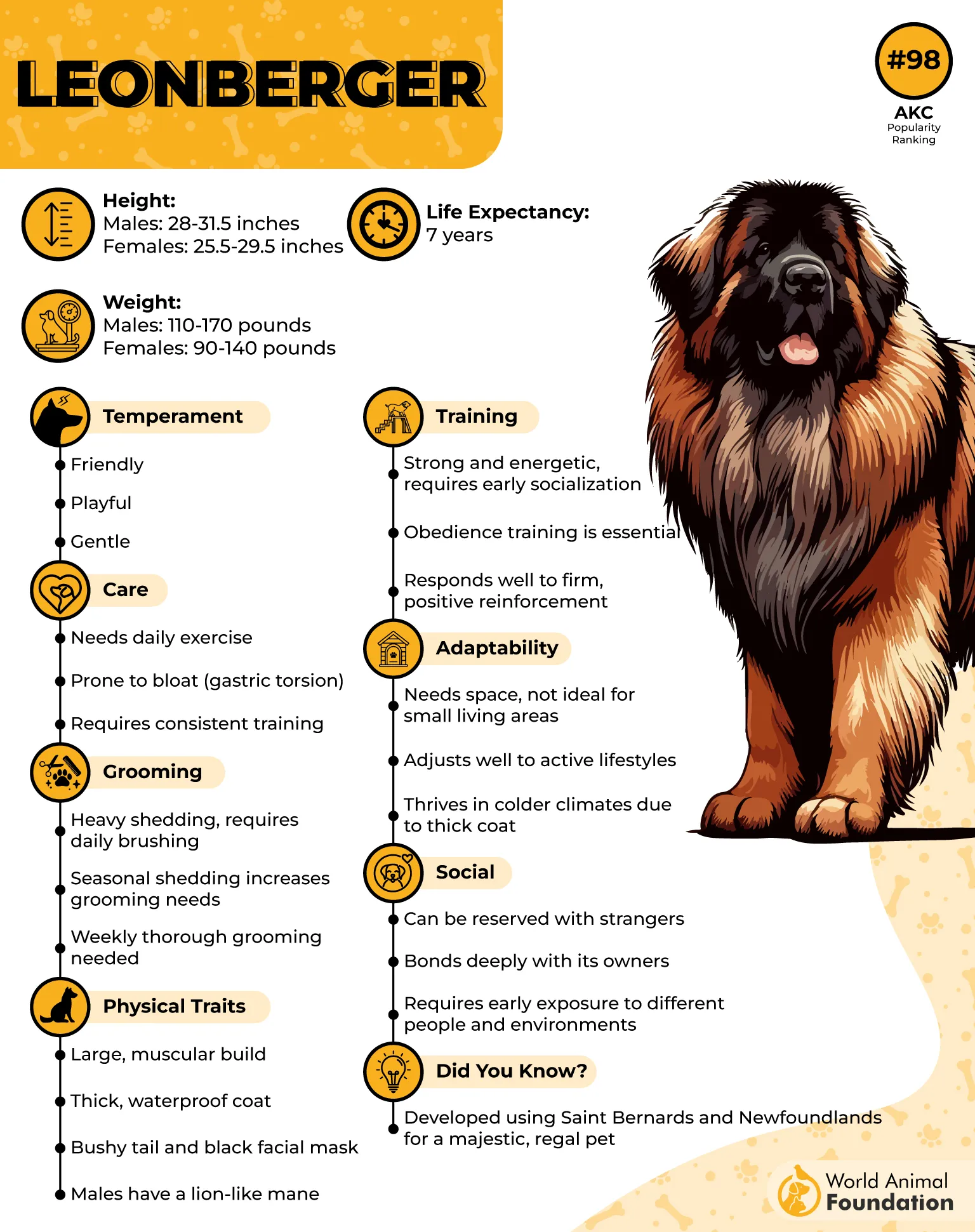
Leonbergers also have a natural love of water and are powerful swimmers. They can be sensitive, so they respond best to gentle training, positive reinforcement, and a peaceful home environment.
Care and Daily Needs
Coat care: Their thick, medium-long coat needs frequent brushing. Their bushy tail and lion-like mane also require regular upkeep.
Space and activity: These large dogs need room to move, play, and stretch comfortably. They enjoy family activities and benefit from opportunities to stay active.
Companionship: Leonbergers thrive on human company and love being close to their families. Their playful, cuddly nature makes them affectionate house companions, despite their size.
9. Neapolitan Mastiff
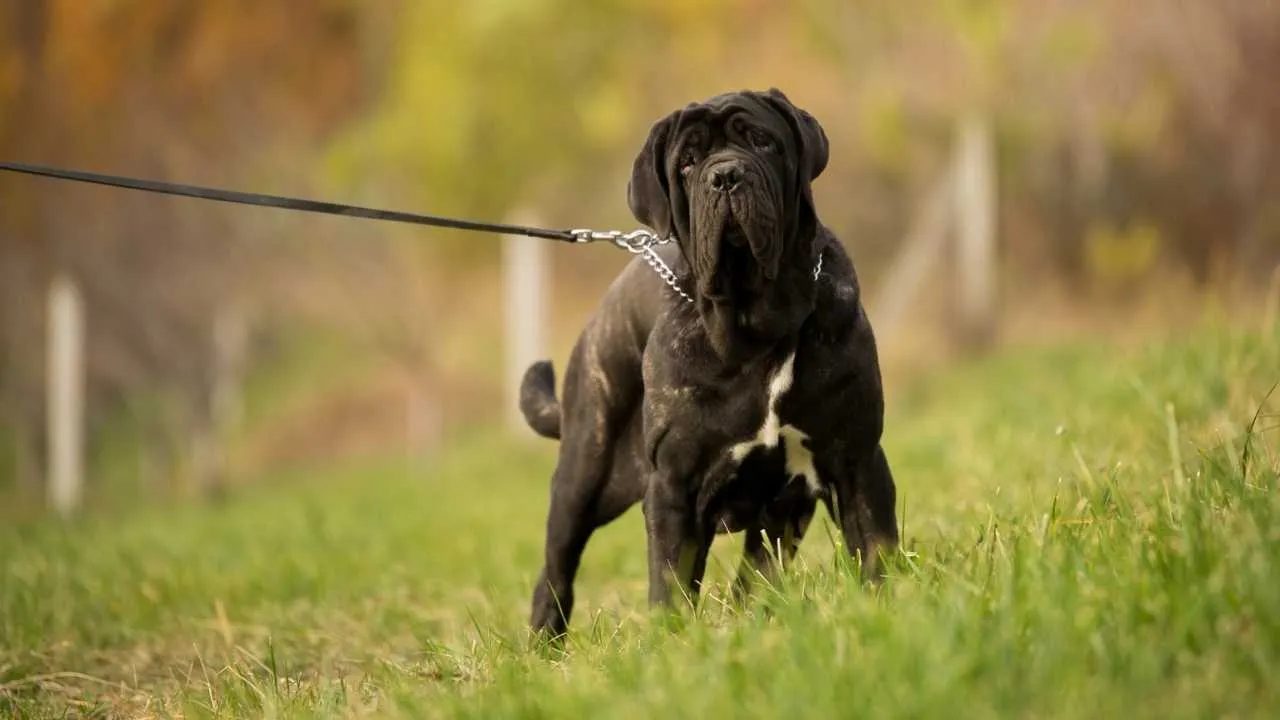
Neapolitan Mastiffs, also called Mastinos or Neos, are an ancient Italian breed known for their powerful build and deeply wrinkled faces.
They were developed as guard dogs and still have strong protective instincts. Despite their intimidating appearance, these dogs are often calm, steady, and affectionate with their families.
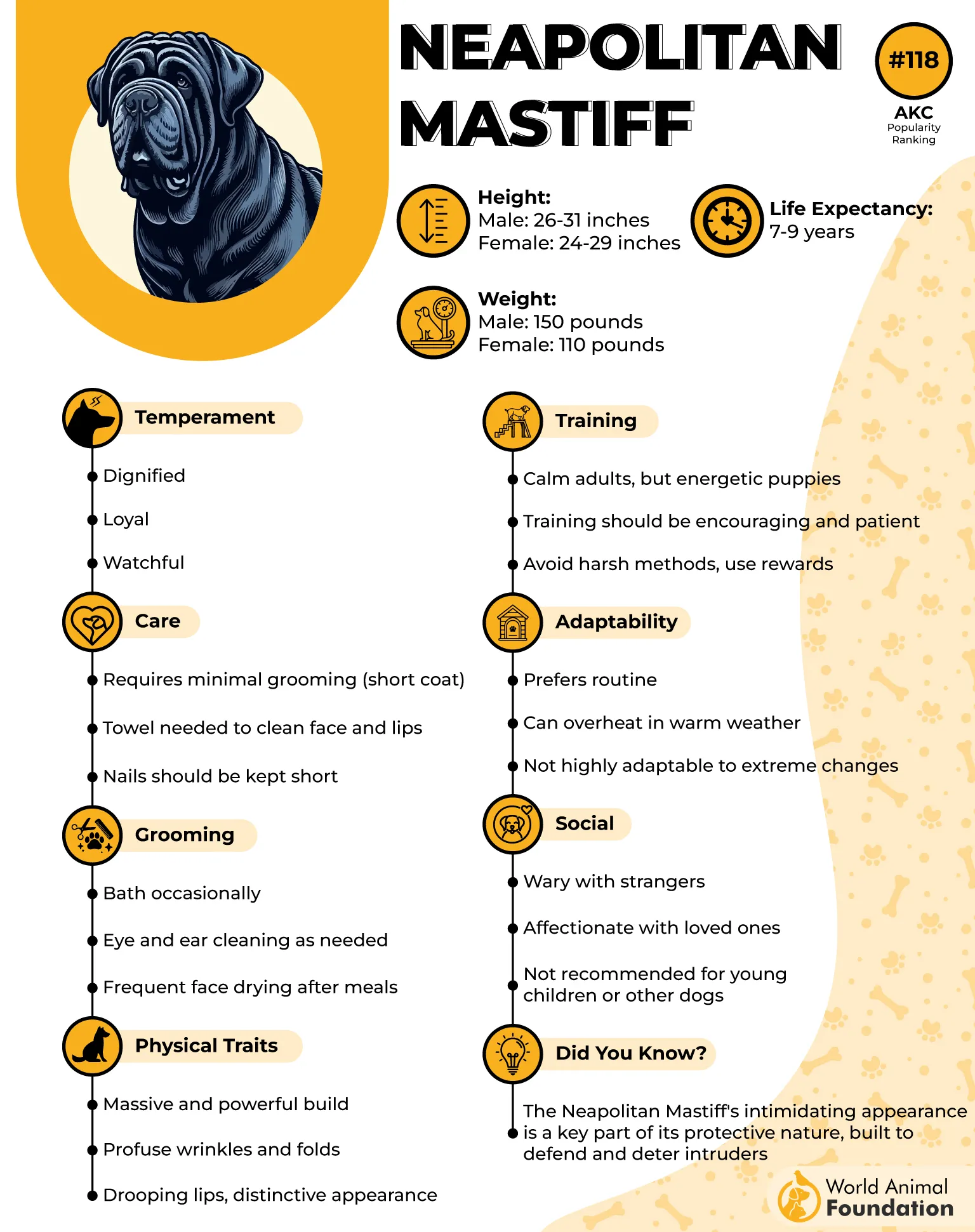
Neapolitan Mastiffs form close bonds with their loved ones and enjoy staying nearby. They are usually reserved around strangers and act as watchful home guardians, barking when they sense something unusual.
As adults, they tend to become less energetic and prefer lounging with their families over long, active outings. They can also be playful and silly at home, but their size and strength require careful handling.
Care and Daily Needs
Exercise: Aim for around 30–40 minutes of daily activity to help keep them healthy.
Handling and training: Use consistent training and supervise play carefully. Avoid rough games, wrestling, or biting activities because their size and strength can cause accidental injuries.
Daily upkeep: Their loose facial folds and heavy drooling need regular attention. Be prepared for drool to spread beyond their immediate surroundings!
Conclusion
Giant dogs may look intimidating, but many are gentle, affectionate, and happiest when spending time with their families. From patient companions to watchful protectors, these breeds show that a large size can come with a calm and loving nature.
However, each dog has its own needs, including proper training, regular exercise, grooming, and enough space to feel comfortable.
If you’re considering a large breed for a quiet home, take time to learn about its temperament, care needs, and daily routine before making a decision. Remember, even the biggest dogs need patience, attention, and a peaceful place to rest.
Sometimes, the sweetest part of sharing your home with a gentle giant is discovering just how much love can fit into one very large companion.
