




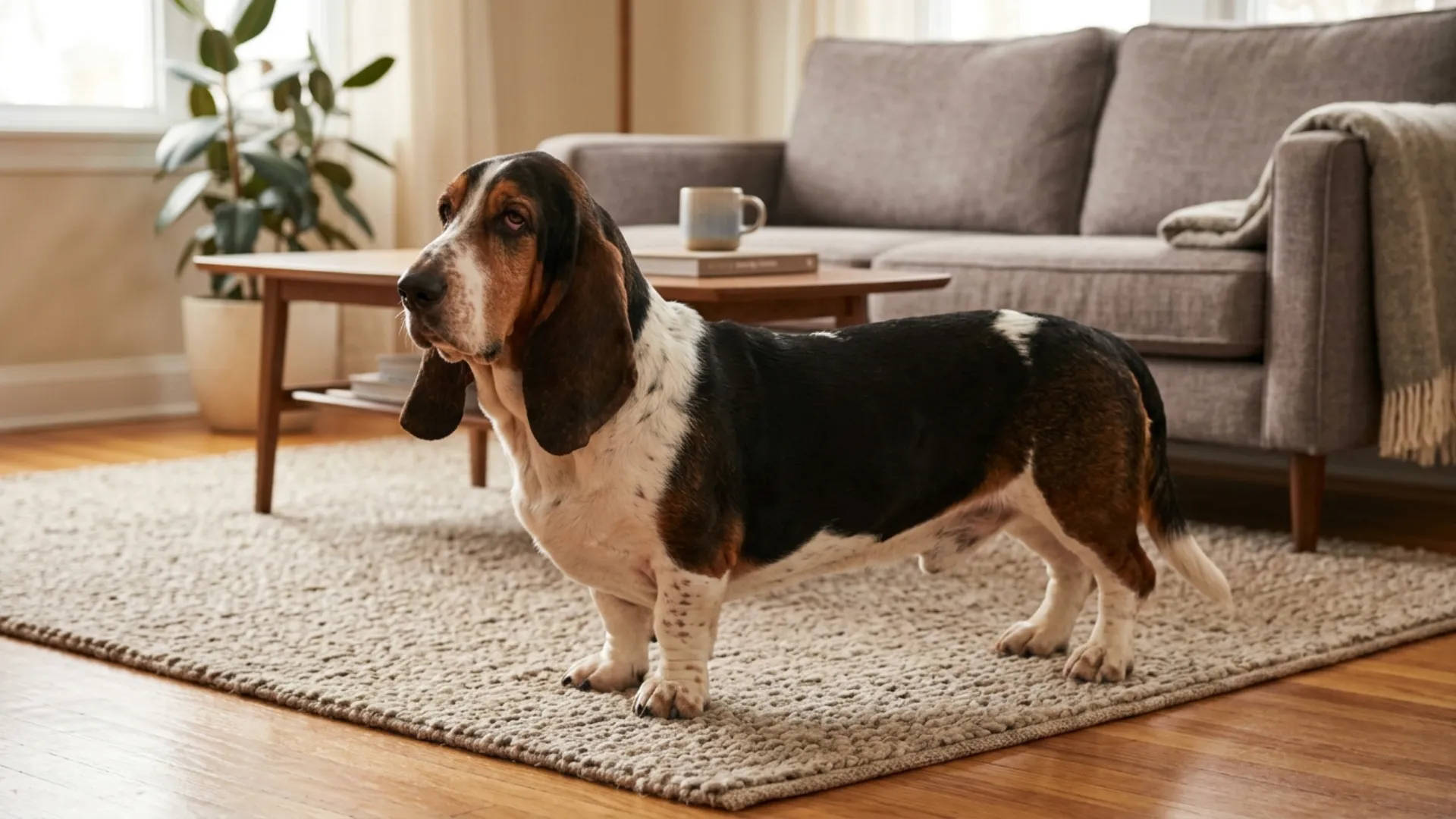
Many people believe that a lively, energetic dog brings more joy into a home, but that idea does not always match real experience. In busy families, too much energy can feel overwhelming rather than exciting.
The constant need for activity, the difficulty in training, and the lack of calm moments can slowly take away the comfort people are looking for. It is not something families expect in the beginning, but it becomes clear over time.
On the other hand, calm dog breeds are often overlooked because they seem less expressive or less playful at first glance. That assumption misses an important point. These dogs bring a different kind of presence, one that supports a peaceful routine and makes daily life easier to manage.
In the following sections, you will find dogs that offer this balance and quietly improve the way a home feels.
Key Takeaways
A dog that stays calm through the day can change how a home feels, making everything a little easier to manage.
Great Pyrenees and Newfoundland carry a quiet steadiness, settling into family life with patience that never feels forced.
Pugs and Basset Hounds bring a slower, more relaxed presence, choosing closeness and comfort over nonstop activity.
As you go through the list, a few of these dogs start to feel like they belong exactly in the kind of home you have in mind.
Calm Dog Breeds That Love Slow‑Paced Family Life and Easy Training
1. Great Pyrenees
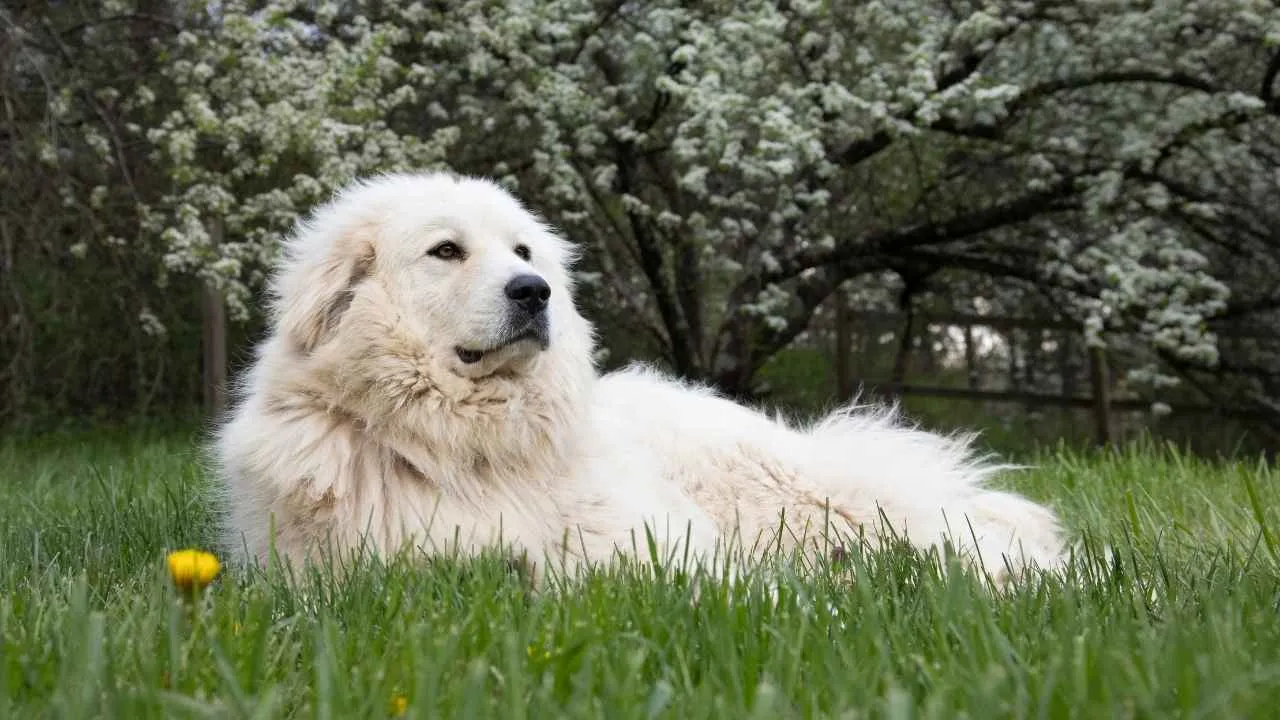
The Great Pyrenees comes from high-altitude flock protection roles, where strength and a thick coat supported work in snow-covered terrain.
Its large frame and composed presence reflect a dog shaped for guarding rather than constant activity. The overall impression feels steady and deliberate.
Energy used with intention
This calmer breed approaches activity in a measured way, conserving effort and responding when needed instead of remaining constantly active. Its routine fits naturally into slower daily patterns, where bursts of purpose replace constant motion.
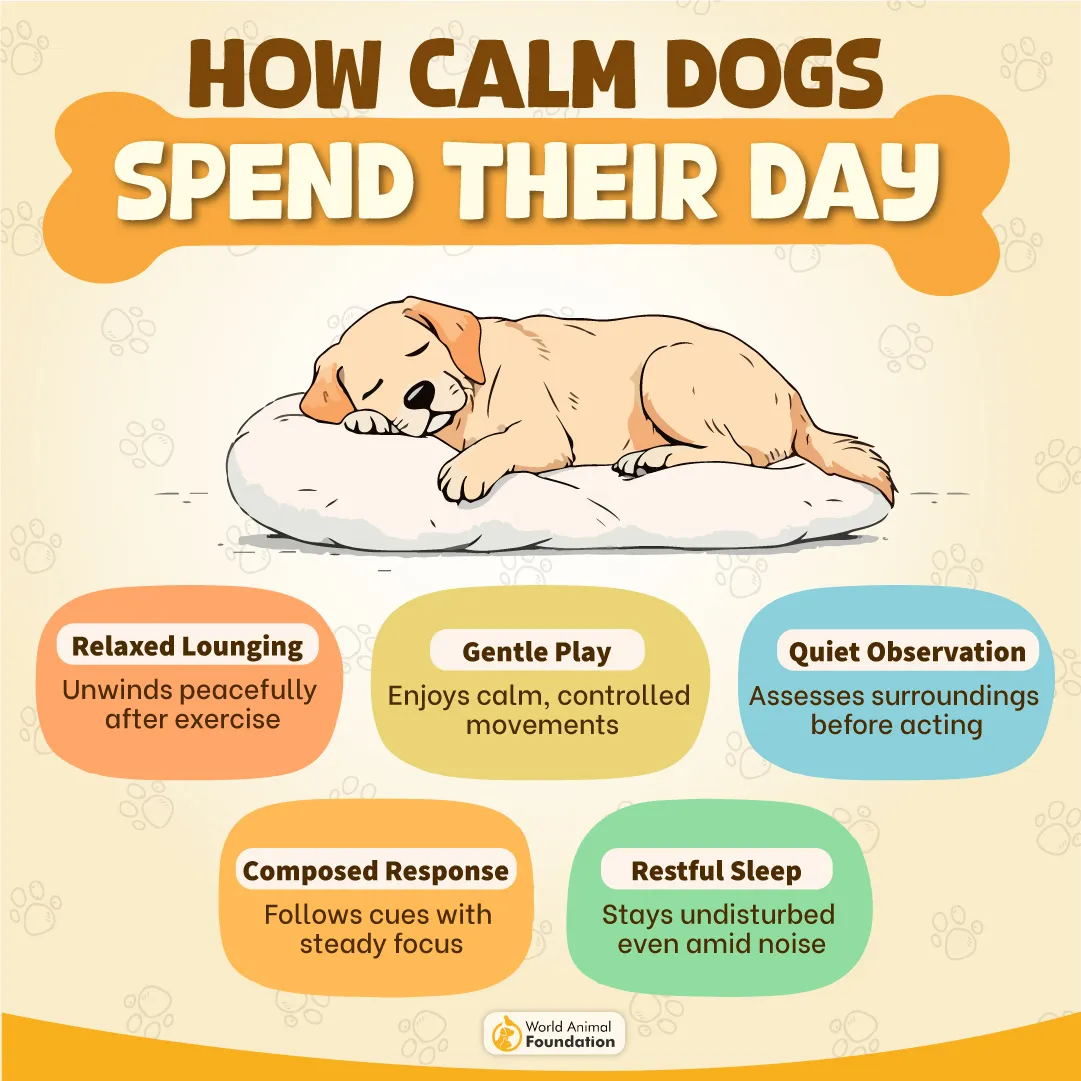
That working rhythm appears through:
Patrols territory rather than constant roaming
Conserves energy until a threat appears
Engages in moderate daily walks without urgency
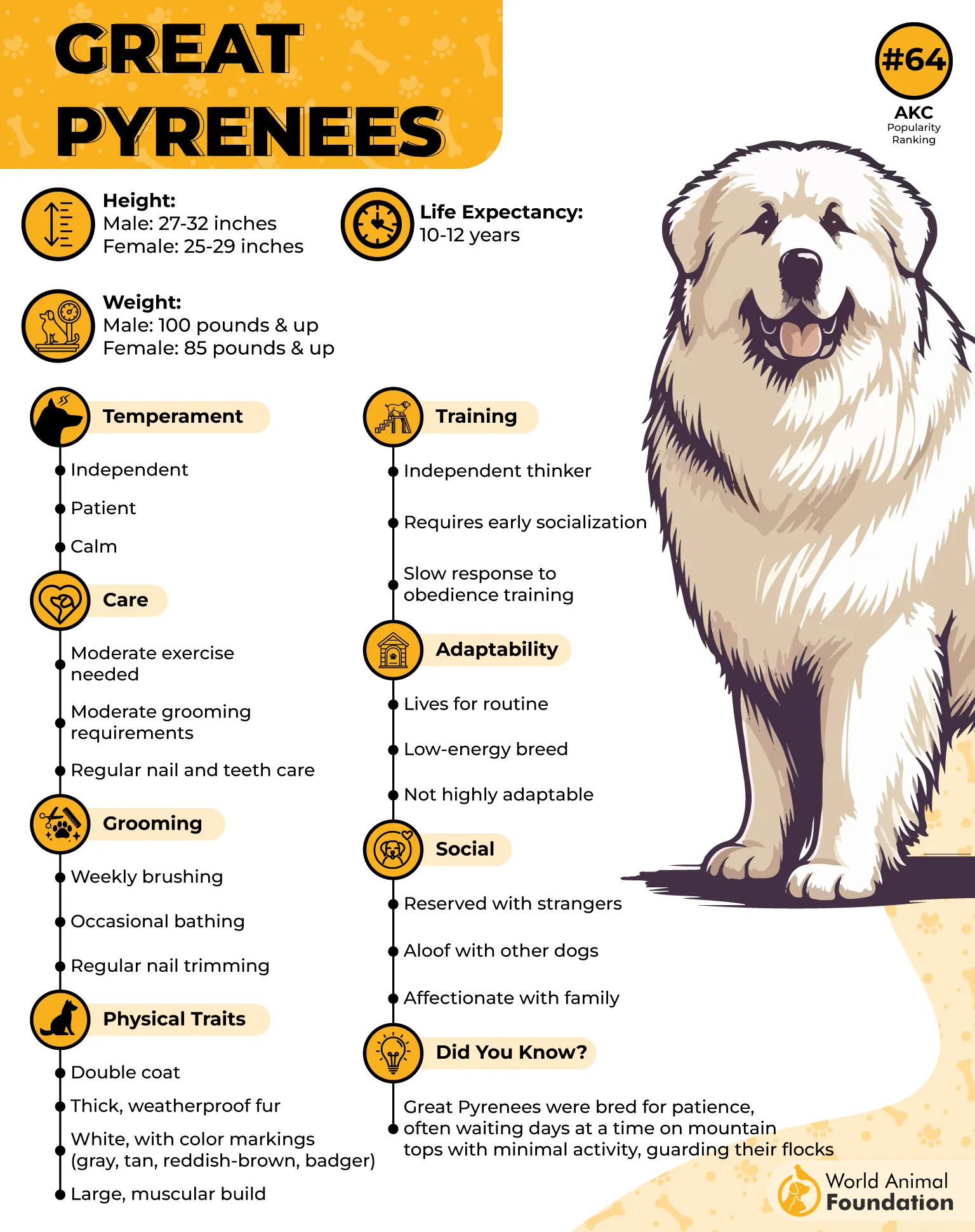
Training shaped by independent thinking
They do not rush through obedience tasks and may take a moment or two before responding consistently, as per the AKC.
Its intelligence appears in how it questions structured routines rather than following blindly. Early exposure to training helps guide this independent mindset into manageable behavior.
2. Basset Hound
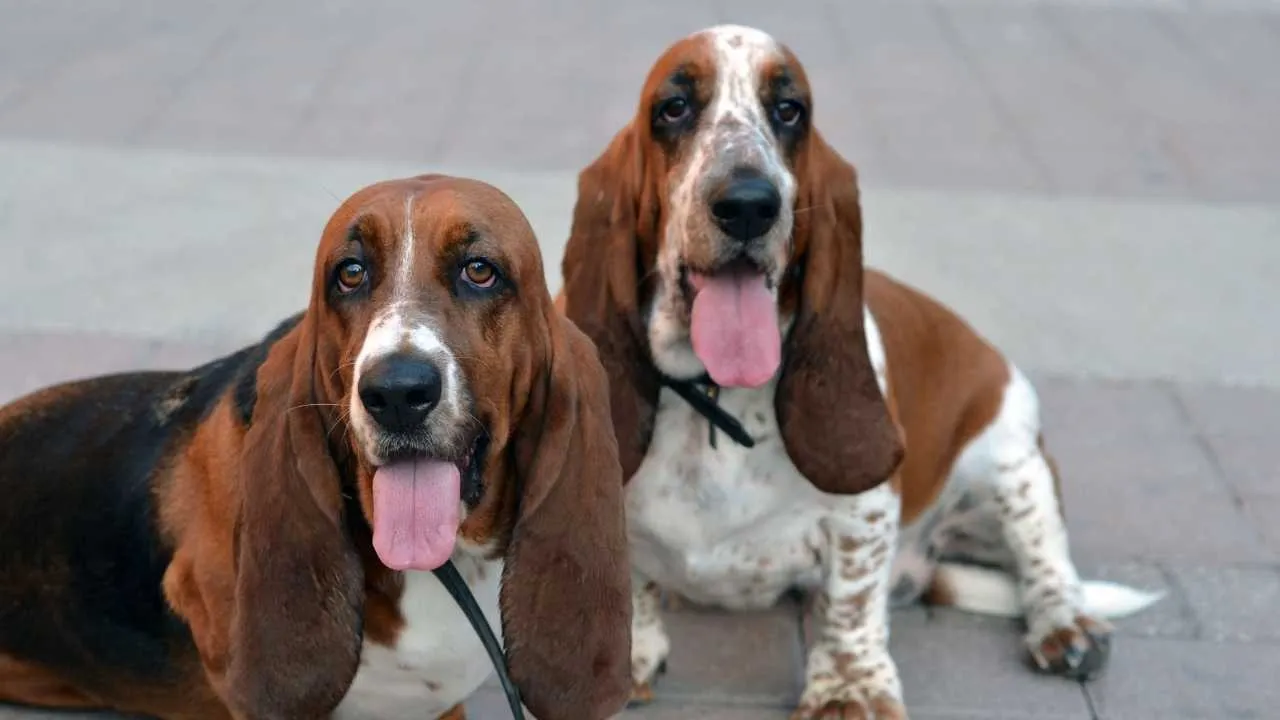
Basset Hound draws attention through its long body, short legs, and relaxed expression, creating a dog that feels unhurried in both look and behavior. Its low-key nature fits naturally into quieter homes where activity remains steady rather than fast-paced.
Easygoing pace with a stubborn edge
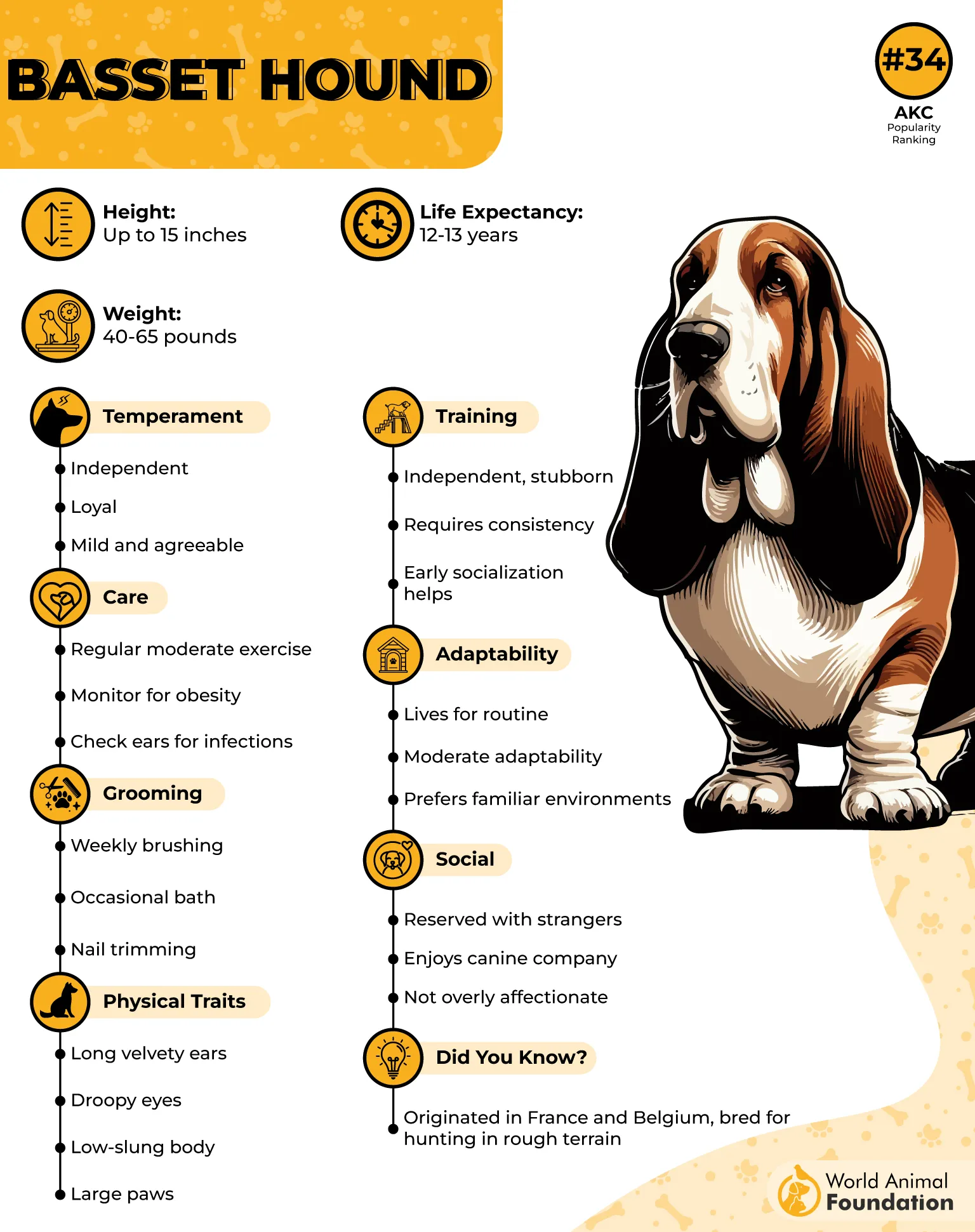
Prefers a slower rhythm, the Basset Hound often settles into routines that revolve around short walks and extended rest periods, as Orvis stated. Its independent thinking can make training less direct, especially when motivation is low.
That pattern becomes easier to understand through small habits:
Responds better when food rewards are involved
Takes time to adjust to structured commands
Engages at its own pace during training sessions
Training shaped by patience and routine
This breed requires consistent repetition, as it tends to follow its own judgment before responding to direction.
Early social exposure helps reduce aloof behavior and builds familiarity with structured interaction. Over time, steady guidance leads to more reliable responses without forcing compliance.
3. Pug
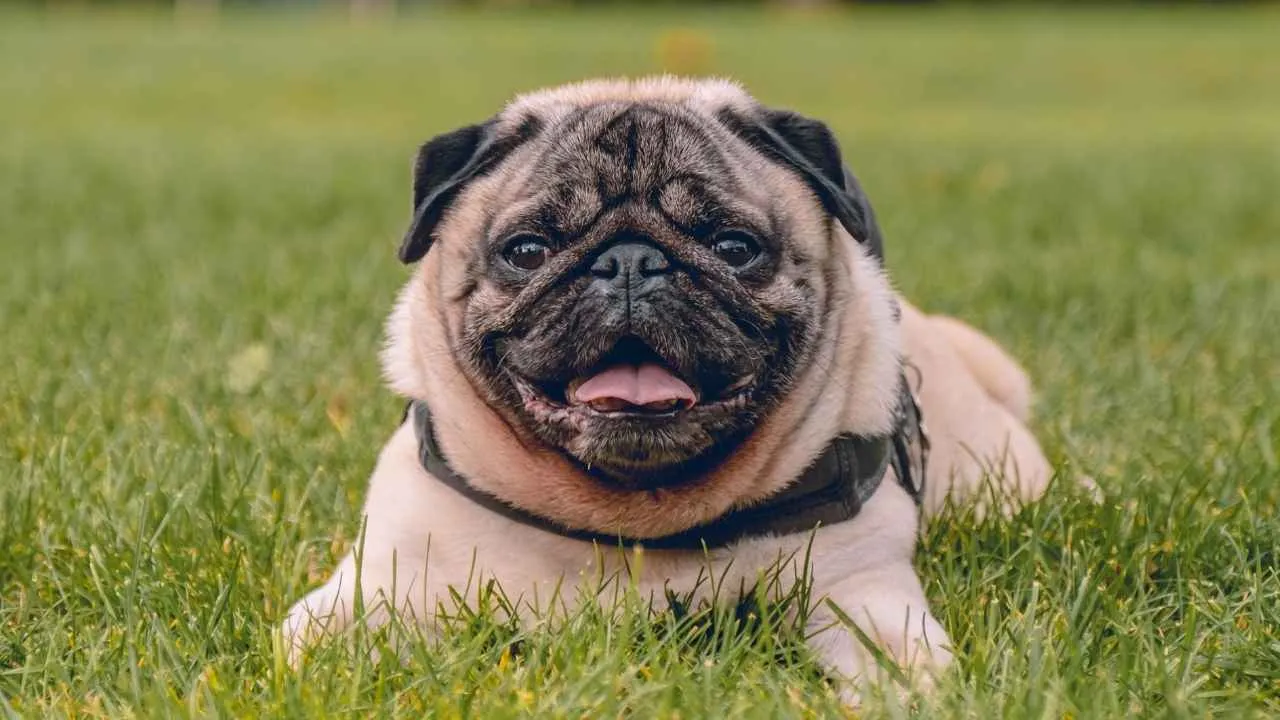
Pug first gained recognition as a companion in Chinese imperial courts and later as a favored figure within Dutch royal circles.
Its small yet solid frame reflects the idea of “a lot in a little,” giving it a compact but sturdy presence. The face, marked by large eyes and deep wrinkles, shifts easily between curiosity and delight.
Interaction shaped by closeness
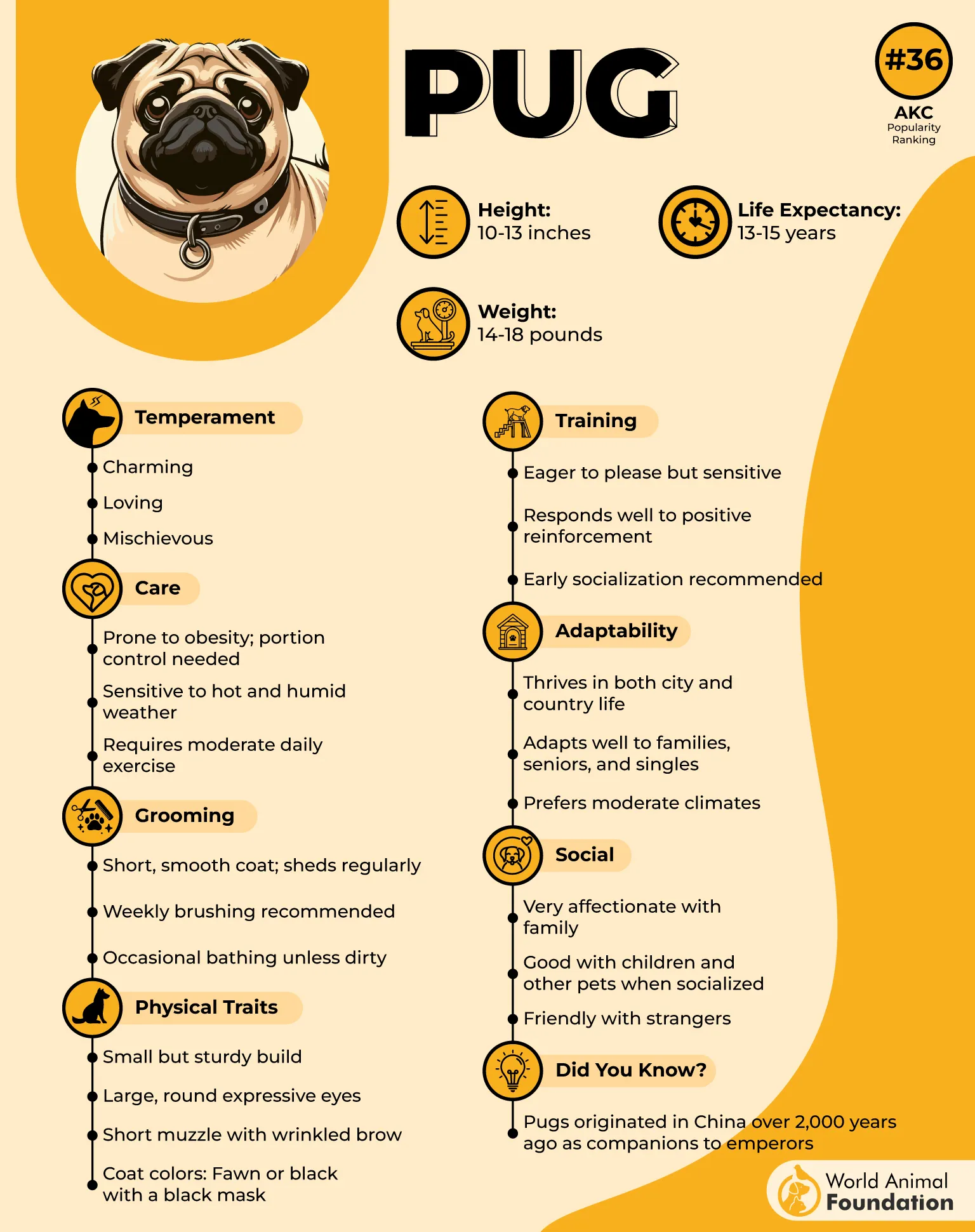
This lap dog connects through constant physical presence, often choosing to remain near people rather than staying apart. Its affectionate and gentle temperament fits easily into homes with children, older adults, or multiple other pets across different living setups.
That closeness appears through simple, daily habits:
Seeks contact by settling next to people
Responds quickly to attention and touch
Need regular short walks and light play
Routine shaped by easy training
Pugs respond well to food-based motivation, which makes training feel more natural when paired with positive reinforcement, as mentioned in PetMD.
However, keeping treat portions controlled helps avoid excess intake. Early social exposure supports confident behavior and helps them adjust smoothly to new situations.
4. Whippet
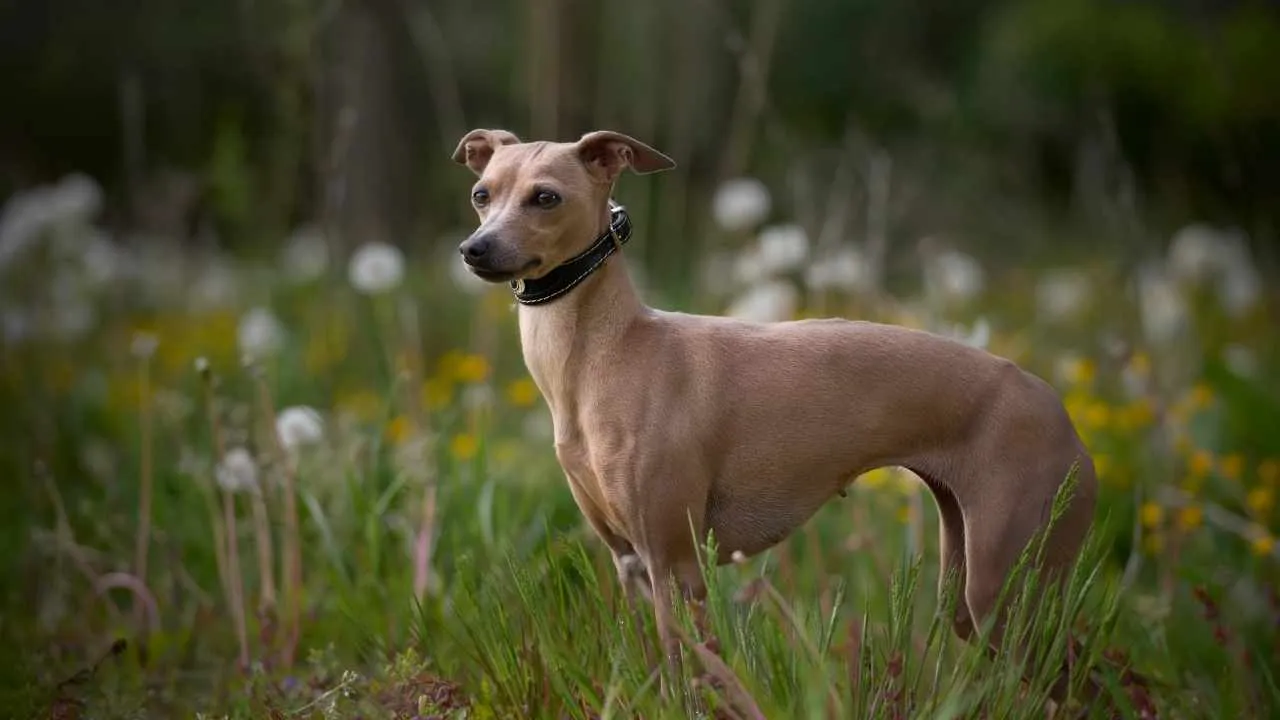
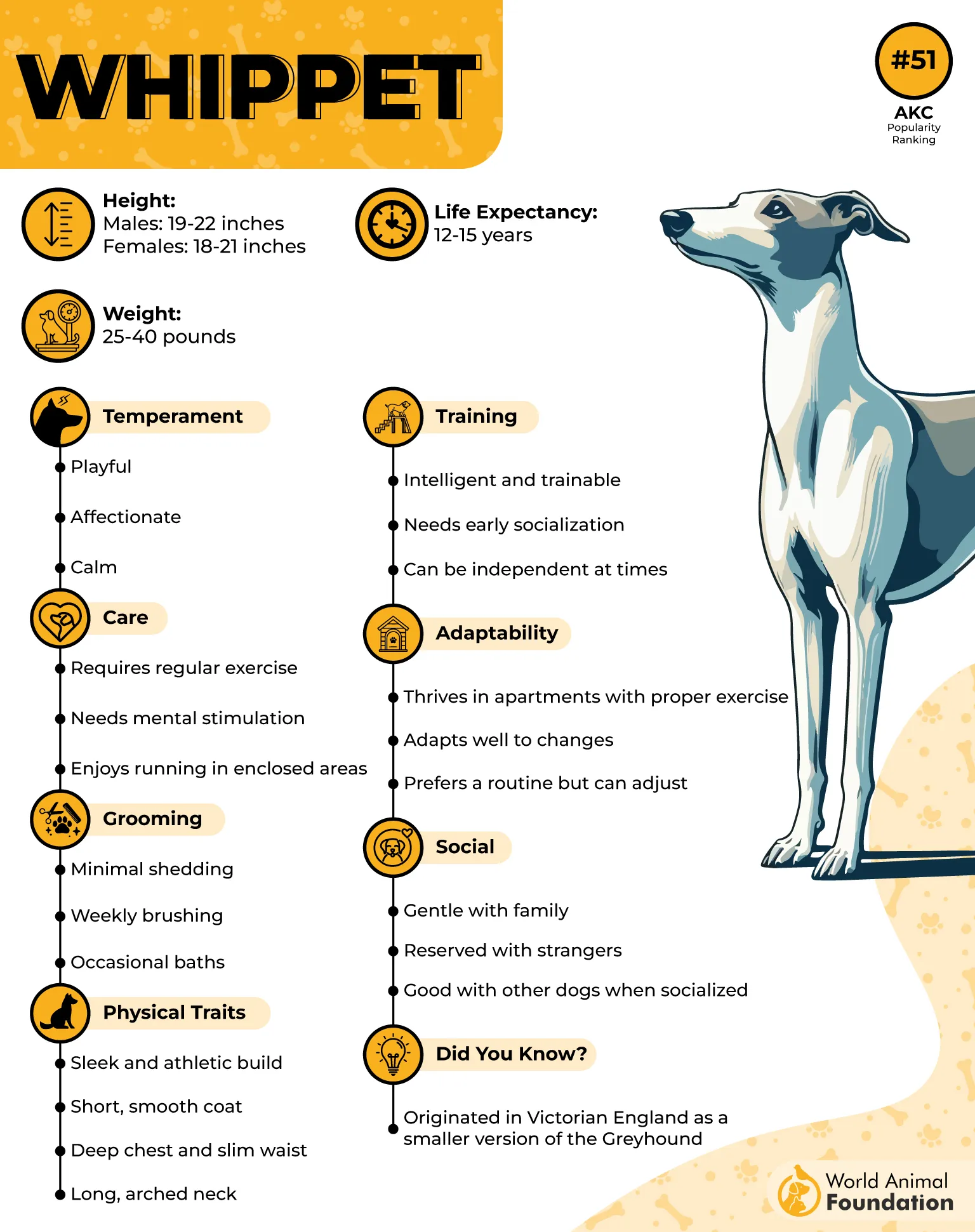
Whippets blend a racing build with a relaxed indoor nature, often shifting between short bursts of speed and long periods of rest.
Its sleek frame reflects its nickname as a smaller racing companion with remarkable quickness. This contrast creates a rhythm that fits slower-paced home environments.
Chase instinct in open spaces
Whippet settles easily indoors, often stretching out for extended rest after activity periods. Its quiet nature, including rare barking, suits shared living spaces and apartments.
It comes through in its everyday actions:
Settles quickly into long indoor rest
Keeps noise low with rare barking
Adjusts smoothly to shared living spaces
Sensitivity and early guidance
Whippets respond best to gentle, reward-based training, building confidence through positive reinforcement and early exposure.
Its sensitive temperament benefits from gradual introduction to people and new settings. With moderate exercise, it fits into a routine that balances activity and calm interaction.
5. Newfoundland
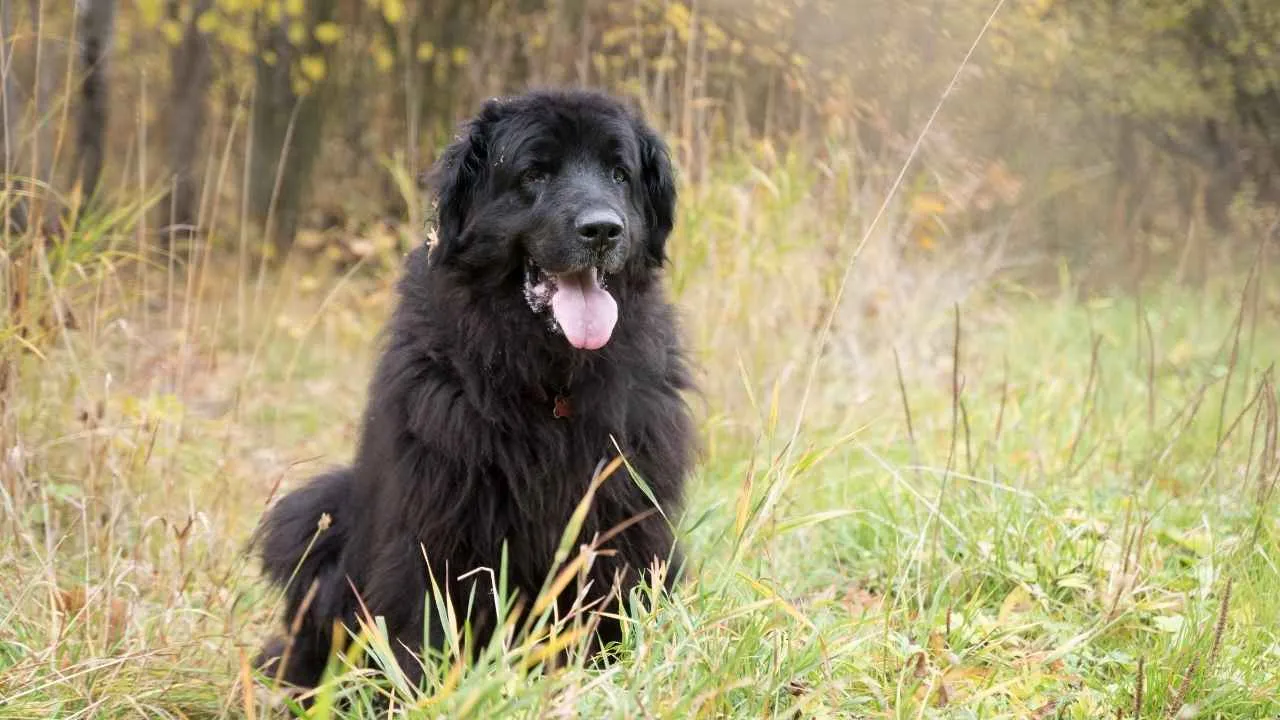
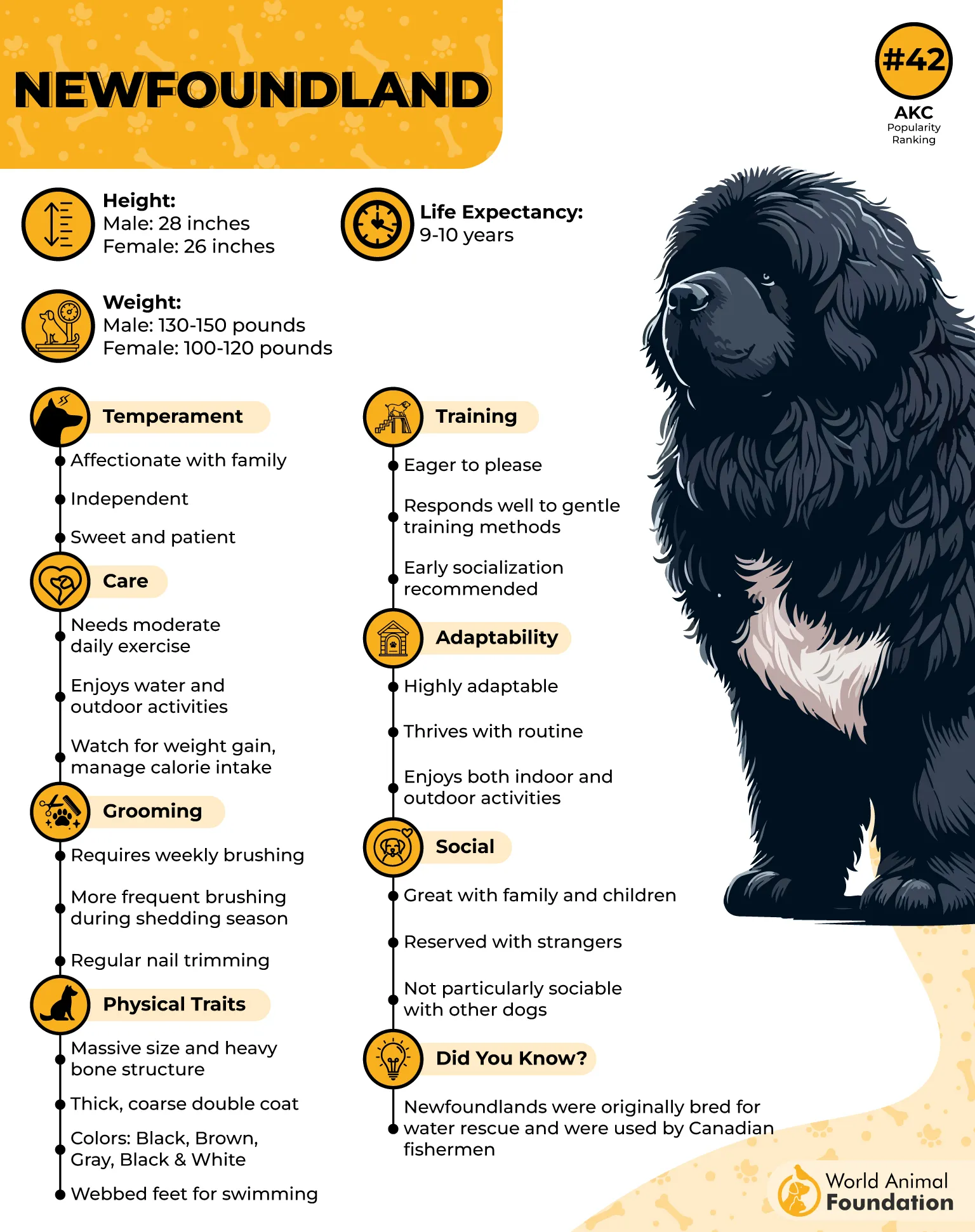
Newfoundland feels impressive at first glance with its massive frame and steady, composed demeanor. Its reputation as a dependable companion comes from a temperament centered on patience and trust. The bond with children shapes much of its identity within a family setting.
Calm demeanor in family life
Famously known as nanny dogs, they fit easily into slower routines, offering a composed presence that blends well with daily home activity. Its patience around children and steady behavior reduce the need for constant correction or supervision.
That ease appears through everyday habits:
Remains relaxed during household movement
Responds calmly around children
Accepts guidance without resistance
Training through gentle handling
Newfoundland responds best to soft guidance, picking up routines through consistent, calm instruction rather than force. Its trusting nature allows learning to happen without tension, making early training more approachable. Daily interaction strengthens both behavior and understanding.
6. Irish Wolfhound
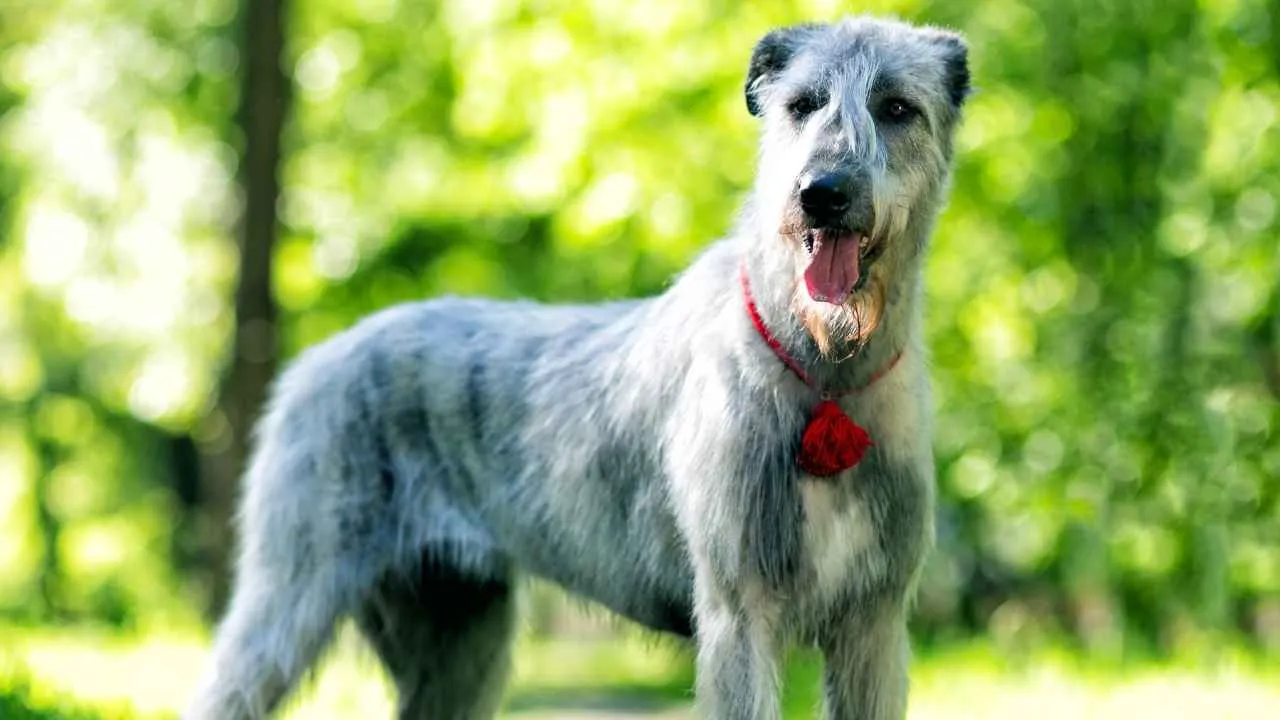
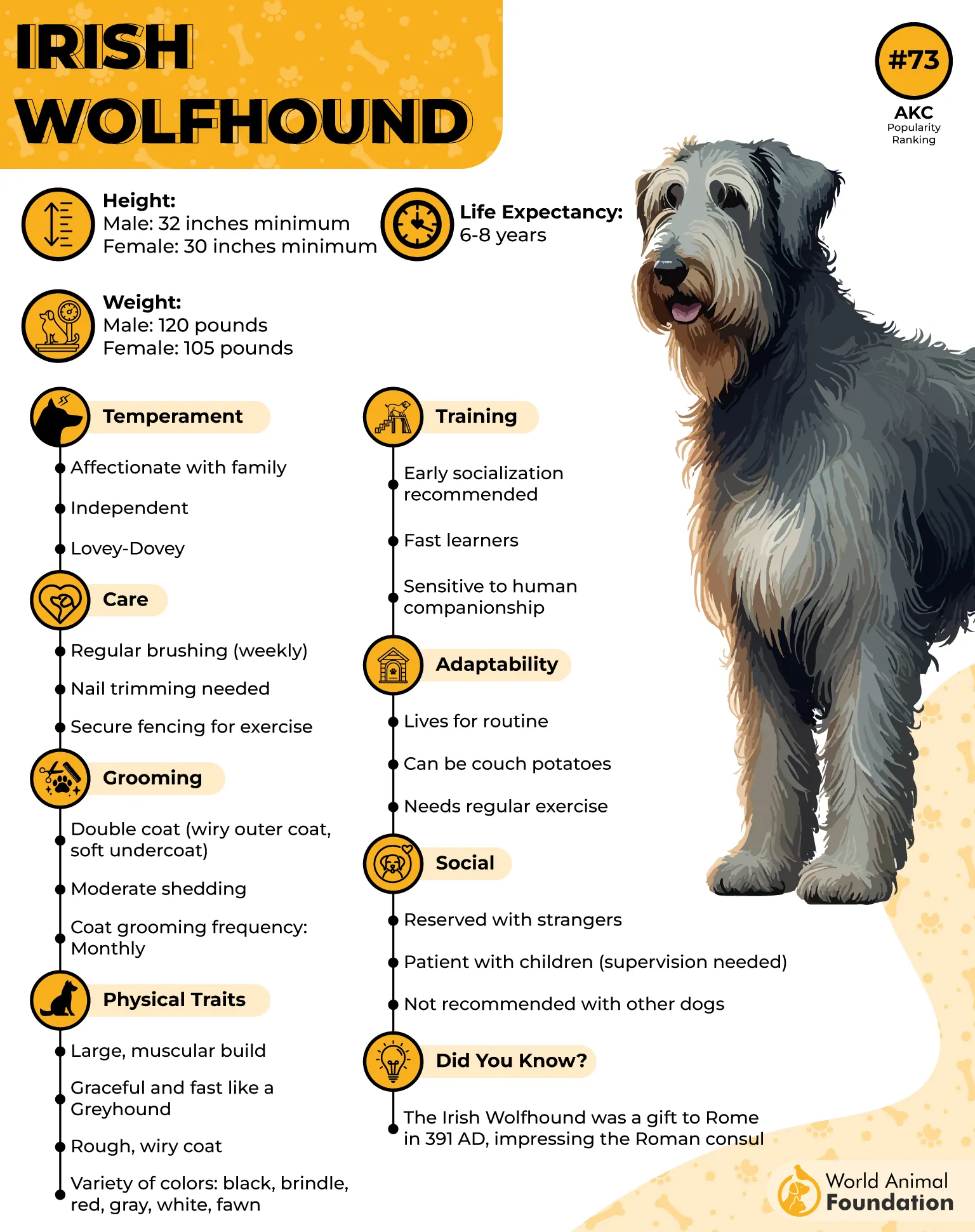
Irish Wolfhound rises as the tallest among recognized breeds, paired with a calm and kindly temperament. Once used in big-game hunting, it now fits into home life with a quiet, agreeable nature. Its size draws attention, though its demeanor leans toward peaceful companionship.
Calm interaction in family settings
As a gentle giant, they connect well within a home, especially around children, where patience becomes a noticeable trait. Its approach to daily life remains steady, without restless or demanding behavior.
That ease appears through simple patterns:
Responds gently during family interaction
Adjusts to different activity levels
Keeps a relaxed presence indoors
Training ease through sensitivity
They respond to guidance through a sensitive and willing nature, making positive reinforcement an effective approach. Early social exposure shapes its comfort level around people and other dogs. This helps guide behavior without requiring forceful correction.
7. Saint Bernard
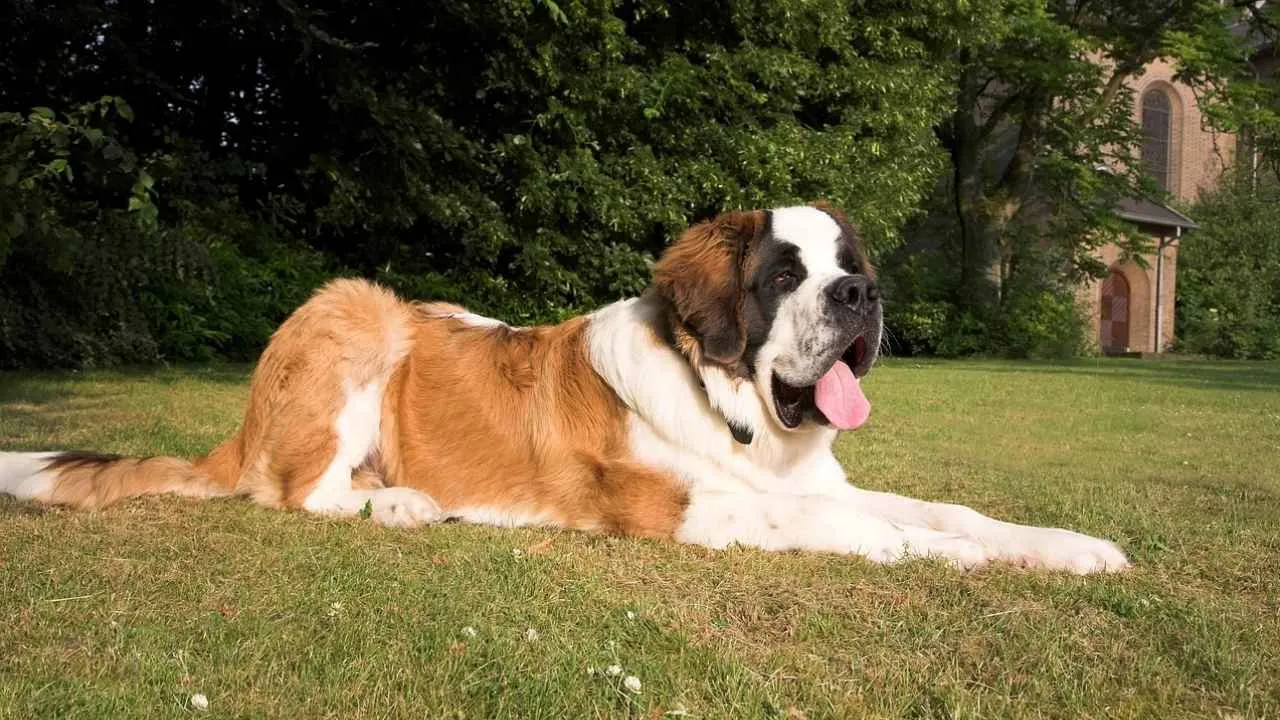
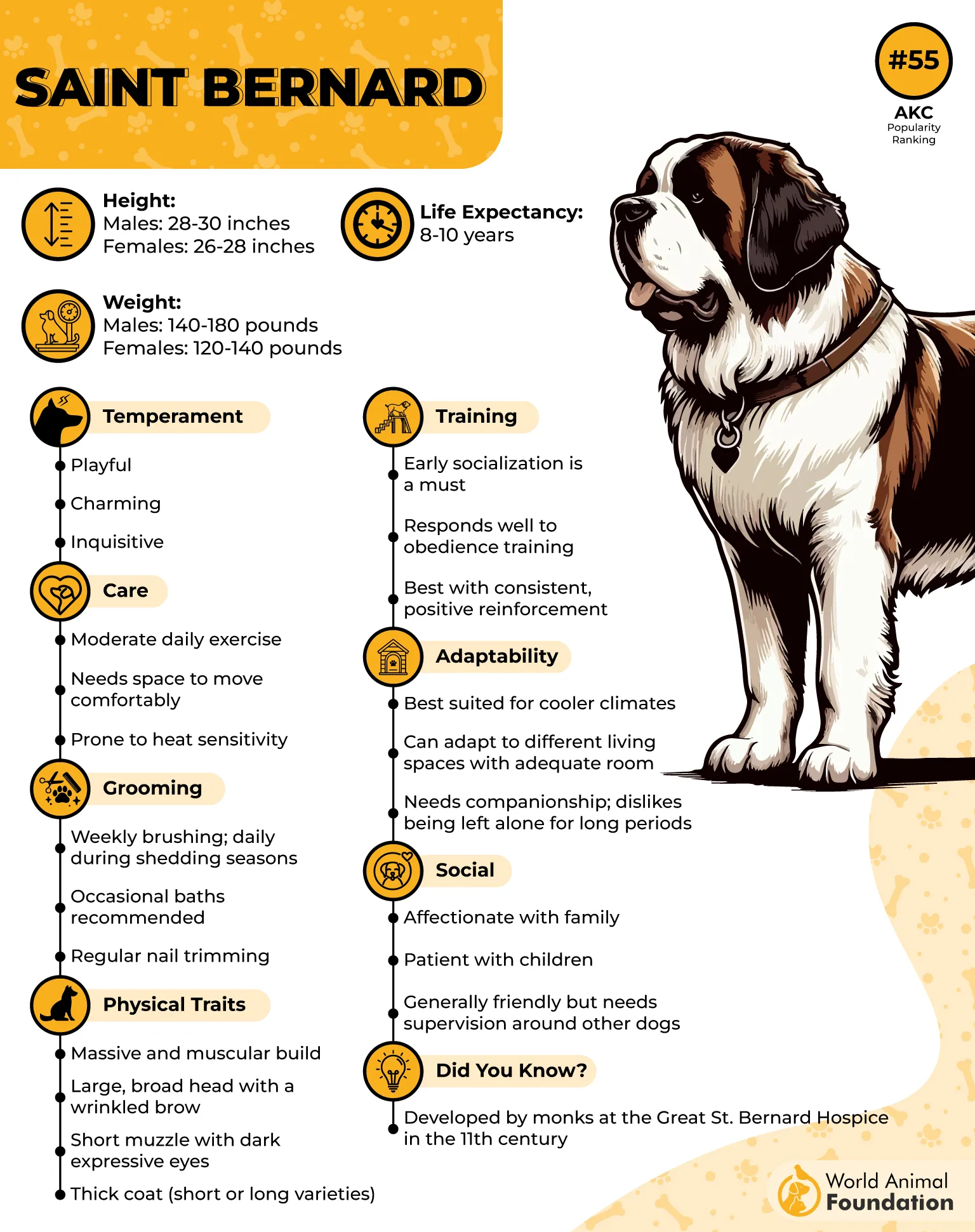
Saint Bernard rises from the Swiss Alps as a massive, kind-hearted dog known across the world despite modest registration numbers.
Its size and strength draw attention, yet its reputation rests on calm companionship. This blend creates a presence that feels steady rather than overwhelming.
Calm nature within daily life
Their calm temperament makes slower days work well for them, with just a walk or a quick play session keeping them happy. Its patient behavior around children adds to its role in a relaxed household setting.
This rhythm appears through simple daily patterns:
Settles comfortably after light activity
Interacts gently with children
Prefers steady routines over constant mental stimulation
Willing learner with steady response
Saint Bernard responds well when given clear guidance, picking up commands once expectations are understood. Its eagerness to please helps simplify early training, especially when consistency is maintained. Structured learning supports better control of its large physical presence.
8. Greyhound
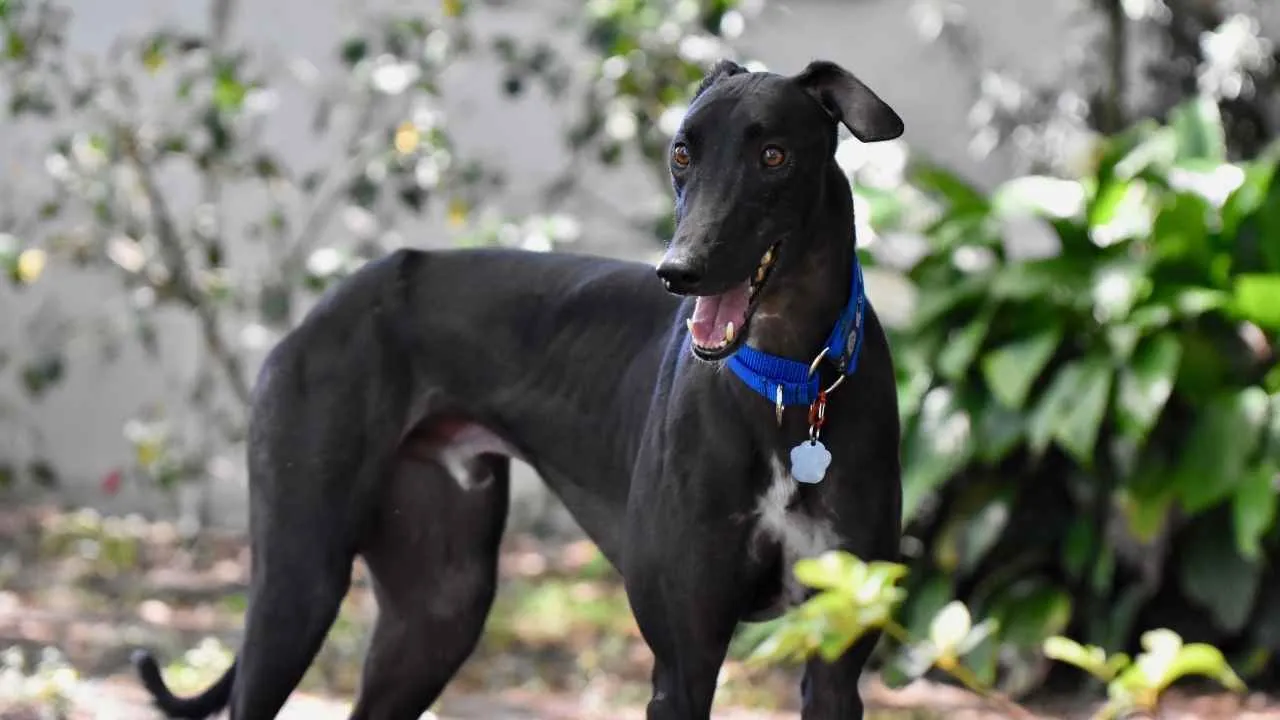
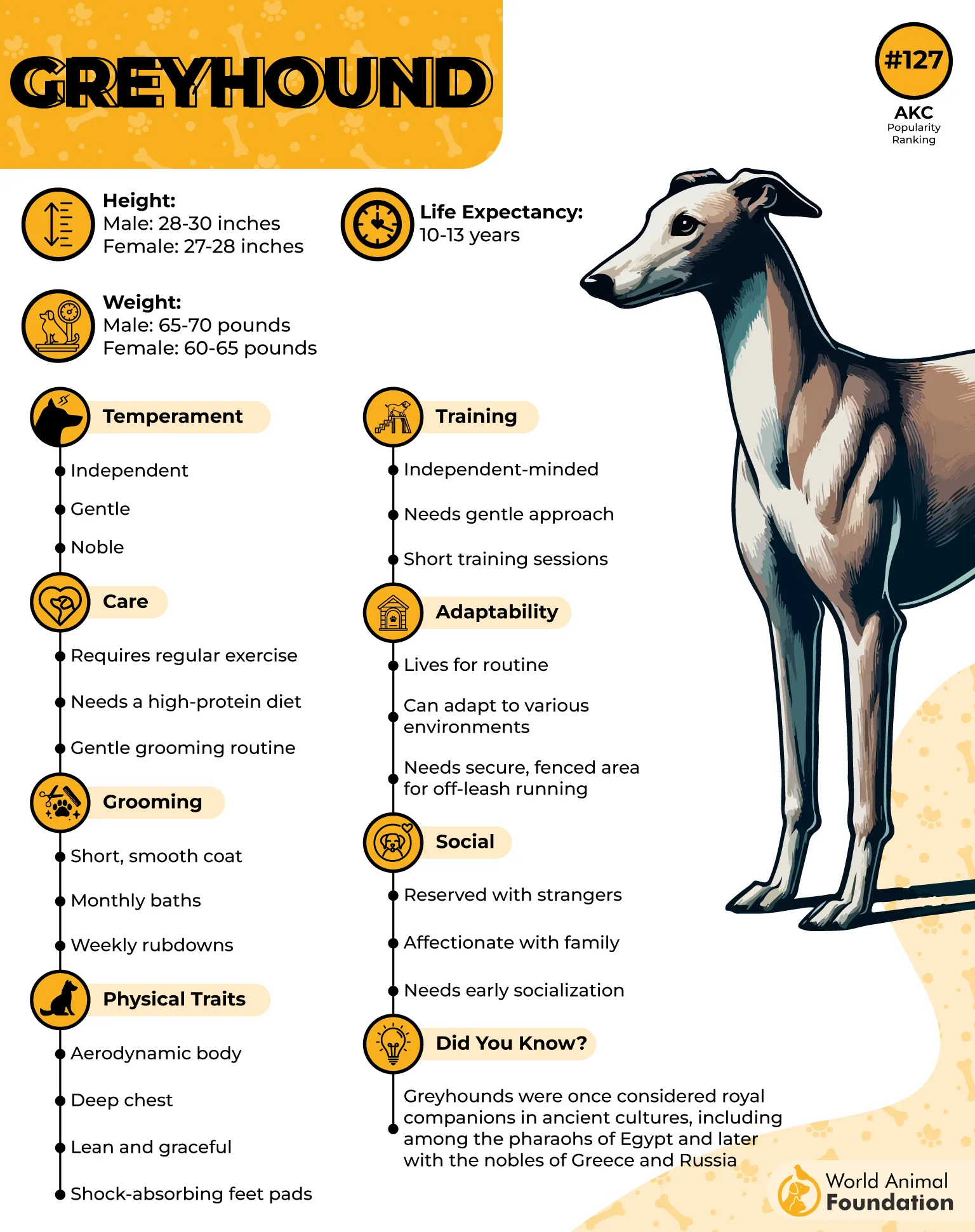
Greyhounds carry a body designed for explosive sprinting, shaped through long refinement for chasing by sight rather than scent. Its lean frame and long limbs reflect pure efficiency rather than bulk. This physical design has drawn attention for centuries in art and royal settings.
Independent tracking behavior
As a racing dog, they process movement on their own terms, relying on visual cues rather than guided direction during pursuit. Its decision-making during activity reflects independence rather than reliance on instruction.
This working style becomes clearer in field patterns:
Tracks targets visually instead of scent reliance
Makes independent decisions during pursuit
Responds better to short, simple guidance
Calm presence in daily spaces
Greyhounds shift into a quiet, low-energy state indoors, often preferring stillness after activity. Its gentle temperament makes interaction soft rather than demanding, with brief bursts of play followed by long rest periods. This contrast between sprint energy and indoor calm defines its rhythm.
9. Pekingese
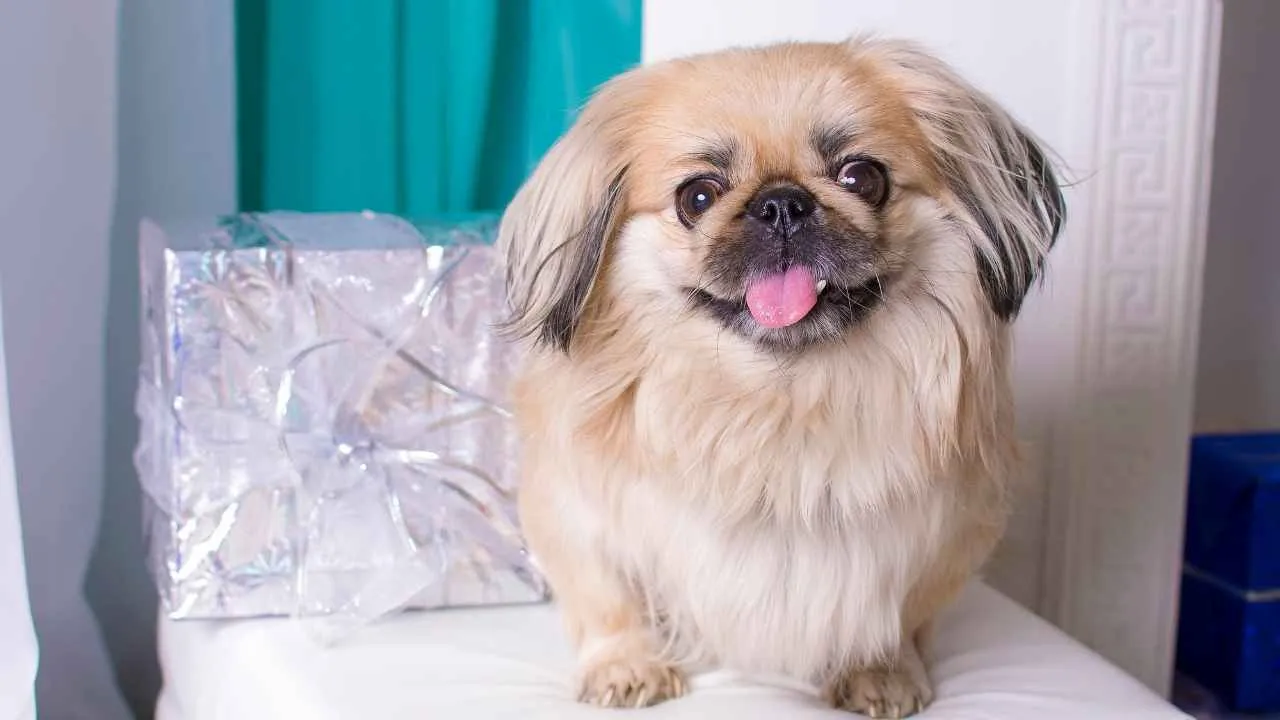
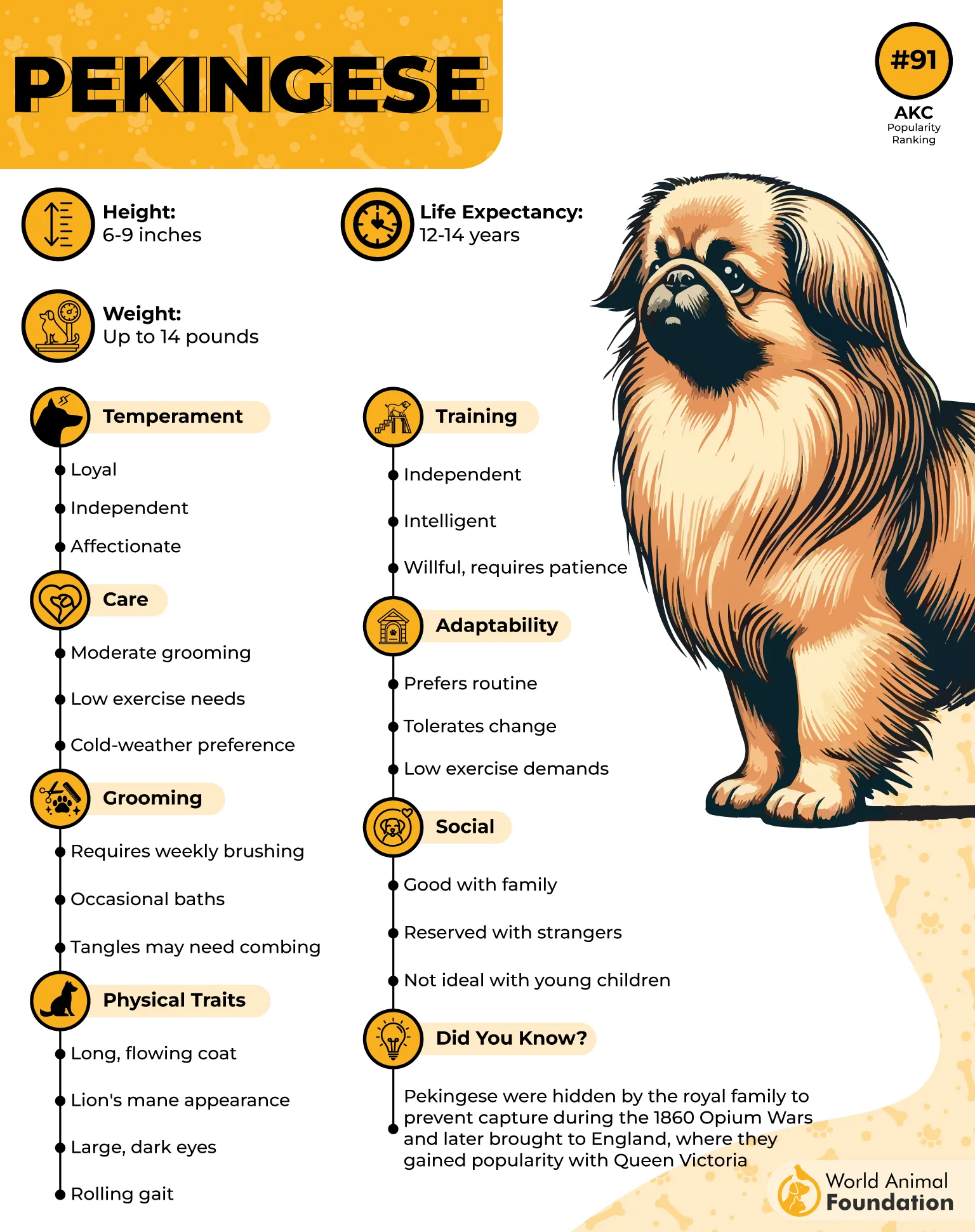
Pekingese enters with a regal air shaped in Chinese royal courts, where close companionship defined its role. Its compact form and flat face connect it to other brachycephalic breeds of that era. The expression and posture reflect a dog aware of its long association with elite settings.
Interaction style at home
This small breed connects deeply with selected people, forming a loyal and affectionate bond within familiar spaces. Its daily rhythm fits quieter households where attention and closeness matter more than constant activity.
That rhythm appears in simple patterns:
Prefers staying close to chosen people
Engages in short, relaxed activity bursts
Responds better in calm indoor settings
Training pace and daily routine
Pekingese learn commands through patience and positive reinforcement, though motivation can vary depending on interest. Its pace suits a slower routine where training feels more like interaction than strict drills. This approach aligns well with steady, low-pressure environments.
10. Tibetan Spaniel
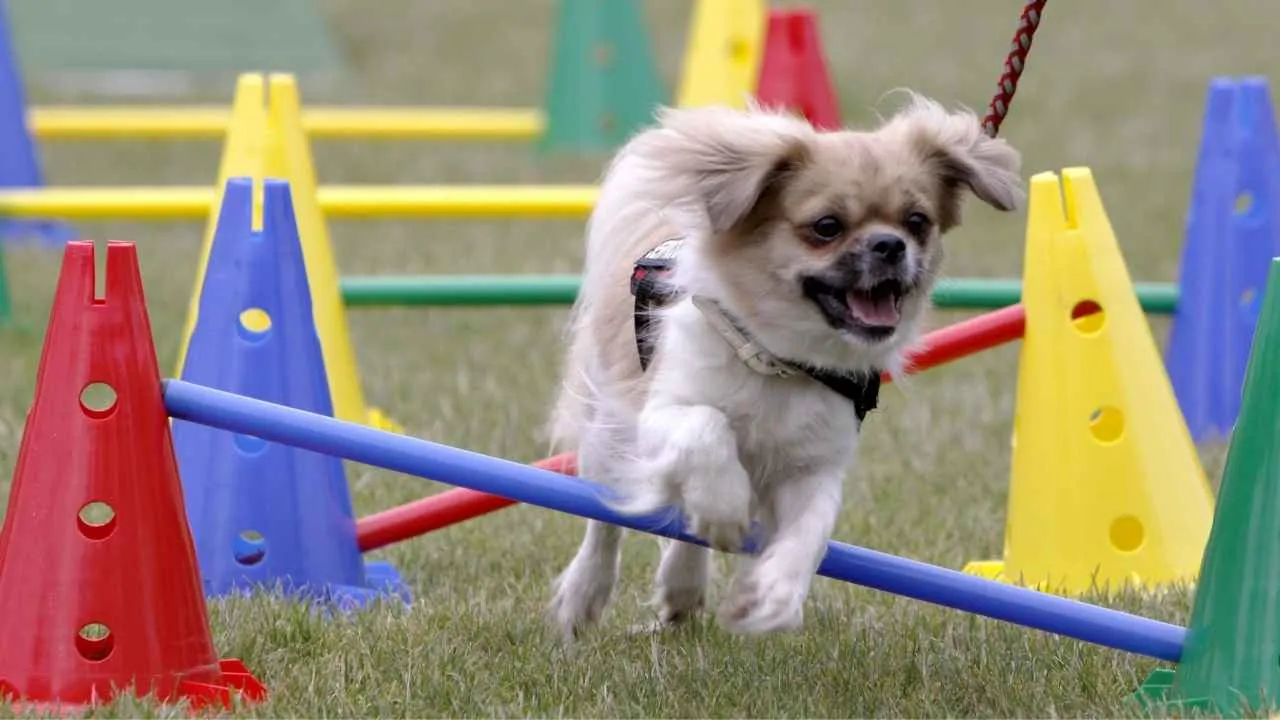
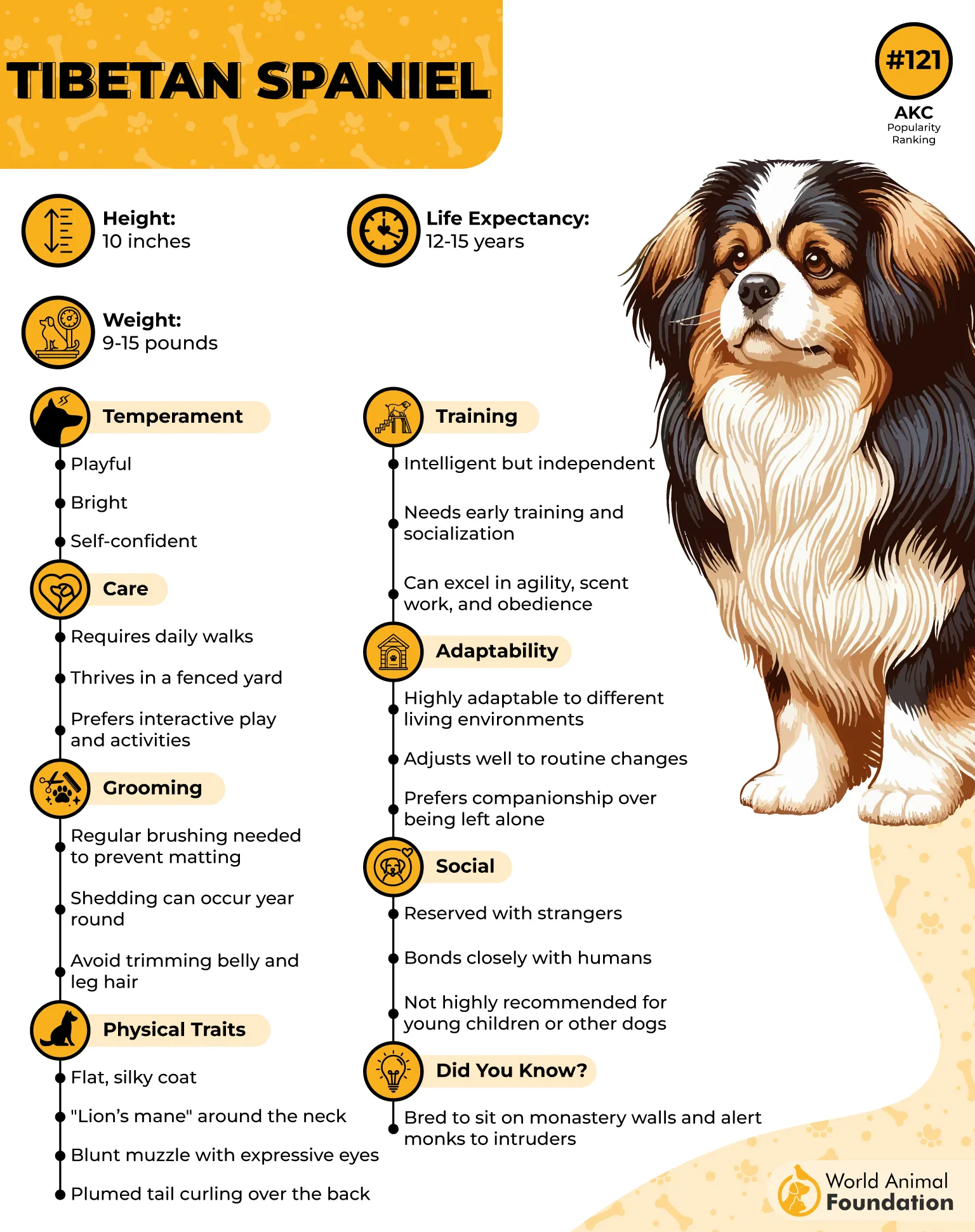
Tibetan Spaniels served as watchful companions on monastery walls, paired with monks in elevated settings. Its small frame is paired with a distinctive lion-like mane and expressive eyes that reflect alert curiosity. The connection it forms with its people runs deep and attentive.
Easy rhythm within daily life
This spaniel adjusts comfortably between quiet indoor time and light outdoor activity, fitting well into slower routines. Its pace aligns with relaxed households while still enjoying regular walks or time in a secure yard.
This balance appears in simple daily patterns:
Enjoys short walks without demanding intensity
Settles easily during indoor downtime
Keeps up during relaxed outdoor movement
Training shaped by patience and connection
Tibetan Spaniel responds best when training begins early and remains consistent, especially with positive reinforcement. Its eagerness to please supports learning, though an independent streak requires steady guidance. Social exposure at a young stage helps build confidence across new situations.
Conclusion
The shift happens quietly once the right dog becomes part of the home. Noise settles, routines hold, and nothing feels rushed anymore. These breeds do not push for constant activity or demand attention beyond what feels natural. They stay present in a way that supports the flow of daily life without interrupting it, something many pet owners notice over time.
Over time, that steady behavior becomes something you rely on. Training feels less like effort and more like a simple extension of everyday interaction. In homes with a laid-back rhythm and a calm disposition, this kind of companionship fits naturally, especially for families seeking it.
