




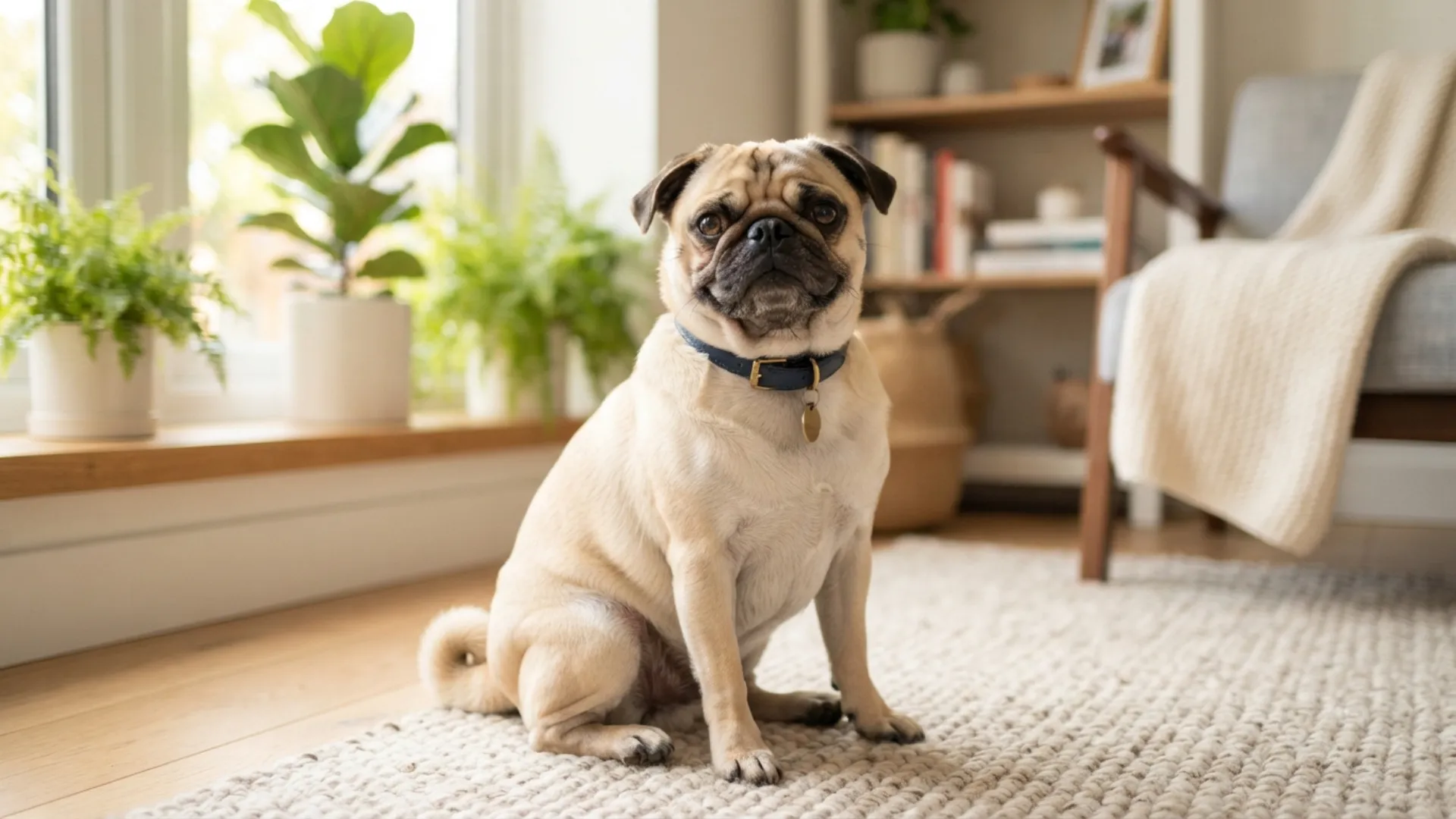
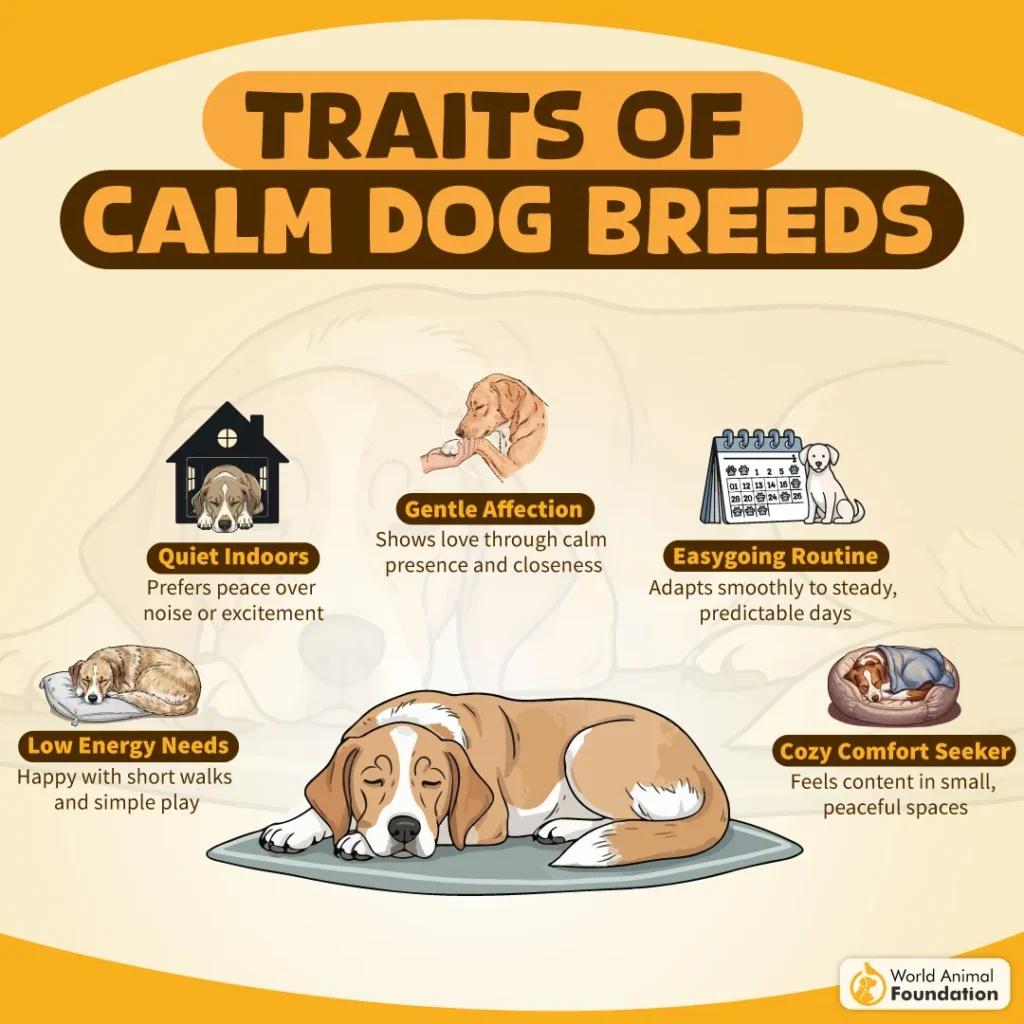
The dog that looks calm in a photo may not be the dog that feels calm in your living room. Energy level, temperament, exercise needs, trainability, and social behavior all shape how manageable a companion becomes once it joins your routine.
Calm dog breeds can suit people who prefer moderate activity and a home where evenings are meant for relaxing rather than constant stimulation. They still need daily exercise, mental enrichment, training, grooming, and routine veterinary care, so calm should never be confused with maintenance-free.
Your home, schedule, experience, expectations, and household routines matter just as much. Breed tendencies can help you predict energy levels and general behavior, although every dog remains an individual with its own habits.
The options ahead reveal several ways a calm temperament can look in real everyday life, helping you compare what matters before choosing.
Key Takeways
A calm dog can still have a fascinating past. Some of the breeds on this list once lived among emperors, monks, and royalty.
Pekingese spent centuries in Chinese royal circles, while Pugs were once so treasured by Queen Victoria that she reportedly kept 38 of them.
Italian Greyhounds bring a very different kind of calm, switching from bursts of remarkable speed to long stretches curled up beside their people.
From ancient companions to gentle family dogs, these seven breeds show just how many ways a peaceful home life can look.
Calm Dog Breeds That Are Easy to Manage
1. Pekingese
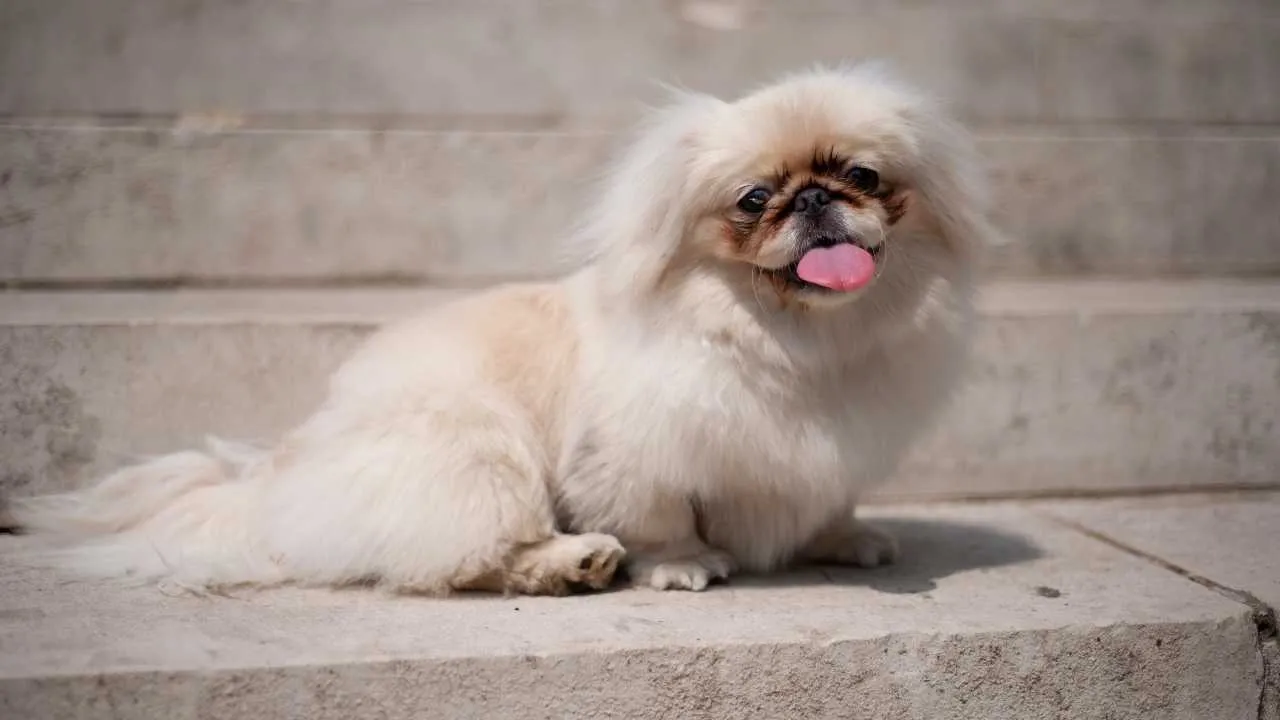
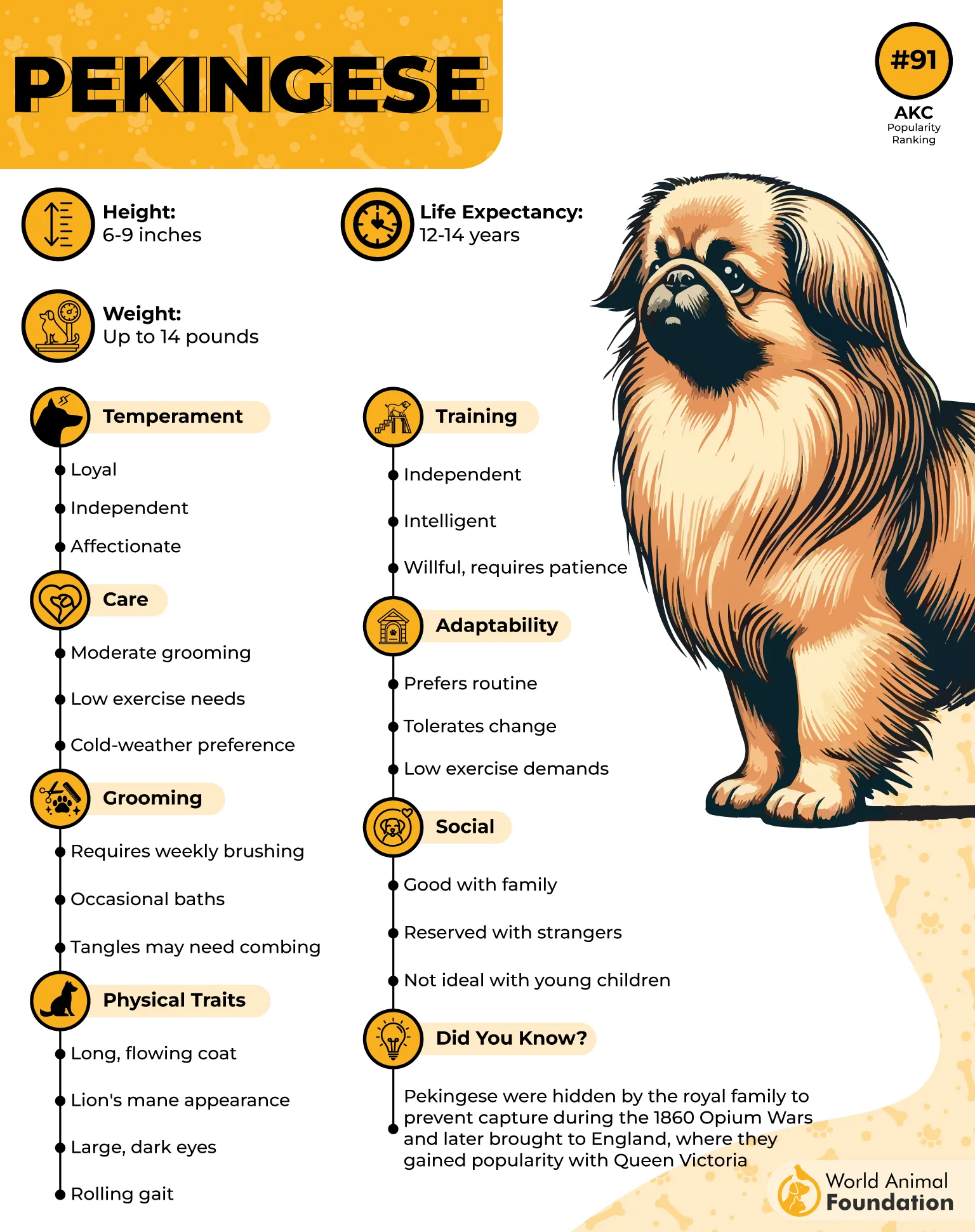
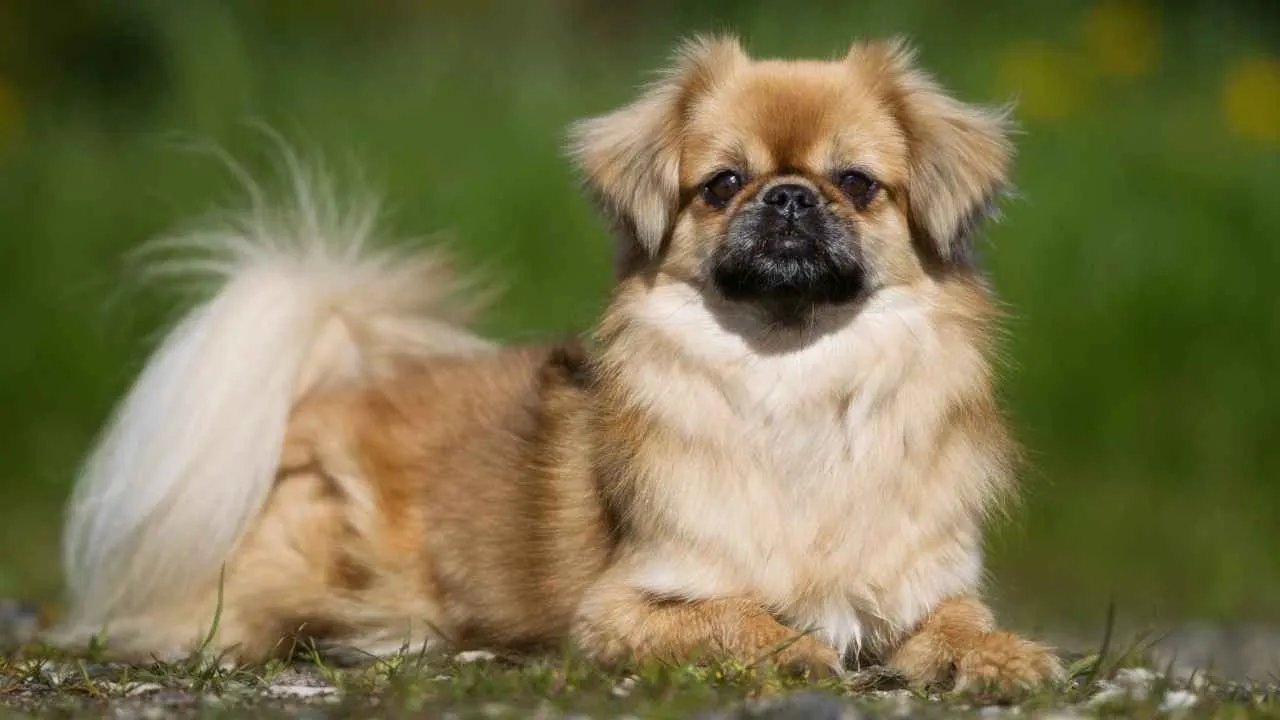
Pekingese spent centuries within Chinese temples and royal circles, where these small dogs were treated as treasured guardians. During the Qing Dynasty, from 1644 to 1912, their ancestors appeared frequently in figurines, reflecting their valued place in Chinese culture.
A Quiet Routine
This calm breed needs only around 30 minutes of physical activity each day, ideally divided between two short walks with some off-leash time. Its compact build also makes gentle indoor play and leisurely sniffing a better match than jogging or lengthy hikes.
These essentials make their daily care more specific:
A harnezs is recommended to protect the windpipe
Search games can add variety without demanding intense exertion
Hot weather can be particularly uncomfortable for this breed
Indoors by Choice
Pekingese are perfectly content to claim a lap, bed, or sofa and spend long stretches there with the family. Its flat face can bring plenty of snoring, snuffling, and grunting, while gentle play and brief outdoor sessions are easier on its physical limitations, as Omlet US claims.
2. Pug

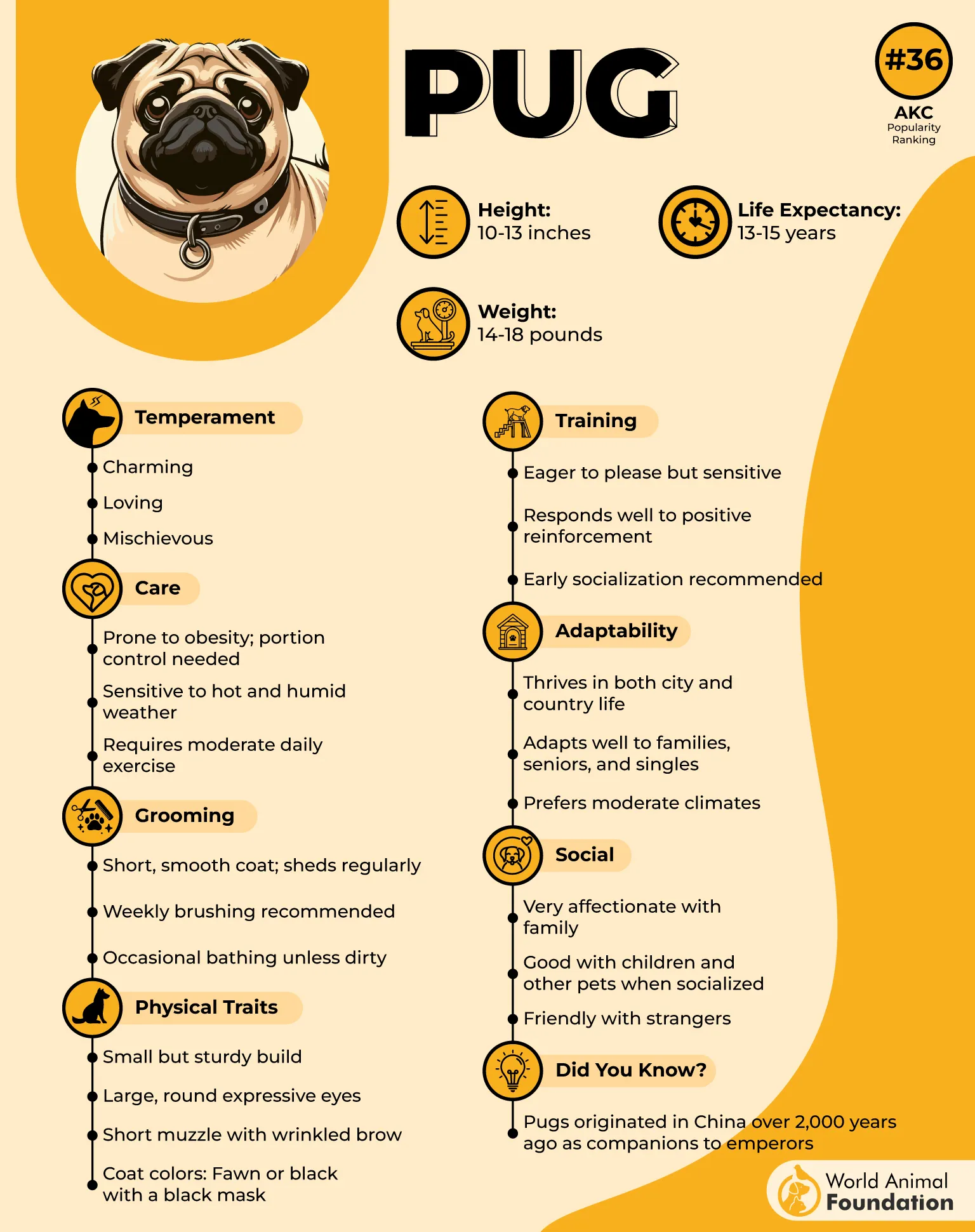
Pugs began life as a favored companion of Chinese emperors, with some even assigned personal guards during their royal service. By the 1500s, these small dogs had reached Europe, gaining royal connections in Holland, France, and England, where Queen Victoria reportedly kept as many as 38 Pugs.
Naturally Low-Key
A pug is generally content with several 15- to 20-minute walks rather than demanding physical workouts, as PetMD states. Its flat face also makes controlled outdoor time important, since heat and breathing difficulty can become serious concerns during strenuous activity.
A few practical details matter for daily care:
Monthly baths help clean the coat
Wrinkles need daily cleaning
Daily brushing helps reduce shedding
People-Oriented
This laid-back dog breed tends to be affectionate, eager to please, and happiest when close to its human companions. Its friendly nature can work well with children and other pets when children interact appropriately, and the dog receives proper socialization.
3. Tibetan Spaniel
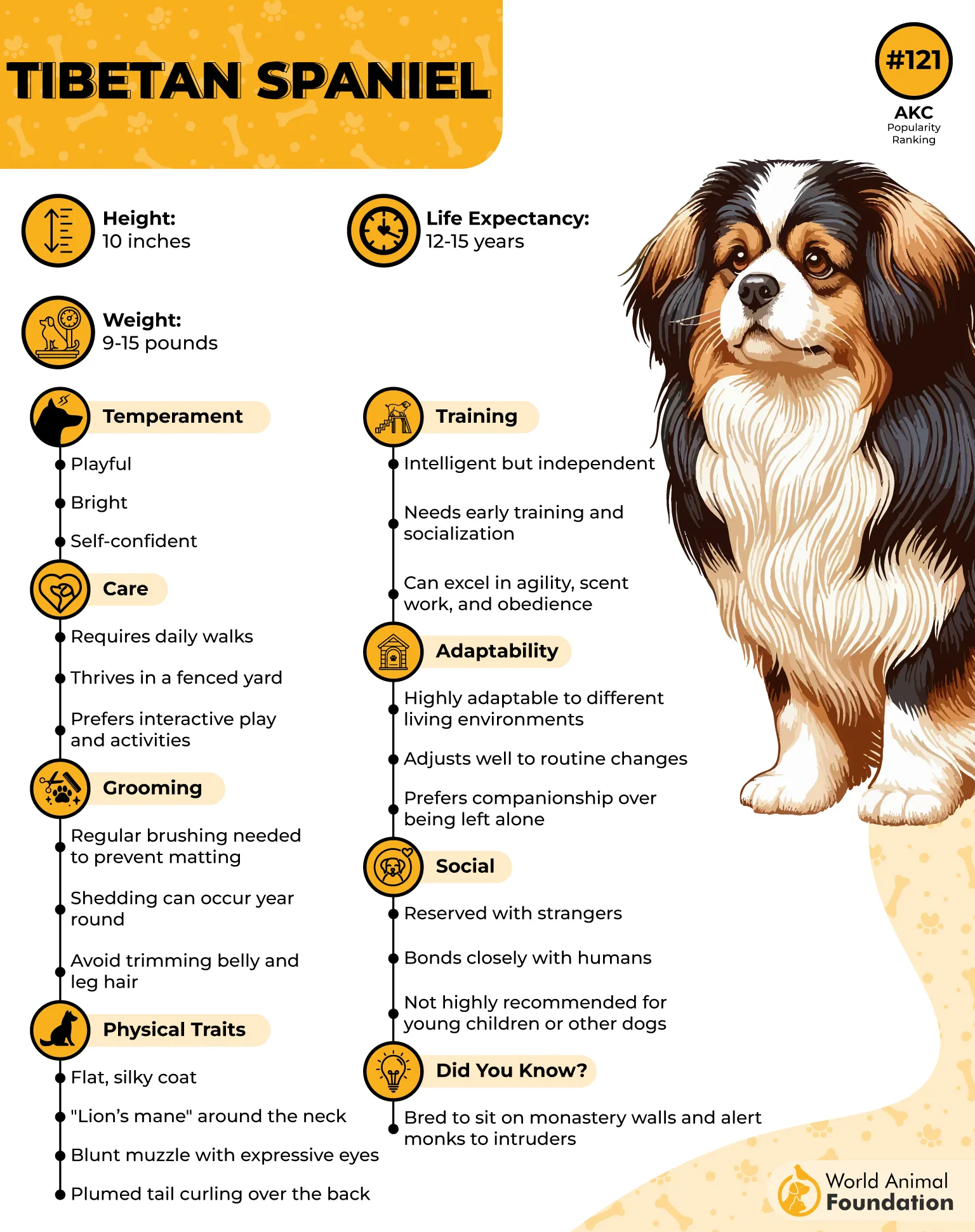
Tibetan Spaniel appears in Eastern artwork dating to 1100 B.C., reflecting its ancient roots alongside Tibetan Buddhist traditions. Monks kept these small dogs in monasteries as companions and sentinels, where they alerted larger Tibetan Mastiffs when they sensed possible danger.
Easy Daily Rhythm
This spaniel does not require marathon-level exercise, making its routine easier to manage for busy pet parents. A couple of walks, indoor play, short training games, and enrichment activities can provide enough variety without demanding hours of intense activity.
A few practical details are worth knowing:
Apartment and condo friendly
Enjoys food-based puzzle toys
Interacts well with respectful children
Selective With Strangers
Tibetan Spaniels can be cheerful and affectionate with familiar people while taking time to warm up to unfamiliar faces, as VCA Animal Hospital reported. Early exposure to different sounds, surfaces, people, and gentle handling can help puppies become more comfortable with everyday experiences.
4. Italian Greyhound
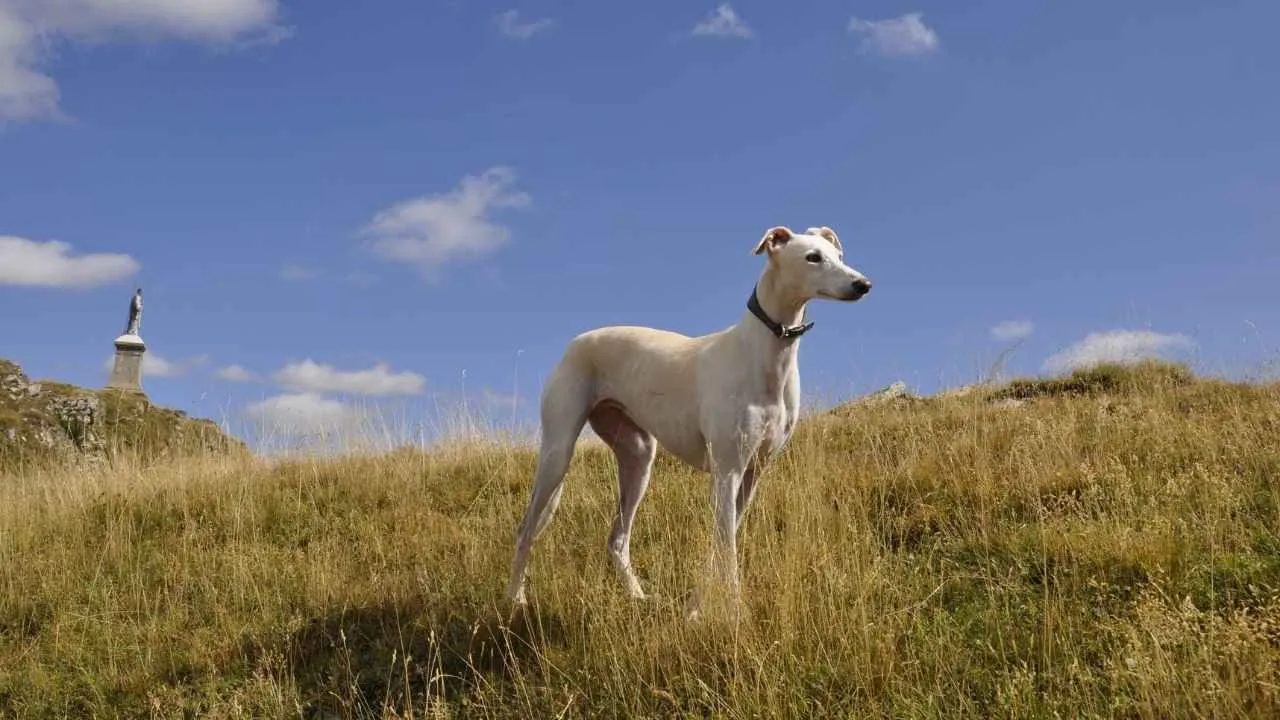
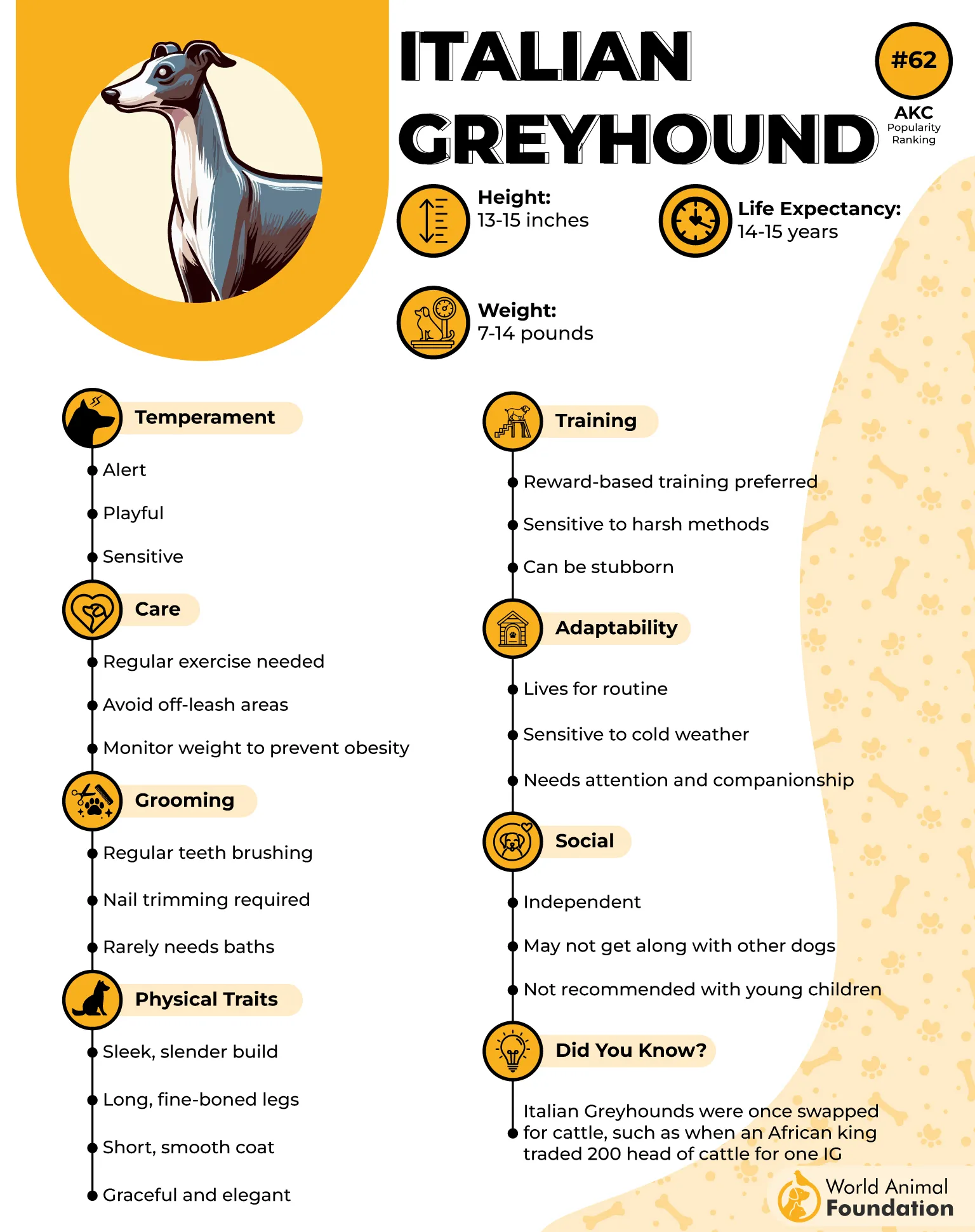
Italian Greyhound has roots reaching back to ancient Egypt and Rome, with similar-looking dogs appearing in tomb artwork as far back as 4000 BC. From the Middle East and Europe, these slender sighthounds eventually became established as the breed recognized in England.
A Small Athlete
Italian Greyhound was selectively bred for pursuits such as hunting deer and hares, while its speed also made racing a natural fit. Its muscular yet slender frame gives it the agility of a serious runner in a remarkably small package.
This is what makes this little athlete different:
Sighthound with exceptional speed
Quick learner with strong adaptability
Enjoys short, focused training sessions
Soft Spot at Home
Despite their athletic nature, these racing dogs can spend an afternoon napping in the sun or curled up on a lap, then suddenly race around with a burst of playful energy. A small apartment can suit the breed well when it gets several opportunities to run safely in a fenced area each day.
5. Cavalier King Charles Spaniel
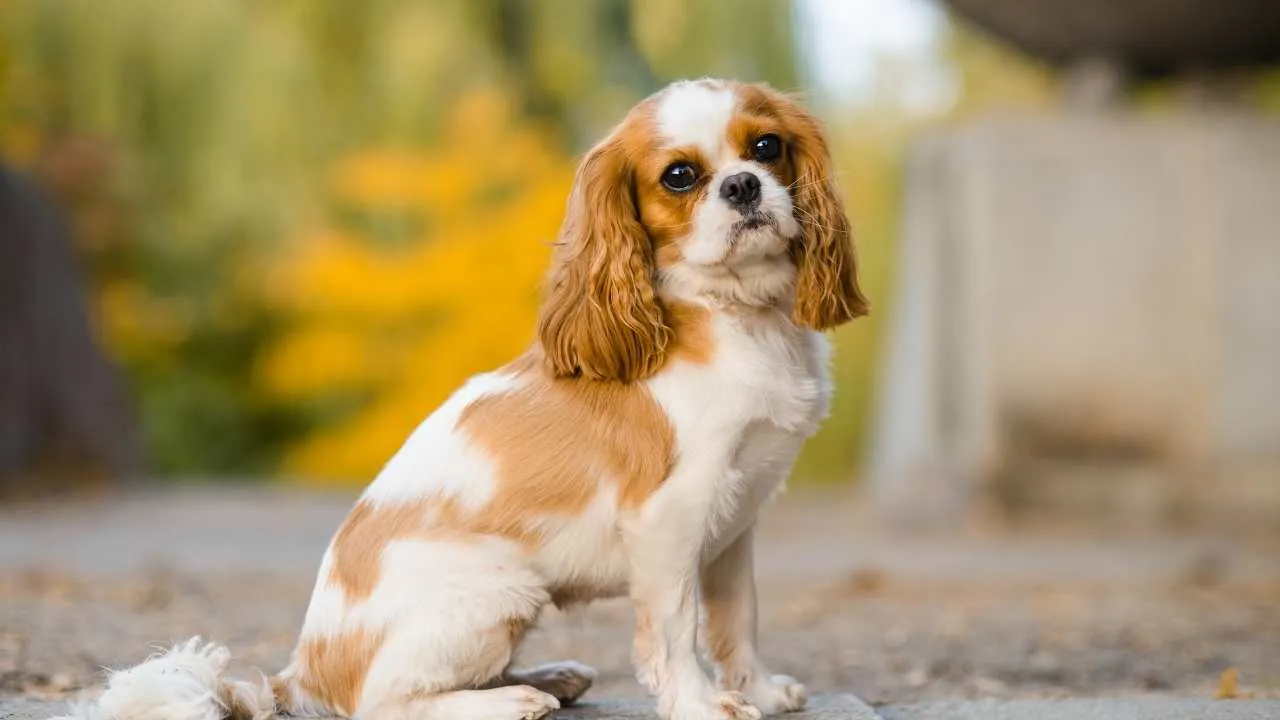
Cavalier King Charles Spaniel has a royal legacy reaching back to 16th-century England, where Toy Spaniels were closely associated with the nobility. The breed takes its name from King Charles II, who was so fond of these dogs that he was known to take several with him in public.
Easygoing at Home
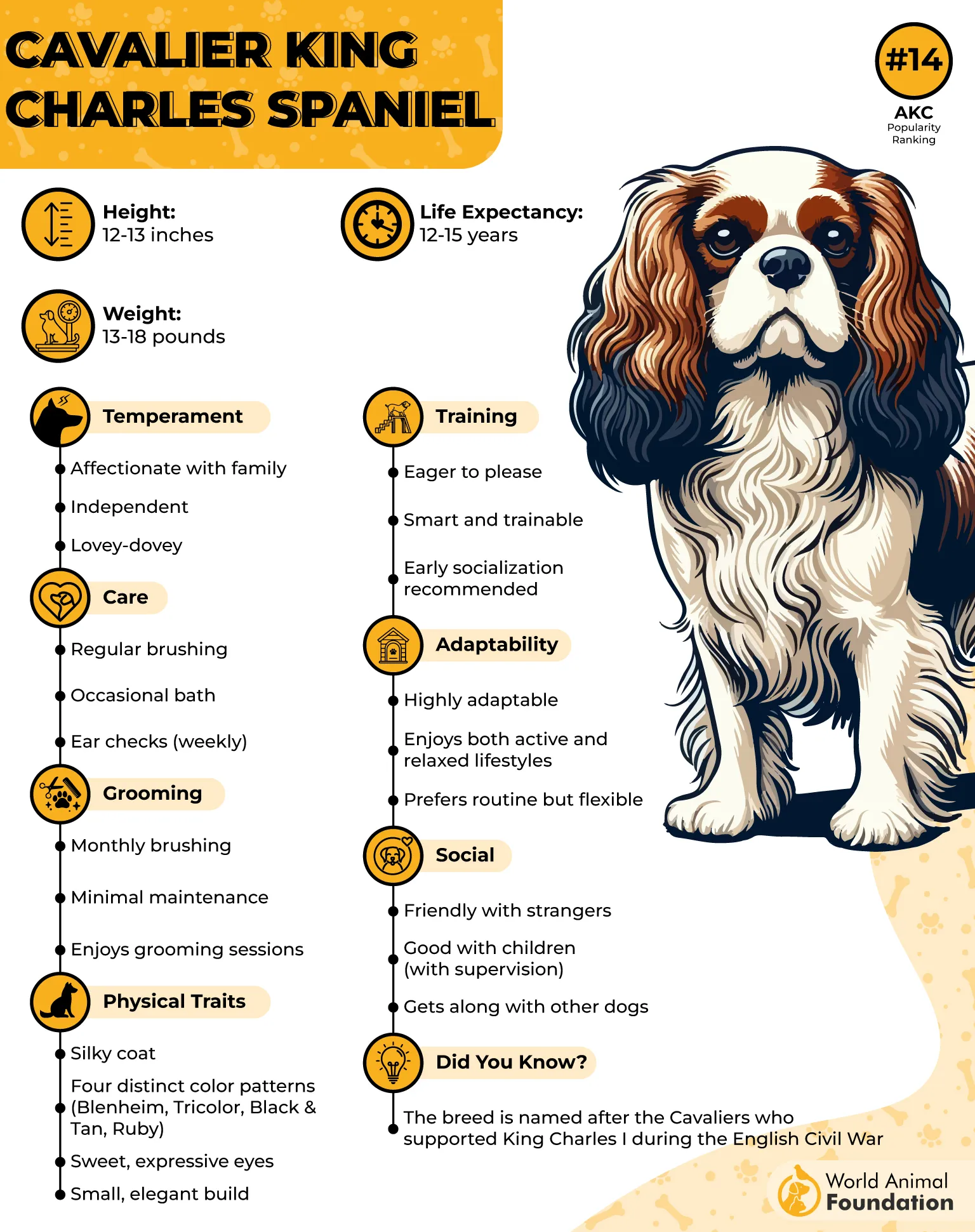
This little spaniel needs about 40 to 60 minutes of exercise each day, which can come from relaxed walks or play in a secure yard. That manageable routine makes it practical for flats and quieter households when its daily activity needs are met.
These useful details add to its everyday appeal:
Intelligent and eager to please
Responds to treats, toys, and praise
Can live with other animals after proper socialization
Needs Company
Cavalier King Charles Spaniels enjoy being close to their favorite people and can become distressed when left alone for extended periods. Too much solitude may lead to whining, furniture chewing, or accidents indoors, while time together can include cuddling on the sofa or relaxed indoor companionship.
6. Basset Hound
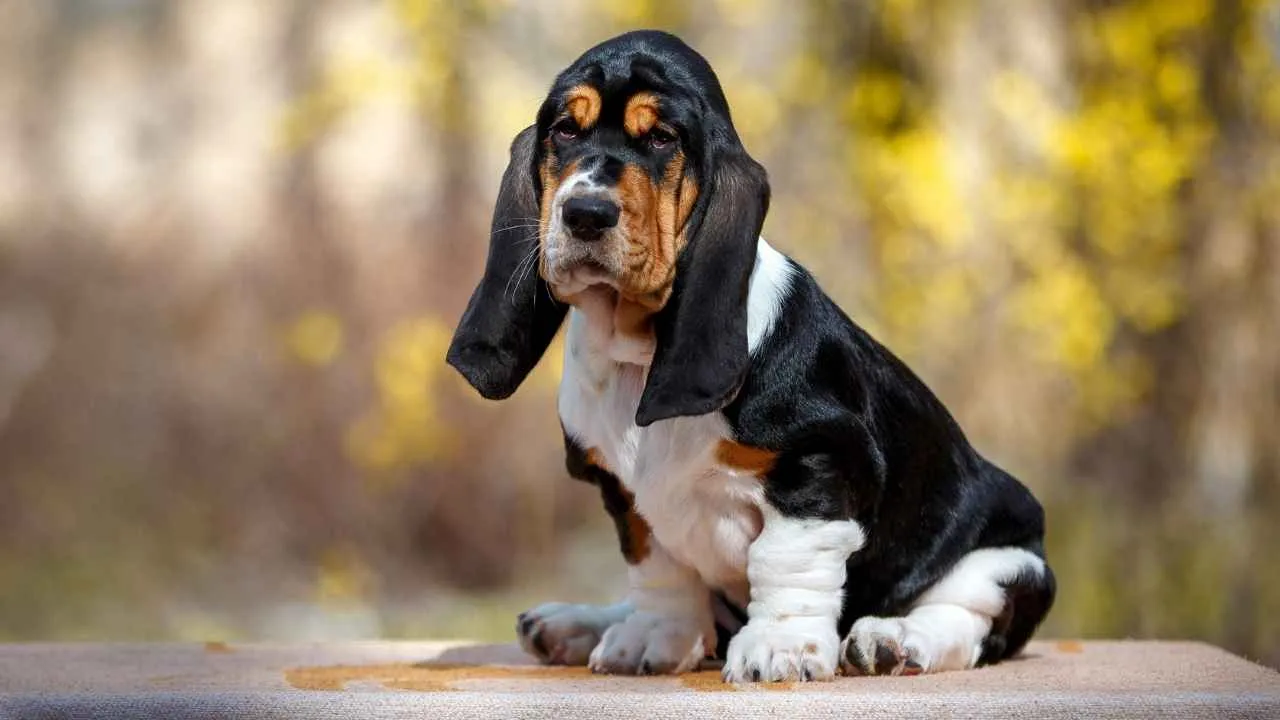
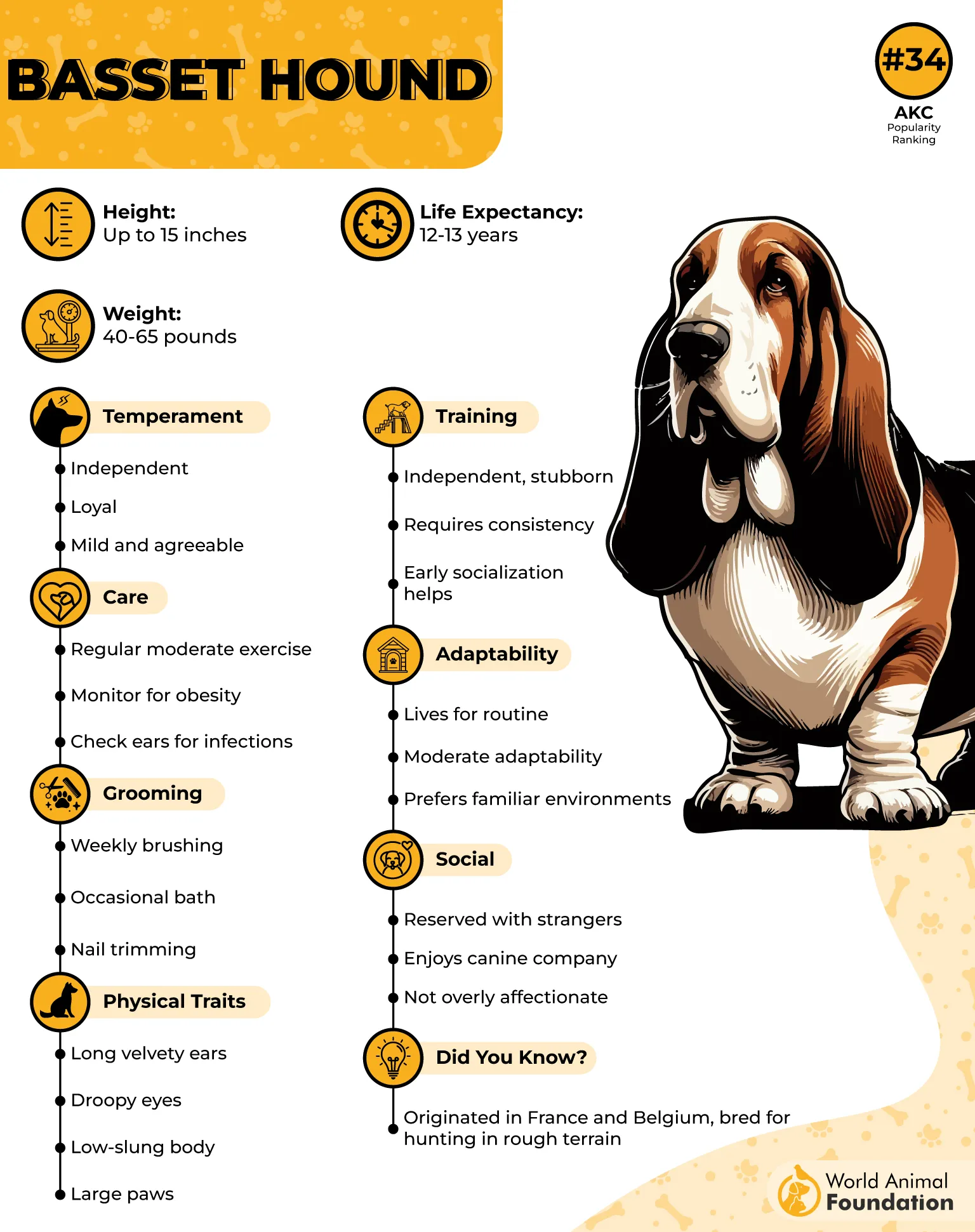
Basset Hound’s French history is closely connected to hunting rabbits and hares, with its low build allowing it to follow their trails at a slower pace. The breed’s name comes from the French word bas, meaning low or dwarf, while later Bloodhound crosses helped make it larger.
A Slower Rhythm
They can peacefully live in a calm household with their unhurried approach to daily life, enjoying relaxed walks and long stretches of rest. Around an hour of exercise each day helps manage weight, while scent work gives this nose-driven breed something more interesting to investigate.
Three details are especially useful for daily care:
Avoid stairs until 18 months old
Needs steady, ambling walks rather than fast-paced outings
Expect regular drooling and dribbling
Gentle Company
Basset Hounds are patient with children and generally friendly toward dogs and other pets, making their easygoing temperament useful in family settings. Its hunting instincts still appear during walks, when an appealing scent can quickly take priority over recall.
7. Clumber Spaniel
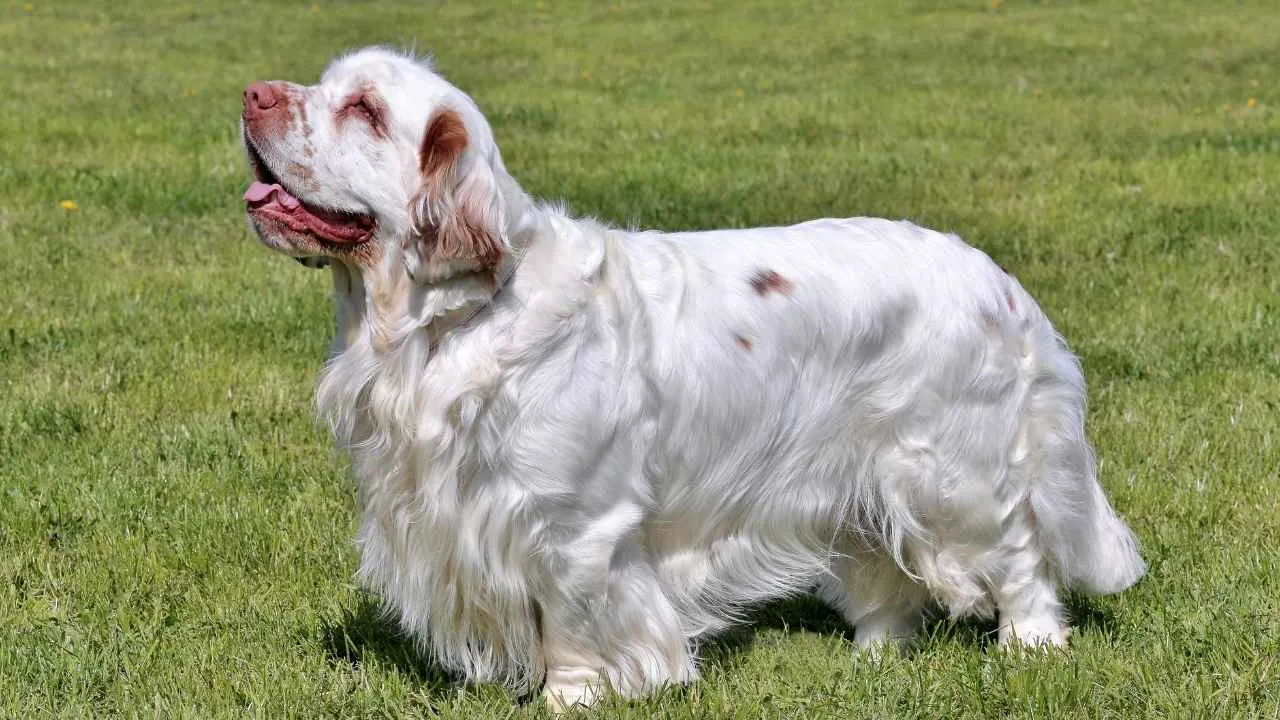
Clumber Spaniel emerged in England in the late 1700s and is among the oldest Spaniel breeds. Its exact lineage remains uncertain, though theories connect it with the Alpine Spaniel and Basset Hound, while focused breeding began at Clumber Park in Nottinghamshire.
Quiet by Nature
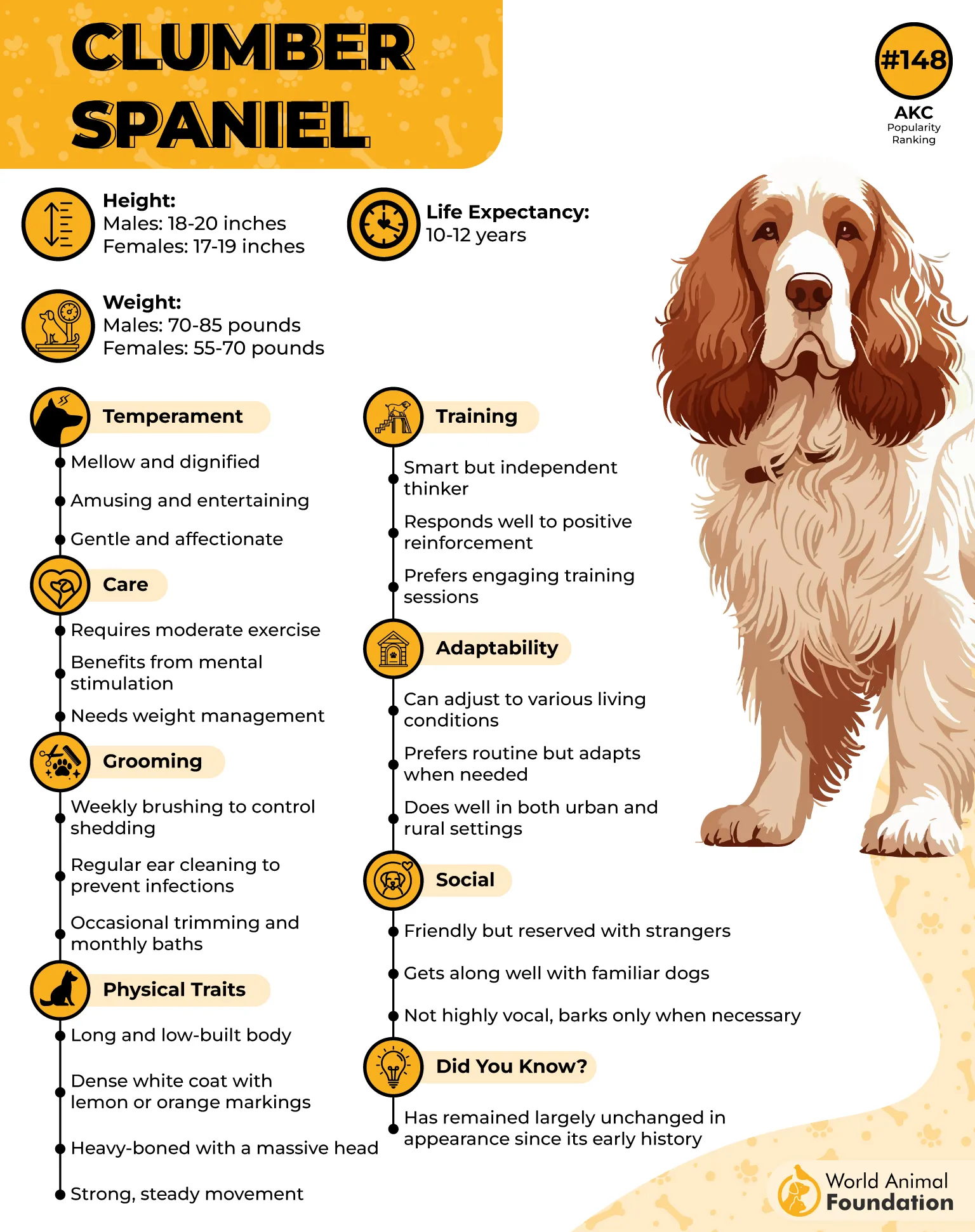
Clumber Spaniel is the heaviest and stockiest of the Spaniels, yet its daily routine can be surprisingly unhurried. Around the house, this gentle breed may happily spend hours sleeping and often needs a little encouragement when it is time for a walk.
These characteristics make its routine easier to understand:
About 30 minutes of daily exercise
Can live peacefully with other pets
Generally quiet and well-mannered
Gentle With Company
This chill dog is affectionate with people, children, and other pets, while its protective side can surface when it senses a child may be threatened. It generally makes little fuss around unfamiliar people and is not known for aggressive or biting behavior.
Conclusion
Finding an easy-to-manage dog starts with looking beyond a calm appearance and considering what daily life will actually require. Every dog needs exercise, training, attention, grooming, and regular care, even when its energy level is naturally lower. Your schedule, living space, household, and experience should all influence the decision when choosing an apartment dog for a laid-back lifestyle.
A suitable match can make routines feel simpler while still giving you a loyal companion to enjoy each day. The best calm dog breeds can be great family pets when their needs fit your routine. Consider how much activity, companionship, and care you can consistently provide before choosing a calm companion or easygoing companion.
