





Calm dogs have a special kind of magic—they turn everyday life into something softer. Whether you’re hoping for a peaceful companion at home or simply want to know which pups are most likely to greet you gently at the dog park, the right energy match matters just as much as the right look.
That’s where temperament and loyalty come in. Many breeds are known for being steady, devoted, and protective of their pet parents, but it’s worth remembering that no personality trait is guaranteed. Training, routine, and the environment you create can bring out the best in even the most mellow-minded dog.
In this guide, we’ll walk through calm dog breeds with an eye on “fit,” not hype—how much activity they truly need, how they behave around people, and what kind of home helps them thrive. We’ll also touch on breed standards, which describe the ideal traits of a recognized breed, so you can better understand what’s typical before you choose your next best friend.
Calm Dog Breeds: Finding the Right Energy Match
1. Great Pyrenees
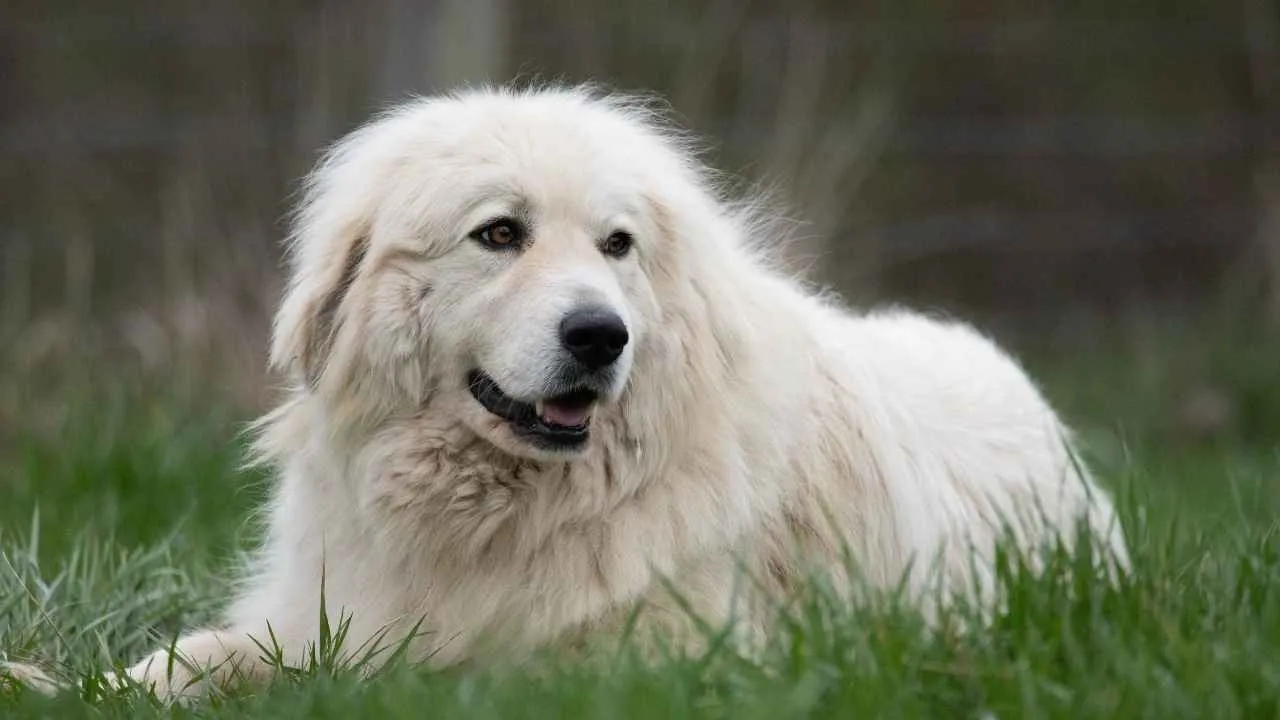
The Great Pyrenees—also called the Pyrenean Mountain Dog or simply “Pyr”—is a thick-coated, powerful livestock guardian with a famously steady presence.
Bred in the Pyrenees Mountains to protect sheep from wolves and bears, this breed still carries a calm confidence that feels reassuring at home.
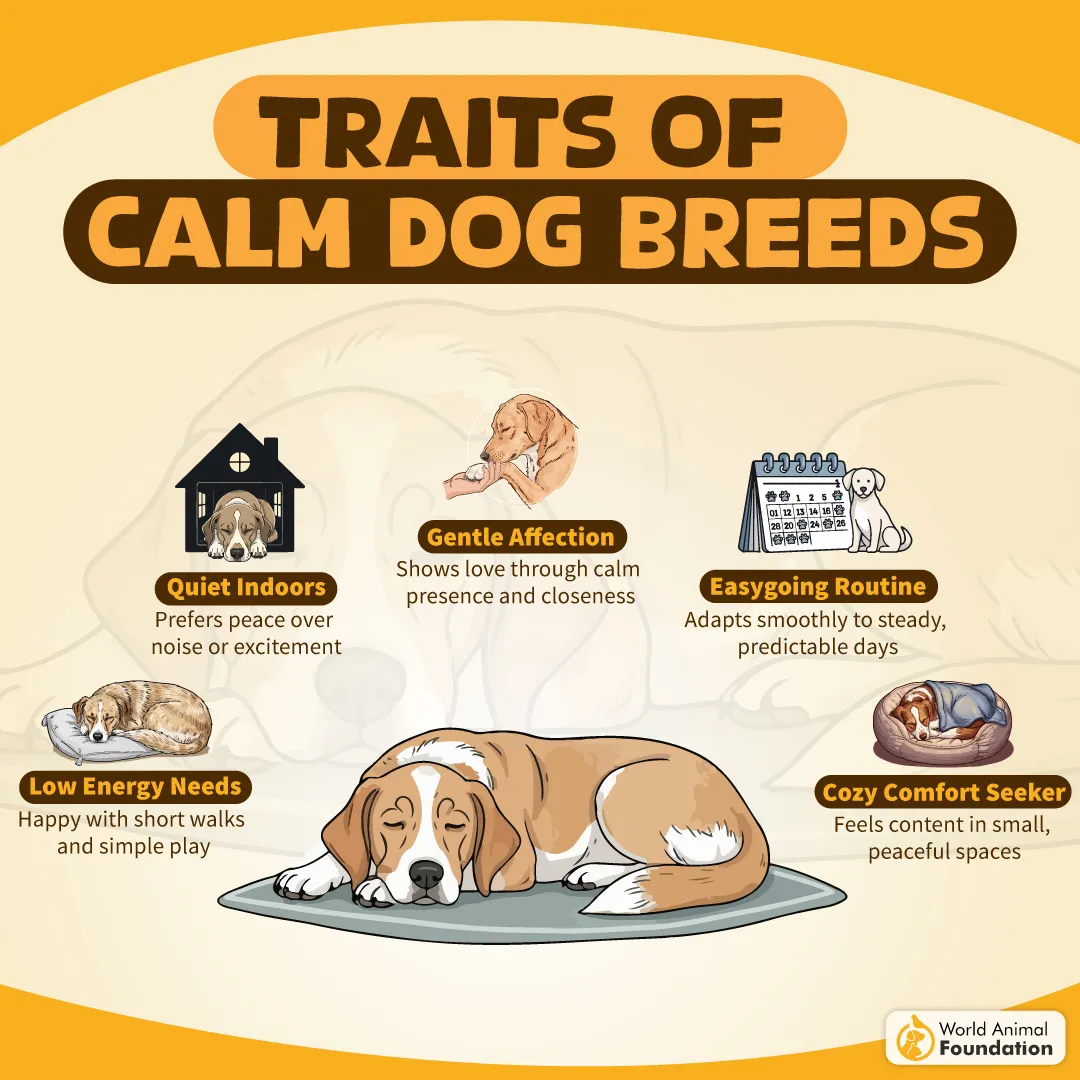
The AKC states that the Great Pyrenees is a large, heavily coated, and extremely powerful working breed originally developed to protect flocks from wolves and other predators in snowy mountain regions.
What “calm” looks like in a Pyr is patient, watchful behavior: they’re often mellow companions who enjoy human company and tend to be gentle with well-mannered children. That laid-back vibe doesn’t mean they’re inactive—it means they conserve energy until there’s a reason to respond.
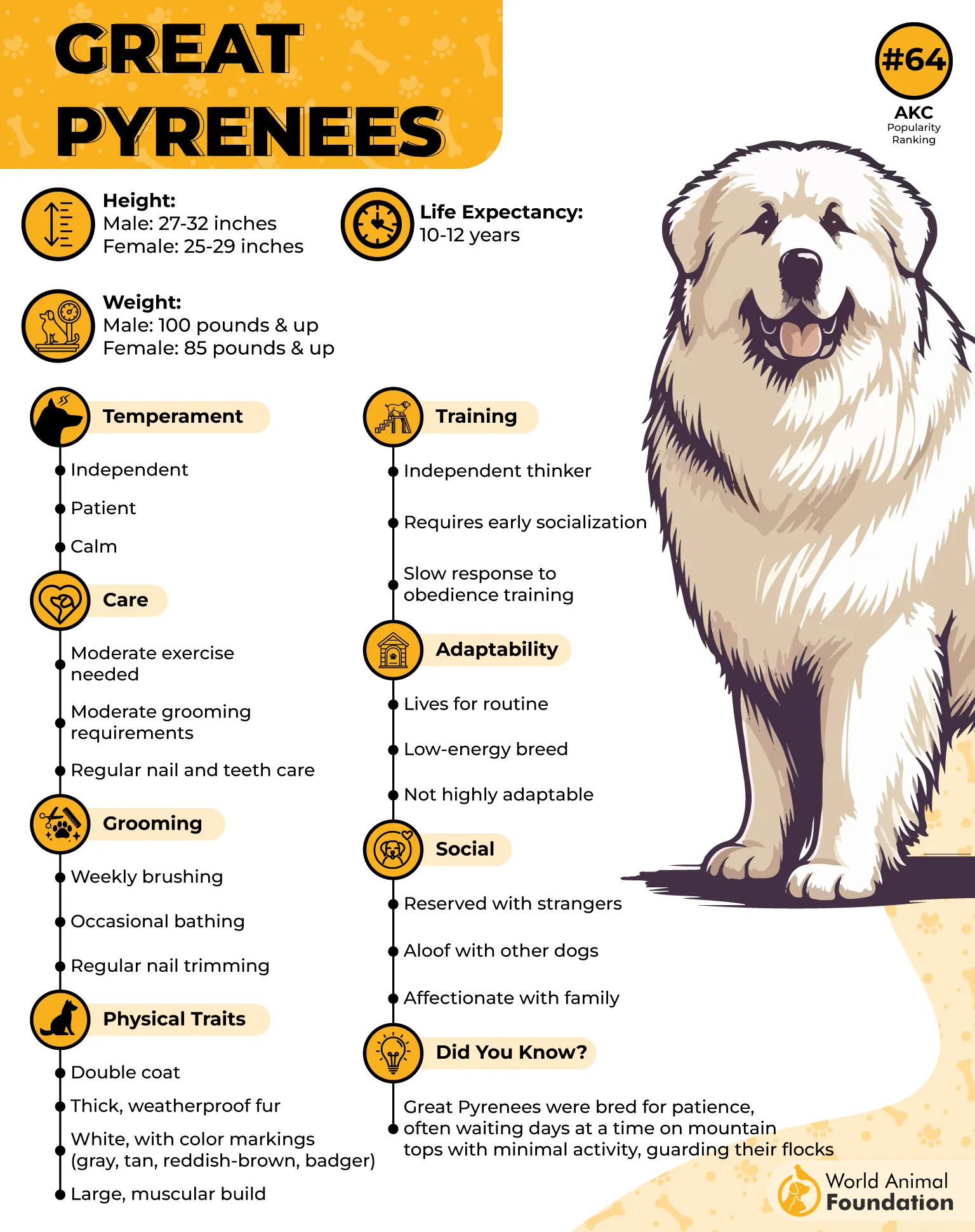
Their protective instinct can show up as barking, especially when they think something is off, so early socialization and clear household routines help them relax. Because they’re guardians by nature, they do best with consistent boundaries and a peaceful home environment.
2. Golden Retriever

The Golden Retriever (often simply called “Golden”) is a Scottish gundog celebrated for a dense, gleaming golden coat, kind eyes, and a famously friendly, devoted, trustworthy temperament.
PetMD says that Golden Retrievers are one of the most popular breeds in the United States because they’re intelligent, loyal, easy to train, and very affectionate.

Their steady warmth makes them a natural pick for homes that want calm companionship without losing that bright, happy spirit.
Energy matching matters here because Goldens are easygoing, but not “do-nothing” dogs. They thrive when their daily rhythm includes connection—short training games, gentle play, and family time—so their enthusiasm doesn’t spill into restlessness.
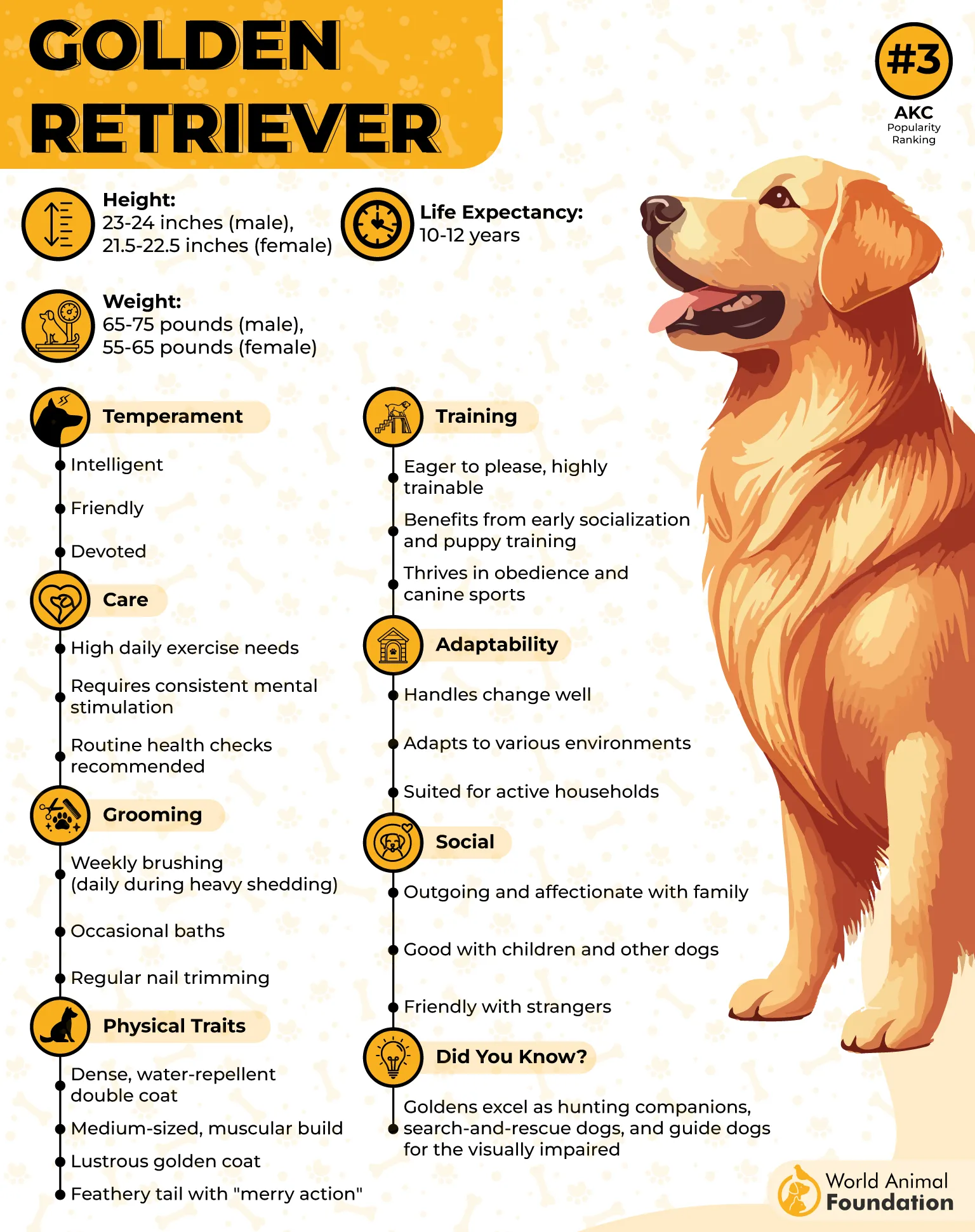
For busy families, the sweet spot is predictable outlets: a couple of regular walks, a bit of fetch, and simple enrichment at home. Because they’re eager to please, positive, consistent training helps them settle and makes their calm side shine.
In quieter households, their people-first nature can be deeply grounding—especially when you build in routines that balance affection with boundaries.
Fact: Golden Retrievers are commonly used as therapy, service, and guide dogs because of their calm, devoted nature.
3. Labrador Retriever
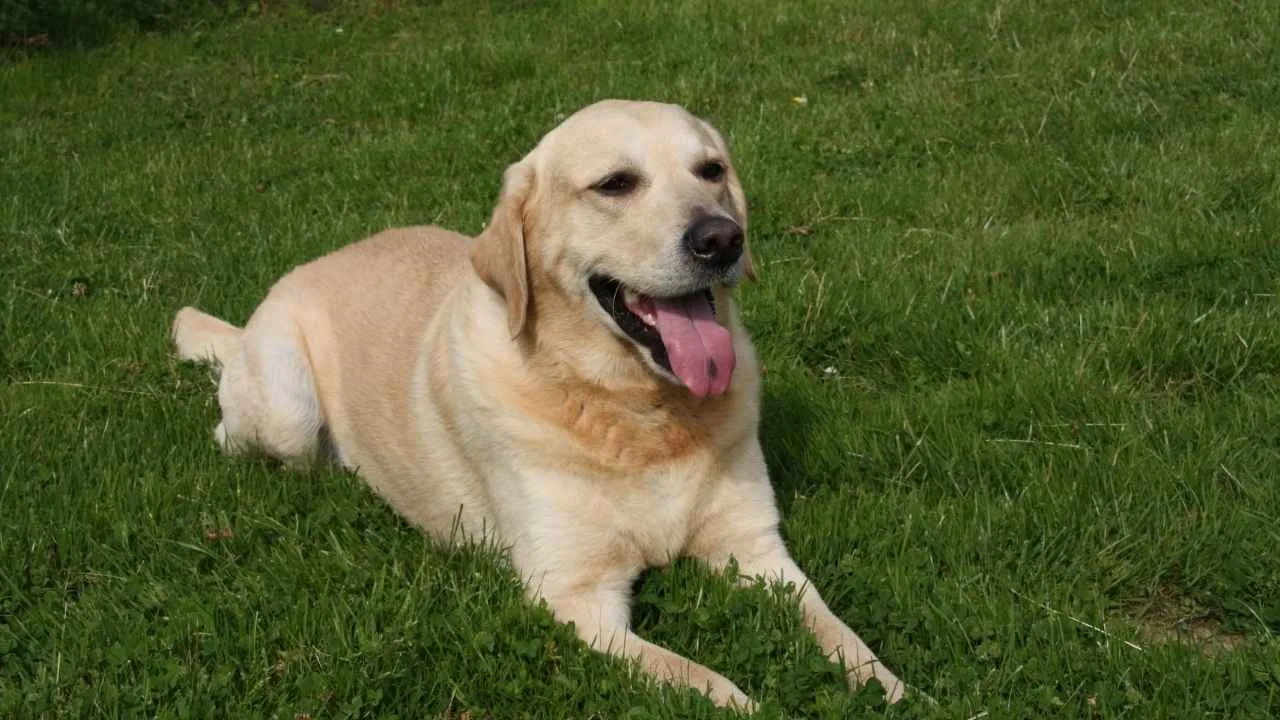
The Labrador Retriever—often called the Lab—is the classic sweet-faced retriever with a dense, easy-care coat and that signature “otter tail” that never seems to stop moving.
WebMD notes that Labrador Retrievers are friendly, loyal, and always eager to play, which helps explain why they’re often regarded as some of the most suitable pets worldwide.
Friendly and affectionate, Labs tend to bond with the whole household, making them a reliable pick when you want a steady family companion.
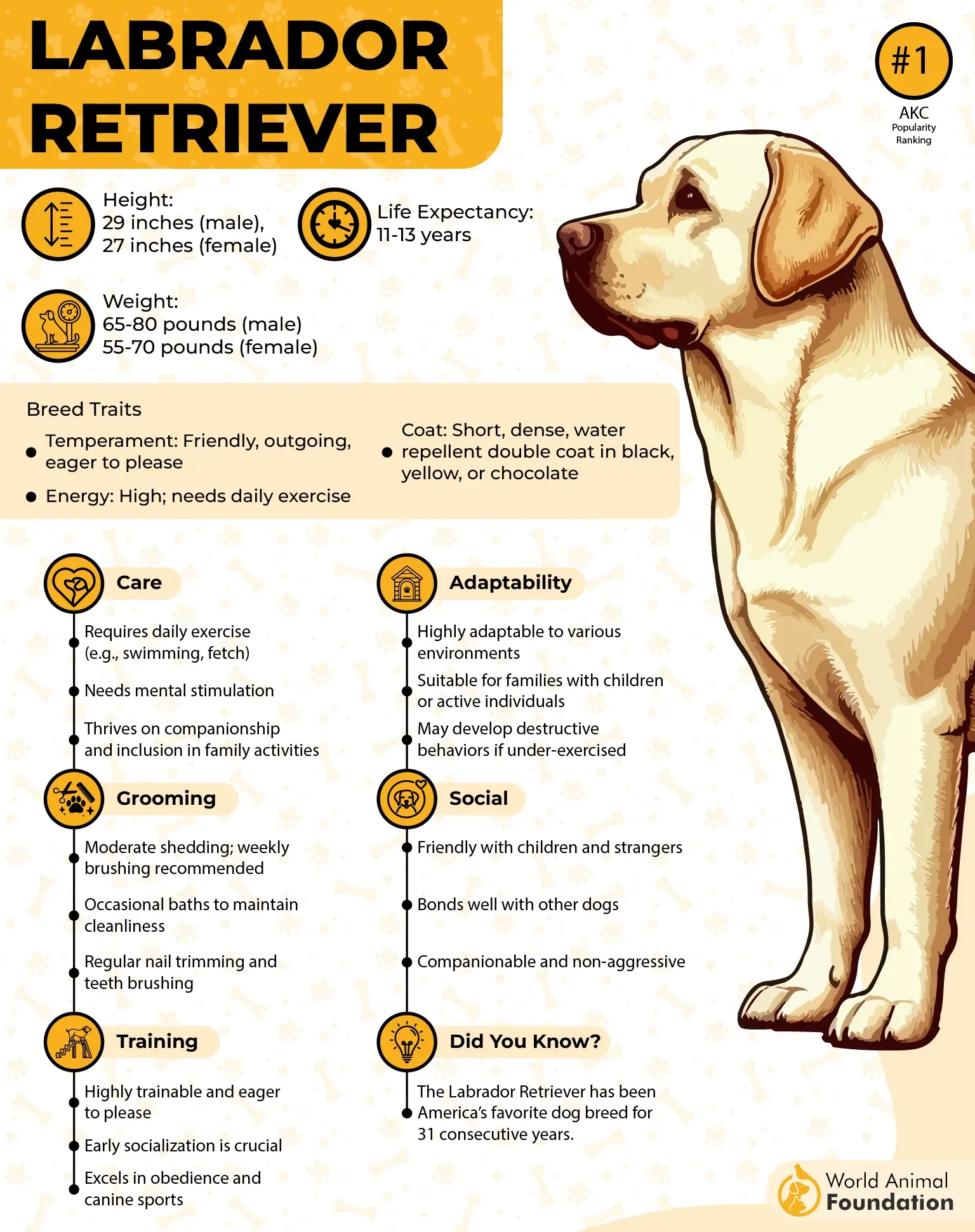
For a “calm energy match,” it helps to think of Labs as moderate-energy dogs with an on/off switch: give them a proper outlet, and they’re happy to settle. They’re famously eager to please, food-motivated, and quick to learn with positive reinforcement—perfect for building relaxed manners at home.
To support that low-key lifestyle, keep routines predictable: daily walks plus a brain game (short training, scent work, or a puzzle toy) helps prevent boredom-driven mischief. Their coat is generally low-fuss, but regular brushing keeps shedding manageable and supports an overall tidy, comfortable home.
Fact: Labradors held the No. 1 AKC registration spot for 31 years until the French Bulldog ended the streak in 2022.
4. Staffordshire Bull Terrier

The Staffordshire Bull Terrier—often called the “Staffy” and famously nicknamed the “nanny dog” in England—is a muscular, agile terrier with a big heart in a compact frame.
Despite a checkered reputation, well-bred Staffies are people-focused companions who love being close to their family.
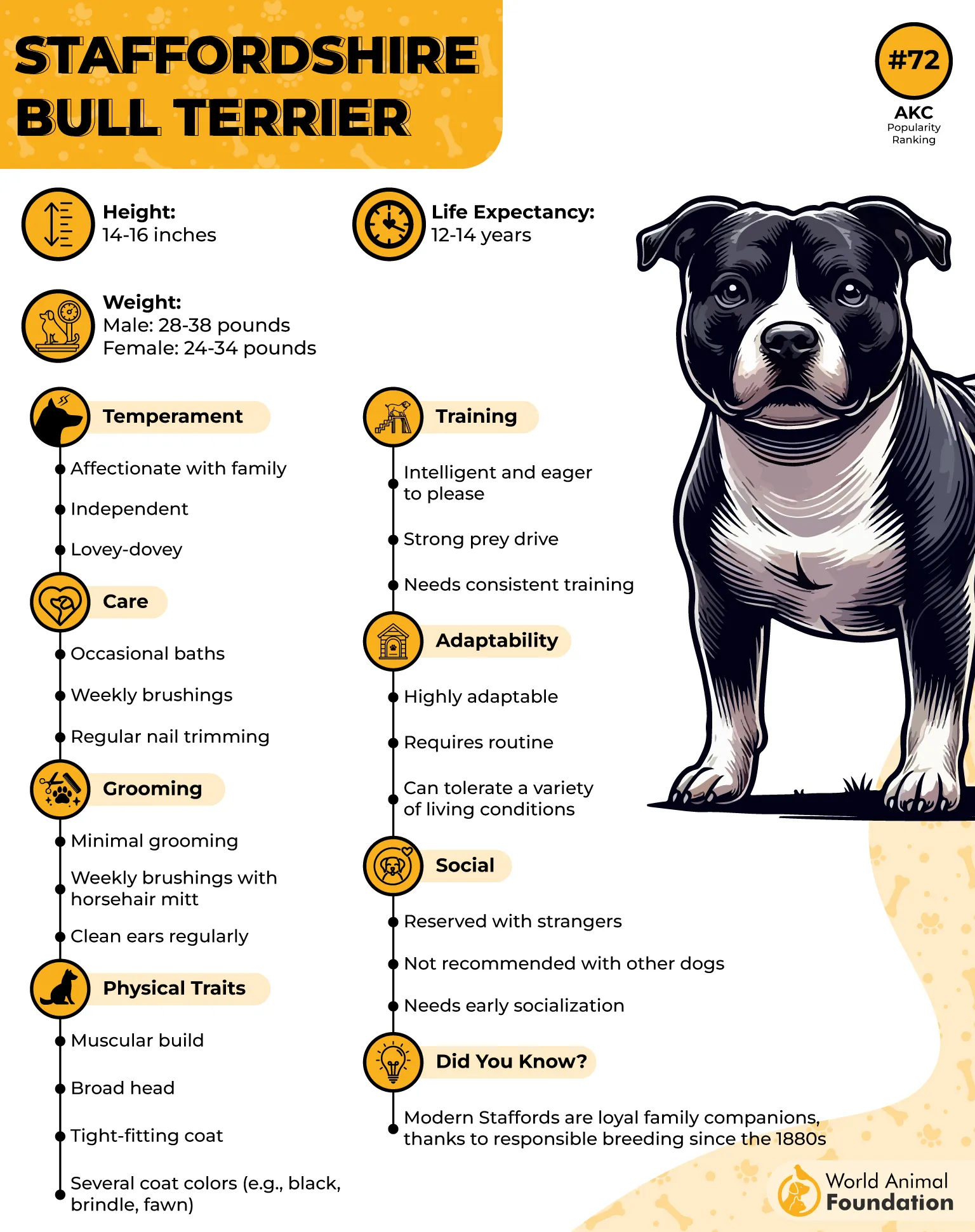
For a “right energy match,” they can be surprisingly easy to live with: affectionate at home, happiest when included, and known for being especially tolerant with kids. Their courage and tenacity may show up as confidence, so calm routines and clear house rules help them stay settled.
Because their enthusiasm can tip into boisterousness, channel it with short training games, chew toys, and daily enrichment that tires the brain, not just the body. Early socialization matters too—teach polite manners around other dogs and avoid chaotic settings if your dog gets overstimulated.
Fact: Staffies are sometimes called “nanny dogs” because they’re known for being exceptionally tolerant of children and fiercely loyal to their own.
5. Cavalier King Charles Spaniel
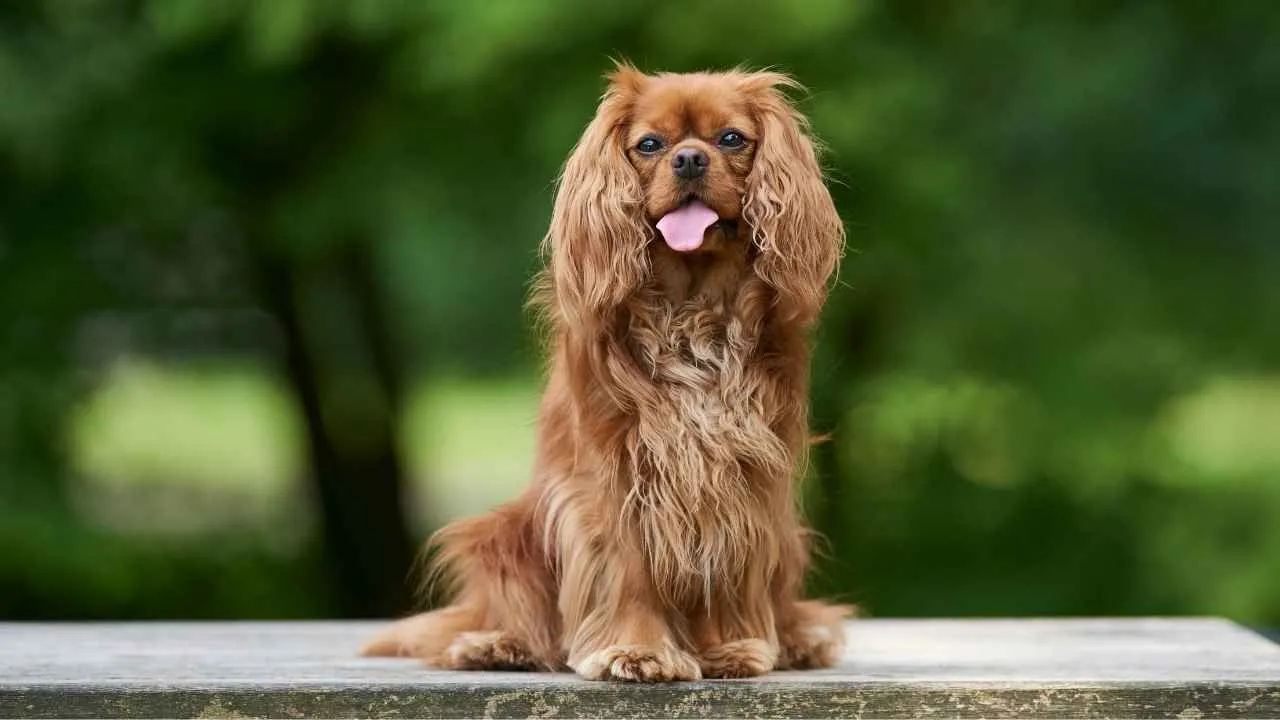
The Cavalier King Charles Spaniel (often simply called the Cavalier) is a toy-sized spaniel with a regal name, a silky coat, and those signature large, round “melting” eyes.
Though their distant roots include bird-hunting spaniels, today they’re best known for being sweet, loving, and extremely loyal companions.
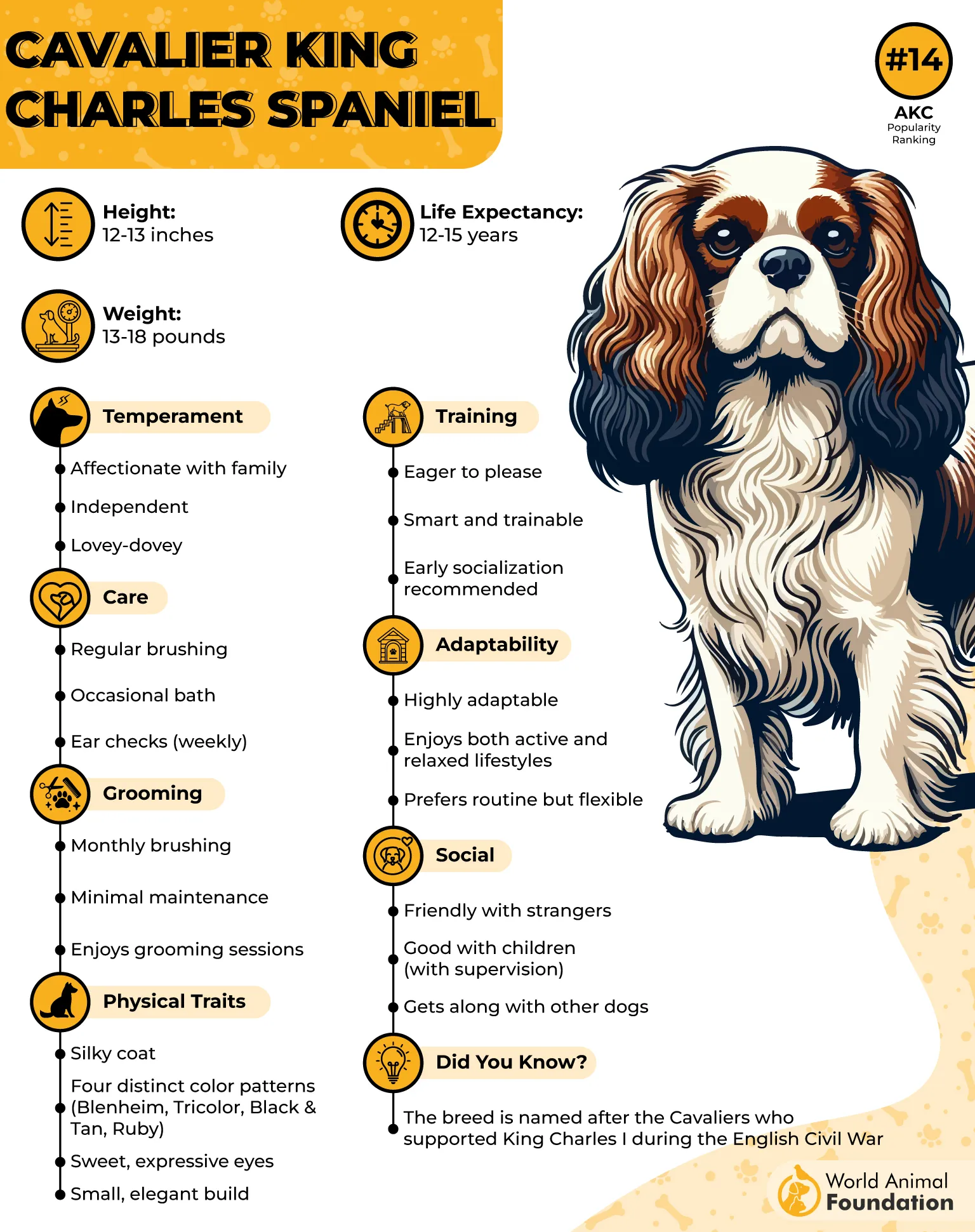
For energy matching, Cavaliers are the “best of both worlds”: calm and clean indoors, yet happy to switch on for a backyard romp or a quick chase. They’re typically gentle, sociable, and easy to train, which helps them fit smoothly into quieter households.
Calm doesn’t mean zero activity, though. Plan for moderate daily movement—walks plus playtime—along with mental stimulation like puzzle toys or short training games to keep their bright minds satisfied.
6. Irish Setter
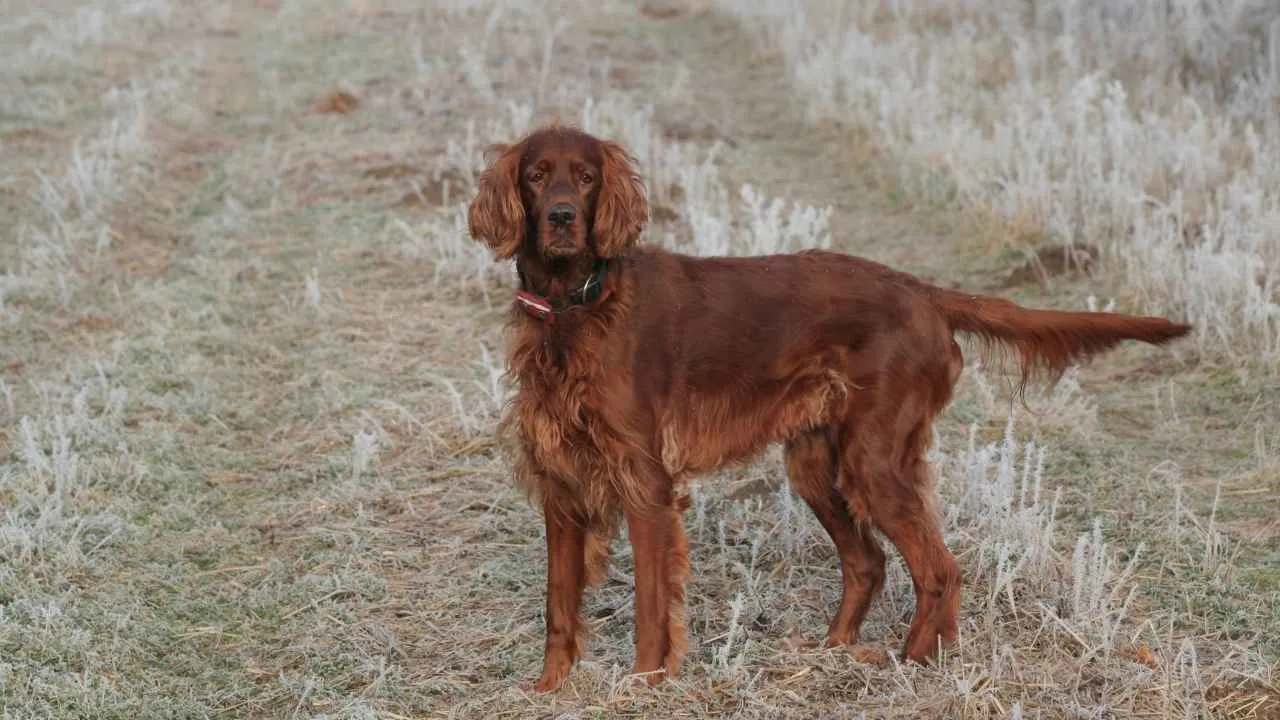
The Irish Setter, also called the Red Setter, is a sporting gundog prized for its flashy mahogany-to-copper coat and sweet, people-first personality. Built for grace and speed, this breed brings a “happy friend” vibe into the home—just in a larger, athletic package.
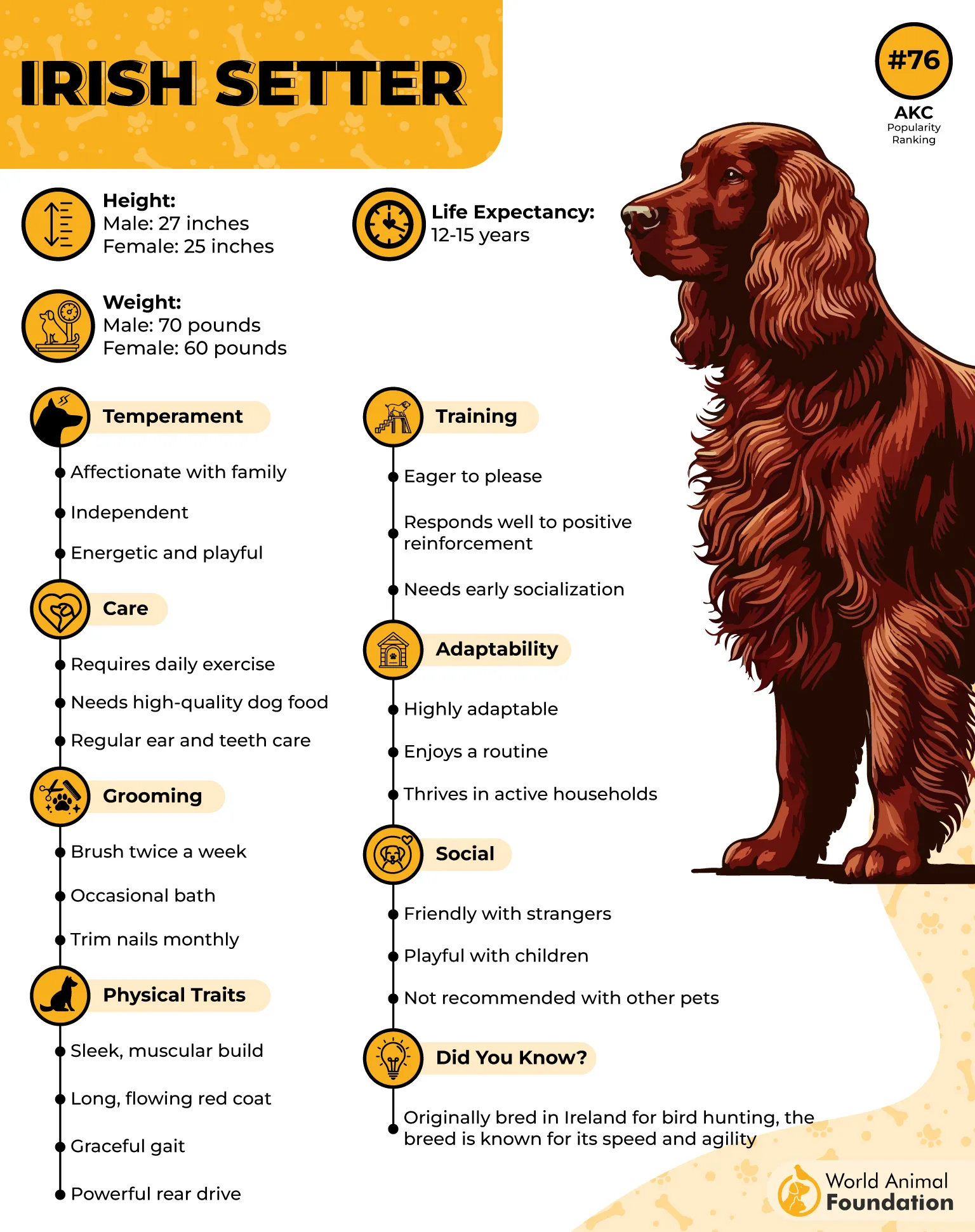
When it comes to calmness, the match is all about channeling energy, not trying to erase it. Irish Setters are affectionate and eager to please, so positive, reward-based training can shape polite greetings, reliable recalls, and an off-switch indoors.
Temperament is the part you can’t fully rewrite: they’re social “velcro” types and may struggle with being left alone, so gradual alone-time practice helps prevent separation anxiety.
Because they were originally bred for hunting, you’ll also want management and training around smaller pets to reduce chasing.
To keep things steady, pair daily exercise with brain work—short training games, sniff work, and structured play—so boredom doesn’t turn into destructive behavior.
7. Newfoundland
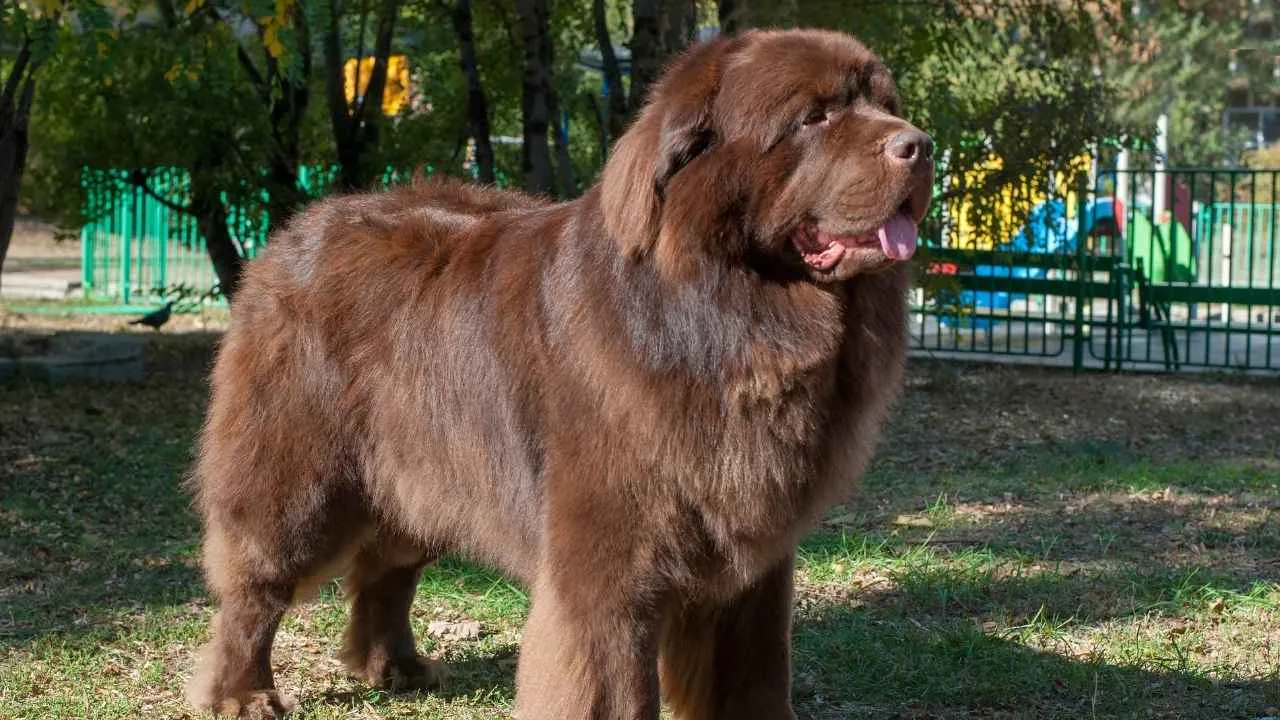
Often called the “Newfie,” the Newfoundland is a bear-like, fluffy-coated giant best known for a calm, patient temperament. Behind that soft, soulful expression is a powerful working dog that still carries itself with quiet confidence.
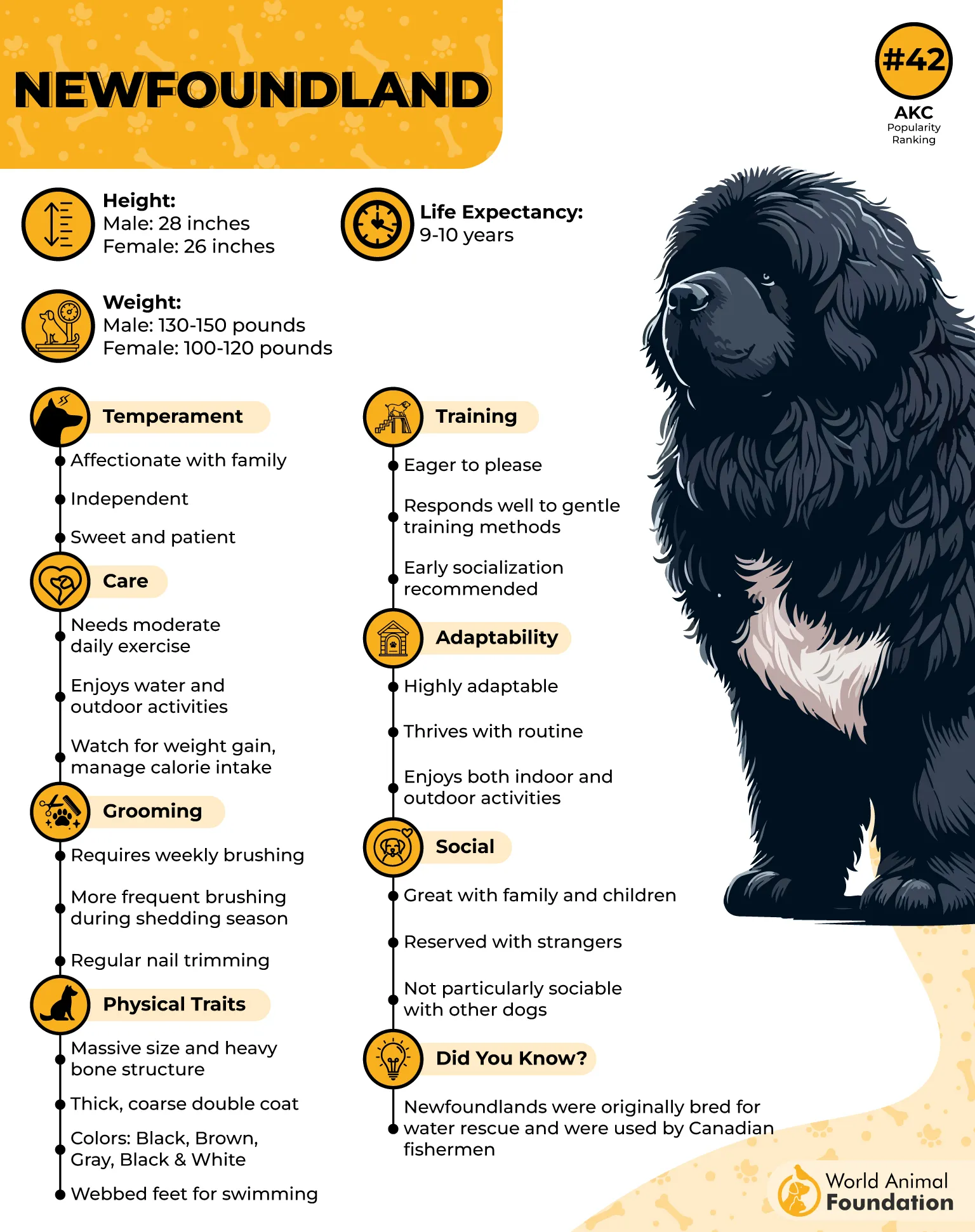
For owners seeking the right energy match, Newfs are famously gentle at home—big on cuddles, low on drama. They’re also known as watchful “nanny dog” types with children, which makes their steady presence feel reassuring rather than overwhelming.
Because they’re massive, calm living still takes planning: keep training kind and consistent, reinforce polite leash manners, and set clear house rules early. Their trainable nature responds best to gentle guidance, not harsh corrections.
Lifestyle-wise, you’ll want the space (and routine) for a large companion, plus basic coat upkeep since the outer coat is flat and coarse.
Fact: Newfoundlands were originally bred to help fishermen pull up nets and haul wood
Conclusion
Choosing calm dog breeds is really about matching your home’s energy level to a particular dog’s own personality. Some low-energy breeds are true couch potatoes with a surprisingly low energy vibe, thriving on short walks, moderate exercise, and a laid-back routine—perfect for apartment living, calm households, and a relaxed lifestyle.
Others may look mellow but still need regular exercise and mental engagement. While certain breeds (like a Basset Hound, Shih Tzu, or Bichon Frise) often fit a calm temperament and sweet temperament, high-energy breeds and any high-energy dog can demand constant activity, more energy, and even rigorous exercise.
With proper training, you can support a calm nature and gentle demeanor around other pets—whether you’re comparing chill dogs to German Shepherds or an Australian Shepherd—so you land on the right dog for your life.
