




Here’s something most dog lovers get wrong: friendliness and calmness are not the same trait. Behavior researchers who study canine personality actually score them on two separate scales, which means a dog can ace one and miss the other.
According to Psychology Today, sociability, or friendliness, and energy level sit on entirely different dimensions in canine personality research. That single gap explains why so many new owners end up with a dog that is sweet, but far from hassle-free.
Out of hundreds of breeds in the dog world, only a certain breed truly combines a calm nature with a friendly welcome for every stranger at the door.
If you want a quieter, calmer home without the guesswork, the breakdown ahead shows exactly which dogs deliver both traits. Keep reading to see which calmest dogs earn that reputation, and what your daily routine has to do with picking the right one.
Calm and Friendly Dog Breeds for Easy Living
1. Cavalier King Charles Spaniel
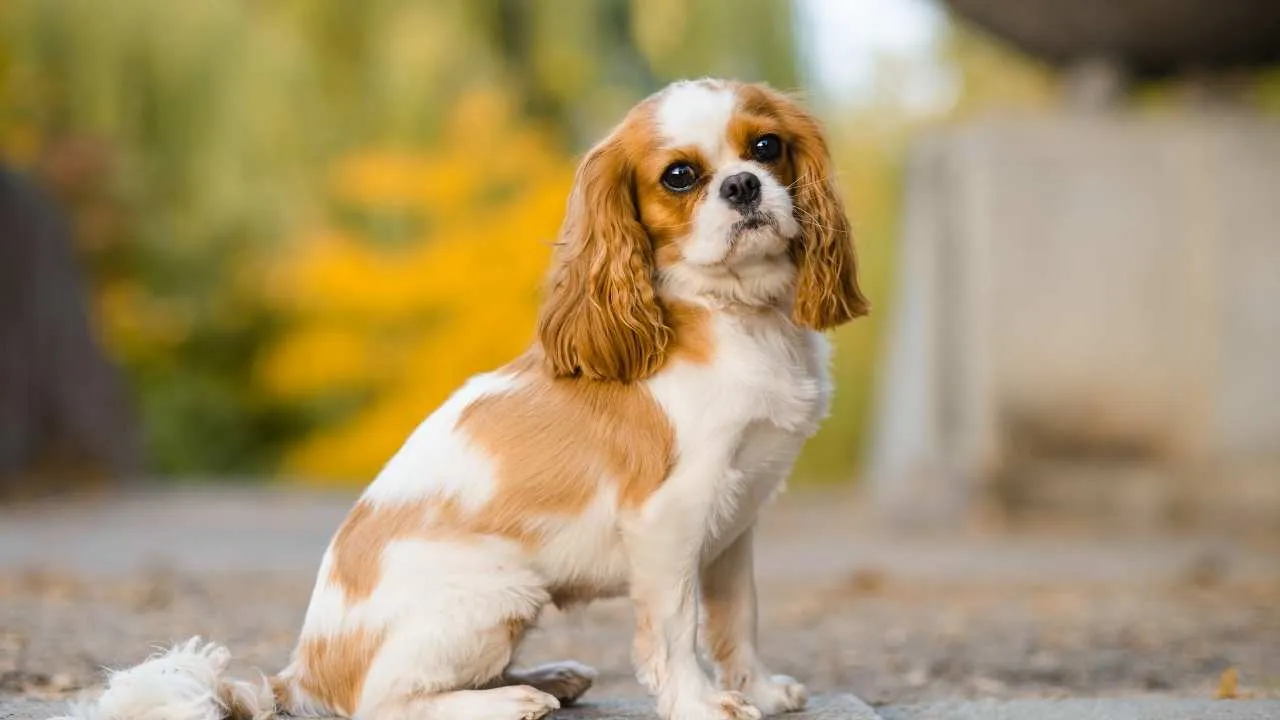
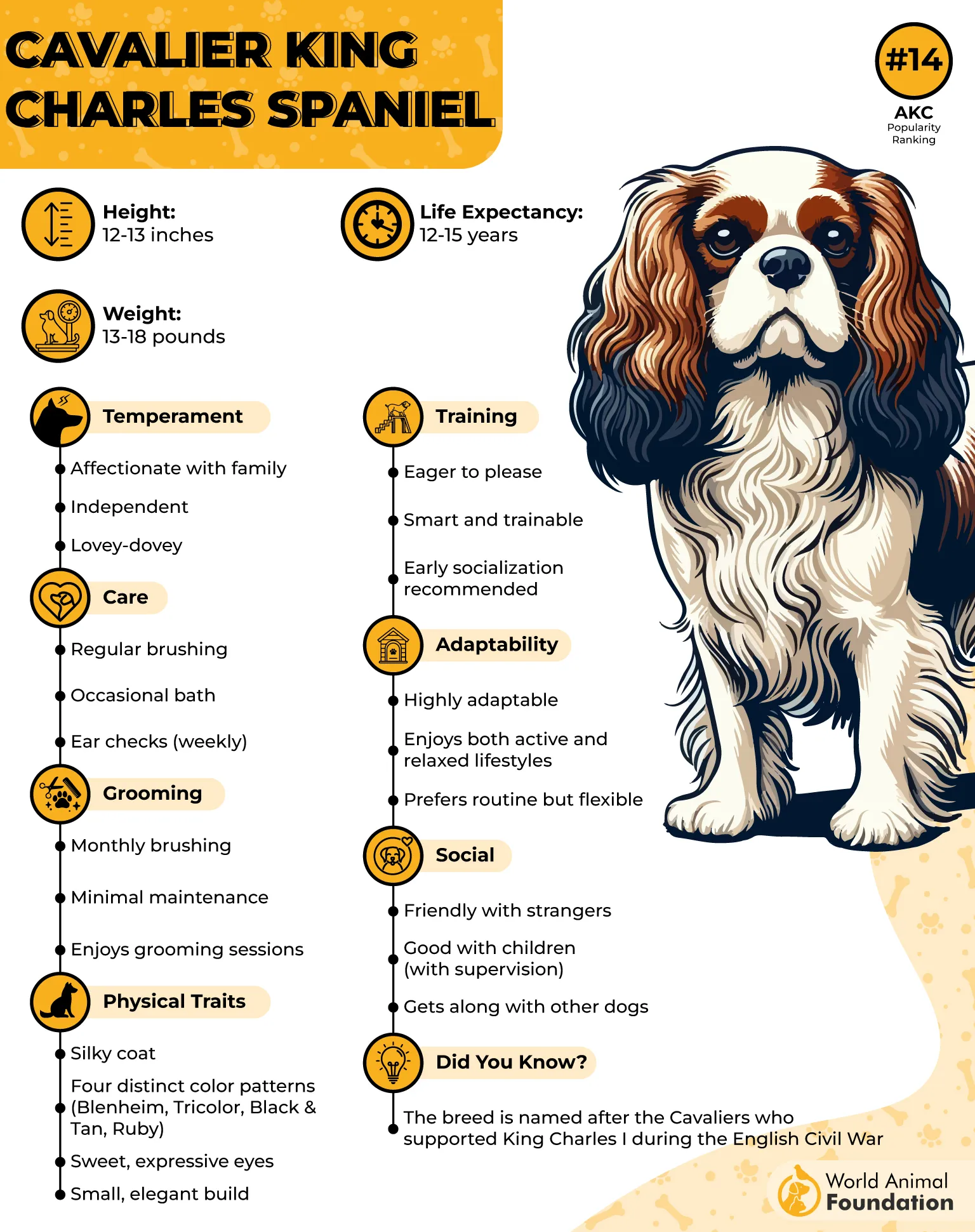
The Cavalier King Charles Spaniel runs on gentle, steady energy and settles into naps quickly instead of staying wound up. It treats strangers, kids, and other dogs with the same warm welcome, a friendly disposition that PetMD traces back to its original job as a lap companion for nobility.
Picture the doorbell ringing and this pooch trotting over wagging instead of barking. It greets the visitor calmly, gets a quick pat, then curls back onto the sofa within minutes, happy to switch straight back to cuddle time.
Upkeep: Needs about 30 minutes of daily walking, moderate weekly brushing, and does fine in a small home.
Limit: Left alone for long stretches, its devotion can slide into real separation anxiety.
This is a reliable choice for first-time owners and new owners alike who want a devoted companion without a steep learning curve. It suits families of all ages looking for calm and comfortable company at home.
2. Irish Wolfhound
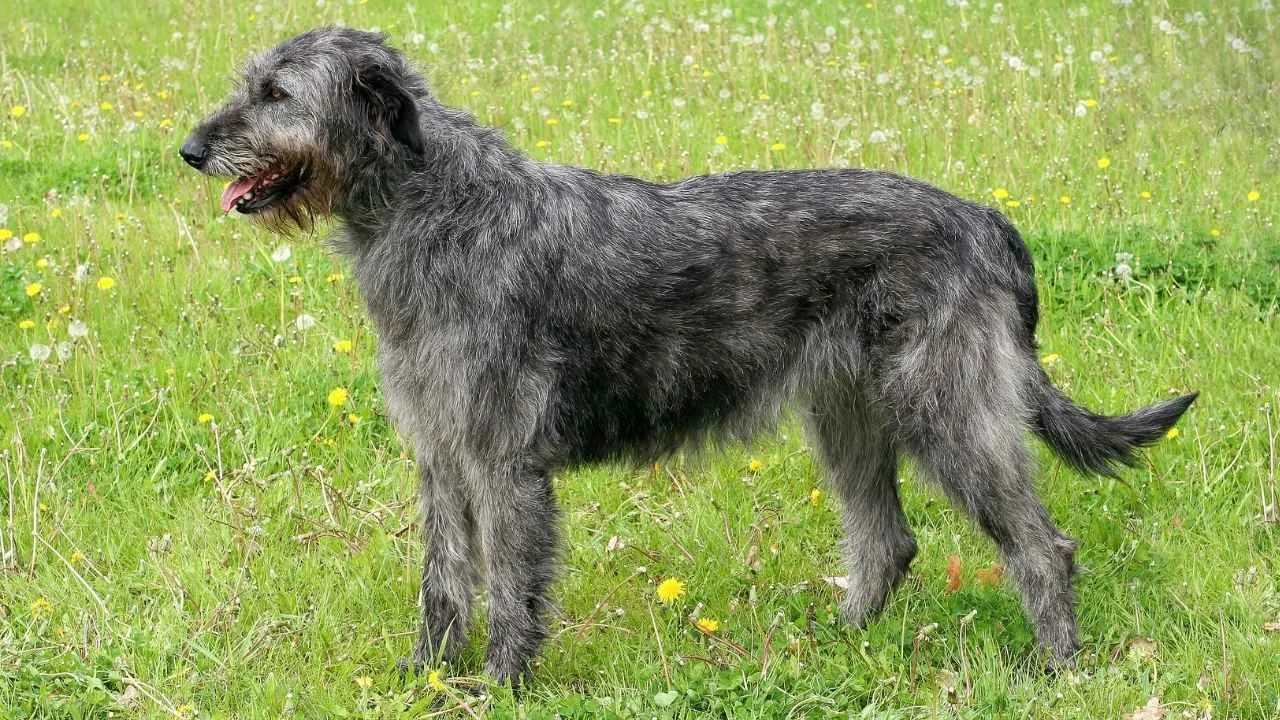
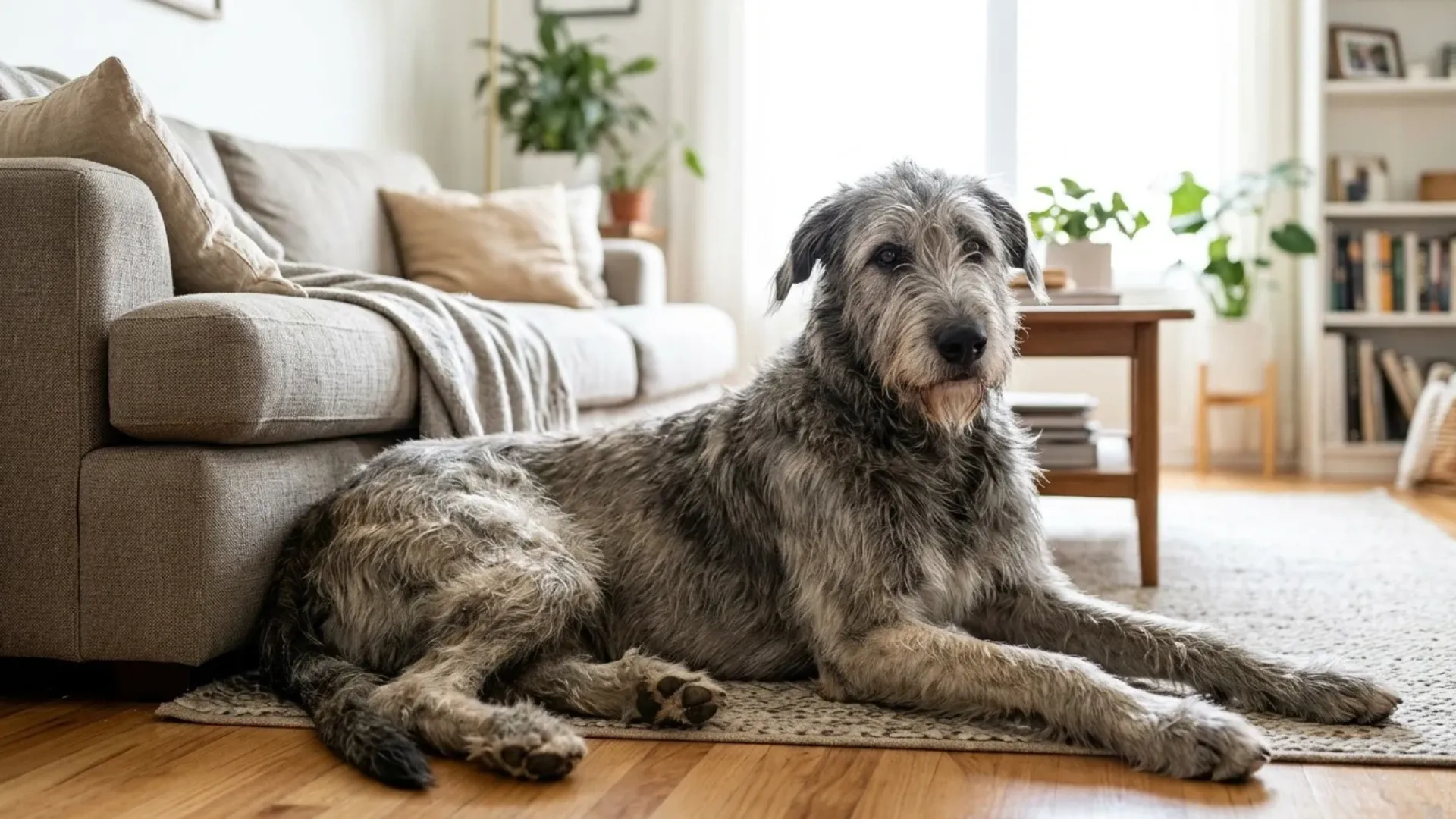
This giant breed has a surprisingly low-key engine, content to stretch out across the floor for most of the day rather than pace or patrol. It is generally gentle with guests and other pets, more interested in leaning on people than guarding them.
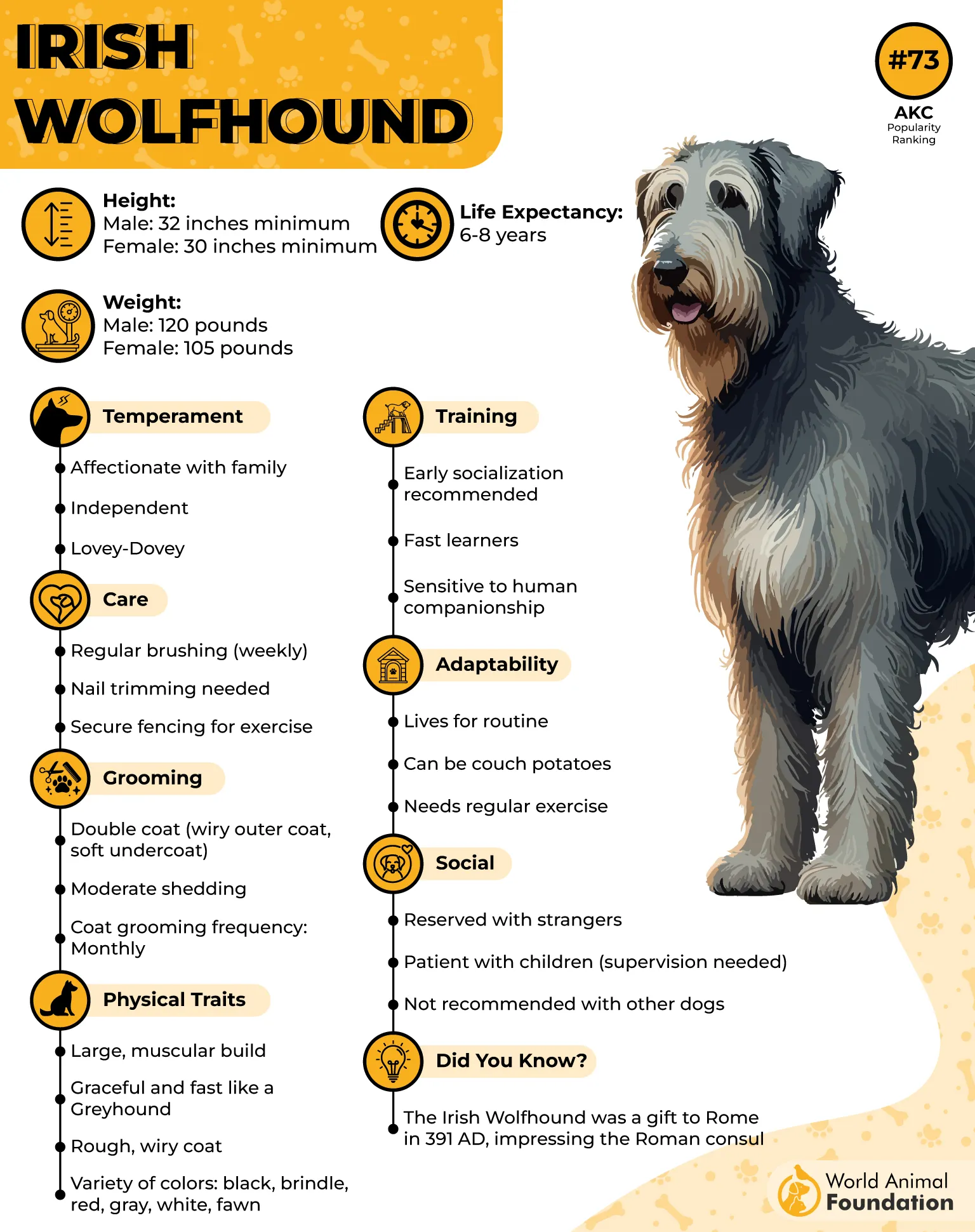
A visitor steps through the door expecting a booming bark, and instead gets a slow tail wave and a huge head nudged into their hand. The wolfhound settles back onto its bed almost as soon as the greeting ends.
Upkeep: Needs roughly 30 to 40 minutes of walking, light grooming, and enough floor space for its size.
Limit: Quick movement or chasing games can flip its old sighthound instincts on fast.
This breed suits a calm household with room to spare rather than a tight apartment. It is better suited to owners who want a quiet, oversized shadow instead of an active pet parent’s workout partner.
3. Basset Hound
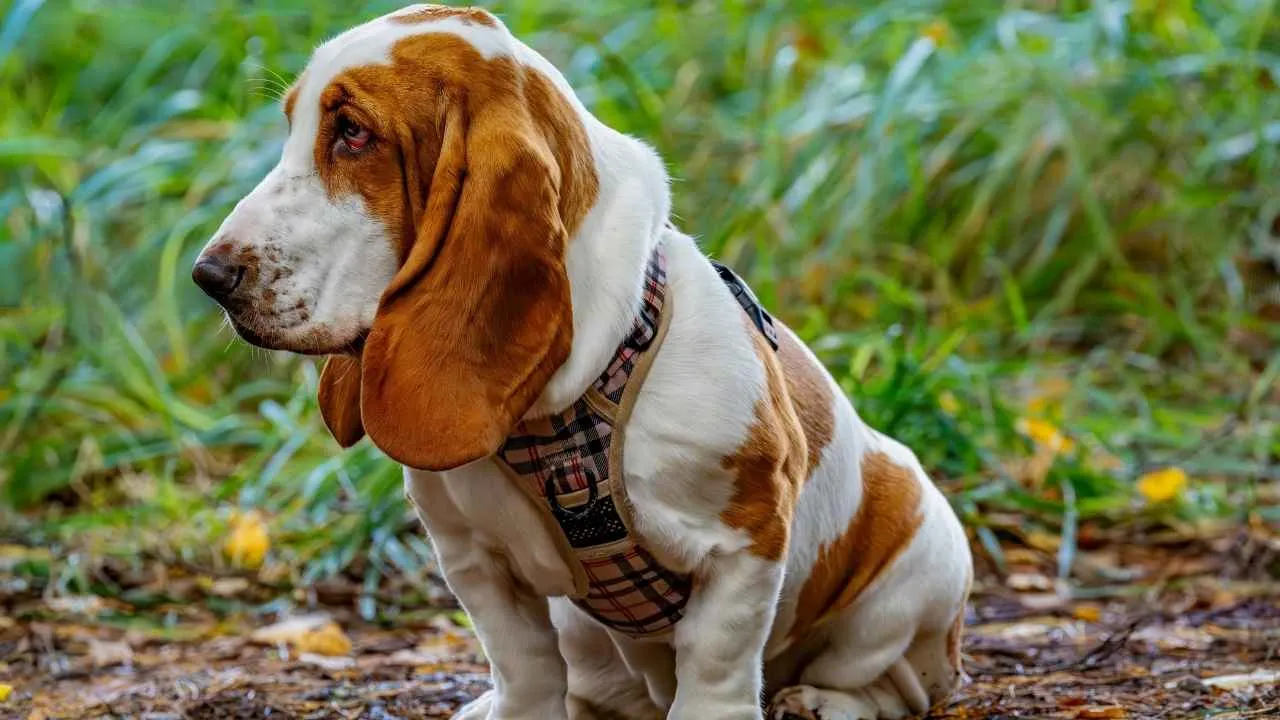
The Basset Hound is one of the calmest dogs in the dog world, built low and slow with little interest in sprinting anywhere. It greets strangers, children, and other dogs with the same droopy, unbothered friendliness, which is part of why AKC calls it a perennial favorite.
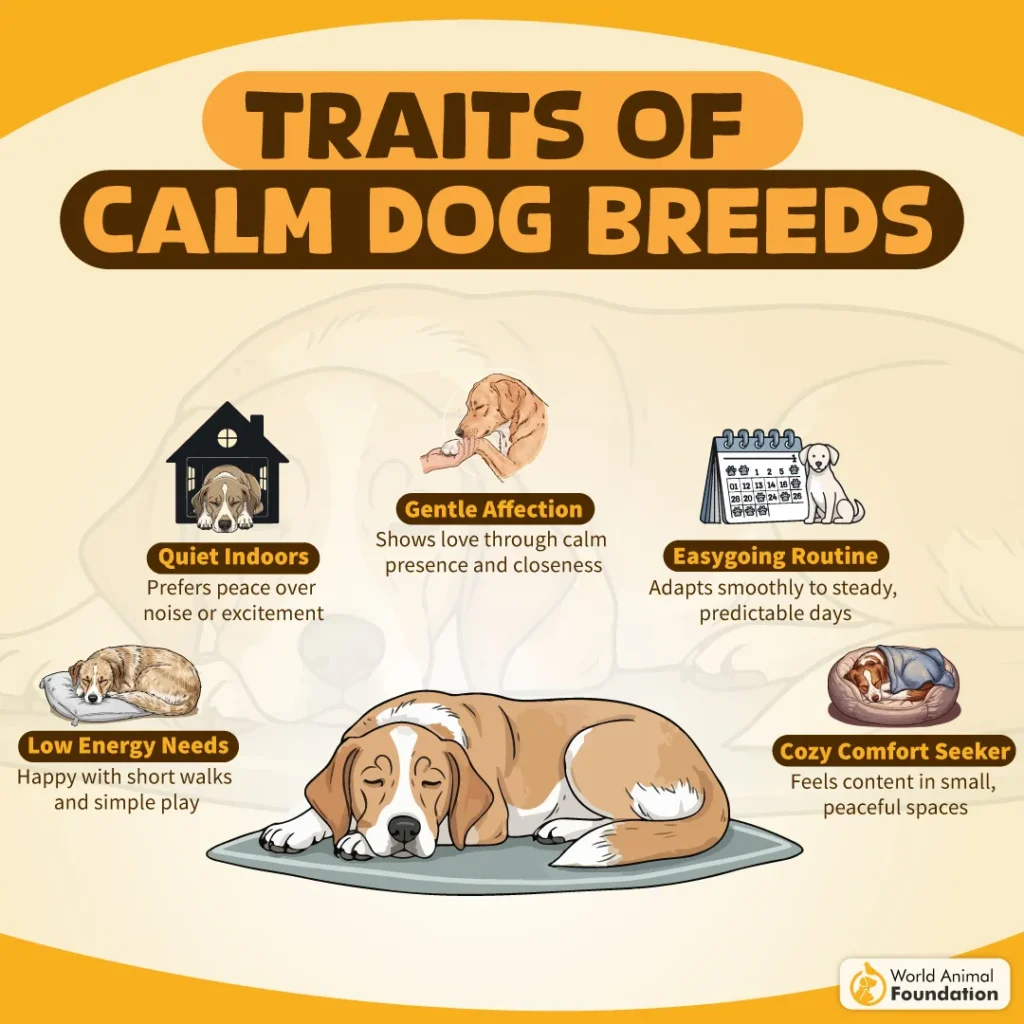
A new face walks in and the Basset ambles over for a sniff, tail swaying, then flops back down with a sigh of contentment. There is no drama in the greeting and none in the goodbye either.
Upkeep: Needs about 20 to 30 minutes of walking, weekly ear cleaning, and moderate shedding control.
Limit: That famous nose can override its calm instantly once a scent trail appears.
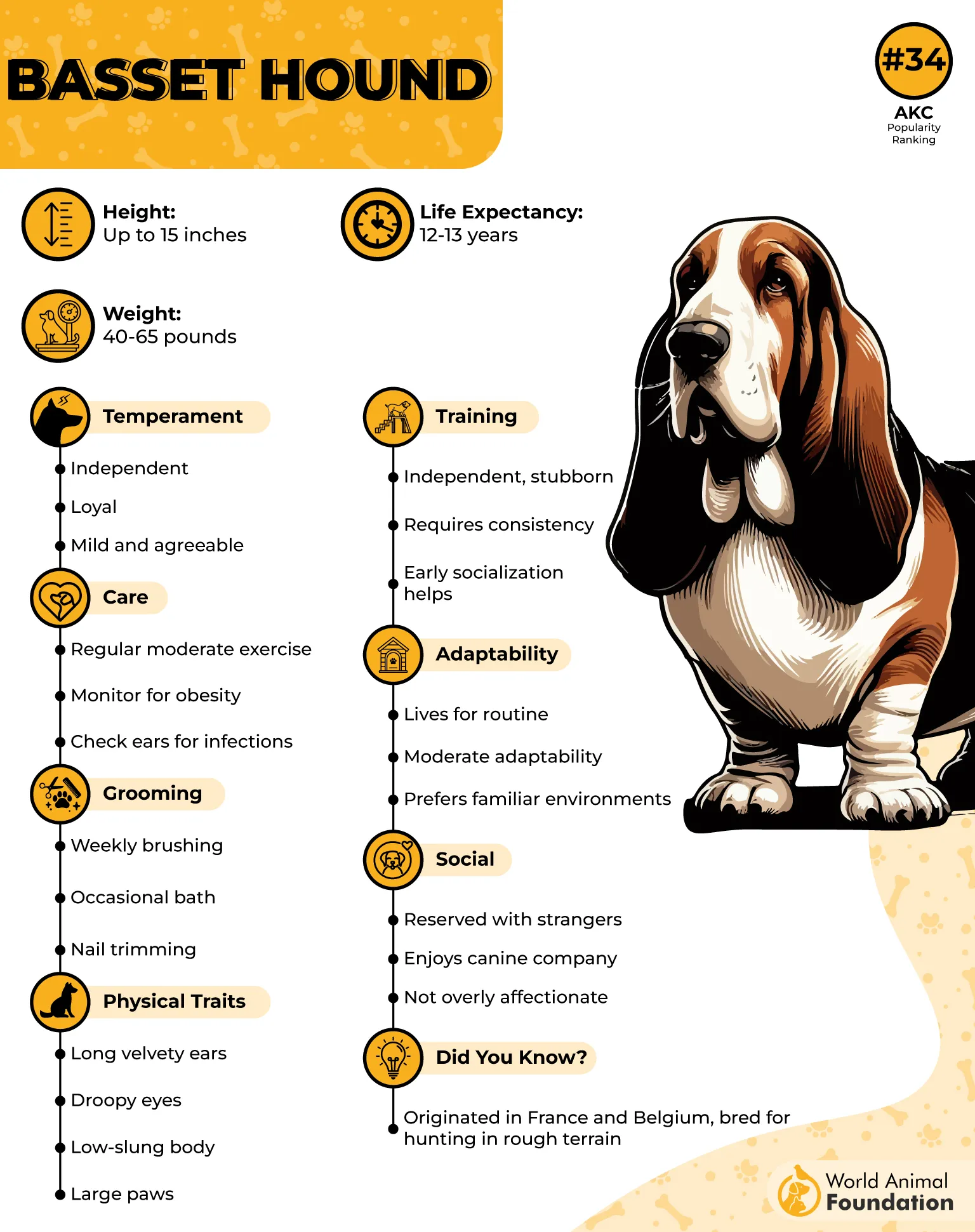
This is an ideal pick for leisurely households, retirees, or anyone who enjoys a steady, undemanding presence. It is a good family dog for homes that move at an easy, unhurried pace.
4. Pekingese
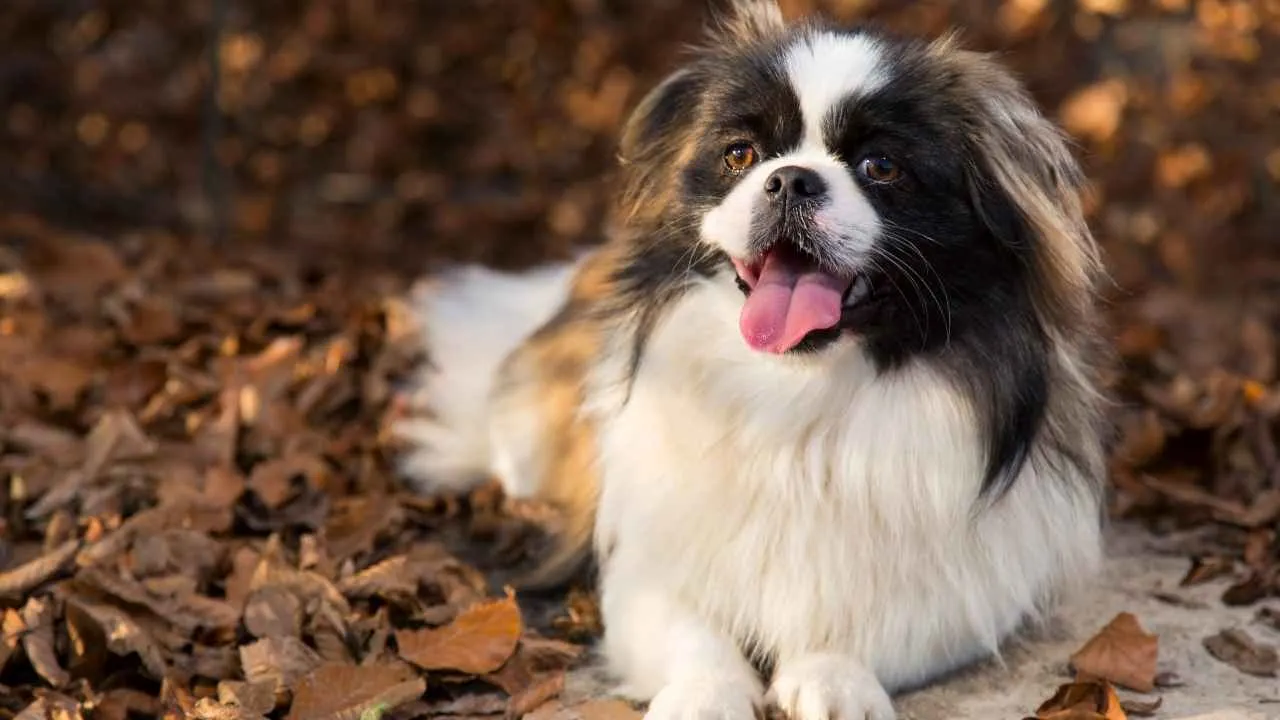
The Pekingese carries a regal calm, happiest lounging on a cushion rather than racing around the yard. Its friendliness runs more selective than universal, since VCA notes it can be reserved with strangers while staying deeply affectionate with its own family.
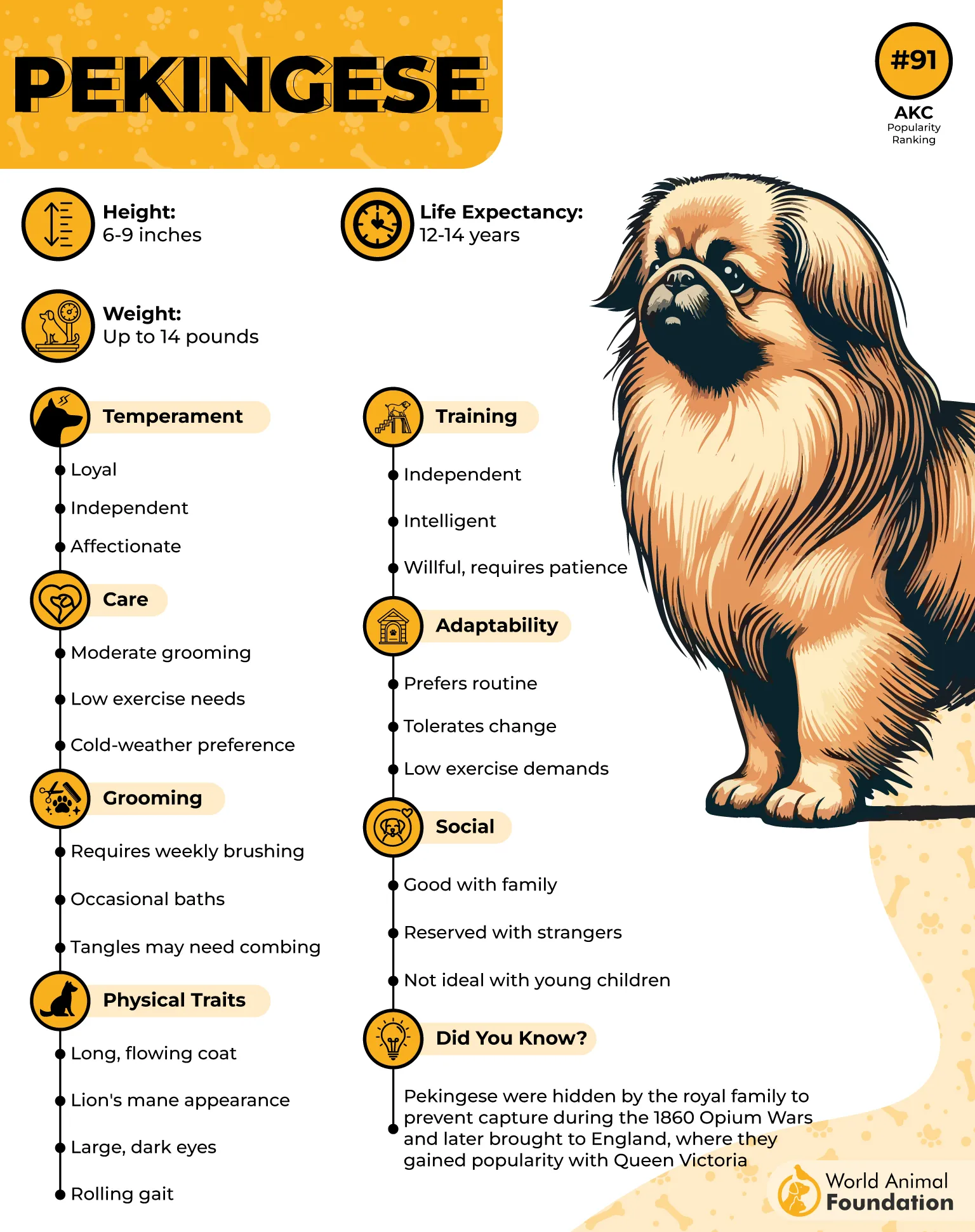
A knock at the door gets a short, dignified bark, then the Pekingese waddles back to its cushion once it decides the visitor is no threat. Guests who stay a while usually earn a slow warm-up.
Upkeep: Needs short daily walks, frequent brushing for its long coat, and cooler indoor temperatures.
Limit: Forced handling by an unfamiliar person can quickly test its patience.
This breed fits owners who want a calm, loyal shadow rather than a dog that charms every visitor on sight. It suits quieter homes that respect its independent, dignified streak.
5. Saint Bernard
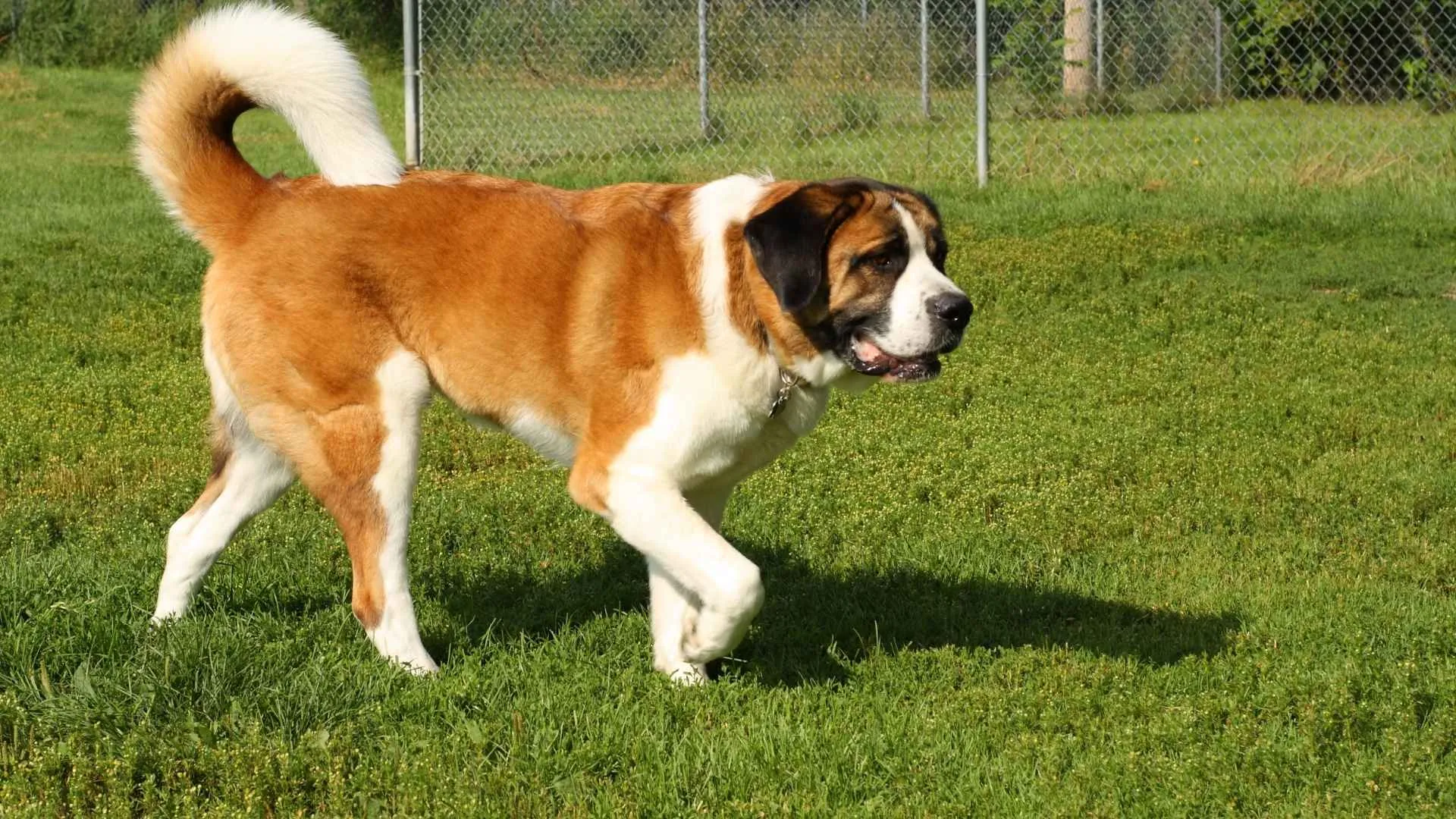
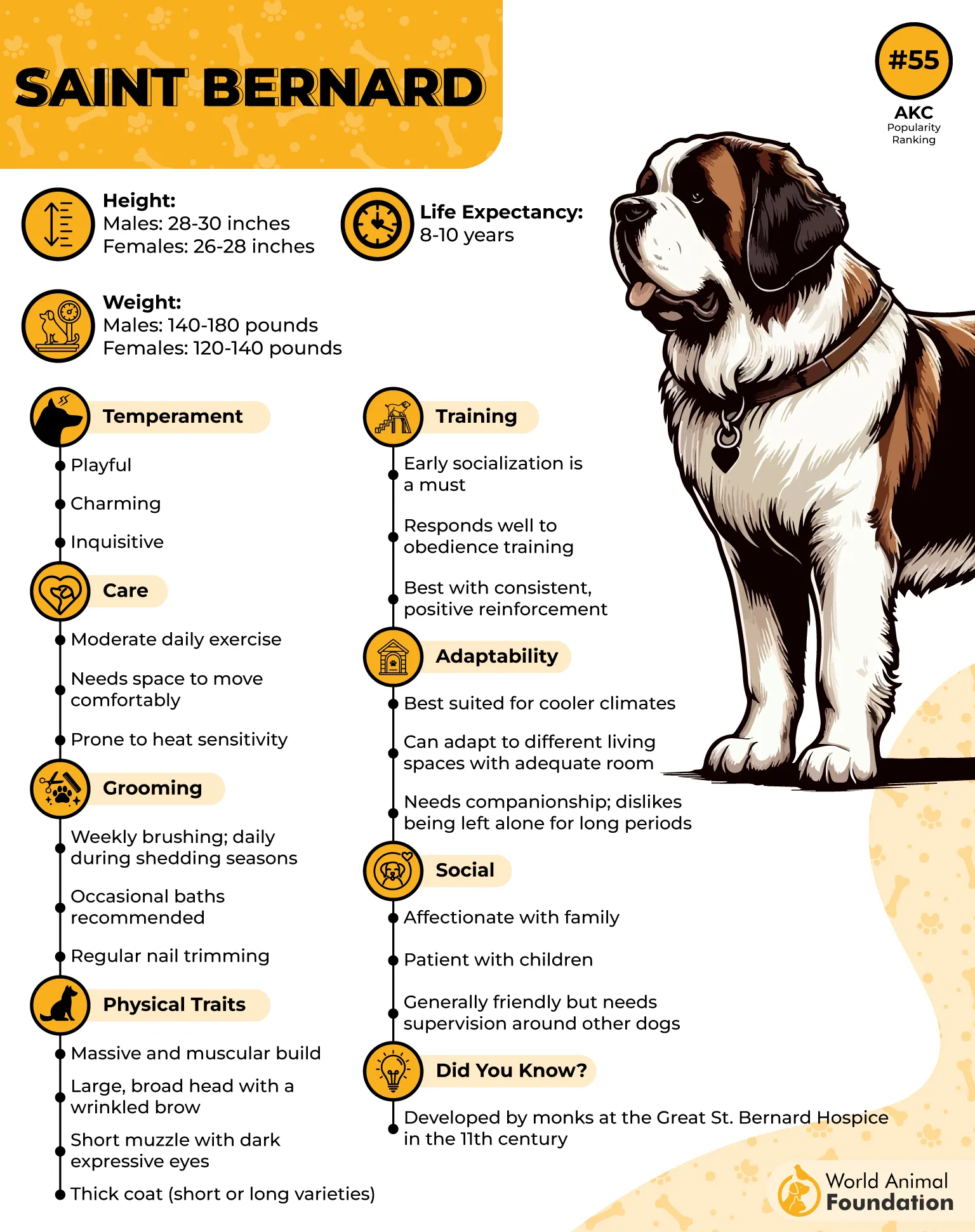
The Saint Bernard carries its massive size with a slow, easygoing calm, more interested in lying near its family than patrolling the home. It greets strangers, children, and other pets with the same gentle patience, and PDSA notes this patience holds up well even around boisterous kids.
The delivery driver knocks, and this gentle giant lumbers over, sniffs, then flops down across the doorway like a furry draft stopper. The whole encounter rarely raises its energy level at all.
Upkeep: Needs 30 to 40 minutes of exercise, heavy seasonal shedding control, and plenty of indoor space.
Limit: Summer heat wears on it fast and can turn calm into sluggish discomfort.
This breed is a strong match for larger, cooler homes and families wanting a devoted companion that handles chaos without flinching. It rewards owners of all ages who have the space to match its size.
6. Newfoundland
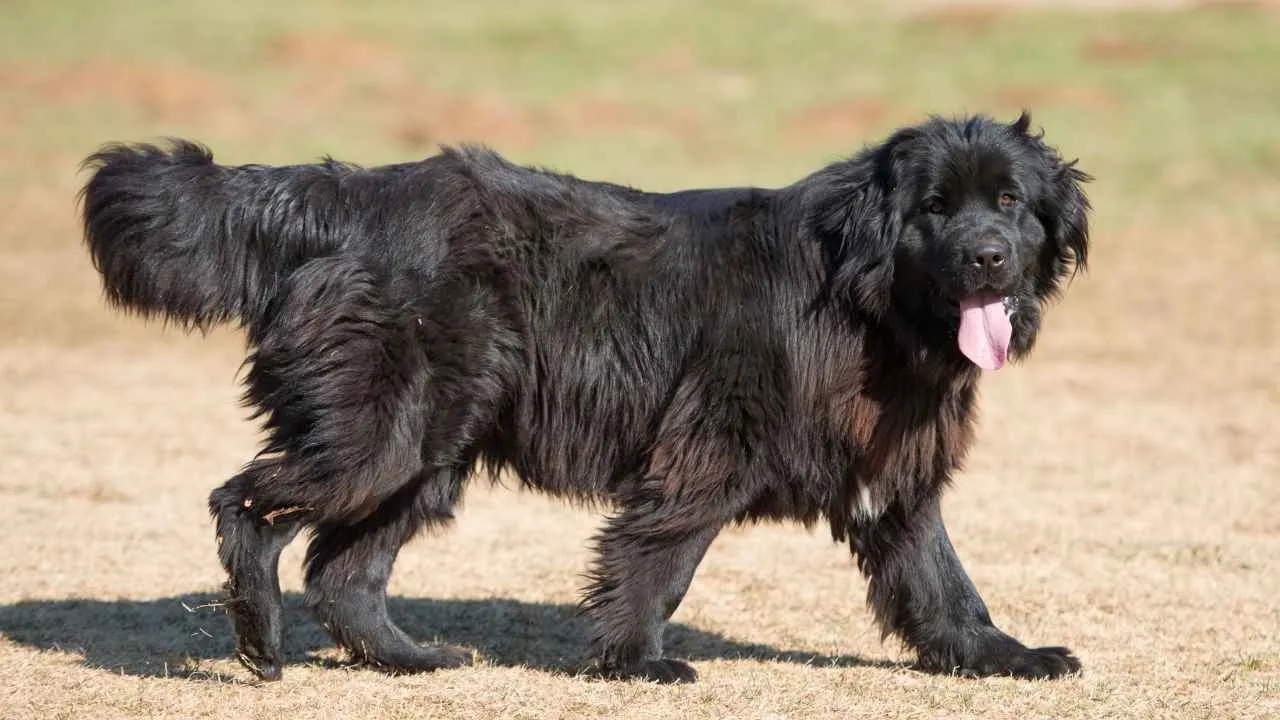
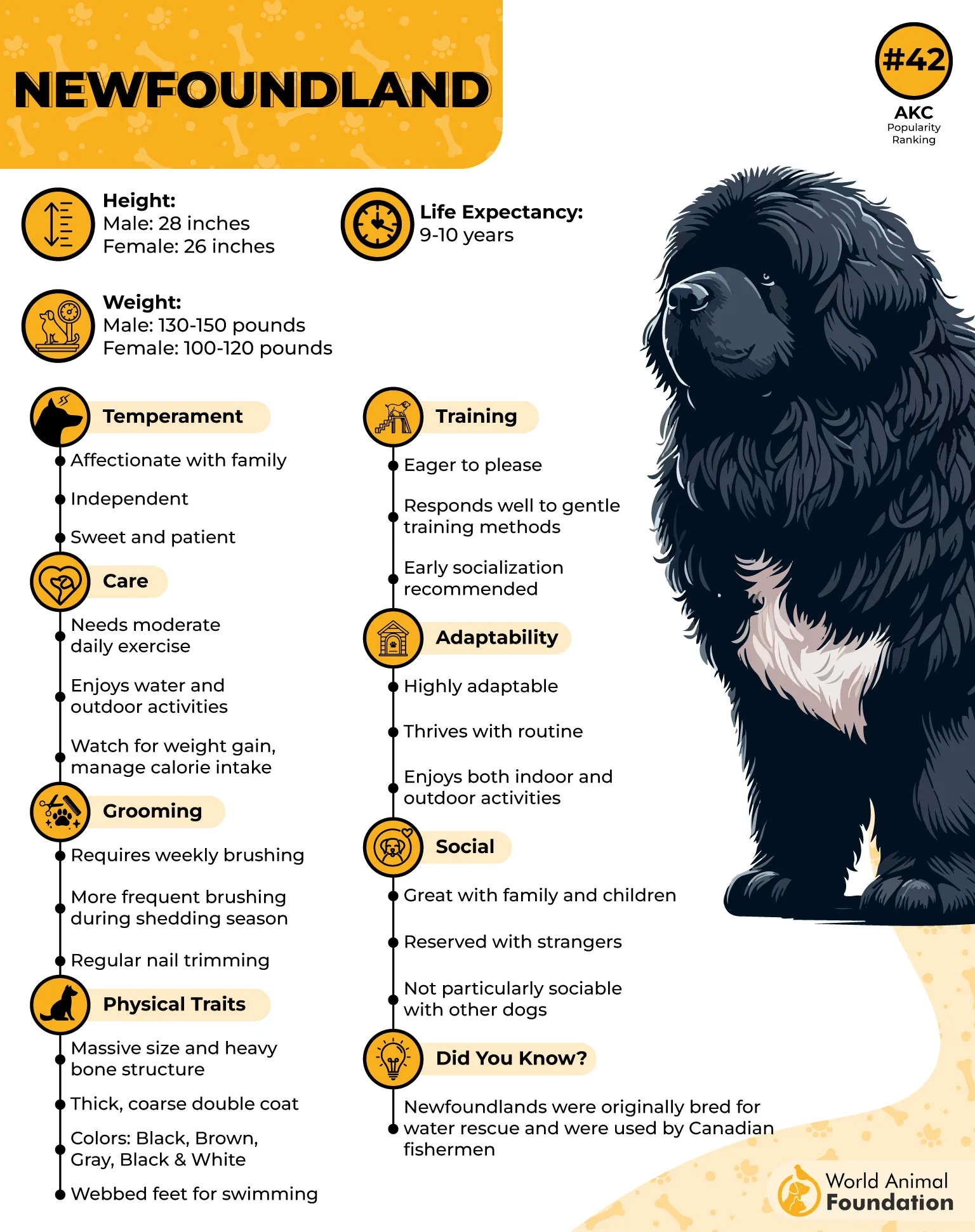
The Newfoundland moves through life at a deliberate, unhurried pace, more interested in supervising the room than stirring it up. It welcomes strangers, children, and other dogs with the same soft, nanny-like warmth that makes it one of the dog world’s gentlest giants.
A new guest sits down, and the Newfoundland settles its enormous body right against their feet within minutes, tail thumping once before going still. It treats most visitors like old friends on the first meeting.
Upkeep: Needs about 30 minutes of exercise daily, heavy brushing through shedding season, and drool management.
Limit: Water nearby can switch its calm off instantly, since the instinct to jump in runs deep.
This breed suits active families with kids or a lake nearby rather than a strict apartment setup. It is a reliable choice for anyone wanting a devoted, watchful presence rather than a high-energy playmate.
7. Pug
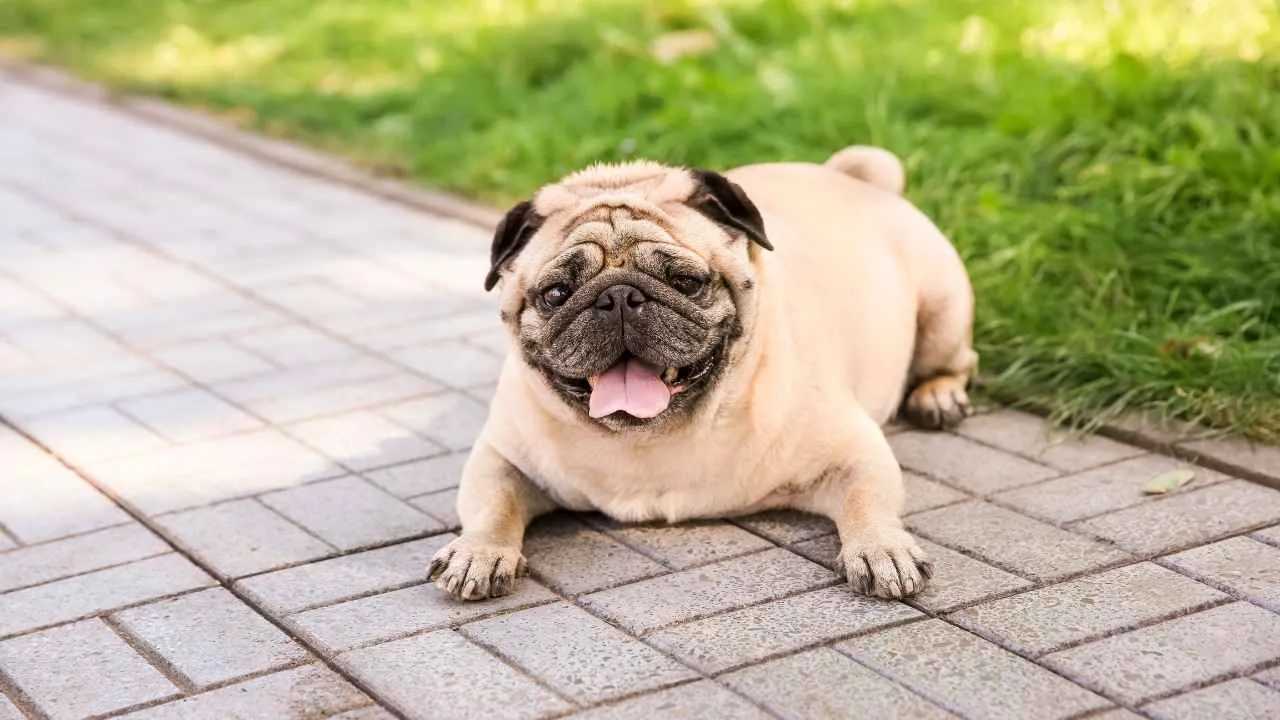
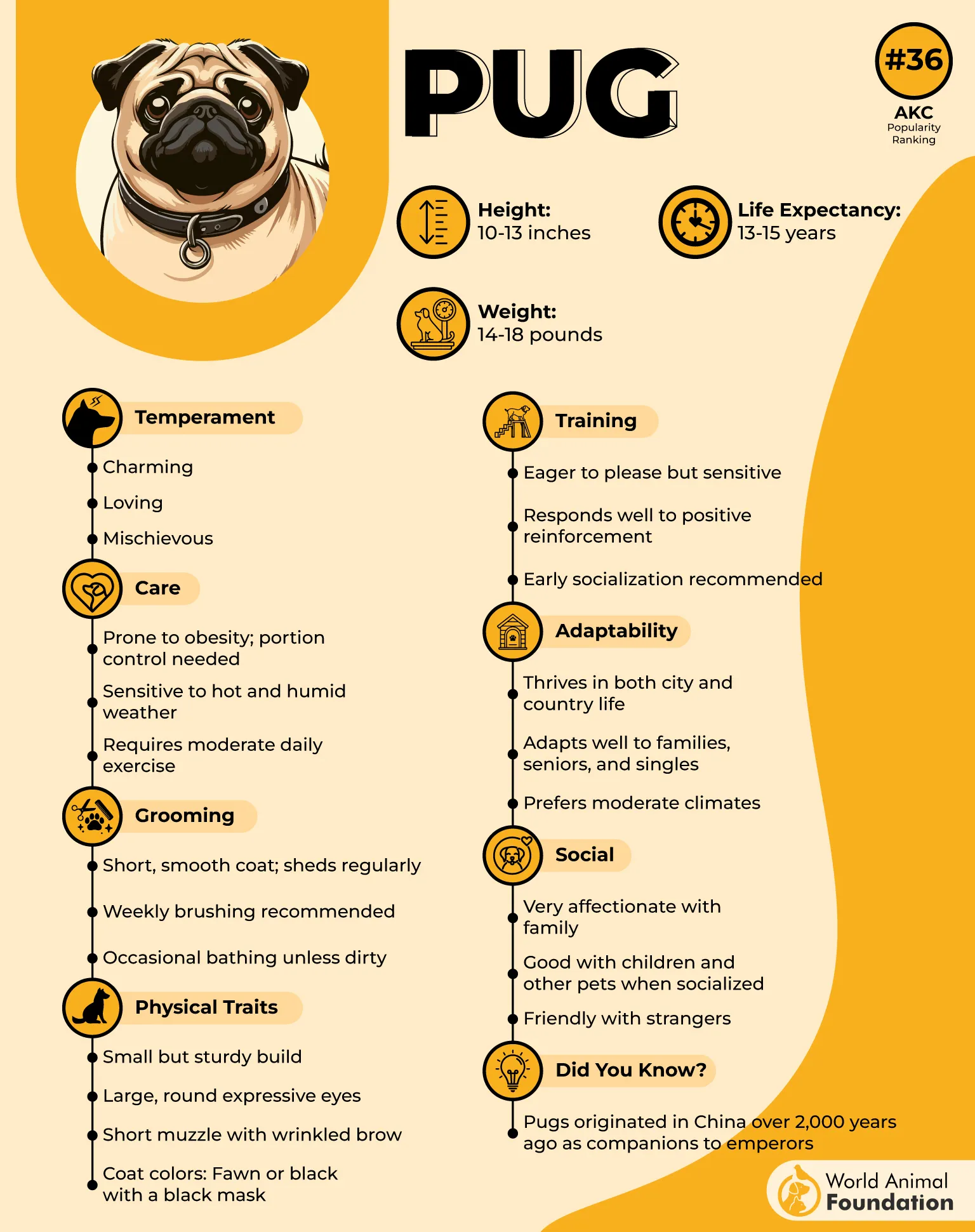
The Pug runs on low to moderate energy, happiest curled up nearby rather than zooming around the yard. It is one of the most consistently friendly small breeds, treating strangers, kids, and other pets with the same eager, cuddly enthusiasm.
The mail carrier knocks, and the Pug trots over snorting with excitement, soaks up a few seconds of attention, then waddles back to its spot on the couch for cuddle time. The whole exchange is over in a minute.
Upkeep: Needs short daily walks, regular face-fold cleaning, and cool indoor conditions to avoid breathing strain.
Limit: Heat and heavy exertion can tip its calm into real distress fast.
This breed is a dependable pick for first-time owners, apartment dwellers, and seniors wanting constant, undemanding company. It makes a genuinely gentle family pet for homes of almost any size.
8. Clumber Spaniel
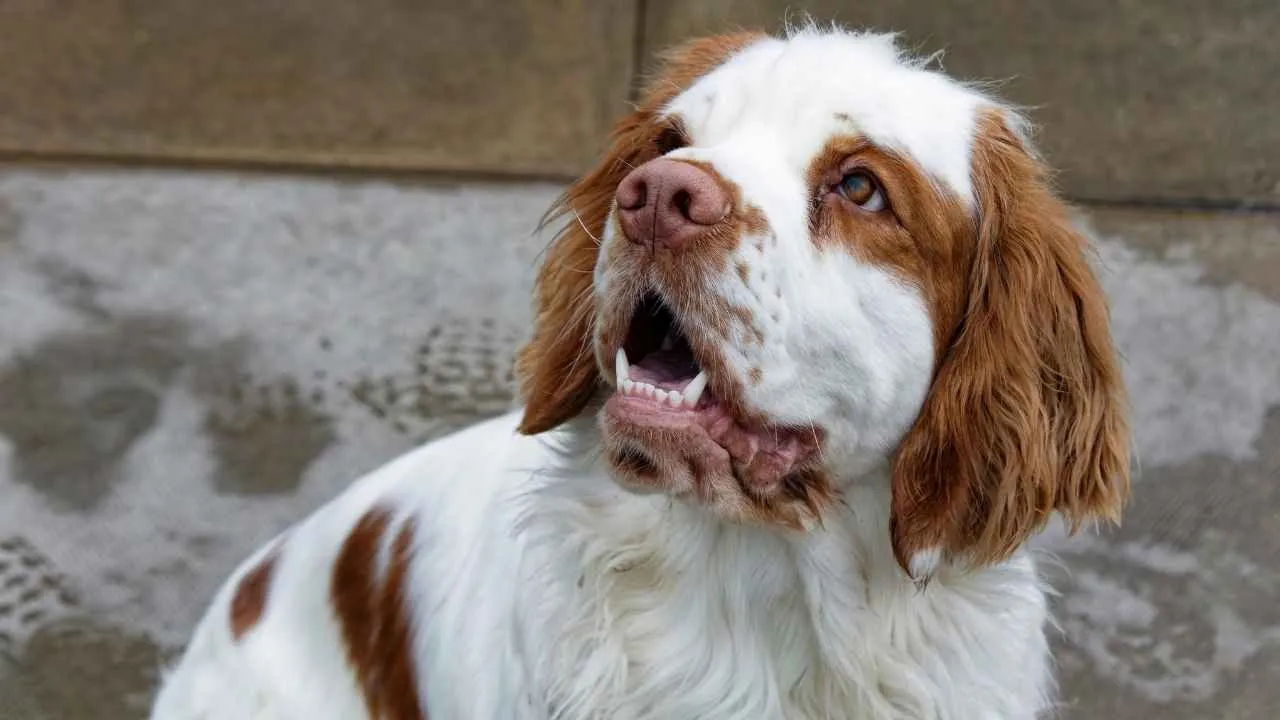
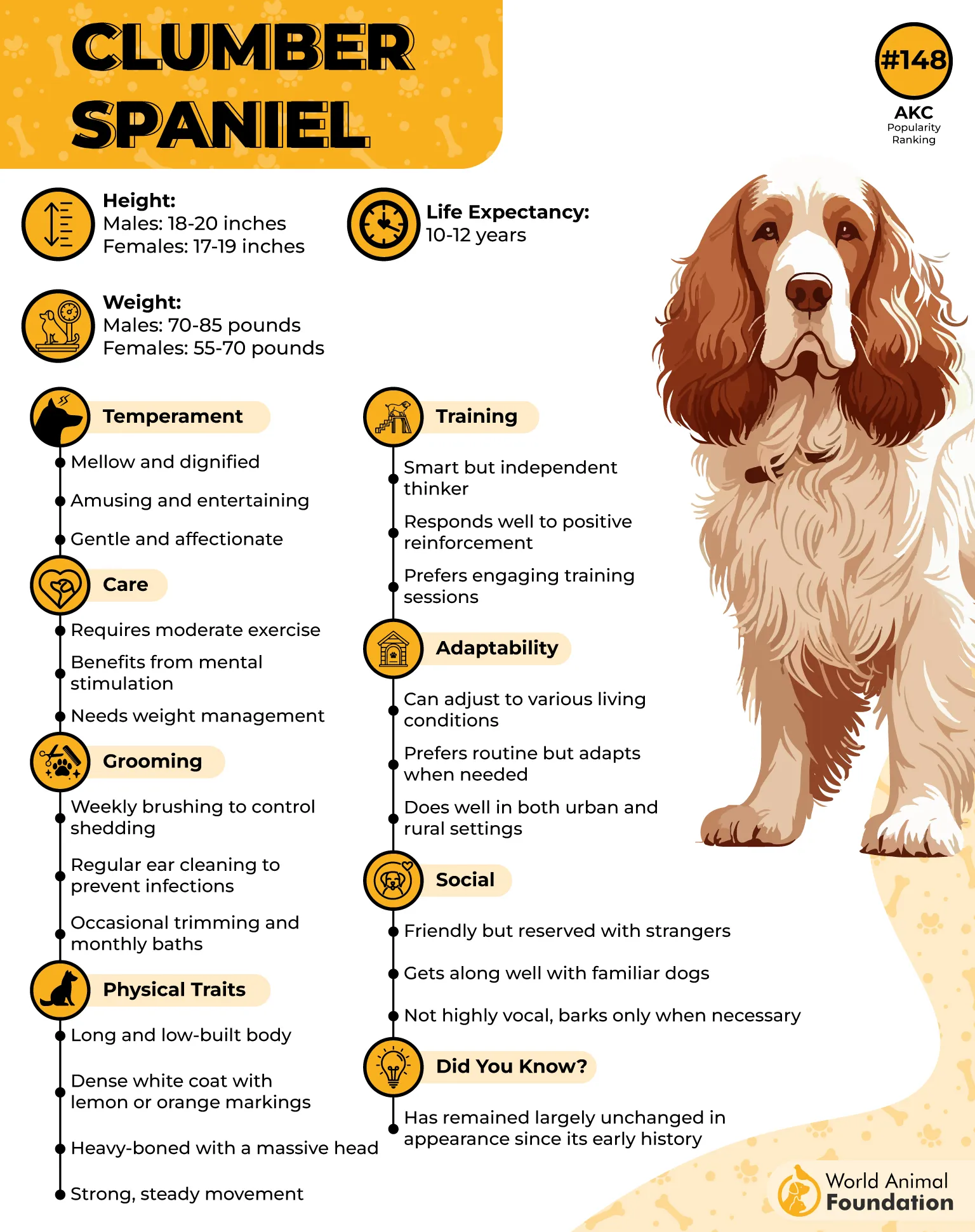
The Clumber Spaniel carries a slow, dignified calm that sets it apart from most of its spaniel cousins, content to plod rather than dash. It treats strangers, children, and other dogs with the same mellow, easygoing friendliness that rarely wavers.
A new visitor crouches down to say hello, and the Clumber ambles over for a calm sniff before leaning its whole weight against their legs. It settles back onto the floor the moment the attention fades.
Upkeep: Needs about 30 minutes of exercise, frequent brushing and drool wiping, and regular ear checks.
Limit: Food left within reach can override its otherwise relaxed temperament in seconds.
This breed suits calmer households that want a sturdy, affectionate presence without constant activity demands. It is well suited to owners who enjoy a quieter, old-fashioned kind of companionship.
9. Greyhound
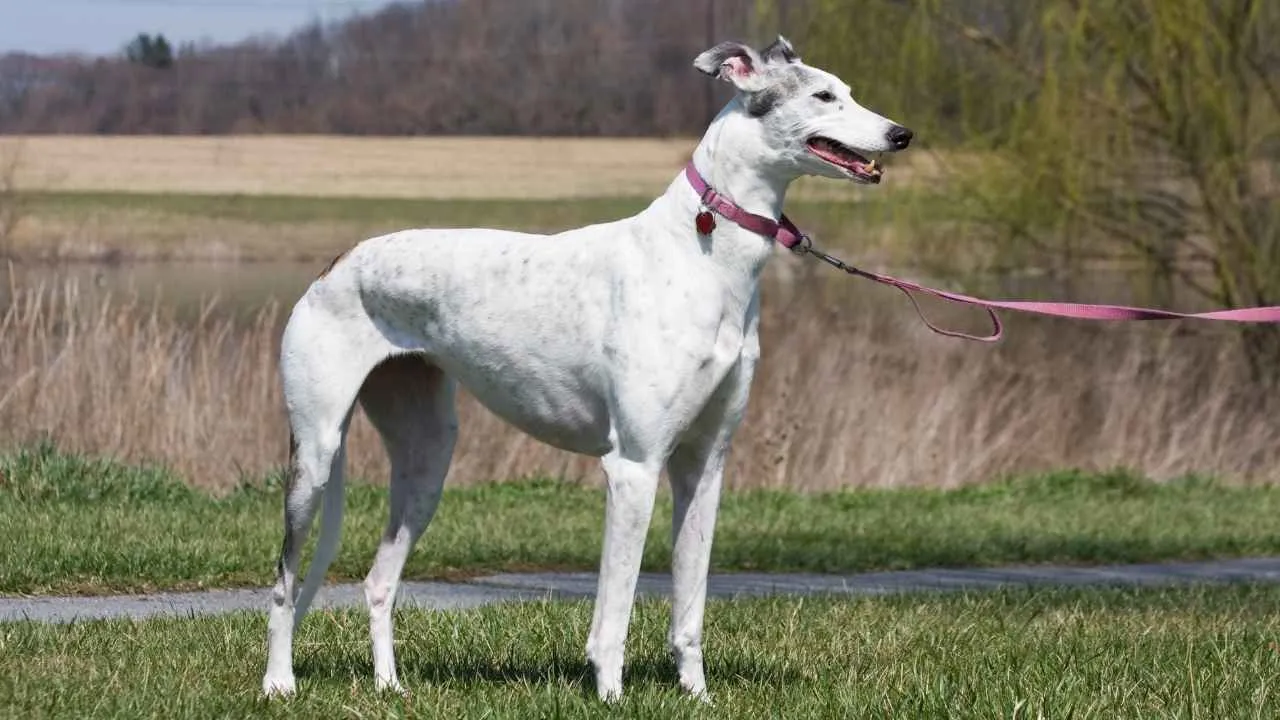
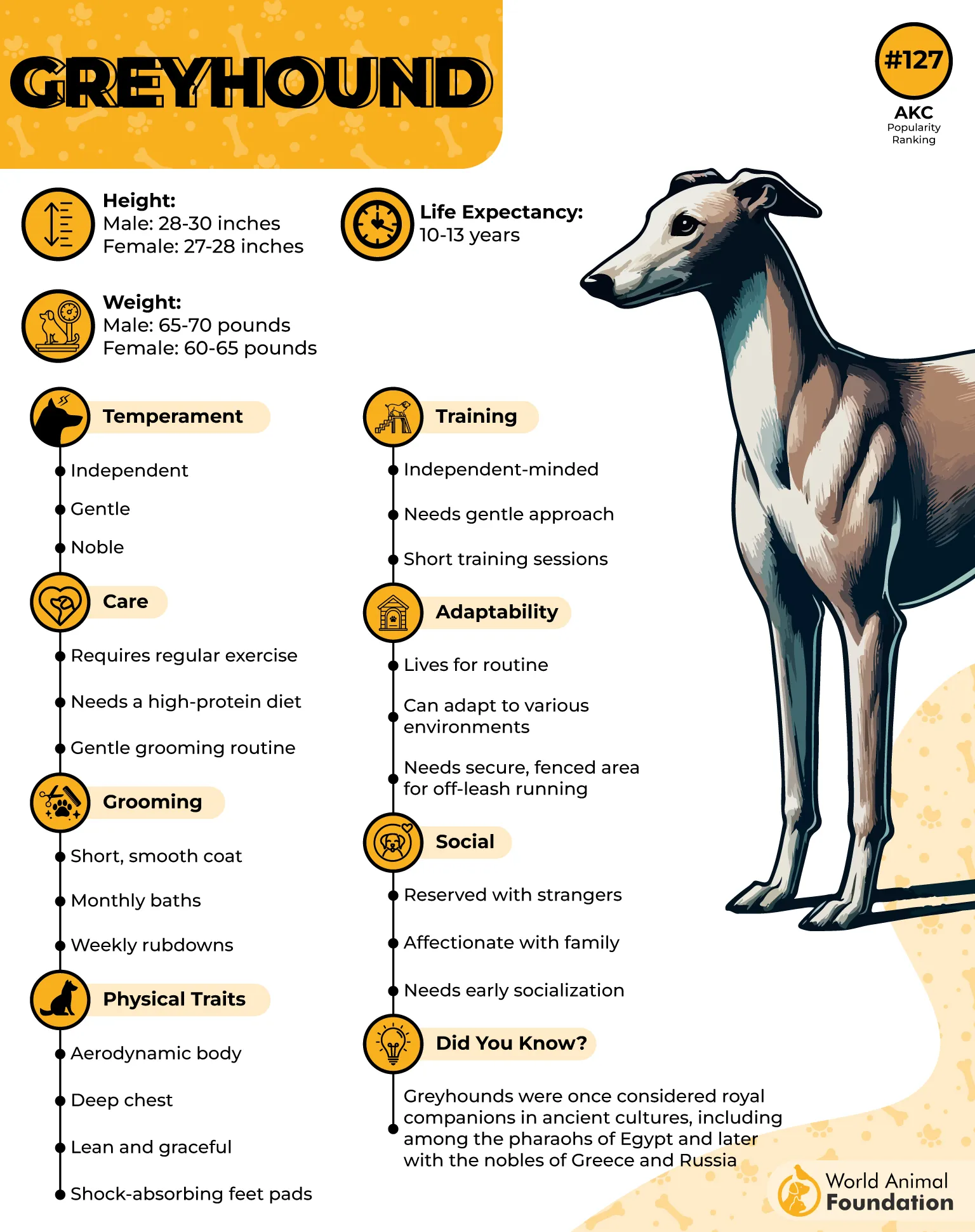
The Greyhound is famous on the track but surprisingly idle at home, often called a 45-mile-per-hour couch potato. It treats strangers and guests with a gentle, even-tempered friendliness, and Omlet UK notes this calm extends to most other dogs too.
Someone new walks in, and the Greyhound lifts its head, gives a few slow tail thumps, then stretches back out across its bed within seconds. There is no pacing and no fuss about it.
Upkeep: Needs one or two short sprints a day, minimal grooming, and a warm blanket since its coat is thin.
Limit: A fast-moving small animal nearby can trigger its old chase instinct instantly.
This breed is an ideal match for low-energy households that still enjoy an occasional burst of speed outdoors. It generally suits owners of all ages who want a quiet, affectionate housemate.
10. Whippet
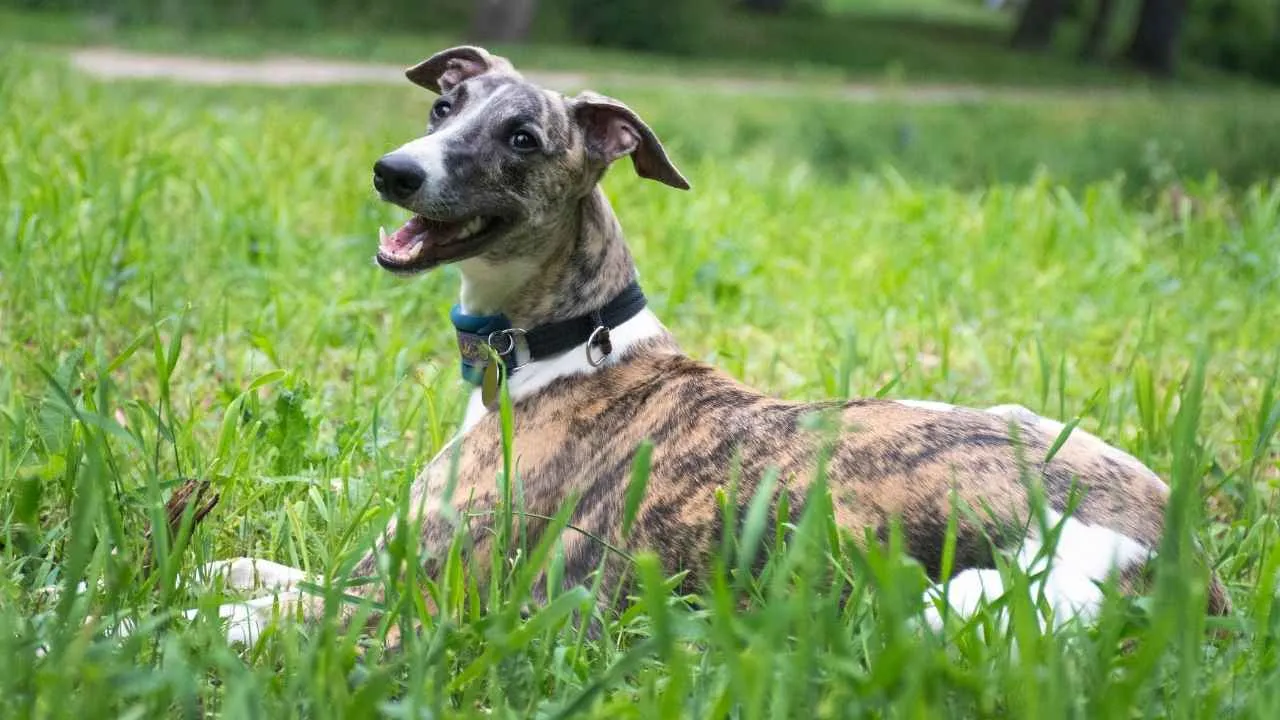
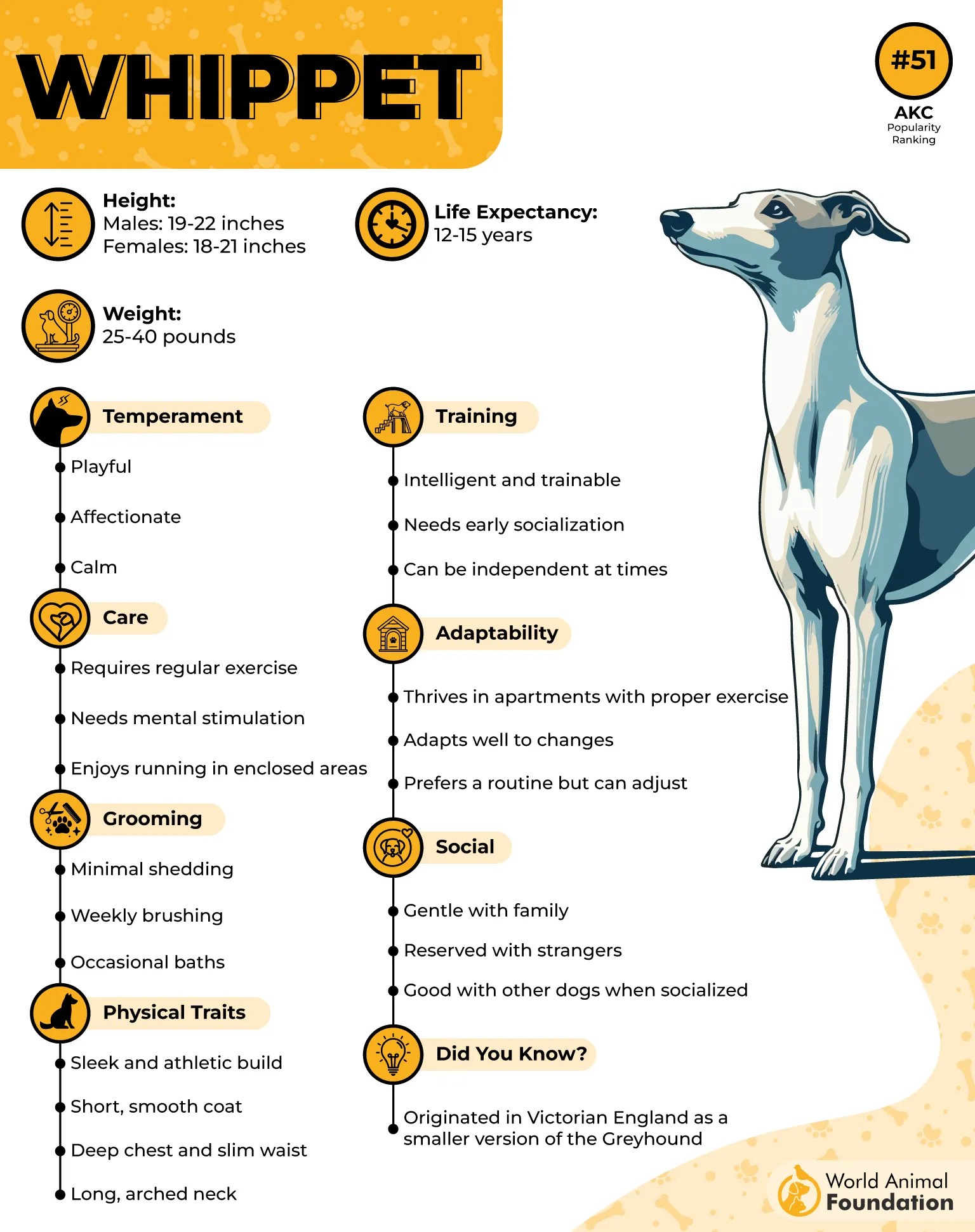
The Whippet shares the Greyhound’s trick of looking athletic yet living like one of the calmest dogs on the couch. It is consistently friendly with strangers, children, and other pets, often described as a devoted companion rather than a watchdog.
A guest sits down for coffee, and the Whippet curls up right against their side within minutes, perfectly content just to be near people. It barely stirs again until someone stands up to leave.
Upkeep: Needs short daily sprints, almost no grooming, and a warm spot since it has very little body fat.
Limit: Cold weather or sudden prey sightings can shake its calm loose fast.
This breed fits smaller homes and quieter families who want a cuddly, low-maintenance pet without sacrificing the odd burst of speed. It is a charming, easy choice for calmer, comfort-seeking households.
Conclusion
At the end of the day, calmness and friendliness are two completely different gifts, and the real magic happens when one dog manages both at once. Picking from this shortlist means you are not gambling on charm alone; you are choosing steady comfort that actually fits real, everyday life.
Every individual dog still carries its own quirks, so weigh your family’s pace, space, and patience before you fall for those soulful eyes. Your forever friend is in there somewhere, so start with the breed whose energy matches yours, not just the one that melts your heart first.
