




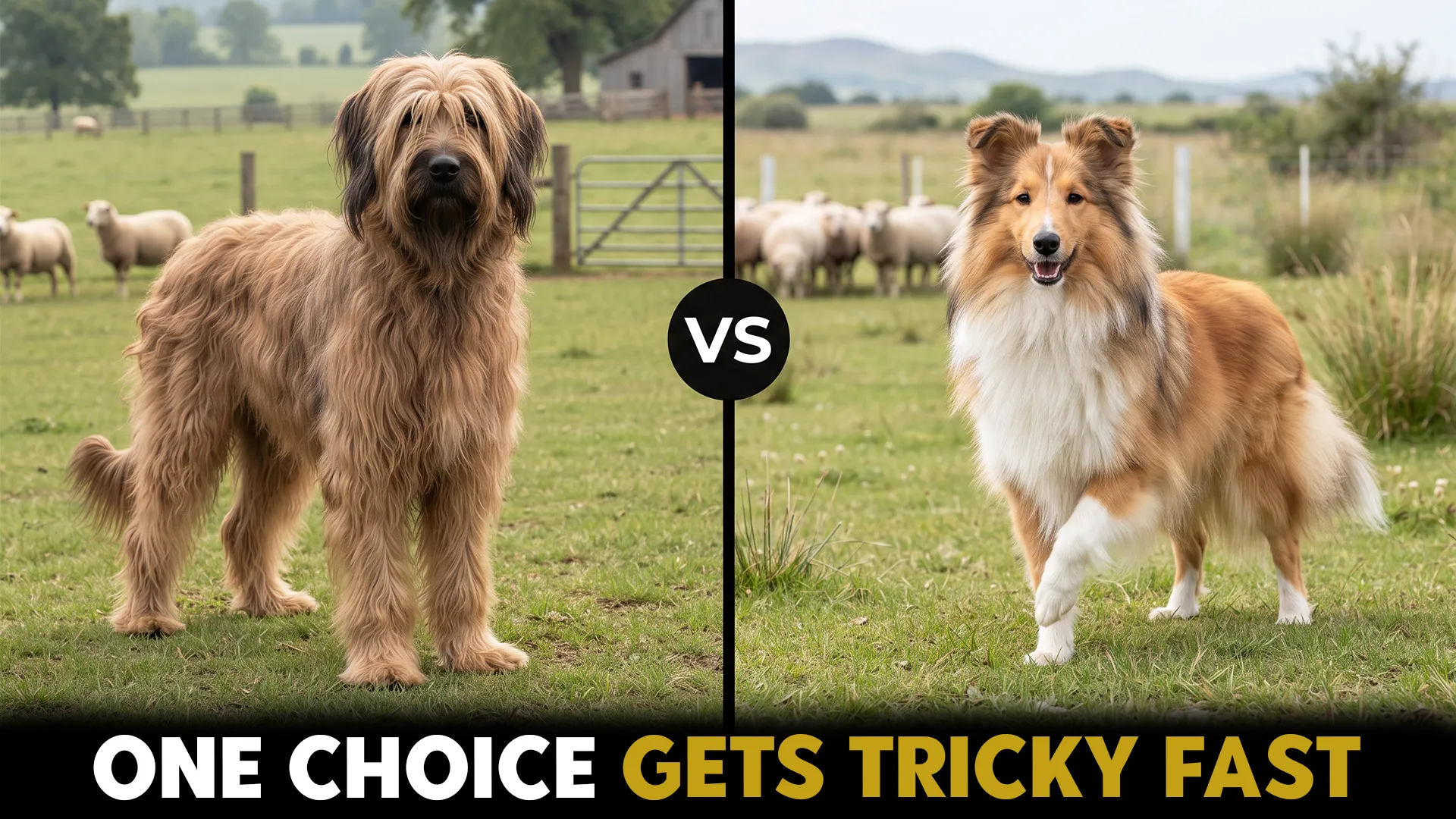
Choosing between a Briard and a Shetland Sheepdog means comparing two intelligent herding breeds with very different builds, backgrounds, and daily needs. One is a large French guardian with a strong protective streak, while the other dog is a smaller Scottish herder known for energy, responsiveness, and enthusiasm.
Both breeds are devoted, clever, and eager to stay involved with their families, but their lifestyles can differ considerably. The Briard needs substantial exercise, regular coat care, and confident socialization, while the Sheltie is highly trainable and athletic but can be notably vocal and energetic.
Before bringing either dog home, understanding their temperament, grooming demands, activity levels, and potential health concerns can help you choose the breed that fits your household best.
Briard vs. Shetland Sheepdog: Must-Know Points Before Choosing
Origins & Purpose
The Briard and Shetland Sheepdog both come from strong herding traditions, but their origins reflect very different landscapes. The Briard developed in the French countryside, while the Sheltie was shaped by the rugged Shetland Islands of Scotland.
Briards were bred to both herd and guard sheep, giving them the strength and independence needed for farm work. They could move flocks, protect livestock, and even help guard farmland without constant human direction.
Shetland Sheepdogs were developed to manage sheep, poultry, and ponies across challenging island terrain. Influenced by working miniature Collies and other northern breeds, they became agile, intelligent workers well suited to harsh weather and demanding conditions. According to Omlet, it is now one of America’s most popular breeds, possibly because of its resemblance to a small “Lassie” dog.
Size & Build
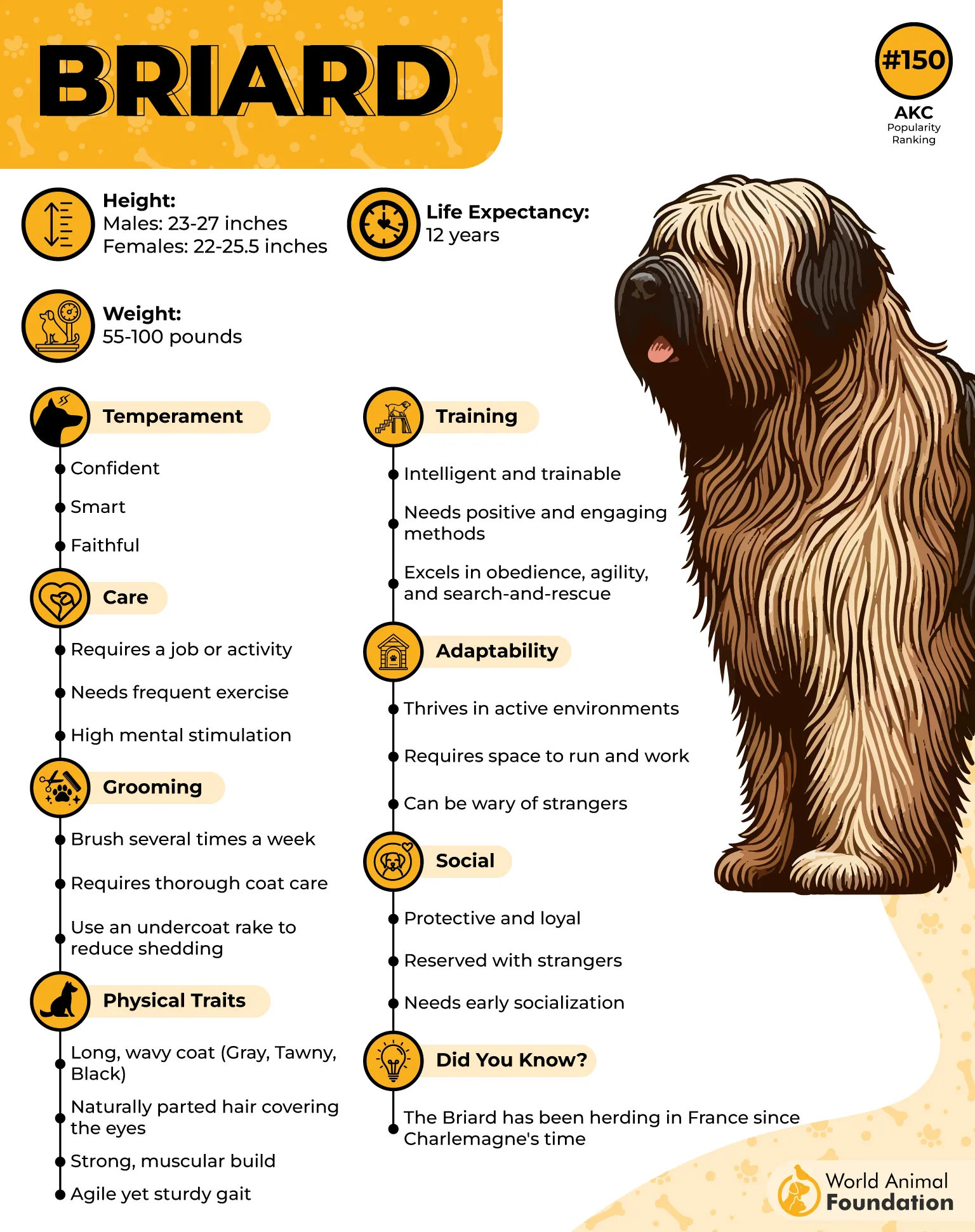
The Briard has a noticeably larger, more substantial build, with males standing around 23 to 27 inches tall and females measuring roughly 22 to 25.5 inches. Their weight generally falls between 55 and 100 pounds, depending on their individual frame.
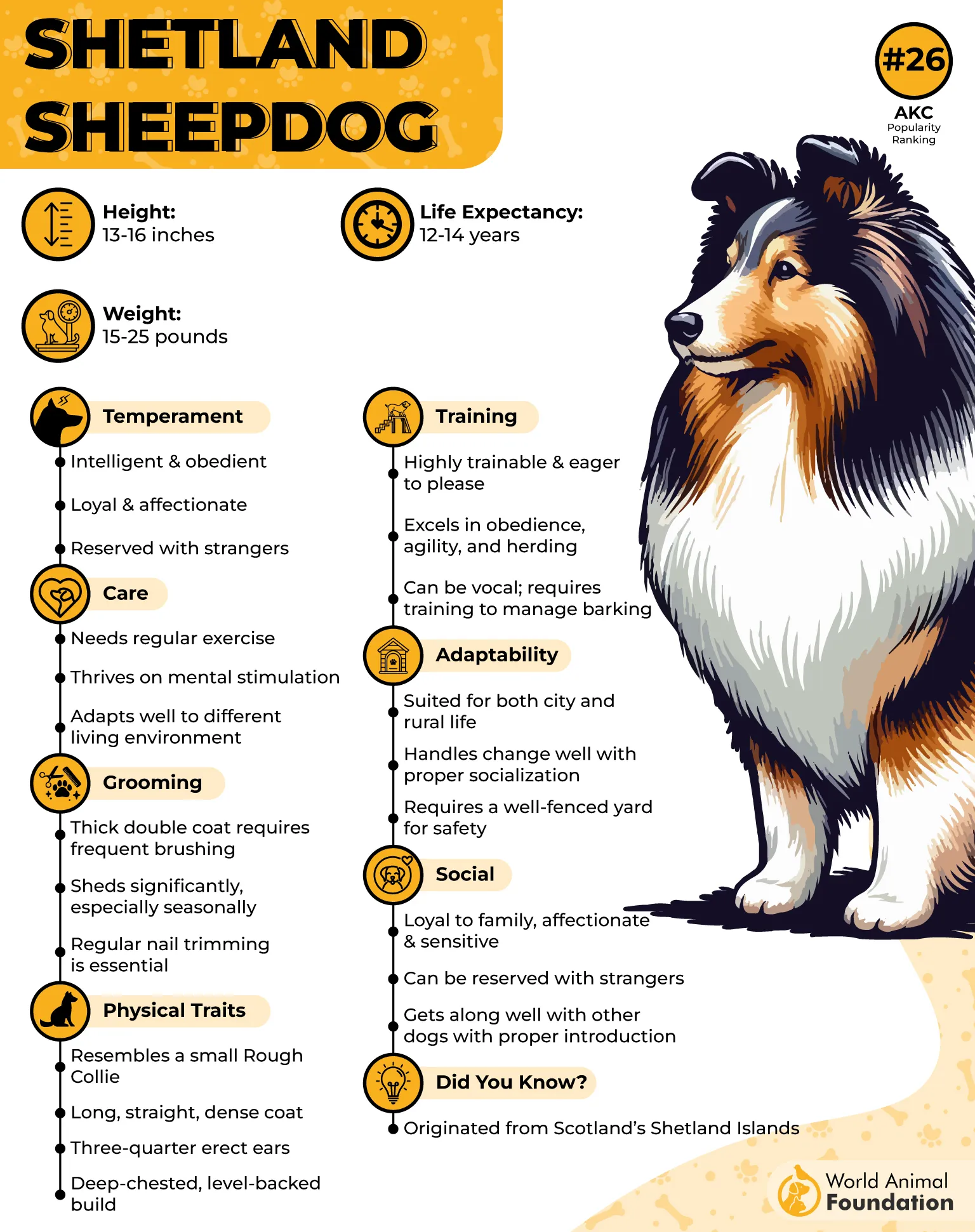
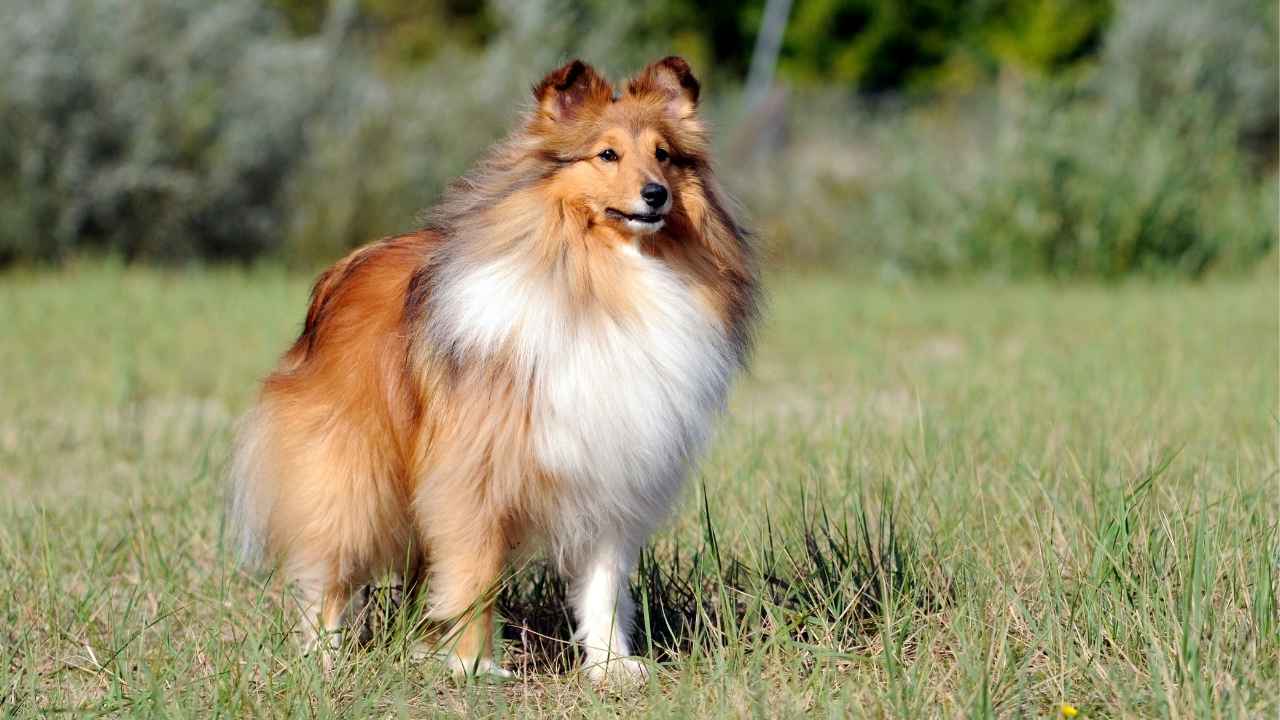
The Shetland Sheepdog is considerably smaller and more compact. Adults typically reach 13 to 16 inches in height and weigh approximately 15 to 25 pounds, making them physically easier to manage.
This size difference can strongly influence your choice. The Briard suits owners comfortable with a large, powerful herding dog, while the Sheltie offers a smaller build that may fit more easily into homes with limited space.
Pricing & Availability
A Briard puppy from an AKC-registered breeder typically costs between $1,500 and $3,500. The final price can vary based on the breeder’s reputation, the puppy’s lineage, and where you live.

Shetland Sheepdog puppies generally range from $1,300 to $2,700. Factors such as bloodline, breeder, and geographic location can influence the asking price.
When comparing availability, prospective owners should also consider local breeder options and wait times rather than focusing only on the initial purchase price. Both breeds may have different availability depending on your region and the quality of the breeder.
Temperament & Personality Style
The Briard has a deeply devoted, sensitive personality and often forms an especially strong connection with its family. It tends to be watchful at home, keeping track of people and pets while remaining affectionate with those it knows well.
The Shetland Sheepdog is lively, eager to please, and highly focused on its owner. It can be reserved around unfamiliar people, but usually enjoys family life and tends to be gentle and playful with children.
Both breeds are intelligent and responsive, yet their sensitivity calls for thoughtful handling. Briards generally respond best to calm, consistent leadership, while Shelties benefit from positive training, mental challenges, and plenty of family involvement to prevent boredom.
Exercise Needs & Energy Levels
The Briard is a high-energy working dog that needs more than a casual stroll to stay content. Aim for roughly sixty to ninety minutes of daily physical activity, along with training, scent games, or other tasks that keep its mind busy. According to Orvis, the Briard is a strong-willed dog that does best with a confident owner.
The Shetland Sheepdog is similarly energetic, despite its smaller frame. At least an hour of activity each day, combining brisk walks, play, and mentally engaging exercises, can help channel its herding drive and stamina.
Both breeds can adjust to different living spaces when their exercise needs are consistently met. Briards often enjoy hiking, agility, herding trials, or tracking, while Shelties may thrive on fetch, agility, interactive games, or outdoor adventures.
Trainability & Obedience
The Briard is intelligent and capable of learning quickly, but its independent herding background can make it occasionally question instructions. Consistent rules, trust, and patient guidance help bring out its cooperative side.
Shetland Sheepdogs are typically eager learners that respond enthusiastically to praise, treats, and play. Their sensitivity means harsh corrections can undermine confidence, while varied, positive sessions keep their sharp minds interested. According to Hill’s Pet, many Shelties frequently bark excessively.
Both breeds benefit from mental challenges alongside basic obedience, particularly recall and calm leash manners. Briards may thrive on tracking, herding-style tasks, or agility, while Shelties often excel at obedience, agility, tricks, and nose work.
Grooming Needs & Shedding
The Briard has a long, slightly wavy double coat that demands consistent attention to stay free of tangles. Brushing several times a week, especially behind the ears, under the legs, and around the collar, helps prevent mats.
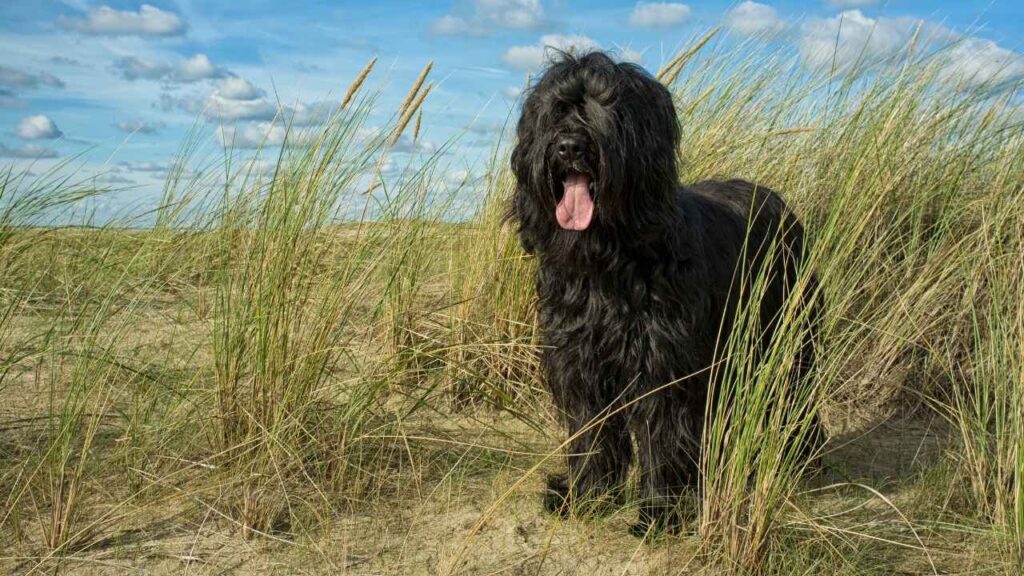
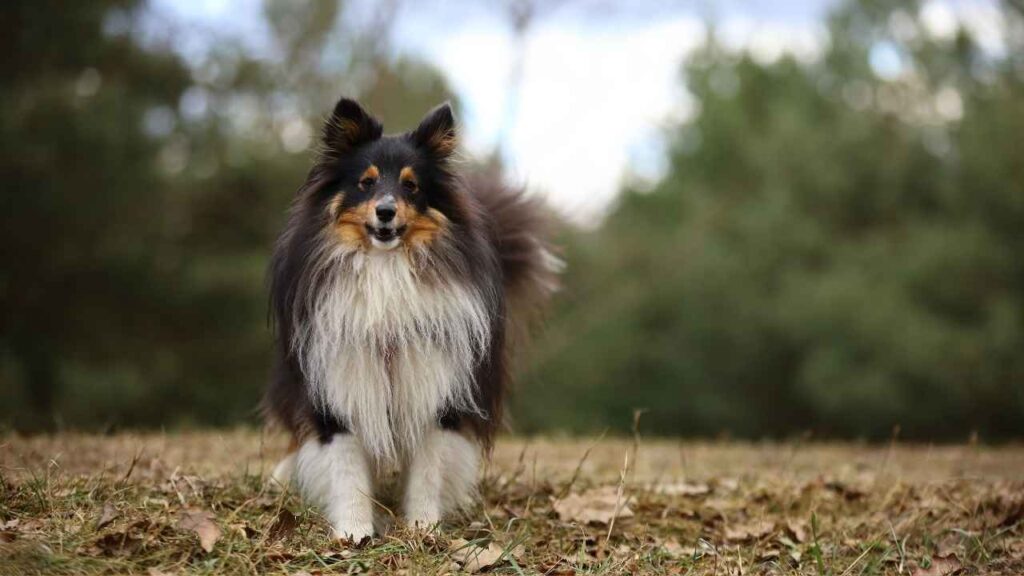
Shetland Sheepdogs have a thick double coat with a harsh, straight outer layer and dense undercoat. Their coats can collect debris easily, so brushing several times weekly is important, with daily sessions often needed during seasonal shedding.
Neither breed is completely shed-free, but their coats handle loose hair differently. Briards are lighter shedders, with much of their fallen hair becoming trapped in the coat, while Shelties can shed considerably during seasonal coat blows.
Herding & Work Drive
For herding and work drive, the Briard has the stronger instinctive connection to traditional flock work. Bred in France to drive and guard sheep, it can stay focused and move efficiently for long periods.
That working heritage also makes the Briard naturally attentive to its surroundings. At home, its instinct may show up as attempts to guide family members or other pets, sometimes through gentle chasing or controlling movements.
The Shetland Sheepdog is equally intelligent and agile, with a background as a hardworking farm dog on the Shetland Islands. Its herding instincts can surface when it circles running children, chases moving objects, or tries to manage smaller animals.
For owners seeking a dog with a pronounced working drive, the Briard offers a strong herding and guarding heritage, while the Sheltie channels its instincts through agility, alertness, and lively engagement.
Health & Lifespan
The Briard is generally a sturdy, healthy breed, with a typical lifespan of around twelve years. Still, owners should be aware of concerns such as hip dysplasia, eye disorders, thyroid problems, and bloat.
The Shetland Sheepdog is also considered relatively healthy and often lives about twelve to fourteen years. However, it can be prone to hip dysplasia, inherited eye conditions, thyroid issues, and Von Willebrand’s disease.
For either breed, choosing a responsible breeder who conducts appropriate health screenings can reduce the risk of inherited problems. Regular veterinary visits, a balanced diet, and suitable exercise also support long-term well-being.
Which Loyal Herding Dog Is Right for You?
When comparing the Briard and Shetland Sheepdog, consider how each fits into your home life. Briards are devoted homebodies that typically stay close to their families rather than wandering, making them naturally home-oriented companions.
Shetland Sheepdogs are also deeply people-focused, affectionate dogs, and generally gentle with family members. Their smaller size can make them easier to accommodate, including in apartments, provided they receive enough exercise and mental stimulation.
Training needs differ in their own ways. Briards require consistent guidance and early socialization, while sensitive Shelties respond well to positive training but need plenty of interaction. Both may try to herd running children, so supervision and early training are important.
Conclusion
Choosing between a Briard and a Shetland Sheepdog comes down to the type of companion and home environment you can provide. Both breeds are loyal, intelligent, people-focused dogs that can form strong bonds with their families.
The Briard may suit owners who appreciate a less common, devoted herding dog and are prepared for consistent grooming, training, and socialization. Its protective nature can make it especially affectionate with family members.
The Shetland Sheepdog is highly responsive and eager to please, but its sensitivity means it benefits from patient training, regular interaction, and mental enrichment. It can adapt to apartment living when its exercise and barking needs are properly managed.
Consider your daily routine, training commitment, living environment, and preferred temperament before deciding which breed fits your household.
