




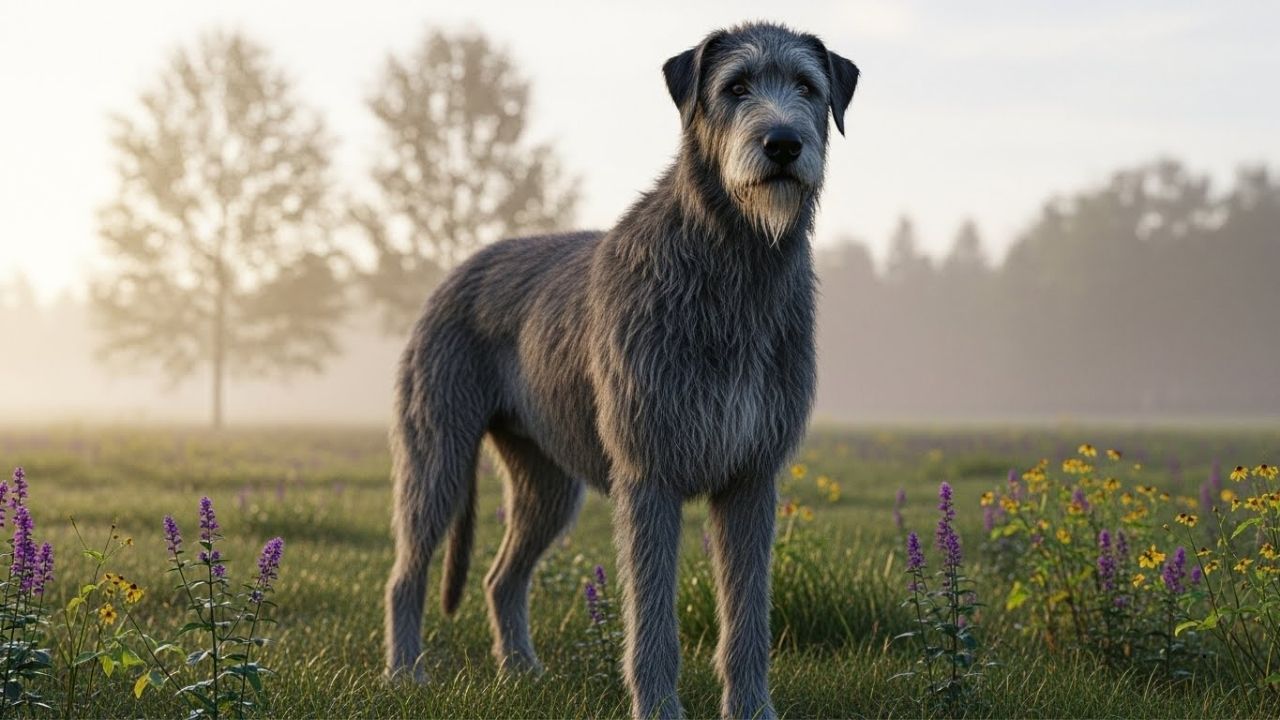
Loving a big dog means cherishing every goofy, precious year together today.
If you have ever hugged a giant dog breed, you know the feeling. It is like leaning on a warm sofa that breathes. These breeds give huge love, huge laughs, and huge comfort. The tradeoff is real, though. Many giant breeds have a shorter life expectancy than smaller dogs.
That can sound scary at first. But why bother with that fear if it steals the good days you do have? A shorter timeline does not mean a smaller bond. It means you show up fully. You plan well. You protect their joints, their heart, and their joy. And you learn to take more photos, even when you look messy in them.
This blog is for people who want love, but also want the truth. We will look at seven breeds that are often called gentle giants. Each one has its own vibe. Each one asks for a slightly different kind of care. And here’s the best part! With the right choices, these dogs can have a life that feels big, safe, and deeply loved.
Dog Breeds with Limited Time: A Heartfelt Look Before You Choose
1. Great Dane
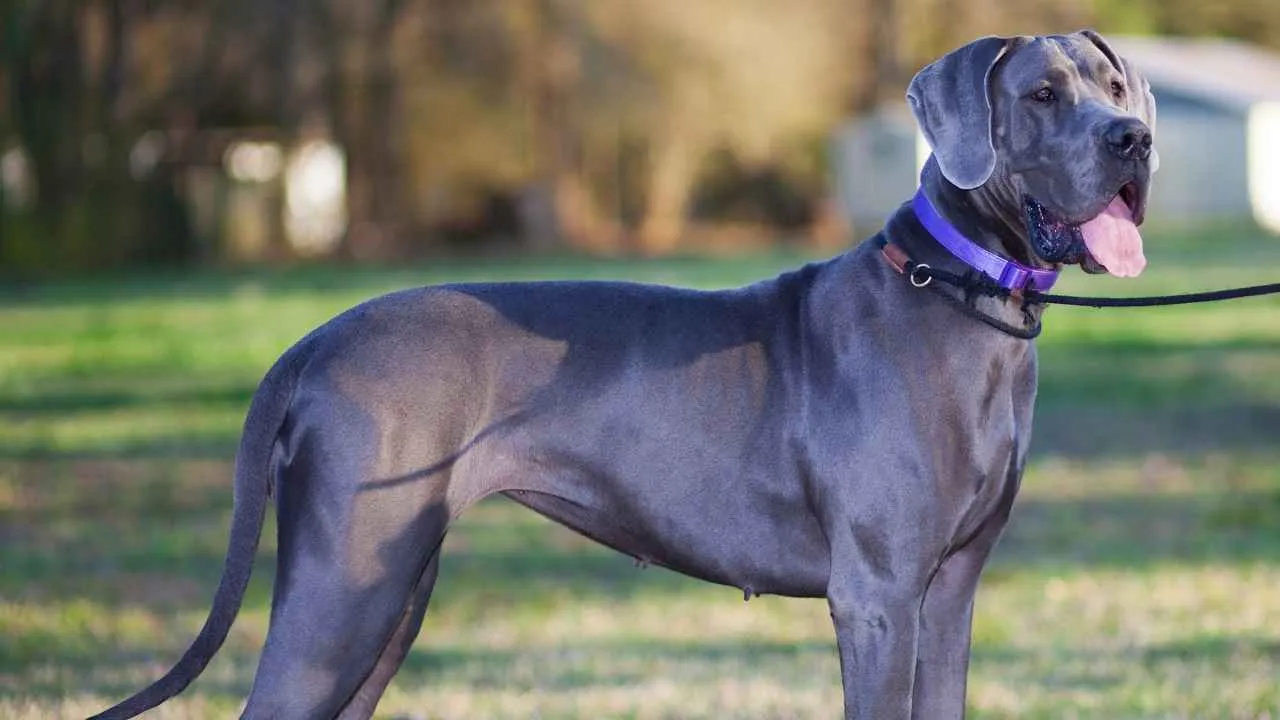
The Great Dane is the “Apollo of Dogs,” and yeah, the name fits. They are loyal, tall, elegant, and somehow still a total clown at home.
Many Danes are friendly, patient, and sweet with their people. But owning one is a real commitment, because its size is not just “big,” it is furniture-level big.
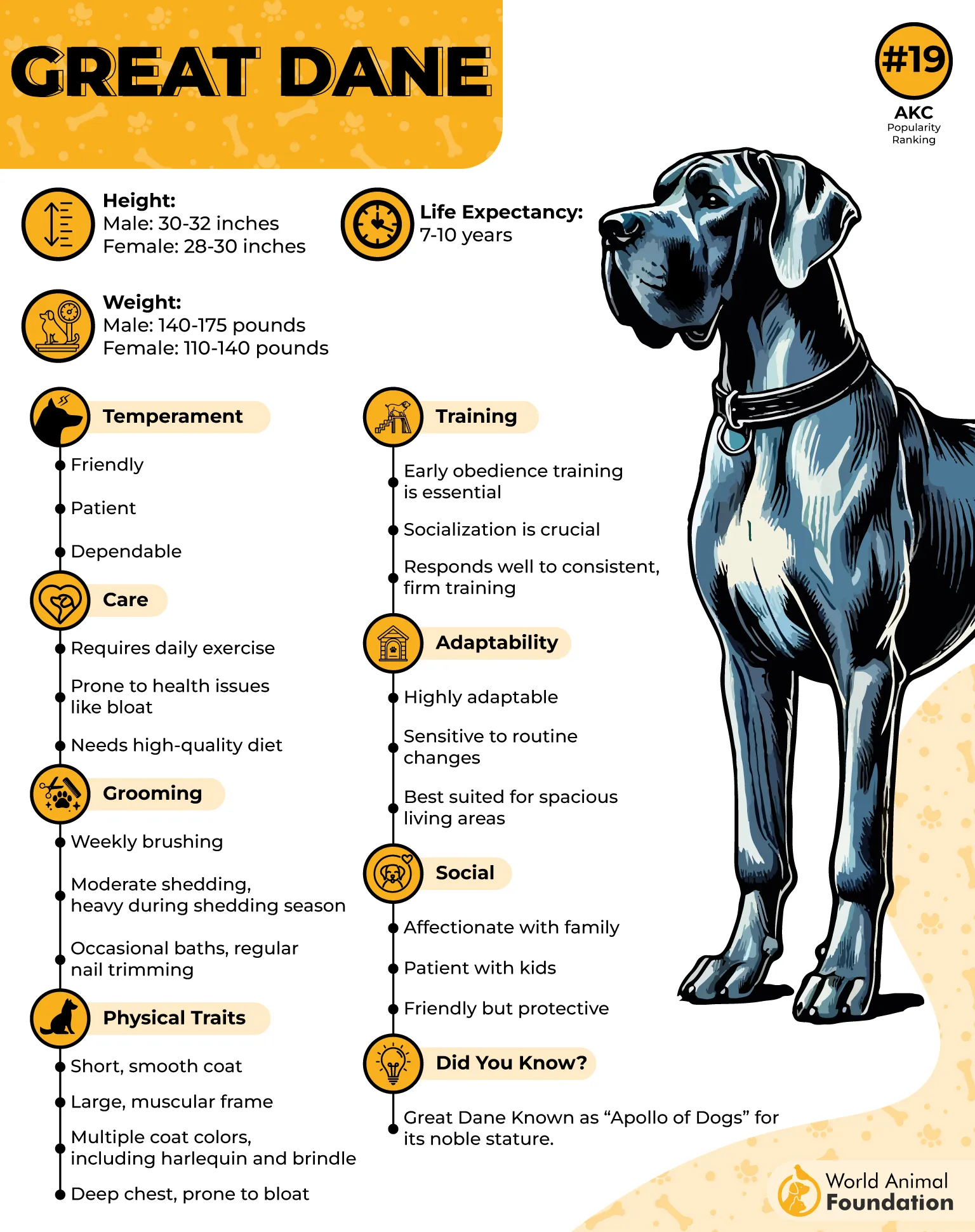
According to the AKC, their history is wild. These pups were once bred to hunt huge game like wild boar with European nobles. Sounds crazy, right? That bold past still shows up today as confidence and bravery. Yet most modern Danes are gentle homies who just want to be near you.
Great Danes often have a shorter lifespan, around 7 to 10 years. That reality can hit hard. But wait, there’s more! A lot of Dane’s life is about comfort and smart routines. Soft bedding, steady exercise, and keeping them lean can make their days easier and happier.
Make the most of Dane time
Teach calm greetings early, because a friendly giant can still knock you over.
Use joint-friendly play, like short walks and gentle games, not endless jumping.
Keep meals calm and split, so their big body handles food better.
Plan for higher costs, like food, vet care, and sturdy gear.
2. Bullmastiff
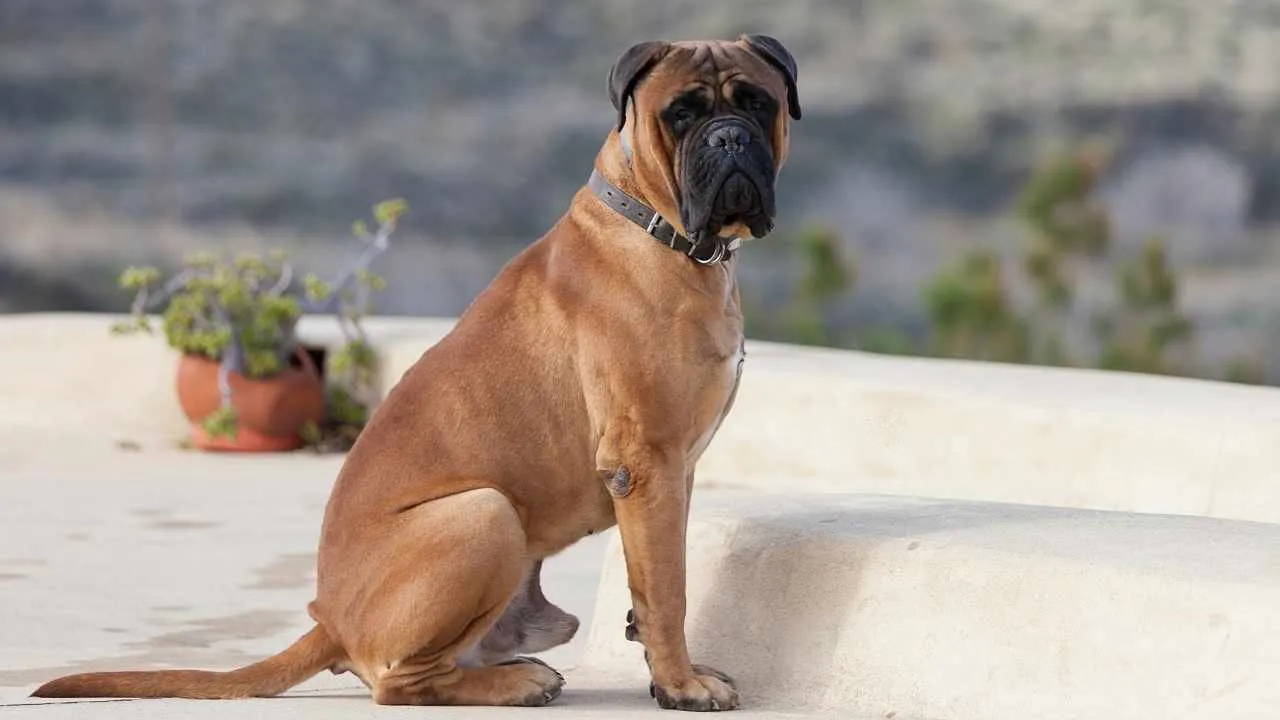
Bullmastiffs were made for a job. In old England, they helped gamekeepers track down and hold poachers. PetMD notes that they were bred from Bulldog and Mastiff lines, so you get power, grit, and a serious “don’t mess with my hierarchy” look.
Bulldogs are among the most widely recognized and popular dog breeds, known for their distinctive appearance and cultural presence. And then they flop on the couch like a sleepy potato. Here’s the good part.
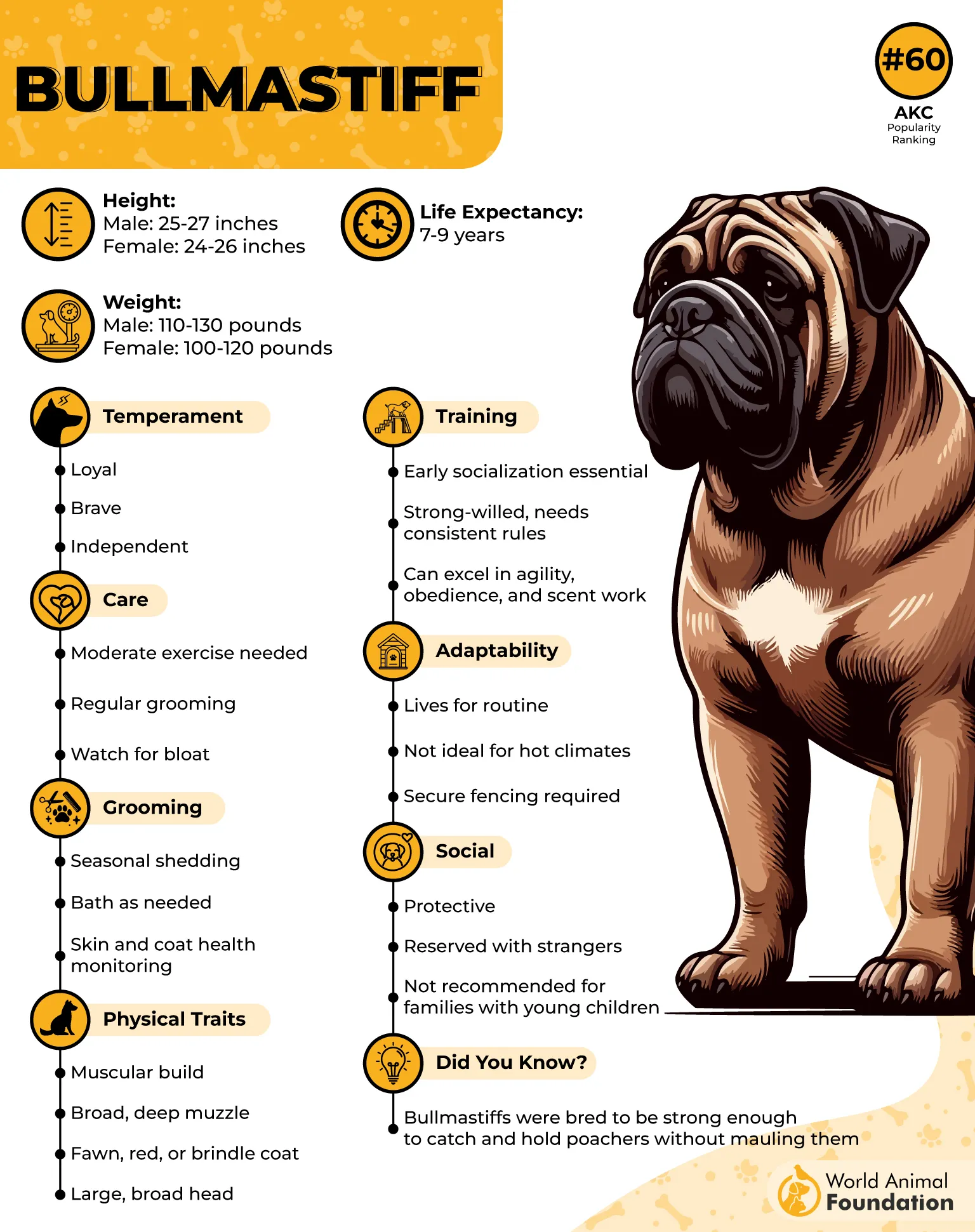
At home, many Bullmastiff pups are calm, devoted, and quietly funny. They do not usually want to run marathons. They want to patrol the house, then lean on you like you are their best friend. Their protective nature means early social time matters a lot, so they learn what is normal and what is not.
Their lifespan is often around 7 to 9 years. That is not long, and it can feel unfair. It gets even worse, though, if people treat them like statues.
These dog breeds need regular movement and brain work, or they can get bored and stubborn. The trick is simple. Keep it steady, keep it kind, and keep it daily.
Keep the bond strong
Socialize gently from puppyhood, so their guard instinct stays balanced.
Use short training sessions, because they learn fast but hate nagging.
Watch their weight, since extra pounds can stress joints and breathing.
Give them a “job,” like carrying a toy, doing a scent game, or simple chores.
3. Irish Wolfhound
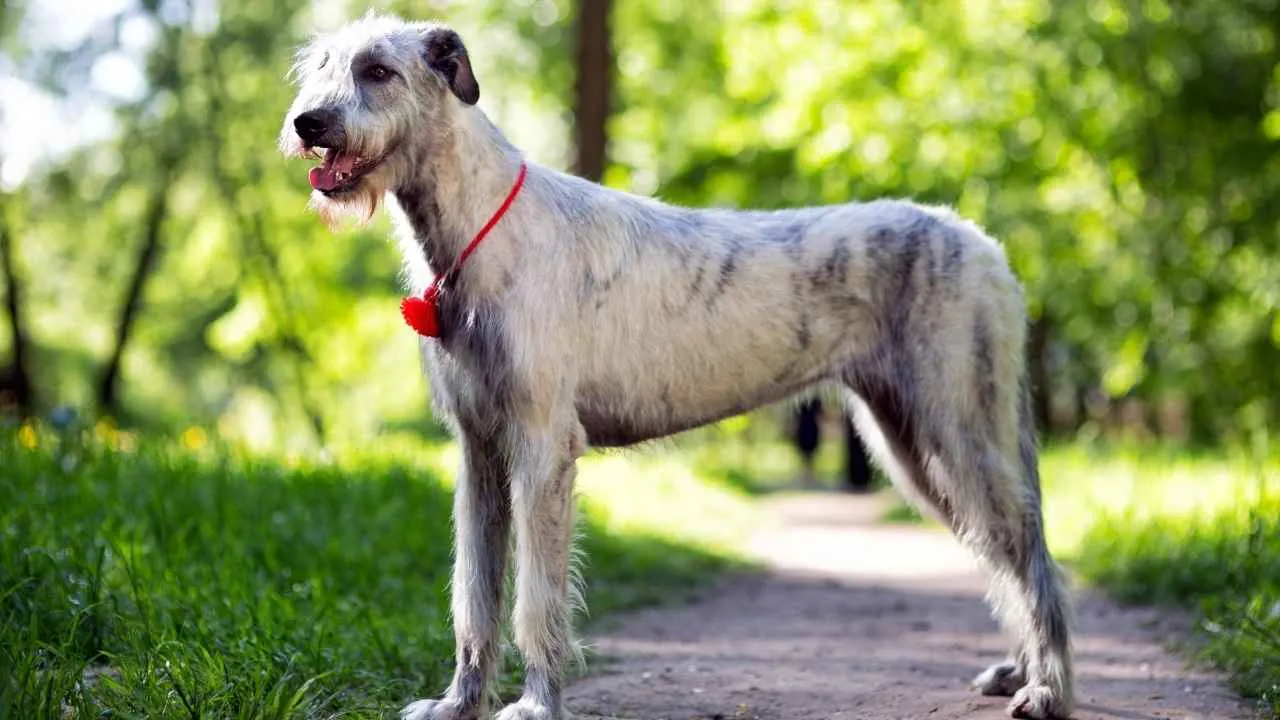
The Irish Wolfhound is the tallest of many kennel club breeds, and they carry it with calm dignity. They were once fearless hunters, used for wolves and big game. Today, most of them are peaceful, kind, and surprisingly soft in their feelings. They look like a legend, but act like a gentle roommate.
Wolfhounds often bond deeply with their people. They can be calm at home, but they still need space and daily exercise. They also grow slowly.
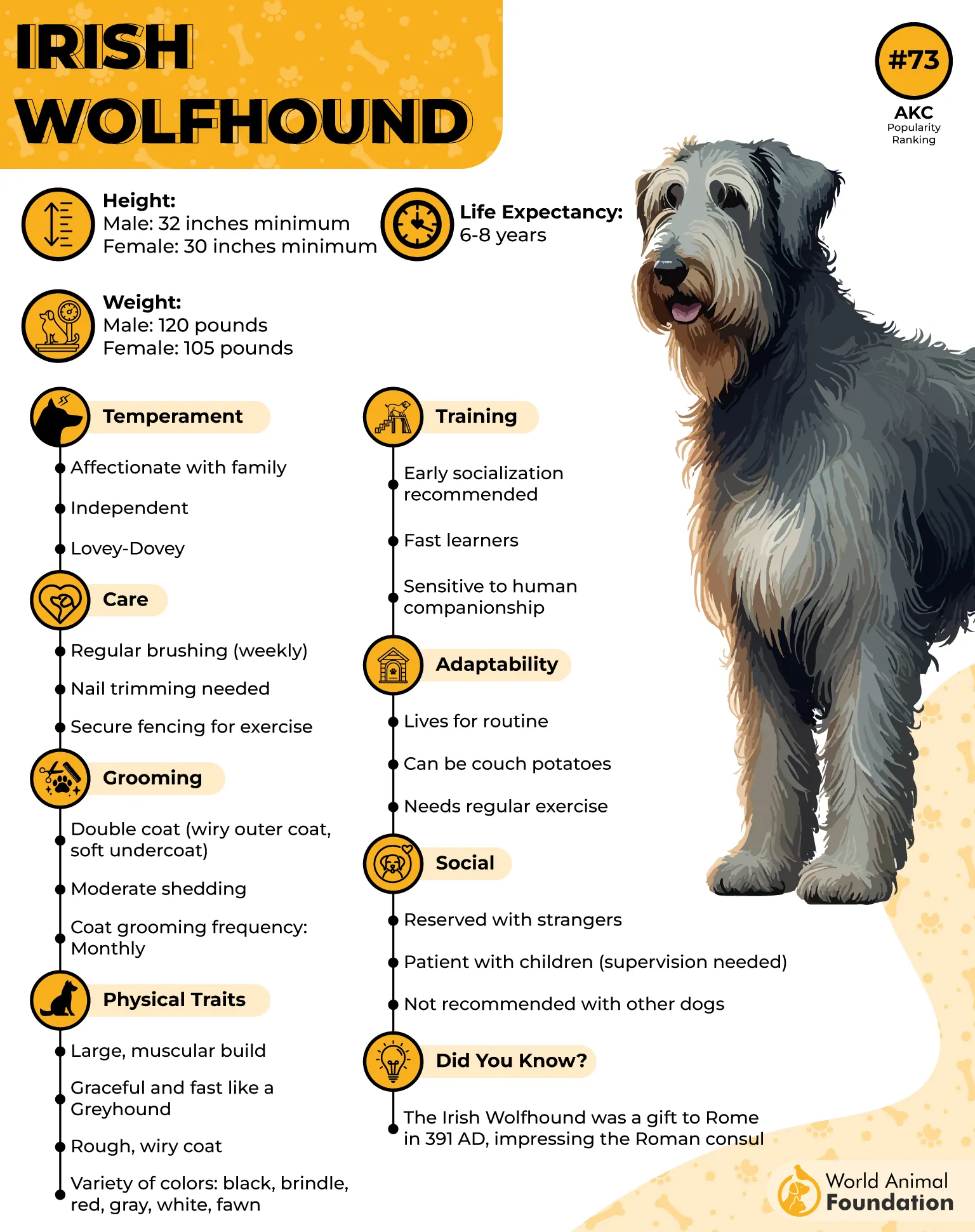
A lot of their early life is spent becoming their full size, which is kind of funny and kind of intense. Think “giant teen” energy, but with manners if you train kindly.
Their average lifespan is often around 6 to 8 years. That number is hard to read, so let’s be honest about it. You do not choose a Wolfhound for “many years.”
You choose one for “very good years.” When you plan for their heart, their joints, and their comfort, those years can be pure gold.
Gentle giant notes
Start training early, because a sweet dog can still be very strong.
Keep exercise steady, not extreme, especially while they are still growing.
Build alone-time skills slowly, since they can hate being left behind.
Get regular vet checks, because early spotting can really matter.
4. Newfoundland
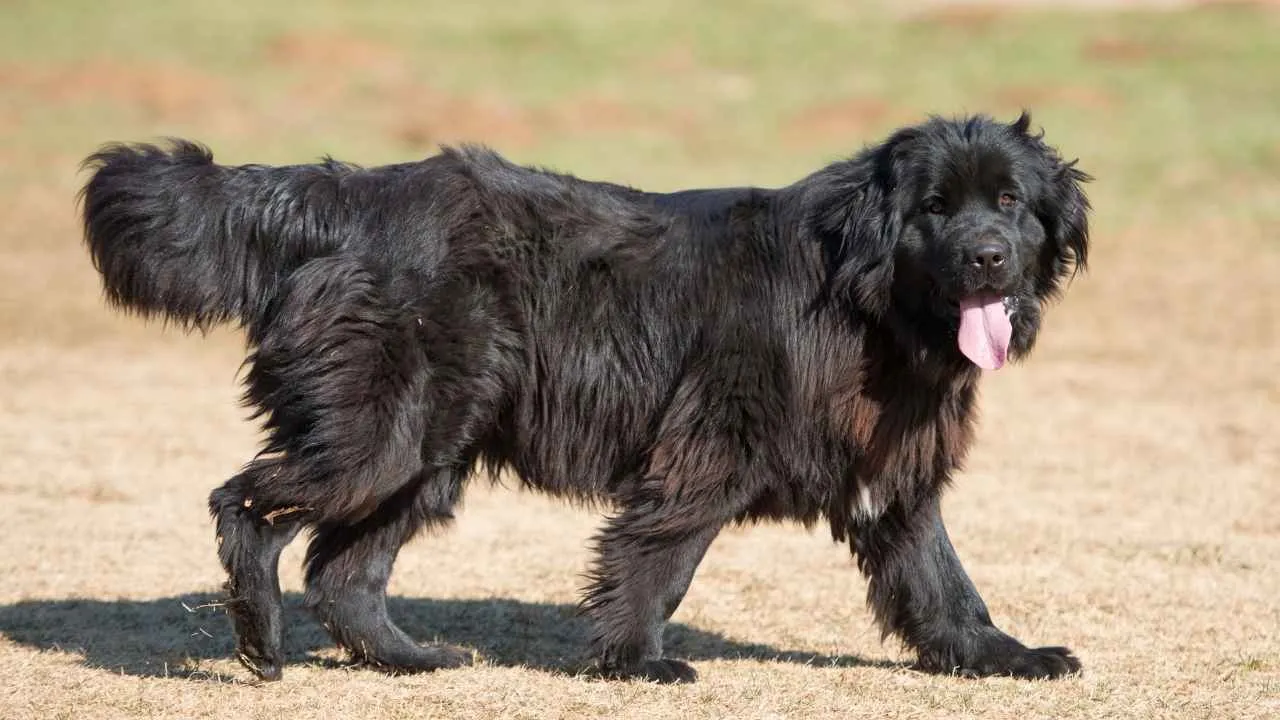
Newfoundlands look like living teddy bears, but they are also serious workers. They are famous for a sweet temperament and a patient, watchful nature with kids. People even call these pups “nanny dogs,” and you can often see why. They tend to be calm, kind, and very tuned in to their family.
These dogs were built for water and work. They have heavy bones, huge strength, and a thick, water-resistant coat.
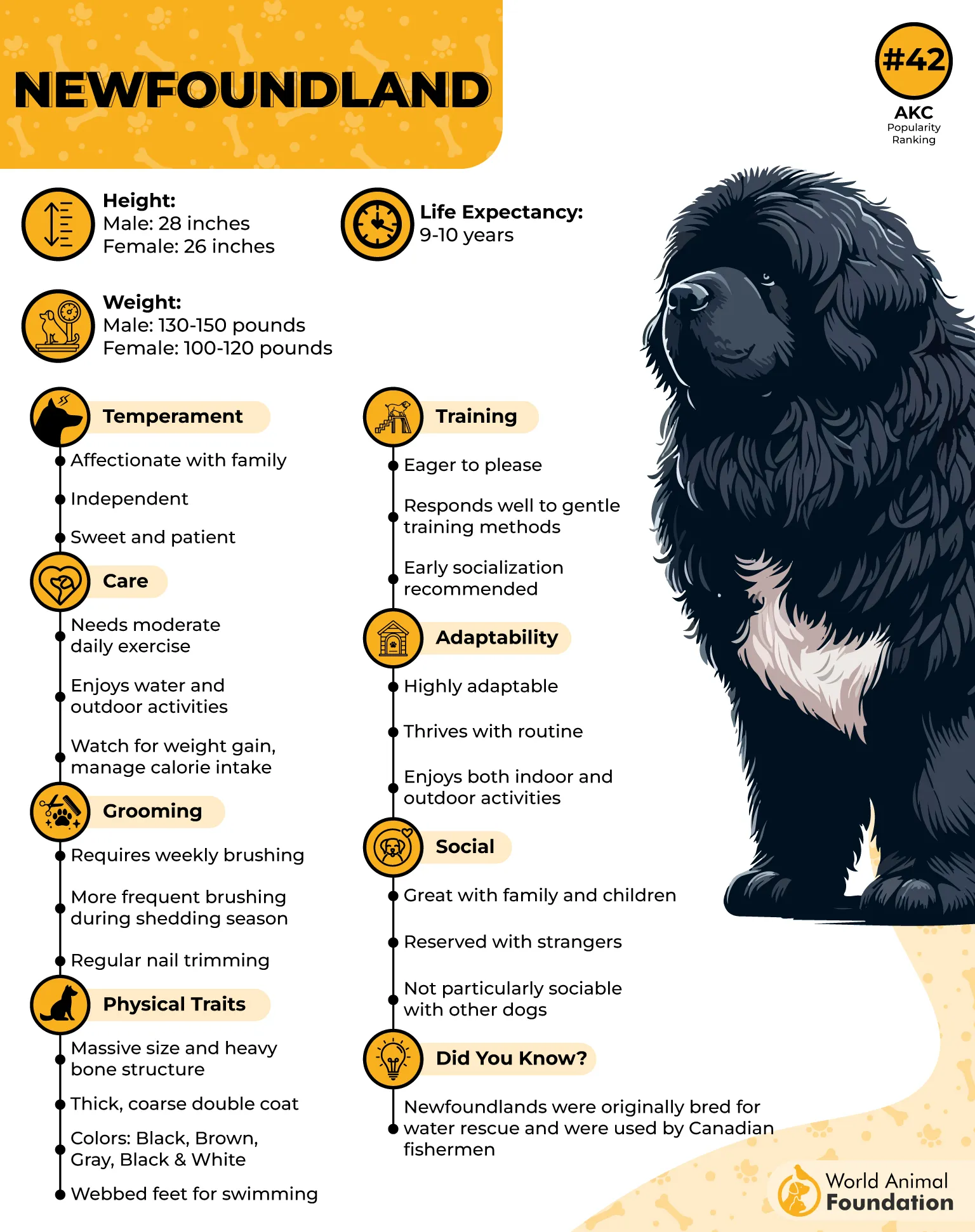
Many Newfies are natural swimmers, and their rescue reputation is not just hype. They often seem to have a built-in “I will help” button, especially when someone is struggling.
Their life expectancy is often around 9 tobonesyears, which can feel like a gift in the giant-dog world. Still, it is not a “small dog” lifespan.
A Newfoundland does best with good grooming, gentle exercise, and cool spaces. If they overheat, they get miserable fast, and nobody wants a sad, panting bear.
Newfie is fun and cares
Keep water play safe and supervised, because they may swim like pros.
Brush often, since that thick coat loves to collect dirt and tangles.
Offer shade and cool floors, especially in hot weather.
Teach polite leash skills, because a happy Newfie can tow you like a boat.
5. Neapolitan Mastiff
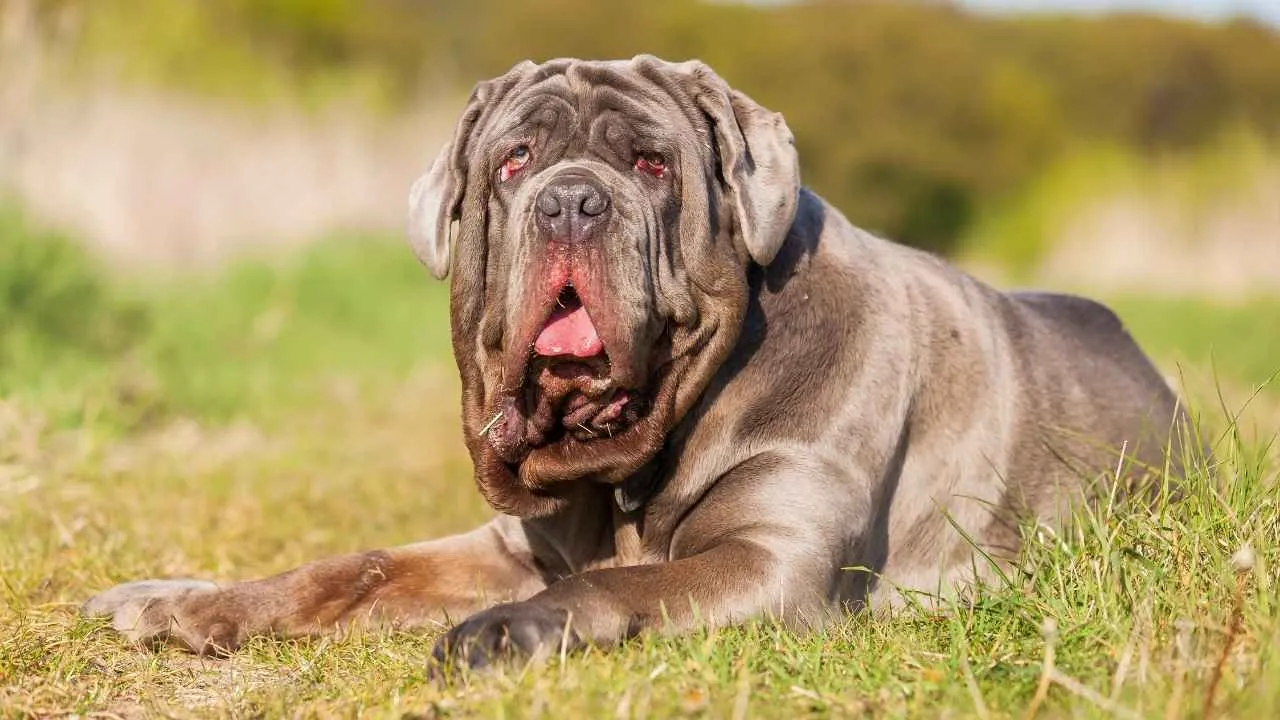
The Neapolitan Mastiff is the dog breed that looks like it was carved from ancient stone. They have deep wrinkles, heavy bodies, and a stare that can make delivery drivers rethink their life choices.
Dating back to the days of ancient Rome, this breed was built to guard. They are wary of strangers, but can be sweet, steady, and calm with their people.
Neos are not “everyone’s dog,” and that is okay. They need a calm home, clear rules, and kind but firm training. Their protective instinct is strong, so social time matters.
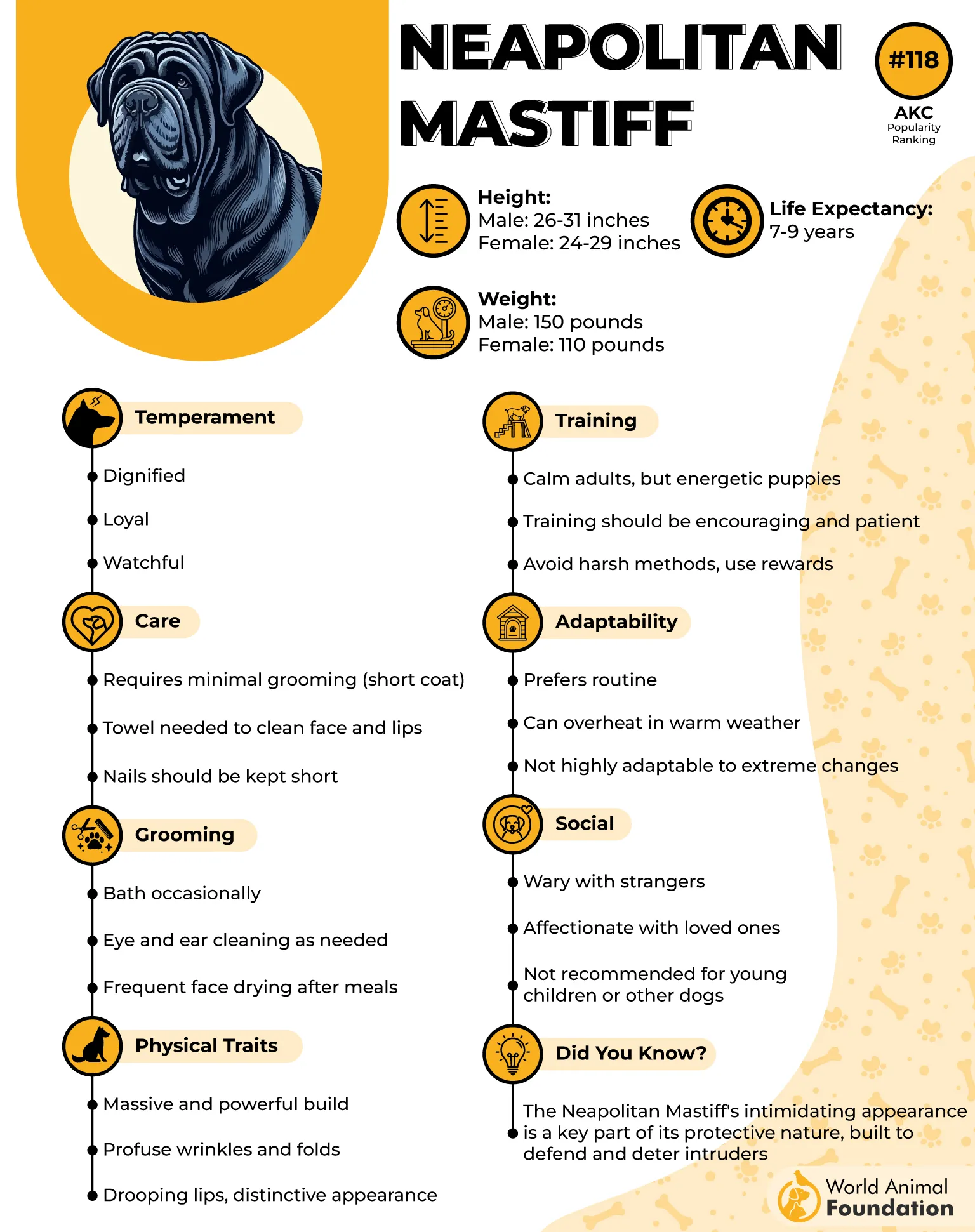
The goal is not to make them loofvery stranger. The goal is to help them stay stable and safe in the real world. Their life expectancy is often around 7 to 9 years. That short window is one reason people call this a “heart” breed. They can also drool a lot. Like, a lot. Keep towels ready, or you will live in a sticky reality.

But wait, there’s more! Their love is deep and loyal, and they tend to be close to their people in a quiet, powerful way.
Important Neo notes
Use positive training, because harsh methods can backfire fast.
Keep visitors calm and controlled, so your dog learns good patterns.
Clean skin folds gently, since wrinkles can trap moisture and dirt.
Plan space wisely, because this is a huge dog with a huge body turn radius.
6. Leonberger

Leonbergers are big, fluffy, and seriously charming. They were developed in Germany and are often described as energetic, gentle, patient, and family-focused.
Many of them love being around the whole household, not just one person. If you want a dog breed that feels like a friendly lion, this is your candidate.
They are smart and usually enjoy learning. They also like having a purpose, even if that purpose is just “carry this toy to the other room.”
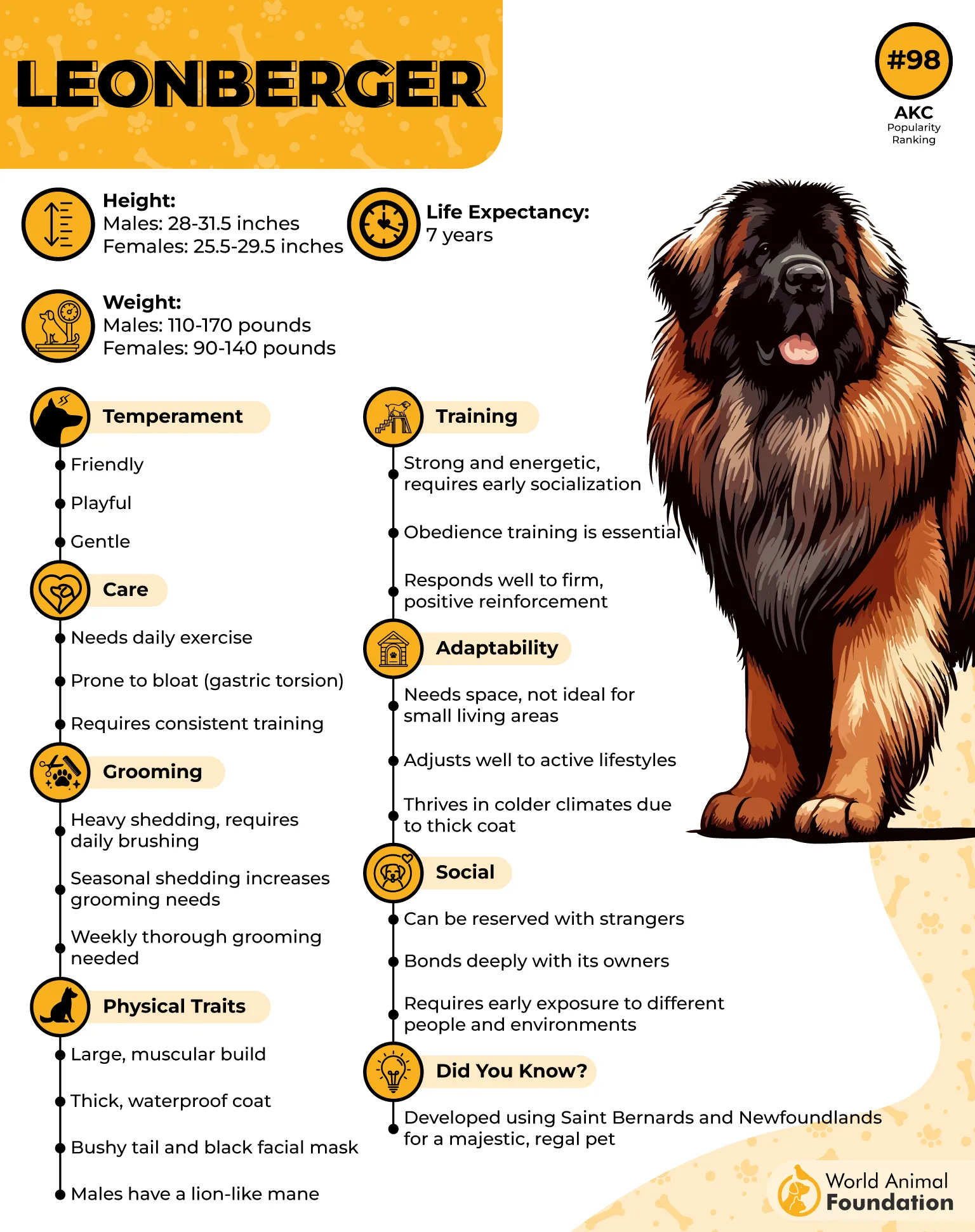
Leonbergers can be playful, but they also enjoy calm time. They often switch from zoomies to nap mode like a teenager after snacks.
Lifespan ranges can vary by source, but many Leonbergers are often listed around 7 years, and some guides note 8 to 10 years with good care.
Either way, you should go in knowing time can be limited. The good part is you can pack a lot of love into those years by keeping them fit, grooming them well, and staying on top of health checks.
Leonberger’s little joys
Expect heavy shedding, so brushing becomes part of your normal week.
Give them gentle training and games, because they love praise.
Protect growing joints by avoiding hard, high-impact play as puppies.
Let them be close, since they often crave family time
7. Bernese Mountain Dog
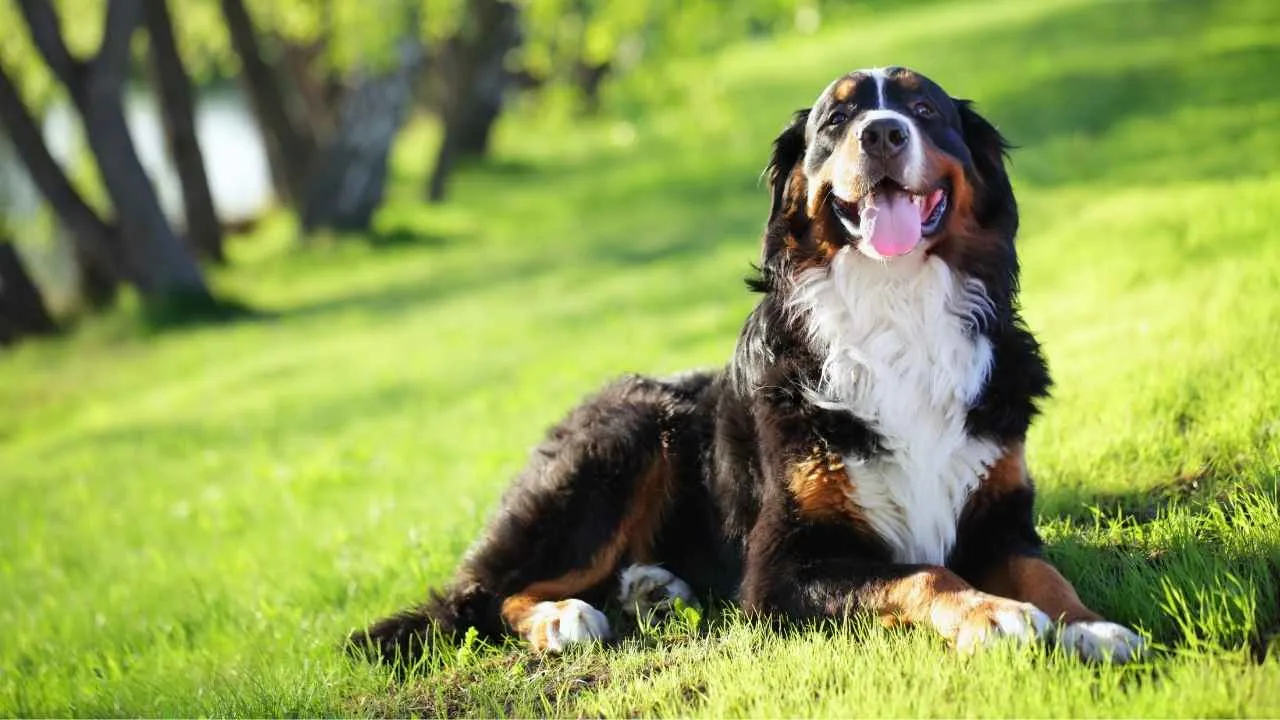
Bernese Mountain Dogs, also called Berners, are the kind of dog breeds that make strangers smile. They have a striking tri-color coat and kind eyes that look like they understand your whole life story.
They were bred for farm work in Switzerland, including pulling carts, and they still love having a role.
At home, many Berners are affectionate, gentle, and eager to please. They tend to respond best to kind training. Harsh correction can shut them down.
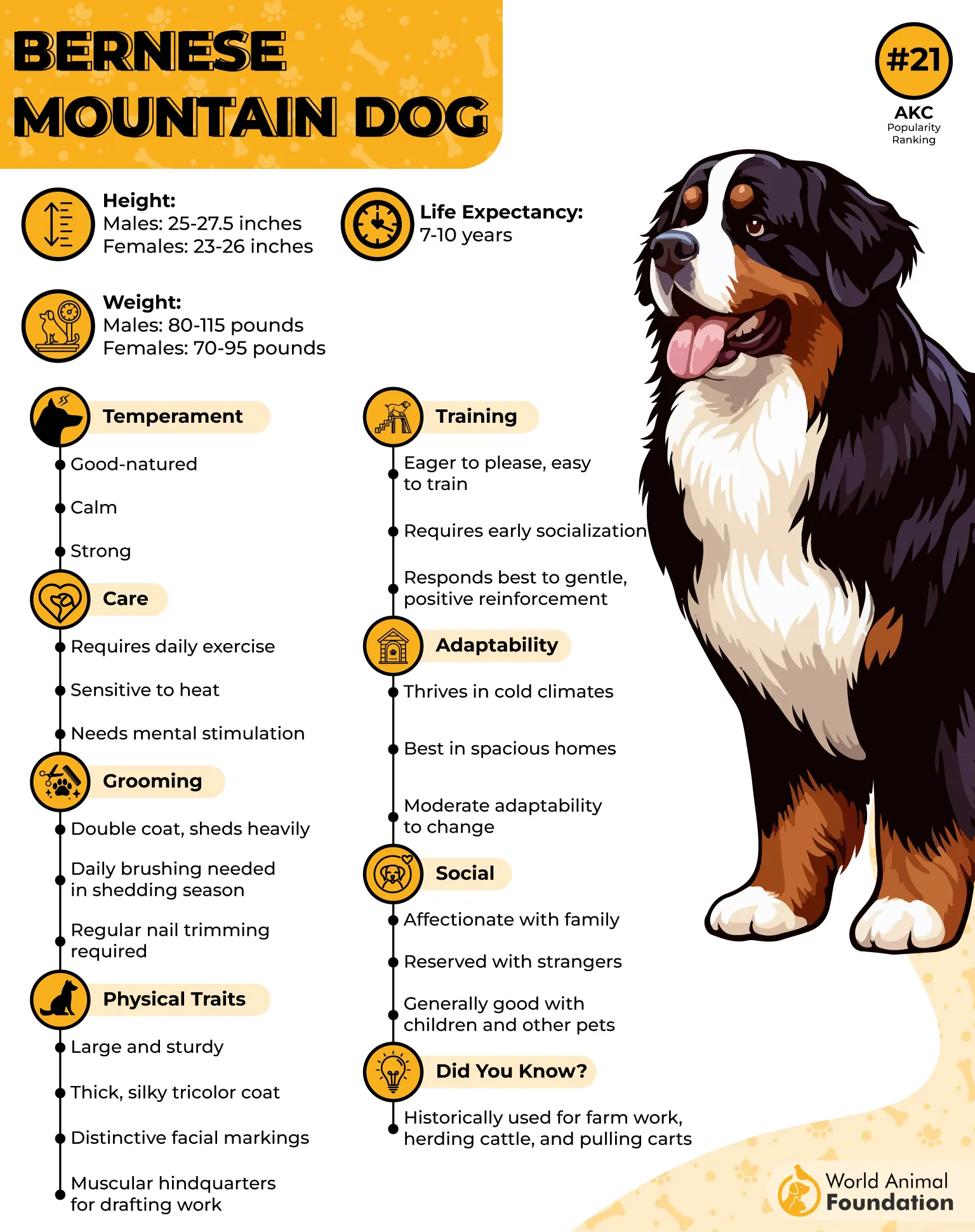
They also do not love being alone for long stretches, because they are very people-focused. If you want a dog who is basically a furry friend with feelings, a Berner fits.
As per WebMD, their life expectancy is often around 7 to 10 years. This breed is also known for a higher risk of certain health issues, including joint problems, bloat risk, and cancers. That can feel heavy, and it is.
But why bother with hopelessness? You can still give them a life full of comfort, fun, and good days. That matters more than any number.
Berner care that matters
Keep them lean and strong, since extra weight can stress hips and elbows.
Use calm routines for meals and rest, because bloat risk is not a joke.
Brush often, since they shed a lot, especially in coat-blowing seasons.
Make family time daily, because they do best when they feel included.
Conclusion
Even with short-living breeds, one thing stays the same: a dog with the right match can become one of your great companions. Many of the most distinctive breeds have unique histories and were originally bred for jobs in ancient times
Give them your love and attention, and cherish the time that they have with you!
And honestly, when your intelligent pet companion looks up at you like you are their whole world, you’ll get why “rare” can feel extra special.
Some other dog breeds may include Bedlington Terrier, Yorkshire Terrier, Canaan Dog, Grand Basset Griffon Vendéen, Cesky Terrier, Norwegian Lundehund, English Foxhound, Standard Poodle, and Bergamasco Sheepdog.
