




Ever seen a dog disappear into the woods… and look like it finally found its purpose?
Not running away. Not lost. Just… alive.
There’s something about certain dogs that changes the moment the trail starts. The city fades. The leash goes loose. And suddenly, you’re not the leader anymore—you’re just keeping up.
Because here’s the truth, most people don’t expect… Not all dogs are built for couch life. Some are built for miles. For mountains. For cold mornings in a tent that smells like rain and pine. For carrying their own weight… and still asking for more.
And the myth? That any dog can “just come along” for a camping or backpacking trip if you try hard enough.
Reality? Some breeds struggle the moment the terrain gets real. Others? They THRIVE in it.
Endurance. Drive. Tough paws on rough ground. A mind that doesn’t quit when the trail gets steep, and the sun starts to drop. It’s not just fitness… It’s instinct. And once you see it, you can’t unsee it.
Because these dogs don’t just join the adventure… They become part of the wild itself.
So let’s step off the pavement and into the backcountry—and explore the enduring dog breeds that were practically made for camping, hiking, and the long road into nowhere.
Enduring Dog Breeds That Love Camping and Backpacking
1. Siberian Husky
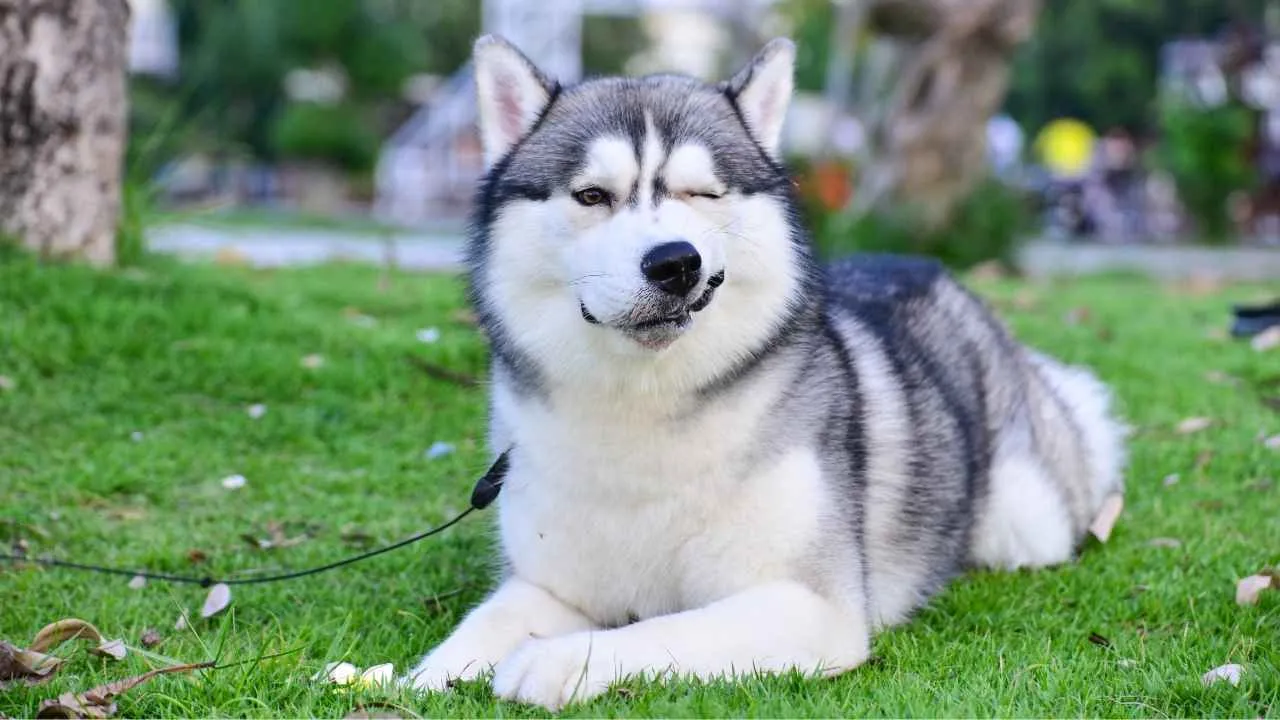
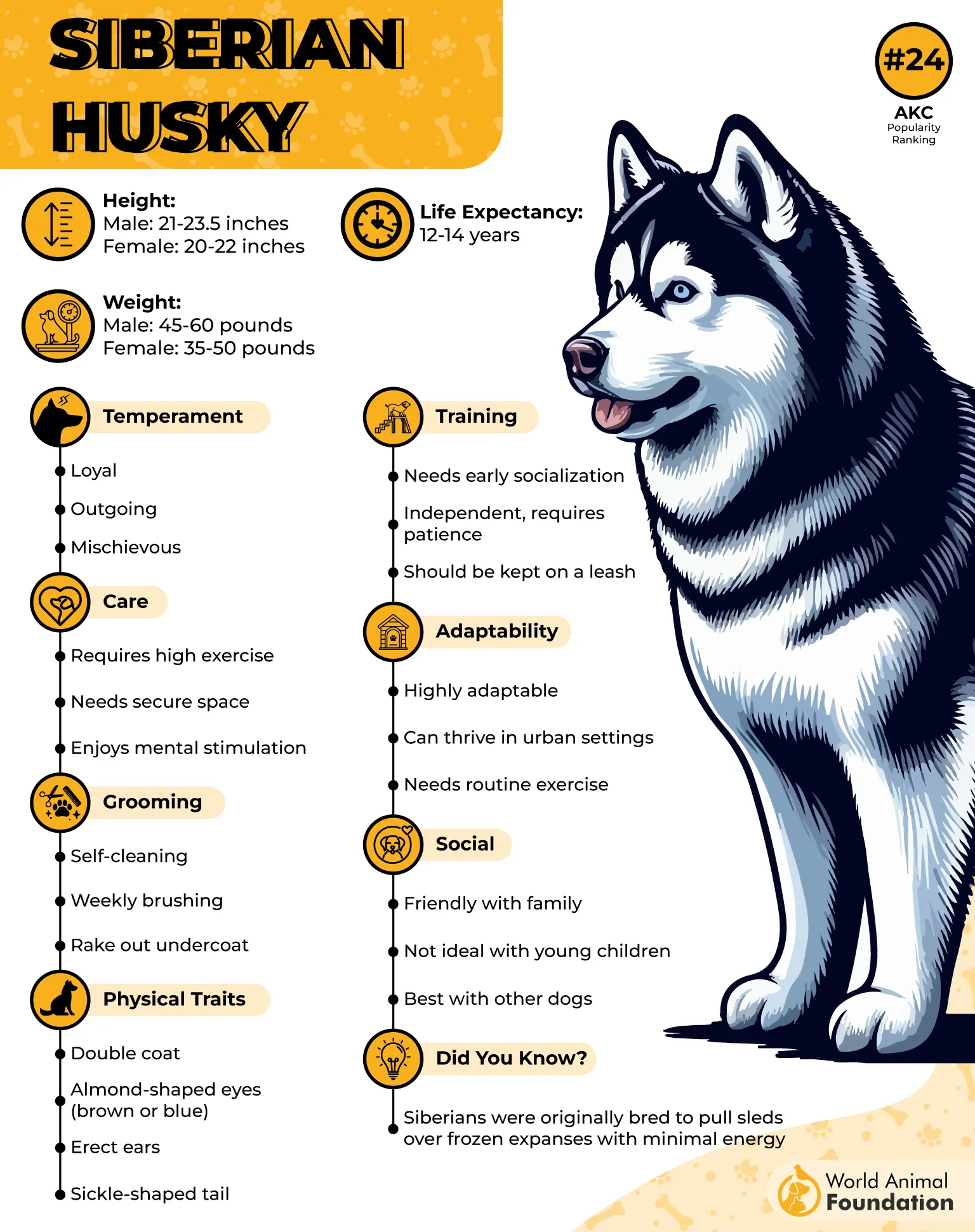
Siberian Husky is a medium-sized sled dog built for long hours of pulling across frozen landscapes, which translates into strong stamina on camping and backpacking trips, as mentioned by the AKC.
They were developed to work in coordinated packs, moving light loads over vast distances at a steady speed, making them reliable companions for multi-day hikes.
In the outdoors, they show a friendly, social nature and usually adapt well to living close to people and other dogs at camp.
One behavior that stands out is their strong instinct to run, so secure leashing and reliable recall training are essential on trail running.
They are also considered a highly vocal dog breed, often communicating through howling instead of constant barking, which can sound especially expressive around a quiet campsite.
Another unique trait is their naturally low doggy odor and relatively clean coat despite harsh working conditions.
However, their independent mindset means they can slip away if not properly managed, especially when wildlife or open space triggers their curiosity during outdoor expeditions, making secure gear and supervision important on every journey together.
Fun fact
Siberian Huskies can regulate their metabolism during endurance activity, allowing them to conserve energy efficiently over long distances—one reason they were trusted for multi-day sled journeys in extreme conditions.
2. Alaskan Malamute
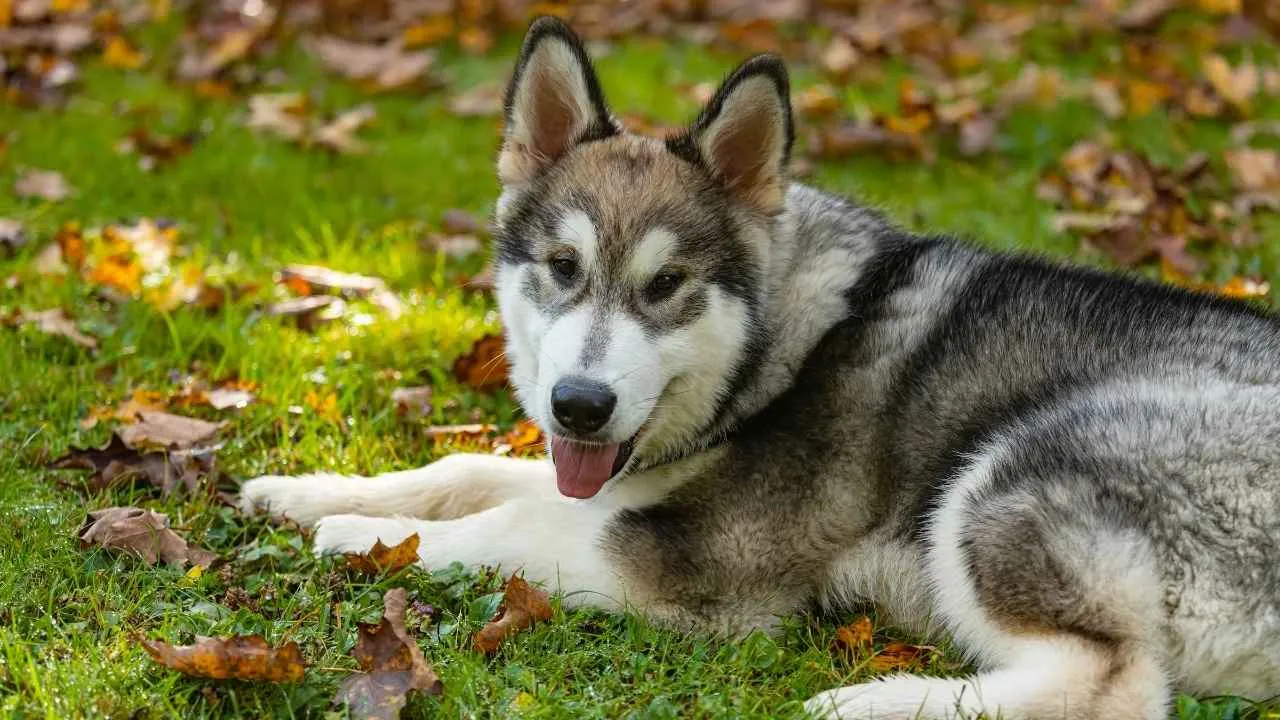
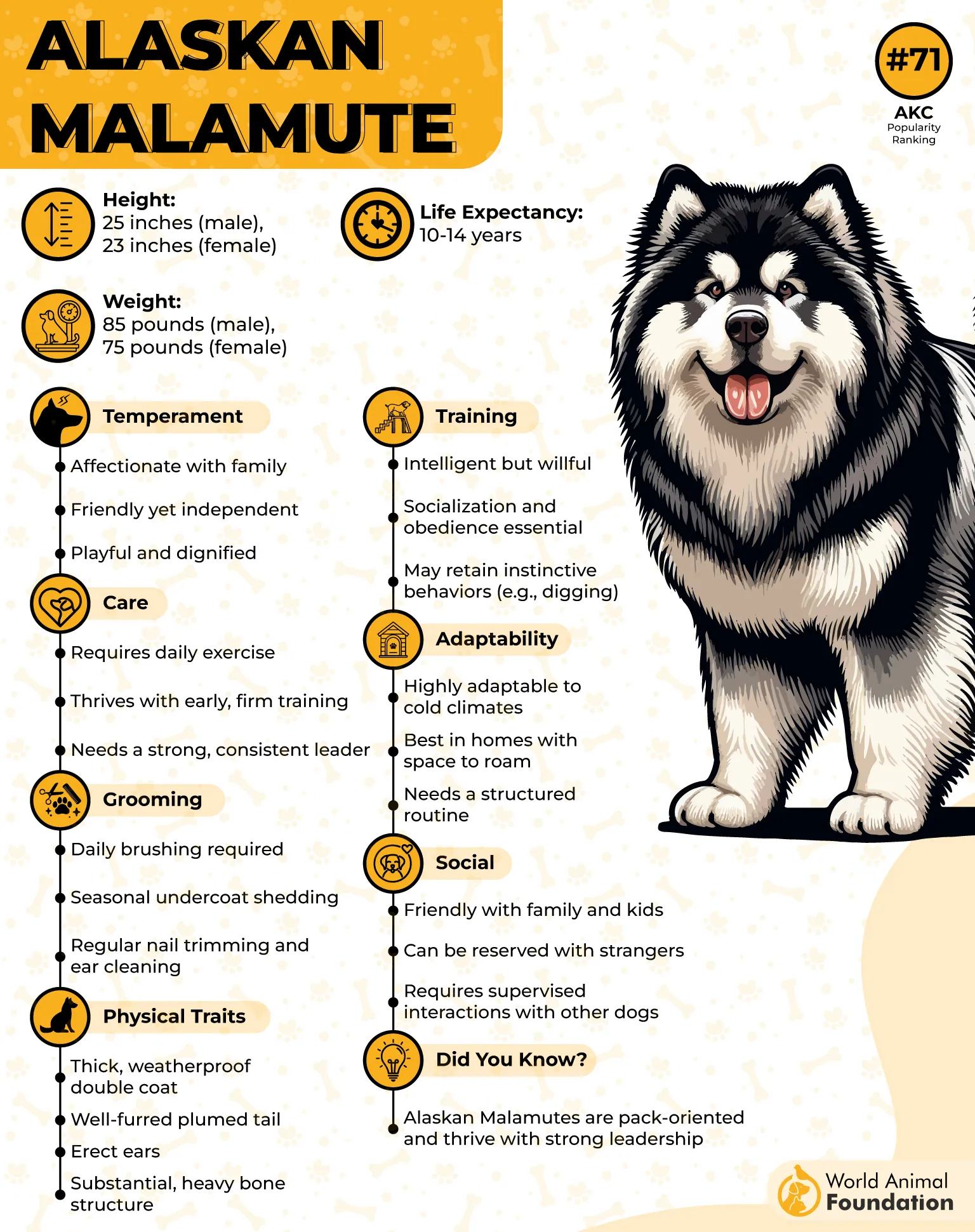
The Alaskan Malamute is a large, powerful Arctic sled dog built for hauling heavy loads over long distances in harsh, frozen terrain, which makes it naturally suited for demanding camping and backpacking trips.
With a deep chest, strong shoulders, and thick weather-resistant coat, this big dog is designed for slow but steady endurance rather than speed, helping it maintain consistently high energy on multi-day wilderness routes.
On the tricky trail, this great trail partner carries itself with confidence and calm strength, often staying close to its group and showing a strong attachment to its human “pack,” especially when leadership and the dog’s training are clear from an early age.
Despite its size and working build, it often displays a gentle, playful side around familiar people after a day of effort, making it a steady hiking companion at camp.
One notable physical detail is its heavily furred, plume-like tail that curls over its back and helps shield its face when resting in cold wind and snow.
Fun fact
Alaskan Malamutes are known for their exceptional pulling power and were historically used to haul supplies across frozen regions where speed mattered less than raw strength and endurance.
3. Bernese Mountain Dog
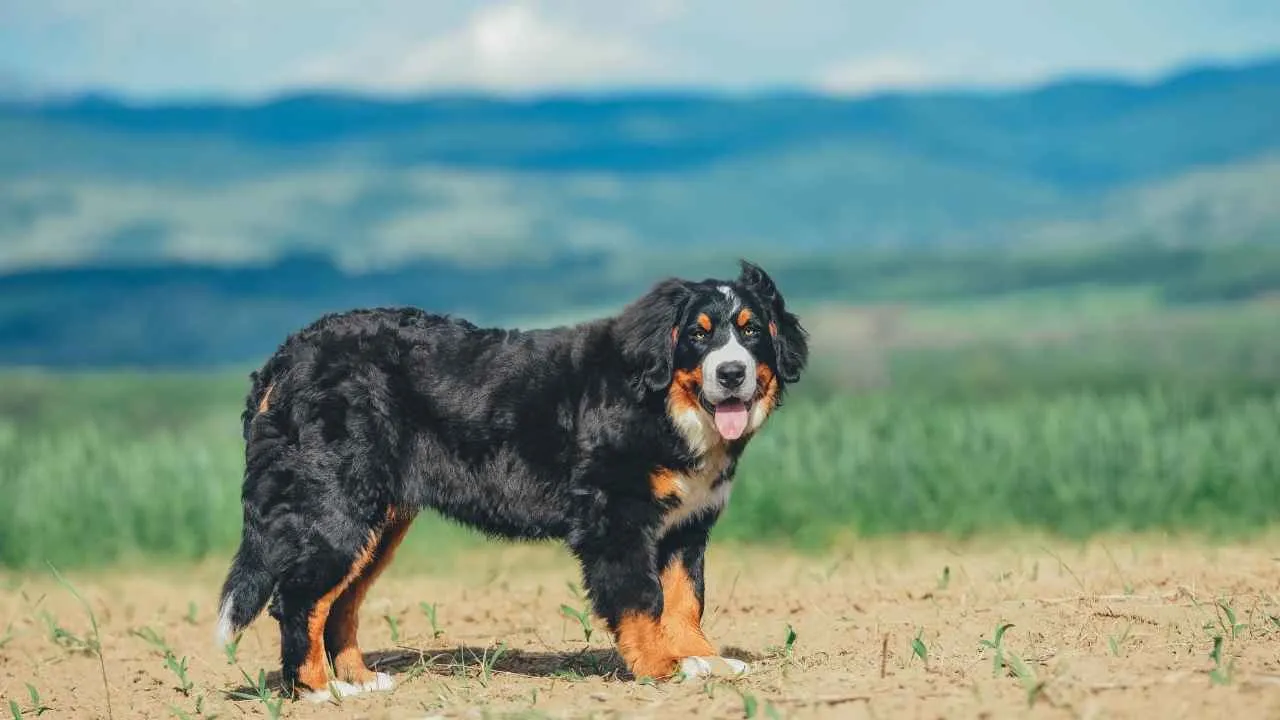
The Bernese Mountain Dog is a large, sturdy working breed from the Swiss Alps, originally bred for farm labor where strength and reliability mattered more than speed.
On camping and backpacking trips, it brings a calm, steady presence and enough power to handle pulling light loads or gear on gentle terrain, reflecting its history as a draft and cattle-driving dog.
It is naturally people-oriented and tends to stay close to family members at camp, often preferring to rest nearby after a day of outdoor activity rather than roam far.
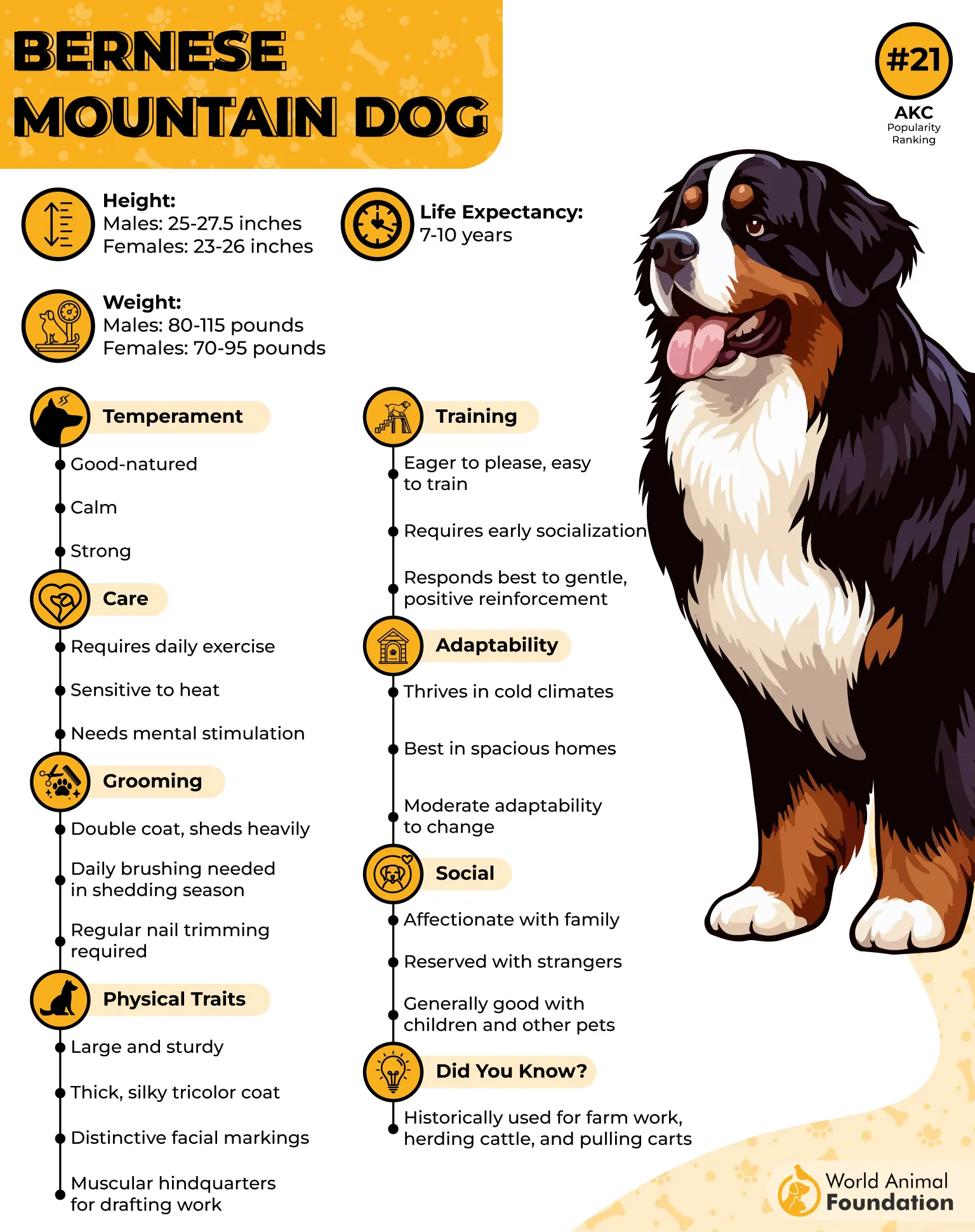
Historically, it was used to pull milk carts through mountain villages, a job that required patience and endurance over long distances in cold conditions.
One physical detail that stands out is its thick tri-colored coat, which is not only weather-resistant but also helps it remain comfortable in damp, chilly alpine environments during outdoor stays.
Fun fact
Bernese Mountain Dogs mature slowly compared to many breeds, often taking up to two years to fully develop their strength and coordination, which is why their working ability improves steadily with age.
4. Australian Shepherd
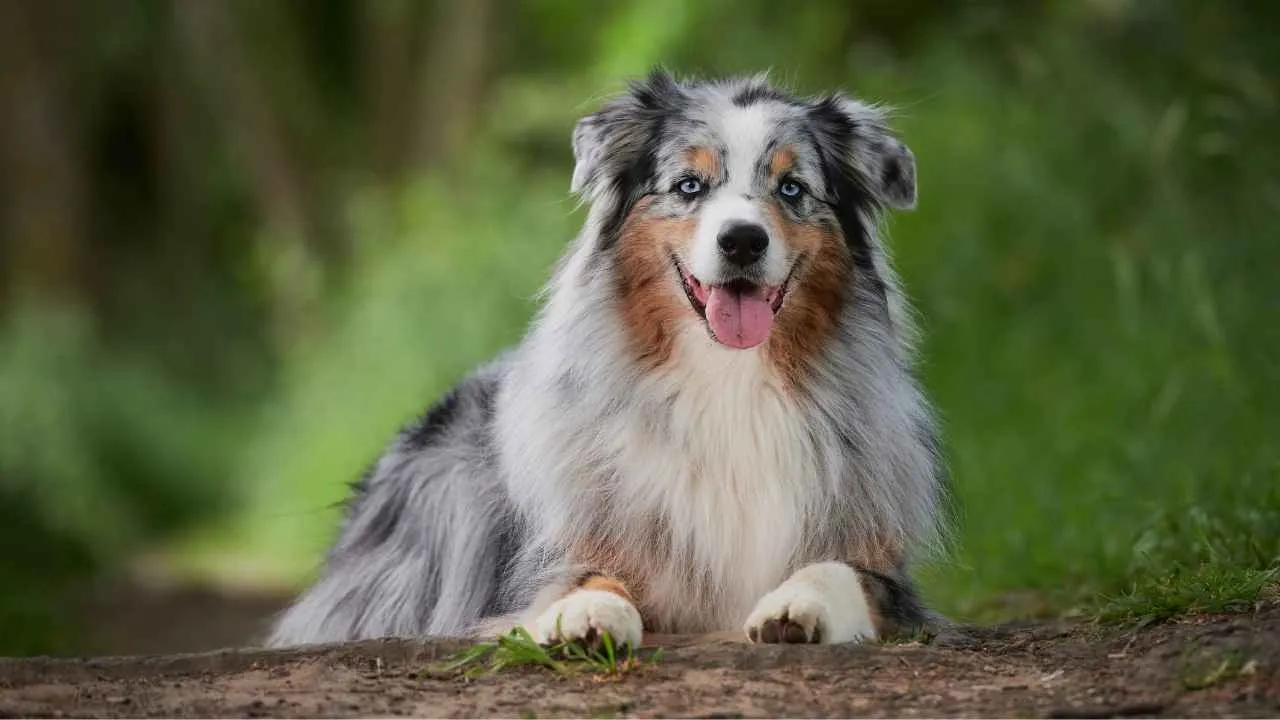
The Australian Shepherd is a highly energetic herding dog developed for long days of ranch work, where it was expected to control livestock across wide, open terrain, as mentioned by Purina.
That same stamina and focus carry over well into camping and backpacking, especially on routes that involve constant movement and changing terrain.
On the trail, it tends to stay mentally locked onto its group, often checking in frequently and anticipating direction changes, which makes it feel very “in sync” with active hikers.
Its strong herding instinct can also show up outdoors, sometimes trying to guide or circle moving people or animals at camp.
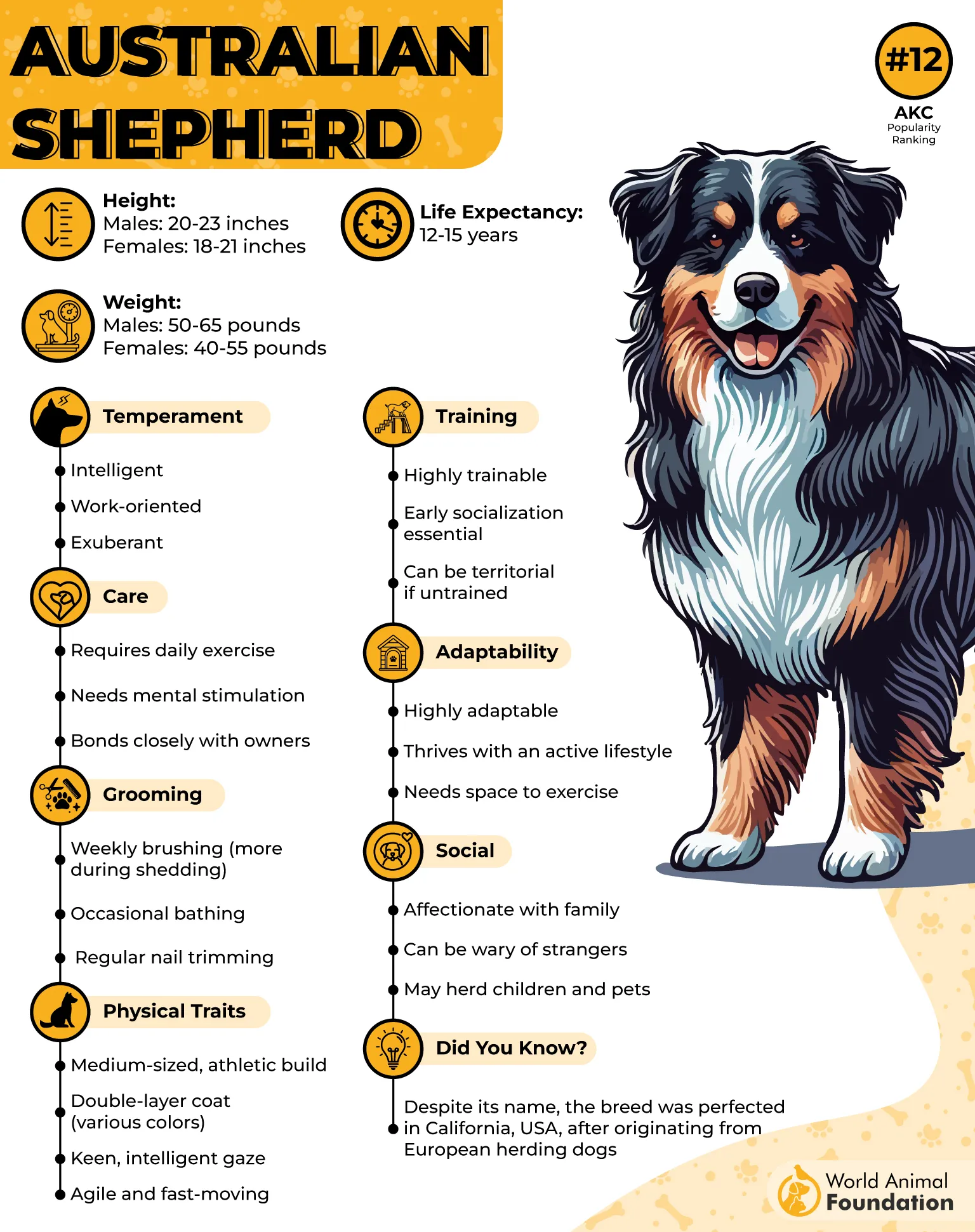
Historically shaped by ranch life in the American West, this active dog became valued for its ability to handle demanding work for extended hours without losing drive.
One striking physical detail is its marbled eye color variation, often seen as blue, brown, or mixed, which gives each dog a noticeably different look even within the same litter.
Fun fact
Australian Shepherds are known for their unusually fast learning speed in working tasks, often picking up complex multi-step herding or agility commands in fewer repetitions than many similar working breeds.
5. Rhodesian Ridgeback
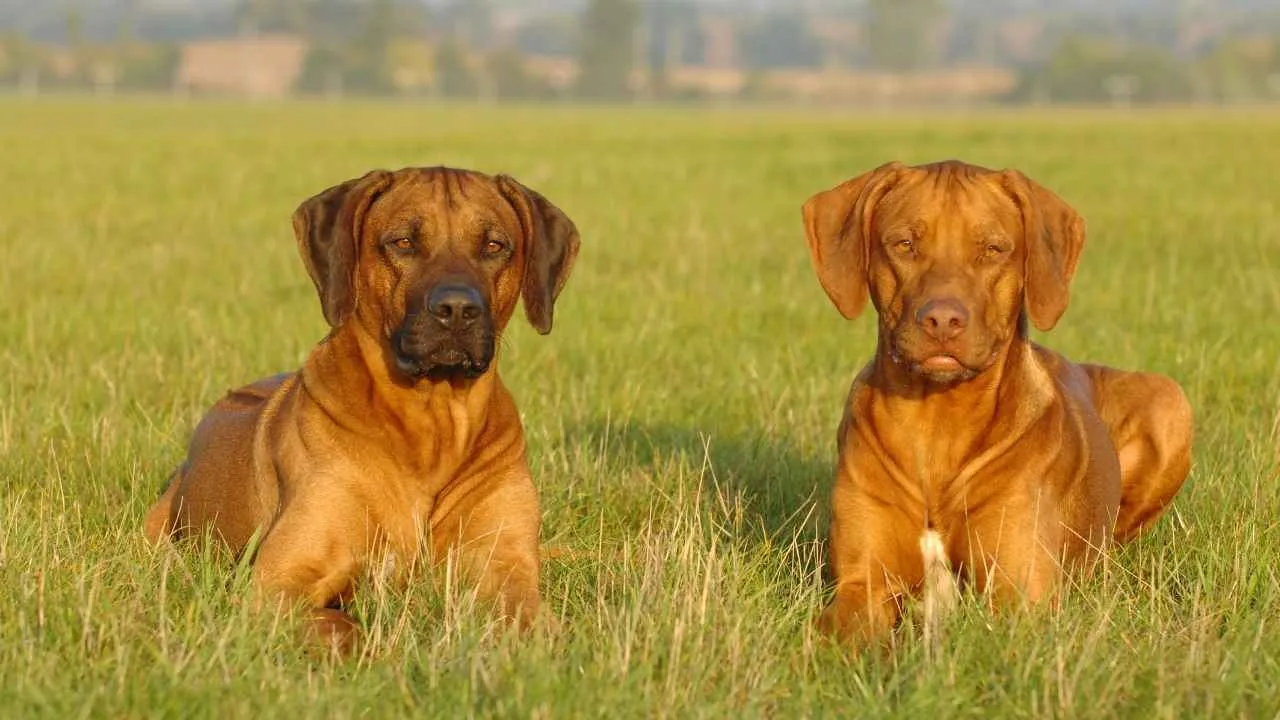
The Rhodesian Ridgeback is a powerful, athletic hound originally developed in southern Africa for tracking and holding large game over long distances, which explains its strong suitability for camping and backpacking routes that demand endurance and steady movement.
On the trail, it is known for maintaining a controlled, efficient pace rather than bursts of speed, making it reliable on long hikes where energy management matters.
It typically forms a close bond with its family group and tends to be affectionate with familiar people, while showing a more reserved attitude toward strangers encountered on the trail or at campsites.
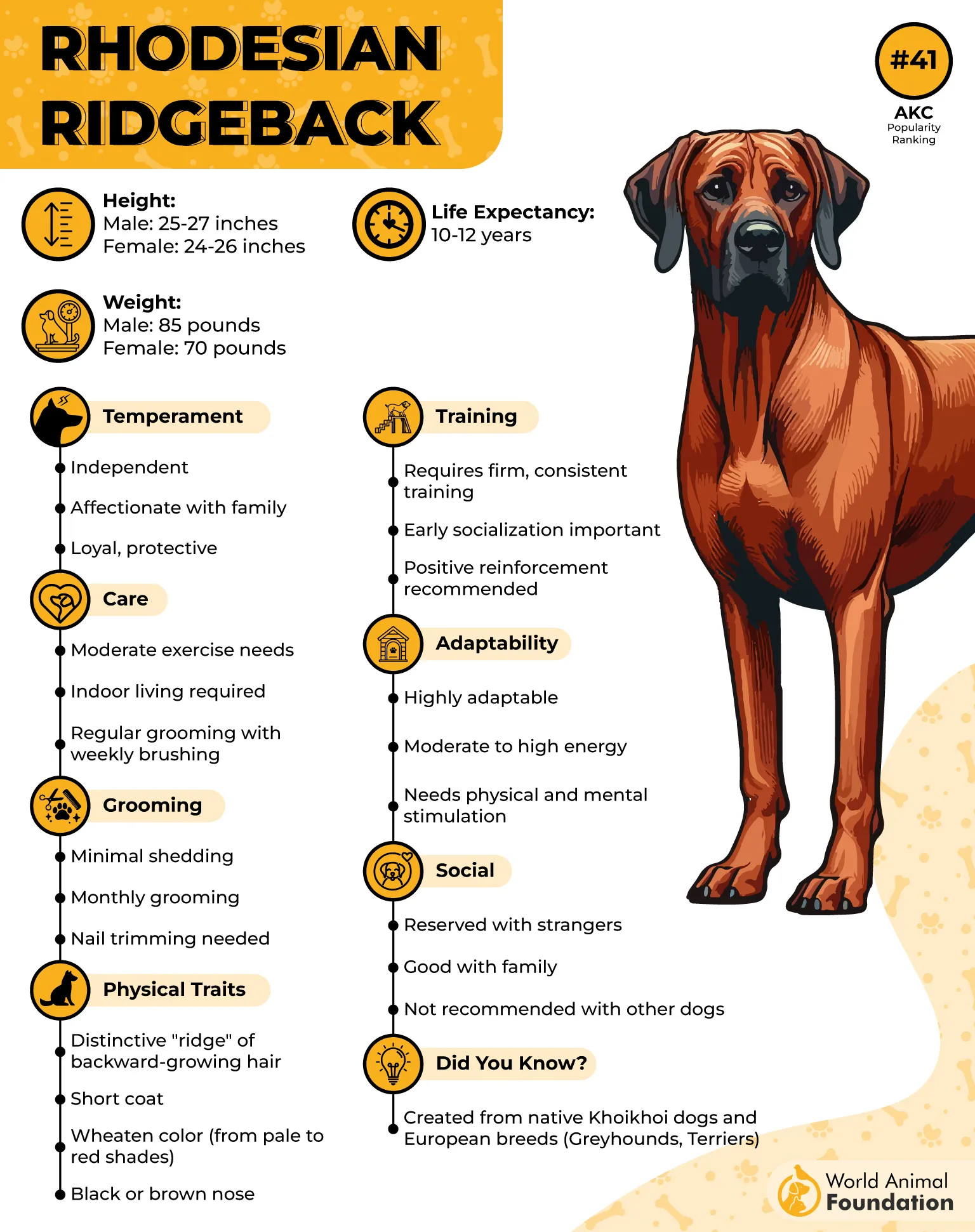
Its muscular build and lean structure require consistent activity to stay balanced, so long walks, climbs, and outdoor conditioning fit naturally into its routine.
One notable physical detail is the ridge of hair growing in the opposite direction along its back, which sets its appearance apart and reflects its unique breed lineage.
Fun fact
Rhodesian Ridgebacks were historically used to track lions at a safe distance in groups, relying on stamina, coordination, and courage rather than direct confrontation.
6. Border Collie
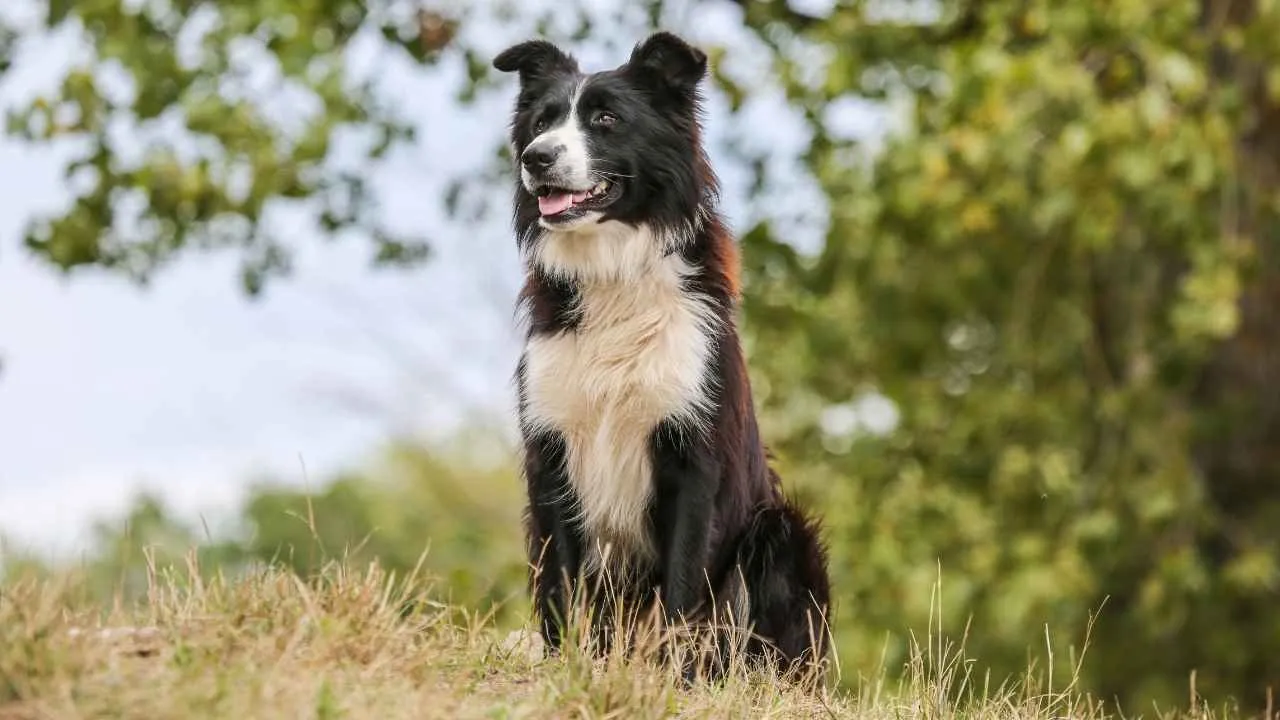
The Border Collie is a highly intelligent, athletic herding dog originally developed along the border regions of England and Scotland, where it was bred to control sheep across wide, rugged farmland.
That same sharp focus and stamina make it a strong match for camping and backpacking trips that involve constant movement, problem-solving, and long trail days.
On outdoor routes, it stays highly alert to its environment, often tracking group movement and anticipating direction changes with remarkable precision.
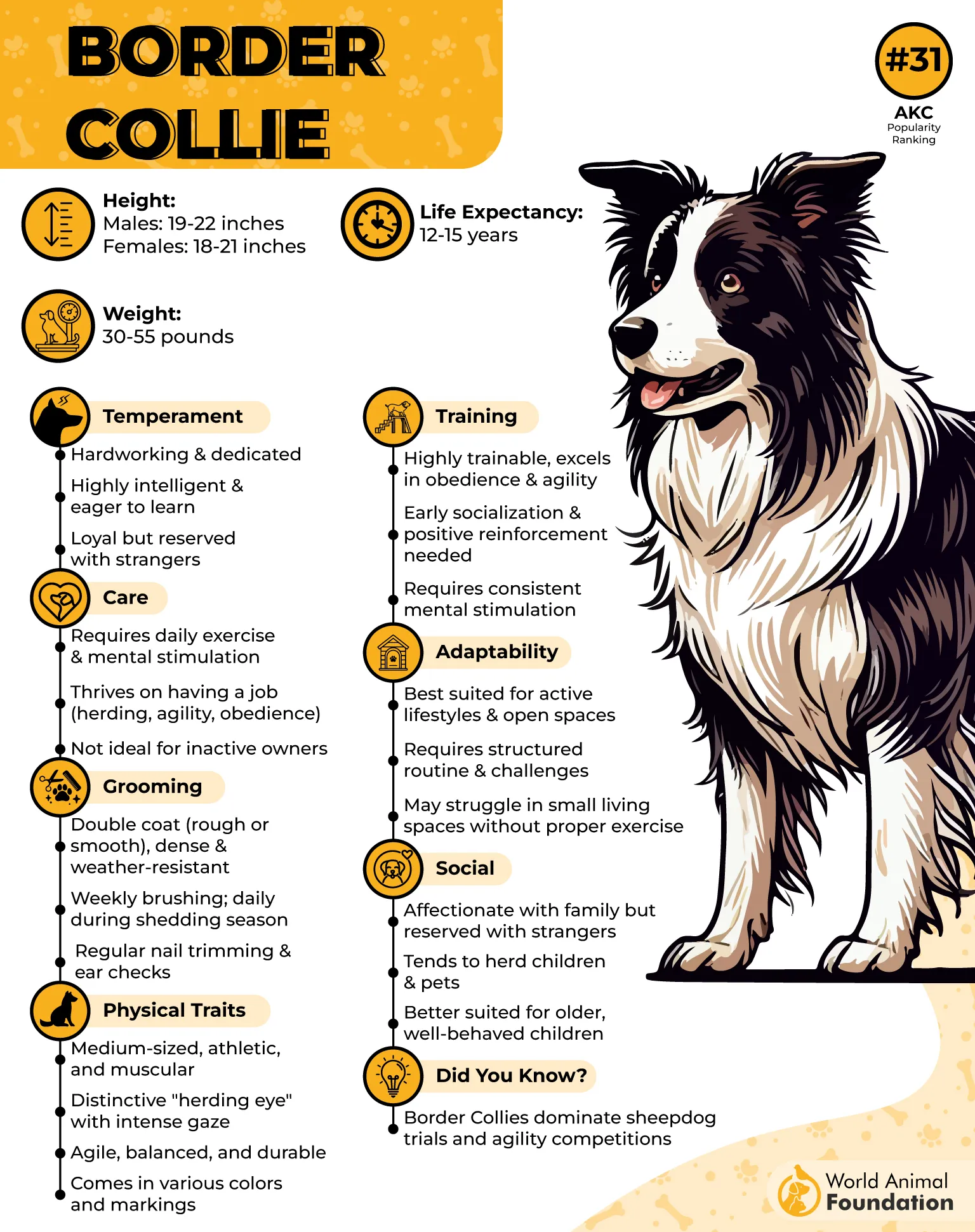
This is a good hiking dog that thrives when given tasks during travel, whether navigating paths, carrying small gear packs, or staying engaged through active hiking trips.
Without structured activity, it can become restless, so long-distance hiking adventures suit its working mindset far better than idle downtime.
One defining physical detail is its intense “herding eye,” a focused stare used to control livestock, which still appears during outdoor movement and interaction.
Fun fact
Border Collies are widely recognized for their exceptional learning ability in working contexts, often mastering complex command sequences in very few repetitions compared to most other herding breeds.
7. Labrador Retriever
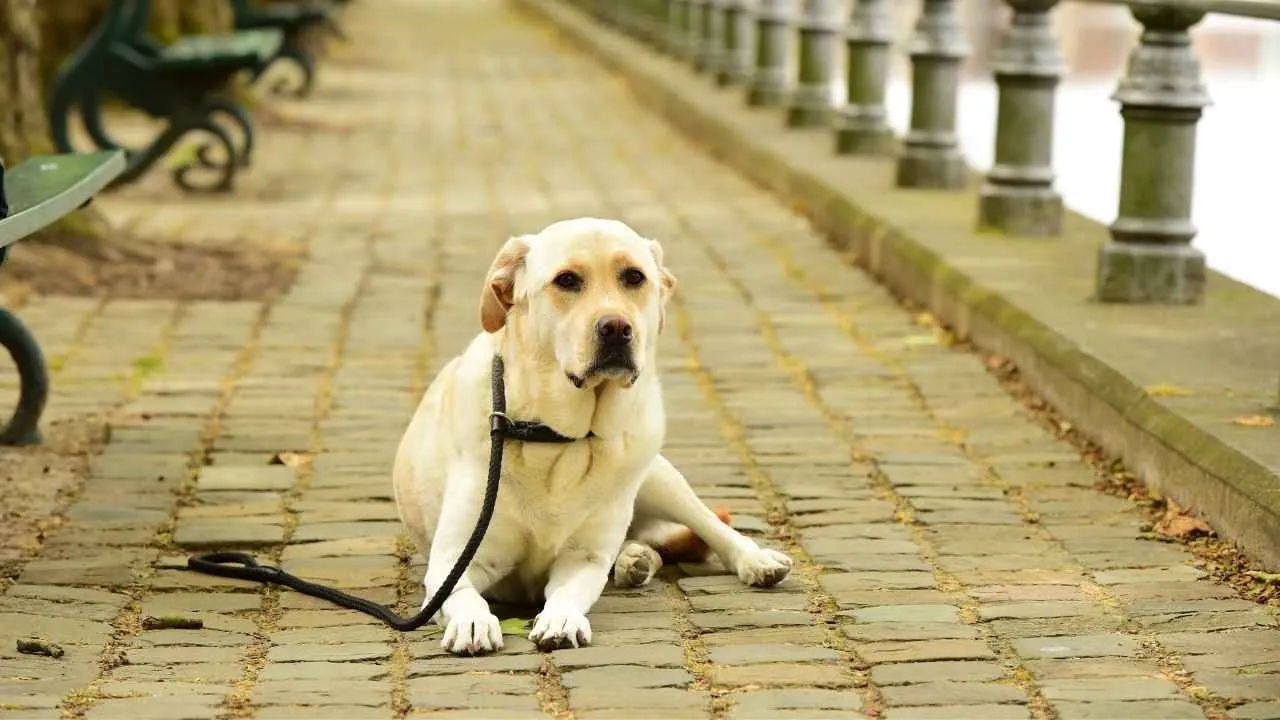
The Labrador Retriever is a sturdy, friendly working dog originally developed for retrieving fish and gear around cold North Atlantic waters, which explains its comfort in wet, rugged outdoor environments, as noted by PetMD.
On camping and backpacking trips, it stands out as a steady, adaptable, great companion that moves easily between hiking trails, lakesides, and campsite life.
This hiking dog tends to be highly social, showing easy acceptance of people and other dogs, which makes shared outdoor travel smoother when properly introduced and guided.
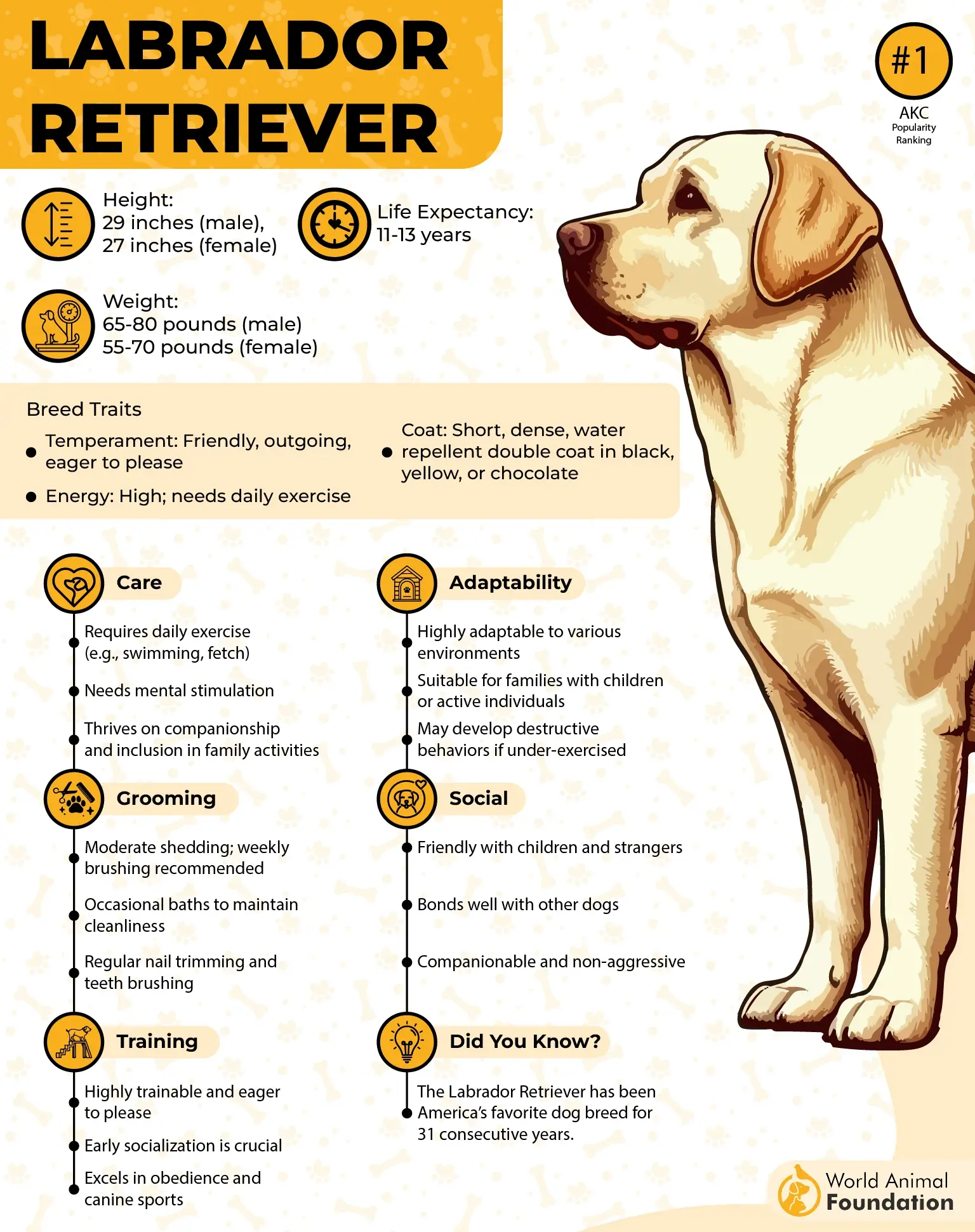
Its dense double coat helps it handle cold water and rough weather, but it also sheds heavily, so regular grooming is part of keeping it comfortable during extended trips.
One notable physical detail is its thick, otter-like tail, which acts like a rudder in water and reflects its strong swimming background.
Fun fact
Labradors were historically refined in Newfoundland before becoming widely popular in England, where they were selectively bred to excel at retrieving game from both land and water during long hunting days.
Conclusion
Out on the trail, everything gets stripped down to what truly matters—endurance, trust, and the rhythm of steady movement through changing terrain.
These are the best dog breeds that bring more than physical strength; they bring focus, loyalty, and an instinct for long journeys that make rough paths feel more manageable.
Whether crossing forest lines, climbing ridges, or resting under open skies, they stay present through every mile.
Camping and backpacking stop feeling like escape and start feeling like shared purpose. In that space, the wild feels a little less distant—and a lot more like home.
