




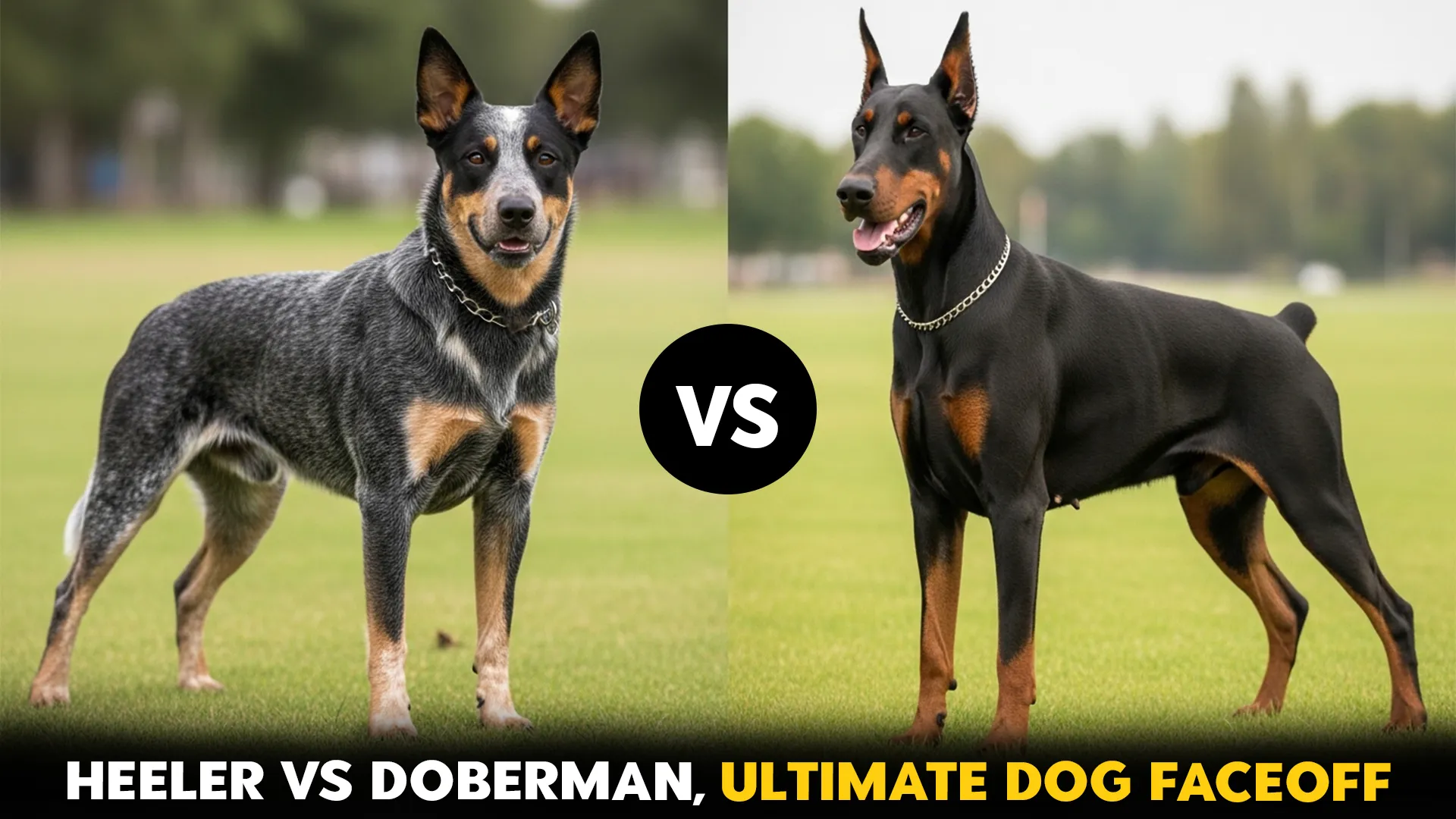
Blue Heeler and Doberman may both be smart, active, loyal dogs, but they are built for very different kinds of homes and routines.
The Blue Heeler, also known as the Australian Cattle Dog, is a compact, hardworking herding breed from Australia, while the Doberman Pinscher is a larger working breed from Germany known for its alert, protective nature.
If you are choosing between these two impressive breeds, it helps to look beyond appearance and focus on energy level, trainability, living space, and everyday compatibility.
This comparison highlights the key differences so you can find the dog that fits your lifestyle best.
Did you know? Bluey and her family from the famous Bluey cartoon are Blue Heeler dogs.
Blue Heeler vs. Doberman: A Dog Breed Showdown
It’s a clash of grit versus grace as the rugged, tireless Blue Heeler goes head-to-head with the sleek and vigilant Doberman. While both are elite working breeds, we’re breaking down whether you need a scrappy outdoor partner or a sophisticated home guardian.
Origin & Purpose
At first glance, Blue Heelers and Dobermans both look like serious working dogs, but they were created for very different jobs. The Blue Heeler, officially the Australian Cattle Dog, was bred in Australia to move cattle across rough land, long distances, and harsh conditions. That history explains its grit, speed, and constant need to stay busy.
According to PetMD, the Doberman Pinscher came out of Germany as a personal protection and working breed, built to be alert, dependable, and ready to respond fast. In modern homes, those roots still matter. A Blue Heeler tends to act like a determined ranch hand looking for the next task.
A Doberman feels more like a loyal guardian who wants purpose, structure, and a close connection with its people.
Size & Build Differences
This is not a close size match. The Australian Cattle Dog is a compact, muscular medium breed, with AKC listing males at 18 to 20 inches, females at 17 to 19 inches, and a general weight range of 35 to 50 pounds.
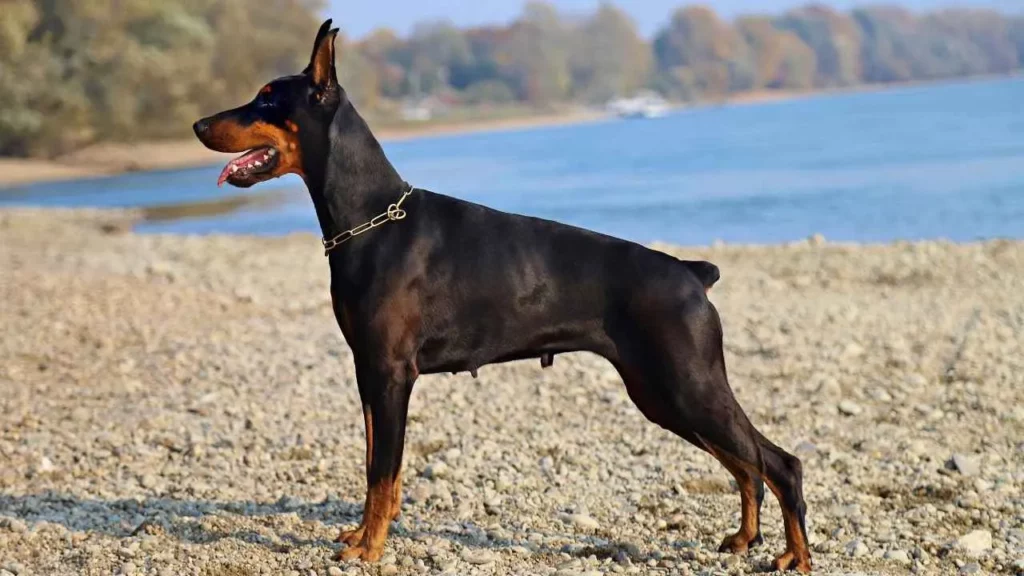
The Doberman is much larger and longer-legged, standing 26 to 28 inches for males and 24 to 26 inches for females, with males weighing 75 to 100 pounds and females 60 to 90 pounds.
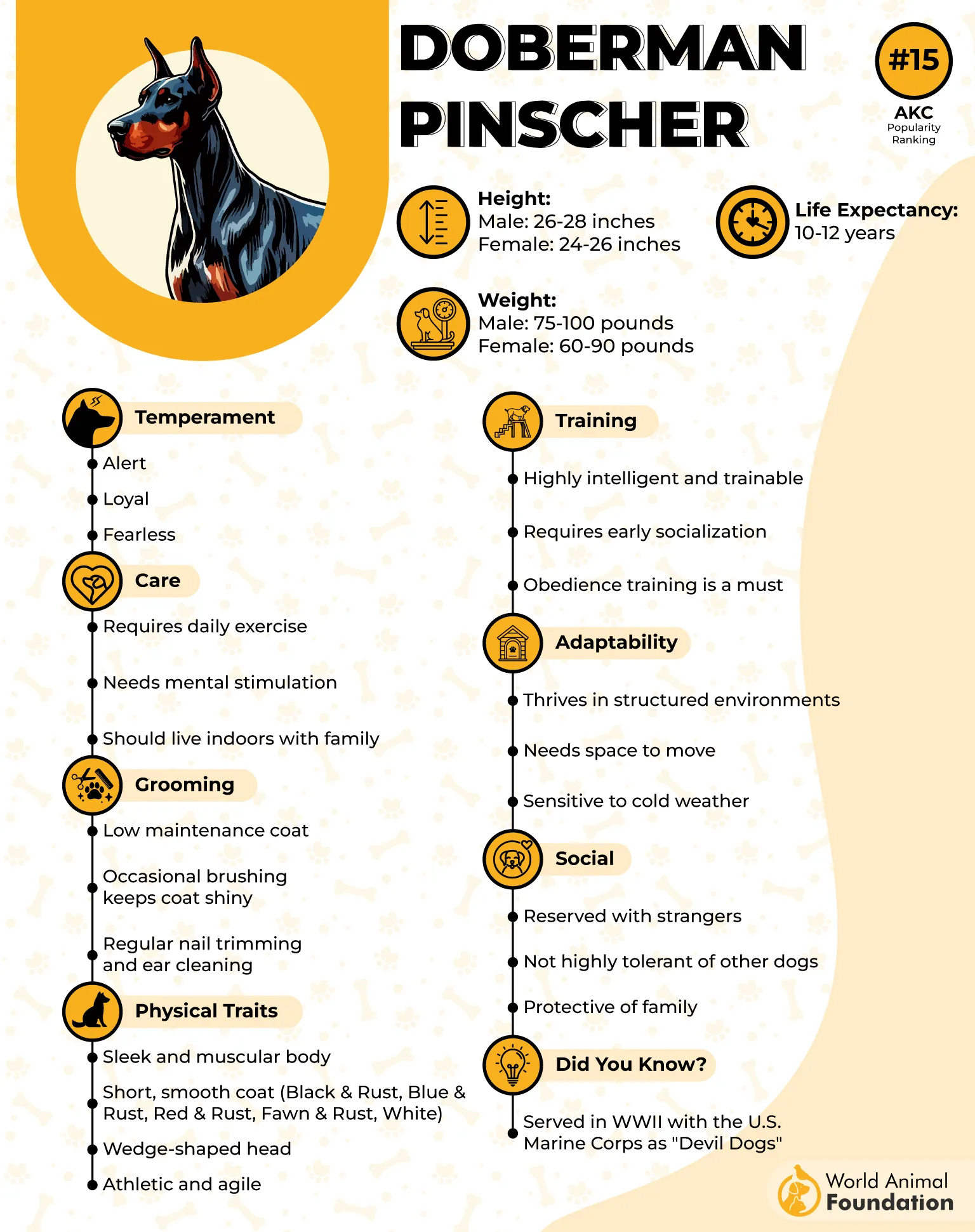
The Blue Heeler is built low, sturdy, and athletic, made for agility, quick turns, and endurance. The Doberman is sleek, powerful, and imposing, with more height, more reach, and more visual presence.
Coat & Maintenance
Both breeds are relatively easy to live with in the grooming department, but the type of maintenance is a little different.
The Blue Heeler has a smooth, double-layer coat that was designed to handle outdoor work and changing weather. A weekly brushing and occasional bath are usually enough, but the undercoat sheds twice a year and needs more attention during those heavy seasonal blowouts, as noted by WebMD.

The Doberman’s short coat is even simpler. It is mostly wash-and-wear, with light routine grooming to keep the coat glossy and healthy.
So while neither dog is high-maintenance compared with fluffier breeds, the Blue Heeler brings more seasonal shedding and a tougher, weather-ready coat, while the Doberman offers a cleaner, smoother, lower-fuss finish overall.
Temperament & Behaviour
The Blue Heeler is sharp, watchful, tenacious, and often wary of strangers. It bonds hard with its people and tends to be happiest when it has a mission, whether that is herding, chasing, or solving problems. That same drive can show up as nipping, bossiness, or trying to herd children and other pets if training falls short.
The Doberman is also alert and deeply devoted, but its personality usually feels more centered on protection, responsiveness, and a close partnership with family. With good socialization, Dobermans can be affectionate and steady, though they can become overprotective or pushy without structure.
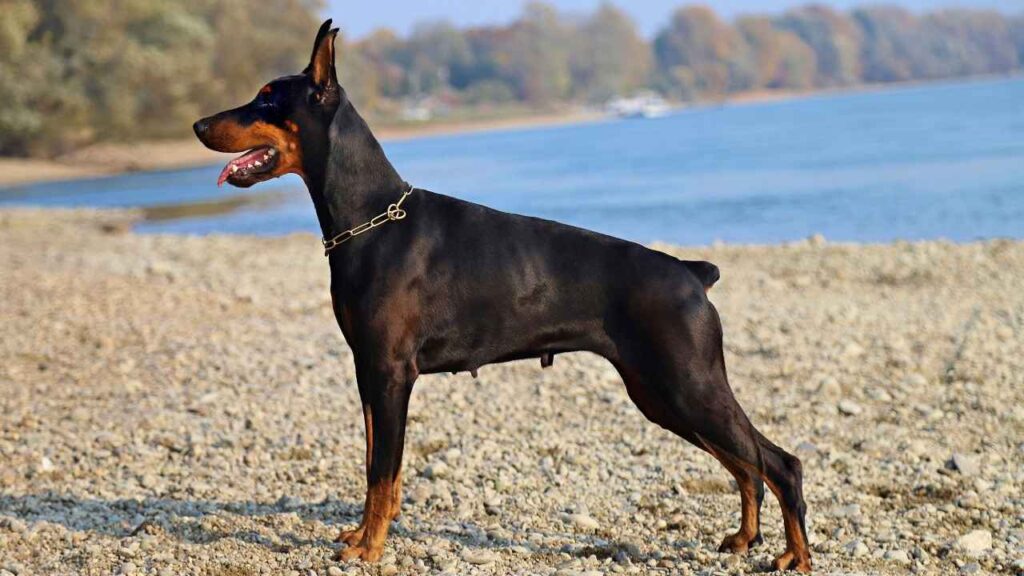
The Blue Heeler tests the world with working intensity. The Doberman reads the world with guardian intensity. Both need guidance, but they bring very different instincts into the home.
Energy Levels & Exercise Needs
Neither of these dogs is happy with a quick stroll around the block, but the Blue Heeler usually takes intensity to another level.
Australian Cattle Dogs need more than a walk and really do best when they have a job, regular running, or dog sports that challenge both body and mind. This is the breed that gets bored fast and then invents its own fun.
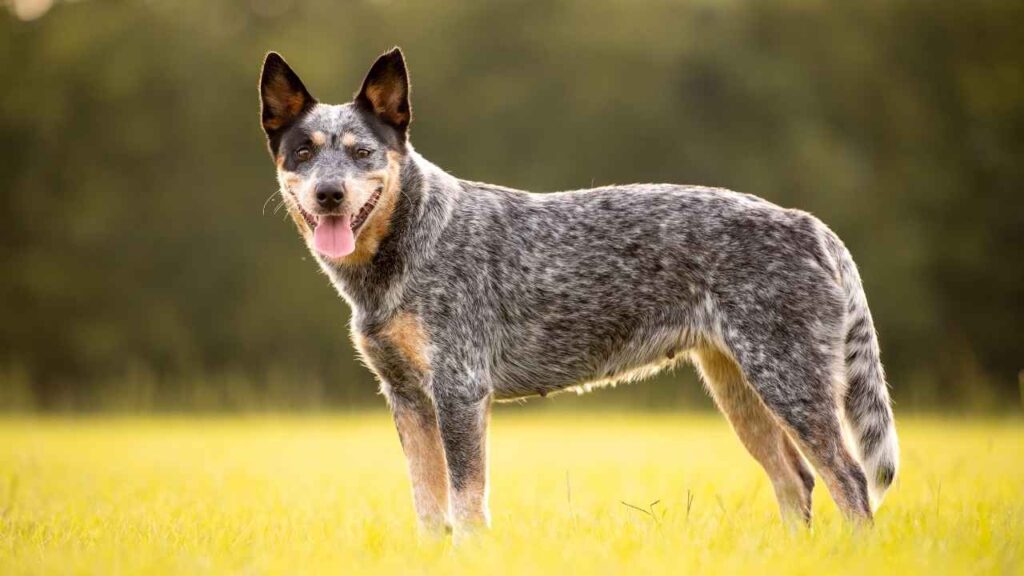
Dobermans are also energetic athletes and need daily exercise, free play, and training, but their energy often feels a little more focused and owner-centered. They thrive on long walks, hikes, and room to run.
In plain terms, the Blue Heeler needs work-like activity to stay balanced, while the Doberman needs strong daily outlets and consistent involvement.
Both are active, but the Heeler is less forgiving of an understimulating routine.
Trainability & Intelligence
This matchup is fascinating because both breeds are highly intelligent, but they do not learn in the same way.
The Doberman tends to be quick, responsive, and eager to work closely with its handler, which makes training feel smooth when leadership is consistent. Dobermans learn easily and respond quickly, but also warn that they can become destructive or unmanageable without proper raising, socialization, and obedience work.

The Blue Heeler is every bit as smart, but often more independent in how it uses that brain. Socialization, obedience, and ongoing work are important because an intelligent, energetic Heeler with nothing to do will become bored and destructive.
Health & Lifespan
The Blue Heeler has the edge in lifespan, with the AKC listing 12 to 16 years compared with 10 to 12 years for the Doberman.
That said, both breeds come with health concerns owners should know before bringing one home. For Australian Cattle Dogs, deafness, progressive retinal atrophy, and hip dysplasia, along with recommended testing for hips, elbows, eyes, BAER, and certain inherited eye conditions, are possible.
Dobermans face a more intense list, including bloat, hip dysplasia, dilated cardiomyopathy, von Willebrand’s disease, progressive retinal atrophy, albinism, and hypothyroidism. This does not mean every Doberman will be unhealthy, but it does mean buyers need to be serious about breeder screening and ongoing veterinary care to improve lifespan.
Companion Working Roles
Both breeds love having purpose, but they shine in very different roles.
The Blue Heeler is a natural fit for herding, farm tasks, agility, obedience, and any activity that taps into stamina, quick thinking, and nonstop drive. It is the kind of dog that wants to stay involved and useful.

The Doberman brings a different kind of working résumé. The breed’s long history in police and military K-9 work, plus service, therapy, search and rescue, and performance sports, is commendable.
As companions, that means the Blue Heeler often feels like a co-worker who wants a daily assignment, while the Doberman feels like a highly tuned teammate who wants direction, closeness, and responsibility.
Both can excel beyond the family pet role, but the Heeler leans toward livestock and motion, while the Doberman leans toward guarding and response work.
Lifestyle Compatibility Guide
The best breed here depends less on admiration and more on honesty. If you want a compact, rugged dog that thrives on movement, challenges, and having a real job, the Blue Heeler is a way stronger fit. It suits owners who are active, structured, and ready to manage herding instincts, high drive, and constant mental energy.
If you want a larger, sleek, deeply loyal companion with strong watch and protective instincts and a close family focus, the Doberman makes more sense. It still needs serious exercise and training, but its day-to-day role often feels more centered on home life and partnership with people.
Neither breed is ideal for a passive owner. The Blue Heeler asks, “What are we doing next?” The Doberman asks, “Who am I protecting and working beside?” Your answer decides the winner.
Conclusion
The Blue Heeler and Doberman may share intelligence and loyalty, but they live very different lives. The Blue Heeler is all about motion, purpose, and constant engagement, making it ideal for active owners who want a dog that works as hard as they do.
The Doberman puppy brings a different appeal, offering strength, elegance, and a deep protective bond with its family. It fits best with owners who want a close companion that is both watchful and responsive. In the end, this is not about which breed is better.
It is about which dog matches your pace, your space, and how you live every day.
