




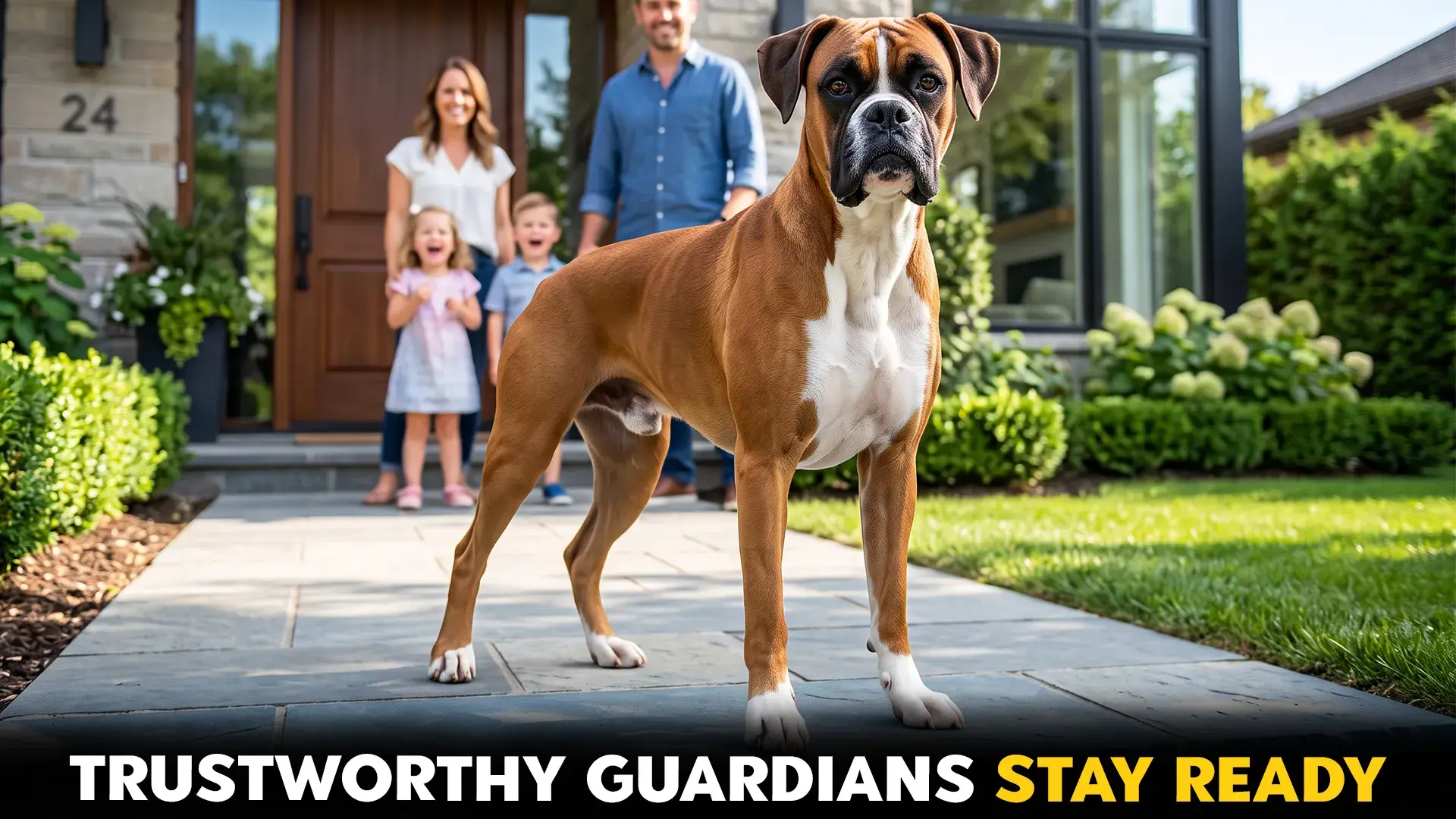
A protective family dog brings more to the household than an intimidating bark or a muscular build. The best guardians form close emotional bonds, pay attention to changes around the home, and remain confidently present when their people need them. In other words, they are loving companions with a built-in neighborhood-watch subscription.
Early socialization, reward-based obedience, appropriate exercise, and responsible supervision are essential for every dog on this list. The first three months are an especially important socialization period for puppies, although positive exposure and training must continue throughout adulthood.
Powerful dogs do not need harsher handling; they need fair rules, skilled guidance, and owners who understand canine body language.
Let’s meet the seven four-legged ride-or-dies with serious loyalty credentials.
Note: Every large or powerful dog on the list should be supervised around children, regardless of how affectionate or well trained it appears.
Best Protective Dog Breeds for Families Who Love Loyalty
1. German Shepherd
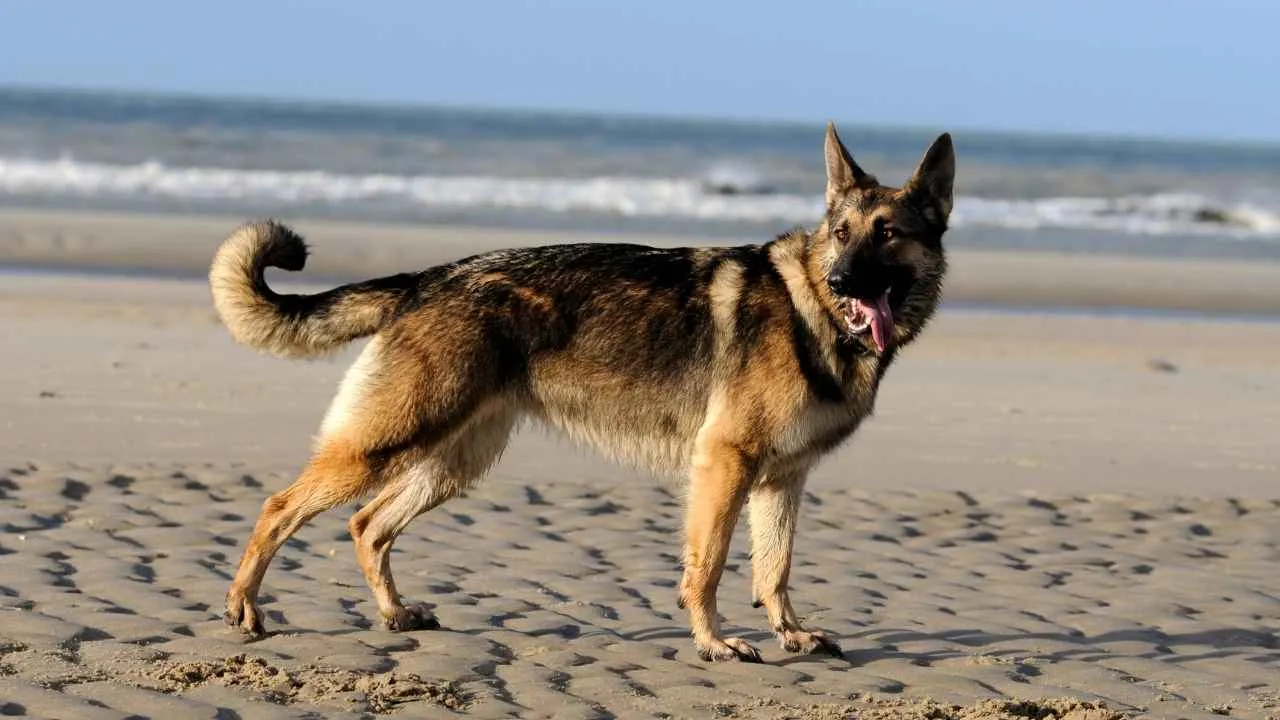
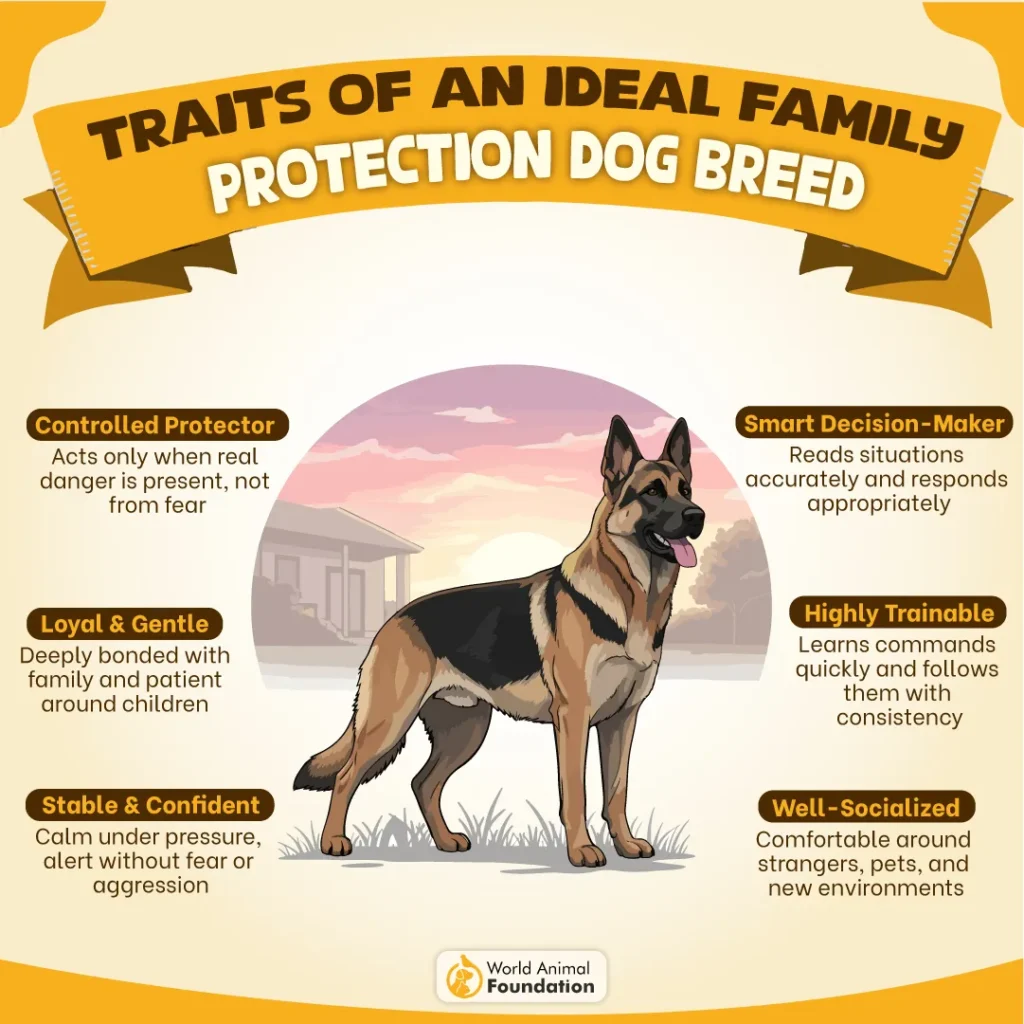
The German Shepherd is basically the gifted overachiever of the canine world: intelligent, athletic, observant, and eager to have a meaningful role. The American Kennel Club says they were developed as versatile working dogs; the breed has served in herding, police work, military operations, search and rescue, assistance work, and competitive dog sports.
At home, a well-bred and properly socialized German Shepherd can be affectionate, expressive, and deeply connected to family routines. Many owners describe these dogs following them from room to room, positioning themselves where they can observe everyone, and learning household patterns with almost suspicious speed.
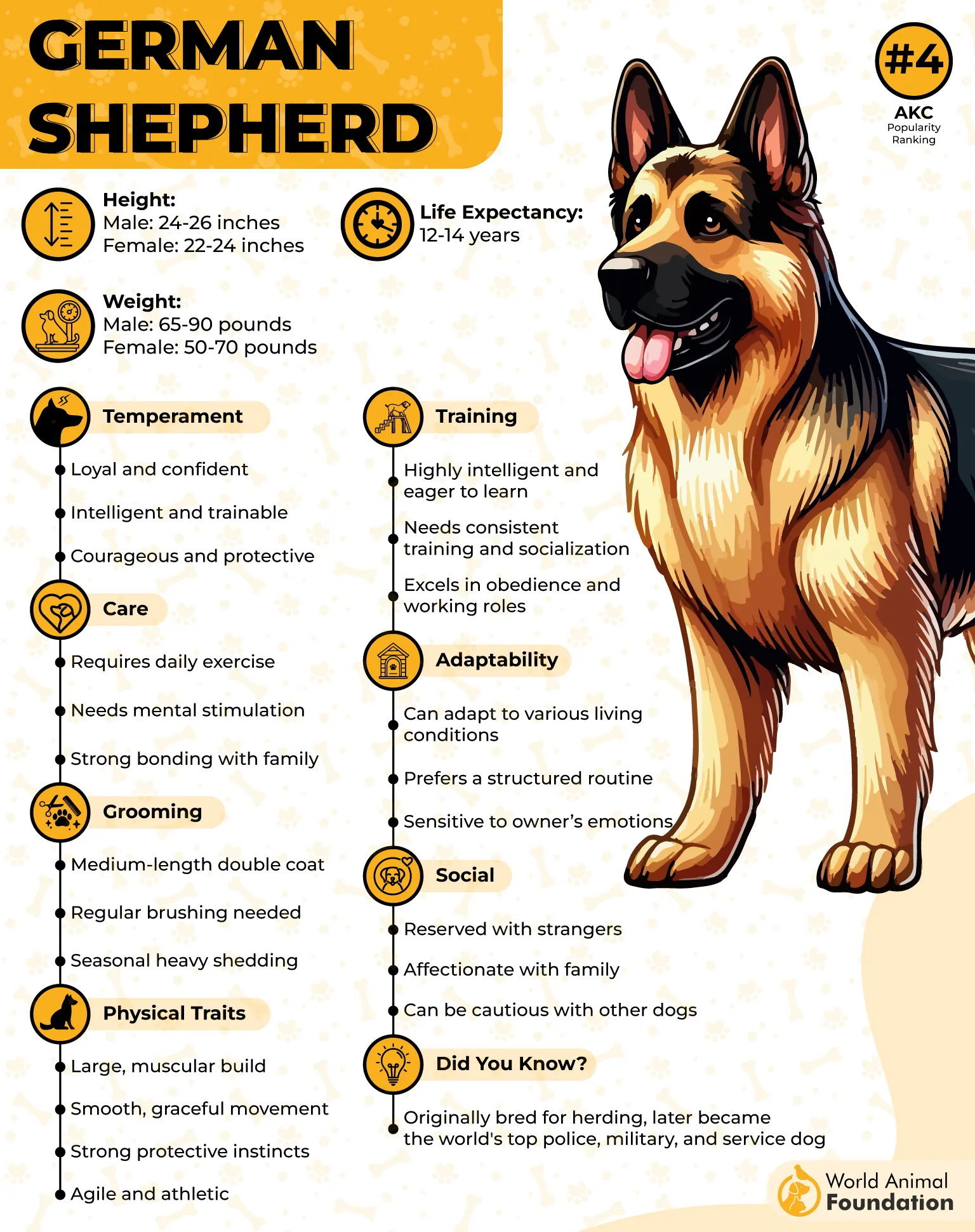
German Shepherds usually thrive when their intelligence receives as much exercise as their bodies. Structured walks, obedience practice, scent games, tracking, retrieving, puzzle feeders, and canine sports can help channel their energy constructively.
Proper training, exercise, and mental stimulation should begin early and focus on calm neutrality rather than encouraging suspicion toward every unfamiliar person. These guard dog breeds need positive exposure to children, guests, traffic, animals, grooming, veterinary handling, and varied environments, while owners reward calm behavior.
Prospective owners should seek breeders who prioritize stable nerves, appropriate working ability, and recommended health testing, or work with a reputable rescue that carefully evaluates individual behavior.
2. Rottweiler
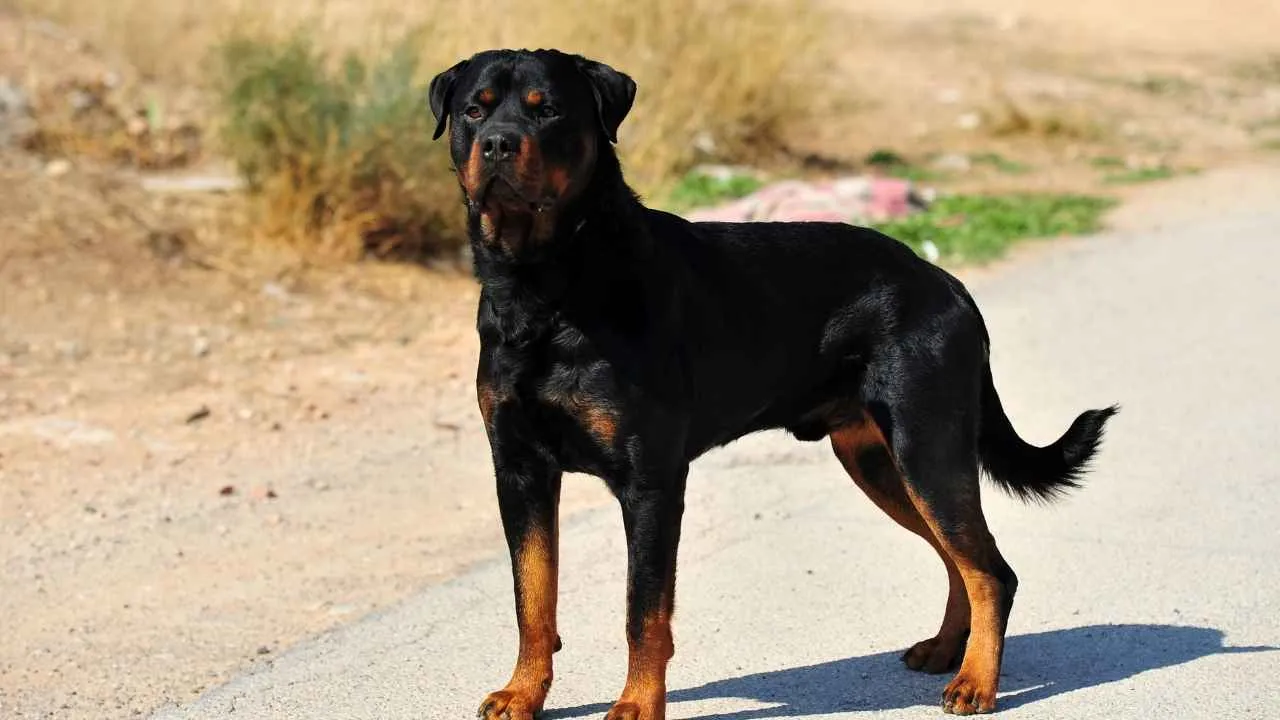
The Rottweiler has a powerful frame and a serious expression. Beneath that formidable appearance, well-socialized Rottweilers are often devoted, steady companions that develop intense affection for their households. Pawlicy specifically identifies the breed as a potential choice for families seeking a watchful and loyal guardian.
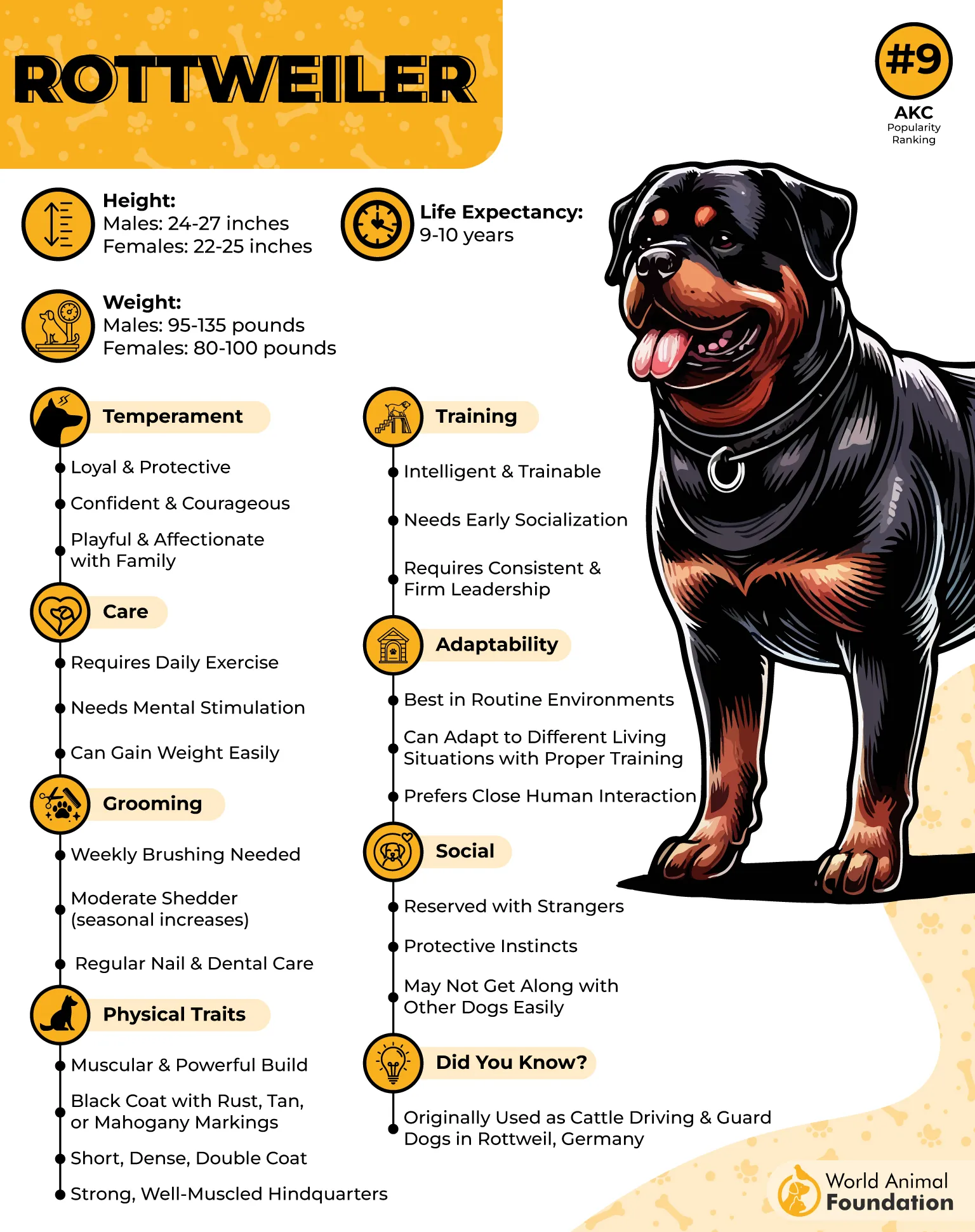
Historically, these protection dogs performed demanding jobs involving livestock and the movement of goods, which helped shape their strength, confidence, and willingness to work beside humans. Modern dogs still tend to appreciate having clear responsibilities, even when the assignment is to carry a toy, practice obedience, or accompany the family on a structured walk.
These incredibly loyal dogs mature into substantial, muscular adults, so polite behavior cannot be treated as an optional upgrade. Owners should teach leash manners, calm greetings, tolerance for handling, recall, and impulse control while the puppy is still conveniently portable.
Waiting until a full-grown Rottweiler is enthusiastically towing someone toward a squirrel is, scientifically speaking, not the ideal strategy. These smart dogs can be discerning around unfamiliar people, making ongoing socialization essential. The goal is not to force the dog to adore every stranger but to help it remain relaxed, manageable, and responsive to its handler in varied situations.
A Rottweiler needs an owner who combines warmth with consistency rather than relying on intimidation. These intelligent dogs notice hesitation, mixed signals, and loopholes with the precision of furry contract lawyers, so every family member should follow the same household rules.
3. Doberman Pinscher
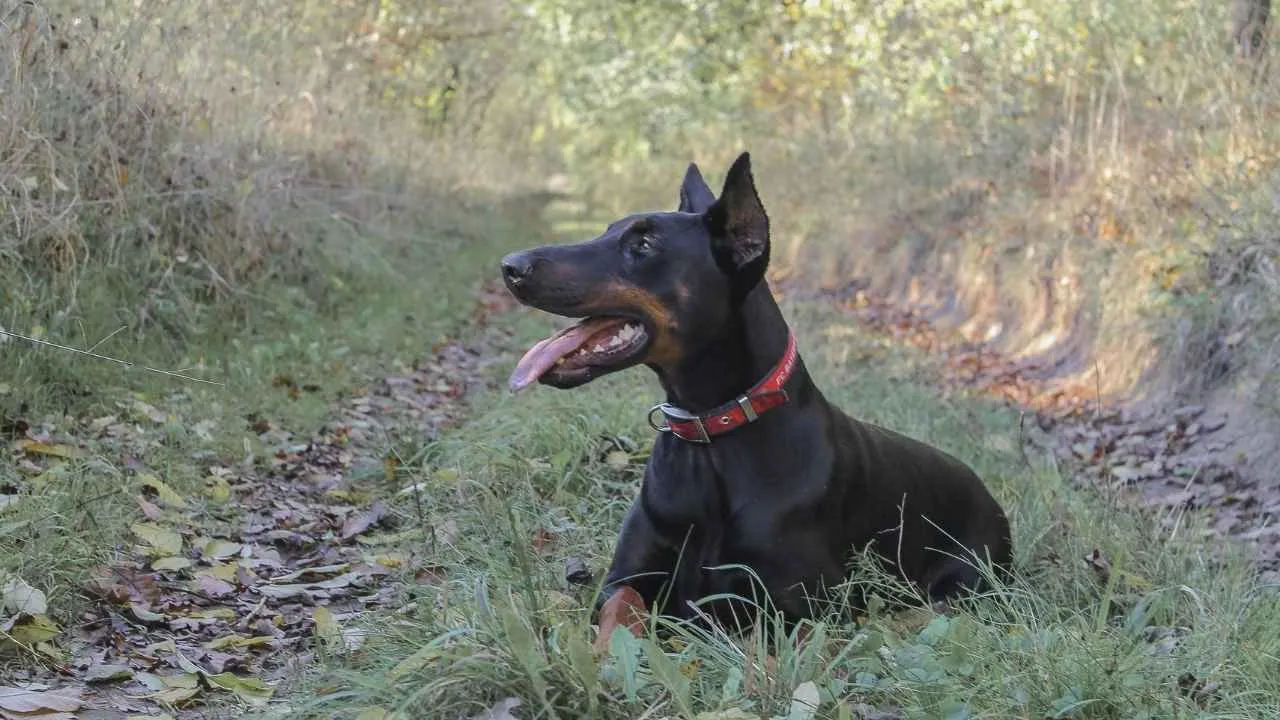
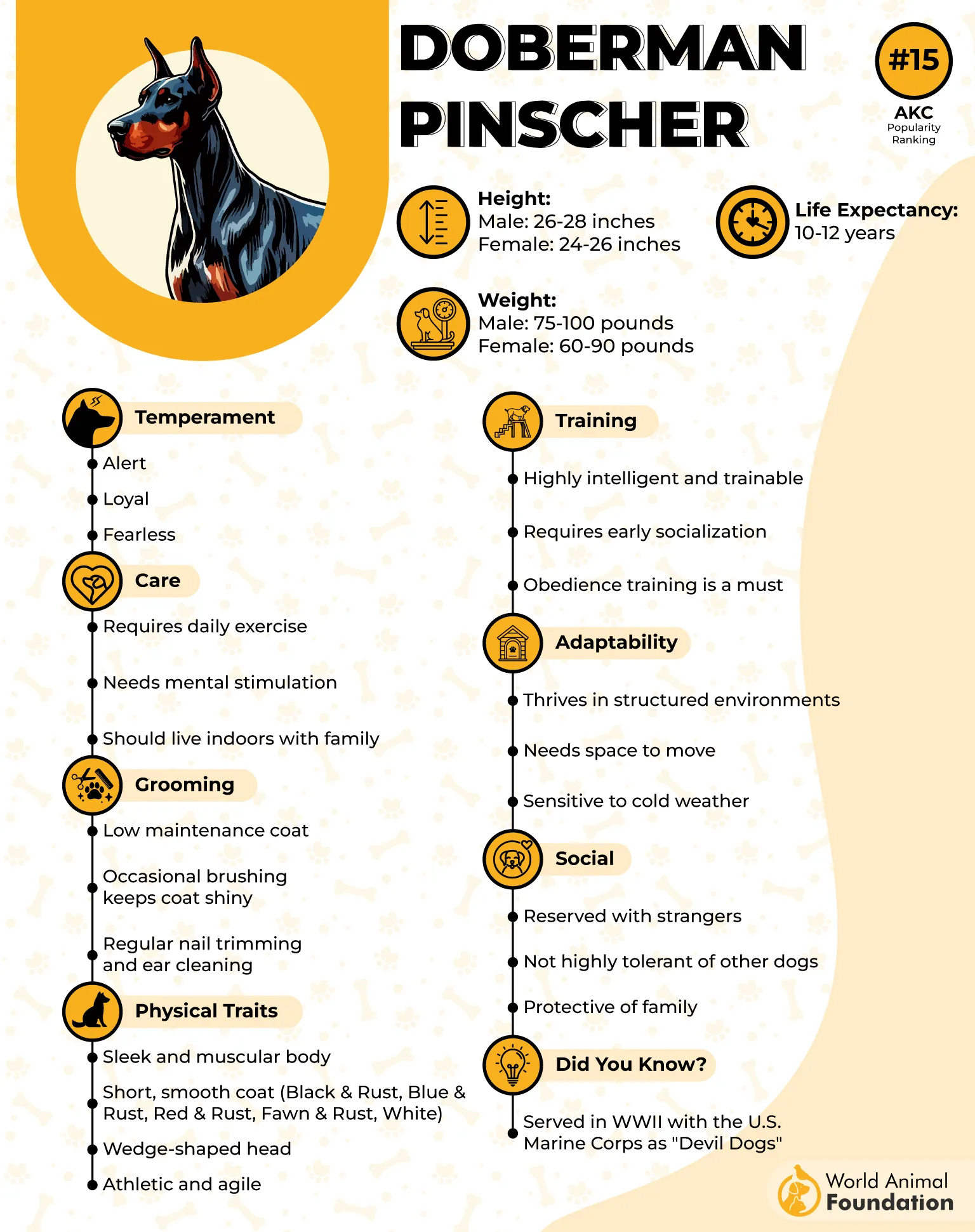
Few dogs combine elegance and athleticism quite like the Doberman Pinscher. This sleek guardian can shift from a graceful sofa ornament to a highly alert observer in approximately half a second, especially when an unexpected sound occurs near the house.
These good dogs are famously people-oriented, and many become so attached that owners affectionately call them “Velcro dogs.” They often lean against their humans, supervise household chores, and attempt to accompany family members into spaces that were clearly designed for one person.
Their sharp minds require thoughtful engagement rather than endless physical exhaustion alone. Obedience, scent work, agility, tracking, trick training, and interactive play can satisfy the breed’s need to think while strengthening communication with the owner.
The Kennel Club characterizes the breed as medium-to-high-energy and recommends daily physical and mental activity, making Dobermans better suited to involved households than to highly sedentary ones.
Because they are sensitive and highly responsive, heavy-handed training can damage trust or create conflict. Clear reward-based instruction, predictable routines, and calm corrections help them develop self-control without suppressing confidence.
Families should also understand that a Doberman’s short coat offers limited protection from cold weather, making indoor family life especially important.
4. Bullmastiff
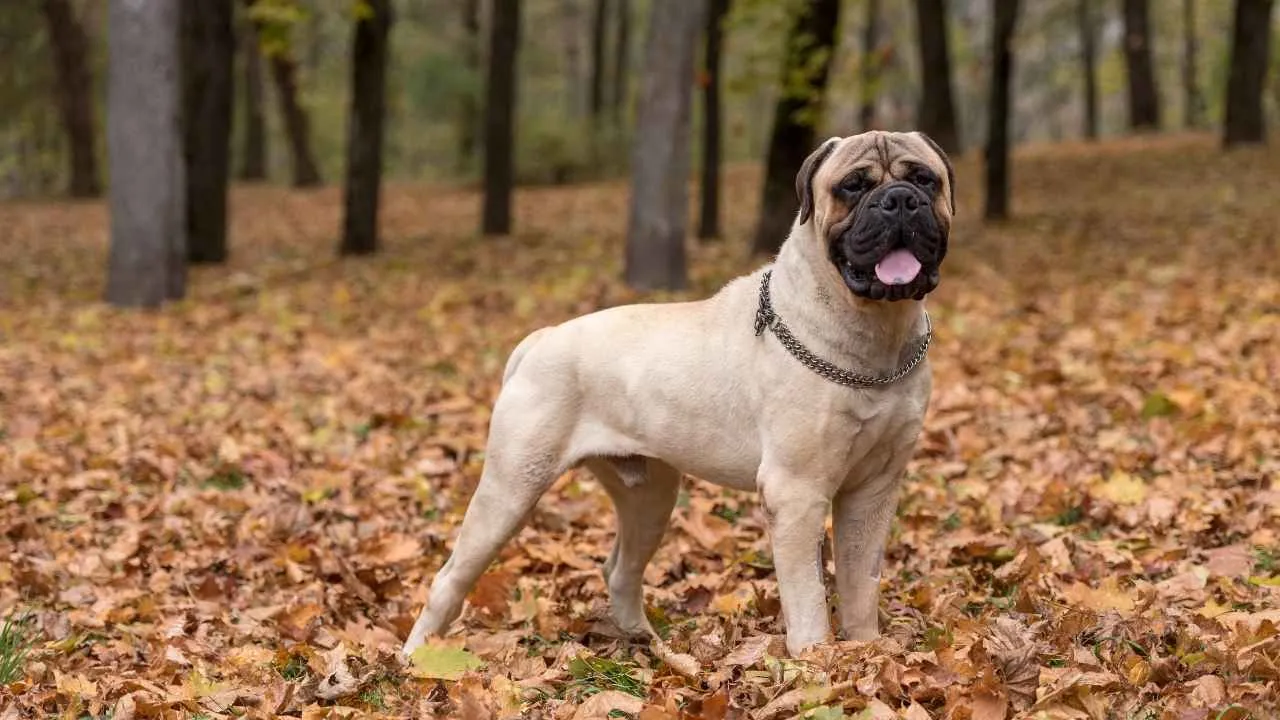
The Bullmastiff is what happens when calm confidence arrives in a giant, heavily muscled package. Developed for guarding large properties, the breed was expected to locate intruders and control situations without unnecessary chaos.
PetMD summarizes the contrast by describing the Bullmastiff as fearless while working but generally docile at home.
In family life, many Bullmastiffs prefer quiet proximity over nonstop motion. They may rest beside a doorway, stretch across an impressive amount of floor space, and observe the room with the composed expression of a nightclub bouncer who has seen everything.
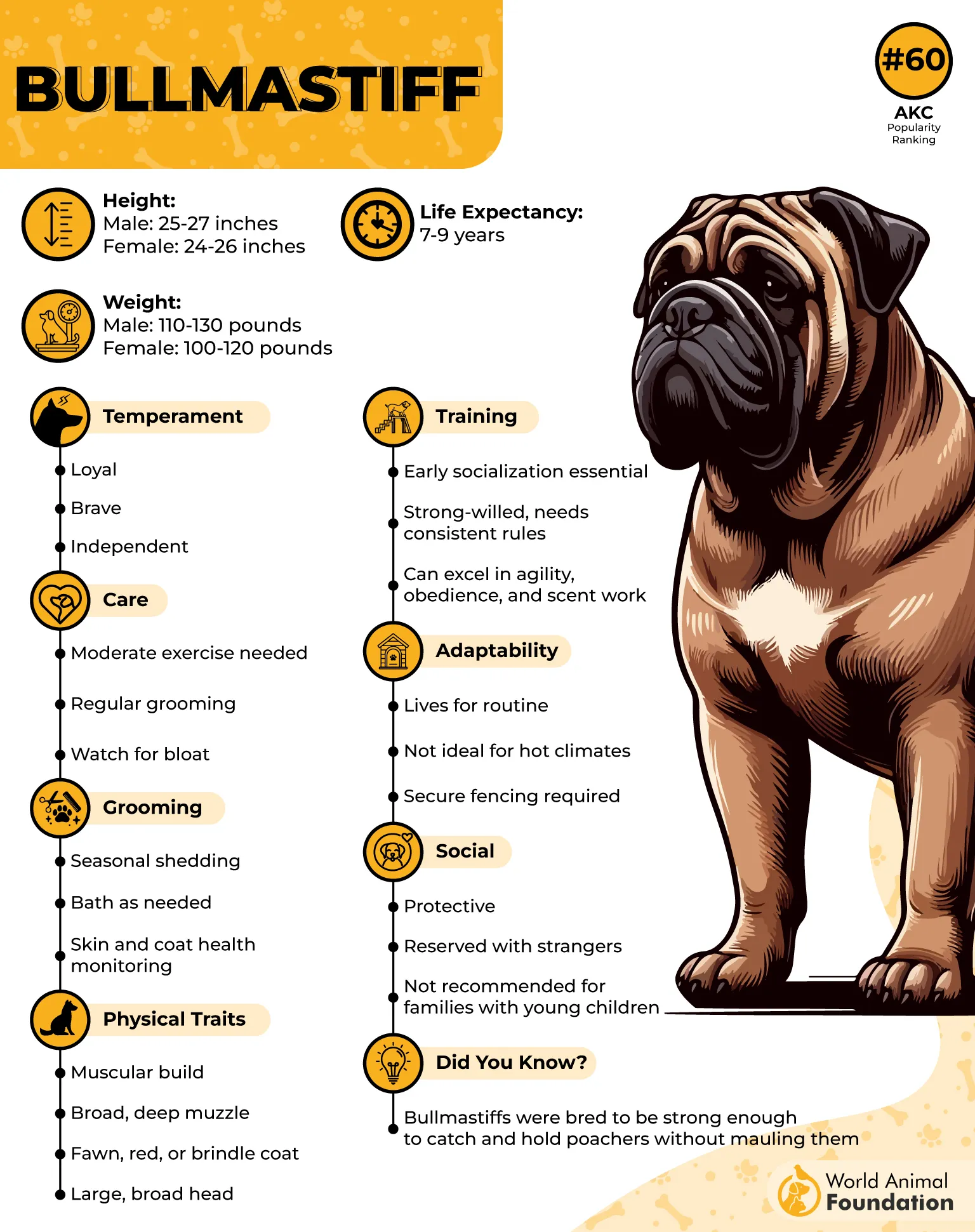
They grow large and strong, making early training a non-negotiable part of responsible ownership. A playful adolescent who jumps, pulls, guards objects, or ignores recall cues can unintentionally overwhelm children and adults, even without aggressive intent.
Their protective tendencies call for careful socialization and thoughtful management around visitors. Rather than encouraging threatening displays, families should teach the dog to move to a designated place, remain settled during arrivals, and look to the handler for guidance.
These extremely affectionate dogs are not ideal for every household because their size affects travel, food costs, veterinary care, furniture space, and everyday handling. They may also drool enthusiastically, so anyone emotionally attached to spotless trousers should prepare for a character-building experience.
5. Belgian Malinois
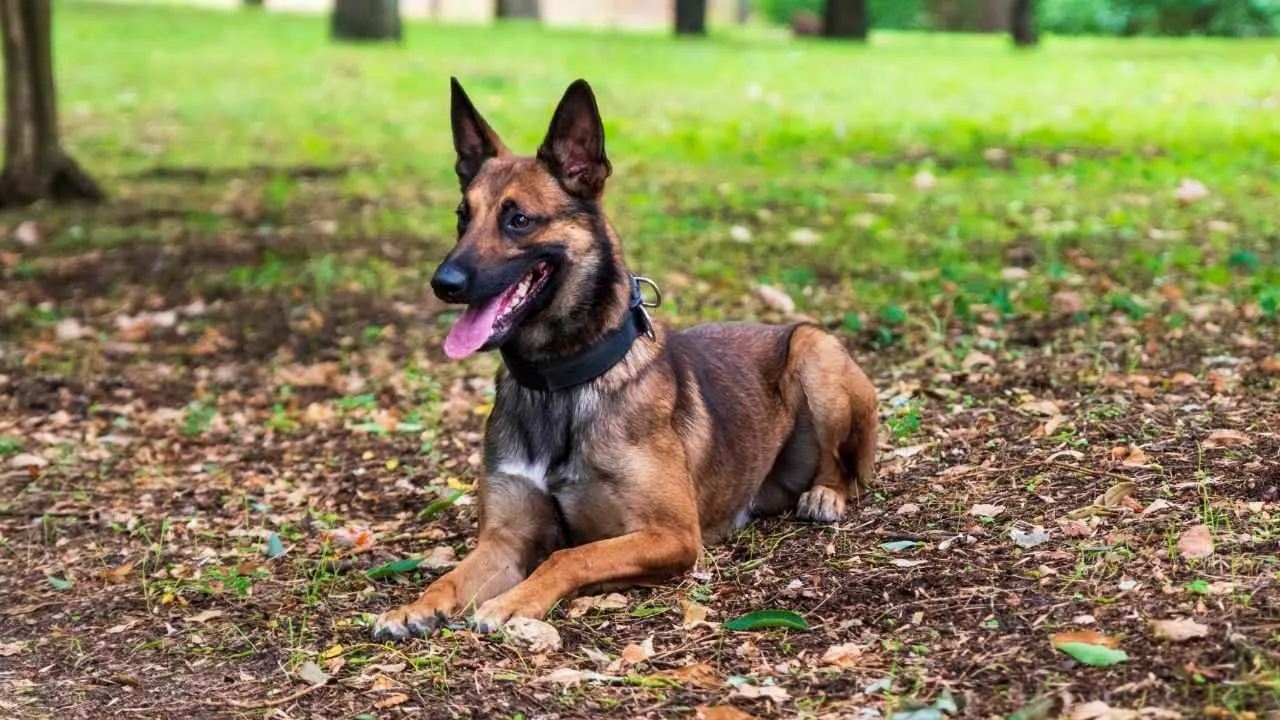
The Belgian Malinois is an extraordinary working dog. These dogs are intensely athletic, quick to react, highly trainable, and widely valued in demanding police, military, detection, and performance roles.
These excellent guard dogs tend to approach life at full resolution. They notice movement, learn patterns quickly, anticipate cues, and often become deeply focused on one primary handler while remaining connected to the broader household. Their loyalty can be phenomenal, but it usually comes packaged with enormous working drive and a need for purposeful engagement.
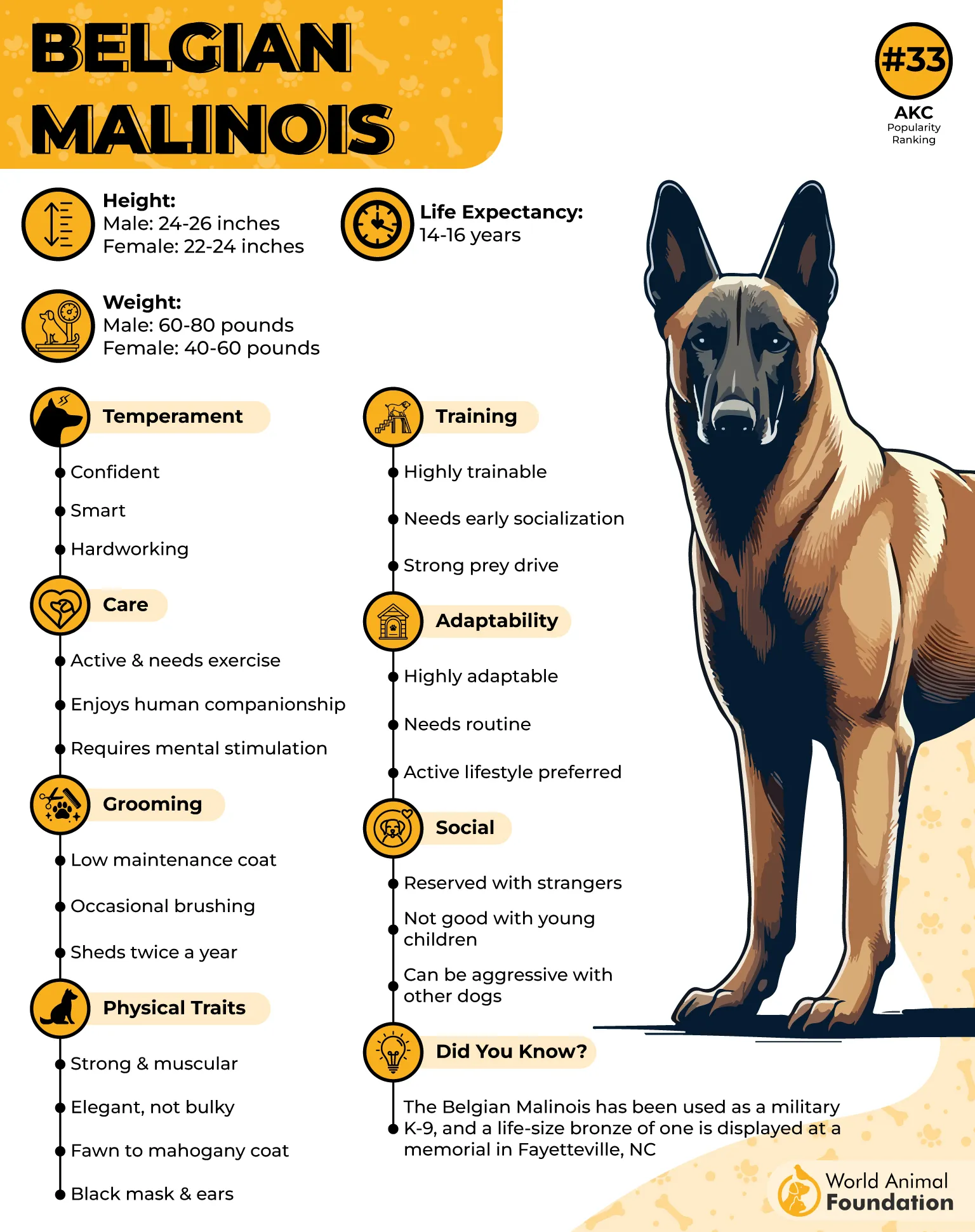
A casual daily stroll around the block is rarely enough for an energetic adult Malinois. These dogs often benefit from advanced obedience, scent detection, tracking, controlled tug games, agility, protection sports, and other structured activities under expert supervision that require both thought and movement.
For that reason, this extremely intelligent dog is generally best suited to experienced owners who actively enjoy training. Families must teach an off-switch—the ability to settle calmly—alongside exciting skills, because a dog that can work but never relax is difficult to live with.
6. Cane Corso
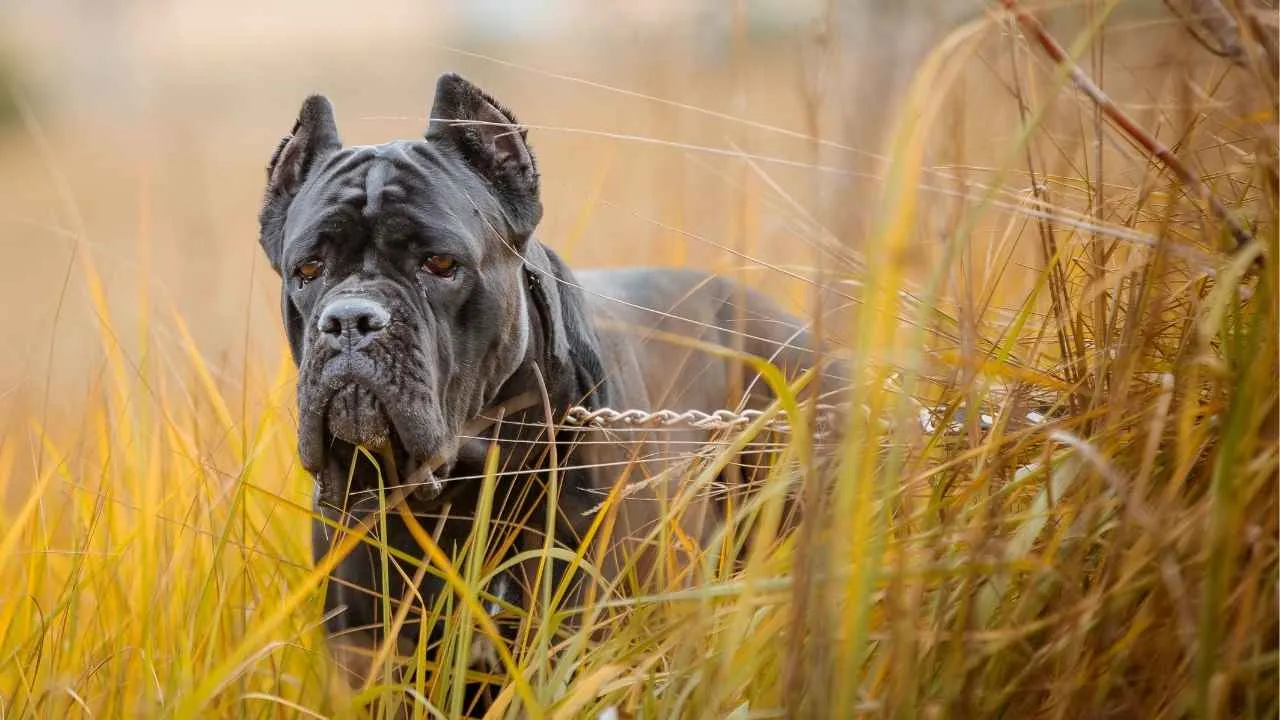
The Cane Corso carries the dignified, no-nonsense presence of a dog that does not need to announce its strength. This large Italian mastiff was shaped by working and guardian roles, and many individuals remain naturally watchful of their home and family.
With trusted family members, a well-adjusted Cane Corso may be affectionate, calm, playful, and surprisingly sensitive. Many owners report that their dogs want to stay close and participate in ordinary life rather than spend their days patrolling alone in a yard.
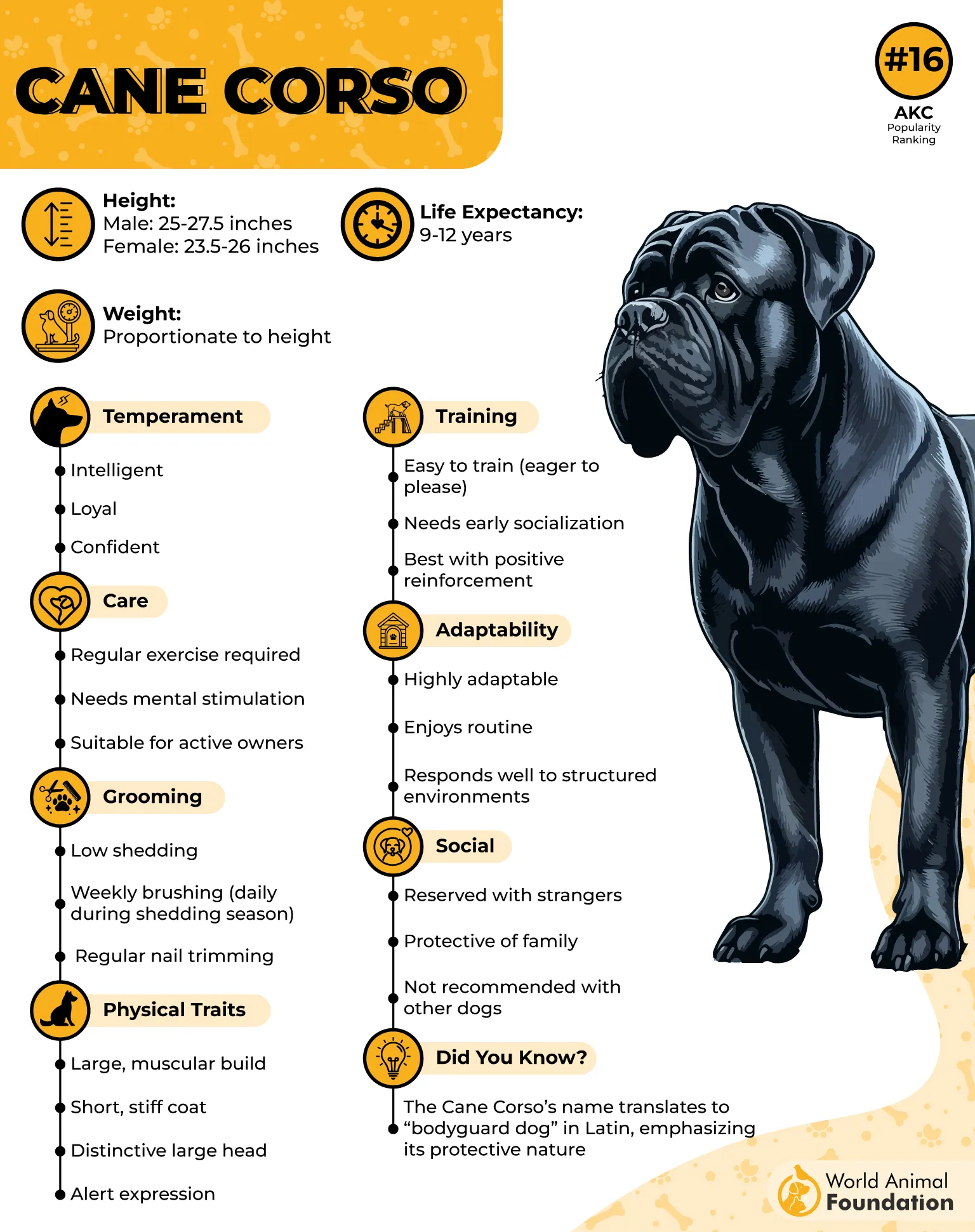
Purina asserts that training must start immediately because adolescent Corsos can become large before their judgment fully catches up. Reward-based obedience, leash skills, calm door manners, cooperative grooming, muzzle conditioning, recall, and a reliable settle cue help owners manage the dog safely throughout its life.
Socialization should build confidence and neutrality without attempting to turn the dog into an indiscriminate social butterfly. A Corso should learn that unfamiliar people, veterinary staff, guests, vehicles, animals, and public environments can exist without requiring a defensive response.
This breed may not be appropriate for first-time owners, loosely structured households, or families unable to commit substantial time to training. People should research local housing and insurance restrictions, find experienced veterinary support, and choose breeders or rescues that honestly evaluate temperament.
7. Boxer
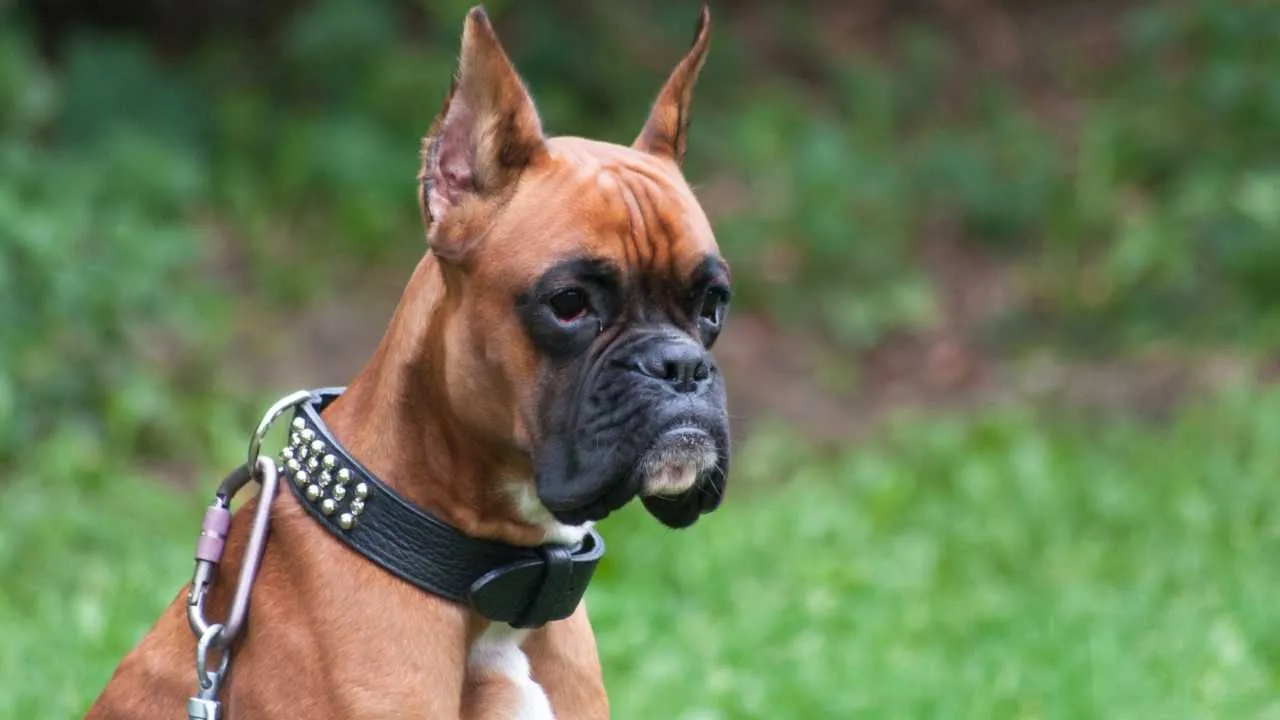
The Boxer brings a different flavor to family protection: equal parts athlete, comedian, cuddle bug, and watchful companion.
They are famous for expressive faces, spring-loaded legs, and a level of enthusiasm that can make an ordinary greeting feel like a stadium entrance. They often remain youthful well into adulthood, bringing toys to family members, performing spontaneous zoomies, and inserting themselves into every social moment.
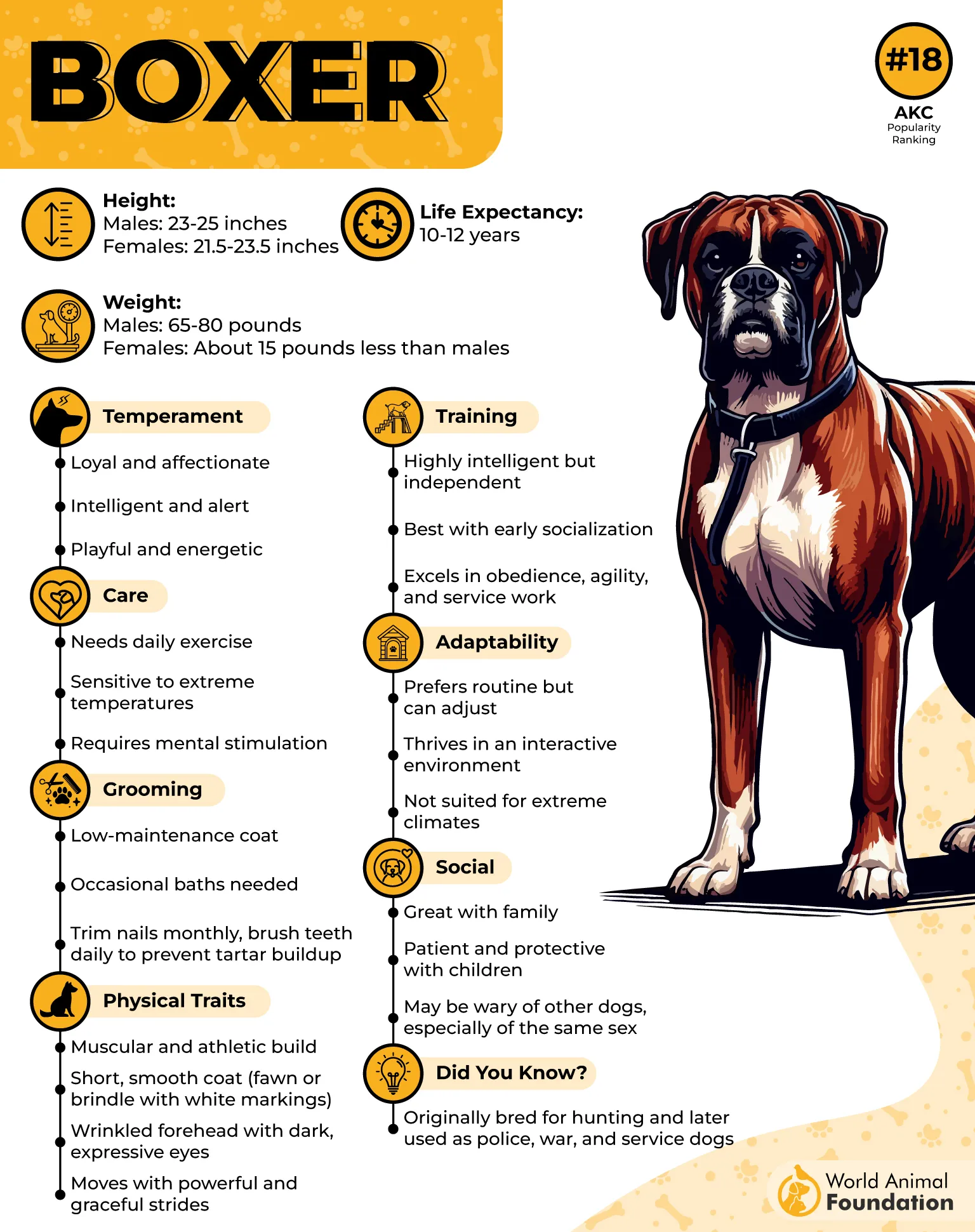
Daily exercise is important, but owners should consider the breed’s short muzzle and individual tolerance for heat. Walks, play sessions, obedience games, scent activities, and controlled opportunities to run can keep them fit without relying on repetitive high-impact work. During warm conditions, activity should be adjusted carefully, with shade, water, and close attention to breathing and fatigue.
Boxers are strong and naturally exuberant, so early training protects both the dog and the household’s kneecaps. Teaching calm greetings, loose-leash walking, recall, “leave it,” and a settled-place behavior gives their energy a productive direction.
Although the breed is often celebrated for family affection, supervision around children remains necessary due to its power and bouncy play style.
Conclusion
Protective breeds are not interchangeable security products, and owning one is not about finding the dog with the most intimidating silhouette.
No breed automatically becomes a trustworthy protector simply because of genetics. Stable temperament, humane training, socialization, appropriate exercise, secure management, veterinary care, and responsible supervision determine whether natural watchfulness develops into calm reliability or problematic reactivity.
The best guardian is ultimately a loved and well-understood family member who trusts the people guiding it.
