




A large number of single homeowners consider getting a guard dog for added security, but many underestimate how specific that choice needs to be. It is not enough for a dog to look protective. The behavior, temperament, and adaptability of the dog play a much bigger role in everyday life.
Without the right balance, what seems like a smart decision can quickly become difficult to manage. Some dogs require constant handling, while others fail to respond when it actually matters. This gap between expectation and reality is where most problems begin.
A well-suited guard dog should offer steady awareness, controlled behavior, and the ability to adjust to a single-owner routine without complications. Getting this right from the start makes a significant difference. It turns the dog into a reliable presence rather than an added responsibility.
The next sections focus on the types that meet these practical requirements.
Key Takeaways:
Living alone changes what you need in a dog, especially when protection has to feel reliable and easy to manage at the same time.
German Shepherd and Rottweiler stand out for their controlled awareness, showing protection that feels steady rather than overwhelming.
Cane Corso and Akita bring a quieter kind of guarding instinct, where observation and timing matter more than constant reaction.
As you go further, it becomes clear which breeds truly offer security without adding unnecessary pressure to your routine.
Best Guard Dog Breeds for Single Owners – Top Choices
1. German Shepherd
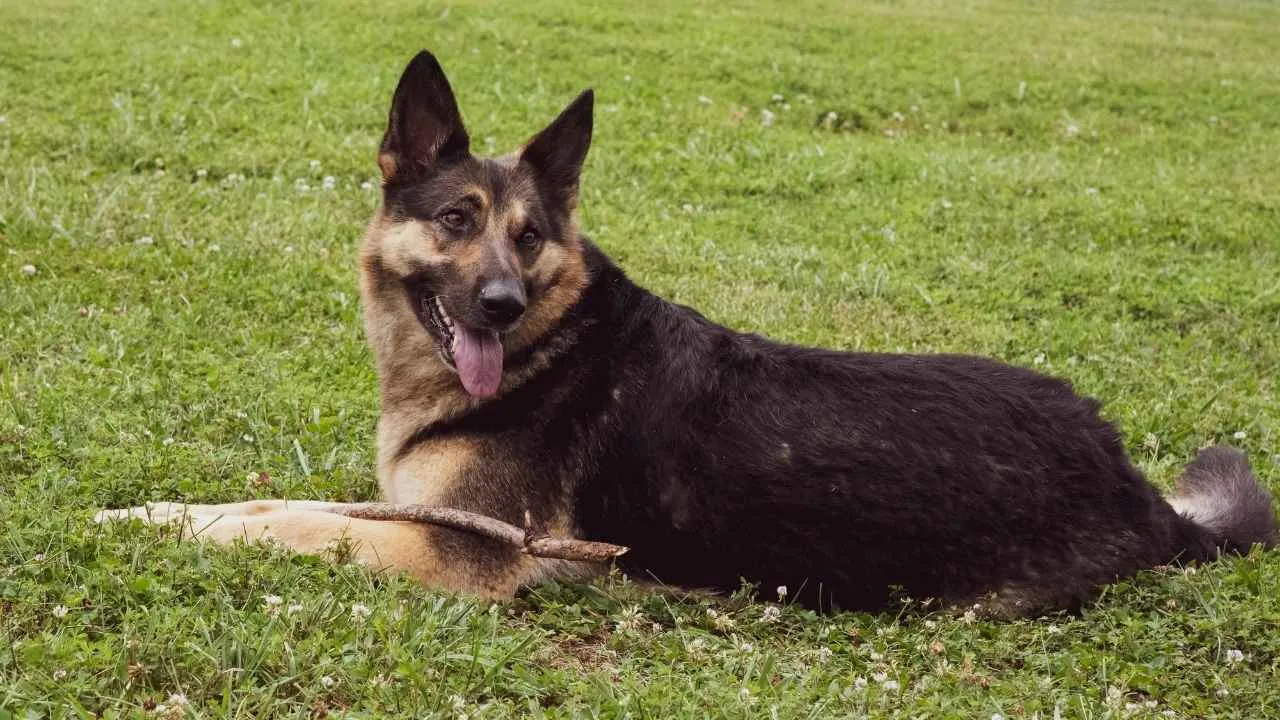
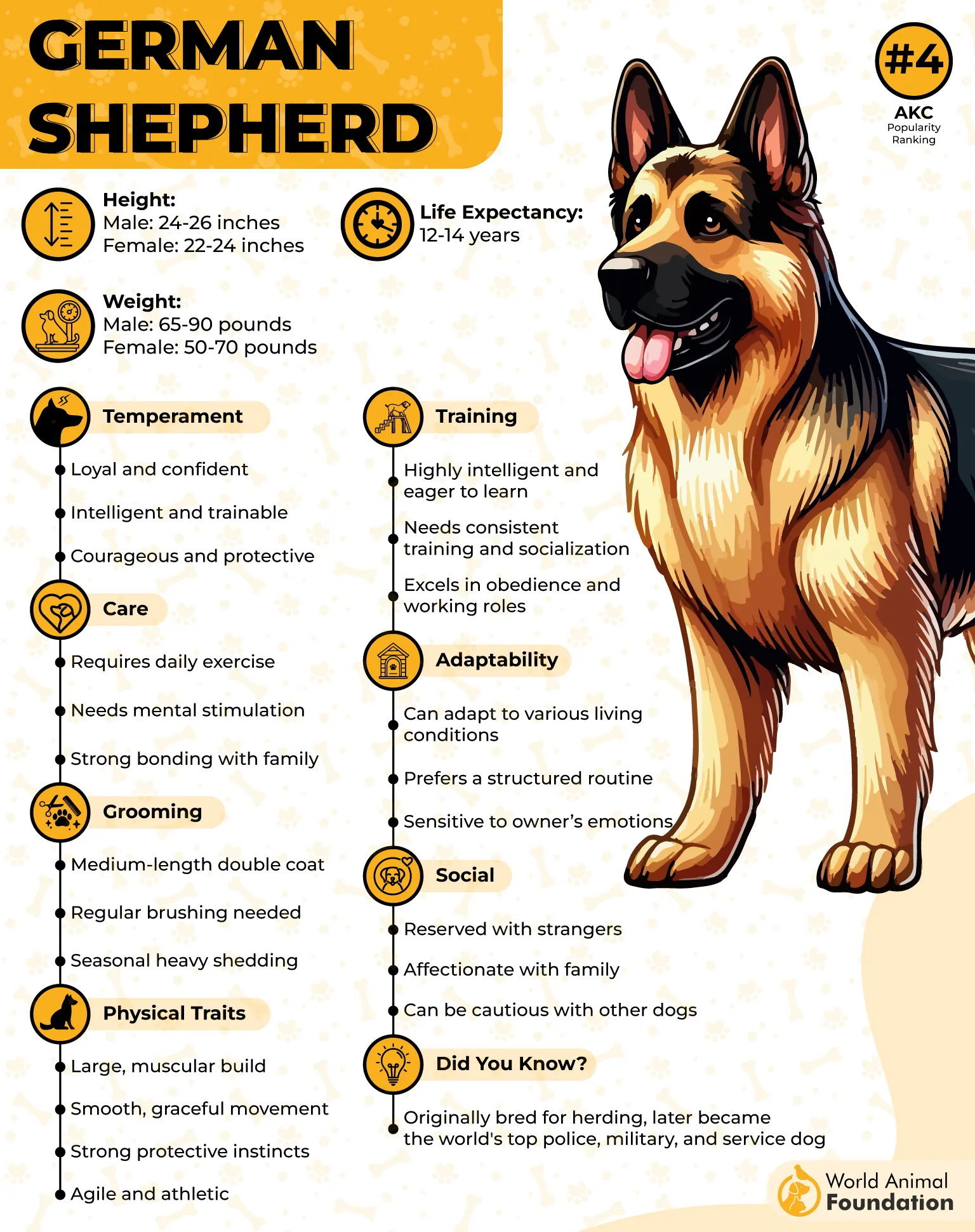
German Shepherd shows a strong, muscular frame paired with agility that supports quick directional changes. Its intelligence is visible in how it reads situations and responds with calculated action. They are loyal companions, and alertness remains central to their natural behavior pattern.
Working ability, shaped through task demand
This excellent guard dog is widely used in structured service roles, including patrol, detection, and search operations, due to their focus and responsiveness, as PetMD claims. It’s herding background connects strongly with directed activity and sustained attention.
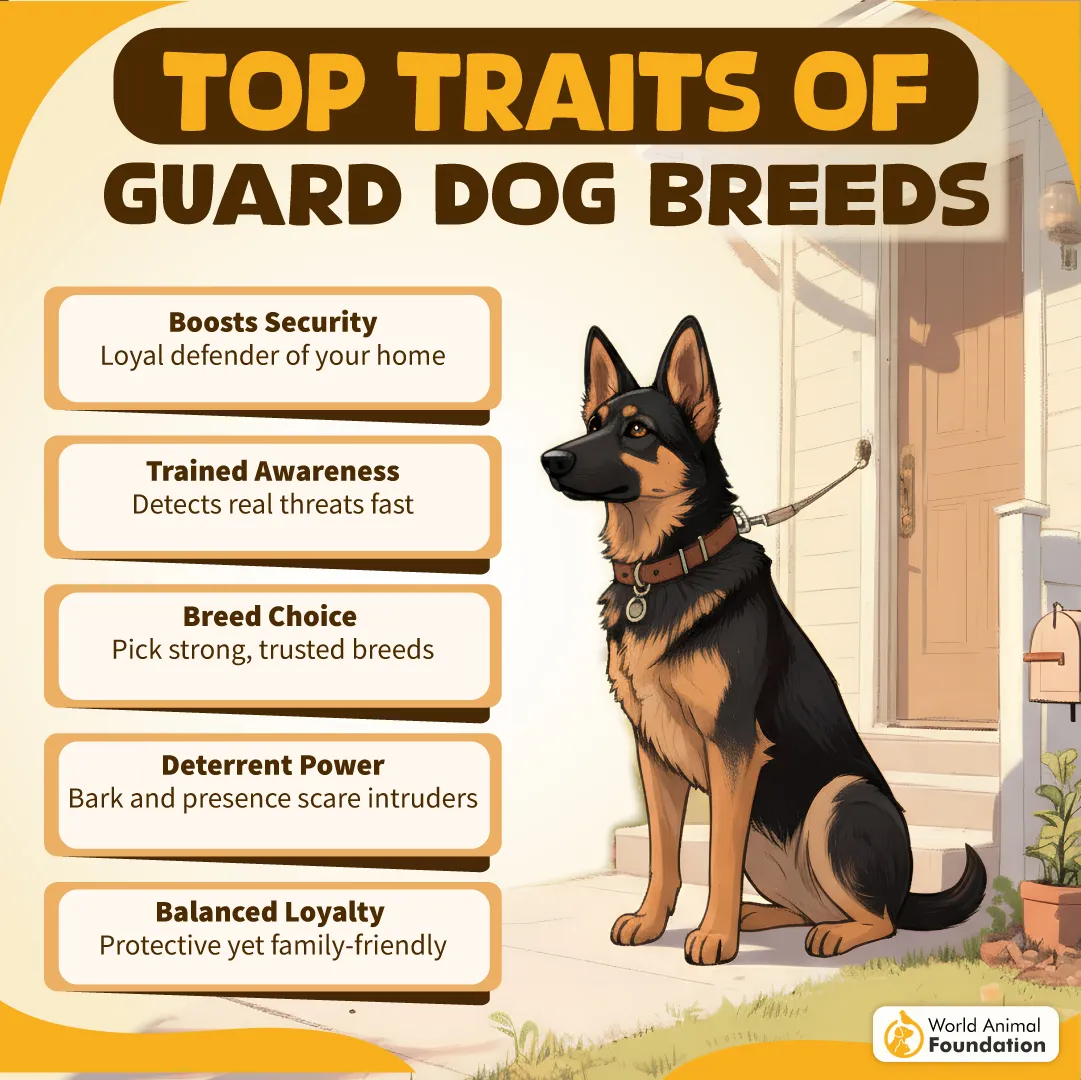
Their working profile appears clearly through core traits:
Executes trained commands with accuracy
Maintains focus during long assigned tasks
Adapts to structured environments with consistency
Daily energy and behavioral control
They require consistent outlets for their high activity level, often seeking tasks that involve movement and problem-solving. Without structured engagement, its energy can shift into restlessness within the home environment. This drive reflects its active working background.
2. Rottweiler
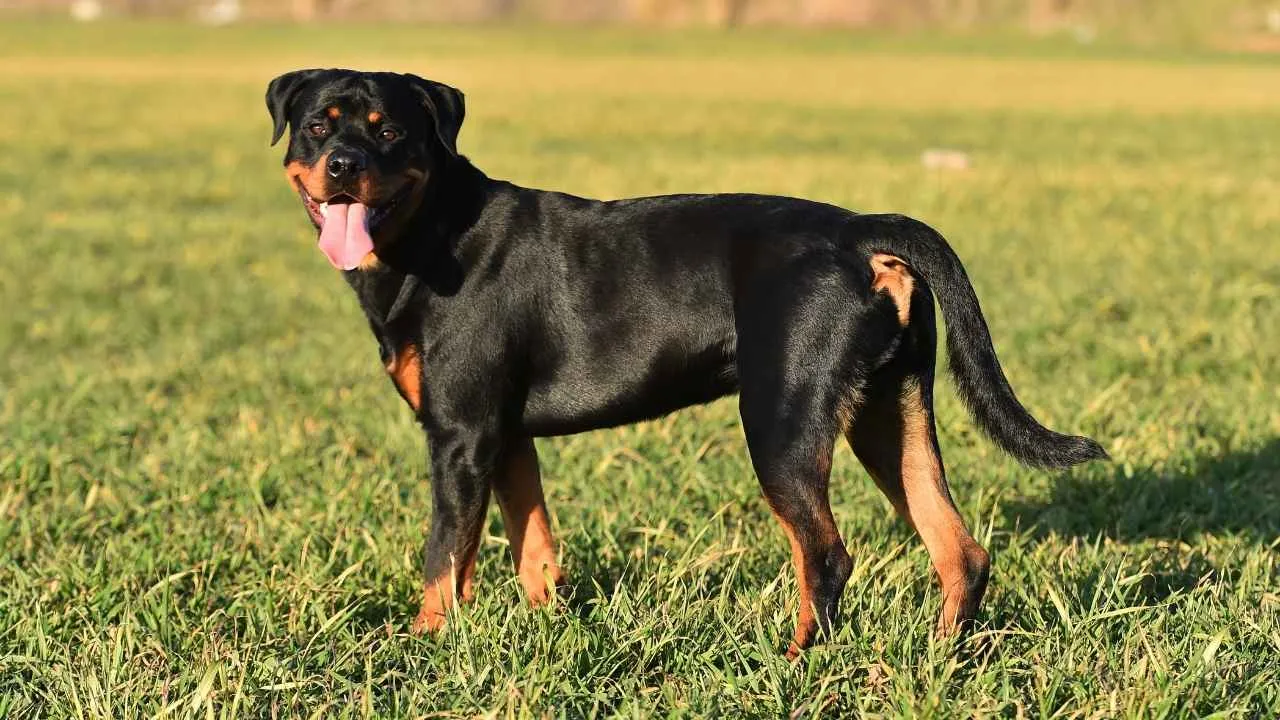
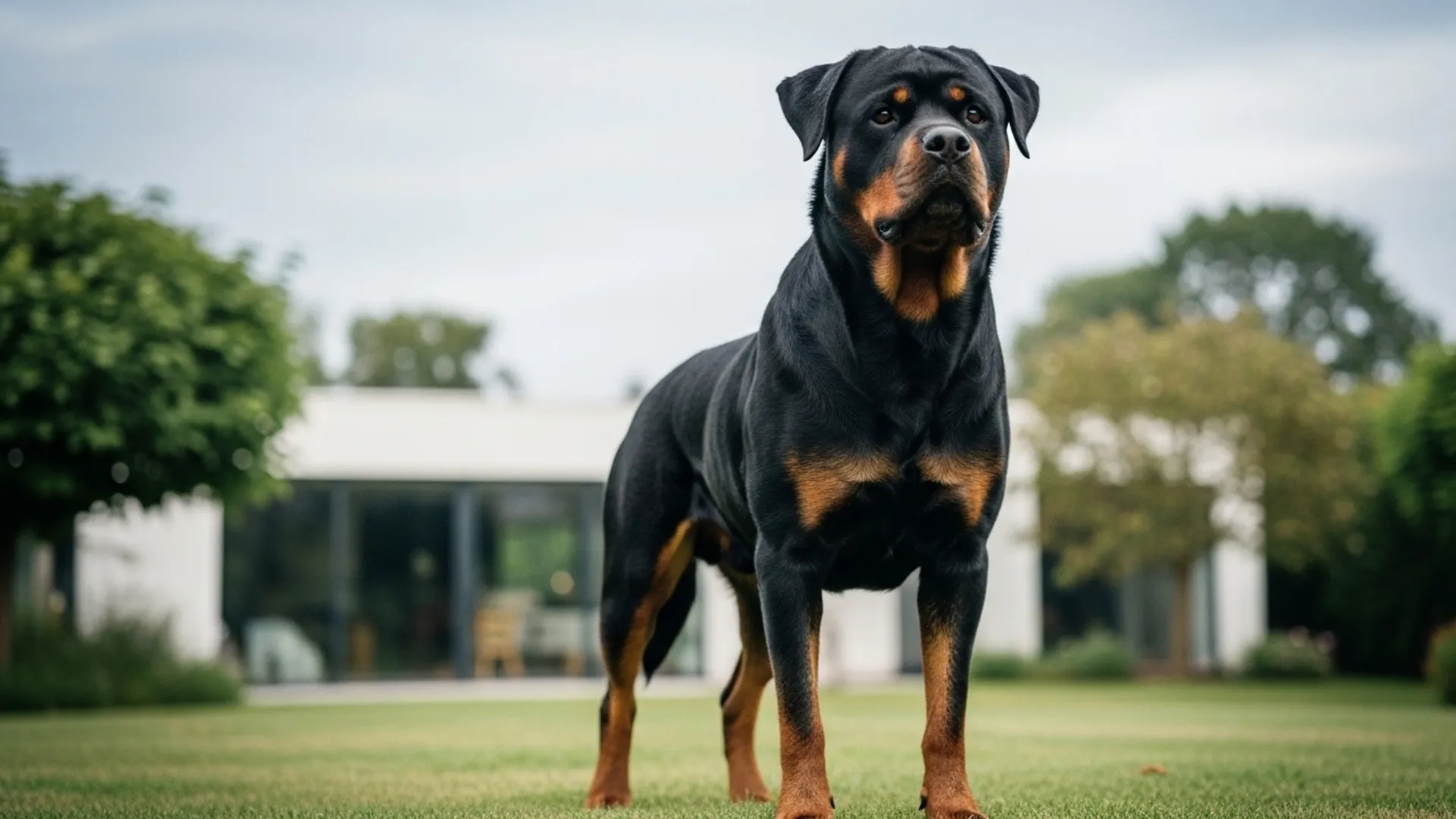
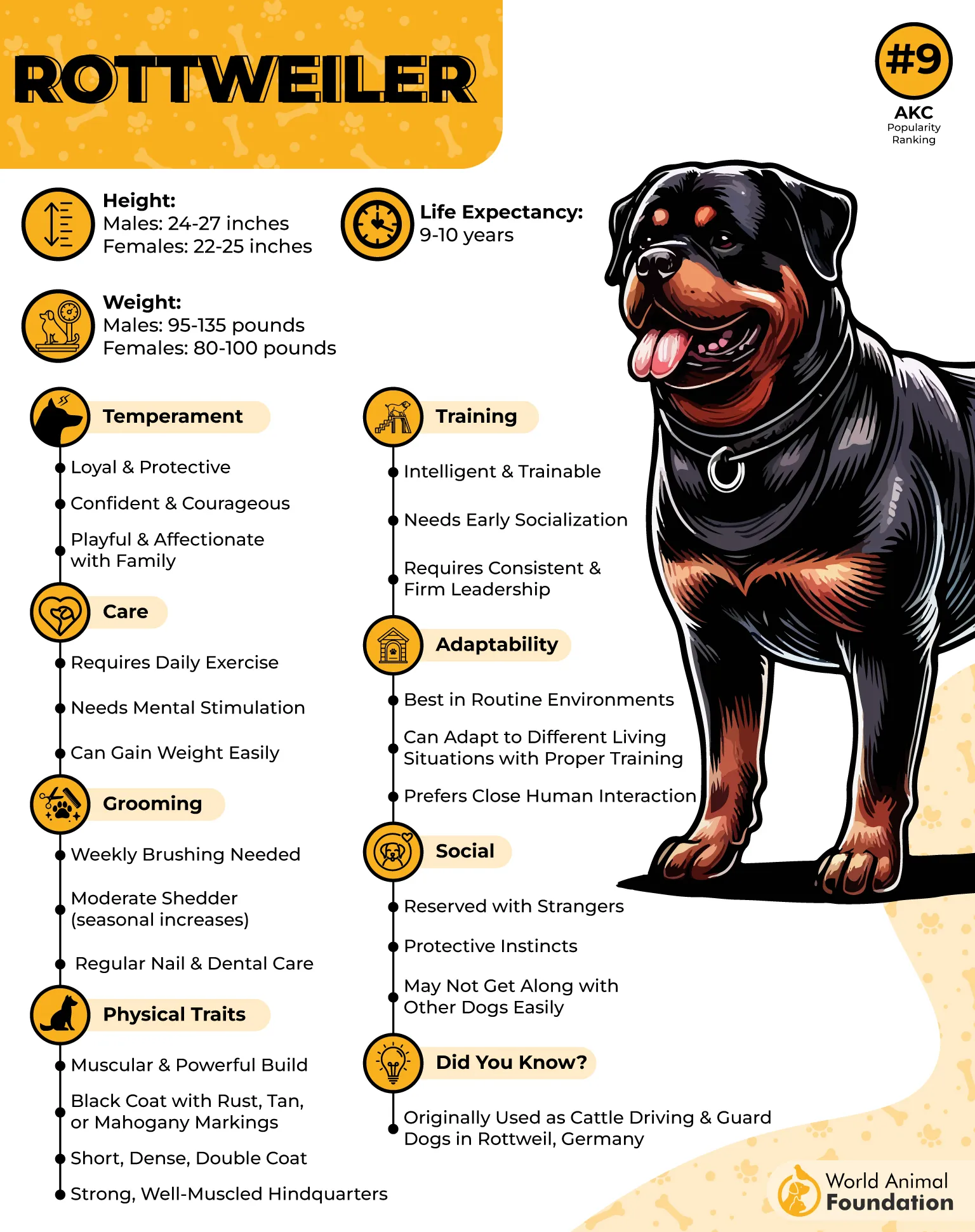
Rottweiler shows a heavy, broad-headed frame with a short coat and strong bone structure linked to ancient Roman mastiff-type dogs. Its presence reflects purpose-built strength shaped for control rather than display. The history of this guardian breed is still visible in its steady, grounded posture.
Guarding response and instinct pattern
Rotties respond to unfamiliar situations with their natural protective instincts that do not depend entirely on training. However, this guarding behavior needs direction so it stays measured and situationally appropriate.
That instinct becomes clearer in daily behavior:
Reacts to strangers with controlled alertness
Holds territorial awareness without constant agitation
Requires structured guidance for balanced responses
Relationship inside familiar space
They are incredibly loyal and behave differently within trusted surroundings, showing calmness and ease with people they recognize. Its interaction style can shift into affectionate closeness, reflecting a softer side within family life. This contrast remains tied to familiarity and trust.
3. Cane Corso
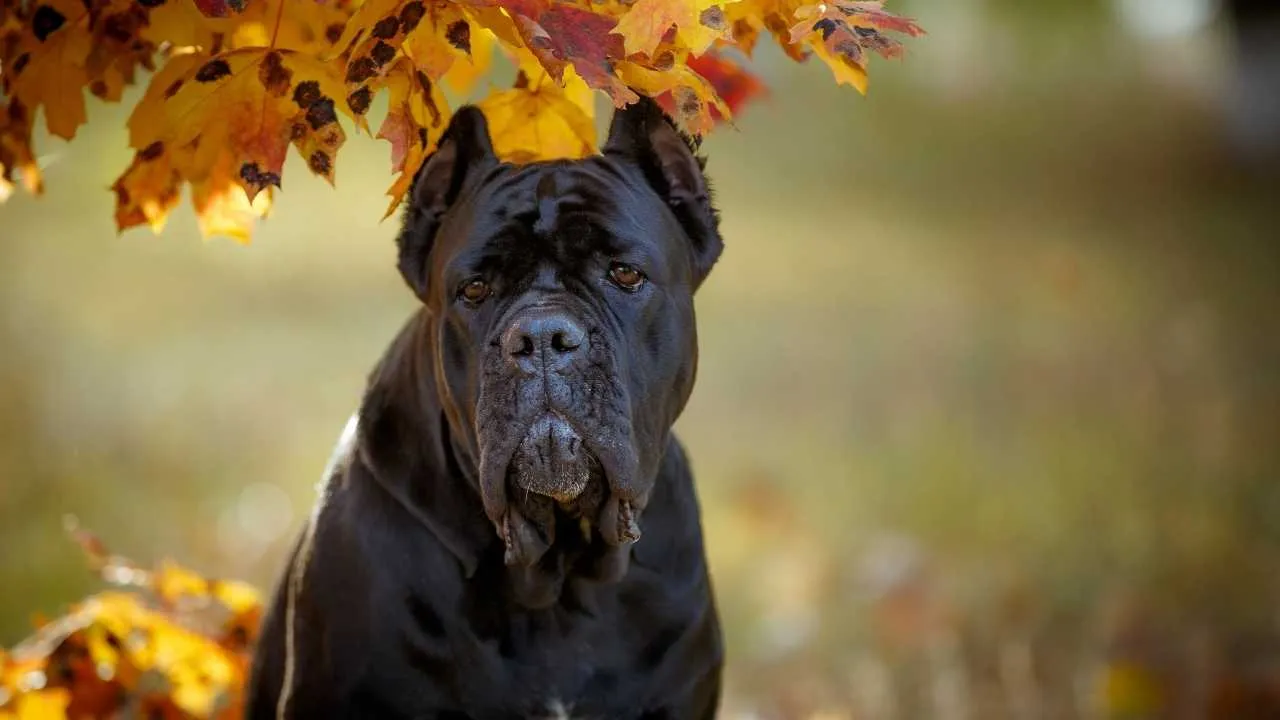
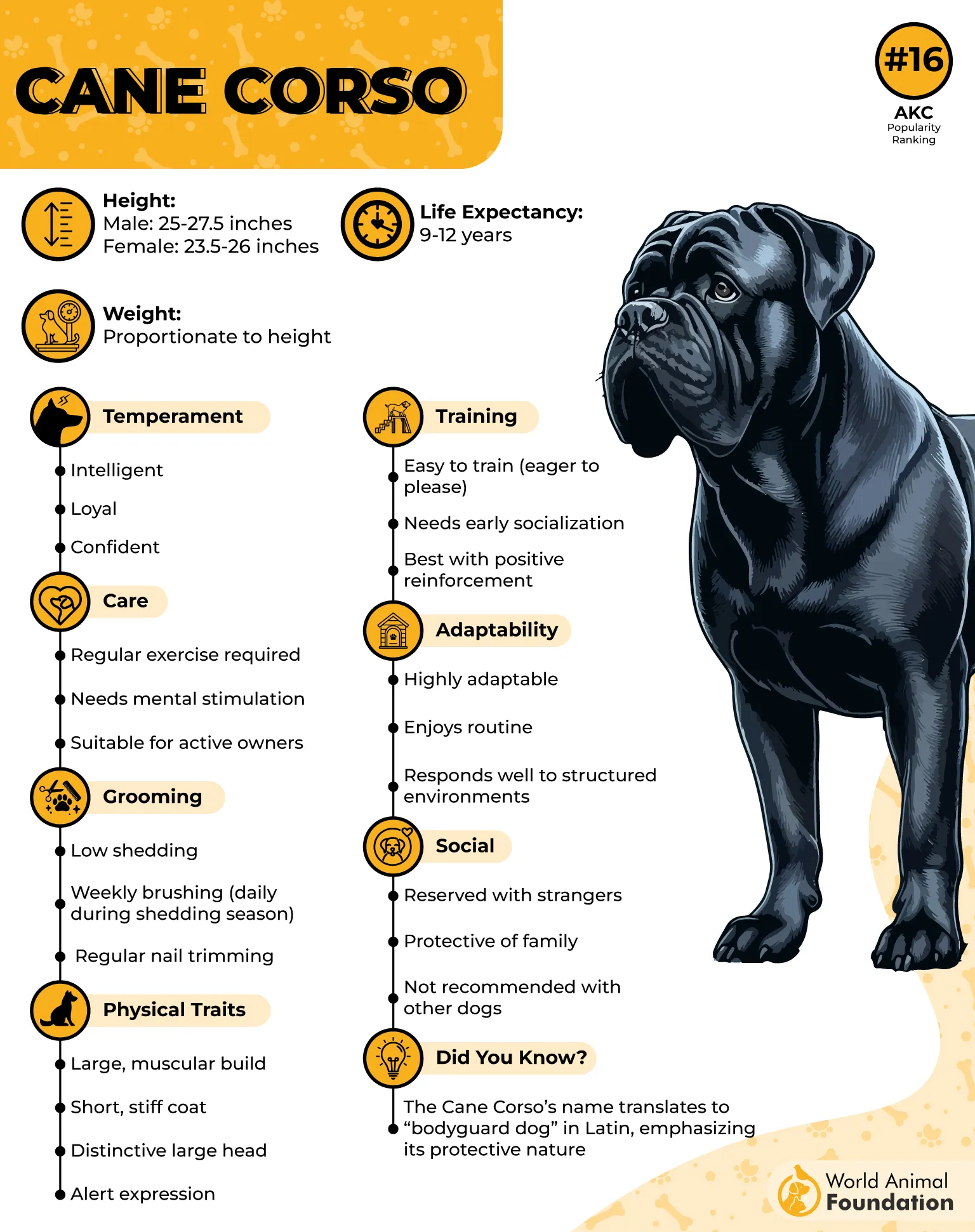
Cane Corso, also known as the Italian Mastiff, descends from ancient working dogs once used for guarding and hunting large game. The name itself reflects a role tied to the protection and control of land and livestock. This shapes a dog that reacts to its surroundings with instinctive awareness.
Physical presence built for controlled strength
Even used as a personal protection dog, they show a solid, muscular frame paired with steady movement and focused expression. Its build reflects a working history where power was directed rather than scattered, especially in protective tasks.
This structure translates into clear functional traits:
Heavy muscular frame suited for forceful response
Broad head with alert, observing gaze
Stable stance that supports controlled movement
Training influence and behavioral balance
They respond best when interaction remains structured, consistent, and based on clear communication. Its instinct to guard becomes more balanced when social exposure starts early, and boundaries are introduced steadily. Positive interaction helps shape how its protective nature is expressed in daily life.
4. Leonberger
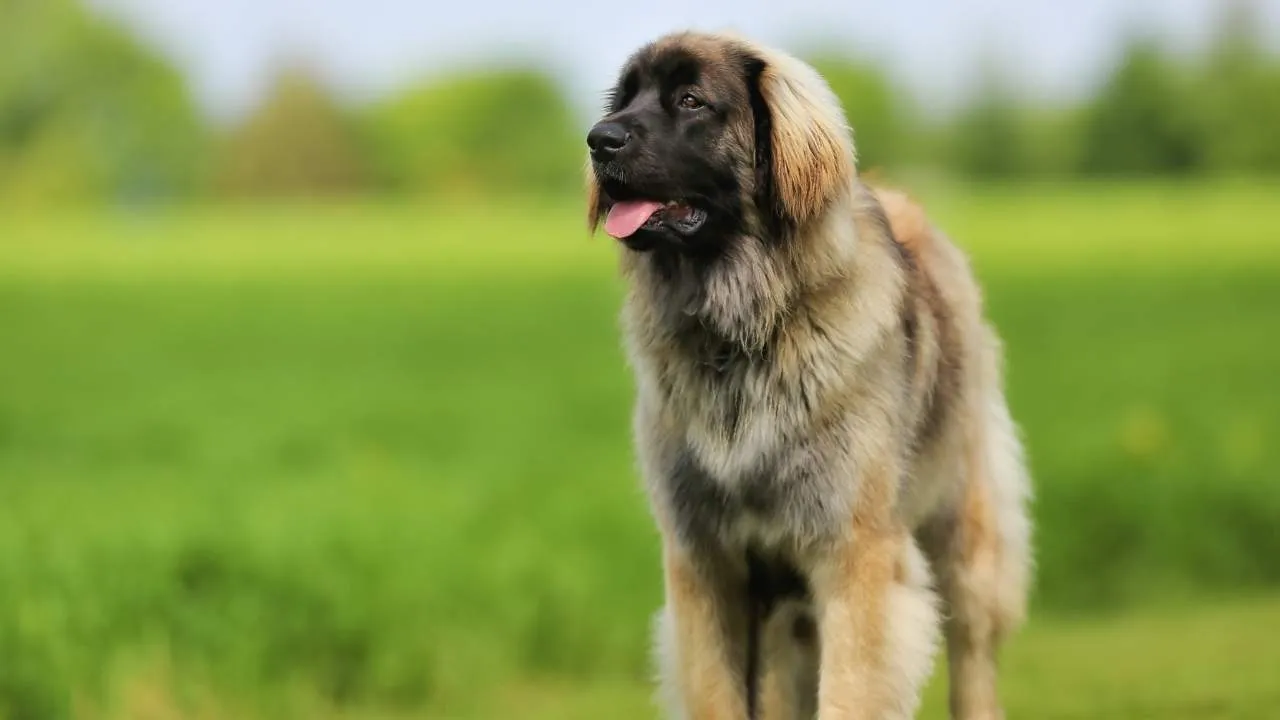
The Leonberger takes its name from Leonberg, where its lion-like appearance was shaped to reflect the town’s emblem. This large dog gained recognition among European royalty while also handling practical farm duties. Its size and coat create an imposing yet composed visual identity.
Judgment over reaction
This breed relies on calm assessment rather than quick response, showing measured awareness as a watchdog and working companion. Its intelligence supports controlled behavior in unfamiliar situations without unnecessary escalation.
That balance becomes clearer in how it functions:
Observes surroundings before acting
Maintains composure in new environments
Responds with steady, deliberate behavior
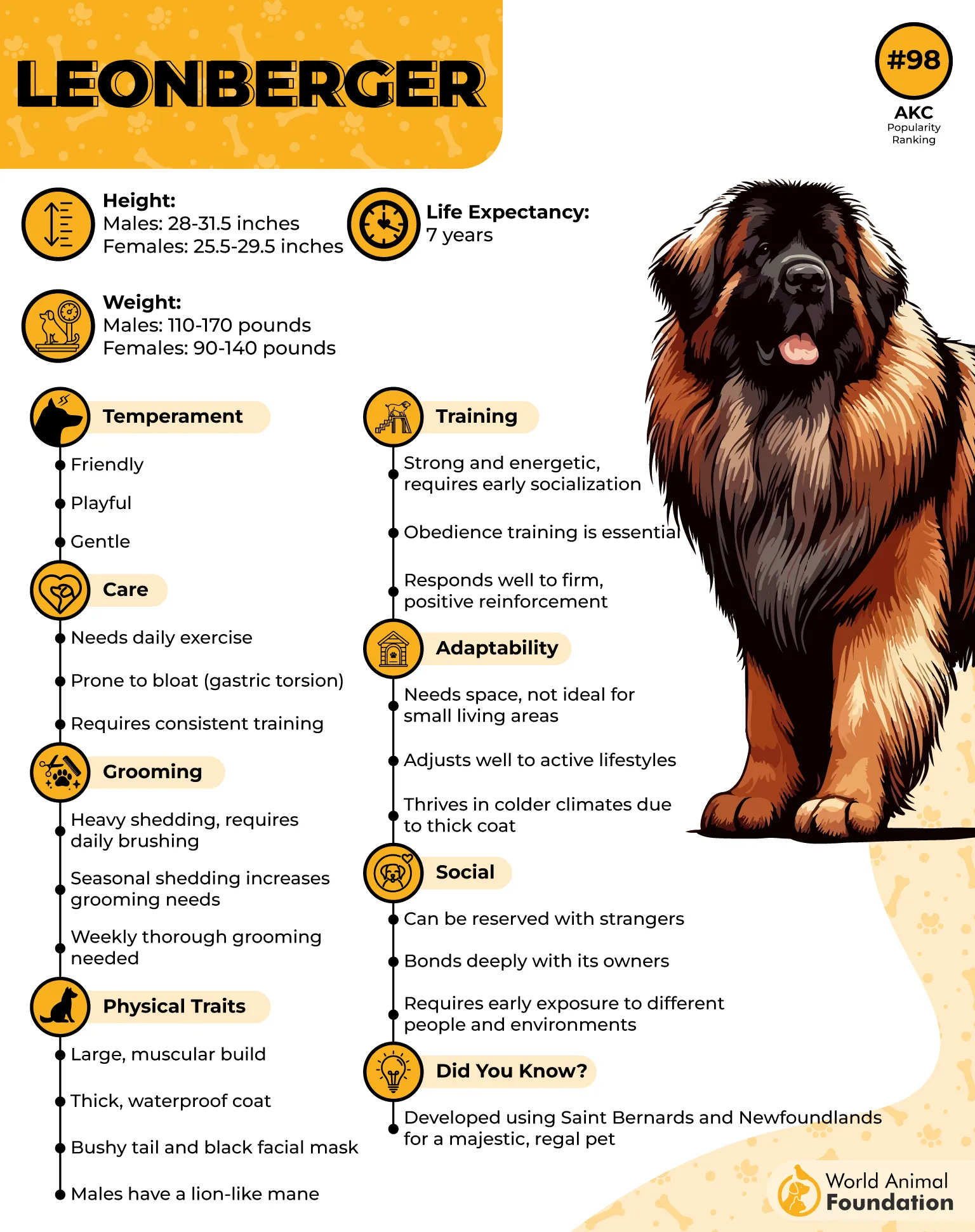
Work focus and daily needs
They engage best when given a purpose, often performing roles like search-and-rescue or structured tasks alongside their human, as mentioned by PDSA.
It requires space for movement and regular grooming due to its thick coat. With proper training and social exposure, it fits into homes as one of the good protection dogs while remaining among loving family pets.
5. Boxer
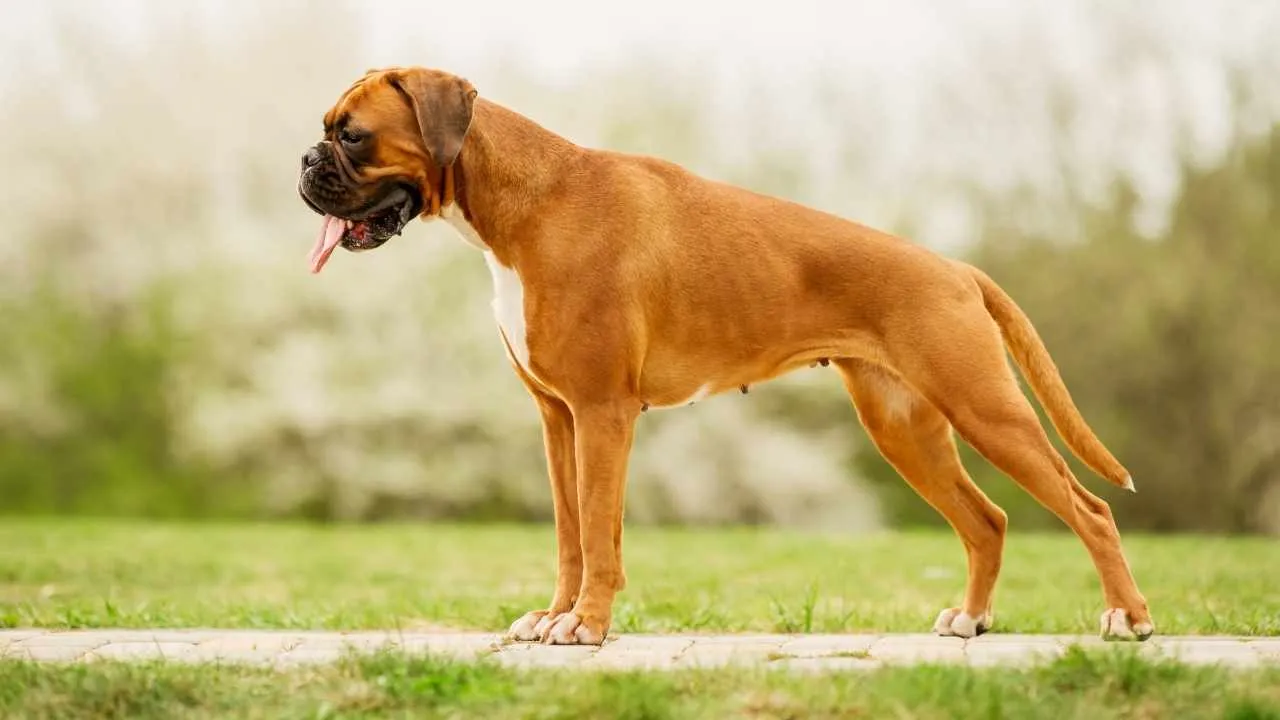
Boxer brings a mix of playfulness and protective awareness, staying engaged with its surroundings rather than being passive. Its nature blends family interaction with a readiness to react when something feels off. This balance makes its presence noticeable without constant tension.
Decision-making in uncertain moments
As a natural guardian, this process is unfamiliar with situations with a level of awareness that allows it to react based on context instead of impulse. It evaluates changes around the home before stepping into a protective role.
That response pattern becomes clear in real situations:
Assesses unfamiliar entry before reacting
Switches from relaxed to alert quickly
Reads changes in the environment with focus
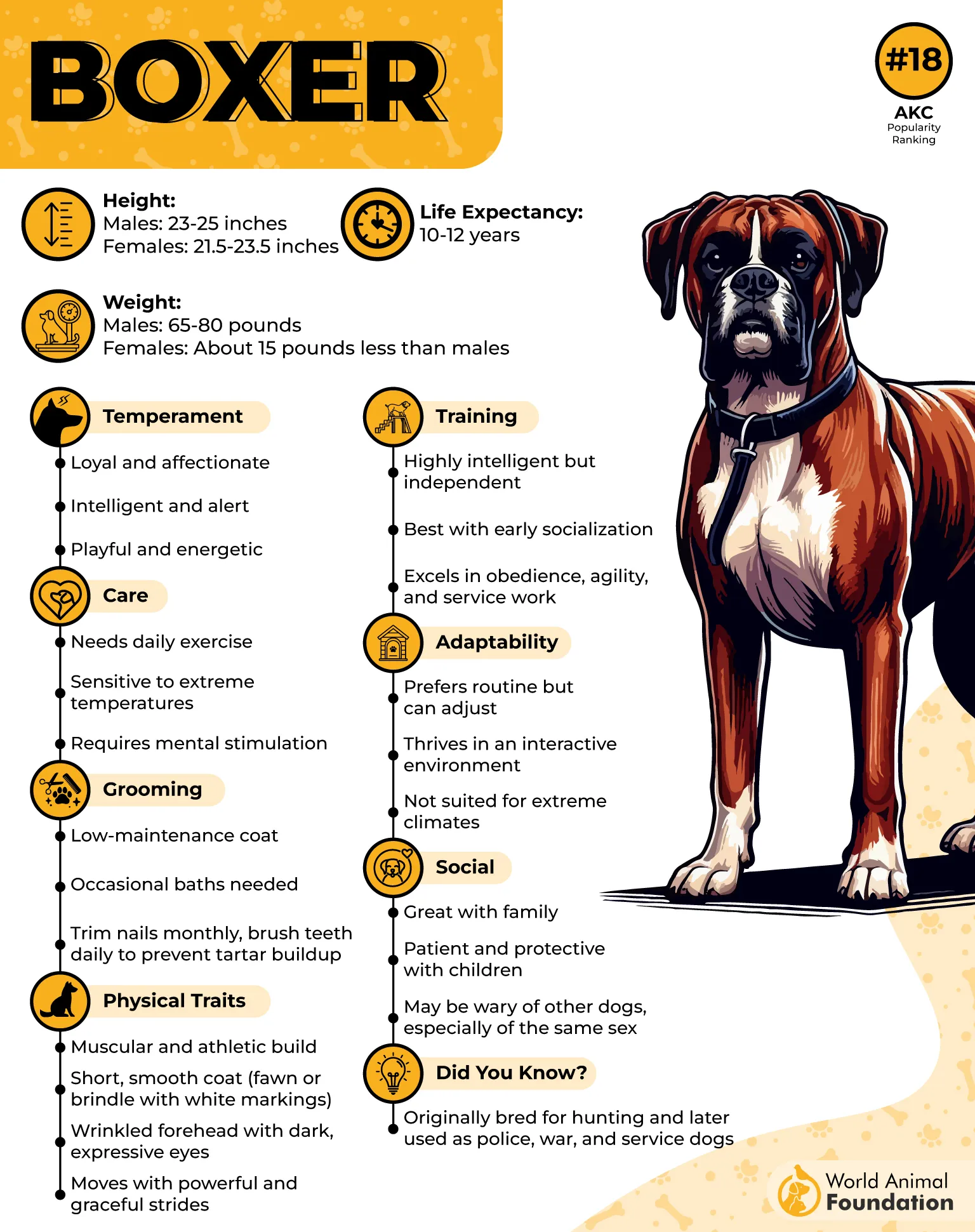
Control through obedience
This energetic dog responds to commands in moments where its impressive guarding instinct is triggered, allowing direction to override reaction.
In situations like an unexpected visitor, this control becomes important for maintaining order. Its behavior reflects a link between sharp instinct and trained response.
6. Boerboel
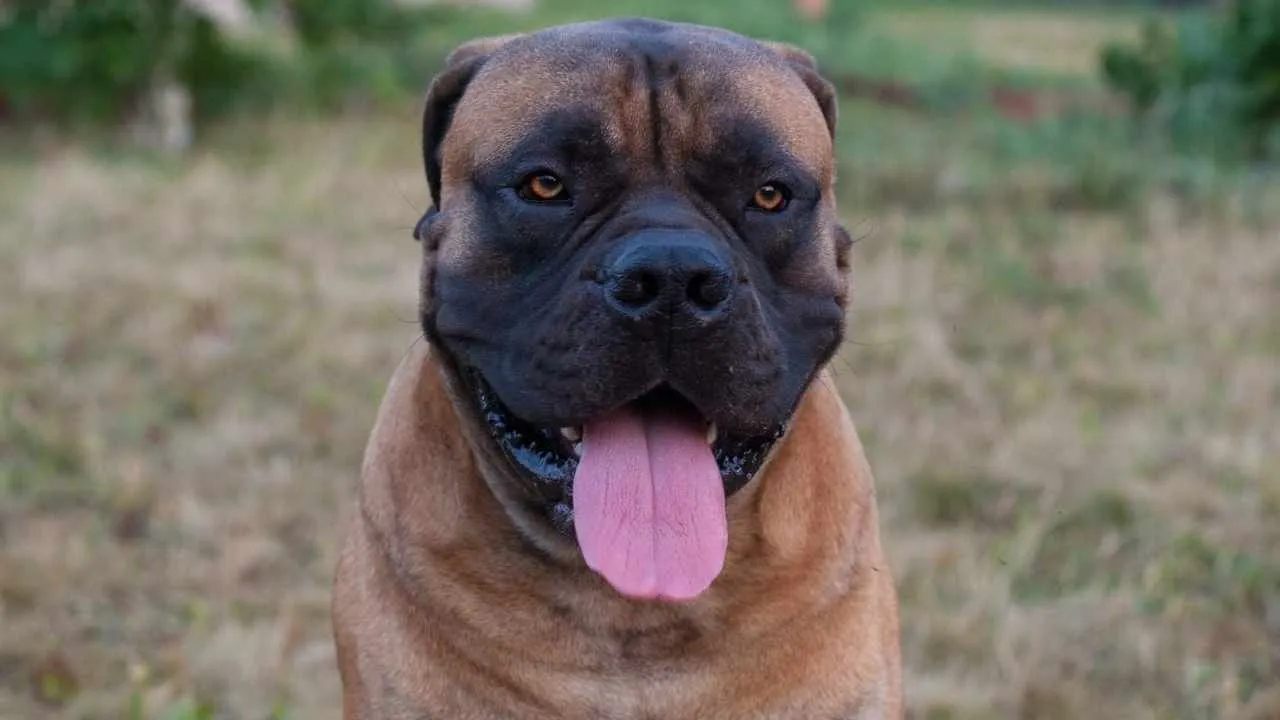
The Boerboel gained its reputation while protecting isolated South African homesteads from large predators, shaping a dog that reads threats with purpose.
The presence of this reliable guard dog reflects a no-nonsense working mindset rather than show-driven traits. This forms a guardian that reacts based on assessment, not noise.
Discernment in protection
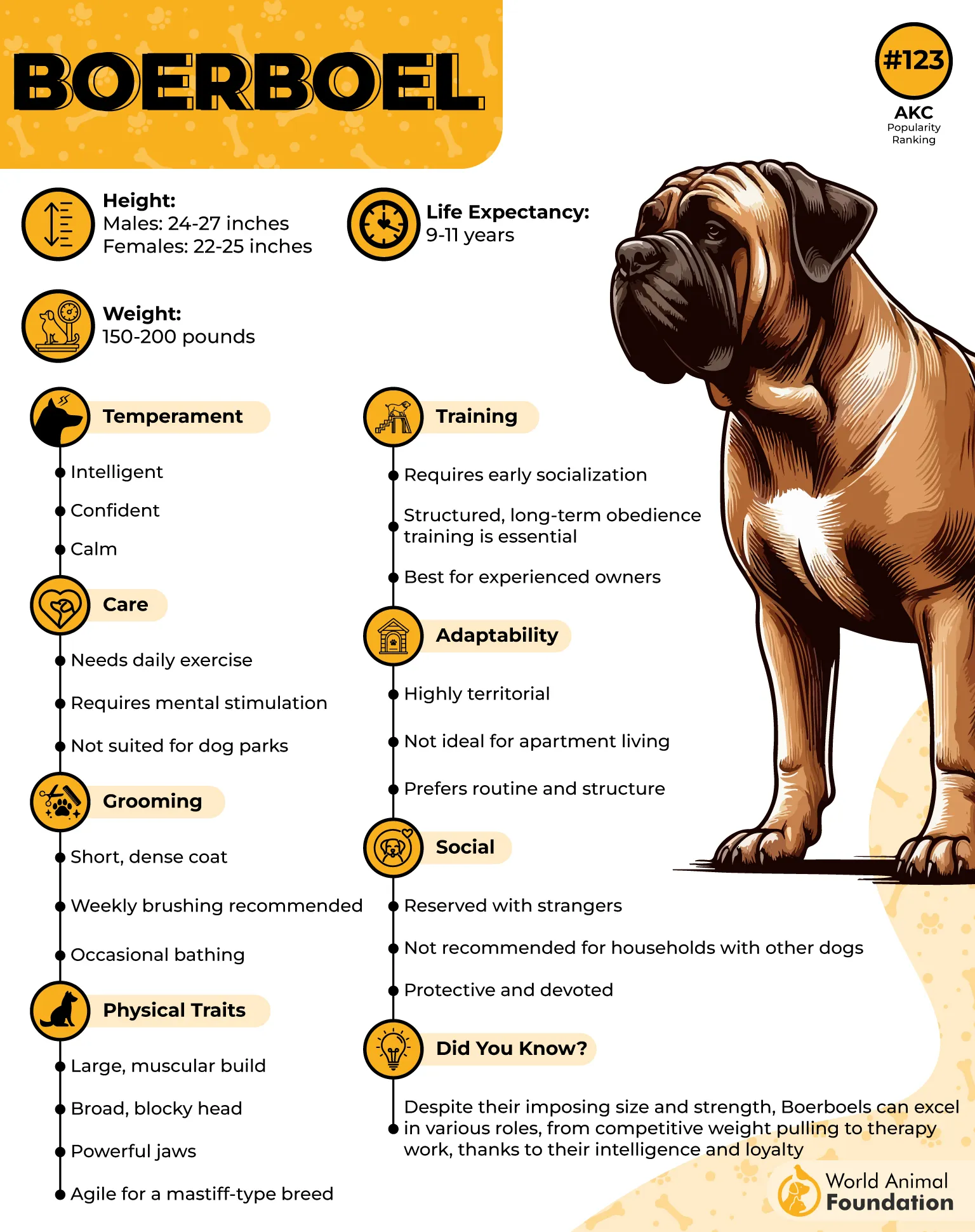
They do not respond to every stimulus; instead, they show selective judgment in how they approach unfamiliar situations. Its guarding instinct is tied to territory and close relationships rather than constant alertness.
That selective response appears through:
Observes before engaging with strangers
Focuses on defined home boundaries
Reacts with intent, not distraction
Handling shaped by dominance and learning ability
They respond well to training when structure is introduced early, before their natural confidence matures into dominance. Its intelligence and willingness to engage make it adaptable, though it requires steady direction. The overall temperament reflects a dog that expects clear leadership from the start.
7. Akita
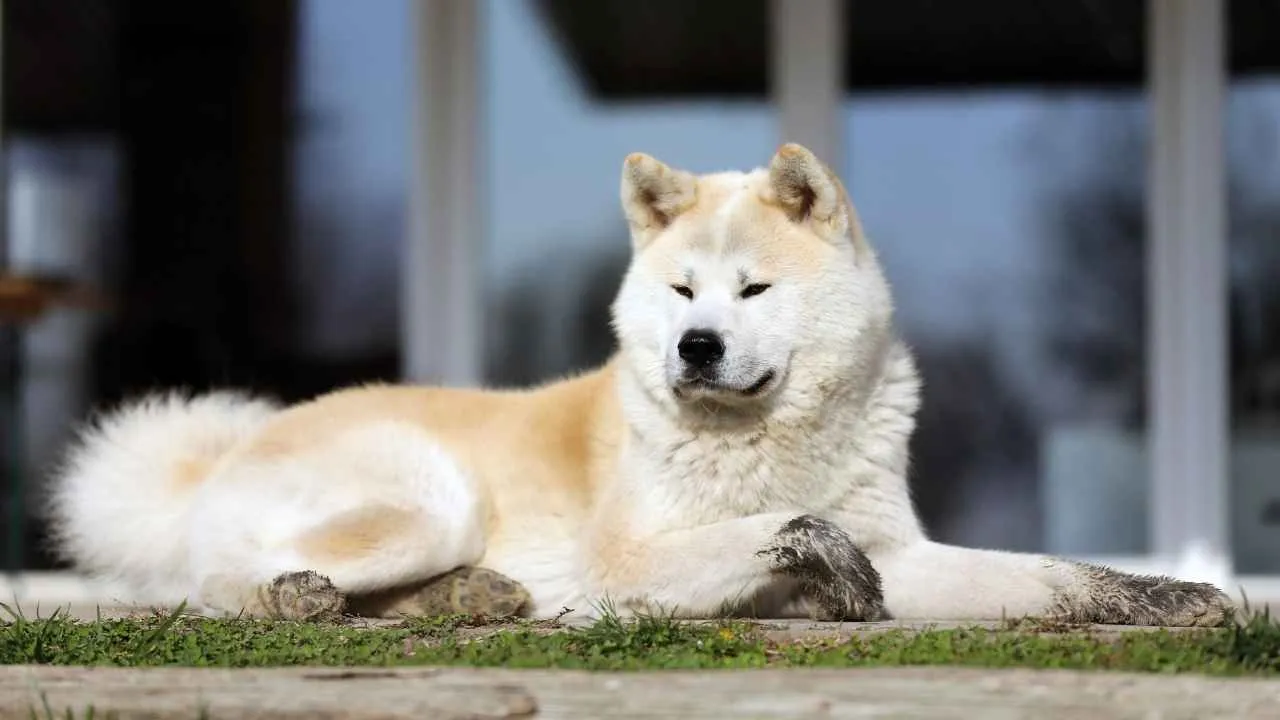
Akita holds a powerful, composed stance shaped by a large, muscular build and confident posture. Its physical presence alone creates a natural barrier, often discouraging an approach without any display of force, as noted by Britannica. This quiet dominance reflects a dog that relies on presence before action.
Guarding instinct without noise
One of the dependable guard dog breeds, they observe their surroundings with a reserved, watchful attitude, reacting only when a situation demands attention. Its approach to protection avoids unnecessary barking, relying instead on controlled awareness.
Their instinct appears through distinct patterns:
Stays alert without constant vocalization
Watches unfamiliar movement before reacting
Holds ground when sensing intrusion
Independence, shaped through control
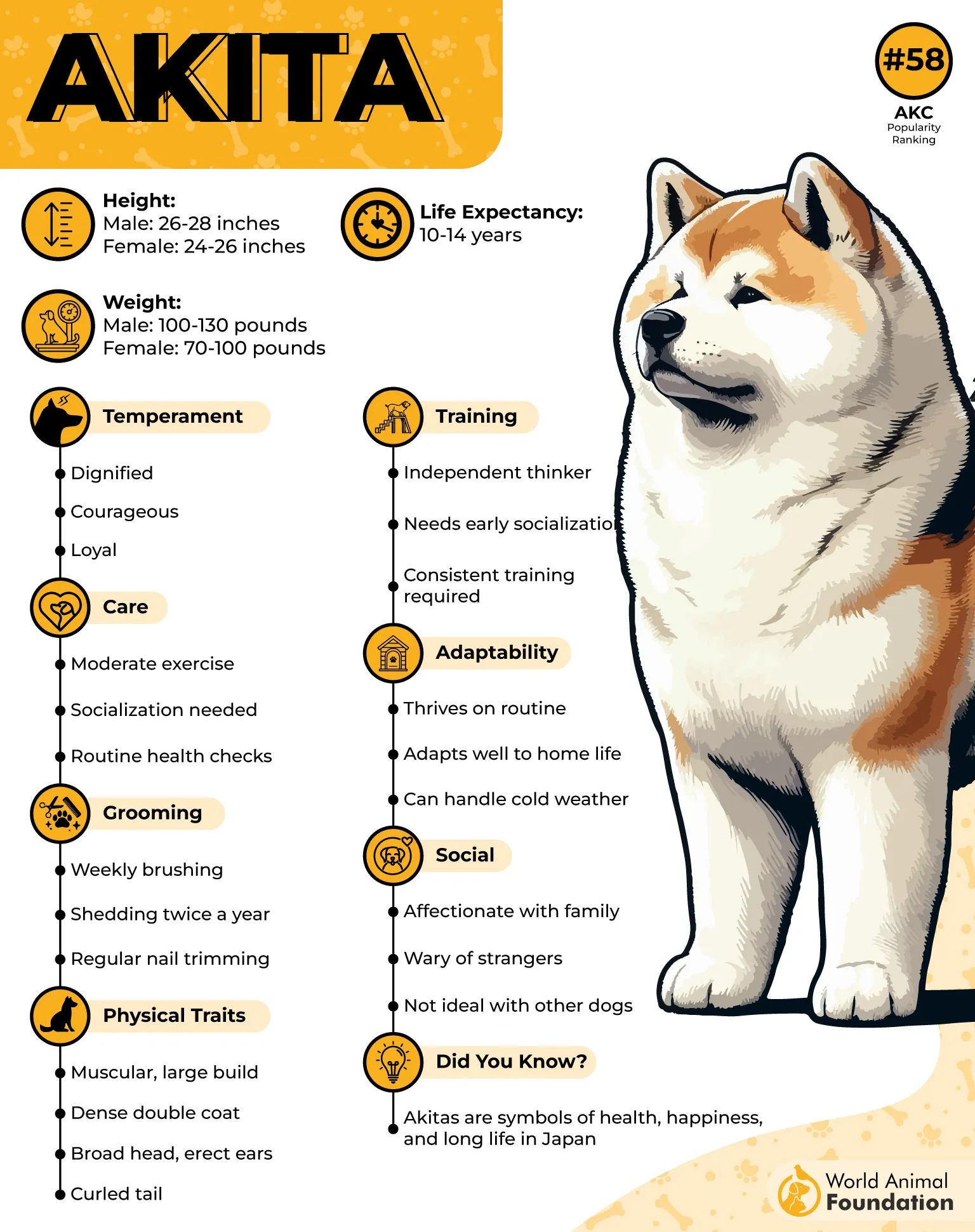
Akita shows a self-assured mindset, often making decisions without waiting for constant direction. Consistent training and early exposure shape how this independence is expressed in real situations. Its intelligence works best under firm and early handling.
Conclusion
A guard dog for a single owner should bring clarity, not complication. The breeds discussed here highlight how protection depends on steady behavior rather than constant reaction. Each dog carries a different approach, shaped by its background and role, yet all offer a reliable sense of awareness.
Knowing these differences helps in making a decision that fits your living space and daily rhythm. The right guard dog breed settles into its role without disrupting your routine.
Over time, this creates a living environment that feels secure, balanced, and easier to manage without unnecessary pressure or constant adjustment.
