




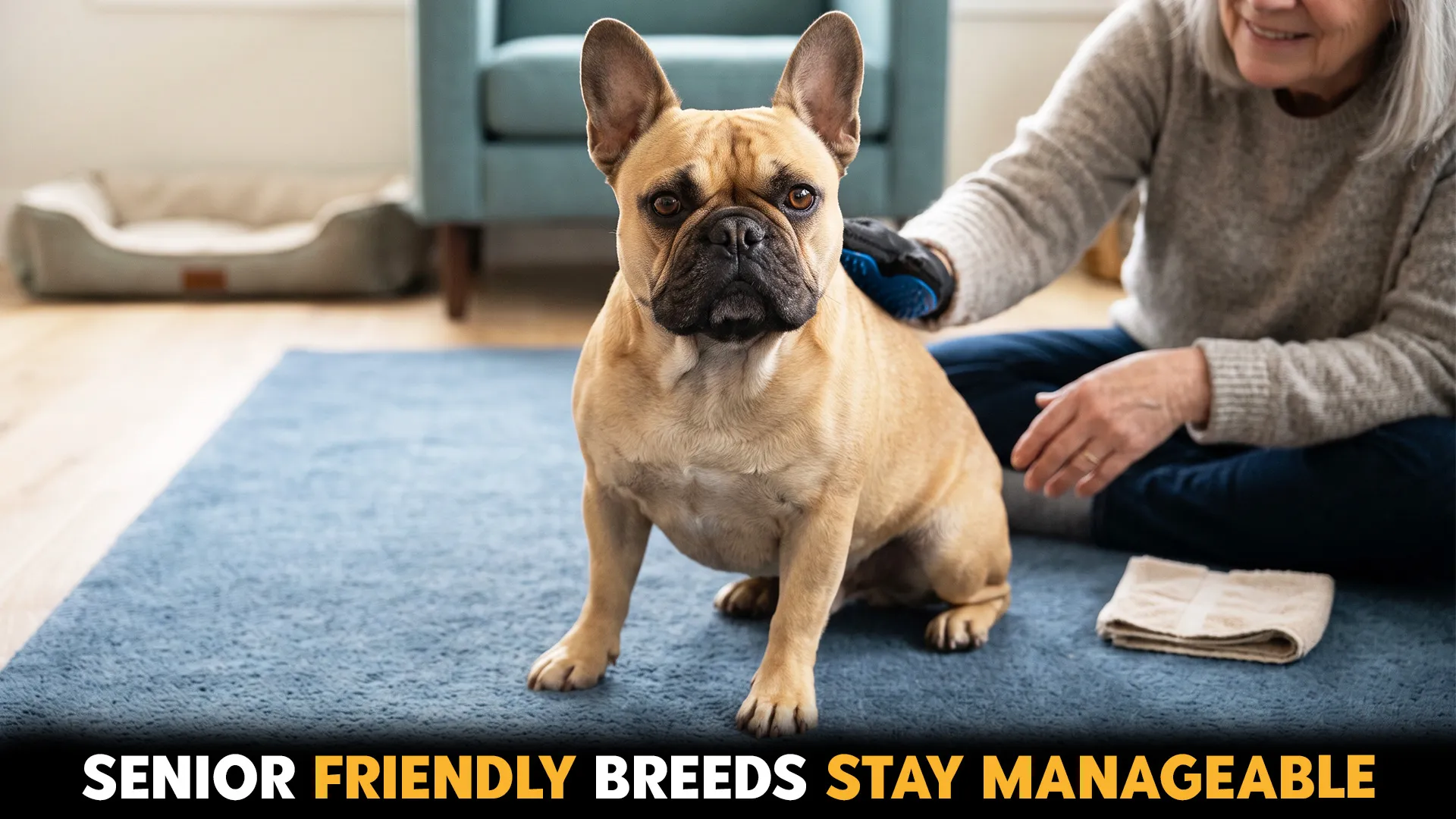
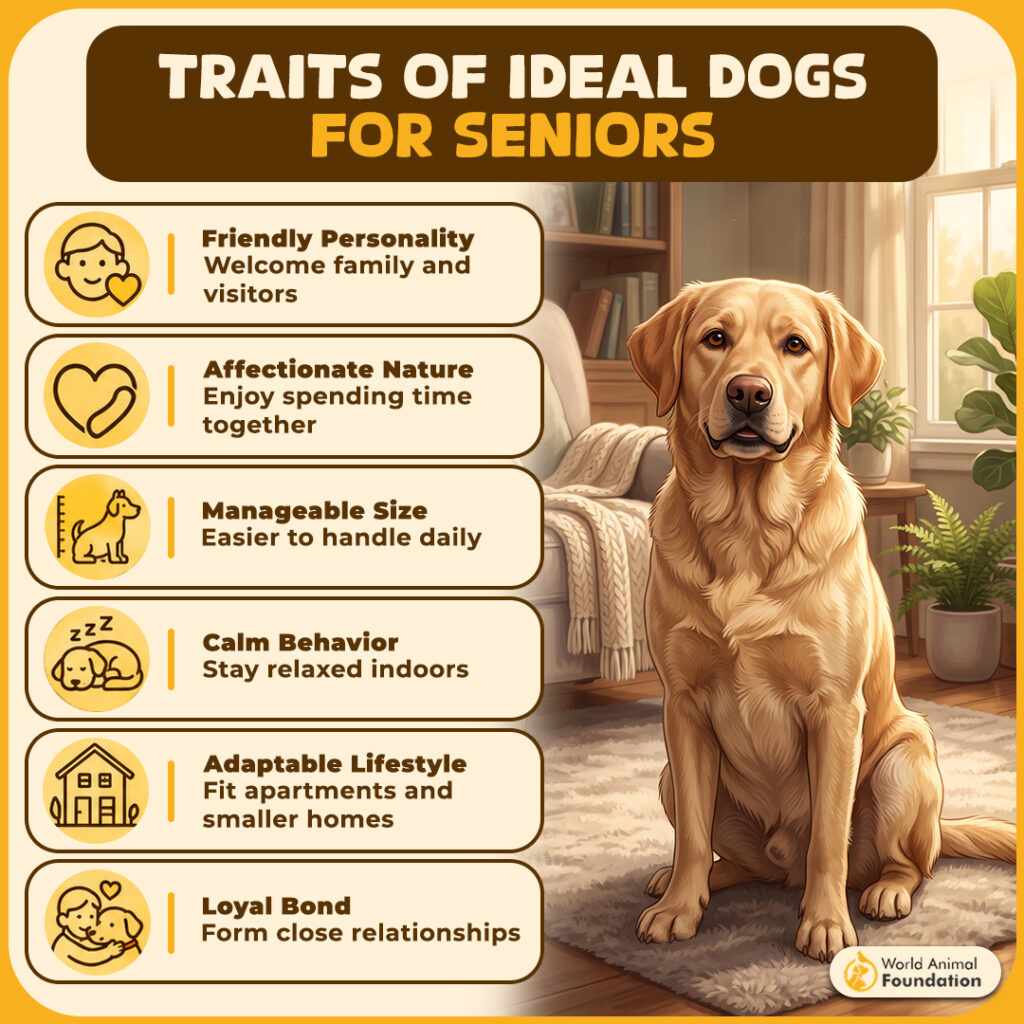
Choosing a dog in your later years is about finding a companion whose needs fit comfortably into your daily routine. Some breeds are known for their easygoing temperaments, moderate activity levels, and love of quiet time, making them appealing options for older adults seeking affection and companionship.
However, ease of care depends on more than breed or size. Grooming demands, health needs, training, and a dog’s individual personality all deserve consideration.
Explore seven dog breeds that may suit seniors prioritizing simpler care, helping you find a loyal friend who complements your lifestyle and abilities.
Best Dog Breeds for Seniors Prioritizing Ease of Care
1. Havanese
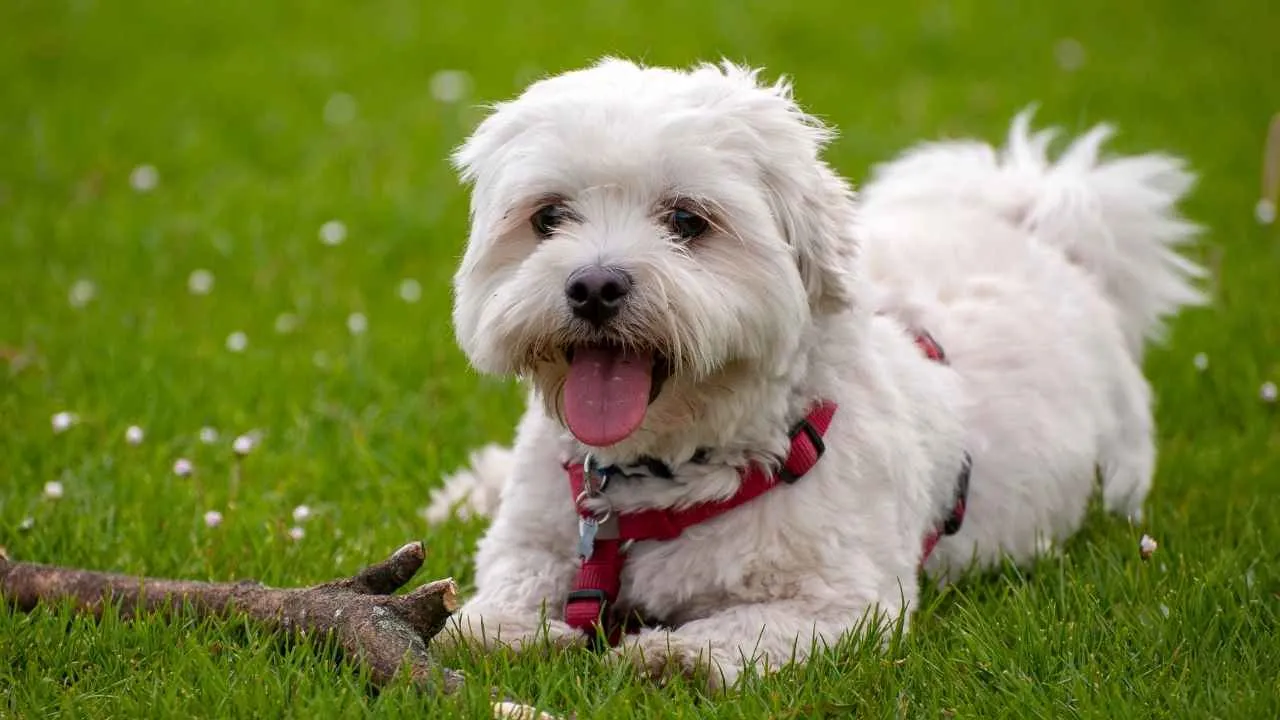
The Havanese is a cheerful, affectionate toy breed that thrives on being included in everyday family life. Its affectionate and friendly nature helps explain why it is considered one of the excellent therapy dogs, and its small, sturdy build makes it suitable for city living, while its friendly disposition can help it fit into a variety of households.
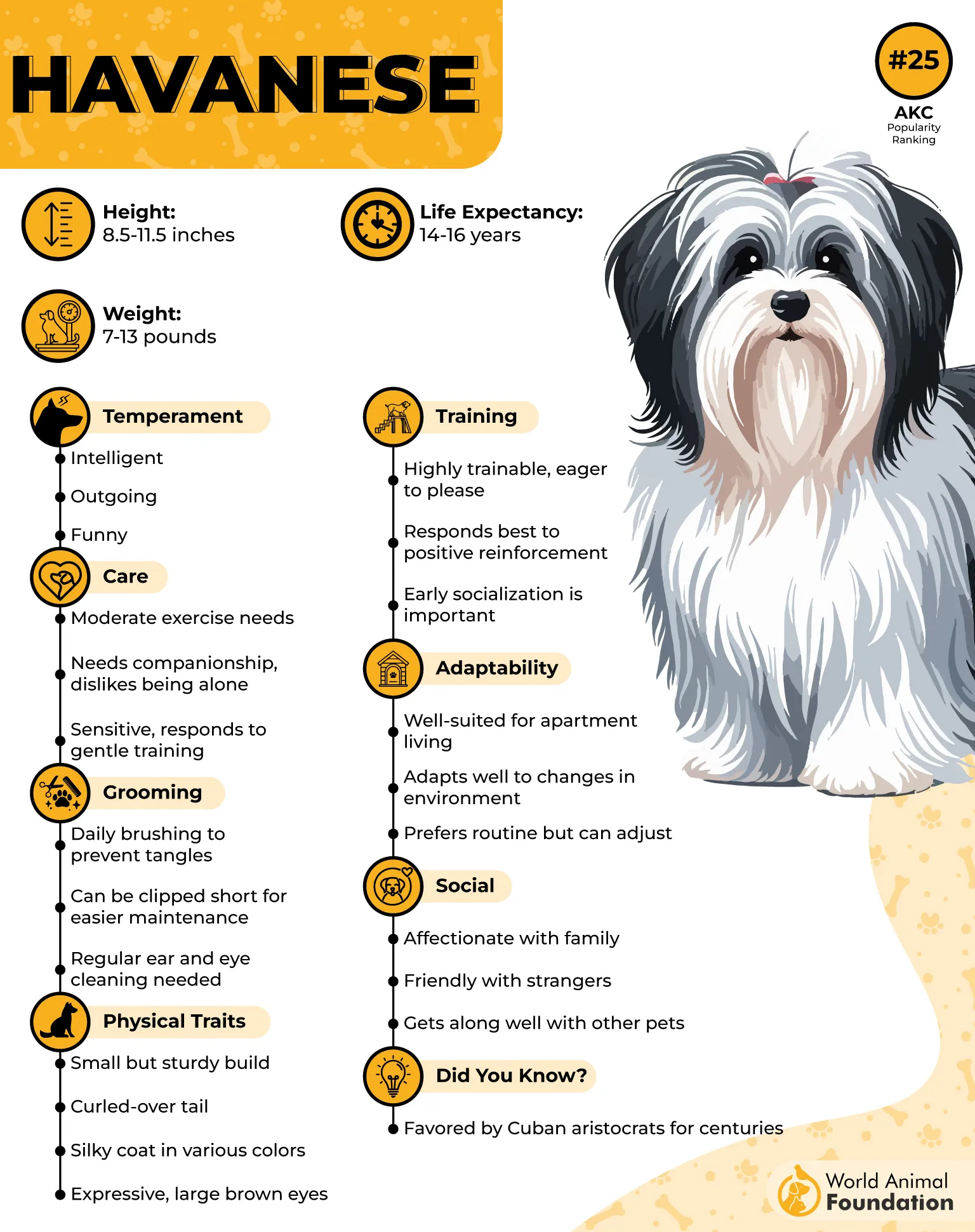
According to PetMD, the Havanese is a lively and playful toy dog that belongs to the Barbichon family of breeds.
Its playful personality encourages gentle activities and interaction, while basic training and socialization help develop good manners. Havanese dogs enjoy regular walks but typically need less than an hour of exercise daily.
Their long, silky coat may be wavy or slightly curled, with a plumed tail carried over the back. Regular brushing and grooming are important to keep the coat in good condition. They can also be vocal, sometimes barking to alert their owners to visitors or unusual activity.
How This Breed Stands Out
An adaptable temperament can suit seniors with different daily routines.
An affectionate and sociable nature encourages gentle interaction, but its coat needs regular grooming.
2. Pug
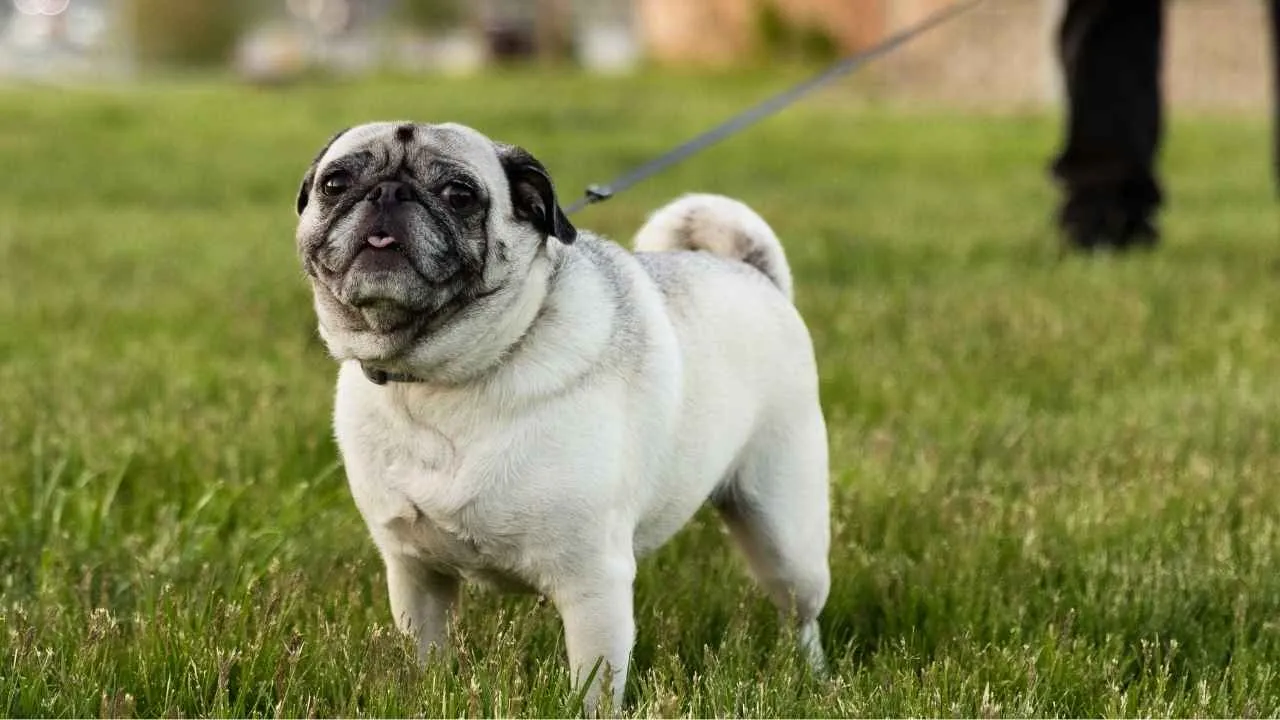
Pugs are affectionate, people-oriented dogs that thrive on close companionship. As a small dog with a manageable size for many seniors, they fit well with owners who want an easy-to-handle companion without needing an especially active routine.
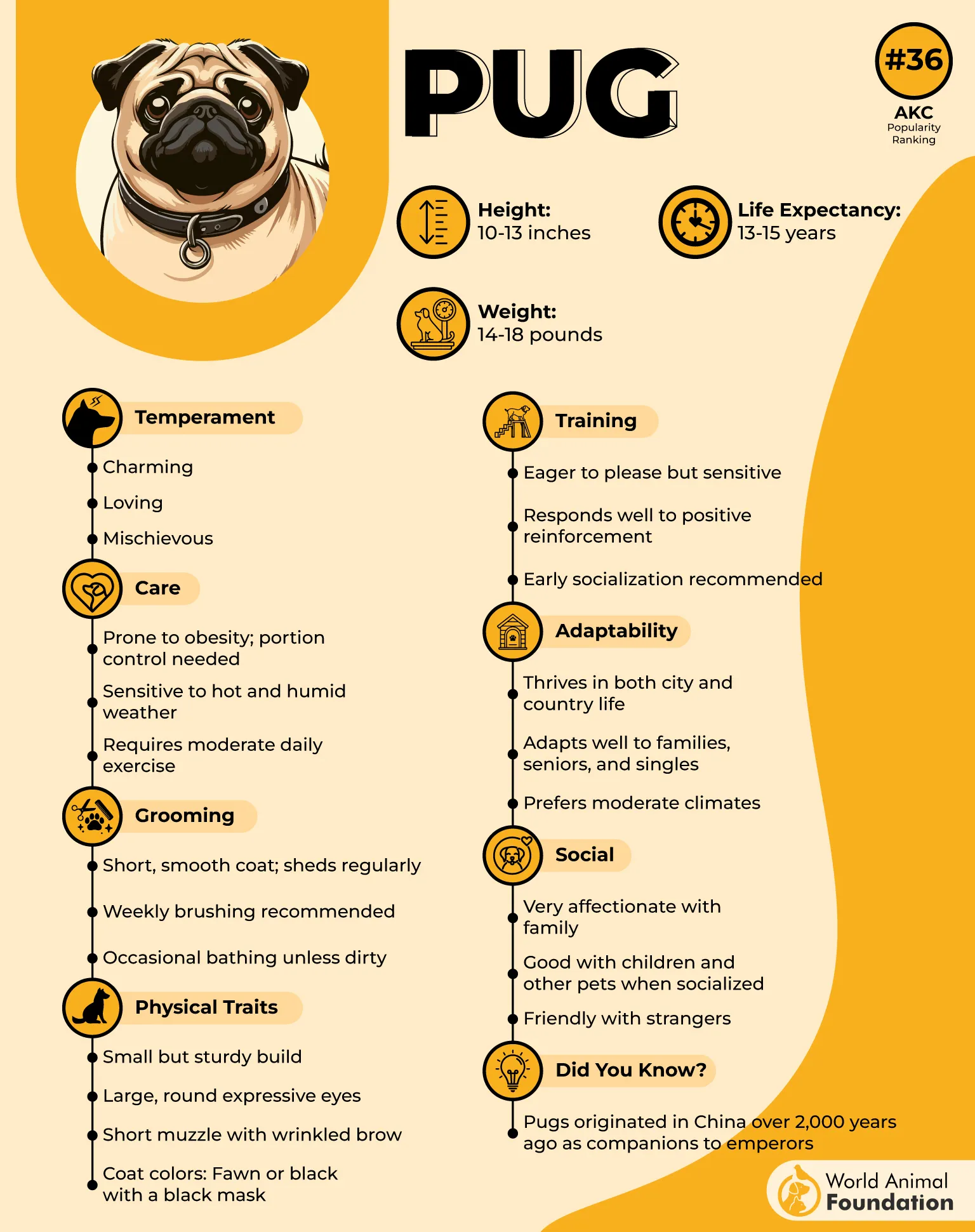
Pugs make wonderful small companions for older adults because they enjoy indoor living and love snuggling with their owners.
With their expressive faces and comical antics, Pugs often add amusement to everyday life. They enjoy lounging beside their owners, although keeping treats in check and monitoring their weight is important.
Britannica states that their gentle nature also makes them well suited to households where companionship is a priority, though some may be less ideal with other pets if jealousy becomes an issue.
Their short coat needs only weekly brushing, and the wrinkles around their faces need regular cleaning to help keep the skin healthy. Because their flat faces can cause breathing difficulties, Pugs should avoid strenuous exercise and excessive heat.
Pugs typically weigh between 14-18 pounds, and many do well with regular walks totaling 15-30 minutes of exercise through short, gentle outings rather than strenuous activity.
How This Breed Stands Out
Sociable, amusing personality brings companionship to everyday routines.
Short coat is low maintenance, although facial folds need cleaning and breathing problems can affect care.
3. French Bulldog
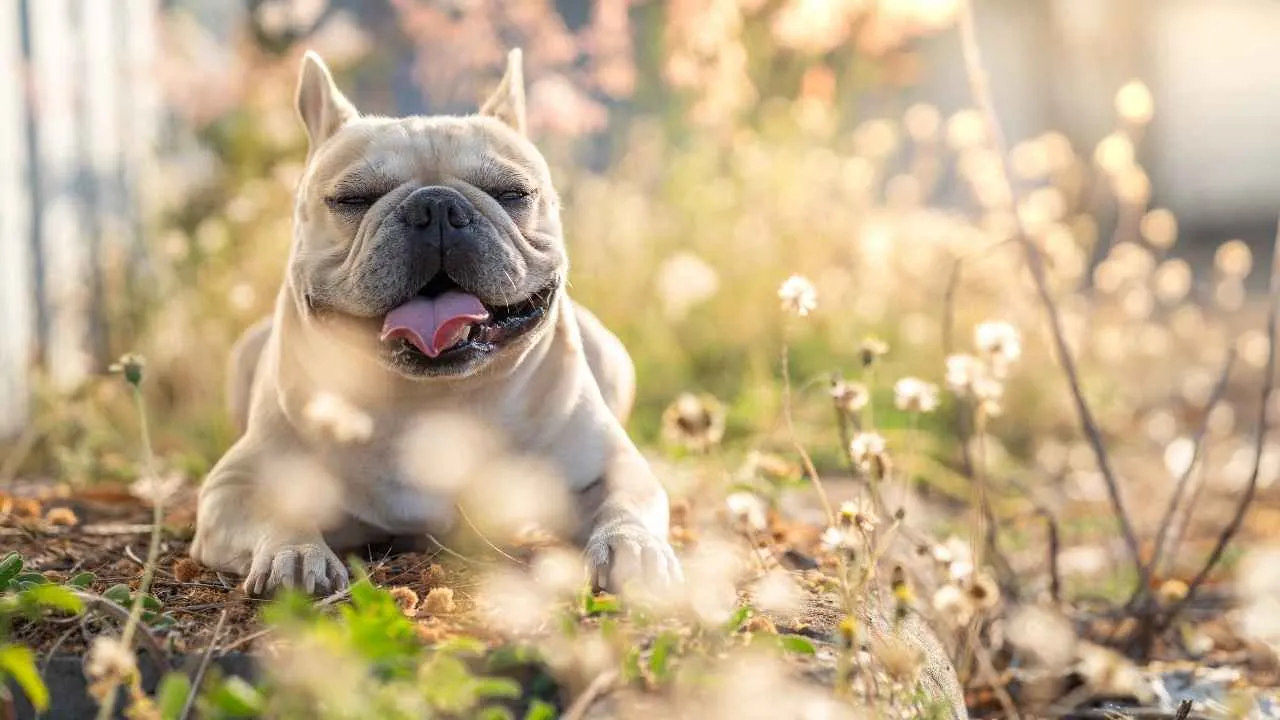
French Bulldogs, often called Frenchies, are wonderful companions with a laid-back attitude. Their compact build makes them suitable for smaller homes and apartments, and at 20–28 pounds, they still feel manageable for many seniors in smaller homes or apartment living.
According to Purina, the French Bulldog is an affectionate companion with a playful, mischievous streak, making it a charming choice for anyone seeking a lovable best friend.
Unlike highly energetic breeds, French Bulldogs are generally comfortable with moderate activity and plenty of downtime indoors. Short walks and relaxed play sessions can meet their needs without requiring a demanding exercise schedule.
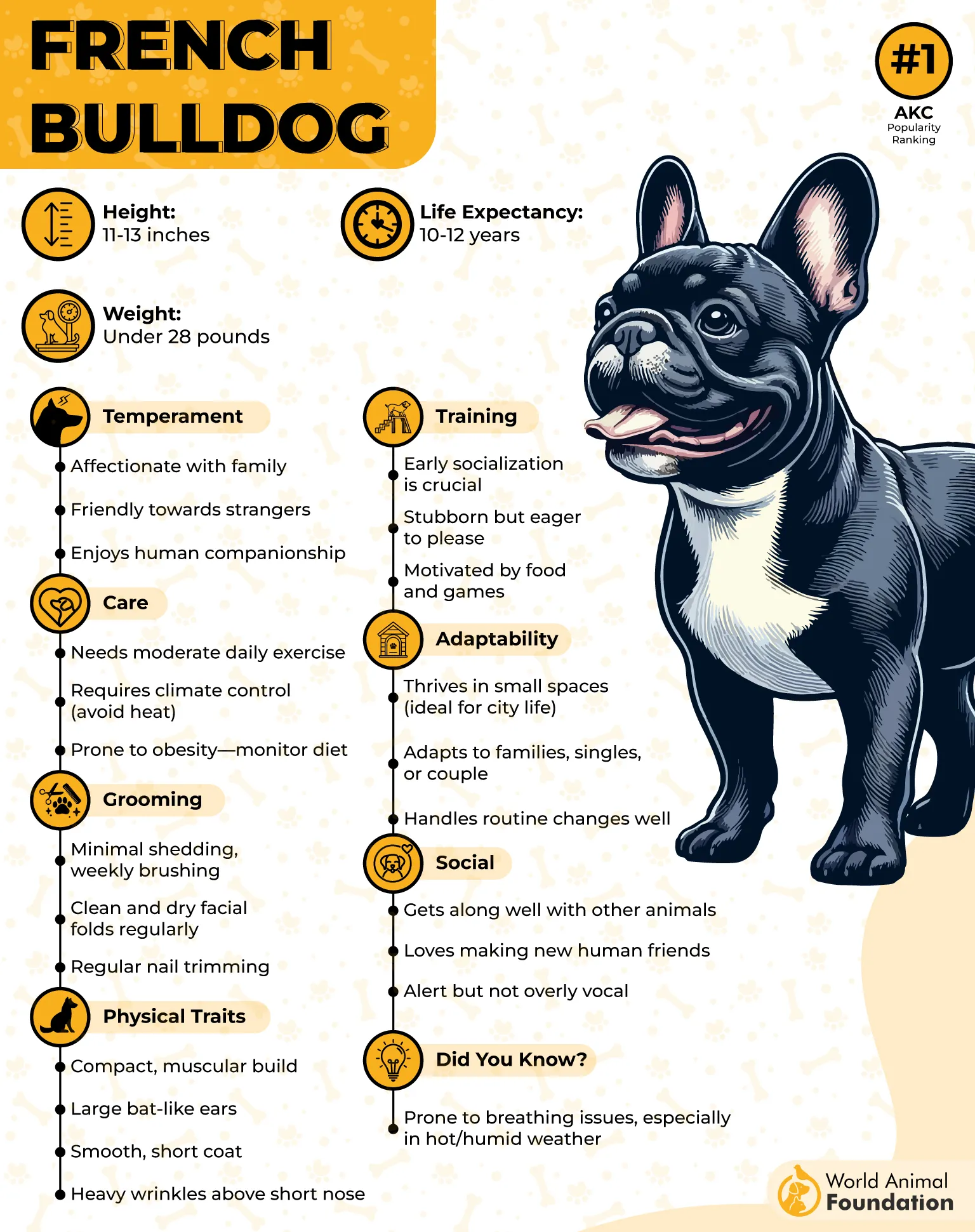
They also tend to be relatively quiet, which may suit seniors who prefer a peaceful household. Training and socialization still matter in small breeds to help limit excessive vocalization.
Their short, smooth coat requires minimal grooming and typically needs only occasional brushing. However, their flat faces can make breathing difficult, and they may struggle in hot weather. Seniors should take extra care to avoid overheating and watch for signs of respiratory distress, particularly during outdoor activities.
How This Breed Stands Out
Short coat requires minimal brushing and routine coat maintenance.
Usually content with moderate activity and relaxed time indoors; heat and breathing issues require extra care.
4. Maltese
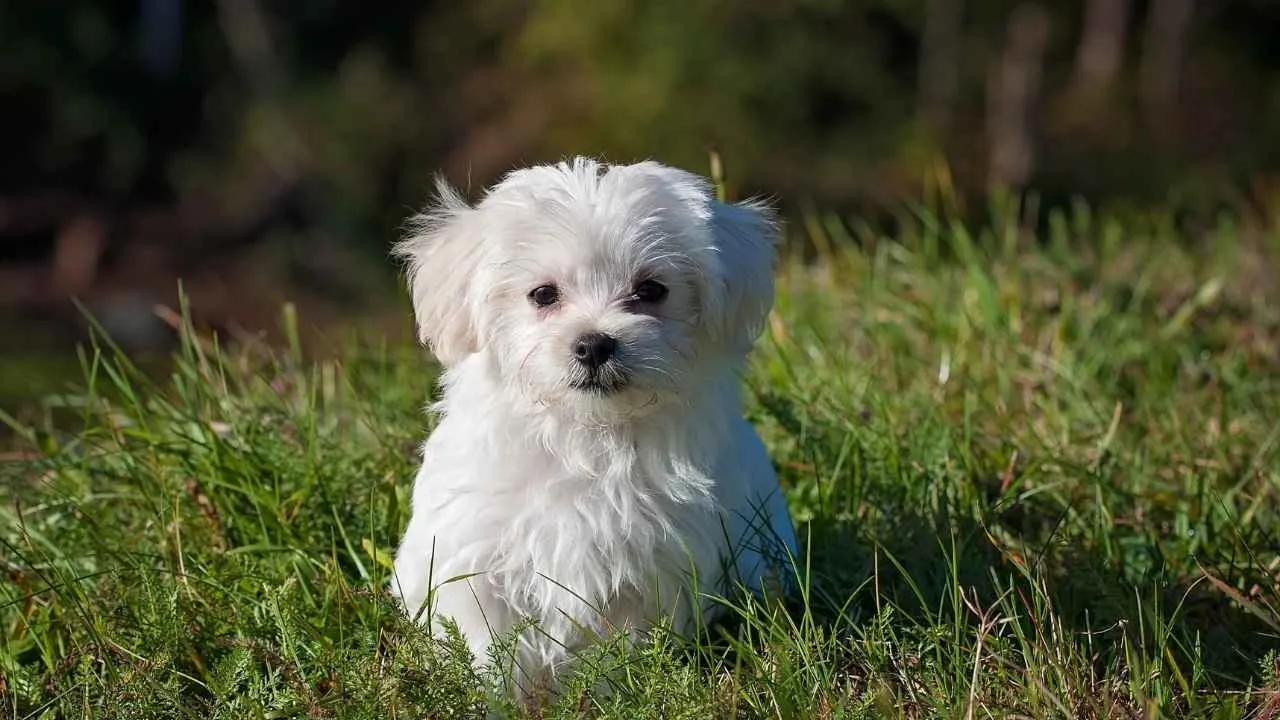
The Maltese is a petite companion dog with a strong fondness for cuddles and close human contact. Bred to be a lap dog, it often prefers staying near its favorite person, making it appealing to seniors seeking affectionate company.
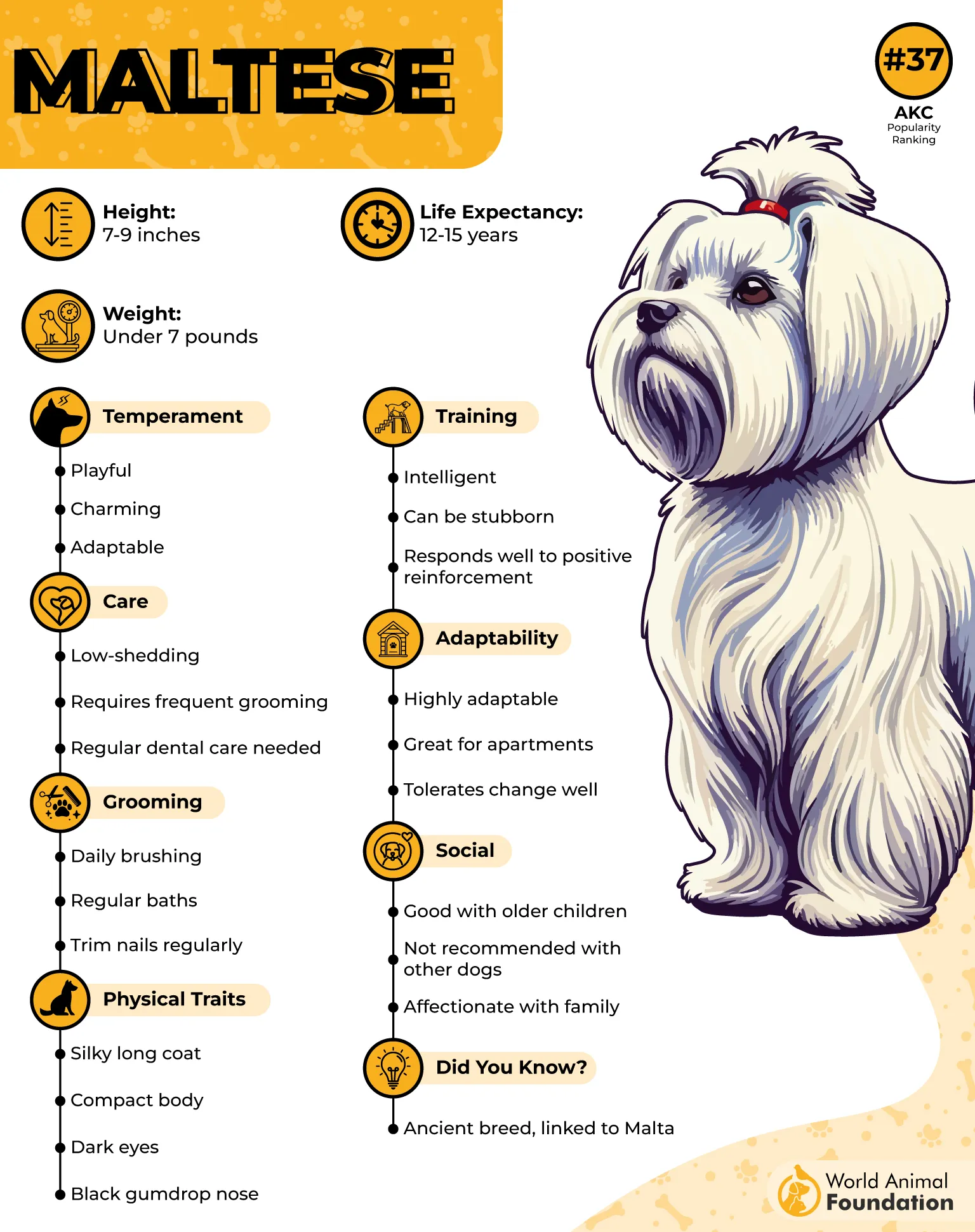
Its lightweight build makes handling easier, and Maltese dogs typically weigh just 4–7 pounds, which reinforces why they work well as a small lap dog.
Their small size suits apartments or homes with limited space, and Maltese dogs generally have modest exercise needs, so short walks and relaxed indoor activities can fit comfortably into a senior’s routine. However, their delicate frames mean they should be handled gently and monitored with care.
They are often considered a practical choice for allergy sufferers because they are commonly described as hypoallergenic, though regular grooming is still required to keep the coat clean and manageable. Their affectionate nature and manageable activity requirements make them appealing companions for older adults.
How This Breed Stands Out
Lightweight size makes this breed easier to lift and carry when necessary.
Devoted companion that often enjoys sitting close to its favorite person.
5. Shih Tzu
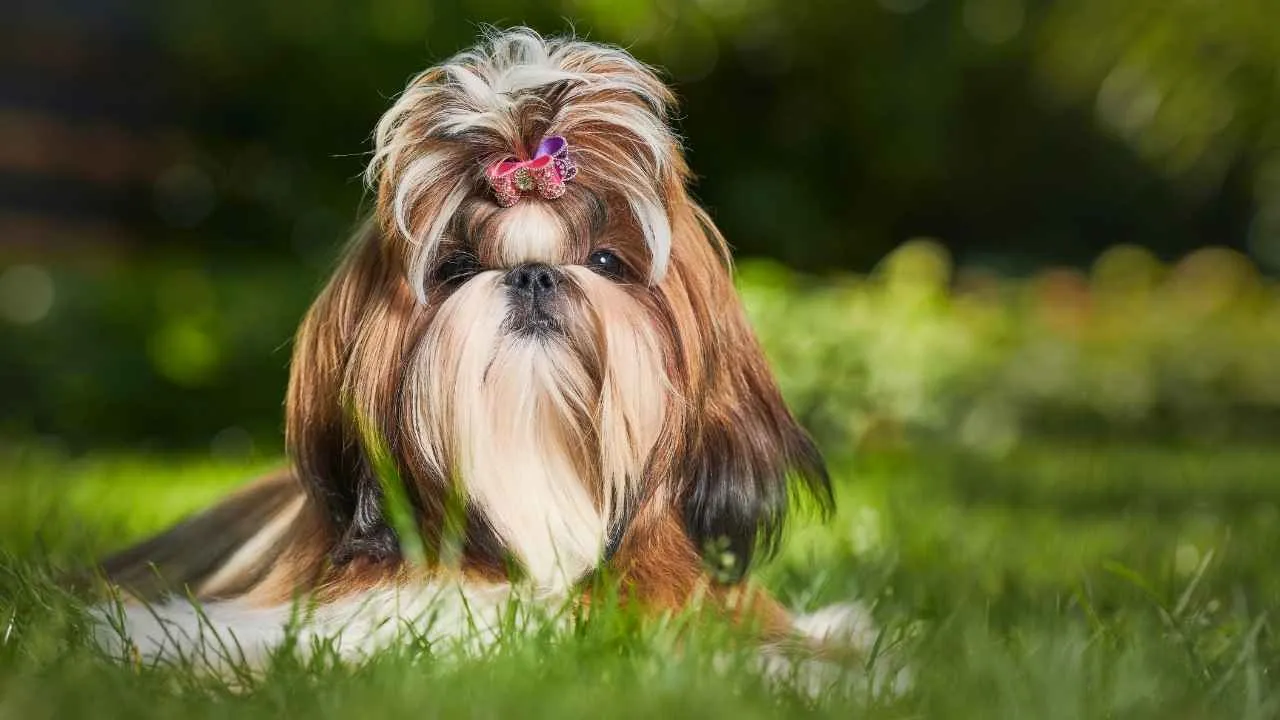
Shih Tzus are small, affectionate dogs well suited to seniors who prefer a relaxed pace of life. Their easygoing temperament and love of close companionship make them happy lap dogs, while their compact build makes them easier to manage at home.
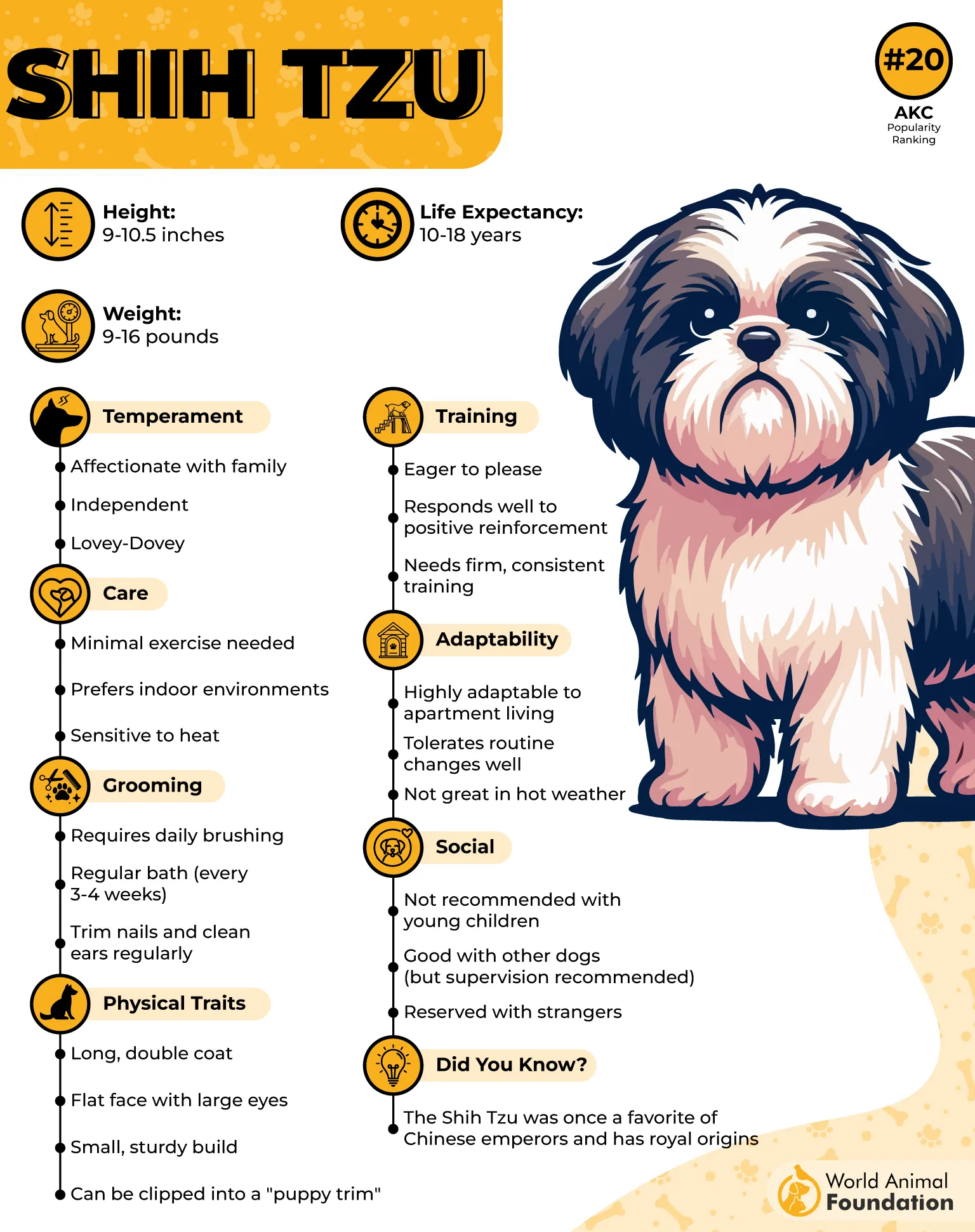
Rather than needing a highly active routine, these dogs are generally content spending time indoors with their owners. Their moderate energy level means a few short daily walks and opportunities for gentle activity are usually enough to meet their exercise needs.
Their long, flowing coat offers plenty of styling possibilities, from neat haircuts to decorative clips. However, keeping it free of tangles requires consistent grooming, so seniors should account for coat maintenance when considering this breed.
How This Breed Stands Out
Comfortable with a relaxed indoor lifestyle and short daily walks.
Compact build makes handling easier, though its long coat needs consistent upkeep
6. Bichon Frise
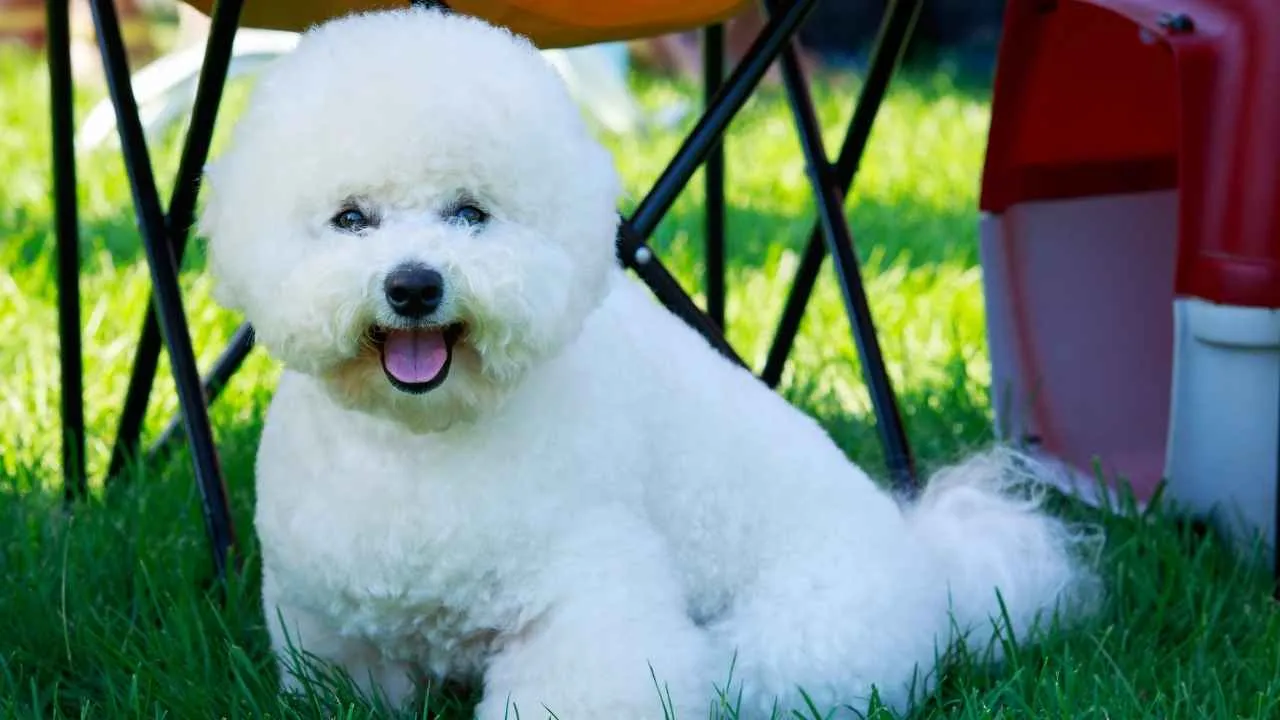
The Bichon Frise is a small, cheerful companion known for its lively personality and fluffy, curly coat. Its compact size makes it manageable for seniors who want a playful dog without the demands of a larger breed.
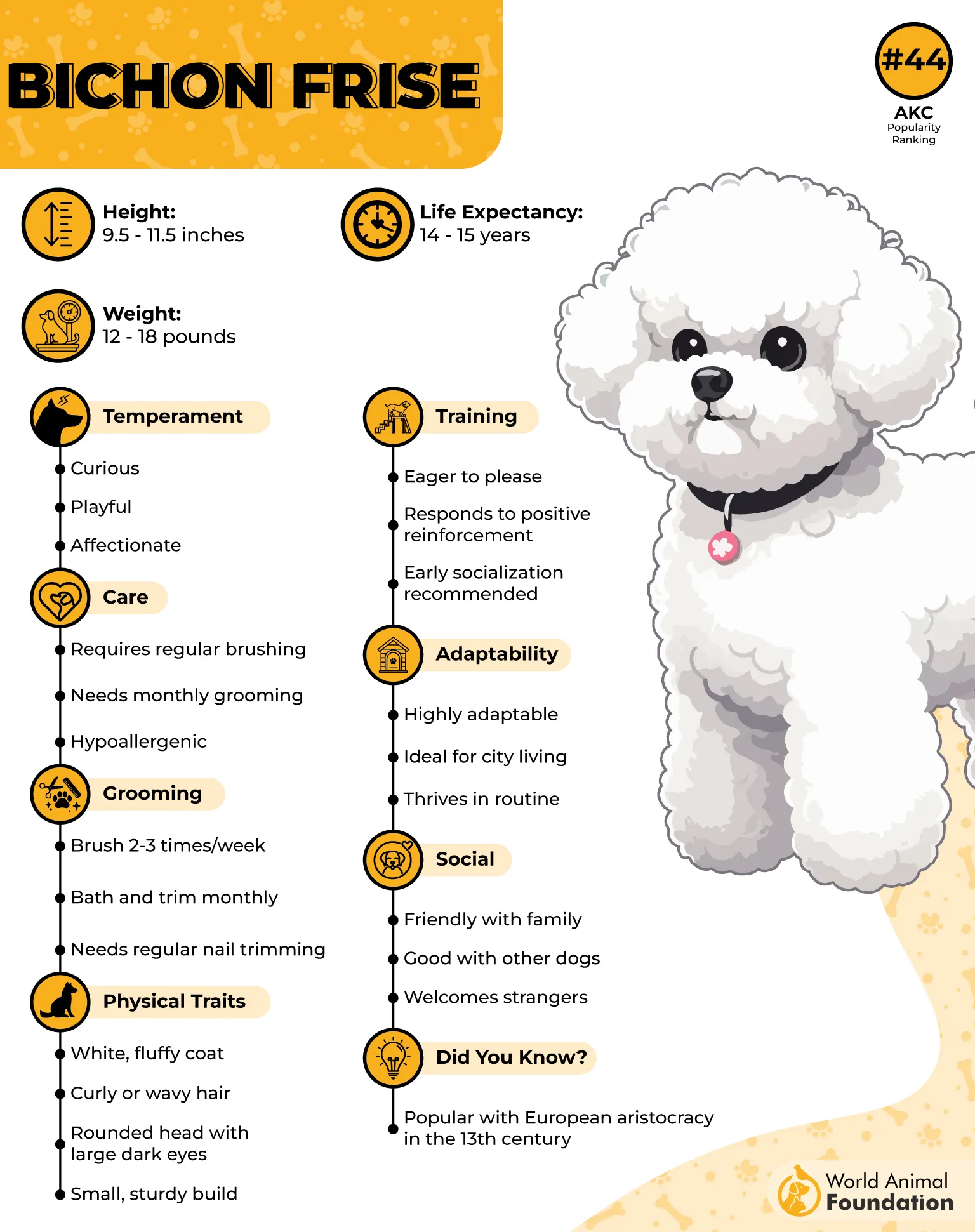
These dogs enjoy being around people and often bring extra energy to the household with their entertaining antics. Although they love playtime, Bichons can also adapt to a more relaxed routine when given regular attention and gentle walks.
Their coat sheds relatively little, which may appeal to owners who prefer less loose hair around the home. They are often considered among the hypoallergenic breeds that may suit allergy sufferers, though they still need regular coat care.
However, the curls need consistent brushing to prevent tangles, along with professional grooming to keep the coat in good condition. Seniors should consider these grooming needs when deciding whether this breed fits their lifestyle.
How This Breed Stands Out
Its cheerful, playful personality adds liveliness without requiring a large dog.
Its curly coat sheds relatively little but needs regular brushing and professional grooming.
7. Cavalier King Charles Spaniel
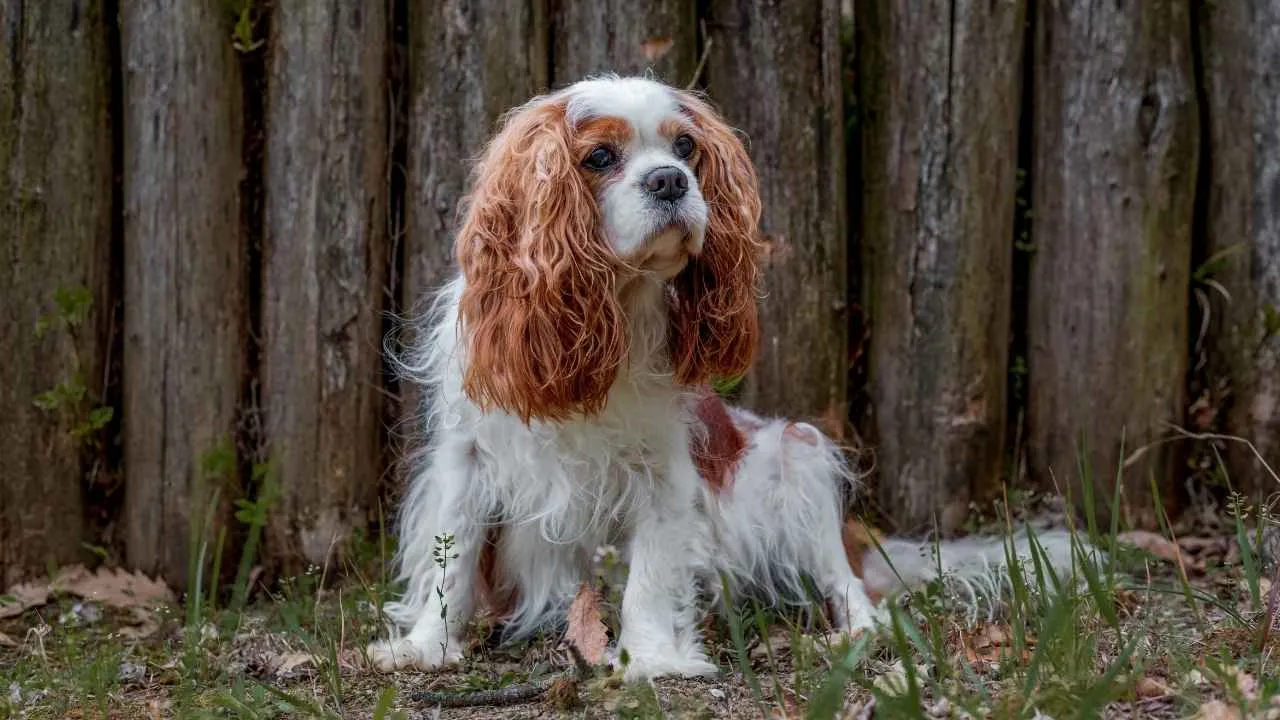
Cavalier King Charles Spaniels are affectionate, friendly companions that usually weigh between 13–18 pounds, and their small size makes them easy for seniors to handle. Their gentle temperament and love of being close to their owners make them particularly suited to older adults who appreciate a devoted indoor companion.
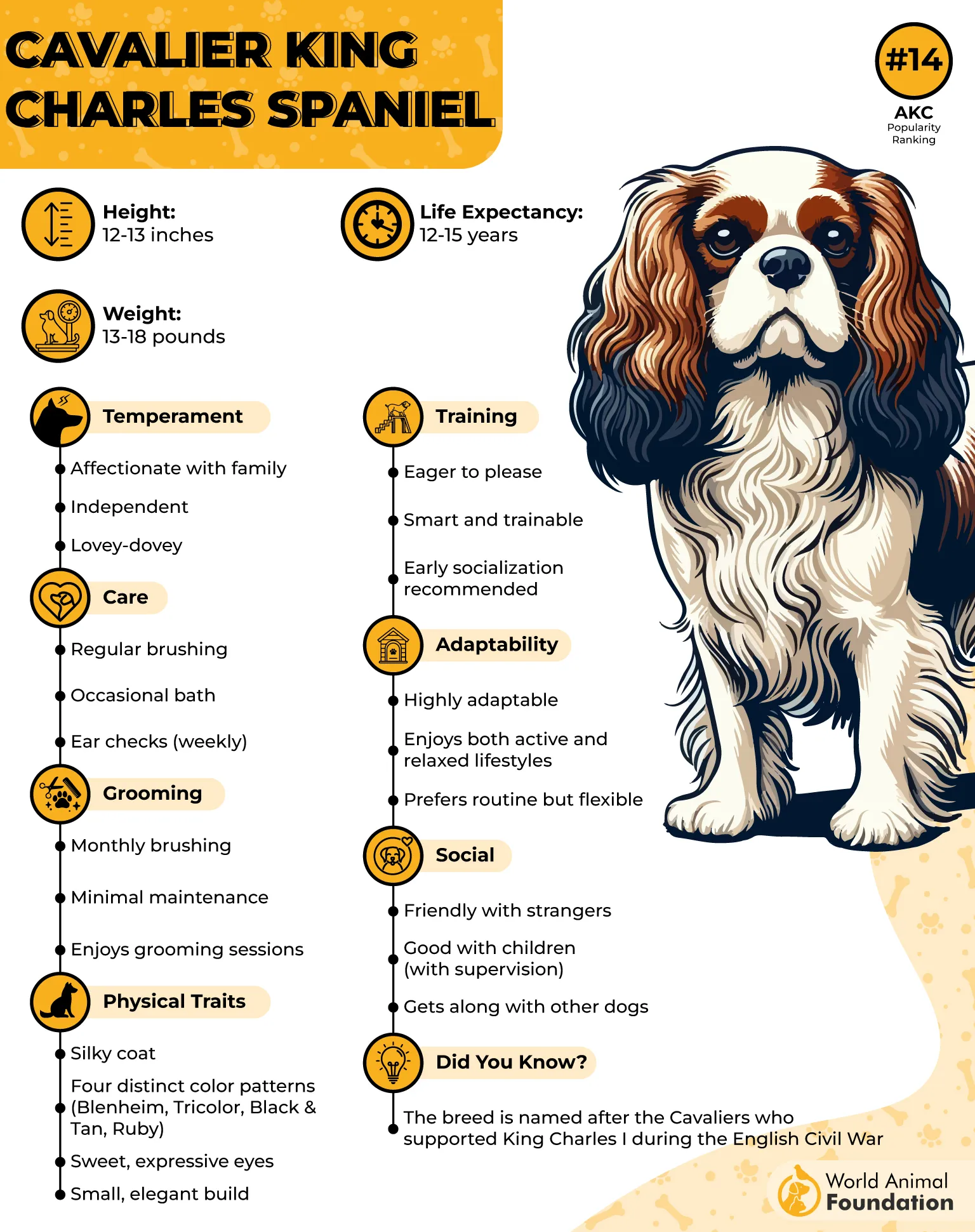
Known for their expressive eyes, silky coats, and even temperaments, Cavaliers bring a warm presence to everyday life. They enjoy relaxing beside their owners and are often content to curl up on a lap, making quiet moments feel more companionable.
Although they have a relatively low-energy nature, these dogs still benefit from 30–60 minutes of exercise daily. Short walks and gentle indoor activities can help keep them engaged without demanding an overly active routine.
Their strong desire for human company also makes regular interaction an important part of their care. They can also be prone to heart issues as they age, so regular veterinary care matters.
How This Breed Stands Out
Their affectionate lap-dog nature suits seniors who enjoy quiet companionship.
Their gentle, people-focused temperament makes everyday interaction rewarding.
Conclusion
Choosing a dog as a senior means finding a companion whose temperament, grooming needs, and activity level fit comfortably into everyday life.
The right breed can provide affection, companionship, and emotional support without adding unnecessary demands, and many older adults say pets make a real difference.
However, every breed has specific care requirements. Long-haired dogs need regular grooming, while flat-faced breeds may require extra attention in hot weather and during exercise.
A thoughtful match can make sharing life with a canine companion more enjoyable and rewarding, and smaller breeds often live longer than larger breeds, which can matter when choosing the right dog breed for long-term planning.
