





Bringing home your first dog feels a little like becoming a parent, but with more tail wags and a lot more hair on the couch. One minute you are researching chew-proof shoes. The next, you are imagining a furry friend waiting by the door after a long day.
The right breed can make those early months feel joyful instead of overwhelming. Some dogs are natural babysitters for kids. Others are small enough for apartment life or happy to learn new tricks beside you. Oprah Winfrey once said that the love from a dog feels like “the truest, purest love.”
For many first-time owners, that bond begins with choosing a breed that fits your home, energy level, and heart. Here are seven breeds that can make a wonderful starting point.
Best Dog Breeds for First-Time Families and Owners
1. Papillon
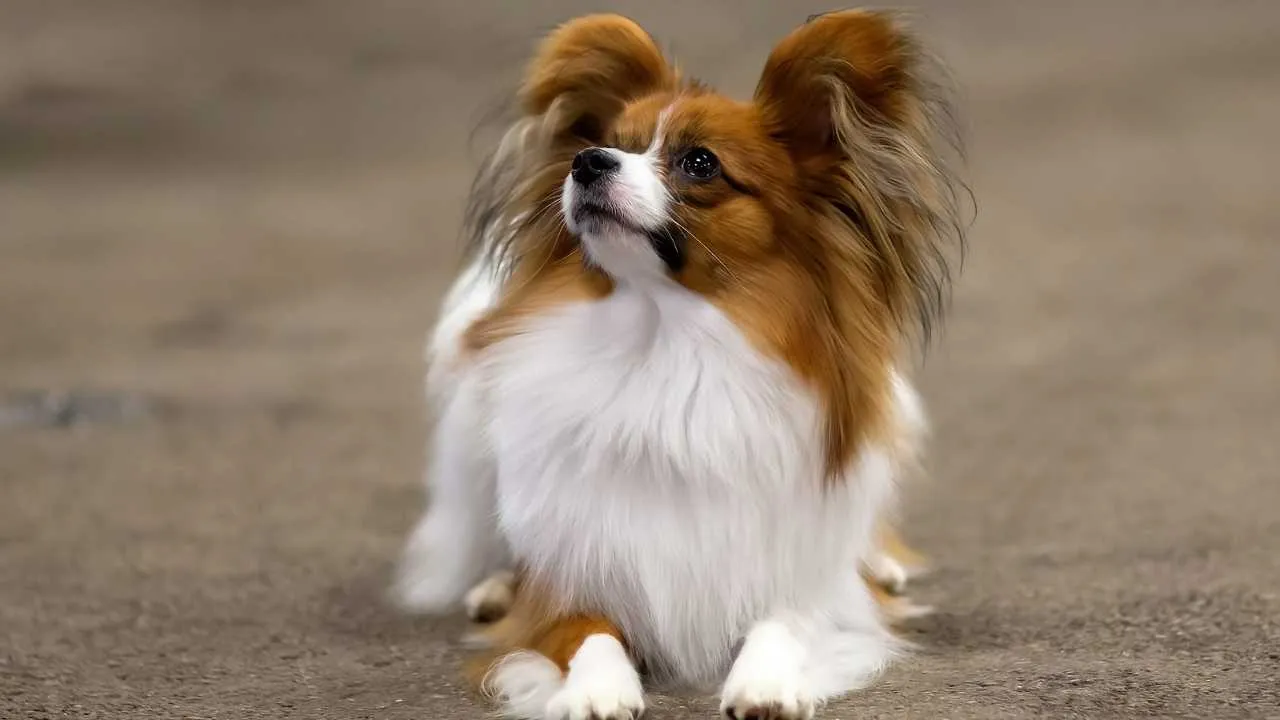
The small dog breed has been depicted in European artwork since the 16th century. Today, it is widely kept as a family dog. However, it also excels in dog sports, such as agility, and serves as a service and a therapy dog, according to PetMD. The name of the breed is derived from a French word, which means ‘butterfly.’
With its high associative memory and eager-to-please nature, the intelligent dog can learn basic commands within 3-5 repetitions. It actively reads human body language to mirror their emotions and energy level. Since it has a single-layered coat that sheds less and has minimal dog odor, it has minimal grooming needs, making it ideal for first-time dog owners.
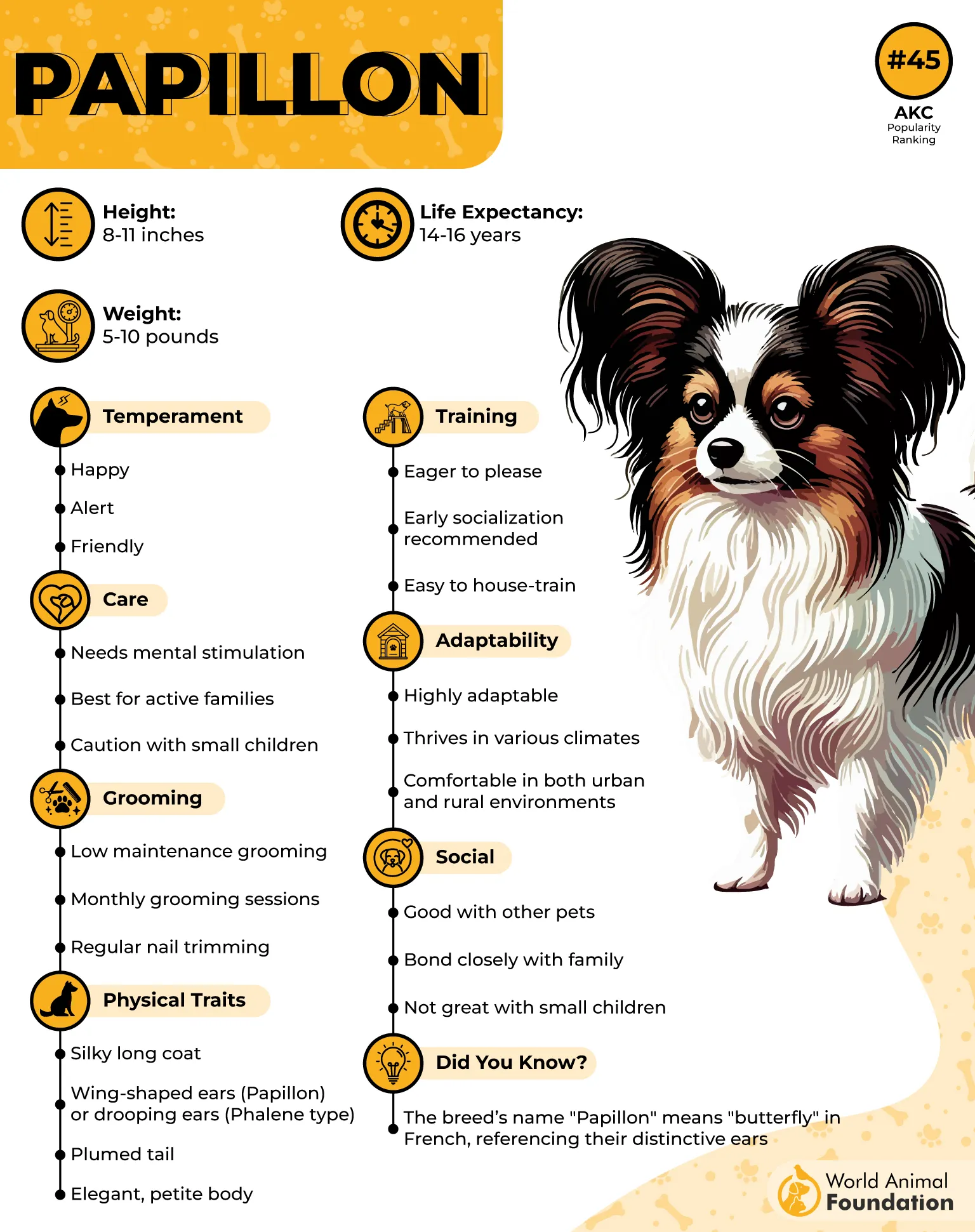
With its moderate energy levels, the breed needs only 30-45 minutes for regular exercise and mental stimulation: 2-3 short walks, scent work, puzzle toys, interactive games. However, it requires special attention to housetraining because of a short bladder.
2. Cavalier King Charles Spaniel
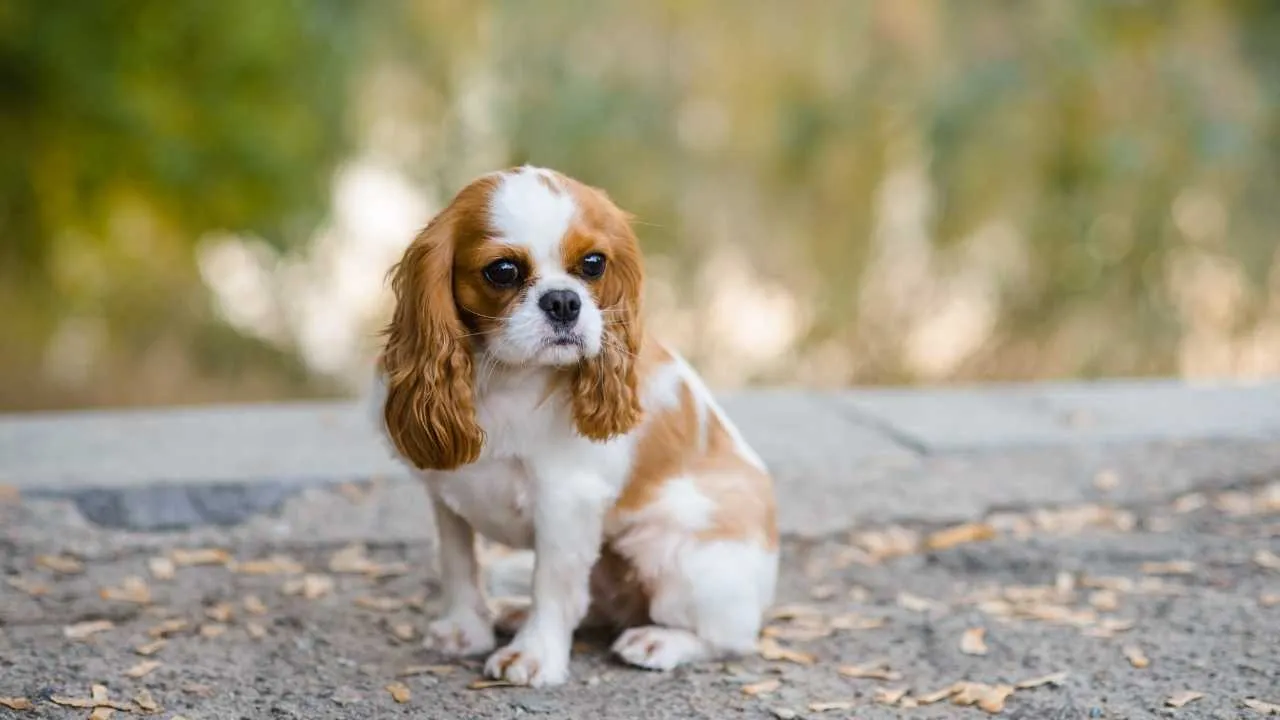
This was the most popular dog breed among the British royalty, as King Charles I, Charles II, and Queen Victoria highly favored it. Later on, this breed was crossed with other small dogs, such as the Japanese Chin and the Pug, to develop other breeds.
It generally has a stable and non-aggressive nature that lacks hyper-reactivity and territorial guarding instincts. The expressive features, such as a round face, short muzzle, and dark eyes, trigger a strong human caregiving response. It thrives in chasing games, moderate hiking, and dog sports.
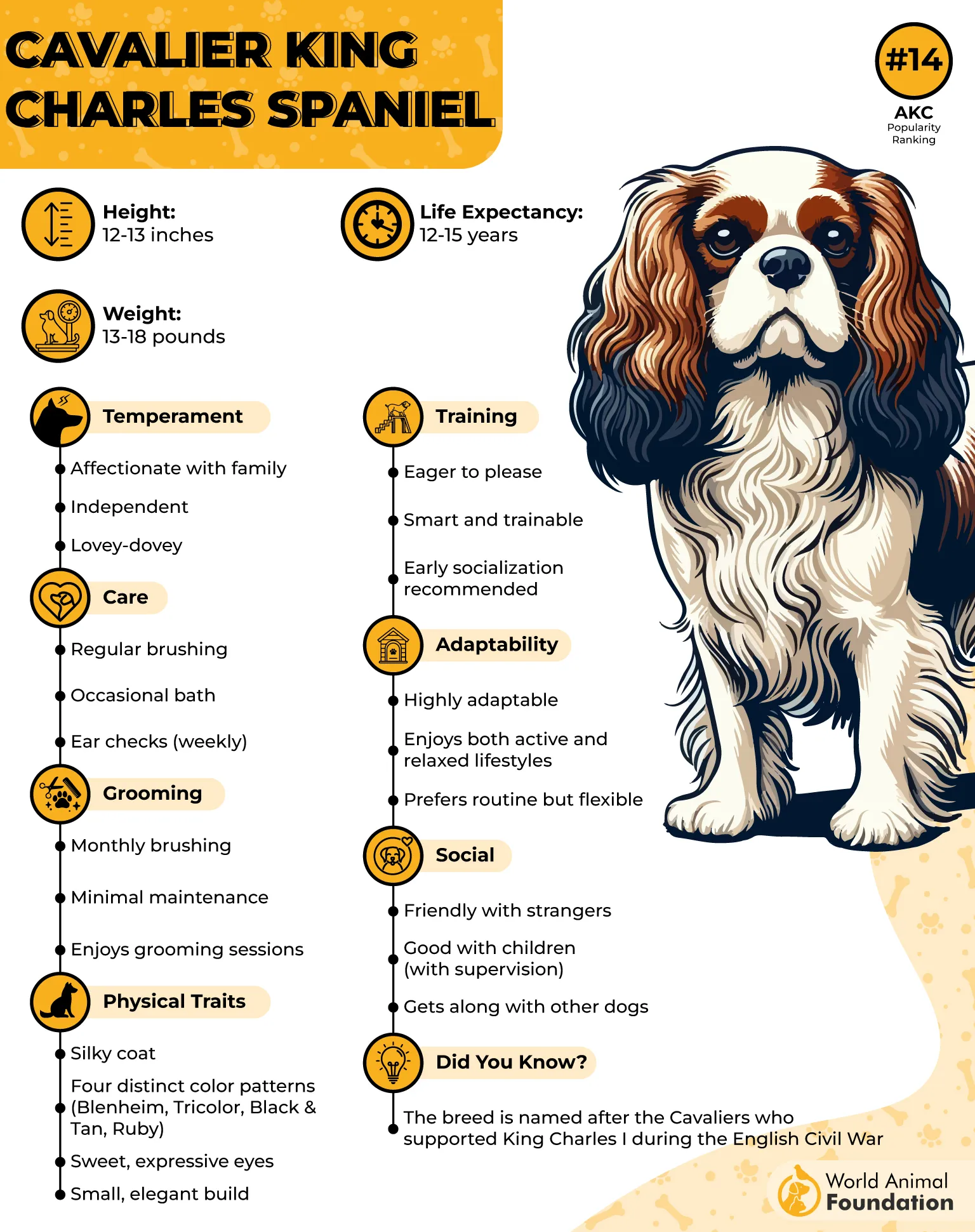
The small dog has a gentle disposition and easily makes friends with everyone, family members, children, and even strangers. It only barks to alert you when someone is at the door.
3. Labrador Retriever
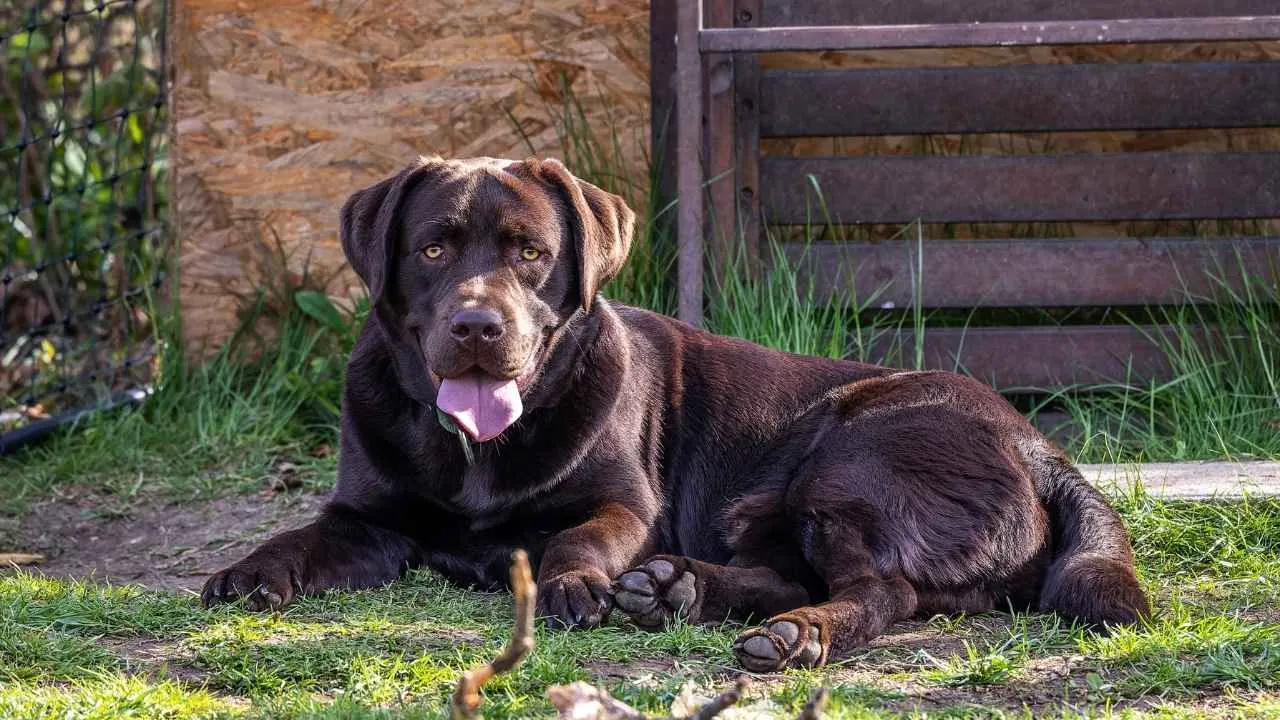
This sporting and hunting dog was originally developed in England from St. John’s water dog, imported from Newfoundland. This Canadian dog was interbred with local British hunting dogs to create a breed with strong retrieving instincts, as reported by Wikipedia.
Because of its high pack drive, it constantly looks at humans’ faces for affirmation and decodes their emotions. It has a low reactivity level and remains unaffected by gunshots, freezing water, and loud noises. ‘Soft mouth’ means it tends to carry objects in its mouth without damaging them.
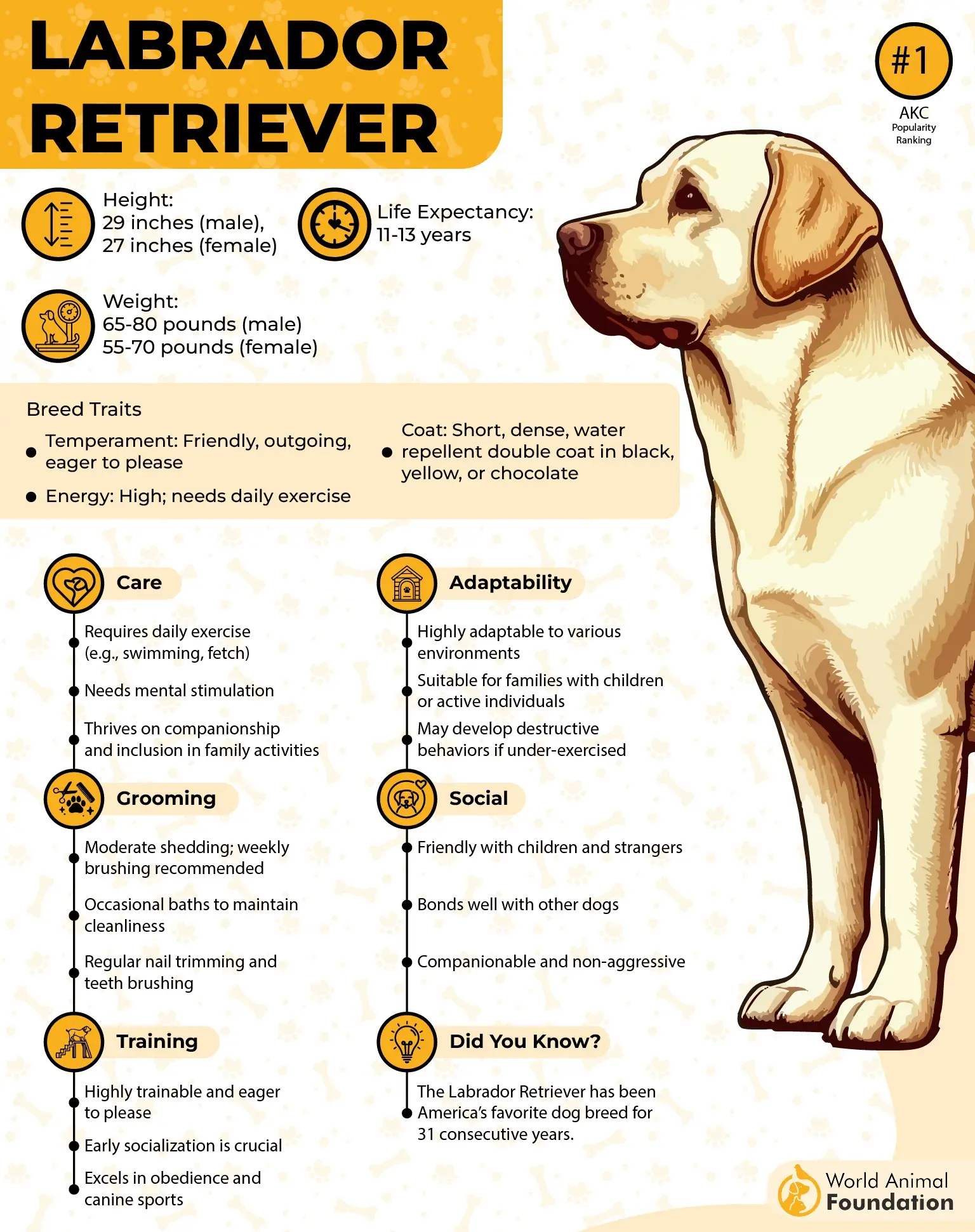
Despite having a thick double coat, it requires minimal grooming: weekly brushing and monthly baths. Go for a 5-minute rule for puppies for 18-24 months. The adult dog requires 1-2 hours of daily exercise.
4. Miniature Poodle
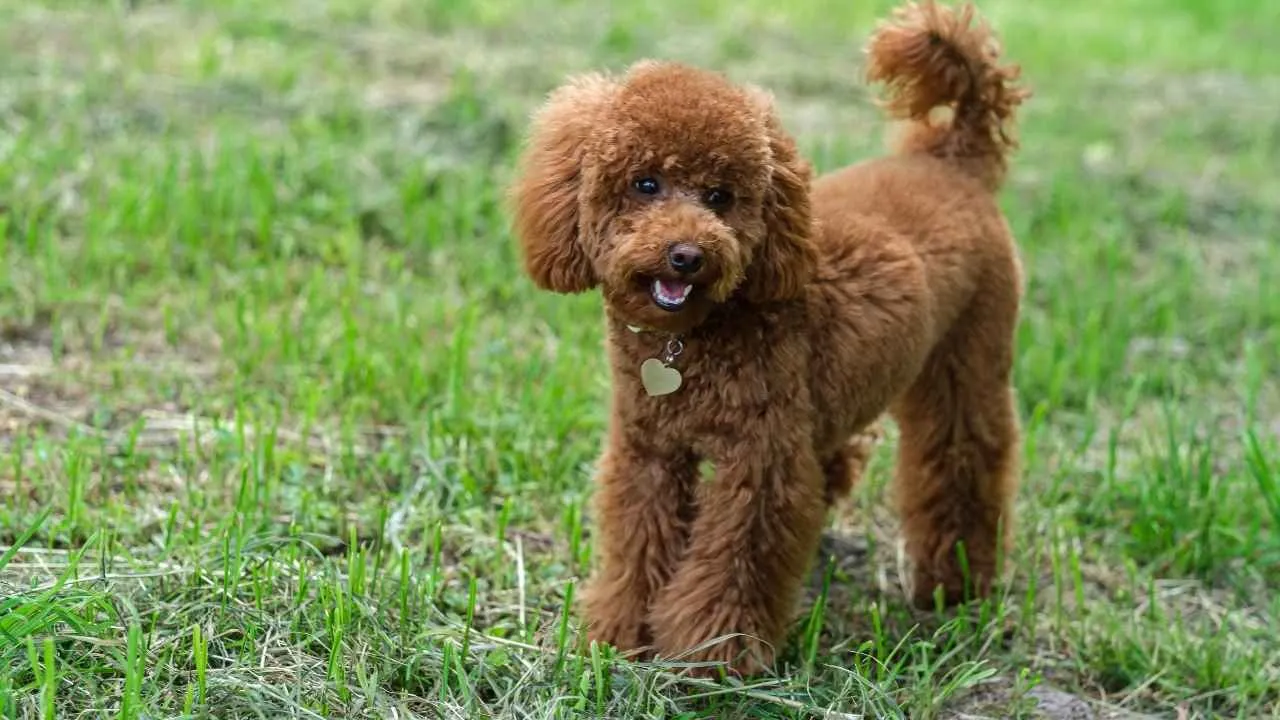
Descended from the Standard Poodle, both breeds have different purposes. While the Standard Poodle was specifically bred for duck hunting and retrieving, the Miniature Poodle was developed to perform as a circus dog and as a companion dog. However, it carries the ‘rugged build’ of its ancestor but in a smaller size.
Ranked as the 2nd smartest breed after the Border Collie, this mixed breed learns complex commands with few repetitions. With high emotional receptivity, it keeps looking at the owner’s face for approval and tries to match their energy level. It has moderate to high energy levels and prefers lounging once the exercise needs are met.
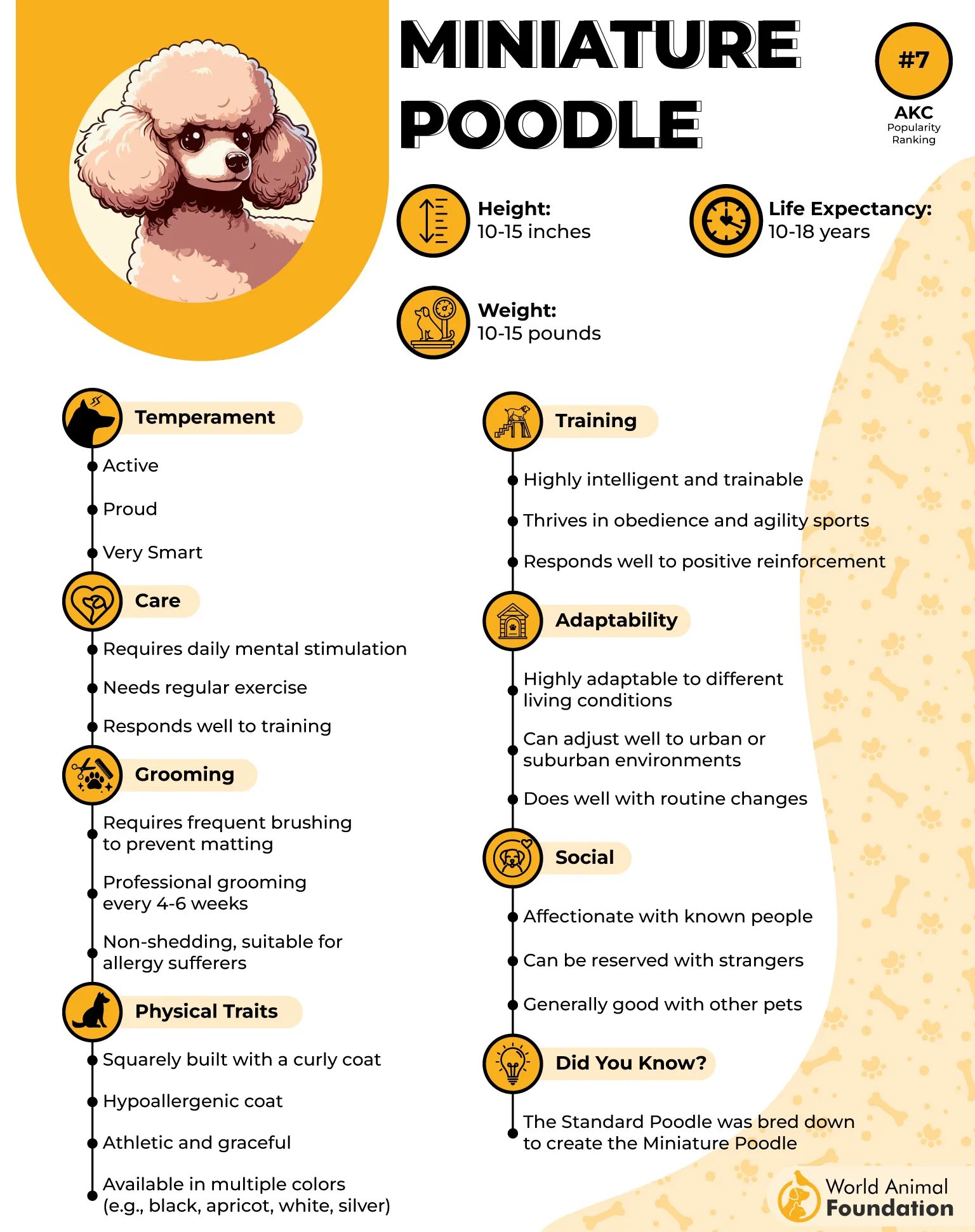
The adults (1-7 years) need exercise for 60-90 minutes daily: 2-3 walks daily to manage metabolism, indoor play sessions, mental stimulation, and interactive puzzle toys.
5. Bichon Frise
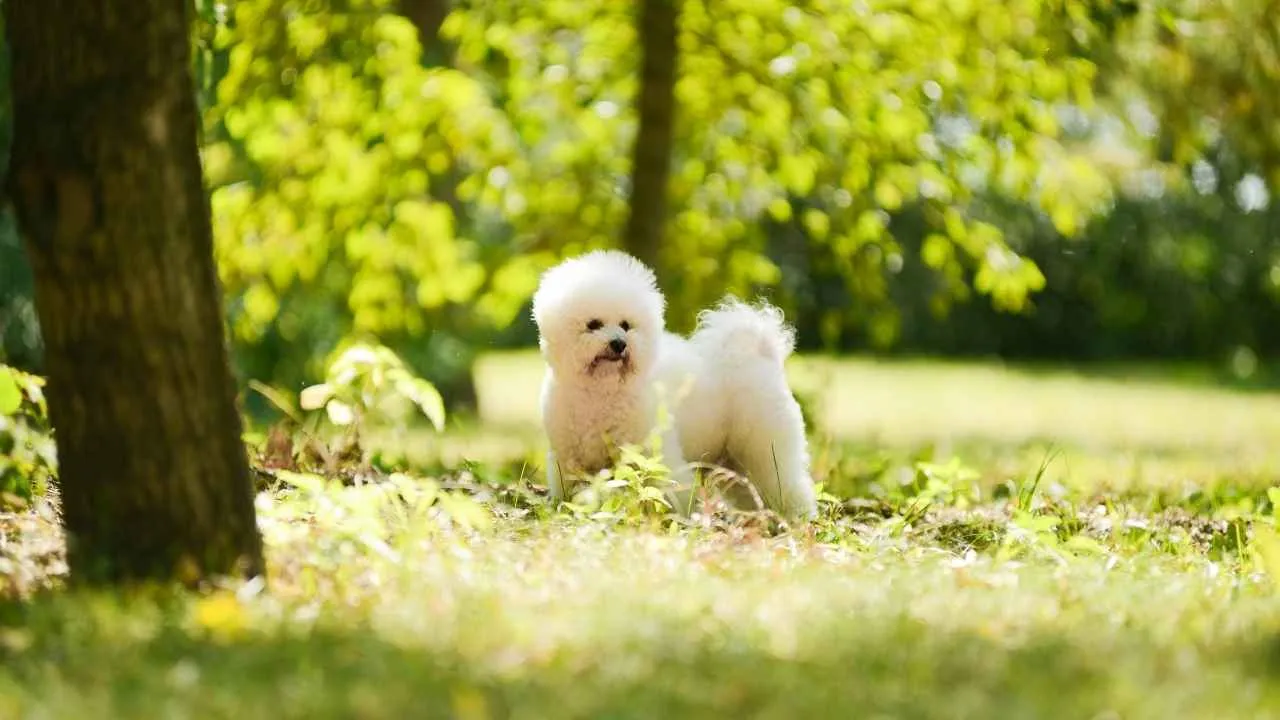
The affectionate dog was developed from a Spaniel dog in the Mediterranean area. It was carried by the sailors in the 14th century to other areas and was used for trading. Later, it became famous among the royalty, including Henry III of England, who used to carry the breed in his basket around his neck, says Orvis.
The temperament of this gentle giant is strictly wired for companionship and rarely shows aggression. Historically bred for performance, it has a high level of operant intelligence. The breed has an adaptable nature and thrives both in apartment living and in large mansions. Known as the ‘Bichon Blitz,’ it loves to zoom around the house, move in tight circles, followed by a prolonged resting phase.
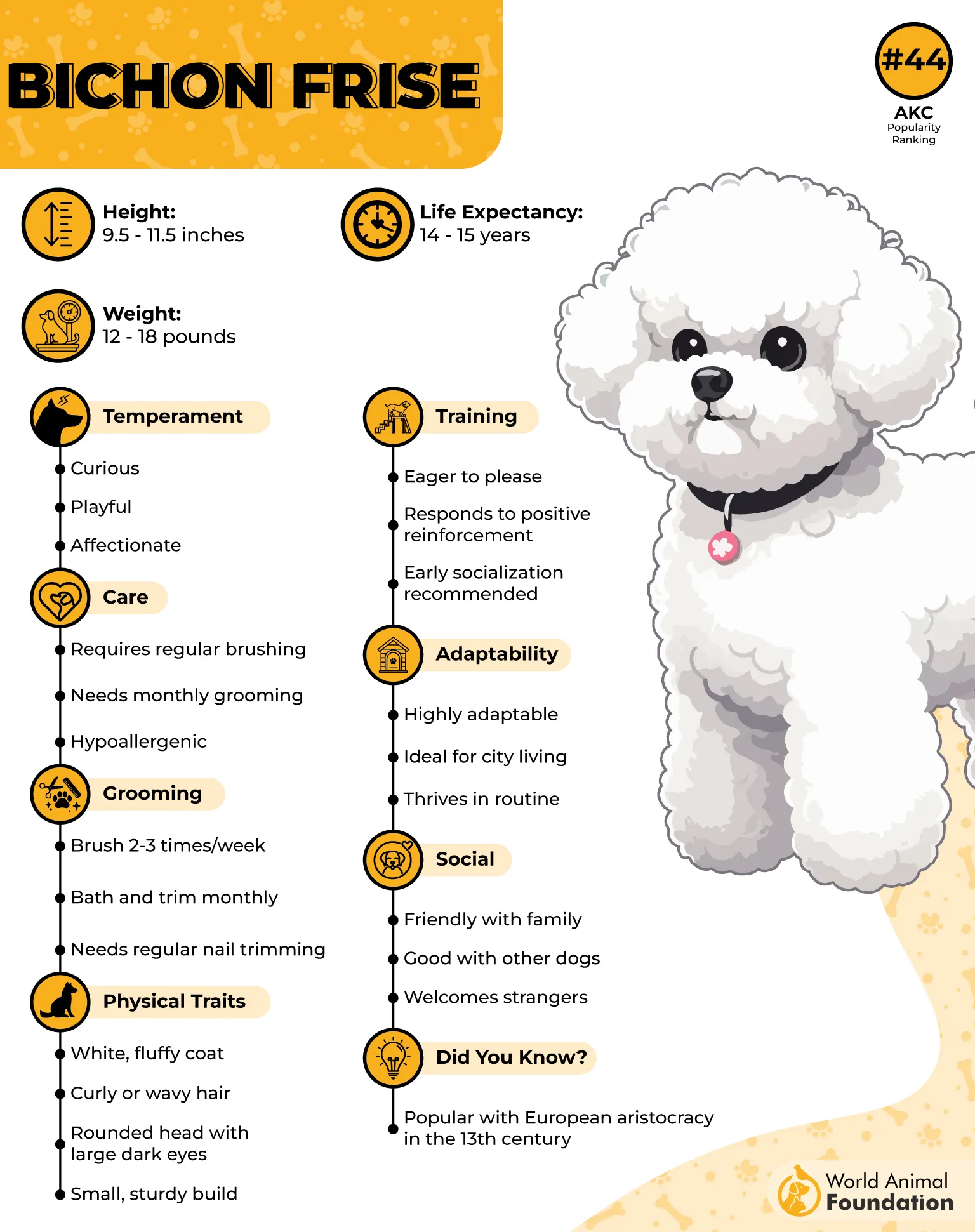
Because of the small bladder, it can be tricky to house-train the breed. Thus, early and consistent training is important. It forms a deep connection with the owner and may develop separation anxiety when left alone for too long.
6. French Bulldog

The small dog breed was developed in Paris, France, in the mid-19th century by crossing the Toy Bulldog and the local Parisian rat terrier. It is widely kept as a companion dog across America. However, it is prone to certain health issues because of facial wrinkles and a flat face.
The easiest dog breed has a low working drive and does not need complex tasks for mental stimulation. It has a short and smooth single coat that sheds less; thus, no professional grooming is needed. Being a brachycephalic breed, it may run short of breath in outdoor spaces and prefers lounging.
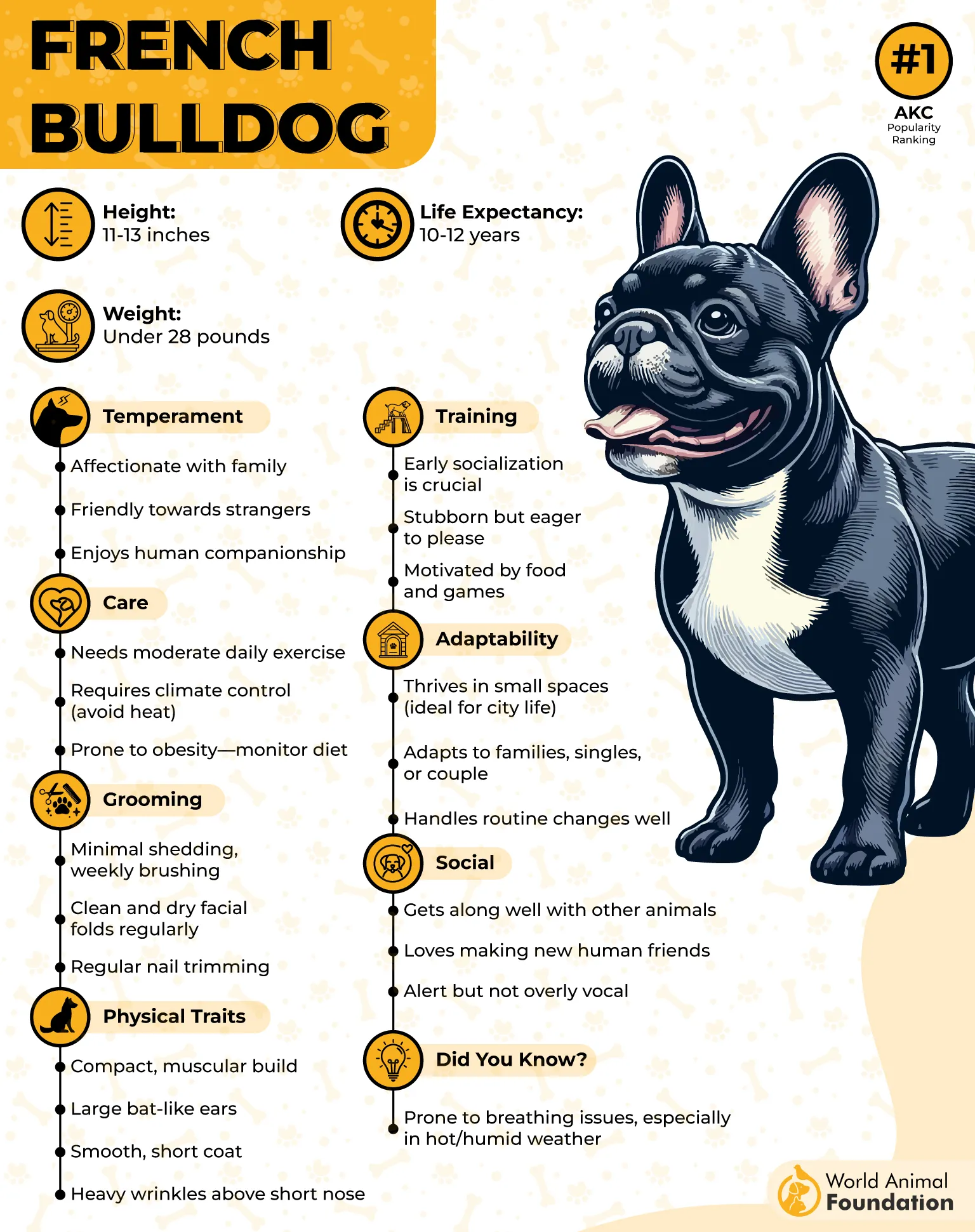
It has a heavy boned structure that is easy to control on a leash. Daily exercise for 20-30 minutes is enough. The highly trainable dog communicates through vocals and produces chortles, gargles, and soft wails.
7. Shih Tzu
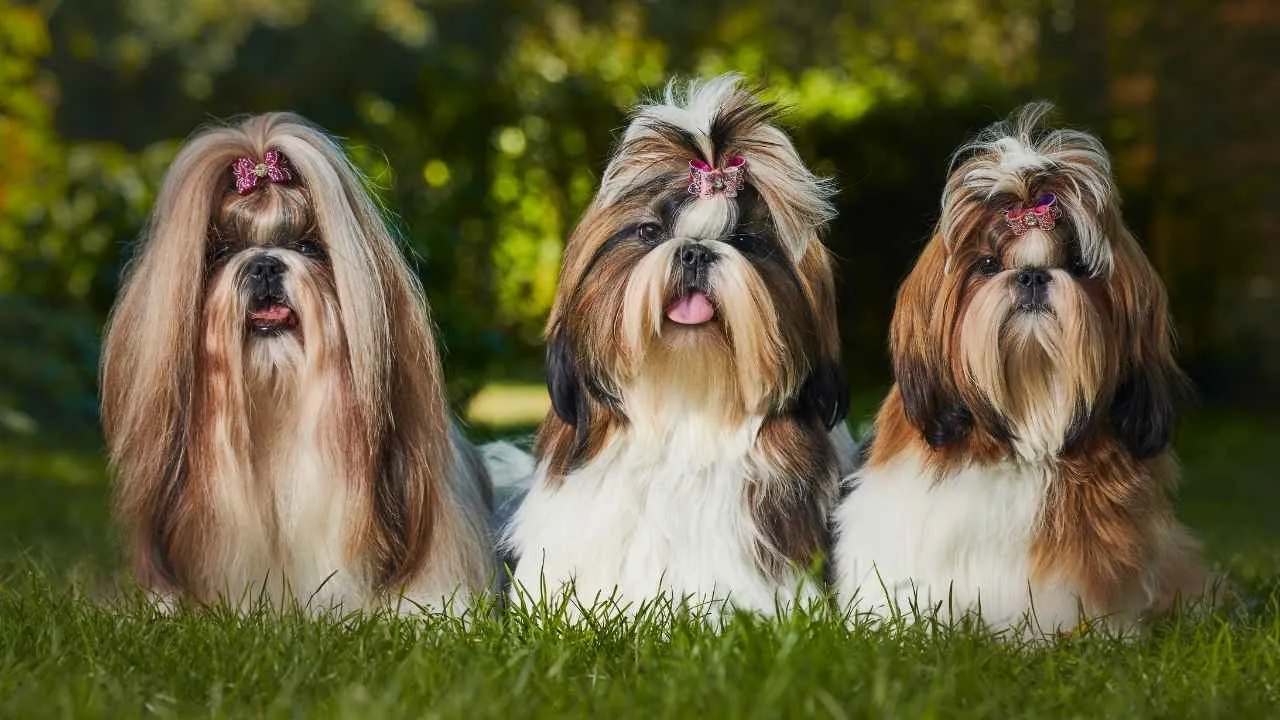
The earliest ancestors of this ancient breed date back to 1000 BCE. The Shih Tzu was developed in Tibet as an indoor watchdog. Later on, it was interbred with the Pug and the Pekingese. The population declined, and the modern-day breed is the product of the last 7 pairs that remained.
The breed tends to locate itself on a high vantage point and keenly observe its surroundings instead of yapping around. It has a gentle temperament and makes good friends with strangers when introduced properly. Since the breed is highly sensitive to heat, it needs extra care in summer.
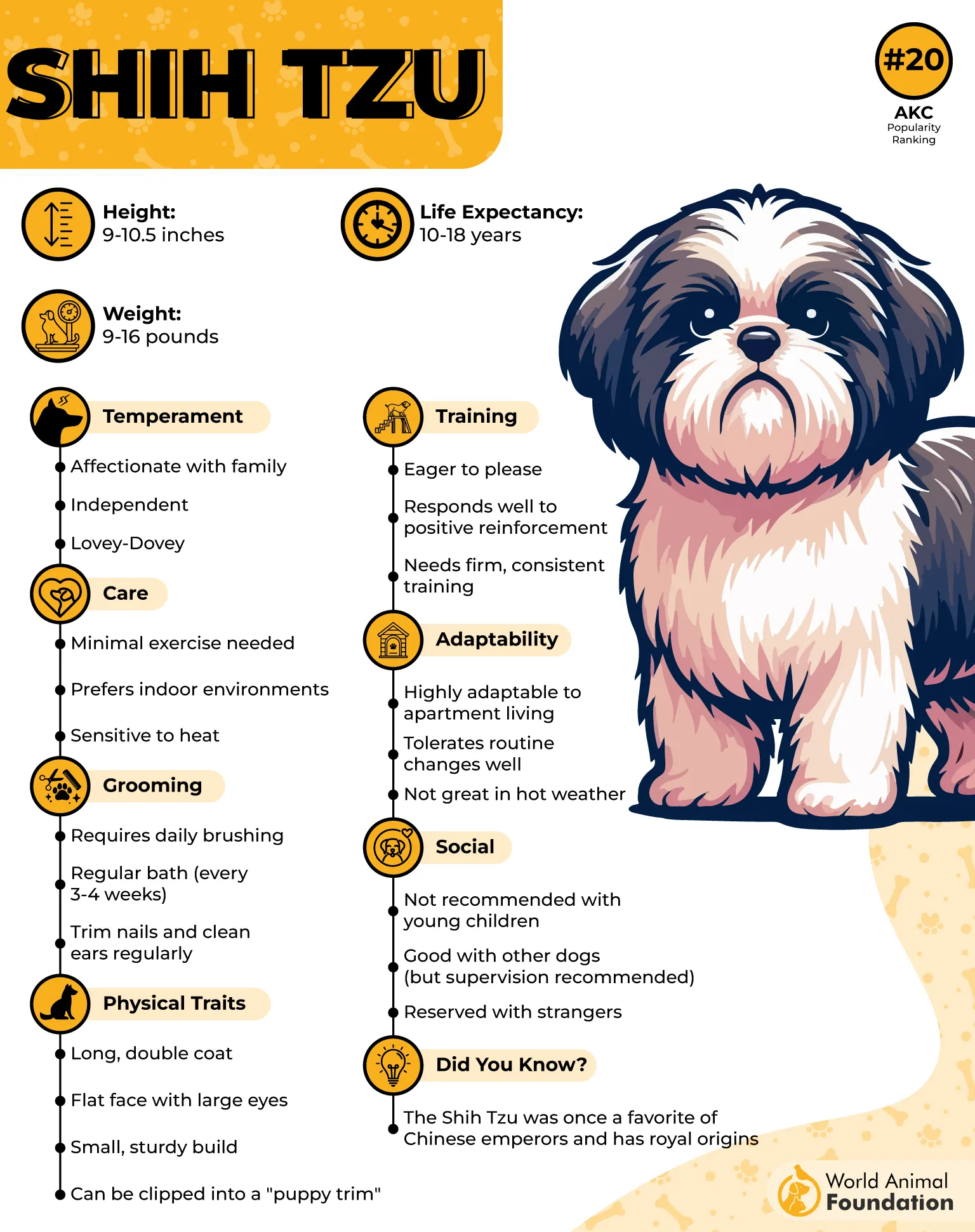
The ‘Chrysanthemum Dog’ has human-like facial hair grown outward. The loose hair gets trapped inside the coat and is removed with a soft slicker brush. It is highly food-motivated, making training extremely easy.
Conclusion
Your first dog does not need to be perfect. It needs to be right for your family’s routine, space, budget, and patience level.
A Papillon may suit a clever, active home, while a Cavalier or Shih Tzu may be ideal for families who want a devoted lap companion. Labs and Miniature Poodles bring energy and trainability, while Bichons and French Bulldogs can fit well in smaller homes.
Before choosing, meet the breed in person, ask breeders or rescues honest questions, and think about grooming, veterinary care, training time, and who will walk the dog on rainy days.
The best first dog is not the trendiest one. It is the one whose needs you can meet with love, consistency, and a little humor. When that match happens, you do not just gain a pet; you gain a new family member who makes ordinary days feel warmer.
