




A dog’s coat can be one of its most captivating features, with patterns ranging from bold spots and tiger-like stripes to unusual color combinations. These distinctive markings give certain breeds an appearance that immediately sets them apart.
However, their coats are more than visual highlights. Genetics, breed history, and working backgrounds all contribute to their unique appearance, while grooming requirements vary considerably.
Beyond their striking looks, distinctive coat patterns can also offer clues about a breed’s ancestry and inherited traits. From naturally occurring markings to patterns shaped by selective breeding, each coat tells a story of canine diversity. Whether you prefer subtle color variations or eye-catching contrasts, these breeds showcase just how fascinating a dog’s appearance can be.
Meet beautiful dog breeds with remarkable coat patterns and discover the features that make each one stand out.
Beautiful Dog Breeds Defined by Their Unique Coat Patterns
1. Chinese Crested

The Chinese Crested is known for its unusual appearance, with two distinct coat varieties: hairless and Powderpuff. Its most eye-catching feature is the spotted pink skin, where patches of white create a striking contrast, particularly across the chest.
According to the AKC, Chinese Cresteds typically meet their exercise requirements through brief daily walks with their owners and regular playtime in a backyard.
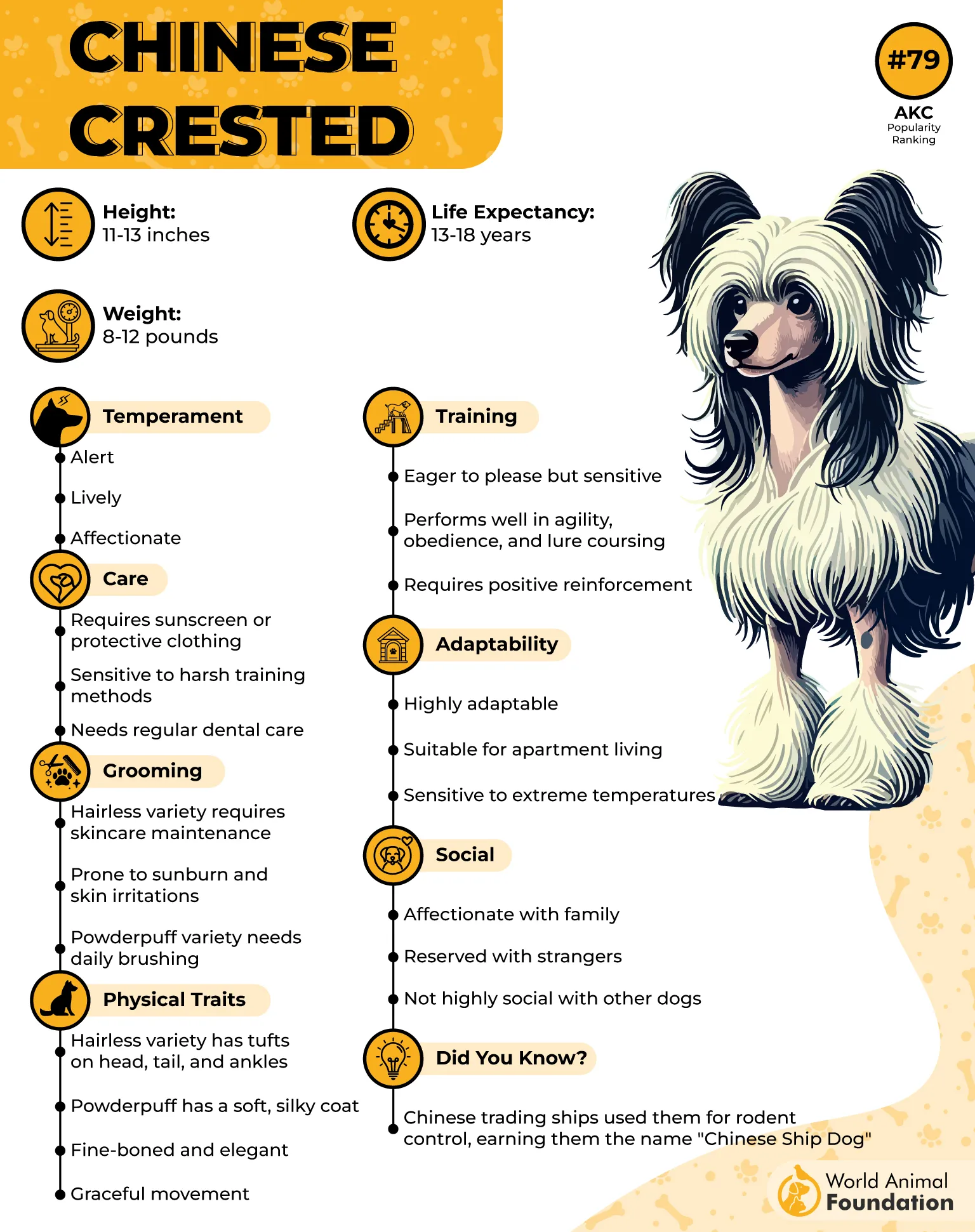
The hairless variety has smooth, exposed skin with soft tufts of silky hair on its head, ankles, and tail. Its signature crest, feathery tail, and furry feet give it an unmistakable look. Although it sheds very little, its delicate skin needs attentive care.
The Powderpuff variety has a completely different appearance, with a soft, flowing coat covering its body. Both types share a slender build and graceful movements, along with a playful, affectionate nature. These lively companions enjoy staying close to their families.
How This Breed Stands Out
Hairless body with contrasting skin pigmentation: Spotted pink skin and distinctive tufts of hair create a unique appearance.
Powderpuff variety with a full, silky coat: A soft, flowing coat gives this variety a noticeably different look.
2. Komondor
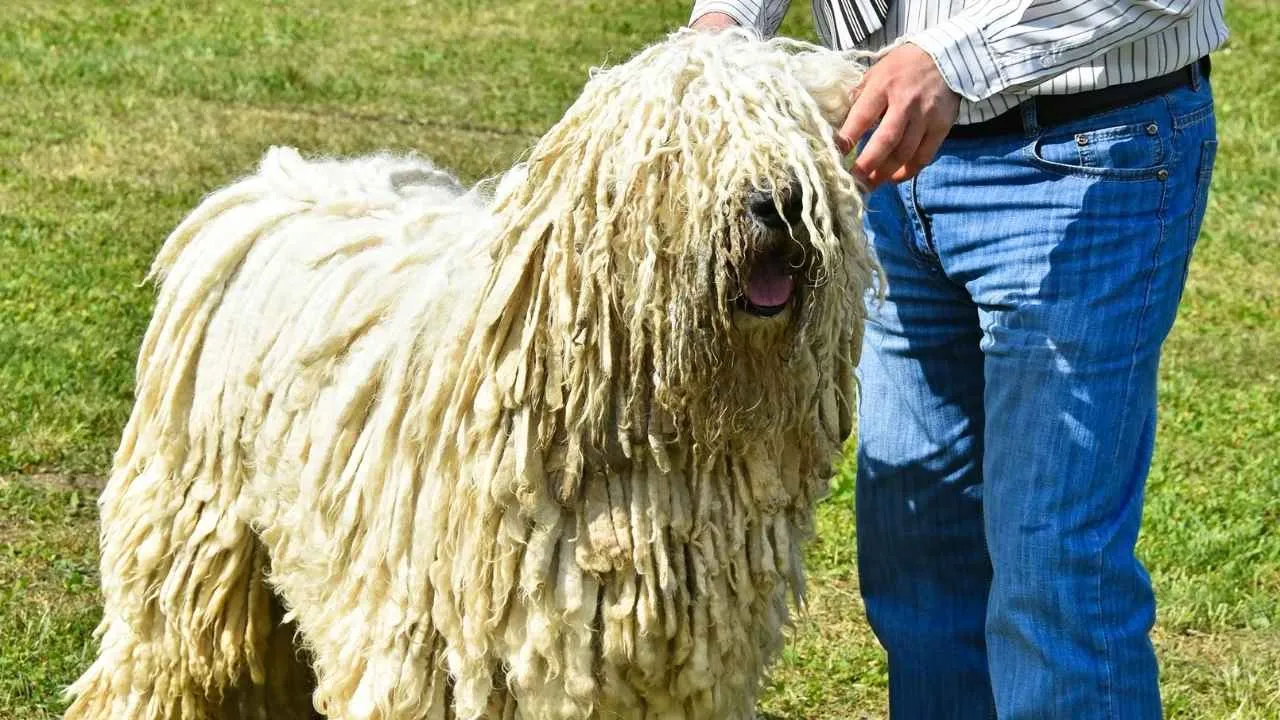
The Komondor is a Hungarian livestock guardian famous for its unusual, mop-like appearance. Its long white coat naturally develops into thick, rope-shaped cords that can hang close to the ground, making this large breed instantly recognizable.
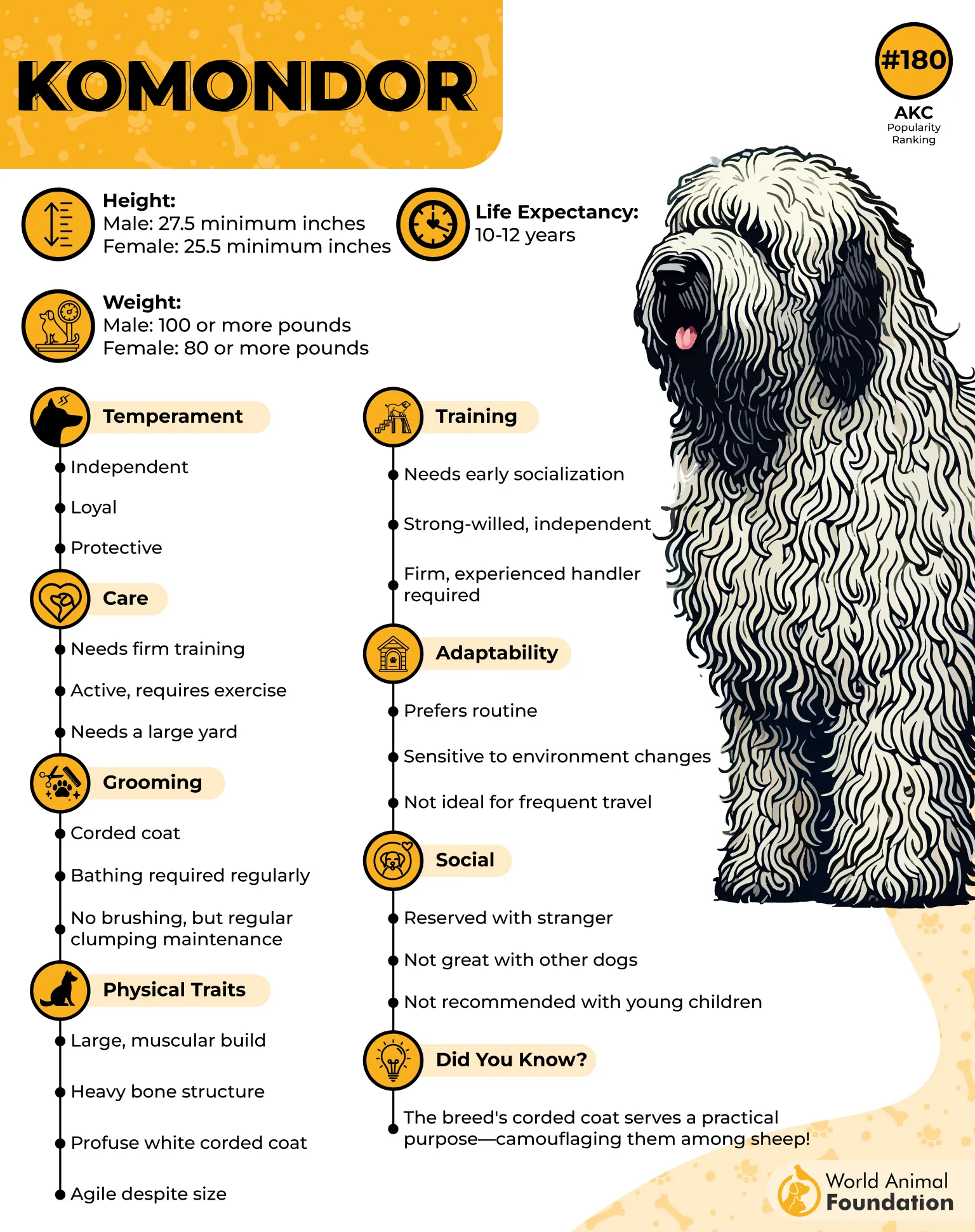
These distinctive cords are more than a visual feature. They traditionally helped protect the dog against harsh winter conditions and offered a layer of defense during encounters with predators while guarding livestock.
According to Omlet, these dogs may initially be suspicious or defensive around unfamiliar people. However, once they become acquainted with visitors, they are more likely to accept them into their home.
Although the coat may appear low-maintenance, it requires careful attention to prevent the cords from joining into dense mats. Regular bathing and thorough drying are also important to keep the coat clean and healthy.
How This Breed Stands Out
Distinctive white, rope-like cords: Long, hanging cords create the Komondor’s signature mop-like appearance.
Protective coat developed for flock guarding: Its dense covering historically provided insulation and protection while defending livestock.
3. Border Collie
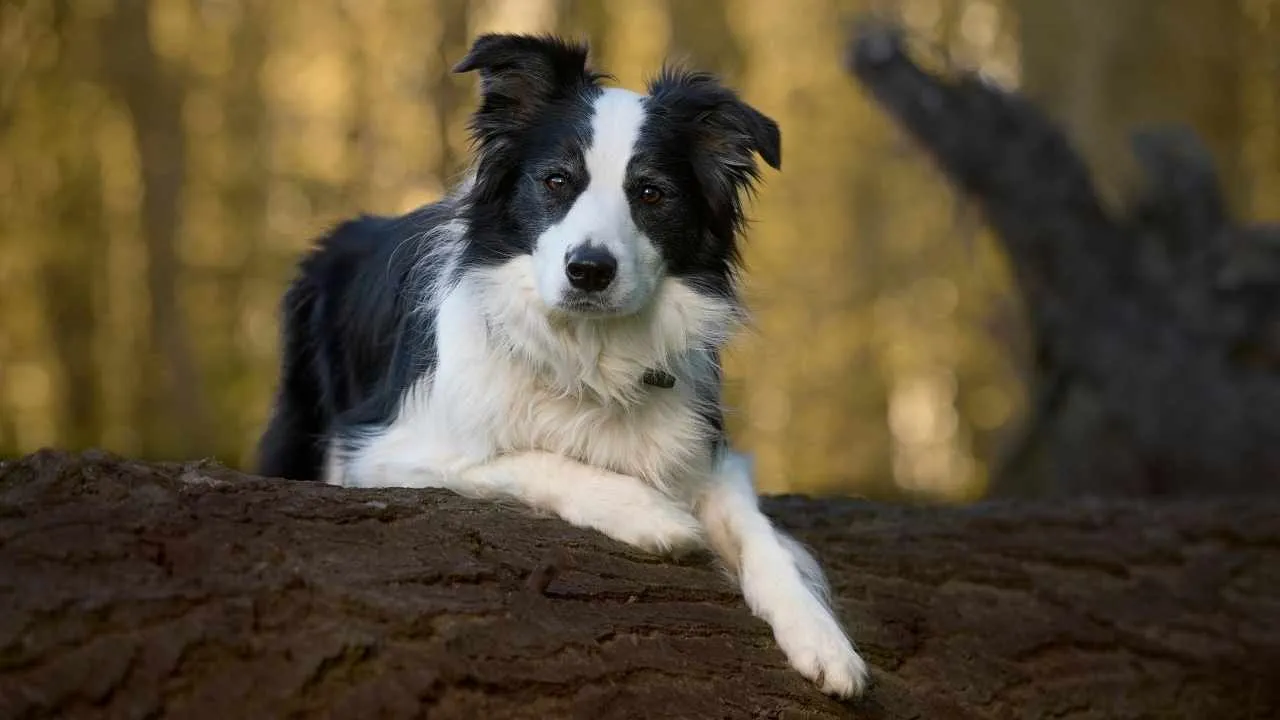
The Border Collie is admired for its striking coat patterns, especially the familiar black-and-white combination. It has a thick double coat that comes in smooth or rough coat varieties, with the longer, feathered rough type contrasting with the shorter, coarser smooth coat.
Its eyes are usually brown or blue, sometimes different colors in merles, giving the breed an intense gaze and intelligent expression. According to PetMD, these intelligent herding dogs thrive when given tasks to perform and need plenty of mental activities to stay engaged and prevent boredom.
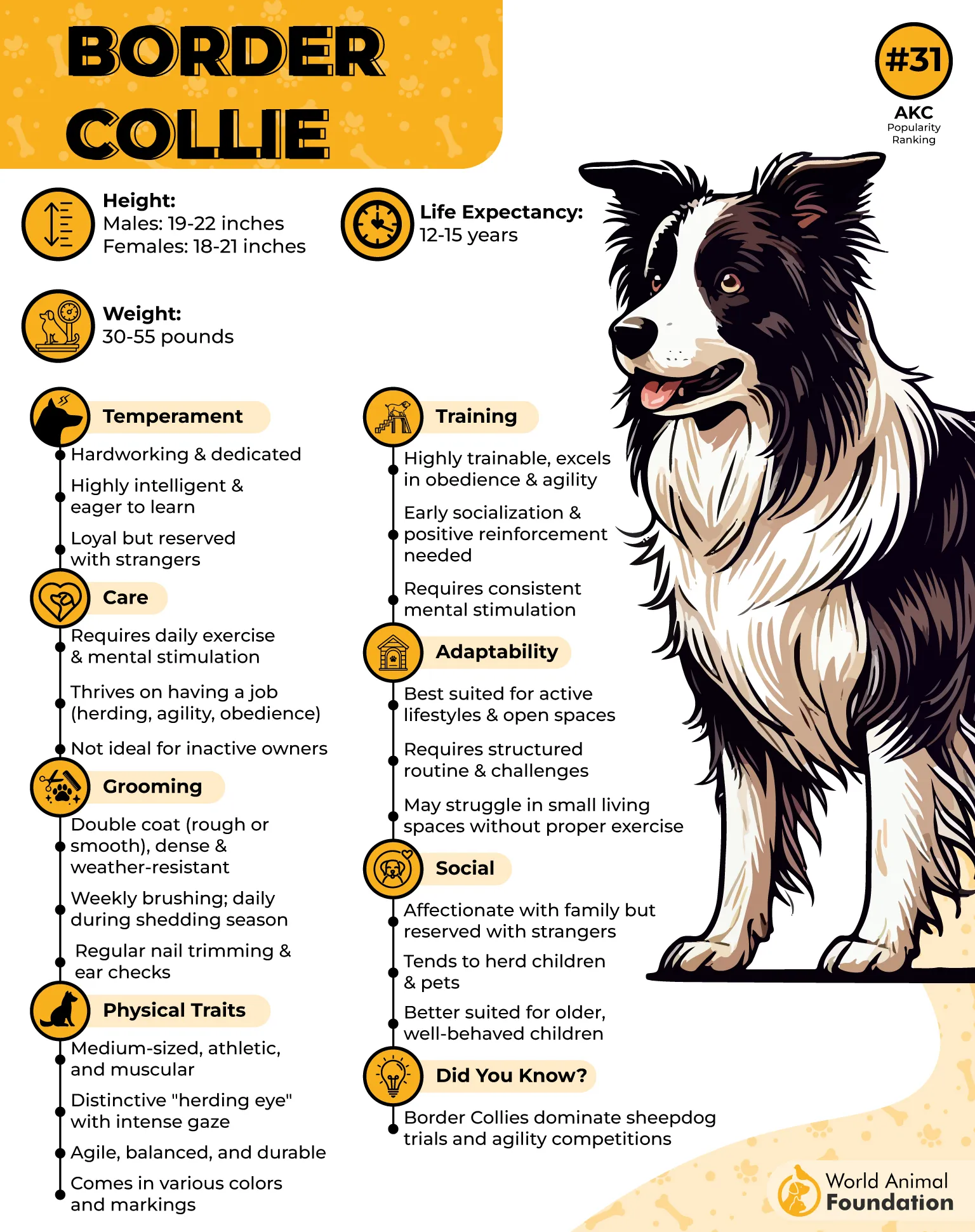
Merle and tricolor coats add further variety, and some patterns are shaped by genes for dark or red pigments, while sable features dark-tipped hairs over a lighter base color. These markings create distinctive combinations, making individual dogs look noticeably different from one another.
Certain genetic combinations can increase health risks, and some coat colors are linked to issues affecting hearing or vision.
Beyond its appearance, this medium-sized herding breed is renowned for its intelligence, agility, and intense work ethic. Border Collies need vigorous daily exercise and mental challenges, often thriving in activities such as herding, obedience, and agility training.
How This Breed Stands Out
Classic black-and-white coat pattern: The contrasting colors create one of the breed’s most recognizable looks.
Wide range of merle and tricolor variations: Blue, red, and other patterned combinations bring additional diversity to its appearance.
4. Australian Shepherd
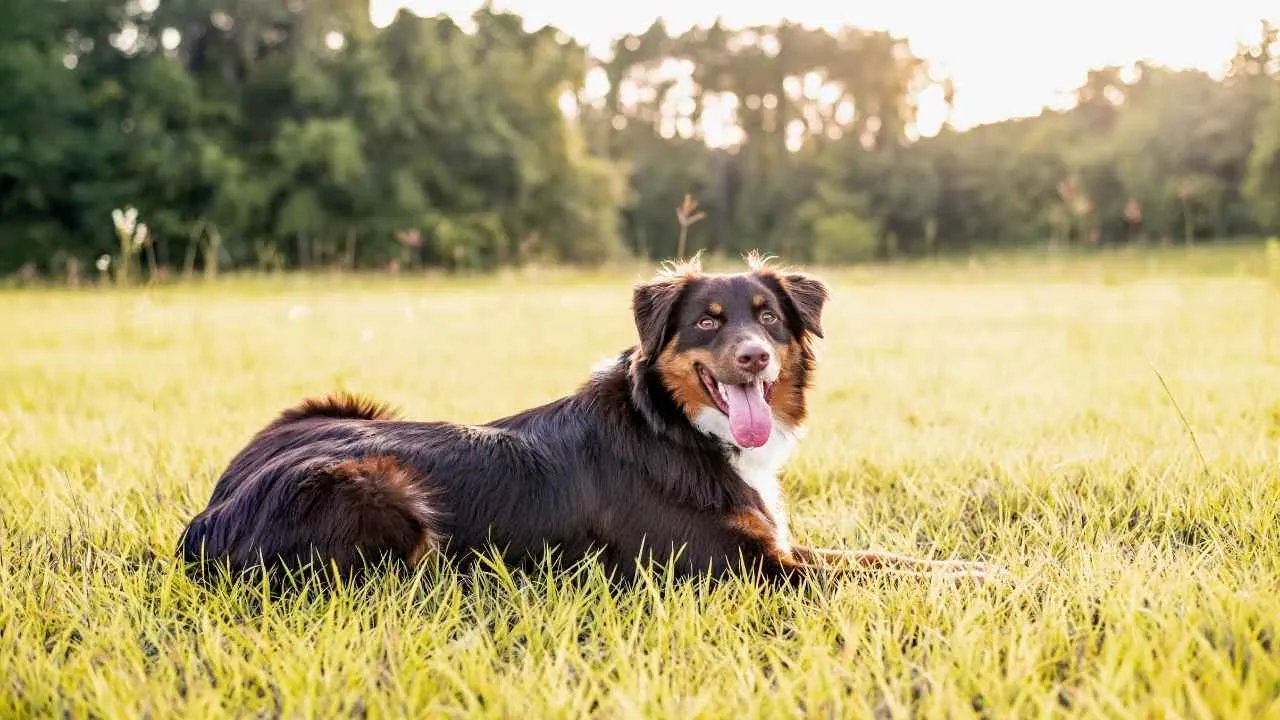
The Australian Shepherd is admired for its richly colored coat, particularly its eye-catching merle patterns. Its medium-length fur comes in black, red, blue merle, and red merle, often complemented by white or tan accents.
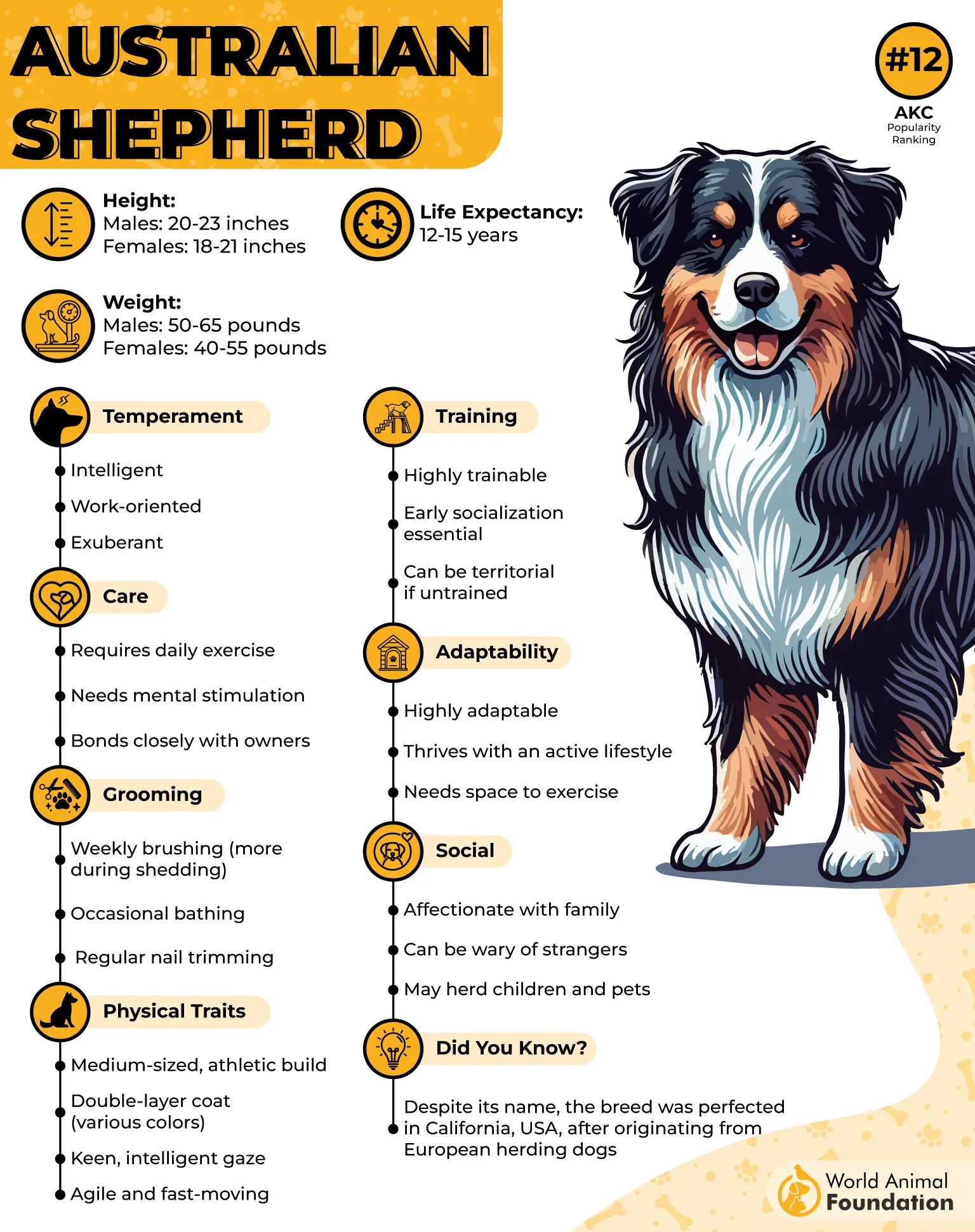
Blue-merle coats feature mottled shades of gray, black, and sometimes white, while red-merle coats display varying tones of red and lighter patches. These combinations often create contrasting markings across the face, chest, and legs, with the tan accents often appearing as tan markings, giving each dog a distinctive appearance.
Merle dogs can face higher risks of deafness and eye abnormalities. Breeding two merle dogs together can produce a double merle puppy, the highest-risk outcome, because a puppy may inherit two copies of the merle pattern.
Originally developed as a hardworking herding dog, the Australian Shepherd is intelligent, athletic, and highly energetic. Its strong herding instincts, need for regular activity, and coat care needs, including frequent brushing, make it better suited to active owners than sedentary lifestyles.
How This Breed Stands Out
Striking blue-merle or red-merle patterns: Mottled shades create beautiful contrasts throughout the coat.
Often has contrasting facial and leg markings: White and tan accents add definition to its face and lower legs.
5. Great Dane
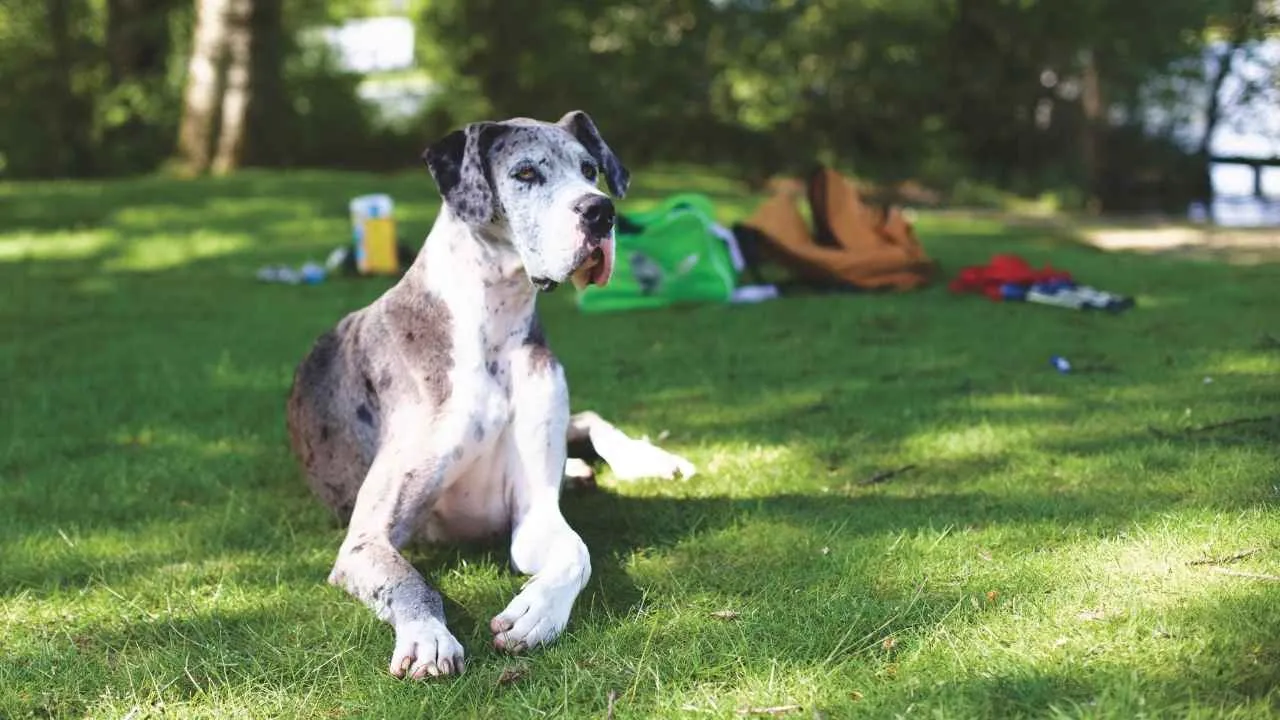
The Great Dane is famous for its towering stature and elegant appearance, but its coat patterns add another layer of visual appeal. Among its most recognizable varieties is harlequin, featuring a white base covered with irregular black patches of different shapes and sizes.
Great Danes also come up in merle-related coat discussions, which is why color-linked hearing or vision concerns are sometimes mentioned with the breed.
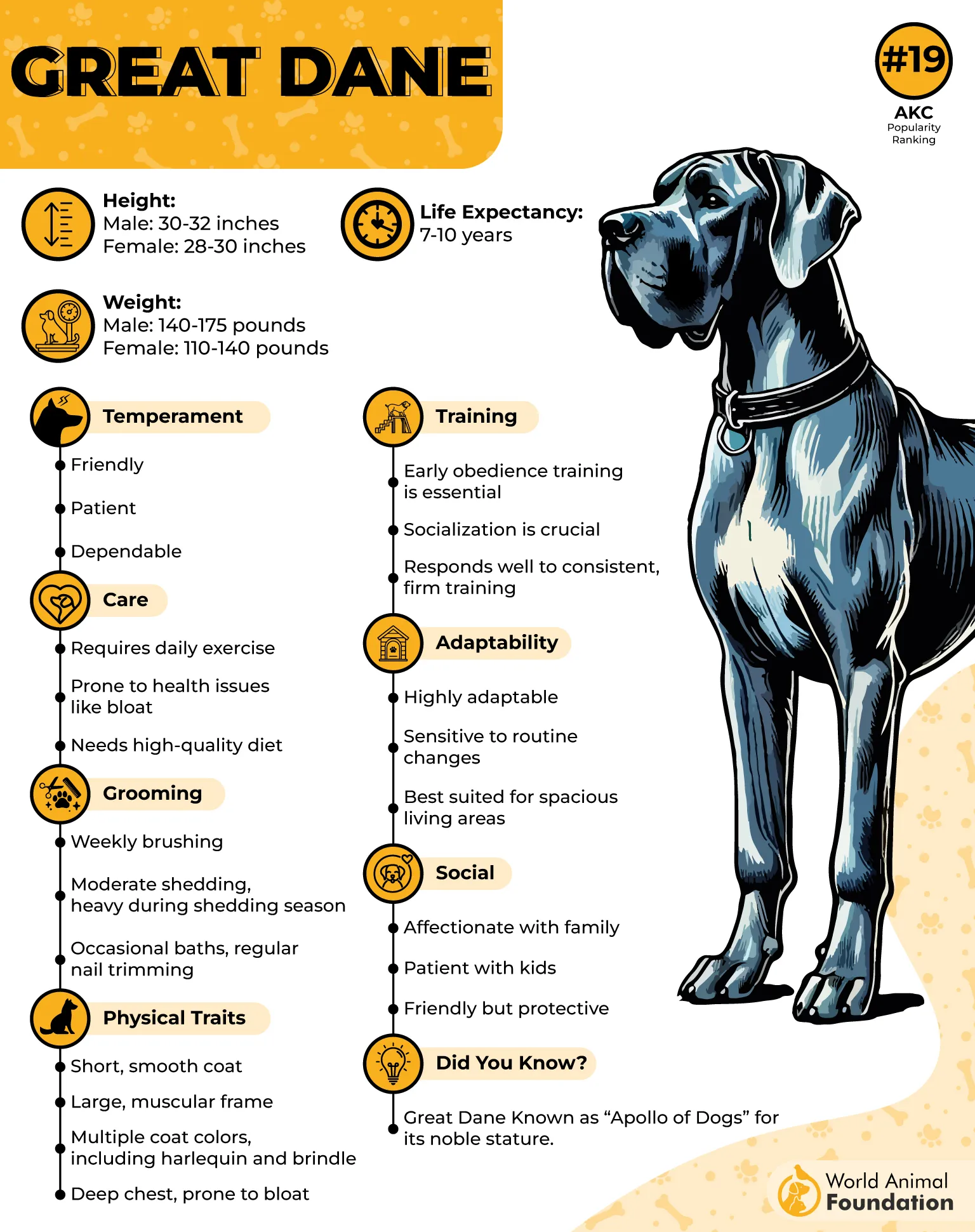
Another distinctive pattern is the mantle, where a black covering extends across the dog’s back and body, resembling a blanket. White markings on the chest, neck, and legs create a striking contrast against the darker coat.
Despite its imposing size, the Great Dane is a gentle giant that is generally affectionate and people-oriented. Its smooth, short coat highlights its muscular build, while its calm and friendly temperament makes it a devoted family companion.
How This Breed Stands Out
Harlequin pattern with irregular black patches: Bold black markings stand out against a predominantly white coat.
Mantle pattern resembling a black blanket: A dark covering across the body creates a distinctive two-tone appearance.
6. Boxer
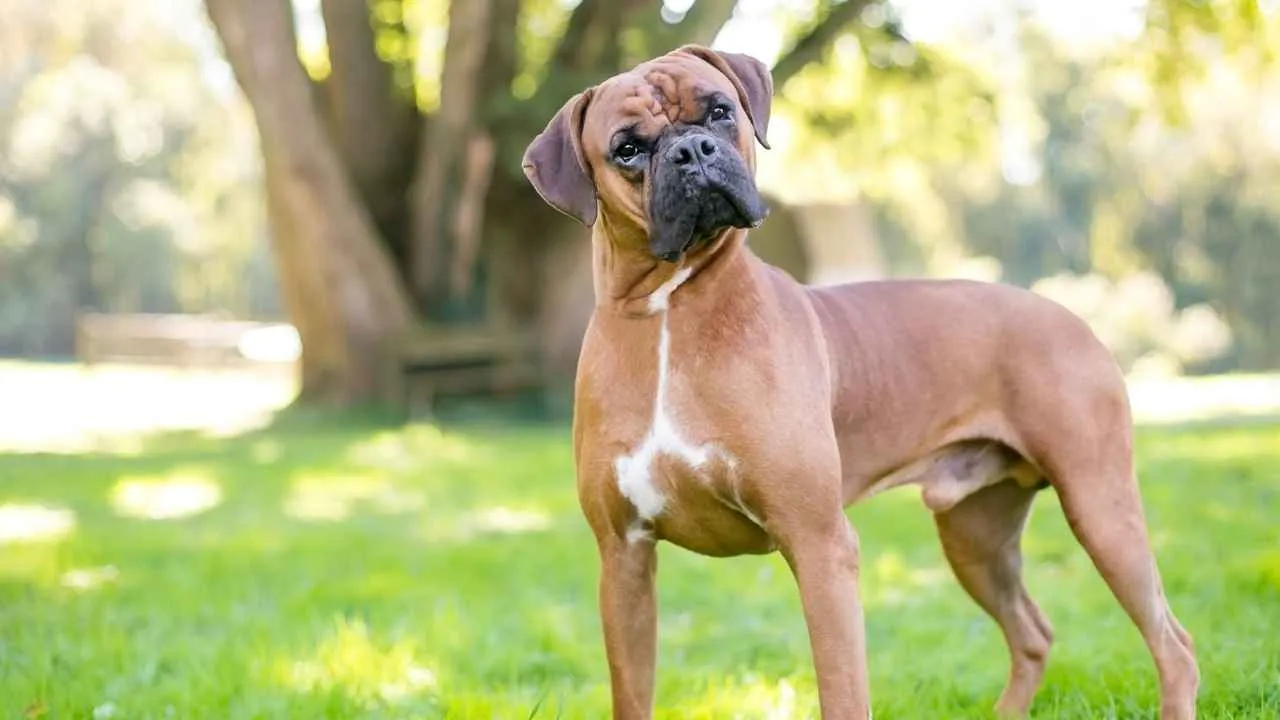
The Boxer has a short, sleek coat that showcases its athletic build and distinctive coloring. Its two primary coat shades are fawn and brindle, often accompanied by white markings that add contrast to its muscular appearance.

The brindle variety features dark, tiger-like stripes layered over a fawn background. The striping on the Boxer remains one of the pattern’s most recognizable looks. White markings commonly appear across the chest, paws, and face, sometimes forming a noticeable blaze between the eyes and down the muzzle.
Beyond its striking appearance, the Boxer is energetic, affectionate, and naturally playful. Its loyal temperament and protective instincts make it a devoted family companion. Early socialization and positive reinforcement training help channel its enthusiasm and encourage good manners.
How This Breed Stands Out
Brindle stripes over a fawn base: Dark, narrow stripes create a distinctive pattern across the coat.
Distinctive white chest and facial blaze: White patches provide a striking contrast against the fawn or brindle coloring.
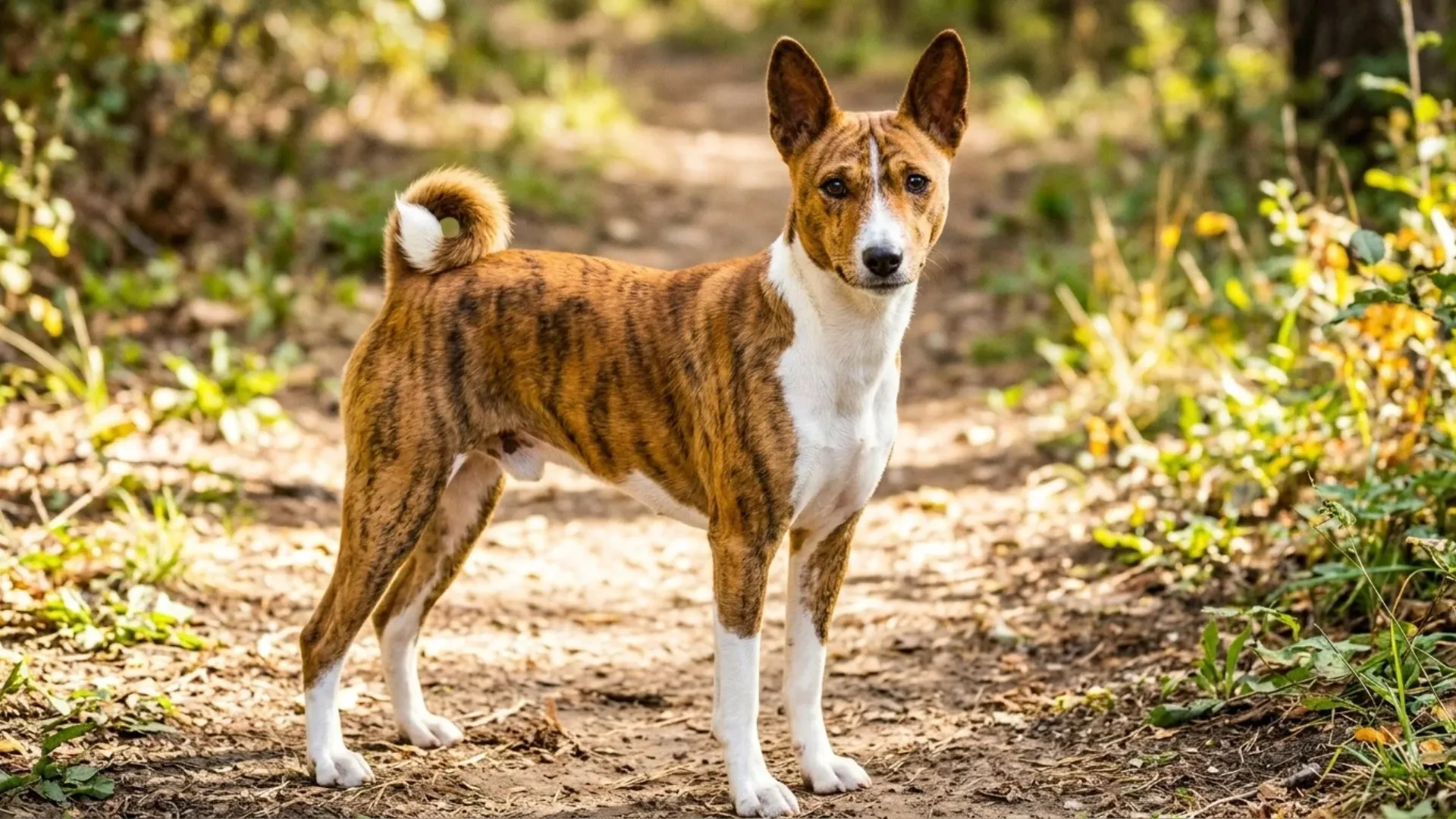
7. Basenji
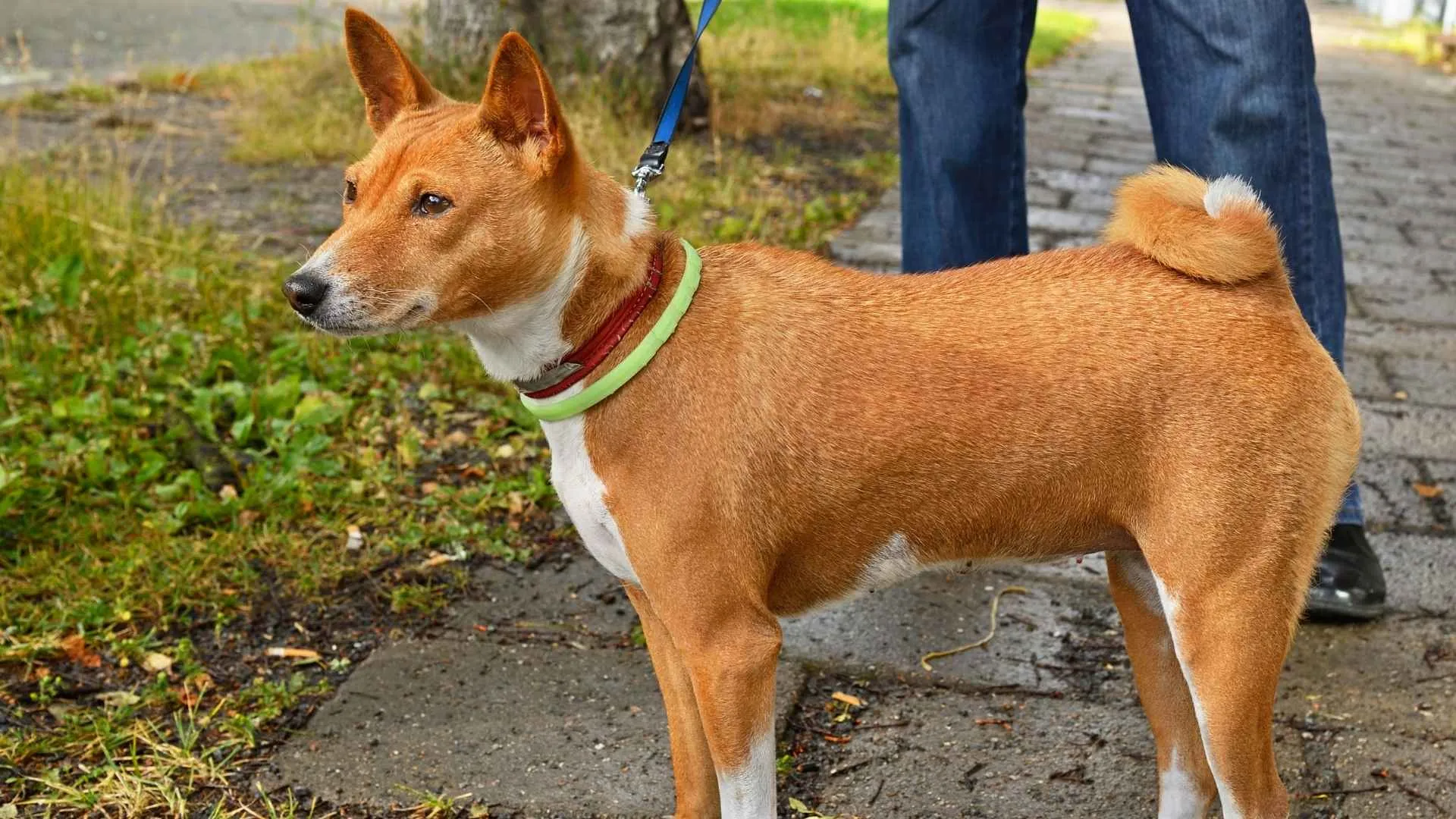
The Basenji has a sleek, short coat that comes in several attractive color combinations. Common shades include chestnut red, black, and brindle, often paired with crisp white markings that create a beautiful contrast.
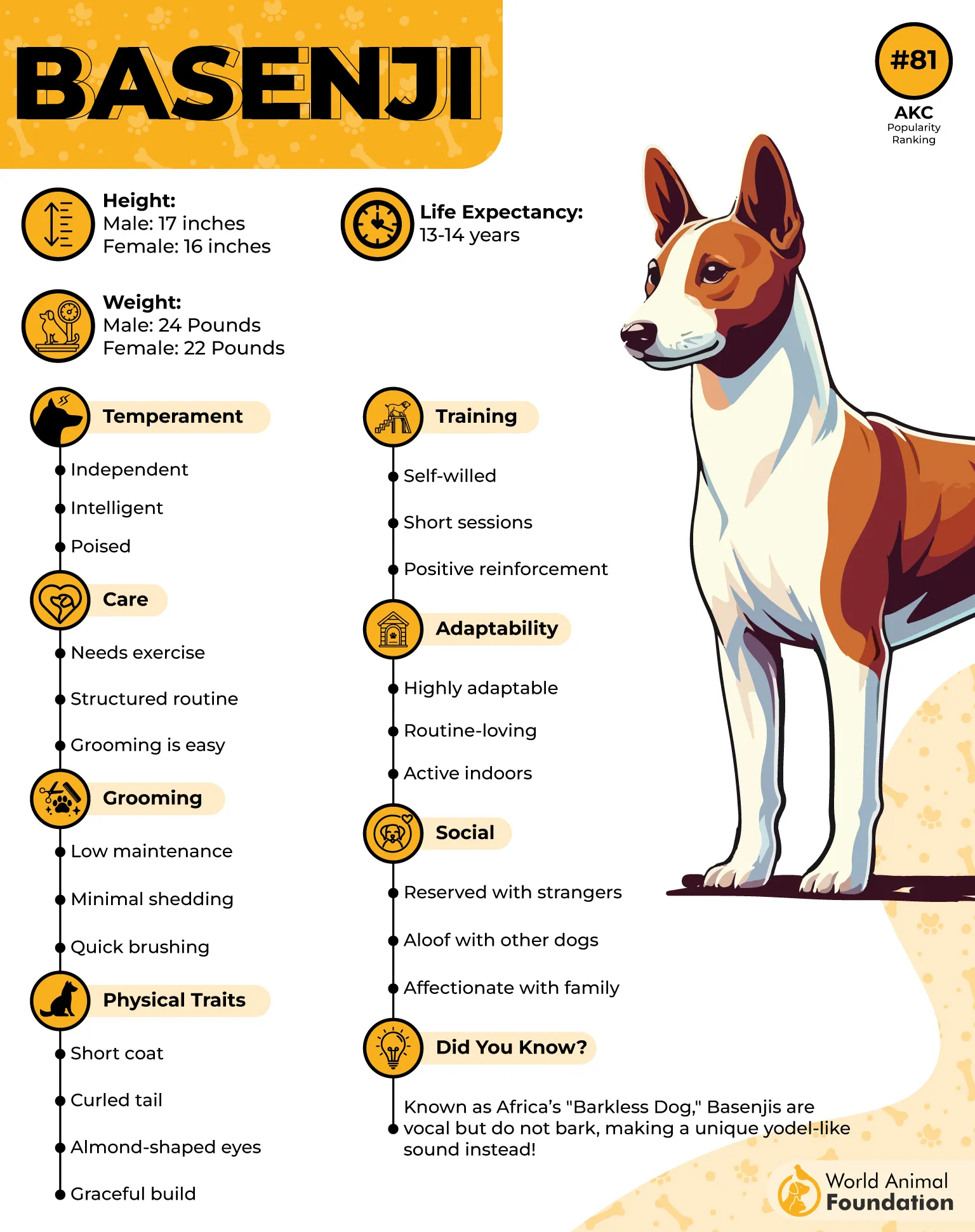
Its characteristic white feet, chest, and tail tip give the breed a recognizable appearance. Combined with its tightly curled tail, wrinkled forehead, and alert almond-shaped eyes, these markings contribute to its elegant, distinctive look.
Known as Africa’s barkless dog, the Basenji communicates through unusual sounds resembling a yodel or chortle. It is intelligent, curious, and energetic, with cat-like grooming habits. Regular exercise and engaging activities help prevent boredom and destructive behavior.
How This Breed Stands Out
Chestnut-red, black, or brindle coloring: Its smooth coat displays rich shades and distinctive color combinations.
Characteristic white feet, chest, and tail tip: Bright white markings contrast beautifully with the darker base colors.
Conclusion
Beautiful coat patterns give dogs their own distinctive charm, combining colors, markings, and textures in countless ways. From contrasting patches and delicate spots to flowing coats and striking stripes, these features make canine appearances wonderfully diverse.
Beyond their visual appeal, coat patterns often reflect the unique characteristics of each breed. Some have smooth, short coverings, while others display thick, textured, or flowing coats that require different levels of grooming. Coat color is determined by inherited genes, not appearance alone. Recessive genes determine brown coat color in dogs.
Choosing a dog should involve more than admiring its appearance. Temperament, activity requirements, grooming needs, and overall health are equally important considerations.
Ultimately, every coat tells its own visual story. Appreciating these differences makes it easier to recognize the beauty and individuality found throughout the dog world.
