




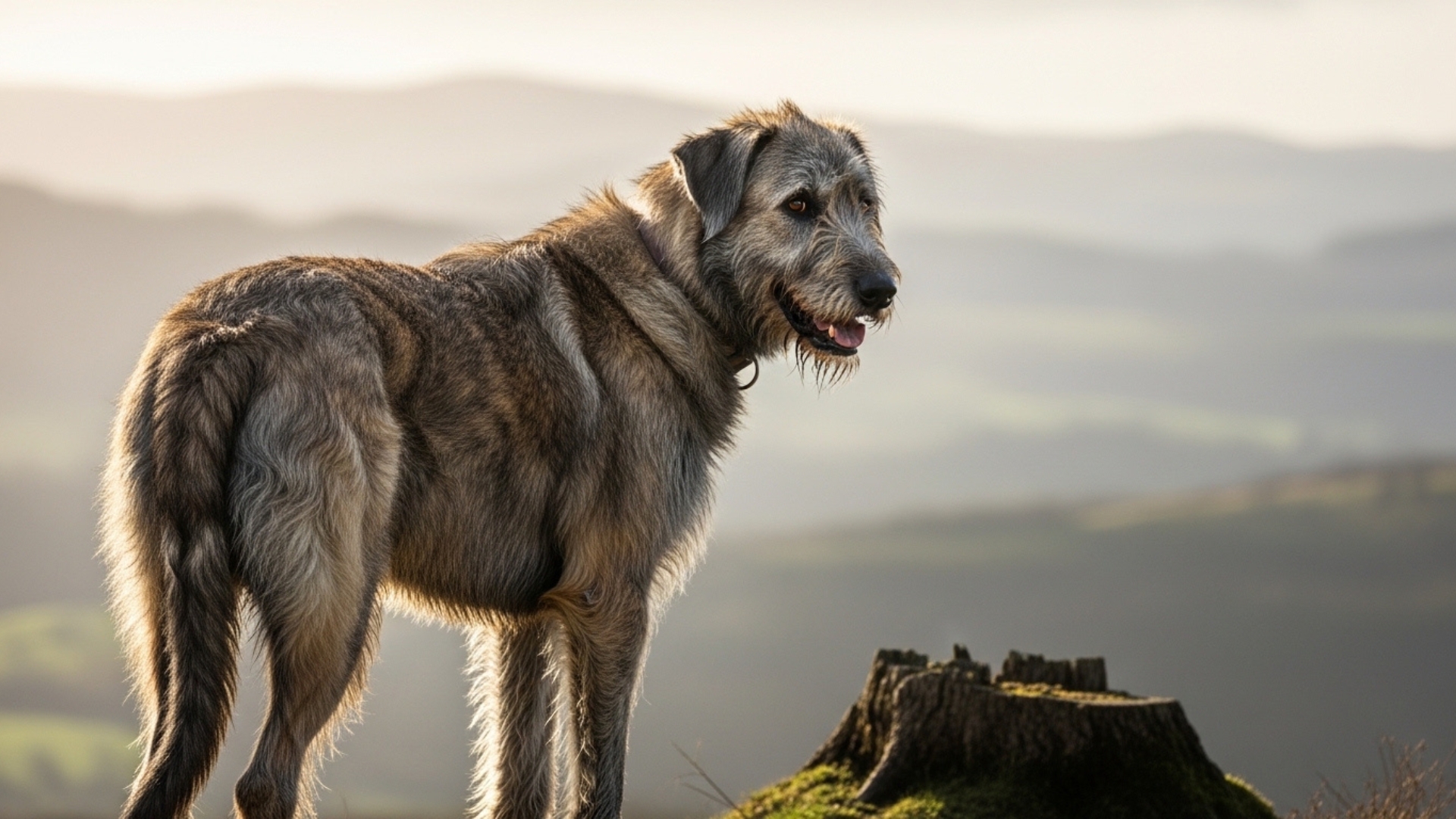
Dogs have shared a close bond with humans for thousands of years, evolving alongside us as helpers, guardians, and companions. Modern research shows that domestication has even influenced how dogs think and interact.
Over time, selective breeding created hundreds of dog breeds with unique physical traits, sizes, and temperaments. Among these, big dog breeds and giant dogs stand out for their massive size, strength, and calm personalities.
Despite their towering presence, many of the tallest dog breeds are known as true gentle giants with a gentle temperament and patient nature, making them wonderful family pets and loyal family companions.
From working as livestock guardians to becoming trusted family companions, giant breeds play many roles in human life. Understanding their size, temperament, and care needs helps potential owners appreciate what makes these impressive dogs both powerful and deeply devoted companions.
Key Takeaways
Despite their size, many giant breeds have calm, patient, and affectionate temperaments, making them excellent family pets.
Many giant breeds are intelligent but independent, requiring early socialization and consistent, firm training.
While some appear low-energy, giant breeds need regular physical activity and mental stimulation to stay healthy and happy.
Most giant breeds are excellent with children and other pets if raised together, but supervision is essential due to their size.
Awesome Giant Dog Breeds – Size, Temperament and More
1. Mastiff
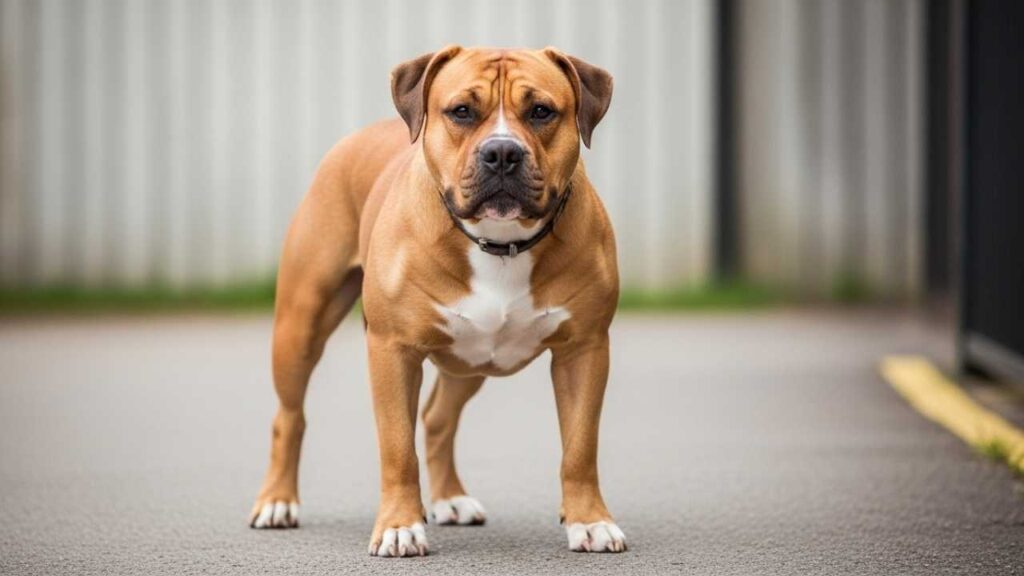
The Mastiff, one of history’s oldest giant dog breeds, has roots tracing back over 4,500 years. Known as the Old English Mastiff, this breed was valued as a hunter and guardian across Europe and even traveled to North America on the Mayflower.
Today, the Mastiff breed remains iconic for their immense size and loyal nature. Adult males often exceed 200 pounds, standing over 30 inches tall, with a muscular, broad-chested build.
Despite their formidable appearance, Mastiffs are gentle and patient with family members, making them affectionate companions.
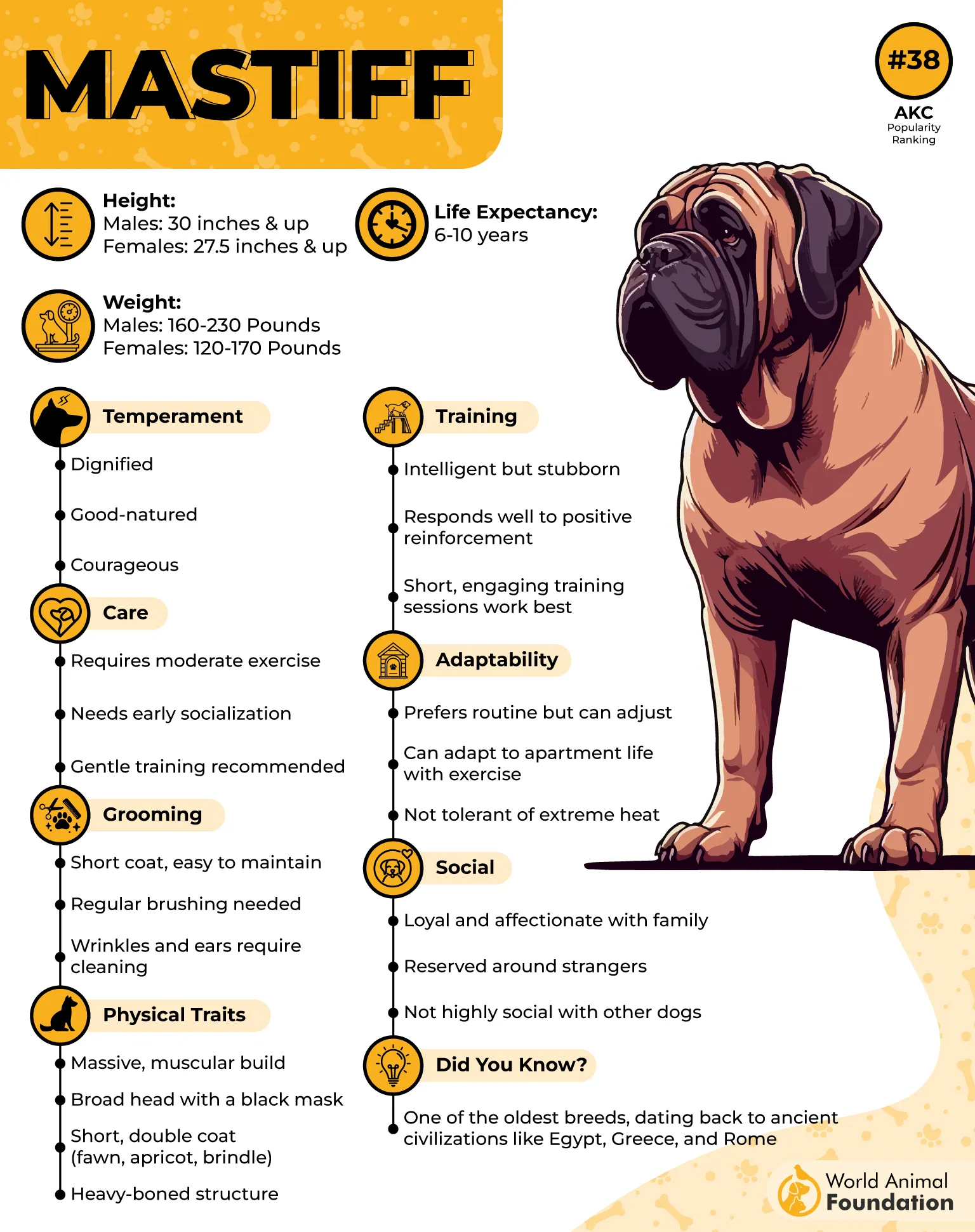
Their protective instincts kick in only when needed, so early socialization is essential for puppies to balance vigilance with calmness.
At home, they enjoy relaxed, low-energy routines, but their size and drooling require practical preparation.
Regular health checks, careful feeding to prevent bloat, and attention to joint and eye care ensure they live comfortably. With proper training and love, a Mastiff is a true gentle giant.
2. Irish Wolfhound
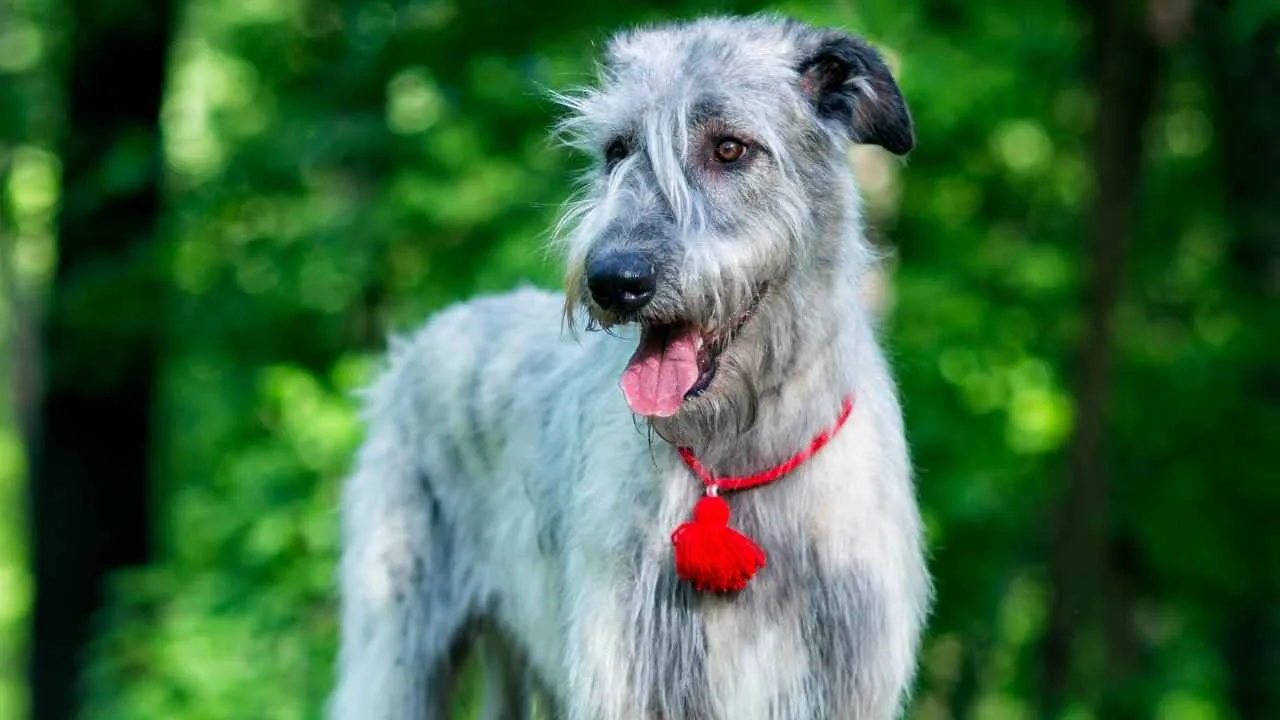
Irish Wolfhounds are gentle giants with unique needs that reflect their size and history. Feeding should focus on high-quality dog food appropriate for their age, puppy, adult, or senior, and formulated for large breeds.
To reduce the risk of bloat, avoid strenuous exercise immediately before or after meals.
Puppies take up to 18 months to mature and can be mischievous or prone to injury if left alone, so safe, supervised play is essential.
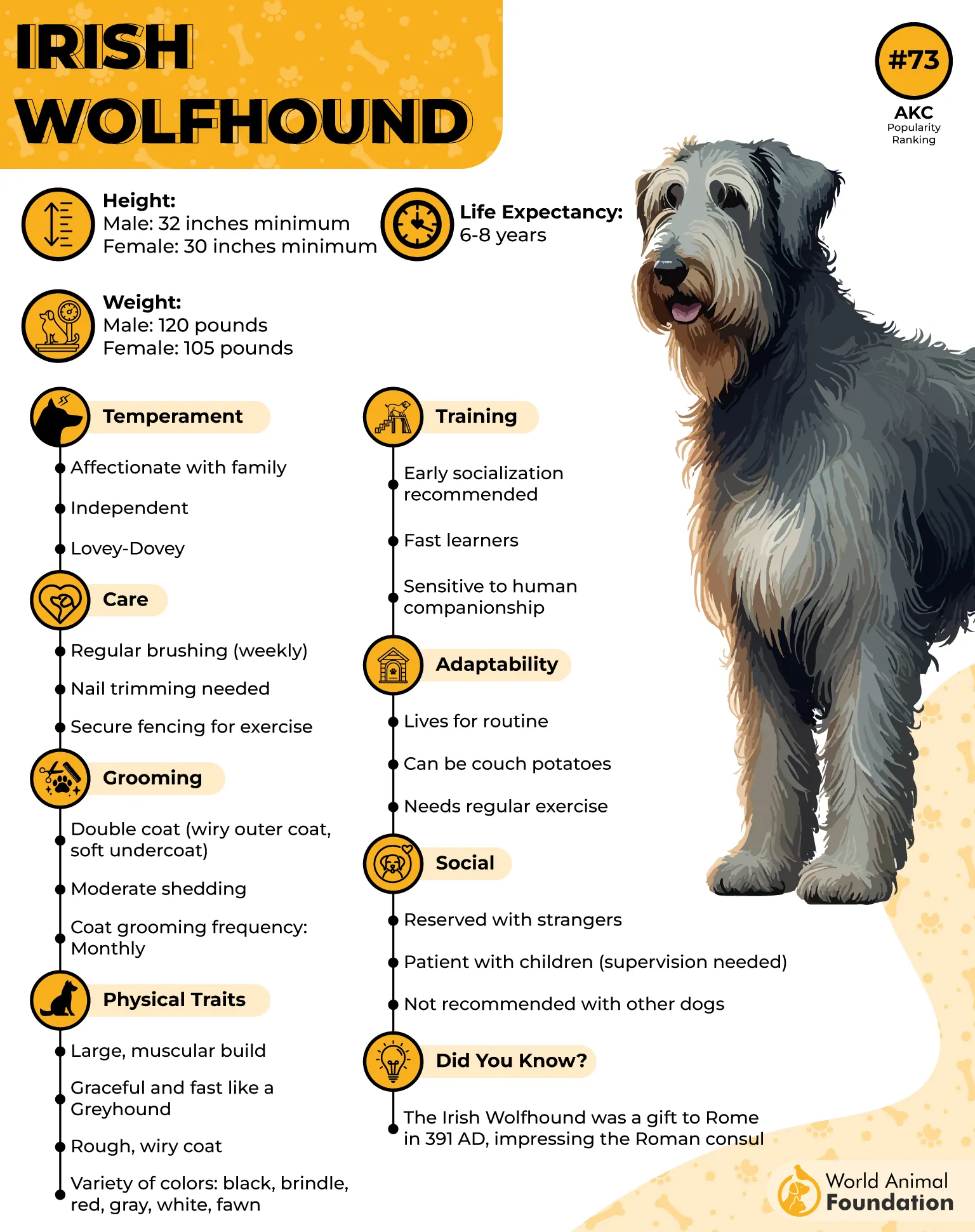
Early socialization and positive reinforcement training help them develop into well-mannered adults.
Despite their calm demeanor, Wolfhounds need regular exercise throughout life. Long walks, secure off-leash play in fenced areas, and canine sports like tracking or lure coursing keep them physically and mentally healthy.
Their wiry double coat requires weekly brushing, and nails should be trimmed regularly. Regular veterinary care, including heart and health screenings, helps manage risks like bloat, heart issues, and certain cancers.
Intelligent and sensitive, Irish Wolfhounds thrive in homes that combine space, structure, and love.
3. Saint Bernard
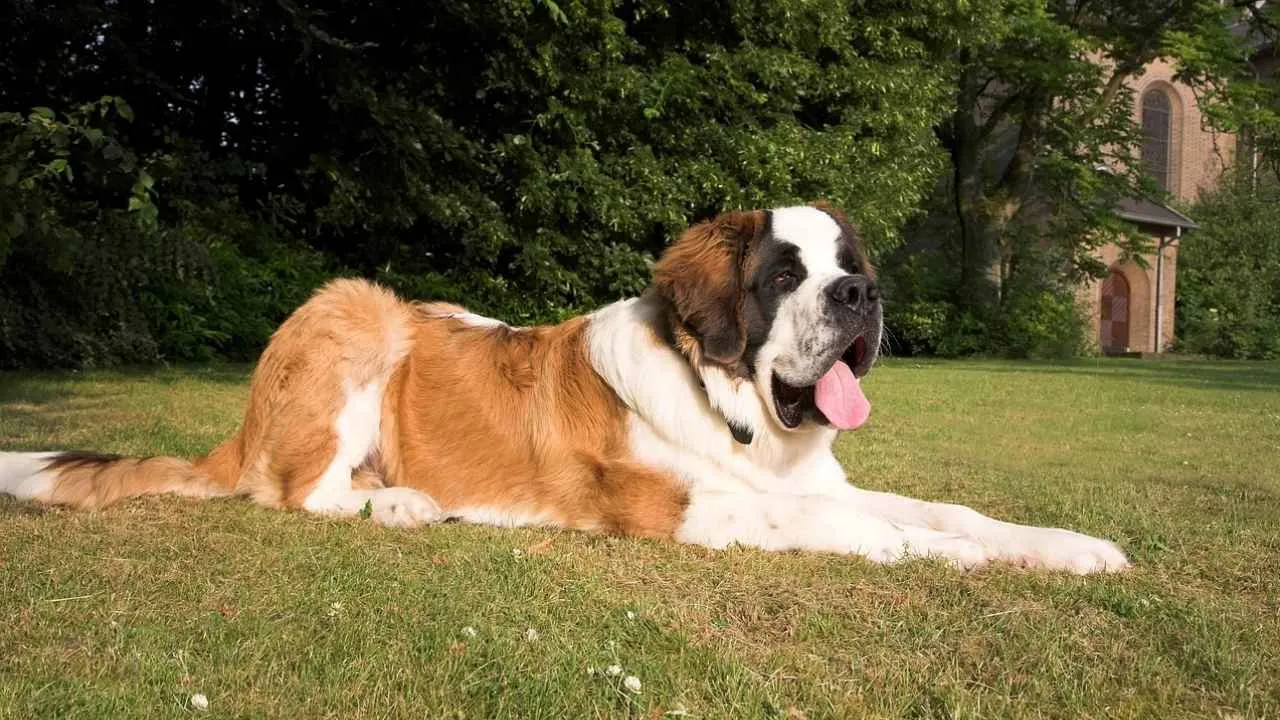
The St. Bernard is a legendary giant from Switzerland, celebrated for its gentle, patient, and loving nature. Historically, these dogs were lifesavers, guiding monks at the Great St. Bernard Hospice to find travelers lost in snowstorms and avalanches.
Their intelligence, keen sense of direction, and sensitivity to human emotions made them indispensable rescuers, saving thousands of lives over the centuries.
Today, St. Bernards remain loyal and affectionate family companions. Adult males stand 28–30 inches tall and weigh 140–180 pounds, while females are slightly smaller.
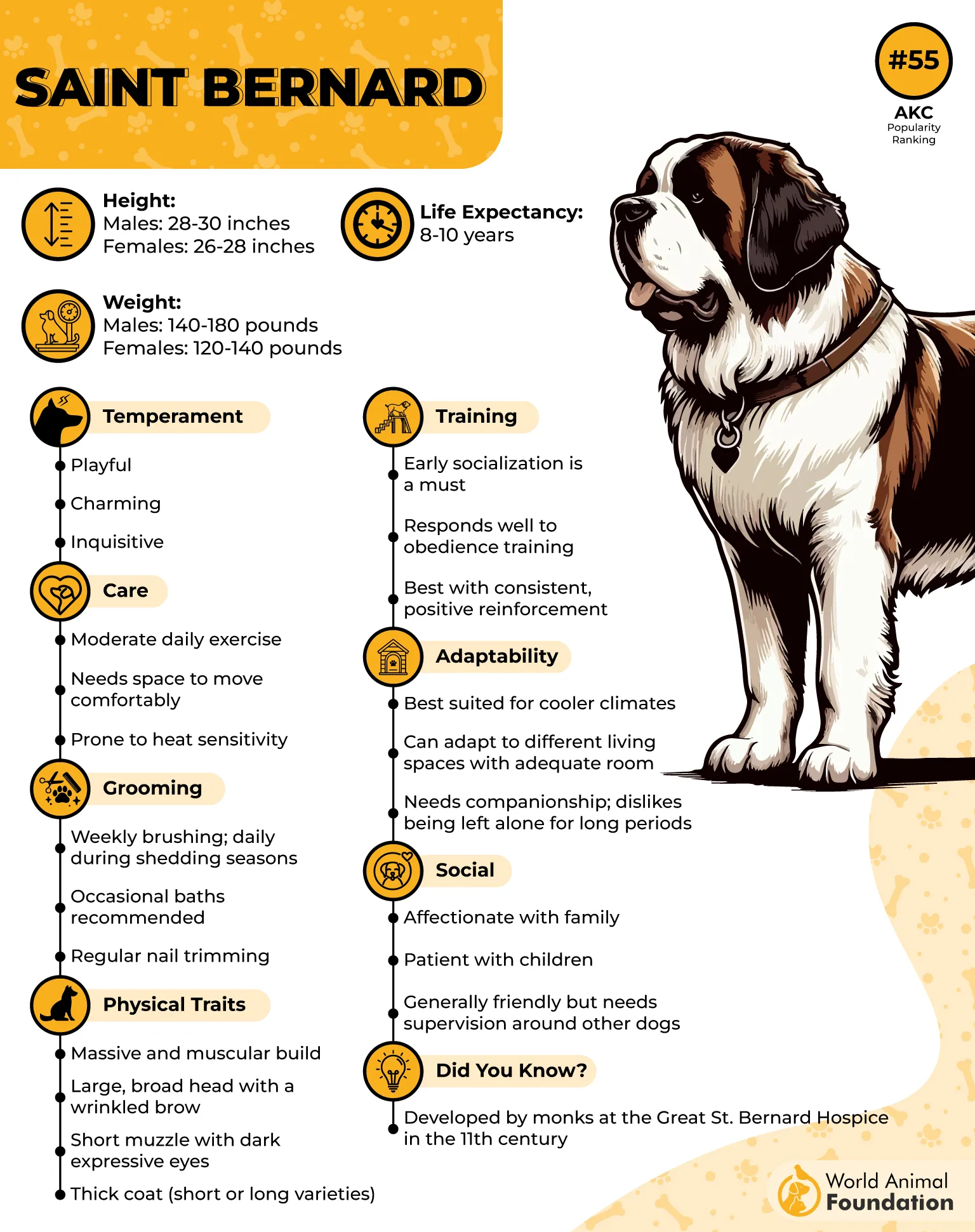
Their dense double coat, marked in white, brown, or red, protects them in cold climates, and regular grooming keeps them healthy.
Although laid-back, they need daily walks and supervised play, and care must be taken to prevent bloat and manage heat exposure.
Health concerns include hip dysplasia, heart conditions, and eye issues, making routine vet visits essential. With proper training, socialization, and love, a St. Bernard is a calm, devoted, and protective gentle giant.
4. Great Dane
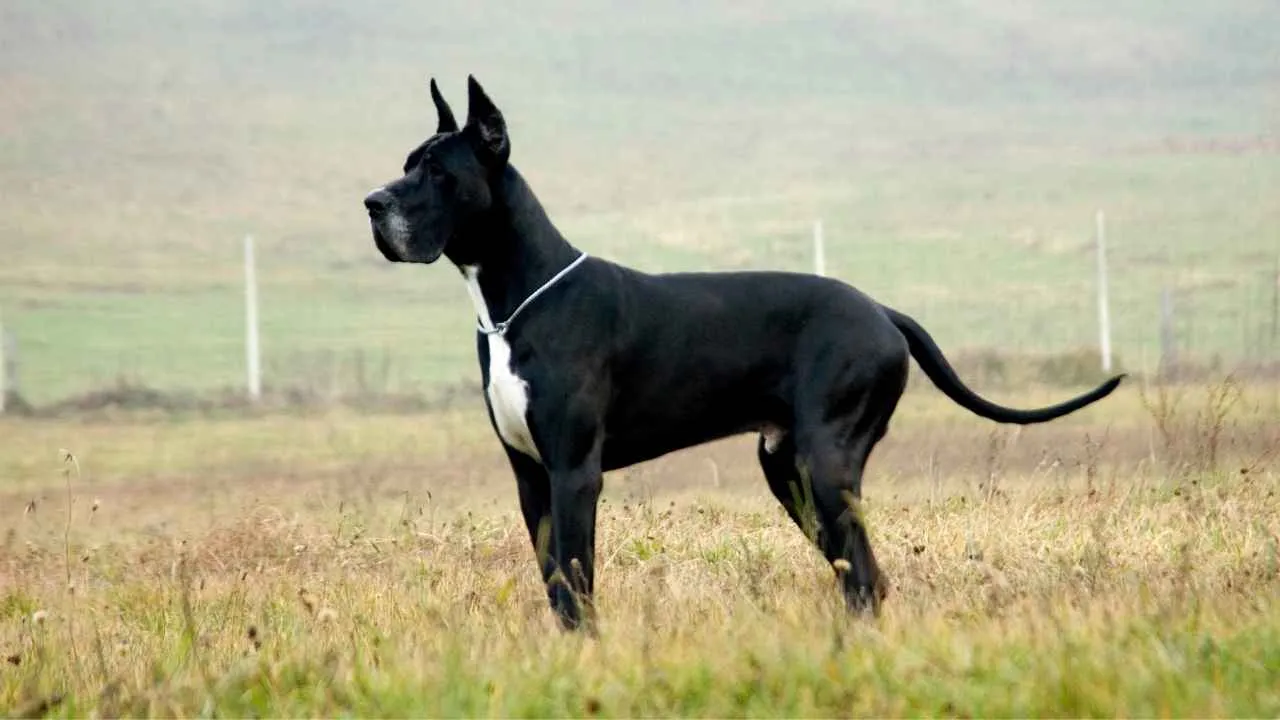
Often called the “Apollo of dogs,” the Great Dane lives up to its noble nickname with a tall, graceful build and calm presence.
The comparison comes from Apollo, known in mythology for beauty and strength, qualities that perfectly reflect this remarkable breed.
The Great Dane’s roots trace back to giant mastiff-type boar-hunting dogs in Germany, where they were once powerful hunters used to track wild boar, as suggested by PDSA.
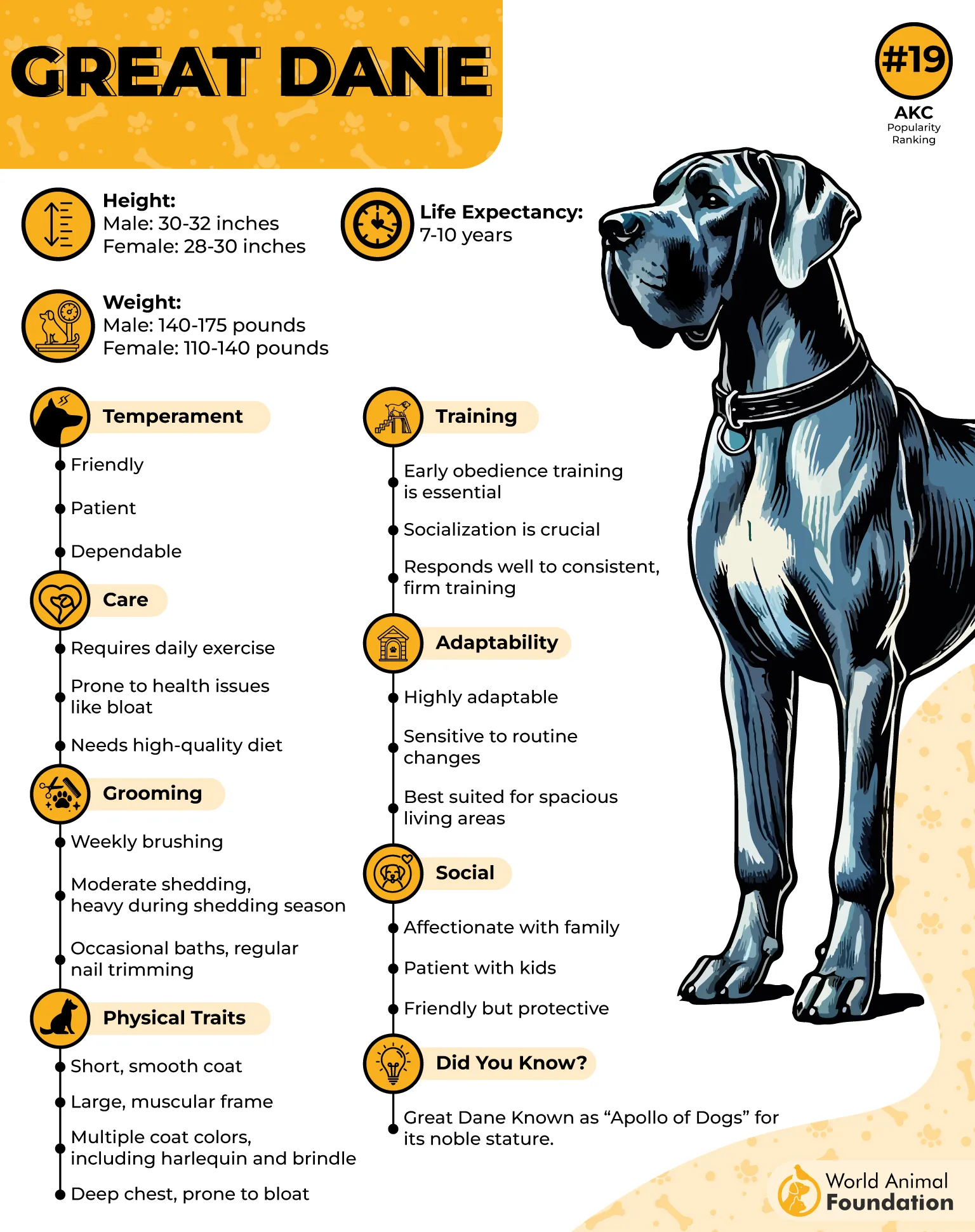
Over time, as hunting traditions faded, breeders refined the dogs’ appearance and temperament. In Germany, the breed became known as the Deutsche Dogge and was even favored by leaders such as Otto von Bismarck.
Today, the Great Dane is admired for its impressive height, elegant build, and gentle nature. Despite their massive size, these dogs are affectionate companions that thrive on human interaction.
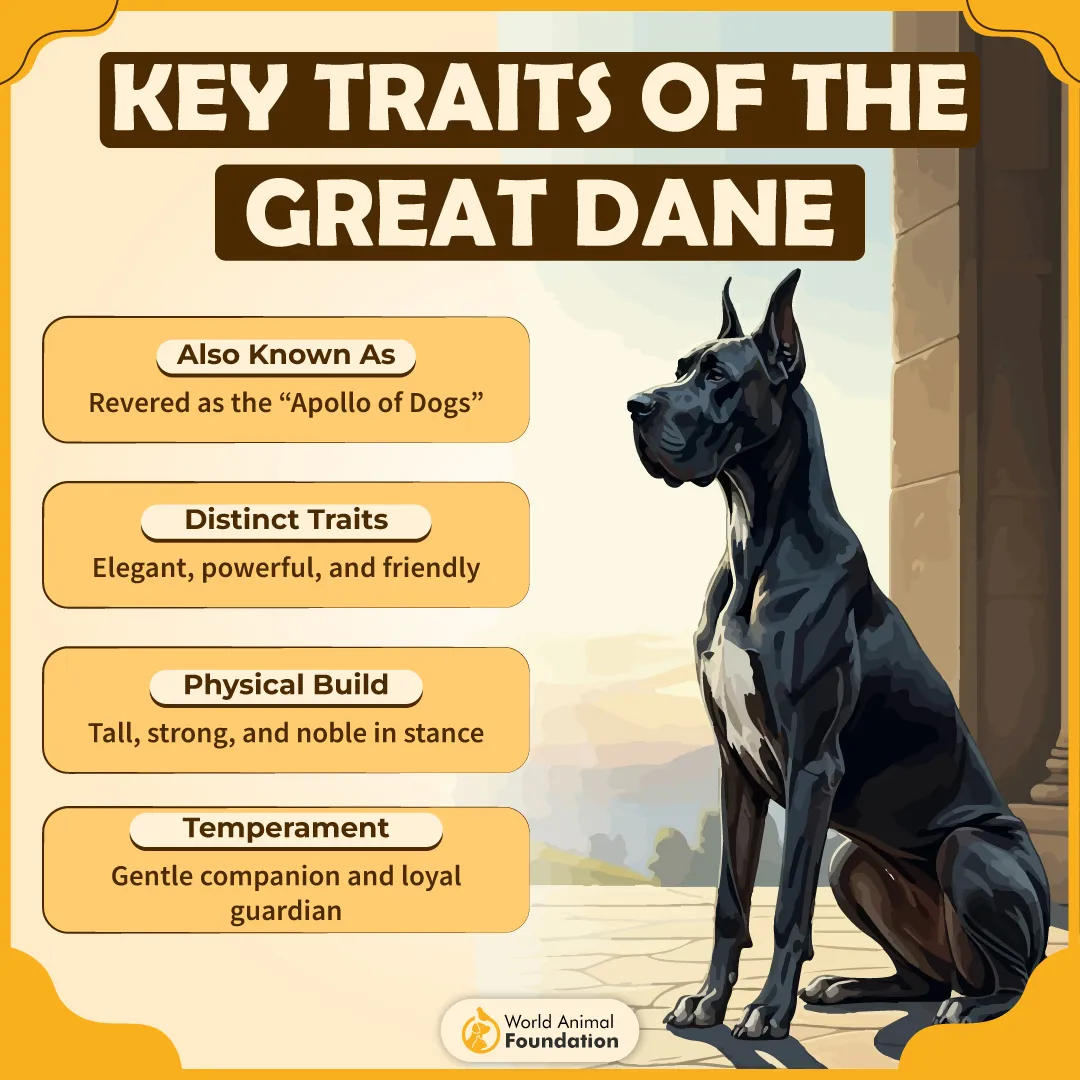
Loyal, calm, and friendly, Great Danes have truly earned their reputation as one of the world’s most beloved gentle giants.
5. Newfoundland
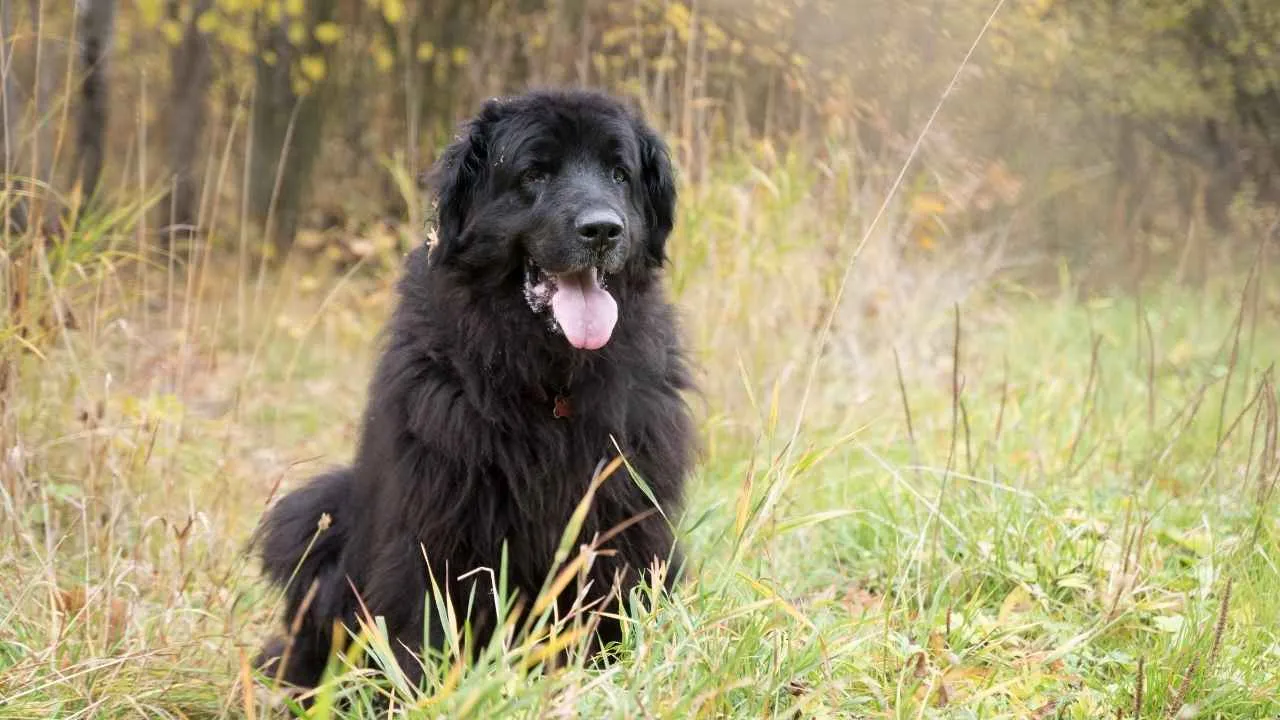
The Newfoundland, or “Newfie,” is a massive, gentle giant from the cold coasts of Canada. Originally bred as a working dog, Newfies hauled heavy loads, towed lines from ships, and became legendary for rescuing swimmers in distress.
Beyond their strength and heroism, they are known for their sweet temperament, wise expressions, and extraordinary patience, especially with children. Males typically weigh 130–150 pounds, females 100–120 pounds, standing around 26–28 inches tall.
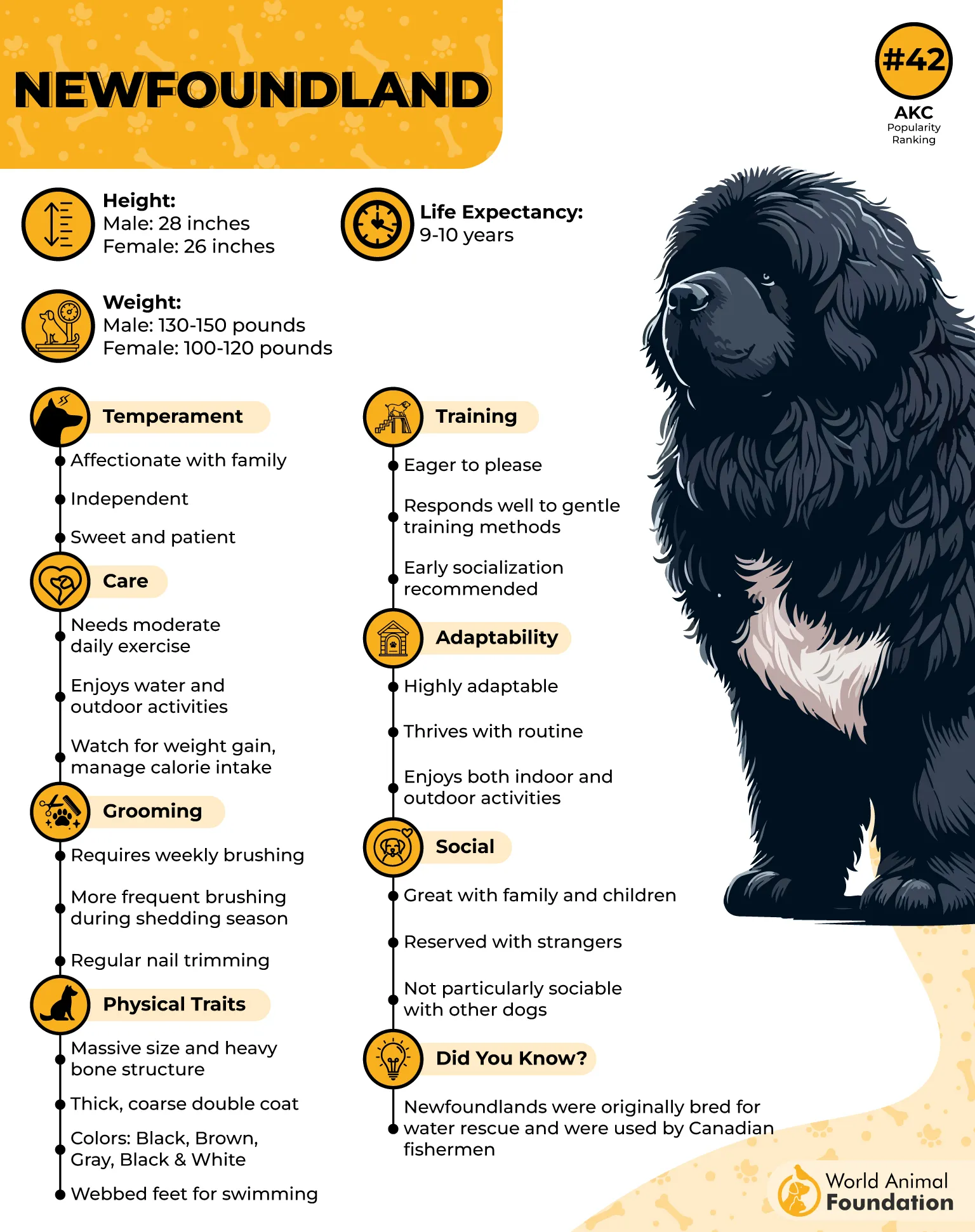
Their thick, water-resistant double coat keeps them warm in cold climates and comes in black, brown, gray, or Landseer patterns.
Newfies thrive with moderate exercise, including walks, play sessions, and safe access to a fenced yard, though heat can be dangerous for them, as explained by Orvis.
Despite their size, Newfoundlands crave human companionship, often acting like lap dogs. They are highly intelligent, trainable, and loyal, making them excellent family pets.
Regular grooming, veterinary care, and proper feeding are essential to keep these working dogs healthy and happy, ensuring their gentle giant spirit shines through.
6. Tibetan Mastiff
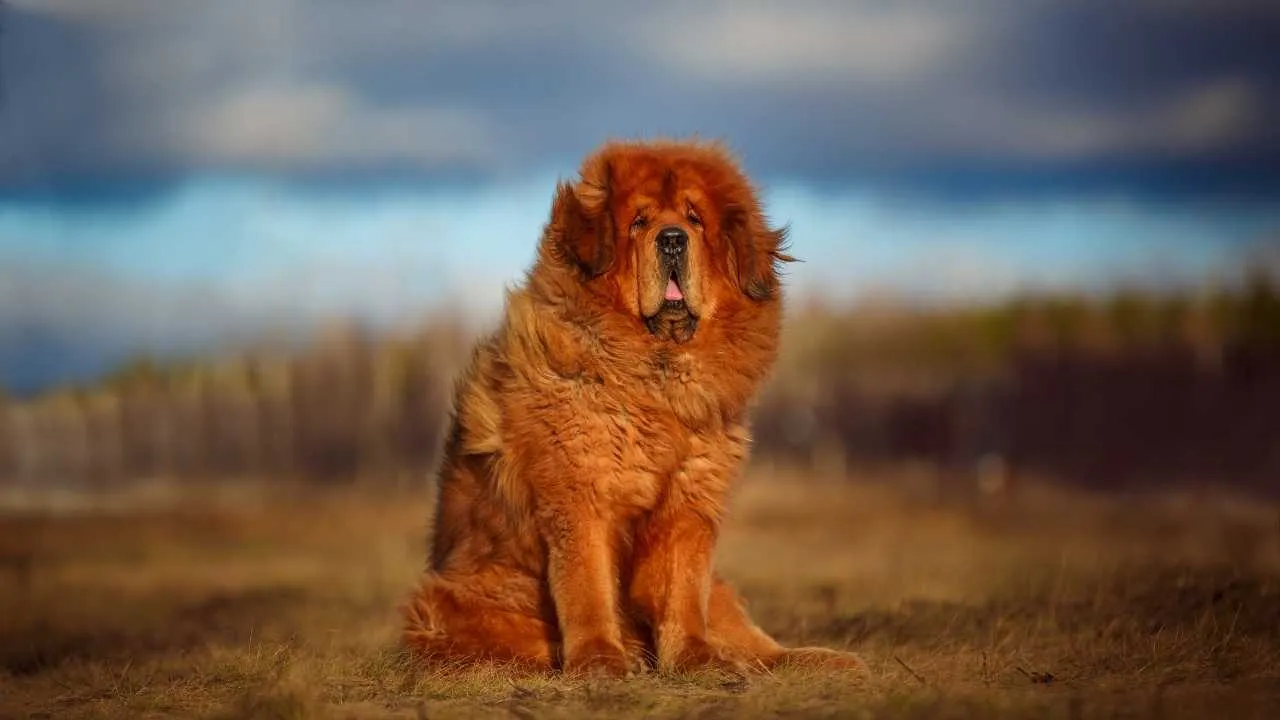
The Tibetan Mastiff is a legendary guardian with roots on the Himalayan plateau, where nomadic herdsmen relied on these massive dogs to protect livestock and villages.
Chained by day and free to patrol at night, they became formidable protectors, feared by intruders. Though largely unknown outside Tibet until the 19th century, the breed eventually reached Europe and North America, preserving a wide genetic base.
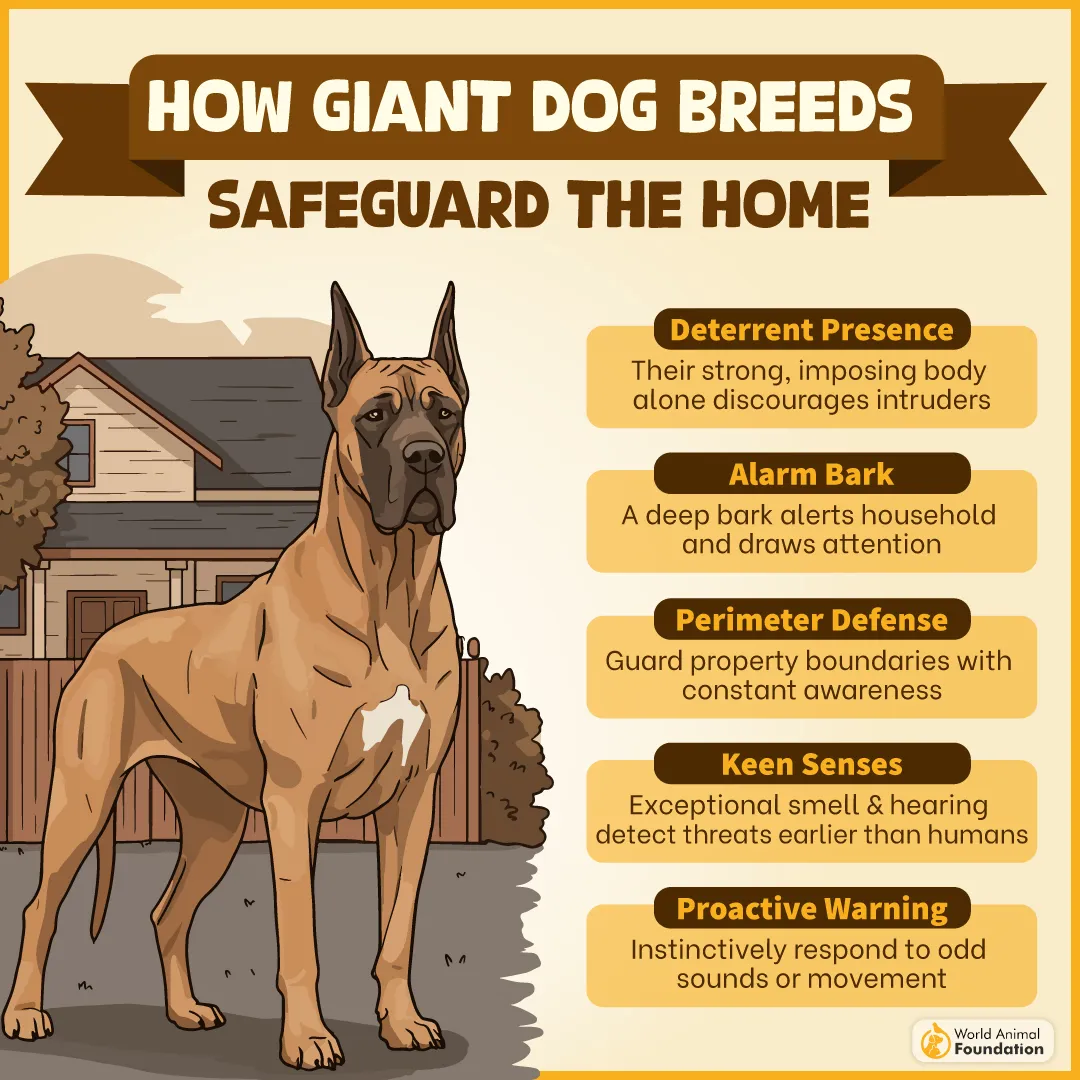
Tibetan Mastiffs are independent, strong-willed, and highly protective.
They are devoted and gentle with family members, calm indoors, and typically good with other pets, but their sheer size means caution around young children. Early socialization and consistent, reward-based training are essential to manage their guardian instincts.
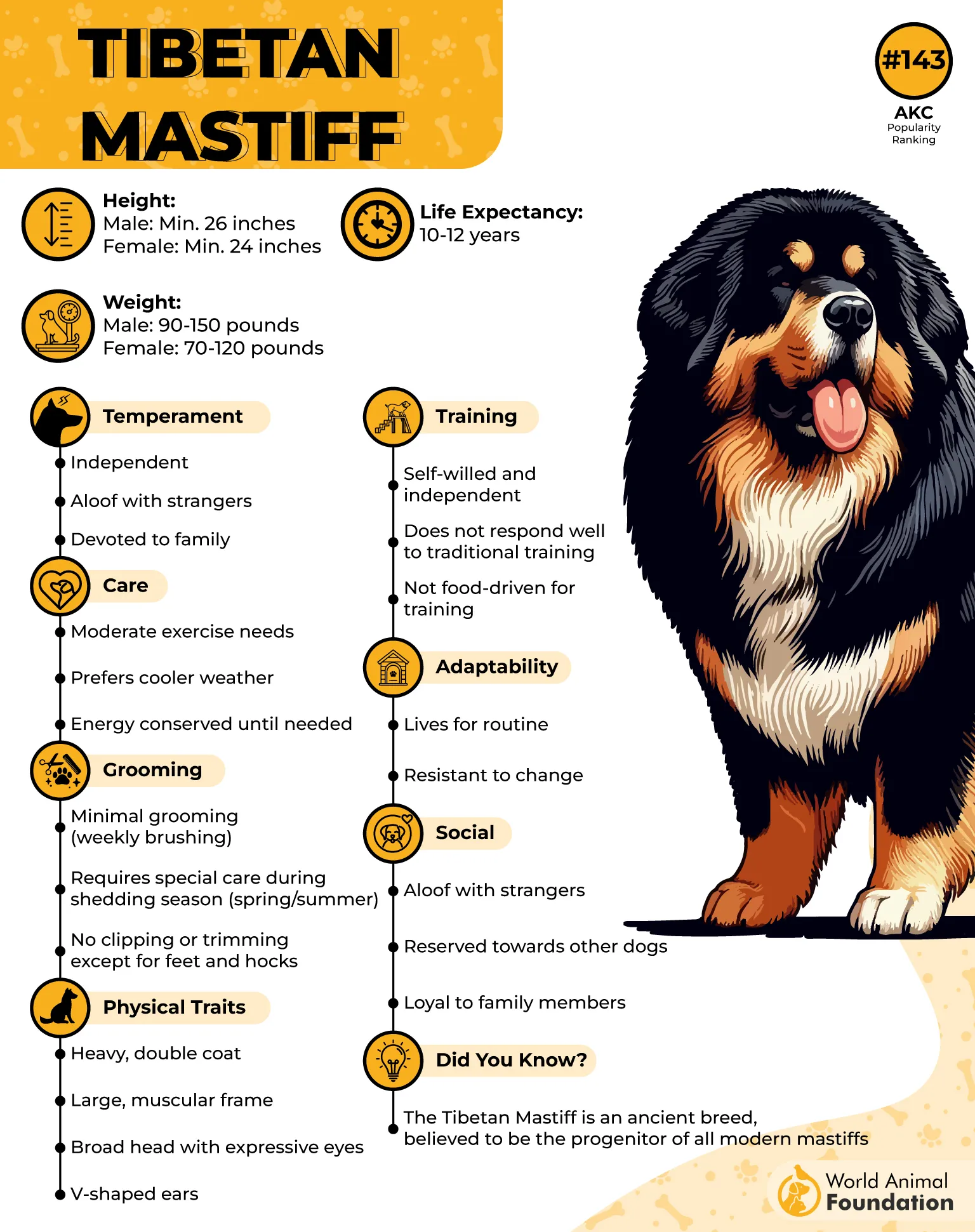
This powerful dog is slightly longer than tall, with a broad head, thick coat, and a high, curled tail. Moderate daily exercise and regular grooming keep her healthy and comfortable.
While generally robust, potential health issues include hip dysplasia and hypothyroidism, so veterinary care and responsible breeding are important.
7. Great Pyrenees
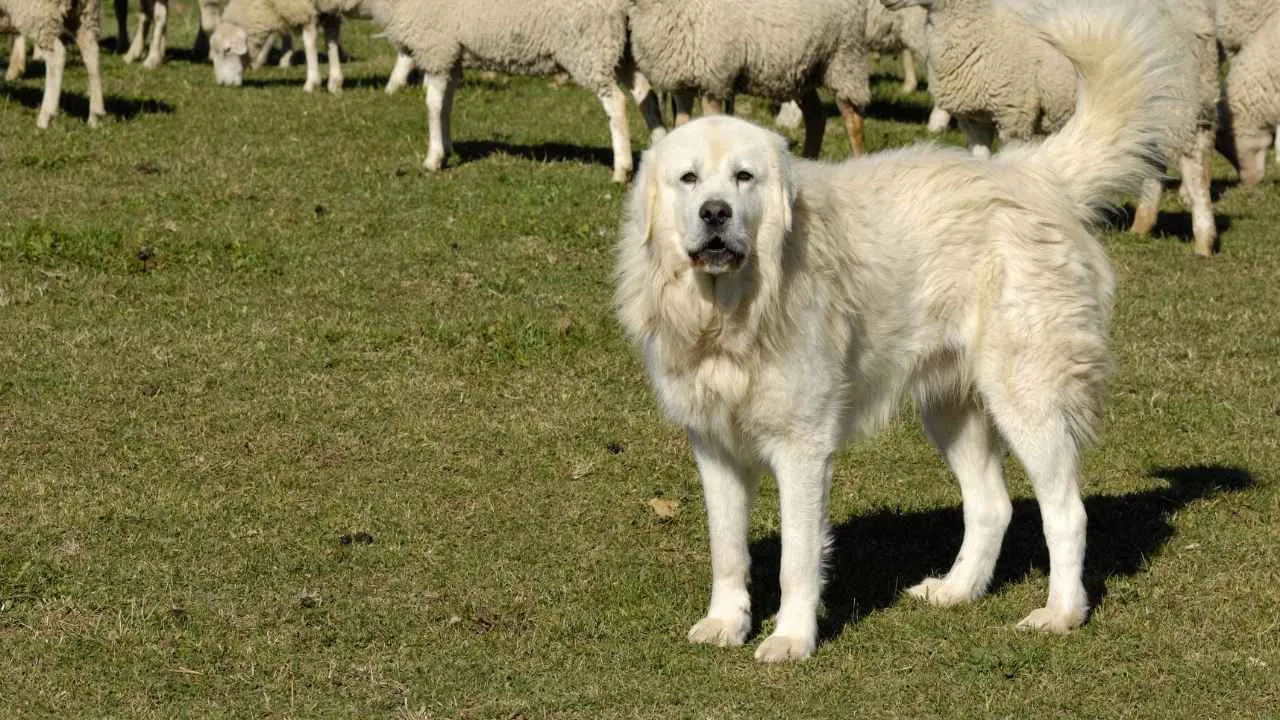
The Great Pyrenees is a giant dog with a gentle soul, built to protect and nurture.
Originating in the Pyrenees Mountains of France and Spain, this breed was carefully developed to guard flocks while smaller Pyrenean Shepherds herded the sheep.
With a history stretching back thousands of years, fossils suggest their ancestors may have roamed these mountains as early as 1800 B.C., likely evolving from ancient white mountain dogs of Asia Minor.
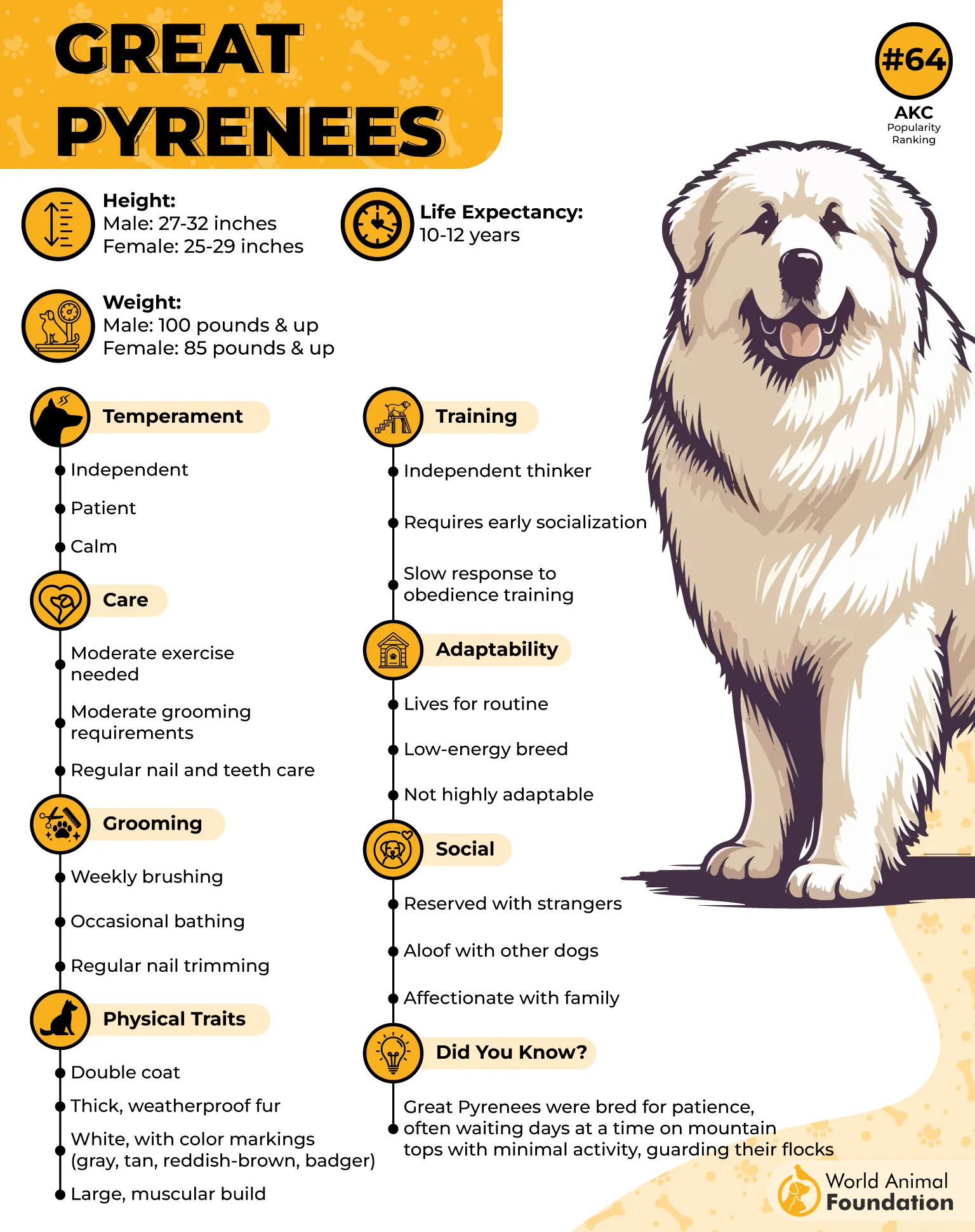
Renowned for their protective instincts, Great Pyrenees are patient and kind with vulnerable animals, and their natural nocturnal vigilance makes them excellent guardians, often alerting owners to unusual sounds at night.
Over centuries, they moved from peasant farms to royal courts, earning favor with the French nobility and even Queen Victoria of England.
Their strength and calm intelligence were later utilized in World War II to haul artillery across mountains. Independent-minded yet loyal, Great Pyrenees need early socialization and gentle training to thrive as devoted family companions.
8. Leonberger
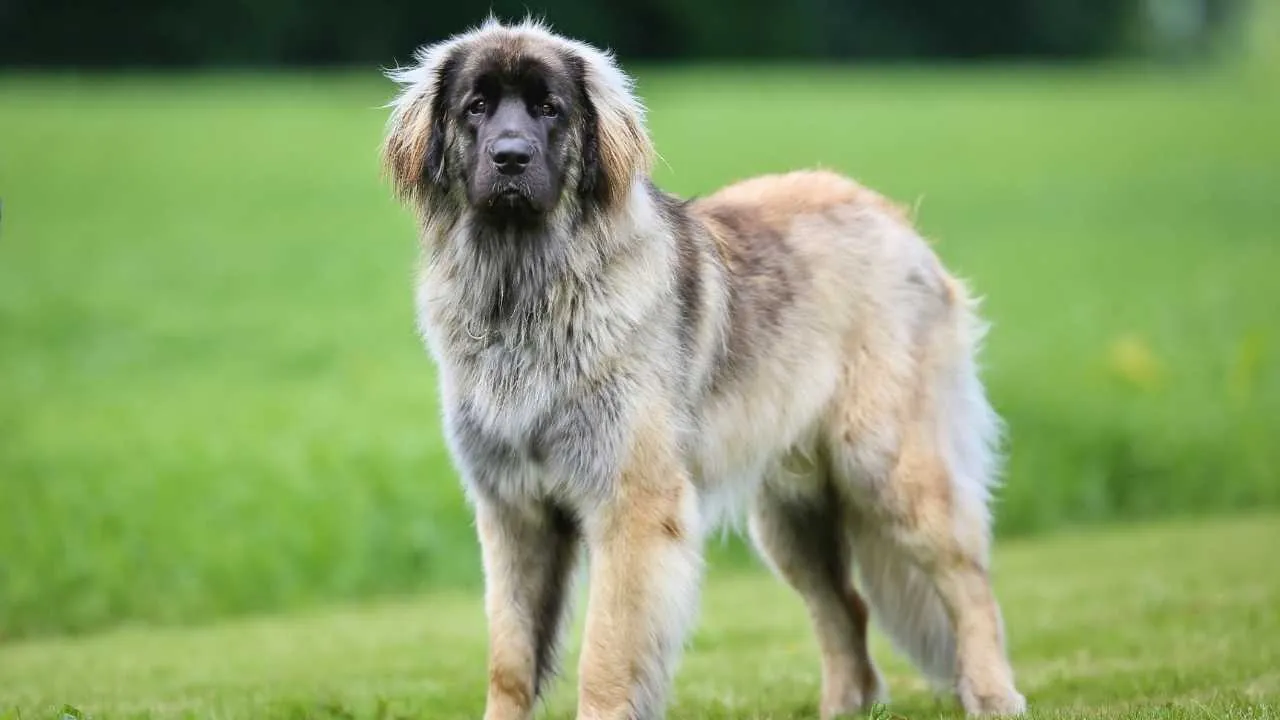
The Leonberger, born in the 1840s in Leonberg, Germany, was inspired by the town’s heraldic lion.
Breeder Heinrich Essig aimed to create a giant, noble dog, blending the traits of Newfoundlands, St. Bernards, and Pyrenean Mountain Dogs, though local breeds likely contributed to achieving the Leonberger’s signature cream to rich red coat with a dark mask.
Renowned as gentle giants, Leonbergers are calm, confident, and lively, making them affectionate family companions and excellent therapy dogs.
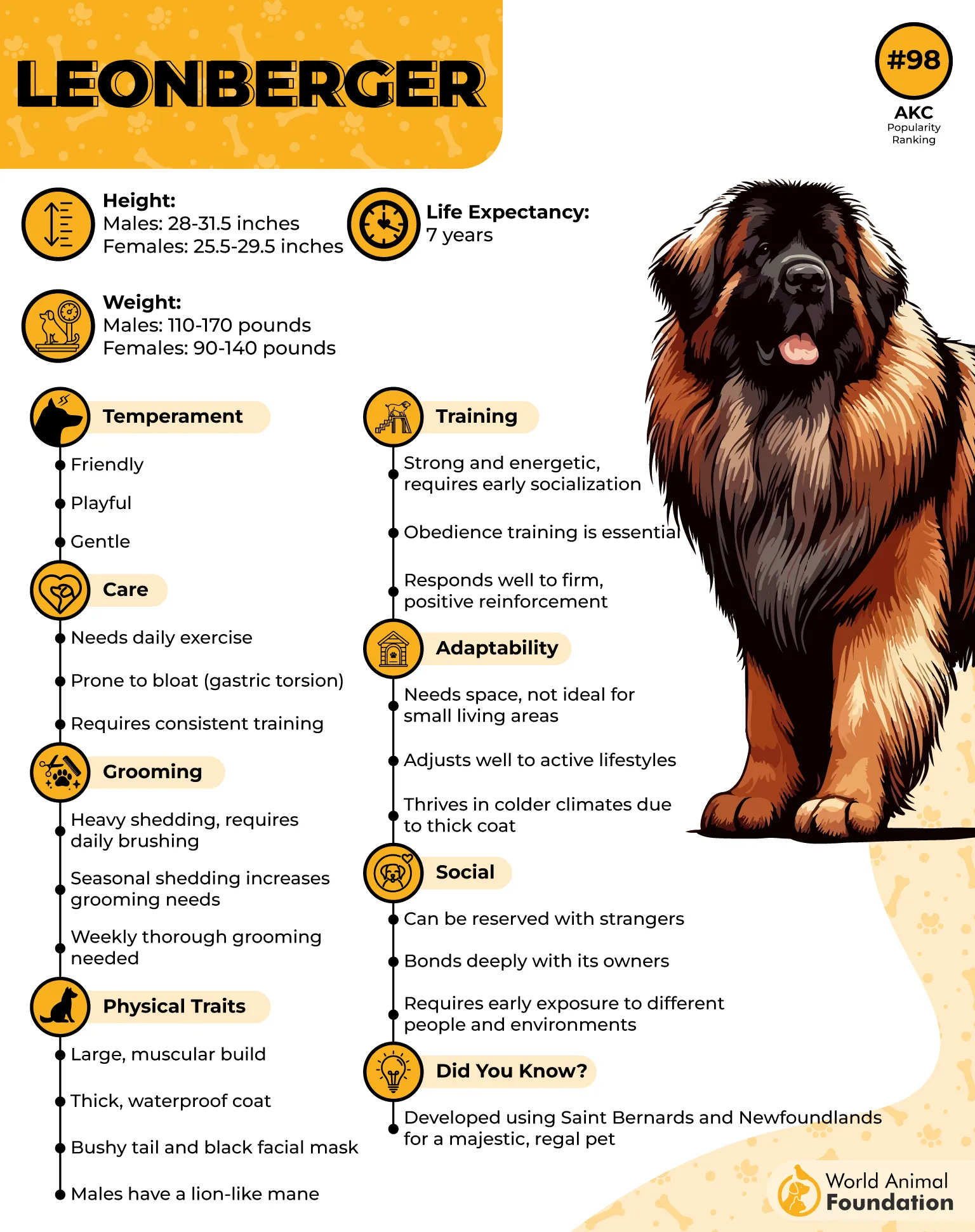
Males are powerful and laidback, while females often serve as attentive watchdogs. Their thick double coat requires regular grooming, especially during seasonal shedding, and their active nature calls for walks, swims, or park visits, according to Dogs NSW.
Though generally healthy, the breed can be prone to joint issues and genetic conditions, so responsible breeding and routine vet checks are important.
Highly social and intelligent, Leonbergers thrive when included in family life, enjoying interaction with children, adults, and other pets, making them loyal and loving companions for households ready to embrace a giant friend.
9. Anatolian Shepherd
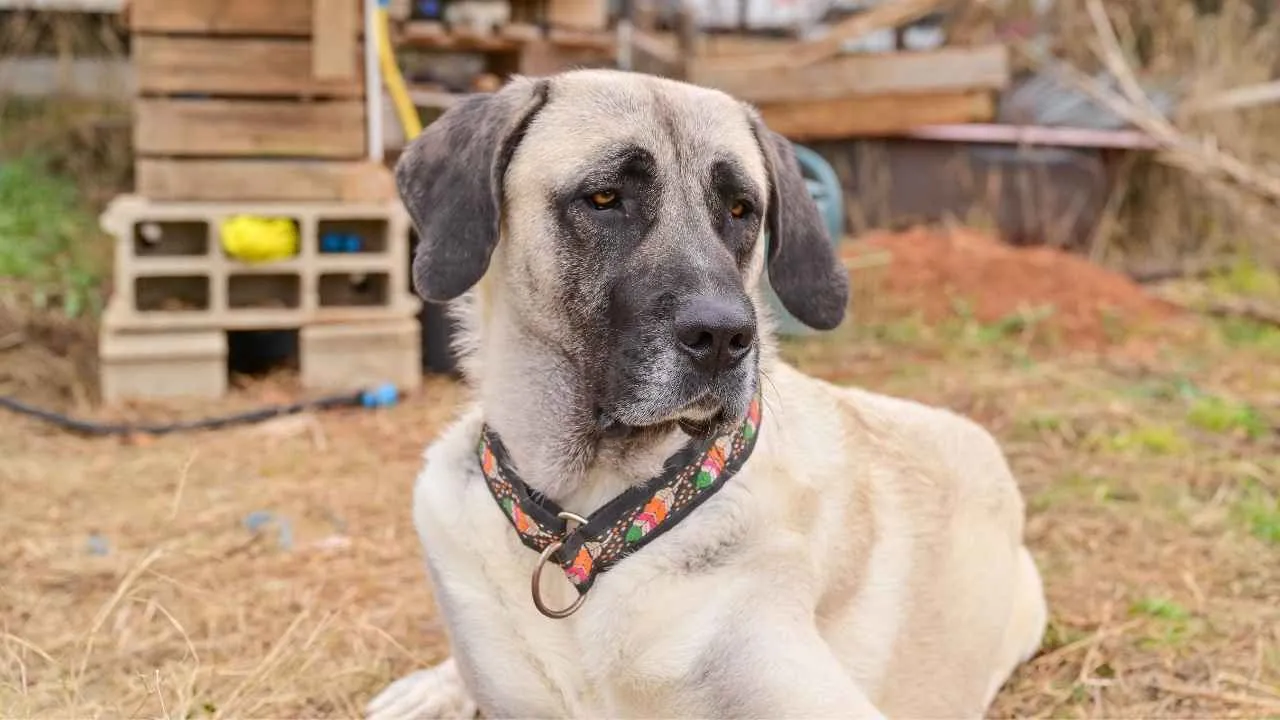
The Anatolian Shepherd is one of the oldest livestock guardian breeds, originating from Turkey and closely related to the Kangal. These large, muscular dogs were bred to protect flocks from predators, combining strength, intelligence, and independence.
Standing 27–29 inches tall and weighing 80–150 pounds, they are agile for their size, with a short, weather-resistant coat that insulates them in harsh conditions.
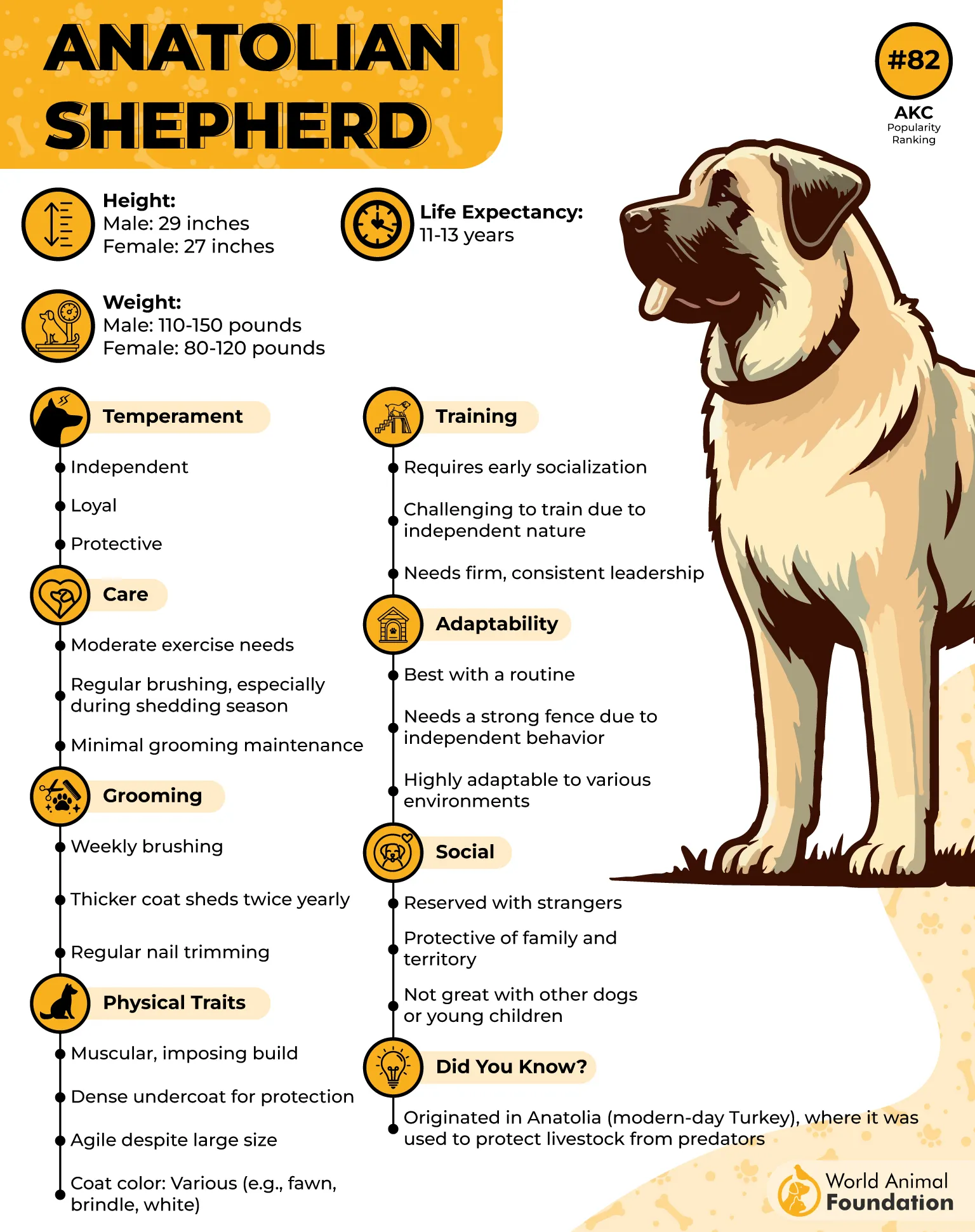
Known for loyalty and vigilance, Anatolian Shepherds are calm and confident but naturally wary of strangers. They form strong bonds with their families and other animals, making them gentle with children when supervised.
Early socialization and firm, consistent training are essential to manage their independent, protective instincts, according to PetMD.
While not overly energetic, these dogs need space to roam and a purpose to stay fulfilled. Moderate grooming, high-quality food, and routine vet care support their health and longevity, typically 11–13 years.
Ideal for experienced owners, Anatolian Shepherds thrive when included in family life while keeping a watchful eye over their territory.
Conclusion
Giant dog breeds combine impressive size with remarkable loyalty, intelligence, and unique personalities that make them more than just pets; they become true family members.
Many of these dogs were originally bred as working dogs to guard property, protect livestock, pull sleds, or assist humans in demanding environments. Because of this history, they often have a protective nature, strong natural instinct, and the ability to bond closely with their owners.
However, raising giant breeds requires commitment. These confident dogs need early and consistent socialization, structured training, and daily exercise to develop into balanced adults. Proper care, including regular grooming, mental stimulation, and maintaining a healthy weight, also plays a major role in their well-being.
Many pet parents love these large breeds because they form strong bonds with their family members and often become steady companions in everyday life.
For those ready to embrace their needs, these dogs offer unmatched devotion, a calm yet commanding presence, and a loving nature that turns any home into a place of warmth, security, and joy. Giant breeds truly are gentle giants in every sense.
