




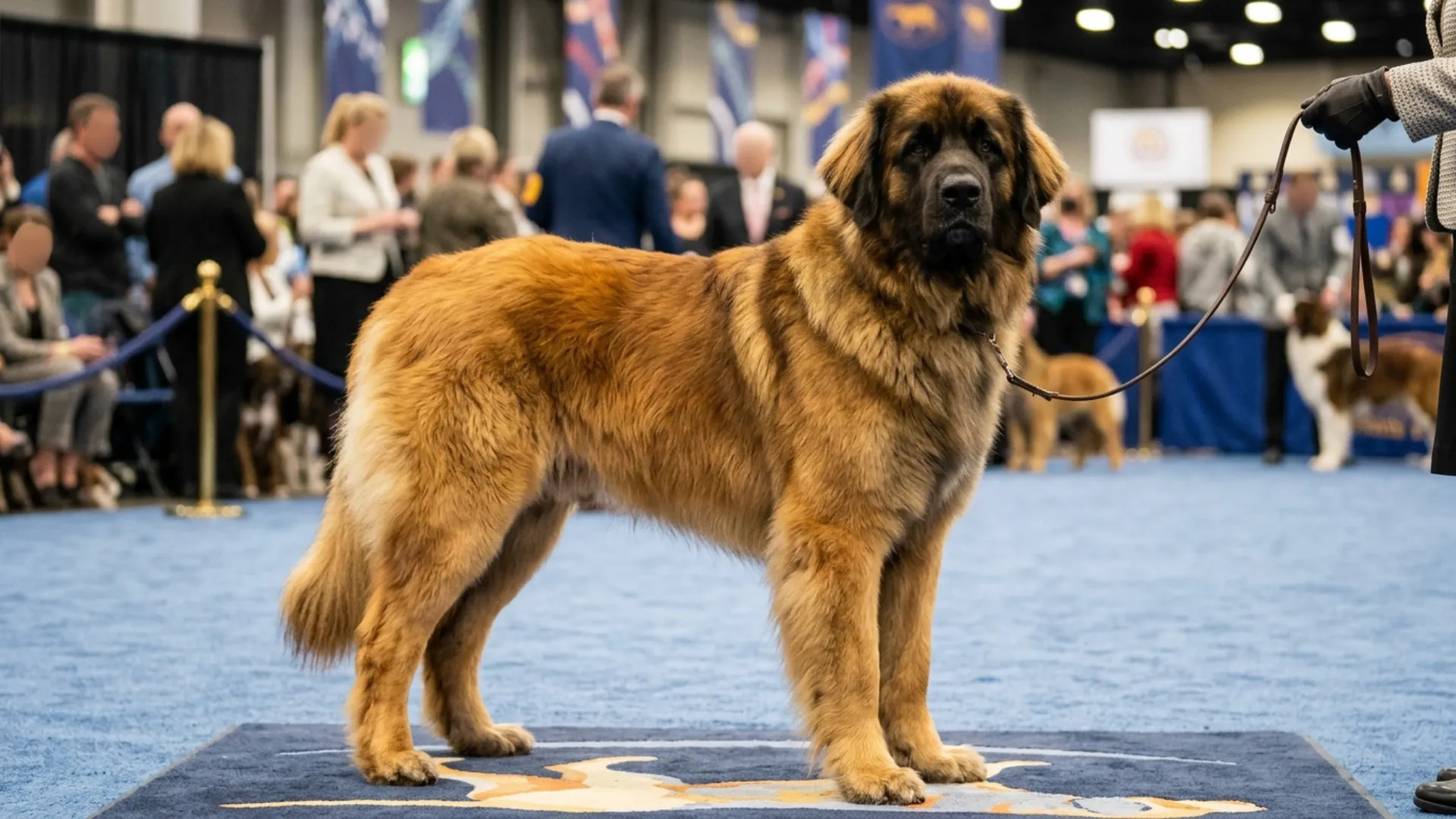
There’s something undeniably captivating about giant dog breeds—the kind that makes you pause for a second just to appreciate their sheer presence. But what makes them truly special isn’t only their size; it’s their heart.
These dogs are often known for their calm confidence, deep emotional connection with their families, and a loyalty that feels almost human in its devotion. It’s no surprise that many of them have been trusted for centuries as guardians, workers, and companions.
Most large dog breeds can take up to 18–24 months to fully mature, and while they may weigh anywhere from around 50 kg to well over 90 kg, their lifespan is often shorter than that of smaller dogs—usually about 8 to 11 years. Still, in that time, they leave an outsized impact on the people who love them.
Living with one isn’t just about having a big dog—it’s about adjusting to a bigger responsibility, bigger care needs, and a bigger emotional bond that often feels unshakable.
Key Takeaways
Big dog breeds blend powerful size with calm, loyal hearts that form deep family bonds.
Leonberger, Saint Bernard, and Great Pyrenees are gentle guardians who protect with quiet confidence at home.
Living with them needs space, training, patience, and respect for their strong instincts and independence.
Irish Wolfhound and Newfoundland prove that true greatness lies in loyalty, not just physical size.
Awe-Inspiring Giant Dog Breeds With Unmatched Loyalty
1. Leonberger
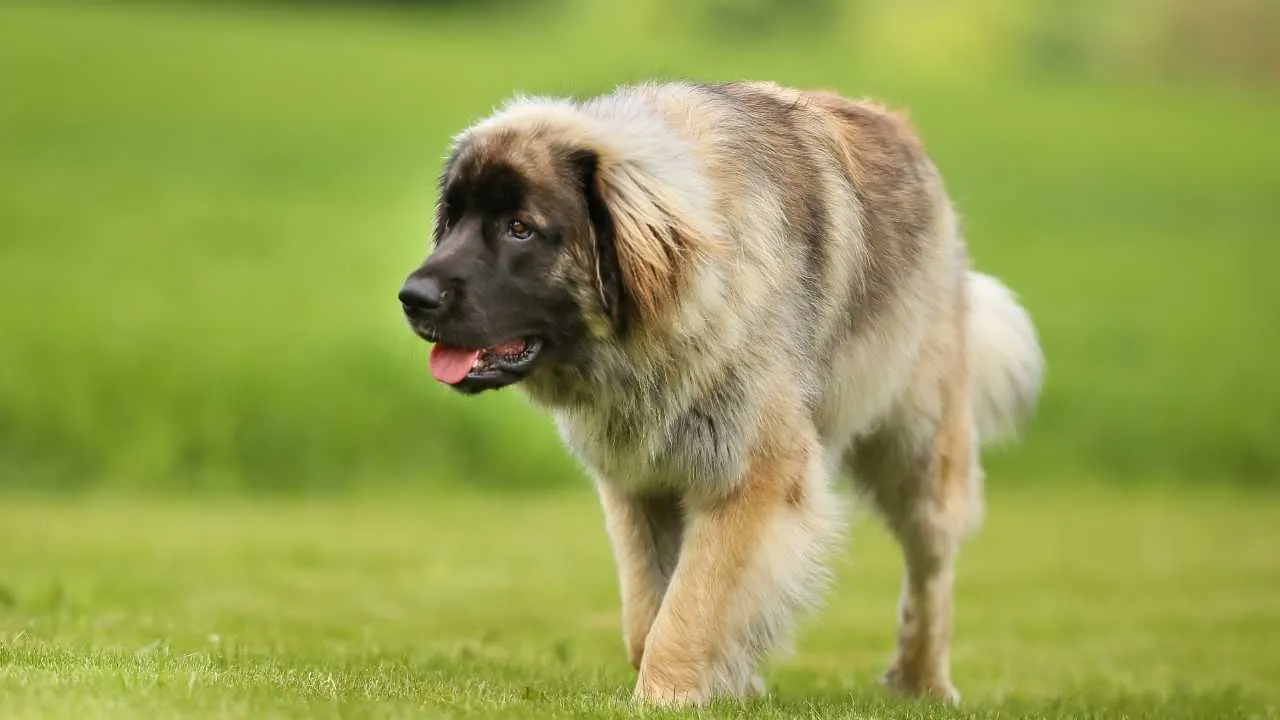
Originating from Germany, the Leonberger was created to combine power, elegance, and a gentle temperament. Despite its massive build, it is soft-natured, patient, and deeply bonded with its family.
It is often called a “gentle giant” because of its peaceful behavior and loving personality. Historically, it was even admired by European royalty for its friendly and majestic presence.
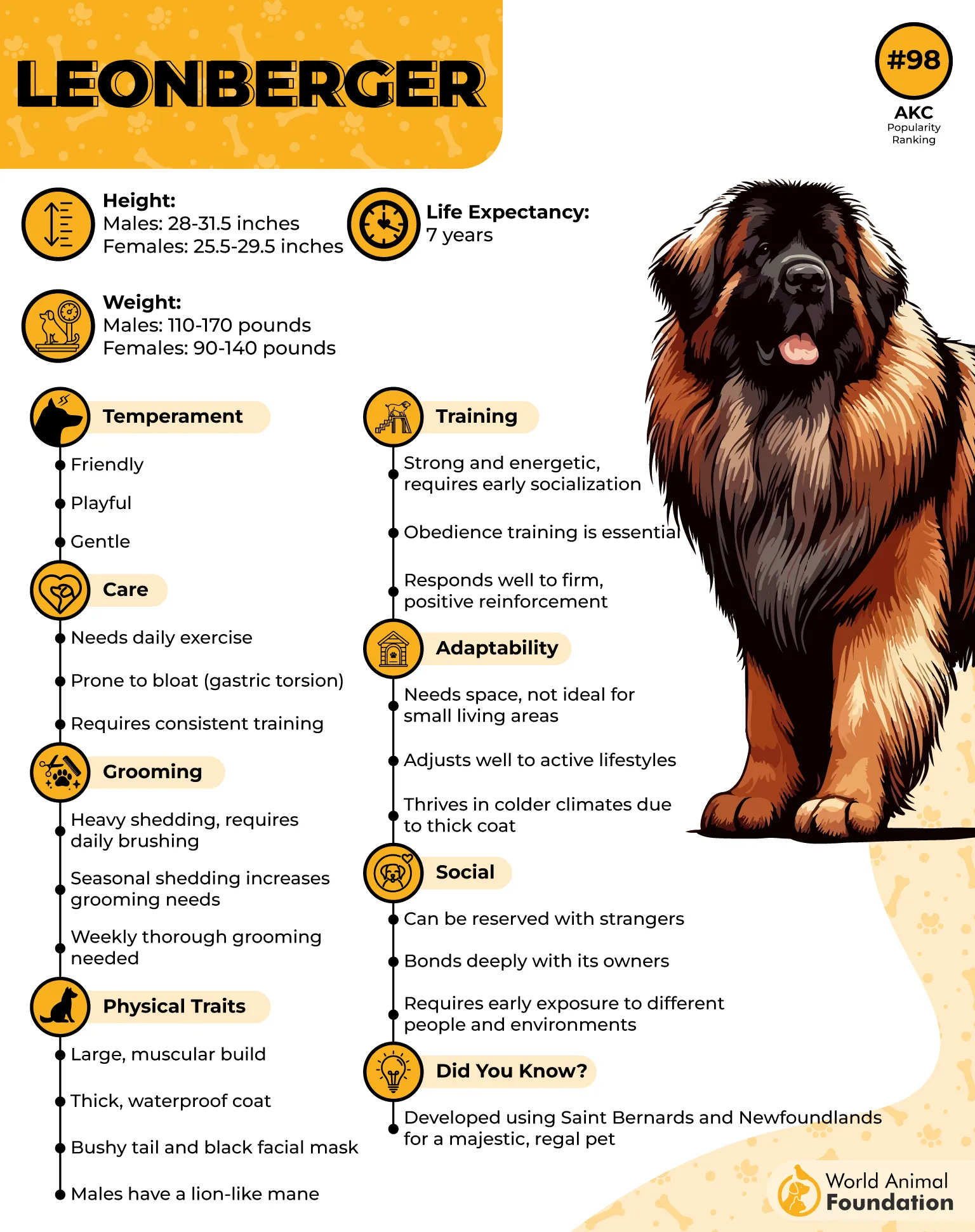
Leonbergers are calm, intelligent, and affectionate dogs. They are very affectionate with their families and gentle with children when properly socialized.
They enjoy being involved in daily home life and do not like being left alone for long. Even though they are relaxed indoors, they still enjoy playtime and outdoor activities with their pet parents.
Key traits of the Leonberger
Thick double coat that needs regular grooming
Lion-like mane around the neck in males
Gentle, family-friendly, and calm demeanor
Intelligent and responsive to training
Incredibly loyal and emotionally attached
Active outdoors but calm indoors
Needs companionship and dislikes isolation
Leonbergers need early socialization and training due to their size and strength. They learn best with consistent, positive methods and benefit from obedience classes.
Daily exercise, like walking, hiking, swimming, or light training activities, keeps them healthy and happy. They also enjoy having tasks since they are naturally working dogs.
2. Tibetan Matiff

This ancient breed from Tibet has a calm and composed nature at home, yet becomes highly alert and protective when it senses danger.
It is deeply devoted to its family but naturally aloof and cautious with strangers. With its massive frame, thick coat, and serious expression, it carries an almost royal and intimidating presence, yet remains gentle and calm with loved ones.
Tibetan Mastiffs are intelligent, independent, and strong-willed dogs. They learn quickly but prefer making their own decisions, which can make training a challenge. They are not highly food-driven and may ignore commands if they do not fully trust their handler.
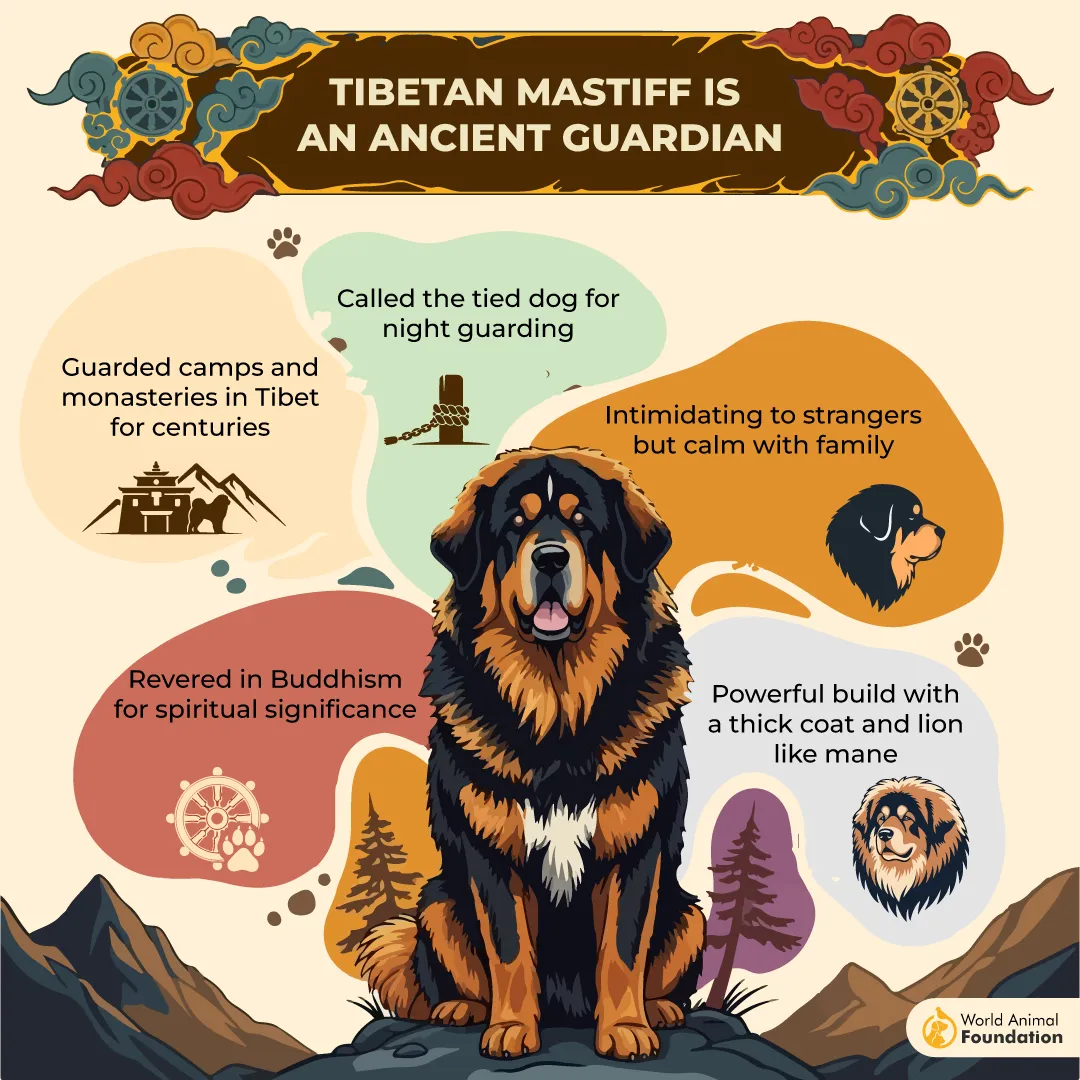
While they can perform well in training environments, they may not always follow commands at home, especially without strong consistency and trust.
Key traits of the Tibetan Mastiff
Powerful guardian instincts with strong territorial behavior
Highly loyal but naturally aloof with strangers
Intelligent, independent, and strong-willed personality
Thick double coat with heavy seasonal shedding
Generally calm indoors but active outdoors
Tends to bark more at night due to guarding instincts
May show dominance toward unfamiliar dogs
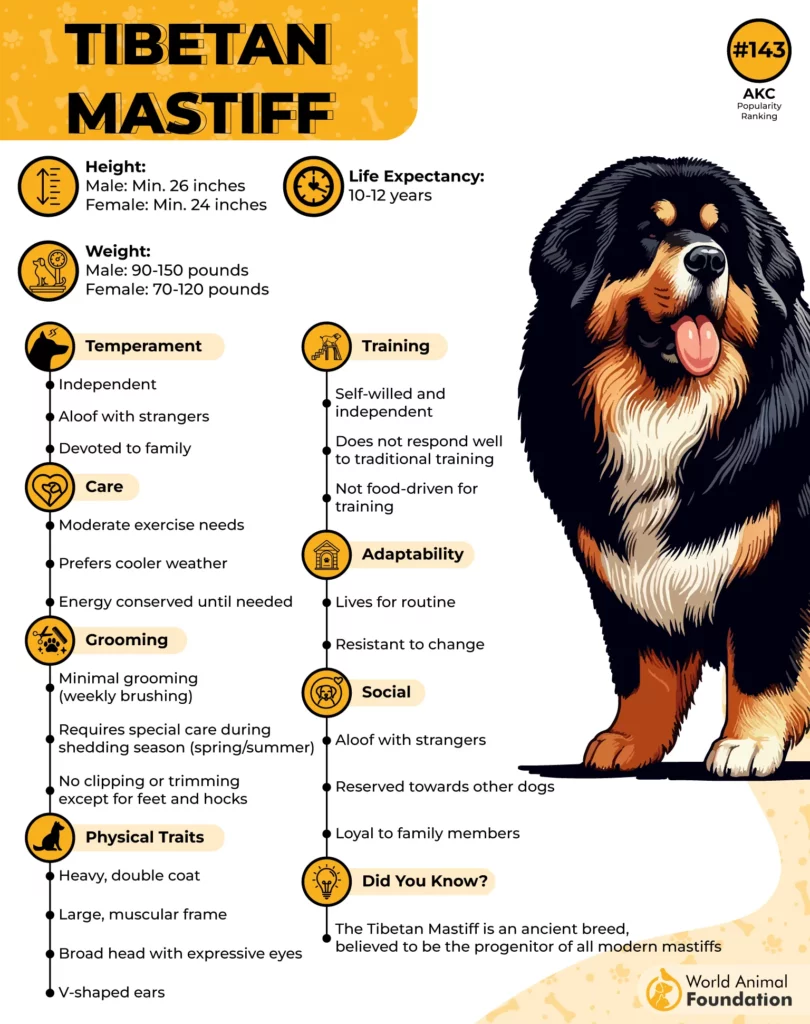
These breeds need early socialization and careful handling from experienced dog owners. They must be exposed to different people, animals, and environments at a young age to avoid overly defensive behavior.
They do best in secure, spacious homes with fenced areas, as they may wander if left uncontained. While they are generally calm inside the home, they need regular outdoor activity and mental stimulation to stay balanced.
3. Newfoundland
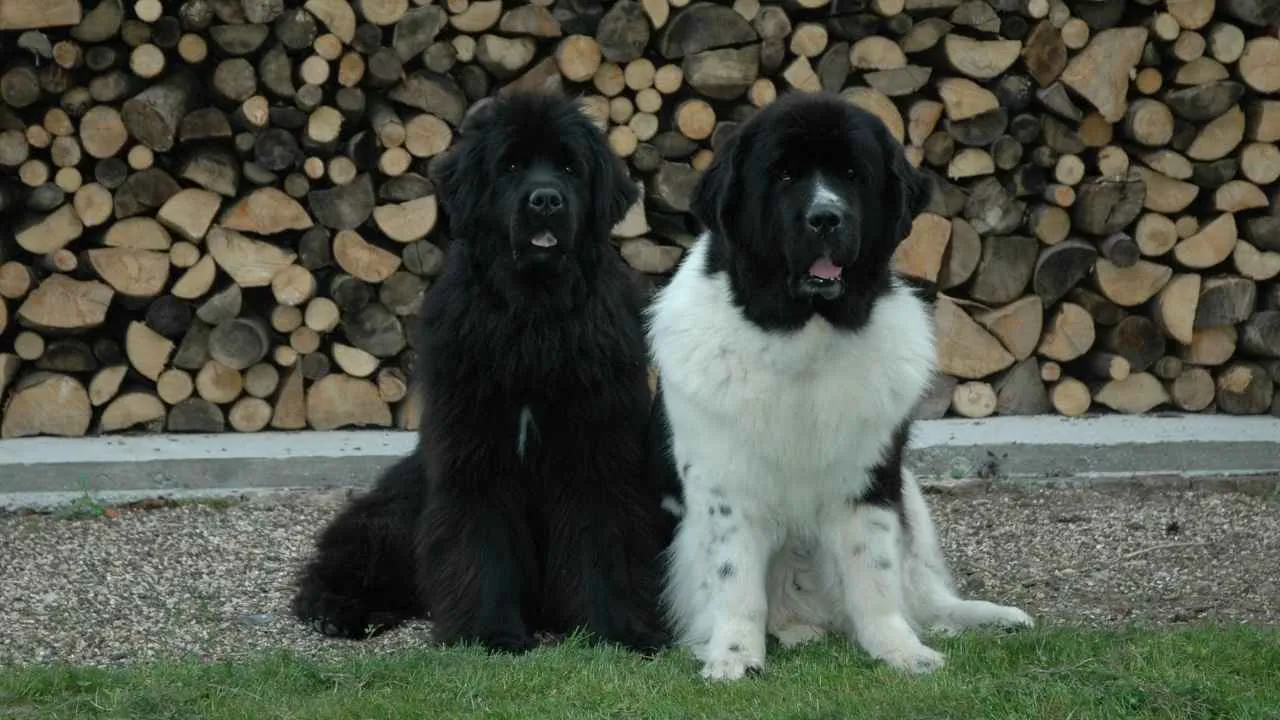
The Newfoundland is one of the most awe-inspiring giant dog breeds known for unmatched loyalty and an incredibly gentle nature. Despite its massive, powerful build, this breed is famous for its calm, sweet temperament and deep devotion to people.
Often called a “nanny dog,” it is especially trusted around children because of its patient and protective nature, according to Britannica. With its soft, soulful expression and dignified presence, the Newfoundland is both strong and deeply affectionate, making it a true family pet.
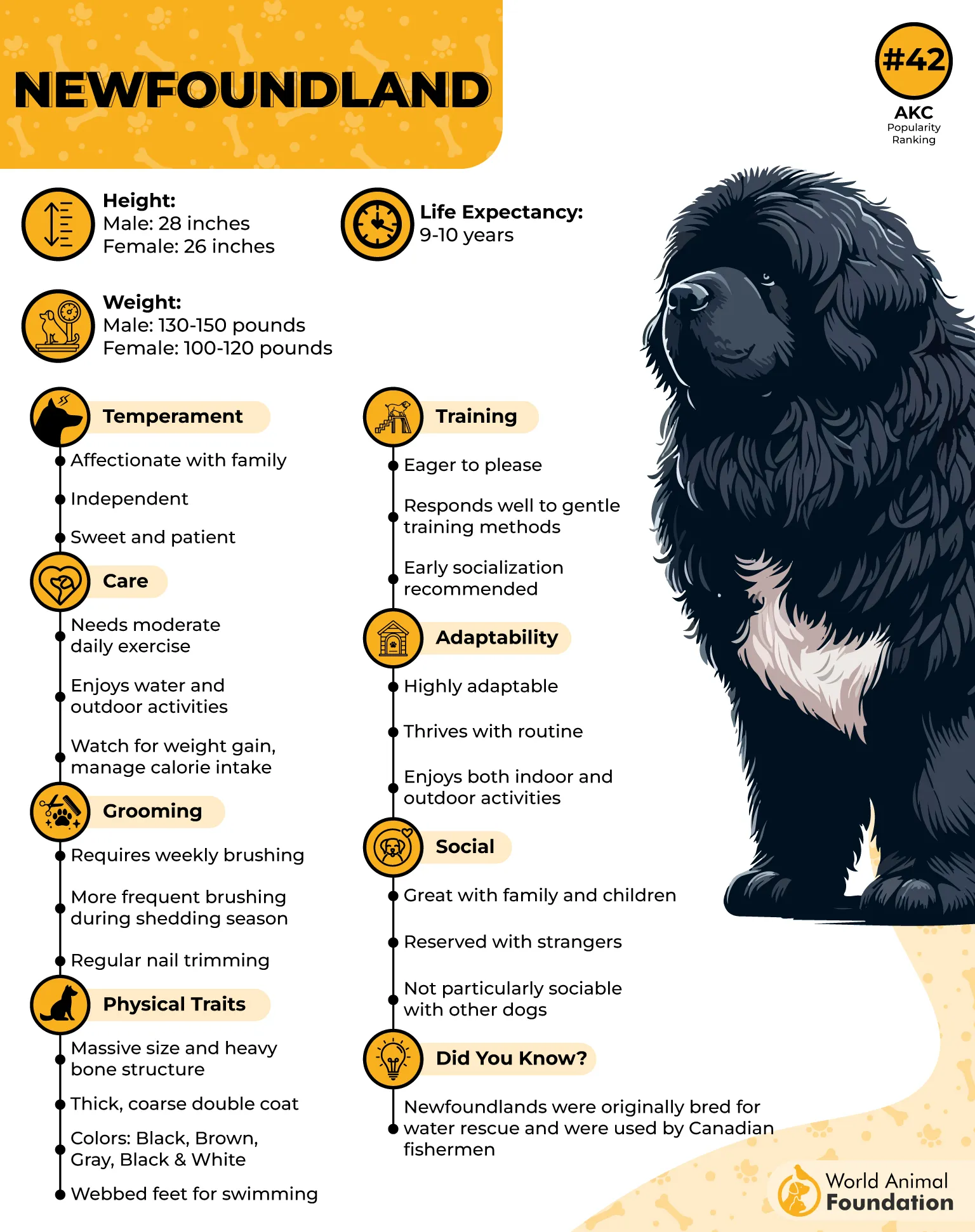
Newfoundlands are intelligent, friendly, and naturally easygoing dogs. They are known for being gentle with children and welcoming toward strangers when properly socialized. They enjoy human companionship and do not like being left alone for long periods.
Puppies are curious, outgoing, and eager to learn, which makes early training and socialization very important for balanced behavior. They respond best to kind, gentle guidance rather than harsh correction.
Key traits of Newfoundland
Extremely gentle and patient “nanny dog” temperament
Strong, heavy-boned working dog with calm confidence
Deep loyalty and strong attachment to family
Friendly with children and usually good with strangers
Intelligent and easy to train with positive methods
Enjoys outdoor activities like walking, hiking, and swimming
Requires early socialization and consistent training
Newfoundlands are versatile working dogs that perform well both on land and in water. They need regular daily exercise, such as walking or swimming, to stay healthy.
They also enjoy activities like cart-pulling, drafting, agility, and obedience work. However, they are equally happy relaxing indoors with their family, as long as they are included in daily life.
4. Saint Bernard
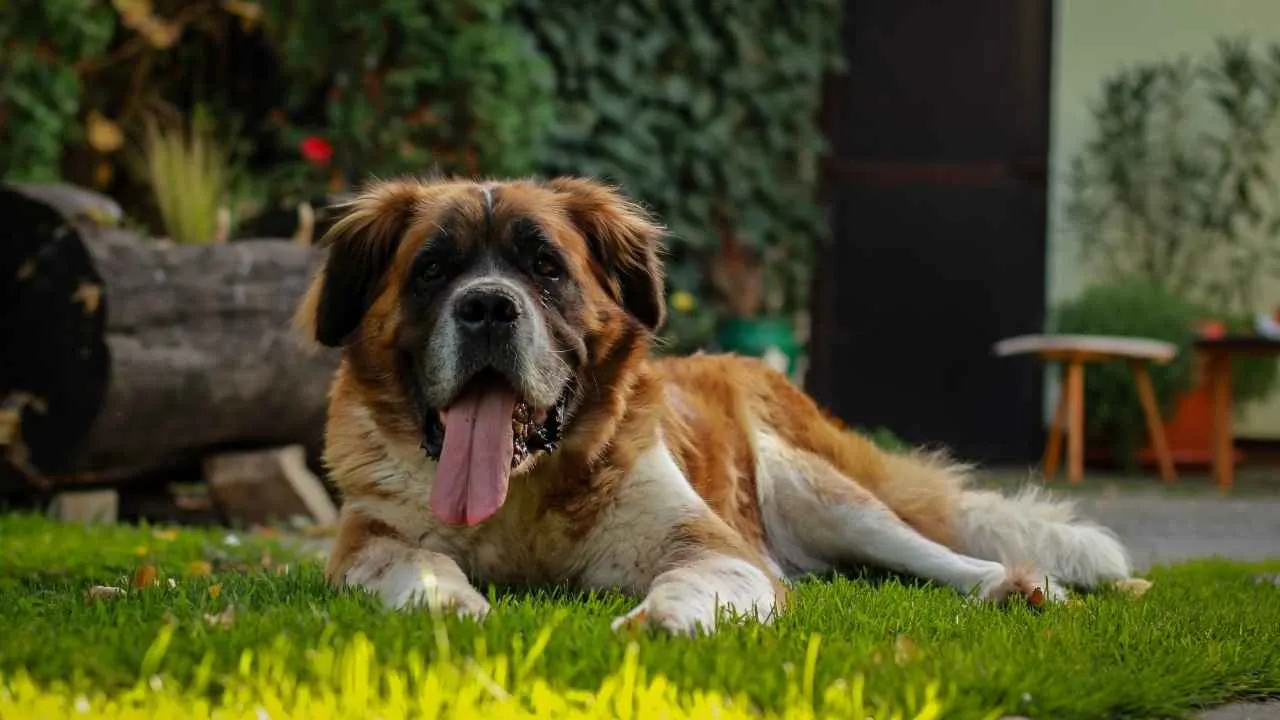
Originating from the Swiss Alps, this massive yet gentle dog is known for its calm temperament, patience, and strong bond with people.
Despite its powerful build, it is famously friendly and trustworthy, especially around children. With its warm expression and steady presence, the Saint Bernard has long been seen as a symbol of rescue, protection, and devotion.
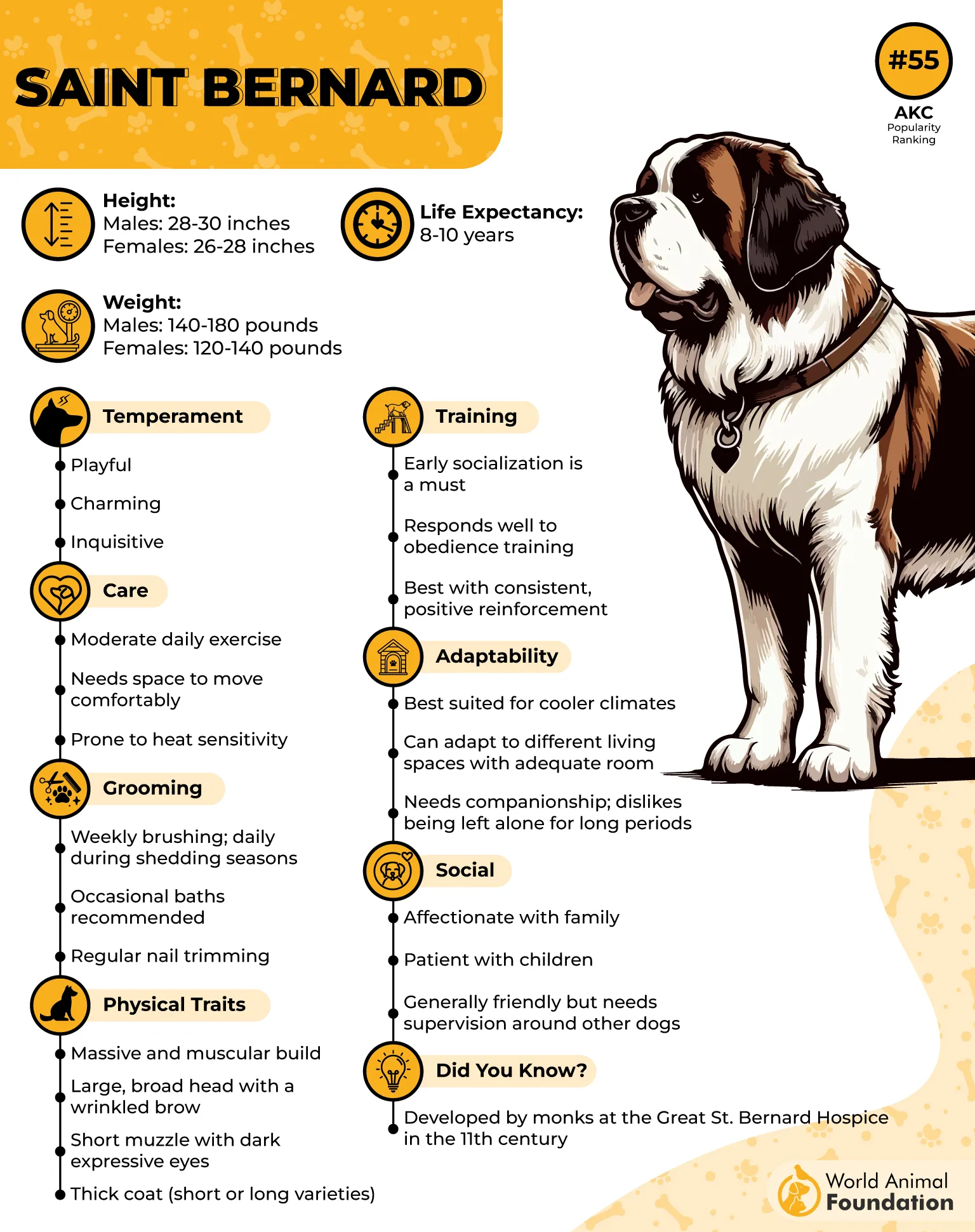
Saint Bernards are loving, patient, and naturally gentle dogs. They are highly social and enjoy being involved in family life, often following their owners around the home.
They are friendly with strangers but will step into a protective role if they sense danger. Puppies are eager to please but can be strong-willed at times, so early training is important. They respond well to clear, consistent, and gentle guidance.
Key traits of Saint Bernard
Extremely powerful yet calm and gentle temperament
Deep loyalty and strong family attachment
Naturally friendly, especially with children
Intelligent and eager to please during training
A social dog that dislikes being left alone
Moderate exercise needs compared to other large breeds
Can be stubborn at times, so early training is essential
Saint Bernards need early socialization and obedience training due to their size and strength. Training helps prevent unwanted behaviors like jumping or pulling.
They do not require intense exercise, but daily walks or light play are enough to keep them healthy. They also enjoy outdoor activities like hiking and cart-pulling, especially when done with their family.
5. Scottish Deerhound
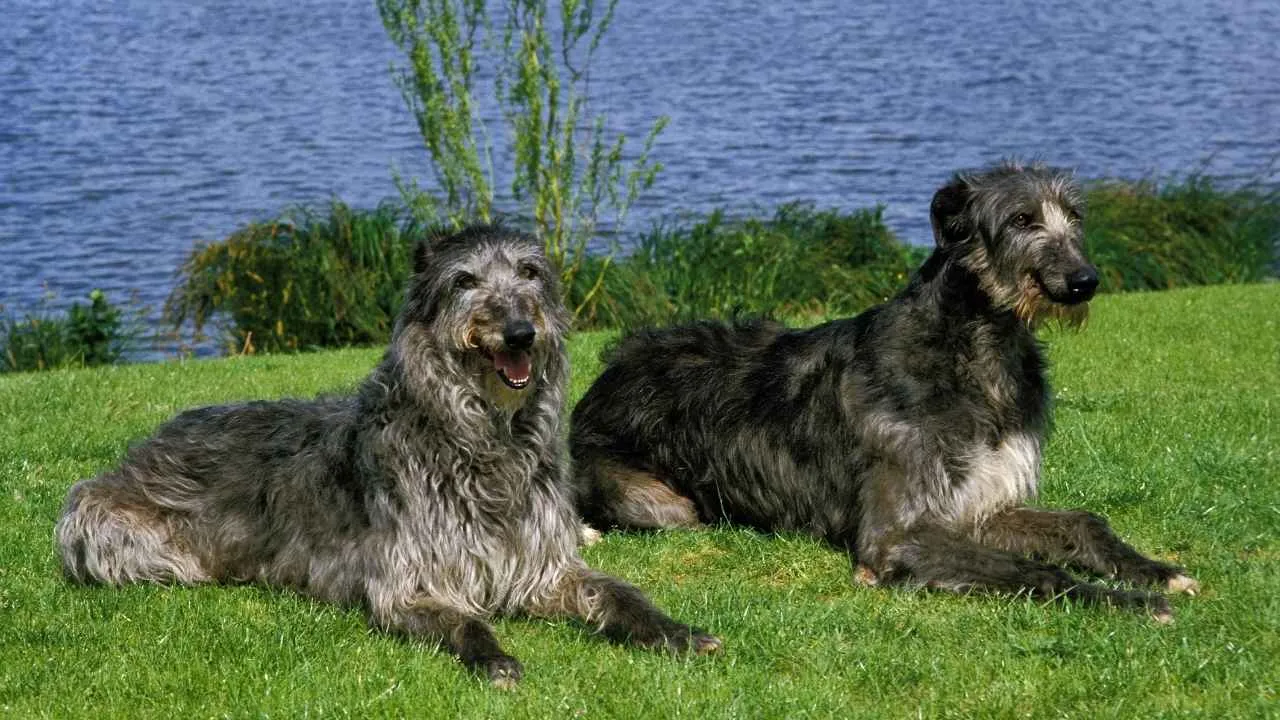
The Scottish Deerhound is admired for its unmatched loyalty and quiet dignity. Known as the “Royal Dog of Scotland,” according to the AKC, this ancient sight hound carries a graceful yet powerful presence.
It was originally bred to hunt large red deer across the Scottish Highlands, and even today it reflects that heritage through its elegance, speed, and calm confidence. Despite its size, it is gentle, soft-natured, and deeply devoted to its family.
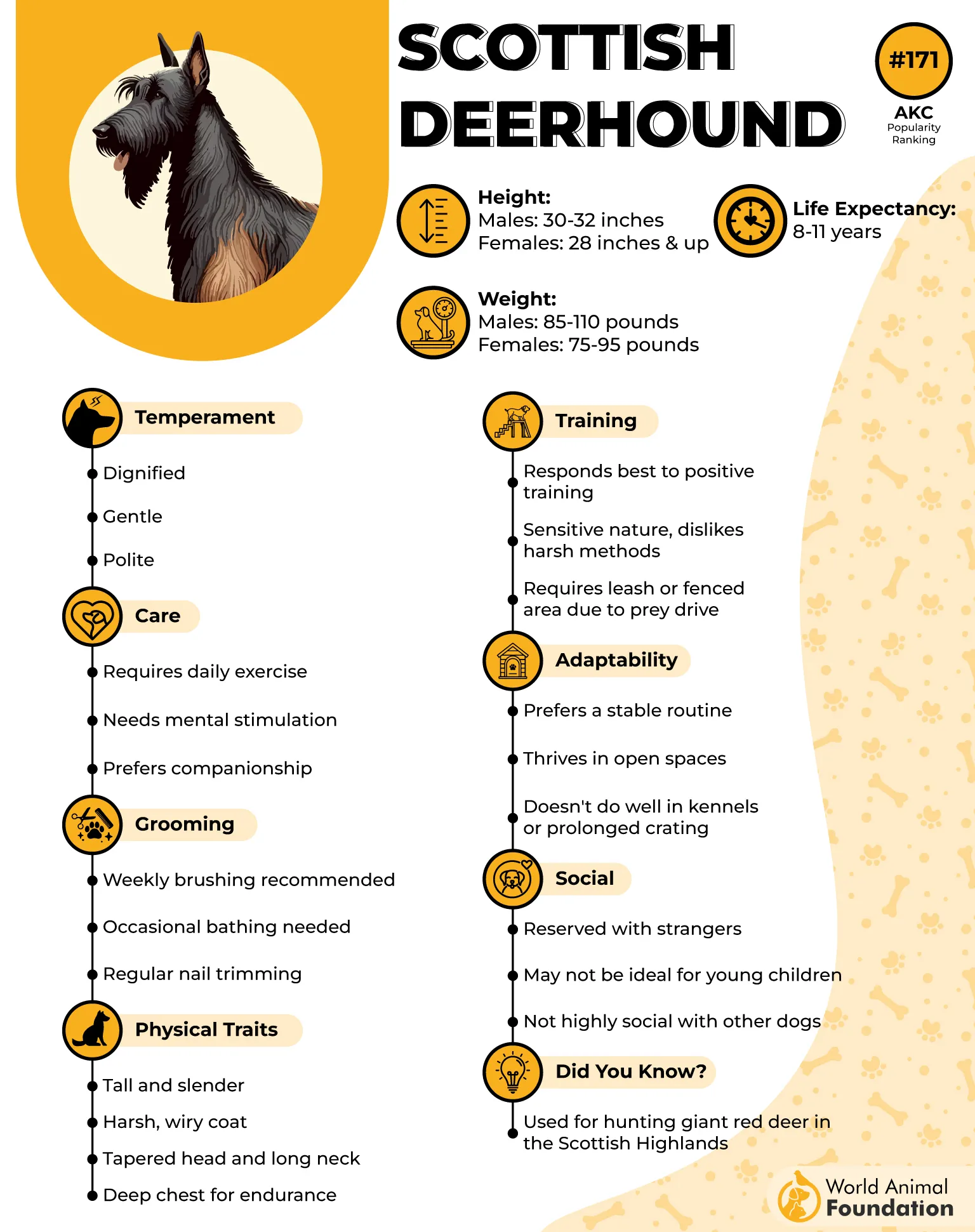
Scottish Deerhounds are calm, sensitive, and easygoing dogs. They are affectionate with their families but not overly demanding, often spending much of their time resting peacefully indoors.
They are friendly but reserved with strangers and are not suited to guarding roles. Puppies are active and strong, so early training and socialization are important. However, they respond best to gentle, patient guidance rather than strict correction.
Key traits of the Scottish Deerhound
Calm, gentle, and dignified temperament
Strong hunting instinct and high prey drive
Loyal but slightly independent personality
Sensitive and responds best to positive training
Enjoys running and daily physical exercise
Low-energy indoors, often enjoys long rest periods
Friendly but not overly social with strangers
This breed needs daily exercise, including long walks and open space where it can run freely. It thrives in environments where it can stretch its legs, as it was bred for fast, open-field chasing.
However, it should always be kept on a leash or in a secure area due to its strong instinct to chase moving animals. Training requires patience, as Deerhounds are intelligent but independent thinkers.
6. Great Pyrenees
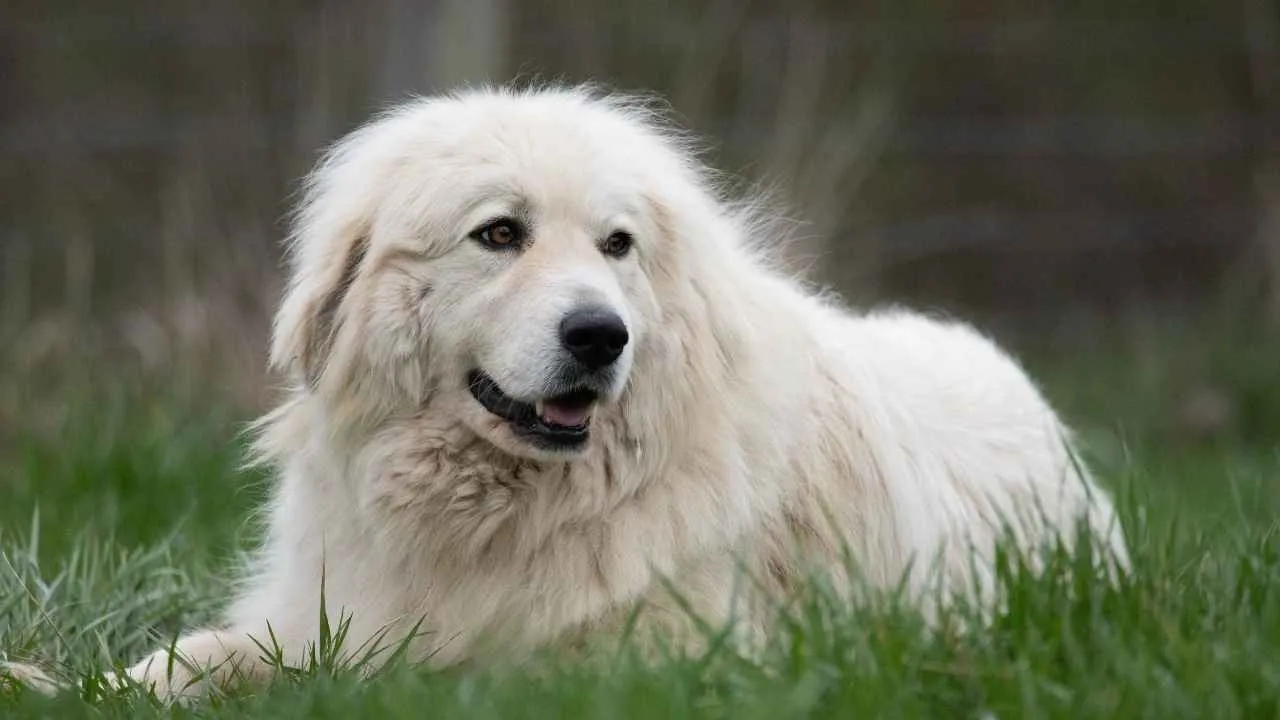
Originating from the Pyrenees Mountains between France and Spain, this powerful working dog was bred to guard livestock in harsh, snowy conditions.
Despite its size and strength, it is gentle, patient, and deeply devoted to its family. Its quiet confidence and watchful nature make it a natural guardian, always alert but never unnecessarily aggressive.
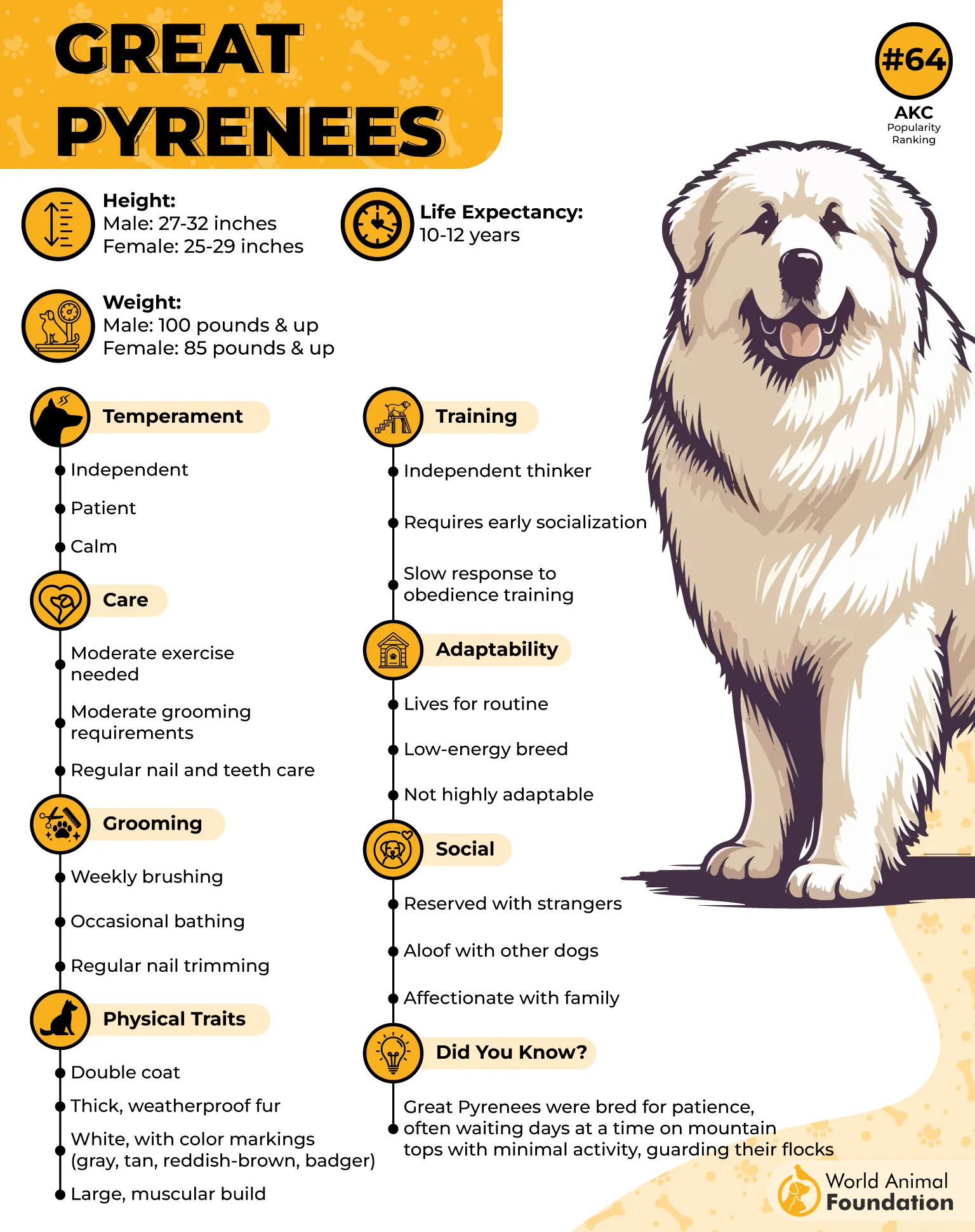
Great Pyrenees dogs are calm, independent, and highly intelligent. They are naturally protective and tend to watch over their home with quiet awareness. While they are affectionate with family, they are not overly demanding and enjoy their alone time.
They are gentle with children when properly socialized, but supervision is important due to their large size. Puppies need early exposure to people and environments to grow into well-balanced adults.
Key traits of the Great Pyrenees
Calm, gentle, and highly protective temperament
Strong independent thinking and decision-making ability
Deep loyalty to family and natural guarding instincts
Low to moderate energy levels in daily life
Thick, weather-resistant coat suited for harsh climates
Alert and vocal, often barking to warn of strangers
Needs space and dislikes feeling confined
This breed does not require intense exercise but benefits from daily walks and light outdoor activity. It was bred to patrol large mountain areas, so it enjoys roaming and observing its surroundings.
A secure fenced space is important because it may wander if given the chance. Activities like walking, hiking, and cart-pulling help keep it mentally and physically engaged.
7. Irish Wolfhound
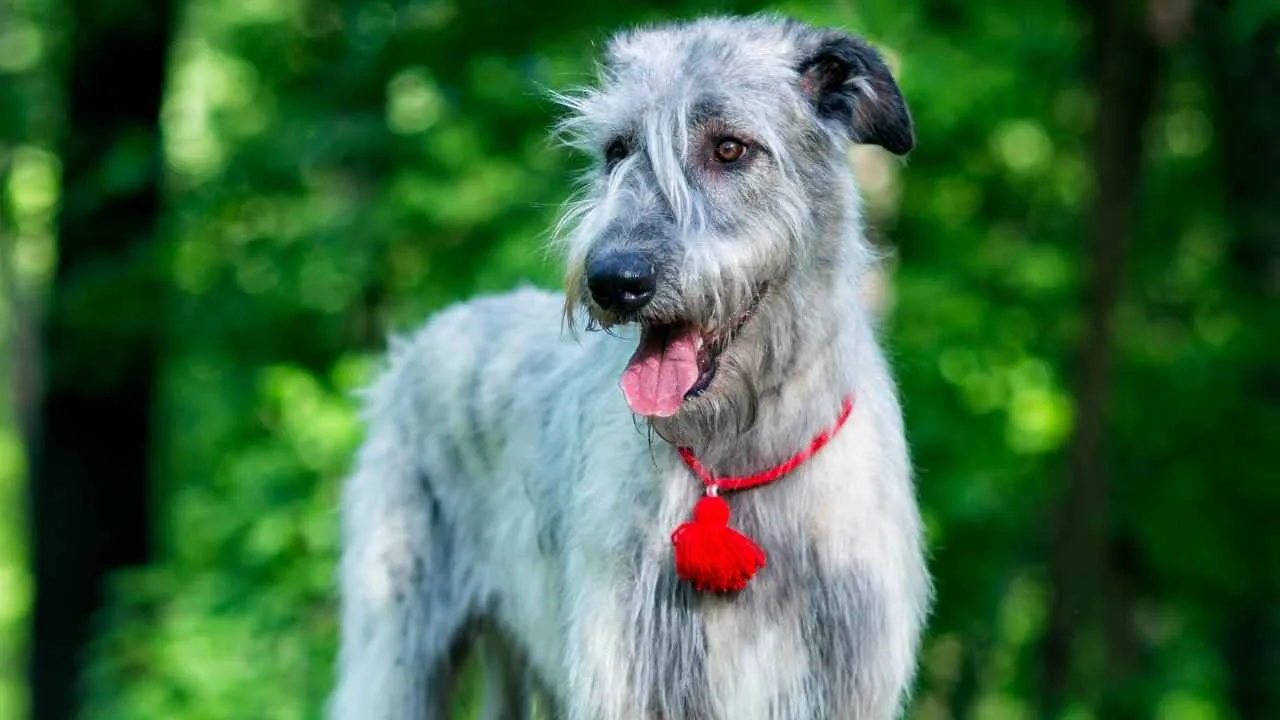
Once a fearless hunter of wolves in ancient Ireland, the Irish Wolfhound is best known as a peaceful, affectionate companion.
Despite its enormous size and powerful build, this breed is incredibly calm, friendly, and emotionally sensitive. It carries a noble presence that feels both majestic and comforting at the same time.
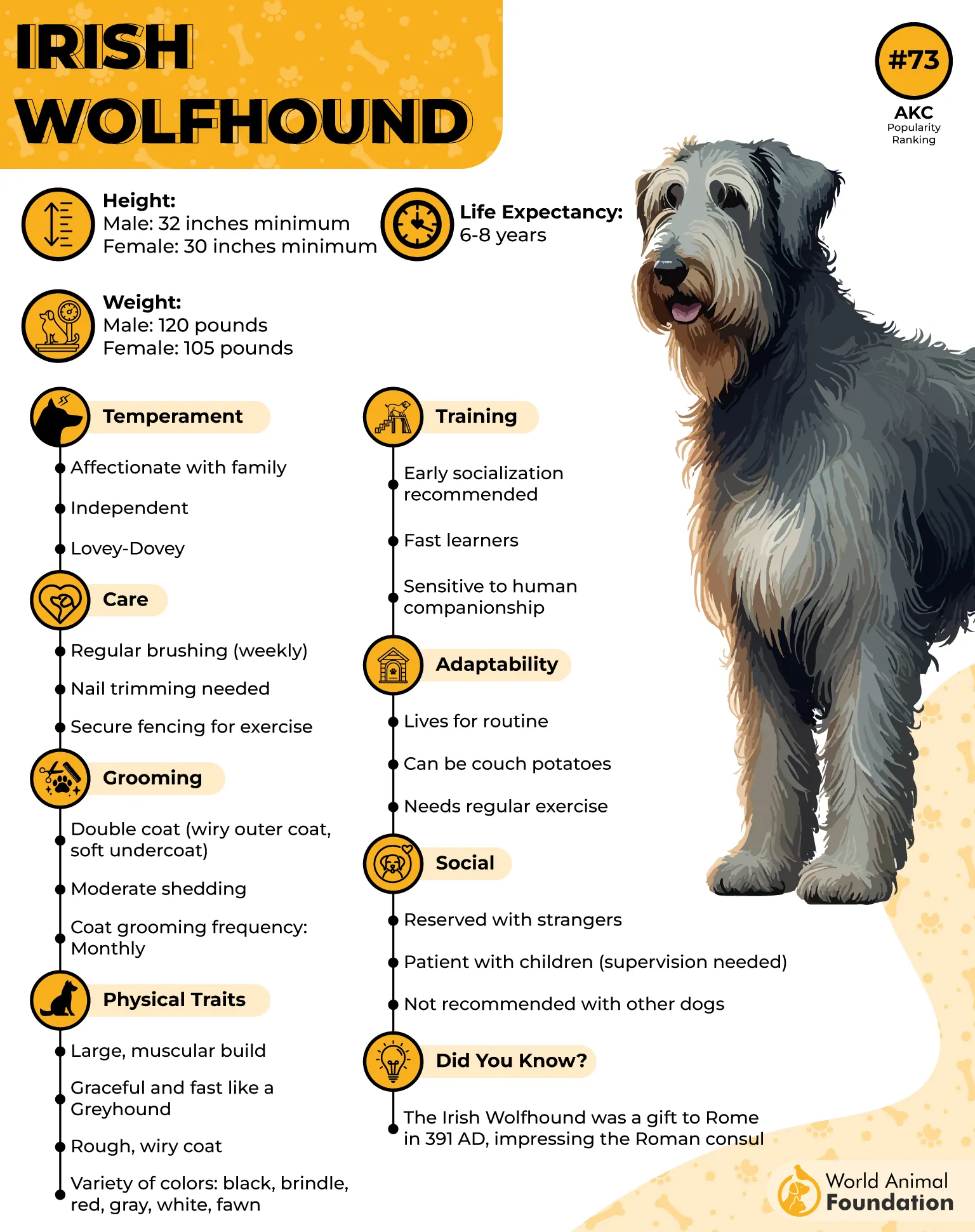
Irish Wolfhounds are gentle, easygoing, and incredibly devoted companions. PetMD says that they are affectionate with most people and usually very patient with children when properly socialized. They are calm indoors but need regular movement and space to stay healthy.
Puppies grow for a long time and can be playful and clumsy, so early training and supervision are important. They are intelligent and learn quickly, especially with positive and kind training methods.
Key traits of the Irish Wolfhound
Calm, dignified, and gentle giant temperament
Deeply affectionate and people-oriented
Strong hunting instinct and prey drive
Highly sensitive and responds best to positive training
Friendly with children and generally good with dogs
Low barking tendency but alert when needed
Moderate grooming needs with a wiry coat
This breed needs daily exercise such as long walks or open-area play. It enjoys running and benefits from secure fenced spaces due to its strong instinct to chase moving animals.
While it can become relaxed indoors, it still requires consistent physical and mental activity to avoid boredom or weight gain. Activities like tracking, agility, and on-leash walks help keep it balanced.
Conclusion
Giant dog breeds are truly a mix of strength, loyalty, and gentle companionship. From calm guardians to affectionate family dogs, each breed carries its own history, purpose, and personality, but they all share one thing in common—an unmatched bond with their human families.
If you’re considering bringing one of these awe-inspiring companions into your life, remember that they need space, training, patience, and above all, time with their family.
In return, they offer a kind of loyalty that feels deeply personal and lasting. Choosing a giant breed isn’t just about owning a big dog—it’s about welcoming a steady, loving presence that quietly becomes part of your everyday life.
Looking for more popular giant breeds? You can also check out the Bernese Mountain Dog, Great Dane, Neapolitan Mastiff, Italian Mastiff, Doberman Pinscher, Cane Corso, Anatolian Shepherd, Bullmastiff, and Alaskan Malamute.
