




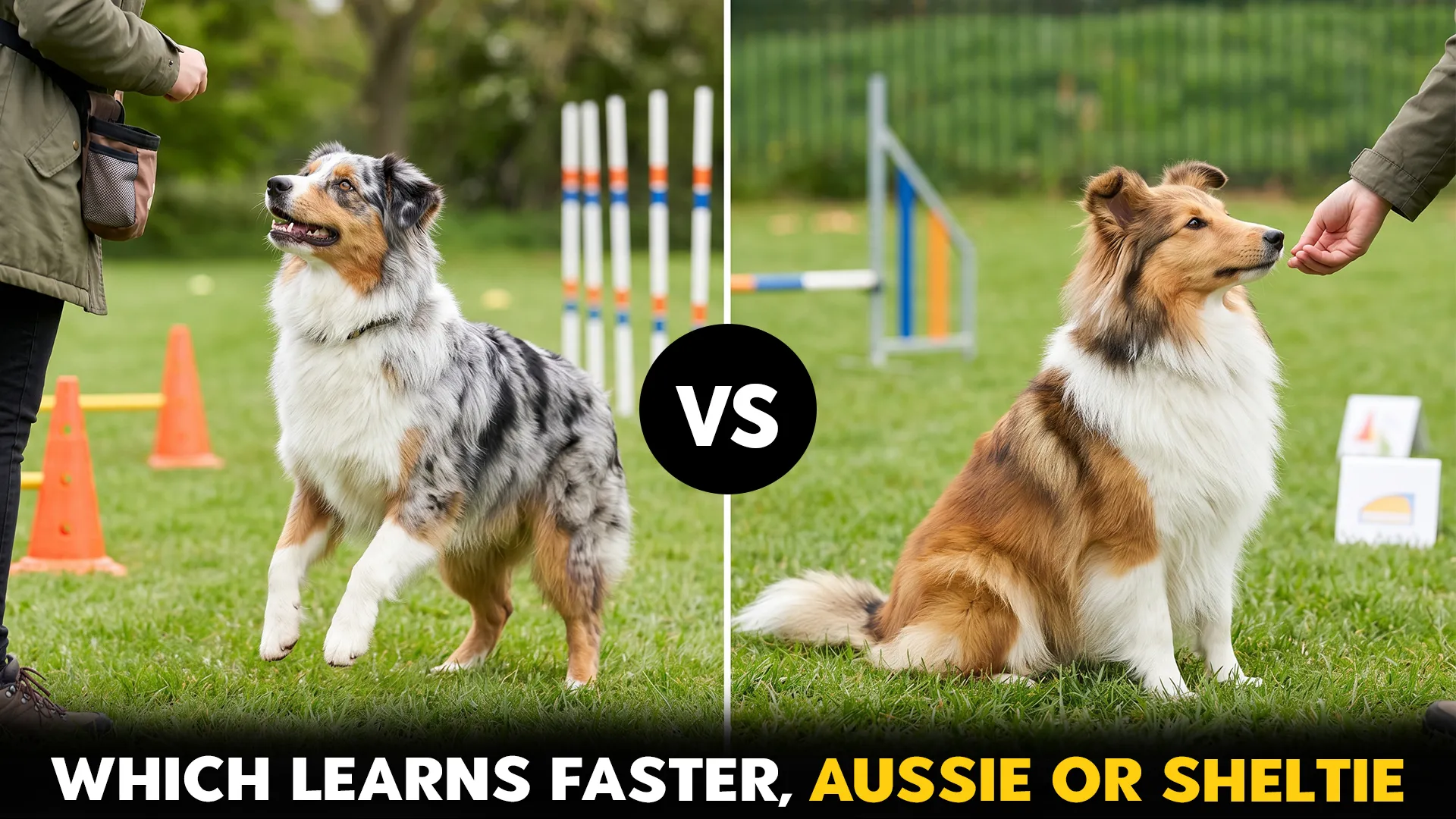
You are standing at the crossroads: do you go home with a blue-eyed, marble-coated Australian Shepherd or a fluffy, fox-faced Shetland Sheepdog? Both dogs look like they just walked off a movie set. Both are crazy smart. And both will absolutely outsmart you if you slack on training day.
As Roger Caras once said, “Dogs are not our whole life, but they make our life whole.” Whether you want a quiet companion who does nothing but watch outside the window while cuddling you, or a sportsman trapped in a dog’s costume, there is always a kind perfect for you.
The actual question is not which one learns faster: it is which one fits your life. Because training a dog is not just about the dog. It is about you, your schedule, your patience, and your couch space.
Let’s break it all down for you.
Australian Shepherd vs. Shetland Sheepdog: Which is Easier to Train?
Origins & Background
Both are intelligent and hardworking herding dogs, but each possesses a different origin and background story.
Australian Shepherd: This athletic dog was bred in the 19th century in the American West. The sheepdogs from Europe were brought to Australia and then imported to the U.S. with the Basque shepherds. Since they were perfect in California, they are misnomers.
American ranchers bred them to handle both sheep and cattle on the rough terrain. They got famous after World War II when they appeared in famous movies and TV shows.
Shetland Sheepdog: Originally bred in Scotland after crossing the local island dogs with rough Collies and small herding breeds. They were known as “Toonie dogs” (toon: farm) initially and were refined in the 20th century.
Their primary goal was to herd sheep, poultry, and ponies. Their American version is quite taller and is heavily coated compared to its English counterpart.
Size & Physical Build
The primary difference between the two is that the Australian Shepherd is a medium-sized working dog breed, while the Shetland Sheepdog is a small-to-medium herding breed.
Australian Shepherd: Males stand 20-23 inches tall, and the females are 18-21 inches (40-65 pounds), according to the AKC. Their multicolored weather-resistant coat is of medium length and can be either straight or curly. The coat color ranges from black, red, blue merle, and red merle.
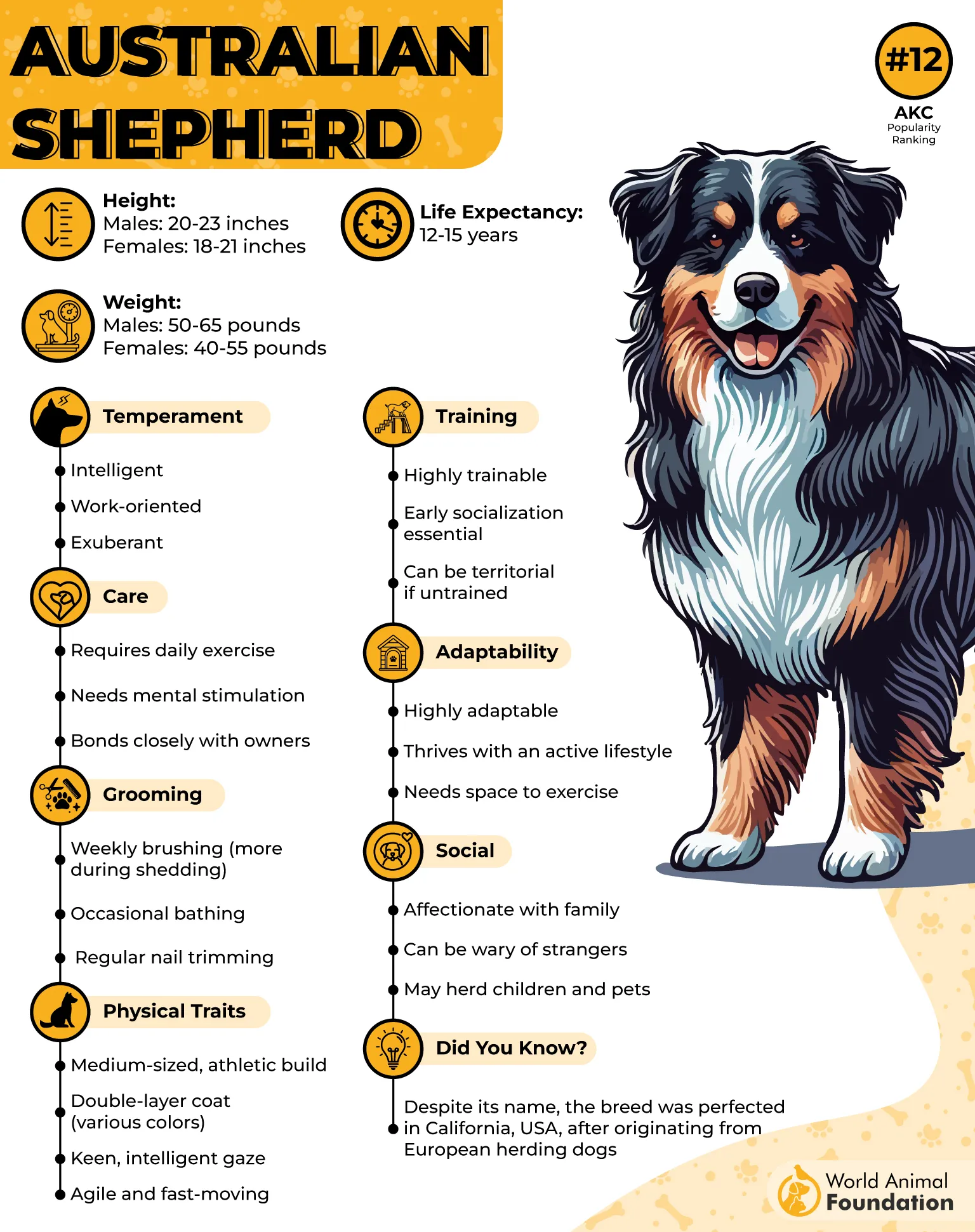
They have triangular ears and colored eyes (brown, amber, blue, or mixed colors). They have a short bobtail. These dogs reach full physical maturity between the ages of 16 months and 2 years. They have a muscular frame and long legs.
Shetland Sheepdog: This breed has a resemblance to the miniature Rough Collie. They typically stand 13-16 inches and weigh around 15-25 pounds. They have comparatively longer hair, and the thick, double coat consists of sable, black, and blue merle colors. The outer coat is dense, while the inner coat is short and soft.
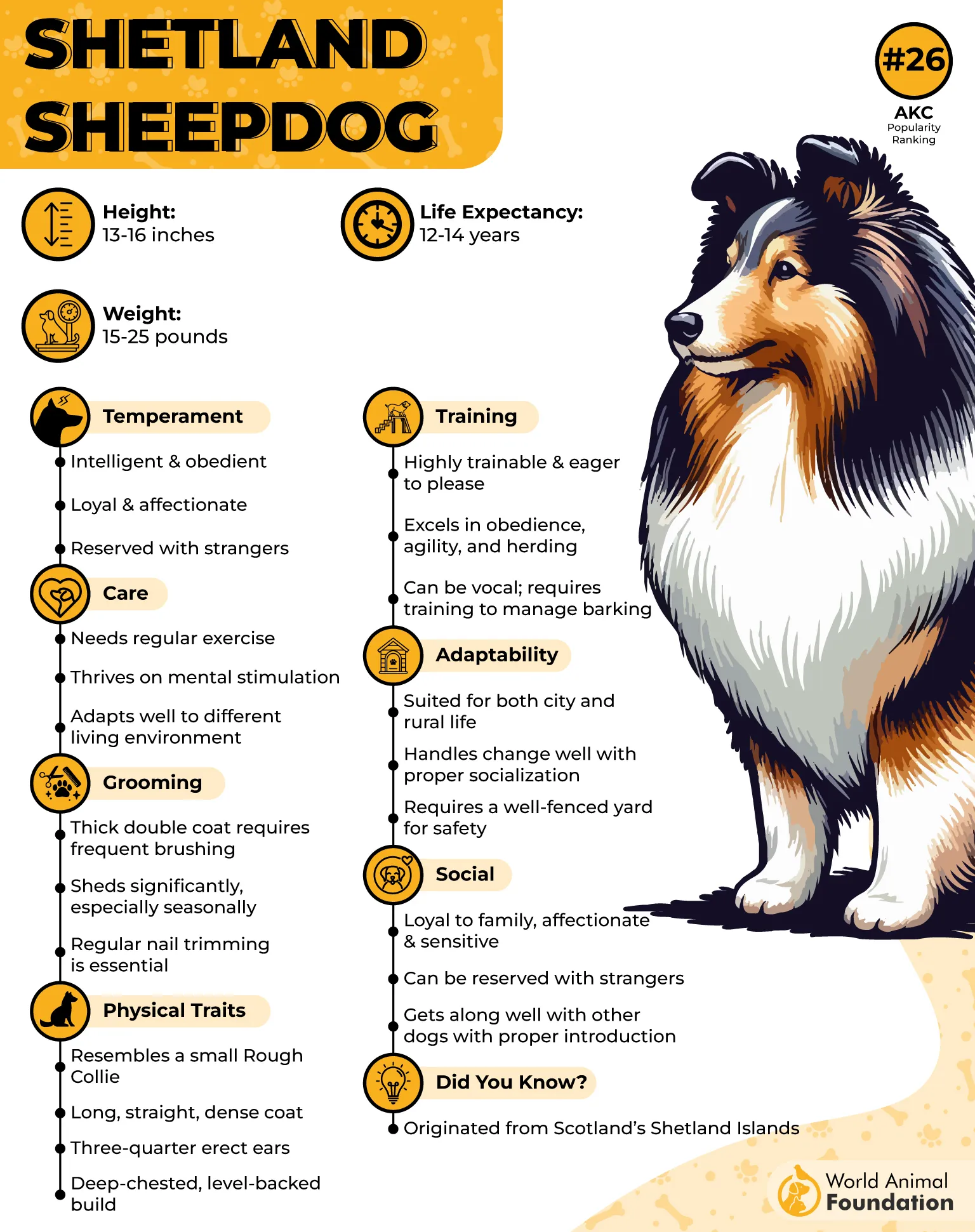
They have a blunt wedge-shaped head, small ears placed high on the head, and a slightly upward curved tail. Their distinctive feature is the abundant mane and frills, which are more prominent in males. The body is longer, has a level back, muscular shoulders, and a deep chest.
Grooming & Coat
Both breeds have dense double coats with regular grooming needs and daily brushing during shedding season. Neither should be shaved.
Australian Shepherd: Their double coat consists of an outer coat to repel water and dust and an inner coat for thermal regulation. It is mostly fur that is either straight or curly. It has different colors and may have some tan markings. Since it consists of fur, the coat sheds heavily, especially in summer and spring.
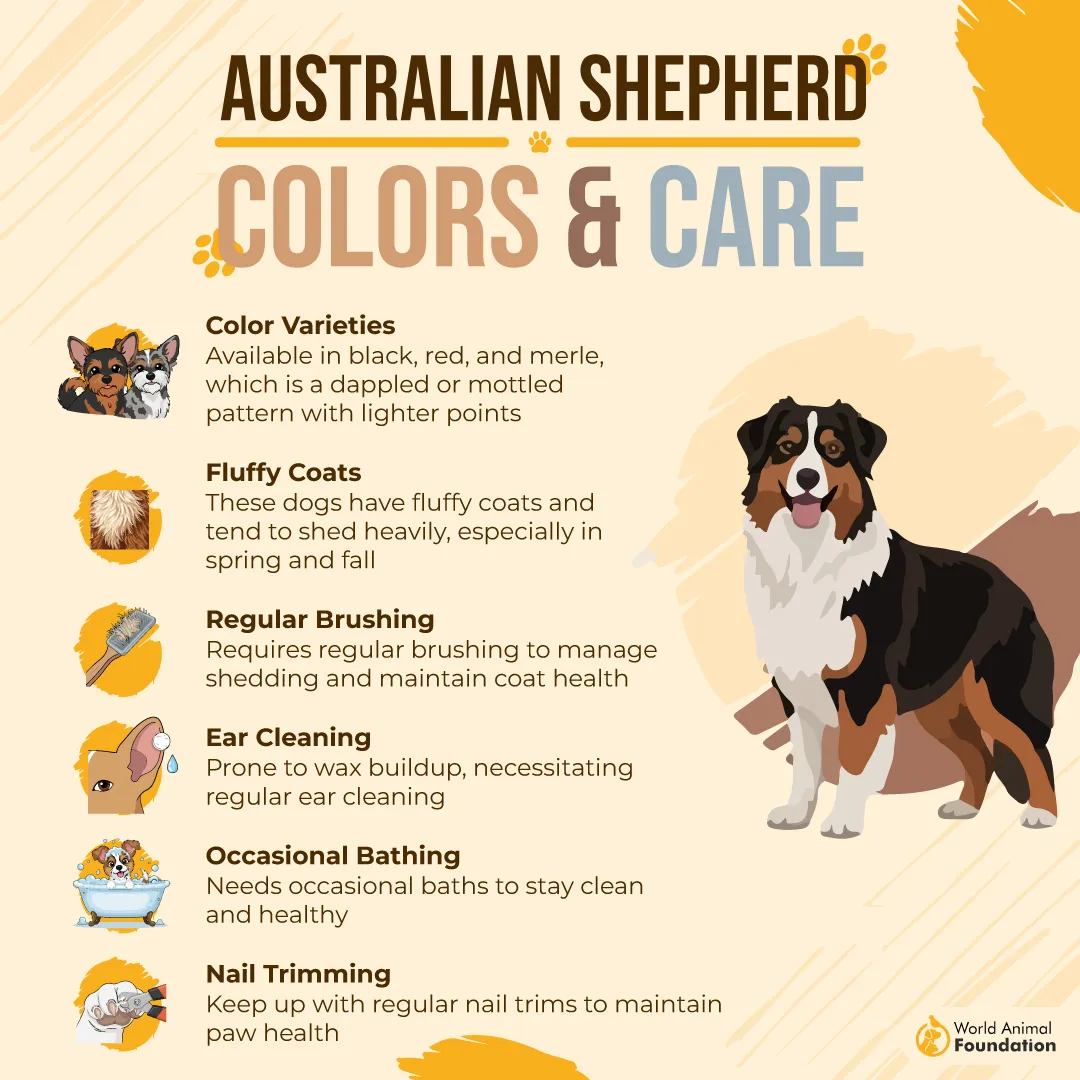
They need weekly brushing and daily during shedding seasons. Occasional baths are recommended after 4-8 weeks. Trim hair around the tail, ears, paw pads, and hocks. Use a slicker brush or an undercoat rake for effective results.
Shetland Sheepdog: They have a longer, harsh, and straight outer coat and a shorter, furry undercoat. The coat moderately sheds all around the year and blows during shedding seasons. They need regular weekly brushing and daily brushing during the summer and spring.
Use a “line brushing” technique with a slicker brush or a pin brush to brush the undercoat. Bathe them occasionally (2-3 times a month). Regular eye and ear check-ups to prevent infection. Trim the hair between the paws and cut the nails monthly.
Temperament & Personality
Both breeds are vocal and highly affectionate dogs that remain aloof with strangers. Being loyal family pets, they are protective of their owners.
Australian Shepherd: These velcro dogs thrive on human companionship and mental stimulation. Despite being reserved with strangers, they are outgoing and love to engage in intense activities. They are extremely intelligent and can learn quickly. Being natural guardians, they bark to alert the family of a threat.
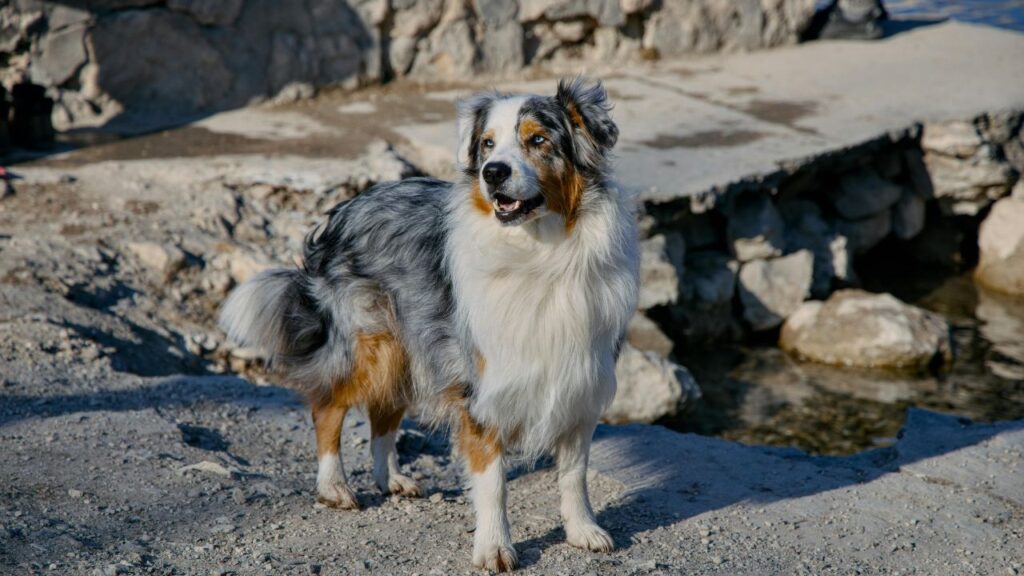
These high-energy dogs can develop separation anxiety if left alone for too long. They are an ideal match for active families who can provide large fenced yards rather than small apartments.
Shetland Sheepdog: They are playful, sensitive, and make strong bonds with the human family. They tend to follow the owner from room to room. They score one of the top positions in obedience learning as they are eager to please and smart. Like Aussies, they bark when they sense a potential threat.
Hill’s Pet writes that they can read the facial expressions and body language of the owner. Thus, they require a positive and gentle environment to avoid any mishap. They are adaptable and can even live in small apartments if exercised properly.
Intelligence & Trainability
Both breeds are exceptionally trainable and extremely smart. They excel in agility and obedience training. However, the Shetland Sheepdog can be trained by a beginner, while an Aussie is suggested to be trained by professionals.
Australian Shepherd: This is considered one of the highly trainable breeds because of its high intelligence and ability to learn complex tasks quickly. They have a strong working memory and are eager to have a job. Proper training sessions and socialization as a pup are strongly recommended.
They can be stubborn when bored or left alone for too long. Keep the training session brief (5-10 minutes). They can be a bit of trouble for the new handlers; thus, professional assistance is needed.
Shetland Sheepdog: Shelties tend to be emotionally attuned to the owner’s emotions and are among the most intelligent working breeds. They were bred exclusively to work closely with humans; thus, they remain calm and understand complex commands quickly. They can get verbal cues and changes in mood.
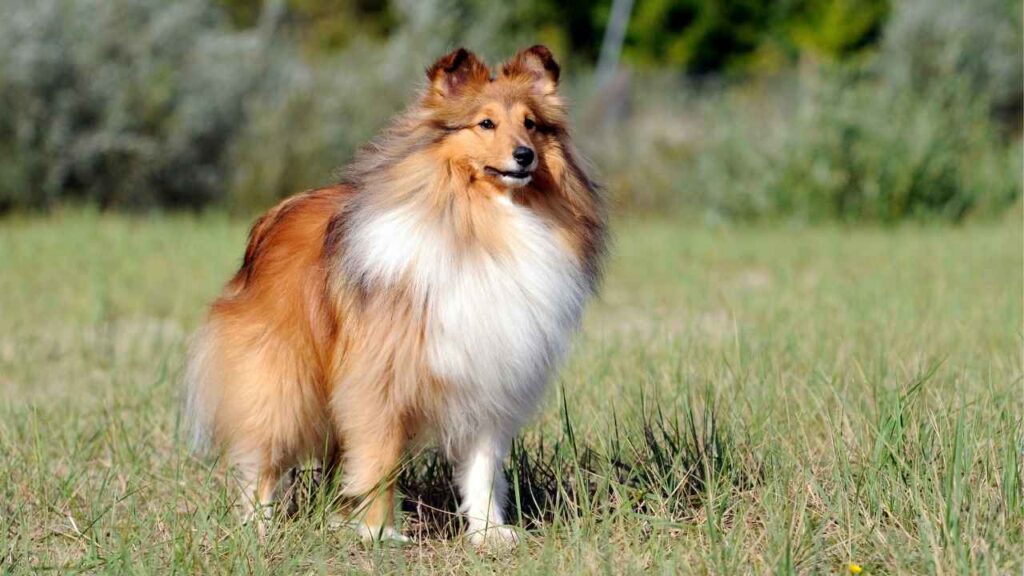
They respond best to gentle and positive reinforcement because of their sensitive nature. They are widely used in therapy and rescue operations. Because of their herding instincts, they are prone to chasing children, other dogs, and moving objects. Hence, early training is non-negotiable.
Energy Levels & Exercise Needs
Though both are intelligent and powerful, they have different stamina, intensity, and overall exercise requirements. Aussies require more intense exercise than Shetland sheepdogs.
Australian Shepherd: PetMD notes that they have high energy levels and require 1.5-2 hours of daily exercise. They can develop destructive behaviors such as excessive barking. Physical activities include long hikes, runs, daily walks, swimming, tug-of-war, and biking, etc.
They need mental stimulation as much as physical exercise. Otherwise, they will start herding kids and other pets. Puppies should not be exposed to intense activities, or they will develop joint-related health issues.
Shetland Sheepdog: Shelties require 1-1.5 hours of regular exercise. Recommended physical activities include jogging, flyball, agility, fetching, puzzle toys, and training lessons. They love to run in open spaces; however, if trained well, brisk walks in compact spaces are enough.
Puppies require controlled and short play sessions to avoid overexertion. Adults have high physical requirements, and 30 minutes of exercise is enough for seniors. They are heat sensitive, and intense outdoor activities must be avoided to prevent sunburn.
Herding Instinct & Behavior
Both breeds have a high urge to control herds that can often result in nipping and chasing. Aussies tend to herd cattle and sheep, acting as a physical driver. Shelties produce a high-pitched bark to gather the pack.
Australian Shepherd: They use their intense stare to control the movement and often chase moving objects as a part of their herding instinct. They nip at the heels of a stubborn animal to guide their movement.
They are bred to work closely with humans; thus, they do not tend to stay away from the owner. They can even nudge people to push them away with their noses. Give them proper leash training with gentle and positive behavior so they can behave in human society.
Shetland Sheepdog: Instead of sharp focus, they adopt a “loose eye” behavior so they can control a large herd and cover more area. They circle and bark to move the livestock. They can also nip at the heels to avoid straying animals.
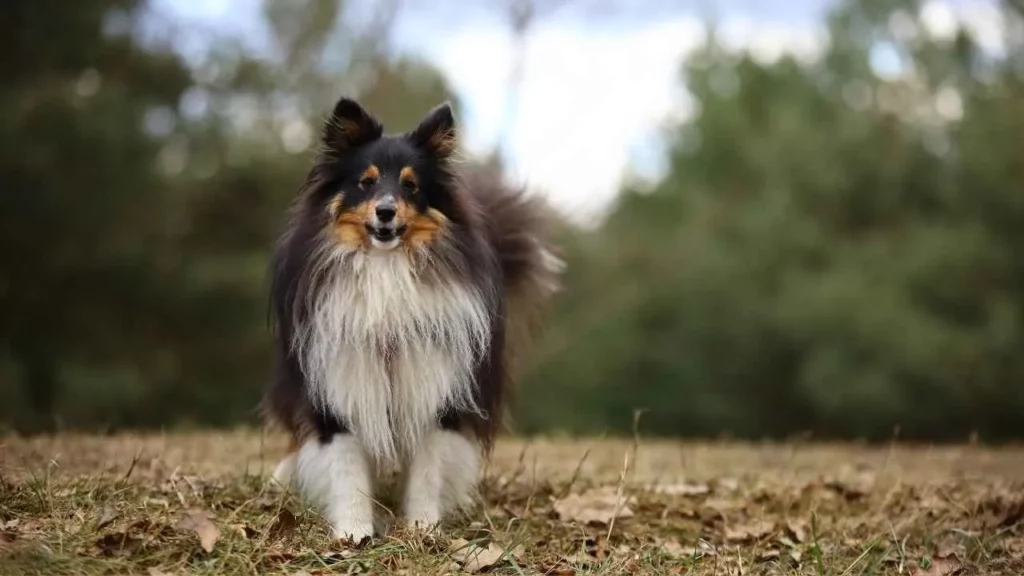
Because they can get bored easily if not given enough tasks. Strict supervision is required, especially around children, to prevent any unintentional harm that can be caused by this breed.
Lifestyle Compatibility for Owners
Both breeds have similar temperaments and are equally intelligent. But their lifestyle compatibility differs with noise level, exercise intensity, and space requirements.
|
Features |
Australian Shepherd |
Shetland Sheepdog |
|
Size |
Medium |
Small-to-medium |
|
Grooming |
Moderate (weekly) |
High (daily/weekly) |
|
Trainability |
High (needs a job) |
High (needs to please) |
|
Noise Level |
Moderate-to-high |
Very high |
|
Energy Level |
Very high (1.5-2 hours) |
High (1-1.5 hours) |
|
Independence |
Higher |
Lower |
|
Best Housing |
Large and fenced homes |
Adaptable to big houses and condos |
Conclusion
At the end of the day, both the Australian Shepherd and the Shetland Sheepdog are brilliant, loving, and endlessly rewarding dogs. The Sheltie edges out slightly in raw trainability and ease for beginners. But the Aussie brings an infectious energy and versatility that is hard to match, especially for active owners who want a true partner in every adventure.
The real answer to “which is easy to train?” is this: the one that fits your lifestyle is always the easiest to train. A mismatched dog and owner will struggle regardless of breed. Match your energy, your space, and your experience level, and whichever puppy you choose will be the smartest dog you have ever met. Just make sure your socks are up, because either way, they are coming for your heart.
