




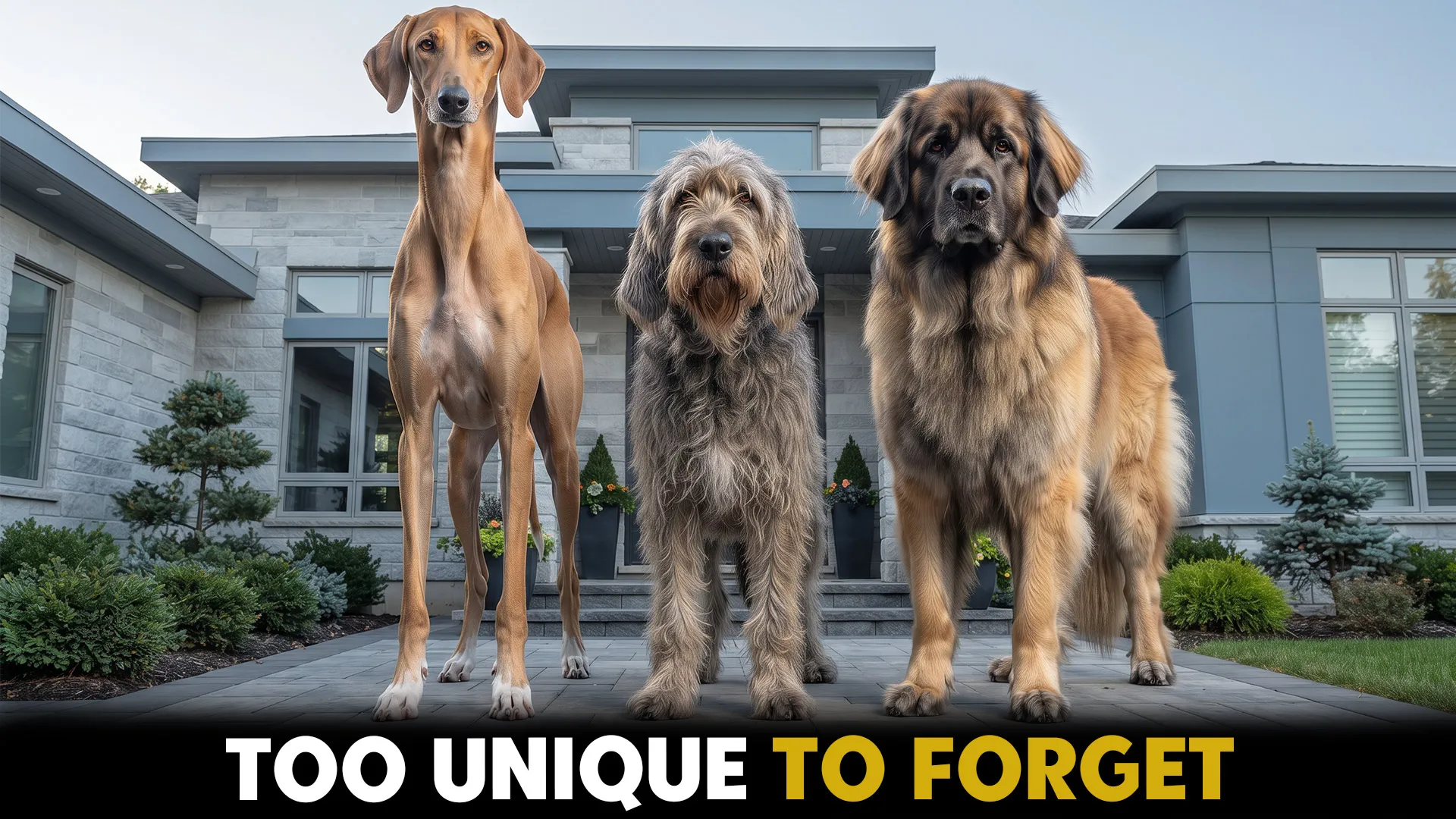
There’s something hard to ignore about a giant dog. They take up more space, turn heads wherever they go, and somehow manage to make even an ordinary walk feel like an event.
But size isn’t all that makes these dogs special. Many giant breeds are surprisingly gentle, affectionate, playful, and happy to spend quiet time with their families.
Of course, bringing home a giant dog is a big commitment. These dogs need enough room to move comfortably, regular exercise, consistent training, and plenty of food and care.
Their size can also mean higher everyday costs and extra attention to certain health concerns. Still, for the right household, having a giant dog can be an incredibly rewarding experience.
Some were developed to guard, some to work alongside people, and others simply became beloved companions. In this article, we’re taking a look at amazing big dog breeds you’ve probably never heard of, and you might just discover your next favorite.
Key Takeaways
Meet rare giants like the Otterhound, Leonberger, and Komondor.
See why Neapolitan Mastiffs and Tibetan Mastiffs make powerful guardians.
Discover the athletic Azawakh and its unique personality and needs.
Find out if the Spanish Mastiff fits your home and lifestyle.
Amazing Giant Dog Breeds You’ve Probably Never Heard Of
1. Otterhound
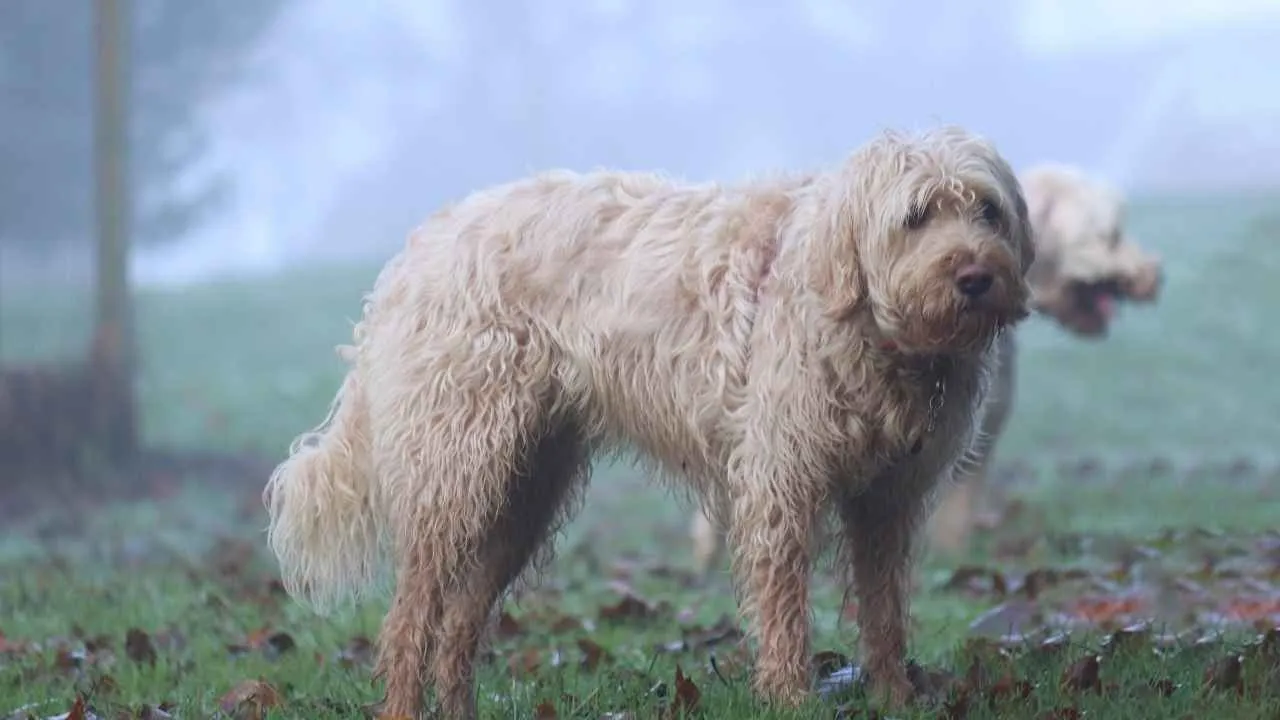
Otterhounds are big, lively, and affectionate dogs with a fascinating history. They were once bred in England for otter hunting.
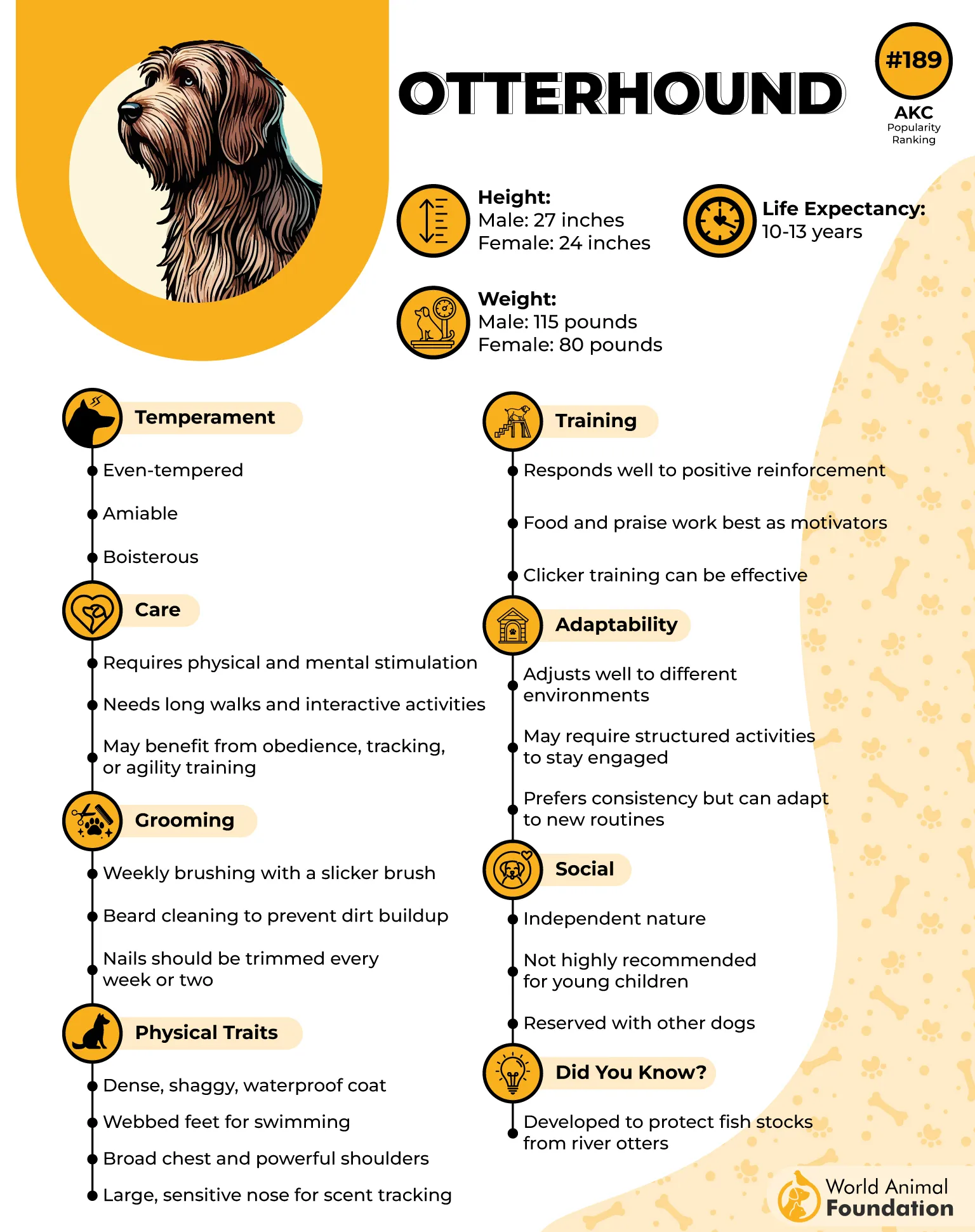
Their webbed feet, waterproof shaggy coats, powerful bodies, and excellent noses made them skilled swimmers and scent hunters. Today, they are incredibly rare and better known as loving family companions.
Active and Affectionate Companions
These energetic dogs need plenty of daily exercise and mental stimulation. Long walks, hikes, swimming, tracking, and agility are great choices.
Their strong noses can lead them away when they catch an interesting scent, so leashes and secure fencing are important. They are friendly with people, children, and other pets when properly trained and socialized, but their playful size can sometimes knock over young kids.
Training and Grooming
Otterhounds respond best to gentle, reward-based training. Praise, treats, and clicker training can make lessons more enjoyable.
Their shaggy coats need brushing once or twice a week to prevent mats and remove debris. Their beards can collect food and water, while their floppy ears need extra care after swimming.
2. Leonberger
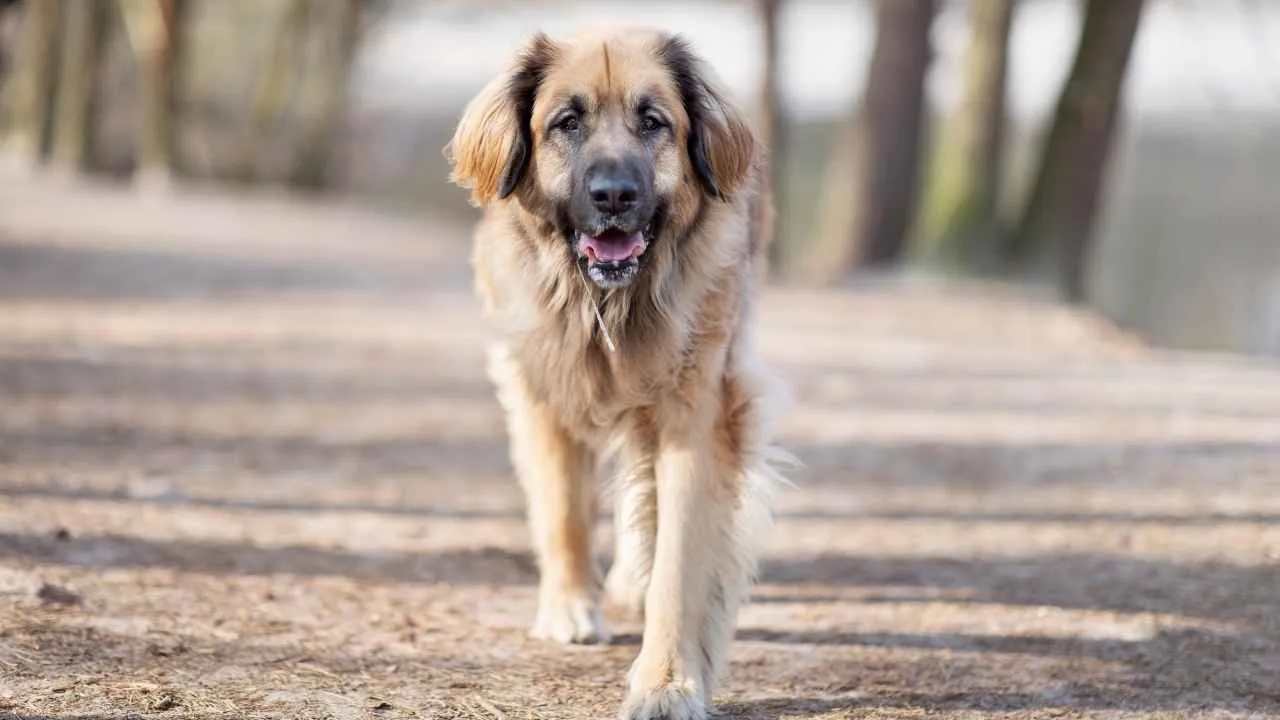
Leonbergers are giant dogs with a striking lion-like appearance and a sweet nature. They originated in Leonberg, Germany, and were developed as farm dogs, watchdogs, and working companions. Their history is linked to large mountain and water-working breeds.
Hill’s Pet mentions that they nearly disappeared during the World Wars but were brought back through careful selection. Today, they can work in water rescue and still enjoy being devoted family companions.
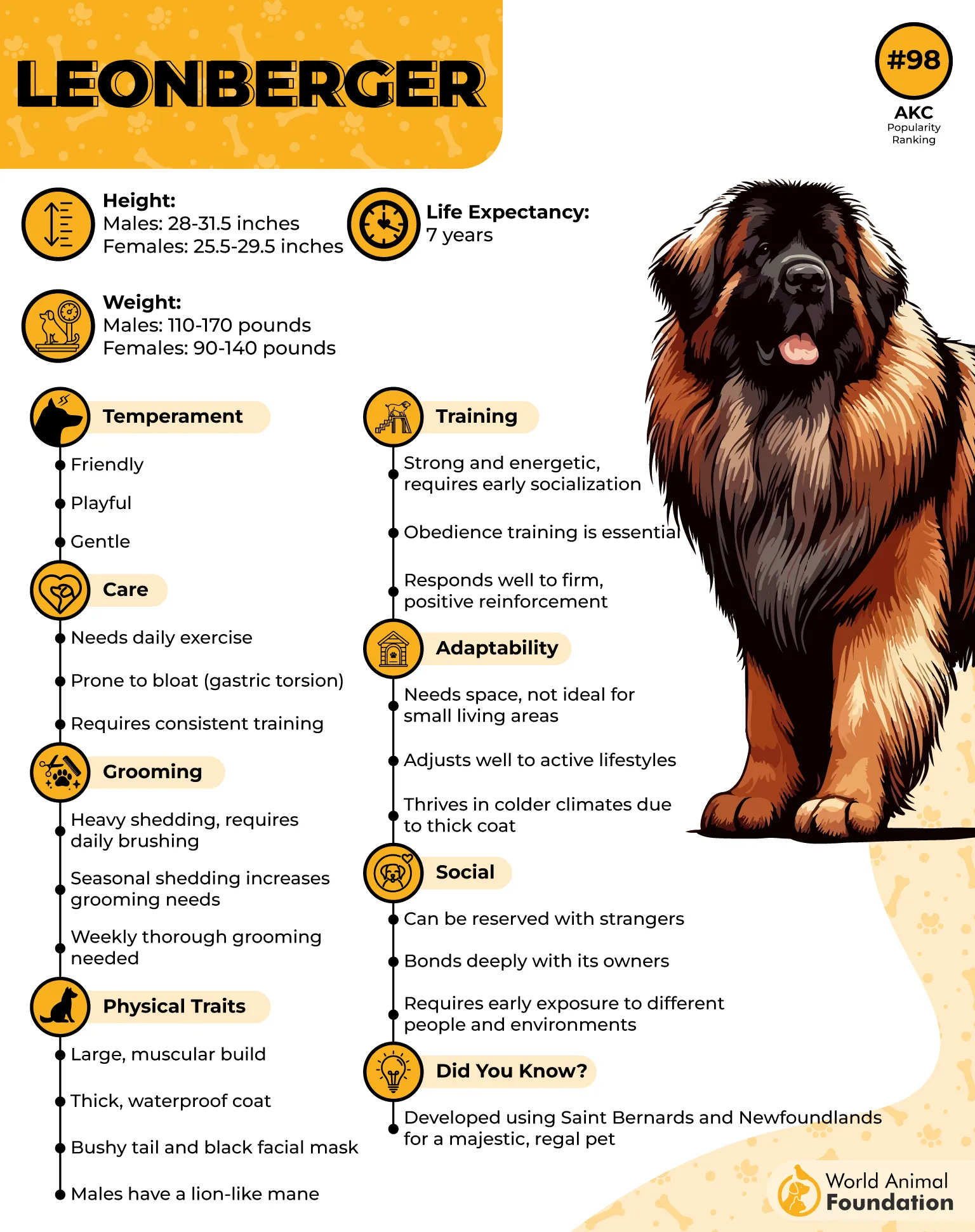
Calm, Loyal, and Surprisingly Playful
These dogs are calm, confident, and affectionate. They enjoy children, other dogs, and household pets when properly socialized. They also love staying close to their families and do not enjoy being left alone for long.
Daily walks, hikes, swimming, agility, and cart or sled pulling can keep them active. Their protective instincts become stronger as they mature, so early socialization and consistent training are important. Positive, repetitive training works best.
Grooming and Home Needs
Leonbergers have a dense, water-resistant double coat that sheds heavily, especially during seasonal shedding. Frequent brushing is essential to prevent mats, particularly around the ears, chest, legs, and undercarriage.
Their ears need regular checks, and nails should be trimmed as needed. They do best with families who have plenty of space, a secure yard, and time to give them daily attention.
3. Komondor
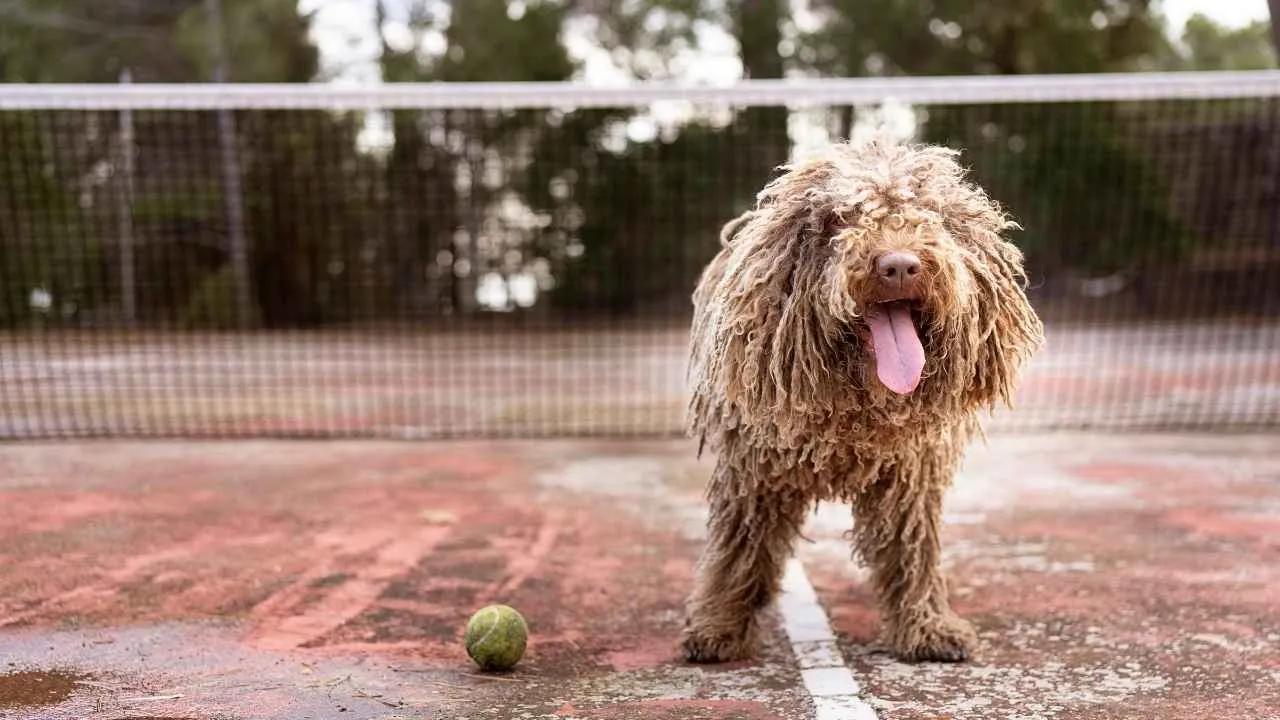
Komondors are hard to mistake for any other dog. Their long, white cords give them a striking mop-like look. But beneath that unusual coat is a serious guardian.
These ancient Hungarian dogs were bred to protect sheep, livestock, and property from predators. Their coats helped them blend into flocks and surprise threats. Today, they remain devoted family protectors and are still relatively rare outside Hungary.
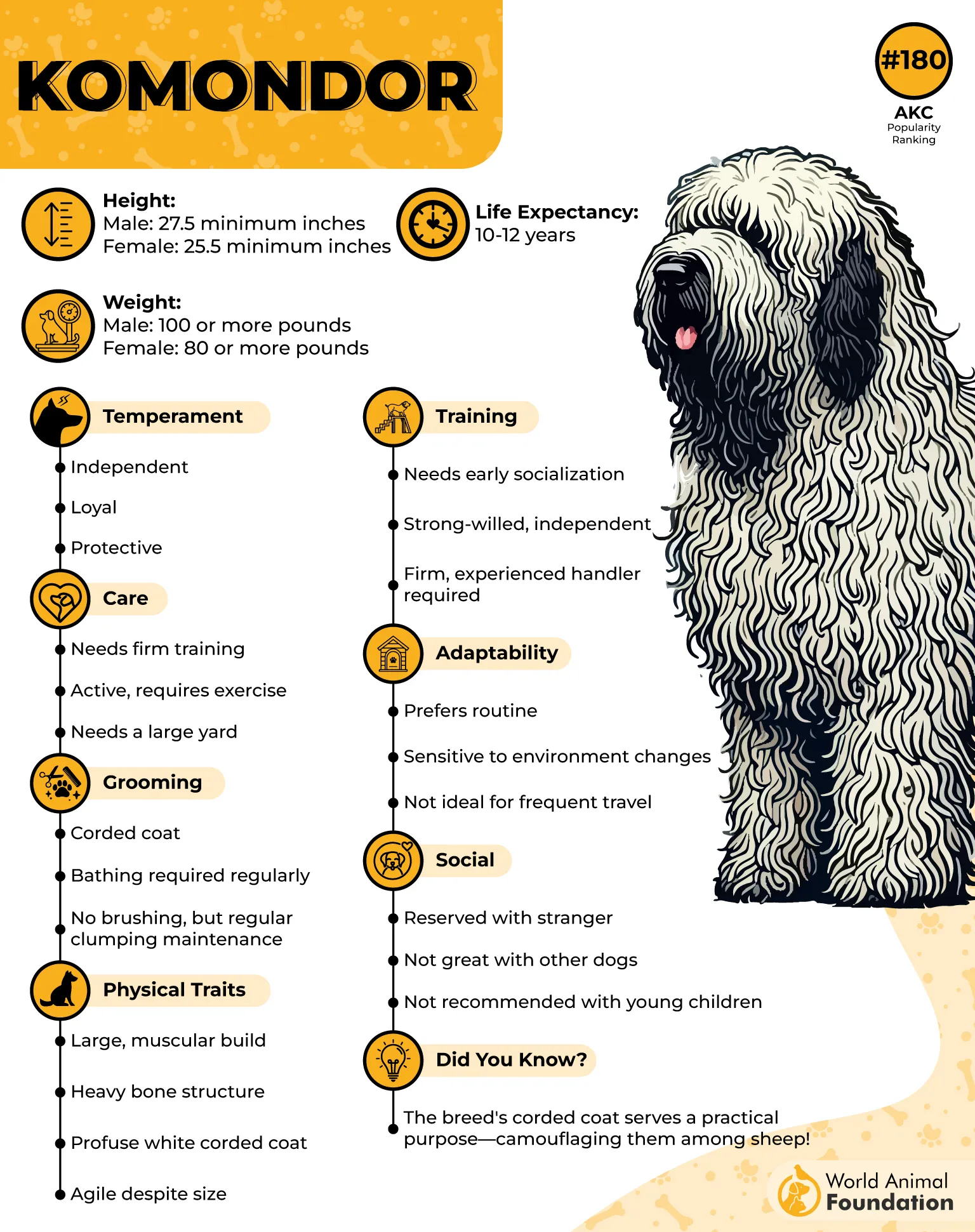
Calm at Home, Protective by Nature
Komondors are usually calm, quiet, intelligent, and affectionate with their families. They can be gentle with children and other animals when raised and socialized properly. However, they are naturally wary of strangers and can be fiercely protective. Early socialization is essential.
Their independent minds can also make training challenging. Keep sessions short, varied, and positive with treats and play. Daily walks, fetch, puzzle toys, and agility can provide useful activity and mental stimulation.
Those Famous Cords Need Serious Care
A Komondor’s unique coat forms natural cords as the soft undercoat mixes with the coarser outer coat. The cords usually develop fully by around two years of age. They must be separated regularly to prevent matting and dirt buildup.
The coat can take a very long time to dry after getting wet, so swimming is not ideal. Regular skin checks and ear cleaning are also important.
4. Neapolitan Mastiff
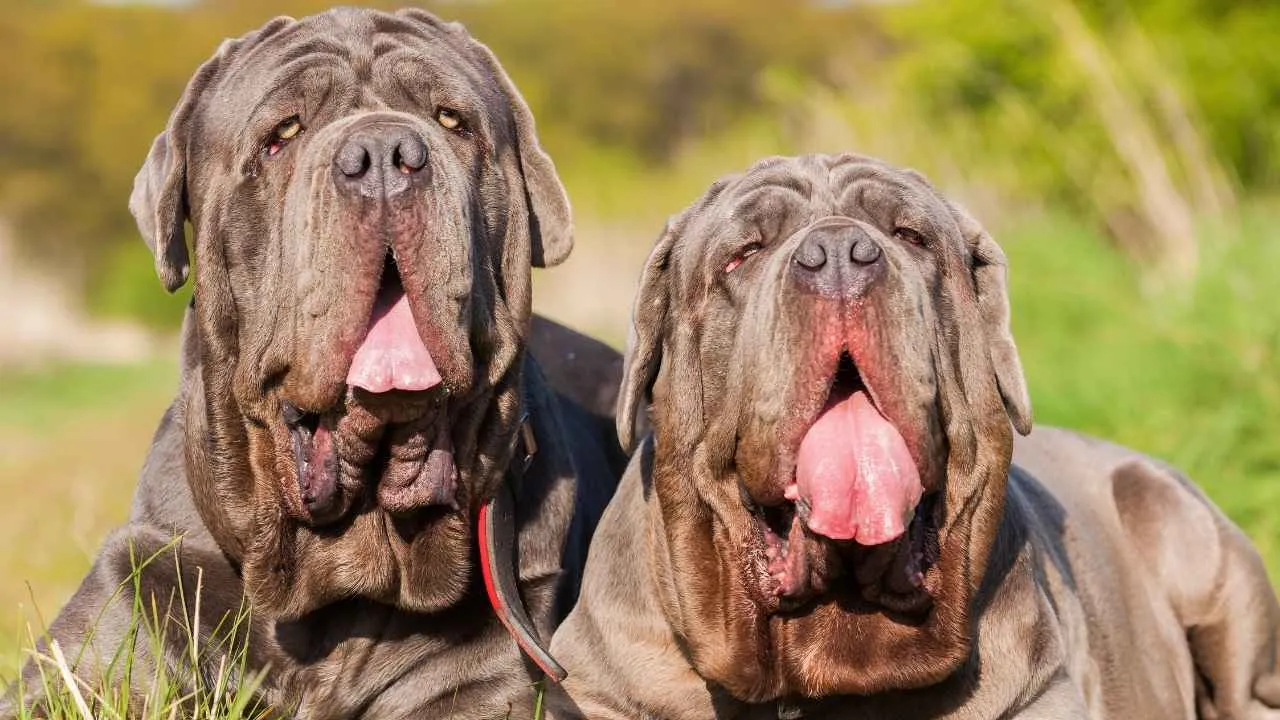
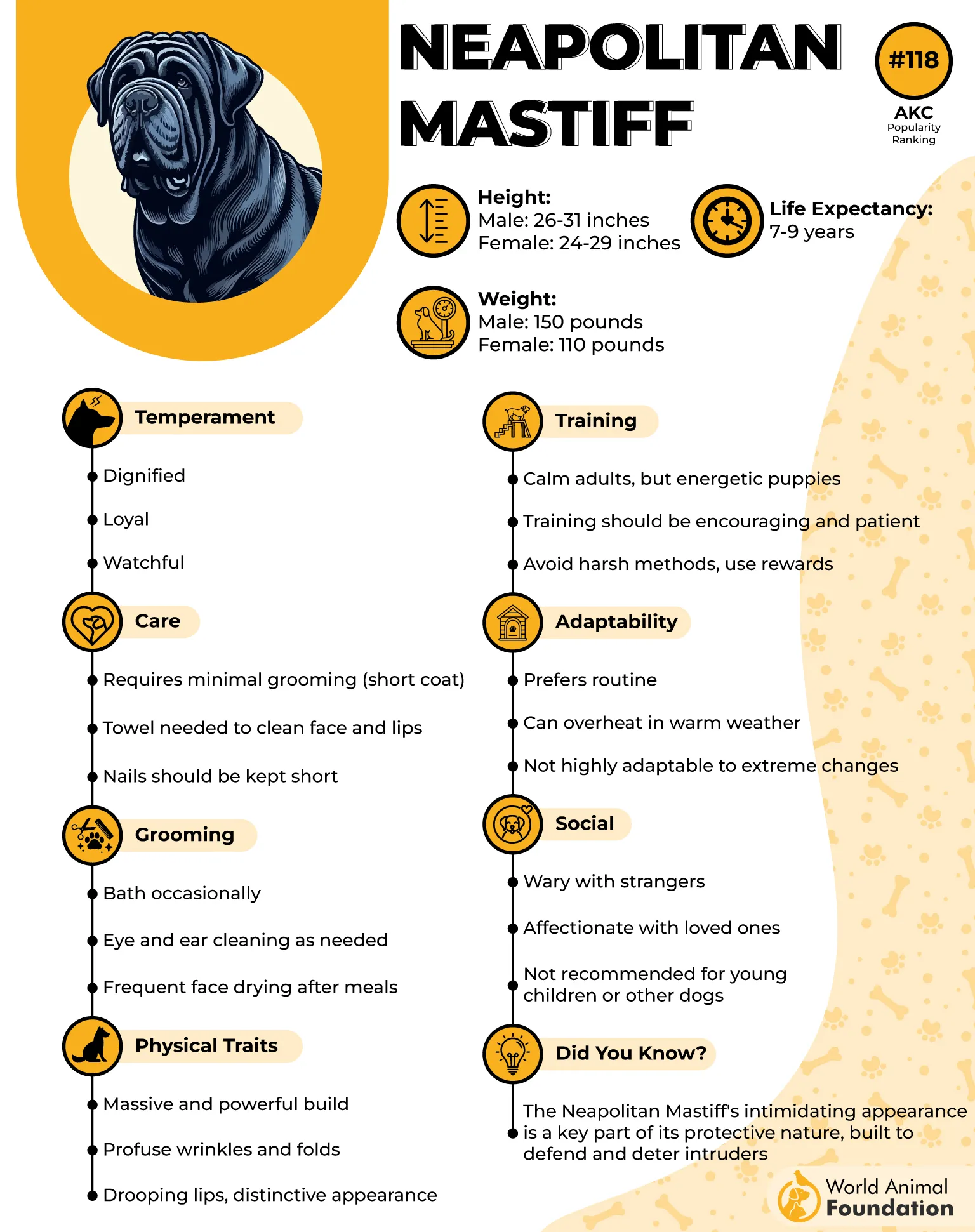
Neapolitan Mastiffs are impossible to miss. Their massive bodies, loose skin, deep wrinkles, and drooping jowls give them a powerful appearance. Originally developed in Italy as guard dogs, they were bred to protect homes and families.
Despite their intimidating size, these gentle giants are deeply affectionate, loyal, and devoted to the people they love.
Calm at Home, Protective by Nature
Neapolitan Mastiffs are loving, calm, and strongly attached to their families. They can be good with children and other pets when properly socialized, but their huge size means supervision is important. WebMD says they are naturally cautious around strangers and have strong protective instincts.
Early socialization and consistent, positive training are essential, especially because they can be stubborn. Adults are relatively low-energy and usually need around 30–40 minutes of daily exercise.
Those Wrinkles Need Regular Care
Their short coat is easy to maintain and usually needs brushing a few times a week. However, their deep facial and body wrinkles require regular cleaning to help prevent skin problems.
Neapolitan Mastiffs also drool heavily, so owners should be prepared for slobber around the home. Like other giant breeds, they can be prone to issues such as hip dysplasia, cardiomyopathy, and bloat.
5. Tibetan Mastiff
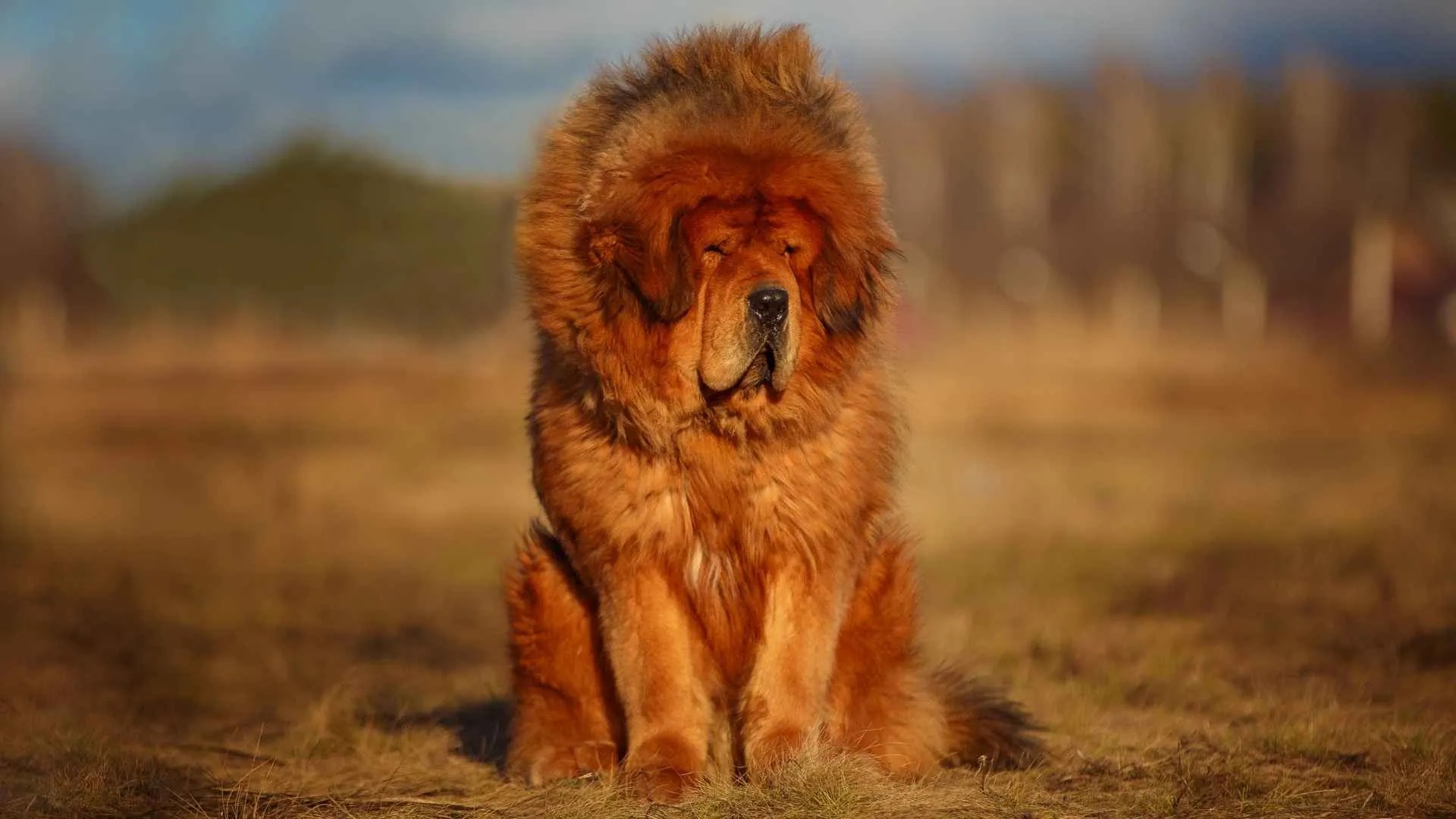
Tibetan Mastiffs are hard to miss. Their massive build, flowing mane, and powerful presence give them a lion-like appearance. But beneath that impressive exterior is an ancient guardian bred to protect families, livestock, and property in the harsh Himalayan region.
Highly loyal and naturally watchful, these dogs remain devoted protectors today, although their independent nature makes them best suited to experienced owners.
Calm at Home, Watchful After Dark
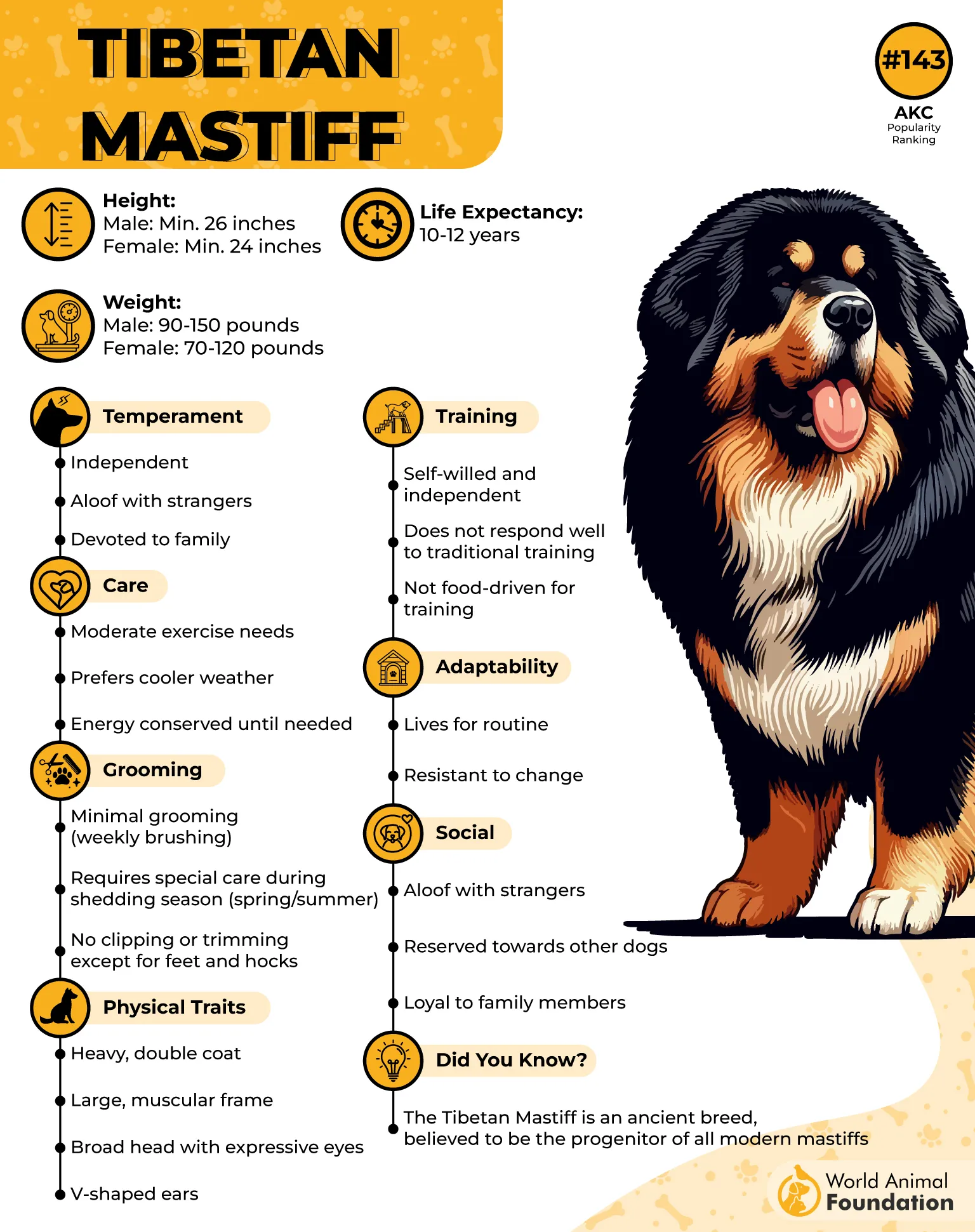
Tibetan Mastiffs are affectionate and loyal with their families but naturally aloof and territorial around strangers. They are intelligent, fearless, and protective, yet their strong-willed personality can make obedience training challenging.
Early socialization is essential to help them become comfortable around new people and animals. They need patience, positive reinforcement, and consistent training rather than harsh methods.
That Flowing Coat Needs Regular Attention
A Tibetan Mastiff’s impressive double coat features a thick, woolly undercoat and a coarse outer layer that helps protect them from cold weather. They need regular brushing, with more frequent grooming during seasonal shedding when they can release plenty of loose undercoat.
Bathing is only needed when they become dirty, but their dense coat must be dried thoroughly afterward to prevent trapped moisture and skin problems.
6. Azawakh
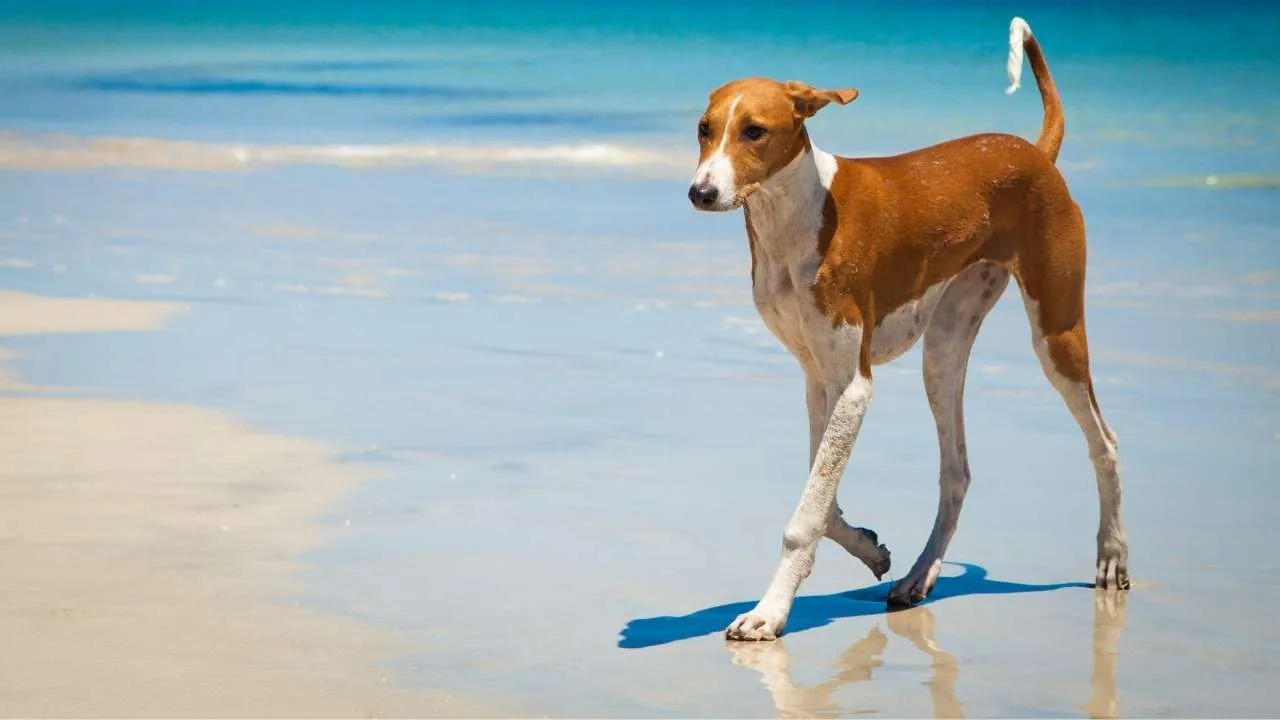
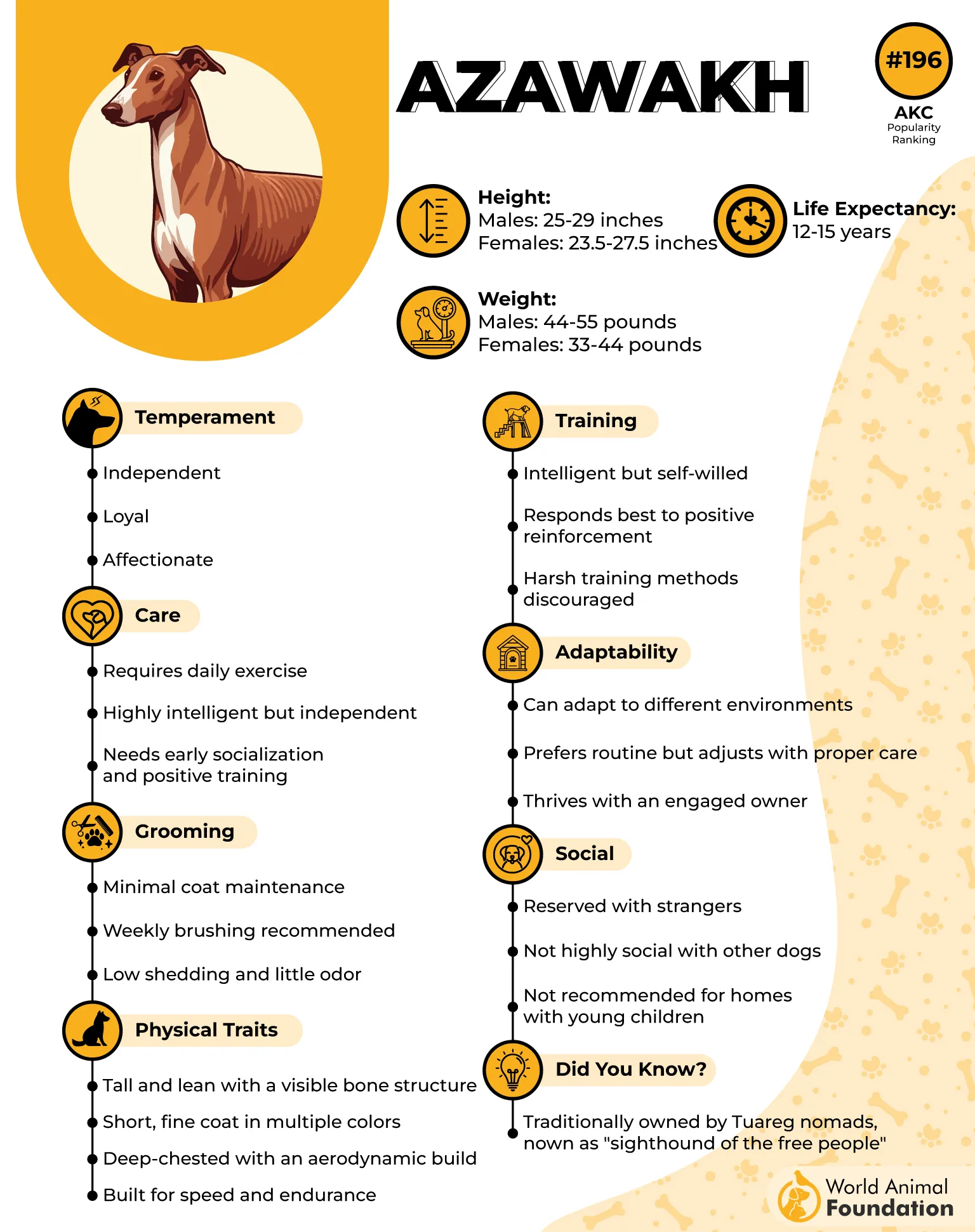
Azawakhs are hard to mistake for any other dog. Their tall, slender build, long legs, and graceful movement give them an unmistakably elegant appearance. But beneath that delicate-looking frame is a fast, athletic hunter and devoted guardian from the Sahel region of Africa.
Originally bred to hunt gazelles and hares while also protecting families and camps, Azawakhs are deeply loyal to their people and naturally cautious around strangers.
Loyal at Home, Alert Around Strangers
Azawakhs form incredibly strong bonds with their families and can be affectionate, loving, and surprisingly calm indoors after getting enough exercise. They are intelligent, sensitive, and highly observant, quickly noticing unfamiliar people, animals, or anything unusual around them.
Their independent nature can make training challenging, so they respond best to patient, consistent, and positive methods rather than harsh commands. Early socialization is especially important because they can be reserved with strangers and protective of their family.
That Sleek Coat Is Easy to Maintain
An Azawakh’s short, fine coat requires relatively little grooming. Weekly brushing can help remove dead hair and keep the coat looking healthy, while regular seasonal shedding may require a little extra attention.
Their thin coat and low body fat also mean they can struggle in cold or wet weather and may need extra protection during chilly conditions, as mentioned by Omlet. Their folded ears should be checked and cleaned regularly, while their eyes, teeth, and nails also need routine care.
7. Spanish Mastiff
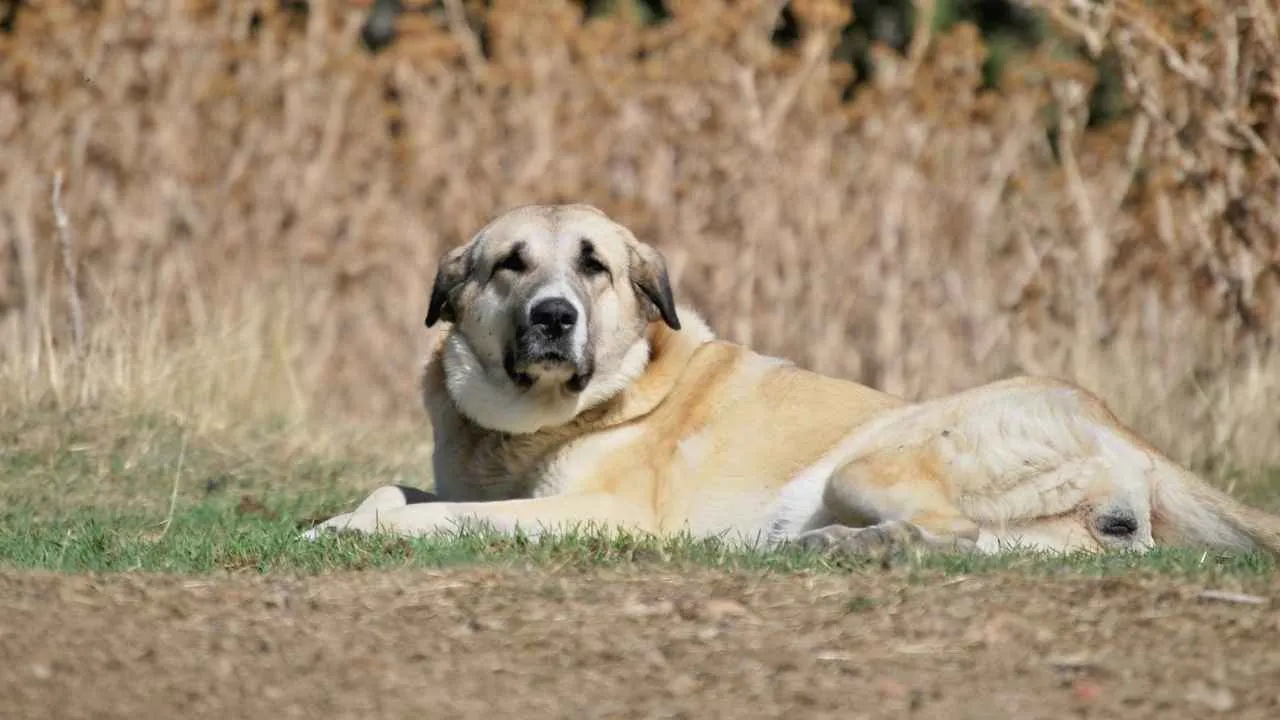
Spanish Mastiffs are impossible to miss. Their massive size, broad heads, muscular bodies, and loose neck skin give them an imposing look that matches their history as livestock guardians.
Originally bred in Spain to protect sheep from wolves and other predators, they are calm and affectionate with family but naturally alert and protective around strangers.
Calm at Home, Protective on Guard
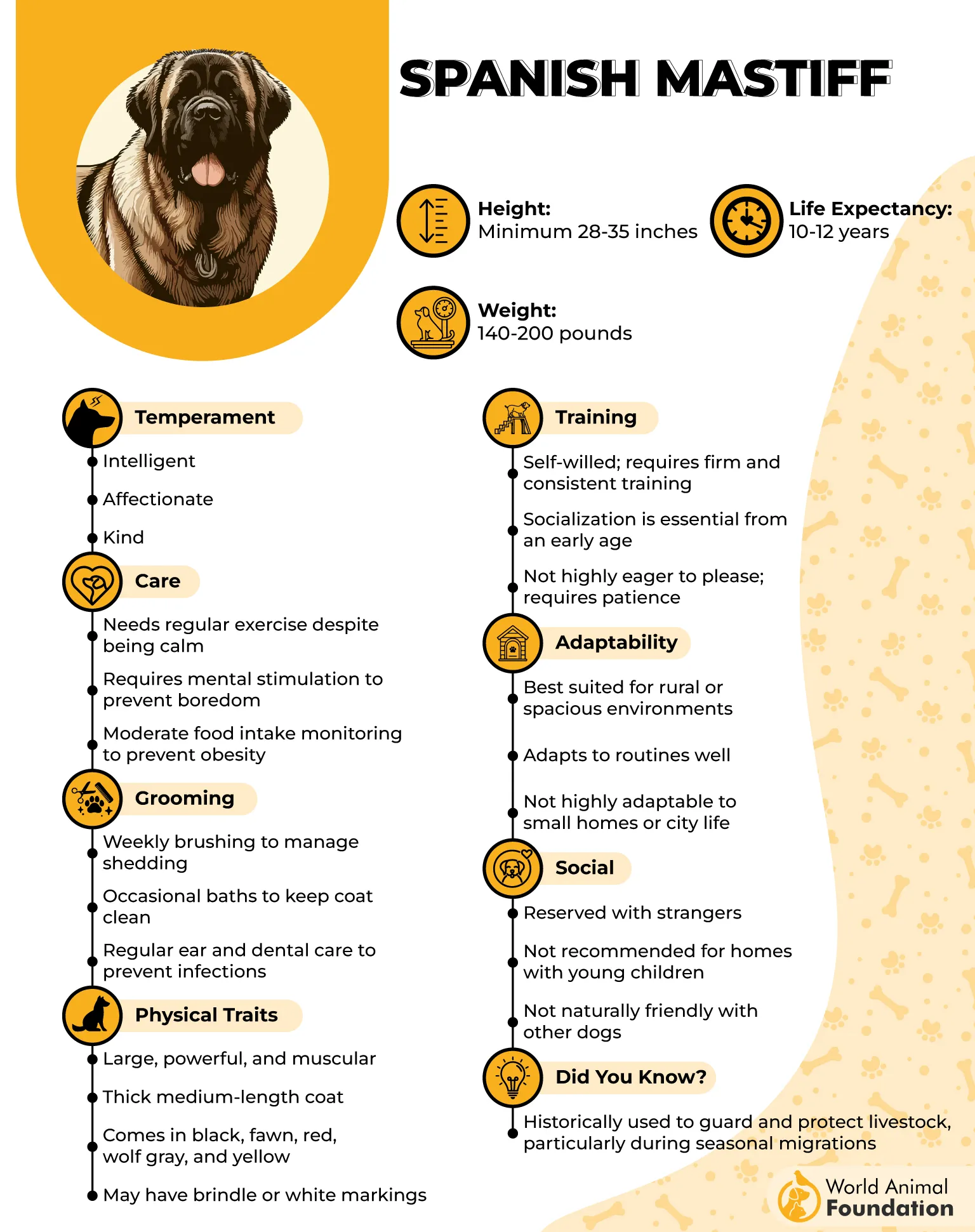
Spanish Mastiffs are loving, gentle, and easygoing with people and pets they know. They are relatively low-energy and usually enjoy relaxing at home after about an hour of daily exercise. Their independent nature means they need early socialization and consistent, positive training.
Their deep bark makes an effective warning when they sense something unusual. Walks, swimming, hikes, and secure backyard play can keep them active and content.
Simple Coat Care
Their short double coat needs weekly brushing, with extra grooming during spring and fall shedding seasons. Their loose neck folds should be kept clean and dry, while their ears, nails, and teeth need regular care.
With an experienced owner, enough space, proper training, and early socialization, the Spanish Mastiff can be a calm, loyal, and dependable family guardian.
Conclusion
Choosing the right giant dog breed comes down to more than size and appearance. These breeds have unique personalities, exercise needs, training requirements, and guarding instincts. Understanding what each breed needs can help you find one that truly fits your lifestyle.
If you’re considering one of these impressive dogs, take time to learn about its temperament, space requirements, and daily care before bringing one home.
With the right environment, training, and commitment, a giant breed can become more than a protector. It can be a loyal and unforgettable part of your family.
Looking for more large dogs? You can also check out the Irish Wolfhound, Bernese Mountain Dog, Black Russian Terrier, Giant Schnauzer, Anatolian Shepherd Dog, French Mastiff, Caucasian Shepherd Dog, Great Dane, Saint Bernard, Dogue de Bordeaux, and Great Pyrenees.
