




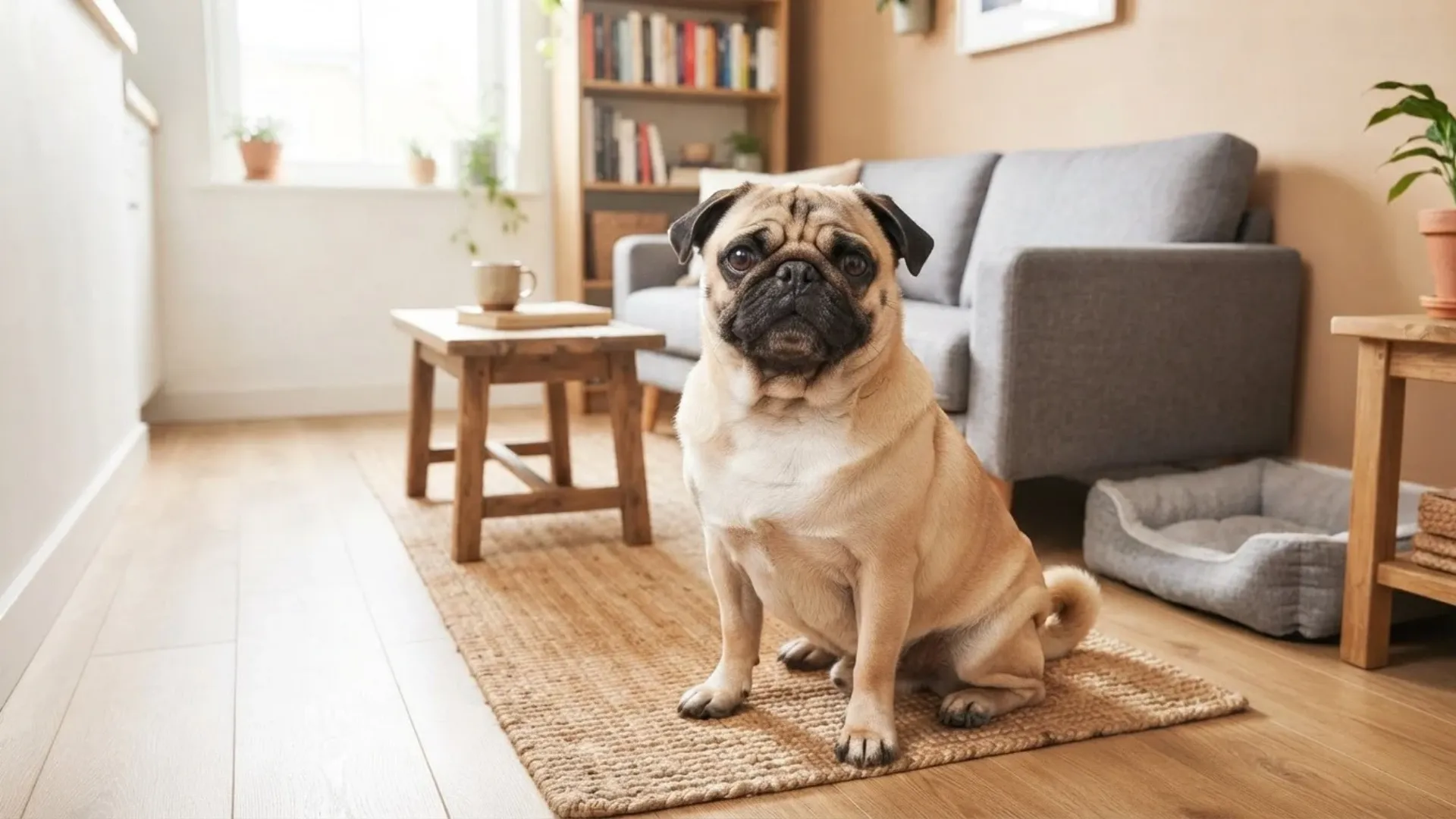
A small home does not mean a small life with a dog. The right companion can turn a studio, apartment, or cozy house into a place full of happy greetings, warm naps, and the occasional stolen sock.
As actress Audrey Hepburn supposedly said, “The best thing to hold onto in life is each other,” and dogs seem to take that job very seriously. Still, square footage is only one piece of the puzzle.
A dog needs daily walks, training, company, and care, whether you live in a penthouse or a one-bedroom walk-up. The breeds below are smaller and generally adaptable, but each brings a different vibe. Think of it as finding the right roommate, one who pays rent in cuddles and occasionally judges your snack choices.
Amazing Dog Breeds for Limited Living Space
1. Bichon Frise
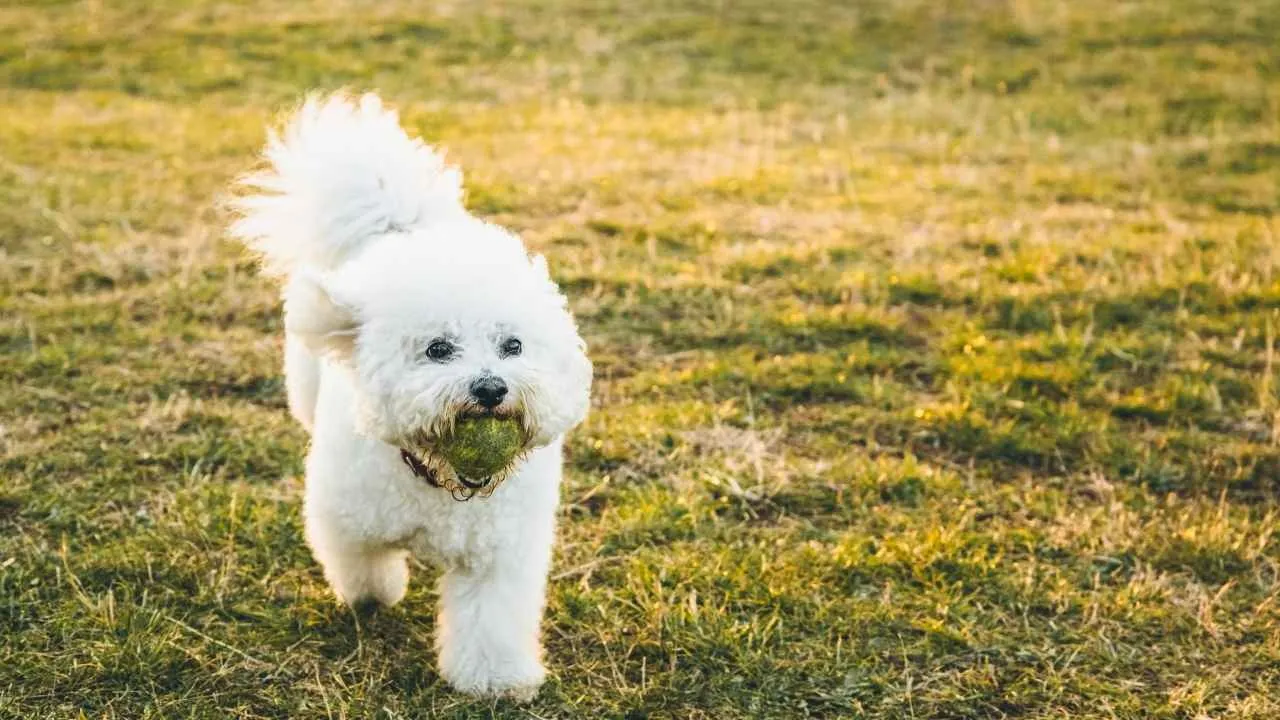
The origin of this small dog is unknown; however, a small white dog is thought to be the ancestor of the modern-day breed. The ancestor used to live on the Canary Islands and was exported to Europe in the 13th century, where it was favored by the royalty.
Since the breed has loose flews (jowls), the small breed does not drool, minimizing rug cleaning. The dog does not possess aerobic stamina and has short bursts of energy followed by a prolonged resting phase. The breed has strong watchful instincts and alerts the owner to unusual activity with brief barks only.
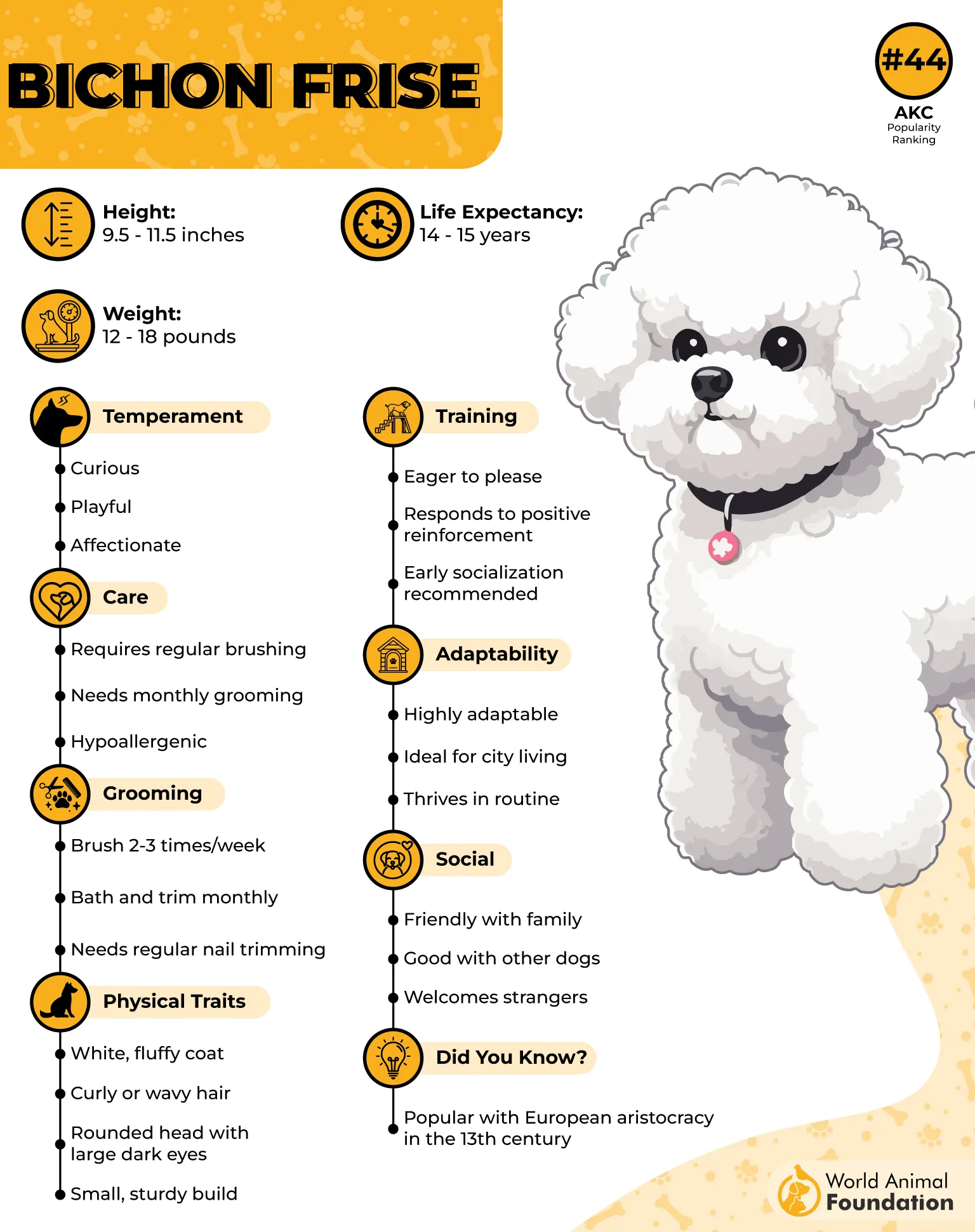
Because of its high intelligence, the dog tends to learn house-training rules and basic commands. Bred to be a lap dog, it does not show territorial aggression. Low dander production leads to minimal grooming.
2. French Bulldog
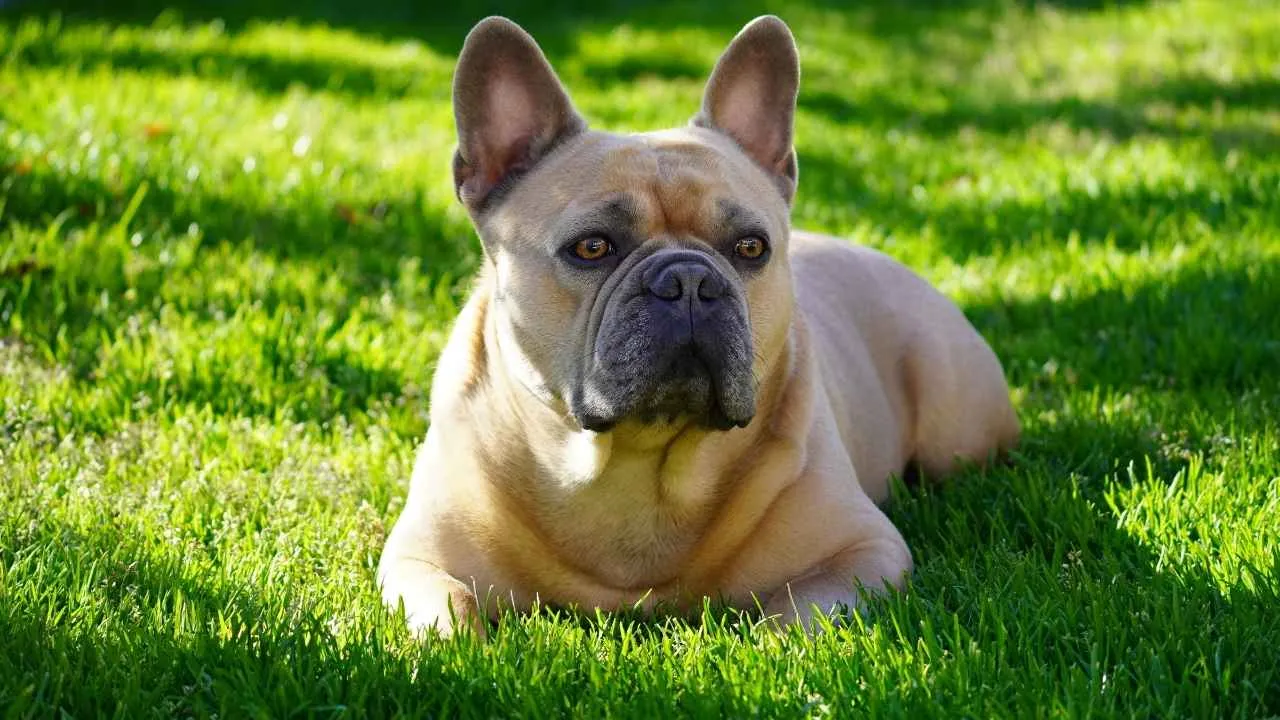
Often appearing in Henri de Toulouse-Lautrec’s paintings, the French Bulldog was developed in France and gained popularity in America in the 19th century. The population declined after World War II and revived after the mid-20th century.
This breed tends to have a shortened skull structure and smaller upper airways. restricting prolonged outdoor exertion. Being a chondrodystrophic breed, the French Bulldog has short legs and a flexible spine; thus, jumping and running are strictly prohibited to prevent injuries. It easily sleeps 14 hours a day.
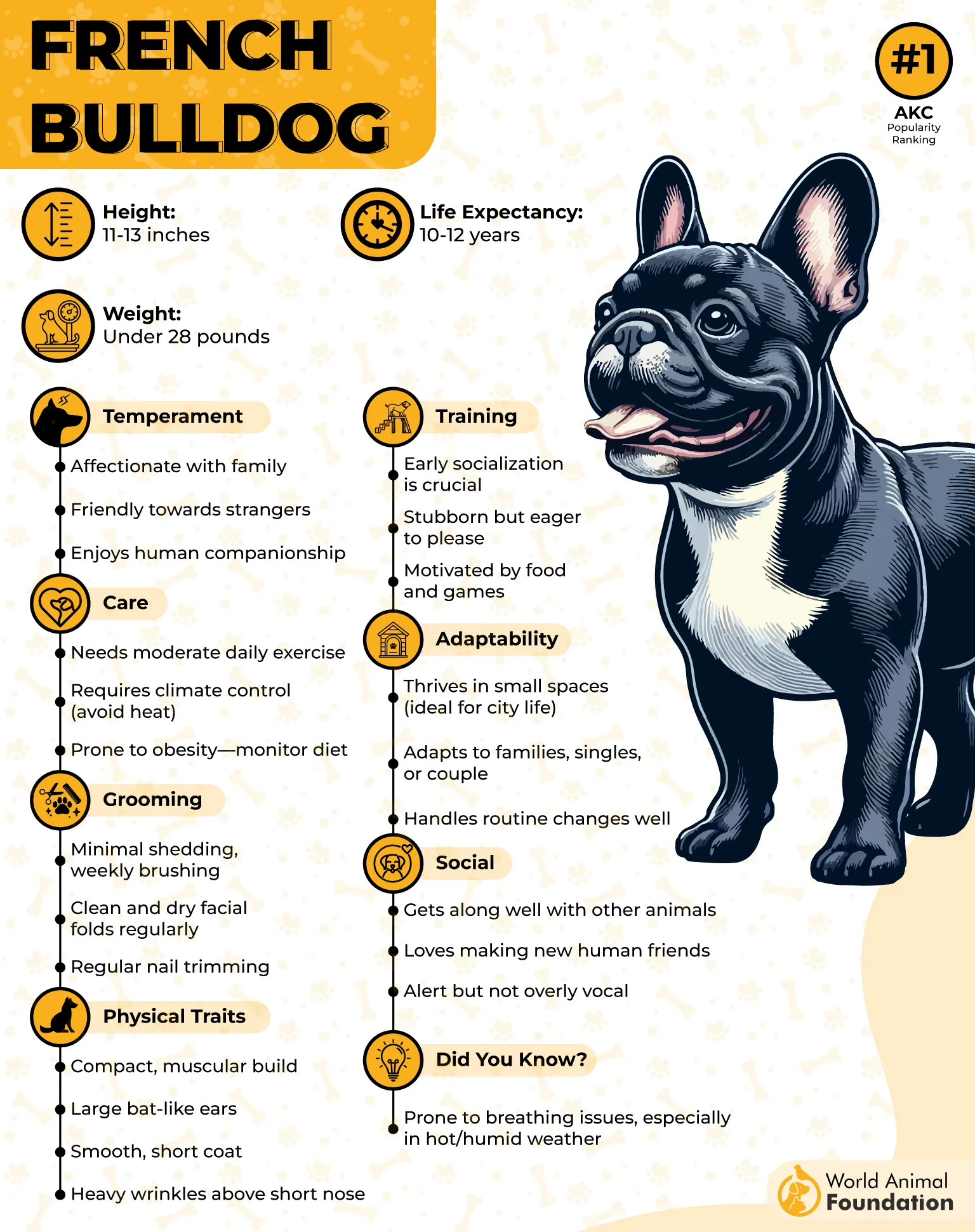
This low-energy breed needs 20-30 minutes of regular exercise and mental stimulation, as noted by Pet Place. Despite being social, the breed has a calm temperament and is prone to separation anxiety. So, do not leave the dog for more than 4 hours.
3. Shih Tzu
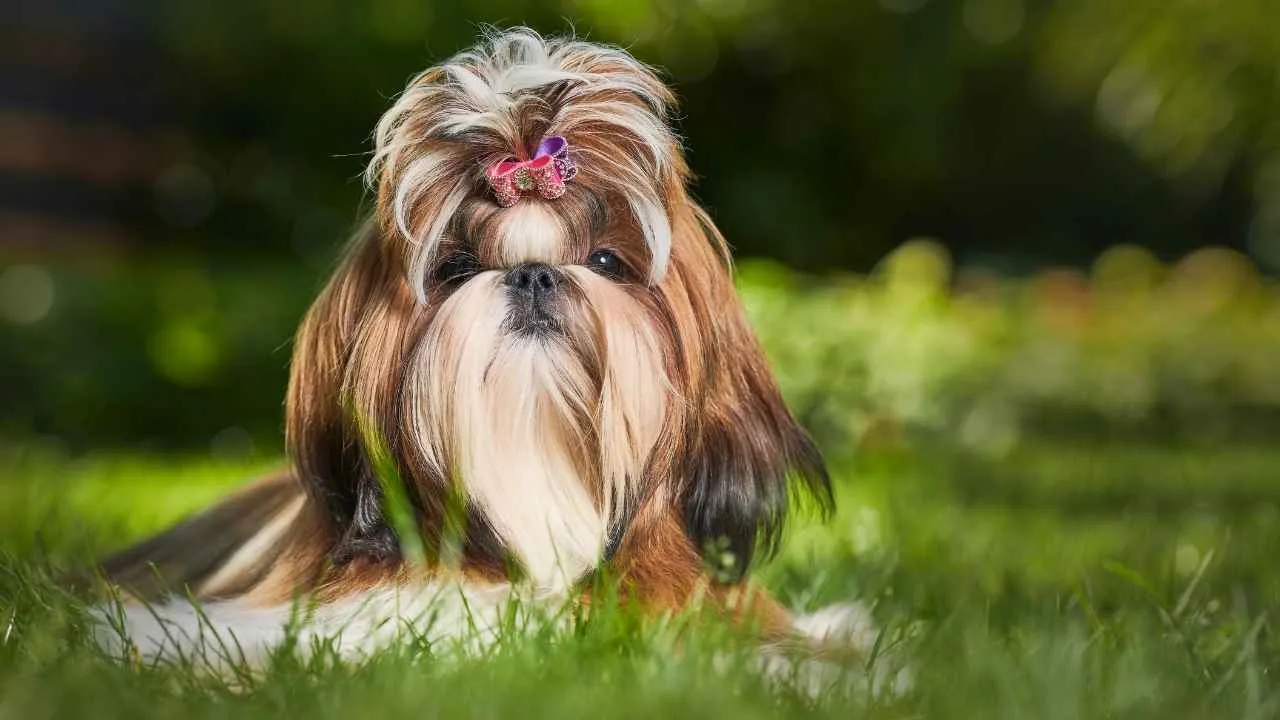
Also known as the Lion Dog, the Shih Tzu was originally developed as a toy breed in Tibet centuries ago by the Buddhist monks. It was intentionally bred to look like a lion because lions are considered sacred across the country. The primary purpose was to serve as an indoor watchdog and a lap dog, says PetMD.
Because of its low inertia and small physical mass, it thrives in indoor play and low-impact interactive play. It has a reduced nasal passage that makes thermoregulation with panting difficult. It utilizes vertical spaces rather than running on floors, sits on a high point, and keenly observes its surroundings.
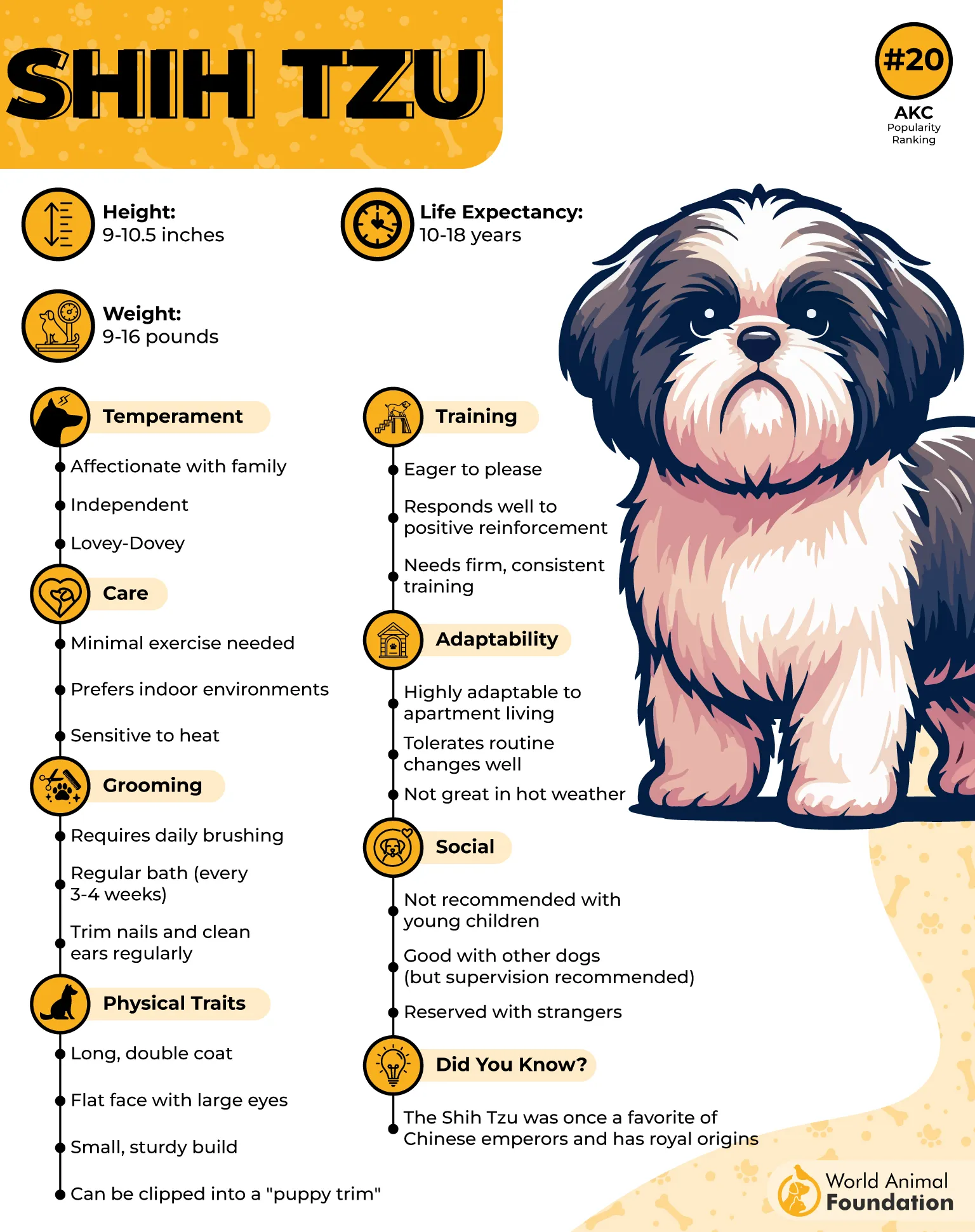
This breed has human-like, continuously growing hair that does not shed much, making it an ideal dog for allergy sufferers. It relies heavily on facial cues and exhibits non-threatening behavior around ambient stimuli when properly socialized.
4. Pug
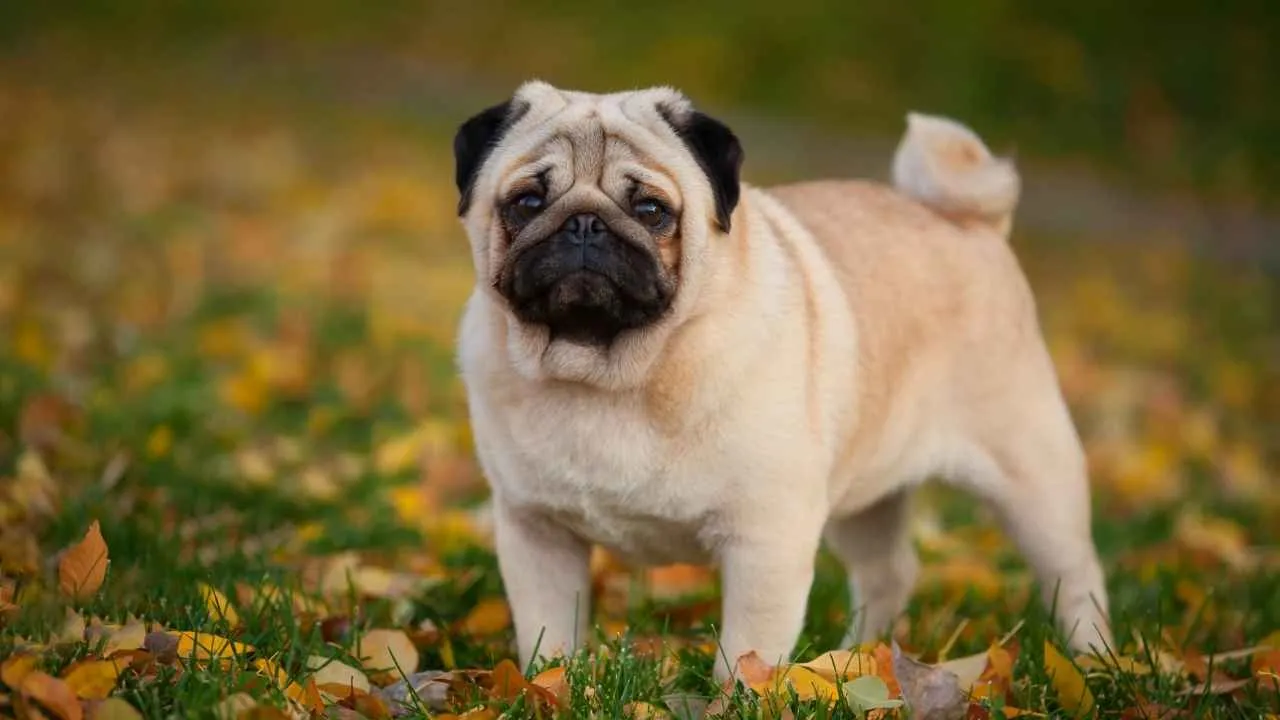
Bred during the Han dynasty in ancient China in 400 BCE, this old breed was originally developed to be a lap dog for the Emperors. It is one of the only three flat-faced dogs native to China. It was initially illegal for commoners to keep the dog. The breed made its way to Europe in the 16th and 17th centuries.
This little dog has fast-twitch muscles and exhibits short and ground-covering trots. Its daily caloric expenditure is relatively low, and it gets tired after 15-20 minutes of physical activity. Because of its lap dog history, the breed lacks cortisol spikes driven by prey-chasing instincts.
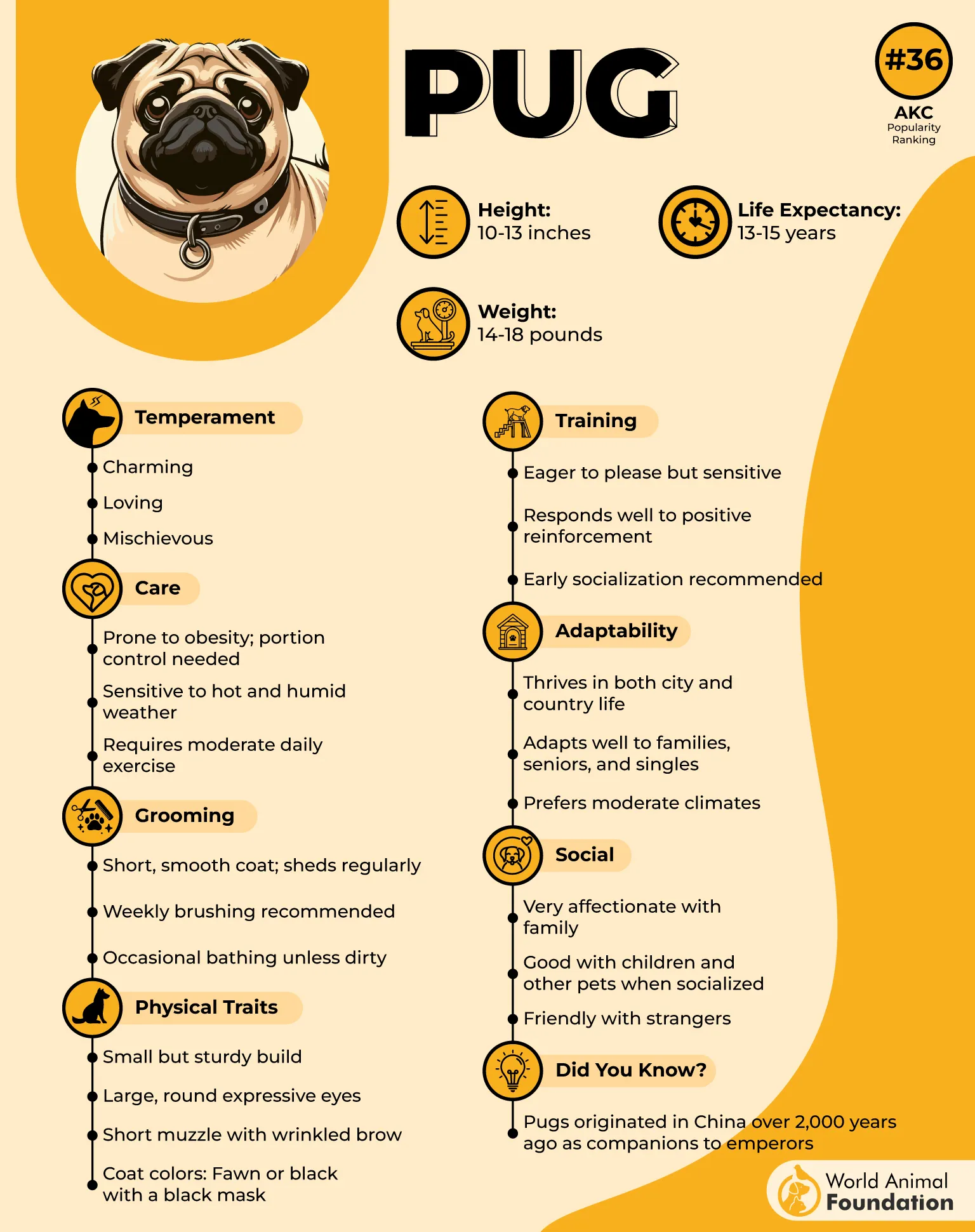
This apartment dweller is attuned to human emotions, but has an independent streak and is prone to stubbornness. Since it has low baseline energy, strict dietary portioning is important for weight management.
5. Boston Terrier
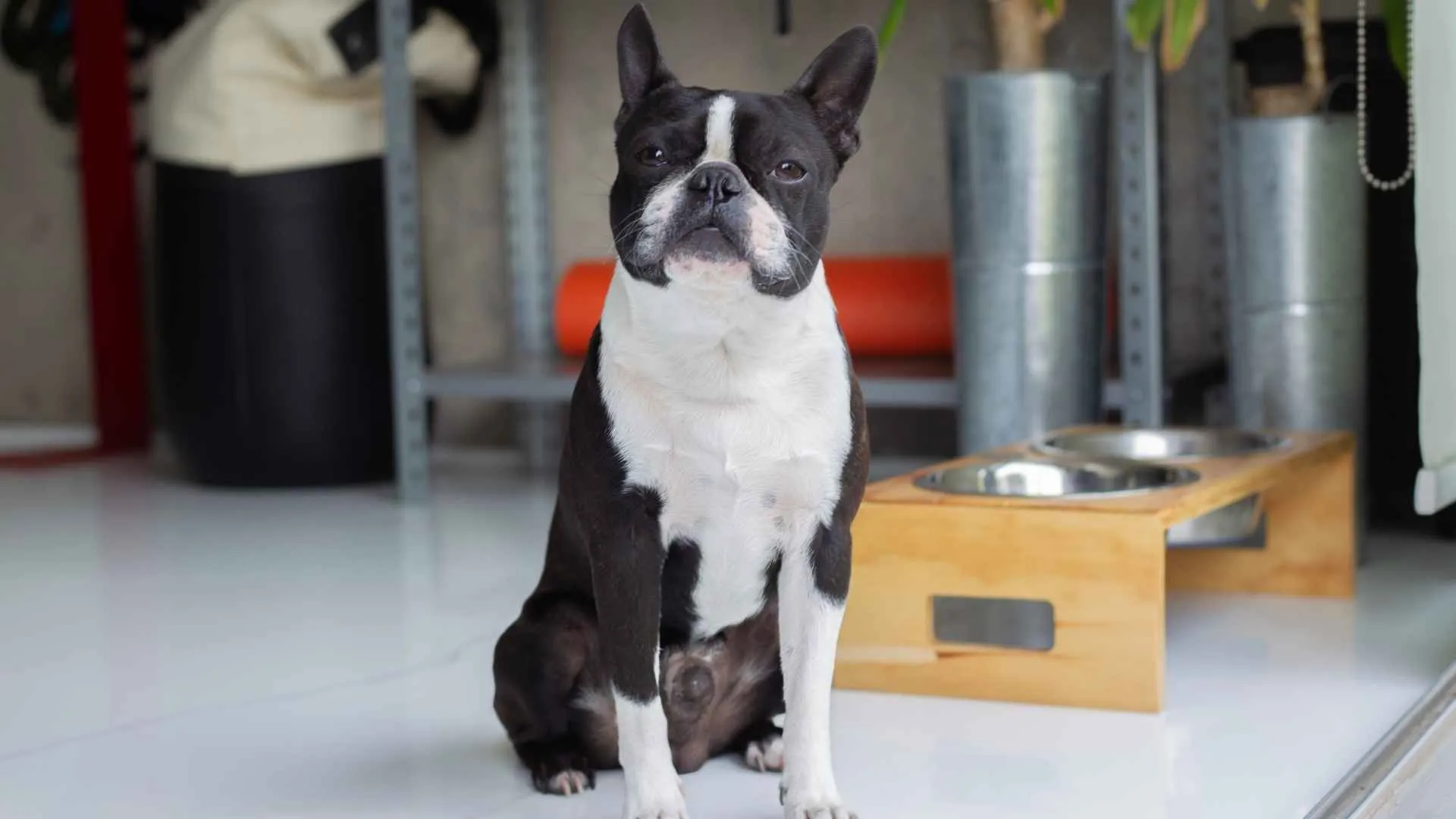
The great companion was bred in Massachusetts, America, in the mid-19th century by Mr R. C. Hooper. It is descended from a dog named ‘Judge,’ who was a cross of the White English Terrier and the English Bulldog. It was officially recognized by the AKC in the late 19th century, as reported by Dogs Australia.
The short and smooth coat has less oil and dander production and thus has minimal dog odor and sheds less. Because of the naturally bobbed tail, there are fewer chances to knock it against the wall and get injured. It has a squared and balanced body that enables tight indoor movement without hitting any object.
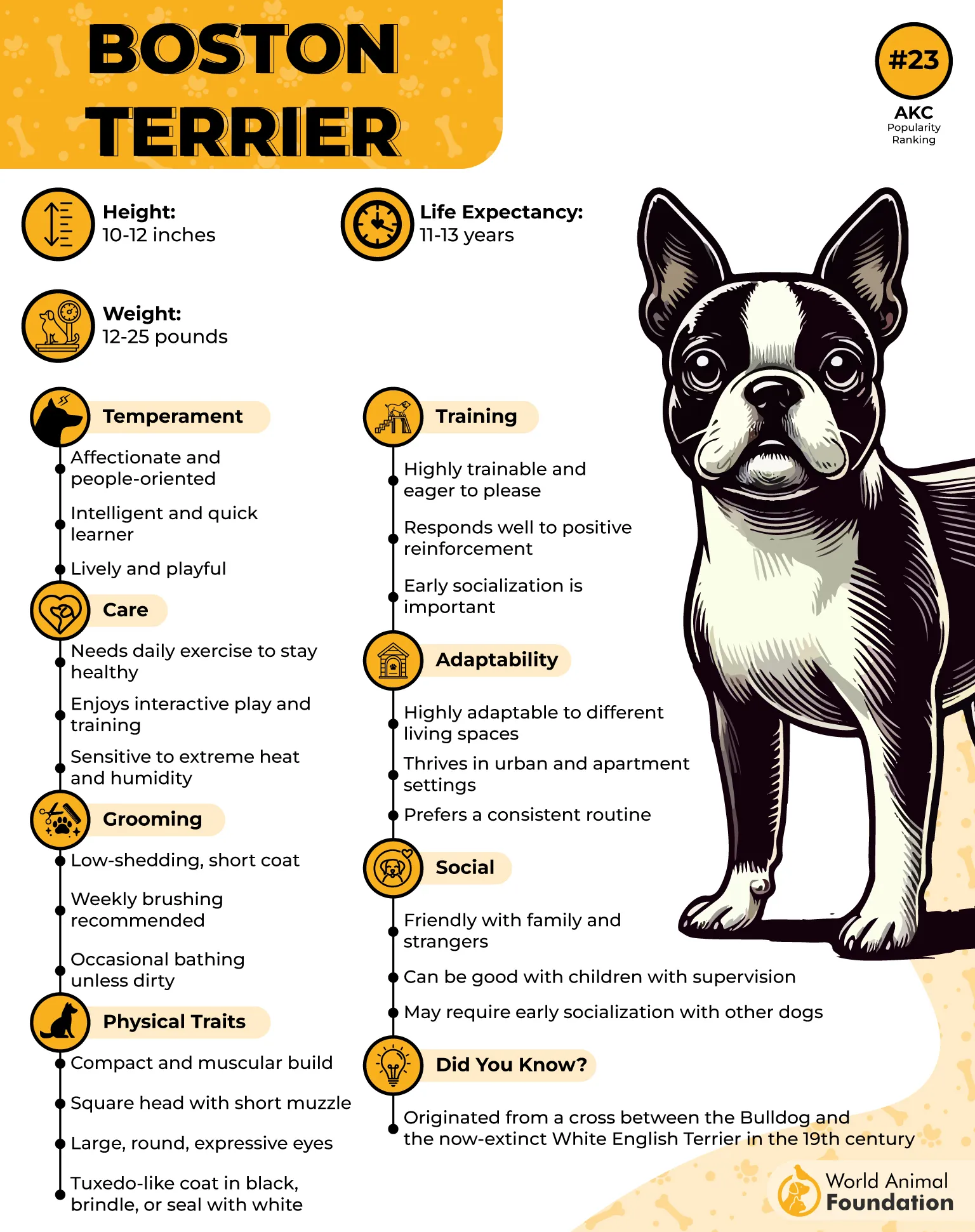
It has an eager-to-please nature and excels in gaze following, social cues, and human interaction. The sociable temperament needs to be polished with early socialization.
6. Maltese
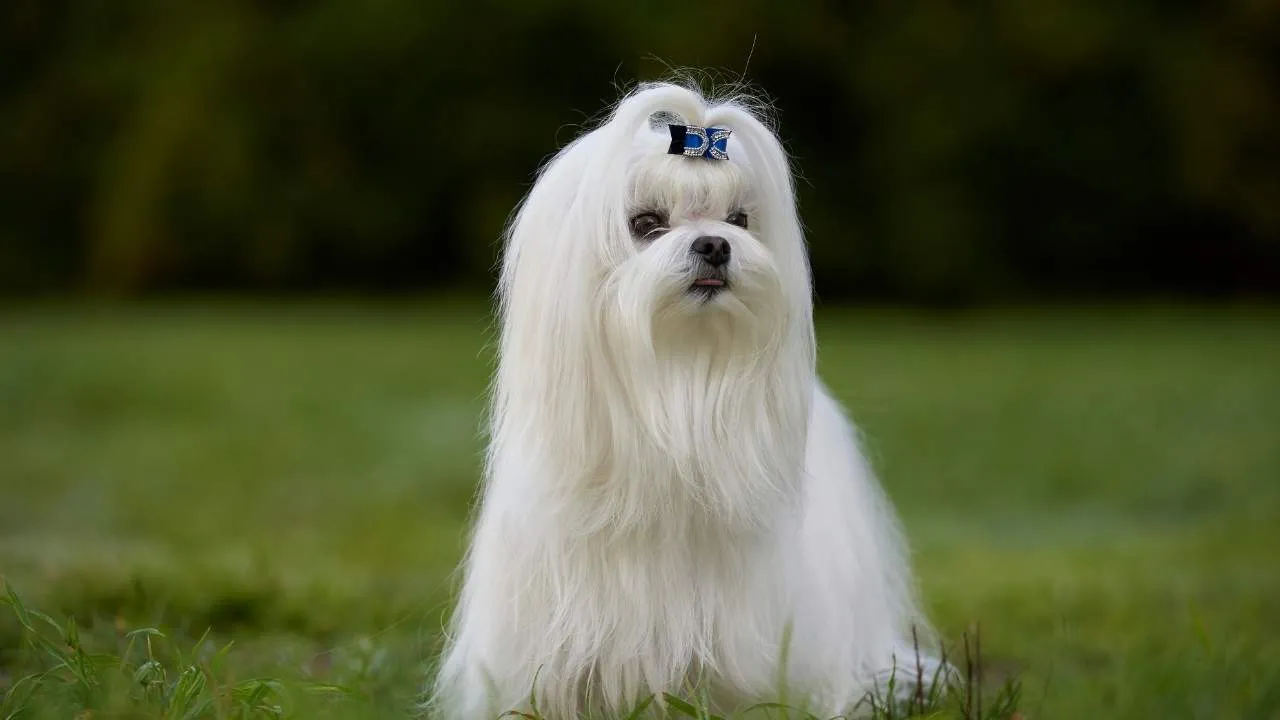
Originally bred in Malta, the Maltese was favored by the Greeks in the 4th and 5th centuries and was considered a status symbol among the Romans. The population declined after the Roman Empire collapsed and was revived by Chinese breeders.
Because of short legs, it has a short stride length. The cardiovascular baseline is designed for short and interactive bursts rather than endurance. With a daily caloric burn of only 200-300, the breed gets tired after 20-30 minutes of physical activity. Total fecal and urinary output is minimal, making indoor hygiene management viable.
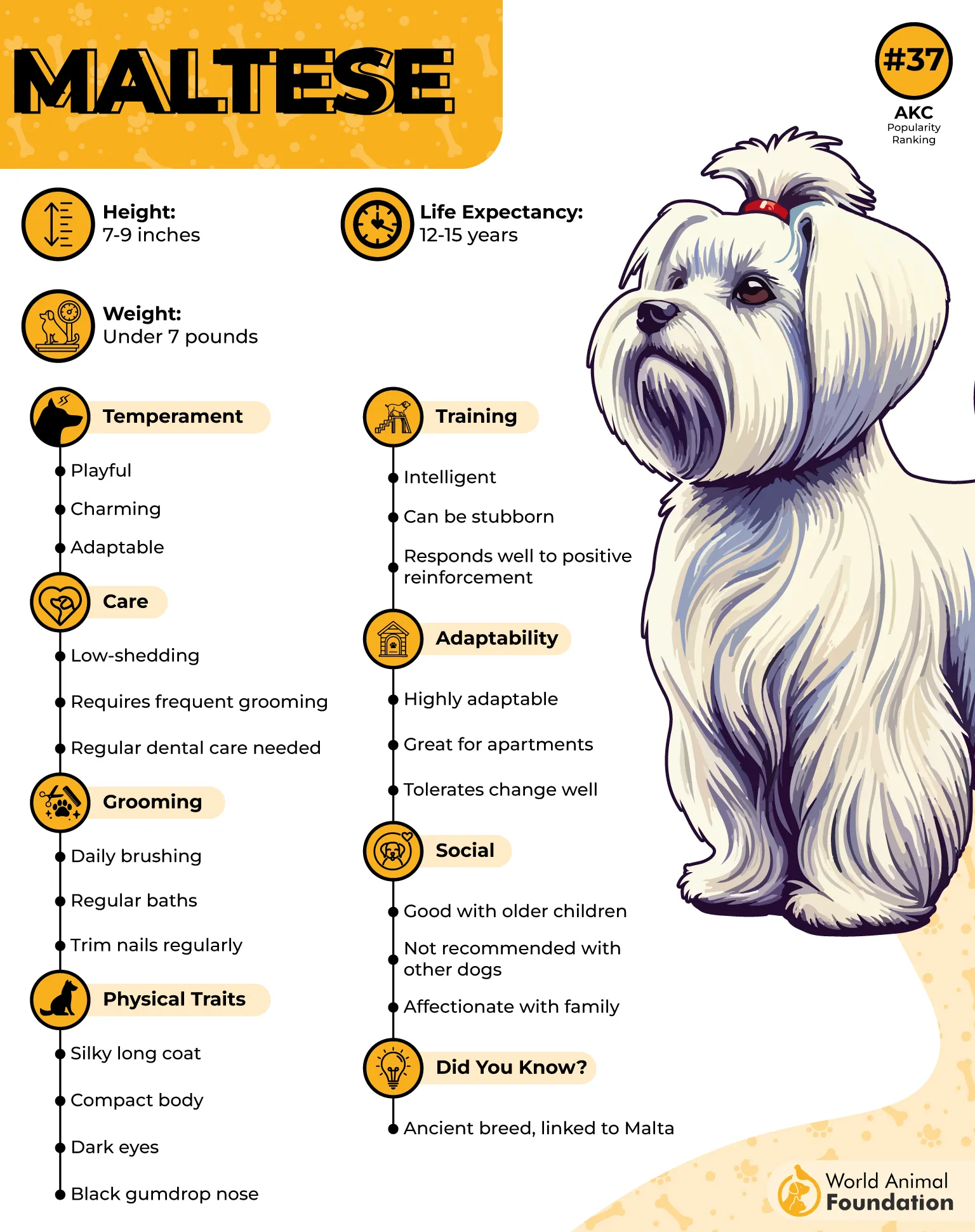
The best dog breed has high associative learning capabilities and responds well to positive reinforcement. The breed thrives in scent work, obedience games, and trick training.
7. Havanese

This Bichon-type breed is the national dog of Cuba and was developed from breeds imported to Cuba from the Canary Islands in the 16th century. The Cuban environment has contributed to the silky long coat of the Havanese that protects the breed from intense sun glare.
It has a springy and elastic gait because of the moderate angulation between the hindquarters, compact feet, and a slightly arched loin. Despite having natural watchful instincts, the right dog produces a brief bark to alert the owner. Since it is a velcro dog, it needs constant human attention.
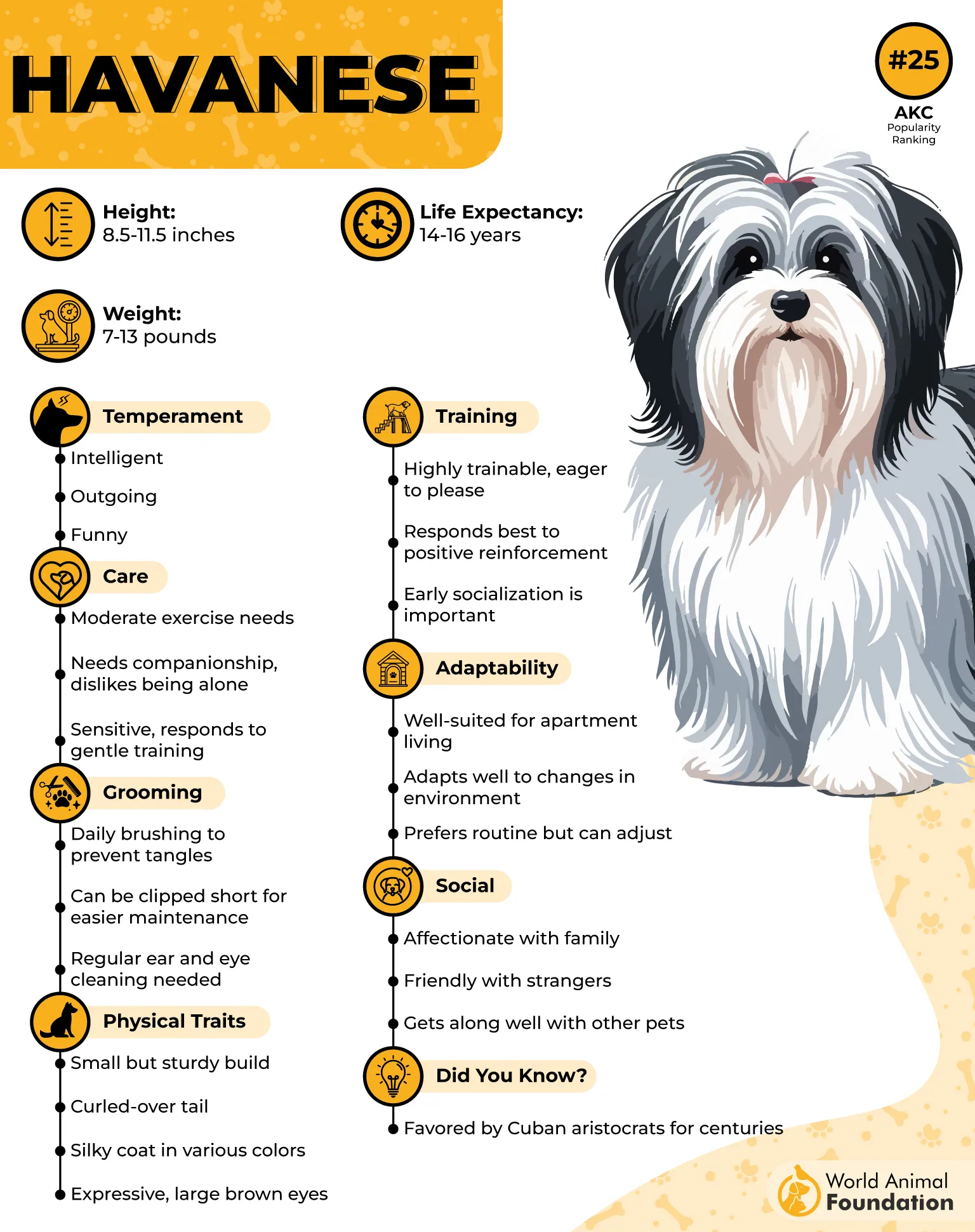
The dog has strong puzzle-solving intelligence and thrives on mental enrichment: trick training, nosework games, and puzzle feeders. This is important to prevent boredom and destructive behavior.
Conclusion
Living in a limited space can still be a wonderful life for a dog when its needs match your routine. The best choice is not simply the smallest breed or the quietest one. It is the dog whose exercise level, grooming needs, health considerations, and personality fit your home and daily schedule.
Before bringing one home, think honestly about your time, budget, work hours, and tolerance for barking, shedding, grooming, or slobbery little kisses. Visit shelters, rescue groups, and responsible breeders. Spend time with the breed whenever possible.
A good match feels less like choosing a cute pet and more like welcoming a new family member.
